June 14, 2008
Historians, help me out: What do you know about the internment of German Americans and Italian Americans during World War II?
The website of the German-American Internee Coalition lists several sources, and it has a lengthy set of lesson plans (too much for use in Texas, I fear). Is this information accurate? Has anyone used it in a classroom, and can you tell us your experience? Is there a mention of this in your world history or U.S. history text?
Please respond in comments.
 Photo: At sunset, the gate and guard tower at Fort Lincoln, North Dakota, where German-Americans and Japanese-Americans were interned during World War II. From the John Christgau Collection of photos; courtesy the site at the German-American Internee Coalition (GAIC).
Spread the word; friends don't allow friends to repeat history.
 1 Comment |
  Accuracy, Capturing history, Citizenship, Civil Rights, History, Immigration, Japanese American internment, Justice, Teaching, World War II | Tagged: Civil Rights, German-American Internment, History, Japanese Internment, World War II |
  Permalink
 Posted by Ed Darrell
June 13, 2008
How quiet?
None of my news readers pulled it up, either last August and September, when U.S. Rep. Jason Altmire, D-Penn., got the bill through Congress and signed into law by President Bush, nor a couple of weeks ago when the action occurred.
The Post Office in Rachel Carson’s home town, Springdale, Pennsylvania, has been named in her honor. The ceremony at the Post Office was held on May 27, 2008.
Rep. Rob Bishop’s, R-Utah, incendiary and inaccurate statement on the bill was what caught my eye originally about the continuing campaign of calumny against the author and scientist.
Rep. Altmire conducted a petition campaign in Pennsylvania, and used the lever of popular, bipartisan support to pry the bill loose from U.S. Sen. Tom Coburn’s hold in the Senate. Coburn is a Republican from Oklahoma, a physician, and an ardent advocate of spraying DDT. He had placed a hold on the bill in committee, stopping all action under the Senate’s rules of profound deference to members.
The swell of popular support made clear by Altmire’s campaign appears to have persuaded Sen. Coburn to allow the bill to move. The bill passed the Senate by unanimous consent on August 3, 2007, and got President Bush’s signature on August 9. These sorts of honorary bills generally are not targeted for political points. That Coburn allowed the bill through suggests a good deal of maturation as a senator on Coburn’s part.
Below the fold, Rep. Altmire’s press releases on the bill’s passing the Senate, and on President Bush’s signing the bill.
Photo below: Rachel Carson, birding, on a ridge (in Pennsylvania); photo originally found at site of Professor Catherine Lavender, The College of Staten Island of CUNY.
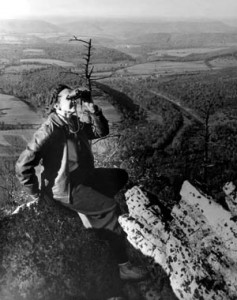
Rachel Carson, birding at Hawk Mountain Sanctuary
Read the rest of this entry »
Spread the word; friends don't allow friends to repeat history.
8 Comments | Accuracy, DDT, Environmental protection, History, Law, Natural history, Natural resources, Politics, Rachel Carson, Science | Tagged: DDT, Environmental protection, History, Law, Rachel Carson, Science | Permalink
Posted by Ed Darrell
June 10, 2008

Mencken at 1948 Democratic Convention
Photo from the collection of the School of Journalism and Mass Communication, at the Park Library, University of North Carolina.
H. L. Mencken at one of the 1948 political conventions (Thomas Dewey was the Republican nominee, Harry S. Truman was the Democratic nominee). Obviously the photo is a copy from the National Press Club Library. The Park Library site describes the photo and Mencken:
H. L. Mencken (1880-1956) was a familiar figure at many national political conventions. This photo, taken at the one in 1948, was his last political convention. He is well known for his attacks on American taste and culture, or the lack of same. His magnum opus, The American Language: An Inquiry into the Development of English in the United States, was first published in 1919 and remains a classic. From 1906 to 1941, he worked chiefly as a reporter, editor, and columnist for the Baltimore Sun. (Photo courtesy of the Baltimore Sun Library.)
Assuming Mencken covered both conventions, this photo was taken at the Democratic convention in Philadelphia in mid-July, 1948. We know it was taken in Philadelphia since both parties held their conventions there that year, the Republicans from June 21 to June 26, and the Democrats from July 12 to July 14.
Republicans nominated New York Gov. Thomas J. Dewey and California Gov. Earl Warren for president and vice president.
After a contentious convention that saw Minneapolis Mayor Hubert H. Humphrey propose a civil rights plank that got South Carolina Gov. Strom Thurmond to walk out of the convention and found his own States’ Rights (Dixiecrat) Party (with himself as the nominee for president), and former Vice President Henry Wallace walk out because the party platform was too conservative (Wallace ran on the Socialist Progressive Party ticket), Democrats nominated President Harry S Truman and Kentucky Sen. Alben W. Barkley for president and vice president. Truman narrowly defeated Georgia Sen. Richard B. Russell for the nomination. Had Thurmond not walked out, Truman may well have lost the nomination of his own party.
And the rest of the story?
- Truman had a contentious second term, and was defeated in the New Hampshire primary in 1952 by Sen. Estes Kefauver; Truman ended his campaign for a second full term shortly after.
- Earl Warren was appointed Chief Justice of the Supreme Court by Truman’s successor, President Dwight D. Eisenhower, in late 1953. Warren is remembered for engineering the 9-0 decision in Brown vs. Topeka Board of Education which ruled “separate but equal” school systems to violate the Constitution’s equal protection clause, and for his chairing the commission that investigated the assassination of President John F. Kennedy.
- Hubert Humphrey moved on to the U.S. Senate, served as Vice President to Lyndon Johnson, and won the Democratic nomination for president in another contentious convention in 1968 in Chicago. Humphrey lost the election to Richard Nixon, and returned to the U.S. Senate two years later.
- Strom Thurmond won election to the U.S. Senate in 1954, switching parties to Republican in 1964, and serving until his death in 2003.
- Russell, who had served as Georgia’s senator since 1933, continued to serve to his death on January 21, 1971; he was a key member of the Warren Commission that investigated the assassination of President John F. Kennedy. The Russell Senate Office Building is named in his honor, the oldest of the three Senate office buildings.
- Barkley was the oldest vice president ever inaugurated, aged 71. He remarried in his first year as vice president (his first wife died in 1947). Barkley’s nephew suggested that he should be called “the veep” because “Mr. Vice President” was too long. The title was seized up on by headline writers. Considered too old to run for the presidency in 1952, Barkley won a U.S. Senate seat from Kentucky in the 1954 elections, serving from 1955 to his death in 1956. Barkley Dam on the Cumberland River is named in his honor, as is the lake behind it, Lake Barkley.
- Henry Wallace finished a distant fourth in the 1948 election, behind Dewey and Thurmond. His political career was essentially over due to his inability or unwillingness to disavow communist support. He achieved success as a chicken breeder. In a daramatic turnabout, he wrote a book, Where I Was Wrong, disavowing communism and critical of Joseph Stalin, and endorsed Republican candidates in 1956 and 1960. He died of Amyotrophic Lateral Sclerosis (ALS, or Lou Gehrig’s Disease) in 1965.
- Dewey returned to his law practice. In 1952, Dewey helped engineer the nomination of Eisenhower over his old political nemesis Sen. Robert Taft of Ohio, pushed Richard Nixon as the Vice Presidential nominee, and in 1956 first convinced Ike to run again, and then to keep Nixon on the ticket. Dewey politely refused offers of offices, including refusing a nomination to the U.S. Supreme Court, sticking to his law practice which made him very wealthy. He died suddenly of a heart attack in 1971, at age 68.
- Mencken suffered a stroke later in 1948 that left him unable to speak, or read, or write for a time. He spent much of the rest of his life working to organize his papers, and died in 1956. His epitaph, on his tombstone and on a plaque in the lobby of the Baltimore Sun, reads: “If, after I depart this vale, you ever remember me and have thought to please my ghost, forgive some sinner, and wink your eye at some homely girl.”
Spread the word; friends don't allow friends to repeat history.
3 Comments | H. L. Mencken, History, Political conventions, Politics, Technology, Typewriters, Writing | Tagged: H. L. Mencken, History, Political conventions, Politics, Technology, typewriter, Writing | Permalink
Posted by Ed Darrell
June 10, 2008
You’ve got to love C-SPAN. Commercial television networks spend billions purchasing rights to be the sole broadcaster of sporting events, the Superbowl, the World Series, the NBA championships, the NCAA basketball championships, the Olympics.
What’s a money poor, creativity- and content-rich public affairs cable channel to do? Well, gee, there’s the bicentennial of Abraham Lincoln’s birth coming up in February 2009 . . .:
Meet C-SPAN, “the network of the Lincoln Bicentennial.”
Note the site, set your video recorders (digital or not — just capture the stuff). C-SPAN plans monthly broadcasts on Lincoln and the times, plus special broadcasts on certain events — November 19, the 145th anniversary of the Gettysburg Address, for example.
Of particular value to students and teachers, C-SPAN offers a long menu of links to sites about Lincoln, and to original speeches and documents (DBQ material anyone?).

 War with Mexico
House Divided
Lincoln-Douglas Debates

·1st Debate: Transcript | Video
·2nd Debate: Transcript | Video
·3rd Debate: Transcript | Video
·4th Debate: Transcript | Video
·5th Debate: Transcript | Video
·6th Debate: Transcript | Video
·7th Debate: Transcript | Video
Cooper Union Speech
Farewell Address
First Inaugural
Second Inaugural
Gettysburg Address
Last Address
Good on ’em. C-SPAN leads the way again.
Teachers, bookmark that site. Are you out for the summer? U.S. history teachers have a couple of months to mine those resources, watch the broadcasts, and watch and capture the archived videos, to prepare for bell-ringers, warm-ups, and lesson plans.
What will your classes do for the Lincoln Bicentennial? Will that collide with your plans for the Darwin bicentennial?
Spread the word; friends don't allow friends to repeat history.
1 Comment | 1861-1865, Abraham Lincoln, Biography, Civil War, Education, Freedom - Political, History, History audio sources, History images, History video sources, Lesson plans, On-line education, On-line learning, Patriotism, Politics, Presidents, Slavery, Teaching, Technology, Technology in the classroom, Television | Tagged: Abraham Lincoln, Education, Entertainment, History, Lincoln Bicentennial, Media, Teaching | Permalink
Posted by Ed Darrell
June 9, 2008
Smithsonian’s June issue features a story on the origins of evolution theory in the public eye, focusing not just on Darwin and Wallace, but also on the history of the idea as they found it, before they discovered the mechanism that makes the theory hold together and bind biology into a real science: “On the Origin of a Theory.”
World history, western civilization and U.S. history teachers may want to keep a copy of the article — in U.S. history, for the Scopes trial section (or paragraph, depending on how science and philosophy friendly your text is).
Also, the article features a photo of Darwin not usually seen, from the Library of Congress Archives.

Spread the word; friends don't allow friends to repeat history.
Leave a Comment » | Charles Darwin, Darwin, Evolution, History, Science | Tagged: Darwin, Evolution, History, Science | Permalink
Posted by Ed Darrell
June 7, 2008

Helen Keller, left, and her teacher Anne Sullivan play chess, in 1900. Photo from the American Foundation for the Blind.
Spread the word; friends don't allow friends to repeat history.
3 Comments | Chess, Education, History, History images | Tagged: Chess, Education, Entertainment, Helen Keller, History | Permalink
Posted by Ed Darrell
June 6, 2008
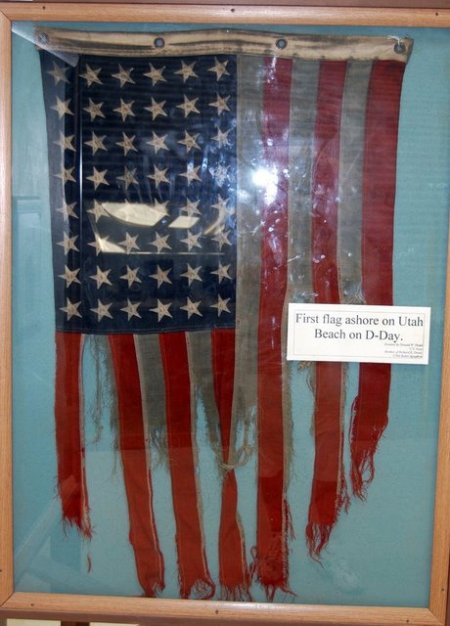 Got an e-mail with a question.
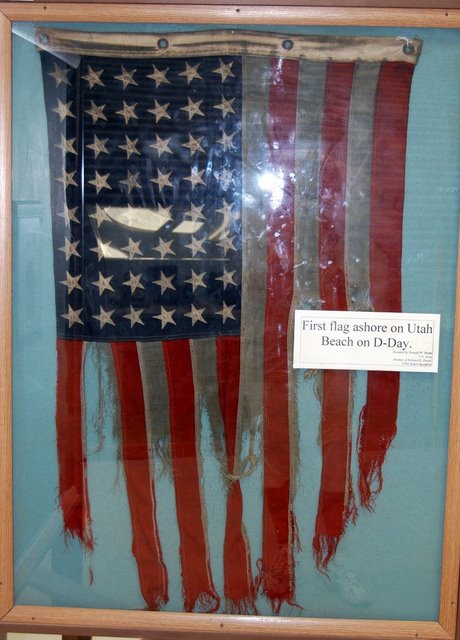
Today is the 64th anniversary of the Invasion of Normandy in World War II, a date generally called D-Day. No, you don’t have to fly your flag. This is not one of the days designated by Congress for flag-flying.
But you may, and probably, you should.
Spread the word; friends don't allow friends to repeat history.
5 Comments | Famous Battles, Flag etiquette, History, War, World War II | Tagged: D-Day, Flag etiquette, Fly your flag, History | Permalink
Posted by Ed Darrell
June 2, 2008
Ranked by number of people put to death under their regime, at ReasonableCitizen.
Accurate? What do you think?
Oh, no, of course Rachel Carson is nowhere on the list. This guy is looking for real evil, not imagined evil.
Other resources:
Spread the word; friends don't allow friends to repeat history.
6 Comments | Genocide, History, Politics | Tagged: Genocide, History, Politics | Permalink
Posted by Ed Darrell
June 1, 2008
From August 8, 2007, the post that exposed the educationally-destructive, religiously-drenched mathematics curriculum from Castle Hills First Baptist School in San Antonio, Texas.
One might be too stunned to shake one’s head; this is a description for a high school calculus course:
CALCULUS

Students will examine the nature of God as they progress in their understanding of mathematics. Students will understand the absolute consistency of mathematical principles and know that God was the inventor of that consistency. Mathematical study will result in a greater appreciation of God and His works in creation. The students will understand the basic ideas of both differential and integral calculus and its importance and historical applications. The students will recognize that God created our minds to be able to see that the universe can be calculated by mental methods.
No, I’m not kidding. It’s from Castle Hills First Baptist School in San Antonio, Texas.
The scientist who sent me the link called it “God’s math.” Architect Mies van der Rohe once said, “God is in the details.” But he didn’t mean that math should be taught as anything other than mathematics. He didn’t mean that any religion should be inserted into math classes — and frankly, that’s a little worrying to me. I speak regularly with theologians who read the same text and come up with radically different descriptions of what it means, sometimes diametrically opposite descriptions.
The social studies curricula are more troubling. What is described is at best second-rate course work. One hopes that the teachers teach the material instead of these descriptions:
SOCIAL STUDIES/HISTORY
WORLD HISTORY I
NINTH GRADE
The students will examine the nature of God as revealed through the study of social studies. Students will develop convictions about God’s word as it relates to world history and will define their responses to it. Through the study of world history, students will develop an understanding of the economic, social, political and cultural developments of our world, as they compare countries and civilizations, Students will learn and acquire an appreciation for God’s relations throughout the timeline of world events. The integration of literature into studies of ancient civilizations will enhance and inspire their learning process. Students will develop attitudes, values, and skills as they discover their place in the world. Students will analyze, synthesize and evaluate social studies skills, including social relationships such as family and church.
WORLD HISTORY II
TENTH GRADE
The students will examine the nature of God as revealed through the study of social studies. Students will develop convictions about God’s word as it relates to world history and will define their responses to it. Through the study of world history, students will develop an understanding of the economic, social, political and cultural developments of our world, as they compare countries and civilizations since the Reformation. Students will learn and acquire an appreciation for God’s relations throughout the timeline of world events. The integration of literature into the studies of modern civilizations will enhance and inspire their learning process. Students will develop attitudes, values, and skills as they discover their place in the world. Students will analyze, synthesize and evaluate social studies skills, including social relationships such as family and church.
AMERICAN HISTORY
ELEVENTH GRADE
Students will evaluate the past and learn from its lessons (I Corinthians 10:11), and become effectual Christians who understand “the times” (I Chronicles 12:32). Students will study the history of our country beginning with the Civil War with a biblically integrated filter as they examine the political, social, and economic perspectives. An emphasis will be placed on the major wars, the industrial revolution, and the settlement of the frontier, requiring students to critically analyze the cause and effect relationships of events in history.
GOVERNMENT/CIVICS
TWELFTH GRADE
Students will evaluate the past and learn from its lessons (I Corinthians 10:11), and become effectual Christians who understand “the times” (I Chronicles 12:32). Students will study the foundational documents of our founding Fathers built upon as they formulated the ideals upon which our country was established. Such documents include: The Magna Carta, The English Bill of Rights of 1689, and the Mayflower Compact. Students are equipped with an understanding of the basic principles contained in these documents, and are able to identify their dependence upon biblical and Reformation principles, leading them to an understanding why the American system is meant for a religious people.
ECONOMICS/FREE ENTERPRISE
TWELFTH GRADE
Students will evaluate the past and learn from its lessons (I Corinthians 10:11), and become effectual Christians who understand “the times” (I Chronicles 12:32). Students will gain an understanding of the workings of economic systems, being able to identify the strengths and weaknesses inherent in capitalism (Deuteronomy 8, 15, 28, Leviticus 25), and the reasons for its superiority to the models of communism and socialism (Ezekiel 46:18).
The last description there, for economics, might lead one to understand this school ignores most of the lessons of Jesus, and especially the stories of the disciples in the immediate aftermath of the crucifixion as described in Acts 2. Not only are the courses described inadequate (we hope the teachers teach the state standards instead, at least), where scripture is specifically mentioned, they appear to be tortured to fit the agenda.
Then comes the choker:
SCIENCE
BIOLOGY
Students will study the physical life of God’s creation. They will continue to develop skills in the use of the scientific method. The students will learn methods and techniques of scientific study, general attributes of the cell and its processes, characteristics of the wide spectrum of living organisms, the classification, similarities and differences of the five kingdoms, evolutionary models and the creation model, the mechanics of inheritance, disease and disorders, and the workings of the human body. Students will gain experience in manipulating the conditions of a laboratory investigation and in evaluating the applications of biological principles in everyday life.
There is no “creation model” that is scientific, nor is there one that conflicts with evolution and is also Biblical. What, in God’s name, are they teaching?
CHFB School was established over 25 years ago, and claims to have more than 300 students enrolled, K-12. Surely there is a track record to look at.
Anybody know what the actual curricula look like at this school? Are there any measures to suggest the school teaches real subjects instead of what is described?
What was the Texas legislature thinking when they authorized Bible classes? Isn’t this bad enough as it is?
____________________
Update: See parent and student comments and ratings of the school, here.
Spread the word; friends don't allow friends to repeat history.
1 Comment | Accuracy, Curricula, Economics, Education, Education quality, History, History Revisionism, Rampant stupidity, Religion, Science | Tagged: Curricula, Economics, Education, History, Rampant stupidity, Religion, Science | Permalink
Posted by Ed Darrell
May 27, 2008
Utah Phillips died Friday. He was 73. He died at his home in Nevada City, California.
Wonderful tribute at Fifteen Iguana.

Utah Phillips (publicity photo via Bluegrass Today)
Phillips’s website lists planned tributes, memorials and the funeral in Nevada City, California. KVMR Radio’s site has an obit and links to other tributes.
Read the rest of this entry »
Spread the word; friends don't allow friends to repeat history.
4 Comments | A Good Story, Business Ethics, Citizenship, Current History, History, History and art, History audio sources, Humor, Labor and unions, Life, Music | Tagged: Folk Music, History, Labor and unions, Media, Music, Organized Labor, Politics, Railroads, Utah Phillips | Permalink
Posted by Ed Darrell
May 25, 2008
Phoenix landed on Mars today at 4:38 p.m. Pacific Time. Confirmation of the landing took 15 minutes to get to Earth, radio signals traveling at the speed of light.
We have a robot scout on Mars again!
This is another of those teachable moments, an event to note in class that your students might tell their children and grandchildren about.
 Touchdown occurred exactly at the time programmed and predicted. Such accuracy might be interpreted as a good sign that NASA has anticipated problems, and a successful mission of discovery is in store.
The University of Arizona leads the discovery consortium on this mission (one of my alma maters). Educational activities and plans for teachers are listed at Arizona’s Phoenix Mission website.
NASA is the world’s biggest player in astrobiology, the science of figuring out how life could have begun, and where it might be. Astrobiology is one of the topics Texas’s State Board of Education threatened to remove from biology texts in 2003. That this mission has gotten this far is a sweet little bit of beneficial revenge on the anti-scientists who tried to gut the books then. Maybe it will pose a warning to them on the next go-round.
Teachers, strike a blow for science, knowledge and leadership in knowledge gathering: Teach your kids some astrobiology.
Resources:
Spread the word; friends don't allow friends to repeat history.
Leave a Comment » | Biology, Capturing history, Current History, Education, History, Lesson plans, Research, Science, Space exploration, War on Education, War on Science | Tagged: Astrobiology, Education, History, Lesson plans, Mars, Science | Permalink
Posted by Ed Darrell
May 16, 2008
DDT denialists like Steven Milloy like to paint Rachel Carson as a lone, cranky and crackpot voice in the wilderness against DDT (never mind how that makes the DDT industry look, unable to use facts and the $500,000 public relations campaign to get their message out).
It’s not so. As Carson noted, concerns about DDT were raised early, and often.
The Dallas Public Library makes available much of the news from the Dallas Morning News of the last century. On my way to find something else, I plugged in “DDT” as a search term. Among other articles that popped up was a May 9, 1951 story of Texas scientists warning a Congressional committee of the harms of DDT.
“Hazard to health,” was the flying head, “Renner Scientist Cites DDT Harm.” The story, by the News’ Washington Bureau reporter Ruth Schumm, covered a hearing before an unnamed committee of the House, “investigating the use of chemicals in foods.” (Where was the copy editor on that one?)
John M. Dendy of the Texas Research Foundation delivered the testimony. Dendy worked out of the Foundation’s laboratory in Renner. Renner was an independent community then, located south of Renner, west of Coit, and north of Campbell Roads (no, it’s not there today).
Studies in the foundation’s laboratories at Renner, Dallas County, have proved that DDT and other chemicals are now causing mass contamination of milk, meat and other foods, Dendy said.
Dendy said that crops absorb the DDT sprayed on them — still true, and more problematic since it’s been discovered that DDT is also damaging to some plants — and animals that graze the crops get that dosage. Dairy cows, beef cattle and sheep were the chief animals mentioned.
Even though the Texas State Health Department has ruled that no DDT should be present in milk comsumed by human beings, DDT is showing up in the Dallas milk supply even in December, long past the usual season for spraying with insecticides. About half of the Dallas milk supply is imported from Oklahoma, Missouri and Wisconsin, he said.
* * * * *
In the Texas Research Foundation tests, the degree of contamination ranged from 3.10 parts per million in lean meat to 68.55 parts per million in fat meat, Dendy testified.
In milk, the DDT conamination ranged from less than .5 parts per million to 13.83 parts per million.
Dendy testified that so far as he knew, the exact effects of such poisoning on human beings has not yet been established.
Dendy warned in his testimony that DDT builds up over time in “human and animal fat tissue,” so the dangers to human health become greater as the exposure grows over time.
The worried Congressmen wanted to know if there is a substitute for DDT.
Dendy said he was not working on that problem, but he knew others were.
Notably absent from the hearing was the committee chairman, Rep. James J. Delaney, D-NY, according to the list offered by the DMN. That’s right: Delaney was the one who, in 1957, got his amendment passed to the Safe Food and Drug Act, the organic act for the U.S. Food and Drug Administration (FDA) making it illegal to use anything known to be carcinogenic as a food additive (DDT doesn’t count, because it’s not a food additive, but a food contaminant, which is regulated not by the FDA, but by the Department of Agriculture).
So, in 1951, before Rachel Carson had left the U.S. Fish and Wildlife Service, 11 years prior to the publication of her book Silent Spring, 21 years before the EPA banned use of DDT on crops, conservative scientists from Texas were alerting Congress to the dangers of DDT.
It’s in the history books. You can look it up.
Read the rest of this entry »
Spread the word; friends don't allow friends to repeat history.
2 Comments | DDT, Health care, History, Junk science, Rachel Carson, Science, Voodoo history, Voodoo science | Tagged: DDT, health, History, Junk science, Rachel Carson, Science, Voodoo science | Permalink
Posted by Ed Darrell
May 12, 2008
You’re a good student of history. You know that when someone says, “a house divided,” they’re talking about Lincoln’s famous, troubling speech from June 1858. Right?
Look below the fold.
Read the rest of this entry »
Spread the word; friends don't allow friends to repeat history.
1 Comment | 1787, Cartoons, DBQ sources, Famous quotes, History, Lesson plans, Quotes, U.S. Constitution | Tagged: 1787, A House Divided, Cartoon, Constitution, History, Lesson plan ideas, Library of Congress | Permalink
Posted by Ed Darrell
May 11, 2008
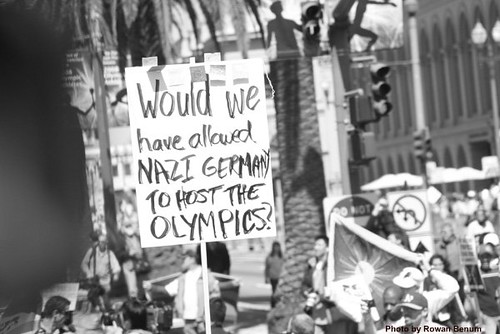
Ed Brayton found it.

Do you think the sign maker was jesting? Or do you think the sign maker genuinely didn’t know? (See: 1936 Olympics in Berlin)
While we wait to see whether someone will confess to PhotoShopping this picture, we teachers might consider using this photo as a hook for a lesson on the differences between the rising totalitarian state of Nazi Germany in 1936, and the rising, increasingly economically free state of the People’s Democratic Republic of China today.
One more lesson plan for this year — it’s reusable next fall, with the added bonus then that by then you’ll have the headlines of the actual Olympics to add to the discussion.
Update: The photo is said to have been was taken by Rowan Benum at a California site (see Mr. Benum’s comment). Since it’s all the rage on conservative sites, where the history ignorance is condemned but the conservative bloggers can’t quite bring themselves to endorse the Communist Chinese, I strongly suspect wondered about a PhotoShop origin. The torch was run through San Francisco; there are few palms in San Francisco (Californians: Can you identify the location?).
Update 5-13-2008: The photographer kindly dropped by comments to note the authenticity of the photo. I agree, the Tibetan prayer flags suggest authenticity; would a hoaxer think of such details?
Discussion questions for the classroom:
Students should look at the photo, and read coverage of the torch relay, such as CNN’s story about the San Francisco relay where Mr. Benum took the photo. Students should have access to information about the International Olympic Committee and its organization, especially the tradition of Olympic Truce. The Charter of the Olympics is probably too long for practical classroom use, but Paragraph 2 can be copied for the students, or perhaps the full page of the “Fundamental Principles of Olympism”:
“Olympism is a philosophy of life, exalting and combining in a balanced whole the qualities of body, will and mind. Blending sport with culture and education, Olympism seeks to create a way of life based on the joy found in effort, the educational value of good example and respect for universal fundamental ethical principles.”
Olympic Charter, Fundamental principles, paragraph 2
There is a wealth of information for classroom use at the website of the IOC. If you’re particularly adventurous, or deep into this topic, check out the podcasts of Olympic history from amateur historian Eli Hunt.
Students should also have some information about Tibet, and the Dalai Lama and Tibet’s government in exile, about the history of Tibet and China’s actions since World War II. Students should have some history of the 1936 Olympics, and they should be familiar with the stories of Jesse Owens’ accomplishments there and his return to a segregated U.S. You may want to provide an article about the U.S. protest of the 1980 Olympics in Moscow, and the Soviet protest of the 1984 Olympics in Los Angeles, and other Cold War moments of Olympic tension.
- Since the International Olympics Committee (IOC) is an avowedly non-political international agency, is it fair or rational to protest the siting of an Olympics on political grounds?
- What do the protesters ask the IOC to do? What do the protesters ask others to do?
- Under international law, what are the rights and duties of the Peoples Republic of China (PRC)?
- Did the IOC ask anything of the government of the Peoples Republic of China of a political nature? Would such requests be fair, or rational?
- Other international organizations function in other nations where governments do not have good records on human rights, such as the Red Cross/Red Crescent, Scouting, UNICEF, and others (can you add to this list?). What considerations must such organizations give to local politics where human rights are at issue?
- Compare and contrast the issues surrounding the Beijing Olympics with issues surrounding the Myanmar relief efforts after Cyclone Nargis (2008).
- Look at other protests involving the Olympics, especially in 1980 and 1984. Did those protests achieve what the protesters had hoped? Does the success or failure of past protests augur well for current protests?
- The creator of the protest sign in the photograph appears to have not known about the 1936 Olympics, which were hosted in Berlin, then under the control of the Nazi government of Germany. The Olympics were sited in Berlin prior to the rise of the Nazi government. Does the protester’s ignorance of history affect the message of the sign? Does it reflect well on the cause the protester advocates?
- What other famous or notorious examples of ignorance of history can you find?
- Do you ever get embarrassed for the people captured in Jay Leno’s “Jaywalking” segments?
- Georges Santayana (1863-1952) famously said, “Those who cannot remember the past are condemned to repeat it.” Do you find that statement to be true? Does this affect the course of history? (Students may want to explore the history of invasions of Russia by Napoleon and Hitler, or the history of invasions of Afghanistan by Britain, the Soviet Union, and the U.S.)
Spread the word; friends don't allow friends to repeat history.
5 Comments | China, Dissent, Education, Free press, Free speech, Freedom - Political, History, Lesson plans, Politics, Santayana's ghost, World history | Tagged: History, Lesson plans, Olympics, Politics, protest, Santayana's ghost | Permalink
Posted by Ed Darrell
May 7, 2008
Testing, grading, trying to correct errors, and meanwhile progress continues.
Four Stone Hearth’s 40th edition is out today at the redoubtable Remote Central — but I missed #39 at Hominin Dental Anthro.
Real science is almost so much more interesting than faux science. #39 features the discussions about the claims that the Hobbits had dental fillings. While such a claim is damaging either to the claims of the age of Homo floresiensis or to the claims about the age of the specimens and, perhaps, human evolution, no creationist has yet showed his head in the discussion. When real science needs doing, creationists prefer to go to the movies. There is even a serious discussion of culture, and what it means to leadership of certain human tribes, with nary a creationist in sight.
While you’re there, take a careful look at the header and general design of Hominin Dental Anthro. Very pretty layout, don’t you think?
#40 at Remote Central is every bit as good. World history and European history teachers will want to pay attention to the posts on extinctions on the islands of the Mediterranean. Any one of the posts probably has more science in it in ten minutes’ reading than all of Ben Stein’s mockumentary movie, “Expelled!” That’s true especially when science is used to skewer the claims of the movie, or when discussion turns to the real problems the mockumentary ignores.
Enjoy the cotton candy.
Spread the word; friends don't allow friends to repeat history.
1 Comment | Academic freedom, Accuracy, Ancient history, Anthropology, Archaeology, Education, Evolution, History, Native Americans, Natural history, Paleontology, Prehistory, Religion, Research, Science, Travel, World history | Tagged: Anthropology, History, human evolution, Science, Weblogs | Permalink
Posted by Ed Darrell






 Millard Fillmore's Bathtub