January 3, Alaska’s statehood day

January 3, 2018

Late for me to remind you, if you didn’t, but January 3 is Alaska’s Statehood Day. Alaskans should have flown their U.S. flags today in commemoration.

Of course, some people would like to fly their state flags, too — makes more sense, some say. I don’t argue, but I note that very rarely do I come across some household that has a state flag. Most homes have a U.S. flag.

Alaska’s flag is a work of art, though, and many Alaskans have one. Did you fly it today, if you have one?

More:

U.S. flag flying at the Eielson Visitor Center, Denali National Park, Alaska. National Park Service image

U.S. flag flying at the Eielson Visitor Center, Denali National Park, Alaska. National Park Service image, photo by Jacob W. Frank.


December 31 is Bright Idea Day, anniversary of the Day the Lights Went On

December 31, 2017

Between Christmas and New Year’s Day, here at Millard Fillmore’s Bathtub we celebrate a variety of historically holy days.  December 31, by tradition, is Bright Idea Day, the anniversary of the day Thomas Edison demonstrated for the public a working light bulb, in 1879.

100,000 people gather in Times Square, New York City (surely not the 1 million predicted by NBC!) tonight, and millions more around the world, in festivities for the new year made possible by the work of Thomas Alva Edison.

Here it is, the invention that stole sleep from our grasp, made clubbing possible, and launched 50,000 cartoons about ideas:

The light bulb Thomas Edison demonstrated on December 31, 1879, at Menlo Park, New Jersey - Wikimedia image

The light bulb Thomas Edison demonstrated on December 31, 1879, at Menlo Park, New Jersey – Wikimedia image (GFDL)

The light bulb. It’s an incandescent bulb.

It wasn’t the first bulb. Edison a few months earlier devised a bulb that worked with a platinum filament. Platinum was too expensive for mass production, though — and Edison wanted mass production. So, with the cadre of great assistants at his Menlo Park laboratories, he struggled to find a good, inexpensive filament that would provide adequate life for the bulb. By late December 1879 they had settled on carbon filament.

Edison invited investors and the public to see the bulb demonstrated, on December 31, 1879.

Thomas Edison in 1878, the year before he demonstrated a workable electric light bulb. Library of Congress image

Thomas Edison in 1878, the year before he demonstrated a workable electric light bulb. CREDIT: Thomas Edison, head-and-shoulders portrait, facing left, 1880. Prints and Photographs Division, Library of Congress. Reproduction number LC-USZ62-98067

Edison’s successful bulb indicated changes in science, technology, invention, intellectual property and finance well beyond its use of electricity. For example:

  • Edison’s Menlo Park, New Jersey, offices and laboratory were financed with earlier successful inventions. It was a hive of inventive activity aimed to make practical inventions from advances in science. Edison was all about selling inventions and rights to manufacture devices. He always had an eye on the profit potential. His improvements on the telegraph would found his laboratory he thought, and he expected to sell the device to Western Union for $5,000 to $7,000. Instead of offering it to them at a price, however, he asked Western Union to bid on it. They bid $10,000, which Edison gratefully accepted, along with the lesson that he might do better letting the marketplace establish the price for his inventions. Other inventive labs followed Edison’s example, such as the famous Bell Labs, but few equalled his success, or had as much fun doing it.  (Economics teachers:  Need an example of the marketplace in action?)
  • While Edison had some financial weight to invest in the quest for a workable electric light, he also got financial support, $30,000 worth, from some of the finance giants of the day, including J. P. Morgan and the Vanderbilts who established the Edison Light Company.
  • Edison didn’t invent the light bulb — but his improvements on it made it commercial. “In addressing the question ‘Who invented the incandescent lamp?’ historians Robert Friedel and Paul Israel list 22 inventors of incandescent lamps prior to Joseph Wilson Swan and Thomas Edison. They conclude that Edison’s version was able to outstrip the others because of a combination of three factors: an effective incandescent material, a higher vacuum than others were able to achieve (by use of the Sprengel pump) and a high resistance lamp that made power distribution from a centralized source economically viable.”
  • Edison’s financial and business leadership acumen is partly attested to by the continuance of his organizations, today — General Electric, one of the world’s most successful companies over the past 40 years, traces its origins to Edison.

Look around yourself this evening, and you can find a score of ways that Edison’s invention and its descendants affect your life. One of the more musing effects is in cartooning, however. Today a glowing lightbulb is universally accepted as a nonverbal symbol for ideas and inventions. (See Mark Parisi’s series of lightbulb cartoons, “Off the Mark.”)

Even with modern, electricity-saving bulbs, the cartoon shorthand hangs on, as in this Mitra Farmand cartoon.

Fusilli has an idea, Mitra Farmand, Fuffernutter

Brilliant cartoon from Mitra Farmand, Fuffernutter (regrettably, we note this site is no longer there; but with some hope, we find a new site here)

Or see this wonderful animation, a video advertisement for United Airlines, by Joanna Quinn for Fallon — almost every frame has the symbolic lightbulb in it.

Electrification of America, and the consequent spread of electric lighting and electrical machines to make domestic and industrial life more productive, and the spread of great public works to enable these and other inventions to spread, were made possible by a people roughly united in advancing progress, what historians now call “the progressive agenda” and the great advances of the Progressive Era.

Could we get such agreement among workers, corporate bosses and many levels of government today? When we celebrate anniversaries, like the demonstration of the light bulb, we celebrate the united polity that made such things possible, too.

Gee, I wonder who were the dignitaries to whom Edison demonstrated the electric light on that New Years Eve, in 1879. Anyone know? We can safely wager that there were representatives of the Vanderbilts and Morgans there, families who invested in Edison as an inventor.

Other resources:

Patent drawing for Thomas Edison's successful electric lamp. Library of Congress

Thomas Edison’s electric lamp patent drawing and claim for the incandescent light bulb CREDIT: “New Jersey–The Wizard of Electricity–Thomas A. Edison’s System of Electric Illumination,” 1880. Prints and Photographs Division, Library of Congress. Reproduction Number LC-USZ62-97960.

Even More:

This is an encore post.

Yes, this is an encore post. Defeating ignorance takes patience and perseverance.


We need to celebrate Hubble Day better! December 30, 2017, anniversary of the day we learned it’s a BIG universe

December 30, 2017

[Today is actually the day!  You may fly your flag if you choose.  This is the traditional Millard Fillmore’s Bathtub Hubble Day post.]

Lift a glass of champagne today in tribute to Edwin Hubble and his great discovery. Not sure what to call it — Hubble Day, Looking Up Day, Endless Possibilities Day — whatever, this is the anniversary of Edwin Hubble’s announcement that he had discovered the universe is much, much larger than anyone had imagined, containing far more stars than anyone had dared guess.

It’s a big universe out there.

Ultraviolet image of the Andromeda Galaxy. Wired caption: Photo: Edwin Hubble’s 1920s observations of Andromeda (whose ultraviolet spectrum is rendered here) expanded our notions of the size and nature of a universe that is itself expanding. Galaxy Evolution Explorer image courtesy NASA.

Ultraviolet image of the Andromeda Galaxy. Wired caption: “Photo: Edwin Hubble’s 1920s observations of Andromeda (whose ultraviolet spectrum is rendered here) expanded our notions of the size and nature of a universe that is itself expanding. Galaxy Evolution Explorer image courtesy NASA.”

So, today is a good day to celebrate the universe in all it’s glory – December 30. We haven’t done a good enough job of celebrating Hubble Day — we need to step up the festivities.

On December 30, 1924, Edwin Hubble announced he’d discovered other galaxies in distant space. Though it may not have been so clear at the time, it meant that, as a galaxy, we are not alone in the universe (whether we are alone as intelligent life is a separate question). It also meant that the universe is much, much bigger than most people had dared to imagine.

97 years ago today.

I keep trying to get people to celebrate.

In 2008 for Hubble Day, Wired picked up on the story (with a gracious link to 2007’s post here at the Bathtub). Wired includes several links to even more information, a good source of information. See Wired’s 2009 post here.

Hubble was the guy who showed us the universe is not only bigger than we imagined, it’s probably much bigger and much more fantastic than we can imagine. (See J. B. S. Haldane’s “queerer” quote.) Hubble is the guy who opened our imaginations to the vastness of all creation.

Hubble’s work would have been impossible without the earlier work of one of the great, unsung women of science, Henrietta Leavitt, as Wired explained:

He trained the powerful new 100-inch telescope at Mount Wilson in Southern California on spiral nebulae. These fuzzy patches of light in the sky were generally thought to be clouds of gas or dust within our galaxy, which was presumed to include everything in the universe except the Magellanic Clouds. Some nebulae seemed to contain a few stars, but nothing like the multitudes of the Milky Way.

Hubble not only found a number of stars in Andromeda, he found Cepheid variable stars. These stars vary from bright to dim, and a very smart Harvard computationist named Henrietta Leavitt had discovered in 1912 that you could measure distance with them. Given the brightness of the star and its period — the length of time it takes to go from bright to dim and back again — you could determine how far away it is.

Hubble used Leavitt’s formula to calculate that Andromeda was approximately 860,000 light years away. That’s more than eight times the distance to the farthest stars in the Milky Way. This conclusively proved that the nebulae are separate star systems and that our galaxy is not the universe.

How does one celebrate Hubble Day? Here are some suggestions:

  • Easier than Christmas cards: Send a thank-you note to your junior high school science teacher, or whoever it was who inspired your interest in science. Mrs. Hedburg, Mrs. Andrews, Elizabeth K. Driggs, Herbert Gilbert, Mr. Willis, and Stephen McNeal, thank you.
  • Rearrange your Christmas/Hanukkah/KWANZAA lights in the shape of the Andromeda Galaxy — or in the shape of any of the great photos from the Hubble Telescope (Andromeda Galaxy pictured above; Hubble images here)

    A few of the images from the Hubble Telescope

    A few of the images from the Hubble Telescope

  • Go visit your local science museum; take your kids along – borrow somebody else’s kids if you have to (take them along, too); in Dallas, you can visit the Perot Museum of Nature and Science — it’s a doozy.
  • Spend two hours in your local library, just looking through the books on astronomy and the universe
  • Write a letter to your senators and congressman; tell them space exploration takes a minuscule portion of our federal budget, but it makes us dream big; tell them we need to dream big, and so they’d better make sure NASA is funded well.  While you’re at it, put in a plug for funding Big Bird and the rest of public broadcasting, too.  Science education in this nation more and more becomes the science shows on NPR and PBS, watched by kids who learned to read and think by watching Big Bird.
  • Anybody got a good recipe for a cocktail called “The Hubble?” “The Andromeda?” Put it in the comments, please.  “The Hubble” should have bubbles in it, don’t you think?  What was it the good monk said?  He was working to make great wine, but goofed somewhere, and charged the wine with another dose of yeast.  When he uncorked the very first bottle of what would come to be called champagne, Benedictine Monk Dom Pierre Perignon said “I am drinking stars!”  Except, he said it in French.  In any case, a Hubble cocktail should have bubbles, some of Perignon’s stars.

The encore post, from 2007:

December 30, 1924, Edwin Hubble announced the results of his observations of distant objects in space.

PBS

Edwin Hubble, long before the Surgeon General’s 1964 report on smoking made taboo photos of people smoking pipes.

In 1924, he announced the discovery of a Cepheid, or variable star, in the Andromeda Nebulae. Since the work of Henrietta Leavitt had made it possible to calculate the distance to Cepheids, he calculated that this Cepheid was much further away than anyone had thought and that therefore the nebulae was not a gaseous cloud inside our galaxy, like so many nebulae, but in fact, a galaxy of stars just like the Milky Way. Only much further away. Until now, people believed that the only thing existing outside the Milky Way were the Magellanic Clouds. The Universe was much bigger than had been previously presumed.

Later Hubble noted that the universe demonstrates a “red-shift phenomenon.” The universe is expanding. This led to the idea of an initial expansion event, and the theory eventually known as Big Bang.

Hubble’s life offered several surprises, and firsts:

  • Hubble was a tall, elegant, athletic, man who at age 30 had an undergraduate degree in astronomy and mathematics, a legal degree as a Rhodes scholar, followed by a PhD in astronomy. He was an attorney in Kentucky (joined its bar in 1913), and had served in WWI, rising to the rank of major. He was bored with law and decided to go back to his studies in astronomy.
  • In 1919 he began to work at Mt. Wilson Observatory in California, where he would work for the rest of his life. . . .
  • Hubble wanted to classify the galaxies according to their content, distance, shape, and brightness patterns, and in his observations he made another momentous discovery: By observing redshifts in the light wavelengths emitted by the galaxies, he saw that galaxies were moving away from each other at a rate constant to the distance between them (Hubble’s Law). The further away they were, the faster they receded. This led to the calculation of the point where the expansion began, and confirmation of the big bang theory. Hubble calculated it to be about 2 billion years ago, but more recent estimates have revised that to 20 billion years ago.
  • An active anti-fascist, Hubble wanted to joined the armed forces again during World War II, but was convinced he could contribute more as a scientist on the homefront. When the 200-inch telescope was completed on Mt. Palomar, Hubble was given the honor of first use. He died in 1953.

“Equipped with his five senses, man explores the universe around him and calls the adventure Science.”

That news on December 30, 1924, didn’t make the first page of the New York Times. The Times carried a small note on February 25, 1925, that Hubble won a $1,000 prize from the American Academy for the Advancement of Science.

(Does anyone have a suitable citation for that video? Where did it come from? Who produced it? Is there more somewhere?)

Happy Hubble Day! Look up!

Resources:

Hubble Space Telescope - NASA image

Hubble Space Telescope, working homage to Edwin Hubble – NASA image

Even More Resources:

Andromeda as we can see it today. Wikimedia image: The Andromeda Galaxy is a spiral galaxy approximately 2.5 million light-years away in the constellation Andromeda. The image also shows Messier Objects 32 and 110, as well as NGC 206 (a bright star cloud in the Andromeda Galaxy) and the star Nu Andromedae. This image was taken using a hydrogen-alpha filter.

Andromeda as we can see it today. Wikimedia image: The Andromeda Galaxy is a spiral galaxy approximately 2.5 million light-years away in the constellation Andromeda. The image also shows Messier Objects 32 and 110, as well as NGC 206 (a bright star cloud in the Andromeda Galaxy) and the star Nu Andromedae. This image was taken using a hydrogen-alpha filter.


President Warren Harding, a voice for the ages

December 29, 2017

In 1922, President Warren G. Harding made a sound recording of his voice, for archival purposes. He died in 1923, succeeded by Calvin Coolidge. National Archives image.

In 1922, President Warren G. Harding made a sound recording of his voice, for archival purposes. He died in 1923, succeeded by Calvin Coolidge. National Archives image.

President Warren G. Harding made a recording of his voice in 1922, for archival purposes. From the photograph it appears the recording was made to a wax or plastic disk. Hypothetically, the recording exists somewhere in the bowels of the National Archives and Records Administration (NARA).


Dallas history, tonight! Bob Reitz at Half Price Books

December 28, 2017

History teachers, and parents of students — and students (why shouldn’t you direct your own learning?) — note this event TONIGHT.

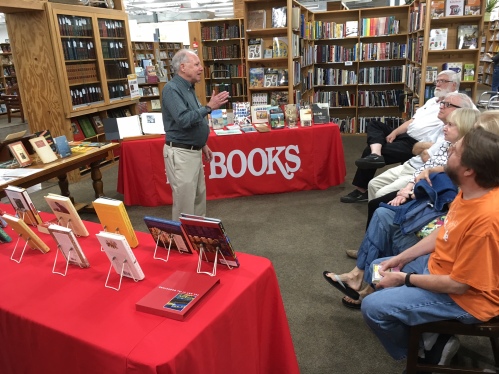
Dallas historian Bob Reitz presents “Collectible Conversations: The History of Dallas in the 50s and 60s,” at Half Price Books’ mothership at 5803 E Northwest Hwy (just off the Dallas Parkway).

Reitz is an old friend, curator of Circle 10 Council, BSA’s Harbin Scout Museum, housed at Camp Wisdom on Redbird Lane — a greater resource since the National Scout Museum decamped from Irving in September. He’s a homegrown Dallas boy, loaded with history of the tumultuous two decades from 1950 to 1970

Half Price Books’s blog featured an interview with Bob, which I crib here for your convenience (and to preserve it!):

For the December presentation in our monthly Collectible Conversations series at the HPB Flagship in Dallas, we welcome Dallas historian Bob Reitz. Reitz will discuss his growing up in Dallas in the 50s and 60s using books as his reference points. Bob gave an earlier Collectible Conversations talk specifically about his life in bookstores and his 37 books about bookstores from his collection.

Coll Conv 8 31 3

We asked Bob to give us a little preview of his upcoming talk.

When did you first feel that Dallas in the 50s and 60s was a special place and time?
In January of 1954, my father’s insurance company transferred him to Dallas from upstate New York. We had a new house built in the Casa View section of northeast Dallas. Cotton fields were being plowed under to create homes for newly returned servicemen beginning to start families after World War II. I started first grade and finished high school living in the same house. I still have a small group of friends from these times. Growing up, it seemed normal to have new movie houses, drive-ins, libraries, swimming pools and a thriving downtown. I never realized as a kid what we had in these unique and special times.

I’ve always thought that besides your family, your neighborhood makes the biggest difference in your life. I didn’t grow up smelling salt water from the ocean or seeing snow-covered mountains on the horizon. I grew up on the rolling blackland prairies in a large urban city straddling the Trinity River.

I know you own many books on the subject. Is there one that may best encapsulate the era for, say, a 20-year-old reader from Milwaukee?
Probably the most thoughtful book about this era in Dallas is by Pulitzer Prize-winning author Lawrence Wright (who graduated from Dallas’s Woodrow Wilson High School). The cover of his book In the New World:  Growing Up with America from the Sixties to the Eighties (1989) reads: “It’s both a story of one man’s coming of age in 1960s Dallas and a provocative account of the end of American innocence, the assassination of John F. Kennedy, the Vietnam War, and the Civil Rights era.”

Were there any particular events of the 50s or 60s that made the biggest impression on you?
One significant event took place in August of 1960 to celebrate the 50th anniversary of the Boy Scouts of America. Five thousand Scouts camped on a hill overlooking White Rock Lake. I had never seen so many Scouts in one place at one time—lines of tents covered the sloping hill in the middle of the city. Today, there is a sign on the slope designating the location as Scout Hill.

The rest of the world probably thinks of President Kennedy’s assassination as the most important event that occurred in Dallas in the 60s. Are many of your books primarily or partially about that event?
I was a junior in high school on that fateful November 22, 1963. I was finishing lunch when a student ran in and said, “The president has been shot, the president has been shot!” They moved us into the auditorium and by 2 p.m. they dismissed classes for the day.

We stayed glued to the television for the next week, witnessing the supposed ineptness of the Dallas Police play out on national TV, including the on-air killing of Lee Harvey Oswald by night club operator Jack Ruby. In the end, the police did pretty well. They caught Oswald within two hours, but Dallas became the laughing stock of the whole nation.

The Kennedy assassination spawned a couple of excellent novels of the era: Libra by Don DeLillo (1998) and November 22 by Bryan Woolley (2013). Author Norman Mailer wrote a telling non-fiction book, Oswald’s Tale: An American Mystery (1995), covering the early life of Lee Harvey Oswald.

Also in my collection is the book Reclaiming History: The Assassination of President John F. Kennedy by Vincent Bugliosi (2007). He concludes that Oswald was the lone gunman and destroys every one of the conspiracy theories.

Another book that agrees Oswald was the lone gunman also asserts that the darkest days of Dallas were caused by local ultraconservatives, such as oilman H.L. Hunt, former Army general Edwin Walker and national congressman, Bruce Alger. That book is Nut Country: Right Wing Dallas and the Birth of the Southern Strategy, by Edward H. Miller (2015).

In your previous Collectibles Conversation presentation, you referred to many Dallas bookstores in whose aisles you lost yourself. How big a role did its bookstores play in your understanding of Dallas history?
Dallas bookstores and libraries have been important throughout all my life. When I was small my dad drove my sister and me to the Lakewood Theater on Saturdays to watch a double feature movie and the cartoons. Afterwards we walked across the street to the Lakewood Library, which allowed us to call home (in the pre-cell phone era). While waiting for dad to come, we checked out lots of books.

Closer to home, I was part of the opening of the Casa View Library, which in 1964 set a national record of checking out over 9,000 books in a single day! In appreciation of the library’s influence in my life, I have put together twenty exhibits at the downtown Dallas Library on a wide variety of subjects, all from my personal book collection.

As a young teenager, I could visit Harper’s Used Books in the Deep Ellum section of downtown Dallas. My primary goal was to collect old Boy Scout Handbooks. What I found was so much more. A college student visited the same bookstore a couple of years before me. He became a Pulitzer Prize-winning author, Larry McMurtry, of Lonesome Dove fame. McMurtry wrote about the changes that occurred as Texas changed from a rural to a mostly urban economy.

My experiences in bookstores have enriched my life and broadened my perspective on how I grew up in Dallas and what I can give back to the cultural life of the city.

Want to hear more from Bob about life in Dallas in the 50s and 60s?  Join us at the HPB Flagship in Dallas for Collectible Conversations: 1950s and 60s Dallas Through Books on Thursday December 28 at 6 p.m.!

Steve is the”Buy Guy” at Half Price Books Corporate.

via Collectible Conversations: The History of Dallas in the 50s & 60s Through Books


Iowans, fly your flags today for statehood, December 28, 1846

December 28, 2017

The 2004 commemorative Iowa quarter-dollar pays homage to Iowa's great artist son, Grant Wood, and the prairie school house, with a motto for Iowa,

The 2004 commemorative Iowa quarter-dollar pays homage to Iowa’s great artist son, Grant Wood, and the prairie school house, with a motto for Iowa, “Foundation in Education.” Wood’s painting is “Arbor Day,” showing students and a teacher planting a tree outside a one-room schoolhouse. Image from the Littleton Coin Company.

Iowans fly their flags today in celebration of the anniversary of Iowa statehood.  Iowa’s admission to the Union came on December 28, 1846; Iowa is the 29th state admitted.

The Flag Code, 4 USC §6 (d), notes that the U.S. flag may be flown on “the birthdays of States (date of admission),” in addition to the other score of dates specifically written into law.

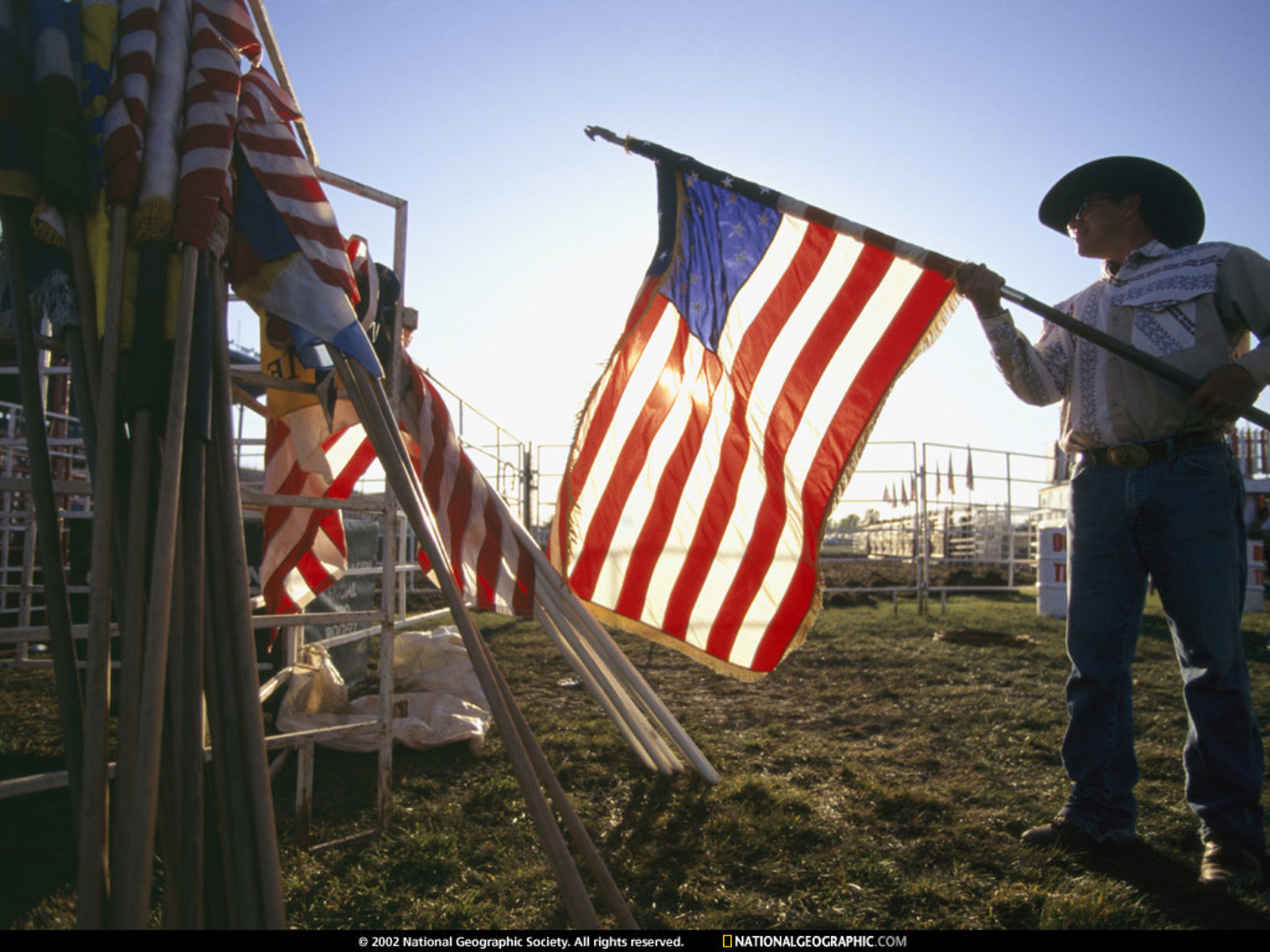
American Flag, Spencer, Iowa, 1996 – caption from the National Geographic Society: A man rolls up U.S. flags at the end of the Clay County Fair in Spencer, Iowa. “Although the population of Spencer is only about 12,000, the fair draws some 300,000 visitors. Once a year, rising from the endless flatness of the Iowa countryside, a crowd forms—to stroll, to hear big country music acts like the Statler Brothers, to sell a grand champion boar, to buy a new silo.” (Photographed on assignment for, but not published in, “County Fairs,” October 1997, National Geographic magazine) Photograph by Randy Olson; copyright National Geographic Society

American Flag, Spencer, Iowa, 1996 – caption from the National Geographic Society: A man rolls up U.S. flags at the end of the Clay County Fair in Spencer, Iowa. “Although the population of Spencer is only about 12,000, the fair draws some 300,000 visitors. Once a year, rising from the endless flatness of the Iowa countryside, a crowd forms—to stroll, to hear big country music acts like the Statler Brothers, to sell a grand champion boar, to buy a new silo.” (Photographed on assignment for, but not published in, “County Fairs,” October 1997, National Geographic magazine) Photograph by Randy Olson; copyright National Geographic Society. Just a great photo.

More:


100th anniversary of the “neglected anniversary” of Mencken and Millard Fillmore’s Bathtub – National Bathtub and Presidential Obscurity Day

December 28, 2017

THIS IS IT!

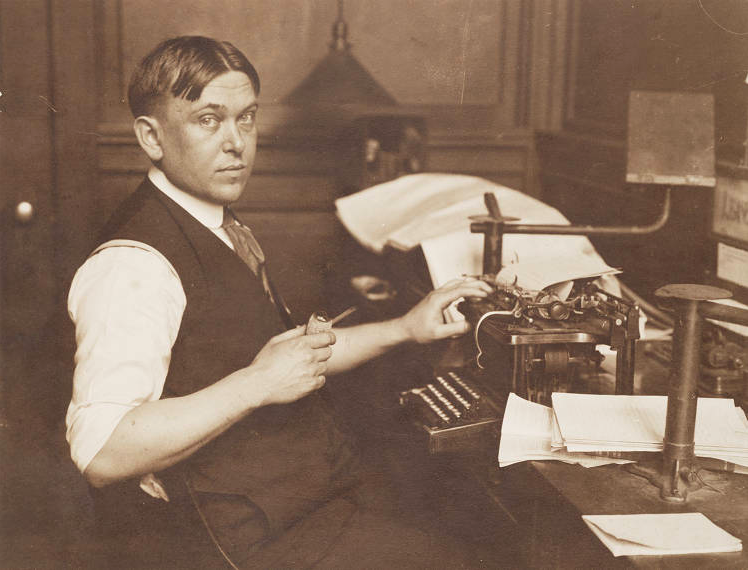
Writer Henry Louis Mencken. This photo, in the archives of the Maryland Historical Society, may have been taken in 1917, the year of Mencken's not-famous-enough hoax on poor old Millard Fillmore.

Writer Henry Louis Mencken. This photo, in the archives of the Maryland Historical Society, may have been taken in 1917, the year of Mencken’s not-famous-enough hoax on poor old Millard Fillmore. Image here via Paris Review.

December 28, 2017, is the 100th anniversary of the false news item, the hoax column written by curmudgeonly newspaperman H. L. Mencken, that lamented the unmarked passing of the anniversary of Millard Fillmore’s “greatest accomplishment,” the placing of a plumbed bathtub in the White House!

Contrary to Woodrow Wilson’s 1916 campaign slogan, “He Kept Us Out of War,” Wilson had just led the U.S. into World War I, on the side of the Allies, the British and French. Mencken was opposed to entering the war, but had thought that if the U.S. got involved it should be on the side of Germany.

So Mencken was quite tuned in to false reports which, he lamented, got picked up by newspapers and spread across the nation. Partly to make a point that news organizations needed to be more careful, and partly because he was on deadline and didn’t have another idea, Mencken created out of thin air a story of the “first” bathtub in the White House, placed by Millard Fillmore (Mencken said) over the objections of experts like the American Medical Association (Mencken claimed).

All hoax.

But that’s where this blog steals its name, and it’s the inspiration for many of us who think false news is bad news and should be stopped, with accurate reports. Be sure to read through to the comments at the end.

And remember: Don’t trust everything you read; read more so you cannot be hoaxed like this.

A Millard Fillmore’s Bathtub December 28 tradition; mostly encore post, but worthy of note on National Bathtub and Presidential Obscurity Day

100 years ago today, on December 28, 1917, this column by H. L. Mencken was published in The New York Evening Mail:

Portrait of H. L. Mencken

1927 Portrait of H. L. Mencken by Nikol Schattenstein; Enoch Pratt Free Library, Baltimore

A Neglected Anniversary

On December 20 there flitted past us, absolutely without public notice, one of the most important profane anniversaries in American history, to wit, the seventy-fifth anniversary of the introduction of the bathtub into These States. Not a plumber fired a salute or hung out a flag. Not a governor proclaimed a day of prayer. Not a newspaper called attention to the day.

True enough, it was not entirely forgotten. Eight or nine months ago one of the younger surgeons connected with the Public Health Service in Washington happened upon the facts while looking into the early history of public hygiene, and at his suggestion a committee was formed to celebrate the anniversary with a banquet. But before the plan was perfected Washington went dry (This was war-time Prohibition, preliminary to the main catastrophe. — HLM), and so the banquet had to be abandoned. As it was, the day passed wholly unmarked, even in the capital of the nation.

Bathtubs are so common today that it is almost impossible to imagine a world without them. They are familiar to nearly everyone in all incorporated towns; in most of the large cities it is unlawful to build a dwelling house without putting them in; even on the farm they have begun to come into use. And yet the first American bathtub was installed and dedicated so recently as December 20, 1842, and, for all I know to the contrary, it may still be in existence and in use.

Curiously enough, the scene of its setting up was Cincinnati, then a squalid frontier town, and even today surely no leader in culture. But Cincinnati, in those days as in these, contained many enterprising merchants, and one of them was a man named Adam Thompson, a dealer in cotton and grain. Thompson shipped his grain by steamboat down the Ohio and Mississippi to New Orleans, and from there sent it to England in sailing vessels. This trade frequently took him to England, and in that country, during the ’30s, he acquired the habit of bathing.

The bathtub was then still a novelty in England. It had been introduced in 1828 by Lord John Russell and its use was yet confined to a small class of enthusiasts. Moreover, the English bathtub, then as now, was a puny and inconvenient contrivance — little more, in fact, than a glorified dishpan — and filling and emptying it required the attendance of a servant. Taking a bath, indeed, was a rather heavy ceremony, and Lord John in 1835 was said to be the only man in England who had yet come to doing it every day.

Thompson, who was of inventive fancy — he later devised the machine that is still used for bagging hams and bacon — conceived the notion that the English bathtub would be much improved if it were made large enough to admit the whole body of an adult man, and if its supply of water, instead of being hauled to the scene by a maid, were admitted by pipes from a central reservoir and run off by the same means. Accordingly, early in 1842 he set about building the first modern bathroom in his Cincinnati home — a large house with Doric pillars, standing near what is now the corner of Monastery and Orleans streets.

There was then, of course, no city water supply, at least in that part of the city, but Thompson had a large well in his garden, and he installed a pump to lift its water to the house. This pump, which was operated by six Negroes, much like an old-time fire engine, was connected by a pipe with a cypress tank in the garret of the house, and here the water was stored until needed. From the tank two other pipes ran to the bathroom. One, carrying cold water, was a direct line. The other, designed to provide warm water, ran down the great chimney of the kitchen, and was coiled inside it like a giant spring.

The tub itself was of new design, and became the grandfather of all the bathtubs of today. Thompson had it made by James Cullness, the leading Cincinnati cabinetmaker of those days, and its material was Nicaragua mahogany. It was nearly seven feet long and fully four feet wide. To make it water-tight, the interior was lined with sheet lead, carefully soldered at the joints. The whole contraption weighed about 1,750 pounds, and the floor of the room in which it was placed had to be reinforced to support it. The exterior was elaborately polished.

In this luxurious tub Thompson took two baths on December 20, 1842 — a cold one at 8 a.m. and a warm one some time during the afternoon. The warm water, heated by the kitchen fire, reached a temperature of 105 degrees. On Christmas day, having a party of gentlemen to dinner, he exhibited the new marvel to them and gave an exhibition of its use, and four of them, including a French visitor, Col. Duchanel, risked plunges into it. The next day all Cincinnati — then a town of about 100,000 people — had heard of it, and the local newspapers described it at length and opened their columns to violent discussions of it.

The thing, in fact, became a public matter, and before long there was bitter and double- headed opposition to the new invention, which had been promptly imitated by several other wealthy Cincinnatians. On the one hand it was denounced as an epicurean and obnoxious toy from England, designed to corrupt the democratic simplicity of the Republic, and on the other hand it was attacked by the medical faculty as dangerous to health and a certain inviter of “phthisic, rheumatic fevers, inflammation of the lungs and the whole category of zymotic diseases.” (I quote from the Western Medical Repository of April 23, 1843.)

The noise of the controversy soon reached other cities, and in more than one place medical opposition reached such strength that it was reflected in legislation. Late in 1843, for example, the Philadelphia Common Council considered an ordinance prohibiting bathing between November 1 and March 15, and it failed of passage by but two votes. During the same year the legislature of Virginia laid a tax of $30 a year on all bathtubs that might be set up, and in Hartford, Providence, Charleston and Wilmington (Del.) special and very heavy water rates were levied upon those who had them. Boston, very early in 1845, made bathing unlawful except upon medical advice, but the ordinance was never enforced and in 1862 it was repealed.

This legislation, I suspect, had some class feeling in it, for the Thompson bathtub was plainly too expensive to be owned by any save the wealthy; indeed, the common price for installing one in New York in 1845 was $500. Thus the low caste politicians of the time made capital by fulminating against it, and there is even some suspicion of political bias in many of the early medical denunciations. But the invention of the common pine bathtub, lined with zinc, in 1847, cut off this line of attack, and thereafter the bathtub made steady progress.

The zinc tub was devised by John F. Simpson, a Brooklyn plumber, and his efforts to protect it by a patent occupied the courts until 1855. But the decisions were steadily against him, and after 1848 all the plumbers of New York were equipped for putting in bathtubs. According to a writer in the Christian Register for July 17, 1857, the first one in New York was opened for traffic on September 12, 1847, and by the beginning of 1850 there were already nearly 1,000 in use in the big town.

After this medical opposition began to collapse, and among other eminent physicians Dr. Oliver Wendell Holmes declared for the bathtub, and vigorously opposed the lingering movement against it in Boston. The American Medical Association held its annual meeting in Boston in 1849, and a poll of the members in attendance showed that nearly 55 per cent of them now regarded bathing as harmless, and that more than 20 per cent advocated it as beneficial. At its meeting in 1850 a resolution was formally passed giving the imprimatur of the faculty to the bathtub. The homeopaths followed with a like resolution in 1853.

But it was the example of President Millard Fillmore that, even more than the grudging medical approval, gave the bathtub recognition and respectability in the United States. While he was still Vice-President, in March, 1850, he visited Cincinnati on a stumping tour, and inspected the original Thompson tub. Thompson himself was now dead, but his bathroom was preserved by the gentlemen who had bought his house from the estate. Fillmore was entertained in this house and, according to Chamberlain, his biographer, took a bath in the tub. Experiencing no ill effects, he became an ardent advocate of the new invention, and on succeeding to the Presidency at Taylor’s death, July 9, 1850, he instructed his secretary of war, Gen. Charles M. Conrad, to invite tenders for the construction of a bathtub in the White House.

This action, for a moment, revived the old controversy, and its opponents made much of the fact that there was no bathtub at Mount Vernon, or at Monticello, and that all the Presidents and other magnificoes of the past had got along without any such monarchical luxuries. The elder Bennett, in the New York Herald, charged that Fillmore really aspired to buy and install in the White House a porphyry and alabaster bath that had been used by Louis Philippe at Versailles. But Conrad, disregarding all this clamor, duly called for bids, and the contract was presently awarded to Harper & Gillespie, a firm of Philadelphia engineers, who proposed to furnish a tub of thin cast iron, capable of floating the largest man.

This was installed early in 1851, and remained in service in the White House until the first Cleveland administration, when the present enameled tub was substituted. The example of the President soon broke down all that remained of the old opposition, and by 1860, according to the newspaper advertisements of the time, every hotel in New York had a bathtub, and some had two and even three. In 1862 bathing was introduced into the Army by Gen. McClellan, and in 1870 the first prison bathtub was set up at Moyamensing Prison, in Philadelphia.

So much for the history of the bathtub in America. One is astonished, on looking into it, to find that so little of it has been recorded. The literature, in fact, is almost nil. But perhaps this brief sketch will encourage other inquirers and so lay the foundation for an adequate celebration of the centennial in 1942.

(Text courtesy of Poor Mojo’s Almanac(k))

The entire history was a hoax composed by Mencken.

Even conservative wackoes appreciate the column.

Content with his private joke, Mencken remained silent about the hoax until a follow-up article, “Melancholy Reflections,” appeared in the Chicago Tribune on May 23, 1926, some eight years later. This was Mencken’s confession. It was also an appeal for reason to the American public.

His hoax was a joke gone bad. “A Neglected Anniversary” had been printed and reprinted hundreds of times in the intervening years. Mencken had been receiving letters of corroboration from some readers and requests for more details from others. His history of the bathtub had been cited repeatedly by other writers and was starting to find its way into reference works. As Mencken noted in “Melancholy Reflections,” his “facts” “began to be used by chiropractors and other such quacks as evidence of the stupidity of medical men. They began to be cited by medical men as proof of the progress of public hygiene.” And, because Fillmore’s presidency had been so uneventful, on the date of his birthday calendars often included the only interesting tidbit of information they could find: Fillmore had introduced the bathtub into the White House. (Even the later scholarly disclosure that Andrew Jackson had a bathtub installed there in 1834—years before Mencken claimed it was even invented—did not diminish America’s conviction that Fillmore was responsible.)

(No, dear reader, probably not correct; surely John Adams brought a bathtub with him when he moved into the White House, then called the President’s Mansion.  Plumbing, hot water, and finally hot water to a bathtub in the president’s residence, were installed between 1830 and 1853, as best I can determine.)

Mencken wrote an introduction to the piece in a later bookA Mencken Chrestomathy (Alfred A. Knopf, 1949):

The success of this idle hoax, done in time of war, when more serious writing was impossible, vastly astonished me. It was taken gravely by a great many other newspapers, and presently made its way into medical literature and into standard reference books. It had, of course, no truth in it whatsoever, and I more than once confessed publicly that it was only a jocosity… Scarcely a month goes by that I do not find the substance of it reprinted, not as foolishness but as fact, and not only in newspapers but in official documents and other works of the highest pretensions.

There’s a moral to the story:  Strive for accuracy!

So, Dear Reader, check for accuracy, and question authority.

Fact checks — what else might need to be corrected in this story?

Resources:

Finally, Dear Readers — have you noticed someone falling victim to the hoax of Millard Fillmore’s Bathtub recently?  Give us details in comments, please.


December 27, Great Beginnings Day 2017: Darwin, Apollo, and more

December 27, 2017

December 27 is one of those days — many of us are off work, but it’s after Boxing Day, and it’s not yet on to New Year’s Eve or Day. We should have celebrated, maybe.

It’s the end of the year, and yet it is also a day of great beginnings.

We should celebrate December 27 as a day of portent: A good embarkation, and a good, safe end to a nation-encouraging trip to almost touch the Moon.

HMS Beagle, Darwin's ship

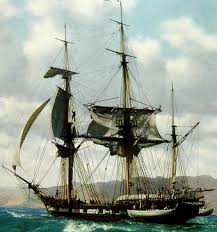
HMS Beagle, on a voyage of discovery; painting of the Beagle in the Galapagos by John Chancellor

On December 27, 1831, Charles Darwin and H.M.S. Beagle set sail on an around-the-world voyage of discovery that would change all of science, and especially biology, forever.

December 27 1831
After a few delays, H.M.S. Beagle headed out from Plymouth with a crew of 73 under clear skies and a good wind. Darwin became sea-sick almost immediately.

Darwin never fully overcame his seasickness, but he fought it well enough to become the single greatest collector of specimens in history for the British Museum and British science, a distinction that won him election to science societies even before his return from the trip — and cemented his life in science, instead of in the church.

Darwin’s discoveries would have revolutionized biology in any case. But, in analyzing what he had found, a few years later and with the aid of experts at the British Museum, Darwin realized he had disproved much of William Paley’s hypotheses about life and its diversity, and that another, more basic explanation was possible. This led to his discovery of evolution by natural and sexual selection.

Mini-sheet from the Royal Mail honoring Darwin's discoveries in the Galapagos Islands

Mini-sheet from the Royal Mail in 2009 honoring Darwin’s discoveries in the Galapagos Islands

On December 27, 1968, Apollo 8 splashed down after a successful and heartening trip to orbit the Moon. The three crewmen, Commander Frank Borman, James A. Lovell, Jr., and William A. Anders, had orbited the Moon, a very important milestone in the methodological race to put humans on the Moon (which would be accomplished seven months later).

1968 was a terrible year for the U.S., with the North Korean capture of the U.S.S. Pueblo, assassinations of Rev. Martin Luther King, Jr., and Sen. Robert F. Kennedy during the presidential campaign, riots in dozens of American cities, nasty political conventions with riots at the Democratic Convention in Chicago, a contentious and bitter election making sore the nation’s divide over Vietnam policy, and other problems. On Christmas Eve, Borman, Lovell and Anders broadcast from orbit around the Moon, a triumphant and touching moment for the Apollo Program and Americans around the world. Their safe return on December 27 raised hopes for a better year in 1969.

Motherboard.tv has a great write up from Alex Pasternack, especially concerning the famous photo taken a few days prior to splashdown:

In 1968, NASA engineers were scrambling to meet President Kennedy’s challenge to land a man on the moon by decade’s end. Because delays with the lunar module were threatening to slow the Apollo program, NASA chose to change mission plans and send the crew of Apollo 8 all the way to the moon without a lunar module.

Exactly 43 [49] years ago, the three astronauts of Apollo 8 became the first humans to orbit another celestial object. As they came around the dark side of the Moon for the third time, Frank Borman, the commander, finally turned their capsule around. And then they saw the Earth.

Borman: Oh my God! Look at that picture over there! Here’s the Earth coming up. Wow, is that pretty.
Anders: Hey, don’t take that, it’s not scheduled.
Borman: (laughing) You got a color film, Jim?
Anders: Hand me that roll of color quick, will you…

One of the resulting photos taken by Anders on a Hasselblad camera became one of the world’s most iconic images.

As Bill Anders recalls it:

I just happened to have one with color film in it and a long lens. All I did was to keep snapping… It’s not a very good photo as photos go, but it’s a special one. It was the first statement of our planet Earth and it was particularly impressive because it’s contrasted against this startling horizon . . . After all the training and studying we’d done as pilots and engineers to get to the moon safely and get back, [and] as human beings to explore moon orbit, what we really discovered was the planet Earth.

Plan to raise a glass today, December 27, 2012, to Great Beginnings Day for the human race. December 27 is a day we should remember, for these achievements. (But if you’re raising a glass, consider Carrie Nation, too!)

Also on December 27:

More:

This is an encore post.

Yes, this is an encore post. Defeating ignorance takes patience and perseverance.


December 7, 2017: Fly flags for Pearl Harbor Remembrance, and for Delaware statehood — and at half staff

December 7, 2017

From Dayton Daily News: Jeff Duford, curator for the National Museum of the U.S. Air Force, with a flag that flew on the U.S.S. St. Louis in Hawaii during the attack on Pearl Harbor on Dec. 7, 1941. The same flag flew aboard the U.S.S. Iowa in Tokyo Bay on September 16, 1944, as Japan signed instruments of surrender aboard the U.S.S. Missouri.

From Dayton Daily News: Jeff Duford, curator for the National Museum of the U.S. Air Force, with a flag that flew on the U.S.S. St. Louis in Hawaii during the attack on Pearl Harbor on Dec. 7, 1941. The same flag flew aboard the U.S.S. Iowa in Tokyo Bay on September 16, 1944, as Japan signed instruments of surrender aboard the U.S.S. Missouri. [This flag was displayed for one day at the museum, on Pearl Harbor Remembrance Day 2016.]

December 7 is a two-fer flag-flying day.

By public law, December 7 is Pearl Harbor Remembrance Day, and Americans fly the U.S. flag in memory of those who lost their lives at Pearl Harbor on December 7, 1941. U.S. flags should be flown at half-staff.

As for Delaware, under the U.S. Flag Code, residents of the relevant state should fly their U.S. flag on the date the state joined the union.

In 1787 Delaware quickly and promptly elected delegates to the former colony’s convention to ratify the Constitution proposed at the Philadelphia convention just over three months earlier. The ratification of the Constitution won opposition from strong factions in almost every state. Pols anticipated tough fights in New York, Virginia, and other states with large populations. They also expected other states would wait to see what the bigger states did.

Delaware didn’t wait.  On December 7 Delaware became the first of the former British colonies to ratify the Constitution. Perhaps by doing so, it guaranteed other states would act more favorably on ratification.

Because Delaware was first, it is traditionally granted first position in certain ceremonies, such as the parades honoring newly-inaugurated presidents. Delaware’s nickname is “The First State.”

In Delaware and the rest of the nation, fly your flags on December 7, 2016. If you can, fly your flag at half-staff to honor the dead at Pearl Harbor; if you have a flag on a pole that cannot be adjusted, just fly the flag normally.

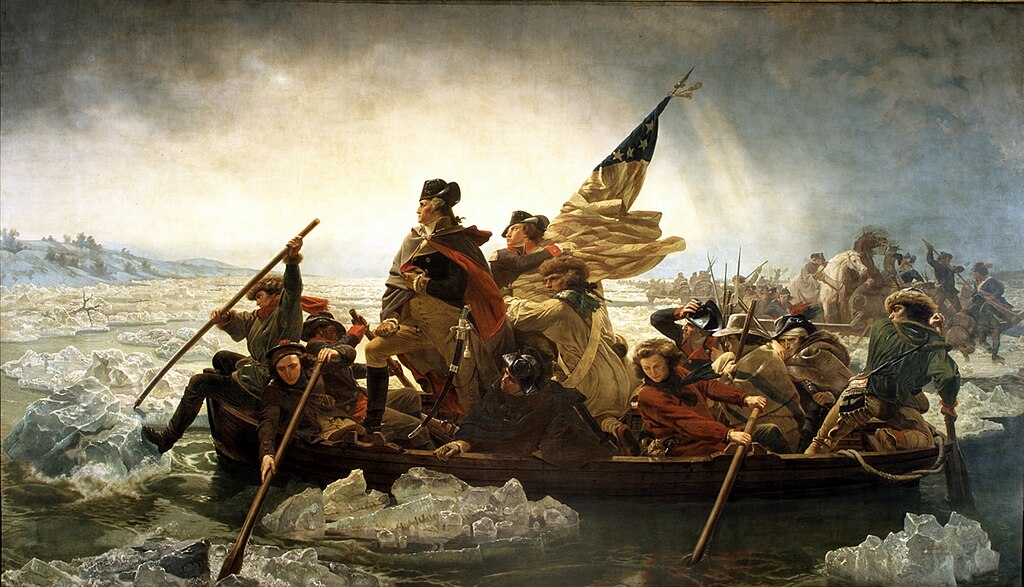
The most famous portrayal of a U.S. flag flying in Delaware is in the painting by Emanuel Leutze (American, 1816–1868).

The most famous portrayal of a U.S. flag flying in Delaware is in the painting by Emanuel Leutze (American, 1816–1868). “Washington Crossing the Delaware,” 1851. The Metropolitan Museum of Art, New York, Gift of John Stewart Kennedy, 1897 (97.34) Among other problems with this portrayal: The flag depicted had not been designated on the date of the crossing, Christmas 1776.

Yes, this is mostly an encore post. Fighting ignorance requires patience.

Yes, this is mostly an encore post. Fighting ignorance requires patience.


It’s Martin van Buren’s birthday, December 5

December 5, 2017

Former President Martin van Buren, circa 1855-1888. Matthew Brady photograph (Imperial print of Martin Van Buren. Salted paper print from glass negative. Provenance from W.H. Lowdermilk & Co., Rare Books, 1418 F Street, Washington, DC) Metropolitan Museum image, via Wikimedia

Former President Martin van Buren, circa 1855-1888. Matthew Brady photograph (Imperial print of Martin Van Buren. Salted paper print from glass negative. Provenance from W.H. Lowdermilk & Co., Rare Books, 1418 F Street, Washington, DC) Metropolitan Museum image, via Wikimedia

Martin van Buren was our nation’s 8th president, serving one term, 1837-1841.

This photo is roughly  15 years after van Buren left office, taken in the Washington, D.C., studio of Matthew Brady, whose photography gained fame from his work photographing battle sites during the American Civil War.

Martin van Buren was born December 5, 1782, in Kinderhook, New York. He is the only president to have the first name Martin. He’d be 235 years old today, and still king of the mutton chop sideburns among presidents.

Van Buren died on July 24, 1862.

More:

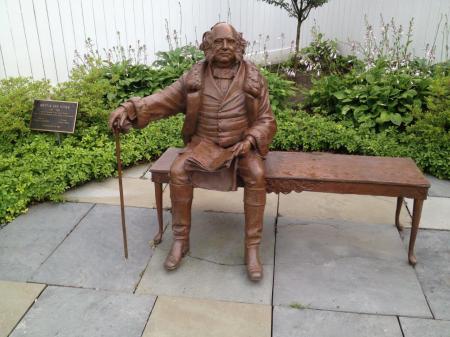
At Broad and Hudson Streets in Kinderhook, New York, one can sit with a statue of Martin Van Buren, and see if one can decipher the newspaper he is reading. PresidentsUSA image

At Broad and Hudson Streets in Kinderhook, New York, one can sit with a statue of Martin Van Buren, and see if one can decipher the newspaper he is reading. PresidentsUSA image


December 2: Millard Fillmore’s Guano Day! 2017 edition

December 2, 2017

Why December 2?

(You couldn’t make this stuff up if you were Monty Python.)

English: Millard Fillmore White House portrait

Millard Fillmore’s White House portrait, via Wikipedia

President Millard Fillmore, in the State of the Union Address, December 2, 1850

Peruvian guano has become so desirable an article to the agricultural interest of the United States that it is the duty of the Government to employ all the means properly in its power for the purpose of causing that article to be imported into the country at a reasonable price. Nothing will be omitted on my part toward accomplishing this desirable end. I am persuaded that in removing any restraints on this traffic the Peruvian Government will promote its own best interests, while it will afford a proof of a friendly disposition toward this country, which will be duly appreciated.

Did any other U.S. President spend so much time thinking about guano?  Did any president ever mention it in a State of the Union Address?  The curious case of Millard Fillmore, Seer, just grows.

Guano, or bird poop (and its relative, bat poop), contains phosphorus, which is an essential element for life.  Consequently, it turns out to be a key ingredient in effective agricultural fertilizers.  In international competition for supremacy in farming and farm exports, guano became a key resource to fight over, in the 19th century.

It’s almost safe to say the fights were economic; but guano did play a key role in wars in South America (see Andrew Leonard’s article, noted below).

Fillmore figured out that the substance had great importance, coupled that with the rather esoteric knowledge that sea birds tended to deposit guano in great abundance on certain islands, often unoccupied, and ordered the U.S. Navy to claim islands found to contain guano deposits that were not claimed by other nations.

By the American Civil War, the importance of phosphorus to the production of gun powder became an issue for the armies of the North and South.  Millard Fillmore had set the stage for the North to win an important advantage in gun powder production, just one of many that led to the defeat of the South.

It’s one more thing we should thank Millard Fillmore for doing. Our study of history should inform us that it is, indeed, important for politicians to understand the importance of guano.

Fillmore knew his guano.

Take a moment on December 2 to toast Millard Fillmore’s prescience, on Guano Day!

More:  

You can purchase Peruvian guano today, from Amazon, GrowOrganic.com, and other sources. It's roughly $15 per pound in the U.S.

You can purchase Peruvian guano today, from Amazon, GrowOrganic.com, and other sources. It’s roughly $15 per pound in the U.S.

This is an encore post.

Yes, this is an edited encore post. Defeating ignorance takes patience and perseverance.


December’s dates to fly Old Glory, 2017

November 28, 2017

U.S. flag flies at the U.S. Capitol in a snow storm. Photo by Victoria Pickering, Creative Commons license, from Flickr

U.S. flag flies at the U.S. Capitol in a snow storm. Photo by Victoria Pickering, Creative Commons license, from Flickr. (This photo was actually taken in March.) 

November offers several flag flying days, especially in years when there is an election.

But December may be the month with the most flag-flying dates, when we include statehood days.

December 7 is Pearl Harbor Remembrance Day.  It’s not in the Flag Code, but public law (P.L. 103-308) urges that the president should issue a proclamation asking Americans to fly flags.

December 25 is Christmas Day, a federal holiday, and one of the score of dates designated in the Flag Code. If you watch your neighborhood closely, you’ll note even some of the most ardent flag wavers miss posting the colors on this day, as they do on Thanksgiving and New Years.

Other dates?

Nine states attained statehood in December, so people in those states should fly their flags (and you may join them).  Included in this group is Delaware, traditionally the “First State,” as it was the first colony to ratify the U.S. Constitution:

  • Illinois, December 3 (1818, 21st state)
  • Delaware, December 7 (1787, 1st state)
  • Mississippi, December 10 (1817, 20th state)
  • Indiana, December 11 (1816, 19th state)
  • Pennsylvania, December 12 (1787, 2nd state)
  • Alabama, December 14 (1819, 22nd state)
  • New Jersey, December 18 (1787, 3rd state)
  • Iowa, December 28 (1846, 29th state)
  • Texas, December 29 (1845, 28th state)

December 15 is Bill of Rights Day, marking the day in 1791 when the Bill of Rights was declared ratified; but though this event generally gets a presidential proclamation, there is no law or executive action that requires flags to fly on that date, for that occasion.

Eleven flag-flying dates in December.  Does any other month have as many flag flying opportunities?

Have I missed any December flag-flying dates?  11 events on 10 days (Delaware’s statehood falls on the anniversary of the Pearl Harbor attack).

Here’s a list of the days to fly the flag, under national law, in chronological order:

  1. Illinois, December 3 (1818, 21st state)
  2. Pearl Harbor Remembrance Day, December 7
  3. Delaware, December 7 (1787, 1st state) (shared with Pearl Harbor Remembrance Day)
  4. Mississippi, December 10 (1817, 20th state)
  5. Indiana, December 11 (1816, 19th state)
  6. Pennsylvania, December 12 (1787, 2nd state)
  7. Alabama, December 14 (1819, 22nd state)
  8. New Jersey, December 18 (1787, 3rd state)
  9. Christmas Day, December 25
  10. Iowa, December 28 (1846, 29th state)
  11. Texas, December 29 (1845, 28th state)

Fly your flag with respect to the flag, for the republic it represents, and for all those who sacrificed that it may wave on your residence.

And if you travel for the holidays? You’re away from home?

Astronauts Eugene Cernan and Harrison Schmitt took a flag with them when they visited the Moon in December 1972. Maybe you could carry a small travel flag, too.

NASA caption: Apollo 17 commander Eugene A. Cernan is holding the lower corner of the American flag during the mission's first EVA, December 12, 1972. Photograph by Harrison J.

NASA caption: Apollo 17 commander Eugene A. Cernan is holding the lower corner of the American flag during the mission’s first EVA, December 12, 1972. Photograph by Harrison J. “Jack” Schmitt. Image Credit: NASA


Glorious thread on typewriters and their masters

November 22, 2017

From Dean Frey, posting on Twitter as “Deny Fear @dean_frey.”

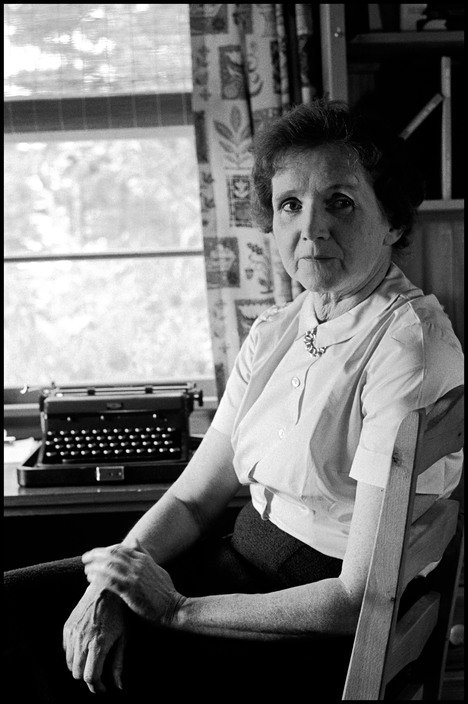
Frey posted this wonderful picture of Rachel Carson, taken by Erich Hartmann in 1962 (after publication of Silent Spring?)

Rachel Carson and her typewriter, by Erich Hartmann, 1962.

Rachel Carson and her typewriter, by Erich Hartmann, 1962.

But hold your horses. Frey posted a raft of other artists with their machines. What a glorious little thread!

https://twitter.com/dean_frey/status/933033391447875585

The entire glorious thread.

You have seen some of those photos, some of those artists, and some of those typewriters in other posts at Millard Fillmore’s Bathtub. There are some sparkling photos there I had not seen before.

Thank you, Dean Frey.


Did anybody celebrate North Carolina statehood?

November 22, 2017

U.S. flag flew in at least one spot in North Carolina on statehood day, November 21, 2017. Photo at Chimney Rock State Park, outside of Asheville, North Carolina, near U.S. Highway 64/74A, on the Rocky Broad River.

U.S. flag flew in at least one spot in North Carolina on statehood day, November 21, 2017. Photo at Chimney Rock State Park, outside of Asheville, North Carolina, near U.S. Highway 64/74A, on the Rocky Broad River. History.com image.

Staff at Millard Fillmore’s Bathtub do not always stay ahead of flag flying days. November 21 is North Carolina’s statehood day, and MFB missed noting that earlier.

Looking back, we wonder: Does anyone in North Carolina celebrate North Carolina’s statehood?

Newspapers, television and radio, and other media did not note any celebration, if it occurred. Do North Carolinians fly their U.S. flags on November 21, for statehood day?

North Carolina became the 12th state, ratifying the Constitution on November 21, 1789.

If you’re in North Carolina, did you fly your flag on Statehood Day?

U.S. 25-cent piece commemorating North Carolina, in the series honoring all 50 states. The design follows John T. Daniels's iconic photo of the first well-documented heavier-than-air flying machine flight, by the Wright Brothers, at Kittyhawk, North Carolina, in 1903.

U.S. 25-cent piece commemorating North Carolina, in the series honoring all 50 states. The design follows John T. Daniels’s iconic photo of the first well-documented heavier-than-air flying machine flight, by the Wright Brothers, at Kittyhawk, North Carolina, in 1903.

Notes from Twitter:

More:


Remembering Lincoln’s Gettysburg Address, November 19, 1863

November 20, 2017


154 years ago this week, Abraham Lincoln redefined the Declaration of Independence and the goals of the American Civil War, in a less-than-two-minute speech dedicating part of the battlefield at Gettysburg, Pennsylvania, as a cemetery and final resting place for soldiers who died in the fierce battle fought there the previous July 1 through 3.

Interesting news if you missed it: More photos from the Library of Congress collection may contain images of Lincoln. The photo above, detail from a much larger photo, had been thought for years to be the only image of Lincoln from that day. The lore is that photographers, taking a break from former Massachusetts Sen. Edward Everett’ s more than two-hour oration, had expected Lincoln to go on for at least an hour. His short speech caught them totally off-guard, focusing their cameras or taking a break. Lincoln finished before any photographer got a lens open to capture images.

Images of people in these photos are very small, and difficult to identify. Lincoln was not identified at all until 1952:

The plate lay unidentified in the Archives for some fifty-five years until in 1952, Josephine Cobb, Chief of the Still Pictures Branch, recognized Lincoln in the center of the detail, head bared and probably seated. To the immediate left (Lincoln’s right) is Lincoln’s bodyguard, Ward Hill Lamon, and to the far right (beyond the limits of the detail) is Governor Andrew G. Curtin of Pennsylvania. Cobb estimated that the photograph was taken about noontime, just after Lincoln arrived at the site and before Edward Everett’s arrival, and some three hours before Lincoln gave his now famous address.

On-line, the Abraham Lincoln Blog covered the discovery that two more photographic plates from the 1863 speech at Gettysburg may contain images of Lincoln in his trademark stove-pipe hat. Wander over to the story at the USA Today site, and you can see just how tiny are these detail images in relation to the photographs themselves. These images are tiny parts of photos of the crowd at Gettysburg. (The story ran in USA Today last Thursday or Friday — you may be able to find a copy of that paper buried in the returns pile at your local Kwikee Mart.) Digital technologies, and these suspected finds of Lincoln, should prompt a review of every image from Gettysburg that day.

To the complaints of students, I have required my junior U.S. history students to memorize the Gettysburg Address. In Irving I found a couple of students who had memorized it for an elementary teacher years earlier, and who still could recite it. Others protested, until they learned the speech. This little act of memorization appears to me to instill confidence in the students that they can master history, once they get it done.

To that end, I discovered a good, ten-minute piece on the address in Ken Burns’ “Civil War” (in Episode 5). On DVD, it’s a good piece for classroom use, short enough for a bell ringer or warm-up, detailed enough for a deeper study, and well done, including the full text of the address itself performed by Sam Waterson.

Edward Everett, the former Massachusetts senator and secretary of state, was regarded as the greatest orator of the time. A man of infinite grace, and a historian with some sense of events and what the nation was going through, Everett wrote to Lincoln the next day after their speeches:

“I should be glad, if I could flatter myself that I came as near the central idea of the occasion in two hours, as you did in two minutes.”

Interesting note: P. Z. Myers at Pharyngula noted in 2007 that the Gettysburg Address was delivered “seven score and four years ago.” Of course, that will never happen again. I’ll wager he was the first to notice that odd juxtaposition on the opening line.

Resources for students and teachers:

Yes, this is mostly an encore post. Fighting ignorance requires patience.

Yes, this is mostly an encore post. Fighting ignorance requires patience.