This is more evidence that the whole flap is a hoax.
True to form, several birther and other conspiracy paranoiac sites claim that these plants in Nebraska are gone, in flames, or leaking water that nearly glows.
Can’t Sarah Palin point her bus to Nebraska and let her press entourage get the real story?
Spread the word; friends don't allow friends to repeat history.
A shocking report prepared by Russia’s Federal Atomic Energy Agency (FAAE) on information provided to them by the International Atomic Energy Agency (IAEA) states that the Obama regime has ordered a “total and complete” news blackout relating to any information regarding the near catastrophic meltdown of the Fort Calhoun Nuclear Power Plant located in Nebraska.
According to this report, the Fort Calhoun Nuclear Plant suffered a “catastrophic loss of cooling” to one of its idle spent fuel rod pools on 7 June after this plant was deluged with water caused by the historic flooding of the Missouri River which resulted in a fire causing the Federal Aviation Agency (FAA) to issue a “no-fly ban” over the area.
Located about 20 minutes outside downtown Omaha, the largest city in Nebraska, the Fort Calhoun Nuclear Plant is owned by Omaha Public Power District (OPPD) who on their website denies their plant is at a “Level 4” emergency by stating: “This terminology is not accurate, and is not how emergencies at nuclear power plants are classified.”
So, we have some questions to deal with:
Is there a serious incident at the Fort Calhoun facility?
Has anyone ordered a news blackout, and if so, why?
Is it likely that a Pakistani newspaper relying on Russian sources can better report on a nuclear power plant in Nebraska than, say, the local Omaha newspaper?
As much as we might like to give The Nation a chance at being accurate, how likely is it that a U.S. president could order a complete revocation of emergency safety plans for a nuclear facility, when, by law and regulation, those plans are designed to protect the public? The story smells bad from the start, just on government processes in the U.S.
This is the photograph used by The Nation to illustrate its online article claiming a meltdown at the Fort Calhoun nuclear power station in Nebraska. It shows a flooded nuclear power station, Fort Calhoun we might assume. Is it? Does the photograph show any problem besides the flooding?
The Russian report is too strong, probably. First, there’s no news blackout, as evidenced by local reporting. Second, our American “be-too-conservative-by-a-factor-of-ten” safety standards make piffles sound like major problems. The story’s being filtered through a Pakistani newspaper should give us further pause in taking things at face value.
Cooper Nuclear Station near Brownville, Neb., declared a “Notification of Unusual Event” about 4 a.m. Sunday when the Missouri River there reached a height of 42.5 feet.
The declaration, which has been anticipated by the power plant’s operators, was made as part of safety and emergency preparedness plan the station follows when flooding conditions are in effect.
The plan’s procedures dictate when the Missouri River’s water level reaches 42.5 feet, or greater than 899 feet above sea level, a notification of unusual event is declared. If the river’s level increases to 45.5 feet or 902 feet above sea level, plant operators are instructed take the station offline as a safety measure.
FORT CALHOUN, Neb. — Despite the stunning sight of the Fort Calhoun nuclear reactor surrounded by water and the weeks of flooding that lie ahead, the plant is in a safe cold shutdown and can remain so indefinitely, the reactor’s owners and federal regulators say.
“We think they’ve taken adequate steps to protect the plant and to assure continued safety,” Victor Dricks, spokesman for the Nuclear Regulatory Commission, said Thursday.
Tim Burke, vice president at Omaha Public Power District, said the plant’s flood barriers are being built to a level that will protect against rain and the release of record amounts of water from upstream dams on the Missouri River.
“We don’t see any concerns around the Fort Calhoun Nuclear Station,” Burke said at a briefing in Omaha Mayor Jim Suttle’s office.
The nuclear plant, 20 miles north of Omaha, was shut down April 9 for refueling. It has not been restarted because of the imminent flooding.
Who do we believe, a Russian report issued more than 6,000 miles from Nebraska, reported in a newspaper in Pakistan, or the local reporters on the beat?
Photo caption from the Omaha World-Herald: "The Fort Calhoun Nuclear Station from the air Thursday. OPPD was putting the finishing touches on federally ordered flood-defense improvements before flooding began. MATT MILLER/THE WORLD-HERALD"
Current Reactor Status page from the U.S. Nuclear Regulatory Commission (NRC) (This page is updated daily, and includes the power output from each nuclear power generating station in the United States; as of June 20, 2011, it’s showing zero output from Fort Calhoun, and 100% from Cooper (see Region 4 listing))
Idaho Samizdat: Nuke Notes provides more coverage from a well-informed view (the writer purports to be a former nuclear industry worker and insider), for example: “Also, there are concerns because the Federal Aviation Administration (FAA) issued a ‘no fly‘ zone over the reactor. (Complete FAA NOTAM image)(large) What the FAA did is remind pilots of the ban which has been in place for all nuclear reactor sites since 2001.” [Dan Yurman is the author — see his comment, below.]
UPDATE, June 20, 2011: Let’s call it a hoax
I don’t think I’m going too far out on a limb to call the claims of a serious accident, emergency and potential disaster at the Fort Calhoun site, a hoax. The Russian report — if it exists — may not have been intended as a hoax, but coupled with filtering through the credulous and gullible foreign press (we’re looking at you, Pakistan’s The Nation), it has risen to hoax level, to be debunked. Sure, you should be concerned about safety and security at Fort Calhoun and Cooper — but you should be concerned about safety and security at every nuclear power plant around the world, all the time. This may be a good time for you to reread John McPhee’s brilliant Curve of Binding Energy. It’s dated — Ted Taylor died October 28, 2004 (was his autobiography ever published?) — but still accurate and informative, plus, any excuse to read any work of McPhee is a great one.
Spread the word; friends don't allow friends to repeat history.
May 23, 1926, H. L. Mencken’s newspaper column confessed his hoax of nine years earlier — he had made up whole cloth the story of Millard Fillmore’s only accomplishment being the installation of a plumbed bathtub in the White House (in the 1850s known as the Executive Mansion).
Alas, the hoax cat was out of the bag, and the hoax information still pollutes the pool of history today.
On Dec. 28, 1917, I printed in the New York Evening Mail, a paper now extinct, an article purporting to give the history of the bathtub. This article, I may say at once, was a tissue of absurdities, all of them deliberate and most of them obvious…
This article, as I say, was planned as a piece of spoofing to relieve the strain of war days, and I confess that I regarded it, when it came out, with considerable satisfaction. It was reprinted by various great organs of the enlightenment, and after a while the usual letters began to reach me from readers. Then, suddenly, my satisfaction turned to consternation. For these readers, it appeared, all took my idle jocosities with complete seriousness. Some of them, of antiquarian tastes, asked for further light on this or that phase of the subject. Others actually offered me corroboration!
But the worst was to come. Pretty soon I began to encounter my preposterous “facts” in the writings of other men. They began to be used by chiropractors and other such quacks as evidence of the stupidity of medical men. They began to be cited by medical men as proof of the progress of public hygiene. They got into learned journals. They were alluded to on the floor of congress. They crossed the ocean, and were discussed solemnly in England and on the continent. Finally, I began to find them in standard works of reference. Today, I believe, they are accepted as gospel everywhere on earth. To question them becomes as hazardous as to question the Norman invasion.
* * *
And as rare. This is the first time, indeed, that they have ever been questioned, and I confess at once that even I myself, their author, feel a certain hesitancy about doing it. Once more, I suppose, I’ll be accused of taking the wrong side for the mere pleasure of standing in opposition. The Cincinnati boomers, who have made much of the boast that the bathtub industry, now running to $200,000,000 a year, was started in their town, will charge me with spreading lies against them. The chiropractors will damn me for blowing up their ammunition. The medical gents, having swallowed my quackery, will now denounce me as a quack for exposing them. And in the end, no doubt, the thing will simmer down to a general feeling that I have once more committed some vague and sinister crime against the United States, and there will be a renewal of the demand that I be deported to Russia.
I recite this history, not because it is singular, but because it is typical. It is out of just such frauds, I believe, that most of the so-called knowledge of humanity flows. What begins as a guess — or, perhaps, not infrequently, as a downright and deliberate lie — ends as a fact and is embalmed in the history books. One recalls the gaudy days of 1914-1918. How much that was then devoured by the newspaper readers of the world was actually true? Probably not 1 per cent. Ever since the war ended learned and laborious men have been at work examining and exposing its fictions. But every one of these fictions retains full faith and credit today. To question even the most palpably absurd of them, in most parts of the United States, is to invite denunciation as a bolshevik.
So with all other wars. For example, the revolution. For years past American historians have been investigating the orthodox legends. Almost all of them turn out to be blowsy nonsense. Yet they remain in the school history books and every effort to get them out causes a dreadful row, and those who make it are accused of all sorts of treasons and spoils. The truth, indeed, is something that mankind, for some mysterious reason, instinctively dislikes. Every man who tries to tell it is unpopular, and even when, by the sheer strength of his case, he prevails, he is put down as a scoundrel.
* * *
As a practicing journalist for many years, I have often had close contact with history in the making. I can recall no time or place when what actually occurred was afterward generally known and believed. Sometimes a part of the truth got out, but never all. And what actually got out was seldom clearly understood. Consider, for example, the legends that follow every national convention. A thousand newspaper correspondents are on the scene, all of them theoretically competent to see accurately and report honestly, but it is seldom that two of them agree perfectly, and after a month after the convention adjourns the accepted version of what occurred usually differs from the accounts of all of them.
I point to the Republican convention of 1920, which nominated the eminent and lamented Harding. A week after the delegates adjourned the whole country believed that Harding had been put through by Col. George Harvey: Harvey himself admitted it. Then other claimants to the honor arose, and after a year or two it was generally held that the trick had been turned by the distinguished Harry M. Daugherty, by that time a salient light of the Harding cabinet. The story began to acquire corroborative detail. Delegates and correspondents began to remember things that they had not noticed on the spot. What the orthodox tale is today with Daugherty in eclipse, I don’t know, but you may be sure that it is full of mysterious intrigue and bold adventure.
What are the facts? The facts are that Harvey had little more to do with the nomination of Harding than I did, and that Daugherty was immensely surprised when good Warren won. The nomination was really due to the intense heat, and to that alone. The delegates, torn by the savage three cornered fight between Lowden, Johnson, and Wood, came to Saturday morning in despair. The temperature in the convention hall was at least 120 degrees. They were eager to get home. When it became apparent that the leaders could not break the deadlock they ran amuck and nominated Harding, as the one aspirant who had no enemies. If any individual managed the business it was not Harvey or Daugherty, but Myron T. Herrick. But so far as I know Herrick’s hand in it has never been mentioned.
* * *
I turn to a more pleasant field — that of sport in the grand manner. On July 2, 1921, in the great bowl at Jersey City, the Hon. Jack Dempsey met M. Carpentier, the gallant frog. The sympathy of the crowd was overwhelmingly with M. Carpentier and every time he struck a blow he got a round of applause, even if it didn’t land. I had an excellent seat, very near the ring, and saw every move of the two men. From the first moment Dr. Dempsey had it all his own way. He could have knocked out M. Carpentier in the first half of the first round. After that first half he simply waited his chance to do it politely and humanely.
Yet certain great newspapers reported the next morning that M. Carpentier had delivered an appalling wallop in the second round and that Dr. Dempsey had narrowly escaped going out. Others told the truth, but what chance had the truth against that romantic lie? It is believed in to this day by at least 99.99 per cent of all the boxing fans in Christendom. Carpentier himself, when he recovered from his beating, admitted categorically that it was nonsense, but even Carpentier could make no headway against the almost universal human tendency to cherish what is not true. A thousand years hence schoolboys will be taught that the frog had Dempsey going. It may become in time a religious dogma, like the doctrine that Jonah swallowed the whale. Scoffers who doubt it will be damned to hell.
The moral, if any, I leave to psycho-pathologists, if competent ones can be found. All I care to do today is to reiterate, in the most solemn and awful terms, that my history of the bathtub, printed on Dec. 28, 1917, was pure buncombe. If there were any facts in it they got there accidentally and against my design. But today the tale is in the encyclopedias. History, said a great American soothsayer, is bunk.
Spread the word; friends don't allow friends to repeat history.
The extreme right-wing Heritage Foundation lashed out at health care workers and scientists fighting malaria in Africa and Asia for World Malaria Day, April 25 (HF’s post showed up on May 5). If these malaria fighters really were smart, HF’s Jane Abel wrote, they’d just poison Africa with DDT instead of protecting children with bednets and working to improve medical care. According to Abel, DDT is safe for everyone but mosquitoes, and more effective than anything else malaria fighters use — so they are stupid and venal, she asserts, for not using DDT.
Here’s her post:
Environmentalists celebrated World Malaria Day last week (and Earth Day the week prior). Meanwhile, thousands of African children died of malaria.
While these activists may make themselves feel like they’re saving the world, they are ignoring the best possible solution to Africa’s malaria problem: the use of DDT to wipe out the Anopheles mosquito.
Even though the World Health Organization resumed promotion of DDT in September 2006—realizing it had the best track record for saving the lives of 500 million African children—environmentalists are still emphasizing the use of bed nets instead. DDT treatments almost completely eradicated the disease in Europe and North America 50 years ago, but today an African child dies every 45 seconds of malaria.
Providing sub-Saharan Africans with bed nets has had far from acceptable success in delivering the amount of protection needed from mosquitoes. The World Bank touts the fact that 50 percent of children in Zambia are now sleeping under nets as a good thing, but what about the other half who are left defenseless against a killer disease? The Democratic Republic of the Congo had only 38 percent of children under nets in 2010.
One would question why, in the 21st century, people should have to live inside of a net in order to be safe from malaria. The world has a better solution, and it’s not the quarantine of African infants. Dr. John Rwakimari, as head of Uganda’s national malaria program, described DDT, which is nontoxic to humans, as “the answer to our problems.”
World Malaria Day 2011 had the theme of “Achieving Progress and Impact” and aims to have zero malaria deaths by 2015. If the world really wants to make progress and increase the number of lives saved from malaria, it needs to embrace for Africans the best possible technologies available today, and that means DDT.
Here’s my response, which I predict will not show up at HF’s blog in any form*:
DDT is toxic to humans — just not greatly and acutely so. Ms. Abel should be aware of recent studies that indicate even limited, indoor use of DDT in the end produces a death toll similar to malaria. But we digress on just one of the errors assumed by Ms. Abel.
Please do not forget that malaria is a parasite disease, and that mosquitoes are only the carriers of it. To truly eradicate malaria, we need to cure the humans — and if we do that, the mosquitoes do not matter. With no infected humans, mosquitoes have no well of disease to draw from. Without infected humans, mosquitoes cannot spread malaria.
Only 38 percent of children in Congo sleep under bednets? I’ll wager that’s twice the percentage of kids that were ever protected from malaria in Congo by DDT. In actual tests in Africa over the past decade, bednets have proven to reduce malaria by 50 to 85 percent; DDT, on the other hand, reduces malaria only 25 to 50 percent under the best conditions. If we have to go with one and not the other, bednets would be the better choice. Nets are much, much cheaper than DDT, too. DDT applications must be repeated every 6 months, at a cost of about $12 per application per house. Nets cost about $10, and they last five years. Nets protect kids for $2 a year, better than DDT; DDT protects kids for $24 a year (that’s 12 times the cost), but not as effectively as nets.
Also, it’s important to remember that DDT has never been banned in Africa. DDT non-use is much more a result of the ineffectiveness of DDT in many applications — why should we expect Africans to throw away hard-earned money on a pesticide that doesn’t work?
Finally, it’s also good to understand that, largely without DDT, malaria deaths are, today, at the lowest point in human history. Fewer than 900,000 people a year die from malaria today. That’s 25% of the death toll in 1960, when DDT use was at its peak.
Ms. Abel assumes that all Africans are too stupid to use DDT, though it might save their children. He states no reason for this assumption, but we should question it. If Africans do not use DDT, it may well be because the local populations of mosquitoes are not susceptible; or it could be because other solutions, like bednets, are more effective, and cheaper.
Ms. Abel has not made a case that DDT is the best solution to use against malaria. DDT cannot improve a nation’s medical care delivery systems, to quickly diagnose and appropriately treat malaria in humans. DDT cannot make mosquitoes extinct, we know from 66 year of DDT use that mosquitoes always come roaring back. DDT cannot prevent mosquitoes from spreading malaria as effectively as bednets.
Maybe, just maybe, as evidenced by the dramatic reductions in malaria deaths, we might assume that modern Africans and health care workers know what they’re doing fighting malaria — and they do not need, want, or call for, a lot more DDT than is currently in use.
It’s too bad Heritage Foundation fell victim to so much junk science, and that the otherwise august press release operation pushes the grand DDT hoaxes. Just once, wouldn’t it be nice if these conservative echo chambers would, instead of recycling the old, wrong press releases of other conservatives, would do a little research on their own, and get the facts right?
_______________
* It’ll be fun to watch. I sent my response early, early in the morning while rushing to get a presentation ready, and I made a couple of egregious typos, including identifying Jonathan Weiner as “Stephen Weiner.” If HF wished to embarrass me, they’d publish that one out of their moderation queue — but I’ll bet that even with my typos, they can’t allow the facts through. Also, for reasons I can’t figure, some guy named Thurman showed as the author of HF’s piece on May 5. So I had referred to Mr. Thurman instead of Ms. Abel. Interesting technical glitch, or story, there.
_______________
Update, May 8: As we should have expected, Steven Milloy’s Junk Science Side Bar also went on record as favoring the poisoning of Africa rather than the fighting of malaria. Milloy makes claims that DDT will beat malaria (ostensibly before it kills all life in Africa), but his sources don’t support the claim. Milloy is always very careful to never mention that, largely without DDT, the death toll from malaria is at the lowest point in human history. Instead he notes that while malaria fighters promoted World Malaria Day, lots of African kids died of malaria. That’s true, but misleading. Because of the malaria-fighting efforts of those Milloy tries to impugn, far fewer African kids die. Contrary to Milloy’s insane and offensive claims, it’s not alright that “only people” die. Milloy asserts implicitly that, but for environmentalists, thousands or millions of children would survive that do not know. That’s not true: Because of the work that Milloy denigrates, millions fewer die. It wasn’t environmentalists who overused DDT and rendered it ineffective in the fight against malaria, it was Milloy’s funders. Follow the money.
Spread the word; friends don't allow friends to repeat history.
I predict Orly Taitz, Donald Trump, and all the other sideshow freaks and carnival barkers, will continue to bark away. Remember, when P. T. Barnum made a copy of the hoax “Cardiff Giant,” people paid a premium to see the fake of the hoax. P. T. Barnum’s ghost stalks and stomps on Republican and birther grounds now.
Boy, looking at this, you gotta know that Obama planned this all out, as Morgan claimed in comments below — just so he could get this story from Juan Williams and Shepard Smith at Fox News:
How many times have you heard the promise: The president could end this today if he’d just release his long form birth certificate? So now they’ve got the f—ing long form birth certificate, is it done for the Birthers?
Bigots. Probably no small amount of racism in there, too. Plus, they’ve exposed themselves as genuinely opposed to America’s good health. David Gardner and Milton Goldstein pegged it, even if we have to paraphrase them a bit: Had a foreign government tried to do what the birthers are doing, we’d have considered it an act of war. History is not kind to idlers, those who fail to call out injustice, nor idiots.
Spread the word; friends don't allow friends to repeat history.
You could write it off to pareidolia, once. Like faces in clouds, some people claimed to see a link. The first Earth Day, on April 22, 1970, coincided with Lenin’s birthday. There was no link — Earth Day was scheduled for a spring Wednesday. Now, years later, with almost-annual repeats of the claim from the braying right wing, it’s just a cruel hoax.
No, there’s no link between Earth Day and the birthday of V. I. Lenin:
One surefire way to tell an Earth Day post is done by an Earth Day denialist: They’ll note that the first Earth Day, on April 22, 1970, was an anniversary of the birth of Lenin.
Coincidentally, yes, Lenin was born on April 22 (new style calendar; it was April 10 on the calendar when he was born — but that’s a digression for another day).
It’s a hoax. There is no meaning to the first Earth Day’s falling on Lenin’s birthday — Lenin was not prescient enough to plan his birthday to fall in the middle of Earth Week, a hundred years before Earth Week was even planned.
My guess is that only a few really wacko conservatives know that April 22 is Lenin’s birthday (was it ever celebrated in the Soviet Union?). No one else bothers to think about it, or say anything about it, nor especially, to celebrate it.
Inventor of Earth Day teach-ins, former Wisconsin Governor and U.S. Senator Gaylord Nelson
Senator Nelson chose the date in order to maximize participation on college campuses for what he conceived as an “environmental teach-in.” He determined the week of April 19–25 was the best bet; it did not fall during exams or spring breaks, did not conflict with religious holidays such as Easter or Passover, and was late enough in spring to have decent weather. More students were likely to be in class, and there would be less competition with other mid-week events—so he chose Wednesday, April 22.
After President Kennedy’s [conservation] tour, I still hoped for some idea that would thrust the environment into the political mainstream. Six years would pass before the idea that became Earth Day occurred to me while on a conservation speaking tour out West in the summer of 1969. At the time, anti-Vietnam War demonstrations, called “teach-ins,” had spread to college campuses all across the nation. Suddenly, the idea occurred to me – why not organize a huge grassroots protest over what was happening to our environment?
I was satisfied that if we could tap into the environmental concerns of the general public and infuse the student anti-war energy into the environmental cause, we could generate a demonstration that would force this issue onto the political agenda. It was a big gamble, but worth a try.
At a conference in Seattle in September 1969, I announced that in the spring of 1970 there would be a nationwide grassroots demonstration on behalf of the environment and invited everyone to participate. The wire services carried the story from coast to coast. The response was electric. It took off like gangbusters. Telegrams, letters, and telephone inquiries poured in from all across the country. The American people finally had a forum to express its concern about what was happening to the land, rivers, lakes, and air – and they did so with spectacular exuberance. For the next four months, two members of my Senate staff, Linda Billings and John Heritage, managed Earth Day affairs out of my Senate office.
Five months before Earth Day, on Sunday, November 30, 1969, The New York Times carried a lengthy article by Gladwin Hill reporting on the astonishing proliferation of environmental events:
“Rising concern about the environmental crisis is sweeping the nation’s campuses with an intensity that may be on its way to eclipsing student discontent over the war in Vietnam…a national day of observance of environmental problems…is being planned for next spring…when a nationwide environmental ‘teach-in’…coordinated from the office of Senator Gaylord Nelson is planned….”
Nelson, a veteran of the U.S. armed services (Okinawa campaign), flag-waving ex-governor of Wisconsin (Sen. Joe McCarthy’s home state, but also the home of Aldo Leopold and birthplace of John Muir), was working to raise America’s consciousness and conscience about environmental issues.
Lenin on the environment? Think of the Aral Sea disaster, the horrible pollution from Soviet mines and mills, and the dreadful record of the Soviet Union on protecting any resource. Lenin believed in exploiting resources, not conservation.
So, why are all these conservative denialists claiming, against history and politics, that Lenin’s birthday has anything to do with Earth Day?
Wall of Lenin’s Birthday Propaganda Shame from 2010:
David Zeimer, writing in The Wisconsin Law Journal (This guy is particularly nutty. He notes the successes of cleaning up the air and water in and around Milwaukee, and then claims that clean air and water are false goals. Nuts.)
One of the ways you know Earth Day is innocently timed is that the FBI investigated it; in 1970, the FBI investigated hippies, but not organized crime. Go figure.
Don Surber may be as nutty as Zeimer, above — he notes words of concern from 1970, then dismisses the progress that resulted because people worked to change things; clean air is bad, to him, I guess
Monday, April 25,is World Malaria Day. Across the globe, public health and malaria experts will be highlighting the urgent need to do more to tackle this preventable disease that kills more than 800,000 people (mostly in Africa) every year.
Here in the United States, a small group of advocates will, once again, use the day to call for widespread use of the pesticide DDT to control malaria. This despite broad, global agreement that widespread spraying of DDT inside people’s homes is not the best way to tackle malaria and can harm human health.
Those pressing for DDT’s widespread use are few, but they are loud and persistent. They are not public health experts, and they are all closely affiliated with right-wing think tanks. These calls to “bring back DDT” are a dangerous distraction from true malaria prevention.
Debbie West
Barnstable
Ms. West is right.
Spread the word; friends don't allow friends to repeat history.
Tuesday morning, March 8, the Republican-controlled House of Representatives Committee on Energy and Commerce opened hearings on global warming, staging an assault on science with a series of witnesses, some of whom recently have made a career out of mau-mauing scientists.
Dr. Donald Roberts’ testimony to the House Committee on Energy and Power, on March 8, 2011, presented a grand collection of Bogus History, coupled with Bogus Science. Roberts has an unfortunate history of presenting doctored data and false claims to Congress.
One witness took after the EPA directly and Rachel Carson by implication, with a specious claim that DDT is harmless. Donald Roberts is a former member of the uniformed public health service. Since retiring, and perhaps for a while before, he started running with a bad crowd. Of late he’s been working with the Merry Hoaxsters of the unrooted Astroturf organization Africa Fighting Malaria (AFM), a group dedicated to publishing editorials tearing down the reputation of Rachel Carson, the World Health Organization (WHO) and the Environmental Protection Agency (EPA).
(That would all be purple prose, were it not accurate in its description of people, organizations and their actions.)
Why was Roberts testifying at a hearing on global warming? He’s carrying water for the anti-science, “please-do-nothing” corporate crowd. It’s a tactic from the old tobacco lobbyist book: Roberts claims that scientists got everything wrong about DDT, and that the ban on DDT done in error has wreaked havoc in the third world. Therefore, he says, we should never trust scientists. If scientists say “duck!” don’t bother, in other words.
Roberts is in error. Scientists, especially Rachel Carson, were dead right about DDT. Because corporate interests refused to listen to them, the overuse and abuse of DDT rendered it ineffective in the fight against malaria, and DDT use as part of a very ambitious campaign to eradicate malaria had to be abandoned in 1965. The entire campaign had to be abandoned as a result, and more than 30 million kids have died since.
So don’t grant credence to Roberts now. He’s covering up one of the greatest industrial screw-ups in history, a screw up that, by Roberts’ own count, has killed 30 million kids. What in the world would motivate Roberts to get the story so wrong, to the detriment of so many kids?
Roberts said:
Putting issues of EPA budget aside, I want to introduce my technical comments with a quote from a recent Associated Press article with a lead statement “none of EPA’s actions is as controversial as its rules on global warming.” In my opinion, this is wrong.
Dr. Donald Roberts testifying to the House Energy Committee, March 8, 2011. Screen capture from Committee video.
Roberts is correct here in his opinion. It is simply wrong that EPA’s rules on global warming and controls of the pollutants that cause it should be controversial. Among air pollution scientists the rules are not controversial. Among climate scientists the rules are not controversial. Roberts and his colleagues at the so-called Competitive Enterprise Institute, Africa Fighting Malaria (AFM), and American Enterprise Institute (AEI) work hard to manufacture controversy where the science does not support their case.
It is wrong. Roberts should be ashamed.
Roberts said:
Almost forty years ago EPA banned DDT in the United States. Its action against DDT was extraordinarily controversial, and still is. As activists advanced fearful claims against DDT, the EPA was warned, over and over again, a ban would destroy critically important disease control programs and millions upon millions of poor people in developing countries would die as consequence. Leaders of the World Health and Pan American Health Organizations, and even the U.S. Surgeon General warned against the ban. The EPA banned DDT anyway, and the doomsday predictions of those public health leaders proved prescient.
EPA’s ban on DDT in the U.S. was limited to the United States. Roberts doesn’t say it flat out, but he implies that the U.S. ban on spraying DDT on cotton fields in Texas and Arkansas — and cotton was about the only crop where DDT was still used — somehow caused a ban on DDT in Africa, or Asia, or South America, or other places where malaria still occurs.
I’m also not sure that health officials “pleaded” to stop the U.S. ban on any grounds, but certainly they did not plead with Ruckelshaus to keep spraying DDT on cotton. Roberts is making stuff up in effect, if not in intent.
Probably more to the point, health officials had stopped significant use of DDT in Africa in 1965, seven years before EPA acted in the U.S., because overuse of DDT on crops in Africa had bred mosquitoes that were resistant and immune to the stuff. Since 1955, in close cooperation with the malaria-fighting experts from the Rockefeller Foundation including the great Fred Soper, WHO carried on a methodical, militant campaign to wipe out malaria. The program required that public health care be beefed up to provide accurate malaria diagnoses, and complete treatment of human victims of the parasitic disease. Then an army of house sprayers would move in, dosing the walls of houses and huts with insecticide. Most malaria-carrying mosquitoes at the time would land on the walls of a home or hut after biting a human and getting a blood meal, pausing to squeeze out heavy, excess water to make flight easier. If the wall were coated with an insecticide, the mosquito would die before being able to bite many more people, maybe before becoming capable of spreading malaria.
DDT was Soper’s insecticide of choice because it was long-lasting — six months or more — and astonishingly deadly to all small creatures it contacted.
But, as Malcolm Gladwell related in his 2001 paean to Soper in The New Yorker, Soper and his colleagues well understood they were racing against the day that mosquitoes became resistant enough to DDT that their program would not work. They had hoped the day would not arrive until the late 1970s or so — but DDT is such an effective killer that it greatly speeds evolutionary processes. In the mid-1960s, before an anti-malaria campaign could even be mounted in most of Subsaharan Africa, resistant and immune mosquitoes began to stultify the campaign. By 1965, Soper’s crews worked hard to find a substitute, but had to switch from DDT. By 1972 when the U.S. banned DDT use on cotton in the U.S., it was too late to stop the resistance genes from killing WHO’s anti-malaria program. In 1969 WHO formally abandoned the goal of malaria eradication. The fight against malaria switched to control.
Roberts claims, implicitly, that people like those who worked with Soper told EPA in 1971 that DDT was absolutely essential to their malaria-fighting efforts. That could not be accurate. In 1969 the committee that oversaw the work of the UN voted formally to end the malaria eradication project. In effect, then, Roberts claims UN and other health officials lied to EPA in 1971. It is notable that Soper is credited with eradicating malaria from Brazil by 1942, completely without DDT, since DDT was not then available. Soper’s methods depended on discipline in medical care and pest control, and careful thought as to how to beat the disease — DDT was a help, but not necessary.
Interestingly, the only citation Roberts offers is to his own, nearly-self-published book, in which he indicts almost all serious malaria fighters as liars about DDT.
Can Roberts’ testimony be trusted on this point? I don’t think we should trust him.
In fact, DDT and the eradication campaign had many good effects. In 1959 and 1960, when DDT use was at its peak in the world, malaria deaths numbered about 4 million annually. The eradication campaign ultimately was ended, but it and other malaria-fighting efforts, and general improvements in housing and sanitation, helped cut the annual death toll to 2 million a year by 1972.
After the U.S. stopped spraying DDT on cotton, mosquitoes did not migrate from Texas and Arkansas to Africa. As noted earlier, the EPA order stopping agricultural use, left manufacturing untouched, to increase U.S. exports. So the ban on DDT in the U.S. increased the amount of DDT available to fight malaria.
Malaria fighting, under Soper’s standards, required great discipline among the malaria fighters — the sort of discipline that governments in Subsaharan Africa could not provide. Had WHO not slowed its use of DDT because of mosquito resistance to the stuff, WHO still would not have been able to mount eradication campaigns in nations where 80% of residences could not be sprayed regularly.
Advances in medical care, and better understanding of malaria and the vectors that spread it, helped continue the downward trend of malaria deaths. There was a modest uptick in the 1980s when the parasites themselves developed resistance to the drugs commonly used to treat the disease. With the advent of pharmaceuticals based on Chinese wormwood, or artemisinin-based drugs, therapy for humans has become more effective. Today, the annual death toll to malaria has been cut to under a million, to about 900,000 per year — a 75% drop from DDT’s peak use, a 50% drop from the U.S. ban on farm use of DDT.
With the assistance of WHO, most nations who still suffer from malaria have adopted a strategy known as Integrated Vector Management, or IVM (known as integrated pest management or IPM in the U.S.). Pesticides are used sparingly, and insect pests are monitored regularly and carefully to be sure they are not developing genetic-based resistance or immunity to the pesticides. This is the method that Rachel Carson urged in 1962, in her book, Silent Spring. Unfortunately, much of the malaria-suffering world didn’t come to these methods until after the turn of the century.
Progress against malaria has been good since 2001, using Rachel Carson’s methods.
Don Roberts’ blaming of science, EPA, WHO, and all other malaria fighters is not only misplaced, wrong in its history and wrong in its science, but it is also just nasty. Is there any way Roberts could not know and understand the facts?
These are the facts Roberts works to hide from Congress:
“Science” and scientists were right about DDT. DDT is a dangerous substance, uncontrollable in the wild according to federal court findings and 40 years of subsequent research. If we were to judge the accuracy of scientists about DDT, we would have to conclude that they were deadly accurate in their judgment that use of DDT should be stopped.
If the ban on DDT was controversial in 1972, it should not be now. All research indicates that the judgment of EPA and its director, William Ruckelshaus, was right.
EPA was not warned that a ban on agricultural use of DDT would harm public health programs, in the U.S., nor anywhere else in the world. In any case, EPA’s jurisdiction ends at U.S. borders — why would WHO say anything at all?
DDT use to fight malaria had been curtailed in 1965, years before the U.S. ban on farm use, because overuse of DDT on crops had bred DDT-resistant and DDT-immune mosquitoes. Consequently, there was not a huge nor vociferous lobby who warned that health would be put at risk if DDT were banned. Claims that these warnings were made are either false or grossly misleading.
Malaria death rates declined to less than 50% of what they were when DDT was banned from farm use in the U.S. — there was no “doomsday” because the U.S. stopped spraying DDT on cotton, and there never has been a serious shortage of DDT for use against malaria, anywhere in the world.
How much of the rest of the testimony against doing something about global warming, was complete hoax?
[Editor’s note: My apologies. I put this together on three different machines while conducting other activities. On proofing, I find several paragraphs simply disappeared, and edits to make up for the time of composing and fix tenses, got lost. It should be mostly okay, now, and I’ll add in the links that disappeared shortly . . . oh, the sorry work of the part-time blogger.]
Update, 2015: Video of the hearing, from YouTube:
Spread the word; friends don't allow friends to repeat history.
Propagandists against Rachel Carson and — inexplicably — for DDT awoke a few weeks ago. We’re seeing a flurry of op-eds, opinion pieces and other editorial placements making false claims for DDT, and against Rachel Carson, one of the science heroes of the 20th century.
The campaign of hoaxes, urging more and heavier use of DDT, and falsely impugning environmentalists, continues. Alas.
Jay Ambrose of Scripps Howard News Service, still wrong about DDT
Jay Ambrose used to be a full-time editor for the Scripps Howard newspapers. Since he retired he writes occasional opinion pieces. In the past three years or so he’s mentioned his desire to bring back the poison DDT, to poison Africa in the hope it might also get malaria, for example.
A few weeks ago he went after global warming with the same alacrity and lack of accurate information.
Let’s review a few facts about the history of DDT:
The World Health Organization (WHO) carried on a super-ambitious campaign to eradicate malaria from the world starting in 1955. It was a race against time — super malaria-fighter Fred Soper, who spearheaded early campaigns for the Rockefeller Foundation , understood that overuse of DDT in agriculture or any other venue could push malaria-carrying mosquitoes to develop resistance to DDT. WHO’s campaign involved Indoor Residual Spraying of DDT, coating the walls of homes with the stuff; then with biting mosquitoes reduced, a careful campaign of medical care would cure human victims of the disease. When the mosquitoes came roaring back at the end of the campaign, there would be no infected humans from whom the insects could get the parasite that causes the disease — voila! — no more malaria. WHO lost the race; by 1965 Soper’s group already found resistant and immune mosquitoes in central Africa, and most of the nations in the Subsaharan Africa had not been able to mount an anti-malaria campaign. DDT use in Africa was scaled back, therefore, and by 1969, WHO’s international board voted to abandon the campaign, made impossible to complete by abuse of DDT.
Even though DDT was cheap and plentiful, however, many African nations found it simply did not work anymore. Work continued to fight DDT through all other means including especially treating the disease in humans, and malaria incidence and deaths continued to decline.
At the end of the 1970s, the malaria parasites began to develop resistance to chloroquine and other traditional drugs used to cure humans of the stuff. It was a shortage of drugs to treat humans that caused the uptick in malaria over a decade ago, not a lack of DDT. Progress against malaria slowed for a few years, until artemisinin-based drugs were discovered to work against the disease, and means could be found to speed up production of the drug (originally from a Chinese plant, a member of the wormwood family).
By the turn of the century, it became clear that a miracle, one-punch solution to beat malaria is unlikely to be found. Many nations turned to a method of malaria control including “integrated vector management,” which includes the use of pesticides (including DDT) in careful rotation to prevent mosquitoes from developing resistance or immunity to any one poison. This is the method championed by Rachel Carson in her 1962 book, Silent Spring.
At the time of the U.S. ban on DDT use on crops, annual malaria deaths ran about 2 million. By 2000, that rate had been cut in half, to about 1 million annually. Today, and since 2005, the annual death toll to malaria has been estimated by WHO to be under 900,000 — less than half the death rate in 1972 when the U.S. banned DDT use on crops, and a 75% reduction in deaths in 1960, when DDT use was at its peak. Malaria deaths today are the lowest in human history.
DDT Malaria continues to be a priority disease, with added emphasis in the past decade with massive interventions funded by the Bill and Melinda Gates Foundation, and the President’s Initiative on Malaria. Bill Gates is regarded as a great optimist, but he says he is working to eradicate malaria from the world. Key tools of the eradication campaign are bednets, which are cheaper and more effective than DDT, and integrated vector management. The Gates Foundation campaign strikes continuing blows of great magnitude against the disease in those nations where it can work.
Few of these facts are acknowledged by Jay Ambrose, who wrongly claims that DDT had alone been the great vanquisher of malaria, and who claims that Africans, unduly swayed by a long-dead Rachel Carson, had failed to use DDT though they knew in their hearts it would save their children.
The main thing is to avoid what happened with DDT. Because of a ban to protect wildlife from the pesticide in this country, it became more scarce, and a consequence was its being employed sparingly if at all in wildlife-safe, indoor spraying to combat malaria in Africa. Though not always, DDT can be enormously effective in stopping the disease while posing minimal threats.
The estimate is that millions of African children died because of misplaced values and overreactions.
Then why does he continue to falsely indict Rachel Carson, William Ruckelshaus and EPA, and “environmentalists,” and wrongly urge the poisoning of Africa with DDT?
I do not know.
Are his views on global warming similarly in error? If history shows a trend, yes.
Spread the word; friends don't allow friends to repeat history.
Gratuitous picture that makes trump look funny or evil, with gratuitously misleading caption: “Donald Trump wants people to stop asking why no one, in America, can remember his high school and college days.” Alternative caption: “Donald Trump, two of his closest friends and an unnamed woman discuss politics and government policy.”
Does Trump have room to talk? His Wikipedia bio claims he attended Fordham University for a brief period (got kicked out, maybe?), but didn’t graduate. It claims he got an undergraduate degree from the Wharton School in Pennsylvania.
A search found no one from Wharton who remembers Donald Trump as a student there. Jon Huntsman, the founder of Huntsman Container and Huntsman Chemical, the guy who invented the “clamshell box” for McDonalds, is one of the most famous and wealthy Wharton grads (and also the father of Jon Huntsman, Jr., the recently resigned Obama Ambassador to China). He never saw Trump on campus at Wharton. James DePriest, the outstanding conductor now with the Oregon Symphony (and fun to watch, trust me) — he never ran into Trump on campus when he attended Wharton. There’s no record of Trump having had a roommate there. Alan Rachins, the famous actor who graduated from Wharton — not only never took a class with Trump, but said he never heard of Trump attending classes at the time.
Who is Donald Trump? Where did he come from? How come no one remembers him?
But the fog gets inkier.
Trump was not only a football standout in high school, he was a social standout, winning awards for his community involvement (although, no one at the high school in his hometown remembers his attending classes there).
But during the time he claims to have attended Fordham, no one remembers him. No social standout. No football hero. Was he ever really at Fordham?
Where did Donald Trump come from? Why does no one in his hometown high school remember him? Why did he drop out of sight at the time he claims to have attended Fordham University? Did he buy his way into a listing as an alumnus of Wharton, after so many Wharton grads don’t remember seeing him there? Who can trust a guy who worships (if he does worship at all) a “god” who strikes down the U.S. economy?
Who is Donald Trump? Why did no one at CPAC check his questionable credentials before giving Trump a national platform? Why is CPAC mum about this entire affair? Why did Fox News conspire to obscure the message and candidacy of Ron Paul, with their new darling, Donald Trump?
Worse for Trump, most of the things in this screed are factually accurate. Those who live by the inaccurate spin can die by it, too.
Scarier: Which conservative sites will have the guts to question** Trump’s secret credentials?
Another in a continuing series, showing the errors in JunkScience.com’s list of “100 things you should know about DDT.” (No, these are not in order.) In the summer of 2009, the denialists have trotted this error out again.
At the astonishingly truthfully-named site “Junk Science,” Steven Milloy creates a series of hoaxes with a page titled “100 things you should know about DDT.” It is loaded with hoaxes about DDT, urging its use, and about Rachel Carson, and about EPA and the federal regulation of DDT, and about malaria and DDT’s role in the ambitious but ill-fated campaign to eradicate malaria operated by the World Health Organization (WHO) from 1955, officially until 1969. Milloy knows junk science, and he dishes it out with large ladles.
Among what must be 100 errors, Milloy makes this claim, I suppose to suggest that William Ruckelshaus was biased when Rickelshaus headed the Environmental Protection Agency:
14. William Ruckelshaus, the administrator of the U.S. Environmental Protection Agency who made the ultimate decision to ban DDT in 1972, was a member of the Environmental Defense Fund. Ruckelshaus solicited donations for EDF on his personal stationery that read “EDF’s scientists blew the whistle on DDT by showing it to be a cancer hazard, and three years later, when the dust had cleared, EDF had won.”
This is a false statement on Milloy’s site. After finding no credible source for the claim that Ruckelshaus was ever affiliated with EDF in any way, I contacted Ruckelshaus’s office, and got confirmation that Ruckelshaus was not and never has been affiliated with EDF. It should be a clue that this claim appears only at sites who impugn Ruckelshaus for his action in banning DDT use in U.S. agriculture.
Hiding the truth in plain view: Junk Science is a site that promotes junk science, an unintended flash of honesty at a site that otherwise promotes hoaxes about science. Note the slogan. Does this site cover its hoaxes by stating plainly that it promotes “all the junk science that’s fit to debunk?”
It is also highly unlikely that he ever wrote a fund-raising letter for the group, certainly not while he was a public official. The implicit claim of Junk Science.com, that William Ruckelshaus was not a fair referee in the DDT case, is a false claim.
I asked Milloy to correct errors at his site, and he has steadfastly refused.
Here is what Milloy’s point #14 would say, with the falsehoods removed:
14. William Ruckelshaus [was] the administrator of the U.S. Environmental Protection Agency who made the ultimate decision to ban DDT in 1972[.], was a member of the Environmental Defense Fund. Ruckelshaus solicited donations for EDF on his personal stationery that read “EDF’s scientists blew the whistle on DDT by showing it to be a cancer hazard, and three years later, when the dust had cleared, EDF had won.”
Below the fold: William D. Ruckelshaus’s “official” biography, if you call him today, February 17, 2011. You should note, there is no mention of any work with EDF.
Roger Bate and Richard Tren, the Dynamic Duo of DDT, have been busy lately. Bate appears to have found additional funding from the radical right-wing American Enterprise Institute, where I gather he has been prowling the halls trying to sell others there on the idea that DDT is an easy solution to malaria, and only mad, despotic environmentalist megalomaniacs have stopped DDT from saving Africa from malaria, the American economy from depression, and Major League Baseball from the designated hitter rule. (I thought it odd that his bio doesn’t mention his work for tobacco interests as integral to his organizing.)
Graphic from a 1950s-era ad for DDT. No, it's not right -- it's Madison Avenue then, expressing the claims of the "DDT-is-good-for-you" hoaxsters of today.
I don’t exaggerate much, if at all.
So, I’ll bore you with rebuttals over the space of the next few days. Especially among the right-wing echo chambers, comments are frequently moderated to oblivion when they are allowed at all.
For example, there is a site that calls itself Minnesota Prager Discussion Group — a site for Dennis Prager groupies. Here’s a post that may have been prompted by a Dennis Prager broadcast, but which cites a scurrilous pamphlet written by Bates and Tren, with Donald Roberts, carrying all sorts of calumny against environmentalists, health care professionals, diplomats, environmentalists and scientists — cloaked in a high degree of disrespect for readers who, they hope, have never bothered to read Rachel Carson and have forgotten everything they may have ever read about DDT and environmental harms it causes.
DDT Still Critical in Fight against Insect-Borne Diseases
Through a mix of environmental fervor, self-interest and disregard for evidence-based policy, United Nations (UN) agencies are misleading the public about the insecticide DDT — mistakenly claiming it is not needed and can be eliminated globally by 2020, says Donald Roberts, emeritus professor of tropical medicine at Uniformed Services University of the Health Sciences, Roger Bate, the Legatum Fellow in Global Prosperity at the American Enterprise Institute, and Richard Tren, the executive director of Africa Fighting Malaria.
UN agencies are misleading the public by claiming that malaria can be controlled without insecticides, notably DDT; the stated aim is to stop DDT use globally by 2020.
UN agencies are committing scientific fraud by deliberately and incorrectly interpreting data on malaria control using noninsecticide methods.
While DDT is no panacea, it is still a critical weapon in the battle against malaria and other insect-borne diseases, say Roberts, Bate and Tren.
Source: Roger Bate, Donald Roberts and Richard Tren, “The United Nations’ Scientific Fraud against DDT,” American Enterprise Institute, January 21, 2011.
Above information came from the National Center of Policy Analysis
Dennis Prager regularly reminds his listeners that many tens of thousands of lives can be saved by approving DDT uses in certain areas in Africa.
Oy. Helluva lotta error and deception packed in a couple hundred words.
So, I tried to help the “discussion group” get to some more accurate understanding of DDT and malaria.
4. In actual practice over the last decade, bednets have proven to reduce malaria by 50% to 85% in areas where they are deployed; DDT is only 25% to 50% effective.
5. Bednets cost about $10 and last about five years — $2.00 per year. DDT costs upwards of $12 per application, and must be applied twice per year — $24.00 per year. Bednets stop mosquitoes cold. DDT depends on mosquitoes biting people first, then resting on a DDT-coated wall — and we hope that it’s a young mosquito that has not yet contracted malaria itself and is not shedding the parasites.
6. Malaria deaths, worldwide, are lower now than at any other time in human history. Since the U.S. stopped using DDT on cotton in 1972, the death rate to malaria has been cut in half. The death toll to malaria is, today, less than 25% of what it was when DDT use was at its peak. Statistically, it appears that cutting DDT use also cuts malaria.
7. We know that’s not the case, but those statistics prove that we can beat malaria without DDT — as indeed, the U.S. Army beat malaria without DDT to build the Panama Canal by 1915, 24 years before DDT was discovered to have any insecticidal properties. In the U.S., with the great aid of the Tennessee Valley Authority, malaria was essentially wiped out by 1939 — seven years before DDT became available for use against mosquitoes. No nation relying on DDT has been able to eradicate malaria.
Roger Bate, Donald Roberts and Richard Tren commit health care terrorism when they tell their fraud-laced stories against the UN and the health care professionals who fight malaria. Shame on them.
Did the author read anything I wrote? He responded, politely for a guy who didn’t quite get it:
Ed Darrell: Thank you very much for this information.
Let us assume every item you mention is accepted beyond debate..
Malaria still ravages populations in Africa. We are not beating malaria without DDT.
Dennis Prager agrees with you regarding the value of bed nets and from his visits to Africa, has encouraged financial support to increase their availability.
The question still remains, why is DDT still banned rather than being available for use where needed?
My responses:
Sometimes the facts stare us in the face and we can’t see them.
You said:
Malaria still ravages populations in Africa. We are not beating malaria without DDT.
We have cut malaria 75% from when DDT was heavily used. We are beating malaria as best we can since DDT advocates overused DDT and made it ineffective against most populations of mosquitoes. (WHO’s program to eradicate malaria was effectively ended in 1965 because overuse of DDT by large agricultural interests had bred mosquitoes resistant to and immune to DDT; today, every mosquito on Earth carries the alleles that make them resistant and immune to DDT.)
It doesn’t matter how much we whine about DDT being “banned,” DDT doesn’t work to beat malaria now, and it was never intended to be more than a very temporary solution while medical care, treating the humans, did the real work.
When we beat malaria (as in the U.S.), the fact that humans do not have the disease means that mosquitoes cannot catch it from humans. That means the mosquito bites go back to being annoyances, and we don’t need to worry about them.
Malaria is a disease of humans. If we concentrate on the mosquitoes, we can reduce it, temporarily. If we concentrate on treating the disease, and preventing the disease in humans, we can forget about mosquitoes.
Dennis Prager agrees with you regarding the value of bed nets and from his visits to Africa, has encouraged financial support to increase their availability.
Then why is he talking smack against them? He’s talking untruths about DDT, untruths carried by the anti-bednet lobby, like the so-called “Africa Fighting Malaria” lobbying group. Bednets are twice to almost four times as effective as DDT, if they are used exclusive of each other. You don’t get that impression from Prager. Bednets cost a fraction of what DDT treatments cost. Bednets are effective longer than DDT treatments.
We can beat malaria without DDT. We can’t beat malaria without bednets. If he has no truck against bednets, Prager should get out of the bed of the anti-bednet, pro-DDT lobby, and talk about beating malaria.
The question still remains, why is DDT still banned rather than being available for use where needed?
No, the question is, why aren’t you listening?
DDT is not banned anywhere in Africa, and never has been. DDT is freely available to any government who wishes to use it — or private groups who wish to use it.
DDT doesn’t work as it once did, plus, it’s a deadly poison to fish, amphibians, reptiles, birds and small mammals. DDT is unsafe in use outside of Indoor Residual Spraying, where it is increasingly less effective — and Africans are nervous about IRS because their children keep getting sick with strange new diseases even when the kids are safe from malaria. There may be no solid connection between the new syndromes and DDT, but since DDT is not a panacea, not as effective as untreated bednets, and much less effective than treated bednets — why take a chance?
Opposition to DDT today comes from Dennis Prager’s and AFM’s friends in business in Africa. The only serious opposition to DDT I’ve found in Africa was in Uganda, where businessmen sued to stop spraying two years ago.
What in the world makes you think there isn’t all the DDT out there that health workers need?
Any discussion of fighting malaria that involves DDT takes away from the serious fight to beat malaria. A lot of westerners think DDT is a magic potion, and that if we just poison the hell out of Africa with the stuff, we can beat malaria without serious effort, without serious research, without improving the lives of the poor people of Africa who are victimized by the disease.
We beat malaria in the U.S. by improving housing, beefing up public health services, and increasing incomes of families of victims. It took 20 years of concentrated work — all before DDT was even discovered to kill bugs.
To beat malaria in Africa, we must improve housing, beef up medical care, both diagnoses and treatment of the disease, and improve the lives of the families of victims to prevent new disease-causing bites.
It’s tough work. Prager appears not to have the stomach for it. If so, he should say so, instead of claiming, falsely, that DDT could do the job.
Malaria proves a tough foe, difficult to beat. DDT could play a very small role in the defeat of malaria, but more DDT won’t help, and malaria isn’t winning because DDT isn’t available. DDT is readily available. DDT doesn’t work anymore, and DDT was never intended to be a sole weapon.
And:
Lancet recently devoted most of an issue to fighting malaria, and how to beat it. Lancet is perhaps the world’s leading medical journal, certainly among the top three, with no axe to grind, and concerned with improving the condition of humans throughout the world — from a medical care perspective.
The articles come from the world’s leading malaria fighters and those in the vanguard of research on how to beat malaria.
Can you and Dennis Prager please get on board with the campaign to beat malaria? Howling about false, junk science claims that DDT should be used to poison Africa isn’t a ticket to get on that malaria-fighting train.
Mr. Ray responded again:
Thank you again for your interaction. It has been my understanding that many of the claims about the toxicity of DDT to the living groups you have listed has been exaggerated, particularly in regard to the bird populations.
As you might note, malaria control is not my field of expertise, but I have read this claim from two sources over the past decade, but I cannot refer you to them.
I shall remember your ‘corrections’ in any discussion I might have in the future about DDT.
I am certain Dennis has no connections with any businesses in Africa dealing with DDT.
Denial among people who admit that they don’t know much about the topic is really quite amazing, isn’t it?
I made one more comment, but Ray has held it in his site’s moderation queu for enough days I am convinced he plans to leave it there. Here is what I posted that he has not yet let through:
Thank you again for your interaction. It has been my understanding that many of the claims about the toxicity of DDT to the living groups you have listed has been exaggerated, particularly in regard to the bird populations.
Peer review research over the past 40 years has borne out the early research from 1945 through 1961 that showed DDT is a killer of birds, reptiles, fish, amphibians and small mammals. I am unaware of any study anywhere that denies this toxicity, except with regard to insects who produce new generations quickly enough to evolve resistance and immunity.
In fact, Carson may have underestimated the impact of DDT on birds, says Michael Fry, an avian toxicologist and director of the American Bird Conservancy’s pesticides and birds program. She was not aware that DDT—or rather its metabolite, DDE—causes eggshell thinning because the data were not published until the late 1960s and early 1970s. It was eggshell thinning that devastated fish-eating birds and birds of prey, says Fry, and this effect is well documented in a report (pdf) on DDT published in 2002 by the Department of Health and Human Services’ Agency for Toxic Substances and Disease Registry (ATSDR). The report, which cites over 1,000 references, also describes how DDT and its breakdown products accumulate in the tissues of animals high up on terrestrial and aquatic food chains—a process that induced reproductive and neurological defects in birds and fish.
DDT kills birds outright, through acute poisoning. That was what first sounded the alarms at Michigan State University, the University of Wisconsin, and a dozen other places across the U.S. DDT accumulates in fat tissues, and poisons the brains of migrating birds when they are under stress during migration. DDT poisons chicks of birds in the eggs, killing them outright, or making them unable to feed after hatching. DDT makes female birds unable to lay competent eggs (thins the eggshells), which means even if the chick is free of the toxins, the egg can’t protect it through incubation. DDT scrambles the sex organs of birds, making hermaphrodites, and making both genders unable to mate successfully.
Most of these death mechanisms apply in other species, too. The saving grace for humans is that we are so large. DDT doses required for much of this documented damage is much higher than we get. Still, in humans, modest amounts of DDT mimic estrogen, producing premature onset of menses in little girls, and swollen mammaries and shrunken testes in boys.
There are several studies that indicate the carcinogenic effects of DDT are weak in humans. Those studies frequently are touted as having “proven DDT harmless.” Not at all. They only show that DDT isn’t as bad as tobacco in causing cancers. That’s not an endorsement of health.
As you might note, malaria control is not my field of expertise, but I have read this claim from two sources over the past decade, but I cannot refer you to them.
Any source you have will trace back to the junk science promulgated by Steven Milloy, a former henchman of the tobacco lobby, and Gordon Edwards, a formerly respected entomologist who appears to have gone off the deep end with an obsession against Rachel Carson. Neither ever published any research to back up their claims. Edwards is dead, and Milloy is a long-time political propagandist — you won’t see any research from them.
Search Pub-Med. Check the ornithology and wildlife journals. Under U.S. law, were DDT not a deadly toxin, EPA could not ban it. DDT manufacturers sued EPA to overturn the ban, and they lost twice. The courts agree that the evidence against DDT is more than sufficient for regulation of the stuff as EPA did.
I shall remember your ‘corrections’ in any discussion I might have in the future about DDT.
The hoax case for DDT, and against Rachel Carson, the UN, the World Health Organization and all of science and medical care, is getting a significant set of boosts from Tren, Bate and Roberts this winter. Let us hope, if only for the sake of truth and accuracy, that their stuff doesn’t get any more traction than it already has.
Other recent postings on DDT and malaria and policy
In the march to brand all non-fossil fuel use as politically incorrect (at least for those who deny global warming should get our policy making attention), the poobahs and commenters at Watts Up have outdone themselves in seeing conspiracies under the ice, mountains where there are molehills, and molehills where there are mountains.
If you wonder whether global warming deniers are biased, Watts’s blog just confessed.
We’re quite frozen in here in Texas, you know. The unseasonable warm air (high pressure) over the Arctic that warms the sea and melts the ice also pushed the Arctic air south over the U.S. Where that frigid air met wet air coming from the Gulf of Mexico, weather ensued (yeah, warming may have increased the amount of moisture, too — but that just makes the anti-warmists go blind, so we won’t say it).
Texas got hit with rolling power blackouts last week, when the cold weather increased demand for electricity and crimped the ability of several utilities to bring on power plants build to generate to meet such extra demands. Some coal-fired plants were off-line, a couple froze up, and natural gas supplies were not in the right place at the right time, so some natural gas plants couldn’t fire up.
If you’re wondering just what in the world he was thinking, you’d be demonstrating more common sense than the average global warming denier.
Freezing rain had been predicted, but not so much as Texas got. The follow-up snow also surpassed predictions and expectations — for example, the “skiff to 1″ accumulation” predicted for Dallas turned into 5″ to 7″ through much of the area — stopping any hope that the ice might clear so schools could reopen. Texas got slammed by the same enormous storm that slammed much of the Midwest and Northeast, with similar results. For Super Bowl host cities Fort Worth, Arlington and Dallas, that created big problems. Texas is not equipped to deal with much winter weather, let alone so much in so little time.
In cold weather, power plants fail. Sometimes power lines fail when the plants stay up. Sometimes it’s just a question of wheeling power from one part of a local, regional or national grids. Sometimes the wheeling fails because a switch fails or . . . a failure of capacity can have myriad causes. In the past, we covered for these problems with additional generating capacity, in excess of what might be needed at any point — mandated by state and local utility commissions to insure power at all times.
Texas deregulated electrical power more than a decade ago, too — which means that market forces govern what gets built and whether there is any emergency generating capacity.
Free enterprise cannot take any blame in the kingdom of those who deny climate and economics. So when the rolling blackouts plagued Texas, the search for a scapegoat became frenetic. The question was, who could take the blame that could cast what was perceived to be the most aspersional light on Al Gore, the case for global warming, and anything approaching “green energy?”
Ah, there’s the target! Wind power.
Watts Up quickly claimed that Texas windmill-generated electricity had failed, if not in fact, then in economic hypothesis. If the windmills didn’t fail themselves, it must be that the money invested in them could have been better invested in coal-fired power plants, or oil-fired plants, and the blame can be squarely laid at the feet of Michael Mann, or the UN’s IPCC, or Al Gore, or Rachel Carson, or John Muir, or Aeolus — or anyone other than the real trouble, the freakish weather. Avoiding blame on the weather is important to denialists, because such “perfect storm” combinations come astonishingly close to the predictions of some global warming hypotheses.
So blame must be established, far from the house of warming denialists if possible. Watts’ blog attacked windpower all through 2010; ignoring any rebuttals, all Watts had to do was point to his earlier published articles.
The operators of Texas’ electricity grid blamed myriad problems at power plants across Texas for last week’s rolling blackouts. But interviews and a review of documents by The Dallas Morning News reveal that the breakdown of a cluster of coal-fired power plants in Central Texas was at the heart of the problem.
These facts were known days ago. In fact the second comment at Watts’ blog corrected the record:
Could Watts ever concede a possible error? Not yet, not on his blog, nor anywhere else. Texas electric grid officials said early they had coal-fired power plants down; they’ve stuck to that story. Reporting by the state’s major newspapers and other news organizations has borne out that story.
Continuing their leading reporting on energy and environment issues, the Texas Tribune, an on-line publication by a non-profit group, specifically asked about wind power shortages as alleged by Watts:
TT: Were there problems with wind-power plants needing to be shut down for high winds or icing blades, and also did nuclear plants have any problems?
[Trip] Doggett [CEO of the Electricity Reliability Council of Texas (ERCOT)]: I’m not aware of any nuclear plant problems, and I’m not aware of any specific issues with wind turbines having to shut down due to icing. I would highlight that we put out a special word of thanks to the wind community because they did contribute significantly through this time frame. Wind was blowing, and we had often 3,500 megawatts of wind generation during that morning peak, which certainly helped us in this situation.
Is there any room for the wind nay-sayers to squirm on this?
One publication which should be keyed into the facts poked fun at Watts’ hypothesis, although in a subtle, implicit fashion. Energy Tribune’s story by Philip E. Lewis, comparing Texas to King Canute, noted that Texas has bragged about its energy reliability and separateness from the rest of the state. What to do in the next energy crisis?
But no worries, I have the perfect solution: Next time power plants are “tripping,” ERCOT (irony alert: Electric Reliability Council of Texas) should issue an order for the wind to blow harder in West Texas. If the wind is reluctant to comply, ERCOT should brook no nonsense and immediately escalate. Surely an order from the governor’s office will do the trick.
Based on little more than antipathy towards wind power, bloggers beginning with Anthony Watts started a hoax rumor that wind power is to blame for Texas’s electricity shortage problems. Very little basis could be found for such a claim, and in the days since the events, that little basis is evaporating. It’s time to put that claim to bed.
Sorta post script: I am aware of the claims at Meteorological Musings that wind generation is, somehow, to blame — if for no other reason than that it could not play Superman and bring a few thousand megawatts online with no notice to save the rest of the grid. As best I can cipher it, the claim is that because not every wind generator was on line, wind generators should have been able to take up the slack. Of course, no other energy source could step in to take up the slack, either, including those who were scheduled to do it. I don’t put a lot of stock in the claim that we need to be particularly stern with wind generating companies when other generating companies fall down on the job. For that matter, there is a Reuters article listed at Watts Up that said a wind shortage added to the problems, but it didn’t suggest in any way that a wind shortage caused the problems — and it’s from 2008, not 2011. I don’t believe problems in 2008 contributed to blackouts in 2011. I’m also aware that Energy Tribune is hostile to wind generated power. Testimony contrary to interest . . .
The self-proclaimed august American Enterprise Institute issued a “backgrounder” today on foreign trade. Backgrounder #2509, written by James Roberts.
The first paragraph is complete fiction:
Decades ago, the use of DDT (dichlorodiphenyltrichloroethane) was banned worldwide for what were generally seen as noble and unassailable environmental and public health reasons. Today, ample evidence shows that the ban on DDT spraying has been a tragic mistake. In developing countries, it is linked to millions of preventable deaths from malaria. Worse, some protectionist European business sectors and activist groups continue to exploit the fears of DDT in ways that increase the suffering of the poor around the world.
Here are the errors of fact:
DDT has never been banned worldwide, so there could never be a decades-old worldwide ban.A nearly-world-wide ban was agreed upon by treaty in late 2001, less than one decade ago. However, any nation may ignore the ban, legally, by simply writing a letter to the World Health Organization (WHO) saying the nation will be using DDT. DDT manufacturing continues in a few nations today, including North Korea and India. India is far and away the largest user of DDT now, using more than all other nations combined. No worldwide ban on DDT ever existed, and DDT use has been continuous since 1946.
Earlier bans on DDT were assailed in court as unreasonable infringements on commerce. The U.S. banned DDT use on agricultural crops in 1972, but only after two federal district courts had ruled the substance essentially uncontrollable in the wild, and after a lengthy administrative law hearing at the Environmental Protection Agency (EPA) covering most of 1971 and more than 9,000 pages of testimony. EPA’s rule left DDT available in the U.S. for emergency use, or for health use. EPA’s rule left manufacturing alone so the U.S. could export DDT to any other nation who wanted to use it. Still, DDT manufacturers fought hard in court to overturn the ruling. Manufacturers argued that the science was thin to back the ban, and that the ban was too much regulation for small gain. Appeals courts ruled that the science backing the ban was ample.
39 years after the U.S. ban on crop spraying with DDT, benefits are enormous — history and science show the recovery of dozens of beneficial species, ranging from mosquito-eating Mexican free-tail bats in Texas, through fish in Oklahoma, to osprey, peregrine falcons, brown pelicans and bald eagles in the rest of the U.S. Unknown at the time EPA acted, DDT has been shown to be an endocrine disruptor of the sort that scrambles the sex organs of fish and amphibians in the Potomac and Susquehanna Rivers in the U.S. Also unknown in 1972, EPA now is listed by the American Cancer Society as a “probable human carcinogen,” though it is thought to be a weak carcinogen to adults directly exposed.
Malaria deaths have been cut by 75% since DDT was indicted as a harmful substance. Perhaps more surprising, without DDT, health workers around the world have sharply reduced malaria incidence and especially malaria deaths. Nearly four million people died from malaria, worldwide, at the height of DDT use in 1959 through 1961. Today that death toll has been cut to under 900,000, through wise use of curative pharmaceuticals, careful use of prophylactic nets and home improvements, and the development of new, better-targeted pesticides. Malaria fighters especially are redoubling efforts to make the disease at least rare, now encouraged by the dramatic strides made without relying on DDT. Ironically, India has a growing malaria problem, despite its being the greatest user of DDT today. (Even more ironic: Roberts claims about half the death rate WHO does — a 90% reduction in malaria deaths.)
No preventable death to malaria has been tied to a lack of DDT. No nation has ever had difficulty getting DDT if it wanted it. The fight against malaria was hampered when the malaria parasites developed resistance to traditional pharmaceuticals used to treat the disease in humans, but the promulgation of artemisinin-based combination therapies made up the gap. Nations have difficulty developing a health care system that can quickly and accurately diagnose malaria, and which form of malaria, and then deliver the necessary therapeutic regimen of pharmaceuticals to cure humans. DDT cannot make up for that difficulty, partly because DDT use itself now requires rather extensive testing to make sure it works. As Jonathan Weiner noted in his Pulitzer Prize-winning The Beak of the Finch, nearly every mosquito on Earth today carries at least one of two alleles which make them resistant or wholly immune to DDT. DDT cannot be used without first testing to be sure the mosquitoes are killed by it.
No otherwise noble European or “western” business groups nor environmental groups work against the minor use of DDT for indoor residual spraying (IRS). For example, the Environmental Defense Fund was one of the groups that lobbied the Bush administration to allow USAID money to buy DDT for IRS in Africa, a use the Bush administration inexplicably had not allowed. Opposition to this minor DDT use in Uganda was organized by Uganda businessmen who sued to stop it, not by European groups — generally. BAT, British-American Tobacco, did organize opposition to use of DDT, on specious grounds — highly ironic since the people who run the pro-DDT publicity machine are, several of them, former tobacco propagandists whose organizations go seed money from tobacco companies. Generally, DDT use for IRS in Africa is supported by everyone involved, including environmentalists and the U.S. government.
Four sentences and six grievous errors of fact from the American Enterprise Institute. And this is just the first paragraph of their “background” paper.
James Roberts may have tried to pluck an example from a history he does not understand. There may be a problems with trade and pharmaceuticals and pesticides — but none of the problems he cites for DDT is accurate and true. He may have fallen for the hoaxes perpetrated by others.
Watch: A hundred others will cite the hoax conclusions Roberts lists, claiming American Enterprise Institute as the source. Likely they will assume AEI had its facts straight, and wasn’t the victim of a hoax.
And that’s how hoaxes get started, big time. This is how no-think tanks wage the War on Science.
Will AEI issue a correction?
Does anyone take such publications as authoritative? May God forbid.
With such a sloppy start, can the rest of the paper be any better?
(Oy, now I scan down the document, and I see Roberts cited Rachel Carson’s Silent Spring as saying DDT use would lead to extinction of birds, “offering no proof.” Since Carson made no such direct claim, and since the book was loaded with citations to the studies that proved her points, that is it was loaded with “proof,” we must conclude that Roberts did not bother to actually open the book, let alone read it. That doesn’t speak well for the chances of getting a correction.)
Spread the word; friends don't allow friends to repeat history.
Or, until that account is unsuspended by the forces supporting Donald Trump: Follow @FillmoreWhite, the account of the Millard Fillmore White House Library
We've been soaking in the Bathtub for several months, long enough that some of the links we've used have gone to the Great Internet in the Sky.
If you find a dead link, please leave a comment to that post, and tell us what link has expired.
Thanks!
Retired teacher of law, economics, history, AP government, psychology and science. Former speechwriter, press guy and legislative aide in U.S. Senate. Former Department of Education. Former airline real estate, telecom towers, Big 6 (that old!) consultant. Lab and field research in air pollution control.
My blog, Millard Fillmore's Bathtub, is a continuing experiment to test how to use blogs to improve and speed up learning processes for students, perhaps by making some of the courses actually interesting. It is a blog for teachers, to see if we can use blogs. It is for people interested in social studies and social studies education, to see if we can learn to get it right. It's a blog for science fans, to promote good science and good science policy. It's a blog for people interested in good government and how to achieve it.
BS in Mass Communication, University of Utah
Graduate study in Rhetoric and Speech Communication, University of Arizona
JD from the National Law Center, George Washington University

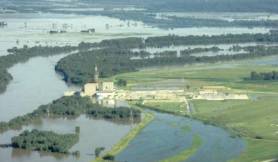


 Posted by Ed Darrell


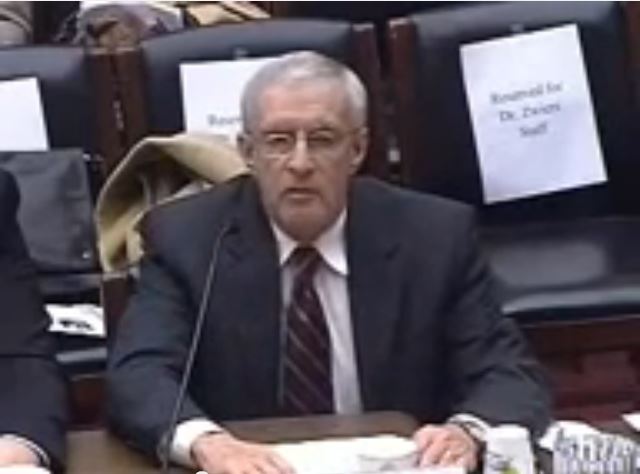





 Millard Fillmore's Bathtub