April 16, 2014
April 16 marks the 67th anniversary of the Texas City Disaster.
It’s a day Texans, and all Americans should note. It’s an event we need to remember, because every point of the disaster is something we forget at our very great peril. Thinking such a disaster could not happen again, and failing to train for these same conditions, contributed to the disaster last year in West, Texas.
67 years ago, in the harbor at Texas City, a large cargo ship being loaded with tons of ammonium nitrate caught fire and exploded, setting fire to other nearby ships, one of which exploded, devastating much of the town. In all, 576 people died in Texas City on April 16 and 17, 1947.

View of Texas City from Galveston, across the bay, after the explosion of the French ship SS Grandchamp, April 16, 1947. Photo from International Association of Fire Fighters Local 1259
The incident also produced one of the most famous tort cases in U.S. history, Dalehite vs. United States, 346 U.S. 15 (1953). (Here is the Findlaw version, subscription may be required.)
The entire Texas City fire department was wiped out, 28 firefighters in all. The International Association of Fire Fighters, Local 1259 has a website dedicated to the history of the disaster, with a collection of some powerful photographs.
More below the fold. Read the rest of this entry »
Spread the word; friends don't allow friends to repeat history.
 3 Comments |
  Disasters, History, Jurisprudence, Justice, Law, Texas, Texas history | Tagged: Disasters, History, Jurisprudence, Justice, Law, Local 1259 International Association of Fire Fighters, Texas, Texas City Disaster, Texas history |
  Permalink
 Posted by Ed Darrell
November 23, 2010
Excerpted from ENVIRONMENTAL DEFENSE FUND, INCORPORATED et al., Petitioners, v. William D. RUCKELSHAUS, Administrator of the Environmental Protection Agency & Environmental Protection Agency, Respondents, Izaak Walton League of America, Montrose Chemical Corporation of California, State of New York, Intervenors, 439 F.2d 584 (1971); Chief Judge David L. Bazelon wrote the decision.
This is a petition for review of an order of the Secretary of Agriculture,1 refusing to suspend the federal registration of the pesticide DDT or to commence the formal administrative procedures that could terminate that registration.
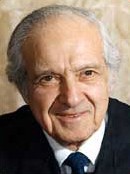
Born in Wisconsin, David L. Bazelon grew up in Chicago and practiced law there. In 1949, President Truman named him to the United States Court of Appeals for the District of Columbia Circuit, often described as the country's most influential court, next to the Supreme Court. At 40, he was the youngest judge ever appointed to that court. From 1962-1978 he served as chief judge, retiring in 1986 as a senior judge.
* * * * *
We conclude that the order was based on an incorrect interpretation of the controlling statute, and accordingly remand the case for further proceedings. In this case the Secretary has made a number of findings with respect to DDT. On the basis of the available scientific evidence he has concluded that (1) DDT in large doses has produced cancer in test animals and various injuries in man, but in small doses its effect on man is unknown; (2) DDT is toxic to certain birds, bees, and fish, but there is no evidence of harm to the vast majority of species of nontarget organisms; (3) DDT has important beneficial uses in connection with disease control and protection of various crops. These and other findings led the Secretary to conclude ‘that the use of DDT should continue to be reduced in an orderly, practicable manner which will not deprive mankind of uses which are essential to the public health and welfare. To this end there should be continuation of the comprehensive study of essentiality of particular uses and evaluations of potential substitutes.’38
There is no reason, however, for that study to be conducted outside the procedures provided by statute. The Secretary may, of course, conduct a reasonable preliminary investigation before taking action under the statute. Indeed, the statute expressly authorizes him to consult a scientific advisory committee, apart from the committee that may be appointed after the issuance of a cancellation notice.39 But when, as in this case, he reaches the conclusion that there is a substantial question about the safety of a registered item, he is obliged to initiate the statutory procedure that results in referring the matter first to a scientific advisory committee and then to a public hearing. We recognize, of course, that one important function of that procedure is to afford the registrant an opportunity to challenge the initial decision of the Secretary. But the hearing, in particular, serves other functions as well. Public hearings bring the public into the decision-making process, and create a record that facilitates judicial review.40 If hearings are held only after the Secretary is convinced beyond a doubt that cancellation is necessary, then they will be held too seldom and too late in the process to serve either of those functions effectively.
The Secretary’s statement in this case makes it plain that he found a substantial question concerning the safety of DDT, which in his view warranted further study. Since we have concluded that that is the standard for the issuance of cancellation notices under the FIFRA, the case must be remanded to the Secretary with instructions to issue notices with respect to the remaining uses of DDT, and thereby commence the administrative process.
* * * * *
We stand on the threshold of a new era in the history of the long and fruitful collaboration of administrative agencies and reviewing courts. For many years, courts have treated administrative policy decisions with great deference, confining judicial attention primarily to matters of procedure.48 On matters of substance, the courts regularly upheld agency action, with a nod in the direction of the ‘substantial evidence’ test,49 and a bow to the mysteries of administrative expertise.50 Courts occasionally asserted, but less often exercised, the power to set aside agency action on the ground that an impermissible factor had entered into the decision, or a crucial factor had not been considered. Gradually, however, that power has come into more frequent use, and with it, the requirement that administrators articulate the factors on which they base their decisions.51
Strict adherence to that requirement is especially important now that the character of administrative litigation is changing. As a result of expanding doctrines of standing and reviewability,52 and new statutory causes of action,53 courts are increasingly asked to review administrative action that touches on fundamental personal interests in life, health, and liberty. These interests have always had a special claim to judicial protection, in comparison with the economic interests at stake in a ratemaking or licensing proceeding.
To protect these interests from administrative arbitrariness, it is necessary, but not sufficient, to insist on strict judicial scrutiny of administrative action. For judicial review alone can correct only the most egregious abuses. Judicial review must operate to ensure that the administrative process itself will confine and control the exercise of discretion.54 Courts should require administrative officers to articulate the standards and principles that govern their discretionary decisions in as much detail as possible.55 Rules and regulations should be freely formulated by administrators, and revised when necessary.56 Discretionary decisions should more often be supported with findings of fact and reasoned opinions.57 When administrators provide a framework for principled decision-making, the result will be to diminish the importance of judicial review by enhancing the integrity of the administrative process, and to improve the quality of judicial review in those cases where judicial review is sought.
Remanded for further proceedings consistent with this opinion.
(President Nixon’s Secretary of Agriculture Clifford M. Hardin reviewed DDT regulations and decided no further action was required — since 1958, USDA had been reducing and eliminating DDT from use on USDA lands, as was the Department of the Interior. Environmental Defense Fund sued, arguing more action should have been required. In a complex decision, the U.S. Court of Appeals for the District of Columbia ordered more study of the issue. By the time of the decision, the Environmental Protection Agency (EPA) had been established, and EPA Director William D. Ruckelshaus took Hardin’s place as defendant, with EPA assuming USDA’s position as defendant agency. EPA’s review resulted in a ban on use of DDT on crops in the U.S.)
Some historians and many critics of EPA’s decision to ban DDT from agricultural use in the U.S. fail to acknowledge the importance of this ruling. Judge Bazelon said that great caution alone is not sufficient on the part of administrators, and he ordered that the evidence against DDT be placed on the public record for public scrutiny. “Public scrutiny” in this case would mean analysis by scientists, pesticide manufacturers, farming and farm support organizations, health workers, policy makers, and reporters.
On one hand, this decision tends to favor DDT advocates. Judge Bazelon said the administrator in charge of carrying out FIFRA, the Federal Insecticide, Fungicide and Rodenticide Act, must give advocates of DDT the basis for the ruling: “On the basis of the available scientific evidence he has concluded that (1) DDT in large doses has produced cancer in test animals and various injuries in man, but in small doses its effect on man is unknown; (2) DDT is toxic to certain birds, bees, and fish, but there is no evidence of harm to the vast majority of species of nontarget organisms; (3) DDT has important beneficial uses in connection with disease control and protection of various crops.”
On the other hand, Bazelon’s order means that the significant harms of DDT must be spelled out in public — so that the administrator’s ruling can be contested if it does not do what FIFRA requires. In other places in the decision, Judge Bazelon notes that Congress had required, through FIFRA, that a pesticide determined to be uncontrollably dangerous must be taken off the market, under the justification that it was “mislabeled.” Lower courts had already made that determination on DDT. Bazelon’s order set the stage to require the administrator to ban DDT as a matter of law — the administrator being the Secretary of Agriculture originally, or the Director of EPA under the reorganization of the government that created EPA .
Critics of William Ruckelshaus’s decision to ban DDT miss this point of the law. Under the findings of the nearly year-long hearing in EPA’s administrative law courts, DDT was found to be an uncontrollable poison in the wild. FIFRA required such a pesticide to have its registration cancelled, with very little wiggle room to make a case for any continued use of the stuff. Ruckelshaus’s action stopped the immediate shutdown of DDT manufacturing in the U.S. This proved to be a mixed benefit decision. While the U.S. benefited financially from export of DDT, that the U.S. exported a chemical banned for most uses inside the U.S. proved to be a sore point in foreign relations with other nations; also most of the manufacturing sites were highly contaminated, so much so that the manufacturers declared bankruptcy rather than stick around to clean them up under the rules of the Superfund which took effect in 1984. Taxpayer dollars now pay for massive cleanup operations of DDT manufacturing sites in California, Michigan, and Alabama, and other places.
Spread the word; friends don't allow friends to repeat history.
2 Comments | DBQ sources, DDT, Environmental protection, Famous quotes, Famous trials, Government, History, Justice, knowledge, Law, Quotes, Regulation | Tagged: Courts, DDT, Environmental protection, EPA, Famous quotes, Famous trials, Government, History, Jurisprudence, Law, Quotes, Regulation, William D. Ruckelshaus | Permalink
Posted by Ed Darrell
September 2, 2010
Vivian Paige pulled together early reports and the actual court documents: A judge in Virginia quashed the subpeona issued by Virginia’s Attorney General Ken Cuccinelli to the University of Virginia, in a rather blatant attempt to silence a famous scientist working on global warming, Michael Mann.
Rosalind Helderman explained in the Virginia Politics blog of the Washington Post:
Judge Paul M. Peatross Jr. ruled that Cuccinelli can investigate whether fraud has occurred in university grants, as the attorney general had contended, but ruled that Cuccinelli’s subpoena failed to state a “reason to believe” that Mann had committed fraud.
The ruling is a major blow for Cuccinelli, a global warming skeptic who had maintained that he was investigating whether Mann committed fraud in seeking government money for research that showed that the earth has experienced a rapid, recent warming. Mann, now at Penn State University, worked at U-Va. until 2005.
According to Peatross, the Virginia Fraud Against Taxpayers Act, under which the civil investigative demand was issued, requires that the attorney general include an “objective basis” to believe that fraud has been committed. Peatross indicates that the attorney general must state the reason so that it can be reviewed by a court, which Cuccinelli failed to do.
Peatross set the subpoena aside without prejudice, meaning Cuccinelli could give the subpoena another try by rewriting the civil demand to better explain the conduct he wishes to investigate. But the judge seemed skeptical of Cuccinelli’s underlying claim about Mann, noting that Cuccinelli’s deputy maintained in a court hearing that the nature of Mann’s fraud was described in subsequent court papers in the case.
“The Court has read with care those pages and understands the controversy regarding Dr. Mann’s work on the issue of global warming. However, it is not clear what he did was misleading, false or fraudulent in obtaining funds from the Commonwealth of Virginia,” Peatross wrote.
Also, as suggested earlier here, the judge noted that Cuccinelli’s authority did not extend to four of the five grants questioned, because they were federal grants, not state grants. (See here, too.)
Comments at Helderman’s article show the fault lines of division on global warming — purely political faultlines.
Since opponents of action against warming so frantically publicized stolen e-mails from researchers late last year, in official proceedings scientists have smacked down skeptics on almost every issue.
Which only means that scientists now sit in the position of Cassandra after Apollo’s curse.
Spread the word; friends don't allow friends to repeat history.
20 Comments | Climate change, climate_change, Global warming, Government, Hoaxes, Jurisprudence, Law, Political Smear, Politics, Research, Science, Voodoo history, Voodoo science | Tagged: Global warming, Government, Hoaxes, Jurisprudence, Ken Cuccinelli, Law, Michael Mann, Political Smear, Politics, Research, Science, University of Virginia, Voodoo science, Witch Hunt | Permalink
Posted by Ed Darrell
June 24, 2010
Judge Sam Sparks’ rebuke of the Institution for Creation Research (“Biblical. Accurate. Certain.”) appeared in a number of venues, in addition to those I mentioned earlier (go see here); for the record, you ought to go see:
An ICR spokesperson sent the following statement via e-mail:
The Institute for Creation Research has received the ruling of Judge Sam Sparks from the U.S. District Court in Austin in the case ICR Graduate School v. Texas Higher Education Coordinating Board et al. The attorneys and leadership of ICR associated with this case are currently reviewing Judge Sparks’ ruling and we are weighing our options regarding future action in this matter. In addition to other options, ICRGS has 30 days in which to file an appeal with the 5th Circuit Court of Appeals. ICR has no further comment at this time.
- Ted McLaughlin at jobsanger
- Valerie Strauss at the Washington Post’s The Answer Sheet blog says this is, finally, news on education from Texas that can be applauded (what about my students’ TAKS scores, Valerie?) “The last bit of education news to come out of Texas was the rewriting of social studies standards by right-wing ideologues. This is a welcome change.”
- The Wall Street Journal’s Law Blog headline: “Texas Judge Rips Creationism Group in Science Degree Suit”
- At Panda’s Thumb, the grandmother of evolution issue blogs, Phil Plait guests as author of the short post explaining the outcome so far, and compares ICR’s travails to those of John Freshwater (I disagree); read the comments. Of course, Plait also reported at Bad Astronomy, with more good comments.
- The Sensuous Curmudgeon looks at the deeper meaning, and offers analysis of the next legal moves of the so-far-hitless creationists, including the Discovery Institute — does the David Coppedge suit ring a bell? Earlier coverage of the decision, too.
- Texas Freedom Network Insider blogged the case, too
- Ted Herrlich, at Please Be Patient, I’m Evolving as Fast as I Can
- Dallas Morning News Religion Blog
- Dallas Observer Blog; it calls ICR a “local creationist group.” Oh, the sting!
- The Chronicle of Higher Education story is straight news — but look at the comments!
- Huffington Post
- Oddly, interestingly, ICR wrote about the case several days ago, on June 1 — it’s not really coherent, either; “Our Day in Court: ICR Graduate School v. THECB et al, by James J. S. Johnson, J.D., Th.D.”
Spread the word; friends don't allow friends to repeat history.
2 Comments | Creationism, Education, Education quality, Evolution, Higher education, History, Jurisprudence, Law, Religion, Science | Tagged: Creationism, Education, Evolution, Graduate Programs, Higher education, Institute for Creation Research, Jurisprudence, Law, Religion, Standards, Texas | Permalink
Posted by Ed Darrell
June 22, 2010
Remember the Institute for Creation Research?

Institute for Creation Research offices in Texas
This hoary old fundamentalist institution moved from California to Texas, hoping to take advantage of the generally fundie-friendly environment, and continue a practice of granting masters and doctorate degrees in science education to people who would get jobs in schools and teach creationism instead. They had achieved that goal in California with a lawsuit the state regulators rather botched, and by setting up a special accreditation association that would give a pass to the teaching of non-science.
But when they got to Texas, the Texas Higher Education Coordinating Board (THECB) had a couple of alert people who blew the whistle on the process of getting a permit to grant degrees. Real scientists and science educators were brought in to evaluate ICR’s programs. They said the programs were not scientific and do not deserve to be accredited.
THECB stuck to the rules. ICR threatened a lawsuit. THECB stood fast.
ICR sued.
And then God intervened. At God’s instructions ICR filed legal papers so bizarre that they would, by themselves, expose ICR as a wacko group. ICR’s loss came on the merits of their case, which were nil — it was summary judgment against ICR. Summary judgment means that, even with all the evidence decided in favor of the losing party, that party loses on the basis of the law.
The court took note of just how bizarre were the papers ICR filed. Frosting on the cake of embarrassment.
Judge Sam Sparks, in the U.S. District Court for the Western District of Texas, Austin Division, stopped short of admonishing ICR for the briefs, and instead sifted the briefs to find judiciable claims — an act that will probably prevent ICR from getting a friendly hearing in any appeal. Sparks wrote:
Having addressed this primary issue, the Court will proceed to address each of ICRGS’s causes of action in turn, to the extent it is able to understand them. It appears that although the Court has twice required Plaintiff to re-plead and set forth a short and plain statement of the relief requested, Plaintiff is entirely unable to file a complaint which is not overly verbose, disjointed, incoherent, maundering, and full of irrelevant information.
Whom God destroys, He first makes mad.
Sparks ruled ICR has no free exercise right to grant non-science degrees, no free speech right, and no due process claim to grant them, either. ICR lost on every count of their complaint.
More:
_______________

From Babble.com (Do you know who is the cartoonist?)
Spread the word; friends don't allow friends to repeat history.
4 Comments | Creationism, Education, Evolution, Higher education, Jurisprudence, Law, Science, Texas, Texas Citizens for Science | Tagged: Creationism, Education, Evolution, First Amendment, Higher education, Institute for Creation Research, Jurisprudence, Law, Science, Texas, Texas Higher Education Coordinating Board | Permalink
Posted by Ed Darrell
January 4, 2010
Birther “Dr. Kate” sez there’s a case coming to a hearing in Pennsylvania that will go to the Supreme Court no matter how this hearing turns out.
Here’s the table of contents to Kerchner v. Obama. Here’s the full complaint, according to Dr. Kate.
Probably the best thing going for the plaintiffs is that Orly Taitz only appears by name in a bizarre accounting of everything ever said on the issue (except for the lack of evidence and reasons this case will fail which, oddly, isn’t included in the complaint; everything else is included).
I predict the case will be dismissed, but it may be dismissed with prejudice. That is, if it really does come to a hearing. Is that really possible?
Warn others so they don’t get trampled:


Spread the word; friends don't allow friends to repeat history.
17 Comments | Barack Obama, Birth Certificate, History, How do we know what we know, Jurisprudence, Justice, Law, President Obama, Presidential Eligibility, Presidents, Rampant stupidity | Tagged: Barack Obama, Birth Certificate, Birthers, denialism, History, How do we know what we know, Jurisprudence, Kerchner v Obama, Law, Presidency, Rampant stupidity, Taitz | Permalink
Posted by Ed Darrell
June 30, 2009
Justices of the Minnesota Supreme Court ruled today that Al Franken won the election for the U.S. Senate seat formerly held by Norm Coleman.

Senator-elect Al Franken and his wife, Franni, after the Minnesota Canvassing Board certified him the winner of the state's November 2008 senatorial election, June 29, 2008 - Minneapolis Star-Tribune photo
Pat Doyle wrote for the Minneapolis Star-Tribune:
The Minnesota Supreme Court ruled today that Democrat Al Franken won the U.S. Senate election and said he was entitled to an election certificate that would lead to him being seated in the Senate.
“Affirmed,” wrote the Supreme Court, unanimously rejecting Republican Norm Coleman’s claims that inconsistent practices by local elections officials and wrong decisions by a lower court had denied him victory.
“Al Franken received the highest number of votes legally cast and is entitled [under Minnesota law] to receive the certificate of election as United States Senator from the State of Minnesota,” the court wrote.
In upholding a lower court ruling in April, the justices said Coleman had “not shown that the trial court’s findings of fact are clearly erroneous or that the court committed an error of law or abused its discretion.”
The justices also said that neither the trial court nor local elections officials violated constitutional rights to equal protection, a cornerstone of Coleman’s case and any possible federal appeal.
The ruling was a unanimous, 5-0 decision.
Congratulations, U.S. Sen. Al Franken.
Update: Coleman conceded; NPR report here. NPR political blog here. Coleman was surprisingly gracious, considering he fought so hard for 238 days after the election.
Spread the word; friends don't allow friends to repeat history.
1 Comment | Elections, Jurisprudence, Law, Politics, U.S. Senate | Tagged: Elections 2008, Jurisprudence, Law, Minnesota, Politics, Sen. Al Franken, U.S. Senate | Permalink
Posted by Ed Darrell
June 4, 2009
This is terrorism, isn’t it? What definition of terrorism would leave this out?
Spread the word; friends don't allow friends to repeat history.
9 Comments | Civil Rights, Health care, Jurisprudence, Terrorism, U.S. Constitution | Tagged: Abortion, Civil Rights, Domestic Terrorism, Health care, Jurisprudence, Roe v. Wade, Terrorism | Permalink
Posted by Ed Darrell
January 20, 2009
Some of the Birth Certificate Obsessed (BCOs) are seeing things (that’s Obama’s birth certificate that they are obsessed with). They claim to see a vision that is attributed to George Washington in a hoax. It’s voodoo history, stuff that never was.
Hallucinations would be bad enough, but what do you have to smoke to see hallucinations other people were supposed to have had, but didn’t?
Looking at the docket of the Supreme Court, I don’t see that any of the anti-Obama suits got an order for certiorari. Will the dismissal of the wingnut lawsuits make the wingnuts go away?
Spread the word; friends don't allow friends to repeat history.
4 Comments | Barack Obama, Citizenship, George Washington, History, Hoaxes, Jurisprudence, Law, Natural Born, Politics, President Obama, Presidential Eligibility, Rampant stupidity, Voodoo history | Tagged: Barack Obama, Citizenship, George Washington, History, Hoaxes, Jurisprudence, Law, Natural Born, Politics, Presidential Eligibility, Vision, Voodoo history | Permalink
Posted by Ed Darrell
June 4, 2008
Texas’s Institute for Creation Research (ICR) is appealing the decision of the Texas Higher Education Coordinating Board that denied ICR the power to grant graduate science degrees. According to the story in the Houston Chronicle, ICR plans to take the issue to court if THECB does not reverse itself.
Institute spokesman Lawrence Ford said the voluminous appeal — it is 755 pages long, including supporting documents — is based upon a claim of “viewpoint discrimination.”
The appeal described the board’s decision as “academic (and religious) bigotry masquerading as Texas Education Code ‘enforcement.’ ”
Board members and staff are accused of denying the request in April because the institute and its leaders believe the biblical version of the Earth’s creation is literally true.
Institute CEO Henry Morris III said last spring his school’s program includes information about evolution, although he and others affiliated with the school don’t accept the proof of evolution offered by mainstream scientists.
Board members and Higher Education Commissioner Raymund Paredes said they were concerned the degree would not equip graduates to teach science in Texas’ public schools.
The real issue, Stafford said Monday, is whether the institute’s course work — offered online and still available, although not accredited — fits the label of the proposed degree.
The disputed degree is a Master of Science in science education. “Either the curriculum or the label has to change,” Stafford said.
“That label has a particular meaning of preparing somebody as a science teacher.”
Paredes reiterated that in a May 21 letter to Morris. “It was determined that the designation of the degree and the content of the degree were not adequately aligned,” he wrote. “Approval would require either a change in the designation of the degree or a change in the content covered.”
The institute is not inclined to do either, Ford said.
More information at these websites:
Spread the word; friends don't allow friends to repeat history.
2 Comments | Creationism, Education, Education quality, Evolution, Higher education, Texas, Texas Citizens for Science, War on Education, War on Science | Tagged: Administrative Law, Creationism, Higher education, Jurisprudence, Science, Texas, War on Education, War on Science | Permalink
Posted by Ed Darrell
April 14, 2007
April 16 marks the 60th anniversary of the Texas City Disaster. A large cargo ship being loaded with tons of ammonium nitrate caught fire and exploded, setting fire to other nearby ships, one of which exploded, and devastating much of the town. In all, 576 people died in Texas City on April 16 and 17, 1947.
View of Texas City from Galveston, across the bay, after the explosion of the French ship SS Grandcamp, April 16, 1947. Photo from International Association of Fire Fighters Local 1259
The incident also produced one of the most famous tort cases in U.S. history, Dalehite vs. United States, 346 U.S. 15 (1953). (Here is the Findlaw version, subscription required.)
The entire Texas City fire department was wiped out, 28 firefighters in all. The International Association of Fire Fighters, Local 1259 has a website dedicated to the history of the disaster, with a collection of some powerful photographs.
More below the fold. Read the rest of this entry »
Spread the word; friends don't allow friends to repeat history.
17 Comments | Disasters, History, Jurisprudence, Justice, Law, Texas, Texas history | Tagged: Disasters, History, Jurisprudence, Justice, Law, Local 1259 International Association of Fire Fighters, Texas, Texas City Disaster, Texas history | Permalink
Posted by Ed Darrell




 Millard Fillmore's Bathtub