Millard Fillmore waxes on

April 5, 2013

Millard Fillmore at Madame Tussaud's, D.C.

President Millard Fillmore, as displayed at Madame Tussaud’s Wax Museum, Washington, D.C.; photo from About.com

Ever on the lookout for images of Millard Fillmore, I found this photo at About.com.  This is the “wax” sculpture of Fillmore displayed at Madame Tussaud’s Wax Museum – D.C.

Is it art?

More:


Millard Fillmore: Still dead, still misquoted, 139 years later

March 8, 2013

Millard Fillmore wax head

A wax likeness of Millard Fillmore’s head, appearing to be for sale for $950.00 back in 2007. Did anyone ever buy it? Yes, it does bear an unusual resemblance to Tom Peters.

March 8, 2013, is the 139th anniversary of Millard Fillmore’s death.  Famous lore claims Fillmore’s last words were, “The nourishment is palatable.”

What a crock!

Manus reprints the text from the New York Times obituary that appeared on March 9:

Buffalo, N.Y., March 8 — 12 o’clock, midnight. — Ex-President Millard Fillmore died at his residence in this city at 11:10 to-night. He was conscious up to the time. At 8 o’clock, in reply to a question by his physician, he said the nourishment was palatable; these were his last words. His death was painless.

First, I wonder how the devil the writer could possibly know whether Fillmore’s death was painless?

And second, accuracy obsessed as I am, I wonder whether this is the source of the often-attributed to Fillmore quote, “The nourishment is palatable.” Several sources that one might hope would be more careful attribute the quote to Fillmore as accurate — none with any citation that I can find. Thinkexist charges ahead full speed; Brainyquote removed the quote after I complained in 2007. Wikipedia lists it. Snopes.com says the quote is “alleged,” in a discussion thread.

I’ll wager no one can offer a citation for the quote. I’ll wager Fillmore didn’t say it.

Let’s be more stolid:  The quote alleged to be Fillmore’s last words, isn’t.  No one says “palatable” when they’re dying, not even the man about whom it is claimed that Queen Victoria pronounced him the hansomest man she ever met (just try tracking that one down), and whose strongest legacy is a hoax about a bathtub, started 43 years after he died.  No one calls soup “sustenance.”

The alleged quote, the misquote, the distortion of history, was stolen from the obituary in the New York Times.  Millard Fillmore did not say, “The sustenance is palatable.”

What were Millard Fillmore’s last words?  They may be buried in the notebook of one of his doctors.  They may be recorded in some odd notebook held in the Buffalo and Erie County Historical Society, or in the Library of SUNY Buffalo, or in the New York State Library‘s dusty archives.

But the dying President Fillmore did not say, “The sustenance is palatable.”

Millard Fillmore: We’d protect his legacy, if only anyone could figure out what it is.

This is partly an encore post, based on a post from 2007.

More:


Millard Fillmore’s links to March 8: Hurrah! and R.I.P.

March 8, 2013

I awoke from a particularly hard sleep after a night celebrating ten Cub Scouts’ earning their Arrow of Light awards and advancing into Boy Scout troops, to a missive from Carl Cannon (RealClear Politics) wondering why I’m asleep at the switch.

Millard Fillmore died on March 8, 1874, and he expected to see some note of that here at the Bathtub.  This blog is not the chronicler of all things Millard Fillmore, but can’t we at least get the major dates right?

Carl is right.  Alas, Millard Fillmore’s Bathtub is avocation, and at times like these an avocation that should be far down the list of avocations.

To mark the date, here is a post out of the past that notes two key events on March 8 that Fillmore had a hand in, the second being his death.  Work continues on several fronts, and more may splash out of the tub today, even about Fillmore.  Stay tuned.

Fillmore died on March 8, 1874; exactly 20 years earlier, Commodore Matthew C. Perry landed in Japan, in the process of what may be the greatest and most overlooked legacy of Millard Fillmore’s presidency, the opening of Japan to the world.  Here’s that post:

Commodore Matthew C. Perrys squadron in Japan, 1854 - CSSVirginia.org image

The Black Ships — Commodore Matthew C. Perry’s squadron in Japan, 1854 – CSSVirginia.org image from Gleason’s Pictorial Drawing Room Companion, Boston, May 15, 1852 (also, see BaxleyStamps.com); obviously the drawing was published prior to the expedition’s sailing.

On March 8, 1854, Commodore Matthew C. Perry landed for the second time in Japan, having been sent on a mission a year earlier by President Millard Fillmore.  On this trip, within 30 days he concluded a treaty with Japan which opened Japan to trade with the U.S. (the Convention of Kanagawa), and which began a cascade of events that opened Japan to trade with the world.

Commodore Matthew C. Perry in 1852 photograph, Library of Congress via WikiMedia

Commodore Matthew C. Perry in 1852 photograph, Library of Congress via WikiMedia

Within 50 years Japan would come to dominate the seas of the the Western Pacific, and would become a major world power.

1854 japanese woodblock print of U.S. Navy Commodore Matthew C. Perry. Peabody Museum: The characters located across the top read from right to left, A North American Figure and Portrait of Perry. According to the Peabody Essex Museum, this print may be one of the first depictions of westerners in Japanese art, and exaggerates Perrys western features (oblong face, down-turned eyes, bushy brown eyebrows, and large nose).  But compare with photo above, right.  Peabody Museum holding, image from Library of Congress via WikiMedia

1854 japanese woodblock print of U.S. Navy Commodore Matthew C. Perry. Peabody Museum: “The characters located across the top read from right to left, ‘A North American Figure’ and ‘Portrait of Perry.’ According to the Peabody Essex Museum, ‘this print may be one of the first depictions of westerners in Japanese art, and exaggerates Perry’s western features (oblong face, down-turned eyes, bushy brown eyebrows, and large nose).'” But compare with photo above, right. Peabody Museum holding, image from Library of Congress via WikiMedia

Then, 20 years later, on March 8, 1874, Millard Fillmore died in Buffalo, New York.

The Perry expedition to Japan was the most famous, and perhaps the greatest recognized achievement of Fillmore’s presidency.  Fillmore had started the U.S. on a course of imperialistic exploitation and exploration of the world, with other expeditions of much less success to Africa and South America, according to the story of his death in The New York Times.

The general policy of his Administration was wise and liberal, and he left the country at peace with all the world and enjoying a high degree of prosperity. His Administration was distinguished by the Lopez fillibustering expeditions to Cuba, which were discountenanced by the Government, and by several important expeditions to distant lands. The expedition to Japan under Commodore Perry resulted in a favorable treaty with that country, but that dispatched under Lieut. Lynch, in search of gold in the interior of Africa, failed of its object. Exploring expeditions were also sent to the Chinese seas, and to the Valley of the Amazon.

More:


Quote of the moment: Should we reconsider Millard Fillmore?

February 23, 2013

For an accidental president, a man who no one expected to take the office; for a guy whose term was marked by his party’s rejection of his policies so much that they did not even entertain the idea he might be the nominee in the next election; for the last Whig president, an obvious dinosaur of a dying political view; for a guy so obscure that a hoax more than a half-century later remains his greatest acknowledged point of reference, Millard Fillmore left the U.S. in good shape.

Should that be his real legacy?

Millard Fillmore for President, campaign poster from 1856 (American Party)

Campaign poster for Millard Fillmore, running for president in 1856 on the American Party ticket. He carried Maryland, which is probably ironic, considering Maryland’s Catholic roots, and the American Party’s anti-Catholic views, views probably not entirely shared by Fillmore; the American Party is more often known as the “Know-Nothings.”  Image from the Library of Congress American Memory files.

These are the last two paragraphs of his final State of the Union message, delivered on paper on December 6, 1852.  Perhaps establishing a tradition, he made the message a listing of current zeitgeist, starting out mourning the recent passing of Daniel Webster, and the abatement of epidemics of mosquito-borne plagues in several cities.  He recited activities of the government, including the abolishment of corporal punishment in the Navy and improvements in the Naval Academy; he mentioned U.S. exploration around the world, in the Pacific, in the Amazon River, in Africa, and especially his project to send a fleet to Japan to open trade there.  He noted great opportunities for trade, domestically across an expanded, Atlantic-to-Pacific United States, and in foreign markets reachable through both oceans.

The last two paragraphs would be considered greatly exaggerated had any president in the 20th century delivered them; but from Millard Fillmore, they were not.  He gave credit for these achievements to others, not himself.

In closing this my last annual communication, permit me, fellow-citizens, to congratulate you on the prosperous condition of our beloved country. Abroad its relations with all foreign powers are friendly, its rights are respected, and its high place in the family of nations cheerfully recognized. At home we enjoy an amount of happiness, public and private, which has probably never fallen to the lot of any other people. Besides affording to our own citizens a degree of prosperity of which on so large a scale I know of no other instance, our country is annually affording a refuge and a home to multitudes, altogether without example, from the Old World.

We owe these blessings, under Heaven, to the happy Constitution and Government which were bequeathed to us by our fathers, and which it is our sacred duty to transmit in all their integrity to our children. We must all consider it a great distinction and privilege to have been chosen by the people to bear a part in the administration of such a Government. Called by an unexpected dispensation to its highest trust at a season of embarrassment and alarm, I entered upon its arduous duties with extreme diffidence. I claim only to have discharged them to the best of an humble ability, with a single eye to the public good, and it is with devout gratitude in retiring from office that I leave the country in a state of peace and prosperity.

What president would not have been happy to have been able to claim as much?  Historians often offer back-handed criticism to Fillmore for the Compromise of 1850; in retrospect it did not prevent the Civil War.  In the circumstances of 1850, in the circumstances of Fillmore’s presidential career, should we expect more?  Compared to Buchanan’s presidency and the events accelerating toward war, did Fillmore do so badly?

Have we underestimated Millard Fillmore?  Discuss.

More:


Millard Canyon, Utah — not named for Millard Fillmore

January 14, 2013

Winter view of Millard Canyon, Canyonlands NP, Utah

Caption from the NPS crew at Canyonlands National Park: View from the Maze: Millard Canyon’s winter mood. We are looking north. Note how the heat from the east to southeast facing cliffs has melted the snow below – even in this ultra-frigid time. Taking a break under a southeast facing cliff is a good way to warm up while on a Canyonlands hike. (GC) (via Facebook)

In a state where they once named the proposed state capital “Fillmore,” and the county in which that town sat, “Millard,” to try to curry favor with President Millard Fillmore for the state’s petition to gain statehood, one might logically think that a spectacular desert canyon not far away called Millard Canyon might also be named in honor of our 13th president.

LocMap Canyonlands National Park

Location map, Canyonlands National Park, image from Wikipedia

Not so, in this case.  According to John W. van Cott’s Utah Place Names (University of Utah Press, 1990):

MILLARD CANYON (Garfield County) originates at French Springs southeast of Hans Flat. The canyon drains north northeast into the Green River at Queen Anne Bottom. According to Baker, “They learned later that they had misunderstood this name; instead of honoring a president, it was named for an undistinguished `Miller’ who did nothing more than leave this small, mistaken mark on the map” (Baker, Pearl. Robbers Roost Recollections. Logan, UT: Utah State University Press, 1976, p. 33). The name was even misspelled Millard.

Millard Fillmore is off the hook on this one.

Garfield County, Utah, was named after President James Garfield.

So, who was this “Miller” guy?

(Post inspired by image from the Canyonlands NP Facebook site; temperature at the time of the photo was near 0°F.)

More:


Flash mob honored Millard Fillmore’s 211th birthday in Moravia, New York

January 7, 2013

Jeff Kramer, who usually is a a humor columnist, in the Syracuse, New York, Post-Standard:

Millard Fillmore flash mob commemorating birthday is a snow-smashing success

Published: Monday, January 10, 2011, 6:00 AM

Kramer sisters lead flash mob dance in honor of Millard Fillmore's 211th Birthday, Moravia, New York

Peter Chen / The Post-Standard More than 50 people followed the dance moves of the Kramer sisters, Miranda, 10, and Lily, 8, Friday at a flash mob in the parking lot of Moravia’s Modern Market. They danced to “Birthday” by the Beatles to celebrate former US President Millard Fillmore’s birthday, which was on Jan. 7, 1800. Fillmore was born in Moravia. The girls are the daughters of The Post-Standard humor columnist Jeff Kramer.

Moravia, NY — You know your legacy is in trouble when your biggest claim to fame is having a bathtub installed in the White House, and even that’s a lie.

So it has always been with Millard Fillmore. Americans remember their 13th president as mediocre, wishy-washy and fat — if they remember him at all.

Still, a president is a president, and for a few minutes this past Friday, even Millard found his posthumous mojo. At least 50 people gathered in his hometown of Moravia for a flash mob birthday boogie choreographed and led by my daughters Miranda, 10, and Lily, 8. The event was organized by me as part of my New Year’s resolution to reach out to techno-savvy young people before one of them remotely shuts off my oxygen.

Everyone was in a great mood. “Happy Birthday, Millard!” the crowd shouted after churning up the slush in the parking lot of Modern Market with a dazzling display of grapevines, sprinklers, funky chickens and more.

Among the celebrants was Mr. Jan Hunsinger, a history/government teacher at Moravia High School. He brought a group of students to be part of the gala, plying them with extra credit.

“Thanks for doing this,” Hunsinger said to me. At least I think he said it. Truth is I didn’t take notes. Note-taking is Old Media (lame) and poor flash mob etiquette. The whole point of a flash mob is to convene en masse as directed by viral media, commit a planned public act and disperse. The last thing you want is some mainstream media dork asking questions like “Can you spell your name for me again?” and “How does this flash mob change your perceptions of Millard Fillmore?”

I also learned that Millard took Peru’s side when American entrepreneurs were stealing that country’s bird droppings for fertilizer. Instead of coming to the aid of the American businessmen, Fillmore insisted that no one should take Peru’s bird turds without Peru’s permission. Peru was deeply grateful, and America gained international cred. A statue of Fillmore was erected in Peru. Predictably, it became obscured by the very substance he had helped to protect.

Moravia High School Students at Millard Fillmore's 211th birthday bash in Moravia, New York, - Syracuse Post-Standard

Caption from the Syracuse Post-Standard; photo by Peter Chen / The Post-Standard – Moravia High School students (left to right) Amy Richards, 16, a junior; Melinda Heath, 16, a junior; Gabrielle Amos, 17, a junior; and Mattea Hilliard, 16, a sophomore, took part in a flash mob in the parking lot of Moravia’s Modern Market on Friday.

That’s all I have to say about Fillmore for now. I’m grateful to him, Moravia, my girls, the nice lady who bought them flowers and to everyone who made the flash mob rock. I’ll close with Fillmore’s inspiring last words, uttered as he was being fed soup.

“The nourishment is palatable,” he said. Then he died.

Here’s hoping that somewhere up there in that great bathtub in the sky, Millard — happily stuffed with palatable nourishment — was looking down on us last Friday and smiling.

Jeff Kramer’s humor column runs Mondays in CNY. E-mail him at jeffmkramer@gmail.com.


Fillmore wasn’t a total washout as President, contrary to his reputation.  Among other things, he was the guy who dispatched Commodore Perry to Japan, to open that reclusive nation to trade, and to stop them from executing random sailors from America washed up on their shores.  In a direct way, we might say Fillmore was responsible for World War II in the Pacific — once awakened to the thrills and advantages of international trade, Japan went after it with a vengeance, and then after empire.  That is to say the opening of Japan was momentous; history and commerce would never be the same again, in the Pacific.

And that quote, “The nourishment is palatable.”  Fillmore probably didn’t say that.  Even in death his words get little respect.  The story of Fillmore’s death in the New York Times mentioned that he had been ill, and that at what turned out to be his last meal, some soup, Fillmore had said it was okay.  The paper reported that Fillmore had said that the nourishment was palatable.  Someone, later, put quotes around the reporter’s words, and made them Fillmore’s.  You’d think someone would remember him for the Peruvian guano remarks instead, no?  (Gee, I’m not sure Mr. Kramer described that episode accurately.)


Happy 213th Birthday, Millard Fillmore!

January 7, 2013

January 7 is Millard Fillmore‘s birthday.

Statue of President Millard Fillmore, a Buffal...

Statue of President Millard Fillmore, a Buffalo native, on southeast corner of the administration building of the University of Buffalo. Photo credit: Wikipedia

Why isn’t it a national holiday?

UB celebrates Fillmore’s birthday

BUFFALO, N.Y. (WIVB) [Monday, January 7, 2013] – The University at Buffalo is celebrating one of its Founding Fathers. Monday would be Millard Fillmore’s 213th birthday, and to mark the occasion, UB helped host a ceremony at the former president’s grave site.

A wreath from the White House was placed at the grave sit, to honor the former leader for his services to the nation and western New York.

After his presidency, Fillmore returned to Buffalo, New York, and a life of good citizenship. He founded the Buffalo and Erie County Historical Society, for example. And though he himself was about a third-grade dropout, and though he refused an honorary degree from Oxford because he said no man should get a degree he can’t read (it was in Latin), he founded what is now the University at Buffalo.

There’s a moral there, somewhere.

More:

Cake for Millard Fillmore's 213th birthday, Summerhill, New York

Birthday celebration for President Millard Fillmore in Summerhill, New York; caption from the Auburn, New York, Citizen: Sue Stoyell, treasurer of the Cayuga-Owasco Lakes Historical Society, serves a slice of Millard Filmore’s birthday cake to Roger Stoyell during a celebration of Fillmore’s 213th birthday Sunday at the town hall in Summerhill.

There was music:

Flock of Free Range Children sing for Millard Fillmore's 213th Birthday, Summerhill, New York

Fillmore’s 213th birthday bash in Summerhill, New York; photo by Michelle Bixby, Auburn Citizen: From left, John Davis, Ron Van Nostrand and Don Watkins, three of the seven members of the band “Flock of Free Range Children,” entertain attendees of Millard Filmore’s 213th birthday celebration Sunday at the town hall in Summerhill.


Polish up your bathtub, oil the wheels: Millard Fillmore’s birthday next Monday, January 7

January 4, 2013

Check out your bathtub to be sure it’s in top running order for the bathtub races.

English: 1938 u.s. postage stamp of Millard Fi...

1938 U.S. postage stamp of Millard Fillmore. It’s a 13-cent stamp; Fillmore was the 13th president. Photo: Wikipedia

Millard Fillmore’s birthday anniversary is coming Monday, January 7.  He would have been 213 years old.  He’d also have been reading a book, and he’d probably be very cranky.

More:


A neglected 95th anniversary of Mencken and Millard Fillmore’s Bathtub – National Bathtub and Presidential Obscurity Day

December 28, 2012

A Millard Fillmore’s Bathtub December 28 tradition; mostly encore post, but worthy of note on National Bathtub and Presidential Obscurity Day

95 years ago today, on December 28, 1917, this column by H. L. Mencken was published in The New York Evening Mail:

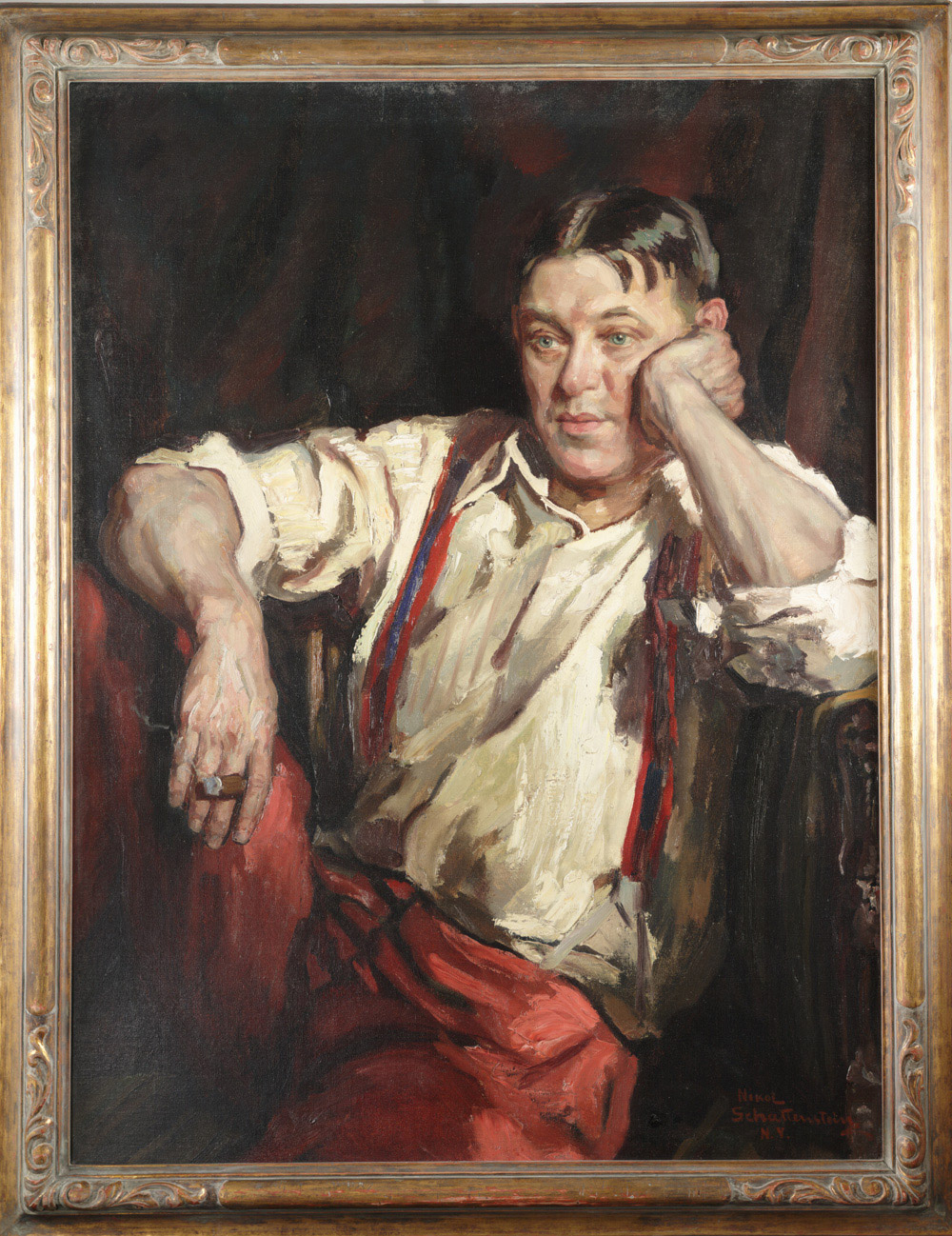
Portrait of H. L. Mencken

1927 Portrait of H. L. Mencken by Nikol Schattenstein; Enoch Pratt Free Library, Baltimore

A Neglected Anniversary

On December 20 there flitted past us, absolutely without public notice, one of the most important profane anniversaries in American history, to wit, the seventy-fifth anniversary of the introduction of the bathtub into These States. Not a plumber fired a salute or hung out a flag. Not a governor proclaimed a day of prayer. Not a newspaper called attention to the day.

True enough, it was not entirely forgotten. Eight or nine months ago one of the younger surgeons connected with the Public Health Service in Washington happened upon the facts while looking into the early history of public hygiene, and at his suggestion a committee was formed to celebrate the anniversary with a banquet. But before the plan was perfected Washington went dry (This was war-time Prohibition, preliminary to the main catastrophe. — HLM), and so the banquet had to be abandoned. As it was, the day passed wholly unmarked, even in the capital of the nation.

Bathtubs are so common today that it is almost impossible to imagine a world without them. They are familiar to nearly everyone in all incorporated towns; in most of the large cities it is unlawful to build a dwelling house without putting them in; even on the farm they have begun to come into use. And yet the first American bathtub was installed and dedicated so recently as December 20, 1842, and, for all I know to the contrary, it may still be in existence and in use.

Curiously enough, the scene of its setting up was Cincinnati, then a squalid frontier town, and even today surely no leader in culture. But Cincinnati, in those days as in these, contained many enterprising merchants, and one of them was a man named Adam Thompson, a dealer in cotton and grain. Thompson shipped his grain by steamboat down the Ohio and Mississippi to New Orleans, and from there sent it to England in sailing vessels. This trade frequently took him to England, and in that country, during the ’30s, he acquired the habit of bathing.

The bathtub was then still a novelty in England. It had been introduced in 1828 by Lord John Russell and its use was yet confined to a small class of enthusiasts. Moreover, the English bathtub, then as now, was a puny and inconvenient contrivance — little more, in fact, than a glorified dishpan — and filling and emptying it required the attendance of a servant. Taking a bath, indeed, was a rather heavy ceremony, and Lord John in 1835 was said to be the only man in England who had yet come to doing it every day.

Thompson, who was of inventive fancy — he later devised the machine that is still used for bagging hams and bacon — conceived the notion that the English bathtub would be much improved if it were made large enough to admit the whole body of an adult man, and if its supply of water, instead of being hauled to the scene by a maid, were admitted by pipes from a central reservoir and run off by the same means. Accordingly, early in 1842 he set about building the first modern bathroom in his Cincinnati home — a large house with Doric pillars, standing near what is now the corner of Monastery and Orleans streets.

There was then, of course, no city water supply, at least in that part of the city, but Thompson had a large well in his garden, and he installed a pump to lift its water to the house. This pump, which was operated by six Negroes, much like an old-time fire engine, was connected by a pipe with a cypress tank in the garret of the house, and here the water was stored until needed. From the tank two other pipes ran to the bathroom. One, carrying cold water, was a direct line. The other, designed to provide warm water, ran down the great chimney of the kitchen, and was coiled inside it like a giant spring.

The tub itself was of new design, and became the grandfather of all the bathtubs of today. Thompson had it made by James Cullness, the leading Cincinnati cabinetmaker of those days, and its material was Nicaragua mahogany. It was nearly seven feet long and fully four feet wide. To make it water-tight, the interior was lined with sheet lead, carefully soldered at the joints. The whole contraption weighed about 1,750 pounds, and the floor of the room in which it was placed had to be reinforced to support it. The exterior was elaborately polished.

In this luxurious tub Thompson took two baths on December 20, 1842 — a cold one at 8 a.m. and a warm one some time during the afternoon. The warm water, heated by the kitchen fire, reached a temperature of 105 degrees. On Christmas day, having a party of gentlemen to dinner, he exhibited the new marvel to them and gave an exhibition of its use, and four of them, including a French visitor, Col. Duchanel, risked plunges into it. The next day all Cincinnati — then a town of about 100,000 people — had heard of it, and the local newspapers described it at length and opened their columns to violent discussions of it.

The thing, in fact, became a public matter, and before long there was bitter and double- headed opposition to the new invention, which had been promptly imitated by several other wealthy Cincinnatians. On the one hand it was denounced as an epicurean and obnoxious toy from England, designed to corrupt the democratic simplicity of the Republic, and on the other hand it was attacked by the medical faculty as dangerous to health and a certain inviter of “phthisic, rheumatic fevers, inflammation of the lungs and the whole category of zymotic diseases.” (I quote from the Western Medical Repository of April 23, 1843.)

The noise of the controversy soon reached other cities, and in more than one place medical opposition reached such strength that it was reflected in legislation. Late in 1843, for example, the Philadelphia Common Council considered an ordinance prohibiting bathing between November 1 and March 15, and it failed of passage by but two votes. During the same year the legislature of Virginia laid a tax of $30 a year on all bathtubs that might be set up, and in Hartford, Providence, Charleston and Wilmington (Del.) special and very heavy water rates were levied upon those who had them. Boston, very early in 1845, made bathing unlawful except upon medical advice, but the ordinance was never enforced and in 1862 it was repealed.

This legislation, I suspect, had some class feeling in it, for the Thompson bathtub was plainly too expensive to be owned by any save the wealthy; indeed, the common price for installing one in New York in 1845 was $500. Thus the low caste politicians of the time made capital by fulminating against it, and there is even some suspicion of political bias in many of the early medical denunciations. But the invention of the common pine bathtub, lined with zinc, in 1847, cut off this line of attack, and thereafter the bathtub made steady progress.

The zinc tub was devised by John F. Simpson, a Brooklyn plumber, and his efforts to protect it by a patent occupied the courts until 1855. But the decisions were steadily against him, and after 1848 all the plumbers of New York were equipped for putting in bathtubs. According to a writer in the Christian Register for July 17, 1857, the first one in New York was opened for traffic on September 12, 1847, and by the beginning of 1850 there were already nearly 1,000 in use in the big town.

After this medical opposition began to collapse, and among other eminent physicians Dr. Oliver Wendell Holmes declared for the bathtub, and vigorously opposed the lingering movement against it in Boston. The American Medical Association held its annual meeting in Boston in 1849, and a poll of the members in attendance showed that nearly 55 per cent of them now regarded bathing as harmless, and that more than 20 per cent advocated it as beneficial. At its meeting in 1850 a resolution was formally passed giving the imprimatur of the faculty to the bathtub. The homeopaths followed with a like resolution in 1853.

But it was the example of President Millard Fillmore that, even more than the grudging medical approval, gave the bathtub recognition and respectability in the United States. While he was still Vice-President, in March, 1850, he visited Cincinnati on a stumping tour, and inspected the original Thompson tub. Thompson himself was now dead, but his bathroom was preserved by the gentlemen who had bought his house from the estate. Fillmore was entertained in this house and, according to Chamberlain, his biographer, took a bath in the tub. Experiencing no ill effects, he became an ardent advocate of the new invention, and on succeeding to the Presidency at Taylor’s death, July 9, 1850, he instructed his secretary of war, Gen. Charles M. Conrad, to invite tenders for the construction of a bathtub in the White House.

This action, for a moment, revived the old controversy, and its opponents made much of the fact that there was no bathtub at Mount Vernon, or at Monticello, and that all the Presidents and other magnificoes of the past had got along without any such monarchical luxuries. The elder Bennett, in the New York Herald, charged that Fillmore really aspired to buy and install in the White House a porphyry and alabaster bath that had been used by Louis Philippe at Versailles. But Conrad, disregarding all this clamor, duly called for bids, and the contract was presently awarded to Harper & Gillespie, a firm of Philadelphia engineers, who proposed to furnish a tub of thin cast iron, capable of floating the largest man.

This was installed early in 1851, and remained in service in the White House until the first Cleveland administration, when the present enameled tub was substituted. The example of the President soon broke down all that remained of the old opposition, and by 1860, according to the newspaper advertisements of the time, every hotel in New York had a bathtub, and some had two and even three. In 1862 bathing was introduced into the Army by Gen. McClellan, and in 1870 the first prison bathtub was set up at Moyamensing Prison, in Philadelphia.

So much for the history of the bathtub in America. One is astonished, on looking into it, to find that so little of it has been recorded. The literature, in fact, is almost nil. But perhaps this brief sketch will encourage other inquirers and so lay the foundation for an adequate celebration of the centennial in 1942.

(Text courtesy of Poor Mojo’s Almanac(k))

The entire history was a hoax composed by Mencken.

Even conservative wackoes appreciate the column.

Content with his private joke, Mencken remained silent about the hoax until a follow-up article, “Melancholy Reflections,” appeared in the Chicago Tribune on May 23, 1926, some eight years later. This was Mencken’s confession. It was also an appeal for reason to the American public.

His hoax was a joke gone bad. “A Neglected Anniversary” had been printed and reprinted hundreds of times in the intervening years. Mencken had been receiving letters of corroboration from some readers and requests for more details from others. His history of the bathtub had been cited repeatedly by other writers and was starting to find its way into reference works. As Mencken noted in “Melancholy Reflections,” his “facts” “began to be used by chiropractors and other such quacks as evidence of the stupidity of medical men. They began to be cited by medical men as proof of the progress of public hygiene.” And, because Fillmore’s presidency had been so uneventful, on the date of his birthday calendars often included the only interesting tidbit of information they could find: Fillmore had introduced the bathtub into the White House. (Even the later scholarly disclosure that Andrew Jackson had a bathtub installed there in 1834—years before Mencken claimed it was even invented—did not diminish America’s conviction that Fillmore was responsible.)

(No, dear reader, probably not correct; surely John Adams brought a bathtub with him when he moved into the White House, then called the President’s Mansion.  Plumbing, hot water, and finally hot water to a bathtub in the president’s residence, were installed between 1830 and 1853, as best I can determine.)

Mencken wrote an introduction to the piece in a later bookA Mencken Chrestomathy (Alfred A. Knopf, 1949):

The success of this idle hoax, done in time of war, when more serious writing was impossible, vastly astonished me. It was taken gravely by a great many other newspapers, and presently made its way into medical literature and into standard reference books. It had, of course, no truth in it whatsoever, and I more than once confessed publicly that it was only a jocosity… Scarcely a month goes by that I do not find the substance of it reprinted, not as foolishness but as fact, and not only in newspapers but in official documents and other works of the highest pretensions.

There’s a moral to the story:  Strive for accuracy!

So, Dear Reader, check for accuracy, and question authority.

Fact checks — what else might need to be corrected in this story?

Resources:

Finally, Dear Readers — have you noticed someone falling victim to the hoax of Millard Fillmore’s Bathtub recently?  Give us details in comments, please.


Millard Fillmore: Victim of yet another hoax

December 6, 2012

The Washington Post’s usually great blog on politics, The Fix, features a list of the best presidential biographies.  This comes just in time for the holidays, of course.  It could be a guide to getting the book for that wonk you know, the one who says Franklin Pierce is underrated, or the woman you know who is fixated on what might have been had Warren G. Harding not died in San Francisco.

The list links to good versions of obscure and arcane history, as well as some major stuff — any good biography of Thomas Jefferson, George Washington, Abraham Lincoln, or Teddy Roosevelt, has to have some major chops going for it, in those crowded niches of good biographies of important people.

English: 1938 u.s. postage stamp of Millard Fi...

1938 U.S. postage stamp of Millard Fillmore, a 13-cent stamp for our 13th president – Wikipedia image

Then there is poor old, hapless Millard Fillmore.

We can excuse Natalie Jennings and Sean Sullivan, perhaps.  After all, there are not many books on Millard Fillmore.  Pickings are slim.

Ever since America’s favorite curmudgeon, H. L. Mencken, created a World War I hoax on the gullibility of the public, with a completely invented history that claimed the only thing of note ever done by Millard Fillmore was putting a bathtub in the White House, against the advice of the American Medical Association, poor Fillmore has been the butt of jokes, but more often the cruel butt of unintended slights when people cite the fictions of his life rather than his accomplishments.  We approach the anniversary of the Mencken “Fillmore’s Bathtub” Hoax, on December 28.

I said the pickings on Fillmore books were slim.  The list at The Fix  includes a parody history of some five years back by George Pendle, The Remarkable Millard Fillmore: The Unbelievable Life of a Forgotten President.

At Amazon, we learn of Pendle’s book:

Millard Fillmore has been mocked, maligned, or, most cruelly of all, ignored by generations of historians–but no more! This unbelievable new biography finally rescues the unlucky thirteenth U.S. president from the dustbin of history and shows why a man known as a blundering, arrogant, shallow, miserable failure was really our greatest leader.

In the first fully researched portrait of Fillmore ever written, the reader can finally come face-to-face with a misunderstood genius. By meticulously extrapolating outrageous conclusions from the most banal and inconclusive of facts, The Remarkable Millard Fillmore reveals the adventures of an unjustly forgotten president. He fought at the Battle of the Alamo! He shepherded slaves to freedom on the Underground Railroad! He discovered gold in California! He wrestled with the emperor of Japan! It is a list of achievements that puts those of Washington and Lincoln completely in the shade.

Refusing to be held back by established history or recorded fact, here George Pendle paints an extraordinary portrait of an ordinary man and restores the sparkle to an unfairly tarnished reputation.

Of course it’s parody!  There’s no indication Fillmore, never a member of the military, fought at the Alamo.  Fillmore never made it to California, nor was he the Mormon who discovered gold at Sutter’s Mill.  In one of his greatest acts, Fillmore dispatched Commodore Perry to Japan to coerce that nation to open its doors to American sailing ships, and trade with the rest of the world.  Fillmore himself did not journey to Japan, and never met the Japanese emperor, let alone wrestled the man. (After his presidency, Fillmore visited Europe; Queen Victoria is attributed with having said he was one of the handsomest men she’d ever met; he refused an honorary degree because, he said, he couldn’t read the Latin it was written in — you can’t make up the real stuff.)

Despite its clearly being a parody, however, there it is on the list of The Fix, as the best biography of Millard Fillmore.

Fillmore parody history listed as best Fillmore biography

Screen clip showing parody Fillmore biography on The Fix’s list of best presidential biographies

H. L. Mencken lifts a beer to toast end of Prohibition

H. L. Mencken at approximately 12:30 a.m., April 7, 1933, at the Rennert Hotel, corner of Saratoga and Liberty Streets, 17 years later, not neglecting a sudsy anniversary – Baltimore Sun photo

The Ghost of H. L. Mencken notes that this item appeared on December 5, 2012, the anniversary of the end of Prohibition — and knocks back a brew.  Every other president gets a serious biography mentioned; for Millard Fillmore, The Fix lists a hoax book as his “best presidential biography.”

More:

A note on fairness to Mr. Pendle:  Pendle has argued here before that his book does contain real history, and it’s there despite the embellishments which he says at least get the book sold.  Earlier, in comments he said:

Dear Sir,

I am the author of the recently published ‘The Remarkable Millard Fillmore’, which I have just discovered has been mentioned by your website on a couple of occasions. Judging by your website’s wonderful name, and your obvious interest in making people more aware of American history, I was slightly troubled to see that you thought I treated Millard Fillmore unfairly in my book.

I don’t know if you have had a chance to read ‘TRMF’ yet, but I can assure you that while it is a faux-biography, and does indeed poke fun at Millard Fillmore’s perceived image (or lack of it), its larger target is that of presidential biographies that are unthinkingly reverential of the office of the president. The cynical revision of history, in which one man is placed at the center of the world’s events is a historical fallacy, as you are probably well aware. Yet it is one which – unlike my book – many historians perpetrate with a straight face.

In ‘TRMF’ I attempted to mock this school of biography by extrapolating the most ridiculous situations from the most basic and inconclusive of historical facts. For instance, I have Millard Fillmore stowing away to Japan, and Sumo-wrestling with the Mikado’s champion, because in real life Fillmore opened up Japan to western trade (albeit from a safe distance in Washington D.C.).

Lest you think I am playing too fast and loose with the truth (some readers have complained that they did not realize my book was a spoof, despite the picture of Millard Fillmore riding a unicorn on its cover!) my book also includes a large appendix of strange but true historical notes to show that many of the ridiculous situations I place Fillmore in were actually based on fact. By reading them I hope one can discover that even the most staid of human lives can be touched by the fantastic.

In short I come not to bury Fillmore, but to praise him, and all those forgottens who have not been granted a role as a ‘Great Man of History’ by the Academy. I very much hope that although ‘The Remarkable Millard Fillmore’ is primarily a spoof and designed to make people giggle, readers will, possibly without being aware of it, come away from the book with a better knowledge of American History than when they started it.

Yours sincerely,
George Pendle

So we are left with a little mystery.  Did the WaPo reporters know that Pendle’s book is a parody, and are they saying it works wonderfully as a tool of history telling?  Or, did they not know?

_____________

Update:  Comes word this morning that The Fix changed its listing for Fillmore, to the Rayback book (Thanks, Lea).  The column says only that it’s been “updated,” but doesn’t explain where or why.   Mr. Pendle might argue his book should be there:  How many books are there on Fillmore after all?


Happy birthday, H. L. Mencken (a day late)

September 13, 2012

Born in Baltimore, Maryland, September 12, 1880:  Henry Louis Mencken.

H. L. Mencken at his piano, 1942.  Photo from the Library of Congress collection

H. L. Mencken at his piano, 1942. Photo from the Library of Congress, via Gibbons

Mencken is the guy who invented the Millard Fillmore bathtub hoaxSo here at Millard Fillmore’s Bathtub, we owe a birthday greeting to the guy, no?

As a quintessential curmudgeon, Mencken took a cynical pose on many issues.  Why?  His creed explains:

Mencken’s Creed

I believe that religion, generally speaking, has been a curse to mankind – that its modest and greatly overestimated services on the ethical side have been more than overcome by the damage it has done to clear and honest thinking.
I believe that no discovery of fact, however trivial, can be wholly useless to the race, and that no trumpeting of falsehood, however virtuous in intent, can be anything but vicious.
I believe that all government is evil, in that all government must necessarily make war upon liberty. . .
I believe that the evidence for immortality is no better than the evidence of witches, and deserves no more respect.
I believe in the complete freedom of thought and speech. . .
I believe in the capacity of man to conquer his world, and to find out what it is made of, and how it is run.
I believe in the reality of progress.
I — but the whole thing, after all, may be put very simply. I believe that it is better to tell the truth than to lie. I believe that it is better to be free than to be a slave. And I believe that it is better to know than be ignorant.

The Mencken Society plans an event commemorating his birthday.  David Donovan will speak on “H.L. Mencken and the Saturday Night Club” on Saturday, September 29, 2012 at 1:00 p.m. at the the Pratt Library’s Southeast Anchor Library, 3601 Eastern Avenue (S Conkling St), Baltimore, MD 21224.  Donovan is a librarian and musicologist from the Pratt Library; the Saturday Night Club was a group of musicians with whom Mencken played piano.

It would be a great day to be in Baltimore.

I wonder what Mencken would have made of Kennedy’s speech in 1962 about going to the Moon.

More:


Bathtub reading for a Labor Day

September 1, 2012

A week of school out of  the way, perhaps.  One convention down, one to gird up for.  Last long weekend of a mosquito-plagued summer.  Enough rain to quench the wildfire danger, perhaps, while washing away the town outside the levees.

English: Millard Fillmore helped build this ho...

Millard Fillmore bathed here: Fillmore helped build this house in East Aurora, NY, in 1825, moving in with his wife Abigail in 1826. They lived here until 1830. It is the only surviving residence of Fillmore, aside from the White House. Good image created and copyright held by Yoho2001 Toronto, ON. (Photo credit: Wikipedia)

Whatever the justification, a good stack of stuff for a good, long soak.

Wait.  The tea is cold.  Bother.  Why don’t they make tea dispensers for the bath tub?


Bathtub myth still haunts the ghost of Millard Fillmore

February 23, 2012

Presidents Day this year brought out columns and commentary in newspapers and other media across the country, with trivia about presidents.

Millard Fillmore in March, 1849, daguerreotype by Matthew Brady - Wikipedia image

Millard Fillmore in a daguerreotype by Matthew Brady in March, 1849, in a sitting at the U.S. Capitol. In 1849 the presidential inauguration took place in March — this may be a photo taken on inauguration day, but almost certainly when Fillmore was Vice President. Wikipedia image

What did we learn?  We learned that the old hoax, that Millard Fillmore put the first bathtub in the White House, still stands strong.  The ghost of H. L. Mencken, the guy who started the hoax, high-tails it to the nearest hotel bar for a beer; the ghost of Santayana smiles and shakes its head.  Fillmore’s ghost looks around for a good book to read.

Did one of the wires services run a story on the trivia that reporters picked up?

In the Diamond Bar (California) Patch, in a column of presidents trivia, editor Catherine Garcia reported:

  • Millard Fillmore installed the first bathtub and kitchen stove in the White House.

In that version of history, presidents were both dirty and hungry from 1801 to 1850, I suppose.

In the Quincy (Illinois) Herald-Whig, Steve Eighinger seconded the error:

º For some reason, Millard Fillmore, the 13th president, has been the butt of a lot of jokes over the years and I don’t know why. The guy seems pretty upstanding. When Fillmore moved into the White House, it didn’t have a Bible, so he corrected that oversight. He and his wife, Abigail, installed the first library at the White House, plus the first bathtub and kitchen stove. Fillmore could not read Latin and refused an honorary degree from Oxford University, saying a person shouldn’t accept a degree he could not read. (So how did the first 12 presidents take a bath?)

Give Mr. Eighinger credit.  In that parenthetical question, he begins to see the problems with the story, the hoax Mencken wrote.  Too bad he didn’t chase it down.

Yes, the Fillmores installed the first library in the White House — though it was more out of their love of books than a lack of a Bible.  And they updated the kitchen, but certainly someone had some sort of stove to cook on prior to 1850.

Punditty (a nome de plume, I hope) got the facts right at AllVoices:

13. Millard Fillmore wasn’t really the first president to have a bathtub installed in the White House. The actual answer is more complicated. See the link below under “Additional Sources.” He was, however, a member of three political parties during his lifetime: Anti-Masonic (1828-1832); Whig (1832-1856, including his presidency of 1850-53); and American (1856-1860).

I didn’t find the link to “Additional Sources.”  Perhaps the author referred to the notes under the Wikipedia article on Fillmore, which was linked from the site.  You should remember that the “American Party” to which Fillmore belonged, and on whose ticket he ran for the presidency in 1856, was also known as the “Know-Nothing Party.”

How many other newspapers carried the hoax in the past week, that my news hounds did not find?

Even in 1952, when President Harry Truman told the hoax, there was general knowledge that the story was false.  Why does it still circulate, 95 years after Mencken invented it?

When did the first plumbed bathtub go into the White House, and who was president at the time?

Read the rest of this entry »


January 10 — what year?

January 10, 2012

Doesn’t every day of the year have some great anniversaries?

Borrowed completely from the Wayback Machine, with explicit permission:

Just trying to keep the history wires warm while we’re testing in the cold, a bit of olla podrida.

Today in history? For January 10:

Millard Fillmore campaign medallion from 1856 Know-Nothing Party - National Archives

From the National Archives: “This campaign medallion from the 1856 presidential election is a predecessor to the candidate bumper sticker. The small hole punched at the top would have allowed a person to sew the medallion to a jacket or coat, or string it on a chain. Pictured in the center of the medallion is former President Millard Fillmore. “

The U.S. National Archive wrote that campaign medallions in 1856 were like bumper stickers today — and they featured a photo of the Millard Fillmore medallion from the Know-Nothing Party.

Fillmore was nominated by the American Party, also known as the “Know-Nothing” Party, as their Presidential candidate. The Know-Nothing party was staunchly anti-immigrant and Protestant, and feared the large number of German and Irish Catholics who were coming into the United States at the time.

This medallion is one of many campaign-related objects from the Truman Library. When it first opened in 1957, President Truman wanted the Library to become a general center for the study of the presidency, not just focused on him. As a result, the Library actively sought out presidential-related objects to collect. The Library will be featuring more campaign history throughout this 2012 election year.

-More at the Truman Library

Millard Fillmore. What would presidential comedy be, without Millard Fillmore?

The Little Camera.com features photos of the Library of Congress and the U.S. Capitol, in the snow.

National Archives also posts that the Lend-Lease Act was introduced in Congress on January 10, 1941 — with the patriotic number, “H. R. 1776.” After two months of debate Congress passed it, and President Franklin Roosevelt signed it into law on March 11. It didn’t stop the war from coming to the U.S. later that year, in December.

Students need to tune into American Experience on PBS: Billy the Kid tonight, Custer’s Last Stand, next week.

On January 10, 1861, Florida seceded from the Union, according to American Memory at the Library of Congress.

Compared to many other Southern states, Florida saw little military action. Strategically important coastal cities, such as Jacksonville and Saint Augustine, switched hands between the North and South but the interior of the state remained under Confederate control. When Lee surrendered in 1865, Tallahassee was the only Southern capital east of the Mississippi that was still held by rebel forces.

The Learning Network at The New York Times reminded us that on January 10, 1946, the first General Assembly of the United Nations convened in London.

What sort of history are you making today?


Millard Fillmore at 212 – boiling mad?

January 7, 2012

Millard Fillmore was born January 7, 1800. Had he lived, Millard Fillmore would be 212 years old today, very cranky, and looking for a good book to read.  Had each year been a degree Fahrenheit, he’d be boiling!

Millard Fillmore clipart from University of South Florida

Millard Fillmore clipart from University of South Florida - Free! Click image to go to USF site.

Would you blame him for being cranky? He opened Japan to trade. He got from Mexico the land necessary to make Los Angeles a great world city and the Southern Pacific a great railroad, without firing a shot. Fillmore promoted economic development of the Mississippi River. He managed to keep a fractious nation together despite itself for another three years. Fillmore let end the practice of presidents using slaves to staff the White House, then called “the President’s Mansion,” eight years before the election of Abraham Lincoln.

Then in 1852 his own party refused to nominate him for a full term, making him the last Whig to be president. And to add insult to ignominy, H. L. Mencken falsely accused him of being known only for adding a bathtub to the White House, something he didn’t do.

As Antony said of Caesar, the good was interred with his bones — but Millard Fillmore doesn’t even get credit for whatever evil he might have done: Fillmore is remembered most for being the butt of a hoax gone awry, committed years after his death. Or worse, he’s misremembered for what the hoax alleged he did.

Even beneficiaries of his help promoting the Mississippi River have taken his name off their annual celebration of the event. Fillmore has been eclipsed, even in mediocrity (is there still a Millard Fillmore Society in Washington?).

Happy birthday, Millard Fillmore.

Millard Fillmore, free clipart from University of South Florida

Millard Fillmore, free clipart from University of South Florida

Millard Fillmore was a man of great civic spirit, a man who answered the call to serve even when most others couldn’t hear it at all. He was a successful lawyer, despite having had only six months of formal education (a tribute to non-high school graduates and lifelong learning). Unable to save the Union, he established the University of Buffalo and the Buffalo and Erie County Historical Society. During the Civil War, he led the local militia in support of the war effort, many rungs down from his role of Commander-in-Chief. And, it is said of him that Queen Victoria said he was the most handsome man she had ever met.

A guy like that deserves a toast, don’t you think?

Resources: