Friday Fox, and Go vote! Defenders of Wildlife photo contest

April 2, 2010

Friday Fox will not be a regular feature — but, Wow! isn’t that a great photo?

Unless you’re the mouse.

Ron Charest photo of a red fox in the Bombay Hook National Wildlife Refuge (Delaware) - Defenders of Wildlife

Ron Charest photo of a red fox in the Bombay Hook National Wildlife Refuge (Delaware) - Defenders of Wildlife

Defenders of Wildlife called for entries for the 2010 wildlife and wilderness photography contest.  They got more than 10,000 entries, and they’ve got the top 10.  They want you to vote for the best one.  The photo above is just one of the spectacular nominees.

I predict one of the photos featuring animals will win, but the wild lands photos are great, too.

You may vote for three.  Voting ends Sunday, April 4, 2010.

Go see.  Go vote


For sage grouse, not a nickel’s difference between Bush and Obama

March 9, 2010

Sage grouse don’t vote. If they did vote, they’d have a difficult time picking between Democrats and Republicans on their own life and death issues.

Of course, there aren’t enough sage grouse to make much of a difference on election day. That’s the problem.

Courting sage grouse - Gail Patricelli, UC-Davis

Courting sage grouse - Photo from Gail Patricelli, University of California - Davis

Last week the U.S. Department of the Interior released a decision on the fate of the sage grouse:  Near enough to extinction to merit protection under the Endangered Species Act, but too far down the list of endangered plants and animals to merit action on anything at the moment.

That means that the vanishing habitats of the little, magnificent bird, can be crushed by trucks making tracks across westerns prairies, deserts and mountains searching for oil.

Exxon-Mobil 1, Sage Grouse 0.  One might must hope that’s an early game score, and not the population counts.

Jim Tankersly explained the situation, more dispassionately, in The Los Angeles Times:

Reporting from Washington — The Interior Department declared Friday that an iconic Western bird deserves federal protection under the Endangered Species Act, but declined to offer that protection immediately — a split decision that will allow oil and gas drilling to continue across large swaths of the mountainous West.

The department issued a so-called “warranted but precluded” designation for the greater sage grouse, meaning that the bird merits protection but won’t receive it for now because other species are a higher priority.

My childhood was marked by rapidly plummeting bird populations all around us.  Stopping the use of DDT benefited some of them, the Endangered Species Act benefited others.  Conservation efforts of groups like Ducks Unlimited and the Audubon Society saved others, and helped all of them.  While I lived near a great river, a view of a heron, egret or crane is not what I recall from my childhood.  Our children know the birds well.

Land birds, like turkeys, are even more rare.  Turkeys, mostly in eastern forested areas, at least well out of the Mountain West, made dramatic recoveries with massive aid from state game commissions.  I recall one column from the Washington Post’s recently retired hunting and outdoors columnist, Angus Phillips, in which he confessed that with the aid of professional guides paid from the paper’s expense accounts, in more than 15 years of hunting he had heard, but never seen, a wild turkey. This was two weeks after we had come upon a flock just off the side of the Baltimore-Washington Parkway, the first I’d ever seen.

I remembered Phillips’ confession a few months later as I sat in the cold, at dawn, in a field at the Land Between the Lakes preserve of the Tennessee Valley Authority with other staff and members of the President’s Commission on Americans Outdoors, when a guide summoned seven magnificent, lustful wild turkey toms to race across a field toward the lustful hen sounds the guide made with a part of a birth control diaphragm as a calling device.

In my years tramping the west for fun, in the months camping with the Scouts, in the professional tramping with the Air Pollution Lab and the Senate and the Utah Wilderness Commission, and just for fun, I’ve never seen a sage grouse.

Whether my children get such an opportunity, and their children, is a decision for the moment left to private interests, especially private groups with a financial stake in trampling out the nestings where the youth of grouse are grown.

Exxon-Mobil, will you and your colleagues go easy on the grouse, please?

More:


Tracks on the beach, footprints in the sand

January 30, 2010

Maybe not the tracks you expected — pulse quickening, all the same:

Grizzly bear tracks, Sithylemenkat Lake, Kanuti National Wildlife Refuge, Alaska - photo by Steve Hillebrand USFWS, public domain

Grizzly bear tracks, Sithylemenkat Lake, Kanuti National Wildlife Refuge, Alaska - August 2006 photo by Steve Hillebrand USFWS, public domain


Leonid meteor scattered showers

November 18, 2009

Meteors from the Leonid shower could have been good viewing — generally, as I predicted, it was not spectacular.  At least BBC said so.

But if you can make the time, it’s almost always profitable — psychologically and spiritually — to look up at the sky.

Some who did look up got great photographs of the not-spectacular views.

Leonid meteor shower in Grafton Park, Ontario, Canada - Malcolm Park photo

"A fireball seems to shoot right through a house in Grafton, Ontario. Malcolm Park captured the image as he was setting up to photograph meteors on Monday night." (MSNBC caption)

If this isn’t spectacular, can you imagine what would be?


Leonid meteor shower tonight: Don’t wait up in Dallas

November 16, 2009

Space.com’s story on tonight’s Leonid meteor shower doesn’t encourage me to stay up, or get up to watch (tomorrow morning’s meteor shower, really).  A “strong show,” but not spectacular numbers, and our living so close to Dallas will help obscure much of what would be visible normally.

The first cloud of comet dust was released from the nucleus of Tempel-Tuttle back in the year 1567. North America will be turned toward the constellation Leo when these particles begin pelting the upper layers of our atmosphere, some 80 to 100 miles (130 to 160 km.) above us. Earth’s encounter with the comet dust is going to be brief – possibly no more than several hours long.

Unfortunately, we won’t be going directly through the center of cloud, but rather skim through its outer edge on Nov. 17, chiefly between about 4:30 and 10:30 GMT. As a consequence, the meteor rate is not expected to get much higher than 20 or 30 per hour (on average about one meteor sighting every two or three minutes). Still, this is about two to three times the normal Leonid rate.

At the beginning of this window, it will still be dark across Europe and western Africa with Leo high up in the southeast sky, but within an hour the sky will be brightening as sunrise approaches, soon putting an end to meteor watching.

North Americans – especially those living near and along the Atlantic Seaboard – will be able to watch for Leonids from after 1 a.m. local time right on until the first light of dawn, which comes soon after 5 a.m. local time.

I’ll wager more people will be up watching the new movie 2012 about a wholly fictional collision with Earth than will watch the real collisions from parts of an old comet (Tempel-Tuttle).

More data

2008 Leonids, Chris Peterson at Cloudbait

A composite, all-sky image of the 2008 Leonid outburst over Colorado. Credit: Chris Peterson, Cloudbait Observatory. (NASA) This is a composite image of 141 meteors collected over four evenings, November 16-19 UT. Because the images were collected over many hours, the radiant of the shower is spread out. The Moon was present during the peak activity period each night, so only bright meteors have been recorded. The Moon has been removed from the composite image. (Cloudbait)

Add to FacebookAdd to NewsvineAdd to DiggAdd to Del.icio.usAdd to StumbleuponAdd to RedditAdd to BlinklistAdd to TwitterAdd to TechnoratiAdd to Furl


Stealth malaria promotion in favoring DDT over brown pelicans

November 14, 2009

Another blogger decided to take some potshots at the environmental protection success that banning DDT was is.

edwinleap.com laments that the brown pelican flew off the Endangered Species List this week.  “Brown pelicans 1, brown human beings 0,” the headline reads.  The piece claims that banning DDT use in America has somehow increased malaria, or prolonged it, in Africa and Asia.

Clearly the writer can’t didn’t read a map, or figure distances, and knows nothing knew little about the migratory habits of mosquitoes.  Stopping the spraying of DDT in Arkansas didn’t stop the use or manufacture of DDT in Africa nor Asia, anywhere.  Nor did mosquitoes not killed in America fly to Africa to infect kids.  Someone who has decided to rail against wise science probably isn’t interested much in the facts, though.

I responded there:

DDT has never been banned in Africa, nor Asia.  Today, China and India together manufacture thousands of tons of DDT for use around the world.

Odd — in the nations where DDT was banned (for use on agriculture, never to fight malaria), malaria is eradicated or all but eradicated.  In those nations where DDT is still legal, still manufactured, and still used in great quantities, malaria runs rampant.

Perhaps a lack of DDT doesn’t have anything to do with the spread of malaria.

There are very few, if any, serious malaria fighters asking for DDT.  Improved medical care is the basis for beating malaria in humans.  Malaria is a parasite that must live for part of its life cycle in mosquitoes, and for part of its life cycle in humans.  If your goal is to wipe out malaria, you could do it more effectively by wiping out the humans that harbor the parasite.  That would be stupid and cruel, and very expensive.

Fortunately, DDT is not a powerful acute poison to use against the mammals where malaria breeds.  Perhaps unfortunately, it’s no panacea against malaria, either.

Why did African malaria fighters stop using DDT in the middle 1960s?  Mosquitoes had become resistant and immune to DDT.

Ronald Reagan once said for every serious problem there is a solution that is simple, easy, and wrong.  DDT is that simple, easy and wrong solution for malaria.

Why is this man so bigoted Let’s hope it’s ignorance of the issue and not bigotry against brown beings that he thinks leads anyone to think the brown pelican should have been sacrificed, and that  he thinks brown Africans are too stupid to figure out how to fight malaria with DDT, if DDT would in fact save them?  [See Mr. Leap’s comment below. Not stupid at all, he just didn’t have the facts.  Great to find someone willing to admit error.  Clearly, I was wrong assuming he knew better — see edits throughout the post.  It’s actually pleasant to discover one was wrong in a case like this.]

Rachel Carson was right: We should have restricted the use of DDT to save wild populations of animals, and to have preserved its efficacy for fighting malaria in carefully planned and delivered programs to fight malaria and other insect-borne diseases around the world.  Carson proposed we use integrated pest management (IPM) to fight disease, and this is the program and process Africans and Asians have turned to over the past decade as other slap-dash methods of fighting disease faltered.

In diverting attention from improving medical care to fight malaria, to a hopeless campaign to reintroduce DDT where it would not work the miracle claimed, edwinleap.com favors too many people favor  malaria over the kids in reality.  Odd position for a health professional to take, and we can be relatively certain that he’s responding to political hackery, and not basing his views on any sound science or history.

The brown pelicansmigration from the Endangered Species List pays high tribute to Rachel Carson’s views on saving life in the wild, and verification once again that she was right.  Perhaps its time more people paid attention to her accurate and effective ideas about how to fight human disease, without trying to poison all of Africa.

Add to FacebookAdd to NewsvineAdd to DiggAdd to Del.icio.usAdd to StumbleuponAdd to RedditAdd to BlinklistAdd to TwitterAdd to TechnoratiAdd to Furl


2009 winners of the Rachel Carson “Sense of Wonder” arts contest

October 30, 2009

You can view, and read, the winners of the 2009 Rachel Carson Sense of Wonder contest at the website of the Environmental Protection Agency (EPA).

Bee on a passion vine flower - 2nd place photo, Rachel Carson Sense of Wonder contest, 2009 - by Patricia, age 70, Peggy, age 47, Maggi, age 16 - via EPA

Bee on a passion vine flower – 2nd place photo, Rachel Carson Sense of Wonder contest, 2009 – by Patricia, age 70, Peggy, age 47, Maggi, age 16

Rachel Carson Sense of Wonder 2009 contest winners

EPA’s Aging Initiative, Generations United, the Rachel Carson Council, Inc. and the Dance Exchange, Inc. are pleased to present the winners for the

Rachel Carson Sense of Wonder project logo, EPA

Rachel Carson Sense of Wonder project logo, EPA

third annual intergenerational photo, dance, essay and poetry Sense of Wonder contest. All entries were created by an intergenerational team.

The categories are Photography, Essay, Poetry, Mixed (Photo, Essay and Poetry) and Dance.

Drop over to EPA’s site and look, and read.

2010 contest rules are already up.  You can get the entry form there, too.  Links to the 2008 and 2007 winners and finalists also reside there.

This photo caught me a bit off guard, bringing back wonderful memories.

Gina, age 36, Bill, age 64, Christian, age 1 - 3rd place photo, 2009 Rachel Carson Sense of Wonder art contest - EPA

Bill and Christian explore outdoors, photographed by Gina – Gina, age 36, Bill, age 64, Christian, age 1 – 3rd place photo, 2009 Rachel Carson Sense of Wonder art contest – EPA

Gina, the photographer, described the photo:

My father has been a good role model to me as I grew up with plenty of time outdoors. The red plaid shirt became a sort of symbol, and it was an honor to get a matching shirt myself when I was in college. Now, at just one year old, my son is continuing the tradition of wearing the red and black shirt outdoors. It was fun to photograph the two together in our rural wooded backyard, and helped illustrate that my father can continue to pass along his sense of wonder and love of the outdoors to my son, his first grandchild.

My father, Paul Darrell, wore an old jacket for my entire life — a once-fuzzy buffalo plaid red-and-black woolen jacket.  No one in the family can remember a time he didn’t have it.  The jacket was probably at least 30 years old when I was born.  He wore it when it was bitter cold — one story was that when it was well below zero one wintry morning in Burley, Idaho, it was the only coat he wore to walk to his furniture and appliance store to make sure the pipes hadn’t frozen, a walk of about a mile each way.  It was too cold to start the car.

After he moved to Utah it was his usual gardening and yard-work coat on cold mornings.  I know he took it on a few campouts with my Scout troop, and I’ll wager it went along on camping trips with my older brothers and sister 20 years before that.  I remember my father sitting warm in that jacket on cold mornings around the campfire.

We had a peach tree in the back yard in Pleasant Grove, Utah.  Frosts would come on those mountain slopes when the peaches were just ripened.  I have memories of my father picking peaches in the jacket.  He’d slice the peaches for our breakfast.  No peach has ever been sweeter or more flavorful (but I keep searching).  I remember my father in his buffalo plaid jacket, his arms full of ripe, cold peaches, coming through the kitchen door, and the smile on his face.

The red buffalo plaid coat was so much a symbol of my father that, at his death in 1988, it was one of those objects we nearly fought over.  My niece Tamara ended up with it.

I have one, now.  It’s a good L. L. Bean version, with the wool much thicker than my father’s well-worn version.  After 20 years it still looks new, compared to his.  I suspect it always will.  It could never be warmer than his.

Special tip of the old scrub brush to Dr. Pamela Bumsted.


Products of intelligent design

September 12, 2009

Polychaete worm, 4-foot long version.  A product of intelligent design?

Polychaete worm, 4-foot long version. A product of intelligent design?

Fish and coral-eating polychaete worms can cause destruction in otherwise peaceful fish tanks.  Read about it here.

Fish tongue-eating isopod parasite.  Image from Pharyngula, borrowed from someone else

Fish tongue-eating isopod parasite. Image from Pharyngula, borrowed from someone else

Read about that one here.

Does William Dembski really explain these things with his maths?  What was God thinking then?

Tip of the old scrub brush and a shake of the old lobster trap to Pharyngula.

Share the word:

Add to FacebookAdd to NewsvineAdd to DiggAdd to Del.icio.usAdd to StumbleuponAdd to RedditAdd to BlinklistAdd to TwitterAdd to TechnoratiAdd to Furl


Rasberry Crazy Ants – where’s Godzilla when you need him?

September 12, 2009

Texas holds more than its share of nasty pests:  Imported Argentine Fire Ants, Canadian thistle, zebra mussels, creationists — and now, Rasberry Crazy Ants, Paratrechina sp. nr. pubens.

(Hey, Texas A&M spells it “Rasberry” without a “p,” so do I.  It’s named after Pearland, Texas, exterminator Tom Rasberry, who first identified the Texas pest.)

Remember the wonderful old Japanese monster movies, where monsters from past Tokyo ransackings would return to fight the new monsters?  Texas could use a good Godzilla or two.

Texas A&M’s Center for Urban and Structural Entomology has an extensive information and warning piece out on the beasts — reprinted for you below the fold.

Look what else you can find:

Read the rest of this entry »


Poachers kill massive grizzly in Montana

August 24, 2009

Ralph Maughan’s Wildlife News reports that Maximus, an 800-pound grizzly bear thought to be Montana’s second largest, was illegally killed recently.

The poacher shot the bear about four weeks ago.  A reward has been offered for information leading to the capture of the poacher.

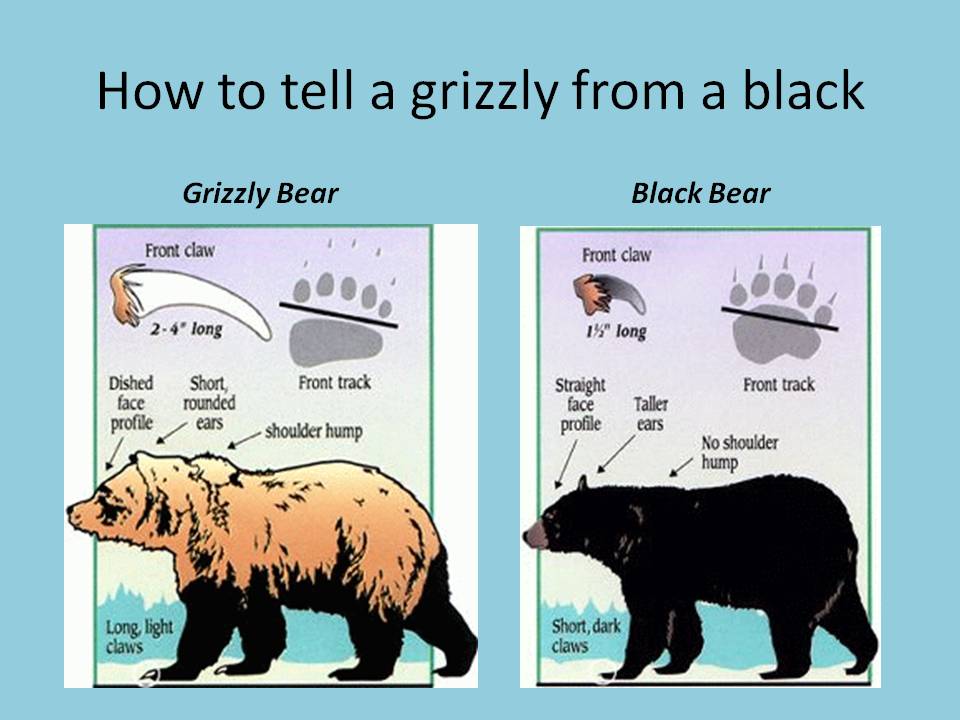
Can you tell a grizzly from a brown bear?  Chart from U.S. Fish and Wildlife Service

Can you tell a grizzly from a brown bear? Chart from U.S. Fish and Wildlife Service

Update, 1-30-2010: The chart linked to above has disappeared in a website redesign.  Below is a crude representation of the chart I made from a U.S. Fish and Wildlife information sheet on grizzlies, here.

How to tell a grizzly from a black (.pdf download)

Grizzly bear/black bear identification chart, adapted from USFWS by Ed Darrell, Millard Fillmore's Bathtub

Grizzly bear/black bear identification chart, adapted from USFWS by Ed Darrell, Millard Fillmore's Bathtub


Maggie rose

July 22, 2009

Exquisite blooms of the "Maggie" rose (bourbon class) - in Kathryn Knowles' garden, summer 2009

Exquisite blooms of the "Maggie" rose (bourbon class) - in Kathryn Knowles' garden, summer 2009

Yes, I intended to leave the spent blossom there.  This is a real garden, where the flowers grow and fade.

Maggie is a “found” rose, robust in much of Texas, and a favorite of my wife’s.  The blossoms tend to glow, even at mid-day.  It will blossom all summer when it’s happy.  Maggie’s fragrance earns it a spot in Kathryn’s garden.

Maggie was one of five roses designated by Texas A&M’s horticulturists in 2005 for testing as one of a handful of roses easy to grow (read:  “difficult to kill, really”) in Texas.  Many rose varieties do not do well in southern heat and humidity — Maggie is one exception.

Maggie is a “found” Bourbon rose. It was collected in Louisiana by Dr. William Welch, Extension horticulturist from College Station. Maggie reaches 8 feet in height and 4 feet in width. Its flowers are medium red, very double, very fragrant, and it is a repeat bloomer. Researchers have found Maggie does best when trained on a pillar or fence. It is designated for zones 6-9.

“Arethusa, Jaune Desprez and Maggie are winter hardy throughout the entire state,” George said. “Bon Silene and Comtesse du Cayla, however, are winter hardy across most of the state except for Amarillo and the northern Panhandle area.”


See? Cicada killer wasp

July 5, 2009

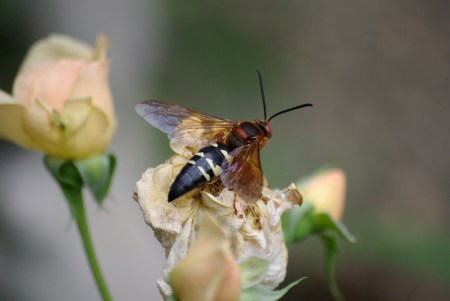
Got one in the camera sites this morning:

Cicada killer wasp and rose, Dallas, Texas, 7-5-2009 - image copyright 2009, Ed Darrell

Cicada killer wasp and rose, Dallas, Texas, 7-5-2009 - image copyright 2009, Ed Darrell (free use with attribution)


Cicada hawks a month early – another sign of climate change?

July 2, 2009

Well I remember summer camp as a Boy Scout, annually at Maple Dell, a few miles up Payson Canyon, Utah.  Troop 17 camped the week of July 4th, by tradition.  Most other troops avoided that week so families could get together on the holiday — there would be half the usual number of Scouts, and we had a lot more opportunities to hit the rifle range, archery range, rowboats and canoes.  Over four years, we noticed that the annual cicada invasion would usually start near the end of that week, as the Utah heat started its march toward August records.  It was a good week to camp, to avoid the heat and the astounding noise of those insects.

As an Explorer, and junior camp staff member later, I spent entire summers at Maple Dell.  We’d start in early June, when the Payson River still ran icy from the snow runoff, and when our sleeping bags would be coated with frost in the morning.  Cicadas in July said it was warming.  Cicadas in August screamed it was hot — sometimes near 100° F, a dramatic shift from the frost just eight weeks earlier.

In Maryland, one year we lived through the confluence of the 13-year and 17-year locusts, which are related to cicadas. (Bug Girl?  You out there?  Help me out on these details.)  The adults would literally coat trees.  They’d mate and die, and fall to the street, where cars would smush them — driving was more treacherous than driving on ice.  What few predators there were — and the predators seemed awfully few in relation to the billion locusts per acre — would eat their fill, and then ignore the rest of the mob.  The locusts came earlier than the cicadas, as I recall — but still later in the summer.

A post I wrote two years ago has been getting a lot of hits. In late July 2007 I wrote of the return of the cicada hawks, here in Dallas.  Each summer since, about the time the cicada hawks return, people start cruising the web to find out how to get rid of them, mostly (don’t, they’re practically harmless).   As I watched the traffic counts, I noticed that I had posted it on July 20 back in 2007.  I wrote that the wasps had been around for about ten days, then.  Last year I posted a welcome to the wasps on July 8.

Cicada killers at Boisenberry Lane, Dallas

Cicada killer wasps on Boisenberry Lane, Dallas, 2008 - copyright Ed Darrell

I saw my first cicada-killer wasp in 2009 about  June 10.  We didn’t have cicadas, then, that I could find.  The cicadas started buzzing on June 21, the first day of summer.  Our backyard is quite busy with cicada hawks right now, tracking down the cicadas and digging the holes in which to store the cicada zombies.

I hate to crash the denialists’ parties, but it sure seems to me that this cicada season thing is moving up.  The tilt of the Earth is still 23°.  The amount of daylight is the same.  What factors other than climate warming would cause these insects to come earlier each year?  What’s your experience?

More information:


Godwin’s Law overload: Warming denialist calls water conservation “Nazi”

June 30, 2009

You couldn’t sell a fictional story where people are this nutty.

Go see. The abominable Steve Milloy — a guy so wacky he cannot be parodied (take that, Poe!) — calls water conservation “Nazi.” He complains about a provision in the Waxman-Markey Clean Energy Act that encourages innovation in water conservation devices.

Milloy flouts Godwin’s Law right off the bat.  You can’t make this stuff up.

And — may God save us from these people — Milloy has followers.  Check out the graphic here, with Obama portrayed as a marching Brownshirt.  It’s almost too stupid to be racist, but it’s certainly incendiary.  He even admits he thinks saving water is a good idea, and he’d like to have one of the devices complained about. (This guy knows he’s in error — he censors posts that question any part of his rant.) See the ugly meme expand, here.

Girl Scout/EPA water conservation badge -EPA image

Girl Scout/EPA water conservation badge -EPA image

Water conservation equals flag-waving in America, and has done so for a at least a hundred years. Those of us who grew up in the Intermountain West may be a little more attuned to the drive — Hoover Dam, Glen Canyon Dam, Flaming Gorge Dam, the Central Arizona Project, the Central Utah Project, the Colorado River aqueduct that carries water to Los Angeles, it’s impossible to live in the West and not be conscious of water’s value, its precious qualities.

Today, the many benefits of controlling water in this way are evident in the extensive development that has taken place throughout the West over the past 100 years.  Huge cities have been created and millions of people live, work, and recreate in this desert region.  But, as the West continues to grow, we must face the problem of continually increasing demands on a finite supply of water.  This includes human population needs and the needs of the environment.

But one doesn’t need to be from the cold northern desert of southern Idaho to figure out that saving water is a good idea.

Most homeowners would like to save money.  Americans spend between $600 and $1600 for washing machines that cut water usage by up to 75% (we just replaced our two-decades-old Maytag with a water conserving front-loader).  Go to the appliance stores and listen to the conversations.  People who could better afford the $200 models discuss how they will cut costs elsewhere to get the water saving versions — because their water bills are so high.

Much of of the rest of America works to conserve water out of necessity. Texas cities have mandatory water conservation laws, like Temple, Richwood, Austin and Dallas.  Texas rural areas fight to save water, too.  California cities demonstrate that water conservation works, saving investments in ever-grander and more environmentally-damaging water importation schemes, and allowing for population growth where water shortages would otherwise prohibit new homes.  Water conservation is a big deal across the nation:  In Raleigh, North Carolina; in Seminole County, Florida;  in Nebraska; in the State of Maryland.  An April drive across Wisconsin a few years ago convinced me it is the most waterlogged state in the nation, Louisiana notwithstanding — but even in Wisconsin, wise people work to conserve water for agriculture, one of the state’s leading industries and employers.

What’s the next step up from Godwin’s Law?  These guys like Milloy and his camp followers can only get crazier, benignly, if they head to the meadow and graze with the cattle.  Crazier non-benignly?  Let’s not go there.

But let us address the odious comparison to Nazis directly.  In World War II, when freedom was on the line, there was a drive to conserve resources in America.  Americans grew their own vegetables in Victory Gardens.

Poster encouraging patriotic conservation, for the war effort in World War II

Poster encouraging patriotic conservation, for the war effort in World War II

Americans collected scrap metal, iron, copper and aluminum, to be made into war machines to save the world.  Americans conserved rubber and gasoline by restricting automobile use.  There was the famous poster, “When you ride alone, you ride with Hitler.”  Conservation was understood to be a patriotic response to the challenges the nation faced.

Bill Maher updated the poster with his 2005 book, When You Ride Alone You Ride With Bin Laden. Maher urged civic actions like those that helped the U.S. during World War II, including conservation of gasoline and other resources.   Maher understands that wise use of resources is something a people should strive for, especially when in competition with other nations, either in a hot war or in trade or influence.  Conservation remains a patriotic behavior, and opposing conservation remains a call to support the enemies of America, in war, in trade, in policies.

Update of the World War II poster, for our times.  Image from Barnes and Noble

Update of the World War II poster, for our times. Image from Barnes and Noble

It’s not just a coincidence that Boy Scouts and Girl Scouts (in conjunction with the U.S. EPA for the past several years) learn water conservation as integral parts of their programs, chartered by Congress, to promote civic leadership in America’s youth.  Those groups charged with teaching actual patriotism understand conservation to be a high duty, a high calling, something that all patriots do.

So, let’s face it.  If you crap on a 6-gallon flushing toilet, you crap with Bin Laden.  When you shower with a non-flow restricting shower head, you shower with Bin Laden.

Yes, it sounds creepy.  It is.

You hope Milloy and the other Neobrownshirts* have parents or other family to pull them back from the brink, but then you see Congress.

Yeah, the Nazis were the Brownshirts, in Germany.  In Italy the fascists wore black shirts.  Brown is generally the opposite of green, in political and business parlance — for example, development of a previously undeveloped piece of property is “greenfield development,” while redevelopment of a previously-developed parcel is “brownfield development.”  Since Milloy is opposed to anything “green,” I think it only fair that his shirt color match his politics.  It’s his choice, after all.

Well, what about you, Climate Change Skeptics?

"Well, what about you, Climate Change 'Skeptics?'"


Exotic trouble: Zebra mussel invades Texas

April 22, 2009

Zebra mussels have been found live in Lake Texoma, on the Texas-Oklahoma border, a lake made by damming the Red River.  Video from WFAA, Channel 8 in DallasPress release from Texas Parks and Wildlife.

All of a sudden Texans have a powerful reason to worry about evolution (the mussels are evolving to live in warmer waters?), climate change, ecosystem destruction by exotic species, and water pollution.

Zebra mussels are a bigger problem than any other undocumented immigrant.

Happy Earth Day! 

Help out:

If you find a suspected zebra mussel, here are the numbers to call:

  • In Texas-(800) 792-4263
  • In Oklahoma-(405) 521-3721

Resources: