I get e-mail from DDT cranks . . .

January 3, 2009

I noted the errors in a post at Reformed Musings.  Then I noodled around Mr. Mattes’s site,  and I dropped this note into his “about” thread, frustrated that I couldn’t just politely note the errors at his posts, where he’s disabled comments.

I said:

I wish you’d take comments on your posts. For example, you’ve got a couple of errors dealing with DDT in your post on climate change. It looks as though you’re hoping to sneak them past readers, rather than get the science right. I hope that’s not so.  By: Ed Darrell on December 31, 2008 at 7:41 pm

Mattes held that comment in moderation (afraid to let his other readers see it?), but responded in sort by diving deeper into wankery, with a post defending the more crackpot ideas of Michael Crichton, and straying much farther from the science in his claims about DDT and environmenta protection.  Heck, he even trotted out errors about Paul Ehrlich’s writing, apparently not content to be wrong about only DDT and global warming.

So, noting Mattes’s aggravation of his errors, I wrote again on his blog, a bit more sternly:

Shame on you. If you really think DDT is safe and that there was no science behind its “ban,” open comments, let us discuss.

But to compound your errors, and then to fail to approve comments from those who offer you correct information — well, reformation only goes so far, I guess.  By: Ed Darrell on January 2, 2009 at 11:56 am

Rather than open comments to discuss, and rather than respond to the post at the Bathtub, he sent me e-mail:

Shame on me? Excuse me, but I’m a bit amazed at your arrogance. You’ll offer correct information? Why, because others have a different opinion than you they have to be wrong? What are your technical qualifications and applicable experience, besides having a blog and a keyboard? Have you been to Africa? I have. Is racial eugenics your thing? Is that why third-world inhabitants are expendable to you?

Whatever you think you know, DDT is being successfully employed in Africa and elsewhere to save lives every day. No bad effects evident.  None. Their public health officials are literally begging for more. But then, their only agenda is survival. Selective and misleading reporting doesn’t interest them, only results.

Did Mattes miss many of the Tinfoil Hat Brigade’s concerns?

For the record, I don’t share Mattes’s fascination with eugenics as applied to race (and I’ll wager Mattes has no record fighting it); that tends to be a concern of the anti-science, historical revisionists (wrong about history, too).  I said nothing disparaging about third world peoples, and there are a dozen or more posts here to confirm my concerns about health in the third world, in contrast to only the junk science, “Let’s poison the hell out of Africa” attitude from Mattes.

In his second paragraph, he contradicts one of the main points of his first post. He says DDT is being used successfully in Africa — while his first post complained that environmentalists had successfully stopped it from being used.

That’s rather the mark of the true DDT sycophant, someone who suffers seriously from internet DDT poisoning:  The only reason they mention DDT is to find a cudgel to use against brave and smart women like Rachel Carson, or otherwise to criticize people who call for an end to pollution, or the preservation of water, air, trees or animals.  Unanchored by any fact or any need or desire to be accurate, they attack environmenalists, damn the inconsistency of the attacks.

Oy.

He’s followed up today with a new post that assaults science at every turn, claiming to follow science journals, but instead citing the chemical industry supporters like Richard Tren, opposing the Centers for Disease Control and World Health Organization.  While complaining about “eco-socialism,” he approvingly cites the experts of Lyndon Larouche, the late Dr. Gordon Edwards, in all of his errors and all of the political wankery of Larouche.

Mattes has gone back to the false claims that Edmund Sweeney exhonerated DDT, and that “evil” William Ruckelshaus banned DDT anyway — completely murdering Sweeney’s analysis and the law behind it, and completely avoiding the law, the court cases, and the history behind Ruckleshaus’s actions.

In his frantic, apoplectic dance to avoid discussing whether he might be in error, Mattes has dived so deeply into the depths of tinfoil hat sourcery (no, it’s spelled as I intended it) that in the end, he’s not jus twrong, he’s not even wrong.

If someone criticized any translation of the Bible as carelessly and wildly as Mattes criticizes science, he’d be out recruiting neighbors with pitchforks and torches to march.

Mattes claims he’s done with the issue.  We can only hope.  To continue in his current trend, he’d need to deny gravity (both Newton and Einstein), atomic theory, and Linneaus.  But I also suppose it means he’ll never check here to see the facts.  Just when we thought we were making progress . . .

The real story about DDT, a few of the posts at Millard Fillmore’s Bathtub:

The real story, elsewhere:

At Bug Girl’s Blog:

At Deltoid:

Also:


Want to poison Boise? Apply within

December 23, 2008

Ada County, Idaho, is home to the state capital, Boise.

As with most county governments in the U.S., a lot of work is delegated to groups that are governed or advised by citizen boards.  Volunteers make up these boards.  In many municipalities, it’s difficult to recruit good citizens to do the work.

Perhaps Ada County is having difficulty getting volunteers to worry about mosquito abatement. Maybe that’s why the advertisement at the city’s unofficial “City Smart”  website urges unnecessary DDT poisoning of the town.

Tell Ada County What to Do

The Ada County Courthouse, in Boise Idaho.  HPB photo by LCA Architects

The Ada County Courthouse, in Boise Idaho. HPB photo by LCA Architects

Feeling disenfranchised? Not happy with how the elections turned out? Well, there is still a way for you to impact the body politic in Ada County—the County Board of Commissioners is calling for volunteers to serve as advisors on a number of boards.

The County Commissioners, Paul Woods, Rick Yzaguirre, and Fred Tilman, made the appeal for volunteer advisors in the most recent edition of Ada County’s monthly newsletter.

“The county has numerous volunteer boards and advisory committees that help the Ada County Board of Commissioners in policy development and general operations in areas ranging from housing, planning and zoning, social work and recreation. The unpaid volunteer positions give citizens a unique, insider look at county government while they roll up their sleeves to help their local community. While each board has its own bylaws and varying terms of service, interested parties are always encouraged to apply for a position on any volunteer board,” the county said.

The county went on to describe eight examples of boards that rely on volunteer participation, I’ve profiles the three coolest boards here.

Historic Preservation Council—Are you one of those folks that loves to see historical photos from Ada County’s storied past? Would you love to help identify sites of historical significance or help with education efforts? When then consider helping out with the Ada County Historic Preservation Council where, according to the county, “members must demonstrate an interest, competence, or knowledge in history or historic preservation” and can have a positive effect on how the county coordinates its preservation activities.

Mosquito Abatement Advisory Board—I’m a huge advocate for bringing back DDT (dichloro-diphenyl-trichloroethane) that insecticide extraordinaire which got a bad rap in the 1960’s when it was panned in Rachel Carson’s inaccurate book, Silent Spring. Turns out that DDT is safe for humans and Silent Spring, “contains certain statements at variance with the facts as we now understand them”, as Cecil Adams so eloquently put it in his The Straight Dope column from December 13, 2002. If you feel like I do about slaughtering mosquitoes and ending West Nile Virus in Idaho, then consider volunteering for the Ada County Mosquito Abatement Advisory Board wherein you can meet to discuss our collective war on these blood-sucking bugs. If you are a mosquito-lover who thinks bugs are people too, I would not recommend this board for you. [emphasis added]

Board of Community Guardians—Finally, if you have a heart for the disabled or the mentally ill, you might be the right sort of volunteer for this important board. According to the county, “The Board of Community Guardians manages the Community Guardian Program, which assists individuals who cannot make decisions for themselves because of mental and/or physical impairments or disabilities. These individuals, who are either legally incapacitated or destitute with no financial security or family support., can be determined a ward of the county, and court-appointed volunteers oversee those wards.

If you are interested in volunteering for any of these advisory boards contact:

Board of Ada County Commission office

200 W. Front St., Third Floor, Boise.

Even the vaunted Cecil Adams writes a clunker from time to time, and his agreement with the wholly unsupportable claim that Rachel Carson was wrong is one of those clunkers (but his description of Lyndon Larouche will make you smile).  The facts differ from the claim in this ad:

  1. DDT’s “bad rap” was well deserved.  In the past three years dozens of news articles matched the science journals commemorating the recovery of bald eagles, brown pelicans, osprey and pergrine falcons — recoveries made possible by ending the use of DDT in the wild.  DDT kills entire ecosystems, starting with the predators at the top.  It’s dangerous stuff.
  2. Rachel Carson’s book, Silent Spring, pioneered the use of good, hard scientific data in popular writing.  In its 53 pages of footnotes to scientific studies, science journals and correspondence, critics have been unable to find inaccuracies.  Especially on the issue of DDT’s effects on wildlife, more than a thousand follow-up studies vindicated Carson.  I have not found a contrary study, not one.
  3. DDT is NOT the pesticide of choice for West Nile, in any case.  It’s almost like arguing that DDT is the pharmaceutical of choice to use against malaria — confusing the pesticides used to kill insects with the pharmaceuticals used to treat disease in humans.  DDT is unsuitable for outdoor use, illegal for outdoor use under the 1958 Federal Insecticide, Fungicide and Rodenticide Act (FIFRA) and its subsequent amendments because it is “uncontrollable.”  DDT kills non-target species, often better than it kills target species. For mosquito abatement, DDT kills mosquito predators much more effectively than it kills mosquitoes. Plus, it sticks around for years, and it bioaccumulates up food chains, multiplying poison doses to predators, sometimes millions of times.
    West Nile mosquitoes can be effectively treated as larva, if their water homes are known; but DDT is particularly ill-suited for use in water. DDT works best when its spread can be confined indoors, which is where malaria-carrying mosquitoes usually bite. West Nile carriers live and bite outdoors.

I hope Ada County gets volunteers for the mosquito abatement board who know a little bit more about DDT, or who are open to listening to the mosquito abatement experts.


Typewriter of the moment: Rachel Carson

December 14, 2008

From the library of Life Magazine images available for sale through an agreement with Google:  “Marine biologist and author Rachel Carson, 1952.”  Photo by Hank Walker.  [Photo no longer available at that site; this is the same image, I believe]

Rachel Carson in 1952.  Life Magazine photo by Hank Walker

This photo was taken about the time Carson left the U.S. Fish and Wildlife Service, about the time her best-selling book The Sea Around Us was a hit.  This was a decade before the publication of her most famous work, Silent Spring, and 12 years prior to her death from cancer in 1964.


Beating malaria without DDT

November 3, 2008

I told you so.

Recent research and assessments of anti-malaria campaigns in Africa show dramatic results from the use of bed nets and other non-DDT spraying methods.

Rachel Carson was right.

I was compelled to jump into this issue when Utah’s U.S. Rep. Rob Bishop made a silly and incorrect statement against Rachel Carson, after his failed attempt to derail a bill to rename a post office in her honor on the 100th anniversary of her birth.  The slam-Rachel-Carson effort turned out to include Oklahama U.S. Sen. Tom Coburn (who has since recanted), and an array of anti-science types who rail against “environmentalists” and made astoundingly false claims against Carson’s work and Carson herself.

In those cases, Carson’s critics called for a return of massive spraying of DDT.  Eventually most of them backed off of calling for outdoor spraying.  Eventually Sen. Coburn lifted his hold on the post office renaming legislation (and it passed).

The calumny continued on the internet, however, with an active hoax campaign for DDT and against environmental protection and Rachel Carson.  Steven Milloy joined Lyndon Larouche in promoting the anti-Carson screeds of the late Dr. Gordon Edwards, a UC Davis entomologist who argued against science that DDT was harmless to humans and animals.

Enough about history.  Look at the real results on the ground, today:

First, note the study published in Lancet that documents a dramatic decrease in malaria in Gambia, using “low-cost” strategies that include bed netsAgence France Presse carried a summary of the study. [Another link to the same AFP article.]

Incidence of malaria in Gambia has plunged thanks to an array of low-cost strategies, offering the tempting vision of eliminating this disease in parts of Africa, a study published Friday by The Lancet said.

At four key monitoring sites in the small West African state, the number of malarial cases fell by between 50 percent and 82 percent between 2003 and 2007, its authors found.

The tally of deaths from malaria, recorded at two hospitals where there had been a total of 29 fatalities out of 232 admissions in 2003, fell by nine-tenths and 100 percent in 2007. A fall of 100 percent means that no deaths attributed to malaria occurred that year.

“A large proportion of the malaria burden has been alleviated in Africa,” the study concludes.

Also see:

Second, note that malaria rates also fell in Kenya, with a shift in infections away from young children, a very good sign. TropIKA.net carried a summary of that study.

Toronto’s Globe and Mail carried a longer story on Kenya’s experience, “Malaria a rare public-health success story in Africa.”

“We had to stay home and tend the sick – you can never leave them to go and work in the fields – and then there was no income and we were hungry. So truly, that 100 shillings was a great investment.”

The family heard about the importance of using a bed net to fend off malaria in a sermon at church, and then on the radio. Now, a year later, they would be able to get them for free, as Kenya ramps up its efforts to get every single citizen sleeping under a net.

Already, two-thirds of Kenyan children are sleeping beneath them and, as a result, child malaria deaths have fallen by 40 per cent in the past two years.

This remarkable success story has been repeated across much of Africa: Deaths of children under 5 declined 66 per cent in Rwanda from 2005 to 2007 and by 51 per cent in Ethiopia.

“This really is the one global public-health story that is simply and straightforwardly positive,” said Jon Lidén, spokesman for the Global Fund to Fight AIDS, Tuberculosis and Malaria, which has been behind much of the push.

“It’s not a gradual change. It’s a fundamental change in the fight against malaria.”

Yet the decidedly unglamorous innovations responsible for the change – spraying houses, treating standing water to kill larvae, mass distribution of cheap polyester nets and better drugs, and simple public education on the need to treat suspected malaria quickly – receive almost no attention.

“We never make the headlines with this stuff,” said Shanaaz Sharif, head of disease control for Kenya’s Ministry of Health, which has thus far given out 11 million nets at a cost to the government of $6 each.

Sulay Momoh Jongo, 7, is seen inside a mosquito net in a mud hut is seen inside a mosquito net in a mud hut in Mallay village, southern Sierra Leone, on April 8, 2008. Although free treatment is sometimes available in Sierra Leone to fight the mosquito-borne disease -- whose deadliest strain is common in the countrys mangrove swamps and tropical forests -- many cannot get to health clinics in time. Worldwide, more than 500 million people become severely ill with malaria every year. One child dies of the disease every 30 seconds. Picture taken April 8, 2008. (Katrina Manson/Reuters)

From the Toronto Globe and Mail: “Sulay Momoh Jongo, 7, is seen inside a mosquito net in a mud hut is seen inside a mosquito net in a mud hut in Mallay village, southern Sierra Leone, on April 8, 2008. Although free treatment is sometimes available in Sierra Leone to fight the mosquito-borne disease — whose deadliest strain is common in the country’s mangrove swamps and tropical forests — many cannot get to health clinics in time. Worldwide, more than 500 million people become severely ill with malaria every year. One child dies of the disease every 30 seconds. Picture taken April 8, 2008. (Katrina Manson/Reuters)”

Despite pledges from the U.S. to signficantly increase funding to fight malaria, money has not flowed from the U.S., especially for bed nets.  Ironically, Canada is the chief donor of the nets.

Canada has had a key role in this success: The Canadian International Development Agency is the single largest donor of bed nets to Africa – nearly 6.4 million by the end of last year. In addition to government support, Canadian individuals and charities – notably the Red Cross – have embraced the issue by making donations and fundraising.

“Canadians … haven’t got the credit they deserve,” said Prudence Smith, head of advocacy for Roll Back Malaria, a partnership between key global-health agencies and donors such as the Bill and Melinda Gates Foundation.

Not all news is good. In Zimbabwe, dictator Robert Mugabe misused $7.3 million in malaria-fighting money from the Global Fund to Fight AIDS, Tuberculosis and Malaria. So far, he has not repaid the Global Fund. Politics continues to kill Africans, not an absence of DDT.

In India, where DDT use is untallied, manufacture massive, and use virtually uncontrolled, malaria is resurgent. According to The Telegraph in Calcutta, malaria is epidemic among people living in poorer sections of the city, often with fatal results.  ExpressIndia.com’s headline tells the story:  “Malaria puts city on the edge:  toll rises to 8.”

Public health officials in India will step up information and education campaigns, and urge residents “not to panic.”

See also:

In the Philippines, the government’s press agency promotes malaria prevention steps.

Science Daily reports progress in the long march for a malaria vaccine.

Public health officials warn the U.S. is completely unprepared for a malaria outbreak, according to The Orlando Sentinel, via the Houston Chronicle.

More:


Carnival of Fighting Malaria (and DDT)

October 8, 2008

It’s been about a year since the first, completely impromptu Carnival of DDT.  Last fall, in October and November, there was enough going on about DDT to merit something like a blog carnival, with a second in November.

My news searches today turned up a number of items of interest in DDT and fighting malaria — enough to merit another summary post, IMHO.  Here goes.

First, Tim Lambert at Deltoid sets straight the history of the policy of the World Health Organization (WHO) with regard to DDT use, and whether WHO caved in to pressures from environmentalists to completely ban DDT, as Roger Bate had earlier, erroneously said.  Tim has a number of well-researched, well-reasoned posts on DDT and health; people researching the issue should be sure to visit the archives of his blog.  But for today, make sure you read “Roger Bates’ false history.

Ornithologist Tom Cade holds a gyrfalcon, which is larger than the peregrine falcons he helped to preserve. Now working to aid the revival of the California condors, he will speak Friday at Hawk Mountain Sanctuary.  Allentown (Pennsylvania) Morning-Call

Ornithologist Tom Cade holds a gyrfalcon, which is larger than the peregrine falcons he helped to preserve. Now working to aid the revival of the California condors, he will speak Friday (October 10) at Hawk Mountain Sanctuary. Allentown (Pennsylvania) Morning-Call

(Photo above has gone missing; see photo below)

Ornithologist Tom Cade, with a falcon; photo by Kate Davis, from Cade's biography at Global Raptors

Ornithologist Tom Cade, with a falcon; photo by Kate Davis, from Cade’s biography at Global Raptors

This Friday the Hawk Mountain Sanctuary presents an award to Tom Cade, the Boise, Idaho guy credited with doing much to save the endangered peregrine falcon. You can read about it in the Allentown, Pennsylvania, Morning Call.

Cade played a major role in reviving the nearly extinct peregrine falcon in the 1970s. As a graduate student, he studied how a pesticide contributed to their sharp population decline. He eventually founded a conservation group, The Peregrine Fund, which reintroduced captivity-bred birds to the wild.

. . . The falcon’s revival is widely considered one of the most successful recoveries of an endangered species. The species teetered on the brink of extinction in 1970, when as few as 39 known pairs of nesting falcons existed. A 2003 survey puts the number of nesting pairs at more than 3,100.

On Thursday Cade will receive the Sarkis Acopian Award for Distinguished Achievement in Raptor Conservation.  According to The Morning Call, “The award is given infrequently by Hawk Mountain officials and is named after the Kempton-area bird sanctuary’s primary benefactor, a late philanthropist who studied engineering at Lafayette College.”

Also, see this story about the recovery of peregrines in Canada, from the Sudbury Star.

Bug Girl tells the story of a new documentary on the Michigan State University professor who documented the deaths of songbirds made famous in Rachel Carson’s book, Silent Spring. Dr. George J. Wallace’s work became the subject of an article in Environmental Journalism in 2005.  Students and faculty at MSU’s Knight Center for Environmental Journalism produced the movie, “Dying to Be Heard.”  Be sure to check out the comments at Bug Girl, for more information.

International health care expert César Chelala argues that the “War Against Malaria Can Be Won, Without DDT” at the on-line Epoch Times. Chelala reports on a project in Mexico — where DDT use has never stopped since 1946 — a project now extended to other places in Central America, demonstrating that the tried and true methods of preventing mosquitoes from breeding and avoiding contact work well to fight malaria.  Plus, he says, it’s cheaper than using DDT.  Doubt that it could work?  Chelala points out that the Panama Canal could not be dug without controlling mosquito-borne illnesses, and the Canal was opened in 1914, 25 years before DDT was demonstrated to be deadly to insects, more than 30 years before widespread deployment of DDT.

Early detection and treatment is critical to eliminate the parasite carriers. An important aspect of this project has been the collaboration of voluntary community health workers who are taught to make an early diagnosis in situ and to administer complete courses of treatment not only to those affected but also to the patients’ immediate contacts.

The project was carried out in specific pilot areas called “demonstration areas” which had been selected due to their high levels of malaria transmission. In those areas, the number of malaria cases fell 63% from 2004 to 2007. In several demonstration areas I visited in Honduras and Mexico as a consultant for the Pan American Health Organization malaria had practically been eliminated. Plans are underway to expand the project to other regions where malaria remains a serious threat.

One of the advantages of not using DDT (besides avoiding its toxic effects) is the enormous savings realized from discontinuing its routine use. These savings can now be put to good use with other diseases.

You might also want to view Chelala’s description of solutions for public health crises in Africa, at The Globalist.

Chelala’s cool, clear and accurate reporting sadly contrasts with the hysteric and wrong reporting at Newsbusters and other polemical outlets on the web, seemingly bent on perpetration of the hoax that DDT is harmless and Rachel Carson was wrong.

Liz Rothchild’s one-woman play about Rachel Carson, “Another Kind of Silence,” got good reviews upon opening at the Warehouse Theatre, in Croydon, England.

Meanwhile, from Uganda comes news that DDT spraying failed to reduce malaria in spraying done in that nation. Proponents expected a sharp and steep decline in malaria, but numbers are not greatly reduced.  Even after taking account for the legal difficulties of spraying, after conservative businessmen sought an injunction to stop DDT use, the results do not speak well for DDT’s effectiveness.

Contrary to expectations, data collected by health departments in Apac and Oyam districts, which record the highest malaria incidence in the world, do not reflect significant improvements since DDT spraying ended prematurely. From May to July 2008, which is the period immediately following the spraying, between 400 and 600 clinical malaria cases per 100,000 of the population were reported per week in Oyam; and 600 to 800 such cases in Apac for the same period. These are almost exactly the same as the number of cases reported between January and April 2008.

Getting news out of Africa is not always easy.  Reading reports from Ugandan papers, it becomes clear that reporting standards differ greatly from the U.S. to Uganda.  Still, the saga from Uganda demonstrates that DDT is no panacea.  Uganda is a nation that had not used DDT extensively prior to the mid-1960s.  Resistance to use now comes from tobacco and cotton interests who speciously claim that potential DDT contamination of crops would result in the European Union banning vital Ugandan exports.  The legal issues all alone assume Shakespearean tragedy dimensions.  Or, perhaps more accurately, we could call the story Kafkaesque.

See also:

Happily, we have evidence that younger people show concern about DDT pollution, in a story about the stuff in Teen Ink magazine.

A study in the UK finds DDT present in colostrum, the vital pre-milk substance newly-lactating mothers create for their babies, as well as in later breast milk.

Bed bugs continue their own surge on Americans, and knee-jerk writers editorialize for the return of DDT, completely unaware that bed bugs are among those critters most resistant to DDT, and unaware that there are other, more effective solutions.

James McWilliams writes in The Texas Observer that most of us are ecological illiterates, which makes control of pollution more difficult, in a review of a new book, The Gulf Stream. Canny readers will recognize McWilliams as the author of the recently-published book, American Pests: Our Losing War on Insects from Colonial Times to DDT.

Sandra Steingraber will lecture on November 11 in Philadelphia on “The Many Faces of DDT,” part of a series of lectures sponsored by the Chemical Heritage Foundation, “Molecules That Matter.”  Steingraber is the author of Living Downstream:  An ecologist looks at cancer and the environment.

Canada’s Leader-Post reports that Chinese food processors have been caught using DDT in food to reduce insect infestations.  The cycle starts all over again.

Time for this carnival’s midway to shut down for the night.  Don’t let the bed bugs bite.


John Stossel: Wrong again, on DDT

September 17, 2008

John Stossel’s new book makes a detour to rail against the regulation of DDT and against Rachel Carson and her book, Silent Spring.

I’ve not read the book, but from what I’ve read about it, he’s got it dead wrong.  If the example offered by Grokmedia is their own, and not Stossel’s, shame on them.  (Stossel’s complained about DDT before, though, and gotten the facts as wrong as Grokmedia has them.)  The claims are unbelievable:

Consider the chemical DDT. I’m sure, if you’ve heard anything at all about DDT, it’s that it’s a horrible, deadly chemical, that must be banned to preserve the public’s safety. The truth is, the only thing DDT affects are mosquitos. Not humans. In fact, I’m old enough to remember trucks pulling through our neighborhood and spraying the stuff into the air, like gigantic clouds, bringing death – to the mosquito population. These clouds of DDT harmed no one. There were no great increases in any kind of cancer or other fatal diseases – and certainly none that could be associated with DDT. Enter the book, Silent Spring.

A woman by the name of Rachel Carson wrote a book that vilified DDT, and blamed our love of chemical solutions for her own cancer. (She died of breast cancer two years after the publication of her book.) Silent Spring is almost single-handedly credited with triggering a worldwide ban on DDT. The result of this ban has been, paradoxically enough, millions of deaths in countries like Ethiopia, where malaria kills due to mosquito infestations. U.S. aid policy bans sending money to any country that chooses to spray with DDT.

How did Silent Spring cause this wave of destruction? Marketing. The book was marketed by it’s publishers. The marketing efforts attracted the attention of a mainstream media hungry for stories that scare the populace to death. The unwashed masses Demanded That Something Be Done. Politicians, eager to grandstand (and free of conciences that might give them pause to think about the Law of Unintended Consequences) passed laws, and that was that.

Here’s what I wrote in comments to the post at Grokmedia, which appears to have gone into their own hell for any post that disagrees with their views:

Stossel said that about DDT?  Once again, he’s gone off the rails.

Do you seriously think that a book publisher with its meager PR budget could derail a multi-billion-dollar pesticide manufacturing industry that was led by several of America’s top 100 corporations?  Do you think corporations are really that incompetent at the public relations game?

The truth is that DDT was banned because of its harm to the environment, not due to its dangers to human health (though, to be perfectly accurate we should note that every cancer-fighting agency on Earth says DDT is a probably human carcinogen, and recent research has strengthened the links between cancer in people exposed to DDT in their mother’s breast milk and in utero, and that DDT is now known to be a rather nasty endocrine disruptor in all animals).  More than a thousand studies confirmed the dangers of DDT to birds and other predators higher up in food chains, especially in estuarine waters.

No one passed a law banning DDT.  If the action was popular, that was beside the point.  In 1962, in response to the half-million-dollar slander campaign against Carson by the pesticide manufacturers (don’t take my word for it — look it up), President Kennedy asked his Science Advisory Council to scrutinize the book.  In May 1963 they reported back that Carson was correct on all counts but one — they said Carson went too easy on the dangers of DDT, and that action needed to be taken right away to stop its use.  Kennedy dallied, however, and did little before he died.

The “ban” on DDT came nearly a decade later, in 1972.  It was not due to any “junk science” law (an interesting claim since it is based on junk science itself).  Two federal courts had ordered EPA to speed up its analysis of the registration of the pesticide, in lieu of simply ordering the stuff off the market after two entirely different lawsuits.  Pesticide manufacturers had been defendants in both lawsuits, and they put up a more than vigorous fight — but they lost on the science.

EPA dragged its feet, but finally acted against DDT in 1972, effectively banning the broadcast spraying of DDT on crops, but leaving it available for things like malaria control.  Of course the ruling was challenged in court, since under U.S. law, had the ruling been only popular, and not based on considerable evidence, the courts would have been obligated to nullify the ruling.  In two separate challenges, the courts ruled that EPA’s action was solidly based on the scientific evidence, and therefore would stand.

That’s quite a bit different from the picture Stossel paints, I gather.  Is this, perhaps, his first foray into fiction?

And, did you catch the contradictions?  The author claims mosquito abatement in Ethiopia is hampered by a lack of U.S. aid, as a result of Rachel Carson’s book in 1962.  Do they know that George Bush is president?  Do they really think Bush and Cheney are tools of Rachel Carson?  Do they know that bed nets have cut malaria rates by half where they were used in Ethiopia?

Looks like another example of DDT poisoning to me.


An account of bioaccumulation of pesticides — dangers of DDT explained

August 14, 2008

Even short-time readers know of the problems of DDT advocates, denialists who seen to think we can poison our way to health — or worse, that we can poison others, in Africa, to health.

Here’s a voice from the other side, an Australian anti-pesticide, go-back-to-nature site, that tells a dramatic story from California:  The Permaculture Institute, “Pesticides, and You.” Clear Lake offered a dramatic example of the dangers of bioaccumulating chemicals, especially pesticides like DDT.

Without endorsing everything this group urges, I will say the clear, simple explanation of the events at Clear Lake is accurate, worth reading, and worth remembering.  It’s what Rachel Carson sounded the alarm to warn us about, and but for the movement spurred partly by her book, Silent Spring, it’s what we would have faced at countless other locations.

Update 2014, California grebes:  Mating grebes engage in the “weed dance,” where they present each other with nest-building materials. Photo: madesonphotography.com, via BayNature.org

Update 2014, California grebes: Mating grebes engage in the “weed dance,” where they present each other with nest-building materials. Photo: madesonphotography.com, via BayNature.org


Rachel Carson: Nice lady scientist, no mass murderer

July 26, 2008

Aaron Swartz has the summary.  Start with the introduction here, and see the full text with links here.

He goes easy on the hoaxers, those who cast stones at Ms. Carson, but you still get the idea if you read the article.


News from Uganda? DDT, cotton, misreporting

July 13, 2008

In continuing efforts to slam environmentalists and Rachel Carson, Instapundit and RWDB complain (whine?) about the European Union’s efforts to block the importation of cotton from Uganda on fears of DDT contamination.

Meanwhile, back in Kampala, the news is that the EU has done the opposite, and is encouraging the use of DDT officially, not blocking its use at all. If DDT is used to fight malaria and not in uncontrolled agricultural use simply to keep products blemish-free, in carefully-controlled sprayings, EU has no complaints.

Is there any western news agency with a stringer in Kampala who could chase this story down? Beck and Reynolds still offer no evidence to back their odd claims, but the story could sure benefit from a solid chunk of reporting from BBC, or Reuters, or Agence France Presse, or someone who could talk with the EU and Uganda officials.

Other resources:

Full text of report, below the fold.

Read the rest of this entry »


Instapundit screws up again (Uganda, cotton, DDT)

July 5, 2008

Instapundit loves to roil waters, but he’s low on content, and everytime I see it, low on accuracy, too.

This is the entirety of Glenn Beck’sReynolds’s post linking to the rabidly anti-Rachel Carson, RWDB with a rant about DDT that lacks several key points of accuracy:

THE HIGH COST OF fighting malaria.

Six words and he’s wrong already. That’s quite a skill to be dead wrong in six words.

Our friend, Mr. Beck, at RWDB, has a news report from Uganda, and rather than note it and check for accuracy, he uses it as a tee for numerous shots and mulligans against science, scientists, environmentalists, health care workers, the EU, and anyone else who inhabited his latest delerium.

The story out of Africa is that a buyer of organic cotton refused to buy Ugandan cotton due to DDT contamination. True to the line of recent events, it’s not environmentalists who do anything , though the news story finds a way to blame them in the last paragraph. Instead, it’s a businessman.

But here are problems with the story:

  • There is no indication EU has anything to do with this failed purchase.
  • There is no indication that any environmentalist ever played a role — this is a Dutch purchasing company, shopping for organic cotton.
  • There is no indication that Uganda farmers can’t sell their cotton to other buyers.
  • There is no reason to presume that the cotton must be sold as “organic.”
  • There appears to be no indication of any DDT contamination.
  • It’s illegal to spray DDT on cotton in Uganda, as I understand it — if this cotton is contaminated, the problem is that DDT was diverted from malaria control. That’s not a problem for environmentalists — and, according to the PAN story cited above, farmers have incentives to keep it from happening.

Are we to believe that marauding anti-insect people roam Uganda, forcing farmers to steal DDT from health authorities and spray it on their cotton instead, against the farmer’s better interests?

Neither Glenn BeckReynolds at Instapundit nor the other Beck at RWDB bothered to check the facts, nor even to see whether the first face story passes the smell test. Where would DDT contamination come from? Why would a buyer refuse cotton if there’s no DDT contaminant? Why wouldn’t there be tests? Where are the test results? If EU is so down on DDT on cotton, where is the document that says so?

The company in the news story, ineptly named as it is, Bo-Weevil, does exist, it appears, either there or in the Netherlands. That surely is not the only cotton buyer for the EU. The first BoWeevil isn’t an EU company, since it’s headquartered in Tennessee. From their website:

Welcome to Bo-Weevil Eco Sportswear Mfg. LLC., nestled in the hills of Tazewell, Tennessee.

Producers of the most earth friendly clothing on the planet.

Bo-Weevil Eco started manufacturing and supplying clothing with one main vision: “Provide our customers with the highest quality clothing that integrates current fashions with timeless style, to create lifestyle clothing that brings awareness to care what you wear.”

We are a company that practices to restore, maintain and enhance ecological harmony. Doing so by being at the forefront of U.S.A. factories producing a line of women’s, men’s, kids and k-9 apparel made by pre-consumer recycled fibres. We are working to create change in the textile industry; to offer one step on the path to more sensible and sustainable use of resources in the production of basic commodities.

So, how does the EU get into this story at all? The second company, I can find listed only through a post at Pesticide Action Network, a source that is not always reliable on such issues.

Smell test: Does this sound accurate to you? When was the last time you saw anyone at Wal-Mart demand organic cotton?

The use of DDT has now affected cotton prices in the region. Patrick Oryang from Lango Cooperative told All Africa, “We are buying cotton at sh500 per kilogram instead of sh750. The country will lose about US$20 million because EUREP-GAP, an EU exporters body, has suspended buying products from the region because the consumers in Europe and America want purely organic products.”

What’s the real story?

Neither Beck nor Reynolds seems to care. They get a dig at environmentalists, so what if Ugandans get malaria?

Update, sorta: News from Uganda, in New Vision, seems to indicate that the EU has okayed the wise use of DDT in Uganda, contrary to claims of an EU ban (July 10 story). You can’t help but wish there were some good, clear reporting of this issue, from BBC or Reuters, or someone in Kampala besides these few, shallow news dailies.


USAID allows DDT use in Africa

June 25, 2008

Africa Science News Service reports that USAID signed a contract that allows U.S. money to be used to purchase DDT for Indoor Residual Spraying (IRS) against malaria-carrying mosquitoes.

If so, this is one of the final barriers to use of U.S. funds for DDT use. Oddly, the news report offers no details on when or where the contract was made.

DDT use in Uganda was halted pending a suit by Uganda agricultural businesses to stop the spraying. The contract discussed would allow purchase of other insecticides to be used in place of DDT for IRS.

It’s important to note that no environmental organizations have expressed opposition to the limited use of DDT in IRS applications. It may be significant to note that the programs involving indoor spraying fall into the category of integrated pest management, which is what Rachel Carson urged in her 1962 book, Silent Spring.


Symposium in a book: Rachel Carson’s legacy

June 25, 2008

Oklahoma Sen. Tom Coburn released his hold, Rep. Jason Altmire’s bill moved, and three weeks ago the post office in Springdale, Pennyslvania, was named in Rachel Carson’s honor. On the internet, yahoos still try to blame her deaths from malaria, claiming that her message of stewardship was misplaced, and led to a “ban” on DDT that allows malaria to run wild.

Off the internet, serious scholars still work. SUNY Press published a compilation of lectures at Oregon State Univesrity commemorating the 40th anniversary of Carson’s most famous book, Silent Spring. The new book, Rachel Carson: Legacy and Challenge is edited by Lisa Sideris and Kathleen Dean Moore.

The press release from the University of Indiana is below the fold.

Read the rest of this entry »


Mosquitoes eat DDT, and here’s how

June 18, 2008

University of Illinois researchers found the protein that allows mosquitoes to metabolize DDT.

It’s good news in mosquito research, and may someday provide some insight into how to kill mosquitoes that seem to be resistant to DDT.

But, for all those DDT advocates out there, isn’t this rather embarrassing? Here these researchers have discovered the molecular level mechanisms for a process that the DDT apologists claim doesn’t happen. Oops. Rachel Carson proven right, once again.

There they are, caught red- and bumpy-handed.

Press release text from the University of Illinois below the fold.

Read the rest of this entry »


Friends of Rachel Carson win a quiet victory

June 13, 2008

How quiet?

None of my news readers pulled it up, either last August and September, when U.S. Rep. Jason Altmire, D-Penn., got the bill through Congress and signed into law by President Bush, nor a couple of weeks ago when the action occurred.

The Post Office in Rachel Carson’s home town, Springdale, Pennsylvania, has been named in her honor. The ceremony at the Post Office was held on May 27, 2008.

Rep. Rob Bishop’s, R-Utah, incendiary and inaccurate statement on the bill was what caught my eye originally about the continuing campaign of calumny against the author and scientist.

Rep. Altmire conducted a petition campaign in Pennsylvania, and used the lever of popular, bipartisan support to pry the bill loose from U.S. Sen. Tom Coburn’s hold in the Senate. Coburn is a Republican from Oklahoma, a physician, and an ardent advocate of spraying DDT. He had placed a hold on the bill in committee, stopping all action under the Senate’s rules of profound deference to members.

The swell of popular support made clear by Altmire’s campaign appears to have persuaded Sen. Coburn to allow the bill to move. The bill passed the Senate by unanimous consent on August 3, 2007, and got President Bush’s signature on August 9. These sorts of honorary bills generally are not targeted for political points. That Coburn allowed the bill through suggests a good deal of maturation as a senator on Coburn’s part.

Below the fold, Rep. Altmire’s press releases on the bill’s passing the Senate, and on President Bush’s signing the bill.

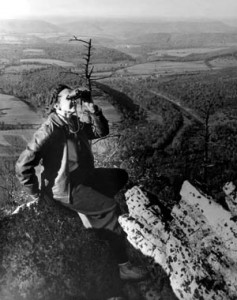
Photo below: Rachel Carson, birding, on a ridge (in Pennsylvania); photo originally found at site of Professor Catherine Lavender, The College of Staten Island of CUNY.

Rachel Carson, birding at Hawk Mountain Sanctuary

Rachel Carson, birding at Hawk Mountain Sanctuary

Read the rest of this entry »


DDT opposition in Uganda: Business, not environmentalists

June 3, 2008

DDT advocates continue to smear Rachel Carson and “environmental groups” with a campaign of made up calumny. To the frustration of scientists, health officials and the gods of fairness, these people continue to get credence from people who should know better, like the contributors at the Volokh Conspiracy (Quiggin and Lambert are the good guys, if you’re not following closely).

Reality is a different story. Business interests appear to have started a false rumor that someone stole a massive quantity of DDT from Uganda’s mosquito control program in an attempt to make the mosquito control guys look incompetent and dangerous. From The Monitor in Kampala, via allAfrica.com:

Safina Nambafu
Kampala

The Ministry of Health has denied reports that some people were last week arrested in possession of stolen DDT drugs in Oyam District.

The head of the Malaria Control Programme, Dr Rwakimari, said it was the detractors of the campaign that are inciting the public to spread falsified information.

He was addressing the press at the ministry headquarters on Monday.

Dr Rwakimari said some local leaders are trying to fail the DDT campaign yet over 94% of the district had successfully been sprayed as of last Monday. Last week, civil society organisations led by the National Association of Professional Environmentalists [Nape] held a half day sensitization meeting with stakeholders in Kampala where they collectively condemned the government for carrying out the exercise.

They claimed that many of the crew members had reported strange illnesses, which they fear could have been caused by exposure to DDT. Dr Rwakimari said the government would not just look on as individuals de-campaign the exercise, adding that DDT was being sprayed in eight district in an effort to fight malaria.

Erute North MP Charles Angiro Gutomoi told Daily Monitor that he was bitter that government had had sprayed DDT, saying the exercise threatens the food market.

“National Association of Professional Environmentalists” — in Uganda.  Don’t you love it?  The group’s website, lacking much information, looks like the site of an astroturf organization to me.  The organization exists, though, but DDT doesn’t appear to be a major concern of the group (it earns no mention in their April 2008 report).

There is real opposition to the use of DDT in Uganda, and there is a lawsuit to stop use of DDT.  The suit was filed on behalf of nine different agricultural businesses.  Farmers claim the spraying is not following the strict guidelines of the World Health Organization (WHO), and they fear their crops will be contaminated and unsaleable.

Effective malaria fighting uses only small quantities of DDT, in a few places, on a few occasions.  The fight also requires use of screens and nets to protect people at night, when the mosquitoes are active in feeding.  The New York Times featured a story on the successful Nothing But Nets program today — not a government-run program, not a program favored by the Rachel Carson critics, but a useful and necessary program.