Dallas ISD projects less dismal budget picture

May 26, 2011

Generally, Texas school districts need to lock down their school year budgets by about the end of April.

Of course, that’s not possible this year.  As of this morning, it looked as though the Texas Lege could not agree on school funding, and they will have to return for a special session to set education budgets in June or July.

Can you imagine being the budget officer for a Texas school district?

But, sorta good news in Dallas:  Budget officers, making their best guesses on what will  happen, created Budget 5.0 (the fifth iteration of this process — one is usually all a district gets, or needs).

Here’s the message from Downtown on the school’s internal communication system:

Budget Plan 5.0 presented to trustees

Budget Plan 5.0 was presented to trustees today during a budget workshop. The administration is optimistic that this particular scenario, which envisions a $90 million cut in state funding to the district, will be closest to the final budget presented to the board for approval in June.

Here are some of the highlights of Budget Plan 5.0:

  • No additional layoffs at the campus level will be necessary.
  • There will not be an additional loss in the number of teaching positions. The early resignation incentive offered earlier in the spring cut enough from the payroll to make any additional loss of positions unnecessary. It must be noted, however, that some reassignments will need to occur to level campuses depending upon staffing needs.
  • Full day pre-kindergarten for eligible Title I students, which has been a priority of the Board of Trustees, will be funded.
  • Certain teacher stipends will be eliminated.
  • Secondary schools will be staffed at a 27-1 class-size ratio, an increase over the current level of 25-1. While this is not ideal, it is preferable to earlier budget versions that included a 35-1 ratio.

Texas lawmakers remain gridlocked on the funding mechanism for schools yet have indicated an agreement in principle on the amount that will be available. The latest funding scenarios from the state give the district confidence to move forward with Budget Plan 5.0, with the possibility of some modifications, prior to its approval by the Board of Trustees in June.


Blaming the teachers can’t overcome problems of poverty in educational achievement

May 24, 2011

We got the scores from the state yesterday, for the Texas Assessment of Knowledge and Skills (TAKS).  Most of my students are juniors, so this is a big deal.  If they pass these tests, in mathematics, science, English language arts and social studies.

Preliminary results gave me a 100% pass rate with 41% commended, out of  134 students whose scores counted (don’t ask about those formulae).  Considering that our students’ poverty rate, as measured by school lunches, is well north of 85%, that’s good.

It doesn’t mean all these kids are ready for the Ivy League, though.

I know the preliminary results err somewhere.  I can find two students in special education categories who did not muster the scores I had hoped, and to me, it looks like they may need to retake.  Two failures wouldn’t be bad, either.  I’ll let the state and our administrators fight that out.

So, I’ve done an okay job of teaching our kids bubble guessing.   That’ what the TAKS test does, focus teaching on bubble guessing.  Are we getting these kids ready for life and college?  I have more doubts.  The TAKS curriculum is limited, and shallow.  Dallas District has two other tests, but again the curriculum tested is limited and shallow.

Each year I discover most students don’t remember what they studied of Paul Revere, and almost none know the famous Longfellow poem about him.  They don’t know about Joyce Kilmer, either his poem or the sacrifice of his life.

Reading political cartoons proves difficult for many students, because they don’t understand the symbolism, sometimes of easy stuff like, “who does the Statue of  Liberty represent?” or “why is that guy dressed in a star-spangled coat, striped pants and striped top hat?”

They don’t know about Route 66.  They don’t know the National Parks.  They don’t know Broadway, nor Stephen Foster.  They are convinced Utah has some big river that led the Mormons to settle there, “on or near a waterway,” instead of the real reasons the Mormons settled there, for religious freedom in a desert.

Despite their remarkable test achievements, their teachers are all on the chopping block this year.  The Texas Lege still quibbles over whether to lay off 10,000 or 100,000 teachers over the summer.  We leave the academic year knowing only that the legislature as a collective hates teachers and teaching and schools, and they probably don’t like the students much, either, but they can’t say that because they want the students’ parents’ votes.

Jonathan at JD 2718 sent me a note a couple of weeks ago alerting me to a story in the online Texas Tribune, by Reeve Hamilton.  Hamilton interviewed Dr. Michael Marder, a physicist at the University of Texas at Austin who in his spare times runs UT’s UTeach Program, which encourages the best students in science and math to consider teaching elementary and secondary classes.  Marder has a strong case to make that it’s not the teacher’s fault when students in some schools do not measure up to the standards promulgated by the state tests, inadequate and inappropriate as those standards are.

(Personal note:  Reeve Hamilton is a very good reporter who often does great work on otherwise mundane issues; he’s also the son of a woman I met in graduate school at the University of Arizona, the first woman who ever gave me a highly contingent proposal of marriage, which as you see we did not carry out — probably much to the benefit of all of us, with Reeve doing such great work, and all our kids being basically sane and sound.  I smiled when Jonathan said such good things about Reeve’s work, and the subject of the story.  Nice to hear unasked-for compliments about people you know and like.)

Marder knows numbers.  Marder got the statistics on schools and their preparation of students for college, as well as we can get those numbers without an expensive and expansive study.

Michael Marder’s numbers show that it’s not the teachers’ fault that so many students are not ready for college, and not learning the stuff we think they should know.

Texas Tribune said:

In the popular 2010 documentary Waiting for Superman, former DC schools chancellor Michelle Rhee said, “But even in the toughest of neighborhoods and circumstances, children excel when the right adults are doing the right things for them.”

After looking at the data, Marder has yet to be convinced that any teaching solution has been found that can overcome the detrimental effects of poverty on a large scale — and that we may be looking for solutions in the wrong place.

Hamilton’s interview of Marder takes up three YouTube segments — you should watch all three.

Marder indicts those who blame teachers first, with the data.  By implication, he also indicts the state legislatures who appear bent on continuing the daily flogging of teachers until teacher morale improves.

In Part I of the interview with Hamilton, Marder shows the statistics that demonstrate poverty of the student is a greater influence on student achievement than the teacher:


Dallas history: Deaths of Bonnie and Clyde, May 23, 1934

May 23, 2011

Bonnie Parker and Clyde Barrow, notorious bank-robbing outlaws from Oak Cliff, Texas, ran into a police ambush and were shot to death on May 23, 1934, in Bienville Parish, Louisiana.

Bonnie and Clyde in 1933 - Wikimedia

Bonnie and Clyde in 1933, about a year before their deaths - Wikimedia image

Though they wished to be buried together, her family protested. They are buried in separate cemeteries in Dallas. Bonnie is buried in the Crown Hill Cemetery off of Webb Chapel Road. Clyde is buried in the Western Heights Cemetery off of Fort Worth Boulevard, in Oak Cliff.

Borrowed with express permission from a Wayback Machine.


Surprise attack on public schools today, in Texas Lege?

May 18, 2011

From the Texas Freedom Network (late last night — so where it says, “tomorrow,” think “today!”):

Voucher Lobby Launches Big Surprise Attack on Texas Public Schools

TELL YOUR LEGISLATOR NOW TO OPPOSE VOUCHER SCHEME THAT WOULD DRAIN BILLIONS OF DOLLARS FROM OUR NEIGHBORHOOD PUBLIC SCHOOLS

We have just learned that advocates of private school voucher schemes are planning to offer legislation as soon as tomorrow (Wednesday, May 18) that would drain billions of dollars from our neighborhood public schools to subsidize tuition at private and religious schools across Texas. A proposed amendment to important fiscal legislation in the Texas House of Representatives would allow the state to give so-called “Taxpayer Savings” grants – vouchers – to families that send their children to private or religious schools. The money would come directly from tax dollars originally intended for public education – even if recipients of these vouchers had never set foot in a public school!

This radical new voucher proposal is backed by a virtual “who’s who” of anti-public education groups, including the Texas Home School Coalition and Tea Party activists. They are dishonestly claiming that their voucher scheme will save the state money – but the loss in funding would be catastrophic for neighborhood public schools.

Legislators in 2007 and 2009 voted overwhelmingly to bar spending any taxpayer dollars on vouchers for private and religious schools. But now as lawmakers consider billions of dollars in cuts to the budget for public education, voucher advocates want to siphon off billions more in funding from our neighborhood schools.

TAKE ACTION

The Texas House of Representatives could vote on this reckless voucher amendment tomorrow (Wednesday, May 18). It’s critical that you CALL YOUR LEGISLATOR TODAY and TOMORROW MORNING and insist that he or she oppose this irresponsible effort to defund neighborhood public schools. Tell your legislator:

  • So-called “Taxpayer Savings” grants are nothing more than a radical and irresponsible private school voucher scheme. They could drain billions of dollars from neighborhood public schools on top of the billions in painful cuts to public education already in the current House and Senate budget bills.
  • These vouchers/grants would not cover the full cost of private school tuition and would therefore go mostly to tuition subsidies for high-income families – including families with children who were never in public schools to begin with.
  • This voucher scheme would send public tax dollars to private and religious schools that are unaccountable to taxpayers. In fact, the proposed amendment includes no standards or regulations at all for recipients of these tax-funded vouchers – it’s simply a tax-dollar giveaway.

Click here to find out who represents you in the Texas House of Representatives and the contact information for his or her office.


Tommy Lee Jones asks your help in raising hands to support Texas education

May 14, 2011

With Texas ranking 44th out of 50 states in student spending, how can we consider making cuts? Tommy Lee Jones, actor and fellow Texan, calls for all of us to unite and take action to support quality Texas public education – http://www.raiseyourhandtexas.org/index.php/act/issues/advocacy

Robert Johnson’s centennial, May 8: Memorial to the blues

May 8, 2011

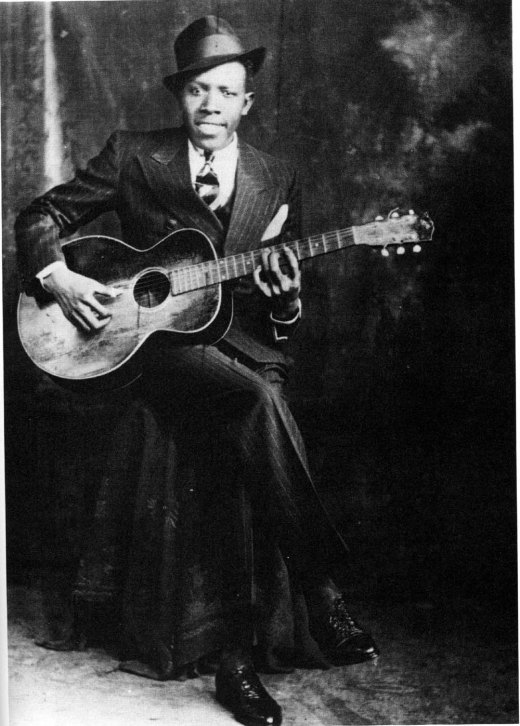
May 8, 2011, is the 100th anniversary of the birth of bluesman Robert Johnson.

Robert Johnson, hat and guitar
Robert Johnson — one of two known photographs of the Delta blues legend

In a fitting tribute to Johnson and an important coming-of-age coming-to-senses moment, First Presbyterian Church in downtown Dallas announced plans to save the old Brunswick Records Building at 508 Park Avenue, a site where Johnson recorded songs in 1937 that changed the blues, changed recording, and left us a legacy of Johnson to study from his short life.

(On at least one day of those 1937 recordings, Johnson could have brushed shoulders with the Light Crust Doughboys, the Texas Swing legends, who were recording in the same building.  The Doughboys set their own pace and gave birth to Bob Wills and the Texas Playboys.  Two of Texas’s greatest music legends, in the same building on the same day, both just stepping on the platform of the train to immortality.)

Saving 508 Park Avenue vexed Dallas for a couple of decades.  First, blues is not the music of Dallas cognescenti, though the world class musicians in town including Dallas Symphony Orchestra’s Jaap van Zweden tend to support the eclectic music scence and honoring musicians of all genres (and Texas is loaded with different music genres).  Second, while Park Avenue may have been a bustling business district adjunct once, Dallas’s city center suffered 50 years of decline after school desegregation.  Parts of downtown and Uptown begin to look prosperous again, but the southern peninsula of the city, away from the now-packed-with-performance venues Arts District, a freeway and ten blocks away from Uptown, with its back up against another freeway, part of Interstate 30 and the famous Dallas Mixmaster.

508 Park Avenue, Dallas, Robert Johnson's early recording site, photo by Justin Terveen for the Dallas Observer in 2011
508 Park Avenue, Dallas, Robert Johnson’s early recording site, photo by Justin Terveen for the Dallas Observer, 2011

Plus, the building is directly across the street from the Stewpot, a kitchen operated by First Presbyterian Church to serve Dallas large and unfortunately thriving homeless population.

Who wants to renovate an abandoned building that has homeless people as scenery for the better part of the day?

Big news this week:  508 Park Avenue was sold to First Presbyterian, who have plans to save the building (and recording studio!), add a performance amphitheatre at one end of the block, and a park at the other.  This is people-friendly development well ahead of its time — there is not a resident population in that part of the city to support such a venue — yet.

Last summer, it was the neighbors, First Presbyterian Church of Dallas, who made an offer to buy 508 Park Avenue and the adjacent building and empty lot. But the deal was contingent on the city allowing the church, which also operates the Stewpot, to tear down an unrelated building next door, at 1900 Young, and replace it with an outdoor amphitheater for church socials and concerts. The Landmark Commission went into last Monday’s meeting with angels on one shoulder and devils on the other: The commission’s task force suggested approval; city staff, denial. The latter would have sent 508 Park Avenue back into purgatory.

But Landmark OK’d the plan, and the church says it will restore 508 Park Avenue to its former glory, inside and out—including the construction of a real recording studio where Johnson once sat and played “Hell Hound on My Trail.”

The church promises: It has musicians lined up to participate, but it can’t yet reveal who. The church promises: 508 Park Avenue will be resurrected.

One hell of a birthday gift for a man who supposedly sold his soul to the Devil.

The second authenticated photo of blues legend Robert Johnson

So, on Robert Johnson’s 100th birthday (assuming he wasn’t really born in 1912 . . . another mystery for another time, perhaps), the news is that the legendary bluesman who burned out like a shooting star helped save one of the few examples of art deco building decoration in Dallas, when a group of Christians who help the homeless, decided to step in an update their downtown Dallas campus.

Every step of the way, it’s an unlikely story.  Truth is, in this case, much, much stranger than fiction.

Ovation Music released to YouTube the video of Eric Clapton playing and singing “Me and the Devil,” at 508 Park Avenue, in the same room where Robert Johnson sang for a record early on.  Johnson recorded the song at that same location on Sunday, June 20, 1937.

508 Park Avenue, Dallas, is already a memorial to Robert Johnson, to the blues, and to the city where these early blues hits were made.  The struggle remains to make the memorial accessible, and not threatened with destruction.

More, resources: 


Really, the Texas Republicans yacht to be tossed out

May 4, 2011

Texas’s legislative follies win worldwide attention.  From deepest, darkest Minnesota:

I’m just amazed that Texas citizens will elect congresspeople who will do things like this:

In response to the worst state budget crisis since World War II, the Texas House has proposed slashing $27 billion from the budget, including huge cuts to education, nursing homes, and health care for the poor. Yet last Friday, the Texas House Ways and Means Committee approved a tax break for those who want to buy yachts costing $250,000 or more.

I think every unemployed worker, everyone struggling by on minimum wage, every waitress working for less than minimum wage, every teacher watching her support dwindle, every farmer, every working class person ought to be storming the capitol and lining up the fat cats against the wall…but barring that extreme reaction, shouldn’t we at the very least expect those same people to walk into their voting booths and throw the rascals out?

So, Texas parents, when your kid can’t get an AP class next year, when your kid gets stuck in a class with 37 rowdy kids who don’t care that your kid wants to learn enough to get into college, when your aged uncle gets tossed out of his nursing home because it has to close . . . will you vote these clowns out?

And a tip of the old scrub brush to Pharyngula for alerting us.


Texas Lege plans to throw education under the bus

May 4, 2011

In a desperate attempt to hold on to tax cuts for big oil companies, estate and plantation owners, Republicans in the Texas legislature announced they will steamroll Democrats to throw education under the Texas budget bus.

Seatbelts won’t help the kids in front of the bus.

In a possibly unrelated move, some legislators are re-thinking their plan to allow teachers to carry firearms.

You couldn’t write fiction like this.  Farce with tragic consequences, or pure tragedy?


Pray that God will save Texas; it’s clear Rick Perry won’t

April 25, 2011

Texas doesn’t have a recall procedure for politicians in office.  If it did, would Texans have the guts to use it on Rick Perry?

You’ve probably seen it in the news:  Over the last ten days, Texas has been scorched by several large wildfires.  At least two firemen were killed.  Hundreds of homes and one state park burned away.  (See the Christian Science Monitor: “Texas wildfires:  Why this season is one of the worst in state history,” and “Can U.S. handle historic Texas wildfires?”)

Firefighters, mostly, come from small town, volunteer fire departments.  Most of the affected towns are too small to be able to afford a larger, professional fire-fighting department.

Gov. Rick Perry’s mathematical errors cost Texas $27 billion, a shortfall that Republicans propose to make up by cutting to the bone, and deeper, education programs, road building and maintenance, aid to the poor, and police and fire departments.

Yes, in the middle of one of the biggest fire disasters in Texas history, Rick Perry and the Texas Lege propose to cut the funding to the fire fighters.

If they don’t cut funding, they would have to roll back tax cuts to wealthy property owners granted six years ago, or dip into the states $9 billion “rainy day” fund.

Gov. Perry does have one other trick up his sleeve to help victims of the fires:  He’s asked Texans to pray for rain.  Fire departments need equipment, people and training, all of which cost money.  Gov. Perry asks for prayers instead.

Gov. Perry Issues Proclamation for Days of Prayer for Rain in Texas

Thursday, April 21, 2011  •  Austin, Texas  •  Proclamation

TO ALL TO WHOM THESE PRESENTS SHALL COME:

WHEREAS, the state of Texas is in the midst of an exceptional drought, with some parts of the state receiving no significant rainfall for almost three months, matching rainfall deficit records dating back to the 1930s; and

WHEREAS, a combination of higher than normal temperatures, low precipitation and low relative humidity has caused an extreme fire danger over most of the State, sparking more than 8,000 wildfires which have cost several lives, engulfed more than 1.8 million acres of land and destroyed almost 400 homes, causing me to issue an ongoing disaster declaration since December of last year; and

WHEREAS, these dire conditions have caused agricultural crops to fail, lake and reservoir levels to fall and cattle and livestock to struggle under intense stress, imposing a tremendous financial and emotional toll on our land and our people; and

WHEREAS, throughout our history, both as a state and as individuals, Texans have been strengthened, assured and lifted up through prayer; it seems right and fitting that the people of Texas should join together in prayer to humbly seek an end to this devastating drought and these dangerous wildfires;

NOW, THEREFORE, I, RICK PERRY, Governor of Texas, under the authority vested in me by the Constitution and Statutes of the State of Texas, do hereby proclaim the three-day period from Friday, April 22, 2011, to Sunday, April 24, 2011, as Days of Prayer for Rain in the State of Texas. I urge Texans of all faiths and traditions to offer prayers on that day for the healing of our land, the rebuilding of our communities and the restoration of our normal way of life.

IN TESTIMONY WHEREOF, I have hereunto signed my name and have officially caused the Seal of State to be affixed at my Office in the City of Austin, Texas, this the 21st day of April, 2011.

RICK PERRY
Governor of Texas

Perry’s call for prayer rightly earned ridicule.  Ed Brayton at Dispatches from the Culture Wars wondered about Jon Hagee and Pat Robertson weighing in, as they usually do, claiming big disasters to be the result of sinfulness in the local population.   P. Z. Myers at Pharyngula simply wonders about the effectiveness of a governor who does that.


True story of how a woman won Texas’s independence

April 21, 2011

This is mostly an encore post, for the 175th anniversary of the Battle of San Jacinto.

After suffering crushing defeats in previous battles, and while many Texian rebels were running away from Santa Anna’s massive army — the largest and best trained in North America — Sam Houston’s ragtag band of rebels got the drop on Santa Anna at San Jacinto, on April 21, 1836. Most accounts say the routing of Santa Anna’s fighting machine took just 18 minutes.

San Jacinto Day is April 21. Texas history classes at Texas middle schools should be leading ceremonies marking the occasion — but probably won’t since it’s coming at the end of a week of federally-requested, state required testing.

Surrender of Santa Anna, Texas State Preservation Board Surrender of Santa Anna, painting by William Henry Huddle (1890); property of Texas State Preservation Board. The painting depicts Santa Anna being brought before a wounded Sam Houston, to surrender.

How could Houston’s group have been so effective against a general who modeled himself after Napolean, with a large, well-running army? In the 1950s a story came out that Santa Anna was distracted from battle. Even as he aged he regarded himself as a great ladies’ man — and it was a woman who detained the Mexican general in his tent, until it was too late to do anything but steal an enlisted man’s uniform and run.

The San Jacinto Monument is 15 feet taller than the Washington Monument. Texas tourism brochure photo

The San Jacinto Monument is 15 feet taller than the Washington Monument. Texas tourism brochure photo

That woman was mulatto, a “yellow rose,” and about whom the song, “The Yellow Rose of Texas” was written, according story pieced together in the 1950s.

Could such a story be true? Many historians in the 1950s scoffed at the idea. (More below the fold.) Read the rest of this entry »


Texas House votes to maim education, cripple health care, send the aged off to ice floes

April 4, 2011

Where anyone can find an ice floe in Texas is a powerful question, but the search will be on to find some soon, if the budget approved by the Texas House of Representatives cannot be fixed.

Texas House Democrats sent out a notice shortly after the vote, explaining some of the cuts:

An hour ago, Texas House Republicans forced through some of the most destructive budget cuts in Texas history.  On a party line vote, 101 House Republicans trampled on the priorities of regular, middle-class Texas families. [1]

Tonight, Republicans voted to:

  • Eliminate 335,000 Texas jobs in both the public and private sectors, threatening our fragile economic recovery [2]
  • Lay off up to 100,000 teachers and school support workers, crowding dozens of kids into unruly classrooms [3]
  • Kick 100,000 kids out of full day Pre-Kindergarten [4]
  • Close half of the state’s nursing homes, leaving thousands of seniors with no place to go [5]
  • Create a ripple effect that will force local governments like cities, counties and local school districts to raise taxes [6]
  • Cut off access to financial aid for thousands of graduating high school seniors [7], while forcing up college tuition through cuts. [8]

They didn’t have to cut this deeply into the priorities set by most Texas families.  They chose to make the deepest cuts public education since the creation of our school finance system in 1949. [9]

For months, Republicans have been yelling “Cuts! Cuts!” and they have ignored the thousands of office visits, letters, emails and phone calls of average Texans protesting these hurtful cuts.

Democrats offered plenty of creative solutions that would keep schools open, spare nursing homes from closing, and keep our promise to graduating seniors who have worked hard for a chance to earn a college education. Republicans shot them down one by one in favor of deeper cuts.
Anybody can swing an axe and slash budgets across the board.  Texas needs people who can lead, set priorities, and protect those priorities.

Remember, Republicans chose to make these cuts. Help us hold them accountable for costing jobs, hurting families, and for choosing to sacrifice the future of too many Texas kids.

Sincerely,

Cliff Walker
Texas HDCC

  1. http://www.capitol.state.tx.us/BillLookup/History.aspx?LegSess=82R&Bill=HB1
  2. http://www.beaumontenterprise.com/news/article/Budget-cuts-could-slash-hundreds-of-thousands-of-1291051.php
  3. http://www.kvue.com/home/117522288.html
  4. http://www.newschannel10.com/Global/story.asp?S=14368977
  5. http://www.reporternews.com/news/2011/mar/09/democrats-cuts-will-hit-homes/?print=1
  6. http://www.star-telegram.com/2011/03/08/2906285/unfunded-mandates-from-the-texas.html
  7. http://blog.mysanantonio.com/texas-politics/2011/03/house-budget-writers-ok-bill-that-would-trim-23-billion/
  8. http://www.newswest9.com/Global/story.asp?S=14310923
  9. http://www.businessweek.com/ap/financialnews/D9MBC0PG1.htm

Fewer teachers when more are needed, bigger classrooms when smaller classrooms are needed, less health care in the state with the largest uninsured population of any state, the highest proportion of uninsured people.

Cleaver prop from YourProps.com

Texas Republicans chose the meat cleaver over the scalpel to try to balance Gov. Rick Perry's $27 billion deficit. Many cuts appear targeted to do the most damage possible to education and other "liberal" state functions. Cleaver prop from YourProps.com

Prisons, highways, state parks, and other programs suffered serious cuts, too.

Had a foreign power done this to Texas, it would be considered an act of war.  How will Texas citizens respond?

More:


Now is the time for all good citizens to phone legislators for the sake of their country . . .

March 31, 2011

Ready to start dialing?  It’s time to dial to save your country.

MoveOn.org asks Texans to phone their U.S. senators for help:

Dear Ed,

Heads up: Congress is debating a budget plan that would be devastating to Texas. Will you pass this along?

Senators Kay Hutchison and John Cornyn need to hear from all of us about it right now, before they cut a deal in the next few days.

Please spread the word about all of these proposed cuts to Texas:

  • $98 million would be cut from federal funds for clean and safe water in Texas.1
  • 12,000 Texas children would be immediately cut from Head Start, which provides comprehensive early childhood development services for at-risk children ages zero to five.2
  • $391 million would be cut from Pell Grants, affecting all 664,000 higher education students with those grants in Texas.3
  • Job training and employment services would be effectively eliminated for 5,800 dislocated workers, 99,000 low-income adults, and 16,000 youths age 14 to 21.4
  • $10 million would be cut from law enforcement assistance, taking cops off the beat.5

It’s especially galling when the same budget protects tax breaks for corporations like GE and the very rich.

Just last night the news broke that Congress may be close to striking a deal on the budget. Now is the only time we can influence the outcome.

Can you call Sens. Hutchison and Cornyn and ask them to oppose these cuts in the budget? You can pick one of the cuts in this list to highlight in your call.

Senator Kay Hutchison
Phone: 202-224-5922

Senator John Cornyn
Phone: 202-224-2934

Click to report your call. Then pass this email along locally!

http://pol.moveon.org/call?tg=FSTX_1.FSTX_2&cp_id=1547&id=26722-5763840-yqXs_sx&t=2

The cuts that the Republicans are proposing would disproportionately hit those who can least afford it in Texas, and it’s up to us to stop them.

Thanks for all you do.

-Daniel, Amy, Milan, Tate, and the rest of the team

Sources:

1. “House Bill Means Fewer Children in Head Start, Less Help for Students to Attend College, Less Job Training, and Less Funding for Clean Water,” Center on Budget and Policy Priorities, March, 1, 2010
http://www.cbpp.org/cms/index.cfm?fa=view&id=3405

2. “Projected Reduction in Children Served in Head Start Based on H.R. 1—Fiscal Year 2011 Continuing Resolution,” Center for Law and Social Policy
http://www.moveon.org/r?r=207278&id=26722-5763840-yqXs_sx&t=3

3. “House Bill Means Fewer Children in Head Start, Less Help for Students to Attend College, Less Job Training, and Less Funding for Clean Water,” Center on Budget and Policy Priorities, March, 1, 2010
http://www.cbpp.org/cms/index.cfm?fa=view&id=3405

4. Ibid

5. Ibid

Want to support our work? We’re entirely funded by our 5 million members—no corporate contributions, no big checks from CEOs. And our tiny staff ensures that small contributions go a long way. Chip in here.

Meanwhile, the Texas House of Representatives scheduled the start of debate on H. 1 for Friday, April 1 — the budget resolution that would gut Texas schools and higher education, and set Texas on a course of decline that will make California’s troubles look serene by comparison.

NEA’s Texas affiliate, the Texas State Teachers’ Association, asks teachers to call their Texas representatives to weigh in against the drastic budget cuts (and you can call, too):

March 30, 2011

House Bill 1 is an assault on the public schools!

This Friday, April 1, the Texas House of Representatives is scheduled to begin debate on House Bill 1, its version of the state budget for 2012-2013. If this bill were to become law in its present form, it would cut almost $8 billion from public education and, with it, tens of thousands of school district jobs.

Unfortunately, this is no April Fool’s joke.

It is, instead, the proposal of a state leadership that would rather plug a huge hole in the state budget by firing teachers, packing kids into overcrowded classrooms and closing neighborhood schools than by adequately investing in our state’s future.

NOW is the time to call your legislator and let him or her know what these budget cuts will mean in your classroom, your school and your community. We must stop House Bill 1, and your call is critical!

To contact your state representative, call 800-260-5444, and we will connect you [That’s the number for TSTA members, but try it — I’ll bet they’ll accept your help!]. You can call any time, day or night, but you need to call before Friday. Leaving a voice message with your representative’s office is just as good as talking to a staff member.

It is important to include the following points in your conversation or message:

  • Your name, that you are a TSTA member and that you live and vote in their district.
  • An overwhelming number of people in your community – parents, teachers and other taxpayers – oppose cuts that would harm public schools.
  • Your own story, how laying off educators, cramming children into crowded classrooms and closing neighborhood schools would have a harmful impact on your students and community.
  • Ask your representative to find the revenue necessary to avoid harmful budget cuts, restore full education funding and end this assault on our public schools.

This will take only a few minutes of your time, and it will be time well spent. Your representative needs to hear from you before Friday!

Pick up your telephone and strike a blow for freedom, democracy, education and sanity in government.


No, race isn’t the cause of our economic and education woes

March 11, 2011

Just when you think the conservatives can’t possibly sound any more like fascists of the 1930s . . . I mean, can we just repeal Godwin’s law and call a racist fascist argument, a racist fascist argument?

Paul Krugman, whose Nobel Memorial Prize for economics galls conservatives more than left turns bothered J. Edgar Hoover, noted the other day that Texas is in a series of fixes.  This is important because Texas is what Wisconsin’s governor claims Wisconsin should be:  Shorn of union interference in almost all things, especially in public service sectors including education.  Krugman wrote in his column, “Leaving Children Behind”:

Texas likes to portray itself as a model of small government, and indeed it is. Taxes are low, at least if you’re in the upper part of the income distribution (taxes on the bottom 40 percent of the population are actually above the national average). Government spending is also low. And to be fair, low taxes may be one reason for the state’s rapid population growth, although low housing prices are surely much more important.

But here’s the thing: While low spending may sound good in the abstract, what it amounts to in practice is low spending on children, who account directly or indirectly for a large part of government outlays at the state and local level.

And in low-tax, low-spending Texas, the kids are not all right. The high school graduation rate, at just 61.3 percent, puts Texas 43rd out of 50 in state rankings. Nationally, the state ranks fifth in child poverty; it leads in the percentage of children without health insurance. And only 78 percent of Texas children are in excellent or very good health, significantly below the national average.

But wait — how can graduation rates be so low when Texas had that education miracle back when former President Bush was governor? Well, a couple of years into his presidency the truth about that miracle came out: Texas school administrators achieved low reported dropout rates the old-fashioned way — they, ahem, got the numbers wrong.

It’s not a pretty picture; compassion aside, you have to wonder — and many business people in Texas do — how the state can prosper in the long run with a future work force blighted by childhood poverty, poor health and lack of education.

But things are about to get much worse.

A few months ago another Texas miracle went the way of that education miracle of the 1990s. For months, Gov. Rick Perry had boasted that his “tough conservative decisions” had kept the budget in surplus while allowing the state to weather the recession unscathed. But after Mr. Perry’s re-election, reality intruded — funny how that happens — and the state is now scrambling to close a huge budget gap. (By the way, given the current efforts to blame public-sector unions for state fiscal problems, it’s worth noting that the mess in Texas was achieved with an overwhelmingly nonunion work force.)

Krugman was too easy on Perry.  In his campaign last year, Perry claimed that Texas had plenty of money, a surplus, even.  In debates with Democratic candidate Bill White, Perry pooh-poohed the notion that Texas had a sizable deficit, certainly not the $18 billion deficit White named.

No, the Texas deficit actually is north of $25 billion.  (Linda Chavez-Thompson, the defeated Democratic candidate for Lieutenant Governor, addressed Perry’s denial in a line that very few reporters bothered to report (or report accurately):  “Do you know how many zeroes there are in 18 billion?” Chavez-Thompson said. “11, when you count Perry and Dewhurst.”)

But blogger Iowahawk would hear none of that — no, the issue isn’t bad government and poor fiscal management.  Texas loses out in education because its got more racial minorities, he wrote at some length.

Other bloggers who should know better, or at least should be struck by the repugnance of the claim that race is the problem, spread the claim, including Paul E. Peterson at EducationNext and Mark at Pseudo-Polymath.

Krugman’s original point was untouched by any of these guys.  Texas is in deep trouble, on many, many fronts.  One of the more common comments on Texas education is, “Thank God for Mississippi!”  Mississippi’s having closed down its education system rather than integrate, and continued underfunding and mismanagement since the federal government forced the reopening, keeps Mississippi at the bottom of almost all state rankings regarding children.  That means Texas isn’t dead last.  Texas’s very real problems will affect racial disparities in achievement, but they are in no way caused by racial disparity, or race of the students.

Notice, too, how Iowahawk changed the comparison.  Krugman noted dropout rates.  Unable to muster a direct rebuttal to Krugman’s point, Iowahawk switched to comparing scores in NAEP.  It’s not the same thing by any stretch.

No Texas teacher would say Texas performs better than any other state in stopping dropouts.  While we might brag a bit on how we’ve increased scores on the ACT and SAT, it’s not across the board, and it’s not enough.  (It’s a miracle with the stingy funding, and it will likely stop with the proposed budget cuts — but we’re proud of our ability to make improvement despite obstacles carefully placed by state policy makers.)

Notice, too, that dropouts tend to perform more poorly on standardized tests.  If one wishes to screw around with the statistics for spin, one might note that by forcing students to drop out, Texas raises its scores on NAEP.  I seriously doubt any Texas educator conducts a campaign to get dropouts to boost NAEP scores, but let’s be realistic.  (Which is not to say that there is not a lot of action to mask the dropout problem; a Texas high school is responsible for the academic achievement of kids who drop out, or more accurately, the lack of academic achievement.  Dropouts count against a school’s performance rating, and count hard.  Every school on the cusp of “Exemplary,” or “Recognized,” or “Unacceptable,” has a campaign to track down dropouts to find that they have enrolled in another school to whom blame can be passed, or that they have left the state or the nation, and so don’t count in Texas at all.  One wishes one could school administrators and legislators in Deming’s Red Bead Experiment.)

It’s impossible to claim Wisconsin union teachers are to blame for any Wisconsin woe, when Texas, with it’s strong anti-union stands and ban on unionizing among teachers, performs worse, on average.

Will busting the unions put Wisconsin in the black?  It didn’t work for Texas.

Will busting the unions help Wisconsin schools?  You can’t make that case based on the information from Texas.  In fact, Angus Johnson conducted a more serious analysis of statistics that may provide a better view into the issue, and they tend to show that unionized teachers improve education performance.

Surely these guys understand where their argument ends up.  It is absolutely untrue that Texas’s minorities dragged the state into deficits.

We know where Texas deficits came from.  Several years ago Texas cut property taxes, a key source of education and other funding for the state, promising to make up the difference with corporate tax reforms.  But the corporations blocked significant reform.  Texas has been running on empty for six years, and now the deficits are simply too big to hide.

Unwise tax cuts, made for political gains, that put Texas in the dumper.

It wasn’t unions, and it sure wasn’t the large population of hard-working, tax-paying, union-needing Hispanics and blacks and Native Americans who got Texas in trouble.  They didn’t get the tax cut benefits, for the most part.

Race is not the cause of our education and budget woes, except in this way:  Racists, especially the latent, passive-aggressive sort, will not hesitate to cut programs that they see benefiting minorities.  Those education programs that have done the most to reduce the achievement gaps between the races, boosting minority achievement, are the first to go under the Republican budget meat cleavers.  The proposed cuts are not surgical in any way, to preserve education gains.


Texas Day

March 3, 2011

Maybe we oughtta just call March 2 “Texas Day” next year:

Commemorate ’em all on one day, get it over with.


Texas Independence Day, March 2

March 2, 2011

Texans writing the Texas Declaration of Independence, 1836

In a meeting hall at Washington-on-the-Brazos, Texans meet to write the Texas Declaration of Independence, released March 2, 1836; image from Portal to Texas History

So, put some barbecue in the smoker, get a Shiner for you and your pet armadillo, sit back and enjoy the holiday.  If you’re near Washington-on-the-Brazos, go to the ceremony.  You’d better be sure you’ve got plenty of Blue Bell Ice Cream.

What?  You don’t get the day off?  You know, Texas schools don’t even take the day off any more.

I thought things were going to change when the Tea Party got to Austin and Washington?  What happened?


Original Manuscript, Texas Declaration of Independence - Texas State Library and Archives Commission

Original Manuscript, Texas Declaration of Independence - Texas State Library and Archives Commission

Text from the image above:

The Unanimous
Declaration of Independence
made by the
Delegates of the People of Texas
in General Convention
at the Town of Washington
on the 2nd day of March 1836

When a government has ceased
to protect the lives, liberty and property
of the people, from whom its legitimate
powers are derived, and for the advance-
ment of whose happiness it was inst-
ituted, and so far from being a guaran-
tee for the enjoyment of those inesti-
mable and inalienable rights, becomes
an instrument in the hands of evil
rulers for their oppression.

[Complete text, and images of each page, at the Texas State Library and Archives Commission site.]

Resources for Texas Independence Day

Resources at Millard Fillmore’s Bathtub