DDT conference: Safe or not? Who will report?

March 12, 2008

March 14 beckons from the near horizon. A group of scientists and policy wonks will gather at Alma College, in Alma, Michigan, to look at the issues of DDT and health. This is the first major conference of its kind since the POPs Treaty, at least.

Logo for Kenaga DDT Conference, Alma College, 2008

Controversy again swirls around DDT, with a large industry campaign again after the reputation of Rachel Carson just the same as in 1963 — though Ms. Carson has been dead since 1964. The disinformation campaign also impugns environmentalists, health care workers (especially if they’ve ever worked for the World Health Organization), Al Gore (there is no rationale), and when the minions think they can get away with it, it impugns bed nets and stagnant pool draining.

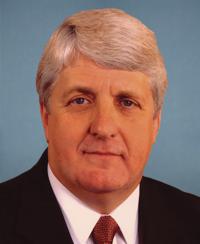
This public relations campaign against Rachel Carson enjoys a great deal of success. Oklahoma’s Sen. Tom Coburn, who seems never to have met an insult to a scientist he couldn’t use, successfully stopped the U.S. Senate from passing a bill naming a post office in honor of Rachel Carson, one of Coburn’s greatest legislative achievements. Several people in Congress, including Utah’s Rep. Rob Bishop, were similarly hornswoggled.

This conference could put real, accurate information in front of the public.

Are my expectations way too high? I hope reporting from this conference might inject sanity, comity, humility and courtesy back into the discussions of how to treat malaria, and whether DDT should ever be used.

Associated Press? Reuters? New York Times? Chicago Tribune? Detroit News, or Detroit Free Press? Lansing State Journal?

Who will report from the conference?

I hope major news outlets will have reporters there.

Resources:


Creationists make stealth bid to takeover Texas education board

February 28, 2008

Sane members of the Texas State Board of Education hold a slim majority over scripture-at-any-cost-in-science-books creationists.

Creationists are hammering away to defeat at least two incumbent board members to tip the balance, in classic stealth campaigns where they hide their intentions and spend oodles of money hoping to do evil by catching most voters asleep.  The creationists are campaigning to beat conservative, religious Baptists, because the Baptists are “too liberal” on evolution. 

Dallas Morning News columnist Steve Blow presents the facts in the State Education District 11 race, where a secretive urologist who patterns his campaign tactics after Kim Jong Il is outspending the sane incumbent at least $12 to $1.  The entire column is below the fold.

District 11 includes most of Tarrant County (Fort Worth), and Parker, Ellis and Johnson counties.

Social studies is also at risk here:  The stealth candidate, Barney Maddox, is making false claims against Texas social studies teachers and Texas social studies books, especially history books.  The guy looks like an ill-informed nutcase, and he has a good chance of winning.

For example, the campaign flier says: “Barney Maddox believes social studies textbooks should devote more space to American presidents than Marilyn Monroe and that the vicious attack of 9-11 should be portrayed as an aggressive act by terrorists, not an American conspiracy.”

Marilyn Monroe makes no appearance in some books; presidents get 100 times more space in any book you choose.  No book portrays 9-11 as an American conspiracy.  The man campaigns like your standard, wild-eyed nutcase.

Call, write and e-mail everyone you know in Texas to warn them to vote against Barney Maddox, and for Pat Hardy, in the District 11 State School Board race.  Your friends may not live in that district, but they should know.  There are other racess with similar problems.  

Early voting in this primary ends tomorrow night at 7:00 p.m.  Tuesday, March 4,  is election day.

Blow’s column, below the fold.

While you’re working at making the world safe for science, wander over to the Texas Freedom Network’s site, and sign the petition saying you’ll stand up for science.  Tell ’em Ed sent you.

Read the rest of this entry »


BBC’s Horizon: Intelligent design a threat to science

January 26, 2008

Greg Laden’s Blog noted the program on intelligent design from Horizon, a BBC Two series somewhat similar to PBS’s NOVA, but without political shackles.

A YouTube video exists (below); and the Horizon website has some text and several useful links — and a picture of Bill Dembski doing his best Big Jule routine.

Horizon also reported on global dimming — no, that’s not what happens to intelligence when intelligent design is taught. At least, not yet.

Sheesh! Are creationists in Texas feeling the heat yet?


Nobels, a lagging indicator

October 12, 2007

P. Z. Myers at Pharyngula notes buzz about the science Nobels all going to Europeans (even the two U.S. residents are European).  Nobels are a lagging indicator of things, at best, P. Z. says.  The real damage done to U.S. research shows up other places.

Thanks for the reassurances, P. Z.

(He’s right, you know.  He’s using Nobels as an indicator of the robustness of U.S. science; I use them as an indicator of the robustness of U.S. education.  Much of the same stuff applies.  More on science, later.)


Cancer and DDT: Current information

July 13, 2007

Okay, this piece is biased, too — but they give references so you can check it out.


Fisking “Junk Science’s” campaign FOR the poison DDT, against Rachel Carson: Point #8, mosquito resistance to DDT

June 29, 2007

This is the second in a series of Fisks of “100 things you should know about DDT,” a grotesquely misleading list of factoids about DDT put up a site called JunkScience.com. While one would assume that such a site would be opposed, this particular site promotes junk science. I’m not taking the points in order.The “100 things” list is attributed to Steven Milloy, a guy who used to argue that tobacco use isn’t harmful, and who has engaged in other hoaxes such as the bizarre and false claim that Compact Fluorescent Lightbulbs (CFLs) can pose serious toxic hazards in your home (and therefore, you should continue to waste energy with less efficient bulbs); and to J. Gordon Edwards, a San Jose State University entomologist who, despite being a great entomologist, was a bit of a nut on some political things; Edwards assisted Lyndon Larouche’s group in their campaign against Rachel Carson before his death in 2004. (Did Edwards actually have a role in the development of this list?)

100 things you should know about DDT

Claim #8. Some mosquitoes became “resistant” to DDT. “There is persuasive evidence that antimalarial operations did not produce mosquito resistance to DDT. That crime, and in a very real sense it was a crime, can be laid to the intemperate and inappropriate use of DDT by farmers, especially cotton growers. They used the insecticide at levels that would accelerate, if not actually induce, the selection of a resistant population of mosquitoes.”

[Desowitz, RS. 1992. Malaria Capers, W.W. Norton & Company]

Cover of The Malaria Capers, by Robert S. Desowitz

Cover of The Malaria Capers, by Robert S. Desowitz

This was what Rachel Carson warned about. Indiscriminate use of DDT, such as broadcast application on crops to kill all insect, arthropod or other pests, would lead to mosquitoes and other dangerous insects developing resistance to the chemical. Of course, resistance developed as a result of overspraying of crops has exactly the same result, in the fight against malaria, as overuse in the fight against malaria.  Cover of The Malaria Capers, by Robert S. Desowitz

Worse, such overuse also killed predators of mosquitoes, especially birds. In an integrated pest management program, or in a well-balanced ecosystem, birds and other insect predators would eliminate a large number of mosquitoes, holding the population in check and preventing the spread of malaria. Unfortunately, when the predators are killed off, the mosquitoes have a population explosion, spreading their range, and spreading the diseases they carry.

Assuming Milloy quoted the book accurately, and assuming the book actually exists, this point says nothing in particular in favor of DDT; but it reaffirms the case Rachel Carson made in her 1962 book, Silent Spring. Contrary to suggestions from the campaign against Rachel Carson, she urged that we limit use of DDT to tasks like preventing malaria, around humans, to preserve the effectiveness of DDT and prevent overspraying.

And then, there is this: Milloy doesn’t bother to quote the first part of the paragraph he quotes, on page 214 of Malaria Capers. Here is what the paragraph actually says:

There were a number of reasons for the failure, not least that the anophaline vector mosquitoes were becoming resistant to the action of DDT both physiologically — they developed the enzymes to detoxify the insecticide — and behaviorally — instead of feeding and wall-resting, they changed in character to feed and then quickly bugger off to the great outdoors. [from this point, Milloy quotes correctly]

In other words, the DDT-based campaign against malaria failed because DDT failed; mosquitoes became resistant to it.  DDT’s declining ability to kill mosquitoes is one of the major reasons DDT use plunged after 1963, and continues to decline to no use at all.

To combat the dastardly campaign of calumny against Rachel Carson and science, you should also read: Deltoid, here, here and here, and the rest of his posts on the topic; Bug Girl, here, at least, and here, and the rest of her posts; denialism, here; and Rabett Run, here.

Save

Save


Fisking “Junk Science” and “100 things you should know about DDT”: A new project

June 27, 2007

Looking at the odd campaign against the reputation of Rachel Carson, conducted largely by a group of corporate-paid, political scalawags, one will eventually come across a site named JunkScience.com, which has as a motto, “All the junk that’s fit to debunk.”

One might be forgiven if one assumes that the site debunks junk science claims. But that does not appear to be it’s aim at all. On this page, for example, “100 things you should know about DDT,” the site perpetrates or perpetuates dozens of junk science claims against Rachel Carson, against public health, against government and against reason. The site promotes junk science, rather than debunking it!

For example, I had just read a chunk of history reminding me that our first Environmental Protection Agency Administrator, William Ruckelshaus, had been ordered by a federal court to review the pesticide certification for DDT, and had acted against DDT only after two different review panels recommended it be phased out, and states had already started bans of their own. At the time, in 1972, Ruckelshaus faced a heap of criticism for moving so slowly on the issue.

EPA history caption: Rachel Carson's Silent Spring led to banning DDT and other pesticides. [EPA iimage]

EPA history caption: Rachel Carson’s Silent Spring led to banning DDT and other pesticides. [EPA iimage]

How is this action described at JunkScience.com?

You wouldn’t quite recognize the events — and I doubt you could verify other oddities the JunkScience.com site claims:

17. Extensive hearings on DDT before an EPA administrative law judge occurred during 1971-1972. The EPA hearing examiner, Judge Edmund Sweeney, concluded that “DDT is not a carcinogenic hazard to man… DDT is not a mutagenic or teratogenic hazard to man… The use of DDT under the regulations involved here do not have a deleterious effect on freshwater fish, estuarine organisms, wild birds or other wildlife.”

[Sweeney, EM. 1972. EPA Hearing Examiner’s recommendations and findings concerning DDT hearings, April 25, 1972 (40 CFR 164.32, 113 pages). Summarized in Barrons (May 1, 1972) and Oregonian (April 26, 1972)]

18. Overruling the EPA hearing examiner, EPA administrator Ruckelshaus banned DDT in 1972. Ruckelshaus never attended a single hour of the seven months of EPA hearings on DDT. Ruckelshaus’ aides reported he did not even read the transcript of the EPA hearings on DDT.

[Santa Ana Register, April 25, 1972]

19. After reversing the EPA hearing examiner’s decision, Ruckelshaus refused to release materials upon which his ban was based. Ruckelshaus rebuffed USDA efforts to obtain those materials through the Freedom of Information Act, claiming that they were just “internal memos.” Scientists were therefore prevented from refuting the false allegations in the Ruckelshaus’ “Opinion and Order on DDT.”

I propose to Fisk much of the list of 100 claims against Carson (which is really a list over 100 items now), in a serial, spasmodic fashion. I’ll post my findings here, making them generally available to internet searches for information on Rachel Carson and DDT. Below the fold, I’ll start, with these three specious claims listed above.

Read the rest of this entry »


Rachel Carson’s honor defended

June 25, 2007

Bug Girl sleuthed around a bit, and found information from official sources that really demonstrates the critics of Rachel Carson are using Gillette Foamy to make us think “mad dog!”

DDT concentration in the food chain - USFWS

Chart from US Fish and Wildlife Service (USFWS) illustrates biomagnification, by which a minuscule dose of DDT to small plankton gets magnified a few million times by the time the top predators in the food chain get it.

So the evidence continues to pile up that Rachel Carson was simply a fine writer, a good scientist, and correct about DDT’s dangers.

Check out the Fish and Wildlife Service’s site, here; notice especially their structure of the site, to dispel the falsehoods.

FWS quotes Carson on DDT use:

In Audubon magazine she wrote, “We do not ask that all chemicals be abandoned. We ask moderation. We ask the use of other methods less harmful to our environment” (4). Countering claims that she was advocating a back-to-nature philosophy, she said, “We must have insect control. I do not favor turning nature over to insects. I favor the sparing, selective and intelligent use of chemicals. It is the indiscriminate, blanket spraying that I oppose” (5).

Evidence mounts that claims against Rachel Carson are sheer calumny. While the political motivations of this smear campaign are not clear, we don’t need to know for certain who is telling lies about a great American hero, or why. As Americans, as concerned citizens, as teachers and parents — as patriots — we only need to know that the claims against Rachel Carson are false.

And now it is our duty to call on Oklahoma’s Sen. Tom Coburn to stop the campaign against Carson. Coburn is the point man in the smear campaign right now: He has put a committee hold on the well-intentioned, justified bill to name a post office in her hometown after Rachel Carson. It is time for Tom Coburn to stand up and do the right thing for a great American. Sen. Coburn needs to lift his committee hold and allow committee action on this minor honor.

Other sources of note:

Bruce Watson, “Sounding the Alarm,” Smithsonian Magazine, September 2002. (Watson, Bruce. Sounding the alarm. Smithsonian, v. 33, Sept. 2002: 115-117.   AS30.S6)

“The Berry and the Poison,” about methyl bromide and its ban, Smithsonian Magazine, December 1997.


GOP war on science victim: Rachel Carson

May 14, 2007

Some people do things that are so stupid that one wonders how they manage to shave or put make-up on the next morning, having to look at their own face.

Mugshot of Utah Rep. Rob Bishop

Mugshot of Utah Rep. Rob Bishop

53 Republican representatives voted against naming the post office in Springdale, Pennsylvania, after Rachel Carson, the scientist who wrote Silent Spring, generally considered one of the most important or most influential scientists of the 20th century. No kidding. Springdale is Carson’s hometown.

2007 is the centennial of Carson’s birth — her birthday was May 27. (The bill, H.R. 1434, passed, 334-53.)

Why did the Wacky 53 vote against the honor for Carson, who got the Presidential Medal of Freedom in 1980? In an earnest ritual of voodoo science, they claim that bans on DDT kill millions, and that DDT is harmless. No, I’m not making this uphere’s the story from the Salt Lake Tribune, which covers territory represented by Rep. Rob Bishop and Rep. Chris Cannon, both R-Utah:

They contend that Carson’s actions – which led to a ban on the chemical DDT used to kill pests – actually has caused more deaths because of malaria and other diseases spread by insects. DDT, Carson wrote, was detrimental to the environment and to humans. Some scientists say DDT led to the California condor’s near-extinction.

Read the rest of this entry »