Carnival still in town? We didn’t miss it?

May 13, 2007

History Carnival 52 was up on May 1 at Clioweb. What sort of a fog have I been in? Check out especially this post at Food History, demonstrating several uses of critical thinking tools as they might analyze the bizarre idea that most meat in Middle Ages Europe was rancid, thereby leading to a rise in the use of spices. Spices don’t make up for stomach cramps, for example. There must be some sort of critical thinking exercise in there for a world history class.

Carnival of the Liberals 38 came online earlier this week, at This Is So Queer. With fires raging in the hills around Burbank — documented with eerily beautiful photography — a fire of war in Iraq, and a fire around the Second Amendment, posts collected at the carnival offer fuel for intellectual fires on big issues.

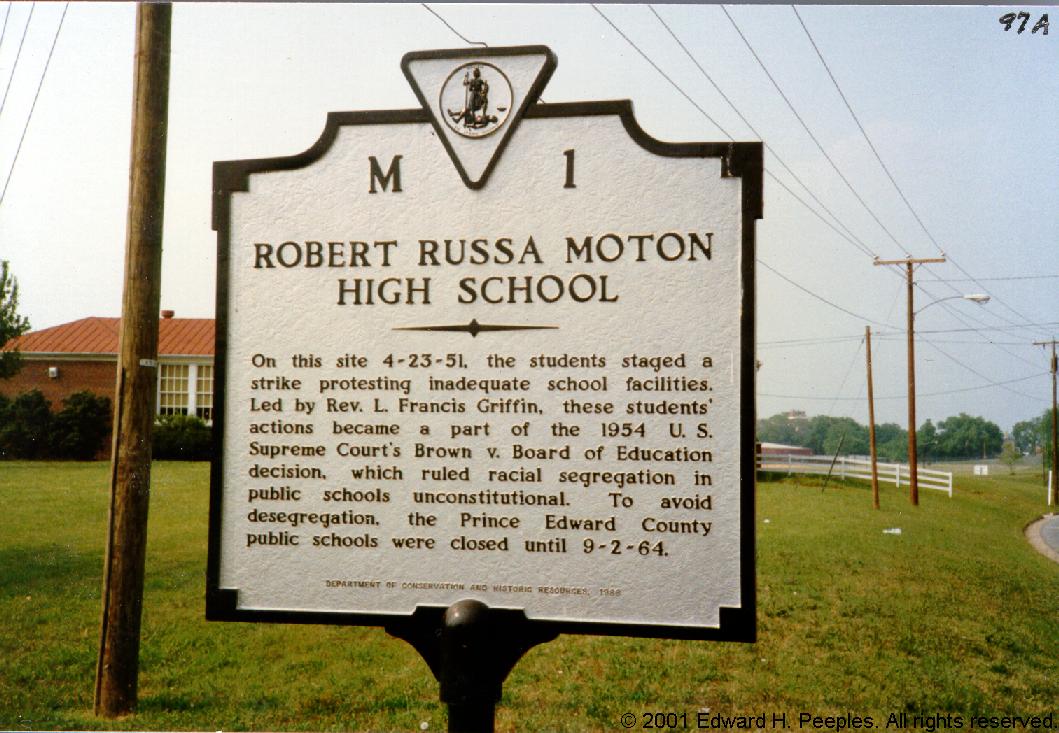
Moton HS historical markerAnd, the venerable Carnival of Education, issue 118, was up earlier at NYC Educator, with good posts on laptops in school, parenting, administering, enduring, and everything else related to education. (Click on the photo for a larger image — it’s the historical marker at the former Robert R. Moton High School, in Prince Edward County, Virginia — where one of the most poignant of the cases against school segregation began, Davis vs. Prince Edwards County Schools — part of the Brown vs. Topeka Board of Education case decided in 1954. Photo from Virginia Commonwealth University.)

Carnival of Homeschooling 71 lolls, at On The Company Porch.

And, of course, if you wish to nominate a post for the next Fiesta de Tejas!, scheduled for June 2, just use this button:


Blog Carnival submission form - fiesta de tejas!

Have a good Mother’s Day — call all the mothers you know. Why be picky?


Speak we now of famous trees, and Ray Charles

May 12, 2007

You want a memorial to Ray Charles, in your yard?  Ray Charles

American Forests will sell you a live oak tree propagated from the live oak Charles knew as a youth at his school, in St. Augustine, Florida.  It’s part of their “Famous Trees” program.

We looked at a lot of famous trees, including Austin, Texas’s Treaty Oak, and the Wye Oak in Maryland, for our son’s Eagle Scout project at the Dallas-Fort Worth National Cemetery, but utlimately found nothing exactly fitting.  A school could have quite a forest of trees from Thomas Jefferson, George Washington, Dwight Eisenhower, Theodore Roosevelt, and now, Ray Charles.

Most trees are about $40.00.  Will your PTA finance your planting a grove of historic trees at your school?

Wye Oak, when it was alive, prior to 2002  The Wye Oak, in its glory (prior to June 2002).  Photo from Jeff Krueger’s Historic Trees Project, accessed May 12, 2007.


Quote of the moment: Lincoln on Labor

May 12, 2007

Abraham Lincoln, president-elect, on Feb. 23, 1861 - History Place

Labor is prior to, and independent of,capital.  Capital is only the fruit of labor, and could not have existed if labor had not first existed.  Labor is the superior of capital, and deserves much the higher consideration.

Lincoln in the Annual Message to Congress, December 3, 1861

The photograph shows Lincoln as president-elect; it is one of a series taken on February 23, 1861; from The History Place.


Willow death

May 12, 2007

Hundreds of thousands, perhaps millions, of trees have died in spring storms this year, from dramatically powerful wind bursts, tornadoes, or drowning or uprooting in floods. We lost only a small branch from our greatest red oak, but locally we lost hundred-year-old eastern red cedars, sizable live oaks, and dozens of hackberries (good riddance in most cases there!).

P. Z. Myers lost a massive branch from an even more massive weeping willow, up in Morris, Minnesota. In fear of the entire tree crashing down, with some sadness Myers had the tree removed. Willows are pretty trees in full health, but they are generally soft wood and a mess to have in an average yard. That the Myers willow grew so large is probably rare among willows. We should mourn such losses.

Trees are great things, providing us with shade and cooler microclimates in the summer, windbreaks, beauty in autumn and winter, sinks for our pollution, habitat for birds, etc., etc. I couldn’t help but think of Myers’ tree when I stumbled on this children’s book Regarding the Trees: A splintered saga rooted in secrets. The cover shows what must be a willow, under which a hundred people enjoy a grand party (click the image for a larger view from Amazon.com). Cover of Regarding the Trees

This book and others by the same author and illustrator, the Klises, offer fine mysteries for elementary level readers to solve. They look like fun.

Arbor Day Foundation logo with Jefferson Quote


Fighting history hoaxes

May 11, 2007

Daily Kos I don’t get to daily. But here’s a post I did see that all history teachers ought to read, if only to raise their consciousness about the frauds that plague us every day: Help Fight Fake History that Powers the American Right.

Fight fake historyChris Rodda needs help supporting her research against all the old dogs of history revisionism, and the post from Troutfishing goes through most of the dishonor roll: D. James Kennedy, David Barton, Catherine Millard, and Chuck Norris

Rodda’s blog series can be found at Talk2Action.

My interest in getting history done right was kindled when high school teachers mentioned early versions of David Barton’s work — stuff that showed up on tests, though anyone who had read our texts and had a passing knowledge of real history would have known was in error. As a staffer in the U.S. Senate I had to got to read letters from people who bought the Barton tales lock, stock, and monkey barrel, and who consequently felt that everyone else on Earth was lying to them.

I wish Rodda luck.


Dying to get the news in Iraq

May 11, 2007

74 journalists have died trying to get the news in Iraq since the U.S. invasion four years ago.  Has any other war produced so many dead journalists, so fast?  That number is about 16 per year.

The Newseum has a memorial to journalists who died trying to get the story.  It contains just over 1,500 names, for wars from the War of 1812 to the present.

Each year, the Freedom Forum commemorates World Press Freedom Day by rededicating the Journalists Memorial, which pays tribute to reporters, editors, photographers and broadcasters who gave their lives reporting the news. On May 3, 2006, the names of 59 journalists who died or were killed while on assignment in 2005 were added to the glass panels of the memorial. The rededication ceremony featured remarks by David Westin, president of ABC News. The Journalists Memorial now honors 1,665 journalists who died covering the news from 1812 through 2005.

What is it about this war that makes it so much more deadly than other wars, for journalists?  What does that say about the state of our world today, and the respect traditionally show to people who simply report what happens?


Where is your podcast?

May 11, 2007

Kids in schools have things in their ears. Between classes it’s earphones for iPods, MP3 players, CD players, cell phones that play music an video — and of course they try to stretch it into class, too. “If I can listen to my music in class, I won’t make trouble,” they say.

To which I respond, “I don’t deal with terrorists.”

The students are telling teachers something, and most of us are missing the message: We need to get education into their iPods and MP3 players.

For example, Nora’s itec 845 blog wonders about converting podcasts to print, for hearing-impaired students. Do you even have podcasts for classroom use or augmentation? (I wager this blog is a classroom assignment — students are working in areas their teachers don’t know anything about?)

Check out the Education Podcast Network. If your students told you they were getting information from this site, would you know whether it was quality information? Would you even know how to check?

Teachers should be using podcasts to deliver lectures, deliver supplementary material, to discuss homework, and to inform parents about homework and other activities.  Are you using podcasts for any of that?

If you don’t think you’re missing the podcast boat, go here and see what some of the possibilities you’re missing really are:  Around the Corner.   Or, go there just to get ideas.

Hey, what are you waiting for?


Inherent evils of public education

May 11, 2007

Public schools have serious problems.  Regular readers here should know me as a defender of public education, especially in the Thomas Jefferson/James Madison model of a foundation stone for a free people and essential tool for good government in a democratic republic.

Can you take another view?  Here’s one that should offer serious material for thought:  How the Public School System Crushes Souls.

Tip of the old scrub brush to Pick the Brain.


News on trial: Newseum makes grand plans

May 11, 2007

Newshounds, newsmakers and news writers ought to salivate at the idea of a grand museum to the First Amendment on Pennsylvania Avenue, N.W., in Washington, D.C.  Organizers of the Newseum plan exactly that, with a grand opening in October 2007.

It promises serious analysis, not just cheerleading, for news media, according to the New York Times:

The Newseum’s goal is to present the “first rough draft of history” in all its glory and some of its shame, impressing upon visitors the importance of the First Amendment’s protections of a free press. In the glory department are Edward R. Murrow’s rooftop broadcasts from London during the Blitz; he is among the heroes of a short movie to be shown in the Newseum’s 4-D theater, where the seats will literally shake as German planes roar overhead.

The shame is evident in exhibits examining, among other things, Jayson Blair’s manufactured articles in The New York Times and Jack Kelley’s fabrications in USA Today. Videos address the use of anonymous sources and how bias can find its way into news accounts.

One of the museum’s major challenges will be to attract visitors at a time when surveys show that public respect for the news media has been ebbing. Charles L. Overby, chief executive of the Freedom Forum, the nonprofit organization that underwrites the Newseum, discussed the problem in an interview in his temporary office adjacent to the construction site.

“Our annual survey shows that 40 percent of the American public believes the press has too much freedom,” he said, adding that the museum’s job is to educate — in an engaging way.

The Newseum, he emphasized, is not meant to be a monument to the press, but to its freedom.

Because of the building’s location, one could do a tour of the FBI building, and close out the day with a tour of the Newseum, probably from the same bus stop.


Baylor’s Beckwith returns to the Catholic Church

May 7, 2007

Dr. Francis Beckwith, the Baylor University professor whose writings formed much of the justification for claims that intelligent design could be taught as science in public schools (prior to the Dover decision), announced he is returning to the Catholic Church and resigning as president of the Evangelical Theological Society.

Beckwith explains his faith switch at Right Reason. Contrast comments there with the snarky, uncharitable posts from the “evangelical” side, with Constructive Curmudgeon as an example. If this is the way ID advocates (such as Doug Groothuis) treat someone who merely changes sect, what would they do to someone who became rational on science?

Beckwith’s road at Baylor has not been a smooth one. One wishes him well when brickbats are already flying his direction, for silly reasons.

Educators and scientists, including especially those of faith traditions, may wish he had left the church of intelligent design instead. Perhaps he has, or will, if the attacks from fundamentalists keep up — similar to the way such attacks on Charles Darwin encouraged him to distance himself from the church.

How does this alter the Texas biology textbook fight discussion?


Radio history, historic radio

May 7, 2007

Internet connections can really boost history with sound and film presentations. History is really still in infancy stages, but some sites flash through with brilliant views of what can be done.

Old Time Radio posts a wealth of sound clips from throughout radio history, coupled with essays detailing much of the history that isn’t in the soundclips. The site seems to have almost all the episodes from Captain Midnight, for example. You can also hear Terry and the Pirates, or Fred Allen or Jack Benny.

The real gems, to me, are the newscasts and the stories of the newscasters. The 1937 broadcast of the Hindenberg Disaster is available, but so are some of the later and more important, and more rare, broadcasts of World War II: the Austrian Crisis, Neville Chamberlain with Britain’s declaration of war, news bulletins of the Pearl Harbor attack, on-the-scene accounts of the D-Day invasion of Normandy (with more accounts here), the battle for Iwo Jima now famous from two Clint Eastwood films, and V-J Day (“Victory-Japan”).

Later clips make this a standout site, and tantalize us with possibilities.  Ernest Hemingway’s suicide report, the 6-Day War between Israel and Egypt and Syria in 1967, and a report on the funeral of Robert F. Kennedy in 1968 flesh out events that the high school history texts tend to stroll quickly over, and offer possibilities of classroom enrichment beyond the texts.

Surely more radio broadcasts exist that could be used in history classrooms.  Radio and broadcast history sites like The Broadcast Archive have the history of broadcast, but few actual broadcasts.   Other sites carry a few important broadcasts, but like this one, come weighted with polemics (the politics and religion on this site make it questionable for school use, though students may not think to look at the home site from the broadcast links — where did this guy get these broadcasts, and does he have the rights correctly listed?).

Some research suggests that students learn history partially through repetition, as with any other topic.  The old “repeat it four times” rule gets boring in class, but can be kept alive by repetition in other media.  Teachers who use the actual broadcasts of news of what are now historic events can make history speak to students.  Can.

More radio broadcast history:

BBC News historic broadcast archives  (This site has broadcasts through current times, including, for example, broadcasts of Nelson Mandela’s rise to the presidency of South Africa, a much-ignored era in too many classrooms.)

Earthstation 1 CDs and DVDs for purchase

Timeline of radio, from the California Historical Radio Society

Radio broadcasts 1939-1943 from the University of San Diego’s history server

Ken Burns’ “Empire of the Air” companion site

First commercial broadcast in the U.S., KDKA-AM, Pittsburgh, Pennsylvania, with results of the Cox-Harding presidential election, November 2, 1920


Moment in history: May 6, 1937, the Hindenberg crash

May 6, 2007

May 6, 2007, is the 70th anniversary of the Hindenberg tragedy. Docking at its station in New Jersey, after crossing the Atlantic, a spark ignited the aluminum-based paint on the airship, and the entire craft exploded into flame.

35 people died on the airship, and one on the ground — did you know a few survived? The Associated Press interviewed a man who was 8-years old that day, and a passenger on the airship.

Werner Doehner, an 8-year-old passenger aboard the Hindenburg, saw chairs fall across the dining room door his father had walked through moments before the disaster. He would never see his father alive again.

“Just instantly, the whole place was on fire,” said Doehner, of Parachute, Colo., who is the last surviving passenger. “My mother threw me out the window. She threw my brother out. Then she threw me, but I hit something and bounced back. She caught me and threw me the second time out. My sister was just too heavy for her. My mother jumped out and fractured her pelvis. Regardless of that, she managed to walk.”

Hindenberg on fire

Hindenberg on fire, May 6, 1937.

The disaster erroneously condemned hydrogen in the public’s mind. Despite widespread use of hydrogen gas for cooking and some transportation during World War II (including in the U.S.), use of hydrogen as a fuel beyond that has always faced the hurdle of the “Hindenberg Syndrome,” the fear that the gas would explode. Fact is that gasoline is much more volatile, more explosive, and generally more dangerous, than hydrogen.


Fiesta de Tejas #2 – Cinco de Mayo edition

May 6, 2007

Welcome back! The Midway here at the Fiesta offers eclecticism beyond your wildest expectations, all about Texas. No sonnets, no haiku, no limericks. No faux movie themes. Nothing but Texas posts.

This is an unintentional Cinco de Mayo edition. I’m late, and I apologize to everyone who dropped by on May 2 and was disappointed.

Cinco de Mayo celebrates one of the greatest victories of the U.S. Civil War, a battle fought by neither Confederate nor Union soldiers, nor even on U.S. soil — and a battle generally omitted from Civil War accounts in U.S. history books. On May 5, 1862, the loyal Army of Mexico defeated an invading army of French and French Foreign Legionnaires, using smarter battle tactics and superb discipline. Union Gen. Phillip Sheridan rushed arms to the Mexicans to complete the expulsion of the French. Mexican patriots in this way frustrated Napoleon III’s plans to supply the Confederate States of America, giving vital time to the Union forces to muster a large army and manufacture the weapons and other machines used to defeat the South. Here is a biased account from a group in San Marcos, Texas.

Such a history is politically incorrect in an age when people think U.S. citizens should stay in the U.S., Mexican citizens should stay in Mexico, and that our fates are not intertwined in North America as they were in the 1860s. Perhaps that is why the events celebrated by Cinco de Mayo are ignored, officially.

But such disputes are what history writing and discussion is all about.

What else might we learn, politically incorrect or otherwise, from a carnival of Texas history and Texana? Let’s see, in no particular order.

Texas stuff

P. M. Summer offers a straight ahead view of a classic Texas Stetson hat, at Pop’s! Hat! History, Texas, heritage, nostalgia and a twinge of eccentricity, all rolled into one.
P. M. Summers' Stetson, from his father.

Politics and law: The Lege is still in session, and unfortunately Molly Ivins has not risen that we know of. Making sense of the Texas Legislature is an art generally beyond my ken. Others make a good stab, though. Capitol Annex explains the odd bill proposed to make it legal for kids to show their religion in public schools. It’s an odd bill because it grants no new rights, nothing in it is not already legal under state and federal laws, unless there is a hidden clause for proselytizing. Can you find such a clause? The bill has been delayed — stay tuned to see whether it passes, and in what form.

Here’s another view of the bill from South Texas Chisme.

Over at Kissmybigbluebutt, we get the modern lowdown on another Texas tradition, the unconcealed carry. Check the date — there is no such thing as “May Fool’s,” right?

Grits for Breakfast found a bright spot at the Texas Youth Commission, the bunch that runs the “camps” for youth offenders where allegations of abuse have mushroomed in the past year, and which has been forced to release many kids. This is about the only bright spot in this long, sad saga (see this post, and follow links, from DallasSouthBlog, for example).

Education: TexasEd is a site by a Texas home schooler, but which spends a lot of time looking at education policy in Texas, generally — a good site during a legislative session, as demonstrated by this short post on attempts by private schools to get the state to pay for athletic championship series by private schools.

Run, Rick! Run! — Pink Dome found this photo of Texas Gov. Rick Perry. In the red shirt.

Preventing abuse of the Texas flag: It’s nice to discover another group concerned about flag etiquette. I’m pleased to refer questions about Texas flag etiquette to another blog — The Daily Flag. (I also note some history posts from this site, below.)

Real story, real immigrant, real lawyer: Dallas is a wilderness? Perhaps to an immigrant, it may appear unfriendly. Wilderness in the City featured a short story about a lawyer getting a favorable result in an immigration case. Check your stereotypes at the courtroom door.

SMU professors stood up for science, but the “conference” on intelligent design proceeded anyway. Texas physician and blogger Dr. Zach attended and reported on the events. This will figure into the textbook adoption process in Texas, for biology text books, mark my words. At Goosing the Antithesis, Dr. Zack covered the event in a series of posts: Michael Behe, Lee Strobel, Jay Richards, Stephen Meyer, Q&A session, and Dr. Zach’s final thoughts.

Texas defined, perhaps ambiguously: Georgia O’Keefe meets the Beverly Hillbillies, at Chatoyance. (I’m assuming the photo was taken in Texas.)

Texas history

Kay Bell is at it again at Don’t Mess With Taxes. Her San Jacinto Day post on April 21, “Texas Triumphant,” lays out the story of the battle that won Texas independence from Mexico — the Texians lost the Battle of the Alamo, remember, and then surrendered and were slaughtered at Goliad. San Jacinto was the place Sam Houston got the drop on Santa Anna and the larger force, the great Army of Mexico. It was the place, Kay might say, where “Don’t Mess With Texas” first got meaning. In past years, Texas seriously celebrated the day, before Texas high school history standards downplayed the Texas Revolution.

The Daily Flag has a series on the Battle of San Jacinto, with several photos of this year’s re-enactment. Here is the last of the series, with links to the others.

Is it fair to point to a podcast? Let’s see if anyone complains. Over at The Texana Review, Ed Blackburn has a podcast interview with William Keller, the director of the Houston History Project. This couples two of my favorite causes, local history, and pushing technology. If you haven’t listened to podcasts, it’s time to start — do it here and now. Especially if you’re a high school teacher of history, economics, geography, government or some other topic, you need to be using podcasts. No, not just listening to them — using them. What do you think all those iPods are for?

While you’re at The Texana Review, you may want to check out Blackburn’s podcasts on the history of the Texas Rangers, focusing on Joaquin Jackson’s book, One Ranger: A Memoir. Even 7th grade students can get interested in the history of the Rangers.

Kicks on Route 66: One of my favorite blogs is Route 66 News, because it’s well done, tightly focused on Route 66, current and informative. Not every post interests me, but I always find something. Here Route 66 News talks about a photo shoot at the famous Cadillac Ranch in West Texas, to promote seatbelt use in Texas — a photo shoot sent awry by a hungry llama. This is Texas — no, no one could make this stuff up if it weren’t true.

There were complaints (well, at least one) that we didn’t cover Janis Joplin enough in the last carnival. Well, I didn’t find much new out in blogdom this time, either — so I may as well include my own post here, noting the creation of a self-guided Janis Joplin tour of Port Arthur, Texas, her home town. Texas music continues to be under-covered by blogs. I’m probably missing some good ones, but there could be a lot more, especially with an eye to what could be used in a Texas history classroom. (Hint: Send me notes on good posts you find!)

And this one just under the wire: Tom Michael lives near that far west Texas town of Marfa, city of lights, so to speak, and near the some-might-think-oddly-named Texas city of Alpine. He’s been guest blogging on a blog out of North Carolina called MisterSugar, and he has a post that captures the Texas spirit amazingly well, showing Texas pride bordering on hubris, love of religion beyond the point of rationality, willingness to change, and just old Texas orneriness: “Texas.”

That’ll wrap it up for this edition of the Fiesta de Tejas!, a blog carnival of Texas history and Texana. Please send nominations for posts for the next Fiesta to me, or better, to the Blog Carnival site set up for the purpose: Nominate a blog post to the Fiesta de Tejas! (that’s http://blogcarnival.com/bc/submit_1298.html)

We still need a logo.

I’d be happy to turn hosting opportunities over to anyone who’d like to take a stab.

The next edition is planned for June 2, 2007, with entries due at midnight your time on May 31, 2007. Remember you may nominate the posts of others — please do!


Blog Carnival submission form - fiesta de tejas!


Technorati tags:
, .


Brain delay, rain delay — what next?

May 3, 2007

Fiesta de Tejas #2 is coming, I promise.  It’s not being easy, though.  A bit behind, last night we got hit with a string of powerful thunderstorms.  Bathtub Son #1 got stuck as a wall cloud descended on one of Dallas’s major freeways, and people headed for any shelter they could find.  We waited for him at the Myerson Concert Hall, where the ushers eventually shooed us all inside to take advantage of the concrete roof of the performance hall, over the glass of the rest of the building — rain was absolutely horizontal, and so were most of the local trees.

We lost only a small branch on our great red oak, at home — but the power went out, and it took down our network.  We’re sorta back, but limping.  Please keep your feeds on.


Digging deeper into history of the South and civil rights movement

May 2, 2007

Hurry over the New York Times site before the article goes into the “gotta-pay-to-see” bin, and read the story by Patricia Cohen about other stories beyond the classic race confrontations, from the South, during the Civil Rights Movement:  “Interpreting Some Overlooked Stories from the South.”

A new generation of historians is exploring some of the untold stories of the civil rights movement and its legacies: the experiences not of heroes or murderous villains, but of ordinary Southern whites. And their research is challenging some long-held beliefs about the nation’s political realignment and the origins of modern conservatism.

“You want to pry below these great narratives of good and evil and black and white,” said Jason Sokol, 29, who wrote “There Goes My Everything: White Southerners in the Age of Civil Rights, 1945-1975” (Alfred A. Knopf). “For those of us who didn’t live through it, there’s more of an effort to not simply celebrate the civil rights movement and how extraordinary it was, but to place it within the broader arc of the 20th century.”

Much history of the era remains to be written, especially local histories that students in high schools could get from local newspaper archives, from interviews, and other local sources.

This new wave of historians, many of them young, believe that one cannot understand today’s housing, schooling, economic development or political patterns without understanding the mostly apolitical white Southerners of that era. None of these scholars play down the inbred racism of the region, but they argue that the focus on race can obscure broader economic and demographic changes, like the dizzying corporate growth, the migration of white Northerners to the South and the shifting emphasis on class interests after legal segregation ended.