June 11, 2008
Scott McLeod at Dangerously Irrelevant has a list of 50 good and great blogs that focus on education, P-12.
1. Through some glitch in the screening process, Millard Fillmore’s Bathtub sneaked onto the list. The bubbles in the Bathtub seem deeper and warmer as we just think about it. We’re flattered to be listed, even with an asterisk.
2. There are 49 very good blogs on that list, a few of which I’ve not heard of before, some of my old favorites, and all of them very interesting that I’ve checked out so far. Go check them out. They deserve the traffic. You deserve the information.
In fact, just to give them all a link boost, I’ll copy McLeod’s list below the fold.
School’s out for me, with just a little cleanup and an amazing training burden left for the summer. This last semester has been a doozy. I’ve not blogged nearly so much as I should have. There are a lot of issues left on the table. It’s nice to be on the list; I wish there were more comments. I find the feedback useful, fun, and instructive, like older son Kenny’s chastisement this morning subtly slipped into comments on the Mencken typewriter post.
Where should education bloggers be going, Dear Readers? Where should this blog be going?
McLeod’s list below the fold; comments are open for the whole summer.
Read the rest of this entry »
Spread the word; friends don't allow friends to repeat history.
 1 Comment |
  Education, Lesson plans, Pedagogy, Teaching, Technology, Weblogs | Tagged: Education, Education blogs, Pedagogy, Teaching, Weblogs |
  Permalink
 Posted by Ed Darrell
June 11, 2008
Here is the press release, from Alma College in Alma, Michigan:
Continued Use of DDT Is a Global Health Concern
Scholars who attended the Eugene Kenaga International DDT Conference on Health and the Environment at Alma College are drafting a consensus statement urging global policymakers to reconsider the future use of the synthetic pesticide DDT.
The scholars acknowledge that the use of DDT has prevented millions of infections and deaths from insect-borne diseases, especially malaria. Yet, substantial exposure to DDT poses serious health risks for human populations and the environment, says Edward Lorenz, director of the Public Affairs Institute at Alma College.
“The consensus of the scholars was a recognition of the serious impediments to further restricting DDT use, given that several million people die each year from malaria, most of whom are under the age of five,” says Lorenz. “However, these scholars have documented in numerous human health studies what can be called a ‘deepening understanding of the effects of DDT use on humans.’ The collective wisdom of the experts at the Kenaga Conference was that world policymakers need to use extreme caution when considering easing restrictions on DDT use.”

The March 14 conference attracted international experts in the areas of public health and the environment, including South African scholars Riana Bornman, Henk Bouwman and Christiaan de Jager; Aimin Chen of Creighton University; Barbara Cohn and Brenda Eskenazi of the University of California at Berkeley; Henry Anderson of the Wisconsin Division of Public Health; Suzanne Snedeker of Cornell University; Diane Henshel of Indiana University; Darwin Stapleton of the Rockefeller Archives; Lorenz and John Leipzig of Alma College; and Felicia Leipzig of the Pine River Superfund Citizen Task Force.
The anticipated DDT conference “consensus statement” is expected to list the following summary statements and recommendations, says Lorenz:
- Repeated use of DDT results in serious health risks for humans.
- Many sites of chemical-manufacturing facilities continue to be a source of DDT contamination to area residents. While clean-up efforts continue, some DDT proponents, such as John Tierney (New York Times, June 5, 2007), have claimed that, “the billions spent cleaning up Superfund sites would be better spent on more serious dangers.”
“The experts at the DDT Conference unanimously disagree with Tierney’s assessment,” says Lorenz. “Because of the known DDT impacts on human health, the experts not only support continued Superfund clean up, but also endorse assessment of health impacts on residents of communities with DDT sites, such as St. Louis, Mich.”
- Children and pregnant women in malaria endemic areas where DDT is used are most at risk.
- Studies have shown that DDT impedes breast milk production, the best source of infant nutrition in many parts of the world.
“Because of the negative impacts on breastfeeding, resulting in more low birth weight babies, communities potentially exposed to DDT to control malaria must be told that the short-term benefits of DDT may spawn longer-term problems,” says Felicia Leipzig.
- New methods of malaria control should be encouraged and tested.
“Those who are lobbying for DDT use should focus on support for research into alternative chemicals and public health strategies that ultimately will allow for the full phase-out of DDT,” says John Leipzig, director of Alma’s Center for Responsible Leadership.
- The socio-economic development of malaria-affected communities is the best solution to malaria eradication.
- Conference experts call for “full support for the Stockholm Convention that will phase out the use of the 12 most dangerous persistent organic pollutants, including DDT,” says Lorenz.
“The Stockholm Convention mandates that each country using DDT have an implementation and management plan on controlling the use of DDT,” he says. “Ultimately it envisions eventual reliance on sustainable methods of disease vector control.”
The scholars argue that sufficient evidence exists that DDT exposure is occurring and posing significant health risks.
“Because of both DDT related Superfund sites and continued use of DDT, exposure to the pesticide is occurring around the world with significant health risks to current and future generations,” says Lorenz.
“The conference experts are challenging policy makers to provide support to further determine health risks associated with DDT exposure in both the developing world and in U.S. communities near contaminated Superfund sites,” he says. “The experts were especially critical of special interests groups and their lobbyists who negate the clear evidence of human health dangers of DDT exposure.”
-mjs-
Other coverage of the Alma DDT Conference at the Bathtub:
Spread the word; friends don't allow friends to repeat history.
2 Comments | DDT, Environmental protection, Politics, Science | Tagged: DDT, Environmental protection, Politics, Science | Permalink
Posted by Ed Darrell
June 11, 2008
For the mind: Encephalon 47 is up at Channel N. Lots of videos this time, eating disorders, rembrances of lunches past, and a lot, lot more.
For the soul: Carnival of the Liberals #66 at The OtherWhirled. Ten good items there, including a response to the bizarre claim running on conservative blogs and minds that Obama is a Marxist.
2008 is going to be one of those years when we need to keep our minds sharp and our emotional banks with sufficient funds. I hope we can.
Spread the word; friends don't allow friends to repeat history.
Leave a Comment » | Campaigns, Politics, Presidents, psychology, Science, Weblogs | Tagged: blog carnivals, Obama, Politics, psychology | Permalink
Posted by Ed Darrell
June 11, 2008
Federal Reserve Branch banks take seriously the Fed’s pledge to education Americans, and to support educators in understanding economics and the work of the Federal Reserve Banking System.
The educator support team at the Dallas Fed recently secured approval to provide continuing education credits for a two-day session on globalization planned for San Antonio, on June 30 and July 1. These sessions are easy, generally loaded with details, and tailored for educations. Plus they are usually well catered.
$35.00 gets all materials, two lunches, one continental breakfast, and 12 hours of credit.
All details from the Fed’s press release, below the fold.
Read the rest of this entry »
Spread the word; friends don't allow friends to repeat history.
Leave a Comment » | Business, Economics, Education, Federal Reserve Bank, Financial literacy, Globalization, Texas | Tagged: Business, Continuing Educaiton, Economics, Education, Federal Reserve Bank, Globalization, Texas | Permalink
Posted by Ed Darrell
June 10, 2008

Mencken at 1948 Democratic Convention
Photo from the collection of the School of Journalism and Mass Communication, at the Park Library, University of North Carolina.
H. L. Mencken at one of the 1948 political conventions (Thomas Dewey was the Republican nominee, Harry S. Truman was the Democratic nominee). Obviously the photo is a copy from the National Press Club Library. The Park Library site describes the photo and Mencken:
H. L. Mencken (1880-1956) was a familiar figure at many national political conventions. This photo, taken at the one in 1948, was his last political convention. He is well known for his attacks on American taste and culture, or the lack of same. His magnum opus, The American Language: An Inquiry into the Development of English in the United States, was first published in 1919 and remains a classic. From 1906 to 1941, he worked chiefly as a reporter, editor, and columnist for the Baltimore Sun. (Photo courtesy of the Baltimore Sun Library.)
Assuming Mencken covered both conventions, this photo was taken at the Democratic convention in Philadelphia in mid-July, 1948. We know it was taken in Philadelphia since both parties held their conventions there that year, the Republicans from June 21 to June 26, and the Democrats from July 12 to July 14.
Republicans nominated New York Gov. Thomas J. Dewey and California Gov. Earl Warren for president and vice president.
After a contentious convention that saw Minneapolis Mayor Hubert H. Humphrey propose a civil rights plank that got South Carolina Gov. Strom Thurmond to walk out of the convention and found his own States’ Rights (Dixiecrat) Party (with himself as the nominee for president), and former Vice President Henry Wallace walk out because the party platform was too conservative (Wallace ran on the Socialist Progressive Party ticket), Democrats nominated President Harry S Truman and Kentucky Sen. Alben W. Barkley for president and vice president. Truman narrowly defeated Georgia Sen. Richard B. Russell for the nomination. Had Thurmond not walked out, Truman may well have lost the nomination of his own party.
And the rest of the story?
- Truman had a contentious second term, and was defeated in the New Hampshire primary in 1952 by Sen. Estes Kefauver; Truman ended his campaign for a second full term shortly after.
- Earl Warren was appointed Chief Justice of the Supreme Court by Truman’s successor, President Dwight D. Eisenhower, in late 1953. Warren is remembered for engineering the 9-0 decision in Brown vs. Topeka Board of Education which ruled “separate but equal” school systems to violate the Constitution’s equal protection clause, and for his chairing the commission that investigated the assassination of President John F. Kennedy.
- Hubert Humphrey moved on to the U.S. Senate, served as Vice President to Lyndon Johnson, and won the Democratic nomination for president in another contentious convention in 1968 in Chicago. Humphrey lost the election to Richard Nixon, and returned to the U.S. Senate two years later.
- Strom Thurmond won election to the U.S. Senate in 1954, switching parties to Republican in 1964, and serving until his death in 2003.
- Russell, who had served as Georgia’s senator since 1933, continued to serve to his death on January 21, 1971; he was a key member of the Warren Commission that investigated the assassination of President John F. Kennedy. The Russell Senate Office Building is named in his honor, the oldest of the three Senate office buildings.
- Barkley was the oldest vice president ever inaugurated, aged 71. He remarried in his first year as vice president (his first wife died in 1947). Barkley’s nephew suggested that he should be called “the veep” because “Mr. Vice President” was too long. The title was seized up on by headline writers. Considered too old to run for the presidency in 1952, Barkley won a U.S. Senate seat from Kentucky in the 1954 elections, serving from 1955 to his death in 1956. Barkley Dam on the Cumberland River is named in his honor, as is the lake behind it, Lake Barkley.
- Henry Wallace finished a distant fourth in the 1948 election, behind Dewey and Thurmond. His political career was essentially over due to his inability or unwillingness to disavow communist support. He achieved success as a chicken breeder. In a daramatic turnabout, he wrote a book, Where I Was Wrong, disavowing communism and critical of Joseph Stalin, and endorsed Republican candidates in 1956 and 1960. He died of Amyotrophic Lateral Sclerosis (ALS, or Lou Gehrig’s Disease) in 1965.
- Dewey returned to his law practice. In 1952, Dewey helped engineer the nomination of Eisenhower over his old political nemesis Sen. Robert Taft of Ohio, pushed Richard Nixon as the Vice Presidential nominee, and in 1956 first convinced Ike to run again, and then to keep Nixon on the ticket. Dewey politely refused offers of offices, including refusing a nomination to the U.S. Supreme Court, sticking to his law practice which made him very wealthy. He died suddenly of a heart attack in 1971, at age 68.
- Mencken suffered a stroke later in 1948 that left him unable to speak, or read, or write for a time. He spent much of the rest of his life working to organize his papers, and died in 1956. His epitaph, on his tombstone and on a plaque in the lobby of the Baltimore Sun, reads: “If, after I depart this vale, you ever remember me and have thought to please my ghost, forgive some sinner, and wink your eye at some homely girl.”
Spread the word; friends don't allow friends to repeat history.
3 Comments | H. L. Mencken, History, Political conventions, Politics, Technology, Typewriters, Writing | Tagged: H. L. Mencken, History, Political conventions, Politics, Technology, typewriter, Writing | Permalink
Posted by Ed Darrell
June 10, 2008
You’ve got to love C-SPAN. Commercial television networks spend billions purchasing rights to be the sole broadcaster of sporting events, the Superbowl, the World Series, the NBA championships, the NCAA basketball championships, the Olympics.
What’s a money poor, creativity- and content-rich public affairs cable channel to do? Well, gee, there’s the bicentennial of Abraham Lincoln’s birth coming up in February 2009 . . .:
Meet C-SPAN, “the network of the Lincoln Bicentennial.”
Note the site, set your video recorders (digital or not — just capture the stuff). C-SPAN plans monthly broadcasts on Lincoln and the times, plus special broadcasts on certain events — November 19, the 145th anniversary of the Gettysburg Address, for example.
Of particular value to students and teachers, C-SPAN offers a long menu of links to sites about Lincoln, and to original speeches and documents (DBQ material anyone?).

 War with Mexico
House Divided
Lincoln-Douglas Debates

·1st Debate: Transcript | Video
·2nd Debate: Transcript | Video
·3rd Debate: Transcript | Video
·4th Debate: Transcript | Video
·5th Debate: Transcript | Video
·6th Debate: Transcript | Video
·7th Debate: Transcript | Video
Cooper Union Speech
Farewell Address
First Inaugural
Second Inaugural
Gettysburg Address
Last Address
Good on ’em. C-SPAN leads the way again.
Teachers, bookmark that site. Are you out for the summer? U.S. history teachers have a couple of months to mine those resources, watch the broadcasts, and watch and capture the archived videos, to prepare for bell-ringers, warm-ups, and lesson plans.
What will your classes do for the Lincoln Bicentennial? Will that collide with your plans for the Darwin bicentennial?
Spread the word; friends don't allow friends to repeat history.
1 Comment | 1861-1865, Abraham Lincoln, Biography, Civil War, Education, Freedom - Political, History, History audio sources, History images, History video sources, Lesson plans, On-line education, On-line learning, Patriotism, Politics, Presidents, Slavery, Teaching, Technology, Technology in the classroom, Television | Tagged: Abraham Lincoln, Education, Entertainment, History, Lincoln Bicentennial, Media, Teaching | Permalink
Posted by Ed Darrell
June 9, 2008
Smithsonian’s June issue features a story on the origins of evolution theory in the public eye, focusing not just on Darwin and Wallace, but also on the history of the idea as they found it, before they discovered the mechanism that makes the theory hold together and bind biology into a real science: “On the Origin of a Theory.”
World history, western civilization and U.S. history teachers may want to keep a copy of the article — in U.S. history, for the Scopes trial section (or paragraph, depending on how science and philosophy friendly your text is).
Also, the article features a photo of Darwin not usually seen, from the Library of Congress Archives.

Spread the word; friends don't allow friends to repeat history.
Leave a Comment » | Charles Darwin, Darwin, Evolution, History, Science | Tagged: Darwin, Evolution, History, Science | Permalink
Posted by Ed Darrell
June 9, 2008
Don’t breathe the air, don’t eat the eggs. Life next door to a DDT plant in India.
In case you were wondering where nations that want to use DDT might find some, now that it’s not being made in the U.S.
Read the rest of this entry »
Spread the word; friends don't allow friends to repeat history.
1 Comment | DDT, Environmental justice, Environmental protection, Health care, History, Politics, Public health, Science | Tagged: DDT, Environmental protection, health, India, Politics, Science | Permalink
Posted by Ed Darrell
June 8, 2008
A Quantum Diaries Survivor detours from physics to bring us news that in a small Italian town church authorities denied the rites of marriage to a paralyzed man, on the grounds that he can’t make babies.
Remember this case the next time some nut starts ranting about how marriage between two people of the same gender somehow endangers marriage. There’s no way to protect the “sanctity of marriage” when clowns with clerical titles work so determinedly to mock the institution of marriage, and the concepts of compassion, charity and family, from within the church.
Spread the word; friends don't allow friends to repeat history.
Leave a Comment » | Family, Politics, Rampant stupidity, Religion | Tagged: Family, marriage, Politics, Rampant stupidity, Religion, Unwarranted discrimination | Permalink
Posted by Ed Darrell
June 8, 2008
Some nations do not wish to use DDT to poison mosquitoes because they have other poison problems, and they’d almost rather have malaria than more poison.
For example, see this description of clean water problems in India. From A Wide Angle View of India. Be sure to follow the links to stories in the New York Times and on BBC’s website.
Spread the word; friends don't allow friends to repeat history.
Leave a Comment » | DDT, Environmental protection, Health care, History, Politics, Public health, Science | Tagged: Clean Water, DDT, Environmental protection, India, Pesticides, Politics, Science | Permalink
Posted by Ed Darrell
June 7, 2008

Helen Keller, left, and her teacher Anne Sullivan play chess, in 1900. Photo from the American Foundation for the Blind.
Spread the word; friends don't allow friends to repeat history.
3 Comments | Chess, Education, History, History images | Tagged: Chess, Education, Entertainment, Helen Keller, History | Permalink
Posted by Ed Darrell
June 7, 2008
A river of real learning, a rising tide of excellence.
Art from students at the school I’d like to attend many days:

Wouldn’t you like to do what those students at the Community School of West Seattle do?
See also Andy Goldsworthy.
Spread the word; friends don't allow friends to repeat history.
1 Comment | Art, Education, Education blogs, Education quality, Education success, Learning, Life, Natural history | Tagged: Art, Education, Education Excellence, Elementary Education, Living, Nature | Permalink
Posted by Ed Darrell
June 6, 2008
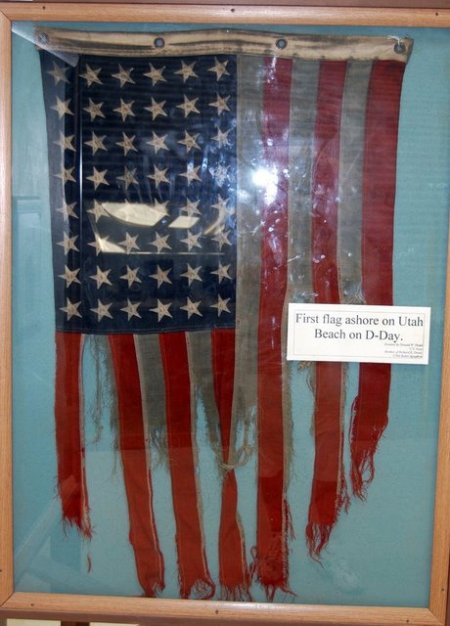 Got an e-mail with a question.
Today is the 64th anniversary of the Invasion of Normandy in World War II, a date generally called D-Day. No, you don’t have to fly your flag. This is not one of the days designated by Congress for flag-flying.
But you may, and probably, you should.
Spread the word; friends don't allow friends to repeat history.
5 Comments | Famous Battles, Flag etiquette, History, War, World War II | Tagged: D-Day, Flag etiquette, Fly your flag, History | Permalink
Posted by Ed Darrell
June 6, 2008
What if we gave students a paycheck just to attend school? Some people are serious about it. Some authorities are actually doing it. High-level, if theoretical, discussion at the Becker-Posner Blog.
(That’s Nobel-winning economist Gary Becker, and law professor and federal Judge Richard Posner.)
Spread the word; friends don't allow friends to repeat history.
7 Comments | Economics, Education, Education reform, Education spending, Politics, Public education | Tagged: Economics, Education, Education reform, Pay for School, Politics | Permalink
Posted by Ed Darrell
June 6, 2008
In a review of a couple of books on climate change, at the New York Review of Books, physicist Freeman Dyson concludes with these observations:
Unfortunately, some members of the environmental movement have also adopted as an article of faith the belief that global warming is the greatest threat to the ecology of our planet. That is one reason why the arguments about global warming have become bitter and passionate. Much of the public has come to believe that anyone who is skeptical about the dangers of global warming is an enemy of the environment. The skeptics now have the difficult task of convincing the public that the opposite is true. Many of the skeptics are passionate environmentalists. They are horrified to see the obsession with global warming distracting public attention from what they see as more serious and more immediate dangers to the planet, including problems of nuclear weaponry, environmental degradation, and social injustice. Whether they turn out to be right or wrong, their arguments on these issues deserve to be heard.
Too bad Dyson wasn’t in charge of organizing the skeptics. Dyson sounds so reasonable. Surely he would not have opened a discussion about global warming with attacks on the scientists, censoring of the science findings, and a crass political campaign maligning science and environmental protection, and especially the people who stand for conservation, as the campaign against action for global warming action actually unfolded.
My experience may be odd, but generally I find those who claim to be skeptics of global warming, and those opposed to action to clean our air, also are not much concerned with “problems of nuclear weaponry, environmental degradation, and social injustice.” If they were not running a Swift Boat Veterans-style campaign of calumny against Al Gore and anyone who calls for action, they’d be running similar campaigns against people who advocate control and non-proliferation of nuclear weaponry, or they’d be campaigning against people calling for clean water, or they’d be arguing that the poor, sick, aged, imprisoned or unemployed deserve the trouble they get.
Perhaps we should be grateful to the issue of global climate change for having attracted and occupied so many nuts who would be messing up affairs on other issues, if they weren’t already engaged in creating a massive, planetary cluster screw up to stop action against global warming.
Cynical Fridays.
An energetic shaking of a the wet scrub brush to RWDB.
Spread the word; friends don't allow friends to repeat history.
2 Comments | Books, Climate change, Global warming, Politics, Science | Tagged: Books, Climate change, Freeman Dyson, Politics, Science | Permalink
Posted by Ed Darrell





 Millard Fillmore's Bathtub