Typewriter of the moment: John Lennon’s Imperial

October 4, 2009

John Lennon's manual Imperial typewriter, used when he was a teenager - now owned by Steve Soboroff - Image from Playa Vista Today

John Lennon's manual Imperial typewriter, used when he was a teenager - now owned by Steve Soboroff - Image from Playa Vista Today

Steve Soboroff, CEO of Playa Vista Capital in Playa Vista, California, collects celebrity typewriters on the side.  Earlier this year he acquired the typewriter John Lennon used as a teenager, according to Playa Vista Today.

Lennon’s Imperial (The Good Companion Model T) was among the late Beatle’s possessions originally auctioned by his Aunt Mimi to a Liverpool charity involving musical therapy. Soboroff came across Lennon’s writing instrument during an estate sale overseen by Bonhams auction house in England. The portable was originally auctioned through Sotheby’s in 1999. However, the owner succumbed to the economic downturn and put it up for sale earlier this year.

‘I was going to get on an airplane to go get it,’ Soboroff says regarding his summer purchase, which was probably used in the late Beatle’s first attempts at songwriting as a teenager. ‘He was living with his aunt when he owned it,’ he says.

And here’s a photo of John Lennon working at a typewriter other than the Imperial:

Autographed photo of John Lennon working at a typewriter - Image from Playa Vista Today

Autographed photo of John Lennon working at a typewriter - Image from Playa Vista Today

Soboroff also owns typewriters used by sportswriter Jim Murray, Ernest Hemingway, George Bernard Shaw, Tennessee Williams, and Jack London.


Ten typewriters of the moment

October 3, 2009

Stacy Conradt writes about ten authors and their typewriters, at Mental Floss.  Some we’ve seen here at the Bathtub, some we haven’t:  Steinbeck, Hemingway, Kerouac, David Sedaris, Mark Twain, John Updike, George Orwell, Hunter S. Thompson, David McCullough, P. J. O’Rourke.


Calculus as fun

October 1, 2009

I used to love math tests.  And math homework. When I knew the stuff, I’d start hearing Bach in my head and get into a rhythm of solving the problems (though I didn’t know it was Bach until much later — “Aha!  That’s the math solving music!”).

But eventually my brain ossified, before I got calculus into it.  I believe (this is belief, not science) that at some point rather early in life our brains lose the ability to pick up new math ideas.  If you don’t have most of the stuff you need already in there, you won’t get it.  I frittered my math ability away in the library and traveling with the debate squad, not knowing that I’d never be able to get it back.  In my dual degree program, I ran into that wall where I had five years worth of credits, but was still a year away from the biology degree with a tiny handful of core courses for which calculus was a prerequisite.  Worse, I was close to completing a third major.

And I’d failed at calculus four times.

So I graduated instead, didn’t go to grad school in biology.

Earlier this last evening I sat with a couple of new teachers in math at a parents’ night function for seniors.  They commiserated over trying to make math relevant for students.  One said he couldn’t figure out how history teachers survive at all with no mass of problems to solve at the end of each chapter (that was refreshing).

It’s a constant problem.

Then I ran into this story by Jennifer Ouellette at Cocktail Party Physics:

Db081022

Students need to feel inspired, particularly when it comes to a difficult subject. While I was at the Kavli Institute for Theoretical Physics last year as journalist in residence, I got to know UC-Santa Barbara mathematician Bisi Agboola, who generously shared his own story with me. Bisi was educated in the UK and failed most of his math classes through their equivalent of high school. “I found it dull, confusing and difficult.” As a child, he was determined to find a career where he wouldn’t need any math, finally announcing to his skeptical parents that he would be a woodcutter. He was crushed when they pointed out that he would need to measure the wood.

But one summer he encountered a Time-Life book on mathematics –- Mathematics by David Bergamini -– that offered “an account of the history of some of the main ideas of mathematics, from the Babylonians up until the 1960s, and it captured my imagination and made the subject come alive to me for the very first time.” It changed his mind about this seemingly dry subject. He realized there was beauty in it. He wound up teaching himself calculus, and told me he is convinced most physicists also do this. Today he is a PhD mathematician specializing in number theory, and exotic multidimensional topologies. Ironically, he still doesn’t much like basic arithmetic: “I find it boring.”

Jennifer is writing a book on calculus, how it’s real-life stuff.  I hope it’s a great success.  I hope it works.  I hope some student is inspired to get calculus before her or his brain gets ossified.

More information:

Tip of the old scrub brush to Decrepit Old Fool.

Calculate how far you can send this message:

Add to FacebookAdd to NewsvineAdd to DiggAdd to Del.icio.usAdd to StumbleuponAdd to RedditAdd to BlinklistAdd to TwitterAdd to TechnoratiAdd to Furl


Quote of the moment: Victor Hugo, telescope vs. microscope

September 23, 2009

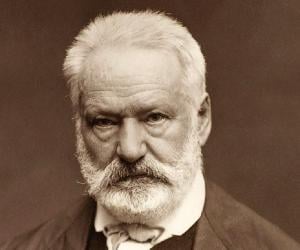
Victor Hugo

Victor Hugo

Where the telescope ends, the microscope begins. Which of the two has a grander view?

— Victor Hugo, Les Miserables, St. Denis, bk. III, ch. 3


Ideas are incombustible: Banned Books Week 2009

September 22, 2009

Banned Books Week 2009 is set for September 26 through October 3.

Which banned book will you read just to poke the eye of the censors, and to wave the flag of freedom and liberty?

Ellen Hopkins wrote several controversial books, including Burned which is out of favor in Pocatello, Idaho, close to my birthplace.*  She has written a Banned Books Week Manifesto, which she recites in the video.  You can read an interview with Ms. Hopkins at the site of the National Coalition Against Censorship (NCAC).

___________________

*  Does Millard Fillmore’s Bathtub have any readers in Pocatello?  Pocatello readers:  Do you know of anyplace you can get a copy of Burned to read, in Pocatello?

Banned Books Week resources:

Encourage others to read banned books, too:

Add to FacebookAdd to NewsvineAdd to DiggAdd to Del.icio.usAdd to StumbleuponAdd to RedditAdd to BlinklistAdd to TwitterAdd to TechnoratiAdd to Furl


Hey, authors! Will you make your books available to the blind?

September 14, 2009

Boing-Boing carried a compelling post from Cory Doctorow, who wrote the “young adult” book Little Brother.

Back in August, I got a surprise in the mail: a long Braille computer printout and a letter. The letter was from Patti Smith, who teaches visually impaired middle-schoolers in Detroit’s public school system. She explained that almost all the Braille kids’ books she had access to were for really little kids — kindergartners, basically — and how discouraging this was for her kids.

The reason she was writing to me was to thank me for releasing my young adult novel Little Brother under a Creative Commons license, which meant that she could download the ebook version and run it through her school’s Braille embosser (US copyright law makes it legal to convert any book to Braille or audiobook for blind people, but it is technically challenging and expensive to do this without the electronic text).

I wrote about this on my personal blog, and it inspired my colleague, the sf/f writer Paula Johansen, to write to Patti to offer up her own YA titles as ebooks for Patti’s students.

Well, this got me thinking that there might be lots of YA writers who’d be glad to see their books get into the hands of visually impaired, literature-hungry students, so I worked with Patti to put together the pitch below. Please pass it along to all the YA writers you know. I would love to see Patti’s class start the school year with a magnificent library of hundreds and hundreds of fantastic YA books to choose from, so that they can start a lifelong love-affair with literature.

Thanks!

I am Patti Smith and I teach at OW Holmes, which is an elementary-middle school in Detroit Public Schools in Detroit, Michigan. My students are visually impaired, ranging in age from 2nd grade to 8th grade. Five of my students are Braille writers and two are learning Braille. I would love books for young adults in electronic format (Word or RTF) so that I can plug the file into my computer program and emboss the book in Braille so my kids can have something to read. I have found it very difficult to find books for young adults; most seem to be written for very young readers. My Braille readers are all age 11+ and it is a challenge to find relevant books for them to read. Thank you so much!!

Patti’s email is TeacherPattiS@gmail.com

Tip of the old scrub brush to Dr. Pamela Bumsted.

Pass this along so others can see, too:

Add to FacebookAdd to NewsvineAdd to DiggAdd to Del.icio.usAdd to StumbleuponAdd to RedditAdd to BlinklistAdd to TwitterAdd to TechnoratiAdd to Furl


Frederick Douglass Book Award nominees (read ’em!)

August 16, 2009

What to read this year for U.S. history?

Kevin Levin at Civil War Memories notes three worthy candidates for outside reading, for student projects, and other good use (I’ve stolen his whole post — you’d do well to go visit his site and see what else he has):


Out+of+the+House+of+BondageI‘m a little late in posting this, but wanted to point your attention to the three finalists for this year’s Frederick Douglass Book Award that is sponsored by Yale’s Gilder-Lehrman Center for the Study of Slavery, Resistance and Abolition.

The finalists are Thavolia Glymph for Out of the House of Bondage: The Transformation of the Plantation Household (Cambridge University Press); Annette Gordon-Reed, The Hemingses of Monticello: An American Family (W.W. Norton and Company); and Jacqueline Jones, “Saving Savannah: The City and the Civil War (Alfred A. Knopf Publishers).  The prize comes with a generous check of $25,000.  I’ve read both Annette Gordon-Reed’s book (a National Book Award winner) and Glymph’s study.  Although the publisher sent me a copy of Saving Savannah, I have not had a chance to look through it.   My money is on Glymph’s Out of the House of Bondage.


Typewriter of the moment: Hemingway’s, at Key West

June 18, 2009

The man wrote, wherever he was.

Hemingways typewriter at Key West, Florida - Stefan Möding, copyright

Hemingway's typewriter at Key West, Florida - Stefan Möding, copyright

Ernest Hemingway often wrote standing up at his typewriter.  Obviously, here in Key West, he wrote sitting down.  At every home, it appears, he had a typewriter.

In Key West, early on in an apartment near the Ford dealership, where they awaited the delivery of the Ford purchased for Hemingway and his wife Pauline, by Pauline’s Uncle Gus, Hemingway wrote most of A Farewell to Arms, published in 1929.

The house was purchased later.  I can’t tell — some say he used here a Royal Quiet DeLuxe.

Pauline and Hemingway divorced in 1939.

In Key West, visit the Ernest Hemingway Home and Museum.


Typewriter of the moment: Steve Allen

June 17, 2009

I miss Steve AllenI missMeeting of Minds.”  I miss finding out what Allen would be up to next.

Steve Allen at his typewriter, well before 1999

Steve Allen at his typewriter, well before 1999

An Olivetti electric?  Anyone know for sure?

Steve Allen invented “The Tonight Show” on NBC, and was its first host.  It would have been great to have heard his opinion of Jay Leno’s leaving, and Conan O’Brien’s taking over.


Kerouac played fantasy baseball – four decades early

May 17, 2009

Who knew?

Three of Jack Kerouac’s fantasy baseball team cards, circa 1953-56. New York Public Library, Berg Collection, Jack Kerouac Archive

Three of Jack Kerouac’s fantasy baseball team cards, circa 1953-56. New York Public Library, Berg Collection, Jack Kerouac Archive

Kerouac fans, and anyone who participates in a rotisserie league sport, and anyone who just wants a moment of merriment, should read this New York Times story:

Almost all his life Jack Kerouac had a hobby that even close friends and fellow Beats like Allen Ginsberg and William S. Burroughs never knew about. He obsessively played a fantasy baseball game of his own invention, charting the exploits of made-up players like Wino Love, Warby Pepper, Heinie Twiett, Phegus Cody and Zagg Parker, who toiled on imaginary teams named either for cars (the Pittsburgh Plymouths and New York Chevvies, for example) or for colors (the Boston Grays and Cincinnati Blacks).

At least one more book Kerouac had inside, unwritten.  Now we just see the outline of what could have been a superb, and funny, work of fiction, in a book by New York Public Library curator Isaac Gewirtz.  The Kerouac items are in the Berg Collection at the Library.

No historian could make this stuff up.


Evolution theory driven by anti-racism

May 3, 2009

Here’s a book that most creationists hope you never read and which strikes terror in the hearts of Discovery Institute fellows: Darwin’s Sacred Cause: How a Hatred of Slavery Shaped Darwin’s Views on Human Evolution.

Cover of Desmond and Moores 2009 book, iDarwins Sacred Cause/i

Cover of Desmond and Moore's 2009 book, Darwin's Sacred Cause

It’s another grand book on Darwin from the team of Adrian Desmond and James Moore, based on their deep diving into the archives of writings from and about Darwin in his own time.  Their earlier book, Darwin, is a bit of a modern classic in biography, and a must-read for anyone seriously studying Darwin and evolution.

This book promises to eviscerate a favorite chunk of calumny claimed by creationists, that Darwin’s theory is flawed because Darwin himself was a racist.  Scientists painstakingly note that the racist views of a scientist don’t affect the theory (think of William Shockley and the transistor), but creationists still use the false claim as fodder for sermon’s and internet rants.  Or, in the case of the Discovery Institute, the false claims is used as a justification to appoint a fellow in the propaganda department, Richard Weikart.

Desmond and Moore confront the claims head on, it appears.  How will creationists change their story to accommodate these facts?  Or, will creationists resort to denial?

One theme that may be supported in the book is the realization that pursuit of a noble cause frequenly ennobles those who pursue it.  Certainly it is easy to make a case that Darwin’s hatred of slavery and advocacy for its abolition colored his views of what he saw, though perhaps not so much as what he saw colored his views of slavery and abolition.  Desmond and Moore have a chapter that discusses Charles Lyell’s trips to America, and Lyell’s different views on slavery having traveled the American south.  Lyell did not travel as an abolitionist, and his views suffer as a result.  Lyell was a product of his times in the portrait Desmond and Moore paint.  Darwin demonstrated the power of science, and the power of personal use of science, in using the facts to overcome racism; Darwin used his experience and study to rise above the times.  That may be the difference between the men, why we celebrate Darwin today, and remember Lyell as a good scientist, but usually a footnote to Darwin.

Resources:


Patoski’s bio on Willie Nelson wins TCU Texas Book Award

April 12, 2009

As Joe Nick Patoski put it on his blog, and I have been remiss in failing to mention, Patoski’s book on Willie Nelson won the TCU Texas Book Award.  The book is Willie Nelson, an epic life.

Friends and neighbors, please click on the letter and it’ll make it big enough so you can actually read what it says.

Woo hoo and Yee haw!

Good news!  Now, can we get Willie’s houses in Fort Worth noted on some tour?

Resources:


Olla podrida, end of spring break 2009

March 23, 2009

A lot of stuff to catch up on, and no time to do it.


Synesthesia? In every school

February 28, 2009

Do the math:  930,000 U.S. kids with synesthesia, out of 60 million students.  (Okay, “synaesthesia” for the British search programs.)

You might have one. A pyschologist in Britain did the research.

For the first time, psychologists have documented the prevalence of a form of synaesthesia – the condition that leads to a mixing of the senses – in a large sample of children. Over a twelve month period, Julia Simner and colleagues tested 615 children aged six to seven years at 21 UK schools and conservatively estimated that 1.3 per cent of them had grapheme-colour synaesthesia, in which letters and numbers involuntarily trigger the sensation of different colours.

“[This] implicates over 170,000 children age 0–17 in the UK alone, and over 930,000 in the USA,” the researchers said, “and suggests that the average primary school in England and Scotland (n = 168 pupils) contains 2.2 grapheme-colour synaesthetes at any time, while the average-sized US primary school (n = 396 pupils) contains 5.1.” Inevitably, the prevalence for synaesthesia as a whole, considering all the sub-types, would be even higher.

A hall-mark of grapheme-colour synaesthesia is that the colour triggered by a given letter or number is always the same – a fact the researchers exploited to identify the condition in school children.

Indeed, when asked to associate letters with colours, the children identified as synaesthetes showed more consistency over a 12-month-period than the other children did over a ten second period!

Researchers calculated about 5 such students in the average U.S. school, assuming a student population of about 400.

400!  In Texas that’s a tiny high school that may have difficulty fielding a football team.

In Brain, a journal of neurology (abstract available, full text with subscription).

ResearchBlogging.orgJ. Simner, J. Harrold, H. Creed, L. Monro, L. Foulkes (2008). Early detection of markers for synaesthesia in childhood populations. Brain, 132 (1), 57-64 DOI: 10.1093/brain/awn292


Tip of the old scrub brush to Research Digest Blog.

Resources:


Hoaxes on hoaxes: Bathtub hoax debunkers start a new hoax?

January 4, 2009

[If you’re interested in the hoax aspect, see this update post.]

Is this just an error, or a new hoax on the way to debunking an old one?  This is a story of an insider’s hoax, or an interesting error.

It’s from the Museum of Hoaxes.  Surely they would be careful about such matters, no?

The Museum of Hoaxes’ History of the Bathtub is largely a history of H. L. Mencken’s famous 1917 hoax history of the bathtub, in which he claimed Millard Fillmore had bravely led America to indoor bathing by installing a bathtub in the White House in 1853.

Readers of this blog well know this story.  Fillmore wasn’t the first to put a bathtub in the White House.  He wasn’t the first to put plumbing in the White House.  He wasn’t the first to put a plumbed bathtub in the White House, nor the first to run hot water to it. Anything in Mencken’s column that squares with history did so accidentally.  Mencken was making a big joke.

And one of the little delights of reading history is finding people who should know better, who have been suckered in by Mencken’s hoax.

So of course I read the piece at the Hoax Museum.

What ho!  Here is a section that discusses how the hoax refuses to die:

Curtis MacDougall, writing in 1958, reported finding fifty-five different instances since 1926 of Mencken’s bathtub history being presented to audiences as fact. Some of the examples that MacDougall collected follow:

October, 1926: Scribner’s included an article, “Bathtubs, Early Americans,“ by Fairfax Downey, based almost entirely on Mencken’s story.

March 16, 1929: In “Baltimore Day by Day,“ by Carroll Dulaney, in Mencken’s own newspaper, the Baltimore Evening Sun, the story is told under the heading, “Painting the Lily.“

September 26, 1929: The Paris, France, edition of the New York Herald rewrites an article by Ruth Wakeman in the New York Sun entitled, “Americans Once Frowned on Bathtubs, Condemning Them for Fancied Hazards.“

December 1, 1931: The Tucson, Arizona, Daily Star interviews C.R. King, manager of the Standard Sanitary Manufacturing Company branch in Tucson, on the imminent birthday of the bathtub. Mr. King, who according to the Star “had apparently studied the matter considerably,“ hands out the same old facts, which are printed under a two-column head, “Bathtub Will Have Birthday in America During December.“

April 27, 1933: A United Features Syndicate feature, “How It Began,“ by Russ Murphy and Ray Nenuskay includes an illustration of Adam Thompson in his first bathtub.

1935: Dr. Hans Zinsser, professor in the Medical School of Harvard University, says on page 285 of his best-selling Rats, Lice and History: “The first bathtub didn’t reach America, we believe, until about 1840.”

November 15, 1935: R.J. Scott’s “Scott’s Scrapbook,“ syndicated by the Central Press Asociation, includes a sketch of a policeman chasing a bather away from his bath, together with the caption: As late as 1842 some American cities prohibited the use of bathtubs.”

May 27, 1936: Dr. Shirley W. Wynne, former commissioner of health for New York City, uses the “facts” in a radio address, “What Is Public Health?“ over WEAF.

February, 1937: The United Press Red Letter includes a story from Cambridge, Massachusetts, that Dr. Cecil K. Drinker, dean and professor of physiology at the Harvard School of Public Health, has discovered that his great-great-grandmother, Elizabeth Drinker of Philadelphia, had a bathtub in her home as early as 1803, thus disputing Cincinnati’s claim to fame for having the first American bathtub. (The Chicago Daily News used the story March 27, 1937.)

September 28, 1938: Hearst’s American Weekly includes an article, “There’s a Lot of History Behind Your Bathtub,“ by Virginia S. Eiffert, research expert and contributor to Natural History, official magazine of the American Museum of Natural History, New York City, and other publications. Miss Eiffert’s research has uncovered the old stand-by.

Sept. 20, 1942: Julia Spiegelman retold the entire Adam Thompson tale as fact in an article, “Bathtub’s United States Centennial” in the Baltimore Sun, Mencken’s own newspaper.

April 28, 1951: In this day’s issue of The New Yorker John Hersey revealed, in a profile on Harry S. Truman, that “the president seemed reluctant to let go of his belief” in the fact that Millard Fillmore introduced the first bathtub into the White House in 1850. President Truman was known to include the spurious facts in the “lecture” he gave visitors to the renovated executive mansion.

Sept. 16, 1952: In a speech in Philadelphia, President Truman told the story to illustrate what great progress has occurred in public health.

I noted the Tucson Daily Star mention — I spent a year in Tucson at the University of Arizona, and on a couple of projects spent hours poring through old copies of the Star and it’s competitor, The Tucson Daily Citizen, but never getting close to any story on Fillmore, bathtubs, or Mencken.  Interesting.

And did you see?  There’s a reference to Zinsser’s great book, Rats, Lice and History.   One of my favorite books of all time. Other suggested it should be included in the small, essential library of any historian or teacher of history, when I was working on assembling a list of necessary books (a project I really should get back to one day).

Zinsser was the guy who isolated the pathogen that causes typhus, and developed a vaccine against the disease.  More importantly, he was a bit of a rake and an excellent, and funny, writer.  The book is a breezy read,  packed with enlightening discussions of history, wars, economic booms and busts, sieges of great cities, and how disease stalks the pages of history much more than merely during the outbreaks of the plague in the middle of the second millennium.

I read the book the year I graduated from high school, though now I don’t remember whether it was during the school year or after.  It was recommended to me by a college English professor, Kirk Rasmussen (the Utah guy), whose wife was my last high school debate coach.  Kirk laughed all the way through the book.  I borrowed his paperback copy and finished it off in a week or two.

You can learn a lot about ecology studying how a disease is spread.  A disease like typhus, which involves insect, louse, rodent and human carriers, exposes the links that, however improbable or preposterous, are necessary to keep a pathogen going.  Zinsser gives a great rundown of the history of rats, the history of fleas, the history of lice (which are not insects, if you wish to be carefully accurate, which you do, of course).

So his book is useful in literature classes.  It’s a good source of history.  Plus, it’s a good meta source for biologists and medical researchers.

In fact I have a copy here on this desk — I was trying to find a short excerpt that I could use in my world history classes, something to intrigue students and give them fodder for an exercise or project.

So, I looked at that listing, and thought I should check it out:

1935: Dr. Hans Zinsser, professor in the Medical School of Harvard University, says on page 285 of his best-selling Rats, Lice and History: “The first bathtub didn’t reach America, we believe, until about 1840.”

You can see this one coming, can’t you?

Rats, Lice and History has only 228 pages, in all three editions I have here at the house.

So of course I checked pages 185, 85, and 28.  Nothing.

Then I looked at the table of contents (there is no index), to see in what chapter such a comment might find a home.  Zinsser wrote in the U.S., was born in the U.S., so it wouldn’t be wholly out of his character to note some little item of public health at the White House.  But I’ll be doggoned if I can figure out where such a comment would fit in the book.

Is this just a miscitation by Museum of Hoaxes?  Or is it a new hoax altogether?  Is it a hoax the Museum of Hoaxes has fallen victim to, or is it of their invention?

Now I wonder about all the other mentions there.  Are they accurate?  Are they whole cloth fiction, voodoo history?  Did the Tucson Daily Star even exist in 1931?

We never solve one mystery that we don’t open up a dozen more.

Readers, can you shed light?

I’m sure there is a reasonable explanation.