As on every federal holiday, citizens and residents of the U.S. should fly their U.S. flags today, on the holiday marking the birth of the Rev. Dr. Martin Luther King, Jr.
Rev. King, and the U.S. flag. (No information on place or time of photo; please feel free to lend light and facts.)
King’s actual birthday is January 15. In 2018, the legal holiday and King’s actual birthday are the same day. It’s becoming common for Americans to fly their flags all weekend for a holiday on Friday or Monday.
In 2017, days before the inauguration of a new president, remembering and honoring the life and struggles of Martin Luther King, Jr., and serving others in real and symbolic ways, is more important than ever.
“What is wrong with you?” Open letter to white supremacists, in the Salt Lake Tribune, by Jonna Ramey, August 20, 2017. Image maker unknown.
What is wrong with you?
August 20, 2017
I am a 67-year-old American white woman. My parents enlisted in World War II to fight fascism. They both served; my mother was a nurse, my father navigated bombers. They lost friends in that bloody war so that all the world could be free of fascism. They did not fight so that some white people could claim supremacy or that Nazis could openly walk the streets of America.
White person to white supremacist person: What is wrong with you?
People of European heritage are doing just fine in the world. They run most of the world’s institutions, hold much of the world’s wealth, replicate as frequently as other humans. You’re not in any danger here. The world is changing, that’s true. Others want a piece of the pie. They work for it, strive for it and earn it. Technology (robotics) is having a greater effect on your job prospects than immigrants. Going forward, tackling corporate control and climate change will need all of our attention, ideas and energy. Put down your Tiki torches and trite flags and get involved in some real work.
By the way, the world won the war against Nazi fascism in the 1940s, just as America won the war against the Confederacy in the 1860s. Aligning with two lost causes just labels you as profound losers.
And finally, white person to white person: Like my parents before me, I will not stand idly by nor give up my rights or the rights of other Americans because you think you are better than some of us. It doesn’t work that way. All Americans stand shoulder to shoulder against your hatred and bigotry.
Jonna Ramey
Salt Lake City
Kathryn found the letter on Facebook somewhere. Since we both have Utah roots, and anchors sometimes, the venue alone made it interesting.
How did Melander chance across that image from the paper version of the letter in the Salt Lake Tribune?
Wouldn’t it be amazing if supremacists paid more attention to Joseph Campbell’s informed and hopeful outlook on use of myth to bring peace and happiness, instead of inventing false claims to drive hate?
Hate and discrimination are expensive. We can’t afford them.
Spread the word; friends don't allow friends to repeat history.
Gulf of Tonkin Resolution, passed by Congress on August 7, 1964, as presented to President Lyndon Johnson, and signed by him on August 10. This is the document that authorized U.S. involvement in Vietnam. Image from the National Archives, Our Documents display.
The resolution passed Congress after what appeared to be attacks on two U.S. Navy ships in the Gulf of Tonkin. At the time, and now, evidence is weak that such attacks took place.
Most historians today think the evidence for the attacks is inconclusive; many argue it is unlikely North Vietnamese gunboats would have opened fire on a vastly superior U.S. Navy warship. Debate is complicated because the Gulf of Tonkin Resolution effectively substituted for a declaration of war, in a war the U.S. arguably lost, which divided Americans as rarely before, and which cost more than 58,000 soldiers and civilians their lives.
How will we view the Tonkin Gulf resolution in 50 years, with the history of two much longer wars in the Middle East factored in? What do you think?
Quick summary from the National Archives:
On August 4, 1964, President Lyndon Johnson announced that two days earlier, U.S. ships in the Gulf of Tonkin had been attacked by the North Vietnamese. Johnson dispatched U.S. planes against the attackers and asked Congress to pass a resolution to support his actions. The joint resolution “to promote the maintenance of international peace and security in southeast Asia” passed on August 7, with only two Senators (Wayne Morse and Ernest Gruening) dissenting, and became the subject of great political controversy in the course of the undeclared war that followed.
The Tonkin Gulf Resolution stated that “Congress approves and supports the determination of the President, as Commander in Chief, to take all necessary measures to repeal any armed attack against the forces of the United States and to prevent any further aggression.” As a result, President Johnson, and later President Nixon, relied on the resolution as the legal basis for their military policies in Vietnam.
As public resistance to the war heightened, the resolution was repealed by Congress in January 1971.
Santayana’s ghost looks on in wonder.
Map of divided Vietnam, during the Vietnam War. History Place map via Mr. Roache’s Place
Considering its powerful effect on American history, the document is very, very brief. Here’s the text [links added]:
Eighty-eighth Congress of the United States of America
AT THE SECOND SESSION
Begun and held at the City of Washington on Tuesday, the seventh day of January, one thousand nine hundred and sixty-four
Joint Resolution
To promote the maintenance of international peace and security in southeast Asia.
Whereas naval units of the Communist regime in Vietnam, in violation of the principles of the Charter of the United Nations and of international law, have deliberately and repeatedly attacked United Stated naval vessels lawfully present in international waters, and have thereby created a serious threat to international peace; and
Whereas these attackers are part of deliberate and systematic campaign of aggression that the Communist regime in North Vietnam has been waging against its neighbors and the nations joined with them in the collective defense of their freedom; and
Whereas the United States is assisting the peoples of southeast Asia to protest their freedom and has no territorial, military or political ambitions in that area, but desires only that these people should be left in peace to work out their destinies in their own way: Now, therefore be it
Resolved by the Senate and House of Representatives of the United States of America in Congress assembled, That the Congress approves and supports the determination of the President, as Commander in Chief, to take all necessary measures to repel any armed attack against the forces of the United States and to prevent further aggression.
Map showing ship movements reported during the Gulf of Tonkin Incident, on August 4, 1964; reports that North Vietnamese gunboats attacked and engaged two patrolling U.S. Navy ships pushed Congress to authorize President Johnson to take extensive defensive actions. (image from Wikipedia map 8/2017)
Section 2. The United States regards as vital to its national interest and to world peace the maintenance of international peace and security in southeast Asia. Consonant with the Constitution of the United States and the Charter of the United Nations and in accordance with its obligations under the Southeast Asia Collective Defense Treaty, the United States is, therefore, prepared, as the President determines, to take all necessary steps, including the use of armed force, to assist any member or protocol state of the Southeast Asia Collective Defense Treaty requesting assistance in defense of its freedom.
Section 3. This resolution shall expire when the President shall determine that the peace and security of the area is reasonably assured by international conditions created by action of the United Nations or otherwise, except that it may be terminated earlier by concurrent resolution of the Congress.
[endorsements]
And on that authority, “Congress approves and supports the determination of the President, as Commander in Chief, to take all necessary measures to repel any armed attack against the forces of the United States and to prevent further aggression,” the U.S. spent the next 11 years in all-out warfare in Vietnam, with up to 500,000 military troops in the conflict, and losing the lives of more than 58,000 men and women. Can we ever know what really happened, or what motivated President Johnson to ask for the resolution, or what motivated Congress to pass it?
U.S. engagement in Vietnam continued well after the repeal of the Tonkin Gulf Resolution in 1971. In 1973 a peace treaty was signed between the U.S., North Vietnam and South Vietnam. The provisions of the treaty did not hold; a final North Vietnamese military push in April 1975 crumpled the South Vietnamese government and army. The few remaining U.S. forces made an emergency withdrawal as Viet Cong and North Vietnamese troops entered Saigon. Vietnam was reunited by force, under a communist government.
Attacks on the USS Maddox and USS Turner Joy — if they occurred — took place early on August 4. President Johnson might be excused for having done nothing on the issue at the time. That was the same day that the bodies of three civil rights workers were discovered by the FBI, murdered by a pro-segregation mob with clear ties to the local Ku Klux Klan. Either event, the Gulf of Tonkin, or the Mississippi civil rights murders, could be a major event in any presidency, testing to the utmost the leadership and peace-making abilities of a president. Johnson dealt with both events at the same time.
On a commission from the Dallas Symphony, composer Stephen Stucky composed a piece during the Lyndon Johnson Centennial in 2008; Kathryn and I heard the world premiere of August 4, 1964, on September 18, 2008. Stucky’s piece (with libretto by Gene Scheer) is the only place I know where anyone has seriously considered the nexus between these two, opposite-side-of-the-world tragedies, and how they set the stage for the rest of the 1960s decade. The piece has been recorded by the Dallas Symphony. I highly recommend it.
Here’s a video from the Dallas Symphony on the piece:
What have we learned from this bit of history? What should we have learned from it?
The Dallas Symphony Orchestra, under the direction of Jaap van Zweden, presents the premiere of Steven Stucky’s oratorio “August 4, 1964,” with soloists, from left, mezzo-soprano Kelley O’Connor, soprano Laquita Mitchell, tenor Vale Rideout, and baritone Robert Orth. Photo from the National Endowment for the Arts, Jason Kindig
In an era when our president and Congress appear unable to deal with one issue on a good day, it may be instructive to look back to a day upon which one U.S. President handled a lot, all at once.
On August 4, 1964, President Johnson awoke to the news that two U.S. Navy ships cruising in the Tonkin Gulf had been fired upon by North Vietnamese Navy gunboats; then the FBI called and announced that the bodies of three civil rights workers had been found, young men registering African Americans to vote in Mississippi. Both of these events rumble through history like a Rocky Mountain avalanche to today; either was a make-or-break event for any presidency.
Lyndon Johnson dealt with them both, the same day. And though Vietnam did not turn out for the best, it’s useful to note that Johnson’s call for Congress to grant authority to act on the Tonkin incident got results just three days later.
And also on that day, the U.S.S. Maddox reported it had been attacked by gunboats of the North Vietnamese Navy, in the Gulf of Tonkin. The Gulf of Tonkin incident led to the Gulf of Tonkin Resolution, which gave Johnson the authority to expand and escalate the war in Vietnam, which he did.
Cover for the CD of the Dallas Symphony’s Grammy-nominated performance of Steven Stucky’s “August 4, 1964,” Jaap van Zweden conducting.
The Dallas Symphony commissioned the work, from composer Steven Stucky and librettist Gene Scheer, in commemoration of President Johnson’s 100th birth anniversary — he would have been 100 on August 27, 2008. The works were premiered in Dallas in 2008.
The music is outstanding, especially for a modern piece. The Dallas Symphony played at its flashiest and most sober best, under the baton of new conductor Jaap van Zweden. It was a spectacular performance. According to the New York Times:
Mr. van Zweden, hailed in his debut as music director a week before, scored another triumph here. And the orchestra’s assured and gritty performance was rivaled by that of the large Dallas Symphony Chorus, both corporately and individually, in shifting solo snippets charting the course of the fateful day.
The strong cast, mildly amplified, was robustly led by the Johnson of Robert Orth, last heard as another president in John Adams’s “Nixon in China” in Denver in June. Laquita Mitchell and Kelley O’Conner, wearing period hats, were touching as Mrs. Chaney and Mrs. Goodman. Understandably, the taxing role of a high-strung McNamara took a small toll on the tenor of Vale Rideout in his late aria.
The entire thing deserves more commentary, perhaps soon. There is stellar history in the choral piece. And there is this: Consider that Lyndon Johnson, the best legislator and second most-effective executive we ever had as president, got hit with these two crises the same day. On the one hand the nation got the Voting Rights Act, the Fair Housing Act, executive orders and government support to end segregation and the evils it created. On the other hand, we got stuck with the disaster of the Vietnam War.
How would the nation fared had a lesser person been in the White House on that day?
(August 4 is a busy, busy day in history; much to think about.)
As on every federal holiday, citizens and residents of the U.S. should fly their U.S. flags today, on the holiday marking the birth of the Rev. Dr. Martin Luther King, Jr.
Rev. King, and the U.S. flag. (No information on place or time of photo; please feel free to lend light and facts.)
In 2017, days before the inauguration of a new president, remembering and honoring the life and struggles of Martin Luther King, Jr., and serving others in real and symbolic ways, is more important than ever.
Text courtesy of the Legal Information Institute at Cornell University, 36 U.S. Code § 124 reads:
The President may issue each year a proclamation designating February 1 as National Freedom Day to commemorate the signing by Abraham Lincoln on February 1, 1865, of the joint resolution adopted by the Senate and the House of Representatives that proposed the 13th amendment to the Constitution.
The Library of Congress collects original documents teachers and students can use to study the 13th Amendment; here’s the full page, copied in case they change it:
The 13th Amendment to the Constitution declared that “Neither slavery nor involuntary servitude, except as a punishment for crime whereof the party shall have been duly convicted, shall exist within the United States, or any place subject to their jurisdiction.” Formally abolishing slavery in the United States, the 13th Amendment was passed by the Congress on January 31, 1865, and ratified by the states on December 6, 1865.
April 8, 1864 – The Senate passed the 13th Amendment (S.J. Res. 16) by a vote of 38 to 6.
June 14, 1864 – Debated in the House of Representatives.
June 15, 1864 – The House of Representatives initially defeated the 13th Amendment (S.J. Res. 16) by a vote of 93 in favor, 65 opposed, and 23 not voting, which is less than the two-thirds majority needed to pass a Constitutional Amendment.
December 6, 1864 – Abraham Lincoln’s Fourth Annual Message to Congress was printed in the Congressional Globe: “At the last session of Congress a proposed amendment of the Constitution, abolishing slavery throughout the United States, passed the Senate, but failed for lack of the requisite two-thirds vote in the House of Representatives. Although the present is the same Congress, and nearly the same members, and without questioning the wisdom or patriotism of those who stood in opposition, I venture to recommend the reconsideration and passage of the measure at the present session.“
January 6, 1865 – Debated in the House of Representatives (S.J. Res. 16).
The complete Abraham Lincoln Papers at the Library of Congress consists of approximately 20,000 documents. The collection is organized into three “General Correspondence” series which include incoming and outgoing correspondence and enclosures, drafts of speeches, and notes and printed material. Most of the 20,000 items are from the 1850s through Lincoln’s presidential years, 1860-65.
A selection of highlights from this collection includes:
This collection documents the life of Abraham Lincoln both through writings by and about Lincoln as well as a large body of publications concerning the issues of the times including slavery, the Civil War, Reconstruction, and related topics.
This collection presents 396 pamphlets from the Rare Book and Special Collections Division, published from 1822 through 1909, by African-American authors and others who wrote about slavery, African colonization, Emancipation, Reconstruction, and related topics.
This site allows you to search and view millions of historic American newspaper pages from 1836 to 1922. Search this collection to find newspaper articles about the 13th Amendment.
A selection of articles on the 13th Amendment includes:
“Freedom Triumphant,” New-York Daily Tribune. (New York, NY), February 1, 1865.
The Constitution of the United States of America: Analysis and Interpretation (popularly known as the Constitution Annotated) contains legal analysis and interpretation of the United States Constitution, based primarily on Supreme Court case law. This regularly updated resource is especially useful when researching the constitutional implications of a specific issue or topic. It includes a chapter on the 13th Amendment. (PDF, 201 KB)
This exhibit marks the publication of The African-American Mosaic: A Library of Congress Resource Guide for the Study of Black History and Culture. This exhibit is a sampler of the kinds of materials and themes covered by this publication. Includes a section on the abolition movement and the end of slavery.
This exhibition showcases the African American collections of the Library of Congress. Displays more than 240 items, including books, government documents, manuscripts, maps, musical scores, plays, films, and recordings. Includes a brochure from an exhibit at the Library of Congress to mark the 75th Anniversary of the 13th Amendment.
This exhibition, which commemorates the fiftieth anniversary of the landmark Civil Rights Act of 1964, explores the events that shaped the civil rights movement, as well as the far-reaching impact the act had on a changing society.
Avins, Alfred, comp. The Reconstruction Amendments’ Debates: The Legislative History and Contemporary Debates in Congress on the 13th, 14th, and 15th Amendments. Richmond: Virginia Commission on Constitutional Government, 1967. [Catalog Record]
Hoemann, George H. What God Hath Wrought: The Embodiment of Freedom in the Thirteenth Amendment. New York: Garland Pub., 1987. [Catalog Record]
Holzer, Harold, and Sara Vaughn Gabbard, eds. Lincoln and Freedom: Slavery, Emancipation, and the Thirteenth Amendment. Carbondale: Southern Illinois University Press, 2007. [Catalog Record]
Maltz, Earl M. Civil Rights, the Constitution, and Congress, 1863-1869. Lawrence, Kan.: University Press of Kansas, 1990. [Catalog Record]
Richards, Leonard L. Who Freed the Slaves?: The Fight Over the Thirteenth Amendment. Chicago: The University of Chicago Press, 2015. [Catalog Record]
Tsesis, Alexander, ed. The Promises of Liberty: The History and Contemporary Relevance of the Thirteenth Amendment. New York: Columbia University Press, 2010. [Catalog Record]
—–. The Thirteenth Amendment and American Freedom: A Legal History. New York: New York University Press, 2004. [Catalog Record]
Vorenberg, Michael. Final Freedom: The Civil War, the Abolition of Slavery, and the Thirteenth Amendment. Cambridge; New York: Cambridge University Press, 2001. [Catalog Record]
Mrs. Rosa Parks asked a question of the policeman who arrested her for refusing to move to the back of the bus on December 1, 1955. In 2016, it is again, and still, a chilling question, to which we have no good answer.
Mrs. Parks being fingerprinted in Montgomery, Alabama; photo from New York World-Telegram & Sun Collection, Library of Congress
Rosa Parks: “Why do you push us around?”
Officer: “I don’t know but the law is the law and you’re under arrest.”
From Rosa Parks with Gregory J. Reed, Quiet Strength
(Grand Rapids, MI: Zondervan Pub. House, 1994), page 23.
On the evening of December 1, 1955, Rosa Parks, an African American, was arrested for disobeying an Alabama law requiring black passengers to relinquish seats to white passengers when the bus was full. Blacks were also required to sit at the back of the bus. Her arrest sparked a 381-day boycott of the Montgomery bus system and led to a 1956 Supreme Court decision banning segregation on public transportation.
Rosa Parks made a nearly perfect subject for a protest on racism. College-educated, trained in peaceful protest at the famous Highlander Folk School, Parks was known as a peaceful and respected person. The sight of such a proper woman being arrested and jailed would provide a schocking image to most Americans. Americans jolted awake.
Often lost in the retelling of the story are the threads that tie together the events of the civil rights movement through the 1940s, 1950s and 1960s. As noted, Parks was a trained civil rights activist. Such training in peaceful and nonviolent protest provided a moral power to the movement probably unattainable any other way. Parks’ arrest was not planned, however. Parks wrote that as she sat on the bus, she was thinking of the tragedy of Emmet Till, the young African American man from Chicago, brutally murdered in Mississippi early in 1955. She was thinking that someone had to take a stand for civil rights, at about the time the bus driver told her to move to allow a white man to take her seat. To take a stand, she kept her seat.
African Americans in Montgomery organized a boycott of the Montgomery bus system. This was also not unique, but earlier bus boycotts are unremembered. A bus boycott in Baton Rouge, Louisiana, earlier in 1955 did not produce nearly the same results.
The boycott organizers needed a place to meet, a large hall. The biggest building in town with such a room was the Dexter Street Baptist Church. At the first meeting on December 5, it made sense to make the pastor of that church the focal point of the boycott organizing, and so the fresh, young pastor, Rev. Dr. Martin Luther King, Jr., was thrust into civil rights organizing as president, with Ralph Abernathy as program director. They called their group the Montgomery Improvement Association (MIA). When their organizing stretched beyond the city limits of Montgomery, the group became the Southern Christian Leadership Conference.
Litigation on the boycott went all the way to the Supreme Court (Browder v. Gale). The boycotters won. The 381-day boycott was ended on December 21, 1956, with the desegregation of the Montgomery bus system.
On November 14, 1960, 6-year-old Ruby Bridges walked into William J. Frantz Elementary School in New Orleans.
This is an encore post I put up then, happy to have an excuse to repeat historic photos, great art from a great American painter, Norman Rockwell, and remind students of history.
“The Problem We All Live With,” Norman Rockwell, 1964; oil on canvas, Norman Rockwell Museum, Stockbridge, Massachusetts
Ruby Bridges with President Barack Obama, in 2011:
President Obama and Ruby Bridges viewing Normal Rockwall’s painting, “The Problem We All Live With,” at the White House in 2011. Photo by Pete Souza, public domain.
The County Election, 1852. Saint Louis Art Museum, St. Louis, Missouri George Caleb Bingham (American, 1811–1879). Oil on canvas. 38 x 52 in. (96.5 x 132.1 cm). Gift of Bank of America.
Every polling place should be flying the U.S. flag today. You may fly yours, too. In any case, if you have not voted already, go vote today as if our future depends upon it, as if our nation expects every voter to do her or his duty.
Today the nation and world listen to the most humble of citizens. Speak up, at the ballot box.
Did you notice? In George Caleb Bingham’s picture, there are no U.S. flags. You should fly yours anyway.
This stuff gets left out, overshadowed by false claims and bogus charges. It shouldn’t.
Hillary Clinton didn’t get to the U.S. Senate, and to a solid run for president, and to Secretary of State and a second presidential run without good reason. It the thick of campaigns, good reasons to vote for people often get shouted down.
Mrs. Clinton’s speech in China in 1995, at a United Nations conference on the status of women and women’s rights, is probably the most famous, though even it is often overlooked.
First Lady Hillary Clinton in China, in 1995.
Look at this video and read this transcript, about Clinton’s lifetime support and hard work to expand human rights. Clinton’s long-time supporters remember, though they don’t speak about it often enough. Let us work to keep from interring the good work of people with the past.
Excerpt from the transcript of Meryl Streep’s introduction of Hillary Clinton at the 2012 Women in the World Conference:
Two years ago when Tina Brown and Diane von Furstenberg first envisioned this conference, they asked me to do a play, a reading, called – the name of the play was called “Seven.” It was taken from transcripts, real testimony from real women activists around the world. I was the Irish one, and I had no idea that the real women would be sitting in the audience while we portrayed them. So I was doing a pretty ghastly Belfast accent. I was just – I was imitating my friend Liam Neeson, really, and I sounded like a fellow. (Laughter). It was really bad.
So I was so mortified when Tina, at the end of the play, invited the real women to come up on stage and I found myself standing next to the great Inez McCormack. (Applause.) And I felt slight next to her, because I’m an actress and she is the real deal. She has put her life on the line. Six of those seven women were with us in the theater that night. The seventh, Mukhtaran Bibi [Mukhtaran Mai], couldn’t come because she couldn’t get out of Pakistan. You probably remember who she is. She’s the young woman who went to court because she was gang-raped by men in her village as punishment for a perceived slight to their honor by her little brother. All but one of the 14 men accused were acquitted, but Mukhtaran won the small settlement. She won $8,200, which she then used to start schools in her village. More money poured in from international donations when the men were set free. And as a result of her trial, the then president of Pakistan, General Musharraf, went on TV and said, “If you want to be a millionaire, just get yourself raped.”
But that night in the theater two years ago, the other six brave women came up on the stage. Anabella De Leon of Guatemala pointed to Hillary Clinton, who was sitting right in the front row, and said, “I met her and my life changed.” And all weekend long, women from all over the world said the same thing:
“I’m alive because she came to my village, put her arm around me, and had a photograph taken together.”
“I’m alive because she went on our local TV and talked about my work, and now they’re afraid to kill me.”
“I’m alive because she came to my country and she talked to our leaders, because I heard her speak, because I read about her.”
I’m here today because of that, because of those stores. I didn’t know about this. I never knew any of it. And I think everybody should know. This hidden history Hillary has, the story of her parallel agenda, the shadow diplomacy unheralded, uncelebrated — careful, constant work on behalf of women and girls that she has always conducted alongside everything else a First Lady, a Senator, and now Secretary of State is obliged to do.
And it deserves to be amplified. This willingness to take it, to lead a revolution – and revelation, beginning in Beijing in 1995, when she first raised her voice to say the words you’ve heard many times throughout this conference: “Women’s Rights Are Human Rights.”
When Hillary Clinton stood up in Beijing to speak that truth, her hosts were not the only ones who didn’t necessarily want to hear it. Some of her husband’s advisors also were nervous about the speech, fearful of upsetting relations with China. But she faced down the opposition at home and abroad, and her words continue to hearten women around the world and have reverberated down the decades.
…
She’s just been busy working, doing it, making those words “Women’s Rights are Human Rights” into something every leader in every country now knows is a linchpin of American policy. It’s just so much more than a rhetorical triumph. We’re talking about what happened in the real world, the institutional change that was a result of that stand she took.
Spread the word; friends don't allow friends to repeat history.
Gutzon Borglum’s 1908 bust of Abraham Lincoln in the Crypt of the U.S. Capitol – Architect of the Capitol photo
Lincoln would become one of our most endeared presidents, though endearment would come after his assassination. Lincoln’s bust rides the crest of Mt. Rushmore (next to two slaveholders), with George Washington, the Father of His Country, Thomas Jefferson, the author of the Declaration of Independence, and Theodore Roosevelt, the man who made the modern presidency, and the only man ever to have won both a Congressional Medal of Honor and a Nobel Prize, the only president to have won the Medal of Honor.
In his effort to keep the Union together, Lincoln freed the slaves of the states in rebellion during the civil war, becoming an icon to freedom and human rights for all history. Upon his death the entire nation mourned; his funeral procession from Washington, D.C., to his tomb in Springfield, Illinois, stopped twelve times along the way for full funeral services. Lying in state in the Illinois House of Representatives, beneath a two-times lifesize portrait of George Washington, a banner proclaimed, “Washington the Father, Lincoln the Savior.”
Charles Darwin statue, Natural History Museum, London – NHM photo
Darwin would become one of the greatest scientists of all time. He would be credited with discovering the theory of evolution by natural and sexual selection. His meticulous footnoting and careful observations formed the data for ground-breaking papers in geology (the creation of coral atolls), zoology (barnacles, and the expression of emotions in animals and man), botany (climbing vines and insectivorous plants), ecology (worms and leaf mould), and travel (the voyage of H.M.S. Beagle). At his death he was honored with a state funeral, attended by the great scientists and statesmen of London in his day. Hymns were specially written for the occasion. Darwin is interred in Westminster Abbey near Sir Isaac Newton, England’s other great scientist, who knocked God out of the heavens.
Lincoln would be known as the man who saved the Union of the United States and set the standard for civil and human rights, vindicating the religious beliefs of many and challenging the beliefs of many more. Darwin’s theory would become one of the greatest ideas of western civilization, changing forever all the sciences, and especially agriculture, animal husbandry, and the rest of biology, while also provoking crises in religious sects.
Lincoln, the politician known for freeing the slaves, also was the first U.S. president to formally consult with scientists, calling on the National Science Foundation (whose creation he oversaw) to advise his administration. Darwin, the scientist, advocated that his family put the weight of its fortune behind the effort to abolish slavery in the British Empire. Each held an interest in the other’s disciplines.
Both men were catapulted to fame in 1858. Lincoln’s notoriety came from a series of debates on the nation’s dealing with slavery, in his losing campaign against Stephen A. Douglas to represent Illinois in the U.S. Senate. On the fame of that campaign, he won the nomination to the presidency of the fledgling Republican Party in 1860. Darwin was spurred to publicly reveal his ideas about the power of natural and sexual selection as the force behind evolution, in a paper co-authored by Alfred Russel Wallace, presented to the Linnean Society in London on July 1, 1858. On the strength of that paper, barely noticed at the time, Darwin published his most famous work, On the Origin of Species, in November 1859.
Darwin and Lincoln might have got along well, but they never met.
What unusual coincidences.
Go celebrate human rights, good science, and the stories about these men.
A school kid could do much worse than to study the history of these two great men. We study them far too little, it seems to me.
Anybody know what hour of the day either of these men was born?
Yes, you may fly your flag today for Lincoln’s birthday, according to the Flag Code; the official holiday, Washington’s Birthday, is next Monday, February 15th — and yes, it’s usually called “Presidents Day” by merchants and calendar makers. You want to fly your flag for Charles Darwin? Darwin never set foot in North America, remained a loyal subject of Her Majesty, Queen Victoria, to the end of his days. But go ahead. Who would know?
Text courtesy of the Legal Information Institute at Cornell University, 36 U.S. Code § 124 reads:
The President may issue each year a proclamation designating February 1 as National Freedom Day to commemorate the signing by Abraham Lincoln on February 1, 1865, of the joint resolution adopted by the Senate and the House of Representatives that proposed the 13th amendment to the Constitution.
You’d think Iowa would have made it a holiday for Republicans and caucus members.
The Library of Congress collects original documents teachers and students can use to study the 13th Amendment; here’s the full page, copied in case they change it:
The 13th Amendment to the Constitution declared that “Neither slavery nor involuntary servitude, except as a punishment for crime whereof the party shall have been duly convicted, shall exist within the United States, or any place subject to their jurisdiction.” Formally abolishing slavery in the United States, the 13th Amendment was passed by the Congress on January 31, 1865, and ratified by the states on December 6, 1865.
April 8, 1864 – The Senate passed the 13th Amendment (S.J. Res. 16) by a vote of 38 to 6.
June 14, 1864 – Debated in the House of Representatives.
June 15, 1864 – The House of Representatives initially defeated the 13th Amendment (S.J. Res. 16) by a vote of 93 in favor, 65 opposed, and 23 not voting, which is less than the two-thirds majority needed to pass a Constitutional Amendment.
December 6, 1864 – Abraham Lincoln’s Fourth Annual Message to Congress was printed in the Congressional Globe: “At the last session of Congress a proposed amendment of the Constitution, abolishing slavery throughout the United States, passed the Senate, but failed for lack of the requisite two-thirds vote in the House of Representatives. Although the present is the same Congress, and nearly the same members, and without questioning the wisdom or patriotism of those who stood in opposition, I venture to recommend the reconsideration and passage of the measure at the present session.“
January 6, 1865 – Debated in the House of Representatives (S.J. Res. 16).
The complete Abraham Lincoln Papers at the Library of Congress consists of approximately 20,000 documents. The collection is organized into three “General Correspondence” series which include incoming and outgoing correspondence and enclosures, drafts of speeches, and notes and printed material. Most of the 20,000 items are from the 1850s through Lincoln’s presidential years, 1860-65.
A selection of highlights from this collection includes:
This collection documents the life of Abraham Lincoln both through writings by and about Lincoln as well as a large body of publications concerning the issues of the times including slavery, the Civil War, Reconstruction, and related topics.
This collection presents 396 pamphlets from the Rare Book and Special Collections Division, published from 1822 through 1909, by African-American authors and others who wrote about slavery, African colonization, Emancipation, Reconstruction, and related topics.
This site allows you to search and view millions of historic American newspaper pages from 1836 to 1922. Search this collection to find newspaper articles about the 13th Amendment.
A selection of articles on the 13th Amendment includes:
“Freedom Triumphant,” New-York Daily Tribune. (New York, NY), February 1, 1865.
The Constitution of the United States of America: Analysis and Interpretation (popularly known as the Constitution Annotated) contains legal analysis and interpretation of the United States Constitution, based primarily on Supreme Court case law. This regularly updated resource is especially useful when researching the constitutional implications of a specific issue or topic. It includes a chapter on the 13th Amendment. (PDF, 201 KB)
This exhibit marks the publication of The African-American Mosaic: A Library of Congress Resource Guide for the Study of Black History and Culture. This exhibit is a sampler of the kinds of materials and themes covered by this publication. Includes a section on the abolition movement and the end of slavery.
This exhibition showcases the African American collections of the Library of Congress. Displays more than 240 items, including books, government documents, manuscripts, maps, musical scores, plays, films, and recordings. Includes a brochure from an exhibit at the Library of Congress to mark the 75th Anniversary of the 13th Amendment.
This exhibition, which commemorates the fiftieth anniversary of the landmark Civil Rights Act of 1964, explores the events that shaped the civil rights movement, as well as the far-reaching impact the act had on a changing society.
Avins, Alfred, comp. The Reconstruction Amendments’ Debates: The Legislative History and Contemporary Debates in Congress on the 13th, 14th, and 15th Amendments. Richmond: Virginia Commission on Constitutional Government, 1967. [Catalog Record]
Hoemann, George H. What God Hath Wrought: The Embodiment of Freedom in the Thirteenth Amendment. New York: Garland Pub., 1987. [Catalog Record]
Holzer, Harold, and Sara Vaughn Gabbard, eds. Lincoln and Freedom: Slavery, Emancipation, and the Thirteenth Amendment. Carbondale: Southern Illinois University Press, 2007. [Catalog Record]
Maltz, Earl M. Civil Rights, the Constitution, and Congress, 1863-1869. Lawrence, Kan.: University Press of Kansas, 1990. [Catalog Record]
Richards, Leonard L. Who Freed the Slaves?: The Fight Over the Thirteenth Amendment. Chicago: The University of Chicago Press, 2015. [Catalog Record]
Tsesis, Alexander, ed. The Promises of Liberty: The History and Contemporary Relevance of the Thirteenth Amendment. New York: Columbia University Press, 2010. [Catalog Record]
—–. The Thirteenth Amendment and American Freedom: A Legal History. New York: New York University Press, 2004. [Catalog Record]
Vorenberg, Michael. Final Freedom: The Civil War, the Abolition of Slavery, and the Thirteenth Amendment. Cambridge; New York: Cambridge University Press, 2001. [Catalog Record]
As on every federal holiday, citizens and residents of the U.S. should fly their U.S. flags today, on the holiday marking the birth of the Rev. Dr. Martin Luther King, Jr.
Rev. King and the U.S. flag. (No information on place or time of photo; please feel free to lend light and facts.)
USHMM: Shattered storefront of a Jewish-owned shop destroyed during Kristallnacht (the “Night of Broken Glass”). Berlin, Germany, November 10, 1938. — National Archives and Records Administration, College Park, Md.
I get e-mail from time to time from the U.S. Holocaust Memorial Museum (USHMM) in Washington, D.C.
Tonight, November 9, is the anniversary of Kristallnacht in 1938. Jill Pauly lived through it. She tells her story so that we will remember, that we will never forget. “Kristallnacht” is German for “night of crystal.” But in this case, the crystal was broken glass, the broken windows of Jewish shops and homes. Kristallnacht was the “Night of Broken Glass.”
Dear friend,
I’ll never forget how scared I was 77 years ago on Kristallnacht.
This wave of antisemitic attacks throughout Germany and Austria caused my family to flee our small German town. We drove to a relative’s apartment in Cologne, and my grandparents forced my sister and me to sit on the car floor so we wouldn’t see the violence on the streets.
That evening and for many following it, the men in my family drove all night to evade German officers and avoid becoming some of the 30,000 men who were arrested just for being Jewish.
Jill Pauly speaks with Museum visitors. US Holocaust Memorial Museum
Kristallnacht was a watershed moment in Nazi Germany’s persecution of Jews, indicating an increase in radical, violent antisemitism. Many Jews tried to emigrate as soon as possible after the pogroms.
Today, Kristallnacht is seen as a warning sign of the Holocaust—an indicator of the horrors to come that far too many people ignored.
The Museum strives to learn from this history in order to prevent atrocities in the future. This is why we recently launched, in partnership with Dartmouth College, the Early Warning Project. It aims to give leaders from around the world more reliable information on the risk of mass atrocities to inspire action and help save lives.
Or, until that account is unsuspended by the forces supporting Donald Trump: Follow @FillmoreWhite, the account of the Millard Fillmore White House Library
We've been soaking in the Bathtub for several months, long enough that some of the links we've used have gone to the Great Internet in the Sky.
If you find a dead link, please leave a comment to that post, and tell us what link has expired.
Thanks!
Retired teacher of law, economics, history, AP government, psychology and science. Former speechwriter, press guy and legislative aide in U.S. Senate. Former Department of Education. Former airline real estate, telecom towers, Big 6 (that old!) consultant. Lab and field research in air pollution control.
My blog, Millard Fillmore's Bathtub, is a continuing experiment to test how to use blogs to improve and speed up learning processes for students, perhaps by making some of the courses actually interesting. It is a blog for teachers, to see if we can use blogs. It is for people interested in social studies and social studies education, to see if we can learn to get it right. It's a blog for science fans, to promote good science and good science policy. It's a blog for people interested in good government and how to achieve it.
BS in Mass Communication, University of Utah
Graduate study in Rhetoric and Speech Communication, University of Arizona
JD from the National Law Center, George Washington University


 Posted by Ed Darrell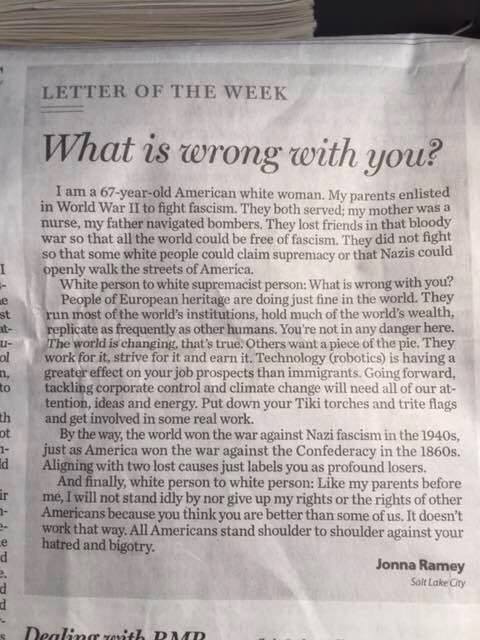












 Millard Fillmore's Bathtub
. The County Election, 1852. Oil on canvas. 38 x 52 in. (96.5 x 132.1 cm). Gift of Bank of America." width="507" height="365" /></a> <strong>The County Election, 1852.</strong> Saint Louis Art Museum, St. Louis, Missouri George Caleb Bingham (American, 1811–1879). Oil on canvas. 38 x 52 in. (96.5 x 132.1 cm). Gift of Bank of America.
<p><a href="http://www4.law.cornell.edu/uscode/4/usc_sec_04_00000006----000-.html">Every polling place should be flying the U.S. flag today</a>. You may fly yours, too. In any case, if you have not voted already, go vote today as if our future depends upon it, as if our nation expects every voter to do her or his duty.</p> <p><strong>Today the nation and world listen to the most humble of citizens. Speak up, at the <a class="zem_slink" title="Ballot box" href="http://en.wikipedia.org/wiki/Ballot_box" target="_blank" rel="noopener wikipedia">ballot box</a>.</strong></p> <p>Did you notice? In George Caleb Bingham's picture, there are no U.S. flags. <em>You should fly yours anyway.</em></p> <p><strong>The whole world is watching.</strong></p> <p><em><strong>More:</strong></em></p> <ul class="zemanta-article-ul"> <li class="zemanta-article-ul-li">Teachers: "The County Election" is featured in the <a href="http://picturingamerica.neh.gov/downloads/pdfs/Resource_Guide_Chapters/PictAmer_Resource_Book_Chapter_7B.pdf">National Endowment for the Humanities's series, Picturing America -- description, history, and discussion questions for the painting at that website</a> (Where you'll learn the painting shows the 1850 election in Saline County, Missouri -- in which Bingham himself ran for the state legislature, and lost)</li> <li class="zemanta-article-ul-li"><a href="http://www.washingtonmonthly.com/ten-miles-square/2012/11/how_i_lost_my_vote040954.php" target="_blank" rel="noopener">How I Lost My Vote</a> (washingtonmonthly.com)</li> <li class="zemanta-article-ul-li"><a href="http://newsone.com/2074998/election-day-2012-voting-myths/" target="_blank" rel="noopener">Don't Fall For These Voting Myths On Election Day!</a> (newsone.com)</li> <li class="zemanta-article-ul-li"><a href="http://www.wnyc.org/articles/new-jersey-news/2012/nov/05/power-still-out-nj-comes-new-voting-plan/" target="_blank" rel="noopener">With Power Still Out, NJ Comes Up With New Voting Plan</a> (wnyc.org)</li> <li class="zemanta-article-ul-li"><a href="http://commoncts.blogspot.com/2012/11/republicans-want-to-win-pull-out-this.html" target="_blank" rel="noopener">Republicans. Want to win? Pull out this Secret Weapon!</a> (commoncts.blogspot.com)</li> </ul> Yes, <a href="https://timpanogos.wordpress.com/2012/11/06/election-day-2012-fly-the-flag-vote/">this is an encore post.</a> I really like Bingham's painting.
<a href="https://timpanogos.blog/wp-content/uploads/2017/10/stars-and-stripes-forever-b-flat-cornet-e1511857228906.png"><img class="size-full wp-image-35822" src="https://timpanogos.blog/wp-content/uploads/2017/10/stars-and-stripes-forever-b-flat-cornet-e1511857228906.png" alt="This is an encore post." width="450" height="49" /></a> Yes, this is an encore post. Defeating ignorance takes patience and perseverance.)