Critical programs targeted for Trump shutdowns

February 1, 2025

Something you depend on is on the block, I promise you.

https://twitter.com/i/status/1884675942955495929


The Economic Case for Democrats over Republicans

July 25, 2024

A woman going by the handle Kashoggi’s Ghost (@UROCKLive1) on Twitter (X, if you must), lays out in necessary detail the economic case for Democrats over Republicans, in the race for President, and in all races for Congress.

It’s long. Here’s the text from all 24 Tweets in the thread (more may be added later). Bottom line, Democrats in the White House will make America greater and better, while Republican policies will again crash the economy.


Listen up, you guys, we’ve got a democracy to save! And neither the courts nor the media is going to help us. Buckle up for a long thread.🧵

1) Right now we’ve got a third of the country who believe Trump’s lies, a third who see what’s happening and will vote for Biden, even if they’re not fond of him, and a third who are completely clueless. The third group are the people we need to reach.

Sadly, I can’t go out in the world and be around people, so I won’t have the opportunity to talk to folks and tell them what they don’t know, but I’ve got talking points for y’all.

2) First, the economy seems to be what folks are fixated on, but they have their facts wrong, so let’s start there.

To sell this economy, you need to start in 2020. People prefer not to remember that time. Remind them. Besides refrigerated morgues, empty shelves, overrun hospitals and people dying, businesses and schools were closed, unemployment went way up, and we had GLOBAL inflation from the GLOBAL pandemic. Please make sure people understand this. Inflation started all over the world before the president took office, in large part due to messed up supply chains caused by the pandemic. (Not to mention corporate greed, but that’s another story.)

3) Biden came into an economic mess, and all the financial pundits were predicting a recession for at least the first two years he was in office. So the president focused on getting the country up and running again, first by making vaccines available to everyone, then by passing the Inflation Reduction Act, which was also the most substantial climate change initiative in history. But that took almost two years to get passed and then signed into law, and then it takes time for it to be implemented and then more time for the effects to be felt. We are only just barely beginning to feel the real results of that.

4) Now we have an economy that’s the envy of the world. Our inflation is more under control than that of our allies. Unemployment is at 50 year lows, the stock market is at all time highs. The president pulled off an freaking economic miracle and doesn’t get nearly enough credit for it.

But the average person has amnesia about the pandemic and is still mad because groceries cost more, something the president has no control over. The fact is, prices are never going to go back to 2019 levels, no matter who is president, because that’s not how anything works. Over time prices go up, sometimes faster than others. These prices are the new normal.

So we need to explain to literally anyone who will listen that the pandemic caused global economic upset, and that the US has handled it better than any other country. And Trump is now threatening to undo everything Biden did if he’s reelected, and the business community is practically yelling that Trump’s proposed new agenda will be an economic disaster, and cause major inflation.

5) If we were to reelect Trump, (we won’t) but if we did the economy would keep humming for a couple of years because it would take him time to wreck it, and you can bet that he’d be taking credit for everything Biden accomplished.

But, again, we’re only just barely beginning to feel the effects of Biden’s policies, and we’re still the envy of the world. It’s only going to get better from here. WHY ON EARTH WOULD WE WANT TO REVERSE COURSE NOW?!

6) For people to fully appreciate the economic miracle that is the US they need to remember what was happening when Biden came into office, and stop comparing today to 2019. We’re never going back there. And I think to a certain extent the general sense of malaise and depression many experienced after the pandemic (which is still going on, btw) is affecting their attitudes about how good things are now.

So please go out and remind people where we really were four years ago and how historically amazing our current economy is.

7) Once you’ve got folks appreciating what Biden has done, please start dispelling the myth that GOP policies are better for the eonomy. That hasn’t been true in my lifetime. But I have a theory on why it persists, and that’s because people associate the current economy with whoever is in the White House, without taking into consideration that it takes time for policies to be enacted, and then more time for them to take effect.

So look at the pattern over the last 40 years. Reagan did what every Republican administration has done ever since: gave huge tax cuts to billionaires and big corporations, gutting federal revenues, and creating a ripple effect that starts slow and gains momentum over a period of years. A smart country would prioritize education, FOR EVERYONE, but instead we keep cutting funding to make up for those juicy corporate tax cuts.

8) Triple down economics has never worked. Not once. Not even a little, but every single Republican administration tries it again.

9) So look at the pattern. The economy was already in trouble when Bush 41 took over in 1989. What he did was too little too late, and he lost his job for it. Clinton took over an economic mess, and by the time he left the economy was humming. Dubya came in in 2001, and they did the whole tax cuts for billionaires thing again and before the end of his second term we were in a recession. BECAUSE TRICKLE DOWN ECONOMICS DOESN’T WORK.

So then Obama came into power when things were really bad, unemployment was high, businesses were failing. But after 8 years of Dem policies the economy was cooking again.

Trump came in and took credit for Obama’s economy, and then went right back to tax cuts for billionaires and corporations. He claimed he created the greatest economy, but he created nothing. He just took credit for it. There were already signs that there was going to be another recession in Trump’s second term before the pandemic hit.

And no, the pandemic wasn’t his fault, but the absolutely atrocious way he handled it was. But things would not have turned out that rosy even minus the pandemic effects. We were headed in the wrong direction.

10) But Biden won, and instead of the Trump recession we got the Biden rebound. And now we have the best economy in the world, and we’re only just beginning to feel the effects from it. It would be insane and destructive to reverse course now. But that’s exactly what Trump would do. He would cancel everything Biden has done, and take credit for the results of what he couldn’t cancel. It would be a huge mistake.

11) Another myth about Republicans being better for the economy is that they want to bring down spending and cut the deficit, but in fact, when they’re in power they do the exact opposite. It’s been this way for years. Whenever Dems are in power the GOP screams about the deficit, but whenever they’re in power they make it so much worse. They cut spending just a little by hurting the poor and middle class, and they give massive tax cuts to billionaires and corporation which kills our revenue.

Biden’s record is much better on this than Trump’s. Also tell people that they want to defund the IRS so it doesn’t go after rich tax cheats, (to please their rich donors) and that this will actually cost us billions. The money we save by not fully funding the IRS is miniscule compared to the money we lose. And they know this, but they act like they’re doing it to be fiscally responsible.

Tell people this.

12) If we really want a spectacular economy, we need to keep Dems in office for more than 8 years. And to do that we need people to start understanding that to know where to place blame or give credit to for the economy, you need to look back four to six years. The economy doesn’t change because an election happened. The economy changes because of the policies enacted. If people could understand that, anyone voting based on the economy would keep voting for Dems.

13) Once you’ve dispelled the myth that Republicans are better for the economy, start reminding people of all the other reasons to vote. The court is HUGE. People ignored the importance of SCOTUS in 2016, and look where that got us. It’s not only women’s right to control their own bodies, this court is doing major damage in other ways. They’re dismantling the administrative state, and taking away the government’s right to protect us. This is another whole thread, and I should probably wait until we see the rest of their rulings.

BUT PLEASE MAKE SURE THAT PEOPLE KNOW THAT WOMEN LOSING THEIR RIGHTS IS BECAUSE OF DONALD TRUMP AND HIS COURT. Getting rid of Roe is one of the only promises he ever kept. But apparently there are people with so little understanding of how government works they think this must be Biden’s fault because he was president when it happens.

And some blame Dems for not codifying Roe without understanding that unless we have 60 votes in the senate, THIS CANNOT HAPPEN. Unless Dems control the senate with at least 60 votes, or eliminate the filibuster, (which I support, but it does have a downside) there is no way to codify Roe. This means women in red states are going to suffer.

14) Another GOP scam has been convincing people deregulation is a good thing. In actuality, deregulation means polluted air and water, no safety protections for workers, (or passengers in the case of the airlines) no financial protection for consumers, and no ability to slow down climate change. Deregulation is not our friend, but corporations love it. It saves them money, which they immediately use to benefit shareholders while the rest of us get screwed over. This court wants to eliminate the protections from regulations.

15) This Extreme Court and the Republicans also want to make abortion illegal nationwide, (listen up, blue-staters!) and eliminate access to birth control. THEY HAVE EVERY INTENTION OF DOING THIS. If we elect another Republican, ANY REPUBLICAN, they’re going to appoint justices who will take away protections for birth control, and LBGTQ people will no longer be protected either. Not only could they lose the right to marry, (which is more important for legal reasons than a lot of younger people realize) they could even criminalize gay sex, just like the good old days.

All of this along with this court’s support for gutting voting rights, allowing gerrymandering, etc. will make it a lot harder to fix any of this. Even if you don’t like Biden, whoever gets to appoint the next justices will have an enormous effect on this country for at least a generation. We really REALLY need a Democrat in the White House AND a Democratic controlled senate, or we will suffer for a long time. Probably the rest of my lifetime.

16) We need to elect Dems in the House, the Senate, and the presidency, both for the economy, and because if Republicans take control again, the whole country is going to end up like the red states. Women will lose their rights, and the whole country will suffer from red state folly. You’ll notice that the red states have the worst economies, too, and the worst education systems, and the worst healthcare. Why anyone would want Republicans to control the whole country is beyond me, because their record is terrible.

17) So please try to explain all of this to everyone around you, and everyone you meet. Find out about the Dems running in your districts, (statewide offices, too) find out good things about them, and sing their praises to people around you. Get folks to understand the consequences of electing Republicans.

Ask people questions that start with, “Did you know …”

“Did you know that Joe Biden and the Democrats passed the largest and most historic climate change legislation in history?”

“Did you know that Republican controlled states have the worst education, the worst economy, and the worst healthcare in the US?”

“Did you know that we always have a recession toward the end of every eight year Republican term?”

18) Help people compare the results from which party is in power.

The recent congresses give you plenty of examples. Obama gave us healthcare, and the GOP (including Trump) have been trying to take it away ever since. In Trump’s first two years he had a Republican Congress and Senate, and really the only thing they accomplished was the usual tax cuts for billionaires thing. He built a couple of miles of wall (which is a stupid idea anyway and this wall is already falling down,) and he came within one vote of taking away healthcare WITH NOTHING TO REPLACE IT WITH. (Thank you, John McCain.) Other than that, they did nothing for the American people. Then we had divided government which means very little gets done.

19) In Biden’s first two years with a Dem Congress they passed the Inflation Reduction Act into law, the most comprehensive climate legislation the U.S. has even seen. The law invests hundreds of billions of dollars in clean energy, electric vehicles, environmental justice and more.

The Inflation Reduction Act represents the largest attempt in U.S. history to combat climate change. It includes clean-energy funding covering cars and homes and businesses, while curbing methane emissions, and it sets aside money for communities heavily affected by air pollution, flooding, and other climate-related issues.

This legislation also includes new measures to lower prescription drug costs, including a provision empowering Medicare to negotiate prices with the pharmaceutical industry, a new $2,000 yearly cap on out-of-pocket costs for prescriptions through Medicare, and a $35 monthly insulin cap for Medicare beneficiaries.

They also strengthened our supply chains and set up new programs to support minority businesses, and expanded STEM education opportunities so that more women and minorities can get the skills needed to succeed in a high-tech economy. Plus they gave additional funding to the IRS which raises our revenue.

And passing the Inflation Reduction Act was just the beginning. In the year and a half since its enactment, the administration has focused on developing tax credit guidance and launching programs to implement its many clean energy provisions

The Dem Congress also passed The Electoral Count Reform Act, to try to prevent someone like Trump from trying to steal an election again.

For the two years of a Dem Congress under President Biden, they worked hard to do things that would actually help the American people.

20) And what has this Republican Congress done? Mostly a whole lot of nothing. They spent weeks trying to elect a Speaker, and then did that again a few months later. They impeached the Homeland Security Director, investigated Hunter Biden, tried as hard as they could to find a crime they could impeach the president for in spite of having no evidence for it, and they passed a bunch of performative nonsense bills that would accomplish nothing and that they knew had literally zero chance of becoming law, like protecting gas stoves, and naming airports and waterways after the disgraced, twice-impeached, convicted felon they all worship.

They were only barely able to pass a budget, and then the majority of Republicans voted against it. But not once, during this whole time have they even attempted to do anything that actually improves the lives of Americans.

Do we want more of this? Or do we want another congress working for us? If Dems control the House and senate, they will work to make our lives better. And contrary to what the silly owner of this website says, having a divided government doesn’t benefit anybody. It just stops all progress.

21) Then there’s Project 2025, which fortunately people are starting to hear about. It’s the blueprint for a fascist takeover. Please tell people about what they intend to do, and explain the damage that would cause. Do you really want a whole country being run by people who put loyalty to Trump over loyalty to the country? Especially knowing Trump will do everything in his power to remain in office to keep himself legally protected. Project 2025’s goals include eliminating access to birth control, eliminating women’s access to a divorce even if they’re suffering from abuse, gutting public education and giving the money to private Christian schools, and giving the president unlimited power. Encourage people to find out about it, because it’s hella scary.

22) If you meet anyone who still believes climate change is a hoax, they may very well be too stupid to reach, but most people know better. Ask people, “Did you know that Joe Biden and the Democrats passed the largest, most historic climate change initiative ever? They’re getting us ready for a clean energy future, and doing it in a way that benefits the economy too. 300,000 new jobs have already been created by this plan, and more to come. Trump and the GOP want to reverse all of it, and give more subsidies to the oil industry.” If you care about climate change at all, you need to vote for Dems, up and down the ticket, because nthe GOP only cares about Big Oil and big donors. They’re even trying to pass laws in some states making it illegal to try to slow down climate change. Republicans are a huge threat to the environment, the planet and our future.

23) Then ask folks if they care about the US’s role in the world. We’re still considered the leader of the free world, even though we’ve done plenty to damage that, but we will lose that if Trump is reelected. Our allies will forgive us for the mistake of electing him once, but if we do it a second time, they will never trust us again. They’re already getting hesitant to share intelligence with us, because they know it isn’t safe if Trump comes back. They will stop altogether if he does, and our whole country will be less safe.

Make sure to dispel the myth that the world doesn’t respect Biden and wants Trump back. The only country leaders who prefer Trump are our enemies, the evil dictators who rule Russia and North Korea. (Also Netanyahu, because although Israel is our ally, Bibi is not, for his own selfish reasons.) But do we really want to elect a president our allies dread and don’t trust and the evil dictators who want to destroy America would rejoice at? The Europeans don’t agree with every detail of how Biden has handled foreign policy, (neither do I) but we all know Trump would be infinitely worse.

I have another whole thread I need to write about NATO, which I’ll add here later, but please make sure folks understand how important NATO is to US and world security. Trump’s threat to pull is out is INSANE, and will make us very much less safe. America First means America alone. NATO is the greatest peacekeeping alliance in recorded history, and leaving them would be extremely dangerous to our national security, not to mention idiotic.

And as far as how the world sees us, how do you think they’ll feel if we elect a convicted felon to be the leader of our country? A criminal whose business organization owes more than a half a billion dollars for fraud convictions? Someone who can’t be trusted with intelligence, and who will sell our foreign policy off to the highest bidder in order to enrich himself. Seriously, it’s downright embarrassing.

24) Make sure the low info people you talk to realize that the vast majority of people in Trump’s cabinet (you know, the ones who saw how he actually ran the country) and his Vice President are now refusing to support him, and are saying he’s unfit for the job. This is unheard of in modern history. The people who agreed with Trump’s policies, but saw how he handled being the president are WARNING US NOT TO PUT HIM IN POWER AGAIN. How insane would it be not to listen to them?

I heard today that people actually trust Trump more than Biden to protect democracy. This is nuts. The only reason I can think of for this is that they believe the lies that the president is prosecuting his political rival, something Trump really wanted to do but was held back by the DOJ insisting that there had to be evidence of crimes for them to do this. (Barr tried to find such evidence, but wouldn’t prosecute without it.) Trump won’t be held back by this if he gets another chance.

So if you meet people who believe Biden is unfairly going after Trump for political reasons, tell them this: Merrick Garland stated under oath that he only took the job of Attorney General under the condition that it would be free from political pressure, and that since taking office the White House has never contacted or pressured him about any case. Not about Trump. Not about Hunter. He’s following the facts and the law, and none of this has anything to do with the president. Seriously, if he were directing DOJ, would he allow them to criminally prosecute his own son? Especially for a ridiculous offense that no one is ever prosecuted for.

So I’m not done, but I’m going to stop for now because I have things to do and my keyboard has lost its charge. I’ll keep adding to this thread. In the meanwhile, PLEASE, go out and proselytize to every one you meet. Tell all the people not paying attention what the stakes are, and fill them in on all the things they don’t know.

We need to share two stories: 1) the one about the overlooked miracle of Biden’s economic recovery, and all the good policies he managed to enact even with the very slimmest of majorities, and 2) the absolute disaster another Trump term would be. What Trump will do to our country if given the chance, will not be easy to fix if it’s even possible. And fixing it will take decades. For the climate, decades is too late, and for the social and economic policies, those decades will be miserable. Putting Republicans in power will take us backwards.

Really try to get folks to grasp the concept that the economy doesn’t magically and immediately change depending on who is president. It changes due to policies that are enacted, and those take time. They take time to pass, and they take time to implement, and then they take time before we feel their effects. We are only beginning to feel the benefits of what Biden and the Dems have done.

If you want to know who to blame or give credit to for the economy, look back four to six years and see who was doing what. This is why we have a recession at the end of every eight year Republican presidential term. They inherit a great economy from Dems, wreck it, and then Dems have to fix it. Please help people understand the timing thing, because the first four years of a Democratic president’s term the economy always sucks because that’s what they inherited. Then by the end of the second term after Dem policies have had a chance to work, the economy is doing great. Then Republicans win and reap the benefits and people think, “oh yeah, these are good times and a Republican is in the White House, so they must be better for the economy. This isn’t that hard to understand if you can get people to stop and think about it.

• • •


Scrooge’s continuing Christmas gift: Appropriate words for seeing 2023 out, for bracing for 2024

December 24, 2023

I wish it were not so. These words of Dickens’s through Scrooge, remain salient, damning and depressing, since well before election day 2016. Now Trump’s was impeached, but left in place. Trump was defeated by American voters, but he still sits on his throne, messing up America in every way he can think to do it. Trump’s been sued and found liable, indicted on 91 criminal counts, but people still threaten to let him wreak vengeance on Americans.

And so our annual post on the lessons we take from “A Christmas Carol.”

Roberto Innocenti, Scrooge on a dark staircase

Ebenezer Scrooge, up a dark staircase; “Darkness was cheap, and Scrooge liked it.” Illustration by Roberto Innocenti, via Pinterest.

It’s a Quote of the Moment (an encore post for the season, with a bit of context thrown in later), a bitter but too-popular political platform, and life, edited down to just three words, in green:

Darkness is cheap,
and Scrooge liked it.

– Charles Dickens, A Christmas Carol, Stave 1

Isn’t that the entire GOP platform in three words? “Darkness is cheap.” Substitute “Trump” for “Scrooge,” you’ve got the picture. Three more words than the actual Republican National Platform of 2020, but more accurate.

I think of that line of Dickens’s often when  I read of the celebrations of calumny that pass as discourse in Republican politics these days. Although, with the 2008 renewing of Limbaugh’s contract, with the 2020 coming of COVID-19, it may no longer be true that his particular brand of darkness is cheap. With the advent of Donald Trump’s insult politics, offending America’s allies and all American ethnic groups possible, with un-ironic calls to drop nuclear weapons, GOP politics is even darker than ever.

Since then, we’ve discovered scheming to cheat voters in six states from their decisions, plans to create violence and perhaps assassinations to disrupt the Constitutional peaceful transfer of power from one party to another. We’ve learned the plot against Americans and America included elected Members of Congress, and perhaps Justices of the Supreme Court.

Cheap or not, darkness remains dark.

John Leach, Scrooge meets Ignorance and Want

Scrooge meets Ignorance and Want, the products of his stinginess (drawing by John Leech, 1809-1870)

Here is the sentence Dickens put before the quote, to add a little context; Scrooge was climbing a very large, very dark staircase.

Half-a-dozen gas-lamps out of the street wouldn’t have lighted the entry too well, so you may suppose that it was pretty dark with Scrooge’s dip.

Up Scrooge went, not caring a button for that. Darkness is cheap, and Scrooge liked it.

Speaking of darkness, a longer excerpt from a bit later in Dickens’s story, when the Ghost of Christmas Present ushers Scrooge to glimpse what is in the present, but what will be the future if Scrooge does not repent:

‘Forgive me if I am not justified in what I ask,’ said Scrooge, looking intently at the Spirit’s robe, ‘but I see something strange, and not belonging to yourself, protruding from your skirts. Is it a foot or a claw?’

‘It might be a claw, for the flesh there is upon it,’ was the Spirit’s sorrowful reply. ‘Look here.’

From the foldings of its robe, it brought two children; wretched, abject, frightful, hideous, miserable. They knelt down at its feet, and clung upon the outside of its garment.

‘Oh, Man! look here. Look, look, down here!’ exclaimed the Ghost.

They were a boy and girl. Yellow, meagre, ragged, scowling, wolfish; but prostrate, too, in their humility. Where graceful youth should have filled their features out, and touched them with its freshest tints, a stale and shrivelled hand, like that of age, had pinched, and twisted them, and pulled them into shreds. Where angels might have sat enthroned, devils lurked, and glared out menacing. No change, no degradation, no perversion of humanity, in any grade, through all the mysteries of wonderful creation, has monsters half so horrible and dread.

Scrooge started back, appalled. Having them shown to him in this way, he tried to say they were fine children, but the words choked themselves, rather than be parties to a lie of such enormous magnitude.

‘Spirit! are they yours?’ Scrooge could say no more.

‘They are Man’s,’ said the Spirit, looking down upon them. ‘And they cling to me, appealing from their fathers. This boy is Ignorance. This girl is Want. Beware them both, and all of their degree, but most of all beware this boy, for on his brow I see that written which is Doom, unless the writing be erased. Deny it!’ cried the Spirit, stretching out its hand towards the city. ‘Slander those who tell it ye! Admit it for your factious purposes, and make it worse. And bide the end!’

‘Have they no refuge or resource?’ cried Scrooge.

‘Are there no prisons?’ said the Spirit, turning on him for the last time with his own words. ‘Are there no workhouses?’ The bell struck twelve.

Scrooge looked about him for the Ghost, and saw it not. As the last stroke ceased to vibrate, he remembered the prediction of old Jacob Marley, and lifting up his eyes, beheld a solemn Phantom, draped and hooded, coming, like a mist along the ground, towards him.

A Christmas Carol, Stave 3

Think of 2014, 2015, 2016, 2017, 2018, 2019 and 2020, and since, children abused in Central America and in the Middle East, fleeing as best they can, only to die, off the shores of Greece, on the southern deserts of the U.S., or be cast into incarceration after having achieved a nation whose very name promised them refuge, the United States. “Two children; wretched, abject, frightful, hideous, miserable,” Dickens described. Whose children? “Man’s.” Yours, and mine.

Christmas is a festival to celebrate light, what many Christians call “the light of the world?” If so, let us work to stamp out the darkness which the unrepentant Scrooge so dearly loved.

Darkness may be cheap, but it is not good.  Light a candle, and run into the darkness, spreading light. We need more light.

Hope you have a merry Christmas in the making for 2023. Let us remember, as Tom and the late Ray Magliozzi always reminded us, the cheapskate pays more in the end, and usually along the way. Is Darkness cheap? Let us then eschew it as too costly for a moral nation, too costly for a moral people.

Are we as smart as Ebenezer Scrooge? Are our hearts as good as Scrooge’s heart?

When we die, who will mourn our passing? Which spirit moves us to action?

God bless us, every one. Or gods, or family and friends bless us, as the case may be.

More:

Yes, this is an encore post, mostly. Fighting ignorance is taking a lot longer than anyone thought.

Yes, this is an encore post, mostly. Fighting ignorance is taking a lot longer than anyone thought.

Save


Bidenomics saves America

December 9, 2023

Biden’s economic program is working, and it’s making America much greater than before.

X post: “So Chris Hayes did an absolute Masterclass tonight on the state of the economy with simple, easy to comprehend facts and an excellent overview of the multiple crises Biden has had to solve for since taking office. THIS should be required viewing for voters.”

15 minute segment of Chris Hayes’s show. Biden’s done his work. Biden’s administration is working hard. And the economy is doing better than anyone else.

Watch and learn why to vote for Joe Biden.

https://youtu.be/e1nZv9Lusnk


Still true in 2022: Earth Day does not celebrate Lenin, who was anti-environmentalist – annual debunking of the annual Earth Day/Lenin hoax

April 21, 2022

This is mostly an encore post, repeated each year for April 22 and Earth Day — sad that it needs repeating; anti-environmentalists don’t appear to learn much, year to year.  (Yes, some of the links may be dated; if you find one not working, please let me know in comments.)

In 2022, we may need this post more, to put up with anti-science backlash to the urgency of global heating, the threat of COVID-19, and still, to the defeat of Donald Trump.

You could write it off to pareidolia, once.

Like faces in clouds, some people claimed to see a link. The first Earth Day, on April 22, 1970, coincided with Lenin’s birthday. There was no link — Earth Day was scheduled for a spring Wednesday, when the greatest number of college students would be on campus.

Google Doodle for Earth Day 2021

Now, years later, with almost-annual repeats of the claim from the braying right wing, it’s just a cruel hoax.  It’s as much a hoax on the ill-informed of the right, as anyone else. Many of them believe it.

No, there’s no link between Earth Day and the birthday of V. I. Lenin:

One surefire way to tell an Earth Day post is done by an Earth Day denialist: They’ll note that the first Earth Day, on April 22, 1970, was an anniversary of the birth of Lenin.

Coincidentally, yes, Lenin was born on April 22, on the new style calendar; it was April 10 on the calendar when he was born — one might accurately note that Lenin’s mother always said he was born on April 10.

It’s a hoax. There is no meaning to the first Earth Day’s falling on Lenin’s birthday — Lenin was not prescient enough to plan his birthday to fall in the middle of Earth Week, a hundred years before Earth Week was even planned.

About.com explains why the idea of a link between Earth Day and Lenin is silly:

Does Earth Day Promote Communism?
Earth Day 1970 was initially conceived as a teach-in, modeled on the teach-ins used successfully by Vietnam War protesters to spread their message and generate support on U.S. college campuses. It is generally believed that April 22 was chosen for Earth Day because it was a Wednesday that fell between spring break and final exams—a day when a majority of college students would be able to participate.

U.S. Sen. Gaylord Nelson, the guy who dreamed up the nationwide teach-in that became Earth Day, once tried to put the whole “Earth Day as communist plot” idea into perspective.

“On any given day, a lot of both good and bad people were born,” Nelson said. “A person many consider the world’s first environmentalist, Saint Francis of Assisi, was born on April 22. So was Queen Isabella. More importantly, so was my Aunt Tillie.”

April 22 is also the birthday of J. Sterling Morton, the Nebraska newspaper editor who founded Arbor Day (a national holiday devoted to planting trees) on April 22, 1872, when Lenin was still in diapers. Maybe April 22 was chosen to honor Morton and nobody knew. Maybe environmentalists were trying to send a subliminal message to the national subconscious that would transform people into tree-planting zombies. One birthday “plot” seems just about as likely as the other. What’s the chance that one person in a thousand could tell you when either of these guys were born.

My guess is that only a few really wacko conservatives know that April 22 is Lenin’s birthday (was it ever celebrated in the Soviet Union?). No one else bothers to think about it, or say anything about it, nor especially, to celebrate it.

Certainly, the Soviet Union never celebrated Earth Day. Nor was Lenin any great friend of the environment.  He stood instead with the oil-drillers-without-clean-up, with the strip-miners-without-reclamation, with the dirty-smokestack guys.  You’d think someone with a bit of logic and a rudimentary knowledge of history could put that together.

Gaylord Nelson, Living Green image
Inventor of Earth Day teach-ins, former Wisconsin Governor and U.S. Senator Gaylord Nelson

The REAL founder of Earth Day, Wisconsin’s U.S. Sen. Gaylord Nelson, usually recognized as the founder and father of Earth Day, told how and why the organizers came to pick April 22:

Senator Nelson chose the date in order to maximize participation on college campuses for what he conceived as an “environmental teach-in.” He determined the week of April 19–25 was the best bet; it did not fall during exams or spring breaks, did not conflict with religious holidays such as Easter or Passover, and was late enough in spring to have decent weather. More students were likely to be in class, and there would be less competition with other mid-week events—so he chose Wednesday, April 22.

In his own words, Nelson spoke of what he was trying to do:

After President Kennedy’s [conservation] tour, I still hoped for some idea that would thrust the environment into the political mainstream. Six years would pass before the idea that became Earth Day occurred to me while on a conservation speaking tour out West in the summer of 1969. At the time, anti-Vietnam War demonstrations, called “teach-ins,” had spread to college campuses all across the nation. Suddenly, the idea occurred to me – why not organize a huge grassroots protest over what was happening to our environment?

I was satisfied that if we could tap into the environmental concerns of the general public and infuse the student anti-war energy into the environmental cause, we could generate a demonstration that would force this issue onto the political agenda. It was a big gamble, but worth a try.

At a conference in Seattle in September 1969, I announced that in the spring of 1970 there would be a nationwide grassroots demonstration on behalf of the environment and invited everyone to participate. The wire services carried the story from coast to coast. The response was electric. It took off like gangbusters. Telegrams, letters, and telephone inquiries poured in from all across the country. The American people finally had a forum to express its concern about what was happening to the land, rivers, lakes, and air – and they did so with spectacular exuberance. For the next four months, two members of my Senate staff, Linda Billings and John Heritage, managed Earth Day affairs out of my Senate office.

Five months before Earth Day, on Sunday, November 30, 1969, The New York Times carried a lengthy article by Gladwin Hill reporting on the astonishing proliferation of environmental events:

“Rising concern about the environmental crisis is sweeping the nation’s campuses with an intensity that may be on its way to eclipsing student discontent over the war in Vietnam…a national day of observance of environmental problems…is being planned for next spring…when a nationwide environmental ‘teach-in’…coordinated from the office of Senator Gaylord Nelson is planned….”

Nelson, a veteran of the U.S. armed services (Okinawa campaign), flag-waving ex-governor of Wisconsin (Sen. Joe McCarthy’s home state, but also the home of Aldo Leopold and birthplace of John Muir), was working to raise America’s consciousness and conscience about environmental issues.

Lenin on the environment? Think of the Aral Sea disaster, the horrible pollution from Soviet mines and mills, and the dreadful record of the Soviet Union on protecting any resource. Lenin believed in exploiting resources and leaving the spoils to rot in the sun, not conservation; in practice there was no environmental protection, but instead a war on nature, in the Soviet Union.

So, why are all these conservative denialists claiming, against history and politics, that Lenin’s birthday has anything to do with Earth Day?

Can you say “propaganda?” Can you say “political smear?”

2017 Resources and Good News:

2015 Resources and Good News:

2014 Resources and Good News:

2013 Resources and Good News:

Good information for 2012:

Good information from 2011:

Good information from 2010:

2014’s Wall of Shame:

2013 Wall of Shame:

Wall of Lenin’s Birthday Propaganda Shame from 2012:

Wall of Lenin’s Birthday Propaganda Shame from 2011:

Wall of Lenin’s Birthday Propaganda Shame from 2010:

Spread the word. Have you found someone spreading the hoax, claiming Earth Day honors Lenin instead? Give us the link in comments.

UAW’s March for Science banner
This is an encore post.
Yes, this is an encore post. Defeating ignorance takes patience and perseverance.

Sa

Save


Biden delivers well, if not absolutely everything

January 17, 2022

President Joe Biden's administration sees powerful job growth.

President Joe Biden’s administration sees powerful job growth.

Found this on Twitter from Jason Looney (@jlooney2). He responded to a post by Republican National Chairman Ronna McDaniel.

Looney said:

Reality:

  • Fastest growing economy in history
  • 12 mo’s ago the unemployment rate was 6.7% today 3.9%

We’ve never seen anything like this, its the most jobs in any calendar year by any president in history.

Record GDP growth.

How? The American Rescue Plan and 200 million vax’d.

I have no great idea who Mr. Looney is. But he should look for a spot on a campaign communications team.

I wish that message were more widely known.


Still true in 2021: Earth Day does not celebrate Lenin, who was anti-environmentalist – annual debunking of the annual Earth Day/Lenin hoax

April 22, 2021

This is mostly an encore post, repeated each year for April 22 and Earth Day — sad that it needs repeating; anti-environmentalists don’t appear to learn much, year to year.  (Yes, some of the links may be dated; if you find one not working, please let me know in comments.)

In 2021, we may need this post more, to put up with anti-science backlash to the defeat of Donald Trump.

You could write it off to pareidolia, once.

Like faces in clouds, some people claimed to see a link. The first Earth Day, on April 22, 1970, coincided with Lenin’s birthday. There was no link — Earth Day was scheduled for a spring Wednesday, when the greatest number of college students would be on campus.

Google Doodle for Earth Day 2021

Now, years later, with almost-annual repeats of the claim from the braying right wing, it’s just a cruel hoax.  It’s as much a hoax on the ill-informed of the right, as anyone else. Many of them believe it.

No, there’s no link between Earth Day and the birthday of V. I. Lenin:

One surefire way to tell an Earth Day post is done by an Earth Day denialist: They’ll note that the first Earth Day, on April 22, 1970, was an anniversary of the birth of Lenin.

Coincidentally, yes, Lenin was born on April 22, on the new style calendar; it was April 10 on the calendar when he was born — one might accurately note that Lenin’s mother always said he was born on April 10.

It’s a hoax. There is no meaning to the first Earth Day’s falling on Lenin’s birthday — Lenin was not prescient enough to plan his birthday to fall in the middle of Earth Week, a hundred years before Earth Week was even planned.

About.com explains why the idea of a link between Earth Day and Lenin is silly:

Does Earth Day Promote Communism?
Earth Day 1970 was initially conceived as a teach-in, modeled on the teach-ins used successfully by Vietnam War protesters to spread their message and generate support on U.S. college campuses. It is generally believed that April 22 was chosen for Earth Day because it was a Wednesday that fell between spring break and final exams—a day when a majority of college students would be able to participate.

U.S. Sen. Gaylord Nelson, the guy who dreamed up the nationwide teach-in that became Earth Day, once tried to put the whole “Earth Day as communist plot” idea into perspective.

“On any given day, a lot of both good and bad people were born,” Nelson said. “A person many consider the world’s first environmentalist, Saint Francis of Assisi, was born on April 22. So was Queen Isabella. More importantly, so was my Aunt Tillie.”

April 22 is also the birthday of J. Sterling Morton, the Nebraska newspaper editor who founded Arbor Day (a national holiday devoted to planting trees) on April 22, 1872, when Lenin was still in diapers. Maybe April 22 was chosen to honor Morton and nobody knew. Maybe environmentalists were trying to send a subliminal message to the national subconscious that would transform people into tree-planting zombies. One birthday “plot” seems just about as likely as the other. What’s the chance that one person in a thousand could tell you when either of these guys were born.

My guess is that only a few really wacko conservatives know that April 22 is Lenin’s birthday (was it ever celebrated in the Soviet Union?). No one else bothers to think about it, or say anything about it, nor especially, to celebrate it.

Certainly, the Soviet Union never celebrated Earth Day. Nor was Lenin any great friend of the environment.  He stood instead with the oil-drillers-without-clean-up, with the strip-miners-without-reclamation, with the dirty-smokestack guys.  You’d think someone with a bit of logic and a rudimentary knowledge of history could put that together.

Gaylord Nelson, Living Green image
Inventor of Earth Day teach-ins, former Wisconsin Governor and U.S. Senator Gaylord Nelson

The REAL founder of Earth Day, Wisconsin’s U.S. Sen. Gaylord Nelson, usually recognized as the founder and father of Earth Day, told how and why the organizers came to pick April 22:

Senator Nelson chose the date in order to maximize participation on college campuses for what he conceived as an “environmental teach-in.” He determined the week of April 19–25 was the best bet; it did not fall during exams or spring breaks, did not conflict with religious holidays such as Easter or Passover, and was late enough in spring to have decent weather. More students were likely to be in class, and there would be less competition with other mid-week events—so he chose Wednesday, April 22.

In his own words, Nelson spoke of what he was trying to do:

After President Kennedy’s [conservation] tour, I still hoped for some idea that would thrust the environment into the political mainstream. Six years would pass before the idea that became Earth Day occurred to me while on a conservation speaking tour out West in the summer of 1969. At the time, anti-Vietnam War demonstrations, called “teach-ins,” had spread to college campuses all across the nation. Suddenly, the idea occurred to me – why not organize a huge grassroots protest over what was happening to our environment?

I was satisfied that if we could tap into the environmental concerns of the general public and infuse the student anti-war energy into the environmental cause, we could generate a demonstration that would force this issue onto the political agenda. It was a big gamble, but worth a try.

At a conference in Seattle in September 1969, I announced that in the spring of 1970 there would be a nationwide grassroots demonstration on behalf of the environment and invited everyone to participate. The wire services carried the story from coast to coast. The response was electric. It took off like gangbusters. Telegrams, letters, and telephone inquiries poured in from all across the country. The American people finally had a forum to express its concern about what was happening to the land, rivers, lakes, and air – and they did so with spectacular exuberance. For the next four months, two members of my Senate staff, Linda Billings and John Heritage, managed Earth Day affairs out of my Senate office.

Five months before Earth Day, on Sunday, November 30, 1969, The New York Times carried a lengthy article by Gladwin Hill reporting on the astonishing proliferation of environmental events:

“Rising concern about the environmental crisis is sweeping the nation’s campuses with an intensity that may be on its way to eclipsing student discontent over the war in Vietnam…a national day of observance of environmental problems…is being planned for next spring…when a nationwide environmental ‘teach-in’…coordinated from the office of Senator Gaylord Nelson is planned….”

Nelson, a veteran of the U.S. armed services (Okinawa campaign), flag-waving ex-governor of Wisconsin (Sen. Joe McCarthy’s home state, but also the home of Aldo Leopold and birthplace of John Muir), was working to raise America’s consciousness and conscience about environmental issues.

Lenin on the environment? Think of the Aral Sea disaster, the horrible pollution from Soviet mines and mills, and the dreadful record of the Soviet Union on protecting any resource. Lenin believed in exploiting resources and leaving the spoils to rot in the sun, not conservation; in practice there was no environmental protection, but instead a war on nature, in the Soviet Union.

So, why are all these conservative denialists claiming, against history and politics, that Lenin’s birthday has anything to do with Earth Day?

Can you say “propaganda?” Can you say “political smear?”

2017 Resources and Good News:

2015 Resources and Good News:

2014 Resources and Good News:

2013 Resources and Good News:

Good information for 2012:

Good information from 2011:

Good information from 2010:

2014’s Wall of Shame:

2013 Wall of Shame:

Wall of Lenin’s Birthday Propaganda Shame from 2012:

Wall of Lenin’s Birthday Propaganda Shame from 2011:

Wall of Lenin’s Birthday Propaganda Shame from 2010:

Spread the word. Have you found someone spreading the hoax, claiming Earth Day honors Lenin instead? Give us the link in comments.

UAW’s March for Science banner
UAW's March for Science banner

Sa

Save


Scrooge’s continuing Christmas gift: Appropriate words for seeing 2020 out

December 11, 2020

I wish it were not so. These words of Dickens’s through Scrooge, remain salient, damning and depressing, every day Donald Trump holds the Oval Office. Now Trump’s been impeached, but left in place, and defeated by American voters, but he still sits on his throne, messing up America in every way he can think to do it.

And so our annual post on the lessons we take from “A Christmas Carol.”

Roberto Innocenti, Scrooge on a dark staircase

Ebenezer Scrooge, up a dark staircase; “Darkness was cheap, and Scrooge liked it.” Illustration by Roberto Innocenti, via Pinterest.

It’s a Quote of the Moment (an encore post for the season, with a bit of context thrown in later), Trump’s platform, and life, edited down to just three words, in green:

Darkness is cheap,
and Scrooge liked it.

– Charles Dickens, A Christmas Carol, Stave 1

Isn’t that the entire GOP platform in three words? “Darkness is cheap.” Substitute “Trump” for “Scrooge,” you’ve got the picture. Three more words than the actual Republican National Platform of 2020, but more accurate.

I think of that line of Dickens’s often when  I read of the celebrations of calumny that pass as discourse in Republican politics these days. Although, with the 2008 renewing of Limbaugh’s contract, with the 2020 coming of COVID-19, it may no longer be true that his particular brand of darkness is cheap. With the advent of Donald Trump’s insult politics, offending America’s allies and all American ethnic groups possible, with un-ironic calls to drop nuclear weapons, GOP politics is even darker than ever.

Cheap or not, darkness remains dark.

John Leach, Scrooge meets Ignorance and Want

Scrooge meets Ignorance and Want, the products of his stinginess (drawing by John Leech, 1809-1870)

Here is the sentence Dickens put before the quote, to add a little context; Scrooge was climbing a very large, very dark staircase.

Half-a-dozen gas-lamps out of the street wouldn’t have lighted the entry too well, so you may suppose that it was pretty dark with Scrooge’s dip.

Up Scrooge went, not caring a button for that. Darkness is cheap, and Scrooge liked it.

Speaking of darkness, a longer excerpt from a bit later in Dickens’s story, when the Ghost of Christmas Present ushers Scrooge to glimpse what is in the present, but what will be the future if Scrooge does not repent:

‘Forgive me if I am not justified in what I ask,’ said Scrooge, looking intently at the Spirit’s robe, ‘but I see something strange, and not belonging to yourself, protruding from your skirts. Is it a foot or a claw?’

‘It might be a claw, for the flesh there is upon it,’ was the Spirit’s sorrowful reply. ‘Look here.’

From the foldings of its robe, it brought two children; wretched, abject, frightful, hideous, miserable. They knelt down at its feet, and clung upon the outside of its garment.

‘Oh, Man! look here. Look, look, down here!’ exclaimed the Ghost.

They were a boy and girl. Yellow, meagre, ragged, scowling, wolfish; but prostrate, too, in their humility. Where graceful youth should have filled their features out, and touched them with its freshest tints, a stale and shrivelled hand, like that of age, had pinched, and twisted them, and pulled them into shreds. Where angels might have sat enthroned, devils lurked, and glared out menacing. No change, no degradation, no perversion of humanity, in any grade, through all the mysteries of wonderful creation, has monsters half so horrible and dread.

Scrooge started back, appalled. Having them shown to him in this way, he tried to say they were fine children, but the words choked themselves, rather than be parties to a lie of such enormous magnitude.

‘Spirit! are they yours?’ Scrooge could say no more.

‘They are Man’s,’ said the Spirit, looking down upon them. ‘And they cling to me, appealing from their fathers. This boy is Ignorance. This girl is Want. Beware them both, and all of their degree, but most of all beware this boy, for on his brow I see that written which is Doom, unless the writing be erased. Deny it!’ cried the Spirit, stretching out its hand towards the city. ‘Slander those who tell it ye! Admit it for your factious purposes, and make it worse. And bide the end!’

‘Have they no refuge or resource?’ cried Scrooge.

‘Are there no prisons?’ said the Spirit, turning on him for the last time with his own words. ‘Are there no workhouses?’ The bell struck twelve.

Scrooge looked about him for the Ghost, and saw it not. As the last stroke ceased to vibrate, he remembered the prediction of old Jacob Marley, and lifting up his eyes, beheld a solemn Phantom, draped and hooded, coming, like a mist along the ground, towards him.

A Christmas Carol, Stave 3

Think of 2014, 2015, 2016, 2017, 2018, 2019 and 2020, children abused in Central America and in the Middle East, fleeing as best they can, only to die, off the shores of Greece, on the southern deserts of the U.S., or be cast into incarceration after having achieved a nation whose very name promised them refuge, the United States. “Two children; wretched, abject, frightful, hideous, miserable,” Dickens described. Whose children? “Man’s.” Yours, and mine.

Christmas is a festival to celebrate light, what many Christians call “the light of the world?” If so, let us work to stamp out the darkness which the unrepentant Scrooge so dearly loved.

Darkness may be cheap, but it is not good.  Light a candle, and run into the darkness, spreading light. We need more light.

Hope you have a merry Christmas in the making for 2020. Let us remember, as Tom and the late Ray Magliozzi always reminded us, the cheapskate pays more in the end, and usually along the way. Is Darkness cheap? Let us then eschew it as too costly for a moral nation, too costly for a moral people.

Is Donald Trump as smart as Ebenezer Scrooge? Is his heart as good as Scrooge’s heart?

If Trump died, who would attend his funeral?

When we die, who will mourn our passing? Which spirit moves us to action?

God bless us, every one. Or gods, or family and friends bless us, as the case may be.

More:

Yes, this is an encore post, mostly. Fighting ignorance is taking a lot longer than anyone thought.

Yes, this is an encore post, mostly. Fighting ignorance is taking a lot longer than anyone thought.

Save


Rare/Alternative Christmas music 2019: Macy Gray’s call for social justice

December 23, 2019

Some encores from last year. Here’s one in a spasmodic series of posts on Christmas songs you probably haven’t heard a thousand times already, and may actually enjoy hearing. Got a song you’d like to suggest? Suggest it in comments.

Cover sleeve for Macy Gray's

Cover sleeve for Macy Gray’s “All I Want for Christmas.” Amazon image

This one speaks for itself, I think. From experience, I can tell you that playing this song can weed out the Trump supporters in your party attendance rather quickly.

Oddly, I think, it also brings out the dangerous elements of American society to complain about it, judging by comments at the site (go see; there are a lot more):

Grotesque comments at YouTube on Macy Gray's Christmas wishes.

Grotesque comments at YouTube on Macy Gray’s Christmas wishes.

Those thought zombies walk among us. Our cross to bear.

Gray didn’t include it on any album I’ve found.

More:


Scrooge’s continuing Christmas gift: Trump administration reduced to three words

December 23, 2019

I wish it were not so. These words of Dickens’s through Scrooge, remain salient, damning and depressing, every day Donald Trump holds the Oval Office. Now Trump’s been impeached, but he still sits on his throne, messing up America in every way he can think to do it.

Roberto Innocenti, Scrooge on a dark staircase

Ebenezer Scrooge, up a dark staircase; “Darkness was cheap, and Scrooge liked it.” Illustration by Roberto Innocenti, via Pinterest.

It’s a Quote of the Moment (an encore post for the season, with a bit of context thrown in later), Trump’s platform, and life, edited down to just three words, in green:

Darkness is cheap,
and Scrooge liked it.

– Charles Dickens, A Christmas Carol, Stave 1

Isn’t that the entire GOP platform in three words? “Darkness is cheap.” Substitute “Trump” for “Scrooge,” you’ve got the picture.

I think of that line of Dickens’s often when  I read of the celebrations of calumny that pass as discourse in Republican politics these days. Although, with the 2008 renewing of Limbaugh’s contract, it may no longer be true that his particular brand of darkness is cheap. With the advent of Donald Trump’s insult politics, offending America’s allies and all American ethnic groups possible, with un-ironic calls to drop nuclear weapons, GOP politics is even darker than ever.

Cheap or not, darkness remains dark.

John Leach, Scrooge meets Ignorance and Want

Scrooge meets Ignorance and Want, the products of his stinginess (drawing by John Leech, 1809-1870)

Here is the sentence Dickens put before the quote, to add a little context; Scrooge was climbing a very large, very dark staircase.

Half-a-dozen gas-lamps out of the street wouldn’t have lighted the entry too well, so you may suppose that it was pretty dark with Scrooge’s dip.

Up Scrooge went, not caring a button for that. Darkness is cheap, and Scrooge liked it.

Speaking of darkness, a longer excerpt from a bit later in Dickens’s story, when the Ghost of Christmas Present ushers Scrooge to glimpse what is in the present, but what will be the future if Scrooge does not repent:

‘Forgive me if I am not justified in what I ask,’ said Scrooge, looking intently at the Spirit’s robe, ‘but I see something strange, and not belonging to yourself, protruding from your skirts. Is it a foot or a claw?’

‘It might be a claw, for the flesh there is upon it,’ was the Spirit’s sorrowful reply. ‘Look here.’

From the foldings of its robe, it brought two children; wretched, abject, frightful, hideous, miserable. They knelt down at its feet, and clung upon the outside of its garment.

‘Oh, Man! look here. Look, look, down here!’ exclaimed the Ghost.

They were a boy and girl. Yellow, meagre, ragged, scowling, wolfish; but prostrate, too, in their humility. Where graceful youth should have filled their features out, and touched them with its freshest tints, a stale and shrivelled hand, like that of age, had pinched, and twisted them, and pulled them into shreds. Where angels might have sat enthroned, devils lurked, and glared out menacing. No change, no degradation, no perversion of humanity, in any grade, through all the mysteries of wonderful creation, has monsters half so horrible and dread.

Scrooge started back, appalled. Having them shown to him in this way, he tried to say they were fine children, but the words choked themselves, rather than be parties to a lie of such enormous magnitude.

‘Spirit! are they yours?’ Scrooge could say no more.

‘They are Man’s,’ said the Spirit, looking down upon them. ‘And they cling to me, appealing from their fathers. This boy is Ignorance. This girl is Want. Beware them both, and all of their degree, but most of all beware this boy, for on his brow I see that written which is Doom, unless the writing be erased. Deny it!’ cried the Spirit, stretching out its hand towards the city. ‘Slander those who tell it ye! Admit it for your factious purposes, and make it worse. And bide the end!’

‘Have they no refuge or resource?’ cried Scrooge.

‘Are there no prisons?’ said the Spirit, turning on him for the last time with his own words. ‘Are there no workhouses?’ The bell struck twelve.

Scrooge looked about him for the Ghost, and saw it not. As the last stroke ceased to vibrate, he remembered the prediction of old Jacob Marley, and lifting up his eyes, beheld a solemn Phantom, draped and hooded, coming, like a mist along the ground, towards him.

A Christmas Carol, Stave 3

Think of 2014, 2015, and 2016, children abused in Central America and in the Middle East, fleeing as best they can, only to die, off the shores of Greece, on the southern deserts of the U.S., or be cast into incarceration after having achieved a nation whose very name promised them refuge, the United States. “Two children; wretched, abject, frightful, hideous, miserable,” Dickens described. Whose children? “Man’s.” Yours, and mine.

Christmas is a festival to celebrate light, what many Christians call “the light of the world?” If so, let us work to stamp out the darkness which the unrepentant Scrooge so dearly loved.

Darkness may be cheap, but it is not good.  Light a candle, and run into the darkness, spreading light. We need more light.

Hope you had a merry Christmas in 2016. Let us remember, as Tom and the late Ray Magliozzi always reminded us, the cheapskate pays more in the end, and usually along the way. Is Darkness cheap? Let us then eschew it as too costly for a moral nation, too costly for a moral people.

Is Donald Trump as smart as Ebenezer Scrooge? Is his heart as good as Scrooge’s heart?

More:

Yes, this is an encore post, mostly. Fighting ignorance is taking a lot longer than anyone thought.

Yes, this is an encore post, mostly. Fighting ignorance is taking a lot longer than anyone thought.

Save


Green New Deal, the actual text of H. Res. 109 (and S. Res. 59)

February 11, 2019

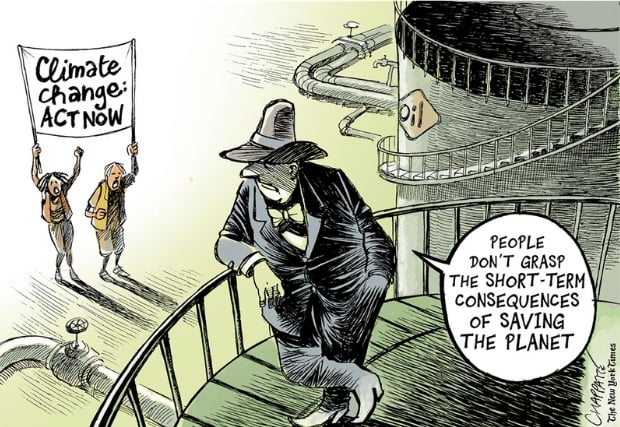
“People don’t grasp the short-term consequences of saving the planet.” Cartoon by Pat Chappatte @PatChappatte, New York Times Syndicate.

From CleanTechnica.com (with additional information added here from the House of Representatives official site):

116TH CONGRESS
1ST SESSION H. RES. 109

Recognizing the duty of the Federal Government to create a Green New Deal.

IN THE HOUSE OF REPRESENTATIVES
Ms. OCASIO-CORTEZ (for herself, Mr. Hastings, Ms. Tlaib, Mr. Serrano, Mrs. Carolyn B. Maloney of New York, Mr. Vargas, Mr. Espaillat, Mr. Lynch, Ms. Velázquez, Mr. Blumenauer, Mr. Brendan F. Boyle of Pennsylvania, Mr. Castro of Texas, Ms. Clarke of New York, Ms. Jayapal, Mr. Khanna, Mr. Ted Lieu of California, Ms. Pressley, Mr. Welch, Mr. Engel, Mr. Neguse, Mr. Nadler, Mr. McGovern, Mr. Pocan, Mr. Takano, Ms. Norton, Mr. Raskin, Mr. Connolly, Mr. Lowenthal, Ms. Matsui, Mr. Thompson of California, Mr. Levin of California, Ms. Pingree, Mr. Quigley, Mr. Huffman, Mrs. Watson Coleman, Mr. García of Illinois, Mr. Higgins of New York, Ms. Haaland, Ms. Meng, Mr. Carbajal, Mr. Cicilline, Mr. Cohen, Ms. Clark of Massachusetts, Ms. Judy Chu of California, Ms. Mucarsel-Powell, Mr. Moulton, Mr. Grijalva, Mr. Meeks, Mr. Sablan, Ms. Lee of California, Ms. Bonamici, Mr. Sean Patrick Maloney of New York, Ms. Schakowsky, Ms. DeLauro, Mr. Levin of Michigan, Ms. McCollum, Mr. DeSaulnier, Mr. Courtney, Mr. Larson of Connecticut, Ms. Escobar, Mr. Schiff, Mr. Keating, Mr. DeFazio, Ms. Eshoo, Mrs. Trahan, Mr. Gomez, Mr. Kennedy, and Ms. Waters) submitted the following resolution; which was referred to the Committee on Committee on Energy and Commerce, and in addition to the Committees on Science, Space, and Technology, Education and Labor, Transportation and Infrastructure, Agriculture, Natural Resources, Foreign Affairs, Financial Services, the Judiciary, Ways and Means, and Oversight and Reform, for a period to be subsequently determined by the Speaker, in each case for consideration of such provisions as fall within the jurisdiction of the committee concerned.

RESOLUTION
Recognizing the duty of the Federal Government to create
a Green New Deal.

Whereas the October 2018 report entitled ‘‘Special Report on Global Warming of 1.5ºC’’ by the intergovernmental Panel on Climate Change and the November 2018 Fourth National Climate Assessment report found that—

  1. human activity is the dominant cause of observed climate change over the past century;
  2. a changing climate is causing sea levels to rise and an increase in wildfires, severe storms, droughts, and other extreme weather events that threaten human life, healthy communities, and critical infrastructure
  3. global warming at or above 2 degrees Celsius beyond preindustrialized levels will cause—
    1. mass migration from the regions most affected by climate change;
    2. more than $500,000,000,000 in lost annual economic output in the United States by the year
      2100;
    3. wildfires that, by 2050, will annually burn at least twice as much forest area in the western
      United States than was typically burned by wildfires in the years preceding 2019;
    4. a loss of more than 99 percent of all coral reefs on Earth;
    5. more than 350,000,000 more people to be exposed globally to deadly heat stress by 2050; and
    6. a risk of damage to $1,000,000,000,000 of public infrastructure and coastal real estate in the
      United States; and
  4. global temperatures must be kept below 1.5 degrees Celsius above preindustrialized levels to avoid the most severe impacts of a changing climate, which will require—
    1. global reductions in greenhouse gas emissions from human sources of 40 to 60 percent from
      2010 levels by 2030; and
    2. net-zero emissions by 2050;

Whereas, because the United States has historically been responsible for a disproportionate amount of greenhouse gas emissions, having emitted 20 percent of global greenhouse gas emissions through 2014, and has a high technological capacity, the United States must take a leading role in reducing emissions through economic transformation;

Whereas the United States is currently experiencing several related crises, with—

  1. life expectancy declining while basic needs, such as clean air, clean water, healthy food, and adequate health care, housing, transportation, and education, are inaccessible to a significant portion of the United States population;
  2. a 4-decade trend of economic stagnation, deindustrialization, and antilabor policies that has led
    to—

    1. hourly wages overall stagnating since the 1970s despite increased worker productivity;
    2. the third-worst level of socioeconomic mobility in the developed world before the Great Recession
    3. the erosion of the earning and bargaining power of workers in the United States; and
    4. inadequate resources for public sector workers to confront the challenges of climate change
      at local, State, and Federal levels; and
  3. the greatest income inequality since the 1920s, with—
    1. the top 1 percent of earners accruing 91percent of gains in the first few years of economic
      recovery after the Great Recession;
    2. a large racial wealth divide amounting to a difference of 20 times more wealth between the average White family and the average Black family; and
    3. a gender earnings gap that results in women earning approximately 80 percent as much
      as men, at the median;

Whereas climate change, pollution, and environmental destruction have exacerbated systemic racial, regional, social, environmental, and economic injustices (referred to in this preamble as ‘‘systemic injustices’’) by disproportionately affecting indigenous communities, communities of color, migrant communities, deindustrialized communities, depopulated rural communities, the poor, low-income workers, women, the elderly, the unhoused, people with disabilities, and youth (referred to in this preamble as ‘‘frontline and vulnerable communities’’);

Whereas, climate change constitutes a direct threat to the national security of the United States—

  1. by impacting the economic, environmental, and social stability of countries and communities around the world; and
  2. by acting as a threat multiplier;

Whereas the Federal Government-led mobilizations during World War II and the New Deal created the greatest middle class that the United States has ever seen, but many members of frontline and vulnerable communities were excluded from many of the economic and societal benefits of those mobilizations; and

Whereas the House of Representatives recognizes that a new national, social, industrial, and economic mobilization on a scale not seen since World War II and the New Deal is a historic opportunity—

  1. to create millions of good, high-wage jobs in the United States;
  2. to provide unprecedented levels of prosperity and economic security for all people of the United States; and
  3. to counteract systemic injustices:

Now, therefore, be it

Resolved, That it is the sense of the House of Representatives that—

  1. it is the duty of the Federal Government to create a Green New Deal—
    1. to achieve net-zero greenhouse gas emissions through a fair and just transition for all communities and workers;
    2. to create millions of good, high-wage jobs and ensure prosperity and economic security for all people of the United States;
    3. to invest in the infrastructure and industry of the United States to sustainably meet the challenges of the 21st century;
    4. to secure for all people of the United States for generations to come—
      (i) clean air and water;
      (ii) climate and community resiliency;
      (iii) healthy food;
      (iv) access to nature; and
      (v) a sustainable environment; and
    5. to promote justice and equity by stopping current, preventing future, and repairing historic oppression of indigenous communities, communities of color, migrant communities, deindustrialized communities, depopulated rural communities, the poor, low-income workers, women, the elderly, the unhoused, people with disabilities, and youth (referred to in this resolution as ‘‘frontline and vulnerable communities’’);
  2. the goals described in subparagraphs of paragraph (1) above (referred to in this
    resolution as the ‘‘Green New Deal goals’’) should be accomplished through a 10-year national mobilization (referred to in this resolution as the ‘‘Green New Deal mobilization’’) that will require the following goals and projects—

    1. building resiliency against climate change-related disasters, such as extreme weather, including by leveraging funding and providing investments for community-defined projects and strategies;
    2. repairing and upgrading the infrastructure in the United States, including—
      (i) by eliminating pollution and greenhouse gas emissions as much as technologically feasible;
      (ii) by guaranteeing universal access to clean water;
      (iii) by reducing the risks posed by flooding and other climate impacts; and
      (iv) by ensuring that any infrastructure bill considered by Congress addresses climate change;
    3. meeting 100 percent of the power demand in the United States through clean, renewable, and zero-emission energy sources, including—
      (i) by dramatically expanding and upgrading existing renewable power sources;  and
      (ii) by deploying new capacity;
    4. building or upgrading to energy-efficient, distributed, and ‘‘smart’’ power grids, and working to ensure affordable access to electricity;
    5. upgrading all existing buildings in the United States and building new buildings to achieve maximal energy efficiency, water efficiency, safety, affordability, comfort, and durability, including through electrification;
    6. spurring massive growth in clean manufacturing in the United States and removing pollution and greenhouse gas emissions from manufacturing and industry as much as is technologically feasible, including by expanding renewable energy manufacturing and investing in existing manufacturing and industry;
    7. working collaboratively with farmers and ranchers in the United States to eliminate pollution and greenhouse gas emissions from the agricultural sector as much as is technologically feasible, including—
      (i) by supporting family farming;
      (ii) by investing in sustainable farming and land use practices that increase soil health; and
      (iii) by building a more sustainable food system that ensures universal access to healthy food;
    8.  overhauling transportation systems in the United States to eliminate pollution and greenhouse gas emissions from the transportation sector as much as is technologically feasible, including through investment in—
      (i) zero-emission vehicle infrastructure and manufacturing;
      (ii) clean, affordable, and accessible public transportation; and
      (iii) high-speed rail;
    9. mitigating and managing the long-term adverse health, economic, and other effects of pollution and climate change, including by providing funding for community-defined projects and strategies;
    10. removing greenhouse gases from the atmosphere and reducing pollution, including by restoring natural ecosystems through proven low-tech solutions that increase soil carbon storage, such as preservation and afforestation;
    11. restoring and protecting threatened, endangered, and fragile ecosystems through locally appropriate and science-based projects that enhance biodiversity and support climate resiliency;
    12. cleaning up existing hazardous waste and abandoned sites to promote economic development and sustainability;
    13. identifying other emission and pollution sources and creating solutions to eliminate them; and
    14. promoting the international exchange of technology, expertise, products, funding, and services, with the aim of making the United States the international leader on climate action, and to help other countries achieve a Green New Deal;
  3. a Green New Deal must be developed through transparent and inclusive consultation, collaboration, and partnership with frontline and vulnerable communities, labor unions, worker cooperatives, civil society groups, academia, and businesses; and
  4. to achieve the Green New Deal goals and mobilization, a Green New Deal will require the following goals and projects—
        1. providing and leveraging, in a way that ensures that the public receives appropriate ownership stakes and returns on investment, adequate capital (including through community grants, public banks, and other public financing), technical expertise, supporting policies, and other forms of assistance to communities, organizations, Federal, State, and local government agencies, and businesses working on the Green New Deal mobilization;
        2. ensuring that the Federal Government takes into account the complete environmental and social costs and impacts of emissions through—
          (i) existing laws;
          (ii) new policies and programs; and
          (iii) ensuring that frontline and vulnerable communities shall not be adversely affected;
        3. providing resources, training, and high-quality education, including higher education, to all people of the United States, with a focus on frontline and vulnerable communities, so those communities may be full and equal participants in the Green New Deal mobilization;
        4. making public investments in the research and development of new clean and renewable energy technologies and industries;
        5. directing investments to spur economic development, deepen and diversify industry in local and regional economies, and build wealth and community ownership, while prioritizing high-quality job creation and economic, social, and environmental benefits in frontline and vulnerable communities that may otherwise struggle with the transition away from greenhouse gas intensive industries;
        6. ensuring the use of democratic and participatory processes that are inclusive of and led by frontline and vulnerable communities and workers to plan, implement, and administer the Green New Deal mobilization at the local level;
        7. ensuring that the Green New Deal mobilization creates high-quality union jobs that pay prevailing wages, hires local workers, offers training and advancement opportunities, and guarantees wage and benefit parity for workers affected by the transition;
        8. guaranteeing a job with a family-sustaining wage, adequate family and medical leave, paid vacations, and retirement security to all people of the United States;
        9. strengthening and protecting the right of all workers to organize, unionize, and collectively bargain free of coercion, intimidation, and harassment;
        10. strengthening and enforcing labor, workplace health and safety, antidiscrimination, and wage and hour standards across all employers, industries, and sectors;
        11. enacting and enforcing trade rules, procurement standards, and border adjustments with strong labor and environmental protections—
          (i) to stop the transfer of jobs and pollution overseas; and
          (ii) to grow domestic manufacturing in the United States;
        12. ensuring that public lands, waters, and oceans are protected and that eminent domain is not abused;
        13. obtaining the free, prior, and informed consent of indigenous people for all decisions that affect indigenous people and their traditional territories, honoring all treaties and agreements with indigenous people, and protecting and enforcing the sovereignty and land rights of indigenous people;
        14. ensuring a commercial environment where every businessperson is free from unfair competition and domination by domestic or international monopolies; and
        15. providing all people of the United States with—
          (i) high-quality health care;
          (ii) affordable, safe, and adequate housing;
          (iii) economic security; and
          (iv) access to clean water, clean air, healthy and affordable food, and nature.

      [End of text]

In the Senate, the companion (and matching) resolution sponsored by Massachusetts Sen. Edward J. Markey is S. Res. 59. It was referred to the Senate Committee on Environment and Public Works (See more information in the Congressional Record, pages S1140-1142.  Senate cosponsors are, “Mr. Merkley, Mr. Sanders, Mrs. Gillibrand,
Ms. Harris, Ms. Warren, Ms. Hirono, Mr. Wyden, Mr. Blumenthal, Mr.
Booker, Ms. Klobuchar, and Mr. Murphy.”

More:

Tom Toles in the Washington Post, June 18, 2018.

Tom Toles in the Washington Post, June 18, 2018.


Oh, how things have changed! Birthday wishes for Alexander Hamilton, still!

January 11, 2019

I posted this back on January 11, 2012, a birthday note for Alexander Hamilton. In 2012, most Americans would have simply been puzzled by a request to tell them about the guy on the $10 bill.
Then stardom hit. Lin-Manuel Miranda, who in 2012 had just a couple of songs and an idea about a musical about Hamilton, finished the piece, produced it on Broadway, and set records for attendance and Tony awards, and generally raised Alexander Hamilton’s profile. Here is that post from 2012, with only editing for errors and time.

Today, January 11,  is Alexander Hamilton’s birthday — had he lived so long, he’d be 254 years old today! [261 years, in 2019 — probably]

Alexander Hamilton on the U.S. ten dollar note - Guardian image

Alexander Hamilton on the U.S. ten dollar note – Guardian image

But of course, the bullet from Aaron Burr’s gun cut Hamilton’s life short, after the duel in Weehawken, New Jersey. Hamilton died of the wound on July 12, 1804. He was 47 years old.

Had Hamilton survived the duel, would he have been elected president? Some people think so. In any case, Hamilton’s wise management of the new nation’s finances, and his establishment of the idea that government should have a working bank, and that good government is a key to economic success of a nation, leave a great legacy for the nation, and the world.

Hamilton’s portrait adorns the U.S. $10 bill.

Read Hamilton’s biography from the U.S. National Archives’ feature on “America’s Founding Fathers/Charters of Freedom” exhibit:

Alexander Hamilton

Alexander Hamilton

Hamilton was born in 1757 on the island of Nevis, in the Leeward group, British West Indies. He was the illegitimate son of a common-law marriage between a poor itinerant Scottish merchant of aristocratic descent and an English-French Huguenot mother who was a planter’s daughter. In 1766, after the father had moved his family elsewhere in the Leewards to St. Croix in the Danish (now United States) Virgin Islands, he returned to St. Kitts while his wife and two sons remained on St. Croix.

The mother, who opened a small store to make ends meet, and a Presbyterian clergyman provided Hamilton with a basic education, and he learned to speak fluent French. About the time of his mother’s death in 1768, he became an apprentice clerk at Christiansted in a mercantile establishment, whose proprietor became one of his benefactors. Recognizing his ambition and superior intelligence, they raised a fund for his education.

In 1772, bearing letters of introduction, Hamilton traveled to New York City. Patrons he met there arranged for him to attend Barber’s Academy at Elizabethtown (present Elizabeth), NJ. During this time, he met and stayed for a while at the home of William Livingston, who would one day be a fellow signer of the Constitution. Late the next year, 1773, Hamilton entered King’s College (later Columbia College and University) in New York City, but the Revolution interrupted his studies.

Although not yet 20 years of age, in 1774-75 Hamilton wrote several widely read pro-Whig pamphlets. Right after the war broke out, he accepted an artillery captaincy and fought in the principal campaigns of 1776-77. In the latter year, winning the rank of lieutenant colonel, he joined the staff of General Washington as secretary and aide-de-camp and soon became his close confidant as well.

In 1780 Hamilton wed New Yorker Elizabeth Schuyler, whose family was rich and politically powerful; they were to have eight children. In 1781, after some disagreements with Washington, he took a command position under Lafayette in the Yorktown, VA, campaign (1781). He resigned his commission that November.

Hamilton then read law at Albany and quickly entered practice, but public service soon attracted him. He was elected to the Continental Congress in 1782-83. In the latter year, he established a law office in New York City. Because of his interest in strengthening the central government, he represented his state at the Annapolis Convention in 1786, where he urged the calling of the Constitutional Convention.

In 1787 Hamilton served in the legislature, which appointed him as a delegate to the convention. He played a surprisingly small part in the debates, apparently because he was frequently absent on legal business, his extreme nationalism put him at odds with most of the delegates, and he was frustrated by the conservative views of his two fellow delegates from New York. He did, however, sit on the Committee of Style, and he was the only one of the three delegates from his state who signed the finished document. Hamilton’s part in New York’s ratification the next year was substantial, though he felt the Constitution was deficient in many respects. Against determined opposition, he waged a strenuous and successful campaign, including collaboration with John Jay and James Madison in writing The Federalist. In 1787 Hamilton was again elected to the Continental Congress.

When the new government got under way in 1789, Hamilton won the position of Secretary of the Treasury. He began at once to place the nation’s disorganized finances on a sound footing. In a series of reports (1790-91), he presented a program not only to stabilize national finances but also to shape the future of the country as a powerful, industrial nation. He proposed establishment of a national bank, funding of the national debt, assumption of state war debts, and the encouragement of manufacturing.

Hamilton’s policies soon brought him into conflict with Jefferson and Madison. Their disputes with him over his pro-business economic program, sympathies for Great Britain, disdain for the common man, and opposition to the principles and excesses of the French revolution contributed to the formation of the first U.S. party system. It pitted Hamilton and the Federalists against Jefferson and Madison and the Democratic-Republicans.

During most of the Washington administration, Hamilton’s views usually prevailed with the President, especially after 1793 when Jefferson left the government. In 1795 family and financial needs forced Hamilton to resign from the Treasury Department and resume his law practice in New York City. Except for a stint as inspector-general of the Army (1798-1800) during the undeclared war with France, he never again held public office.

While gaining stature in the law, Hamilton continued to exert a powerful impact on New York and national politics. Always an opponent of fellow-Federalist John Adams, he sought to prevent his election to the presidency in 1796. When that failed, he continued to use his influence secretly within Adams’ cabinet. The bitterness between the two men became public knowledge in 1800 when Hamilton denounced Adams in a letter that was published through the efforts of the Democratic-Republicans.

In 1802 Hamilton and his family moved into The Grange, a country home he had built in a rural part of Manhattan not far north of New York City. But the expenses involved and investments in northern land speculations seriously strained his finances.

Meanwhile, when Jefferson and Aaron Burr tied in Presidential electoral votes in 1800, Hamilton threw valuable support to Jefferson. In 1804, when Burr sought the governorship of New York, Hamilton again managed to defeat him. That same year, Burr, taking offense at remarks he believed to have originated with Hamilton, challenged him to a duel, which took place at present Weehawken, NJ, on July 11. Mortally wounded, Hamilton died the next day. He was in his late forties at death. He was buried in Trinity Churchyard in New York City.

Image: Courtesy of The National Portrait Gallery, Smithsonian Institution

Post mostly borrowed, with express permission, from Mr. Darrell’s Wayback Machine.

Remember to watch for progress on “The Alexander Hamilton Mixtape,” a hip-hop version of Alexander Hamilton’s life by Lin-Manuel Miranda, seen here performing Aaron Burr’s soliloquey, at the White House.

More, added in 2018:

Poster for Lin-Manuel Miranda's musical play,

Poster for Lin-Manuel Miranda’s musical play, “Hamilton.” Wikipedia image.


December 31 is Bright Idea Day 2018, anniversary of the Day the Lights Went On

December 31, 2018

Between Christmas and New Year’s Day, here at Millard Fillmore’s Bathtub we celebrate a variety of historically holy days. December 31, by tradition, is Bright Idea Day, the anniversary of the day Thomas Edison demonstrated for the public a working light bulb, in 1879.

100,000 people gather in Times Square, New York City (surely not the 2 million predicted by NBC!) tonight, and millions more around the world, in festivities for the new year made possible by the work of Thomas Alva Edison.

Here it is, the invention that stole sleep from our grasp, made clubbing possible, and launched 50,000 cartoons about ideas:

The light bulb Thomas Edison demonstrated on December 31, 1879, at Menlo Park, New Jersey - Wikimedia image

The light bulb Thomas Edison demonstrated on December 31, 1879, at Menlo Park, New Jersey – Wikimedia image (GFDL)

The light bulb. It’s an incandescent bulb.

It wasn’t the first bulb. Edison a few months earlier devised a bulb that worked with a platinum filament. Platinum was too expensive for mass production, though — and Edison wanted mass production. So, with the cadre of great assistants at his Menlo Park laboratories, he struggled to find a good, inexpensive filament that would provide adequate life for the bulb. By late December 1879 they had settled on carbon filament.

Edison invited investors and the public to see the bulb demonstrated, on December 31, 1879.

Thomas Edison in 1878, the year before he demonstrated a workable electric light bulb. Library of Congress image

Thomas Edison in 1878, the year before he demonstrated a workable electric light bulb. CREDIT: Thomas Edison, head-and-shoulders portrait, facing left, 1880. Prints and Photographs Division, Library of Congress. Reproduction number LC-USZ62-98067

Edison’s successful bulb indicated changes in science, technology, invention, intellectual property and finance well beyond its use of electricity. For example:

  • Edison’s Menlo Park, New Jersey, offices and laboratory were financed with earlier successful inventions. It was a hive of inventive activity aimed to make practical inventions from advances in science. Edison was all about selling inventions and rights to manufacture devices. He always had an eye on the profit potential. His improvements on the telegraph would found his laboratory he thought, and he expected to sell the device to Western Union for $5,000 to $7,000. Instead of offering it to them at a price, however, he asked Western Union to bid on it. They bid $10,000, which Edison gratefully accepted, along with the lesson that he might do better letting the marketplace establish the price for his inventions. Other inventive labs followed Edison’s example, such as the famous Bell Labs, but few equalled his success, or had as much fun doing it.  (Economics teachers:  Need an example of the marketplace in action?)
  • While Edison had some financial weight to invest in the quest for a workable electric light, he also got financial support, $30,000 worth, from some of the finance giants of the day, including J. P. Morgan and the Vanderbilts who established the Edison Light Company.
  • Edison didn’t invent the light bulb — but his improvements on it made it commercial. “In addressing the question ‘Who invented the incandescent lamp?’ historians Robert Friedel and Paul Israel list 22 inventors of incandescent lamps prior to Joseph Wilson Swan and Thomas Edison. They conclude that Edison’s version was able to outstrip the others because of a combination of three factors: an effective incandescent material, a higher vacuum than others were able to achieve (by use of the Sprengel pump) and a high resistance lamp that made power distribution from a centralized source economically viable.”
  • Edison’s financial and business leadership acumen is partly attested to by the continuance of his organizations, today — General Electric, one of the world’s most successful companies over the past 40 years, traces its origins to Edison.

Look around yourself this evening, and you can find a score of ways that Edison’s invention and its descendants affect your life. One of the more amusing effects is in cartooning, however. Today a glowing lightbulb is universally accepted as a nonverbal symbol for ideas and inventions. (See Mark Parisi’s series of lightbulb cartoons, “Off the Mark.”)

Even with modern, electricity-saving bulbs, the cartoon shorthand hangs on, as in this Mitra Farmand cartoon.

Fusilli has an idea, Mitra Farmand, Fuffernutter

Brilliant cartoon from Mitra Farmand, Fluffernutter (regrettably, we note this site is no longer there; but with some hope, we find a new site here)

Or see this wonderful animation, a video advertisement for United Airlines, by Joanna Quinn for Fallon — almost every frame has the symbolic lightbulb in it.

Electrification of America, and the consequent spread of electric lighting and electrical machines to make domestic and industrial life more productive, and the spread of great public works to enable these and other inventions to spread, were made possible by a people roughly united in advancing progress, what historians now call “the progressive agenda” and the great advances of the Progressive Era.

Could we get such agreement among workers, corporate bosses and many levels of government today? When we celebrate anniversaries, like the demonstration of the light bulb, we celebrate the united polity that made such things possible, too.

Gee, I wonder who were the dignitaries to whom Edison demonstrated the electric light on that New Years Eve, in 1879. Anyone know? We can safely wager that there were representatives of the Vanderbilts and Morgans there, families who invested in Edison as an inventor.

Other resources:

Patent drawing for Thomas Edison's successful electric lamp. Library of Congress

Thomas Edison’s electric lamp patent drawing and claim for the incandescent light bulb CREDIT: “New Jersey–The Wizard of Electricity–Thomas A. Edison’s System of Electric Illumination,” 1880. Prints and Photographs Division, Library of Congress. Reproduction Number LC-USZ62-97960.

Even More:

This is an encore post.

Yes, this is an encore post. Defeating ignorance takes patience and perseverance.


Trump’s trade wars trash America

August 20, 2018

Cartoon on trade wars by Mike Beeler.

Cartoon on trade wars by Mike Beeler.

My fear is too few people carefully track U.S. economic policy amy more. My fears increase when I come across Tweets like this:

https://twitter.com/debadadj71/status/1029001497680523265?s=21

Here is the entire, short thread, extracted from Tweets from “BumbleBee.” I hope to come back and add links; please feel fee to offer links to confirmation, in comments. Or, if you know of other effects not lusted here, please show those links.

[President Trump’s] tariffs are having a real impact on U.S. businesses, for example:

  • CaseLogic – closing

  • Element Electronics – closing

  • Harley Davidson – going overseas

  • Mid-Continental Nail – laid off 60 employees, lost 50% of orders, may close by Labor Day

  • REC Silicon – cut production by 25%

  • Trans-matic – cut production by 25%

  • Toyota – added $3k to cost of each car

Multiple companies are also asking for exemptions from the 25% tariffs. Here are just two examples: Batesville Tool & Die, or will shift manufacturing to Mexico as well as Qualtek Mfg, because tariffs have driven annual costs up by $300k. They couldn’t hire add’l 14 employees, [have] delayed shipments, and customers have diverted orders to others suppliers. Says tariffs have “cut us off at the knees.”

It is also affecting U.S. farmers drastically. One farmer in Illinois says he is losing $8 a head on pork, and he is losing money on everything he grows. Says that 95% of everything he produces was shipped outside U.S. borders.

The Senior Director of Commodities says there will be long term indications because of the tariffs. Says that it took 20 years to get the markets back to normal after the last trade wars, and farmers will be relying heavily on the government for a long time.

Anyone who supports Trump’s idiotic tariffs and believes “trade wars are easy to win” have no idea what they are talking about, and no clue how they affect people down the line. I have friends trying to sell their farms in both Kansas and Nebraska.

Trump, you’re an idiot.

And what’s your mileage on the trade wars?


Myth of the criminal immigrant

March 30, 2018

Turns out the more immigrants the U.S. gets, the lower the crime rate.

Myth of the immigrant criminal in two charts DZjiVVXXUAAbHIl

What else are anti-immigrant advocates fibbing about?

Tip of the old scrub brush to Tyler Fisher (@tylrfishr).