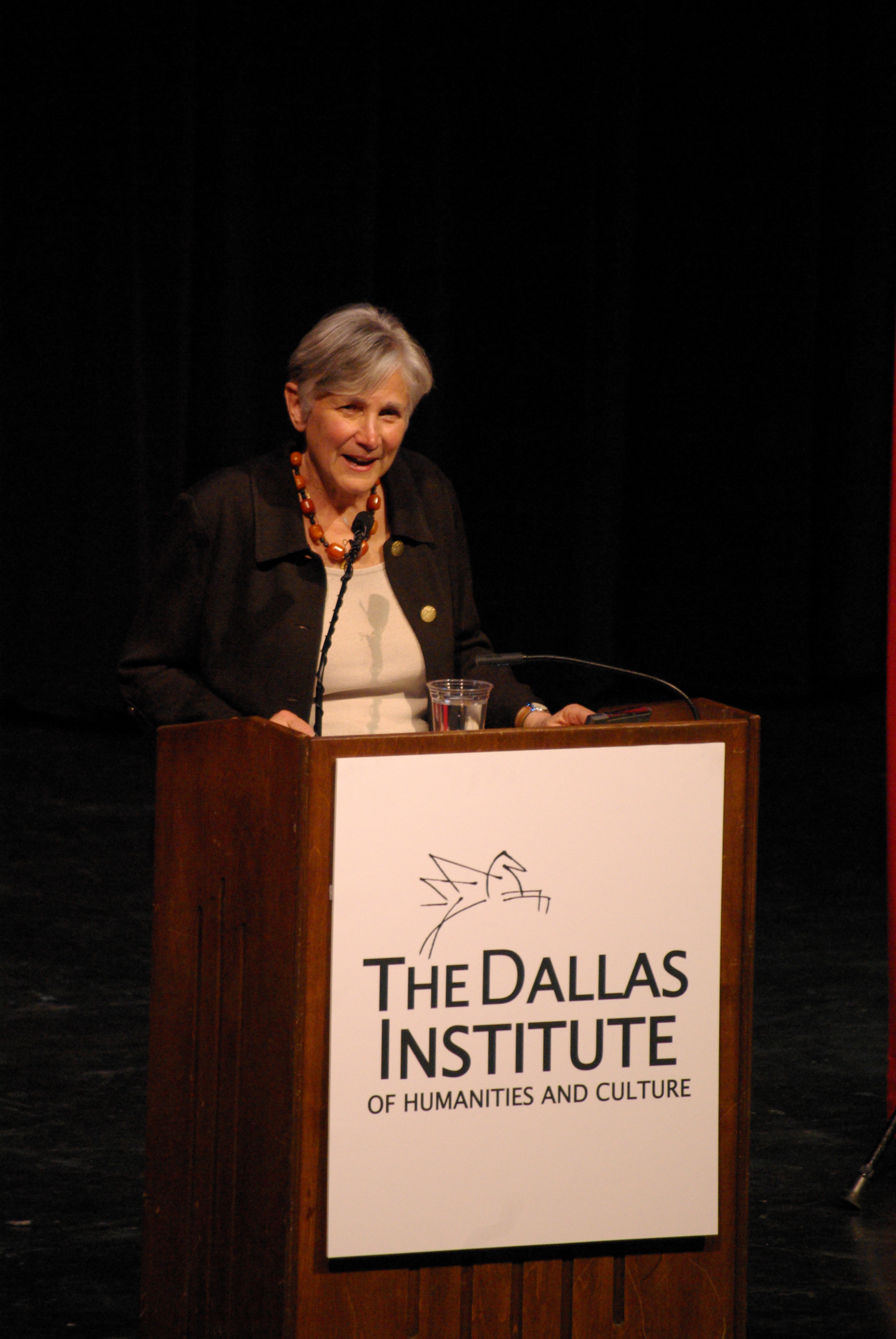
Ravitch calls the issue: Will public education survive?

May 1, 2010

Diane Ravitch in Dallas, April 28, 2010 - IMGP3872  Copyright 2010 Ed Darrell

Diane Ravitch in Dallas, April 28, 2010 – Copyright 2010 Ed Darrell (you may use freely, with attribution)

Bill McKenzie, editorial board member and writer for the Dallas Morning News, wrote briefly about the rekindled controversy over standards a year ago — but did he listen to Diane Ravitch on Wednesday night?

He should have.

I first met Ravitch a couple of decades ago when I worked for Checker Finn at the Office of Educational Research and Improvement.   Ted Bell’s idea of a commission to look at education quality, and it’s 1983 report, saved the Reagan administration and assured Reagan’s reelection in 1984.  She was one of the most prodigious and serious thinkers behind education reform efforts, then a close friend of Finn (who was Assistant Secretary of  Education for Research) — a position that Ravitch herself held in the administration of George H. W. Bush.

Ravitch now criticizes the end result of all that turmoil and hard work, the No Child Left Behind Act, and the way it has distorted education to keep us in the crisis we were warned of in 1983.  Then, the “rising tide of mediocrity” came in part because we didn’t have a good way to compare student achievement, state to state.  Today, the mediocrity is driven by the tests that resulted from legislative efforts to solve the problem.

Conditions in education in America have changed.  We still have a crisis after 27 years of education reform (how long do we have a crisis before it becomes the norm), but for the first time, Ravitch said, “There is a real question about whether public education will survive.”  The past consensus on the value of public education and need for public schools, as I would put it, now is challenged by people who want to kill it.

“The new issue today:  Will we have a public education system bound by law to accept all children.”

Ironic, no?  The No Child Left Behind Act has instead created a system where many children could be forced to the rear.

I took an evening in the middle of a week of TAKS testing — the Texas Assessment of Knowledge and Skills.  With ninth through twelfth grades, we had four days of testing which essentially requires the shutdown of the education for the week (we had Monday to review for the test).  It was a week to reflect on just how far we have strayed from the good intentions of public education advocates who pushed the Excellence in Education Commission’s report in 1983.

Ravitch spoke for over an hour.  I’ll have more to report as I get caught up, after a month of meetings, test prep, testing, and little sleep.

Background, more:


SBOE shames Texas, part I: Wilkinson on cutting the Enlightenment out

April 18, 2010

Signe Wilkinson, Philadelphia Daily News, March 17, 2010 - Texas education board cuts Enlightenment from curriculum

Signe Wilkinson, Philadelphia Daily News, March 17, 2010 - Texas education board cuts Enlightenment from curriculum

Signe Wilkinson cartoons for the Philadelphia Daily News.   She won a Pulitzer for political cartoons in 1992, the first woman to win that award (about time!).


Education board shames Texas, part E: Nick Anderson again

April 10, 2010

Nick Anderson in Houston Chronicle, Texas education group kicks Jefferson out of curriculum

Nick Anderson in Houston Chronicle, April 2, 2010


Education board shames Texas: Nick Anderson’s view from 2009, part C

March 31, 2010

Nick Anderson of the Houston Chronicle on Texas SBOE social studies standards, in 2009

Nick Anderson of the Houston Chronicle on Texas SBOE social studies standards, in 2009


Education board shames Texas: Ben Sargent and Texas education follies, part B

March 31, 2010

Ben Sargent, Austin American-Statesman, on Rick Perry and Texas social studies standards

Ben Sargent, Austin American-Statesman (GoComics) March 17, 2010

(I first saw a Ben Sargent cartoon published in the Daily Utah Chronicle in about 1974.  35 years of great stuff from that guy.  He officially retired from the Austin American-Statesman in 2009, running one cartoon a week now.)

Tip of the old scrub brush, again, to Steven Schafersman and What Would Jack Do.

Also note this January cartoon from Sargent:

Ben Sargent, Austin American-Statesman, January 24, 2010

Texas State Board of Education social studies curricula - Ben Sargent, Austin American-Statesman, January 24, 2010


Encore post, new coda: Worldview of Texas education policy makers

March 18, 2010

From a post many weeks ago, “Speaking of Texas education policy,” made more salient by events of the past month:

Moon landing and wrestling in America

from Funnyjunk

This is a troubling piece of humor. From Funnyjunk.

  • “America.  A country where people believe the moon landing is fake, but wrestling is real.”

And now we can add even more captions:

  • A country where state curriculum officials go to churches that warn against belief in ghosts, but who believe Thomas Aquinas and John Calvin came back from the grave to wrestle the quill from Jefferson and write the Declaration of Independence.
    [Heh.  Wouldn’t you love to see Aquinas and Calvin in the same room, trying to come to agreement on anything?]
  • A country with Barack Obama as president and where women’s basketball is a joy to watch during March Madness thanks to the the Civil Rights Act of 1964 Title IX, but Cynthia Dunbar believes the Civil Rights Act itself was a mistake.
  • A country where Barbara McClintock did the research that showed how evolution works and won her a Nobel, but where Texans deny that a woman should do such work, and deny evolution.
  • A capitalist nation where Jack Kilby invented the printed circuit and had a good life, but where the Texas SSOE thinks “capitalism” is a dirty word.
    (No, ma’am, I couldn’t make that up.  They did it.  They took out the word “capitalism” because they say those “liberal economists” like Milton Friedman can’t be trusted.  Seriously.  No, really.  Go look it up.)
  • Home of Thomas Jefferson, whose words in the Declaration of Independence so sting tyrants and dictators that today, in the most repressive nations, even oppressive systems must pretend to follow Jefferson — hence, the “Peoples Republic of Korea,” “the Democratic Republic of the Congo,” “Peoples Republic of China,” and the provisions of the old Soviet Union’s Constitution that “guaranteed” freedom of speech and freedom of religion; but where Thomas Jefferson is held in contempt, and John Calvin and Thomas Aquinas claimed as the authors of American freedom. [I wonder what the Society of the Cincinnati have to say about that?]
  • Where Mark Twain’s profound, greatest American novel Huckleberry Finn made clear the case against racism and oppression of former slaves, but where school kids don’t read it because their misguided parents think it’s racist.
  • A nation where Cynthia Dunbar thinks Thomas Jefferson gets too much credit, but Barack Obama is a foreign terrorist
  • A nation where conservatives complain that the Supreme Court should never look at foreign laws for advice, wisdom, or precedent, but believe that Thomas Aquinas, a Dominican friar from Italy, and John Calvin, a French dissident who fled to Switzerland, pulled a religious coup d’etat and is infamous for executing people who disagreed with his religious views, wrote the Declaration of Independence.

I’ll wager there are more, more annoying, more inaccurate statements from the Texas SSOE members in the Texas Education Follies, which will make much briefer complaints and better bumper stickers.

Other posts at the Bathtub you should read, mostly featuring Ms. Dunbar:

Also:


Happy Madison’s birthday! Nation expresses revulsion at Texas education follies, Part 1

March 17, 2010

Tuesday, March 16 was the 259th anniversary of the birth of James Madison, the Father of the Constitution, the sponsor of the Bill of Rights, the life-long campaigner for good government based on knowledge of the errors of history, especially in the area of religious freedom.

Under social studies standards proposed by the Texas State Board of Education, Texas students will never study Madison’s views, or Madison’s Constitution, without intervention by their parents or good teachers who run some risk to teach the glories of American history to students.

Newspaper stories across the nation concentrated on Madison’s birthday expressed revulsion and rejection of the crabbed and cramped views of the Texas SBOE, and the cup of revulsion runneth over.

For example, the attempted evisceration and hobbling of science standards occurred last year, but the editorial cartoon in USA Today reached back to remind us just what is going on in Austin.

By Scott Stantis, Chicago Tribune, for USA TODAY, March 16, 2010, on Texas education follies

By Scott Stantis, Chicago Tribune, for USA TODAY, March 16, 2010

More comment to come.

Tip of the old scrub brush to Christina Castillo Comer.


Texas standards for social studies — where to find them

March 11, 2010

Texas Tribune quickly establishes itself as a Really Useful journal on Texas politics, especially with features like this summary of the proposed Texas social studies standards, with comments on changes and the history of the changes.

For example, explaining an insulting cut of Texas and African American heroes, Texas Tribune explains:

Tuskegee Airman Commander dumped: Board member McLeroy made the motion to pull Oveta Culp Hobby and Benjamin O. Davis from this standard. Hobby — a Houston newspaper publisher, the director the federal health department in the 1950s, and the wife of Texas Governor William P. Hobby — shows up elsewhere, in the 7th grade curriculum. Davis, however, does not. Davis was the first African-American general in the U.S. Air Force and the commander of the Tuskegee Airmen in the World War II. The board did insert a phrase on the “contributions of the Tuskegee Airman” in the next section.

Straightforward explanation.  If it raises your ire, it’s not because the writing is inflammatory, but because the facts are so clearly presented.

Tip of the old scrub brush to the Texas Freedom Network and their e-mail alerts.


Sour grapes of wrath at the Texas State Board of Education

March 10, 2010

A couple of months can make a big difference.  Can.

A difference which way?

Two months ago the Texas State Board of Education suspended its revamping of social studies standards — the efforts to grind the standards into a right-wing crutch were so controversial that hearings, discussion and amending proposed standards took up more time than allotted.  SBOE delayed final votes until March 10.

Today.

Last week Texas voted in primary elections.  Several board members’ terms are up.  Two incumbents lost primary challenges, Don McLeroy, the Boss Tweed of the right wing cultural war ring, and Geraldine Miller, a long-term veteran from Dallas, whose very conservative views cast her as a moderate among SBOE members.  Both are Republicans.

How will those primary losses affect them and their work on the board?

In addition, other members of the culture war ring are retiring, including Cynthia Dunbar. Will the lame ducks be content to vote up the changes urged by history and economic professionals and professional educators, or will they do as McLeroy suggested they need to do earlier, and fight against the recommendations of experts?

How will the lame ducks walk and quack?

Stakes are high.  New York Times Magazine featured the culture wars on the cover on Valentine’s Day (you should read the article)Texas Monthly weighed in against the culture wars, too — a surprise to many Texans.

Cynicism is difficult to swim against.  I expect McLeroy to try as best he can to make social studies standards a monument to right wing bigotry and craziness.  We’ve already seen SBOE vote to delete a wonderful children’s book from even being mentioned because the text author shares a name with a guy who wrote a book on socialism earlier.

Most of us watching from outside of Austin (somebody has to stay back and grade the papers and teach to the test . . .) expect embarrassments.  On English and science standards before, the culture war ring tactics were to make a flurry of last-minute, unprinted and undiscussed, unannounced amendments apparently conspired to gut the standards of accuracy (which would not make the right wing political statements they want) and, too often, rigor.  Moderates on the board have not had the support mechanisms to combat these tactics successfully — secret e-mail and telephone-available friends standing by to lend advice and language on amendments.  In at least two votes opponents of the culture war voted with the ring, not knowing that innocent-sounding amendments came loaded.

In a test of the No True Scotsman argument, religious people will be praying for Texas kids and Texas education.  Meanwhile, culture warriors at SBOE will work to frustrate those prayers.

Oy.

Thomas Jefferson toyed with the idea of amendment the U.S. Constitution to provide a formal role for the federal government in guaranteeing education, which he regarded as the cornerstone of freedom and a free, democratic-style republic.  Instead, American primary and secondary education are governed by more than 15,000 locally-elected school boards with no guidance from the national government on what should be taught.  Alone among the industrial and free nations of  the world, the U.S. has no mechanism for rigorous national standards on what should be taught.

For well over a century a combined commitment to educating kids better than their parents helped keep standards high and achievement rising.  Public education got the nation through two world wars, and created a workforce that could perform without peer on Earth in producing a vibrant and strong economy.

That shared commitment to quality education now appears lost.  Instead we have culture warriors hammering teachers and administrators, insisting that inaccurate views of Jefferson and history be taught to children, perhaps to prevent them from ever understanding what the drive for education meant to freedom, but surely to end Jeffersonian-style influences in the future.

Texas’s SBOE may make the case today that states cannot be trusted with our children’s future, and that we need a national body to create academic rigor to preserve our freedom.  Or they will do the right thing.

Voters last week expressed their views that SBOE can’t be trusted to do the right thing.  We’re only waiting to see how hard McLeroy is willing to work to put his thumb in the eye of Big Tex.

More:


Diane Ravitch’s “U-turn”: The teachers were right

March 4, 2010

Were I to advise Diane Ravitch right now, I’d tell her to change all her computer passwords and redouble the security on her servers.  Why?  After what happened to the scientists who study global warming, I expect many of the same wackoes are working right now to get her e-mails, knowing that the mere act of stealing them will be enough to indict her change of heart on education in America.

It’s much the same mob crowd in both cases.  [I’m hopeful it’s not a mob.]

Dr. Ravitch thinks big thoughts about education.  She stands in the vanguard of those people who are both academically astute in education, and who can make a case that appeals to policy makers.  Working under Checker Finn at the old Office of Educational Research and Improvement, we quickly got familiar with Ravitch’s works and views.  Finn and Ravitch, good friends and like-minded in education issues, were the running backs and sticky-handed receivers for any conservative education quarterback, back in the Day.

Finn was Assistant Secretary of Education for Research under Bill Bennett.  Ravitch succeeded Finn, under Lamar Alexander.  While Bennett and Alexander took troubling turns to the right, and Finn stayed much where he was, Ravitch has been looking hard at what’s working in schools today.

Ravitch doesn’t like the conservative revolution’s results in education.  She’s changed her views.  Says one of the better stories about her changing views, in The New York Times:

Once outspoken about the power of standardized testing, charter schools and free markets to improve schools, Dr. Ravitch is now caustically critical. She underwent an intellectual crisis, she says, discovering that these strategies, which she now calls faddish trends, were undermining public education. She resigned last year from the boards of two conservative research groups.

“School reform today is like a freight train, and I’m out on the tracks saying, ‘You’re going the wrong way!’ ” Dr. Ravitch said in an interview.

This is big stuff, and good news to teachers who, since I was at Education in 1987, have been telling policy makers the same things Ravitch is saying now.

David Gardner and Milton Goldberg wrote in the report of the Excellence in Education Commission in 1983 that America faces a “rising tide of mediocrity” because of bad decisions.  That’s true of much education reform today, too.

Gardner and Goldberg also said that, had a foreign nation done that damage to us, we’d regard it as an act of war.

Maybe Ravitch’s turn can help mediate an end to the Right’s War on Education and pogroms against teachers.

Here in Texas the conservatives on the Texas State Board of Education didn’t like Ravitch’s views when she was in the conservative camp, so Texas has started, finally, to vote out commissioners who don’t get it, who prefer a state of war on Texas’s children to promoting public education

Let’s hope more people listen to Ravitch now.

More:

Be sure to listen to the NPR interview from Morning Edition, yesterday (you can read it, too).

And, in next Sunday’s New York Times Magazine, a story about how to build a better teacher; do you know the difference between testing and teaching?


Hope in Texas: McLeroy voted off of state school board

March 3, 2010

Two earthquakes ravage American nations, tsunamis, freakishly large snowstorms, still trouble in Iraq and Afghanistan, Iran in turmoil and ruled by some sort of crazy, North Koreans still starve so the nation can make a nuclear sabre to rattle.

Good news?

Texas State Board of Education member Don McLeroy lost a primary election challenge to attorney Tom Ratliff, representing the area around Beaumont, Texas. The news is that McLeroy is out — notice that the Texas Tribune doesn’t name the winner until the seventh paragraph.

Another prominent, but much more reasonable Republican member of the SBOE also lost:  Geraldine “Tincy” Miller, in Dallas.  Miller was so expected to win that race that almost no one was watching, and little is in public about the winner of the race.

Election results from Tuesday’s primary election in Texas mean that the State Board of Education will change dramatically.  It would be almost impossible for any of the changes to be bad ones.  McLeroy led the anti-evolution force on the board.  McLeroy was the ringleader to gut and racialize English standards earlier, and he’s been the point man in the attempt to gut and de-secularize social studies standards.

Board member Cynthia Dunbar, another “social conservative,” did not run for re-election.

In the governor’s race, anti-education, anti-science Gov. Rick Perry won big over the state’s popular Republican U.S. Sen. Kay Hutchison. Third place in that race went to the Teabagger candidate.

No Teabagger won any race in Texas.

It’s not that Texas has suddenly gained reason.  The dissension on the SBOE, demonstrated by the Texas Senate’s rejection of McLeroy’s renomination to be chairman of the body, just got to be too much.  Texans like their crazies to be sane enough to get things done, and not so noisily crazy as to attract attention to the state’s shared insanity.

Sunlight cast on the actions of the board, especially by groups like the Texas Freedom Network, informed Texans.  And now the people of Texas have spoken.

More:

Add to FacebookAdd to NewsvineAdd to DiggAdd to Del.icio.usAdd to StumbleuponAdd to RedditAdd to BlinklistAdd to TwitterAdd to TechnoratiAdd to Furl


More schools jump on “no-recess” recess bandwagon

January 29, 2010

How long will the madness persist?

Via Lenore Skenazy at Free-Range Kids comes word that MommaLou has a meeting to find out why her kid’s school wants the kids to spend recess time engaged in something other than recess.

Excuse me?

They aim to “change the perception of recess from free time away from learning to a valuable learning experience that will teach them and will help them cope in all social settings and environments. When children view recess as “free time” they have a tendency to act in a less responsible manner and push the limits of irresponsible behavior. In order to change the perception of recess, children must see that its content is respected and valued.”

The absolute best memories I have of my childhood consisted of me and my sister on the loose in our backyard making mud pies and playing “lost kids”. When I was in college studying early childhood education, I spent countless hours in classrooms learning about how kids learn. Kids learn through play. They just need the resources. The tools. And time.

Well, yeah, that’s what recess is all about, isn’t it?

Kids need recess to stay healthy, the studies show. Recess keeps them healthy.  In my corporate consulting, we counseled managers to provide recess.  Creativity and corporate problem solving experts, like Dr. Perry W. Buffington, recommend business people take a recess and get away from work for a while when things get tense, or when problem solvers get dense.  In one session I watched with Buffington, one manager didn’t get it and kept coming up with all sorts of things to do to avoid taking a recess.  Buffington finally spelled it out for him:  Get away from the office; make sure that the activity is AWAY from the building . . .

Heck, do they have an “organizational health” survey at that school?  The teachers need recess for the kids, too.

Recall these resources from my earlier post:

Nota bene: Even just a little movement worksIt works for adults, too.

Resources:

  • PEDIATRICS Vol. 123 No. 2 February 2009, pp. 431-436 (doi:10.1542/peds.2007-2825) (subscription required for full text),  “School Recess and Group Classroom Behavior,” Romina M. Barros, MD, Ellen J. Silver, PhD and Ruth E. K. Stein, MD, Department of Pediatrics, Albert Einstein College of Medicine, Children’s Hospital at Montefiore and Rose F. Kennedy Center, Bronx, New York

    OBJECTIVES. This study examines the amount of recess that children 8 to 9 years of age receive in the United States and compares the group classroom behavior of children receiving daily recess with that of children not receiving daily recess.

  • See this year-old post at The Elementary Educator
  • Post in agreement from the venerable Trust for Public Lands, one of the best and best respected non-profits in America

Also, be sure to see this post from Ms. Cornelius at A Shrewdness of Apes.  If you’re having difficulty telling the difference between school and a prison — or if your school kid is having that difficulty, it’s time to act.

Cartoon - lawyers still get recess.  Andertoons

Via doxpop.com. See Andertoons.com, and buy it for your newsletter.


Texas social studies standards: Beware the ides of January

January 15, 2010

News reports in Texas this morning said that several of the right-wing, gut-education-standards changes proposed to social studies standards had failed in voting on Thursday, January 14.  But, much more was to be done, and the SBOE adjourned early last night to continue voting today.

In a pattern familiar to education advocates in Texas, board member Don McLeroy (R-Pluto) today proposed a long series of amendments, apparently off-the-cuff, but probably written up in earlier strategy sessions.  These last-minute amendments tend to pass having missed any serious scrutiny.

Will he be able to ruin Texas education for the next decade?  I cannot follow the live webcasts; Steve Schafersman is working to stop the amendments, rather than merely blog about them.  We probably won’t know the extent of the damage for weeks.  McLeroy cherishes his role as a Port-au-Prince-style earthquake to Texas education. (Pure coincidence, I’m sure — Ed Brayton summarizes McLeroy’s politics today.)

Watch that space, and other news sources.  I may provide updates here, as I can get information.


Social studies train wreck at Texas State Board of Education: Live! A Nation at Risk

January 13, 2010

Steve Schafersman will live blog the hearings on social studies standards before the Texas State Board of Education (SBOE) today, at Evo-Sphere.  Schafersman is president of Texas Citizens for Science, and a long-time activist for better education in Texas on all topics.

Rapid updates or live-blogging should be available at the blog of the Texas Freedom Network, TFN Insider.

It’s Item #6 on the SBOE agenda, with a title that tips off the trouble:

Item #6 — Public Hearing Regarding Proposed Revisions to 19 TAC Chapter 113, Texas Essential Knowledge and Skills for Social Studies, and Chapter 118, Texas Essential Knowledge and Skills for Economics with Emphasis on the Free Enterprise System and Its Benefits.

Schafersman e-mailed an introduction to the meeting:

Some say the Social Studies public testimony by the religious right, liberals, etc., then the SBOE debate, motions to amend, votes, etc. is a bigger circus than adopting the science standards. Judge for yourself. You can watch the entire circus, carnival, and sideshow on the webcast video at http://www.texasadm in.com/cgi- bin/tea.cgi

This is Texas democracy in action, when sullen and tight-lipped State Board members listen to public testifiers for 3 minutes each and profoundly ignore them since they already know what they are going to do. But I, at least, feel better after speaking so I don’t later feel responsible for the crappy amendments, changes, and policies that come out of this horrible Board because I did nothing. The proposed Social Studies standards written by the panels composed of teachers and professors are excellent (when have I heard this before), but the SBOE can’t wait to shamelessly impose their own Religious Right agenda on them.

You’ll recall that SBOE has at every possible turn disregarded the advice of famous and serious historians, respected free-market-advocating economists, geographers and educators on these standards.  Economists, for example, want Texas kids to learn about “capitalism,” since that’s what it’s called by economists and policy makers, and colleges.  SBOE thinks “capitalism” sounds too subversive, and wishes instead to require Texas kids to learn about “free enterprise” instead.

‘A rose by any other name’ you think, until you start thinking of how Texas kids do on standardized tests, college admission exams, and the punchline on the joke, about Texas kids being told not to study capitalism.  No siree, no capitalism in the fictional home of J. R. Ewing, never mind the real-life capitalists like T. Boone Pickens or H. Ross Perot (Jr. and Sr.).

In Dallas, the city prepares to name a street after Cesar Chavez, the great Hispanic union organizer and advocate for working Americans.  In Austin, SBOE works to strike all mentions of Chavez, because they dislike the politics of heroes of our ethnic minorities (soon to be a majority in Texas).  In Washington historians and policy-makers follow the legacy of Thurgood Marshall, the great civil rights attorney and first African-American to sit on the U.S. Supreme Court.  In Austin, SBOE thinks Marshall should be left out of history books.  Many of us suspect he’s anathema to the white right-wing in Austin:  A smart, successful and noble man of color.

Mel and Norma Gabler died years ago, but their history lingers in the halls of education policy in Austin.  It’s Shakespearean.

This is a massive battle.  David Barton worked for 30 years to gut history standards nationally to teach a history of America that never was, and as the official religionist appointee of the right-wing SBOE members, he stands on the brink of accomplishing much of the revisionism he’s advocated.  See the Texas Tribune story on the issue, “Hijacking History.”

Generally we shouldn’t negotiate with terrorists, Ronald Reagan said.  At the SBOE, we’ve put the terrorists in charge of history and economic curricula — if not the terrorist themselves, at least the terrorists’ camels’ noses.  Texas’s process has earned flashing red-light, claxon-sounding repeating of the words of Ronald Reagan’s Commission on Excellence in Education:  If a foreign nation did this to us, we’d consider it an act of war [excerpt below the fold].

Make no mistake about it.  SBOE’s goal is to roll back any of the reforms left from Reagan’s Commission’s work.  Our nation is more at risk from foreign competition than ever before.  SBOE plans to give away a bit more of our future to China, this week.

Our saving grace is the general incompetence of SBOE members to make significant reform in Texas’s wounded schools, reeling from unworkable and damaging requirements under the No Child Left Behind Act and a testing program that severely limits what can be taught in any social studies course other than those bastions of learning left in International Baccalaureate programs and Advanced Placement courses (estimates are that between 5% and 10% of Texas high school students can take one of those good courses).  Whatever silliness, craziness or lies SBOE orders to  be taught, it can’t be taught and tested well.  Inertia preventing change works to save America in this case.

In business, most CEOs at least appreciate the value of having good front-line employees who are the ones who really deliver the service or product and produce the profit of the enterprise (even if they don’t treat those employees so well as the employees deserve).  Education may be the last bastion of flogging the horse that should be pulling the cart instead.  In this case, having well-trained teachers in the classroom is the last hope for Texas, Texas parents and Texas students — and Texas’s economic future and future in liberty.  Teachers are the last defense of freedom in Texas.  Today SBOE will make another assault on the ramparts that protect the teachers in their work.

When will the French fleet arrive to lend aid?  Will it arrive at all?  And if it arrives, will Texas kids know better than to shoot at the ships?

Carol Haynes, who claims to have a doctorate in some discipline, told the board how to rewrite the standards to completely change the history of the civil rights movement in their last hearing on the topic.  According to Haynes, apparently, Dr. Martin Luther King, Jr., was opposed to civil rights and Barry Goldwater was in favor — the Board didn’t offer to correct her revisionism, but instead asked her to go beyond her three minutes in fawning acceptance. This appears to be SBOE’s approval of various Other Universe hypotheses offered by Star Trek, allowing any damned thing at all to be taught as history (except the right stuff).  Haynes is scheduled to testify again (#128), probably very late at night, but perhaps in time for the 10:00 p.m. Texas television news broadcasts.  Oy.

Excerpt from the Report of the Commission on Excellence in Education, A Nation at Risk, below the fold.
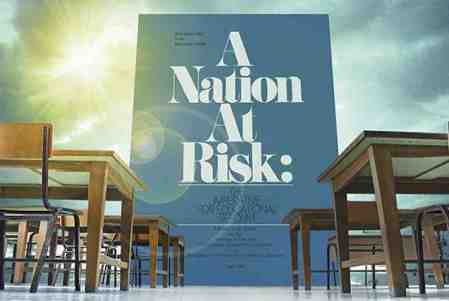
ae_summer2015mehta_opener-1100x736

Cover of A Nation at Risk: The Imperative for Educational Reform, the 1983 report that started the education reform mess. AFT graphic.

Stand up for your nation, it’s children and future; sound the alarm:

Add to FacebookAdd to NewsvineAdd to DiggAdd to Del.icio.usAdd to StumbleuponAdd to RedditAdd to BlinklistAdd to TwitterAdd to TechnoratiAdd to Furl


Read the rest of this entry »


Good education, or right-wing propaganda: War on Education battle in Austin, Texas

January 13, 2010

In a post titled “The Battle Joined,” the Texas Freedom Network repeated for us the press release from their Tuesday press conference at the Texas Education Agency, about the hearings on social studies standards, graduation requirements and other issues in Austin this week.

Watch that space (see also this explanatory piece) and this space, and your non-faux news outlets.

The Texas Freedom Network sent out the following press release after our press conference this morning at the Texas Education Agency:

The state’s leading religious liberties group today joined with clergy and scholars in calling on the State Board of Education to approve new curriculum standards that don’t undermine religious freedom in Texas social studies classrooms.

“Curriculum writers have drafted proposed standards that rightly acknowledge the influence of faith on the Founders and in our nation’s history,” Texas Freedom Network President Kathy Miller said today. “But those writers also respected religious freedom by rejecting political pressure to portray the United States as favoring one faith over all others. Doing otherwise would aid the teaching of bad history and promote something that is fundamentally un-American.”

Miller spoke in advance of a Wednesday public hearing on proposed new social studies curriculum standards. Teachers, academics and community members from around the state have spent the last year crafting the new standards. Publishers will use the standards to write new textbooks scheduled for adoption by Texas in 2011. The state board will debate the standards drafts on Thursday and has scheduled a final vote in March.

Derek Davis, dean of humanities and the graduate school and director of the Center for Religious Liberty at Mary Hardin-Baylor University, a Baptist institution in Belton, called on the board to respect the work of teachers and other experts who helped write the new standards.

“Religious liberty stands as one of our nation’s bedrock principles,” Davis said. “Yet it seems always under siege by those who fail to appreciate the astute thinking of the founding fathers that caused them to write into the Constitution the principle that guarantees religious liberty: the separation of church and state. This distinctly American value continues to set our nation apart from those embroiled in religious conflict in the rest of the world.”

Miller and Davis were joined at a press conference by the Rev. Marcus McFaul of Highland Park Baptist Church in Austin and Steven Green, a professor of law and of history and director of the Willamette Center for Religion at Willamette University in Salem, Oregon.

“The instruction of religious faith, discipleship, and a life of service and piety is the responsibility of each faith community, whether church, synagogue or mosque,” Rev. McFaul said. “It is the responsibility of parents and parishes, not public schools. We all note – as the curriculum writers did – the role and influence of religion in American history, but not to advance, promote or seek advantage for any particular religion’s point of view.”

The state board has revised curriculum standards for language arts and science over the past two years. In both cases the board either threw out or heavily revised standards crafted by curriculum writing teams that included teachers, curriculum specialists and academic experts. Last year, for example, creationists on the state board pushed through science standards that call into question long-established scientific evidence for evolution.

“This is not a good way to make sound education policy,” Miller said of the board’s habit of rejecting the work of teachers and experts. “It’s past time that state board members stop playing politics with the education of Texas children, respect the hard work teachers and other experts have put into writing standards, and acknowledge that experts – not politicians – know best what our children need to learn.”

Educate somebody else on this issue:

Add to FacebookAdd to NewsvineAdd to DiggAdd to Del.icio.usAdd to StumbleuponAdd to RedditAdd to BlinklistAdd to TwitterAdd to TechnoratiAdd to Furl