Quote of the moment: Alfred North Whitehead on ideas

September 5, 2007

The vitality of thought is in adventure.  Ideas won’t keep.  Something must be done about them.  When the idea is new, its custodians have fervor, live for it, and, if need be, die for it.

 — Alfred North Whitehead (1861-1947); chapter 12 of Dialogues;  written April 28, 1938


More Latin you should know

September 1, 2007

Bizarro cartoon, by Piraro, 2008 (and a discussion on why the bumper sticker is badly translated)

Bizarro cartoon, by Piraro, 2008 (and a discussion on why the bumper sticker is badly translated)

Oh, I admit it. Sometimes I troll the blogosphere looking for provocation. And sometimes my trolling nets turn up good stuff.

At Joe Carter’s Evangelical Outpost, I found a link to “Latin You Should Know” from Neat-o-rama, When Joe sticks to the factual stuff, sometimes he’s right on.

Here’s the list — but it’s very incomplete, especially for high school students. I’ll append some stuff at the end, Read the rest of this entry »


What Churchill did NOT say

August 16, 2007

Winston Churchill often gets credit, or blame, for “famous quotations” that he did not say.

Cartoon of Churchill speaking (frustrated?)

Misattribution is a common problem in speeches, press releases, DeathbyPowerPoint, and in all other human interaction. I believe the third or fourth most powerful human instinct is to misattribute aphorisms to admired, famous people. So in business presentations across the world today, someone will quote Lincoln, Jefferson, Madison, Washington, Franklin, Einstein and Churchill, as saying things they never uttered.

Below the fold, from the Churchill Centre in London, here is a collection of famous things often attributed to Winston Churchill that he did not actually say: Read the rest of this entry »


When things get tough, the patriotic listen to Barbara Jordan

August 2, 2007

Whose voice do you hear, really, when you read material that is supposed to be spoken by God? Morgan Freeman is a popular choice — he’s played God at least twice now, racing George Burns for the title of having played God most often in a movie. James Earl Jones?

Statue of Barbara Jordan at the Austin, Texas, Airport

Statue of Rep. Barbara Jordan at the Austin, Texas airport that bears her name. Photo by Meghan Lamberti, via Accenture.com

For substance as well as tone, I nominate Barbara Jordan’s as the voice you should hear.

I’m not alone. Bill Moyers famously said:

When Max Sherman called me to tell me that Barbara was dying and wanted me to speak at this service, I had been reading a story in that morning’s New York Times about the discovery of forty billion new galaxies deep in the inner sanctum of the universe. Forty billion new galaxies to go with the ten billion we already knew about. As I put the phone down, I thought: it will take an infinite cosmic vista to accommodate a soul this great. The universe has been getting ready for her.

Now, at last, she has an amplifying system equal to that voice. As we gather in her memory, I can imagine the cadences of her eloquence echoing at the speed of light past orbiting planets and pulsars, past black holes and white dwarfs and hundreds of millions of sun-like stars, until the whole cosmic spectrum stretching out to the far fringes of space towards the very origins of time resonates to her presence.

Virgotext carried a series of posts earlier in the year, commemorating what would have been Jordan’s 71st birthday on February 21. (Virgotext also pointed me to the Moyers quote, above.)

Now, when the nation seriously ponders impeachment of a president, for the third time in just over a generation, Ms. Jordan’s words have more salience, urgency, and wisdom. It’s a good time to revisit Barbara Jordan’s wisdom, in the series of posts at Virgotext.

“There is no president of the United States that can veto that decision.”

“My faith in the Constitution is whole.”

“We know the nature of Impeachment. We’ve been talking about it a while now.”

“Indignation so great as to overgrow party interests.”

And finally:

The rest of the hearing remarks are all here. It’s a longer clip than the others but honestly, there is not a good place to cut it.

This is Barbara Jordan on the killing floor.

This was a woman who understands history, who illustrates time and again that we are, with every action, with every syllable, cutting the past away from the present.

She never mentions Nixon by name. There is the Constitution. There is the office of the Presidency. But Richard Nixon the president has already ceased to exist. By the time she finishes speaking, he is history.

“A President is impeachable if he attempts to subvert the Constitution.”

Also see, and hear:

Virgotext’s collection of Barbara Jordan stories and quotes is an excellent source for students on Watergate, impeachment, great oratory, and Barbara Jordan herself. Bookmark that site.

Barbara Jordan, in a pensive moment, in a House Committee room

Rep. Barbara Jordan sitting calmly among tension, at a House Committee meeting (probably House Judiciary Committee in 1974).

Update 2019: Here is the full audio of Barbara Jordan’s speech. It is still salient, and if you listen to it you will understand better what is going on in Congress today.

Barbara Jordan, Statement on the Articles of Impeachment, at AmericanRhetori.com.


Nonqoute of the Moment: What Ben Bradlee did NOT say

July 27, 2007

My respect for Fred Gielow rose when I found this on-line erratum notice, correcting a vicious misquoting of former Newsweek columnist and Washington Post editor Ben Bradlee.

This is one way a responsible author corrects a misquoting of someone, particularly one that puts words in the person’s mouth that convey a message opposite to the message they delivered:

____________________________________

I have been advised by the assistant counsel at The Washington Post that Mr. Benjamin C. Bradlee, vice-president at-large of The Washington Post, never made the statement attributed to him on page 117 of my book, You Don’t Say. The principal source of that quotation is the book Trashing the Planet, by Dixy Lee Ray with Lou Guzzo, Regnery Gateway, 1990, page 76. The assistant counsel states the quote is a fabrication.

The assistant counsel tells me Mr. Bradlee says he was discussing a matter at an environmental conference with fellow panelists and had no problem with what the panelists were saying, but he warned that there was

“a minor danger in saying it, because as soon as you say, ‘To hell with the news, I’m no longer interested in the news, I’m interested in causes,’ you’ve got a whole kooky constituency to respond to, which you can waste a lot of time on.”

That statement is indeed significantly different in meaning from the statement I quoted from Trashing the Planet, which said,

“To hell with the news. I’m no longer interested in the news. I’m interested in causes. We don’t print the truth. We don’t pretend to print the truth . . .”

Inasmuch as Trashing the Planet cites as a reference for its quotation an article by David Brooks in the October 5, 1989 Wall Street Journal, and inasmuch as I now find that Wall Street Journal article contains wording wholly consistent with the first quotation (above), not the second, I’m led to believe the second quotation is in error. This is a difficult conclusion for me to reach because I greatly respect Dixy Lee Ray and Regnery Gateway, and I have great confidence in their integrity.

Nevertheless, I must now apologize to Mr. Bradlee and I must apologize to all readers of my book who have depended on the correctness of the quote I obtained from Trashing the Planet. As I have stated to the assistant counsel, I’m interested only in the truth. When it can be shown that I have relied on information or a quotation that is shown to be incorrect or improper, I am anxious to correct the record.

Once again, let my extend my most sincere and genuine apologies to Mr. Bradlee. It was never my intention to attribute to him something he did not say. I know how painful it is to be accused of something you did not do or say. I would not wish that pain on anyone. And to demonstrate my desire to disseminate this information to set the record straight, I will post this message on my website for an indefinite period of time and will highlight access to it.

Fred Gielow_____________________________[end quote from Gielow]

Mr. Gielow’s faith in the Regnery publishing house is misplaced, in my experience.

Now, perhaps Mr. Gielow will correct his misquoting of Charles Wurster at his website. [Update, 7-29-2007:  Mr. Gielow responds by e-mail that he will check out the citations of the Wurster misquote.  Good news.]


Quote of the moment: Learned Hand

July 10, 2007

Learned Hand

If we are to keep our democracy, there must be one commandment: Thou shalt not ration justice.

Learned Hand, 1872-1961, U.S. judge, U.S. Court of Appeals for the 2d Circuit, 1924-1951, chief judge after 1939 to retirement; “Thou Shalt Not Ration Justice,” 1951.


Quote of the moment: Rachel Carson on DDT fish kills

July 9, 2007

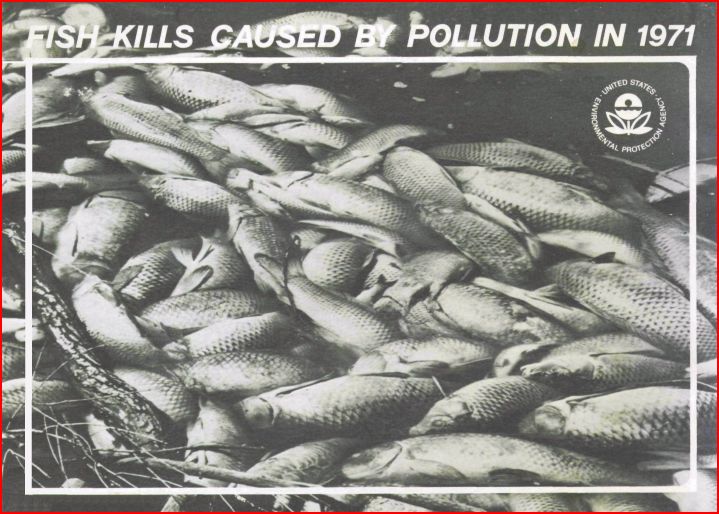
Cover of 1971 EPA publication, Fish Kills Caused By Pollution in 1971.

Cover of 1971 EPA publication, Fish Kills Caused By Pollution in 1971. According to the publication, in Texas, in 1971, 16 million fish died in just 6 pollution-caused incidents. (page 9 of the report).

One of the most spectacular fish kills of recent years occurred in the Colorado River below Austin, Texas, in 1961. Shortly after daylight on Sunday morning, January 15, dead fish appeared in the new Town Lake in Austin and in the river for a distance of about 5 miles below the lake. None had been seen the day before. On Monday there were reports of dead fish 50 miles downstream. . . . By January 21, fish were being killed 100 miles downstream. . . . During the last week of January the locks on the Intracoastal Waterway were closed to exclude the toxic waters from Matagorda Bay and divert them into the Gulf of Mexico.

. . . investigators in Austin noticed an odor associated with the insecticides. . . The manager of the (chemical) plant admitted that quantities of powdered insecticide had been washed into the storm sewer recently and, more significantly, he acknowledged that such disposal of insecticide spillage and residues had been common practice for the past 10 years.

. . . For 140 miles downstream from the lake the kill of fish must have been almost complete, for when seines were used later in an effort to discover whether any fish had escaped they came up empty. Dead fish of 27 species were observed, totaling about 1000 pounds to a mile of riverbank.

Rachel Carson, 1962, Silent Spring

Cribbed from the US Geological Survey site.


Quote of the moment: Jefferson on the 4th of July

July 4, 2007

Thomas Jefferson to Roger Weightman, declining to attend the 50th anniversary of the Declaration of Independence in the District of Columbia. This was the last letter written by Jefferson, who died 10 days later, on July 4, 1826. –LB

Monticello, June 24, 1826

Respected Sir –

The kind invitation I receive from you, on the part of the citizens of the city of Washington, to be present with them at their celebration of the fiftieth anniversary of American Independence, as one of the surviving signers of an instrument pregnant with our own, and the fate of the world, is most flattering to myself, and heightened by the honorable accompaniment proposed for the comfort of such a journey. It adds sensibly to the sufferings of sickness, to be deprived by it of a personal participation in the rejoicings of that day. But acquiescence is a duty, under circumstances not placed among those we are permitted to control. I should, indeed, with peculiar delight, have met and exch anged there congratulations personally with the small band, the remnant of that host of worthies, who joined with us on that day, in the bold and doubtful election we were to make for our country, between submission or the sword; and to have enjoyed with them the consolatory fact, that our fellow citizens, after half a century of experience and prosperity, continue to approve the choice we made. May it be to the world, what I believe it will be, (to some parts sooner, to others later, but finally to all,) the signal of arousing men to burst the chains under which monkish ignorance and superstition had persuaded them to bind themselves, and to assume the blessings and security of self-government. That form which we have substituted, restores the free right to the unbounded exercise of reason and freedom of opinion. All eyes are opened, or opening, to the rights of man.

The general spread of the light of science has already laid open to every view the palpable truth, that the mass of mankind has not been born with saddles on their backs, nor a favored few booted and spurred, ready to ride them legitimately, by the grace of God. These are grounds of hope for others. For ourselves, let the annual return of this day forever refresh our recollections of these rights, and an undiminished devotion to them.

I will ask permission here to express the pleasure with which I should have met my ancient neighbors of the city of Washington and its vicinities, with whom I passed so many years of a pleasing social intercourse; an intercourse which so much relieved the anxieties of the public cares, and left impressions so deeply engraved in my affections, as never to be forgotten. With my regret that ill health forbids me the gratification of an acceptance, be pleased to receive for yourself, and those for whom you write, the assurance of my highest respect and friendly attachments.

Th. Jefferson

Cribbed entirely from Counterpunch. Tip of the old scrub brush to Bernarda, in comments on the previous post.

Read the Declaration of Independence today.


Quote of the Day: John Kennedy, June 26, 1963

June 26, 2007

President Kennedy addresses Berlin citizens, 6-26-1962 (photographer unidentified)

From the Smithsonian Magazine site:

June 26, 1963: “Ich bin ein Berliner”

In West Berlin, President John F. Kennedy delivers the famous speech in which he declares, “Ich bin ein Berliner.” Meaning literally “I am a citizen of Berlin,” the statement shows U.S. solidarity with democratic West Berlin, surrounded by communist territory.

View a video of President Kennedy’s speech at American Rhetoric, Top 100 Speeches.

Photo of President Kennedy addressing Berlin’s citizens, photographer unidentified; from American Rhetoric site.


Happy birthday, Lady Justice

June 22, 2007

Today is the 137th anniversary of the creation of the U.S. Department of Justice, June 22nd, 1870.

Then-AG John Ashcroft with Lady Justice - unknown photo source

Among other interesting points:

  • The post of Attorney General was created in 1789; who did the serious work until 1870? There is no evidence the Attorney General personally presided over illegal torture or illegal firings of federal employees before 1870 — nor before February 2005.
  • Edmund Randolph was the first Attorney General
  • None of the 80 Attorneys General served as president, either before or after serving as AG
  • The motto of the Justice Department comes from the Seal of the Attorney General: Qui Pro Domina Justitia Sequitur. No one knows what the motto means, exactly, or when the seal was created. The Latin of the seal is archaic, and can’t be translated well. Among the better guesses of what the motto is supposed to mean is this: “The Attorney General, who prosecutes on behalf of Lady Justice.”

Lady Justice, against the sun

Image of Lady Justice against a sunset; FBI photo; hope remains, since no body has been found. Photo is not from a current investigation.  Image at top: Then-Attorney General John Ashcroft in front of The Spirit of Justice, sculpted by Paul Jennewein in 1933; photo in the lobby of the Department of Justice.  Source not listed — probably a news photo.

Tip of the old scrub brush to Utah Policy Daily


Quote of the Moment: Eisenhower, duty and accountability

June 13, 2007

Eisenhower's unused

This quote actually isn’t a quote. It was never said by the man who wrote it down to say it. It carries a powerful lesson because of what it is.

A few days ago I posted Gen. Dwight Eisenhower’s “order of the day” to the troops about to conduct the Allied invasion of Normandy to establish the toehold in Europe the Allies needed to march to Berlin, and to end World War II in Europe. As a charge to the troops, it was okay — Eisenhower-style words, not Churchill-style, but effective enough. One measure of its effectiveness was the success of the invasion, which established the toe-hold from which the assaults on the Third Reich were made.

When Eisenhower wrote his words of encouragement to the troops, and especially after he visited with some of the troops, he worried about the success of the operation. It was a great gamble. Many of the things the Allies needed to go right — like weather — had gone wrong. Victory was not assured. Defeat strode the beaches of Normandy waiting to drive the Allies back into the water, to die. [Photo shows Eisenhower meeting with troops of the 101st Airborne Division, 502nd Parachute Infantry Regiment, on the eve of the invasion. It was these men whose courage he lauded. Update: Someone “took hostage” the photo I linked to — a thumbnail version is appended; I leave the original link in hopes it might be liberated] eisenhower-with-paratrooper-eve-of-d-day.jpg

Eisenhower wrote a second statement, a shorter one. This one was directed to the world. It assumed the assault had failed. In a few short sentences, Eisenhower commended the courage and commitment of the troops who, he wrote, had done all they could. The invasion was a chance, a good chance based on the best intelligence the Allies had, Eisenhower wrote. But it had failed.

The failure, Eisenhower wrote, was not the fault of the troops, but was entirely Eisenhower’s.

He didn’t blame the weather, though he could have. He didn’t blame fatigue of the troops, though they were tired, some simply from drilling, many from war. He didn’t blame the superior field position of the Germans, though the Germans clearly had the upper hand. He didn’t blame the almost-bizarre attempts to use technology that look almost clownish in retrospect — the gliders that carried troops behind the lines, the flotation devices that were supposed to float tanks to the beaches to provide cover for the troops (but which failed, drowning the tank crews and leaving the foot soldiers on their own).

There may have been a plan B, but in the event of failure, Eisenhower was prepared to establish who was accountable, whose head should roll if anyone’s should.

Eisenhower took full responsibility.

Our landings in the Cherbourg-Havre area have failed to gain a satisfactory foothold and I have withdrawn the troops. My decision to attack at this time and place was based upon the best information available. The troop, the air [force] and the navy did all that bravery and devotion to duty could do. If any blame or fault attaches to the attempt, it is mine alone.

Who in the U.S. command would write such a thing today?

  • The message may also be viewed here. Yes, it’s incorrectly dated July 5 — should have been June 5.

Quote of the Moment: Goethe

June 11, 2007

Johann Wolfgang von Goethe, U of Georgia

Whatever you can do, or dream you can do, begin it. Boldness has genius, power, and magic in it!

Johann Wolfgang von Goethe

  • Note from The Yale Book of Quotations, Fred R. Shapiro, ed. (Yale 2006): “Attributed in William Hutchinson Murray, The Scottish Himalayan Expedition (1951). Widely attributed to Goethe, following Murray, but in fact appears to be at best a paraphrase of a line from Goethe’s Faust: “Now at last let me see some deeds!”

    Quote of the Moment: Eisenhower at D-Day Eve

    June 9, 2007

    Eisenhower talks to troops of invasion force, June 5 -- before D-Day

    Soldiers, Sailors, and Airmen of the Allied Expeditionary Force: You are about to embark upon the Great Crusade, toward which we have striven these many months. The eyes of the world are upon you.

    Order of the Day, 6 June, 1944 (some sources list this as issued 2 June)


    Encore Quote of the Moment: Sherman, on war

    May 29, 2007

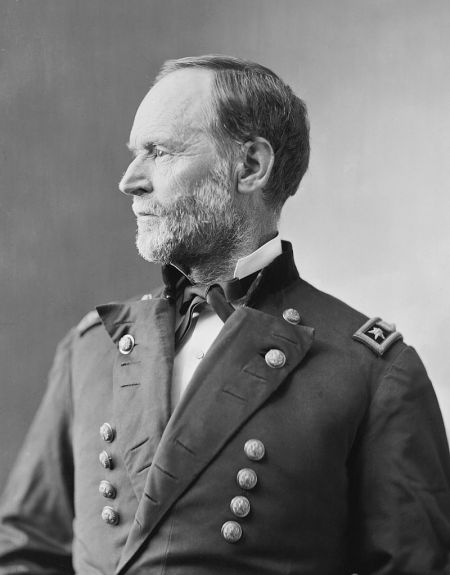
    By Mathew Brady - Library of Congress, Prints and Photographs Division, Brady-Handy Collection, reproduction number LC-DIG-cwpbh-04445., Public Domain, https://commons.wikimedia.org/w/index.php?curid=33594

    By Mathew Brady – Library of Congress, Prints and Photographs Division, Brady-Handy Collection, reproduction number LC-DIG-cwpbh-04445., Public Domain, https://commons.wikimedia.org/w/index.php?curid=33594

    “There is many a boy here today who looks on war as all glory, but, boys, it is all hell.” – Gen. William Tecumseh Sherman,

    from an address to the graduating class of the Michigan Military Academy, June 19, 1879, known as his “War is hell” speech (Wikipedia entry on Sherman).
    (Query: Does anyone have an electronic link to the full text of Sherman’s address that day? Or, do you know where it might be found, even in hard copy?)

    David Parker quoted the prayer out of Mark Twain’s disturbing story, “The War Prayer.Go there for a discussion on what Twain meant, and just how much opposed to war he was.

    For a deeper context, and a Jeff Danziger cartoon that will make you stand up and think, see the original post of this quote.


    Lincoln quote sourced: Calf’s tail, not dog’s tail

    May 23, 2007

    It’s a delightful story I’ve heard dozens of times, and retold a few times myself: Abraham Lincoln faced with some thorny issue that could be settled by a twist of language, or a slight abuse of power, asks his questioner how many legs would a dog have, if we called the dog’s tail, a leg. “Five,” the questioner responds confident in his mathematical ability to do simple addition.

    Lincoln Memorial statue, profile view

    Sunrise at the Lincoln Memorial. National Park Service photo.

    “No,” Lincoln says. “Calling a dog’s tail a leg, doesn’t make it a leg.”

    But there is always the doubt: Is the story accurate? Is this just another of the dozens of quotes that are misattributed to Lincoln in order to lend credence to them?

    I have a source for the quote: Reminiscences of Abraham Lincoln by distinguished men of his time / collected and edited by Allen Thorndike Rice (1853-1889). New York: Harper & Brothers Publishers, 1909. This story is found on page 242. Remarkably, the book is still available in an edition from the University of Michigan Press. More convenient for us, the University of Michigan has the entire text on-line, in the Collected Works of Abraham Lincoln, an on-line source whose whole text is searchable.

    However, Lincoln does not tell the story about a dog — he uses a calf. Read the rest of this entry »