Fly your flag August 21, for Hawaii Statehood in 1959

August 21, 2015

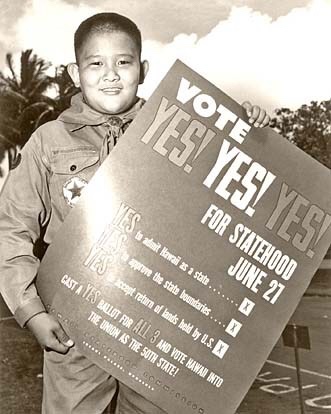
"On June 14, 1959, Boy Scout Milton Motooka helped get the word out for Hawaii’s statehood plebiscite to be held 13 days later. A new documentary will focus on Hawaii’s statehood." Hawaiians voted yes in the plebiscite, and statehood was declared two months later. (Whatever became of Scout Motooka?)

It’s been 56 years since the youngest state entered the union — the longest stretch in which the U.S. has not added another state.

"On June 14, 1959, Boy Scout Milton Motooka helped get the word out for Hawaii’s statehood plebiscite to be held 13 days later. A new documentary will focus on Hawaii’s statehood." Hawaiians voted yes in the plebiscite, and statehood was declared two months later. (Whatever became of Scout Motooka?)

“On June 14, 1959, Boy Scout Milton Motooka helped get the word out for Hawaii’s statehood plebiscite to be held 13 days later. A new documentary will focus on Hawaii’s statehood.” Hawaiians voted yes in the plebiscite, and statehood was declared two months later. (Whatever became of Scout Motooka?)

“On June 14, 1959, Boy Scout Milton Motooka helped get the word out for Hawaii’s statehood plebiscite to be held 13 days later. A new documentary will focus on Hawaii’s statehood.” Hawaiians voted yes in the plebiscite, and statehood was declared two months later. (Whatever became of Scout Motooka?)

June’s plebiscite smoothed the path for statehood, declared two months later.
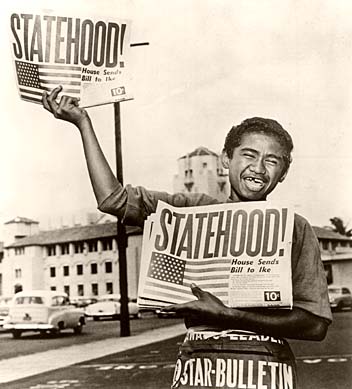
A newsboy happily hawks the Honolulu Star-Bulletin with the headline showing the state had achieved statehood, August 21, 1959. Star-Bulletin photo

13-year-old paperboy Chester Kahapea happily hawks a commemorative edition of the Honolulu Star-Bulletin with the headline showing the state had achieved statehood after the U.S. House of Representatives passed the law authorizing Hawaii as a state. Star-Bulletin photo by Murray Befeler.

Hawaii’s official statehood day is August 21, commemorating the day in 1959 when Hawaii was recognized as a member of the union of the United States of America.  Hawaiians should fly their flags to day in honor of the date (you may, too).

Hawaii formally celebrates the day on the third Friday in August, this year coincidentally on the 21st.  I hope you joined in the festivities (it’s a holiday in Hawaii) — but under the U.S. Flag Code, you may certainly fly your flags on August 21, regardless which day of the week that is.

Specimen copy of the ballot used by Hawaiians in a June 27, 1959, plebiscite to approve conditions of statehood. Image from Hawaii Magazine, 2009

Specimen copy of the ballot used by Hawaiians in a June 27, 1959, plebiscite to approve conditions of statehood. Image from Hawaii Magazine, 2009

After the U.S. annexed Hawaii in 1898 (in action separate from the Spanish-American War) attempts at getting Hawaii admitted as a state got rolling.  After World War II, with the strategic importance of the islands firmly implanted in Americans’ minds, the project picked up some steam.  Still, it was 14 years after the end of the war that agreements were worked out between the people of Hawaii, the Hawaiian royal family, Congress and the executive branch.  The deal passed into law had to be ratified by a plebiscite among Hawaiian citizens.  The proposition won approval with 94% of votes in favor.

Some native Hawaiian opposition to statehood arose later, and deference to those complaints has muted statehood celebrations in the 21st century.

Other than the tiny handful of loudmouth birthers, most Americans today are happy to have Hawaii as a state, the fifth richest in the U.S. by personal income.  The nation has a lot of good and great beaches, but the idea of catching sun and surf in Hawaii on vacation might be considered an idealized part of the American dream.

U.S. and Hawaii flags flying together.

U.S. and Hawaii flags flying together.

More:

From Prologue, the blog of the National Archives: This petition, rolled onto a wooden spool, was signed by 116,000 supporters of Hawaii statehood and presented to the U.S. Senate on February 26, 1954. (RG 46, Records of the U.S. Senate)

From Prologue, the blog of the National Archives: This petition, rolled onto a wooden spool, was signed by 116,000 supporters of Hawaii statehood and presented to the U.S. Senate on February 26, 1954. (RG 46, Records of the U.S. Senate)


U.S. postage stamp issued in 2009 commemorating the 50th anniversary of Hawaii's admission to the union.

U.S. postage stamp issued in 2009 commemorating the 50th anniversary of Hawaii’s admission to the union.


Contrast the first class postage price above with the airmail postage price of this stamp issued in 1959 — August 21, 1959 7¢ Rose Hawaii Statehood C55 26432. Wikipedia image

Contrast the first class postage price above with the airmail postage price of this stamp issued in 1959 — August 21, 1959 7¢ Rose Hawaii Statehood stamp. Wikipedia image


This is an encore post.

This is an encore post.


Flags in Missouri: Displayed backwards?

August 10, 2015

It’s interesting trying to find photographs of the U.S. flag displayed with a state flag, as I do for posts on each state’s statehood day celebration.  Today is Missouri’s anniversary of admission to the union in 1821, and I looked high and low for a good photo.

Along the way I found a photo of three flags displayed at the Missouri Capitol Building. They flew half-staff to honor a recently deceased state official, so I didn’t think it illustrated a statehood celebration well.

When flown on flagpoles in a row, of even height, the U.S. flag always flies on it’s own right, or to the left of a viewing audience (see paragraph f of this part of the U.S. Flag Code).

That’s not where it’s flown at the Missouri Capitol.

U.S. flag always flies on the viewer's left. What's going on in this photo of the Missouri Capitol? Caption from the New York Daily News: Flags around the Missouri Capitol complex in Jefferson City were lowered to half staff after the suicide of state Auditor Tom Schweich on Feb. 26. On March 30, a spokesman for the office, Robert Jackson, committed suicide. Photo: AP

U.S. flag always flies on the viewer’s left. What’s going on in this AP photo of the Missouri Capitol? Caption from the New York Daily News: “Flags around the Missouri Capitol complex in Jefferson City were lowered to half staff after the suicide of state Auditor Tom Schweich on Feb. 26. On March 30, a spokesman for the office, Robert Jackson, committed suicide. Photo: AP”

Anybody know what’s up? Do these three flagpoles “face” the Capitol?

While we’re at it: The black flag is the POW-MIA flag. The flag in the center is the state flag of Missouri. What is the flag on the photo’s left?


Missouri Statehood Day, August 10 (Does Missouri care?)

August 10, 2015

Under the U.S. Flag Code, Missourians are encouraged to fly the Stars and Stripes on August 10 to honor Missouri’s entering the union in 1821 as the 24th state.

Does Missouri celebrate this event at all? I’m not finding much on celebrations in 2015. Perhaps the state is preoccupied with other events.

Missouri and U.S. flags adorn the Missouri House of Representatives on opening day 2015. St. Louis Post-Dispatch caption:

Missouri and U.S. flags adorn the Missouri House of Representatives on opening day 2015. St. Louis Post-Dispatch caption: “The opening day of the Missouri House of Representatives 98th General Assembly at the Missouri State Capitol on Wednesday, Jan. 7, 2015. Photo by Cristina Fletes-Boutte, cfletes-boutte@post-dispatch.com”

Surely Missourians know the date. Plans for the bicentennial in 2021 promise a huge celebration then.

I can find a record of a modest celebration of statehood in 2014.

If you find news of any activities relating to the commemoration of Missouri statehood in 2015, please let us know in comments.

With or without fanfare, Missourians, you may fly your flags to day to honor statehood.


Colorado Statehood Day, August 1 – Fly your flags

July 31, 2015

Colorado won proclamation as a state on August 1, 1876, the 38th state in the United States.

U.S. and Colorado flags flutter from the same flagpole.  Denver Library image

U.S. and Colorado flags flutter from the same flagpole. Denver Library image

According to Colorado newspaperman and politician Jerry Koppel, Colorado’s path to statehood started in 1864, in an attempt to get another Republican state to boost Abraham Lincoln’s re-election chances.  Coloradans rejected the proposed constitution in a plebiscite, however, which pushed the effort into the next Lincoln administration — which, sadly, a month into Lincoln’s new term, became the Andrew Johnson administration.

High politics:  Colorado took a tortuous path to statehood.  While Colorado was not frustrated so often nor so long as it’s nextdoor neighbor, Utah, laws proposed to bring the state into the union were vetoed twice by President Andrew Johnson.  History from the Andrew Johnson National Historical Site in Greenville, Tennessee:

Colorado Statehood

First Veto:

1. There was such a small population in the area, Johnson felt Colorado would fare better as a territory without the added taxation of statehood.

2. Also due to the small population, Colorado would have only one representative to speak for the people in Congress. (New York, on the other hand, had thirty-one).

3. Johnson felt the citizens of Colorado were not prepared for, and not all wanted, statehood. Johnson wanted to hold a census or an election there first. This would ascertain the number of people in the area, as well as find out what their strongest desire was.

Second veto:

1. Johnson didn’t agree with the Edmunds Amendment which said that Nebraska and Colorado had to give equal suffrage to blacks and whites as a statehood condition. Johnson felt this was unconstitutional because Congress couldn’t regulate a state’s franchise, and the people had not been allowed to vote on it.

2. After holding a census, Johnson felt the population was still too small for statehood.

NOTE: In addition, Johnson did not feel right about adding new states to the Union when the Confederate States had not yet been readmitted to the Union and were still unrepresented.

Congress sustained the veto.

Jerome B. Chaffee. Library of Congress descrip...

Jerome B. Chaffee, one of Colorado’s first U.S. Senators, and the man who earlier pushed through Congress the law admitting Colorado into the Union. Library of Congress description: “Chaffee, Hon. J.B. of Colorado” (Photo credit: Wikipedia)

Colorado Republican and millionaire Jerome Chaffee, serving as the Colorado Territory delegate to Congress, managed to get a statehood bill passed in 1875, in the second term of President Ulysses S Grant; Grant signed the law.   Colorado drafted a state constitution that passed muster, Coloradans approved it, and President Grant declared Colorado the 38th state on August 1, 1876.  Chaffee was elected one of the first U.S. Senators from Colorado by the new state legislature.  In an odd footnote, President Grant’s son, Ulysses S Grant, Jr., married Chaffee’s daughter Fannie in 1881.

In 1875, Chaffee claimed 150,000 people lived in the state, but most historians think that figure was inflated; the 1880 census counted 194,000 people. Some historians doubt that count was accurate.

No doubt there are at least that many people in Colorado today.  Several counties in the northeast corner of the state got together in 2013 to explore the possibility of separating from Colorado to form their own state.  Does the political cauldron in Colorado ever cool? (Did those secessionists ever cool?)

Happy statehood day, to the Centennial State.

More:

An American flag hangs in front of a burning structure in the Black Forest, a thickly wooded rural region north of Colorado Springs, Colo. Authorities reported early Saturday that 473 houses had been incinerated.  Air Force photo

One of the more dramatic images from Colorado in recent years, courtesy the U.S. Air Force. Captioned in the Las Vegas Review-Journal, June 15, 2013: “An American flag hangs in front of a burning structure in the Black Forest, a thickly wooded rural region north of Colorado Springs, Colo. Authorities reported early Saturday that 473 houses had been incinerated.”

PRCA Rodeo in Steamboat Springs, Colorado; photo from SeaSweetie's Pages

PRCA Rodeo in Steamboat Springs, Colorado; photo from SeaSweetie’s Pages

Yes, this is mostly an encore post. Fighting ignorance requires patience.

Yes, this is mostly an encore post. Fighting ignorance requires patience.


When should you fly your U.S. flag in August?

July 30, 2015

National anthem at opening day 2011 at the Ballpark in Arlington, where the Texas Rangers play. Many Americans salute the flag several times during August at U.S. major league ballparks. Photo: Texas Rangers/Examiner/Ben Werz. (How many displays in contravention of the U.S. Flag Code can you spot?)

National anthem at opening day 2011 at the Ballpark in Arlington, where the Texas Rangers play. Many Americans salute the flag several times during August at U.S. major league ballparks. Photo: Texas Rangers/Examiner/Ben Werz. (How many displays in contravention of the U.S. Flag Code can you spot?)

August in the U.S. is a lazy, often hot, summer month.  It’s a month for vacation, picnicking, local baseball games, camping, cookouts and beach vacations.  It’s not a big month for events to fly the U.S. flag.

Only one event calls for nation-wide flag-flying in August, National Aviation Day on August 19.  This event is not specified in the Flag Code, but in a separate provision in the same chapter U.S. Code.  Three states celebrate statehood, Colorado, Hawaii and Missouri.

Put these dates on your calendar to fly the flag in August:

  • August 1, Colorado statehood (1876, 38th state)
  • August 10, Missouri statehood (1821, 24th state)
  • August 19, National Aviation Day, 36 USC 1 § 118
  • August 21, Hawaii statehood (1959, 50th state)

The American Flag, as it is known today, flies over Fort Stanwix National Monument. It is flown following the U.S. flag code regulations. At all times of the year it is a quite a site to see. National Park Service VIP Mike Hucko

US flag at site of a bitter siege in August, 1777; National Parks Service Caption: The American Flag, as it is known today, flies over [Fort Stanwix] National Monument. It is flown following the U.S. flag code regulations. At all times of the year it is a quite a site to see. National Park Service VIP Mike Hucko

More:

Save

Save


National Korean War Veterans Armistice Day, 2015 – fly your flag if you want to

July 27, 2015

Commemoration in 2013: President Barack Obama delivers remarks to commemorate the 60th anniversary of the signing of the Armistice that ended the Korean War, at the Korean War Veterans Memorial in Washington, D.C., Saturday, July 27, 2013. (Official White House Photo by Amanda Lucidon)

Commemoration in 2013: President Barack Obama delivers remarks to commemorate the 60th anniversary of the signing of the Armistice that ended the Korean War, at the Korean War Veterans Memorial in Washington, D.C., Saturday, July 27, 2013. (Official White House Photo by Amanda Lucidon)

President Obama issued a proclamation for National Korean War Veterans Armistice Day in 2015, though the law Congress passed specified it should run only until 2003. There was no proclamation to urge flag flying, however.

Presidential Proclamation — National Korean War Veterans Armistice Day, 2015

NATIONAL KOREAN WAR VETERANS ARMISTICE DAY, 2015

– – – – – – –

BY THE PRESIDENT OF THE UNITED STATES OF AMERICA A PROCLAMATION

Throughout history, the United States has stood as a powerful force for freedom and democracy around the world.  In the face of tyranny and oppression, generations of patriots have fought to secure peace and prosperity far from home.  And in 1950, as Communist armies crossed the 38th parallel just 5 years after the end of World War II, courageous Americans deployed overseas once again to stand with a people they had never met in defense of a cause in which they both believed.  On National Korean War Veterans Armistice Day, we honor all those who sacrificed for freedom’s cause throughout 3 long years of war, and we reaffirm our commitment to the security of the Republic of Korea and the values that unite our nations.

Often outnumbered and outgunned, nearly 1.8 million Americans fought through searing heat and piercing cold to roll back the tide of Communism.  The members of our Armed Forces endured some of the most brutal combat in modern history; many experienced unimaginable torment in POW camps, and nearly 37,000 gave their last full measure of devotion.  Their sacrifice pushed invading armies back across the line they had dared to cross and secured a hard-earned victory.

The Korean War reminds us that when we send our troops into battle, they deserve the support and gratitude of the American people — especially once they come home.  We must make it our mission to serve all our veterans as well as they have served us, always giving them the respect, care, and opportunities they have earned.  And we will never stop working to fulfill our obligations to our fallen heroes and their families.  To this day, more than 7,800 Americans are still missing from the Korean War, and the United States will not rest until we give these families a full accounting of their loved ones.

Today, the Republic of Korea enjoys a thriving democracy and a bustling economy, and the legacy of our Korean War veterans continues on in the 50 million South Koreans who live with liberty and opportunity.  The United States is proud to stand with our partner in Asian security and stability, and our commitment to our friend and ally will never waver — a promise embodied by our servicemen and women who fought from the Chosin Reservoir to Heartbreak Ridge and Pork Chop Hill, and by every American since who has stood sentinel on freedom’s frontier.

No war should ever be forgotten, and no veteran should ever be overlooked.  Today, on the anniversary of the Military Armistice Agreement that ended the Korean War, let us remember how liberty held its ground in the face of tyranny and how free peoples refused to yield.  And most of all, let us give thanks to all those whose service and sacrifice helped to secure the blessings of freedom.

NOW, THEREFORE, I, BARACK OBAMA, President of the United States of America, by virtue of the authority vested in me by the Constitution and the laws of the United States, do hereby proclaim July 27, 2015, as National Korean War Veterans Armistice Day.  I call upon all Americans to observe this day with appropriate ceremonies and activities that honor our distinguished Korean War veterans.

IN WITNESS WHEREOF, I have hereunto set my hand this twenty-fourth day of July, in the year of our Lord two thousand fifteen, and of the Independence of the United States of America the two hundred and fortieth.

BARACK OBAMA

At this blog, we urge you to remember what is often called “the forgotten war,” and the veterans of the war, and the sacrifices of those veterans and those who did not return. You may fly your flag if you wish.

Save

Save


Flags at half-staff to honor Chattanooga military dead, starting July 21

July 21, 2015

Flag at half-staff at the White House. (File photo, of an earlier occasion)

Flag at half-staff at the White House. (File photo, from 2004)

President Barack Obama called for Americans to fly the national flag at half-staff for five days, in honor of the victims of the shootings at military recruiting offices in Chattanooga, Tennessee:

The White House
Office of the Press Secretary

For Immediate Release                                                                         .July 21, 2015

Presidential Proclamation — Honoring the Victims of the Tragedy in Chattanooga, Tennessee

HONORING THE VICTIMS OF THE TRAGEDY IN CHATTANOOGA, TENNESSEE

– – – – – – –

BY THE PRESIDENT OF THE UNITED STATES OF AMERICA

A PROCLAMATION

Our thoughts and prayers as a Nation are with the service members killed last week in Chattanooga.  We honor their service.  We offer our gratitude to the police officers and first responders who stopped the rampage and saved lives.  We draw strength from yet another American community that has come together with an unmistakable message to those who would try and do us harm:  We do not give in to fear.  You cannot divide us. And you will not change our way of life.

We ask God to watch over the fallen, the families, and their communities.  As a mark of respect for the victims of the senseless acts of violence perpetrated on July 16, 2015, in Chattanooga, Tennessee, by the authority vested in me as President of the United States by the Constitution and the laws of the United States of America, I hereby order that the flag of the United States shall be flown at half-staff at the White House and upon all public buildings and grounds, at all military posts and naval stations, and on all naval vessels of the Federal Government in the District of Columbia and throughout the United States and its Territories and possessions until sunset, July 25, 2015.  I also direct that the flag shall be flown at half-staff for the same length of time at all United States embassies, legations, consular offices, and other facilities abroad, including all military facilities and naval vessels and stations.

IN WITNESS WHEREOF, I have hereunto set my hand this twenty-first day of July, in the year of our Lord two thousand fifteen, and of the Independence of the United States of America the two hundred and fortieth.

BARACK OBAMA

Michigan Gov. Rick Snyder’s e-mail notices call for the same for Michigan:

Governor Rick Snyder

Gov. Rick Snyder joins White House in honoring service members killed in Chattanooga

Michigan Office of the Governor sent this bulletin at 07/21/2015 04:02 PM EDT

Gov. Rick Snyder joins White House in honoring service members killed in Chattanooga

Tuesday, July 21, 2015

LANSING, Mich. – Gov. Rick Snyder joins President Obama in calling for all U. S. flags to be lowered to half-staff today, July 21 through Saturday, July 25, in recognition of the five service members killed in last week’s Chattanooga, TN shooting.

The flag should be returned to full-staff on Sunday, July 26.

“This senseless act of violence is a tragedy resulting in the loss of five courageous men dedicated to protecting the freedoms of our country,” Snyder said. “On behalf of all Michiganders, I thank them for their service. We join with their families and the entire military community in honoring their bravery and mourning their loss.”

The four U.S. Marines and U.S. Navy Sailor were shot in an attack at two military centers in Chattanooga on July 16.

When flown at half-staff or half-mast, the U. S. flag should be hoisted first to the peak for an instant and then lowered to the half-staff or half-mast position. The flag should again be raised to the peak before it is lowered for the day.

Update: Boy Scouts of America released news that Marine Staff Sergeant David Wyatt was also an Eagle Scout.


What dates do we fly the flag in July?

July 15, 2015

Austin (Texas) American Statesman blog, 2011: Left to right, Flo Gonzalez, 17, Sarah Lewis, 17, Tyler Soberanes, 15, and Jessica Knowles, 16, of the Georgetown High School ROTC Honor Guard, march down Main Street at the Fourth of July Parade. - See more at: http://photoblog.statesman.com/waving-the-flag-on-the-fourth-of-july#sthash.6a5xZKIo.dpuf

Austin (Texas) American-Statesman blog, 2011: Left to right, Flo Gonzalez, 17, Sarah Lewis, 17, Tyler Soberanes, 15, and Jessica Knowles, 16, of the Georgetown [Texas] High School ROTC Honor Guard, march down Main Street at the Fourth of July Parade. – See more at: http://photoblog.statesman.com/waving-the-flag-on-the-fourth-of-july#sthash.6a5xZKIo.dpuf – Photo surely is copyrighted by photographer Jay Janner and the American-Statesman

July 4. Surely everyone knows to fly the flag on Independence Day, the anniversary of the Declaration of Independence.*

In the month of the grand patriotic celebration, what other dates do we fly the U.S. flag? July 4 is the only date designated in the Flag Code for all Americans to fly the flag.  Three states joined the union in July, days on which citizens of those states should show the colors, New York, Idaho and Wyoming.

Plus, there is one date many veterans think we should still fly the flag, Korean War Veterans Armistice Day on July 27.  Oddly, the law designating that date urges flying the flag only until 2003, the 50th anniversary of the still-standing truce in that war.  But the law still exists.  What’s a patriot to do?

Patriots may watch to see whether the president issues a proclamation for the date.

Generally we don’t note state holidays or state-designated flag-flying events, such as Utah’s Pioneer Day, July 24, which marks the day in 1847 that the Mormon pioneers in the party of Brigham Young exited what is now Emigration Canyon into the Salt Lake Valley. But it’s a big day in Utah, where I spent a number of years and still have family. And I still have memories, not all pleasant, of that five-mile march for the Days of ’47 Parade, in that wool, long-sleeved uniform and hat, carrying the Sousaphone. Pardon my partisan exception. Utahns will fly their flags on July 24.

  • Idaho statehood, July 3 (1890, 43rd state)
  • Independence Day, July 4
  • Wyoming statehood, July 10 (1890, 44th state)
  • New York statehood, July 26 (1788, 11th state)
  • National Korean War Veterans Armistice Day, July 27 (flags fly at half-staff, if you are continuing the commemoration which was designated in law only until 2003)

More:

_____________

* July 4? But didn’t John Adams say it should be July 2?  And, yes, the staff at Millard Fillmore’s Bathtub sadly noted that, at the Georgetown, Texas, July 4 parade in 2011 pictured at top, it appears no one saluted the U.S. flag as it passed, as the Flag Code recommends. MFB’s been fighting flag etiquette ignorance since 2006. It’s taking much, much longer than we wished.


Fly your flag today, July 4, 2015

July 4, 2015

Follow the example of the young Gerald Ford.

1929: #President Gerald R Ford Jr holding flag with Eagle Scout Guard of Honor Mackinac Island State Park #Michigan. Tweet from America's Gallery

1929: #President Gerald R. Ford, Jr. holding flag with Eagle Scout Guard of Honor, Mackinac Island State Park, #Michigan. Tweet from America’s Gallery

Flags up in the morning, down at sunset.

Have a good, safe and joyful Fourth of July.


June 15: Should we fly the flag for Arkansas statehood?

June 15, 2015

Arkansas statehood day is June 15 — Arkansas became the 25th state in 1836. Arkansas residents fly their U.S. flags today in commemoration of the event, the 179th anniversary.

U.S. and Arkansas flags fly at the State Capitol; image from the Arkansas Secretary of State.

U.S. and Arkansas flags fly at the State Capitol; image from the Arkansas Secretary of State.

But I see in news reports stories about how the actual law passed a couple of days earlier, though news didn’t get to Arkansas until about July 4.  Is June 15 the real Arkansas statehood day?

What say you, Arkansas historians? Can you explain it?

We’re flying our flags anyway, for National Flag Week, which is celebrated the week in which Flag Day occurs, June 14.

More:


Flag Day 2015! Fly your flag all week

June 14, 2015

Of course you know to fly your flag on June 14 for Flag Day — but did you know that the week containing Flag Day is Flag Week, and we are encouraged to fly the flag every day?

Clifford Berryman's 1901 Flag Day cartoon, found at the National Archives:

Clifford Berryman’s 1901 Flag Day cartoon, found at the National Archives: “In this June 14, 1904, cartoon, Uncle Sam gives a lesson to schoolchildren on the meaning of Flag Day. Holding the American flag in one hand, Uncle Sam explains that the flag has great importance, unlike the Vice Presidency, which he ridicules in a kindly manner. (National Archives Identifier 6010464)”

Our National Archives has a blogged history of Flag Day pointing out it was a teacher who started Flag Day celebrations.

On June 14, 1885, Bernard J. Cigrand placed a 10-inch, 38-star flag in a bottle on his desk at the Stony Hill School in Ozaukee County, Wisconsin. The 19-year-old teacher then asked his students to write essays on the flag and its significance to them. This small observance marked the beginning of a long and devoted campaign by Cigrand to bring about national recognition for Flag Day.

And so we do, today, still.


June 1: Fly your flags today in Kentucky and Tennessee for Statehood Day

June 1, 2015

Our laws on flag flying encourage citizens to fly U.S. flags on specific dates, and on the date of statehood of the state in which a citizen lives.

Kentucky joined the union on June 1, 1792, the 15th state.  Tennessee joined four years later, on June 1, 1796, becoming the 16th state.

Fly your flags today in Kentucky and Tennessee — or wherever Kentuckians or Tennesseeans may be — in honor of statehood.

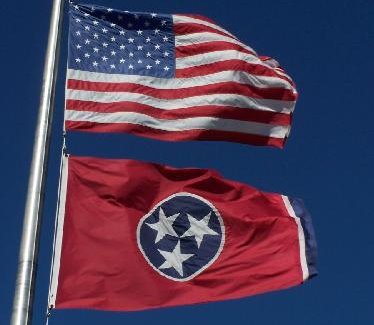
U.S. and Tennessee flags flying together on one staff.  Photo by J. Stephen Conn

U.S. and Tennessee flags flying together on one staff. Photo by J. Stephen Conn

Kentucky's state flag, by Gage Skidmore

Kentucky’s state flag features a Native American and European colonist standing together, and the state motto, “United We Stand, Divided We Fall.” Photo by Gage Skidmore

Kentucky’s admission to the union pushed the U.S. flag to 15 stars and 15 stripes.   President George Washington signed the law that authorized the U.S. flag be expanded to 15 stripes in early 1794.  I’ve not pinned down the history of what happened next.  So far as I know there was no law expanding the flag to 16 stripes, and in 1818, Congress said the flag would be 13 stripes, and stars equal to the number of states.

A 15-striped Star-spangled Banner that flew over Fort McHenry in Baltimore Harbor in 1814 and inspired Francis Scott Key to write the poem that is now the lyric to our national anthem.  President James Monroe signed the 13-stripe law in 1818.

What happened in between?  I suspect there are a lot of 15-stripe flags, but it wouldn’t surprise me to find a 16-stripe flag somewhere.  A variety of stars-and-stripes flags cropped up, which the 1818 law was intended to squelch.

Residents of the Bluegrass State and the Volunteer State should fly their flags today, in honor of their state’s having joined the union on June 1.

More:

http://twitter.com/hoyosplacido3/status/604008354571259904


Yes, this is mostly an encore post. Fighting ignorance requires patience.

Yes, this is mostly an encore post. Fighting ignorance requires patience. And repetition.


On what dates should we fly the flag in June?

May 31, 2015

Betsy Ross house in Philadelphia, by tradition the birthplace of Old Glory.

Betsy Ross house in Philadelphia, about 1900, by tradition the birthplace of Old Glory. “Happy Flag Day from Shorpy! Detroit Publishing Co. glass negative.” Image via Shorpy. Betsy Ross House is a traditional site for Philadelphia’s celebration of Flag Day.

June holds only two days designated for flying the U.S. flag out of the specific days mentioned in the U.S. Flag Code, and six statehood days, when residents of those states should fly their flags.  Plus, there is National Flag Week.

Two Flag Code-designated days:

  • Flag Day, June 14
  • Fathers Day, third Sunday in June (June 21)

Several states celebrate statehood. New Hampshire, Virginia, Arkansas, Kentucky, Tennessee and West Virginia celebrate statehood; Kentucky and Tennessee share the same date.

  • Kentucky, June 1 (1792, 15th state)
  • Tennessee, June 1 (1796, 16th state)
  • Arkansas, June 15 (1836, 25th state)
  • West Virginia, June 20 (1863, 35th state)
  • New Hampshire, June 21 (1788, 9th state), and
  • Virginia, June 25 (1788, 10th state)

Additionally, Congress passed a resolution designating the week in which June 14th falls as National Flag Week, and urging that citizens fly the flag each day of that week.  In 2015 that would the week of June 14, which falls on Sunday, through June 20.

Nine designations covering 10 separate days, listed chronologically:

  1. Kentucky and Tennessee statehood, June 1
  2. Flag Day, June 14; National Flag week, June 14 to 20
  3. Arkansas statehood, June 15 (duplicating National Flag Week)
  4. West Virginia statehood, June 20 (also duplicating National Flag Week)
  5. Fathers Day, June 21
  6. New Hampshire statehood, June 21 (duplicating Fathers Day)
  7. Virginia statehood, June 25

Tip of the old scrub brush to Mike’s Blog Rounds at Crooks and Liars — thanks for the plug!


May 29, Rhode Island Statehood Day; fly your flags in Providence

May 29, 2015

https://upload.wikimedia.org/wikipedia/commons/thumb/0/0d/Independent_Man_Providence_Capitol.JPG/800px-Independent_Man_Providence_Capitol.JPG

The Independent Man stands atop the Rhode Island State House in Providence. Photo by Lgalbi; Public Domain via Wikimedia Commons

May 29 is statehood day for Rhode Island, the 13th of the original colonies to join the union.

It’s interesting history to me. Rhode Island was rogue enough at the time — many called it “Rogues’ Island” — the colony sent no delegates to the convention in Philadelphia that wrote the Constitution.  One may wonder why the delegates even bothered to include the colony in the process. But, they did.

Not that it mattered to creation of the United States.  New Hampshire was the 9th state to ratify the document, on June 21, 1788, making it effective under the rules.  Rhode Island did not ratify the Constitution until May 29, 1790 — two years after the Constitution took effect, and about a year after the new government started operation and inaugurated George Washington the first president.  Rhode Island joined the nation already steaming along.

Rear of Rhode Island's Capitol, flying the Rhode Island state flag to the left, and the U.S. and POW flags on the right.  (Just try to find photos of the U.S. and Rhode Island flags together . . . please.)

Rhode Island State Capitol, north facade, by Garrett A. Wollman; bostonradio.org via Wikimedia. Rhode Island’s state flag flies to the left, and the U.S. and POW flags on the right. (Just try to find photos of the U.S. and Rhode Island flags together . . . please.)

Does Rhode Island celebrate Statehood Day? I don’t know. Historian Laureate Patrick T. Conley wrote a column for the Providence Journal revealing that Rhode Island was, like Texas, an independent republic for a time. This news won’t rest well with Texans. Other Rhode Island celebrations may occur, but they’re tough to learn about.

More:


Memorial Day 2015 – Fly your flag today

May 25, 2015

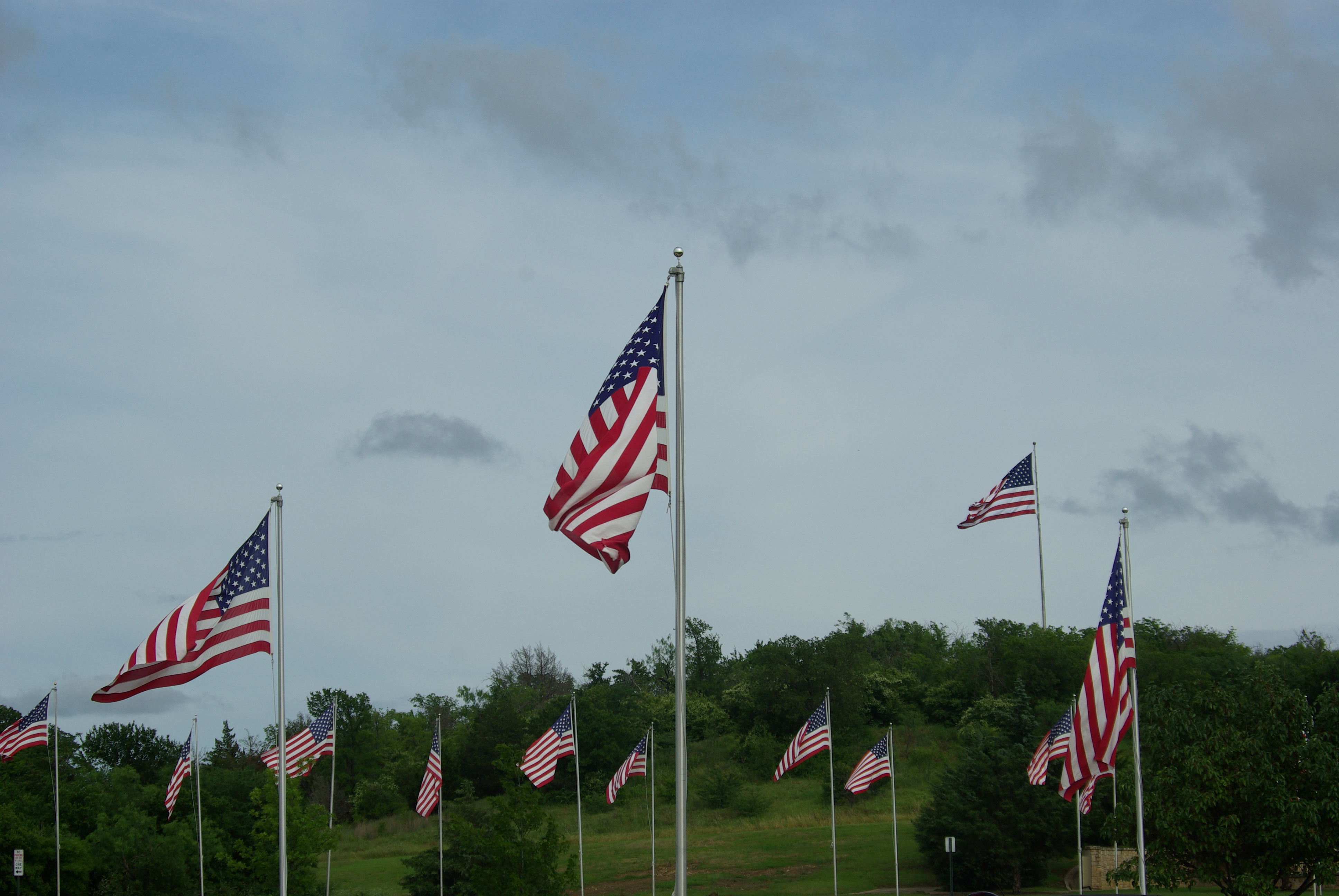
U.S. flags flying at the Dallas-Fort Worth National Cemetery, for Memorial Day 2015. Photo by Ed Darrell. Please use.

U.S. flags flying at the Dallas-Fort Worth National Cemetery, for Memorial Day 2015. Photo by Ed Darrell. Please use.

Fly your flag today for Memorial Day.

On Memorial Day, flags should be flown at half-staff until noon, then raised to full staff (and retired at sunset).

Just a reminder: When posting a flag to half-staff, it should be raised with gusto to full staff, then slowly lowered to the half-staff position.  On Memorial Day, when changing the flag’s position at noon, simply raise the flag briskly to full staff.  At retirement, the flag should be lowered in a stately fashion.

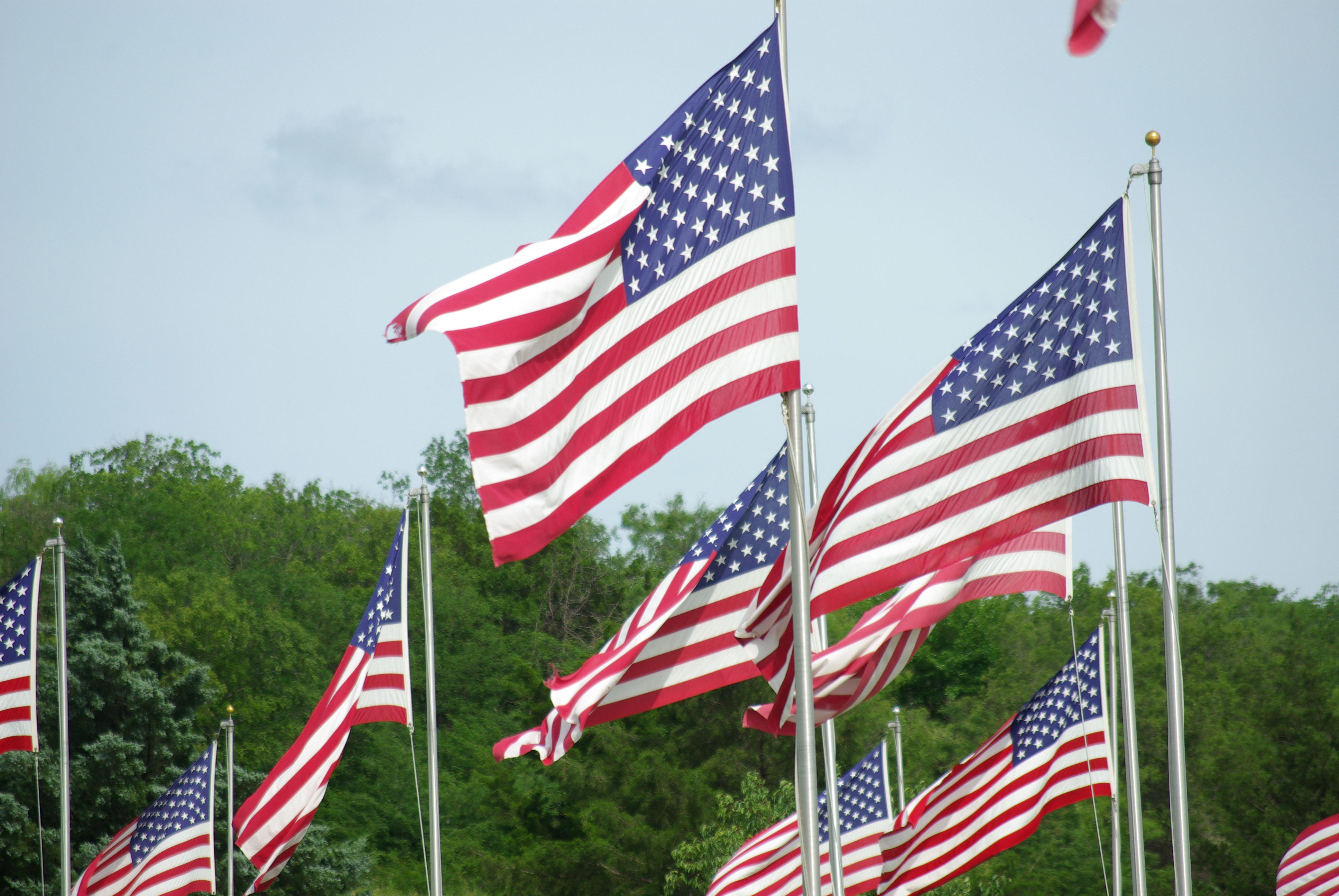
U.S. flags flying at the Dallas Fort Worth National Cemetery, for Memorial Day 2015.  You may use this photo.

U.S. flags flying at the Dallas Fort Worth National Cemetery, for Memorial Day 2015. You may use this photo.