May 1 is Law Day – fly your flags

May 1, 2018

Wait. You didn’t fly your flag today because you were waiting for me to tell you to do it?

Oh, you know Congress passed a resolution years ago encouraging flying the flag, even when the President of the U.S. doesn’t issue a formal proclamation, right?

President John F. Kennedy at the 1963 State of the Union Address, in front of the U.S. flag displayed in the chamber of the House of Representatives. Kennedy signed the law designating May 1 as Law Day, in 1961. Photograph by Cecil Stoughton, White House, in the John F. Kennedy Presidential Library and Museum, Boston. Public Domain

President John F. Kennedy at the 1963 State of the Union Address, in front of the U.S. flag displayed in the chamber of the House of Representatives. Kennedy signed the law designating May 1 as Law Day, in 1961. Photograph by Cecil Stoughton, White House, in the John F. Kennedy Presidential Library and Museum, Boston. Public Domain

President Trump declared May 1, 2018, as Law Day, and a day to fly the flag.

President Donald J. Trump Proclaims May 1, 2018, as Law Day, U.S.A.</3>

April 30, 2018

On Law Day, we celebrate our Nation’s heritage of liberty, justice, and equality under the law.  This heritage is embodied most powerfully in our Constitution, the longest surviving document of its kind.  The Constitution established a unique structure of government that has ensured to our country the blessings of liberty through law for nearly 229 years.

The Framers of our Constitution created a government with distinct and independent branches — the Legislative, the Executive, and the Judicial — because they recognized the risks of concentrating power in one authority.  As James Madison wrote, “the accumulation of all powers, legislative, executive, and judiciary, in the same hands . . . may justly be pronounced the very definition of tyranny.”  By separating the powers of government into three co-equal branches and giving each branch certain powers to check the others, the Constitution provides a framework in which the rule of law has flourished.

The importance of the rule of law can be seen throughout our Nation’s history.  This year marks the 150th anniversary of the ratification of the Fourteenth Amendment to our Constitution.  The Fourteenth Amendment prohibits States from denying persons the equal protection of the laws or depriving them of life, liberty, or property without due process of law.  The commitment to the rule of law that led the country to ratify that Amendment was no less powerful than the commitment to the rule of law that led the country to ratify the original Constitution.

That commitment to the rule of law lives on today.  It drives the debates we see around the country about the growth of the administrative state and regulatory authority, and about the unfortunate trend of district court rulings that exceed traditional limits on the judicial power.  We also see that commitment in the people’s demand that their representatives comply with the Constitution, and in the Representatives and Senators themselves who take seriously their oaths to support and defend the Constitution of the United States.

President Dwight D. Eisenhower first commemorated Law Day in 1958 to celebrate our Nation’s roots in the principles of liberty and guaranteed fundamental rights of individual citizens under the law.  Law Day recognizes that we govern ourselves in accordance with the rule of law rather according to the whims of an elite few or the dictates of collective will.  Through law, we have ensured liberty.  We should not, and do not, take that success for granted.  On this 60th annual observance of Law Day, let us rededicate ourselves to the rule of law as the best means to secure, as the Preamble to our Constitution so wisely states, “the Blessings of Liberty to ourselves and our Posterity.”

NOW, THEREFORE, I, DONALD J. TRUMP, President of the United States of America, in accordance with Public Law 87–20, as amended, do hereby proclaim May 1, 2018, as Law Day, U.S.A.  I urge all Americans, including government officials, to observe this day by reflecting upon the importance of the rule of law in our Nation and displaying the flag of the United States in support of this national observance; and I especially urge the legal profession, the press, and the radio, television, and media industries to promote and to participate in the observance of this day.

IN WITNESS WHEREOF, I have hereunto set my hand this thirtieth day of April, in the year of our Lord two thousand eighteen, and of the Independence of the United States of America the two hundred and forty-second.

DONALD J. TRUMP


Fly the U.S. flag in March 2018?

March 2, 2018

Members of the New York City Fire Department carry 343 U.S. flags honoring the 343 NYFD members killed on 9/11, in the St. Patrick's Day Parade. New York Post caption:

Members of the New York City Fire Department carry 343 U.S. flags honoring the 343 NYFD members killed on 9/11, in the St. Patrick’s Day Parade. New York Post caption: “Despite the cold and gray morning, parade-goers turned out for St. Patrick’s Day to celebrate Irish heritage in New York City on March 17, 2014. FDNY members set the pace as they marched down 5th Avenue holding American flags for the annual event. SHANNON STAPLETON/Reuters”

I usually put up a post near the first of the month listing the occasions upon which U.S. laws urge us to fly Old Glory. March sometimes slips by without such a post.

No good reason, other than in most years, March offers no regular national commemorations upon which flag flying is urged. The odd year is when Easter comes early. Easter is one of the holidays the Flag Code says flags should be flown.

But, most years, Easter falls in April, as it does in 2018.

The Flag Code urges residents of states to fly the U.S. flag on the anniversary of their state’s entering the union, on statehood day. Those are the only dates in March, most years. In March, we have four statehood days in the first four days of the month. If I dawdle, we miss most of the dates.

Flag fly dates, for March (some already past, in 2018):

  • March 1, Ohio statehood (1803, 17th state)
  • March 1, Nebraska statehood (1867, 37th state)
  • March 3, Florida (1845, 27th state)
  • March 4, Vermont statehood (1791, 14th state)
  • March 15, Maine statehood (1820, 23rd state)

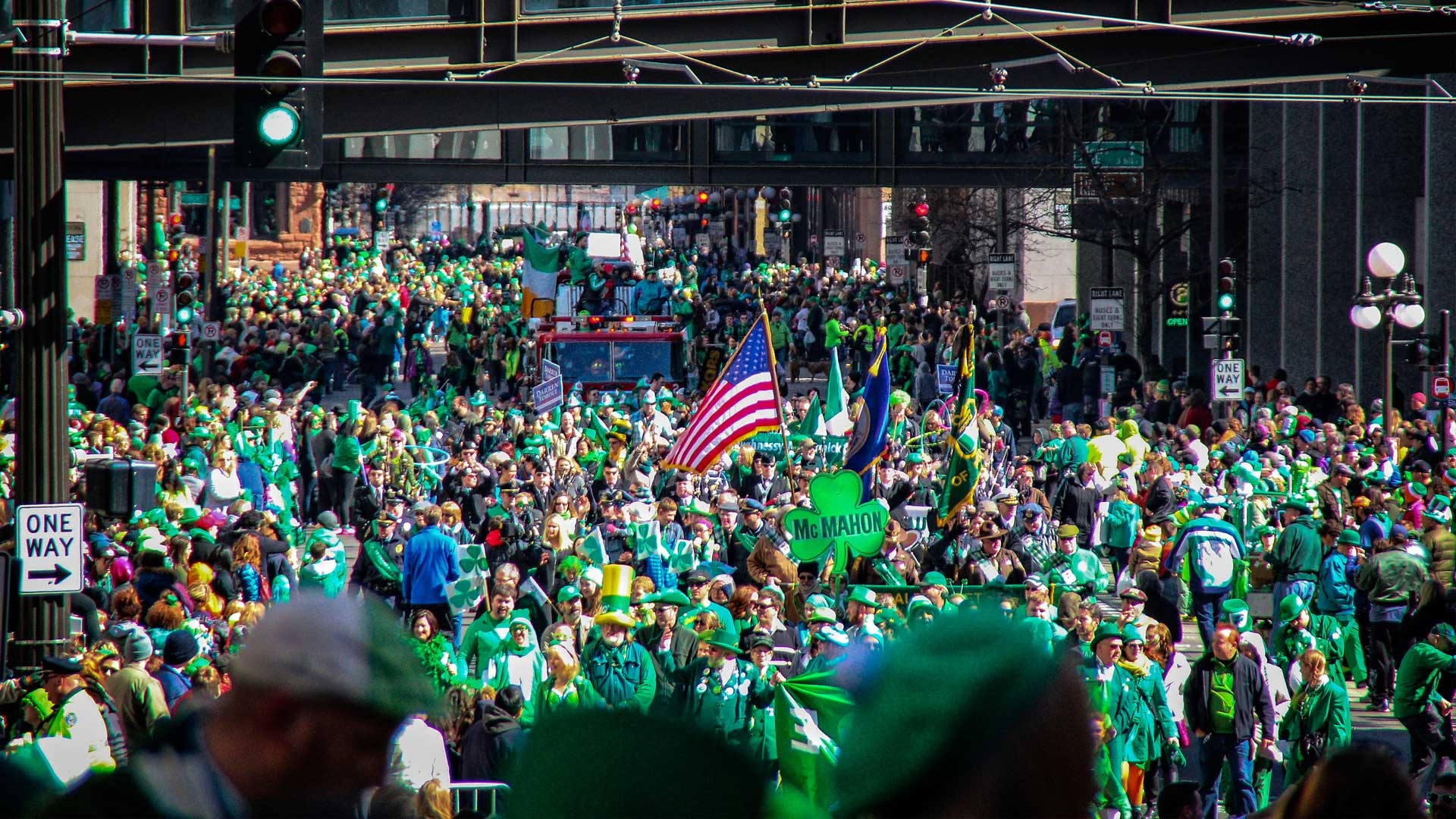
Many St. Patrick’s Day revelers and parade marchers display the U.S. flag, but it’s not an official U.S. observance.

I keep hoping, but I get little traction for a law urging flying the flag to observe Freedom Day, on the birth anniversary of the Father of the Constitution, James Madison (he was born March 16, 1751).

People gathered on the lawn of James Madison's home in Montpelier, Virginia, to display the U.S. flag in a card display, 2011. AP photo?

People gathered on the lawn of James Madison’s home in Montpelier, Virginia, to display the U.S. flag in a card display, 2011. AP photo?

Much irony, and great history, in the U.S. colors being shown so dramatically on St. Patrick’s Day, a day relatively uncommemorated in Ireland, and commemorated in the U.S. chiefly to help overcome bias against Irish immigrants.

Some irony in the unmarked birthday of the Father of the Constitution.

Sure, you may fly the U.S. flag every day in March. You need not wait for sanction from a Presidential Proclamation or a Congressional Resolution. You may fly the flag every day. (Just follow flag etiquette when you do.)

I’ll try to keep up better, next year. (I said that last year.)

U.S. colors led the St. Patrick's Day parade in Seattle, Washington, in 2014. Photo from IrishClub.org

U.S. colors led the St. Patrick’s Day parade in Seattle, Washington, in 2014. Photo from IrishClub.org


U.S. colors stood out in a field of green at the St. Paul, Minnesota, St. Patrick's Day parade, 2015(?). Photo from VisitStPaul.com.

U.S. colors stood out in a field of green at the St. Paul, Minnesota, St. Patrick’s Day parade, 2015(?). Photo from VisitStPaul.com.

More

This is an encore post.

Yes, this is a bit of an encore post. Defeating ignorance takes patience and perseverance.


Fly your flag, a Valentine for Oregon and Arizona

February 14, 2018

From the Sons and Daughters of Oregon Pioneers: A Stamp printed in 1959 for the Oregon Centennial shows a covered Wagon and Mount Hood Oregon

From the Sons and Daughters of Oregon Pioneers: A Stamp printed in 1959 for the Oregon Centennial shows a covered Wagon and Mount Hood Oregon

Flags are flying in Oregon and Arizona on Valentine’s Day 2018?

It’s statehood day in both of those states.

Legally, nothing stops a resident from flying the U.S. flag following protocol on any day.  Yes, you may fly your U.S. flag on Valentine’s Day.

The Flag Code urges flying the flag on the day a state achieved statehood, too.

For Oregon and Arizona, there is an expectation that residents will fly their flags.  Oregon came into the union on February 14, 1859; Arizona joined the Republic as a state in 1912.

Taft signs Arizona statehood papers, February 14, 1912

President William Howard Taft signed the papers accepting Arizona into statehood, on February 14, 1912. He still finished third behind Democrat Woodrow Wilson and Bullmoose Party’s Teddy Roosevelt in that fall’s elections. Photo found at Mrs. Convir’s page, Balboa Magnet School  (Can you identify others in the photo?  Who is the young man?)

From TripSavvy: On February 14, 1912, Taft signed the proclamation making Arizona the 48th state, and the last of the contiguous states to be admitted to the union. It was the last of the 48 contiguous states to be admitted to the union.

Arizona’s state flag waves in the blue – From TripSavvy: On February 14, 1912, Taft signed the proclamation making Arizona the 48th state, and the last of the contiguous states to be admitted to the union. It was the last of the 48 contiguous states to be admitted to the union.

More:

Some of this material was borrowed, with express permission, from last year’s post at Millard Fillmore’s Bathtub.


Proper etiquette for flying the Texas flag

January 26, 2018

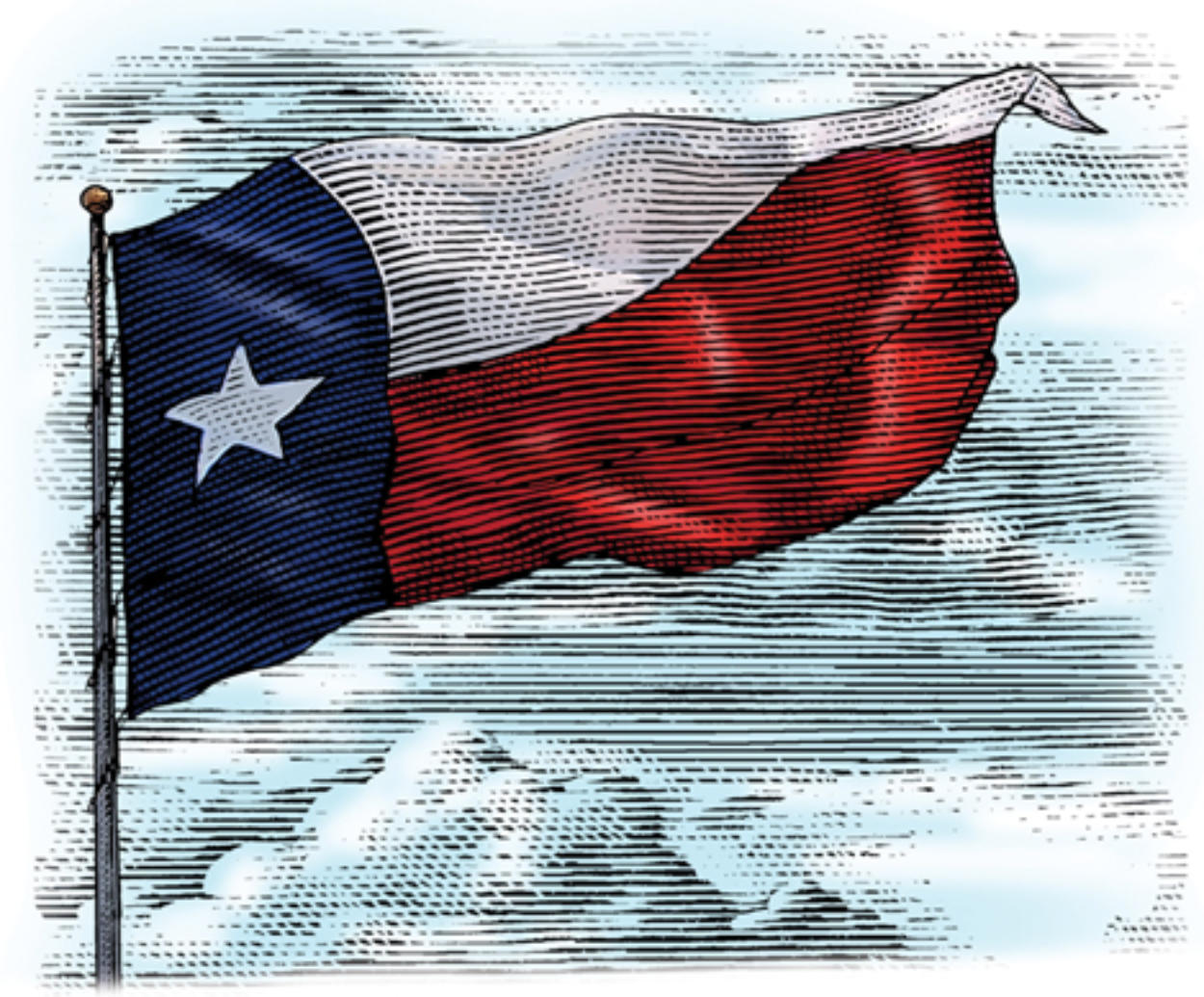
Texas flag, the Lone Star. Texas Monthly image

Texas flag, the Lone Star. Texas Monthly image

Texas Monthly noted that the Texas Lone Star flag was adopted on January 25, 1839 — six years before Texas statehood.

Texas lore often claims the Texas flag has special rules that make it the best of all state flags. Mostly, that’s not true. But Texas Monthly collected the rules in one place, and it’s worth a look if you deal with the Texas flag at all. Boy Scouts and others may want to make note that there are now rules on how to fold the Texas flag (essentially the same as folding the U.S. flag, but take a look to be sure you have it right).

Tip of the old scrub brush to Texas Monthly’s Twitter feed.


Iowans, fly your flags today for statehood, December 28, 1846

December 28, 2017

The 2004 commemorative Iowa quarter-dollar pays homage to Iowa's great artist son, Grant Wood, and the prairie school house, with a motto for Iowa,

The 2004 commemorative Iowa quarter-dollar pays homage to Iowa’s great artist son, Grant Wood, and the prairie school house, with a motto for Iowa, “Foundation in Education.” Wood’s painting is “Arbor Day,” showing students and a teacher planting a tree outside a one-room schoolhouse. Image from the Littleton Coin Company.

Iowans fly their flags today in celebration of the anniversary of Iowa statehood.  Iowa’s admission to the Union came on December 28, 1846; Iowa is the 29th state admitted.

The Flag Code, 4 USC §6 (d), notes that the U.S. flag may be flown on “the birthdays of States (date of admission),” in addition to the other score of dates specifically written into law.

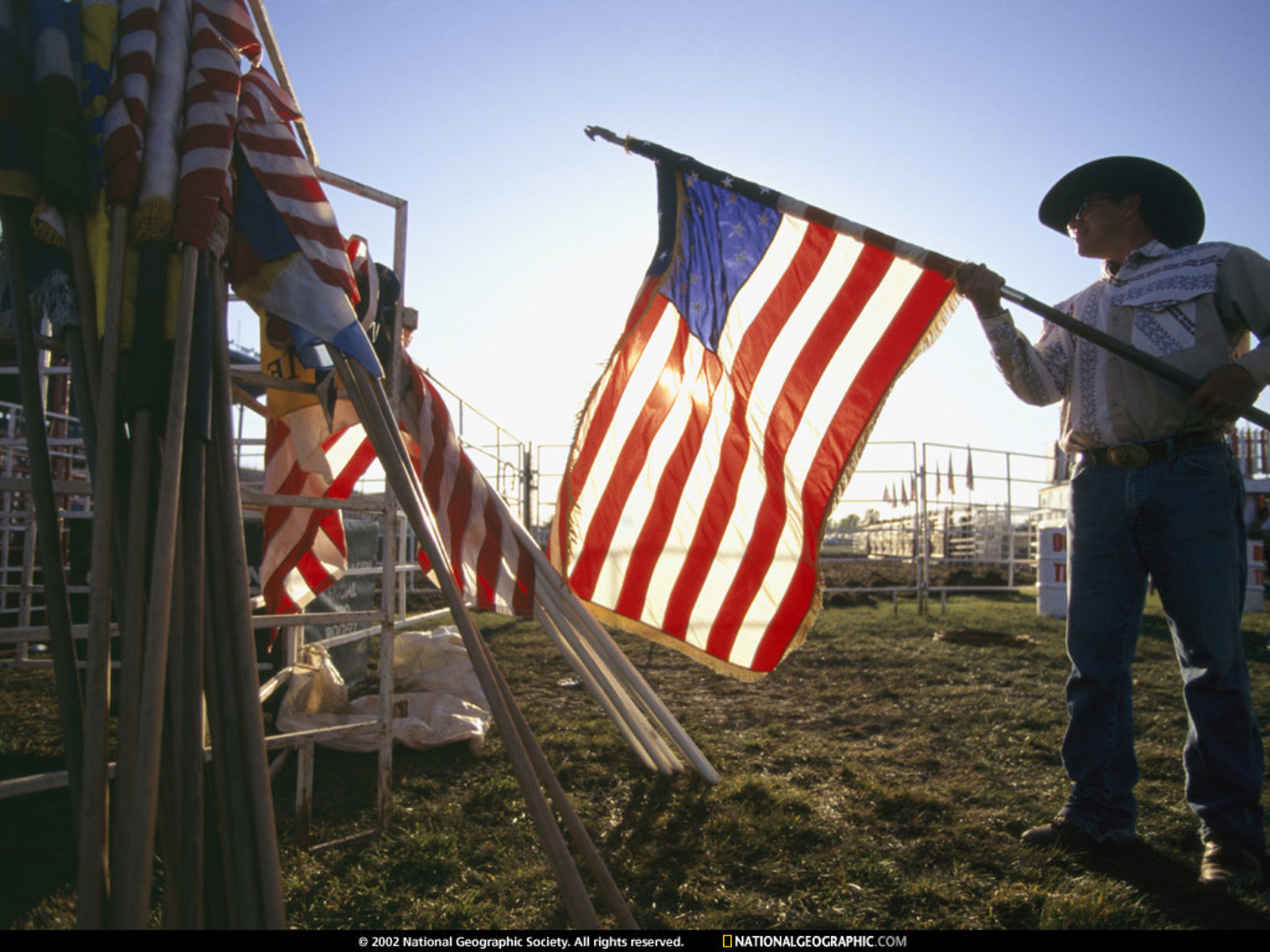
American Flag, Spencer, Iowa, 1996 – caption from the National Geographic Society: A man rolls up U.S. flags at the end of the Clay County Fair in Spencer, Iowa. “Although the population of Spencer is only about 12,000, the fair draws some 300,000 visitors. Once a year, rising from the endless flatness of the Iowa countryside, a crowd forms—to stroll, to hear big country music acts like the Statler Brothers, to sell a grand champion boar, to buy a new silo.” (Photographed on assignment for, but not published in, “County Fairs,” October 1997, National Geographic magazine) Photograph by Randy Olson; copyright National Geographic Society

American Flag, Spencer, Iowa, 1996 – caption from the National Geographic Society: A man rolls up U.S. flags at the end of the Clay County Fair in Spencer, Iowa. “Although the population of Spencer is only about 12,000, the fair draws some 300,000 visitors. Once a year, rising from the endless flatness of the Iowa countryside, a crowd forms—to stroll, to hear big country music acts like the Statler Brothers, to sell a grand champion boar, to buy a new silo.” (Photographed on assignment for, but not published in, “County Fairs,” October 1997, National Geographic magazine) Photograph by Randy Olson; copyright National Geographic Society. Just a great photo.

More:


December 7, 2017: Fly flags for Pearl Harbor Remembrance, and for Delaware statehood — and at half staff

December 7, 2017

From Dayton Daily News: Jeff Duford, curator for the National Museum of the U.S. Air Force, with a flag that flew on the U.S.S. St. Louis in Hawaii during the attack on Pearl Harbor on Dec. 7, 1941. The same flag flew aboard the U.S.S. Iowa in Tokyo Bay on September 16, 1944, as Japan signed instruments of surrender aboard the U.S.S. Missouri.

From Dayton Daily News: Jeff Duford, curator for the National Museum of the U.S. Air Force, with a flag that flew on the U.S.S. St. Louis in Hawaii during the attack on Pearl Harbor on Dec. 7, 1941. The same flag flew aboard the U.S.S. Iowa in Tokyo Bay on September 16, 1944, as Japan signed instruments of surrender aboard the U.S.S. Missouri. [This flag was displayed for one day at the museum, on Pearl Harbor Remembrance Day 2016.]

December 7 is a two-fer flag-flying day.

By public law, December 7 is Pearl Harbor Remembrance Day, and Americans fly the U.S. flag in memory of those who lost their lives at Pearl Harbor on December 7, 1941. U.S. flags should be flown at half-staff.

As for Delaware, under the U.S. Flag Code, residents of the relevant state should fly their U.S. flag on the date the state joined the union.

In 1787 Delaware quickly and promptly elected delegates to the former colony’s convention to ratify the Constitution proposed at the Philadelphia convention just over three months earlier. The ratification of the Constitution won opposition from strong factions in almost every state. Pols anticipated tough fights in New York, Virginia, and other states with large populations. They also expected other states would wait to see what the bigger states did.

Delaware didn’t wait.  On December 7 Delaware became the first of the former British colonies to ratify the Constitution. Perhaps by doing so, it guaranteed other states would act more favorably on ratification.

Because Delaware was first, it is traditionally granted first position in certain ceremonies, such as the parades honoring newly-inaugurated presidents. Delaware’s nickname is “The First State.”

In Delaware and the rest of the nation, fly your flags on December 7, 2016. If you can, fly your flag at half-staff to honor the dead at Pearl Harbor; if you have a flag on a pole that cannot be adjusted, just fly the flag normally.

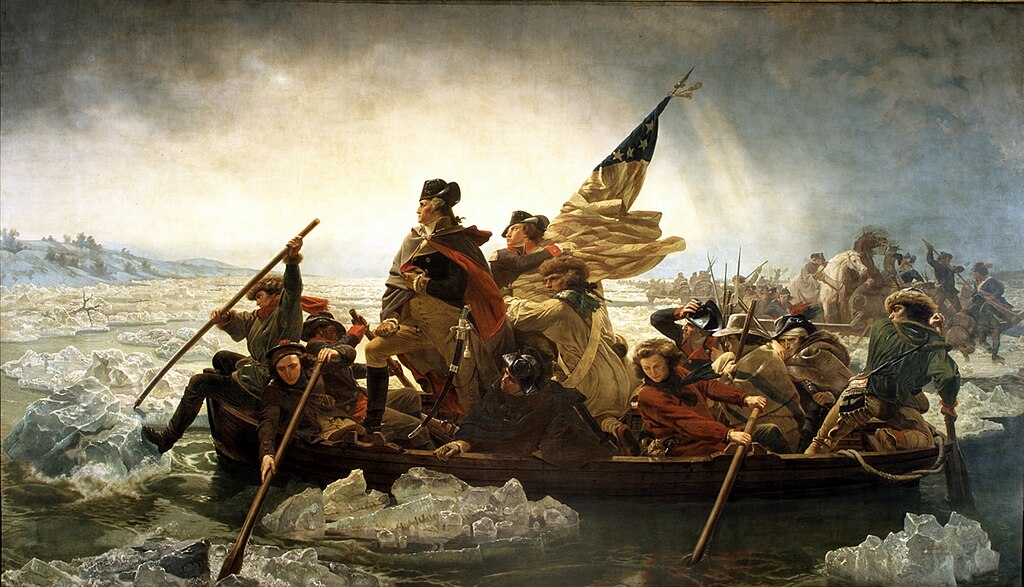
The most famous portrayal of a U.S. flag flying in Delaware is in the painting by Emanuel Leutze (American, 1816–1868).

The most famous portrayal of a U.S. flag flying in Delaware is in the painting by Emanuel Leutze (American, 1816–1868). “Washington Crossing the Delaware,” 1851. The Metropolitan Museum of Art, New York, Gift of John Stewart Kennedy, 1897 (97.34) Among other problems with this portrayal: The flag depicted had not been designated on the date of the crossing, Christmas 1776.

Yes, this is mostly an encore post. Fighting ignorance requires patience.

Yes, this is mostly an encore post. Fighting ignorance requires patience.


December’s dates to fly Old Glory, 2017

November 28, 2017

U.S. flag flies at the U.S. Capitol in a snow storm. Photo by Victoria Pickering, Creative Commons license, from Flickr

U.S. flag flies at the U.S. Capitol in a snow storm. Photo by Victoria Pickering, Creative Commons license, from Flickr. (This photo was actually taken in March.) 

November offers several flag flying days, especially in years when there is an election.

But December may be the month with the most flag-flying dates, when we include statehood days.

December 7 is Pearl Harbor Remembrance Day.  It’s not in the Flag Code, but public law (P.L. 103-308) urges that the president should issue a proclamation asking Americans to fly flags.

December 25 is Christmas Day, a federal holiday, and one of the score of dates designated in the Flag Code. If you watch your neighborhood closely, you’ll note even some of the most ardent flag wavers miss posting the colors on this day, as they do on Thanksgiving and New Years.

Other dates?

Nine states attained statehood in December, so people in those states should fly their flags (and you may join them).  Included in this group is Delaware, traditionally the “First State,” as it was the first colony to ratify the U.S. Constitution:

  • Illinois, December 3 (1818, 21st state)
  • Delaware, December 7 (1787, 1st state)
  • Mississippi, December 10 (1817, 20th state)
  • Indiana, December 11 (1816, 19th state)
  • Pennsylvania, December 12 (1787, 2nd state)
  • Alabama, December 14 (1819, 22nd state)
  • New Jersey, December 18 (1787, 3rd state)
  • Iowa, December 28 (1846, 29th state)
  • Texas, December 29 (1845, 28th state)

December 15 is Bill of Rights Day, marking the day in 1791 when the Bill of Rights was declared ratified; but though this event generally gets a presidential proclamation, there is no law or executive action that requires flags to fly on that date, for that occasion.

Eleven flag-flying dates in December.  Does any other month have as many flag flying opportunities?

Have I missed any December flag-flying dates?  11 events on 10 days (Delaware’s statehood falls on the anniversary of the Pearl Harbor attack).

Here’s a list of the days to fly the flag, under national law, in chronological order:

  1. Illinois, December 3 (1818, 21st state)
  2. Pearl Harbor Remembrance Day, December 7
  3. Delaware, December 7 (1787, 1st state) (shared with Pearl Harbor Remembrance Day)
  4. Mississippi, December 10 (1817, 20th state)
  5. Indiana, December 11 (1816, 19th state)
  6. Pennsylvania, December 12 (1787, 2nd state)
  7. Alabama, December 14 (1819, 22nd state)
  8. New Jersey, December 18 (1787, 3rd state)
  9. Christmas Day, December 25
  10. Iowa, December 28 (1846, 29th state)
  11. Texas, December 29 (1845, 28th state)

Fly your flag with respect to the flag, for the republic it represents, and for all those who sacrificed that it may wave on your residence.

And if you travel for the holidays? You’re away from home?

Astronauts Eugene Cernan and Harrison Schmitt took a flag with them when they visited the Moon in December 1972. Maybe you could carry a small travel flag, too.

NASA caption: Apollo 17 commander Eugene A. Cernan is holding the lower corner of the American flag during the mission's first EVA, December 12, 1972. Photograph by Harrison J.

NASA caption: Apollo 17 commander Eugene A. Cernan is holding the lower corner of the American flag during the mission’s first EVA, December 12, 1972. Photograph by Harrison J. “Jack” Schmitt. Image Credit: NASA


Oklahoma statehood, November 16, 1907; Oklahomans fly your flags today

November 16, 2017

U.S. Flag Code urges citizens of states to fly the U.S. flag on the anniversary of statehood.

We almost let the whole day slip away without reminding you: President Theodore Roosevelt signed the Oklahoma statehood proclamation on November 16, 1907. Oklahoma became the 46th state, with New Mexico and Arizona to come later to fill out the contiguous 48 states.

Mike Wimmer's 2003 painting of President Theodore Roosevelt's signing of the proclamation that made Oklahoma a member of the union. Oklahoma Arts Council image.

Mike Wimmer’s 2003 painting of President Theodore Roosevelt’s signing of the proclamation that made Oklahoma a member of the union. Oklahoma Arts Council image.

Oklahoma’s pre-history is long, complex and fascinating; the road to statehood is similarly complex and winding, lined with broken promises to Native Americans, tragedy and other drama. Does the state require Oklahoma history be taught in public schools?

And so we hope, you flew your flags today, Sooners!

Did anyone actually fly their flag? Does anyone other than Oklahoma newspapers even care any more?

More: 

Front page of the Daily Oklahoman on November 16, 1907, anticipating President Roosevelt's proclamation to come that morning. Daily Oklahoman image.

Front page of the Daily Oklahoman on November 16, 1907, anticipating President Roosevelt’s proclamation to come that morning. Daily Oklahoman image.

46-star flag used after Oklahoma became the 46th state in 1907. This flag remained in use for four years. RareFlags.com image

46-star flag used after Oklahoma became the 46th state in 1907. This flag remained in use for four years. RareFlags.com image

Yes, this is mostly an encore post. Fighting ignorance requires patience.

Yes, this is mostly an encore post. Fighting ignorance requires patience.

Save

Save

Save

Save


Veterans Day 2017

November 11, 2017


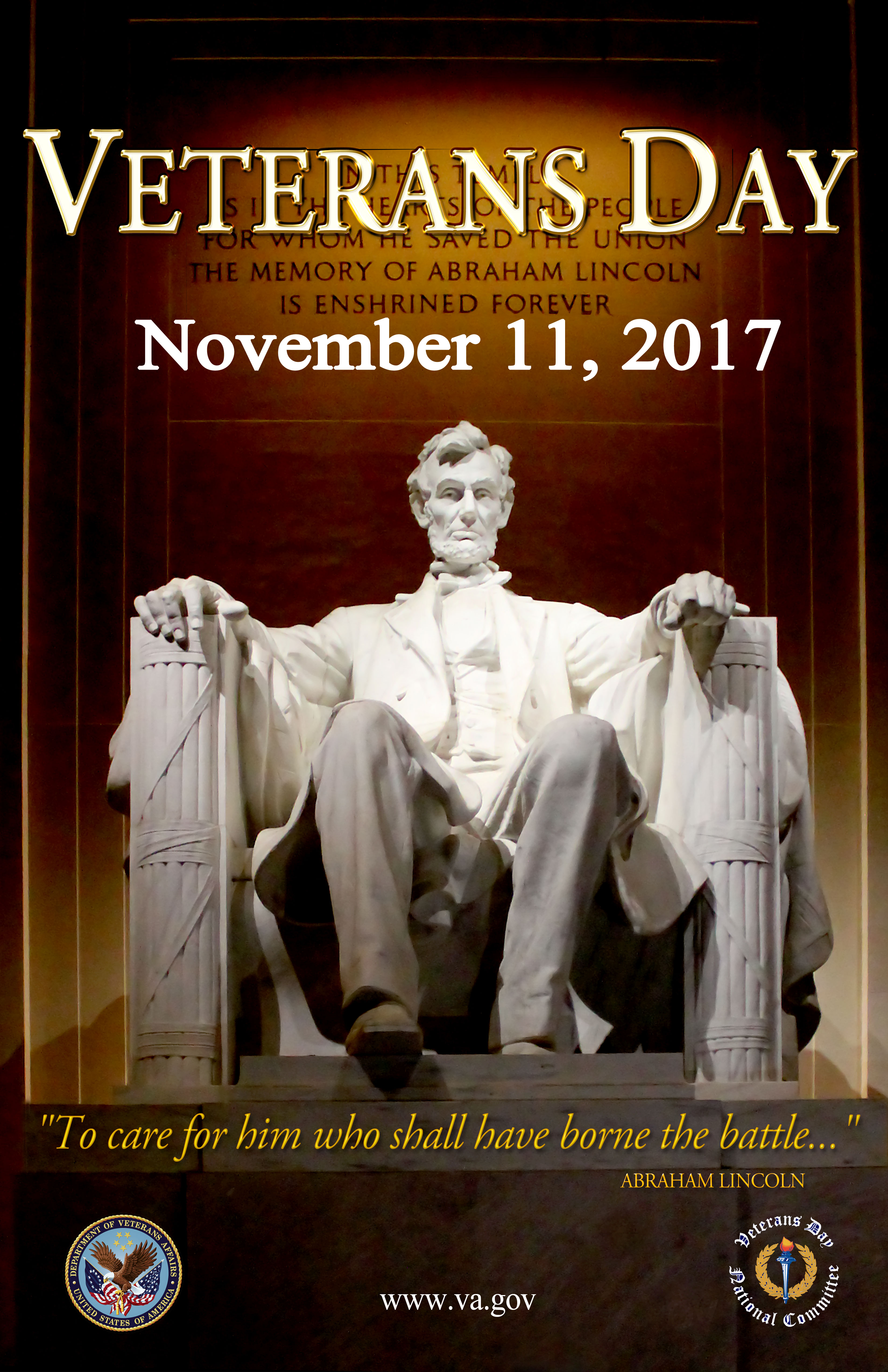
Another very nice Veterans Day poster from the Veterans Administration, for 2017:

Veterans Day poster for 2017, from the U.S. Veterans Administration.

Veterans Day poster for 2017, from the U.S. Veterans Administration.

In world history or U.S. history, I usually stop for the day to talk about the origins of Veterans Day in Armistice Day, the day the guns stopped blazing to effectively end fighting in World War I. For several reasons including mnemonic, the treaty called for an end to hostilities on the “11th hour of the 11th day of the 11th month” of 1918. Your state’s history standards probably list that phrase somewhere, but the history behind it is what students really find interesting.

Original documents and good history can be found at the Library of Congress online collections.

The Allied powers signed a ceasefire agreement with Germany at Rethondes, France, at 11:00 a.m. on November 11, 1918, bringing the war later known as World War I to a close.

President Wilson proclaimed the first Armistice Day the following year on November 11, 1919, with the these words: “To us in America, the reflections of Armistice Day will be filled with solemn pride in the heroism of those who died in the country’s service and with gratitude for the victory, both because of the thing from which it has freed us and because of the opportunity it has given America to show her sympathy with peace and justice in the councils of the nations…” Originally, the celebration included parades and public meetings following a two-minute suspension of business at 11:00 a.m.

Co. E, 102nd U.S.A. Curtiss Studio, photographers, c1917. Panoramic Photographs. Prints & Photographs Division

Between the world wars, November 11 was commemorated as Armistice Day in the United States, Great Britain, and France. After World War II, the holiday was recognized as a day of tribute to veterans of both wars. Beginning in 1954, the United States designated November 11 as Veterans Day to honor veterans of all U.S. wars. British Commonwealth countries now call the holiday Remembrance Day.

Online holdings of the National Archives and Records Administration (NARA) provide rich sources of information on America’s military, and on veteran’s day. NARA leans to original documents a bit more than the Library of Congress. For Veterans Day 2016, NARA featured an historic photo form 1961:

 President John F. Kennedy Lays a Wreath at the Tomb of the Unknown Soldier as part of Veterans Day Remembrances, Arlington National Cemetery, Arlington, Virginia, 11/11/1961 Series: Robert Knudsen White House Photographs, 1/20/1961 - 12/19/1963. Collection: White House Photographs, 12/19/1960 - 3/11/1964 (Holdings of the @jfklibrary)

NARA caption: President John F. Kennedy Lays a Wreath at the Tomb of the Unknown Soldier as part of Veterans Day Remembrances, Arlington National Cemetery, Arlington, Virginia, 11/11/1961 Series: Robert Knudsen White House Photographs, 1/20/1961 – 12/19/1963. Collection: White House Photographs, 12/19/1960 – 3/11/1964 (Holdings of the @jfklibrary)

For teachers, that page also features this:

For Veterans Day, explore the many resources in the National Archives about veterans and military service.

(Well, actually it’s for everyone. But teachers love those kinds of links, especially AP history teachers who need documents for “Document-Based Questions” (DBQs).

On one page, the Veterans Administration makes it easy for teachers to plan activities; of course, you need to start some of these weeks before the actual day:

For Teachers & Students

Hope your Veterans Day 2017 goes well, and remember to fly your flag at home.

Yes, this is mostly an encore post. Fighting ignorance requires patience.

Yes, this is mostly an encore post. Fighting ignorance requires patience.


Save

Save

Save

Save

Save


2017 North Dakota and South Dakota statehood days – fly your flags

November 2, 2017

North Dakota's commemorative quarter depicts the American bison, perhaps the quintessential prairie symbol.

North Dakota’s commemorative quarter depicts the American bison, perhaps the quintessential prairie symbol.

South Dakota's commemorative quarter interestingly focuses on human alterations to the area -- the carved presidential busts on Mt. Rushmore, wheat introduced by immigrant farmers, and the Chinese pheasant, an exotic species introduced for hunting.

South Dakota’s commemorative quarter interestingly focuses on human alterations to the area — the carved presidential busts on Mt. Rushmore, wheat introduced by immigrant farmers, and the Chinese pheasant, an exotic species introduced for hunting.

Residents of North Dakota and South Dakota should fly their U.S. flags today in honor of their states’ being admitted to the union, on November 2, 1889.

Most sites note simply that both states were admitted on the same day; some sites, especially those that lean toward North Dakota, claim that state is Number 39, because President Harrison signed their papers first, after shuffling to avoid playing favorites.

Does anyone really care?

How much do you really know about the Dakotas?

Dakotans, fly your flags today in honor of statehood.

More:

Yes, this is mostly an encore post. Fighting ignorance requires patience.

Yes, this is mostly an encore post. Fighting ignorance requires patience. And, confess: Do you remember this post from last year?

Save

Save


November 2017 flag-flying dates

October 28, 2017

A giant American flag is unfurled at Wrigley Field before World Series Game 3, October 28, 2016 (Cubs won the Series, remember?) Will 2017's World Series push into November for the first time? Wikimedia Commons image

A giant American flag is unfurled at Wrigley Field before World Series Game 3, October 28, 2016 (Cubs won the Series, remember?) Will 2017’s World Series push into November for the first time? Wikimedia Commons image

Nine events spread over seven different days come with urgings to fly the U.S. flag in November: Six states celebrate statehood, Veterans Day falls as always on November 11, and Thanksgiving Day on November 23.

Did I say eight? 2017 is an election year in many states, like Texas; we fly flags at polling places on election day, so that makes nine events. You may fly your flag at home on election day, too.

Two states, North Dakota and South Dakota, celebrate their statehood on the same date. Washington’s statehood day falls on Veterans Day, November 11 — so there are only seven days covering eight events.

In calendar order for 2017, these are the seven days:

  • North Dakota statehood day, November 2 (1889, 39th or 40th state)
  • South Dakota statehood day, November 2 (1889, 39th or 40th state) (shared with North Dakota)
  • Election day, November 7 (several states)
  • Montana statehood day, November 8 (1889, 41st state)
  • Veterans Day, November 11
  • Washington statehood day, November 11 (1889, 42nd state) (shared with Veterans Day)
  • Oklahoma statehood day, November 16 (1907, 46th state)
  • North Carolina statehood day, November 21 (1789, 12th state)
  • Thanksgiving Day, fourth Thursday in November (November 24 in 2016)

Most Americans will concern themselves only with Veterans Day and Thanksgiving Day. Is flying the U.S. flag for statehood day a dying tradition?

More:

This is an encore post.

Yes, this is an encore post. Fighting ignorance takes longer than we hoped.


October 2017 dates to fly Old Glory

October 1, 2017

The American flag blows in the wind as the moon rises over Joint Base Charleston – Air Base, S.C. Joint Base Charleston Public Affairs Office Photo by Senior Airman Dennis Sloan, October 2, 2012, Read more: dvidshub.net/r/zsbl6g

The American flag blows in the wind as the moon rises over Joint Base Charleston – Air Base, S.C. Joint Base Charleston Public Affairs Office Photo by Senior Airman Dennis Sloan, October 2, 2012, Read more: dvidshub.net/r/zsbl6g, and https://commons.wikimedia.org/wiki/File:Flickr_-_DVIDSHUB_-_American_flag_lit_by_a_full_moon_(Image_2_of_5)_Read_more,_http-www.dvidshub.net-image-675376-american-flag-lit-full-moon.UGyISa5jcdU%5Eixzz28GOdWQR5.jpg

October is not a big month for dates to fly the U.S. flag.  Only one state joined the union in October, and only two other dates received Congress’s designation for flag-flying.

Here are October’s three flag-flying days, in chronological order:

  • Columbus Day, October 8 —  tradition puts Columbus Day on October 12, but in law it is designated as the second Monday in October (to make a three-day weekend for workers who get a holiday); in 2017, October 8 is the second Monday of the month.
  • Navy Day, October 27
  • Nevada Statehood Day, October 31; Nevada joined the union during the Civil War, in 1864, the 36th state.

Federal law also designates October 9 as Leif Erickson Day, a concession to Scandanavian-descended Americans who argue Erickson beat Columbus to the Americas by a few hundred years. Congress’s recognition does not include an urging to fly the flag, though the President may issue such a proclamation.

The photograph by Senior Airman Dennis Sloan, above, may suggest a suitably spooky theme for flying Old Glory on Halloween. While you are free to fly your flag on any day, Halloween, a religious or holy day for Christians, Celts and perhaps a few others, is not designated by Congress as a day to fly the flag. If you fly it at night, it must be lighted, as is the flag in the photograph.

Other notable stuff:

More:

Yes, this is mostly an encore post. Fighting ignorance requires patience.

Yes, this is mostly an encore post. Fighting ignorance requires patience.

Save

Save

Save

Save

Save


Labor Day 2017: Fly the flag to honor American labor

September 4, 2017

Small U.S. flag flies at the grave of John Morris, the first worker killed in the battle outside of the Homestead Works Steel Mill in 1892. Photo by Alex Popichak / 90.5 WESA

Small U.S. flag flies at the grave of John Morris, the first worker killed in the battle outside of the Homestead Works Steel Mill in 1892. Photo by Alex Popichak / 90.5 WESA

Fly your U.S. flags today in honor of Labor Day, to honor American labor.

In Lawrence, Massachusetts, in 1912, flag-waving union organizers are confronted by armed state troops trying to quell union protests. Library of Congress photo.

In Lawrence, Massachusetts, in 1912, flag-waving union organizers and textile workers confronted by armed state troops trying to quell union protests. Library of Congress photo.

More:


Save


September 2017: When to fly the the U.S. flag

September 3, 2017

Flag patched up with pieces from many flags, including the flag from Ft. McHenry; displayed at the National 9-11 Memorial Museum in New York City. Photo by Ed Darrel, use with attribution encouraged.

A new flag for September: Flag patched up with pieces from many flags, including the flag from Ft. McHenry; displayed at the National 9-11 Memorial Museum in New York City. Photo by Ed Darrell, please use with attribution.

September features few dates to fly the U.S. flag in an average year. Labor Day is the only national holiday. Only California joined the union in a past September, so that’s the only statehood date. Gold Star Mothers Day had fallen out of regular honors, until our two wars in Iraq and Afghanistan.

School reform efforts after 2000 turned to adding patriotism to the curriculum. Most states now require something be said about the Constitution in social studies classes, and that has increased focus on Constitution Day on September 17.

Attacks on the U.S. on September 11, 2001, led to a new day honoring patriots, on that day of the month every year.

The dates are few, but the sobriety and somberness are great.

Here are the dates to fly the U.S. flag in September 2017. In order:

More:


Save

Save

Save


August 2017: When should you fly your U.S. flag?

August 11, 2017

U.S. and Wyoming flags fly at the Buffalo Bill Dam, near Cody, Wyoming. That corner of Wyoming will experience a total eclipse of the sun on August 21, 2017. (Not necessarily at the dam site, of course) Trip Savvy image.

U.S. and Wyoming flags fly at the Buffalo Bill Dam, near Cody, Wyoming. That corner of Wyoming will experience a total eclipse of the sun on August 21, 2017. (Not necessarily at the dam site, of course) Trip Savvy image

August in the U.S. is a lazy, often hot, summer month.  It’s a month for vacation, picnicking, local baseball games, camping, cookouts and beach vacations.  It’s not a big month for events to fly the U.S. flag.

Except, perhaps, in Olympics years, when the U.S. flag is often flown a lot, in distant locations. About 50 percent of photographs of the U.S. flag flying in August features an American Olympic athlete.

Only one event calls for nation-wide flag-flying in August, National Aviation Day on August 19.  This event is not specified in the Flag Code, but in a separate provision in the same chapter U.S. Code.  Three states celebrate statehood, Colorado, Hawaii and Missouri.

Put these dates on your calendar to fly the flag in August:

  • August 1, Colorado statehood (1876, 38th state)
  • August 10, Missouri statehood (1821, 24th state)
  • August 19, National Aviation Day, 36 USC 1 § 118
  • August 21, Hawaii statehood (1959, 50th state)

If you want to fly your flag for the eclipse of the Sun on August 21, 2017, you may do so.

You may fly your U.S. flag any day. These are just the suggested days in law.

The American Flag, as it is known today, flies over Fort Stanwix National Monument. It is flown following the U.S. flag code regulations. At all times of the year it is a quite a site to see. National Park Service VIP Mike Hucko

US flag at site of a bitter siege in August, 1777; National Parks Service Caption: The American Flag, as it is known today, flies over [Fort Stanwix] National Monument. It is flown following the U.S. flag code regulations. At all times of the year it is a quite a site to see. National Park Service VIP Mike Hucko

More:

Yes, this is mostly an encore post. Fighting ignorance requires patience.

Yes, this is mostly an encore post. Fighting ignorance requires patience.

Save