Historical inquiries at Christmas: Who invented Santa Claus? Who really wrote “Account of a Visit from St. Nicholas?”

December 24, 2010

An encore post from 2007

Thomas Nast invented Santa Claus? Clement C. Moore didn’t write the famous poem that starts out, “‘Twas the night before Christmas, and all through the house . . . ?”

The murky waters of history from Millard Fillmore’s Bathtub soak even our most cherished ideas and traditions.

But isn’t that part of the fun of history?

Santa Claus delivers to Union soldiers, "Santa Claus in Camp" - Thomas Nast, Harper's Weekly, Jan 3, 1863

Thomas Nast’s first published drawing featuring Santa Claus; for Harper’s Weekly, “A Journal of Civilization,” January 3, 1863 Nast portrayed the elf distributing packages to Union troops: “Santa Claus in camp.” Nast (1840-1904) was 23 when he drew this image.

Yes, Virginia (and California, too)! Thomas Nast created the image of Santa Claus most of us in the U.S. know today. Perhaps even more significant than his campaign against the graft of Boss Tweed, Nast’s popularization of a fat, jolly elf who delivers good things to people for Christmas makes one of the great stories in commercial illustration. Nast’s cartoons, mostly for the popular news publication Harper’s Weekly, created many of the conventions of modern political cartooning and modeled the way in which an illustrator could campaign for good, with his campaign against the graft of Tammany Hall and Tweed. But Nast’s popular vision of Santa Claus can be said to be the foundation for the modern mercantile flurry around Christmas.

Nast is probably ensconced in a cartoonists’ hall of fame. Perhaps he should be in a business or sales hall of fame, too. [See also Bill Casselman’s page, “The Man Who Designed Santa Claus.]

Nast’s drawings probably drew some inspiration from the poem, “Account of a Visit from St. Nicholas,” traditionally attributed to Clement C. Moore, a New York City lawyer, published in 1822. The poem is among the earliest to describe the elf dressed in fur, and magically coming down a chimney to leave toys for children; the poem invented the reindeer-pulled sleigh.

Modern analysis suggests the poem was not the work of Moore, and many critics and historians now attribute it to Major Henry Livingston, Jr. (1748-1828) following sleuthing by Vassar College Prof. Don Foster in 2000. Fortunately for us, we do not need to be partisans in such a query to enjoy the poem (a complete copy of which is below the fold).

The Library of Congress still gives Moore the credit. When disputes arise over who wrote about the night before Christmas, is it any wonder more controversial topics produce bigger and louder disputes among historians?

Moore was not known for being a poet. The popular story is that he wrote it on the spur of the moment:

Moore is thought to have composed the tale, now popularly known as “The Night Before Christmas,” on December 24, 1822, while traveling home from Greenwich Village, where he had bought a turkey for his family’s Christmas dinner.

Inspired by the plump, bearded Dutchman who took him by sleigh on his errand through the snow-covered streets of New York City, Moore penned A Visit from St. Nicholas for the amusement of his six children, with whom he shared the poem that evening. His vision of St. Nicholas draws upon Dutch-American and Norwegian traditions of a magical, gift-giving figure who appears at Christmas time, as well as the German legend of a visitor who enters homes through chimneys.

Again from the Library of Congress, we get information that suggests that Moore was a minor celebrity from a well-known family with historical ties that would make a good “connections” exercise in a high school history class, perhaps (”the link from Aaron Burr’s treason to Santa Claus?”):

Clement Moore was born in 1779 into a prominent New York family. His father, Benjamin Moore, president of Columbia University, in his role as Episcopal Bishop of New York participated in the inauguration of George Washington as the nation’s first president. The elder Moore also administered last rites to Alexander Hamilton after he was mortally wounded in a tragic duel with Aaron Burr.

A graduate of Columbia, Clement Moore was a scholar of Hebrew and a professor of Oriental and Greek literature at the General Theological Seminary in Manhattan. [See comment from Pam Bumsted below for more on Moore.] He is said to have been embarrassed by the light-hearted verse, which was made public without his knowledge in December 1823. Moore did not publish it under his name until 1844.

Tonight, American children will be tucked in under their blankets and quilts and read this beloved poem as a last “sugarplum” before slipping into dreamland. Before they drift off, treat them to a message from Santa, recorded by the Thomas Edison Company in 1922.

Santa Claus Hides in Your Phonograph
By Arthur A. Penn, Performed by Harry E. Humphrey.
Edison, 1922.
Coupling date: 6/20/1922. Cutout date: 10/31/1929.
Inventing Entertainment: The Motion Pictures and Sound Recordings of the Edison Companies

Listen to this recording (RealAudio Format)

Listen to this recording (wav Format, 8,471 Kb)

But Henry Livingston was no less noble or historic. He hailed from the Livingtons of the Hudson Valley (one of whose farms is now occupied by Camp Rising Sun of the Louis August Jonas Foundation, a place where I spent four amazing summers teaching swimming and lifesaving). Livingston’s biography at the University of Toronto site offers another path for a connections exercise (”What connects the Declaration of Independence, the American invasion of Canada, the famous poem about a visit from St. Nick, and George W. Bush?”):

Henry Livingston Jr. was born in Poughkeepsie, New York, on Oct. 13, 1748. The Livingston family was one of the important colonial and revolutionary families of New York. The Poughkeepsie branch, descended from Gilbert, the youngest son of Robert Livingston, 1st Lord of Livingston Manor, was not as well off as the more well-known branches, descended from sons Robert and Philip. Two other descendants of Gilbert Livingston, President George Walker Herbert Bush and his son, President-Elect George W. Bush, though, have done their share to bring attention to this line. Henry’s brother, Rev. John Henry Livingston, entered Yale at the age of 12, and was able to unite the Dutch and American branches of the Dutch Reformed Church. At the time of his death, Rev. Livingston was president of Rutgers University. Henry’s father and brother Gilbert were involved in New York politics, and Henry’s granduncle was New York’s first Lt. Governor. But the law was the natural home for many of Henry’s family. His brother-in-law, Judge Jonas Platt, was an unsuccessful candidate for governor, as was his daughter Elizabeth’s husband, U.S. Supreme Court Justice Smith Thompson. Henry’s grandson, Sidney Breese, was Chief Justice of the Illinois Supreme Court.

Known for his encyclopedic knowledge and his love of literature, Henry Livingston was a farmer, surveyor and Justice of the Peace, a judicial position dealing with financially limited criminal and civil cases. One of the first New Yorkers to enlist in the Revolutionary Army in 1775, Major Henry Livingston accompanied his cousin’s husband, General Montgomery, in his campaign up the Hudson River to invade Canada, leaving behind his new wife, Sarah Welles, and their week-old baby, on his Poughkeepsie property, Locust Grove. Baby Catherine was the subject of the first poem currently known by Major Livingston. Following this campaign, Livingston was involved in the War as a Commissioner of Sequestration, appropriating lands owned by British loyalists and selling them for the revolutionary cause. It was in the period following Sarah’s early death in 1783, that Major Livingston published most of his poems and prose, anonymously or under the pseudonym of R. Ten years after the death of Sarah, Henry married Jane Patterson, the daughter of a Dutchess County politician and sister of his next-door neighbor. Between both wives, Henry fathered twelve children. He published his good-natured, often occasional verse from 1787 in many journals, including Political Barometer, Poughkeepsie Journal, and New-York Magazine. His most famous poem, “Account of a Visit from St. Nicholas,” was until 2000 thought to have been the work of Clement Clarke Moore (1779-1863), who published it with his collected poems in 1844. Livingston died Feb. 29, 1828.

More on Henry Livingston and his authorship of the Christmas poem here.
Thomas Nast, Merry Old Santa Claus, Harper's Weekly, Jan 1, 1881

Our views of Santa Claus owe a great deal also to the Coca-Cola advertising campaign. Coca-Cola first noted Santa’s use of the drink in a 1922 campaign to suggest Coke was a year-round drink (100 years after the publication of Livingston’s poem). The company’s on-line archives gives details:

In 1930, artist Fred Mizen painted a department store Santa in a crowd drinking a bottle of Coke. The ad featured the world’s largest soda fountain, which was located in the department store of Famous Barr Co. in St. Louis, Mo. Mizen’s painting was used in print ads that Christmas season, appearing in The Saturday Evening Post in December 1930.

1936 Coca-Cola Santa cardboard store display

1936 Coca-Cola Santa cardboard store display

  • 1936 Coca-Cola Santa cardboard store display
1942 original oil painting - 'They Remembered Me'

1942 original oil painting - ‘They Remembered Me’

Archie Lee, the D’Arcy Advertising Agency executive working with The Coca-Cola Company, wanted the next campaign to show a wholesome Santa as both realistic and symbolic. In 1931, The Coca-Cola Company commissioned Michigan-born illustrator Haddon Sundblom to develop advertising images using Santa Claus — showing Santa himself, not a man dressed as Santa, as Mizen’s work had portrayed him.

  • 1942 original oil painting – ‘They Remembered Me’

For inspiration, Sundblom turned to Clement Clark Moore’s 1822 poem “A Visit From St. Nicholas” (commonly called “‘Twas the Night Before Christmas”). Moore’s description of St. Nick led to an image of Santa that was warm, friendly, pleasantly plump and human. For the next 33 years, Sundblom painted portraits of Santa that helped to create the modern image of Santa — an interpretation that today lives on in the minds of people of all ages, all over the world.

Santa Claus is a controversial figure. Debates still rage among parents about the wisdom of allowing the elf into the family’s home, and under what conditions. Theologians worry that the celebration of Christmas is diluted by the imagery. Other faiths worry that the secular, cultural impact of Santa Claus damages their own faiths (few other faiths have such a popular figure, and even atheists generally give gifts and participate in Christmas rituals such as putting up a decorated tree).

For over 100 years, Santa Claus has been a popular part of commercial, cultural and religious life in America. Has any other icon endured so long, or so well?

________________________
Below:
From the University of Toronto Library’s Representative Poetry Online

Major Henry Livingston, Jr. (1748-1828)

Account of a Visit from St. Nicholas

1 ‘Twas the night before Christmas, when all thro’ the house,
2 Not a creature was stirring, not even a mouse;
3 The stockings were hung by the chimney with care,
4 In hopes that St. Nicholas soon would be there;
5 The children were nestled all snug in their beds,
6 While visions of sugar plums danc’d in their heads,
7 And Mama in her ‘kerchief, and I in my cap,
8 Had just settled our brains for a long winter’s nap –
9 When out on the lawn there arose such a clatter,
10 I sprang from the bed to see what was the matter.
11 Away to the window I flew like a flash,
12 Tore open the shutters, and threw up the sash.
13 The moon on the breast of the new fallen snow,
14 Gave the lustre of mid-day to objects below;
15 When, what to my wondering eyes should appear,
16 But a miniature sleigh, and eight tiny rein-deer,
17 With a little old driver, so lively and quick,
18 I knew in a moment it must be St. Nick.
19 More rapid than eagles his coursers they came,
20 And he whistled, and shouted, and call’d them by name:
21 “Now! Dasher, now! Dancer, now! Prancer, and Vixen,
22 “On! Comet, on! Cupid, on! Dunder and Blixem;
23 “To the top of the porch! to the top of the wall!
24 “Now dash away! dash away! dash away all!”
25 As dry leaves before the wild hurricane fly,
26 When they meet with an obstacle, mount to the sky;
27 So up to the house-top the coursers they flew,
28 With the sleigh full of Toys — and St. Nicholas too:
29 And then in a twinkling, I heard on the roof
30 The prancing and pawing of each little hoof.
31 As I drew in my head, and was turning around,
32 Down the chimney St. Nicholas came with a bound:
33 He was dress’d all in fur, from his head to his foot,
34 And his clothes were all tarnish’d with ashes and soot;
35 A bundle of toys was flung on his back,
36 And he look’d like a peddler just opening his pack:
37 His eyes — how they twinkled! his dimples how merry,
38 His cheeks were like roses, his nose like a cherry;
39 His droll little mouth was drawn up like a bow.
40 And the beard of his chin was as white as the snow;
41 The stump of a pipe he held tight in his teeth,
42 And the smoke it encircled his head like a wreath.
43 He had a broad face, and a little round belly
44 That shook when he laugh’d, like a bowl full of jelly:
45 He was chubby and plump, a right jolly old elf,
46 And I laugh’d when I saw him in spite of myself;
47 A wink of his eye and a twist of his head
48 Soon gave me to know I had nothing to dread.
49 He spoke not a word, but went straight to his work,
50 And fill’d all the stockings; then turn’d with a jerk,
51 And laying his finger aside of his nose
52 And giving a nod, up the chimney he rose.
53 He sprung to his sleigh, to his team gave a whistle,
54 And away they all flew, like the down of a thistle:
55 But I heard him exclaim, ere he drove out of sight –
56 Happy Christmas to all, and to all a good night.

Online text copyright © 2005, Ian Lancashire for the Department of English, University of Toronto. Published by the Web Development Group, Information Technology Services, University of Toronto Libraries. Be sure to visit this site for more information on this poem, on Maj. Livingston, and on poetry in general.

Nota bene: By no means should readers assume that I’m saying the authorship of  “A Visit from St. Nicholas” is settled.  There remains much controversy, and many people convinced that Moore was, indeed, the author.  See this comment from an earlier posting, for example.


As long as you’re in Nevada, see Fly Geyser

December 24, 2010

Way more than half the geysers in the world are in Yellowstone National Park.  There’s another big cluster in Iceland, and then a few in California.

But there are stragglers throughout the world, including this spectacular, nearly-man-made thing in Nevada:  Fly Geyser.

Nevada's Fly Geyser, Wikimedia image

Nevada's Fly Geyser, Wikimedia image, from Jeremy C. Munns; it's on private land, not open for tourists. Have you ever heard about it?

Lots of photos of the geyser at Kuriositas, where I learned of the thing.

It’s on private land, on Fly Ranch (from which the geyser and a nearby reservoir get their names), but visible from a public road.  You can find it about 20 miles north of Gerlach, on former State Route 34 (now County CR34) – in Washoe County in the northwest of the state.  From Interstate 80, one would need to drive west from Winnemucca on Nevada State Road 49(?), or north from Wadsworth on state highway 447, to Gerlach.

Locals drilled a well at the site in 1916.  For more than 40 years the well produced water with no problem.  But in 1960, the well blew out.  Hypothesis is that the well passed through heated rocks that contained water, and this heated, pressurized water blew out the well casing.  The geyser has been erupting since 1960, building the impressive mineral mountain seen in the photo.

More:


Christmas greetings, unapproved by Dallas First Baptist Grinchlist

December 23, 2010

This video does NOT have the seal of approval from Dallas First Baptist Church.  Also, the composer of the song was Jewish.  Reasoning Person discretion advised:

A 2007 post on YouTube, with these details:

Sung by The Drifters. Cartoon by Joshua Held.
Featuring Bill Pinkney on lead bass and Clyde McPhatter on tenor.
An animated Christmas Card, and a homage to a great song, a great band, and a great Holiday.

More me on: http://www.joshuaheld.com

Tip of the old scrub brush to Oh,  For Goodness Sake.

__________

Some guy, Melvin Rose,  posted this comment on a Dallas Morning News blog about First Baptist’s Grinchiness:

Pastor Jeffress, Dallas's Chief Grinch

Pastor Jeffress, in his deepest Grinch voice, orders the Whos in Whoville to toe the Christmas line. If you're not "religiously correct," you'd better watch out!

Imagine if a guy had a really primo parking space at the mall, right by the door, and you were circling round and round looking for a space, and he said to you, “Happy Holidays! I’m leaving. Would you like my space?”

Who amongst us, no matter what flavor of religion they choose, would turn the guy down?

Two people complained about it. I kid you not.

It’s not the War on Christmas we need to worry about — it’s the War for Fundamentalist Correctness that threatens us more.


Nuclear weapons: History and policy, in a poster

December 23, 2010

Wish I knew who created this poster, and how.  Some minor inaccuracies — can you find them?  Could you prevail on the Big Format Printer person at your school to print one of these full size for your U.S. history, world history or government class?

Nuclear Weapons, a poster

Nuclear Weapons, a poster

How about a similar poster for the Cold War?  Vietnam War?  Civil Rights Movement?  Gilded Age?

Tip of the old scrub brush to Kenny, cold in Pinggu.


Secession? Matthews sounds off, appropriately

December 22, 2010

All that talk about secession, and nullification, and states’ rights? Matthews calls it for what it is.

Maybe we should say he calls it out for what it is.

Vodpod videos no longer available.

Secession? Matthews sounds off, appropriately, posted with vodpod

It’s time to stop the talk of tearing our nation apart. If you’ve been talking this smack, stop it.

Santayana’s Ghost keeps a wary eye on all such discussion.

Tip of the old scrub brush to Mike Heath sitting in for Ed Brayton at Dispatches from the Culture Wars.


The view from the seat of the pilot of the Enola Gay / Smithsonian National Air and Space Museum

December 19, 2010

Old friend and thorn in the side Gil Brassard in Baton Rouge alerted us to this wonderful marriage of modern technology and history from David Palermo Photography — an interactive, panoramic view of the cockpit of the Enola Gay, the B-29 from which the first atomic bomb used in war was dropped.

How can you use this in class, teachers?  Got a lesson plan that puts a student in the seat of the pilot?

Vodpod videos no longer available.

Enola Gay / Smithsonian National Air and Space …, posted with vodpod

For technical reasons beyond my ken, one may not make this a full screen image. No problem. Go to David Palermo’s site, and see this as big as your computer monitor. I recommend viewing it there — it’s better, really.

Palermo has a portfolio of cockpits he’s shot at the Smithsonian, including the French Concorde, Gemini VII, a Bell Huey helicopter, Mercury Friendship VII, and a Lockheed Martin X-35 — with spherical panoramas available of those and more (look for the link that says “HD360°” and look at the drop-down menu).  He sells massive prints of the cockpits — something special for aviation and space buffs.


Typewriter of the moment: William Saroyan

December 19, 2010

William Saroyan's typewriter, photo from the Bancroft Library, University of Caliornia - Berkeley

William Saroyan's typewriter, displayed at the Saroyan Museum at his home in San Francisco - photo from the Bancroft Library, University of California; Berkeley

William Saroyan’s niece, Jacqueline Kazarian, recently gifted the Bancroft Library with a significant part of the archives of Saroyan’s work.  The press release on the gift included a photo of Saroyan’s Fox typewriter, which is displayed at the Saroyan museum in San Francisco.

Saroyan came from an Armenian American family, born in Fresno, California in 1908.  His writings illuminated the experience of Californians and Armenian Americans, especially during the Great Depression.

In many ways Saroyan’s work symbolizes the uniqueness of the Armenian community in America, especially California.  [You still out there, Ben Davidian?]   Wikipedia strikes the right tone:

Saroyan’s stories celebrated optimism in the midst of the trials and tribulations of the Depression. Several of Saroyan’s works were drawn from his own experiences, although his approach to autobiographical fact contained a fair bit of poetic license.

His advice to a young writer was: “Try to learn to breathe deeply; really to taste food when you eat, and when you sleep really to sleep. Try as much as possible to be wholly alive with all your might, and when you laugh, laugh like hell.” Saroyan endeavored to create a prose style full of zest for life and seemingly impressionistic, that came to be called “Saroyanesque”.

The complete May 19, 2010,  press release from the University of California is below.

a sketch "from a Turkish admirer," a photo of the author in his youth, and a framed sketch of Saroyan

The Bancroft Library's new archival material on William Saroyan includes (left to right) a sketch "from a Turkish admirer," a photo of the author in his youth, and a framed drawing of Saroyan with a passage of his writing on Armenia. (Images courtesy of the Bancroft Library)

The Bancroft Library accepts gift of William Saroyan archives

By Kathleen Maclay, Media Relations | 19 May 2010

William Saroyan

William Saroyan (Photo courtesy of The Bancroft Library)

BERKELEY — The Bancroft Library at the University of California, Berkeley, has received a spectacular gift of hundreds of books, drawings, correspondence and other personal communications to and from one of America’s best-known writers, the Armenian-American author and playwright William Saroyan.

The rich collection includes approximately 48 cartons with 1,200 books and other archival materials assembled by his niece, Jacqueline Kazarian, of San Francisco, who also is the founder of the William Saroyan Literary Foundation International. A celebration of the gift is set for noon on Friday (May 21) at The Faculty Club on campus.

“UC Berkeley is such an incredible place of learning and growing and intellectual exploration,” said Kazarian, who earned degrees in communication and decorative arts at UC Berkeley in the early 1950s. “I know that my uncle wanted his library, manuscripts and galleys to go to Berkeley. Students will be inspired by the collection.”

Apart from this gift, The Bancroft Library already retains significant holdings of Saroyan’s work that it collected over the course of his life and career, and it continues to add to that collection. Most of the latest materials come from Saroyan’s home on San Francisco’s 15th Avenue that is now a Saroyan museum directed by Kazarian. Those materials were supplemented by Kazarian’s extensive personal collection, as well as by items of Saroyan’s that she acquired through a prominent Boston archivist and via a Saroyan friend.

“Jacqueline Kazarian’s new gift is the largest and most substantial augmentation to the Saroyan collections at Bancroft that we have ever received,” said Peter Hanff, Bancroft’s deputy director.

The author’s classic manual typewriter, as displayed at his San Francisco home

The author’s classic Fox manual typewriter, as displayed at his San Francisco home. (Photo courtesy of The Bancroft Library)

Saroyan, born in Fresno, Calif., in 1908, drew extensively on his Armenian-American heritage and childhood experiences for his books, plays and short stories. Much of his writing was considered impressionistic and reflected a hearty optimism often hard to find during the gritty Great Depression. He died in 1981 at the age of 72, with his niece at his side.When Story magazine editors Martha Foley and Whit Burnett printed Saroyan’s “The Daring Young Man on the Flying Trapeze” in 1934, it was an immediate success, triggering Saroyan’s fame and standing as one of his many literary achievements.

“Uncle Bill’s writing revolutionized the short story,” said Kazarian, adding that she has always found his work “almost spiritual and fable-like.”

His five-act play, “The Time of Your Life,” is the only American play to have won both the New York Drama Critics’ Circle Award and the Pulitzer Prize. Saroyan’s work as a screenwriter with Hollywood director Louis B. Mayer on the film “The Human Comedy” won an Academy Award in 1943, and Saroyan later wrote a widely acclaimed book with the same title.

Kazarian’s gift to The Bancroft Library includes multiple first editions of Saroyan’s works, such as “The Daring Young Man on the Flying Trapeze,” “My Name is Aram” (1940), “The Human Comedy” and “Obituaries” (1979), and many materials personally inscribed by the writer. Also among the new items according to Steven Black, the head of acquisitions for Bancroft, are letters, telegrams and notes written by Saroyan to relatives and others close to him, mostly during the 1930s and 1940s.

antiquarian book dealer Peter Howard of Berkeley, shown here poring through Saroyan materials

Antiquarian book dealer Peter Howard of Berkeley, poring through Saroyan materials. (Photo courtesy of The Bancroft Library)

“He personalized a lot of what passed through his hands,” Black said, noting that much of the material features marginalia reflecting Saroyan’s thoughts and interests.

There also is a copy of Henry Miller’s “Aller Retour New York,” an 80-page journal about a 1935 visit by Miller to New York City and his journey aboard a Dutch ship back to Europe. It is inscribed by Miller to Saroyan.

And a Saroyan scrapbook in the collection contains press announcements about the Pulitzer Prize for his book, “The Time of Your Life.” He scoffed at the award, contending that the arts should not be judged by commerce.

The new Bancroft collection also contains a pre-publication proof of “Burnt Norton,” the first poem of T.S. Eliot’s “Four Quartets,” which Black said the publisher may have given to Saroyan “when he crossed the pond” on a trip from his temporary home in France to England.

There also is a wide range of magazines, including issues of Horizon and the Partisan Review, a leading publication of the Anglo-American intelligentsia during the 1930s and ’40s, Black said.

The first major deposit at The Bancroft Library of Saroyan’s papers was recorded in October 1980, and the library agreed to organize the collection and give Saroyan a general description and an index. After Saroyan died in 1981, the Saroyan Foundation paid the library to continue assembling the papers for official archives, which the foundation ultimately decided to place at Stanford University. That happened in 1996.

William Saroyan's niece, Jacqueline Kazarian, surveys materials at his San Francisco home

William Saroyan's niece, Jacqueline Kazarian, surveys materials in his home. (Photo courtesy of The Bancroft Library)

Kazarian’s donation is in honor of Berkeley antiquarian book dealer Peter Howard, who has provided appraisal assistance to Bancroft on Saroyan materials and other collections for decades. While director of The Bancroft Library, the late James D. Hart also developed strong professional and personal ties to Saroyan over the years, according to Kazarian and Black.

“Now, the Saroyan family materials come to a place that Saroyan himself would have been happy to see accepting them,” Black said, noting that Bancroft is proud to have so much of Saroyan’s “intellectual remains” to be able to share with the public.

Scheduled to speak about the acquisition at Friday’s event are Jacqueline Kazarian; David Calonne, vice president of education for the Saroyan Literary Foundation International and a Saroyan scholar; San Francisco novelist Herbert Gold; theater director Val Hendrickson reading Saroyan’s short story, “Common Prayer,” and the credo to “The Time of Your Life”; and Charles Faulhaber, director of The Bancroft Library.

UC Berkeley already is home to an Armenian Studies Program, which is focused on contemporary Armenian history, politics, language and culture. And Bancroft, a rich, special collections library containing historical and literary documents and other materials relating to California, the West, Mexico and Latin America, is known for its strong collections on California writers, including Jack London, Robinson Jeffers, Bret Harte, Frank Norris and others.

More information about The Bancroft Library is online. Bancroft is celebrating its 150th anniversary this year.

More:

William Saroyan commemorative stamps from the U.S., and U.S.S.R.

On commemorative stamps issued in both the U.S. and the U.S.S.R., Saroyan wears the Armenian-style moustache he wore through most of his later life. For a stamp to honor a man in both the U.S. and the Soviet Union was extremely rare -- maybe unique.


EPA at 40: Director Jackson claims too much?

December 18, 2010

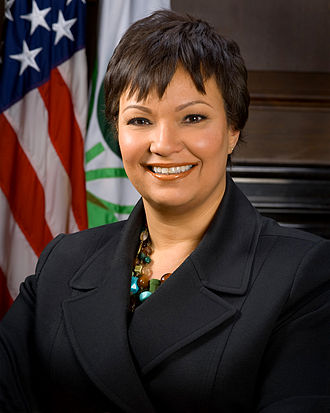
EPA turned 40 on December 2.* EPA Director Lisa Jackson somehow wangled a few inches from the Wall Street Journal’s opinion page to extol the virtues of the agency.

She’s come under fire from some quarters, including especially the Home for Unwed Crabs,  for overstating the case.  Did she?

EPA Director Lisa P. Jackson

EPA Director Lisa P. Jackson

Or is this one more case of using environmentalists as scapegoats by the hard right, and other know-nothings and know-not-enoughs?

Jackson’s piece makes mild defense of a great idea in government, I think.  To me, the critics appear hysterical in comparison.

In tracking this down, I discovered that Matt Ridley had been given some really bum information about Rachel Carson, DDT and malaria, which appears in his new book, The Rational Optimist. To his credit, Ridley made a quick correction of the grossest distortions.  He defends the premises, still, however, which I find troubling. There may be subject for a later comment.

Disinformation is insidious.  Claims against the accuracy and reputation of Rachel Carson follow the stories of Millard Fillmore’s bathtub, but with darker, malignant intent.

Seriously:  What does Lisa Jackson overstate here?

The EPA Turns 40

‘Job-killing’ environmental standards help employ more than 1.5 million people.

Forty years ago today, the U.S. Environmental Protection Agency opened its doors, beginning a history of improvements to our health and environment. We reach this milestone exactly one month after the midterm elections strengthened the influence of groups and individuals who threaten to roll back the EPA’s efforts.

Last month’s elections were not a vote for dirtier air or more pollution in our water. No one was sent to Congress with a mandate to increase health threats to our children or return us to the era before the EPA’s existence when, for example, nearly every meal in America contained elements of pesticides linked to nerve damage, cancer and sometimes death. In Los Angeles, smog-thick air was a daily fact of life, while in New York 21,000 tons of toxic waste awaited discovery beneath the small community of Love Canal. Six months before the EPA’s creation, flames erupted from pollution coating the surface of Cleveland’s Cuyahoga River, nearly reaching high enough to destroy two rail bridges.

These are issues that are above politics. The last 40 years have seen hard-won advances supported by both sides of the aisle, and today the EPA plays an essential role in our everyday lives. When you turn on the shower or make a cup of coffee, the water you use is protected from industrial pollution and untreated sewage. In fact, drinking water in Cleveland was recently shown to be cleaner than a premium brand of bottled water. You can drive your car or catch a bus without breathing dangerous lead pollution. At lunch, would you prefer your food with more, or less, protection from pesticides?

The most common arguments against these protections are economic, especially as we continue to recover from the worst downturn since the Great Depression. Fortunately, the last 40 years show no evidence that environmental protection hinders economic growth. Neither the recent crisis nor any other period of economic turmoil was caused by environmental protection. In fact, a clean environment strengthens our economy.

Special interests have spent millions of dollars making the case that we must choose the economy or the environment, attacking everything from removing lead in gasoline to cleaning up acid rain. They have consistently exaggerated the cost and scope of EPA actions, and in 40 years their predictions have not come true.

We have seen GDP grow by 207% since 1970, and America remains the proud home of storied companies that continue to create opportunities. Instead of cutting productivity, we’ve cut pollution while the number of American cars, buildings and power plants has increased. Alleged “job-killing” regulations have, according to the Commerce Department, sparked a homegrown environmental protection industry that employs more than 1.5 million Americans.

Even in these challenging times, the EPA has been part of the solution, using Recovery Act investments in water infrastructure, clean-diesel innovation and other projects to create jobs and prepare communities for more growth in the years ahead.

The EPA’s efforts thrive on American ingenuity and entrepreneurship. Holding polluters accountable sparks innovations like the Engelhard Corporation’s catalytic converter, which pioneered the reduction of toxic emissions from internal combustion engines, and DuPont’s replacements for chlorofluorocarbons (CFCs), which protected the ozone layer while turning a profit for the company. One executive told me that the EPA’s recent standards for greenhouse gas emissions from cars will help create hundreds of jobs in a state where his company operates—a state whose U.S. senators have both opposed the EPA’s authority to regulate greenhouse gases.

These attacks are aimed at the EPA, but their impacts are felt by all Americans. Pollutants like mercury, smog and soot are neurotoxins and killers that cause developmental problems and asthma in kids, and heart attacks in adults. We will not strengthen our economy by exposing our communities and our workers to more pollution.

In these politically charged times, we urge Congress and the American people to focus on results from common-sense policies, not inaccurate doomsday speculations. That is how we can confront our nation’s economic and environmental challenges and lay a foundation for the next 40 years and beyond.

Ms. Jackson is administrator of the Environmental Protection Agency.

* [Oops. Same birthday as Donna. Happy birthday, Donna! Happy EPA’s 40th (yours, too? can’t be much more, can it?)]


George Washington: Study history, refuse to be king, make the republic last

December 16, 2010

This is a mostly encore post, emphasizing George Washington’s astounding ability to draw from history just exactly the right lesson, and then set the example that makes history.

Washington, though having never attended college, was an inveterate reader, and a sharp student of history.  Early he read the story of the great Roman, Cincinnatus, who made the Roman Republic great with his refusal to lust for power.  Cincinnatus twice was named Dictator, and both times resigned the commission rather than personally profit as others did — after saving Rome both times, of course.

In his own life, Washington also twice cast off the mantle of top leader, once when he resigned his commission as Commander in Chief of the Continental Army when so many assumed he would just keep on, and add the title of “King of America;” and the second time when, as president, he stepped aside and retired, leaving the leadership of the nation up to the Constitutional processes that had never before been tried successfully in any nation.

Washington’s resignation from the army command came on December 23, 1783 — such an important anniversary usually gets lost in preparations for Christmas, so I’ll post it a bit early.  In your holiday toasts, lift a glass to George Washington, who gave us civilian rule, an end to monarchy, and an example of responsible leadership making way for peaceful succession.

In 2007, I wrote:


On December 23, 1783, Commander of the Continental Army, Gen. George Washington resigned his commission, to the Continental Congress sitting in Annapolis, Maryland. Washington modeled his actions on the life of Roman general and patriot Cincinnatus. (See especially this site, the Society of the Cincinnati)

John Trumbull painting of Washington resigning his commission

John Trumbull's painting of Washington resigning his commission; one of eight great paintings hanging in the Rotunda of the U.S. Capitol

Washington had been thought to be in a position to take over the government and declare himself king, if he chose. Instead, at some cost to himself he personally put down a rebellion of the officers of the army who proposed a coup d’etat against the Continental Congress, angered that they had not been paid. Washington quietly asked that the men act honorably and not sully the great victory they had won against Britain. Then Washington reviewed the army, wrapped up affairs, journeyed to Annapolis to resign, and returned to his farm and holdings at Mount Vernon, Virginia.

Because Washington could have turned into a tyrant, it is reported that King George III of England, upon hearing the news of Washington’s resignation, refused to believe it. If the report were true, George is reported to have said, Washington was the greatest man who ever lived.

Washington’s resignation set precedent: Civilian government controlled the military; Americans served, then went back to their private lives and private business; Americans would act nobly, sometimes when least expected.

Read the rest of this entry »


Typewriter of the moment: Harlan Ellison and his Olympia SG3

December 12, 2010

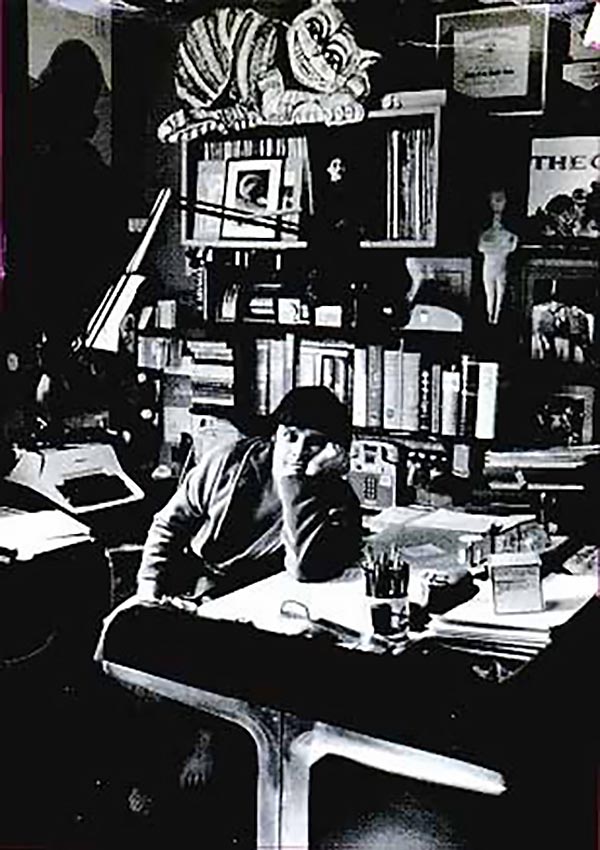
Harlan Ellison, his Olympia SG3, and other stuff - photo credit to MAX KATZ and KAREN FRIEDRICH
Harlan Ellison and his typewriter.  According to Richard Polt, the machine pictured is probably the Olympia SG3. Photo credit to Max Katz and Karen Friedrich.

Writers and their tools, in their workspaces.  We could probably date this photo by the stuff in Ellison’s office — the Cheshire Cat cutout?  Wasn’t that from an Edward Gorey-illustrated version of the Alice in Wonderland story?  What year was that?  The telephone on the wall, the desk scissors design . . . none of those fall into any expertise I have.  Someone else will have to date it.  My TinEye search didn’t shed any useful light.

I found the photo at Richard Polt’s fun site at Xavier University, The Classic Typewriter Page.  Polt is clearly working toward a MacArthur Foundation genius grant with this material.  Well, he would be, were I a judge.  (Who should get credit for the photo?  I don’t know — can you help identify who gets credit? See comment from Mr. Ellison:  ” . . .  image was captured for my 1974 STORY collection, APPROACHING OBLIVION, by MAX KATZ and KAREN FRIEDRICH.”  Credit for the photo gleefully acknowledged here.)

Oh, by the way, stay tuned:  Ellison is trying to sell his first typewriter.  That is a topic worthy of its own post.

Tip of the old scrub brush to the unfortunately moribund The Wit of the Staircase.


Ducking the quacks on DDT

December 9, 2010

Howard Stern may not re-up with Sirius, I hear.  That would make it easier to avoid the quackings of one of the latest and greatest cranks on DDT and malaria.

Rutledge Taylor, the erstwhile (still?) beauty-cream peddler to the stars, spoke with Stern on the telephone the day after the Pearl Harbor anniversary, apparently on the air, and demonstrated greater lunacy about DDT and malaria than in the past; the conversation was posted to YouTube.  Among other things Taylor gets dead wrong he claims:

  • Bedbugs did not develop resistance to DDT as reported in the 1950s and confirmed by recent detailed studies
  • No one studied bedbugs in the past three decades or so
  • DDT was banned to kill people, not due to any danger
  • Mosquito nets are “antiquated”
  • DDT doesn’t harm birds, doesn’t thin eggshells
  • Linus Pauling’s vitamin C studies show that DDT works
  • William Ruckelshaus completely banned DDT use everywhere, by himself, with no science to back the action

Taylor claims to have five file cabinets full of the studies on DDT, but it becomes clear that he hasn’t read any of them.  For example, he cites the erroneous claim that DDT saved 500 million lives, from a 1970 study by the National Academy of Sciences — but he’s not got the honor to tell his listeners that NAS then concluded that despite its value, DDT is too dangerous to keep using.

Stern’s newsletter said, for the December 8, 2010 program:

THE DUDE WHO DRANK DDT

Howard got Dr. Rutledge Taylor on the line to discuss his DDT advocacy: “This is the guy who believes in DDT.” Robin remembered Dr. Rutledge’s infamous YouTube video: “He drank it!” Dr. Rutledge said anti-DDT activists cited faulty–or just plain old–research: “There’s not been a study on DDT and bedbugs in 30 years…it’s the safest pesticide on the planet.” Howard asked about the common claim that DDT thins bird eggs, so Dr. Rutledge said he’d never seen proof: “Total bullshit. I’ve got every study going back to 1940.”
Howard asked if Dr. Rutledge was really dating 80s pop star Debbie Gibson, and the doc confirmed it: “She’s right here. Right now.” Debbie grabbed the phone: “I’m the crazy-supportive girlfriend up in the middle of the night making this phone call with him. Look, he’s saving the world and I wrote ‘Shake Your Love.’ It’s a match made in heaven.” Howard joked: “Does Dr. Rutledge ever bring DDT into the bedroom? Rub it on you?” The doc laughed: “It’s better than chocolate.”

Back in the olden days, broadcasters had to demonstrate that they broadcast in the public interest.  Sirius needs to make no such demonstration.  Otherwise, Stern’s Know-Nothing rants on DDT, alone, would put their license into question.

Instead of urging people to donate $10 to Nothing But Nets to save a kid from malaria, Taylor insists that people should go see his movie, “3 Billion and Counting,” instead.

Fortunately, the movie is no longer in release.  So, Dear Reader, make Howard Stern apoplectic, and save a kid’s life, by sending $10 to Nothing But Nets, and ignore Stern completely.

The facts?  You can’t get them from Stern or Taylor:


2010 Anniversary of Pearl Harbor – Remembering

December 7, 2010

Encore post, mostly, from December 7, 2006.

1941 AP file photo, small boat rescues victims from U.S.S. West Virginia

Caption from Naval History and Heritage Command: Photo #: 80-G-19930
Pearl Harbor Attack, 7 December 1941
Sailors in a motor launch rescue a survivor from the water alongside the sunken USS West Virginia (BB-48) during or shortly after the Japanese air raid on Pearl Harbor.
USS Tennessee (BB-43) is inboard of the sunken battleship.
Note extensive distortion of West Virginia’s lower midships superstructure, caused by torpedoes that exploded below that location.
Also note 5″/25 gun, still partially covered with canvas, boat crane swung outboard and empty boat cradles near the smokestacks, and base of radar antenna atop West Virginia’s foremast.
Official U.S. Navy Photograph, National Archives Collection.

Today is the 69th anniversary of Japan’s attack on the U.S.’s Pacific Fleet at Pearl Harbor, Hawaii.

Many Americans fly their U.S. flags today.  The date is not one specified in law for flag-flying.

Our local newspaper, The Dallas Morning News, ran a front-page story on survivors of the attack in 2006, who have met every five years in reunion at Pearl Harbor. [December 7, 2006] was their last official reunion. The 18-year-olds who suffered the attack, many on their first trips away from home, are in their 80s now. Age makes future reunions impractical.

In 2010, it is estimated that fewer than 4,000 veterans of Pearl Harbor still live to remember, though, of course those surviving do.

From the article:

“We’re like the dodo bird. We’re almost extinct,” said Middlesworth, now an 83-year-old retiree from Upland, Calif., but then – on Dec. 7, 1941 – an 18-year-old Marine on the USS San Francisco.

Nearly 500 survivors from across the nation were expected to make the trip to Hawaii, bringing with them 1,300 family members, numerous wheelchairs and too many haunting memories.

Memories of a shocking, two-hour aerial raid that destroyed or heavily damaged 21 ships and 320 aircraft, that killed 2,390 people and wounded 1,178 others, that plunged the United States into World War II and set in motion the events that led to atomic bombings of Hiroshima and Nagasaki.

“I suspect not many people have thought about this, but we’re witnessing history,” said Daniel Martinez, chief historian at the USS Arizona Memorial. “We are seeing the passing of a generation.”

Another article notes the work of retired history professor Ron Marcello from the University of North Texas, in Denton, in creating oral histories from more than 350 of the survivors. This is the sort of project that high school history students could do well, and from which they would learn, and from which the nation would benefit. If you have World War II veterans in your town, encourage the high school history classes to go interview the people. This opportunity will not be available forever.

There is much to be learned, Dr. Marcello said:

Dr. Marcello said that in doing the World War II history project, he learned several common themes among soldiers.

“When they get into battle, they don’t do it because of patriotism, love of country or any of that. It’s about survival, doing your job and not letting down your comrades,” he said. “I heard that over and over.”

Another theme among soldiers is the progression of their fear.

“When they first got into combat, their first thought is ‘It’s not going to happen to me.’ The next thought is ‘It might happen to me,’ and the last thought is ‘I’m living on borrowed time. I hope this is over soon,’ ” Dr. Marcello said.

Dr. Marcello said the collection started in the early 1960s. He took charge of it in 1968. Since Dr. Marcello has retired, Todd Moye has taken over as the director.

Other sources:

While this is not one of the usual dates listed by Congress, you may fly your U.S. flag today.

End of 2006 post —

Other resources (2007):

USS Missouri Memorial – Main Battery - from the Panoramas of World War II site

USS Missouri Memorial – Main Battery – from the Panoramas of World War II site


Stunning photo: What happened here, 795 years ago?

December 5, 2010

Runnymede, Magna Carta Isle, photo by Wyrdlight, Antony McCallum, 2008 (Wikimedia)

What event critical to western history and the development of the democratic republic in the U.S. happened here in 1215?

A teacher might use some of these photos explaining the steps to the Constitution, in English law and the heritage of U.S. laws.  Other than the Magna Carta, all the events of Runnymede get overlooked in American studies of history. Antony McCallum, working under the name Wyrdlight, took these stunning shots of this historic meadow.  (He photographs stuff for studies of history, it appears.)

Maybe it’s a geography story.

View of Runnymede Meadow from Engham Village -- Wyrdlight photo through Wikimedia

View of Runnymede Meadow from Engham Village -- Wyrdlight photo through Wikimedia

Several monuments to different events of the past millennium populate the site.  The American Bar Association dedicated a memorial to the Magna Carta there — a small thing open to the air, but with a beautiful ceiling that is probably worth the trip to see it once you get to England.

Wikipedia explains briefly, with a note that the ABA plans to meet there again in 2015, the 800th anniversary of the Great Charter:

Magna Carta Memorial


The Magna Carta Memorial & view towards the ‘medes’


Engraved stone recalling the 1985 ABA visit

Situated in a grassed enclosure on the lower slopes of Cooper’s Hill, this memorial is of a domed classical style, containing a pillar of English granite on which is inscribed “To commemorate Magna Carta, symbol of Freedom Under Law”. The memorial was created by the American Bar Association to a design by Sir Edward Maufe R.A., and was unveiled on 18 July 1957 at a ceremony attended by American and English lawyers.[5]

Since 1957 representatives of the ABA have visited and rededicated the Memorial renewing pledges to the Great Charter. In 1971 and 1985 commemorative stones were placed on the Memorial plinth. In July 2000 the ABA came:

to celebrate Magna Carta, foundation of the rule of law for ages past and for the new millennium.

In 2007 on its 50th anniversary the ABA again visited Runnymede and during the convention installed as President Charles Rhyne who devised Law Day which seeks in the USA an annual reaffirmation of faith in the forces of law for peace.

The ABA will be meeting at Runnymede in 2015 on the 800th anniversary of the sealing of the original charter.

The Magna Carta Memorial is administered by the Magna Carta Trust, which is chaired by the Master of the Rolls.[10]

In 2008, flood lights were installed to light the memorial at night, but due to vandalism they now lie smashed.

I’ll wager the lights get fixed before 2015.

Detail of ceiling of the Magna Carta Memorial, Runnymede - Wikimedia image

Detail of ceiling of the Magna Carta Memorial detailing play of light, and star pattern, Runnymede - Wikimedia image

More, resources:


December 1: Remembering when Rosa Parks stood up for freedom, by sitting down

December 1, 2010

Rosa Parks being fingerprinted, Library of Congress

Mrs. Parks being fingerprinted in Montgomery, Alabama; photo from New York World-Telegram & Sun Collection, Library of Congress

Rosa Parks: “Why do you push us around?”

Officer: “I don’t know but the law is the law and you’re under arrest.”

From Rosa Parks with Gregory J. Reed, Quiet Strength
(Grand Rapids, MI: Zondervan Pub. House, 1994), page 23.

Photo: Mrs. Parks being fingerprinted in Montgomery, Alabama; photo from New York World-Telegram & Sun Collection, Library of Congress

Today in History at the Library of Congress provides the simple facts:

On the evening of December 1, 1955, Rosa Parks, an African American, was arrested for disobeying an Alabama law requiring black passengers to relinquish seats to white passengers when the bus was full. Blacks were also required to sit at the back of the bus. Her arrest sparked a 381-day boycott of the Montgomery bus system and led to a 1956 Supreme Court decision banning segregation on public transportation.

Rosa Parks made a nearly perfect subject for a protest on racism. College-educated, trained in peaceful protest at the famous Highlander Folk School, Parks was known as a peaceful and respected person. The sight of such a proper woman being arrested and jailed would provide a schocking image to most Americans. Americans jolted awake.

Often lost in the retelling of the story are the threads that tie together the events of the civil rights movement through the 1940s, 1950s and 1960s. As noted, Parks was a trained civil rights activist. Such training in peaceful and nonviolent protest provided a moral power to the movement probably unattainable any other way. Parks’ arrest was not planned, however. Parks wrote that as she sat on the bus, she was thinking of the tragedy of Emmet Till, the young African American man from Chicago, brutally murdered in Mississippi early in 1955. She was thinking that someone had to take a stand for civil rights, at about the time the bus driver told her to move to allow a white man to take her seat. To take a stand, she kept her seat. [More below the fold] Read the rest of this entry »


Whiskey and Cigar Day, 2010: Mark Twain and Winston Churchill

November 30, 2010

Mark Twain, afloat

November 30 is the birthday of Mark Twain (1835), and Winston Churchill (1874).

Twain had a comment on the Texas Education Agency and State Board of Education:

In the first place God made idiots. This was for practice. Then He made School Boards.

– Following the Equator; Pudd’nhead Wilson’s New Calendar

The Nobel literature committees were slow; Twain did not win a Nobel in Literature; he died in 1910. Churchill did win, in 1953.

Both men were aficionados of good whiskey and good cigars. Both men suffered from depression in old age.

Both men made a living writing, early in their careers as newspaper correspondents. One waged wars of a kind the other campaigned against. Both were sustained by their hope for the human race, against overwhelming evidence that such hope was sadly misplaced.

churchill-time-cover-man-of-the-year-1941.jpg

Both endured fantastic failures that would have killed other people, and both rebounded.

Each possessed a great facility with words, and wit, and frequently said or wrote things that people like to remember and repeat again.

Both of them rank near the top of the list of people to whom almost any quote will be attributed if the quote is witty and the speaker can’t remember, or doesn’t know, who actually said it.

Both men are worth study.  And wouldn’t you really love to have had them over to dinner?

Twain, on prisons versus education:

Every time you stop a school, you will have to build a jail. What you gain at one end you lose at the other. It’s like feeding a dog on his own tail. It won’t fatten the dog.” – Speech, November 23, 1900

Churchill on the evil men and nations do:

“No One Would Do Such Things”

“So now the Admiralty wireless whispers through the ether to the tall masts of ships, and captains pace their decks absorbed in thought. It is nothing. It is less than nothing. It is too foolish, too fantastic to be thought of in the twentieth century. Or is it fire and murder leaping out of the darkness at our throats, torpedoes ripping the bellies of half-awakened ships, a sunrise on a vanished naval supremacy, and an island well-guarded hitherto, at last defenceless? No, it is nothing. No one would do such things. Civilization has climbed above such perils. The interdependence of nations in trade and traffic, the sense of public law, the Hague Convention, Liberal principles, the Labour Party, high finance, Christian charity, common sense have rendered such nightmares impossible. Are you quite sure? It would be a pity to be wrong. Such a mistake could only be made once—once for all.”

—1923, recalling the possibility of war between France and Germany after the Agadir Crisis of 1911, in The World Crisis,vol. 1, 1911-1914, pp. 48-49.

Image of Twain aboard ship – origin unknown. Image of Winston S. Churchill, Time Magazine’s Man of the Year for 1941, copyright 1941 by Time Magazine.

More on Mark Twain

More on Winston Churchill

Orson Welles, with Dick Cavett, on Churchill, his wit, humor and grace (tip of the old scrub brush to the Churchill Centre):

Yeah, mostly this is an encore post from past years.