On-line workshop: How to do good oral history

September 13, 2007

Here’s what you need to get going on oral histories, especially for student projects:  A how-to guide (warning — 16 megabytes in .pdf), a workshop on doing oral histories, suggested questions to get you started, a budget sheet, interviewer and interviewee release forms — instant oral history project for your class, complete with lesson plans.

The T. Harry Williams Center for Oral History is a branch of the Louisiana State University (LSU) Library.  These materials are offered in workshops the library will do for you, but there is no reason not to use them yourself.

An important issue for student projects is where the oral histories they do should be archived — these are not just student projects, after all, but real, live, semi-pro history.  If you’re in Louisiana, the Williams Center will be happy to take some submissions (see their guidelines).  The Library of Congress is looking for interviews with veterans.  What other depositories invite submissions, and what local archives should you grace with new oral histories?  The LSU site offers links to dozens of other oral history depositories and sources.  See for example the University of North Texas Oral History Program, which has a focus on World War II veterans,  and The Center for American History at the University of Texas at Austin.


Making history class interesting: A lesson plan

September 12, 2007

Getting kids to dive into history can be a chore — but a chore well worth the effort.

Here’s what it might look like, if the kids dive in:

ON the kind of humid summer day that sends visitors to Washington running for cool cover, not even free air-conditioning could lure more than a trickle of tourists into the art museums lining the National Mall.

But 35 miles south at the National Museum of the Marine Corps near Quantico, Va., visitors in a virtual boot camp tested their mettle against drill instructors and their marksmanship on an M-16 laser-rifle range.

Up the Potomac at Mount Vernon, crowds spilled onto a four-acre replica of George Washington’s working farm, while inside the Revolutionary War Theater the rumble of cannons and the cold prick of snow falling overhead lent verisimilitude to the re-enactment of his troops crossing the Delaware River.

And at the International Spy Museum in downtown Washington, visitors with $16 advance tickets snaked out the door as they waited their turn to practice fantasy espionage, complete with assumed identities, pen cameras, shoe phones and the kind of super-spy cars Q might have dreamed up for 007.

Admit it. Learning about history has rarely been so much fun.

You’re not close to Quantico, nor to Washington, D.C.?  How about you get your kids to invent a museum.

The New York Times collaborates with Columbia University’s Bank Street College of Education to produce lesson plans based on stories from the Times, every week day.

You may subscribe to get a lesson plan to your e-mail box every dayOr you can track them down at the Times’ website.

Below the fold, without editing, I list the lesson plan sent out September 10, as an example.  Sounds like a good day in class, to me.

Read the rest of this entry »


Constitution Day, September 17

September 9, 2007

Get ready.

Constitution Day is September 17, 2007. It’s the anniversary of the day in 1787 when 39 men signed their names to the proposed Constitution of the United States of America, to send it off to the Continental Congress, who was asked to send it to specially convened meetings of citizens of the 13 states for ratification. When and if nine of the former colonies ratified it, it would become the document that created a federal government for those nine and any of the other four who joined.

Banner from Constitution Day website

For Texas, the requirement to commemorate the Constitution was changed to “Celebrate Freedom Week” effective 2003. This week is expected to coincide with the week that includes national Veterans Day, November 11. School trustees may change to a different week. (See § 74.33 of the Texas Education Code) Texas does require students to recite a section from the Declaration of Indpendence. (Recitation is highlighted below the fold.)

Knowledge of the Constitution is abysmal, according to most surveys. Students are eager to learn the material, I find, especially when it comes presented in interesting ways, in context of cases that interest the students. The trick is to find those things that make the Constitution interesting, and develop the lesson plans. Some classes will be entertained by Schoolhouse Rock segments; some classes will dive into Supreme Court cases or other serious issues, say the legality of torture of “enemy combatants” or warrantless domestic surveillance. Some classes will like both approaches, on the same day.

Texas teachers have two months to get ready for Celebrate Freedom Week. Constitution Day is just a week away for anyone who wants to do something on September 17.

Sources you should check out:

Read the rest of this entry »


Build-a-Prairie: Online game for geography, history, biology

September 9, 2007

Build-a-prairie logo from University of Minnesota

The University of Minnesota distance learning site has a game students can play to create the ecosystems for a successful prairie.

The prairie is one of North America’s great ecosystems and a vital habitat for many plants and animals. Over 98% of the prairie has been lost in the past 150 years—but some people are trying to bring it back, hectare by hectare. Restoring a prairie is a great challenge, requiring knowledge of biology, ecology, climatology, and even economics.

Are you up for the challenge? If you choose the right plants and animals, you can watch the prairie come to life before your eyes! Let’s begin!

North America’s prairie is divided into the tallgrass ecosystem and shortgrass ecosystem (plus an area in between—the “mixed grass” prairie). Which one do you want to restore?

This game fits neatly into geography curricula for a number of states, and also covers parts of the 7th grade social studies standards for Texas — if your state is covered by the tallgrass or shortgrass prairies as shown on the accompanying map, it’s likely your state standards include students’ learning about prairie ecosystems.

North American tallgrass and shortgrass prairies, U of Minnesota The game is fail-safe; it does not allow incorrect selections. It’s not a sim, really, but a basic introduction to what makes a successful prairie. Students should be able to master the game in 15 minutes.

Though developed way up north in Minnesota, the game and species are close to Texas prairies, too. The emphasis on soil points to some of the key errors made by farmers (encouraged by developers and the U.S. Department of Agriculture) which led to the Dust Bowl; this is a good enrichment exercise for Dust Bowl lesson plans.  These games cover many of the requirements for Boy Scout merit badges, too:  Environmental Science, Wildlife Management, and Soil and Water Conservation, and others.

This game comes out of the Bell Museum at the University of Minnesota; be sure to check out the Watershed game, too.

Watershed Game logo, Bell Museum, University of Minnesota

Update, October 2011:  No, I can’t find the game now, either.  It appears the Bell Museum took the site down, and trusting (and hoping) they wouldn’t do that, I didn’t pirate any of the images, nor especially the game.

Here’s hoping someone will put the thing back on line, somewhere.  If you find it, will you let me know?  I’d like to renew the links.  Several school systems went through this site to get to the game for classroom activities.  It was a good thing.

Update October 30, 2011:  Try the game here.


Little Rock, 50 years later

September 4, 2007

Elizabeth Eckford leaves Little Rock's Central High after being denied enrollment

50 years ago today.

Elizabeth Eckford, one of the Little Rock Nine, leaves Little Rock’s Central High School after having been denied the chance to enroll. Arkansas Gov. Orval Faubus called the Arkansas National Guard to duty to prevent nine African American students from enrolling.  (Photo by Will Counts – see his series here.)

Elizabeth Eckford graduated*, went on to a career with the Army as a journalist, and is the only one of the nine students (all of whom graduated and did well) to live in Little Rock today. Central High school is a National Historical Monument — and still a high school.

What I want to know is this: The woman in back of Ms. Eckford, face thoroughly engaged in delivering a piece of her mind, I suppose: Who is she, and where is she, today? Does anyone know?


Teachers’ planning: On-line sources for everything

August 24, 2007

Digital History.

Maybe not absolutely everything. But you can mine this source, the veins are rich and deep.

This is a list of sources from Digital History, a site maintained by the University of Houston. I’ve mentioned it in the past, I think — I’ve used it a lot. For example, it has a list of history museums throughout the U.S., with websites and links. It lists the sites of history journals. It lists the sites of electronic history journals.

You’ve got your lesson plans mapped out, most of them done. You’ve got the data sheets for the students to fill out, you’ve got the first week’s bell ringers all prepared. The syllabi are all resting snug in their boxes, just waiting for students, those sly little foxes.

You’re ready.

Take a minute, take a deep breath; now, go browse the Digital History resources. See what other possibilities there are.


Toad mapping – another cool tool

August 16, 2007

What amphibians can be found in your local biome? Great Plains toad, Bufo cognatusWhat is the range of a particular amphibian, say the Great Plains toad? What does that toad look like? How does it sing?

hear call (10337.1K WAV file)

Great source to supplement geography lessons: Amphibiaweb, a special project at the University of California – Berkeley.

Quite student friendly — get to the world map, click on your continent (ooh! kids gotta know what continent they’re on! see social studies TEKS, World geography 4.C, U.S. history 8, World history 11), click on your country, if you’re in the U.S., click on your state. Photos, maps of the range, scientific names, sound recordings of their calls, description, conservation status.

Read the rest of this entry »


Jefferson, economics and history

August 15, 2007

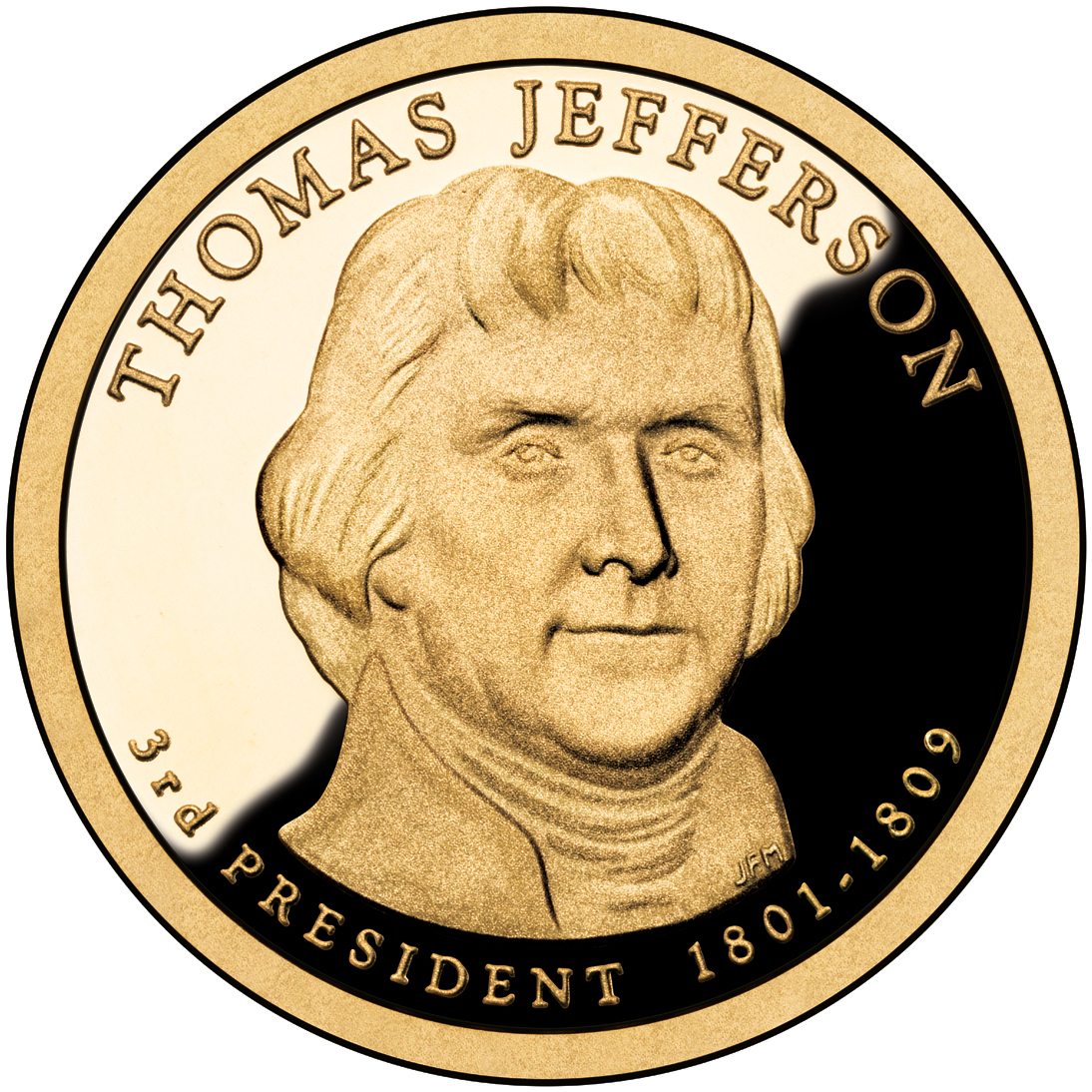
Jefferson dollars will be unveiled today in a ceremony at the Jefferson Memorial in Washington, D.C. They officially go into circulation tomorrow, August 16, 2007.

Jefferson dollar; U.S. Mint image via Associated Press

Jefferson dollars are the third in a series commemorating U.S. presidents. The series started with Washington and will proceed, three new coins a year, through all the presidents. (Quick: What’s the cheapest amount you can invest to get dollars representing all 43 administrations? Don’t forget Grover Cleveland’s anomaly . . .)

The Associated Press story notes three things of interest:

History: Fewer than a third of Americans know Jefferson was the third president. They did better with Washington as the first president. I had a few scary moments last year covering a Texas history course when kids kept answering either “George Washington” or “Abraham Lincoln” to the questions, “Who was the the Father of Texas?” (Stephen F. Austin) and “Who was the first president of the Republic of Texas?” (Sam Houston).

Economics: The vending machine industry loses about $1 billion each year when dollar bills jam in the machine’s vending mechanism. The U.S. Mint and vending machine operators hope the dollar coins catch on and help reduce those losses.

Dollar coins are unpopular: This is another in a series of efforts to “wean” people from paper dollars to coins — remember the Sacagawea dollar? The Eisenhower dollar? The Susan B. Anthony dollar? Just last week I got an Eisenhower dollar in change from our local Starbucks — they had mistakenly put it in the coin drawer for quarters. You can get dollar coins in change at the U.S. Post Office, but not at many other places. Our local post office occasionally sneaks a Euro into the dollar change mechanism. Bonus!

The Washington Post story carried more details of the poll, conducted by the Gallup organization for the U.S. Mint: Read the rest of this entry »


Key images for VJ Day, August 15

August 15, 2007

August 15, 1945, was VJ Day — the day that World War II ended in the Pacific Theatre. VJ is an acronym for Victory Japan. Victory in Europe, VE Day, was declared the previous April.

VJ Day is affiliated with a series of images that students of U.S. history should recognize; these images tell much of the story of the day and the events of the weeks leading up to it.

The most famous image is Alfred Eisenstadt’s photograph of an exuberant sailor kissing a swept-off-her-feet- for-the-moment nurse in Times Square, New York City. This is one of the most famous photographs from the most famous photographer from Life Magazine:

The Smack Seen 'Round the World, photo by Alfred Eisenstadt, Life Magazine, 8-15-1945 Eisenstadt coolly titled his photo “VJ Day, Times Square.” It came to be known as The Smack Seen ‘Round the World. It was fitting that the photo would be taken by Eisenstadt, since his work came to be a symbol of Henry Luce’s Life Magazine in a pre-television era when photography magazines like Life and Look were key news organs for the nation.

In a fun and continuing mystery, several people have claimed to be the sailor, or the nurse, through the years.

Before the victory celebration, there had to be a victory. Japan asked for conditional surrender discussions, but the Allied forces insisted on unconditional surrender. Japanese military officials were rather certain that, if the Soviet Union entered the Pacific War, Allied victory would be assured. Japan hoped to either get a conditional surrender agreement, according to some sources, or inflict heavy losses on Allied forces to get better surrender conditions, but before Russia entered the war. Russia and Japan had long-standing grudges against one another dating from before their earlier war in the first decade of the 20th century.

Read the rest of this entry »


Freakonomics moved

August 8, 2007

Stephen J. Dubner talks about the move of the blog to the New York Times site.  The old Freakonomics site still works, is revised, and links to the new blog home.


Disasters!

August 2, 2007

Popular Mechanics features the “Ten Worst Disasters of the Century,” showing how Americans fought back after natural disasters in — roughly — the 20th century.

It’s an odd century used — it leaves out the Galveston, Texas, hurricane disaster of 1900, but it includes Hurricane Katrina in 2005 (maybe it would more accurately be titled “disasters of the last 100 years”). The list is limited to natural disasters, so the Texas City harbor disaster of 1947 isn’t even considered, and the New London, Texas, school explosion doesn’t make the list. Those are quibbles; Texas teachers, and others, can supplement the list to accommodate other local, national and man-made disasters.

The Dust Bowl, which I would argue was greater than any of the other disasters listed, is also left off — too long a disaster?

The Popular Mechanics list is still a treasure trove for geography and history teachers. You might want to go out today to find the magazine at a newsstand, and pick up a copy or two. Throughout this post I sprinkled several links to the website of Popular Mechanics.

Here is the Popular Mechanics list of top 10 natural disasters, in chronological order:

1. 1906 San Francisco Earthquake

2. The Big Burn of 1910

3. 1918 Spanish Flu Epidemic

4. Tri-state tornado of 1925 (one tornado across Missouri, southern Illinois and Indiana)

5. The New England Hurricane of 1938

6. The Great Alaskan Earthquake and Tsunami of 1964

7. 1974 Super Tornado Outbreak

8. Mt. St. Helens Eruption, 1980

9. 1993 Storm of the Century (snow)

10. Hurricane Katrina, 2005

There you have ten disasters of the 100 years between 1905 and 2005. For a geography or history class, that could be ten days of study — a map each day, a history timeline each day featuring especially who was president at the time (and how the president reacted), a story of geology or meteorology or public health each day. At the end of a ten-day unit the class could have made ten different maps covering most of the U.S. but Hawaii, covering the technology developments of the 20th century, especially the development of radio, air travel, and space technology (weather satellites), and covering the development of human institutions to cope with disasters and prevent future disaster, especially communication, transporation, medical care, banking and other investments (the rise of the Bank of America from the San Francisco Earthquake is a great little piece of history all by itself), and government.

This is not the curriculum most of the state testing authorities envision. Students will remember the geography, history and technology of these ten days with a lot more clarity and depth than most other units a teacher might cover.

Alternatively, these could be ten Disaster Fridays, reinforcing geography and history in particular. I’m sure I’ve just scratched the surface — how do you use disasters, especially these ten, in your classroom now? Tell us about it in the comments, please.

Other disasters?

No rule says you have to stick with ten, or that you need to stick with the 20th century, or with natural disasters. Here are several other disasters that you may want to include in your curricula, again in chronological order:

The Great Chicago Fire of 1871 (October 8), which every school kid ought to know about; coupled with the fire in Peshtigo, Wisconsin, the same night, which was the deadliest fire in American history; news was slow to get out because nearly every person in Peshtigo died, and the town was literally burned off the map.

The blizzards of 1888 — the Schoolhouse Blizzard of January 12, which killed more than 200, mostly school students, and the Great Blizzard of 1888 which paralyzed much of the nation a couple of months later, from March 12 to March 14.

The Johnstown Flood, May 31, 1889 — a disaster seriously compounded by the folly of men and a leaky dam.  2,200 dead.

The Galveston Hurricane of 1900, memorialized in the best-selling history Isaac’s Storm. At least 8,000 people died in Galveston, Texas’s largest city — and maybe as many as 15,000. There were too many bodies to count. Galveston invented a new form of government to help recover from the storm, the city commission style of government, which has been adopted widely throughout the U.S. Another large hurricane struck Galveston in 1915, killing 235 people — but it was so small in comparison, it is usually forgotten.

The 1909 Cherry Mine Fire (Bureau County, Illinois) — 259 men and boys died in a coal mine fire.

Dawson, New Mexico, Mine Disaster, October 22, 1913. 263 dead.

The Sinking of the Steamer Eastland on Lake Michigan, July 24, 1915. 840 people died.

The Boston Molasses Disaster of 1919, which featured walls of hot molasses 35 feet high careening through the streets of Boston — 21 died.

The Tulsa Riot, 1921 — a race riot that killed 300 people and destroyed the African American “Wall Street.”

The Great Mississippi Flood of 1927, which shook the social and civic foundations of riverside cities and towns.

The Dust Bowl, 1931-1939

The Ohio River Flood of 1937, which killed over 200 and pushed a million people out of their homes.

The New London, Texas, School Explosion, March 18, 1937.  In Texas’s richest school district, a gas pipeline heated the building for free.  In the era before odorfactants were added to natural gas to alert people of leaks, no one suspected the leak.  Nearly 300 died in the explosion, mostly children.

The 1946 Aleutian Islands Earthquake and Tsunami, and the April Fools Tsunami in Hawaii. An earthquake registering 7.8 struck the Aleutian Islands in far western Alaska. Six people died there. 159 people died in Hawaii when the resulting tsunami struck several hours later — the death toll perhaps increased because many people thought the warnings of a coming wave to be an April Fool’s prank.

The Texas City Explosion, 1947

The Montana-Yellowstone Earthquake, 1959, a 7.3 shaker which killed 28 people and created a new lake, Quake Lake, on the Madison River.

The Watts Riots, August 1965.

The Detroit and Newark Riots, 1967. Yes, it was “the Summer of Love.” Still, there were 164 “civil disorders” (riots) in 128 different U.S. cities. Detroit and Newark were the worst.

The Yellowstone Fires, 1988.

The Great Flood of 1993 (Mississippi River).

The 1997 Red River Flood (North Dakota, Minnesota and Manitoba, Canada).

Good heavens. That’s a depressing list. Still, I wonder — have I left anything off? Tell me in the comments, if you see something missing.

Other sources:


Don’t let lesson plans strangle kids’ serendipitous learning and creativity

July 25, 2007

Here’s a woman — a homeschooler no less — who understands that lesson plans aimed at a state test can seriously damage a kid’s education. My only caveat is that in formal classrooms, such serendipitous learnings are encouraged from well-thought-out lesson plans and a very well prepared teacher who can deviate to meet the hot, rising curiosity of the kids in the moment.

At least I hope that’s what she understands.  This post on teaching history, from the ancient and often inaccurate This Country of Ours, by H. E. Marshall, gives me the cause to reserve endorsement of this school.


World War II in Texas: Japanese internment

July 23, 2007

Girl Scouts at Japanese Doll Day celebration, in Crystal City, Texas, internment center, 1943-45

“Girl Scout drama presentation for Hinamatsuri (Doll’s Festival), on Japanese Girl’s Day, at the Crystal City, Texas, internment facility operated by the Justice Department, 1943-45.

Each of us has pockets of ignorance; some of the pockets are larger than others.

How did I miss that there were Japanese-American internees in Texas? If I stumbled across that fact before, it really didn’t register. Reviewing the website for the University of Texas – San Antonio’s Institute of Texas Cultures, I came across the Spring 2007 Newsletter, which is dedicated to the Crystal City internment facility.

Crystal City is unknown to many other Texans, too, I wager. Study of a list of the War Department “Relocation” camps shows nothing in Texas. Surprise! The U.S. Justice Department also operated camps of interned Americans of Japanese descent. The War Department rounded up Japanese Americans in west coast states and their neighbors; the Bureau of Immigration and Naturalization Services, the old INS which was rolled into the Department of Homeland Security after the 2001 attacks on New York and Washington, arrested and detained Japanese-Americans from the rest of the United States. INS operated at least four such camps in Texas. Read the rest of this entry »


Even more on Odessa Bible class case

July 20, 2007

Oh, and, there’s more.

Also see Ed Brayton’s posts here:

Here’s the press release from the Liberty Legal Institute:

The ACLU put their initial complaint on-line, and may follow with more documents as the case progresses:

The Texas Freedom Network has sponsored high-level criticism of Bible study class curricula; their critiques forced changes in the curriculum used in Odessa, but the modified curriculum does not pass Constitutional, academic or Bible study muster, according to a careful report from Southern Methodist University (in Dallas) Bible study professor Mark Chancey. TFN has several reports and press releases on the general issue:

And from the local newspaper, the daily Odessa American:


Lewis & Clark: Enrichment sources for teachers and students

July 17, 2007

David Horsey of Seattle P-I, on the Lewis and Clark expedition

David Horsey is an editorial writer and cartoonist for the Seattle Post-Intelligencer — he won the Pulitzer Prize for editorial cartoons.  In 2005, the 200th anniversary of the Lewis and Clark Expedition, he retraced the path of the explorers from the Continental Divide to the Pacific.  Horsey photographed his journey, wrote about it, and made drawings.

This is a rich resource for anyone studying the opening of the West, and especially the Lewis and Clark Expedition, exploring the territory included in 1803’s Louisiana Purchase. Let’s hope the Seattle Post-Intelligencer keeps the site available for teachers and students.

Illustration by David Horsey, Seattle Post-Intelligencer.