Two portraits of Pete Seeger (with Judy Collins)

July 2, 2013

A couple of photos I stumbled on recently.

The Seeger family in 1921; the youngest one is Pete, in his father’s lap:

Seeger family, 1921

The Seeger Family, 1921 Pete Seeger, the now-93 year-old folk singer, is sitting on his father’s lap.  Pete’s father was musicologist Charles Louis Seeger, Jr.; his mother was the violinist Constance de Clyver Edson.  The other two children are probably Pete’s older brothers Charles, III, and John.  This photo probably was taken while Charles and Constance toured the American south to teach music, after his having to leave UCLA because of his pacifist stance during World War I.

And 92 years later, with Judy Collins:

Judy Collins and Pete Seeger, photo by David Rocco, at the Clearwater Festival in Hudson, New York, June 15, 2013.

Judy Collins and Pete Seeger, photo by the preservationist David Rocco, at the Clearwater Festival in Hudson, New York, June 15, 2013. (We think that’s Pete’s wife, Toshi, on the far right edge of the photo.)

More:


All is not lost, is it?

June 26, 2013

NPR moved offices earlier this year.

Tiny Desk Concerts provide a lot of fun in live performance in the offices of a radio network.  To document the move, musically, Tiny Desk called in OK Go.  OK Go is a favorite here at Millard Fillmore’s Bathtub — regular bathing music, you might say.

And in 223 takes, they recorded the move.

I’m especially fond of the elevator ride with Carl Kassell. (At least, that’s who I think it is.)

Who else can you recognize from NPR’s famous voices?

223 Takes – All Is Not Lost, OK Go

Details:

Published on Jun 3, 2013

The Tiny Desk has moved, and OK Go has helped make it so.

Earlier this year, we needed to figure out the best possible way to move my Tiny Desk from NPR’s old headquarters to our new facility just north of the U.S. Capitol. We wanted to go out with a bang and arrive at our new space in style, so our thoughts naturally turned to a catchy pop band we love: OK Go, whose unforgettable videos have been viewed tens of millions of times on YouTube.

Bandleader Damian Kulash used to be an engineer at an NPR member station in Chicago, so we figured he’d be up for helping us execute a simple idea: Have OK Go start performing a Tiny Desk Concert at our old location, continue playing the same song while the furniture and shelving is loaded onto a truck, and finish the performance at our new home. In addition to cameos by many of our NPR colleagues — Ari Shapiro, Audie Cornish, David Greene, Guy Raz, Scott Simon, Alix Spiegel, Susan Stamberg and more — this required a few ingredients: Number of video takes: 223; Percent used in final version: 50; Number of raw audio channels: 2,007; Percent used in final version: 50; Number of microphones: 5; Number of hard-boiled eggs consumed: 8, mostly by bassist Tim Nordwind; Number of seconds Carl Kasell spent in the elevator with OK Go: 98; Number of times Ari Shapiro played the tubular bells: 15; Number of pounds the tubular bells weighed: 300; Number of times the shelves were taken down and put back up: 6; Number of days it took to shoot: 2; Number of cameras: 1

OK Go played “All Is Not Lost” from Of the Blue Colour of the Sky, with words tweaked by the All Songs Considered team. And so begins a new era for the Tiny Desk, after 277 concerts (counting this one) in our old home. — BOB BOILEN

FEATURING
Dan Konopka, Damian Kulash, Tim Nordwind, Andy Ross

CREDITS
Producers: Bob Boilen, Mito Habe-Evans
Directors: Mito Habe-Evans, Todd Sullivan
Audio Engineer: Kevin Wait
Assistant Producer: Denise DeBelius
Camera Operator: Gabriella Garcia-Pardo
Supervising Producer: Jessica Goldstein
Editor: Mito Habe-Evans
Assistant Editor: Gabriella Garcia-Pardo
Production Assistants: Lorie Liebig, Lizzie Chen, Gabriella Demczuk, Marie McGrory, Andrew Prince
Executive Producers: Anya Grundmann, Keith Jenkins
Special Thanks: OK Go and our cast and crew of volunteers.

OK Go at the Albany Tulip Festival

OK Go at the Albany Tulip Festival. Wikipedia image

More:


“Rise Again”: How a sea chanty saved a sailor, and why government regulation saves lives

May 30, 2013

Stan Rogers?

P. Z. Myers was feeling a tad puny, though he’s in Minnesota where that Texas phrase might not win understanding.  In any case, he queued up Nathan Rogers singing his late father’s most famous tune, “The Mary Ellen Carter.”

That was Stanfest, an annual music festival dedicated to Stan Rogers, who died tragically trying to put out an airplane fire, in 1983. (Stanfest is July 5, 6 and 7 in 2013. Actually, Ricky Skaggs kicks it off this year on July 4, a day early.)

The Mary Ellen Carter” is a bit of an odd song, probably best performed where a bunch of people can join in, obviously fueled by a few pints to the guitar players, and seemingly not correct if not done with at least one twelve-string in the band. More, it’s a song with a story that you may not get the first time through, but you should get.  Stan Rogers’s poetry is not simple.  He tells complex stories.

Home in Halifax, one of three albums by Stan Rogers on which “The Mary Ellen Carter” appears. The song is also on Between the Breaks . . . Live! and The Very Best of Stan Rogers.

It’s a song about a group of men who were aboard the Mary Ellen Carter when that ship scuttled.  The song describes their work to patch her up, to raise her from the depths and make her “rise again.”  But we never learn whether the ship was refloated.  That’s not the point of the song.  It’s a song about getting back up when you’ve been scuttled, when you’ve got holes punched in your side, and you’re under water.

That doesn’t get lost on fans of Stan Rogers, nor others who listened to the song over the years.

The song has become a classic of the genre and many artists covered it even before Rogers’ death, including Jim Post who began performing it in the 1980s, as did Makem and Clancy, and the English a cappella trio, Artisan, who went on to popularise their harmony version of it in UK folk circles throughout the 1980s and 1990s, and Portland, Maine-based folk group Schooner Fare. Ian Robb recorded it with the other members of Finest Kind on his album From Different Angels. It was also recorded by the seven piece Newfoundland band The Irish Descendants as part of the tribute album Remembering Stan Rogers: An East Coast Tribute performed by a large number of acts at Rogers’ favorite venue in Halifax, Dalhousie University; the album is out of print though occasionally available from online sellers; the track does not appear on any of the band’s own albums.

It was also recorded by Williamsburg, Virginia-based Celtic rock band Coyote Run as part of their self-titled Coyote Run album. According to liner notes with their 10 Years and Running retrospective album, Coyote Run‘s recording of the song was done with the same 12-string guitar that Stan Rogers himself had used when recording the song.

As a tribute to Stan Rogers, “The Mary Ellen Carter” has been sung to close the annual Winnipeg Folk Festival every year since his death.

Surely you’ve heard it, no?

English: Winnipeg Folk Festival 2006.

Winnipeg Folk Festival 2006. “The Mary Ellen Carter” is sung to close this festival, each year since 1983. Wikipedia image

According to the lore, the song actually saved a sailor’s life once, in 1983, with the sinking of the Marine Electric.  The pedestrian version of the story:

So inspiring is the song that it is credited with saving at least one life. On February 12, 1983 the ship Marine Electric was carrying a load of coal from Norfolk, Virginia to a power station in Somerset, Massachusetts. The worst storm in forty years blew up that night and the ship sank at about four o’clock in the morning on the 13th. The ship’s Chief Mate, fifty-nine-year-old Robert M. (“Bob”) Cusick, was trapped under the deckhouse as the ship went down. His snorkeling experience helped him avoid panic and swim to the surface, but he had to spend the night alone, up to his neck in water, clinging to a partially deflated lifeboat, and in water barely above freezing and air much colder. Huge waves washed over him, and each time he was not sure that he would ever reach the surface again to breathe. Battling hypothermia, he became tempted to allow himself to fall unconscious and let go of the lifeboat. Just then he remembered the words to the song “The Mary Ellen Carter”.

And you, to whom adversity has dealt the final blow
With smiling bastards lying to you everywhere you go
Turn to, and put out all your strength of arm and heart and brain
And like the Mary Ellen Carter, rise again.

Rise again, rise again—though your heart it be broken
Or life about to end.
No matter what you’ve lost, be it a home, a love, a friend,
Like the Mary Ellen Carter, rise again.

He started to sing it and soon was alternately shouting out “Rise again, rise again” and holding his breath as the waves washed over him. At seven o’clock that morning a Coast Guard helicopter spotted him and pulled him to safety.[1] Only two men of the other thirty-three that had been aboard survived the wreck. After his ordeal, Cusick wrote a letter to Stan Rogers telling him what had happened and how the song helped save his life. In response, Cusick was invited to attend what turned out the be the second-to-last concert Rogers ever performed. Cusick told his story in the documentary about Stan Rogers, One Warm Line.[2][3]

Truth is stranger and better than fiction once again. You couldn’t convince me that story was plausible, if it were fiction.

Cusick’s story has a coda, though, and it’s an important one.  From the survivors come not only tales of the trials, but information that, if listened to, can prevent future tragedies.

In a 2008 story in the Hampton Roads Virginian-Pilot, Bob Cusick related just how close and hard death breathed on him that night:

Bob Cusick is “still kicking.” That’s no small feat for any man about to turn 85. It’s especially notable when you are one of only three sailors to survive what was among the nation’s worst maritime disasters.

Tuesday will mark the 25th anniversary of the sinking of the coal ship Marine Electric in a blizzard off Chincoteague. Thirty-one sailors died.

Cusick was the ship’s chief mate. He still has nightmares about how the rusted relic of World War II rolled before the crew could launch its lifeboats. He can still feel the water swallowing him and hear the men screaming for help in the darkness.

But the nightmares aren’t as frequent now.

“It’s really been a long time,” he said from his home in New Hampshire. “And evidently, a lot of good came from that ship’s sinking.”

Most of it because of Cusick and the other two survivors’ testimonies.

Before we hear the good, let’s get the facts:

The Marine Electric was what mariners call a rust bucket. Its huge cargo hatches were warped, wasted away and patched cosmetically with putty and duct tape. The deck was cracked, and the hull even had a hole punched through by a bulldozer.

Still, inspectors cleared it to sail, and it routinely hauled pulverized coal from Norfolk to a power plant near Boston.

Its last trip was into the teeth of a violent nor’easter. The aging ship was no match for the weather. For more than 24 hours, the Marine Electric was battered by swells that stretched 40 feet from trough to crest.

For part of the trip, the ship had been diverted to escort a trawler into Chincoteague.

Not long after resuming its course, the Marine Electric started taking on water.

Seas crashing over those corroded decks rushed inside the hatches, mixing with the powdered coal to create an unstable slurry.

The water couldn’t be pumped out, because the ship’s owners had welded covers over the drain holes.

Cusick was lucky. He had just come off watch and was wearing an insulated coat his wife had insisted he buy and a raw wool cap she had knitted for him. They would eventually make the difference between life and death.

Cusick swam for an hour in the tempest before finding a swamped lifeboat. He climbed inside and wedged himself beneath the seats, slipping under the 37-degree water, to escape the howling winds. He gasped for breaths between waves.

Cusick found strength in a song about the shipwreck of the Mary Ellen Carter, and folksinger Stan Rogers’ refrain to “rise again, rise again.”

Cusick would spend 2 hours and 45 minutes in the frigid water, nearly double what Navy survival charts claimed was possible.

It was after dawn when a Coast Guard helicopter from Elizabeth City, N.C., running on fumes, dropped a basket into his lifeboat and Cusick was hoisted to safety.

Rogers’s song, and Cusick’s story, were put to great use.

As a result of this accident, and the detailed records of neglect Cusick kept, the Coast Guard launched its renowned rescue swimmers program. Ships sailing in cold waters are required to provide survival suits to their crews; safety inspections are more rigorous; lifeboats must have better launching systems; and rafts must have boarding platforms to allow freezing sailors to climb inside.

We lived on the Potomac when the Marine Electric went down.  We had the daily, sometimes hourly updates, and the growing sense of tragedy.  I well recall my amazement that anyone survived in the cold water.  In the 30 years since, I had never heard the full story.

This is why we study history.  This is why we write history.  This is why we revel in history, even faux history, being turned into art by the poets and troubadors.

Knowing history, and knowing the art, we can stand up to demand that money to inspect ships for safety be restored to the federal budget, that money to build safe air transport be revived, that politicians stop blocking the doors to the hospitals and clinics (Rick Perry, Greg Abbott), and that justice be done on a thousand other scores where cynics and highway robbers tell us it cannot be done or it’s too expensive.

And then we all may, as the Mary Ellen Carter, rise again.

Marine Electric sank on February 12, 1983; Stan Rogers died less than four months later, on June 2, 1983, returning home from performing at the Kerrville Folk Festival in Texas.  Listen to Mr. Cusick’s story, and listen to Mr. Rogers’s telling of his:

More, and resources:


Feynman: Last Journey of a Genius (NOVA, 1998)

May 12, 2013

Feynman and the famous C-clamp experiment -- in a glass of ice water -- at the Challenger Commission.

Feynman and the famous C-clamp experiment — in a glass of ice water — demonstrating how rubber O-rings failed in launch, at the Challenger Commission. (Why are there so few good photos of this event?)

Geography and history teachers, you should watch this on the day after Feynman Day.  Can you make use of this in your classes — say, after the state tests?

How about you physics and science teachers?

English: Green: Tuvan People's Republic

Tuvan People’s Republic, marked in green. Wikipedia image

In 1998 NOVA produced and broadcast a film that rather defies categorization.  Biography? Drama? Humor? Frustrated travelogue?

“Last Journey of a Genius” tells a lot of biography of Dick Feynman, but it focuses on his unusual drive to learn about, and travel to an obscure Central Asian country/province/area/culture called Tannu Tuva.  Feynman’s close friend Ralph Leighton plays a big role in this film, too.  This film reveals more about the character of Richard Feynman, his overwhelming curiosity and humanity, than you can get any other place, including his memoirs (which every civil human should read).

NOVA captivates me almost every week.  Good fortune found me in front of a television somewhere when this was first broadcast.  For several reasons, I’ve been unable to get a VHS, or a DVD version of the story despite many attempts over the years.

But fortune and good history smile again.  Open Culture collected the film, and it’s available for free in their documentary section.

Drumming, story telling, geography, Cold War politics, ballet, more drumming, some nuclear physics, astronomy, a lot of good humor, and a plea for orange juice.  It still makes me smile.

From Open Culture:

In 1989, PBS’ NOVA aired The Last Journey of a Genius, a television film that documents the final days of the great physicist Richard Feynman and his obsession with traveling to Tannu Tuva, a state outside of outer Mongolia, which then remained under Soviet control. For the better part of a decade, Feynman and his friend Ralph Leighton schemed to make their way to Tannu Tuva, but Cold War politics always frustrated their efforts. The video runs roughly 50 minutes and features an ailing Feynman talking about his wanderlust and their maneuverings. He died two weeks later, having never made the trip, though Ralph Leighton and Feyman’s daughter Michelle later landed in their Shangri-La. Her journey was recorded by the Russian service of the BBC.

The film now appears in the Documentary section of our collection of Free Movies Online.

via Metafilter

Related Content:

Richard Feynman’s Physics Lectures Online

The Pleasure of Finding Things Out

Hang on to this link for Feynman Day 2014 (May 11).  What’s your favorite Feynman story?

This kind of history and science is exactly the sort of stuff CSCOPE critics in Texas, and critics of the Common Core standards, worry that children will see.  Very odd, because stuff this good is not even mentioned in CSCOPE, nor in CCSS.

Tip of the old scrub brush to Kenny Darrell, who found this film and let me know about it.

More:


Where have all the flowers gone? A bunch to Pete Seeger on his 94th birthday today

May 3, 2013

Pete Seeger was born on May 3, 1919.  He turns 94 today.

Pete is an alumnus of the Louis August Jonas Foundation‘s Camp Rising Sun, a little nugget that appealed to me when I signed up as a counselor at the Rhinebeck campus in 19#&.  Pete and Arlo Guthrie teamed up for a series of concerts at East Coast venues that summer, including Wolftrap, Saratoga, Tanglewood and others.  Pete lives just down the river from Rhinebeck, near Beacon — but driving home from one of those venues was just a bit too far.  Pete stopped off at his childhood haunts and spent a day with us.

I hoped to invite him to Salt Lake City.  Pete said he might make such a trip, but it was unlikely — and impressed me with his reasoning and dedication to principle.  He explained that he was sticking closer to home as he approached 65, because there was work to do there.  He said he’d attended a local school board or PTA meeting to voice an opinion on some issue in Beacon.  One of the local newspapers complained he was “an outside agitator.”  That stung, he said — he’d been a resident in the town for more than 30 years.

Instead of complaining, though, he started thinking.  He said he’s traveled the world and worked for causes for other people in other towns; and he said he realized that one’s life’s work might be dedicated to making life better where one lives.  So he’d decided to campaign to clean up his local river, the Hudson . . . you’ve heard of the Sloop Clearwater?

Pete’s dedication to making things better, with local action where one may make a huge difference, stuck with me, and it should stick with all of us.

Last month I was doodling around Twitter, and discovered Pete had signed up for a Twitter account — years ago.  He tweets regularly.

He’s an encouragement to all of us.  He boasts that there is no group he has ever refused to sing for, and in his typical humility, he claims that he can get any group to join, so they do all the heavy lifting.  During the pre-inaugural festivities for President Obama’s first inauguration I was happy to see Bruce Springsteen singing some of Pete’s work — highly appropriate for any president’s inauguration — and I thought it would be more fitting only if Pete was singing himself.  Then Springsteen brought Pete out on stage to close out.

Pete keeps up a schedule of concerts, most for causes.  He sails with the Clearwater, campaigning for clean water on the Hudson River (much accomplished) and community efforts to change things for the better.  As you will see below, he pulls his own when raising the sails.    He cuts his own wood to heat the house he built.

Considering his age, 94, we might wonder why he keeps going, doing so much all the time.

Why does he keep on going?  He might be telling us, from this 2012 recording.

More:  

English: This graphic was used for the cover o...

Cover of Pete Seeger’s single release (same photo on an album). The banjo features Pete’s traditional “This machine surrounds hate and forces it to surrender,” a twist on a sticker famously seen on his old friend Woody Guthrie’s guitar. Wikipedia image

Some material in this post is recycled from an earlier post.

Save


Over 65? Why go on? Pete Seeger shows us

April 2, 2013

Intrigued to learn our old friend Pete Seeger signed up for a Twitter account — years ago.  Pete tweets regularly.

He’s an encouragement to all of us.  He boasts that there is no group he has ever refused to sing for, and in his typical humility, he claims that he can get any group to join, so they do all the heavy lifting.

Pete keeps up a schedule of concerts, most for causes.  He sails with the sloop Clearwater, campaigning for clean water on the Hudson River (much accomplished) and community efforts to change things for the better.  As you will see below, he pulls his own when raising the sails.    He cuts his own wood to heat the house he built.

Pete will be 94 on May 3, 2013.

Why does he keep on going?  He might be telling us, from this 2012 recording.

More:  

English: This graphic was used for the cover o...

Cover of Pete Seeger’s single release (same photo on an album). The banjo features Pete’s traditional “This machine surrounds hate and forces it to surrender,” a twist on a sticker famously seen on his old friend Woody Guthrie’s guitar. Wikipedia image


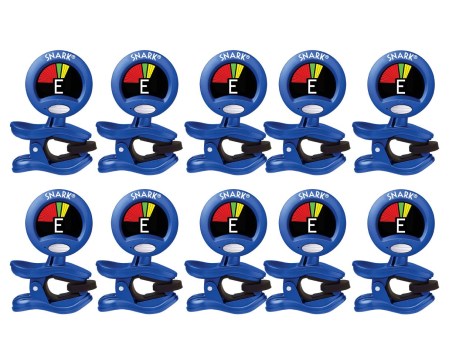
Just the gift for neo-con trolls! A Snark Tuner!

March 18, 2013

Well, actually it’s a Snark-brand tuner.  But when I saw the name, my mind just reeled with possibilities.

A Snark Tuner!  A Snark Tuner.

Your snark is not quite up to snuff?  Tune it up!

From a notice I got from Hello Music!

Snark tuners! Alas, it’s for the benefit of guitar players, not to sharpen the snark of internet trolls, nor for other snarky commenters.

Snark tuners! Alas, it’s for the benefit of guitar players, not to sharpen the snark of internet trolls, nor for other snarky commenters. Suggested originally by the late, lamented Hello Music.

It’s actually a good buy, for a guitar player.  But if you were looking to snarken up your snark, you’re out of luck — unless your snark comes in whole tones . . .

Close-up of the Snark SN-1tuner. Close-up of the Snark Tuner – -50 to +50, you know if your snark is spot on! I mean, you know if your guitar is in tune.

Close-up of the Snark SN-1tuner. Close-up of the Snark Tuner – -50 to +50, you know if your snark is spot on! I mean, you know if your guitar is in tune.

Close-up of the Snark SN-1tuner. Close-up of the Snark Tuner – -50 to +50, you know if your snark is spot on! I mean, you know if your guitar is in tune.

Technical specifications:

Overview
What It Is: This is the Snark SN-1 Clip On Tuner in Blue. The SN-1 has a Full Color Display that rotates 360 degrees, and a clip that stays put when you clip it on. You can transpose keys, calibrate pitch, and there’s even a tap tempo metronome. This Snark tuner has a High Sensitivity Vibration Sensor, and it can be used on front or back of headstock.

Why this is a great opportunity: Clip on Vibration sensitive tuners are great for tuning in a loud environment, especially with acoustic guitars. This one has a large colorful display that’s easy to read, but the real kicker is the built in metronome. Win.

Hello Music SKU: HMSNA3140

Specifications Features:
– Full Color Display
– Display Rotates 360 Degrees
– Stay Put Clip
– Fast and Deadly Accurate
– Tap Tempo Metronome
– Pitch Calibration 415-466 Hz
– Transpose Feature

Woulda been useful when I was performing.  Would Lewis Carroll have used one, do you think?

May get one yet, even though it won’t help with the internet.  How times change.

Even though it’s not what I imagined, like telling the difference between a burro and a burrow, I know several people who need to have this recommended to them — how about you?

“Fast and Deadly Accurate.”  I like that.

More:


Van Cliburn’s farewell

March 3, 2013

Van Cliburn performing at the Moscow Conservatory, 1958.

Van Cliburn performing at the Moscow Conservatory, 1958. Photo from the Van Cliburn Foundation; photographer unidentified.  Note the roses on the stage.

As I write this, the telecast of the funeral just started.

Interesting times.

Older brother Dwight played piano, at least through high school.  We had a Gulbranson upright in the living room in our home on Conant Avenue in Burley, Idaho.  I suspect his high school activities and social life cut out the actual lessons, but he still played.  Especially when he was bothered by some issue — if he broke up with a girlfriend, we might be awakened sometime after midnight with Dwight’s playing.

How could anyone sleep through it?  He’d open with Tchaikovsky’s Piano Concerto No. 1.  It’s stirring especially when it bounces you out of bed at 1:00 a.m.

I don’t know for sure that Dwight was emulating Harvey Lavan Cliburn, Jr., but it was, after all, just a year or so after Cliburn jolted the music world, and the world of the Cold War with his stunning win at the First Tchaikovsky Competition in Moscow, USSR — playing that Tchaikovsky piece with verve and power that brought tears to the cheeks of every Russian, except perhaps the teen girls who flocked to the competition to see the lanky Texan and treat him like a prehistoric Mick Jagger.

English: I took photo with Canon Camera.

Van Cliburn Way in Fort Worth’s Cultural District – Wikipedia image

Hidden throughout classical music we find pieces that stir our souls the way Tchaikovsky can in that concerto.  Generally these pieces stay hidden.  It takes a star like Van Cliburn at an event like the Tchaikovsky competition to make those pieces part of world culture — such big parts of world culture that kids in small potato-farming towns in southern Idaho learned the music before they learned Chubby Checker and Fats Domino.

Here in Dallas we’ve been hearing a lot of that opening snippet of the concerto, on radio and television, since Cliburn died last Wednesday.  Kathryn’s choir, the Arlington Master Chorale, got invited to provide a third of the choral force for the funeral — better than a front row seat, a choir seat, to actually take a role in the service.

You can read the history swirling around Cliburn in one of the good obituaries or remembrances  (see notes below).  His funeral today in Fort Worth, Texas, at Broadway Baptist Church, cannot be more than simply a cap to a life lived exceedingly well.  And fittingly, as he brought people of diverse and often opposing viewpoints together to agree on fine points of culture, to discover they could agree on broader points of politics, economics and morality, his funeral offers some interesting viewpoints.

  • Music makes up most of the funeral service.  Broadway Baptist’s Chancel Choir and Rildia Bee O’Bryan Cliburn Organ were joined by the Fort Worth Symphony Orchestra, and 200 more voices from the Arlington Master Chorale and Schola Cantorum.  300 voices make this combined choir slightly smaller than the Mormon Tabernacle Choir in Salt Lake City.
  • He’s known as a pianist, but Cliburn’s love was vocal music, particularly opera.  No piano was used at the service.
  • Cliburn loved Russia from a very young age, when his mother got a photographic atlas of the world, and he took a shine to the onion-domed churches of Moscow.  The choirs got three songs to sing, in Russian.  They got the music and lyrics after noon on Saturday for a 3:00 p.m. Sunday performance.  Astonishing what good musicians can do in a language they don’t speak, in just a short period.
  • One of the Russian songs is known in English as “Moscow Nights.”  Cliburn played and sang it for Mikhail Gorbachev, at the White House, in 1980 1987.
  • Broadway Baptist was Cliburn’s home church.  True Baptist, he usually sat in the last row.
  • The daughter of Mstislav Rostropovich, Olga spoke (Olga? Elena?), bringing a note of condolence from Russian President Vladimir Putin.  Fort Worth Republican U.S. Rep. Kay Granger read the note of condolence from U.S. President Barack Obama.  Former President George Bush remembered Cliburn’s performance of the National Anthem at the first game at the Ballpark in Arlington, where the Texas Rangers play.  Gov. Perry noted Cliburn’s polishing of the reputation of Texas.  Imelda Marcos, widow of Philippines’s president (or dictator) Ferdinand Marcos, sent an enormous floral arrangement of red roses outlined in yellow roses.  Democrat or dictator, socialist to fascist, highest culture to dusty-booted cowboy, people loved Cliburn.
  • Baptists loved Cliburn for his music, for his fellowship, and for the fame and good reputation he brought to the Baptists, Fort Worth and Texas.  No one ever challenged his sexual orientation from the church, so far as is recorded.  Broadway Baptist left the Baptist General Convention in 2010 over the congregation’s stand for gay members.
  • Within the past two weeks Gov. Rick Perry expressed his hope the Boy Scouts will keep a ban against homosexuals in leadership positions.  Today he didn’t hesitate to sing praises of Van Cliburn.

More:


Trombone time: Dave Finlayson and GoPro on the slide

February 6, 2013

Trombone players are nice guys, usually.  Something about the mellow tone, the difficulty of mastering a non-push-button (valve) instrument, and having to fill in the low parts where the egotistical trumpets can’t go.

My older brother Wes played trombone, and that sucked me in — the junior high band didn’t have any trombones, and some neighborhood fink ratted out that I had one in my closet.  My playing ended in college.  Younger son James played first chair in the Duncanville Wind Ensemble, a group that steps a lot of musicians right into pro slots; older son Kenny switched from trumpet to baritone in the same group (you can hear Kenny in that recording of the Wind Ensemble).  In Kathryn’s family, it’s almost required be a trombonist.  Uncle Darrell plays, still, in a symphony in Utah County, with various other uncles and cousins staffing bands from Ogden south to Provo in Utah.

So, of course, Dave Finlayson’s marriage of a short piece and a GoPro camera appealed to me right off:

You don’t recognize Dave Finlayson?

From GoPro’s site:

David Finlayson set out to make a GoPro video with his trombone and ended up with a surprise – a viral video with hits numbering over one million! Check out the extended cut David and GoPro produced — orchestra night, anyone? David is a trombonist with the New York Philharmonic – check out David’s channel for more videos at http://goo.gl/y1Hrj

More:


“If a tree falls” — Bruce Cockburn

January 20, 2013

Bruce Cockburn (pronounced “coe-burn”), “If a Tree Falls.”  From his 1989 album, “Big Circumstance.”

Canada’s music copyright group SOCAN honored Cockburn in a program last month (all links added here):

The star-studded evening at Toronto’s Roy Thomson Hall is a chance for the Society of Composers, Authors and Music Publishers of Canada to celebrate the best the Canadian music scene has to offer.

Bruce Cockburn performing at the City Stages f...

Bruce Cockburn performing at the City Stages festival in Birmingham, Alabama, United States. Photo: Wikipedia. Some guitar afficianadoes consider Cockburn in the top ranks of guitar wizards. A story we’re working to verify holds a reporter asking Eddie van Halen how it feels to be the world’s best guitarist, to which van Halen is said to have responded: “I don’t know. Ask Bruce Cockburn.”

Cockburn, who has had a 35-year career that produced hits such as Wonderin’ Where the Lions Are and If I Had a Rocket Launcher, will be presented with the SOCAN Lifetime Achievement Award.

Musician Bruce Cockburn gets the lifetime achievement award after 35 years as a singer-songwriter. (Canadian Press)  A Canadian Music Hall of Fame member and 12-time Juno award-winner, Cockburn will be serenaded by Serena Ryder as part of the ceremony.

He’s been around for 35 years, and I don’t have any of his stuff in my library?  How did that happen?

Tip of the old scrub brush to Jim Stanley.

More:


Old and Wise? Stones older than Supreme Court

December 8, 2012

Some wag at Associated Press noticed recently that the Rolling Stones’ average age puts them older than the U.S. Supreme Court.  (Did some one notice this before AP?)  Franklin Roosevelt criticized the Court as “nine old men.”  Women have improved the Court, but age sometimes makes us wonder, still, if new ideas wouldn’t help.

Rolling Stones in 2012, 50th anniversary

Left to right, Charlie Watts, Keith Richard, Ron Wood and Mick Jagger; Bill Wyman absent from this photo; Rolling Stones, 50th Anniversary Tour 2012 – Samir Hussein photo WireImage, via Rolling Stone magazine. Other than no ties, they dress not-too flamboyantly.

Maybe we should wonder about increasing the wisdom that comes with age:

Rolling Stones:

Mick Jagger, 69

Keith Richards, 68

Charlie Watts, 71

Ronnie Wood, 65

Bill Wyman (rejoining them on tour), 76

Average age:  69.8 years (calculated from whole years only)

U.S. Supreme Court:

Antonin Scalia, 76

Anthony Kennedy, 76

Clarence Thomas, 64

Ruth Bader Ginsburg, 79

Stephen Breyer, 74

John G. Roberts, 57

Samuel A. Alito, Jr., 62

Sonia Sotomayor, 58

Elena Kagan, 52

Average age:  68.4 years

U.S. Supreme Court, Roberts Court 2010 – Back row (left to right): Sonia Sotomayor, Stephen G. Breyer, Samuel A. Alito, and Elena Kagan. Front row (left to right): Clarence Thomas, Antonin Scalia, Chief Justice John G. Roberts, Anthony Kennedy, and Ruth Bader Ginsburg – Wikimedia image. This bunch wears less colorful, but sillier costumes. Justice Ginsburg tends to favor neckwear the same way Keith Richards does; what else might they have in common?

A wise-beyond-his-teen-years camper at Camp Rising Sun of the Louis August Jonas Foundation, in the 1960s or early 1970s, observed, “You cannot be both young and brave, and old and wise.”  Certainly one would hope to achieve the happier medium of brave and wise (not necessarily in that order), but humans being who we are and experience being the master teacher that it is, we find ourselves on one end of both spectra, either wizened in age, or brave perhaps because of youth.

The Stones, celebrating their 50th year as a band in 2012, probably rock better than the Court does.  One can’t help wondering whether the wisdom of the Stones wouldn’t serve us better than that of the current court.  Ironically, those most wise at the Court tend to be the younger ones (Breyer definitely excluded).  I’d be inclined to swap out Alito and Scalia  for any two of the Stones.  Maybe Roberts for a third.

Thomas?  Well, he’s almost a contemporary, and I had lunch with him a couple of times (Senate staff).  I hate to criticize a lunch companion so.  But comparing Jagger’s record at the London School of Economics with Thomas’s record in academia, yeah, I could be persuaded.  I dealt with Breyer, too (not at lunch), and am inclined to think he could rock pretty well.

Perhaps the answer is that we need more rock and roll in the halls of justice.  Pete Seeger, Arlo Guthrie and Bruce Springsteen, among others, would probably agree.

If both groups banned the use of hair dye, would it improve anything they do?

Which bunch would you rather have dispensing final decisions on justice?  Which bunch would you prefer to see in concert?

More:


Flash mob in the BYU library

December 2, 2012

When flash mobs go Mormon, and invade sacred spaces like libraries, in Provo, Utah . . . well, that’s pushing the boundaries a bit, and telling the aging of the ritual, too.

How many times have you sung in the atrium of a library and thought it would be a great place for a choir?

Notes from the BYU Singers at YouTube (I added links, except for the first YouTube link):

http://youtu.be/LkE_vk86fq0?t=1h7m10s is the link to hear the BYU Singers perform it in concert!

The BYU Singers appear out of the crowd to sing O Sapientia in the BYU Library. For a brief minute, the library stood still! The audience was captivated, and asked for more. We told them that it sounds better live and invited them to our concert!

And, in comments:

Thank you so much for listening to the BYU Singers! Some viewers asked for a recording of us singing “O Sapientia” by Bob Chilcott without the background noise of the library. We’ve put a link into this video’s description, as well as in an annotation during the first 10 seconds of the video. The link goes directly to us singing “O Sapientia” during a broadcast of our concert on Saturday, November 17, 2012 in the DeJong Concert Hall at BYU. Thank you again for listening!

When I attended college at Utah’s senior (and superior) educational institution (back when Dinosaur Jim Jensen was hunting them live in Central Utah), J. Willard Marriott gave $1 million to the University of Utah to finish the library, and a couple of years later gave $1 million to BYU to finish the basketball center.  We noted that Marriott was a good judge of where the priorities lay at each institution.  Since then, BYU built a new library which is, I hear, quite glorious as a study location.  Except, of course, it’s located on the campus of BYU.  If you’re studying late nights there, let’s just say you’d better have had a good night’s sleep the previous week, because caffeine is going to be hard to come by.

I think the Franklin Stewart Harris Fine Arts Center, home of the DeJong Concert Hall, is the only college building in this nation named after a relative of mine.  In the center of an academic institution that often troubled me deeply, it was the site of many a pleasant day in extension classes (here’s to you, Max Golightly), student performances, and debate headquarters.  I’ve taken solace in the building’s being dedicated to arts and performance, which transcends all the other problems I have with the school.

Those kids sing pretty well, don’t you think?

Did you also notice?  No one shushed them.  I mean, it sounded pretty noisy for a library — but it’s still a library!

Tip of the old scrub brush to Evelyn Earl Jeffries.

More:


Flash mob Carmina Burana

November 13, 2012

Oh, the standards on flash mobs just keep getting pushed higher and higher.

Beethoven‘s “Ode to Joy” chorus?  Easy Sunday-afternoon-in-the-plaza piece.

Carl Orff‘s Carmina Burana? Sure, it scores on the cool side; but a performance is really a little more demanding than Beethoven’s most whistlable tune, isn’t it?

Is this in Vienna?  In a train station?  It features the Volksoper Vienna.  And once again, we get the wonderfully comical entrance of the actual tympani, without which Carmina would be impossible, no?

Details, in German:

SolistInnen, Chor, Orchester der Volksoper Wien boten im April Fahrgästen und Passanten eine besondere Performance. Die KünstlerInnen lösten sich aus der Menschenmenge – eine “Passantin” begann, weitere “PassantInnen” – sowie als ÖBB-MitarbeiterInnen verkleidete KünstlerInnen – setzten nach und nach ein.: 558,438

http://www.volksoper.at
http://www.ppmzweinull.com/ppmzweinull2.html

What’s next?  Will someone do a Carmina while actually roasting a swan, and offer slices of the poor bird?

Okay, here’s one I’d like to see:  Aaron Copeland’s Rodeo, complete with Agnes Demille choreography.  Is there time for someone to get it put together for the Fort Worth Fat Stock Show and Rodeo?  The Houston Stock Show?  Wouldn’t it look grand in Grand Central Station?

More:


Woody Guthrie’s “Sinking of the Reuben James”

October 31, 2012

Woody’s recording of the song, with some good photos of the DD 245 U.S.S. Reuben James, the German U-boat that sank her, and two later ships that carried the same name:

From the YouTube description:

Woody Guthrie‘s song written shortly after the sinking of the USS Reuben James DD-245; Slideshow of DD 245, DE 153, FFG 57 and U 552 with a few other notable photos included.

More:

English: PACIFIC OCEAN (July 8, 2010) The Oliv...

English: PACIFIC OCEAN (July 8, 2010) The Oliver Hazard Perry-class guided-missile frigate USS Reuben James (FFG 57) conducts training exercises supporting Rim of the Pacific (RIMPAC) 2010 exercises. RIMPAC is a biennial, multinational exercise designed to strengthen regional partnerships and improve interoperability. (U.S. Navy photo by Mass Communication Specialist 2nd Class Jeremy M. Starr/Released) (Photo credit: Wikipedia)


MacArthur grants announced; 23 lucky people to follow, or not

October 2, 2012

I got the press release three minutes early, actually — not that I could have gotten anything published in that time.  At the promised time, in other words.

MacArthur grant announcement time!  It’s one of those things I take some delight in, to see who are the unsung (usually) from whom much will be expected.  With 23 grantees this year, it’s about as much fun as the Rhodes Scholar announcements.  Rhodes Scholars at least know they are in contention, having had to apply and go through rigorous interviews.  MacArthur fellows don’t know they’ve been nominated.

So, of course, the stories about the grantees often start with the surprise announcement.  The Foundation’s press release starts there, too.  I wonder how many news stories will replicate the press release in that?

23 MacArthur Fellows Announced
One call out of the blue – $500,000 – No strings attached

The MacArthur Foundation today named 23 new MacArthur Fellows for 2012. Working across a broad spectrum of endeavors, the Fellows include a pediatric neurosurgeon, a marine ecologist, a journalist, a photographer, an optical physicist and astronomer, a stringed-instrument bow maker, a geochemist, a fiction writer, and an arts entrepreneur. All were selected for their creativity, originality, and potential to make important contributions in the future.

The recipients learned, through a phone call out of the blue from the Foundation, that they will each receive $500,000 in no-strings-attached support over the next five years. MacArthur Fellowships come without stipulations or reporting requirements and offer Fellows unprecedented freedom and opportunity to reflect, create, and explore. The unusual level of independence afforded to Fellows underscores the spirit of freedom intrinsic to creative endeavors. The work of MacArthur Fellows knows neither boundaries nor the constraints of age, place, and endeavor.

“These extraordinary individuals demonstrate the power of creativity,” said MacArthur President Robert Gallucci. “The MacArthur Fellowship is not only a recognition of their impressive past accomplishments but also, more importantly, an investment in their potential for the future. We believe in their creative instincts and hope the freedom the Fellowship provides will enable them to pursue unfettered their insights and ideas for the benefit of the world.”

Meet the 2012 MacArthur Fellows ››

An eclectic group.  Already Larry Ferlazzo posted that one of the awardees is the young economist who bashes teachers, Raj Chetty — there is no requirement that awardees be universally loved, but someone who courts controversy rarely makes the list.  (An exception might be Eugenie Scott , the genius behind the National Center for Science Education, whose winning a MacArthur grant forever tainted such awards to creationists, to the delight of fans of science.)

Go noodle around at the MacArthur Foundation site — each awardee has a bio, a couple of very nice photos, and a video on their work.  Good stuff.

Here they are, in alphabetical order, straight from the MacArthur Foundation.  Hot links go to more information at the Foundation’s site.

Meet the 2012 MacArthur Fellows

Profile portrait of Natalia Almada

Natalia Almada

Altamura Films

Mexico City, Mexico

Age: 37

Documentary Filmmaker capturing complex and nuanced views of Mexican history, politics, and culture in insightful and poetic works that affirm the potency of documentary film as both an art form and a tool for social change.

More 

Profile portrait of Uta Barth

Uta Barth

Los Angeles, CA

Age: 54

Conceptual Photographer exploring the nature of vision and the difference between how we see reality and how a camera records it in evocative, abstract compositions that focus attention on the act of looking and the process of perception.

More 

Profile portrait of Claire Chase

Claire Chase

International Contemporary Ensemble

Brooklyn, NY

Age: 34

Arts Entrepreneur forging a new model for the commissioning, recording, and live performance of classical music and opening new avenues of artistic expression for the twenty-first-century musician.

More 

Profile portrait of Raj Chetty

Raj Chetty

Harvard University

Cambridge, MA

Age: 33

Public Economist elucidating key policy issues of our time in theoretical and empirical studies that refine our understanding of the impact of public finance on economic activity.

More 

Profile portrait of Maria Chudnovsky

Maria Chudnovsky

Columbia University

New York, NY

Age: 35

Mathematician investigating the fundamental principles of graph theory and laying the conceptual foundations for deepening connections between graph theory and other major branches of mathematics, such as linear programming and geometry.

More 

Profile portrait of Eric Coleman

Eric Coleman

University of Colorado School of Medicine

Denver, CO

Age: 47

Geriatrician addressing system-wide deficiencies in patient transitions from hospitals to homes and other sites of care and improving the health outcomes of millions of older adults suffering from chronic illness.

More 

Profile portrait of Junot Díaz

Junot Díaz

Massachusetts Institute of Technology

Cambridge, MA

Age: 43

Fiction Writer using raw, vernacular dialogue and spare, unsentimental prose to draw readers into the various and distinct worlds that immigrants must straddle.

More 

Profile portrait of David Finkel

David Finkel

Washington Post

Washington, DC

Age: 56

Journalist pushing beyond the constraints and conventions of traditional news writing to craft sustained narratives that heighten the reality of military service and sacrifice in the public consciousness.

More 

Profile portrait of Olivier Guyon

Olivier Guyon

University of Arizona

Tucson, AZ

Age: 36

Optical Physicist and Astronomer designing telescopes and other astronomical instrumentation that play a critical role in the search for Earth-like planets outside our solar system.

More 

Profile portrait of Elissa Hallem

Elissa Hallem

University of California, Los Angeles

Los Angeles, CA

Age: 34

Neurobiologist exploring the physiology and behavioral consequences of odor detection and chemoreception in invertebrates and identifying interventions that may eventually reduce the scourge of parasitic infections in humans.

More 

Profile portrait of An-My Lê

An-My Lê

Bard College

Annandale-on-Hudson, NY

Age: 52

Photographer approaching the subjects of war and landscape from new perspectives to create images that blur the boundaries between fact and fiction and are rich with layers of meaning.

More 

Profile portrait of Sarkis Mazmanian

Sarkis Mazmanian

California Institute of Technology

Pasadena, CA

Age: 39

Medical Microbiologist illuminating the complex interplay between microbes and the host immune system and the role certain bacteria may play in the development, or mitigation, of a broad range of human diseases.

More 

Profile portrait of Dinaw Mengestu

Dinaw Mengestu

Washington, DC

Age: 34

Writere nriching understanding of the little-explored world of the African diaspora in America in tales distilled from the experience of immigrants whose memories are seared by escape from violence in their homelands.

More 

Profile portrait of Maurice Lim Miller

Maurice Lim Miller

Family Independence Initiative

Oakland, CA

Age: 66

Social Services Innovator designing programs of mutual support and self-sufficiency that break the cycle of economic dependency for low-income families and build more resilient communities from the ground up.

More 

Profile portrait of Dylan C. Penningroth

Dylan C. Penningroth

Northwestern University

Evanston, IL

Age: 41

Historianunearthing evidence from widely scattered archives to shed light on shifting concepts of property ownership and kinship among African American slaves and their descendents following emancipation.

More 
Profile portrait of Terry Plank

Terry Plank

Columbia University

New York, NY

Age: 48

Geochemistprobing the usually invisible but remarkably powerful thermal and chemical forces deep below the Earth’s crust that drive the motion of tectonic plate collisions.

More 

Profile portrait of Laura Poitras

Laura Poitras

Praxis Films

New York, NY

Age: 48

Documentary Filmmaker revealing the consequences of military conflict abroad in illuminating documentaries that portray the lives and intimate experiences of families and communities largely inaccessible to the American media.

More 

Profile portrait of Nancy Rabalais

Nancy Rabalais

Louisiana Universities Marine Consortium

Chauvin, LA

Age: 62

Marine Ecologist documenting the environmental and economic consequences of hypoxic zones in the Gulf of Mexico and informing strategies for restoring the degraded waters of the Gulf and the Mississippi River basin.

More 

Profile portrait of Benoît Rolland

Benoît Rolland

Benoît Rolland Studio

Boston, MA

Age: 58

Stringed-Instrument Bow Maker experimenting with new designs and materials to create violin, viola, and cello bows that rival the quality of prized nineteenth-century bows and meet the artistic demands of today’s musicians.

More 

Profile portrait of Daniel Spielman

Daniel Spielman

Yale University

New Haven, CT

Age: 42

Computer Scientist connecting theoretical and applied computing to resolve issues in code optimization theory with implications for how we measure, predict, and regulate our environment and behavior.

More 

Profile portrait of Melody Swartz

Melody Swartz

École Polytechnique Fédérale de Lausanne

Lausanne, Switzerland

Age: 43

Bioengineer enhancing understanding of the dynamic processes of tissue vascularization and immune responses to tumor invasion using a large toolbox of concepts and methods from biophysics, cell culture, molecular genetics, engineering, and immunology.

More 

Profile portrait of Chris Thile

Chris Thile

New York, NY

Age: 31

Mandolinist and Composer creating a new musical aesthetic and a distinctly American canon for the mandolin through a lyrical fusion of traditional bluegrass orchestrations with a range of styles and genres.

More 

Profile portrait of Benjamin Warf

Benjamin Warf

Children’s Hospital Boston

Boston, MA

Age: 54

Pediatric Neurosurgeon revolutionizing treatment of hydrocephalus and other intra-cranial diseases in very young children and advancing standards of and access to health care in both the developed and poorest regions of the world.

More 

More: