Best editorial quote ever: “Yes, Virginia, there is a Santa Claus” (2012 remembrance)

December 20, 2012

“Papa says, ‘If you see it in the Sun, it’s so.'”

Do we, you and I in 2012, stand as witnesses to the end of newspapers in America?  In recent months we’ve seen body blows to the New Orleans Times-Picayune, the San Diego Union, and The Cleveland Plain Dealer, and others.

It’s been a grand history. Newspapering gave us great leaders like Benjamin Franklin. Newspapering gave us wars, like the Spanish-American War. Newspapering gave us Charlie Brown, Ann Landers, the Yellow Kid, Jim Murray, Red Smith, Thomas Nast (and Santa Claus), the Federalist Papers, Watergate, Herblock, news of Vietnam and Pearl Harbor, Neil Armstrong on the Moon, the Pentagon Papers, and coupons to save money on laundry soap.

It’s been a curious history, too. An 1897 editorial vouching for Santa Claus rates as the most popular editorial of all time, according to the Newseum in Washington, D.C.  That’s 115 years ago, and that’s quite some staying power.

Francis Pharcellus Church, New York Sun writer who wrote "Yes Virginia, there is a Santa Claus" - Newseum

The man who saved Christmas, at least for Virginia O’Hanlon: Francis Pharcellus Church – Newseum image

In autumn, 1897, 8-year-old Virginia O’Hanlon of 115 West 59th Street in New York, wrote to the New York Sun with this simple question:

“Please tell me the truth; is there a Santa Claus?”

In the age of Yellow Journalism, the fiercely competitive Sun‘s editors turned the letter to Francis Pharcellus. He responded to little Virginia on September 21, 1897:

Yes, Virginia, there is a Santa Claus.”

Church’s brother, William Conant Church, owned and published the newspaper. Both had followed their father into the news business. They co-founded The Army-Navy Journal in 1863, and went on to a series of journalistic collaborations. Francis was 58 years old when he answered Virginia’s letter. (He died at age 67, in 1906.)

The New York Sun held down the conservative corner in New York journalism at the time, versus the New York Times and the New York Herald-Tribune. But it also had an interesting history, to a blogger intrigued by hoaxes. In 1835 the paper published a series of six newspaper stories falsely attributed to Sir John Herschel, a well-known astronomer, claiming to describe a civilization on the Moon — the Great Moon Hoax. The discovery was credited to a new, very powerful telescope.

In 1844 the paper published a hoax written by Edgar Allen Poe, the Balloon Hoax. Under a pseudonym, Poe wrote that a gas balloon had crossed the Atlantic in three days.

The Sun also featured outstanding reporting. A 1947 and 1948 series about crime on the docks of New York City won a Pulitzer Prize for writer Malcolm Johnson. That series inspired Elia Kazan’s 1954 movie On the Waterfront starring Marlon Brando, Rod Steiger, Eva Marie Saint, Karl Malden and Lee J. Cobb.

The New York Sun ceased publication in 1950.

For all of its history, the Sun and the Churches are most remembered for that defense of belief in Santa Claus.
Virginia O’Hanlon grew up, graduated from Hunter College, got a masters at Columbia, and earned a Ph.D. from Fordham. She taught in the New York City Public School system, from which she retired in 1959. She died in 1971.

Birth of tradition

Columbia University was Church’s alma mater, as well as O’Hanlon’s. Her letter and his response get a reading each year at the Yule Log Ceremony at Columbia College, along with the poem “A Visit from St. Nicholas.” Animated, live-acting, and other television productions have been mounted in 1974, 1991, and 2009.

Is there a Santa Claus? Did Church write a credible defense? The text of the letter and answer, below the fold.

More:  

Read the rest of this entry »


Best editorial quote ever: “Yes, Virginia, there is a Santa Claus”

December 23, 2011

“Papa says, ‘If you see it in the Sun, it’s so.'”

Do we, you and I in 2011, stand as witnesses to the end of newspapers in America?

It’s been a grand history. Newspapering gave us great leaders like Benjamin Franklin. Newspapering gave us wars, like the Spanish-American War. Newspapering gave us Charlie Brown, Ann Landers, the Yellow Kid, Jim Murray, Red Smith, Thomas Nast (and Santa Claus), the Federalist Papers, and coupons to save money on laundry soap.

It’s been a curious history, too. An 1897 editorial vouching for Santa Claus rates as the most popular editorial of all time, according to the Newseum in Washington, D.C.

Francis Pharcellus Church, New York Sun writer who wrote

The man who saved Christmas, at least for Virginia O’Hanlon: Francis Pharcellus Church – Newseum image

In autumn, 1897, 8-year-old Virginia O’Hanlon of 115 West 59th Street in New York, wrote to the New York Sun with this simple question:

“Please tell me the truth; is there a Santa Claus?”

In the age of Yellow Journalism, the fiercely competitive Sun‘s editors turned the letter to Francis Pharcellus. He responded to little Virginia on September 21, 1897:

“Yes, Virginia, there is a Santa Claus.”

Church’s brother, William Conant Church, owned and published the newspaper. Both had followed their father into the news business. They co-founded The Army-Navy Journal in 1863, and went on to a series of journalistic collaborations. Francis was 58 years old when he answered Virginia’s letter. (He died at age 67, in 1906.)

The New York Sun held down the conservative corner in New York journalism at the time, versus the New York Times and the New York Herald-Tribune. But it also had an interesting history, to a blogger intrigued by hoaxes. In 1835 the paper published a series of six newspaper stories falsely attributed to Sir John Herschel, a well-known astronomer, claiming to describe a civilization on the Moon — the Great Moon Hoax. The discovery was credited to a new, very powerful telescope.

In 1844 the paper published a hoax written by Edgar Allen Poe, the Balloon Hoax. Under a pseudonym, Poe wrote that a gas balloon had crossed the Atlantic in three days.

The Sun also featured outstanding reporting. A 1947 and 1948 series about crime on the docks of New York City won a Pulitzer Prize for writer Malcolm Johnson. That series inspired Elia Kazan’s 1954 movie On the Waterfront starring Marlon Brando, Rod Steiger, Eva Marie Saint, Karl Malden and Lee J. Cobb.

The New York Sun ceased publication in 1950.

For all of its history, the Sun and the Churches are most remembered for that defense of belief in Santa Claus.
Virginia O’Hanlon grew up, graduated from Hunter College, got a masters at Columbia, and earned a Ph.D. from Fordham. She taught in the New York City Public School system, from which she retired in 1959. She died in 1971.

Birth of tradition

Columbia University was Church’s alma mater, as well as O’Hanlon’s. Her letter and his response get a reading each year at the Yule Log Ceremony at Columbia College, along with the poem “A Visit from St. Nicholas.” Animated, live-acting, and other television productions have been mounted in 1974, 1991, and 2009.


Is there a Santa Claus? Did Church write a credible defense? The text of the letter and answer, below the fold.

More:  

Read the rest of this entry »


November 7, Elijah Lovejoy and the cause of abolition

November 7, 2011

Many key events on November 7.  November 17, 1917, the Bolshevik Revolution replaced the Kerensky government in Russia, for example.  The Bolsheviks pulled Russia out of World War I, and set the nation on a course towards soviet government whose advocacy of soviet communism would be one of the major issues of the 20th century.

Let us not forget the death of Elijah Lovejoy on November 7, 1837.  Lovejoy edited an abolitionist newspaper in Alton, Illinois — then a rival of St. Louis and larger than Chicago.

A pro-slavery mob murdered Lovejoy on November 7, 1837.  Details from the American Memory project at the Library of Congress; all links go to the Library of Congress sources:

Elijah Lovejoy

a page of text with a silhouette image of Lovejoy

Elijah Parish Lovejoy,

1891.

Prints & Photographs Online Catalog

On November 7, 1837, Elijah Parish Lovejoy was killed by a pro-slavery mob while defending the site of his anti-slavery newspaper The Saint Louis Observer. His death both deeply affected many individuals who opposed slavery and greatly strengthened the cause of abolition.

Sacramental Scene in a Western Forest
“Sacramental Scene in a Western Forest,”
Lithograph by P. S. Duval, ca. 1801,
from Joseph Smith, Old Redstone,
Copyprint. Philadelphia: 1854,
General Collections, Library of Congress.
Section VII: Religion and the New Republic,
Religion and the Founding of the American Republic

Lovejoy, who was born on November 9, 1802, in Albion, Maine, decided to seek his fortune in the Midwest after graduating from college. Short on funds, he walked to St. Louis, Missouri, where, over time, he became editor and part-owner of The St. Louis Times. His name appeared in the Times for the first time on August 14, 1830, and for the last time—as editor—on February 18, 1832.

In 1832, caught up in the powerful religious revival movement sweeping the U.S. and its frontier territories, Lovejoy experienced a conversion, which led him to sell his interests in the paper and enroll in Princeton Theological Seminary in New Jersey. Two years later, a group of St. Louis businessmen, who sought to start a newspaper to promote religious and moral education, recruited Lovejoy to return to the city as editor of The St. Louis Observer.

Lovejoy, supported by abolitionist friends such as Edward Beecher (the brother of Harriet Beecher Stowe, author of Uncle Tom’s Cabin), became ever more radical in his anti-slavery editorials. He first supported African recolonization then endorsed gradual emancipation. By 1835, he sanctioned abolition in the District of Columbia, and, by 1837, championed immediate universal emancipation.

Lovejoy’s editorials raised local ire while they increased national circulation. A group of local citizens, including the future Senator Thomas Hart Benton, declared that freedom of speech did not include the right to speak against slavery. As mob violence increased over the issue, Lovejoy, now a husband and father, decided to move his family to Alton, across the Mississippi River in the free state of Illinois.

Alton, Illinois

The City of Alton, Illinois,

1908.

Taking the Long View: Panoramic Photographs, 1851-1991

At the time Elijah Lovejoy moved to Alton it was “a booming town.” Alton had some 2,500 residents and was considered both the rival of St. Louis and a far more important Illinois city than Chicago.

Mobs had destroyed Lovejoy’s presses on a number of occasions, but when a new press arrived in November 1837, the violence escalated. No sooner was the new press offloaded from the steamboat Missouri Fulton than a drunken mob formed and tried to set fire to the warehouse where it was stored. When Lovejoy ran out to push away a would-be-arsonist, he was shot.

Throughout the North and West, membership in anti-slavery societies increased sharply following Lovejoy’s death. Yet officials in Illinois, with one exception, made little comment. Twenty-eight year old State Representative Abraham Lincoln stated publicly:

Let every man remember that to violate the law, is to trample on the blood of his father, and to tear the charter of his own, and his children’s liberty…Let reverence for the laws be breathed by every American mother…in short let it become the political religion of the nation…1

  • Search the collection Slaves and the Courts, 1740-1860 on Elijah P. Lovejoy and Alton Trials to find items pertaining to the progression of the Alton riots and the death of Reverend Elijah P. Lovejoy.
  • Learn more about the Second Great Awakening, the religious movement that swept the U.S. between the inaugurations of Thomas Jefferson and Abraham Lincoln. See Section VII of the online exhibition Religion and the Founding of the American Republic.
  • Search across the American Memory “Photos, Prints” collections on the terms Missouri and Illinois for more images. Search on the term press for images of a wide variety of printing presses more modern than those in use during the life of Elijah Lovejoy.
  • Search across all collections on the term press for images of a wide variety of printing presses more modern than those used during the life of Elijah Lovejoy.
  • See the Abolition section of the online exhibition The African American Odyssey: A Quest for Full Citizenship which discusses anti-slavery movements in the nation, and the rise of the sectional controversy.

1 Paul Simon, Freedom’s Champion: Elijah Lovejoy (Southern Illinois University Press: 1994), 163.


Quote of the moment: Trouble? It comes from “what we know that ain’t so.”

October 15, 2011

Kin Hubbard and Will Rogers

Kin Hubbard and Will Rogers, image from Lilly Library, Indiana University, Bloomington, Indiana

It was a warning from a prophet of the past, and it applies to almost every controversy you can think of in 2011:

It isn’t what we don’t know that gives us trouble, it’s what we know that ain’t so.

The only problem is, to whom do we attribute it?  Was it Will Rogers who said, or Frank McKinney “Kin” Hubbard, or Artemus Ward?

Virtue may be its own reward, but ignorance costs everybody, especially when it is elected or promoted to power.

More:


Bagley on the Last Crusade

July 28, 2011

Pat Bagley, the future Pulitzer Prize-winning cartoonist for the Salt Lake Tribune, can be so brilliant sometimes you can’t see him.

For example, what’s he talking about here?  Mass murder in Norway?  Debt ceiling?  The Texas State Board of Education’s assault on evolution?  The Texas Lege’s attack on education?  Congress’s attacks on the poor and aged?

Pat Bagley Cartoon, 7-27-2011 - Last Crusade -- Salt Lake Tribune

The Last Crusade - Pat Bagley for the Salt Lake Tribune

Pass the lithium:  The cartoon applies to any of those issues, and all of them.


Solar power at your house? “How to do it” graphic

June 28, 2011

While a few (crabs?) argue that solar power will never make a significant contribution to our daily energy budgets in the U.S., others quietly slip the bonds of the grid and go solar.  If solar works, it will work one house at a time.

If you wish to go solar, where do you start?  The Orange County (California) Register provided a great graphic to illustrate some of the considerations a homeowner needs to make, and how much it might cost.

OC Register graphic, how to do solar panels

From the Orange County Register, accessed June 2011 - click for larger image

Orange County, California, is the hotbed of conservative politics, and warming denialism such as it exists in California.  In Orange County, solar power is a question of practicality, and one’s desire to save money on electricity.  It’s in the Home and Garden section of the newspaper, not politics, not business.

Another gift from mainstream media that bloggers don’t equal, yet.

Is a Smart-Meter required for solar, today?


Hoaxed Nebraska nuclear plant crisis update

June 24, 2011

Help me out, Dear Reader:  Here is the English language site of the Russian Federal Atomic Energy Agency (FAEE), the press site.  Can you find any statement at this site relating to the power plants in Nebraska along the flooding Missouri River?

Fires in Japan after tsunami -- not a nuclear power station

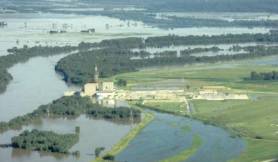
What some reports appear to paint as the Nebraska nuclear generating stations (However, please note: In this photo, no nuclear power plants appear)

Cooper nuclear generation station in 1993 floods

What you really see: Cooper Nuclear Generating Station in Nebraska -- still there (from a 1993 photo)

I have found no mention of any U.S. incident.   This suggests the Pakistani news report of a Russian agency report of disaster is hoax, too.

Claims of a crisis in Nebraska are hoaxes,  I think.  The Russian agency from which the report is claimed to have come, does not show such a report.

This is more evidence that the whole flap is a hoax.

True to form, several birther and other conspiracy paranoiac sites claim that these plants in Nebraska are gone, in flames, or leaking water that nearly glows.

Can’t Sarah Palin point her bus to Nebraska and let her press entourage get the real story?


Nuclear power plant incident in Nebraska?

June 19, 2011

A Pakistani newspaper, The Nation, should not be confused with the U.S. magazine of the same name, as I originally did.

Late Friday The Nation questioned an alleged news blackout around an incident at the Fort Calhoun nuclear power plant outside of Omaha, Nebraska:

A shocking report prepared by Russia’s Federal Atomic Energy Agency (FAAE) on information provided to them by the International Atomic Energy Agency (IAEA) states that the Obama regime has ordered a “total and complete” news blackout relating to any information regarding the near catastrophic meltdown of the Fort Calhoun Nuclear Power Plant located in Nebraska.

According to this report, the Fort Calhoun Nuclear Plant suffered a “catastrophic loss of cooling” to one of its idle spent fuel rod pools on 7 June after this plant was deluged with water caused by the historic flooding of the Missouri River which resulted in a fire causing the Federal Aviation Agency (FAA) to issue a “no-fly ban” over the area.

Located about 20 minutes outside downtown Omaha, the largest city in Nebraska, the Fort Calhoun Nuclear Plant is owned by Omaha Public Power District (OPPD) who on their website denies their plant is at a “Level 4” emergency by stating: “This terminology is not accurate, and is not how emergencies at nuclear power plants are classified.”

So, we have some questions to deal with:

  1. Is there a serious incident at the Fort Calhoun facility?
  2. Has anyone ordered a news blackout, and if so, why?
  3. Is it likely that a Pakistani newspaper relying on Russian sources can better report on a nuclear power plant in Nebraska than, say, the local Omaha newspaper?

As much as we might like to give The Nation a chance at being accurate, how likely is it that a U.S. president could order a complete revocation of emergency safety plans for a nuclear facility, when, by law and regulation, those plans are designed to protect the public?  The story smells bad from the start, just on government processes in the U.S.

The Nation, Fort Calhoun, Nebraska, nuclear power plant

This is the photograph used by The Nation to illustrate its online article claiming a meltdown at the Fort Calhoun nuclear power station in Nebraska. It shows a flooded nuclear power station, Fort Calhoun we might assume. Is it? Does the photograph show any problem besides the flooding?

The Russian report is too strong, probably.  First, there’s no news blackout, as evidenced by local reporting.  Second, our American “be-too-conservative-by-a-factor-of-ten” safety standards make piffles sound like major problems.  The story’s being filtered through a Pakistani newspaper should give us further pause in taking things at face value.

According to the local Nebraska newspaper, the Omaha World-Herald, the Fort Calhoun facility powered down on April 9 for refueling.  Because of the pending floods, it was not yet refired up.  A powered-down reactor is unlikely to melt down.

O W-H, Nebraska’s largest and most venerated newspaper, reports on a second problem at a second nuclear plant.  Reports on the second “incident” give a clear view into just how careful U.S. plants are usually operated:

Cooper Nuclear Station near Brownville, Neb., declared a “Notification of Unusual Event” about 4 a.m. Sunday when the Missouri River there reached a height of 42.5 feet.

The declaration, which has been anticipated by the power plant’s operators, was made as part of safety and emergency preparedness plan the station follows when flooding conditions are in effect.

The plan’s procedures dictate when the Missouri River’s water level reaches 42.5 feet, or greater than 899 feet above sea level, a notification of unusual event is declared. If the river’s level increases to 45.5 feet or 902 feet above sea level, plant operators are instructed take the station offline as a safety measure.

An earlier story at the O W-H dealt specifically with issues at Fort Calhoun, and the flooding — again suggesting there is little danger from that facility.

FORT CALHOUN, Neb. — Despite the stunning sight of the Fort Calhoun nuclear reactor surrounded by water and the weeks of flooding that lie ahead, the plant is in a safe cold shutdown and can remain so indefinitely, the reactor’s owners and federal regulators say.

“We think they’ve taken adequate steps to protect the plant and to assure continued safety,” Victor Dricks, spokesman for the Nuclear Regulatory Commission, said Thursday.

Tim Burke, vice president at Omaha Public Power District, said the plant’s flood barriers are being built to a level that will protect against rain and the release of record amounts of water from upstream dams on the Missouri River.

“We don’t see any concerns around the Fort Calhoun Nuclear Station,” Burke said at a briefing in Omaha Mayor Jim Suttle’s office.

The nuclear plant, 20 miles north of Omaha, was shut down April 9 for refueling. It has not been restarted because of the imminent flooding.

Who do we believe, a Russian report issued more than 6,000 miles from Nebraska, reported in a newspaper in Pakistan, or the local reporters on the beat?

Fort Calhoun nuclear generating plant, flooded by the Missouri River, on June 17, 2011 - Photo by Matt Miller, Omaha  World-Herald

Photo caption from the Omaha World-Herald: "The Fort Calhoun Nuclear Station from the air Thursday. OPPD was putting the finishing touches on federally ordered flood-defense improvements before flooding began. MATT MILLER/THE WORLD-HERALD"

More, other resources:

UPDATE, June 20, 2011:  Let’s call it a hoax

I don’t think I’m going too far out on a limb to call the claims of a serious accident, emergency and potential disaster at the Fort Calhoun site, a hoax.  The Russian report — if it exists — may not have been intended as a hoax, but coupled with filtering through the credulous and gullible foreign press (we’re looking at you, Pakistan’s The Nation), it has risen to hoax level, to be debunked.  Sure, you should be concerned about safety and security at Fort Calhoun and Cooper — but you should be concerned about safety and security at every nuclear power plant around the world, all the time.  This may be a good time for you to reread John McPhee’s brilliant Curve of Binding Energy.  It’s dated — Ted Taylor died October 28, 2004  (was his autobiography ever published?) — but still accurate and informative, plus, any excuse to read any work of McPhee is a great one.


Salt Lake Tribune obit for journalist Ernie Ford

June 4, 2011

The Salt Lake Tribune carried an obituary for my old journalism professor Ernie Ford today.

Small world:  Good words about Ernie came from an official at KSL-Television, Con Psarras, Vice President for Editorials and Special Projects.  Con is former news director at KSL, the job that many said Ernie was perfect for, but  could never have because he wasn’t in with the owners of the station.  Con is also a former colleague of mine from the University of Utah debate squad (he was a much better debater than I)*.

Con Psarras, KSL’s vice president of editorials and special projects, remembered Ford as “a one-of-a-kind character.”

“He was inspirational to a lot of people,” said Psarras, KSL’s former news director. “He was a real journalist who cared about all those fundamental things that make journalists good at what they do. He was a stickler for detail. If you got something wrong, it was not a pleasant experience. Someone said they earned their first layer of thick skin from Ernie Ford.”

Stickler for detail, sure.  Ford was a great copy editor, and as a managing editor he worried about getting things right, for the readers’ sake in addition to avoiding libel suits.  But I didn’t find it unpleasant to get those fact challenges from Ford.  He knew where the weak spots of a story were likely to be, and he asked the questions that exposed those weaknesses to the writer.  I enjoyed that banter and process — which prevented mistakes from getting into print. (There weren’t idiots as editors of the Chronicle — accuracy, shoe leather and decent writing lived in that paper, often.)

Where are schools of journalism these days?  I was shocked that Texas A&M dropped its journalism program a few years back.  The best intern I ever had came out of A&M’s program.  Liz Newlin wrote concisely and well, and she could smell the heart of a news story, and put it into the lead so you’d have to follow the arteries deeper into the thing to see what happened.  Newlin could have been another Ernie Ford — but she married a guy named Taylor (you figure out the married name), went to law school and became a water law expert in Tucson.

Who trains good journalists by the score in good journalism practices anymore?  Who would want to go into such a field, with newspapers coming down around those left in the newsrooms, and with every fourth yahoo with an internet connection blogging away? [Yeah, me too.]

_____________

*  We got a couple of good reporters out of that debate squad.  Good training for a reporter, I think.  Steve Christensen signed up with UPI back when it was still a noble outfit; I don’t know where he is these days.  Tim Weiler reported for several years in and around Salt Lake.   Carolyn Young, one of  our graduate assistants back in the Early Later Than You Think Holocene reported for KSL’s rival, KUTV, but she headed out to Oregon.  Of course, none of them were journalism majors.  Go figure.


Quiet giant of Utah journalism, Ernie Ford

June 2, 2011

Sometimes the news comes slow.

Jake Sorenson at the Daily Utah Chronicle sent out a notice that Ernie Ford died last night.  Cardiac issues.  He was 70, after all — young by today’s standards, and not yet used up.

Ford was adjunct faculty and adviser to the Chronicle when I wrote there, and took classes from him.  Ford and Roy Gibson were veterans of Utah journalism who could offer a couple of chapters of a textbook they never wrote on how to write well, and how to write good news stories — with just their markups, questions and corrections in the margins of the news story one had to meet deadline on.

Gibson died several years ago.

More than once I regretted that I had to send the copy, with Ford’s comments, off to “typesetting” in the backshop, knowing I’d never see it again.  We didn’t have a photocopier to just make another copy.

Details to come, Jake said.  We’re losing more than just old, established newspapers.  We’re losing the men and women who made the news, news, and made the news readable, and understandable.

Ford made his reputation at KSL Television News and the Salt Lake TribuneHere’s a 1989 story on his leaving KSL to move to a Dallas station.  Sometime after that he moved on to run the Society of Professional Journalists, in Indiana.  Details on Ford’s life and death to follow, but probably no film at 11:00.

When enough of the big trees fall, you can’t call it a forest any more, you know?

_______________

DePauw University put out a release on Ernie Ford:

Former Prof. Ernie Ford Passes Away at Age 70

98198

Veteran reporter, editor and journalism professor Ernie Ford died June 1 in Greencastle, Indiana

June 2, 2011, Greencastle, Ind. —  Ernest J. “Ernie” Ford Jr., a respected journalist and former member of the DePauw University faculty, passed away yesterday. He was 70 years old.

Ford was born on June 7, 1940, in Salt Lake City, and earned bachelor’s and master’s degrees in journalism from the University of Utah. After a lengthy career in print and broadcast journalism, Ford came to Greencastle in the spring of 1992 when he was named executive director of the Society for Professional Journalists (SPJ). The organization, which was founded by student journalists at DePauw University as Sigma Delta Chi (SDX) in 1909, is the nation’s most broad-based journalism organization. SPJ had its national headquarters in Greencastle in the 1990s. 98200

“Ernie Ford was selected because of his strong management experience in broadcast and print journalism,” said Georgiana Vines, assistant managing editor of the Knoxville News Sentinel and chair of the search committee, when Ford’s appointment was announced.

Ford had served as SPJ’s national president during 1991-92 before taking a paid post with the organization. He became a member of SPJ’s national board of directors in 1984, when he was elected Region 9 director, and served as chair of the Ethics Committee, Publication Committee, and the Legal Defense Fund.

98201

Photo, l-r: Ford and David Bohmer '69, director of the Pulliam Center for Contemporary Media Center and Media Fellows Program, with former The DePauw editors Eric Aasen '02 and Andrew Tangel '03 in October 2010

A regular lecturer to students in journalism classes and members of the DePauw Media Fellows program, Ford served as a part-time instructor in University Studies during the 2001-02 academic year. Ernie Ford and his wife, Linda, who survives, are also known to a generation of DePauw students as owners of the Fine Print Bookstore, which they operated on Greencastle’s square for 15 years.

He also served as an adjunct instructor at the University of Utah, Brigham Young University and Utah State University.

“Ernie was a great teacher who helped his students understand the media industry and journalism,” recalls Andrew Tangel, a 2003 DePauw graduate and former editor of The DePauw who now a reporter at New Jersey’s Bergen Record. “A former investigative reporter himself, he seemed to relish asking tough questions at public meetings on campus and in town. He passed along tips to student journalists and encouraged them to be aggressive, hard-nosed reporters.”

Before coming to Indiana, Ford’s journalism career which included stints as managing editor of KSL-TV in Salt Lake City, assistant news director of KDFW-TV in Dallas, assistant city editor of the Salt Lake Tribune, wire editor of the Idaho Post-Register in Idaho Falls, and general assignment reporter for the Deseret News in Salt Lake City. He collected numerous journalism awards, including a 1980 Sigma Delta Chi award for broadcast public service, regional Emmys, the Eudora Welty Award and the DuPont Award. A strong advocate for the First Amendment and the rights of journalists, Ford testified before Congress in support of the Freedom of Information Act and organized a a petition drive that led move the U.S. Supreme Court to permit still cameras in the 47517courtroom.

In 2006, Ford was inducted into the Hall of Fame of the Daily Utah Chronicle, the University of Utah’s student newspaper, where he cuts his reporting teeth as an undergraduate and later served as faculty adviser.

Ford served on the boards of the Putnam County Humane Society, Great Lakes Booksellers Association, served of president of Main Street Greencastle, and was a longtime supporter of the Putnam County Playhouse.

A celebration of Ernie Ford’s life will be held at 2 p.m. Sunday at the Putnam County Playhouse, 715 South County Road 100 East, Greencastle.

An obituary is accessible at the website of Greencastle’s Banner-Graphic.


More wisdom: From Burlington, Vermont, grassroots ideas on fighting global warming

April 10, 2011

Another local newspaper op-ed, this time from Burlington, Vermont (yeah, I know — a Gannett paper — still, smaller than Dallas). This comes from the March 4 edition of the Burlington Free Press’s “I Believe” series:

I Believe: ‘We have a responsibility to learn about climate change

by Joan Knight

“If politicians remain at loggerheads, citizens must lead.”
— Dr. James E. Hansen, physicist, director of NASA Goddard Institute

I was impressed when I attended a recent meeting with a group of volunteer activists forming a Vermont chapter of the Citizens Climate Lobby. This group is different, I thought. It might actually work. As a newly retired 72-year-old, I was looking for a new focus, and found it.

Religious groups use the word “creation.” Most people say “nature.” Academics speak of global ecology. Deep ecologists who view Earth as one living being say “Gaia,” in reverential tones, meaning our planet and its atmosphere is a living “body.” Its “cells” include us humans, plants, forests, microbes. All life is tied together by dynamic, interdependent relationships. Most native peoples sense that all beings are like sisters and brothers — members of the same family.

I understand. It started for me as a young child with what Rachel Carlson called a sense of wonder. Grasses back-lit by the setting sun; starfish in tide pools crawling about among colorful mats of living plants and fungi. It was a more spiritual experience than was going to church under parental orders. Nature really mattered.

Growing older, I revered the writing of Rachel Carson, David Brower, John Muir, Aldo Leopold, Wendell Berry and so many more. I still feel abiding love for it all. I believe in Earth as a planetary living being.

It is clear that our family of All Beings is suffering.

Climate change. Global warming. Is it real? Is it a problem? Why are the changes happening? There is controversy about the answers to these questions. The collapse of climate and energy legislation last year in Congress was a relief to some in big business.

Natural laws or physics and chemistry are in action. The climate is warming faster than it ever has. Weather patterns are strange and tragic. Species are becoming extinct. Predictions of the end of nature (Bill McKibben’s 1984 book title) are common now. What if the scientists are right? We don’t need all the answers to figure out that something awful is going on.

Can we slow down the rate of change? Yes. Can we stop the climate from warming too much? It’s not likely, but I believe we must try. Should we let it happen while we enjoy our greenhouse-gas-producing lifestyles? Some family members deny the reality that their loved one has a serious illness and is likely to die prematurely. We humans have an interesting default to denial. This does happen. Might some of us, similarly, deny that our planet is critically ill?

Most of us agree that conservation of energy and resources is good for us and for the environment. We are changing our personal lifestyles. We have changed our light bulbs to compact fluorescents; we vacation closer to home; we’re working to improve the efficiency of our buildings.

Many of us also become members of environmental organizations. We read their magazines, put in bird feeders to enjoy nature, donate money and sign petitions in the attempt to show our legislators how we would like them to vote. Here in Vermont, we even talk with state legislators and are proud we are the “green state” — cherishing our remaining cows in pastoral landscapes and our forests for both wildlife and recreation. We’re thankful our delegation to the Congress “gets it.”

There are many grassroots activists successfully influencing lawmakers on a town and state level. But we know that states tend to make changes in laws and budgets in response to constraints brought on by federal legislation and financing. Are there ways to really influence federal representatives and senators? Paid lobbyists do it on a massive scale. Money speaks. But what about us?

The Citizens Climate Lobby believes in an approach by which ordinary people influence the federal “deciders” enough to sometimes change their votes. The influential people take the trouble to learn about and appreciate some things an individual legislator has done, seek to discover common ground, listen respectfully and talk in a collaborative way. After discovering what information would be relevant, they come back to provide it. In this comfortable way of relating, ordinary people do make a difference.

As citizens of this country we have a responsibility to learn about climate change, solutions and how to take part in the democratic process. We can sit down for a conversation and tell our legislators what we care about and why. We can write letters. It’s really our job as citizens to share these thoughts with our legislators, if we ever hope to be truly represented by them.

That’s where the new Citizens’ Climate Lobby comes in. The group gives us the tools we need. There is a monthly conference call with a leading thinker who will help keep us informed of the latest issues, and an opportunity to practice speaking with each other about those issues. We work together to help our legislators hear the non-confrontational message: We want a healthy planet for our kids and grandkids.

If I dare to step forward to lobby my representative, I want to learn how, to practice, to feel supported by kindred spirits, to know it’s OK to make mistakes and keep on gaining new knowledge and skills. I’m up for it. And I hope many of you will consider joining us as we begin making our voices heard where it matters most.

Check out the Citizens Climate Lobby website, and get information about how to join in on the next national conference call. This one will be focused on messaging — the importance of context and delivery. This organization seeks to empower each of us to have breakthroughs in our personal power, to be heard and to be counted. It feels good to be a part of a supportive web of passionate citizens.

Join us. Talk with an active member on the phone, go to the website (www.citizensclimatelobby.org), find the lobby on Facebook.

It’s not too late to make a difference. We have been lazy in hoping someone else would do the right thing, that sending a check to an organization and signing an online petition was enough. It’s time for folks, including myself, to step up and be heard.

Real grass roots politics, from a woman concerned enough about the issue to think historically, and to read broadly about it.

Citizenship is wonderful to behold, when it is practiced so nobly and elegantly.

What else might we learn, if we really listened to the people?

Citizens Climate Lobby masthead

Masthead for the home page of Citizens Climate Lobby - click to see


Only in small towns, where leaders have time to think . . .

April 7, 2011

Years ago when I staffed a U.S. senator’s office, one of my tasks was to look through all the weekly newspapers in the state.    Back then subscriptions were cheap, and most senators would take out a subscription to these weeklies more to flatter the editors and publishers than to read.  We put them to use, first checking to see whether the clipping services were getting all the clips (mostly), and then on a hunch, to see what issues were raging in the state, well below the radar of the big city daily newspapers and broadcast outlets.

You can learn a lot.

Many of those old weekly newspapers are gone, now, victims to local populations that turn over in every recession, and to electronic news gathering services — and to general alienation:  People are not so sure they want to know what their neighbors are up to, these days.  Heck, many people aren’t sure they want to know their neighbors.

My own electronic news gatherers occasionally pull out something to think about from a minor news outlet.  For example, below is an opinion piece out of the Carrboro Citizen from Dan Coleman, a member of the town council in Carrboro, North Carolina.  I gather from the paper it is rather close to Chapel Hill, the home of the University of North Carolina (I haven’t checked a map).

But look at what this guy says.  He questions the wisdom of Adam Smith.  Adam Smith! It appears Coleman wasn’t led astray by all those Adam Smith neckties that were so popular in the Reagan administration.  He questions the true need for profits from corporations, and he wonders if there isn’t a higher duty for a corporation.

How many others like Dan Coleman are there, out there in America, relatively sane on all other accounts, and thinking?

How many bottom lines do we really need?

April 7, 2011 | Posted in: Opinion | 0 Responses

By Dan Coleman

Did you know that Carrboro’s Town Code incorporates a principle devised by Shell Oil? That’s right, the same Shell Oil that has been accused of human rights violations in Nigeria, including summary execution, crimes against humanity, torture, inhumane treatment and ­collaborating in the execution of Nigerian activist Ken Saro-Wiwa. The same Shell Oil that has despoiled the Niger delta and was responsible for the largest freshwater oil spill ever.

With a record like this, it is little wonder that Shell came up with one of the corporate world’s more effective public relations concepts of recent years: the Triple Bottom Line (TBL), also known as People, Planet, Profit. It’s as if Shell was saying, sure you can criticize our environmental and humanitarian record but don’t forget, we have to make a profit.

Efforts to value people have dogged profiteering for over a century. The late 19th and early-to-mid-20th centuries were marked by many thousands of strikes by workers, more than 1,400 in the year 1886 alone. Many of these were met by violent strikebreakers backed up at times by military force. This is a struggle that continues in 2011 in Wisconsin and other states.

William Blake, Biography Online

William Blake

Through the efforts of these men and women, much of value was created: the weekend, workplace-safety standards, health care for workers, vacation and sick leave, etc. And each of these was wrested from the one bottom line that corporate America really cares about.

Despite William Blake offering the image of “dark satanic mills” as far back as 1804, the environmental impacts of industrial capitalism began to be understood with Rachel Carson’s 1962 publication of The Silent Spring. Within a decade, there was Earth Day, the Environmental Protection Agency, the Clean Water Act and much more, each a challenge to the profit-focused priorities of capital.

Given the pre-eminent importance of profit-maximization, it is not surprising that corporations touting the Triple Bottom Line often oppose measures to combat global warming, oppose workers’ rights and oppose regulatory mechanisms to protect the health of people and planet.

History has taught us that Adam Smith was wrong when he offered the justification for prioritizing profit that “by pursuing his own interest [the businessman] frequently promotes that of the society more effectually than when he really intends to promote it.” If Smith were correct, companies like Shell would not have such a devastating impact on society and nature. In part, this impact results from profit being measured in a short timeframe, a year or even a quarter of a year, while sustainability requires a vision spanning, as the Iroquois put it, as much as seven generations.

But Smith was right that profit ought to serve human well-being. Therefore, it must be understood within an ethical system that places people and planet first. This holds true for the vague term “stakeholder value” that some, including Carrboro, use instead of profit. Who are the stakeholders if not people and planet?
The TBL offers nothing to help us navigate the inevitable contradictions between profit on the one hand and people/planet on the other. But, really, why should we have any social or political bottom lines at all?

It was social ecologist Murray Bookchin who bemoaned the cultural turn to the “grubby language” of the market economy, which has “replaced our most hallowed moral and spiritual expressions. We now ‘invest’ in our children, marriages, and relationships. … We live in a world of ‘trade-offs’ and we ask for the ‘bottom line’ of any emotional ‘transaction.’”

There are a variety of frameworks that speak to a more fundamental commitment to the well-being of all life. In an 1854 speech, Chief Seattle offered the notion of a web of life: “Humankind has not woven the web of life. We are but one thread within it. Whatever we do to the web, we do to ourselves.”

Aldo Leopold, in Arizona

Aldo Leopold, in Arizona, Arizona State Parks image

A century after Chief Seattle, Aldo Leopold articulated his land ethic in Sand County Almanac, “A thing is right when it tends to preserve the integrity, stability and beauty of the biotic community. It is wrong when it tends otherwise.” The biotic community, of course, includes humans.

We need the ability to truly place people and planet first and to reject the false, self-serving homilies offered by those who spread pavement and poverty in pursuit of the almighty dollar. Rather than seek simplistic nostrums, we may have to take the time to look hard at each decision, and bring a clear ethical sensibility, like that of Seattle or Leopold, to bear.

Dan Coleman is a member of the Carrboro Board of Aldermen.

Coleman may want to check the provenance of the Chief Seattle quote — but the thought is solid.

What do you think?


War on education, war on teachers: A little historical perspective

March 16, 2011

A post from Nicholas Meier at Deborah Meier’s Blog:

Perennial Headlines on Education

Here are some Headlines from newspapers over the years. Can you guess when they were written?

1. “Attack Mounted on Dropouts/City Sets Standards for Schools”

2. “New York’s Great Reading Score Scandal”

3. “Diagnostic reading tests are being given this week to 150,000 high school students as the first step in a new program—the largest and most systematic ever. …We intend to follow through…to overcome deficiencies.”

4. “The University of California (Berkeley) found that 30 to 40 percent of entering freshmen were not proficient in English.”

5. “Hope for the Blackboard Jungle: … Every year New Yorkers’ performance had been getting a little worse, until by YEAR? only 32 percent of the city’s pupils [were] doing as well or better than the national average.”

6. “Even Boston’s ‘brightest students’ didn’t know ‘whether water expanded or contracted when it freezes.’ And while 70 percent of this elite group knew that the U.S. had imposed an embargo in 1812 only five knew what ’embargo’ meant.”

7. “Tougher Standards in Our High. The average freshman is a year and three months behind national standards in reading.”

8. “City Pupils Remain Behind … Official Asserts the Tests Suggest Difficulty in Early Grades. Last fall 40.1 percent were reported on grade level or above … but in March, 43 percent … were reading at grade level or above”; and “Bleak drop out stats are raising concern.”

9. “Our standard for high school graduation has slipped badly. Fifty years ago a high school diploma meant something. … We have misled our students. … and our nation.”

10, “During the past 40 or 50 years those who are responsible for education have progressively removed from the curriculum … the western culture which produced the modern democratic state.”

The quotes above come from mainstream publications over the past 150 years. The earliest is 1845, the latest . . .

[Answers below the fold]

Read the rest of this entry »


Jay Ambrose: Still wrong about DDT and malaria

February 27, 2011

Propagandists against Rachel Carson and — inexplicably — for DDT awoke a few weeks ago.  We’re seeing a flurry of op-eds, opinion pieces and other editorial placements making false claims for DDT, and against Rachel Carson, one of the science heroes of the 20th century.

The campaign of hoaxes, urging more and heavier use of DDT, and falsely impugning environmentalists, continues.  Alas.

Jay Ambrose of Scripps Howard News Service, still wrong about DDT

Jay Ambrose of Scripps Howard News Service, still wrong about DDT

Jay Ambrose used to be a full-time editor for the Scripps Howard newspapers.  Since he retired he writes occasional opinion pieces.  In the past three years or so he’s mentioned his desire to bring back the poison DDT, to poison Africa in the hope it might also get malaria, for example.

A few weeks ago he went after global warming with the same alacrity and lack of accurate information.

Let’s review a few facts about the history of DDT:

  • The World Health Organization (WHO) carried on a super-ambitious campaign to eradicate malaria from the world starting in 1955.  It was a race against time — super malaria-fighter Fred Soper, who spearheaded early campaigns for the Rockefeller Foundation , understood that overuse of DDT in agriculture or any other venue could push malaria-carrying mosquitoes to develop resistance to DDT.  WHO’s campaign involved Indoor Residual Spraying of DDT, coating the walls of homes with the stuff; then with biting mosquitoes reduced, a careful campaign of medical care would cure human victims of the disease.  When the mosquitoes came roaring back at the end of the campaign, there would be no infected humans from whom the insects could get the parasite that causes the disease — voila! — no more malaria.  WHO lost the race; by 1965 Soper’s group already found resistant and immune mosquitoes in central Africa, and most of the nations in the Subsaharan Africa had not  been able to mount an anti-malaria campaign. DDT use in Africa was scaled back, therefore, and by 1969, WHO’s international board voted to abandon the campaign, made impossible to complete by abuse of DDT.
  • Seven years after WHO was forced to stop using DDT by DDT abuse, the U.S. Environmental Protection Agency banned DDT from use outdoors on agricultural crops, under the watchful eye of two federal courts who had previously determined DDT to be dangerous and uncontrollable in the wild. EPA Administrator William Ruckelshaus short-circuited a total ban on DDT, however; his order specifically allowed U.S. manufacturers to continue making DDT, greatly increasing the amount of DDT available to any nation who wanted to use it to fight malaria or any other disease.
  • Even though DDT was cheap and plentiful, however, many African nations found it simply did not work anymore. Work continued to fight DDT through all other means including especially treating the disease in humans, and malaria incidence and deaths continued to decline.
  • At the end of the 1970s, the malaria parasites began to develop resistance to chloroquine and other traditional drugs used to cure humans of the stuff.  It was a shortage of drugs to treat humans that caused the uptick in malaria over a decade ago, not a lack of DDT.  Progress against malaria slowed for a few years, until artemisinin-based drugs were discovered to work against the disease, and means could be found to speed up production of the drug (originally from a Chinese plant, a member of the wormwood family).
  • By the turn of the century, it became clear that a miracle, one-punch solution to beat malaria is unlikely to be found.  Many nations turned to a method of malaria control including “integrated vector management,” which includes the use of pesticides (including DDT) in careful rotation to prevent mosquitoes from developing resistance or immunity to any one poison. This is the method championed by Rachel Carson in her 1962 book, Silent Spring.
  • At the time of the U.S. ban on DDT use on crops, annual malaria deaths ran about 2 million.  By 2000, that rate had been cut in half, to about 1 million annually.  Today, and since 2005, the annual death toll to malaria has been estimated by WHO to be under 900,000 — less than half the death rate in 1972 when the U.S. banned DDT use on crops, and a 75% reduction in deaths in 1960, when DDT use was at its peak.  Malaria deaths today are the lowest in human history.
  • DDT Malaria continues to be a priority disease, with added emphasis in the past decade with massive interventions funded by the Bill and Melinda Gates Foundation, and the President’s Initiative on Malaria.   Bill Gates is regarded as a great optimist, but he says he is working to eradicate malaria from the world.   Key tools of the eradication campaign are bednets, which are cheaper and more effective than DDT, and integrated vector management.  The Gates Foundation campaign strikes continuing blows of great magnitude against the disease in those nations where it can work.

Few of these facts are acknowledged by Jay Ambrose, who wrongly claims that DDT had alone been the great vanquisher of malaria, and who claims that Africans, unduly swayed by a long-dead Rachel Carson, had failed to use DDT though they knew in their hearts it would save their children.

About once a year Ambrose trots out his misunderstandings of history, law and science, and slams Rachel Carson and those who banned DDT from cotton crops in Texas, falsely blaming them for malaria deaths in Africa.  His article of the past few weeks was picked up by the Detroit News.  Warning that our fight against global warming is as wrong-headed as saving the bald eagle from DDT, he wrote:

The main thing is to avoid what happened with DDT. Because of a ban to protect wildlife from the pesticide in this country, it became more scarce, and a consequence was its being employed sparingly if at all in wildlife-safe, indoor spraying to combat malaria in Africa. Though not always, DDT can be enormously effective in stopping the disease while posing minimal threats.

The estimate is that millions of African children died because of misplaced values and overreactions.

That’s worse than heartbreaking.
From The Detroit News: http://detnews.com/article/20110221/OPINION01/102210305/Don’t-overreact-to-possible-global-warming#ixzz1FDv1ZhkY

When I chided Ambrose for getting the facts wrong many months ago, he angrily promised to come back to this blog and provide evidence to make his case.  Of course, he never did.  There is no such evidence.

Then why does he continue to falsely indict Rachel Carson, William Ruckelshaus and EPA, and “environmentalists,” and wrongly urge the poisoning of Africa with DDT?

I do not know.

Are his views on global warming similarly in error?  If history shows a trend, yes.


Almost neglecting the “neglected anniversary” of Millard Fillmore’s Bathtub, H. L. Mencken’s hoax, and the lessons that lie therein

December 29, 2010

Could I get a longer title?  Here is our annual tribute to the hoax that gave its name and much inspiration to this blog.

Otherwise occupied — Kenny’s due to board an airplane in Beijing soon; tires for the cars; papers to correct, curriculum to correct; our wedding anniversary I cannot forget pending —  I nearly forgot: 93 years ago yesterday, on December 28, 1917, this column by H. L. Mencken was published in The New York Evening Mail:

A Neglected Anniversary

Mencken on April 7, 1933 - end of low-alcohol beer - Baltimore Sun Photo

H. L. Mencken at approximately 12:30 a.m., April 7, 1933, at the Rennert Hotel, corner of Saratoga and Liberty Streets, 17 years later, not neglecting a sudsy anniversary – Baltimore Sun photo

On December 20 there flitted past us, absolutely without public notice, one of the most important profane anniversaries in American history, to wit, the seventy-fifth anniversary of the introduction of the bathtub into These States. Not a plumber fired a salute or hung out a flag. Not a governor proclaimed a day of prayer. Not a newspaper called attention to the day.

True enough, it was not entirely forgotten. Eight or nine months ago one of the younger surgeons connected with the Public Health Service in Washington happened upon the facts while looking into the early history of public hygiene, and at his suggestion a committee was formed to celebrate the anniversary with a banquet. But before the plan was perfected Washington went dry (This was war-time Prohibition, preliminary to the main catastrophe. — HLM), and so the banquet had to be abandoned. As it was, the day passed wholly unmarked, even in the capital of the nation.

Bathtubs are so common today that it is almost impossible to imagine a world without them. They are familiar to nearly everyone in all incorporated towns; in most of the large cities it is unlawful to build a dwelling house without putting them in; even on the farm they have begun to come into use. And yet the first American bathtub was installed and dedicated so recently as December 20, 1842, and, for all I know to the contrary, it may still be in existence and in use.

Curiously enough, the scene of its setting up was Cincinnati, then a squalid frontier town, and even today surely no leader in culture. But Cincinnati, in those days as in these, contained many enterprising merchants, and one of them was a man named Adam Thompson, a dealer in cotton and grain. Thompson shipped his grain by steamboat down the Ohio and Mississippi to New Orleans, and from there sent it to England in sailing vessels. This trade frequently took him to England, and in that country, during the ’30s, he acquired the habit of bathing.

The bathtub was then still a novelty in England. It had been introduced in 1828 by Lord John Russell and its use was yet confined to a small class of enthusiasts. Moreover, the English bathtub, then as now, was a puny and inconvenient contrivance — little more, in fact, than a glorified dishpan — and filling and emptying it required the attendance of a servant. Taking a bath, indeed, was a rather heavy ceremony, and Lord John in 1835 was said to be the only man in England who had yet come to doing it every day.

Thompson, who was of inventive fancy — he later devised the machine that is still used for bagging hams and bacon — conceived the notion that the English bathtub would be much improved if it were made large enough to admit the whole body of an adult man, and if its supply of water, instead of being hauled to the scene by a maid, were admitted by pipes from a central reservoir and run off by the same means. Accordingly, early in 1842 he set about building the first modern bathroom in his Cincinnati home — a large house with Doric pillars, standing near what is now the corner of Monastery and Orleans streets.

There was then, of course, no city water supply, at least in that part of the city, but Thompson had a large well in his garden, and he installed a pump to lift its water to the house. This pump, which was operated by six Negroes, much like an old-time fire engine, was connected by a pipe with a cypress tank in the garret of the house, and here the water was stored until needed. From the tank two other pipes ran to the bathroom. One, carrying cold water, was a direct line. The other, designed to provide warm water, ran down the great chimney of the kitchen, and was coiled inside it like a giant spring.

The tub itself was of new design, and became the grandfather of all the bathtubs of today. Thompson had it made by James Cullness, the leading Cincinnati cabinetmaker of those days, and its material was Nicaragua mahogany. It was nearly seven feet long and fully four feet wide. To make it water-tight, the interior was lined with sheet lead, carefully soldered at the joints. The whole contraption weighed about 1,750 pounds, and the floor of the room in which it was placed had to be reinforced to support it. The exterior was elaborately polished.

In this luxurious tub Thompson took two baths on December 20, 1842 — a cold one at 8 a.m. and a warm one some time during the afternoon. The warm water, heated by the kitchen fire, reached a temperature of 105 degrees. On Christmas day, having a party of gentlemen to dinner, he exhibited the new marvel to them and gave an exhibition of its use, and four of them, including a French visitor, Col. Duchanel, risked plunges into it. The next day all Cincinnati — then a town of about 100,000 people — had heard of it, and the local newspapers described it at length and opened their columns to violent discussions of it.

The thing, in fact, became a public matter, and before long there was bitter and double- headed opposition to the new invention, which had been promptly imitated by several other wealthy Cincinnatians. On the one hand it was denounced as an epicurean and obnoxious toy from England, designed to corrupt the democratic simplicity of the Republic, and on the other hand it was attacked by the medical faculty as dangerous to health and a certain inviter of “phthisic, rheumatic fevers, inflammation of the lungs and the whole category of zymotic diseases.” (I quote from the Western Medical Repository of April 23, 1843.)

The noise of the controversy soon reached other cities, and in more than one place medical opposition reached such strength that it was reflected in legislation. Late in 1843, for example, the Philadelphia Common Council considered an ordinance prohibiting bathing between November 1 and March 15, and it failed of passage by but two votes. During the same year the legislature of Virginia laid a tax of $30 a year on all bathtubs that might be set up, and in Hartford, Providence, Charleston and Wilmington (Del.) special and very heavy water rates were levied upon those who had them. Boston, very early in 1845, made bathing unlawful except upon medical advice, but the ordinance was never enforced and in 1862 it was repealed.

This legislation, I suspect, had some class feeling in it, for the Thompson bathtub was plainly too expensive to be owned by any save the wealthy; indeed, the common price for installing one in New York in 1845 was $500. Thus the low caste politicians of the time made capital by fulminating against it, and there is even some suspicion of political bias in many of the early medical denunciations. But the invention of the common pine bathtub, lined with zinc, in 1847, cut off this line of attack, and thereafter the bathtub made steady progress.

The zinc tub was devised by John F. Simpson, a Brooklyn plumber, and his efforts to protect it by a patent occupied the courts until 1855. But the decisions were steadily against him, and after 1848 all the plumbers of New York were equipped for putting in bathtubs. According to a writer in the Christian Register for July 17, 1857, the first one in New York was opened for traffic on September 12, 1847, and by the beginning of 1850 there were already nearly 1,000 in use in the big town.

After this medical opposition began to collapse, and among other eminent physicians Dr. Oliver Wendell Holmes declared for the bathtub, and vigorously opposed the lingering movement against it in Boston. The American Medical Association held its annual meeting in Boston in 1849, and a poll of the members in attendance showed that nearly 55 per cent of them now regarded bathing as harmless, and that more than 20 per cent advocated it as beneficial. At its meeting in 1850 a resolution was formally passed giving the imprimatur of the faculty to the bathtub. The homeopaths followed with a like resolution in 1853.

But it was the example of President Millard Fillmore that, even more than the grudging medical approval, gave the bathtub recognition and respectability in the United States. While he was still Vice-President, in March, 1850, he visited Cincinnati on a stumping tour, and inspected the original Thompson tub. Thompson himself was now dead, but his bathroom was preserved by the gentlemen who had bought his house from the estate. Fillmore was entertained in this house and, according to Chamberlain, his biographer, took a bath in the tub. Experiencing no ill effects, he became an ardent advocate of the new invention, and on succeeding to the Presidency at Taylor’s death, July 9, 1850, he instructed his secretary of war, Gen. Charles M. Conrad, to invite tenders for the construction of a bathtub in the White House.

This action, for a moment, revived the old controversy, and its opponents made much of the fact that there was no bathtub at Mount Vernon, or at Monticello, and that all the Presidents and other magnificoes of the past had got along without any such monarchical luxuries. The elder Bennett, in the New York Herald, charged that Fillmore really aspired to buy and install in the White House a porphyry and alabaster bath that had been used by Louis Philippe at Versailles. But Conrad, disregarding all this clamor, duly called for bids, and the contract was presently awarded to Harper & Gillespie, a firm of Philadelphia engineers, who proposed to furnish a tub of thin cast iron, capable of floating the largest man.

This was installed early in 1851, and remained in service in the White House until the first Cleveland administration, when the present enameled tub was substituted. The example of the President soon broke down all that remained of the old opposition, and by 1860, according to the newspaper advertisements of the time, every hotel in New York had a bathtub, and some had two and even three. In 1862 bathing was introduced into the Army by Gen. McClellan, and in 1870 the first prison bathtub was set up at Moyamensing Prison, in Philadelphia.

So much for the history of the bathtub in America. One is astonished, on looking into it, to find that so little of it has been recorded. The literature, in fact, is almost nil. But perhaps this brief sketch will encourage other inquirers and so lay the foundation for an adequate celebration of the centennial in 1942.

(Text courtesy of Poor Mojo’s Almanac(k))

The entire history was a hoax composed by Mencken.

Even conservative wackoes appreciate the column.

Content with his private joke, Mencken remained silent about the hoax until a follow-up article, “Melancholy Reflections,” appeared in the Chicago Tribune on May 23, 1926, some eight years later. This was Mencken’s confession. It was also an appeal for reason to the American public.

His hoax was a joke gone bad. “A Neglected Anniversary” had been printed and reprinted hundreds of times in the intervening years. Mencken had been receiving letters of corroboration from some readers and requests for more details from others. His history of the bathtub had been cited repeatedly by other writers and was starting to find its way into reference works. As Mencken noted in “Melancholy Reflections,” his “facts” “began to be used by chiropractors and other such quacks as evidence of the stupidity of medical men. They began to be cited by medical men as proof of the progress of public hygiene.” And, because Fillmore’s presidency had been so uneventful, on the date of his birthday calendars often included the only interesting tidbit of information they could find: Fillmore had introduced the bathtub into the White House. (Even the later scholarly disclosure that Andrew Jackson had a bathtub installed there in 1834—years before Mencken claimed it was even invented—did not diminish America’s conviction that Fillmore was responsible.)

(No, dear reader, probably not correct; surely John Adams brought a bathtub with him when he moved into the White House, then called the President’s Mansion. Plumbing, hot water, and finally hot water to a bathtub in the president’s residence, were installed between 1830 and 1853, as best I can determine.)

Mencken wrote an introduction to the piece in a later book, A Mencken Chrestomathy (Alfred A. Knopf, 1949):

The success of this idle hoax, done in time of war, when more serious writing was impossible, vastly astonished me. It was taken gravely by a great many other newspapers, and presently made its way into medical literature and into standard reference books. It had, of course, no truth in it whatsoever, and I more than once confessed publicly that it was only a jocosity . . . Scarcely a month goes by that I do not find the substance of it reprinted, not as foolishness but as fact, and not only in newspapers but in official documents and other works of the highest pretensions.

There’s a moral to the story: Strive for accuracy!

So, Dear Reader, check for accuracy, and question authority.

Fact checks — what else might need to be corrected in this story?

Resources: