Phrases I wish I’d written

August 17, 2007

Some people have a flair for writing. P. Z. Myers is one of those, though his flair may be wasted a bit because he’s a practicing, teaching biologist (there probably is something to the oft-observed fact that so many great writers are scientists in their first professions, including people like Arthur Conan Doyle, Oliver Sacks, and Hans Zinsser).

Myers wrote this today, and I just wanted to memorialize it, so you, too, can admire the craft and skill that went into it:

If you want to take a look at one of the sources of creationist thought, the workshop where the red-hot anvil of pseudoscience and the inflexible hammer of theology are used to forge the balloon animals of creationism, The Journal of Creation (formerly the Creation ex nihilo Technical Journal) is now online . . .

“The workshop where the red-hot anvil of pseudoscience and the inflexible hammer of theology are used to forge the balloon animals of creationism.”

In just a few words, he captures the essence of the thing so perfectly!

File it under “Quotes that Should Be Famous.”


Cheney calls Iraq “quagmire”

August 12, 2007

Santayana’s ghost* e-mailed to call attention to this interview with Vice President Dick Cheney, in which he tells the errors of invading Iraq and deposing Saddam Hussein.

Unfortunately, the interview was with Dick Cheney in 1994, when he was ex-Secretary of Defense, hanging out with the American Enterprise Institute.

Talk about condemned to repeat the errors of history!

* In this case, in the guise of son, Kenny.


When things get tough, the patriotic listen to Barbara Jordan

August 2, 2007

Whose voice do you hear, really, when you read material that is supposed to be spoken by God? Morgan Freeman is a popular choice — he’s played God at least twice now, racing George Burns for the title of having played God most often in a movie. James Earl Jones?

Statue of Barbara Jordan at the Austin, Texas, Airport

Statue of Rep. Barbara Jordan at the Austin, Texas airport that bears her name. Photo by Meghan Lamberti, via Accenture.com

For substance as well as tone, I nominate Barbara Jordan’s as the voice you should hear.

I’m not alone. Bill Moyers famously said:

When Max Sherman called me to tell me that Barbara was dying and wanted me to speak at this service, I had been reading a story in that morning’s New York Times about the discovery of forty billion new galaxies deep in the inner sanctum of the universe. Forty billion new galaxies to go with the ten billion we already knew about. As I put the phone down, I thought: it will take an infinite cosmic vista to accommodate a soul this great. The universe has been getting ready for her.

Now, at last, she has an amplifying system equal to that voice. As we gather in her memory, I can imagine the cadences of her eloquence echoing at the speed of light past orbiting planets and pulsars, past black holes and white dwarfs and hundreds of millions of sun-like stars, until the whole cosmic spectrum stretching out to the far fringes of space towards the very origins of time resonates to her presence.

Virgotext carried a series of posts earlier in the year, commemorating what would have been Jordan’s 71st birthday on February 21. (Virgotext also pointed me to the Moyers quote, above.)

Now, when the nation seriously ponders impeachment of a president, for the third time in just over a generation, Ms. Jordan’s words have more salience, urgency, and wisdom. It’s a good time to revisit Barbara Jordan’s wisdom, in the series of posts at Virgotext.

“There is no president of the United States that can veto that decision.”

“My faith in the Constitution is whole.”

“We know the nature of Impeachment. We’ve been talking about it a while now.”

“Indignation so great as to overgrow party interests.”

And finally:

The rest of the hearing remarks are all here. It’s a longer clip than the others but honestly, there is not a good place to cut it.

This is Barbara Jordan on the killing floor.

This was a woman who understands history, who illustrates time and again that we are, with every action, with every syllable, cutting the past away from the present.

She never mentions Nixon by name. There is the Constitution. There is the office of the Presidency. But Richard Nixon the president has already ceased to exist. By the time she finishes speaking, he is history.

“A President is impeachable if he attempts to subvert the Constitution.”

Also see, and hear:

Virgotext’s collection of Barbara Jordan stories and quotes is an excellent source for students on Watergate, impeachment, great oratory, and Barbara Jordan herself. Bookmark that site.

Barbara Jordan, in a pensive moment, in a House Committee room

Rep. Barbara Jordan sitting calmly among tension, at a House Committee meeting (probably House Judiciary Committee in 1974).

Update 2019: Here is the full audio of Barbara Jordan’s speech. It is still salient, and if you listen to it you will understand better what is going on in Congress today.

Barbara Jordan, Statement on the Articles of Impeachment, at AmericanRhetori.com.


Quote of the moment: Andrew Carnegie, on competition

August 1, 2007

Carnegie Steel Works, Youngstown, Ohio, 1910

While the law [of competition] may be sometimes hard for the individual, it is best for the race, because it insures the survival of the fittest in every department. We accept and welcome, therefore, as conditions to which we must accommodate ourselves, great inequality of environment, the concentration of business, industrial and commercial, in the hands of a few, and the law of competition between these, as being not only beneficial, but essential for the future progress of the race.

Andrew Carnegie (1835-1919), “Wealth,” in the North American Review, June 1889.


Leo Rosten on Adam Smith

July 29, 2007

Leo Rosten writes clearly, concisely, and often with great humor. Consequently, his essays make good fodder for classroom use.

British bank note featuring Adam Smith

Rosten is probably most famous for the introduction he once gave to the comedian W. C. Fields, a spur-of-the-moment bon mots that so exactly described Fields comedian persona that it is often listed as a line Fields himself wrote: “Any man who hates dogs and children can’t be all bad.”

That story also tells us that Rosten looks at Adam Smith coolly, through no rose-colored glass.

The Adam Smith Institute carries Rosten’s essay on Smith in its entirety. Go read it:

It is a clumsy, sprawling, elephantine book. The facts are suffocating, the digressions interminable, the pace as maddening as the title is uninviting: An Inquiry into the Nature and Causes of the Wealth of Nations. But it is one of the towering achievements of the human mind: a masterwork of observation and analysis, of ingenious correlations, inspired theorizings, and the most persistent and powerful cerebration. Delightful ironies break through its stodgy surface:

“The late resolution of the Quakers [to free] their Negro slaves may satisfy us that their number cannot be very great …”

“The chief enjoyment of riches consists in the parade of riches.”

“To found a great empire for the sole purpose of raising customers [is] unfit for a nation of shopkeepers, but extremely fit for a nation whose government is influenced by shopkeepers.”

So comprehensive is its range, so perceptive its probings, that it can dance, within one conceptual scheme, from the diamond mines of Golconda to the price of Chinese silver in Peru; from the fisheries of Holland to the plight of Irish prostitutes in London. It links a thousand apparently unrelated oddities into unexpected chains of consequence. And the brilliance of its intelligence “lights up the mosaic of detail,” says Schumpeter, “heating the facts until they glow.” Sometimes.

Adam Smith published The Wealth of Nations in 1776 – not as a textbook, but as a polemical cannon aimed at governments that were subsidizing and protecting their merchants, their farmers, their manufacturers, against “unfair” competition, at home or from imports. Smith set out to demolish the mercantilist theory from which those politics flowed. He challenged the powerful interests who were profiting from unfree markets, collusive prices, tariffs and subsidies, and obsolete ways of producing things.

[More at the site of the Adam Smith Institute, including the continuation of this essay.]

Leo Rosten, publicity shot

Leo Rosten


Nonqoute of the Moment: What Ben Bradlee did NOT say

July 27, 2007

My respect for Fred Gielow rose when I found this on-line erratum notice, correcting a vicious misquoting of former Newsweek columnist and Washington Post editor Ben Bradlee.

This is one way a responsible author corrects a misquoting of someone, particularly one that puts words in the person’s mouth that convey a message opposite to the message they delivered:

____________________________________

I have been advised by the assistant counsel at The Washington Post that Mr. Benjamin C. Bradlee, vice-president at-large of The Washington Post, never made the statement attributed to him on page 117 of my book, You Don’t Say. The principal source of that quotation is the book Trashing the Planet, by Dixy Lee Ray with Lou Guzzo, Regnery Gateway, 1990, page 76. The assistant counsel states the quote is a fabrication.

The assistant counsel tells me Mr. Bradlee says he was discussing a matter at an environmental conference with fellow panelists and had no problem with what the panelists were saying, but he warned that there was

“a minor danger in saying it, because as soon as you say, ‘To hell with the news, I’m no longer interested in the news, I’m interested in causes,’ you’ve got a whole kooky constituency to respond to, which you can waste a lot of time on.”

That statement is indeed significantly different in meaning from the statement I quoted from Trashing the Planet, which said,

“To hell with the news. I’m no longer interested in the news. I’m interested in causes. We don’t print the truth. We don’t pretend to print the truth . . .”

Inasmuch as Trashing the Planet cites as a reference for its quotation an article by David Brooks in the October 5, 1989 Wall Street Journal, and inasmuch as I now find that Wall Street Journal article contains wording wholly consistent with the first quotation (above), not the second, I’m led to believe the second quotation is in error. This is a difficult conclusion for me to reach because I greatly respect Dixy Lee Ray and Regnery Gateway, and I have great confidence in their integrity.

Nevertheless, I must now apologize to Mr. Bradlee and I must apologize to all readers of my book who have depended on the correctness of the quote I obtained from Trashing the Planet. As I have stated to the assistant counsel, I’m interested only in the truth. When it can be shown that I have relied on information or a quotation that is shown to be incorrect or improper, I am anxious to correct the record.

Once again, let my extend my most sincere and genuine apologies to Mr. Bradlee. It was never my intention to attribute to him something he did not say. I know how painful it is to be accused of something you did not do or say. I would not wish that pain on anyone. And to demonstrate my desire to disseminate this information to set the record straight, I will post this message on my website for an indefinite period of time and will highlight access to it.

Fred Gielow_____________________________[end quote from Gielow]

Mr. Gielow’s faith in the Regnery publishing house is misplaced, in my experience.

Now, perhaps Mr. Gielow will correct his misquoting of Charles Wurster at his website. [Update, 7-29-2007:  Mr. Gielow responds by e-mail that he will check out the citations of the Wurster misquote.  Good news.]


They come in threes: Stooges, branches of government

July 25, 2007

Is it true that a survey shows more teenagers know the names of the Three Stooges than know the three branches of government?

Justice Sandra O'Connor, by Matt York, AP

Former Supreme Court Justice Sandra O’Connor warned the National Governors Association that lack of education — ignorance — threatens justice in the U.S. According to the Detroit News:

O’Connor said growing disrespect for judges and erosion of independence of the judicial branch are partly due to students not learning much about American government in school.

“The key to maintaining our system lies in the education of our citizens,” O’Connor told the 19 governors who stuck around for the final day of the summer meeting.

She added in her 12-minute speech that surveys have shown fewer teenagers can identify the three branches of government than can name the Three Stooges.

“Now I enjoy Larry, Moe and Curly, but” it’s distressing that students don’t know the most basic concepts of government, said O’Connor, a Reagan appointee who retired last year after 24 years on the high court.

But, the Three Stooges? That’s almost too perfect a quote. It seems even more fantastic when one considers that the Three Stooges are not broadcast nearly so much as they were in the 1960s, 1970s and even 1980s. Where did O’Connor get that factoid?

  • Photo: Justice Sandra Day O’Connor by Matt York, Associated Press

Read the rest of this entry »


Quote of the moment: Immigration and economic growth

July 15, 2007

Immigrants’ Contribution to Economic Growth
“The pace of recent U.S. economic growth would have been impossible without immigration. Since 1990, immigrants have contributed to job growth in three main ways: They fill an increasing share of jobs overall, they take jobs in labor-scarce regions, and they fill the types of jobs native workers often shun. The foreign-born make up only 11.3 percent of the U.S. population and 14 percent of the labor force. But amazingly, the flow of foreign-born is so large that immigrants currently account for a larger share of labor force growth than natives (Chart 1).”

Foreign-born share of U.S. Labor Force and Labor Force Growth; Orrenius, Dallas FRB

Foreign-born share of U.S. Labor Force and Labor Force Growth; Orrenius, Dallas FRB

Foreign-born share of U.S. labor force and labor force growth

Pia M. Orrenius, senior economist in the Research Department of the Federal Reserve Bank of Dallas, Southwest Economy, Issue 6, November/December 2003, Federal Reserve Bank of Dallas


Quote of the moment: Learned Hand

July 10, 2007

Learned Hand

If we are to keep our democracy, there must be one commandment: Thou shalt not ration justice.

Learned Hand, 1872-1961, U.S. judge, U.S. Court of Appeals for the 2d Circuit, 1924-1951, chief judge after 1939 to retirement; “Thou Shalt Not Ration Justice,” 1951.


Quote of the moment: Rachel Carson on DDT fish kills

July 9, 2007

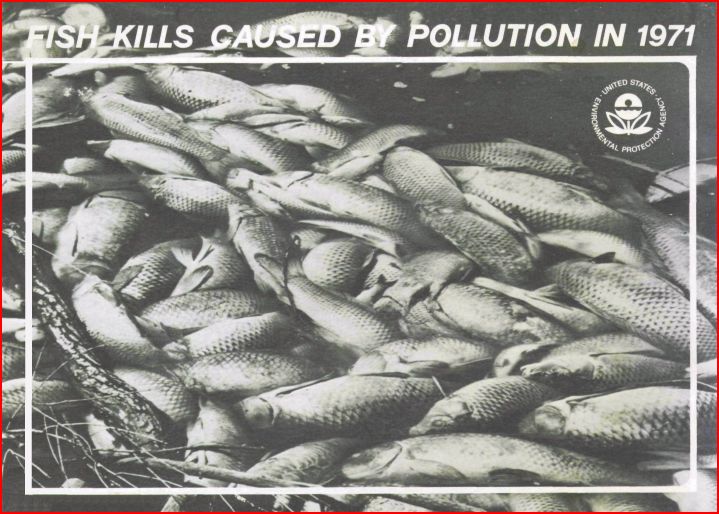
Cover of 1971 EPA publication, Fish Kills Caused By Pollution in 1971.

Cover of 1971 EPA publication, Fish Kills Caused By Pollution in 1971. According to the publication, in Texas, in 1971, 16 million fish died in just 6 pollution-caused incidents. (page 9 of the report).

One of the most spectacular fish kills of recent years occurred in the Colorado River below Austin, Texas, in 1961. Shortly after daylight on Sunday morning, January 15, dead fish appeared in the new Town Lake in Austin and in the river for a distance of about 5 miles below the lake. None had been seen the day before. On Monday there were reports of dead fish 50 miles downstream. . . . By January 21, fish were being killed 100 miles downstream. . . . During the last week of January the locks on the Intracoastal Waterway were closed to exclude the toxic waters from Matagorda Bay and divert them into the Gulf of Mexico.

. . . investigators in Austin noticed an odor associated with the insecticides. . . The manager of the (chemical) plant admitted that quantities of powdered insecticide had been washed into the storm sewer recently and, more significantly, he acknowledged that such disposal of insecticide spillage and residues had been common practice for the past 10 years.

. . . For 140 miles downstream from the lake the kill of fish must have been almost complete, for when seines were used later in an effort to discover whether any fish had escaped they came up empty. Dead fish of 27 species were observed, totaling about 1000 pounds to a mile of riverbank.

Rachel Carson, 1962, Silent Spring

Cribbed from the US Geological Survey site.


Quote of the moment: Jefferson on the 4th of July

July 4, 2007

Thomas Jefferson to Roger Weightman, declining to attend the 50th anniversary of the Declaration of Independence in the District of Columbia. This was the last letter written by Jefferson, who died 10 days later, on July 4, 1826. –LB

Monticello, June 24, 1826

Respected Sir –

The kind invitation I receive from you, on the part of the citizens of the city of Washington, to be present with them at their celebration of the fiftieth anniversary of American Independence, as one of the surviving signers of an instrument pregnant with our own, and the fate of the world, is most flattering to myself, and heightened by the honorable accompaniment proposed for the comfort of such a journey. It adds sensibly to the sufferings of sickness, to be deprived by it of a personal participation in the rejoicings of that day. But acquiescence is a duty, under circumstances not placed among those we are permitted to control. I should, indeed, with peculiar delight, have met and exch anged there congratulations personally with the small band, the remnant of that host of worthies, who joined with us on that day, in the bold and doubtful election we were to make for our country, between submission or the sword; and to have enjoyed with them the consolatory fact, that our fellow citizens, after half a century of experience and prosperity, continue to approve the choice we made. May it be to the world, what I believe it will be, (to some parts sooner, to others later, but finally to all,) the signal of arousing men to burst the chains under which monkish ignorance and superstition had persuaded them to bind themselves, and to assume the blessings and security of self-government. That form which we have substituted, restores the free right to the unbounded exercise of reason and freedom of opinion. All eyes are opened, or opening, to the rights of man.

The general spread of the light of science has already laid open to every view the palpable truth, that the mass of mankind has not been born with saddles on their backs, nor a favored few booted and spurred, ready to ride them legitimately, by the grace of God. These are grounds of hope for others. For ourselves, let the annual return of this day forever refresh our recollections of these rights, and an undiminished devotion to them.

I will ask permission here to express the pleasure with which I should have met my ancient neighbors of the city of Washington and its vicinities, with whom I passed so many years of a pleasing social intercourse; an intercourse which so much relieved the anxieties of the public cares, and left impressions so deeply engraved in my affections, as never to be forgotten. With my regret that ill health forbids me the gratification of an acceptance, be pleased to receive for yourself, and those for whom you write, the assurance of my highest respect and friendly attachments.

Th. Jefferson

Cribbed entirely from Counterpunch. Tip of the old scrub brush to Bernarda, in comments on the previous post.

Read the Declaration of Independence today.


Quote of the Moment: Barry Commoner and presidential campaigns

June 19, 2007

Barry Commoner turned 90 on May 28. He is profiled in The New York Times Science section on June 19, 2007 (if your local newspaper has a science section half as good, I’d love to hear about it). Commoner is a plant physiologist and great eminence at Washington University in St. Louis for 34 years, now at Queens College. He was a key informant of public opinion during the rise of ecological awareness in the 1960s and 1970s, probably the nation’s best known “ecologist.”

Barry Commoner on cover of Time, 2-2-1970

In 1980 he helped found the Citizens’ Party, and ran for the presidency their ticket.

He explained to the Times:

The peak of the campaign happened in Albuquerque, where a local reporter said to me, “Dr. Commoner, are you a serious candidate or are you just running on the issues?”

Time Magazine cover from February 2, 1970; Time sells replicas of historic covers.


Quote of the Moment: James Madison, on the growth of education

June 18, 2007

Two Madison quotes today: James Madison dollar, as struck for circulation

I congratulate you on the foundation thus laid for a general System of Education, and hope it presages a superstructure, worthy of the patriotic forecast which has commenced the Work. The best service that can be rendered to a Country, next to that of giving it liberty, is in diffusing the mental improvement equally essential to the preservation, and the enjoyment of the blessing.

James Madison letter to Littleton Dennis Teackle, March 29, 1826; from the Madison Papers at the University of Virginia

No feature in the aspect of our Country is more gratifying, than the increase and variety of Institutions for educating the several ages and classes of the rising generation, and the meritorious patriotism which improving on their most improved forms extends the benefit of them to the sex heretofore, sharing too little of it. Considered as at once the fruits of our free System of Government, and the true means of sustaining and recommending it, such establishments are entitled to the best praise that can be offered.

James Madison letter to Gulian C. Verplanck, February 14, 1828; from the Madison Papers at the University of Virginia

Both quotes are contained in James Madison’s “Advice to My Country,” edited by David B. Mattern, University Press of Virginia, 1997

Image: James Madison Presidential Dollar as struck, image from the U.S. Mint (Department of the Treasury) via About.com


Encore Quote of the Moment: Sherman, on war

May 29, 2007

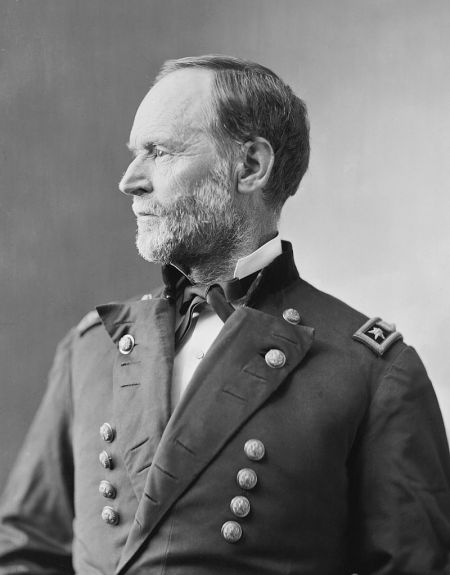
By Mathew Brady - Library of Congress, Prints and Photographs Division, Brady-Handy Collection, reproduction number LC-DIG-cwpbh-04445., Public Domain, https://commons.wikimedia.org/w/index.php?curid=33594

By Mathew Brady – Library of Congress, Prints and Photographs Division, Brady-Handy Collection, reproduction number LC-DIG-cwpbh-04445., Public Domain, https://commons.wikimedia.org/w/index.php?curid=33594

“There is many a boy here today who looks on war as all glory, but, boys, it is all hell.” – Gen. William Tecumseh Sherman,

from an address to the graduating class of the Michigan Military Academy, June 19, 1879, known as his “War is hell” speech (Wikipedia entry on Sherman).
(Query: Does anyone have an electronic link to the full text of Sherman’s address that day? Or, do you know where it might be found, even in hard copy?)

David Parker quoted the prayer out of Mark Twain’s disturbing story, “The War Prayer.Go there for a discussion on what Twain meant, and just how much opposed to war he was.

For a deeper context, and a Jeff Danziger cartoon that will make you stand up and think, see the original post of this quote.


Lincoln quote sourced: Calf’s tail, not dog’s tail

May 23, 2007

It’s a delightful story I’ve heard dozens of times, and retold a few times myself: Abraham Lincoln faced with some thorny issue that could be settled by a twist of language, or a slight abuse of power, asks his questioner how many legs would a dog have, if we called the dog’s tail, a leg. “Five,” the questioner responds confident in his mathematical ability to do simple addition.

Lincoln Memorial statue, profile view

Sunrise at the Lincoln Memorial. National Park Service photo.

“No,” Lincoln says. “Calling a dog’s tail a leg, doesn’t make it a leg.”

But there is always the doubt: Is the story accurate? Is this just another of the dozens of quotes that are misattributed to Lincoln in order to lend credence to them?

I have a source for the quote: Reminiscences of Abraham Lincoln by distinguished men of his time / collected and edited by Allen Thorndike Rice (1853-1889). New York: Harper & Brothers Publishers, 1909. This story is found on page 242. Remarkably, the book is still available in an edition from the University of Michigan Press. More convenient for us, the University of Michigan has the entire text on-line, in the Collected Works of Abraham Lincoln, an on-line source whose whole text is searchable.

However, Lincoln does not tell the story about a dog — he uses a calf. Read the rest of this entry »