Quote of moment: Will Rogers on motivating students to learn

March 28, 2012

Thomas Jefferson urged a Constitutional amendment to institutionalize education as a federal function, part of his grander scheme to lift humanity out of the muck with education as the skyhook.

Will Rogers pointing into camera, Will Rogers Museum image

Will Rogers, photo courtesy the Will Rogers Museum

Will Rogers said:

Why don’t they pass a Constitutional Amendment prohibiting anybody from learning anything? If it works as good as Prohibition did, in five years we will have the smartest people on earth.

♥ The Quotable Will Rogers, Joseph H. Carter and Larry Gatlin, Gibbs Smith 2005, page 35.

Rogers probably read Mark Twain a lot, including The Adventures of Tom Sawyer, don’t you think?

Joseph H. Carter heads the Will Rogers Museum in Claremore, Oklahoma.  Larry Gatlin is the performer, who did show on Will Rogers that inspired the book.  This collection of Rogers’ quotes is loaded with information, but citations are not easy to get.  We trust that these two guys would be unlikely to misreport — but I’d still like to get a better citation on this quote.  Among other problems for scholars, in his lifetime Rogers wrote about a newspaper column each day, and he often collected columns into books that sold well but are now out of print.

Perhaps the amazing thing is that more bon mots are not misattributed to Will Rogers, especially the funny ones.

More:

Sculpture of Will Rogers on a horse on the gro...

Sculpture of Will Rogers on horseback, on the grounds of the Will Rogers Museum in Claremore, Oklahoma. This is a nice place to pause for a couple of hours on a drive along Interstate 44, a bit northeast of Broken Arrow. Wikipedia image


If Stalin said America is “a healthy body,” why can’t anyone find the source?

March 14, 2012

Joseph Stalin, via Chicago Boyz

Joseph Stalin would have to have been drunk to call the U.S. “healthy,” and to have complimented America’s patriotism, morality and spiritual life. Even then, it would be unlikely. Why does this quote keep circulating?

This has been floating around Tea Party and other shallow venues for a while, but I’ll wager Stalin did not say it:

“America is like a healthy body and its resistance is threefold:  Its patriotism, its morality, and its spiritual life.  If we can undermine these three areas, America will collapse from within.”

I can’t find any source for it; it’s mostly quoted on right-wing sites where people marvel over what a prophet Stalin was.  All requests for a citation in five or six different forums I’ve checked, are unanswered.  Nothing like it appears at the often-checked Wikiquote.  The Stalin Archive holds nothing close to the claimed quote.

Perhaps more telling:  Is it likely that Joe Stalin ever would have called the U.S. “a healthy body?”  Stalin was of a school that claimed capitalism was diseased, and America was infested with a soon-to-be terminal case.  If he called America “diseased” by patriotism and religion, it would be consistent with other statements, but his calling America healthy for patriotism and spiritual life, it’s inconsistent with other claims he made, about America and about capitalism (see Stalin’s 1929 remonstrance to the U.S. Communist Party, for example).

So, Dear Readers, my request to you:  Can you offer the source of this quote, Joseph Stalin or not?

Why would a false claim from Stalin get such a life on the internet?

Update, March 15, 2012:  I’m calling this one:  It’s a bogus quote.  Joseph Stalin didn’t say it.  Not as many comments here as e-mails and comments on other discussion boards and Facebook — no one has come even close to anything like the line above from Stalin.  No source quoting the line even bothers to give a decade, let alone a year, a location, and a citation that would pass muster in a sophomore high school English class.  Tea Partiers, you’ve tried to twist history again — stop it.

Update March 1, 2013: If you’re checking in here studying for a DBQ for an AP class, please tell us in comments, which AP class, and what city you’re in.  Thanks.


Quote of the moment, Daniel Boorstin channels Kin Hubbard: Pretension to knowledge more dangerous than ignorance

February 26, 2012

Daniel Boorstin, Librarian of Congress, Information Bulletin January 2003

Daniel Boorstin, Librarian of Congress, Information Bulletin January 2003

In an earlier post I asked about the origins of this quote, and a reader capable of searching well gave us a good enough citation:   Daniel Boorstin, the late historian and former Librarian of Congress, wrote:

I have observed that the world has suffered far less from ignorance than from pretensions to knowledge. It is not skeptics or explorers but fanatics and ideologues who menace decency and progress. No agnostic ever burned anyone at the stake or tortured a pagan, a heretic, or an unbeliever.

Boorstin wrote that in an essay in  a book published in 1990, “The Amateur Spirit,” in the update of 1935’s Living Philosophies (edited by Clifton Fadiman).  You can see a more complete version of the quote here.

Isn’t that eerily similar to Kin Hubbard’s observation?  From Boorstin, the former Librarian of Congress, it carries the heft of more academic language than Hubbard’s version, but it clearly echoes the idea, doesn’t it?

Below the fold, the statement in greater context of the duty of historians.

Tip of the old scrub brush to j a higginbotham.

Read the rest of this entry »


Quote of the moment: Abraham Lincoln on job creators, ‘labor is the superior of capital’

February 16, 2012

Abraham Lincoln as working man, Charles Turzak woodcut - Abraham Lincoln Presidential Library & Museum

Abraham Lincoln as working man, woodcut by Charles Turzak circa 1933 – Abraham Lincoln Presidential Library & Museum; caption on this image at the Lincoln Library site notes that Turzak portrayed Lincoln as the working man Lincoln himself never aspired to be, though he well respected those who did labor.

Labor is prior to and independent of capital. Capital is only the fruit of labor, and could never have existed if labor had not first existed.

Labor is the superior of capital, and deserves much the higher consideration.

President Abraham Lincoln, Annual Message to Congress, December 3, 1861 (the “State of the Union”)

Abraham Lincoln took great inspiration from Americans and their striving to move up in the world.  He admired inventions and inventors, he admired working people and their drive to become their own managers and proprietors of their own businesses.  Lincoln had been there himself.

By the time he stopped at the Wisconsin State Fair in 1859 — a full year before his campaign for the presidency — Lincoln was a relatively wealthy lawyer, a good trial lawyer whose better-paying clients included the largest industrial companies of the day, railroads.  Lincoln grew up on hard-scrabble farms, though, and he had been a shopkeeper and laborer before he studied law and opened his practice.  Lincoln also owned a patent — a device to float cargo boats higher in the Sangamon River that served Sangamon County where he lived, the better to make the entire area a figurative river of free enterprise.

Lincoln was invited to comment on “labor,” at an exhibit showing new machines to mechanize America’s farms.  At the Wisconsin fair Lincoln complimented farmers, inventors, inventions, and all laborers.  Just over 24 months later, excerpts from that speech showed up at the close of his State of the Union declaration, his December 3 remarks delivered to Congress as the Constitution required.  Lincoln probably did not deliver the remarks as as a speech, but they appear in the Congressional Record as a speech, and it is often cited that way.  He spoke something like these words in Wisconsin, and they were his views at the end of the first year of the Civil War, expressing yet again his hope that the union would survive, and continue to prosper, for all working people.

Below is a more complete quoting of his remarks from the Message to Congress.

It continues to develop that the insurrection is largely, if not exclusively, a war upon the first principle of popular government– the rights of the people. Conclusive evidence of this is found in the most grave and maturely considered public documents, as well as in the general tone of the insurgents. In those documents we find the abridgment of the existing right of suffrage and the denial to the people of all right to participate in the selection of public officers except the legislative boldly advocated, with labored arguments to prove that large control of the people in government is the source of all political evil. Monarchy itself is sometimes hinted at as a possible refuge from the power of the people.

In my present position I could scarcely be justified were I to omit raising a warning voice against this approach of returning despotism. It is not needed nor fitting here that a general argument should be made in favor of popular institutions, but there is one point, with its connections, not so hackneyed as most others, to which I ask a brief attention. It is the effort to place capital on an equal footing with, if not above, labor in the structure of government. It is assumed that labor is available only in connection with capital; that nobody labors unless somebody else, owning capital, somehow by the use of it induces him to labor. This assumed, it is next considered whether it is best that capital shall hire laborers, and thus induce them to work by their own consent, or buy them and drive them to it without their consent. Having proceeded so far, it is naturally concluded that all laborers are either hired laborers or what we call slaves. And further, it is assumed that whoever is once a hired laborer is fixed in that condition for life.

Now there is no such relation between capital and labor as assumed, nor is there any such thing as a free man being fixed for life in the condition of a hired laborer. Both these assumptions are false, and all inferences from them are groundless.

Labor is prior to and independent of capital. Capital is only the fruit of labor, and could never have existed if labor had not first existed.

Labor is the superior of capital, and deserves much the higher consideration. Capital has its rights, which are as worthy of protection as any other rights. Nor is it denied that there is, and probably always will be, a relation between labor and capital producing mutual benefits. The error is in assuming that the whole labor of community exists within that relation. A few men own capital, and that few avoid labor themselves, and with their capital hire or buy another few to labor for them. A large majority belong to neither class–neither work for others nor have others working for them. In most of the Southern States a majority of the whole people of all colors are neither slaves nor masters, while in the Northern a large majority are neither hirers nor hired. Men, with their families–wives, sons, and daughters,–work for themselves on their farms, in their houses, and in their shops, taking the whole product to themselves, and asking no favors of capital on the one hand nor of hired laborers or slaves on the other. It is not forgotten that a considerable number of persons mingle their own labor with capital; that is, they labor with their own hands and also buy or hire others to labor for them; but this is only a mixed and not a distinct class. No principle stated is disturbed by the existence of this mixed class.

Again, as has already been said, there is not of necessity any such thing as the free hired laborer being fixed to that condition for life. Many independent men everywhere in these States a few years back in their lives were hired laborers. The prudent, penniless beginner in the world labors for wages awhile, saves a surplus with which to buy tools or land for himself, then labors on his own account another while, and at length hires another new beginner to help him. This is the just and generous and prosperous system which opens the way to all, gives hope to all, and consequent energy and progress and improvement of condition to all. No men living are more worthy to be trusted than those who toil up from poverty; none less inclined to take or touch aught which they have not honestly earned. Let them beware of surrendering a political power which they already possess, and which if surrendered will surely be used to close the door of advancement against such as they and to fix new disabilities and burdens upon them till all of liberty shall be lost.

From the first taking of our national census to the last are seventy years, and we find our population at the end of the period eight times as great as it was at the beginning. The increase of those other things which men deem desirable has been even greater. We thus have at one view what the popular principle, applied to government through the machinery of the States and the Union, has produced in a given time, and also what if firmly maintained it promises for the future. There are already among us those who if the Union be preserved will live to see it contain 200,000,000. The struggle of to-day is not altogether for to-day; it is for a vast future also. With a reliance on Providence all the more firm and earnest, let us proceed in the great task which events have devolved upon us.

[Excerpted here from the online Classic Literature Library, Writings of Abraham Lincoln Vol. 5; the complete Message to Congress of December 3, 1861, begins here; the section quoted above can be found on pages 143 and 144.]

See Also:

Related articles (from Zemanta)


Quote of the moment: Una Mulzac, ‘learn, teach’

February 11, 2012

From her obituary in the New York Times, Sunday February 5, 2012:

Ms. Mulzac’s profession was selling books at Liberation Bookstore, a Harlem landmark that for four decades specialized in materials promoting black identity and black power.  On one side of the front door, a sign declared,

“If you don’t know, learn.”

On the other:

“If you know, teach.”

Ms. Mulzac died at a hospital in Queens on January 21, at the age of 88.

Sign of Liberation Bookstore, Harlem, founded by Una Mulzac (1923-2012)

Una Mulzac at the door of Liberation Bookstore, in Harlem.  Harlem World image

Una Mulzac at the door of Liberation Bookstore, in Harlem. Harlem World image

More:


Quote of the moment: Gold standard a “barbarous relic” – Keynes

January 18, 2012

Portrait of John Maynard Keynes as a younger man

Portrait of John Maynard Keynes as a younger man (who is the artist? where does it hang?)

  • In truth, the gold standard is already a barbarous relic.
    • John Maynard Keynes, Monetary Reform (1924), p. 172

    Did Keynes foresee the rise of Ron Paul, even in 1924?

    Gold Key, weighing one kilogram is used to acc...

More, resources:


Einstein probably didn’t say that

January 7, 2012

Aphorisms that sound great, but to whom we have forgotten proper attribution, often get pinned on great people who did not say them.

Einstein's journals featuring comments on his first tour of Japan, in 1922 - Morgan Library via The New Yorker

Einstein’s journals featuring comments on his first tour of Japan, in 1922 – Morgan Library via The New Yorker

It’s a common problem. But I think everyone should strive to accurately cite quotations.

Occasionally the misattribution takes on added significance because of the reputation of the person to whom it is misattributed. This becomes a larger problem, because it often dragoons the reputation of some great person into a service they would not intend.

In the masthead of Climate Change Dispatch (“because the debate is not over”) we find this quotation, design to puncture the bubble arrogance surrounding all those climate scientists, I suppose:

“The only thing more dangerous than ignorance is arrogance.”
—Albert Einstein

You know where I’m going with this. Einstein didn’t say it, so far as I can find.

I can’t find any source older than about 2000 that even has the quote. Most attribute it to Einstein. It does not appear in any halfway scholarly collection of Einstein quotes, however. It’s not at the WikiQuotes site. It’s not in any of my three editions of Bartlett’s Familiar Quotations.

Just to check such claims, I ordered The Ultimate Quotable Einstein (collected and edited by Alice Calaprice) from Princeton University Press.  Alas, they had exhausted their stock.  When my favorite Border’s Books was closing out, I found the book in the reference section.

The quote does not appear in any form in The Ultimate Quotable Einstein, that I have found.

Keepers of the Climate Change Dispatch site said the quote came from a book about Einstein read years ago, but now forgotten. (Yes, I asked.)

I suppose it’s possible there is another, much over-looked source for the quote out there. If you can find it, please let me know.

But for the immediate future, I would advise you to put the quote attributed to Einstien on your “no-he-didn’t-say-it” list.

One more example of how people attribute aphorisms to famous people, and as used to poke at climate scientists, another example of our getting into trouble, not because of what we don’t know, but because of what we know that just is not true.

Ironic, too.  It’s not that the current purveyors don’t know about the quote or about Einstein, but that they are arrogantly insisting on the veracity of a false quote.

I wonder if the masthead there will ever change.

Update: Climate Change Dispatch is every bit as reprobate on science and policy, but they’ve dropped the quote falsely attributed to Einstein, at least as of August 2021.


Encore quote of the moment: Robert Kennedy on what really matters

December 18, 2011

This is borrowed from Harry Clarke (with a few minor corrections in the text):

Robert F. Kennedy speech at the University of Kansas, Lawrence, March 18, 1968

Robert F. Kennedy speech at the University of Kansas, Lawrence, March 18, 1968 - Photo by George Silk, Time-Life Pictures/Getty Images

RFK said this in 1968. In a speech I heard today it was quoted and it stirred me.

Too much and for too long, we seem to have surrendered personal excellence and community value in the mere accumulation of material things. Our Gross National Product, now, is over eight hundred billion dollars a year, but that GNP — if we judge the United States of America by that — that GNP counts air pollution and cigarette advertising and ambulances to clear our highways of carnage. It counts special locks for our doors and the jails for the people who break them. It counts the destruction of the redwoods and the loss of our natural wonder in chaotic sprawl. It counts napalm and it counts nuclear warheads, and armored cars for the police to fight the riots in our cities. It counts Whitman’s rifle and Speck’s knife, and the television programs which glorify violence in order to sell toys to our children.

Yet the Gross National Product does not allow for the health of our children, the quality of their education, or the joy of their play. It does not include the beauty of our poetry or the strength of our marriages, the intelligence of our public debate or the integrity of our public officials. It measures neither our wit nor our courage, neither our wisdom nor our learning, neither our compassion nor our devotion to our country; it measures everything, in short, except that which makes life worthwhile. And it can tell us everything about America except why we are proud that we are Americans.

Kennedy delivered these words in an address at the University of Kansas, Lawrence, Kansas, on March 18, 1968.

Here’s a video production from the Glaser Progress Foundation which includes an audio recording of the speech:

More resources:

Most of this post appeared originally here in 2009.  We need the reminder.


Quote of the moment: Hillary Clinton, on being a Cubs fan

October 26, 2011

Today is the birthday of Hillary Rodham Clinton, born October 26, 1948.

Secretary of State Hillary Rodham Clinton

Secretary of State Hillary Rodham Clinton - Topnews image

Happy birthday, Hillary!

Without citation, Robert A. Nowlan’s Born This Day lists this as something Clinton said:

Being a Cubs fan prepares you for life — and Washington.


Quote of the moment: John Kenneth Galbraith pokes fun at conservative politics

October 25, 2011

John Kenneth Galbraith, BusinessWeek image

Economist John Kenneth Galbraith, Economist image

The modern conservative is engaged in one of man’s oldest exercises in moral philosophy; that is, the search for a superior moral justification for selfishness.

John Kenneth Galbraith
“Stop the Madness,” Interview with Rupert Cornwell, Toronto Globe and Mail (6 Jul 2002)

(I find this attributed to Galbraith at several places — where and when did he say that?)

John Kenneth Galbraith, in paper mache, by Frank Lerner, for Time Magazine cover February 16, 1968

John Kenneth Galbraith, in papier-mache by Gerald Scarfe, photo by Frank Lerner, for Time Magazine cover February 16, 1968


Quote of the moment: Walter M. Miller, Leibowitz’s shopping list

October 22, 2011

Cover of Miller's Canticle for Liebowitz

Cover of Miller's Canticle for Liebowitz

“Pound pastrami, can kraut, six bagels—bring home for Emma.”

– Walter M. Miller, A Canticle for Leibowitz


Quote of the moment: Trouble? It comes from “what we know that ain’t so.”

October 15, 2011

Kin Hubbard and Will Rogers

Kin Hubbard and Will Rogers, image from Lilly Library, Indiana University, Bloomington, Indiana

It was a warning from a prophet of the past, and it applies to almost every controversy you can think of in 2011:

It isn’t what we don’t know that gives us trouble, it’s what we know that ain’t so.

The only problem is, to whom do we attribute it?  Was it Will Rogers who said, or Frank McKinney “Kin” Hubbard, or Artemus Ward?

Virtue may be its own reward, but ignorance costs everybody, especially when it is elected or promoted to power.

More:


Quote of the moment: Charles Dodgson and Tea Party logic, “six impossible things”

September 27, 2011

John Tenniel's drawing of Alice A-dressing the White Queen, in "Through the Looking Glass" 1865 - Wikimedia image

John Tenniel's drawing of Alice A-dressing the White Queen, "Through the Looking Glass" 1865 - Wikimedia image

Alice laughed: “There’s no use trying,” she said; “one can’t believe impossible things.”
“I daresay you haven’t had much practice,” said the Queen. “When I was younger, I always did it for half an hour a day. Why, sometimes I’ve believed as many as six impossible things before breakfast.”

Lewis Carroll (Charles Lutwidge Dodgson), Through the Looking Glass, Chapter V, “Wool and Water.” 1871 (Gutenberg edition)

Below the fold; the quote in larger context.

Read the rest of this entry »


Quote of the moment: Diane Ravitch, history won’t be kind to those who attacked teachers

August 29, 2011

Attacking Teachers Attacks My Future

"Attacking Teachers Attacks My Future" sign carried by students supporting teachers at the Wisconsin Capitol Building, February 16, 2011. Photo by BlueRobot, Ron Chandenais

Of one thing I feel sure—history will not be kind to those who gleefully attacked teachers, sought to fire them based on inaccurate measures, and worked zealously to reduce their status and compensation. It will not admire the effort to insert business values into the work of educating children and shaping their minds, dreams, and character. It will not forgive those who forgot the civic, democratic purposes of our schools nor those who chipped away at the public square. Nor will it speak well of those who put the quest for gain over the needs of children. Nor will it lionize those who worshipped data and believed passionately in carrots and sticks. Those who will live forever in the minds of future generations are the ones who stood up against the powerful on behalf of children, who demanded that every child receive the best possible education, the education that the most fortunate parents would want for their own children.

Now is a time to speak and act. Now is a time to think about how we will one day be judged. Not by test scores, not by data, but by the consequences of our actions.

Diane Ravitch, writing at Bridging Differences, a blog of EdWeek, June 28, 2011

See more photos from Ron Chandenais, here.


Encore quote of the moment: Wolfgang Pauli, “not even wrong”

August 5, 2011

Talking about Tea Party and Republican economics in the next few months?  You’ll need to have Wolfgang Pauli’s wisdom at your fingertips:

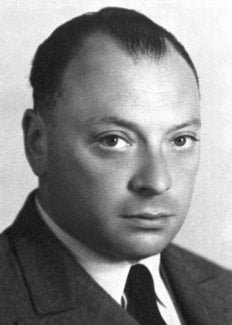
Wolfgang Pauli, circa 1945 - Nobel Foundation photo

Wolfgang Pauli, circa 1945 – Nobel Foundation photo

That’s not right. It’s not even wrong.

Wolfgang Pauli (1900-1958), as quoted by R. Peierls

From Wikipedia:

Peierls (1960) writes of Pauli, “… a friend showed him the paper of a young physicist which he suspected was not of great value but on which he wanted Pauli’s views. Pauli remarked sadly ‘That’s not right. It’s not even wrong'”. (Peierls R (1960). “Wolfgang Ernst Pauli, 1900-1958”. Biographical memoirs of fellows of the Royal Society 5: 174-92. Royal Society (Great Britain))

Pauli won the Nobel Prize in Physics in 1945: ” At this stage of the development of atomic theory, Wolfgang Pauli made a decisive contribution through his discovery in 1925 of a new law of Nature, the exclusion principle or Pauli principle. The 1945 Nobel Prize in Physics has been awarded to Pauli for this discovery.”

A mostly encore post.