Amory Lovins, Rocky Mountain Institute: ‘Don’t do this’

November 29, 2007

Steven Milloy won’t like this. It’s a parable, based on a true story, about why we shouldn’t willy-nilly increase DDT spraying, anywhere. Amory Lovins tells it quickly, and well.

So in this tranquil but unwavering spirit of applied hope, let me tell you a story.

In the early 1950s, the Dayak people in Borneo had malaria. The World Health Organization had a solution: spray DDT. They did; mosquitoes died; malaria declined; so far, so good. But there were side-effects. House roofs started falling down on people’s heads, because the DDT also killed tiny parasitic wasps that had previously controlled thatch-eating caterpillars. The colonial government gave people sheet-metal roofs, but the noise of the tropical rain on the tin roofs kept people awake. Meanwhile, the DDT-poisoned bugs were eaten by geckoes, which were eaten by cats. The DDT built up in the food chain and killed the cats. Without the cats, the rats flourished and multiplied. Soon the World Health Organization was threatened with potential outbreaks of typhus and plague, which it would itself have created, and had to call in RAF Singapore to conduct Operation Cat Drop–parachuting a great many live cats into Borneo.

This story–our guiding parable at Rocky Mountain Institute–shows that if you don’t understand how things are connected, often the cause of problems is solutions. Most of today’s problems are like that. But we can harness hidden connections so the cause of solutions is solutions: we solve, or better still avoid, not just one problem but many, without making new ones, before someone has to go parachuting more cats. So join me in envisioning where these linked, multiplying solutions can lead if you apply and extend what you’ve learned and take responsibility for creating the world you want. Details of this business-led future will be described this autumn in a book my team and I are now finishing, called Reinventing Fire.

[Here, used to be a Google Video of that part of the speech. O tempora, O mores! Is the format even available anymore?  Below, video of a 2011 commencement speech, with the same parable near the beginning.]

Amory Lovins is founder, president and Chief Scientist with the Rocky Mountain Institute.  This speech, from August 2007, can also be viewed at RMI’s site, where the full text is also available.

“Effects of DDT in Borneo,” a flow chart showing the need for “Operation Cat Drop,” the UN-sponsored parachuting of cats into Borneo after a DDT-caused disastrous avalanche of events. From ActionOutdoors.org


Unread scripture: Come, let us reason together*

November 23, 2007

The right-wing nominally Catholic journal First Things features another assault on the quest for reason in its October issue.

Pope John Paul II said evolution is a scientific understanding of creation and should be studied by people, with no claim that it conflicts with Christianity. Since his death, and since the installation of Pope Benedict, Benedict and several cardinals have been backpedaling as fast as they can. When they get called on some of their more radical statements, they claim that “radical atheists” have forced them to their public relations firms and far-right magazines. So far, Pope Benedict has not directly claimed Pope John Paul II to have been in error about evolution. He seems happy to let others make that inference explicitly, however.

I am particularly troubled by Cardinal Dulles’ citing of an article by Christoph Cardinal Schönborn, the archbishop of Vienna, published on July 7, 2005, as an op-ed in the New York Times. Schönborn’s view sounded oddly as if it squared completely with the fundamentalist Christian view espoused from the Discovery Institute in Seattle. It turns out that Schönborn had not written the piece at all, but instead was asked to sign his name to a piece written by one of the Discovery Institute’s commercial public relations groups.

It is probably not fair yet to say that Pope Benedict has been purchased by the Discovery Institute. But it would be good if Catholic officials were to stick to Catholicism and leave the petty, erroneous science politics and destructive education politics to the Discovery Institute; it would be better still if the Discovery Institute were to abandon such things, too.

Tip of the old scrub brush to a commenter at Telic Thoughts. [And, yes, this sat for a while in my draft box.]

* Isaiah 1:18

The verse is almost always cited out of context. In this verse a prophet Isaiah recites words he’s been given from God, by his account. This opens an invitation, from God, to the people of Judah, to discuss their actions. God was particularly concerned about injustices and inequities practiced by the people; for example, in the verses immediately preceding, Isaiah quotes God (CEV): “No matter how much you pray,/I won’t listen./You are too violent./Wash yourselves clean!/I am disgusted with your filthy deeds./Stop doing wrong/and learn to live right./See that justice is done./Defend widows and orphans and help those in need.” It is my view that Cardinal Dulles is missing that context here. The scriptures call us to see that justice is done, first. Slamming evolution and the rest of science is not such action.

Other sources


Why creationists? Why Rachel Carson critics?

November 22, 2007

At least once a week I buy the New York Times. Tuesday’s edition carries the Science section. It’s better than a weekly science magazine.

And especially since the Dallas Morning News absent-mindedly closed down their award-winning science section and misplaced their award-winning science section editor, Tom Siegfried, the Times is even more important here in Dallas.

Last Tuesday’s main story explained a lot about some of the issues I write about here: Why do people deny obvious stuff — creationists, DDT nuts, history revisionists, Christian nationalists, and so on? Go check out “Denial Makes the World Go ‘Round.”

I’m sorta surprised the guys at denialism blog (“don’t mistake denialism for debate”) haven’t mentioned it.


Quote of the moment: Bohr on predictions, creationists on the death of evolution theory

November 21, 2007

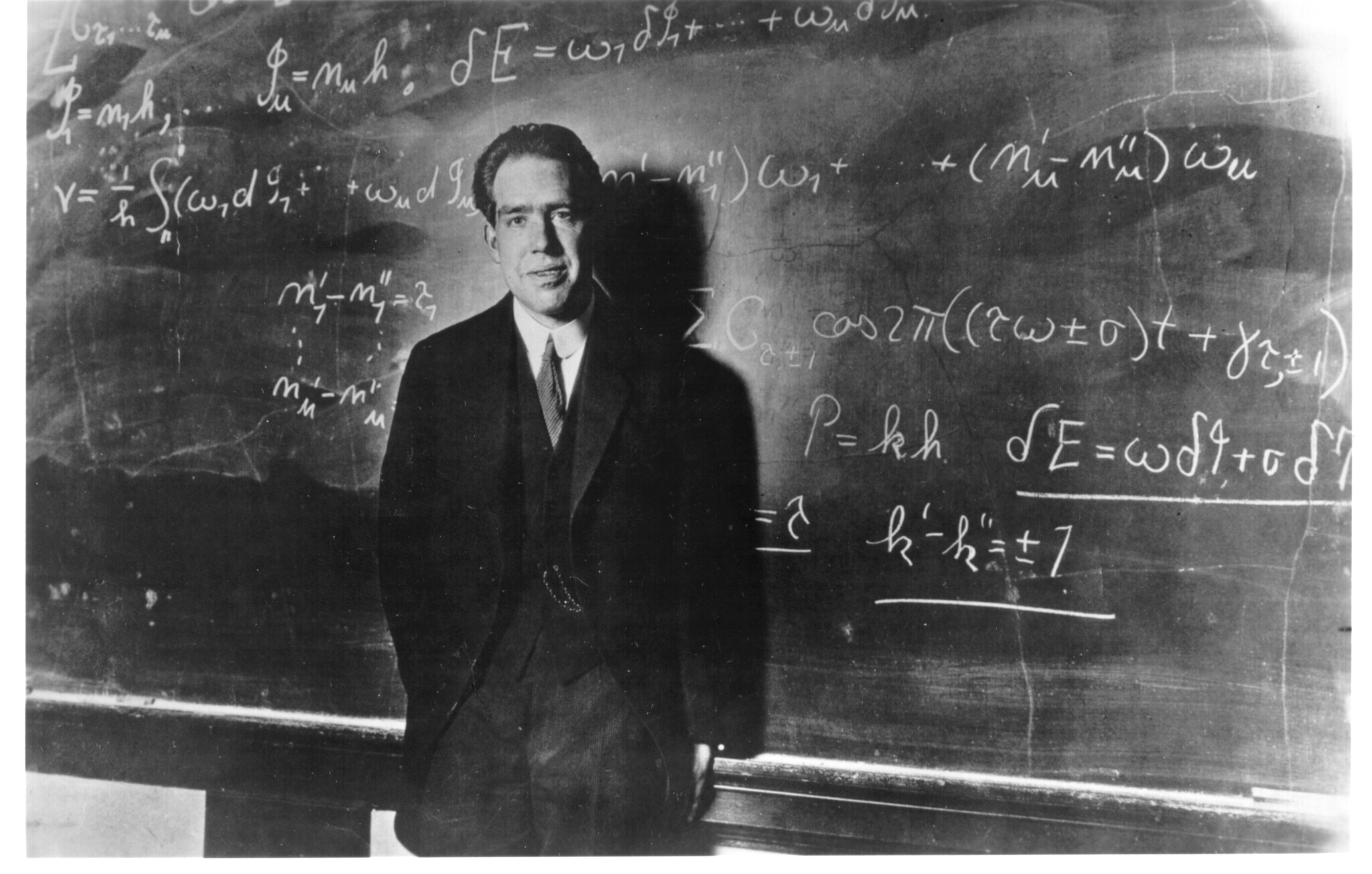
Niels Bohr as a younger man, at a chalkboard.

Niels Bohr, as a younger man, at the chalkboard. Atomic Archives

It is difficult to predict, especially the future.

  • Niehls Bohr, Danish physicist, 1885-1962 – attributed by Mark Kac, Statistics, 1975. Other sources say it is a Danish pun (anybody here speak Danish?) famous in the Danish parliament in the 1930s.

And as if in tribute to Bohr, Ed Brayton at Dispatches from the Culture Wars has a collection of creationist predictions that evolution theory will soon be dead — a series of predictions starting in 1904. Santayana’s Ghost urges you to read them, to avoid repeating history.


DDT works! (When used carefully, in IVM, and sparingly)

November 20, 2007

Discover Magazine’s site has a solid story on DDT and malaria, “Can a maligned pesticide save lives.” Among other things, the article notes that Rachel Carson was scientifically accurate in her cited concerns that DDT was killing birds, and in fact later research of more than 1,000 peer-reviewed papers has born out her worries, and provided even greater evidence of damage.

Cover of November 2007 Discover Magazine, featuring an article on DDT's continuing use in the fight against malaria, and vindicating Rachel Carson's research citations with regard to injuries to birds.

Cover of November 2007 Discover Magazine, featuring an article on DDT’s continuing use in the fight against malaria, and vindicating Rachel Carson’s research citations with regard to injuries to birds.

The article details how DDT is used in integrated vector management (IVM), where pesticides are sparingly and carefully used to prevent their target pests from evolving resistance and immunity.  DDT’s abuse had bred widespread resistance in mosquito populations in Africa and other malaria-endemic locations, forcing the World Health Organization to abandon its ambitious program to eradicate malaria in a program dependent on DDT working for at least a year.

Steven Milloy and the Usual Suspects and Comrades in Junk Science, in the War on Science at AEI and CEI will start their distortions of the Discover article any moment now . . . three, two, one . . .


Oceans white with foam, mate!

November 19, 2007

This is cool. Natural phenomena, the stuff that makes geography really interesting — where and what is this? (Pictures from August 2007)

Surfer emerges from foam in New South Wales

It was as if someone had poured tons of coffee and milk into the ocean, then switched on a giant blender.

Suddenly the shoreline north of Sydney were transformed into the Cappuccino Coast.

Foam swallowed an entire beach and half the nearby buildings, including the local lifeguards’ centre, in a freak display of nature at Yamba in New South Wales.

One minute a group of teenage surfers were waiting to catch a wave, the next they were swallowed up in a giant bubble bath. The foam was so light that they could puff it out of their hands and watch it float away.

Perhaps a good geography warm-up: Where are these pictures from? What is the phenomenon shown in the photos? Why might it be unusual for these people to be swimming in the ocean in August?

Read the rest of this entry »


Another carnival of DDT

November 18, 2007

One of the clues that someone is financing a public relations campaign for DDT and against care for the environment is the way “news” keeps popping out about the benefits of DDT, though there is no natural process for making such news in back of the stories.

We old PR flacks recognize that without the push from an agent, these stories wouldn’t get written.

Just over a month ago there was a flurry of stories about how DDT was “effective” even after mosquitoes developed immunity to it, because it repels mosquitoes, too — even though that wasn’t what the researchers concluded, and that wasn’t the major thrust of the research article.

We also saw a Hoover Institute fellow call for DDT to be used to fight the spread of West Nile virus, though no public health official called for such action, though there is no particular need for such a drastic change in policy, and despite the fact that DDT spraying for the mosquitoes that carry West Nile is one of the least effective means of killing them (DDT is not a larvacide, and larvacides are called for to combat West Nile).

This month? No real news, but the American Enterprise Institute, which nominally is pitched at promoting business interests, issued a new report recycling all the old canards, calling for increased use of DDT in Africa to fight malaria, despite already expanded use, and despite a lack of call from health officials to spray more DDT.

Here’s how it looks on the internet:

November 5, 2007 – Wall Street Journal opinion piece by AEI’s Roger Bate, over the years one of the most ardent salesmen of DDT as the solution to nearly every problem, so long as it bashed environmentalists. WSJ notes the piece is a shorter version of the AEI report.

November 1, 2007 – TCS piece by AEI’s Roger Bate, complaining generally about environmentalists.

Random DDT stuff, some of which may turn into separate posts:


It was religion all along

November 17, 2007

The Discovery Institute implicitly admitted that their concern about evolution is religious today. They named Michael Medved a fellow.

No, Bill Dembski cited the press release, Medved was not invited because of his acumen in urban planning, or even his experience fighting traffic in California. No, no one even thought Medved has any science chops.

It’s the religion, stupid!

“Michael Medved is an intellectual entrepreneur, a political and cultural polymath with great insights, judgment and wit. We are delighted to have this new relationship with him,” said Discovery Institute president Bruce Chapman.

“Intellectual entrepreneur?”

The Seattle prayer tank suffered serious blows in 2005, 2006 and 2007, when their fellows abruptly dropped defense of intelligent design as presented by the Dover, Pennsylvania school board, a federal court ruled that ID is not science but is religion-based, and the respected science production NOVA produced a two-hour program highlighting and explaining that court decision.

So, the DI poobahs figured, what better to do than hire a nationally-syndicated culture-lamenting talk radio guy to front for the band? One wonders if Rush Limbaugh turned them down.

The research agenda for the intelligent design movement could have used the money, and appointing a research fellow would have helped establish that science remains a focus of Discovery Institute work.

Science won’t fill the pews, though. So they hired Medved.

See more comments at Panda’s Thumb. (Did I mention Bigfoot?) And a tip of the old scrub brush to P. Z. Myers, who will probably not much like my post on Ken Miller coming up, who pointed me to Amused Muse.


Climate hoax|hoax author speaks

November 11, 2007

He did it to expose the climate change skeptics.

Nature‘s blog has the interview, here.

Why did you decide to construct the fake website? Was it purely a joke or did you set out to make people taking your paper at face value look foolish?

Its purpose was to expose the credulity and scientific illiteracy of many of the people who call themselves climate sceptics. While dismissive of the work of the great majority of climate scientists, they will believe almost anything if it lends support to their position. Their approach to climate science is the opposite of scepticism.

Are you surprised at the pick up your coverage has generated?

Not really. Equally ridiculous claims – like those in the paper attached to the “Oregon Petition” or David Bellamy’s dodgy glacier figures – have been widely circulated and taken up by the ‘sceptic’ community. But you can explain this until you are blue in the face. To get people to sit up and listen, you have to demonstrate it. This is what I set out to do.

Still waiting for someone to back up junk science purveyor Steve Milloy’s claim that the hoax was exposed by the skeptics it was aimed at. The hoaxer doesn’t think so.

[Yeah, I know — Nature is a British publication, and they use the British spelling for “skeptic.”]


Global warming a hoax? No, the hoax claim is a hoax

November 9, 2007

Global warming a hoax? No, the hoax was the claim that there was a study that said global warming is a hoax.

Bob Parks put it succinctly:

4. GLOBAL WARMING HOAX: OR WAS IT JUST A HOAX OF A HOAX?
There was a wild scramble on Wednesday about the death of the manmade global warming theory, except the authors didn’t exist, nor their institution, nor the journal. It took two minutes to find this out, so what was the purpose? Just a prank?

What was it?

Nature reports the hoax site, looking like the website of a research journal, took the article down (that’s the link to the article; it’s gone, as you can see. The hoax included a purported article and a purported editorial from the journal.

But nothing checked out. The journal doesn’t exist. The researchers probably are bogus, too, nor does their purported institution/department exist.

Rush Limbaugh fell for it, though, as did several others who profess to be skeptical of global warming.

Certainly a hoax — but by whom? For what purpose?

In the meantime, junk science purveyor Steven Milloy claims that it was the skeptics of global warming who smoked out the hoax, not the many scientists who immediately smelled fishiness. Does he suggest the name of even one warming “skeptic” who called it? No.

Did Limbaugh apologize yet? Do you think he’ll be more skeptical next time?

Update, November 11, 2007:  Nature interviews the hoax creator and perpetrator. Explanation, excerpt, and links to the article.


Nobelist’s biography questioned: We’re still inspired

November 7, 2007

Mario Capecchi’s story of his mother’s arrest by the Gestapo, and his life on the streets of Italy as a young boy, only piqued interest in the story of his winning a Nobel Prize in Medicine or Physiology, earlier this year.

It is such a great story, people set out to write it down in detail. Some of the details discovered, however, don’t quite square with historical records.

A group of reporters with the Associated Press uncovered the discrepancies. Realizing that the story comes from the memory of a very young child, so far the headlines and the stories have been corrective, but gently and adoringly so.

The story Capecchi has told repeatedly over the years in speeches and interviews begins when he is 3 and the Gestapo, Adolf Hitler’s secret police, snatch his mother before his very eyes and dispatch her to Dachau concentration camp. The peasant family that takes him in abandons him and he spends four years wandering about northern Italy – a street urchin, alone and begging for food.

At war’s end – on the boy’s ninth birthday – mother and son are reunited in the hospital ward where he is being treated for malnutrition and typhoid. They set sail for America where he flourishes, embarks on a brilliant research career – and goes on to win the Nobel Prize for medicine.

But The Associated Press, which set out to chronicle his extraordinary story in greater detail, has uncovered several inconsistencies and unanswered questions, chief among them whether his mother was in Dachau, and whether he really was for a long time a homeless street child.

You can read the full story at The Salt Lake Tribune.

This is a classic case. Memory differs from the facts. Human minds fill in details that would otherwise leave a mystery, and the details filled in differ from the details that can be corroborated.

This is part of what keeps history lively.

We see here also a demonstration that there is much we can never really know for sure. Historians work from imperfect records in the best of circumstances.

The director of the Dachau Memorial, Barbara Distel, said women weren’t imprisoned at Dachau until September 1943 – more than two years after Capecchi says his mother was arrested. She also said only Jewish women from eastern Europe were held in Dachau’s satellite camps.

”I do remember – I remember the Gestapo coming to the Wolfsgruben chalet,” Capecchi told AP in the interview, conducted days after his Nobel Prize was announced. ”It’s sort of like a photograph. I can tell you how many people were in the room, which ones were in uniform and which ones weren’t. Just boom. It’s there.”

Pressed to explain how he could be certain he was just 3 1/2 at the time and remember it so clearly, he stood by his account.

The big question we want answered here is this: How can we get more great people like Mario Capecchi? Can we get a few Nobelists out of the current generation of children?

No one proposes revisiting war to make kids great, so the fascination with Capecchi’s childhood is more academic, if still for inspiration.

In the end, we have a mystery. How did Capecchi get to be such a great man? There remains that great chapter near the end of the book; early chapters are missing.

Perhaps AP could put a team of reporters on a story to explain exactly how Capecchi’ s research explains what it does, and what it means down the road. That’s a story that needs to be told, too.


Carnival catch up: Sputnik at Philosophia Naturalis 14

November 5, 2007

Interesting carnival of natural philosophy that I had not seen before — and Philosophia Naturalis Number 14 celebrates Sputnik. History teachers may want to visit the carnival.

This one is hosted at Dynamics of Cats, one of the Seed Empire science blogs. I regret it took so long to call it to your attention.


Washoe, pioneer in signing chimpanzees, dead at 42

November 1, 2007

News from Central Washington University in Ellensburg tells of the death of Washoe, the first chimpanzee to learn American Sign Language (ASL), the matriarch of a small clan of signing chimps who pushed the boundaries on our view of the intelligence of animals, especially the other great apes besides humans.

Washoe, undated photo from Central Washington University Washoe was named after Washoe County, Nevada, the home of the University of Nevada – Reno, where she was taken in 1966 after being captured in Africa as an infant.

Washoe, who first learned a bit of American Sign Language in a research project in Nevada, had been living on Central Washington University’s Ellensburg campus since 1980. Her keepers said she had a vocabulary of about 250 words, although critics contended Washoe and some other primates learned to imitate sign language, but did not develop true language skills.

She died Tuesday night, according to Roger and Deborah Fouts, co-founders of The Chimpanzee and Human Communications Institute on the campus. She was born in Africa about 1965.

Between Washoe and her progeny, extended family and students (she taught signing to several others of her species) and the more famous Koko, the gorilla who speaks ASL, our ideas of the learning ability of animals, their achievements dramatically challenged our ideas about the moral sense of animals, and the uniform and universal superiority of humans.

Fouts and the researchers at the University of Nevada raised several chimps who were taught ASL. One of the more interesting, to me, and genuinely thought-provoking stories was of one young chimp who attended church with her human family. She asked questions about church, and eventually asked to be be baptized (the local cleric performed the rite). This is a Rubicon of great import to creationists, and I have yet to find one who isn’t inflamed or enraged by the story one way or another.

Roger Fouts lovingly described Washoe’s life and accomplishments in Next of Kin (including the baptism story). Fouts defends the rights of chimpanzees, His accounts of the life of research chimpanzees trouble anyone with a moral sense. This book troubled me when I first read it almost a decade ago, and I find it still haunts me any time I visit a display of animals, in a zoo, aquarium, or even at a wildlife preserve (I have not been to a circus since I read the book, coincidentally).

Just wait until cetaceans and cephalopods figure out how to use ASL.

Further reading and resources:


Chemistry: No fun if nothing explodes

November 1, 2007

Our house had two or three of the things around from my three older brothers — you know, the old Gilbert or Chemcraft chemistry sets, complete with potentially dangerous chemicals, test tubes, an alcohol lamp, a couple of beakers and stands, and instructions for how to make cool reactions with warnings about not making things explode.

chemistry glassware with colored water

We all made things explode, of course. That’s the fun stuff. Making jellied alcohol was fun, too — older brother Wes did that at Halloween, as I recall, the better to make a flaming hand (once was enough, thanks). We didn’t worry so much about the poisonous qualities of hydrogen sulfide, as we did worry about how to claim somebody else was suffering from flatulence when we made it. The kits and their metal boxes were in poor repair by the time I got around to them, but other kids in the neighborhood had new ones, and we always had the labs at the junior high and high school, which were stocked with enough dangerous stuff to keep us on the edge of blowing up the school, we thought (probably incorrectly).

One sign of laboratory experience: The acid holes in the Levi jeans. Older son Kenny recently discovered these things still happen in a lab at college. It had never occurred to him to worry about it before — one of his favorite t-shirts, too. (Holes in clothes appear not to be the fashion statement they were for his parents . . .)

12 Angry Men laments the wussification of these old chemistry sets. No danger anymore, he says.

Someone in comments claims you can still get the dangerous stuff.

But someone else claims such kits may be illegal under Homeland Security and DEA rules. Heck, they say even Erlenmeyer flasks are illegal in Texas. They used to be very popular among the secretaries in the biology department because they made such fine vases for the single-stemmed flowers their grad-student admirers could afford. Gotta see what’s up with that.

Technology changes so you can’t get it anymore.

But, kids with solid chemistry experience make more money in the real world — especially chemical engineers. Here’s a Catch-22: Kids can make more money if they have the experience to get the job, but they can’t get the experience until they get the job.

Update, November 1:  The PBS/Wired Science segment on kids doing chemistry, and chemistry sets


Turning a sphere inside out: Video in the classroom

October 28, 2007

How come the science guys get all the really cool videos?

I found this from Mollishka at a geocentric view, and I crib it entirely from there:

Ever wanted to see what it looks like when a sphere gets turned inside out, or simply know what is meant when people talk about turning closed surfaces (like a sphere) inside out? Hat tip to Scott Aaronson for this video:

As it turns out, I actually recognize several of the intermediate steps (for a few of the algorithms they show) as neat-o sculptures that often show up near math departments.

a geocentric view has several other features I found interesting.  It’s written by a graduate student in astronomy — go noodle around.