October 26, 2007

Here’s the word from Bob Parks’ great e-letter, “What’s New,”October 26, 2007 edition; I’ve highlighted some stuff:
2. ENVIRONMENT: MAJOR U.N. REPORT SAYS IT’S “UNSUSTAINABLE.” According to a story in the New York Times this morning, a report issued by the United Nations yesterday in Paris is so frightening that French President Nicolas Sarkozy immediately put $1.4 billion into new energy sources and biodiversity. Unsustainable consumption of resources and population growth is taking Earth beyond the point of no return. As an example, the report says, two and a half times as many fish are being caught as the oceans can produce in a sustainable manner. No word yet from Washington on the U.S. response. No steps taken to protect the environment will help in the long run if population continues to grow.
Denialists will start whining in just a few seconds. Three . . . two . . . one . . .
Considering the weather (everywhere), fires in California, droughts in Georgia, the Nobel Peace Prize this year, you’d think this would be front page news. Where did it run in your local paper?
Sources:
Spread the word; friends don't allow friends to repeat history.
 Leave a Comment » |
  Education, Environmental protection, Global warming, Globalization, History, Politics, Science | Tagged: Climate change, environmental disasters, oceans, Politics, sustainable harvest, UN |
  Permalink
 Posted by Ed Darrell
October 25, 2007
Bush administration officials make the case more powerfully that we need to resurrect the Office of Technology Assessment (OTA).
Bushies, going against their earlier claims that they accept that the nation needs to do something about changing climate, “eviscerated” testimony of a government official designed to protect public health. More voodoo science from Bush. According to The Carpetbagger Report:
Dr. Julie Gerberding, director of the Centers for Disease Control and Prevention, told a Senate panel yesterday that climate change “is anticipated to have a broad range of impacts on the health of Americans.” If that sounds a little vague and non-specific, there’s a good reason — the White House refused to let her say what she wanted to say.
Sadly, Carpetbagger Report lists several other instances in which White House officials have gutted the release of important information on global warming’s dangers.
If Osama bin Laden did something like that, we’d invade a smaller nation to stop it. Preventing Americans from being prepared for disaster is a terroristic threat under the Homeland Security Act, isn’t it? Is there a clause for citizen suits in there somewhere? Who will stand up to the abuses by George Bush?
Here’s the Washington Post story on the event. Here’s my previous post, with links to Denialism and Pharyngula, and even John Wilkins (love that picture of Snowflake!).
Hillary Clinton specifically calls for the recreation of OTA, a clue some of us politicos use to indicate she really does know what government under the Constitution should be doing. Other Democrats are friendly to the idea, but so far I’ve not heard a peep from any of the Republican presidential candidates. Orrin? What about you?
Bring back the OTA. Exorcise the demons of totalitarian Bushism.
Spread the word; friends don't allow friends to repeat history.
2 Comments | Accuracy, Junk science, Politics, Research, Santayana's ghost, Science, Technology, Voodoo science, War on Science, War on Terrorism | Tagged: Bush censorship, Climate change, Junk science, Office of Technology Assessment, Politics, Voodoo science | Permalink
Posted by Ed Darrell
October 23, 2007
You do recall from Creationism 102 that the Earth was born on October 23, yes?
Why not celebrate, like these wise Austinites? Surely it’s scientific, and reasonable . . .
Spread the word; friends don't allow friends to repeat history.
4 Comments | Creationism, Humor, Reason, Science, Science and faith, Texas, Textbook Selection, Textbooks | Tagged: biology textbooks, Creationism, Earth's birthday, Texas | Permalink
Posted by Ed Darrell
October 20, 2007
Panorama of the Mountains noted the 60th anniversary of the first known faster-than-sound flight by a human — October 14, 1947. Test pilot and all-around good guy Chuck Yeager did it.

This is a great post-World War II, Cold War story of technology that should pique interest in the time and the events for many students. For a 90 minute class, a solid lesson plan could be developed around the science and technology of the flight (yes, even in history — this is key stuff in the development of economics, too). The physics of sound, a brief history of flight and aircraft, the reasons for post-war development of such technologies, the political situation: There are a dozen hooks to get into the topic. Fair use would cover showing a clip from “The Right Stuff” about the flight, and there are some dramatic clips there. (The movie is 3 hours and 13 minutes; great stuff in a format too long for classroom use. Is there any possibility your kids would read the Tom Wolfe book?)
When will someone – the Air Force? NASA? an aircraft company? — put together a DVD with authorized film clips from the newsreels and the movie, and suggested warm ups and quiz questions?
Back in the bad old days one of my elementary school teachers did an entire morning on the speed of sound, aircraft engineering, and the history of faster-than-sound flight. I learned the accurate way to measure the distance to lightning by counting seconds to the thunder (it’s about a mile for every 5 seconds, not a mile for every second, as our school-yard lore had it).
- Image at right: Brig. Gen. Charles E. Yeager today, with image of Bell X-1; U.S. Air Force image

This program, to fly at the speed of sound, at what is now Edwards Air Force Base changed the way science of flight is done in the U.S. Yeager led the group of Air Force pilots who proved that military pilots could do the testing of aircraft; the project proved the value of conducting research with experimental aircraft on military time. The methods developed for testing, evaluating, redesigning and retesting are still used today. The drive for safety for the pilots also grew out of these early efforts at supersonic flight.
Yeager’s flight came when technology was cool, not just for the virtual reality role playing games (RPGs), which were still decades in the future, but because it was new, interesting, and it opened a world of possibilities. We all wanted to fly airplanes, especially small, fast airplanes. Read the rest of this entry »
Spread the word; friends don't allow friends to repeat history.
6 Comments | Airplanes, Cold War, Heroes, History, Physics, Science, Technology | Tagged: Chuck Yeager, faster than sound, Science, supersonic flight, Technology | Permalink
Posted by Ed Darrell
October 16, 2007
Blog Action Day, 2007: We’re writing about environmental issues.

Each January 1 I reflect on one of many forgotten environmental disasters, because it’s a focus of television coverage. Oh, the disaster itself isn’t covered — most often it’s not even mentioned — but it’s there if you know anything at all about it.
The Tournament of Roses Parade.
With the Bowl Championship Series game in town, and thousands of tourists out to see the parade, the games, and other festivities, no one really wants to talk about the why of the Rose Bowl, and the Rose Parade.
But once upon a time, under the sunny skies of southern California, Pasadena hosted a flower industry. Cut flowers were the produce. The Los Angeles Basin around Pasadena produced $1 billion in cut flowers annually by the late 1940s. Partly to promote that industry, local civic movers pushed a festival named to celebrate the flowers, to promote them, to feed local industry. The shtick was this: Parade floats had to be decorated exclusively with flowers and flower petals. What better way to showcase the local agricultural miracle?
Nearly 60 years later, I’ll wager less than 0.1% of the flowers used in the parade come from the Los Angeles Basin.
Air pollution forced the flower growers to move. Air pollution mottled the petals of the roses, browned the daisies, and otherwise spoiled blossoms. The greenhouses, the fields, the entire industry left the area. And today, all that is left is the parade and football game. Parade floats are decorated with flowers imported from Venezuela, Israel, Europe, Hawaii, Mexico, South America and Asia.
And so it goes. Significant upheavals in human activities, prompted by environmental goofs by humans, get shuffled out of the history books, out of our collective consciousness — and as Santayana warned, we repeat them, over and over. Los Angeles is not the only city ever to have suffered from air pollution — there were killer fogs in London and Pennsylvania within a decade after World War II. Surely people learned, no?
Consider Mexico City today. Consider Beijing today.
So I just want to list some environmental disasters that we would be better off, if we remembered them and considered how to avoid them in the future, rather than forget them and be doomed to repeat them.
(I reserve the right to post links and edit this list to add to it, as I find additional information, and as readers may add information in comments.)
Environmental disasters you should know
- Silting of the canals supplying Babylon
- Destruction of the cedars of Lebanon, and subsequent erosion
- Easter Island deforestation disaster
- Australian and New Zealand megafauna extinction
- American megafauna extinction
- Sacking of Carthage, and salting of the agricultural lands there, 146 B.C.
- Black Plague
- Extinction of the dodo, on Mauritius, between 1600 and 1680
- Extinction of the Great Auk; a particularly poignant story. One auk was put on trial in Scotland accused of causing a ruinous storm; the last nesting pair discovered in 1844 was slaughtered because it was so rare (and the egg smashed to preserve the value of the pelts)
- Destruction of the oak forests of Scotland
- Cholera epidemic, England, 1855 (the John Snow “pump handle” story)
- Flood of the Hwang Ho (Yellow) River in China, 1852; the river probably killed millions after bursting its man-made dikes, and ended up entering the sea 400 miles from its previous mouth
- Draining of Caddo Lake, Texas, by Col. Shreveport, 1873
- Accidental creation of the Salton Sea, California, 1901
- Extinction of the American passenger pigeon, and subsequent rise of Lyme disease (last passenger pigeon died in 1914)
- Rickets from industrial pollution, Europe and America, prior to 1920; to prevent rickets from skies darkened by industrial pollution, irradiated ergosteral is added milk — “Vitamin D”
- American Dust Bowl, 1930s
- Kaibab Plateau Disaster, Arizona, 1941 (discredited among scientists? Hmm. There’s a story there for the blog!)
- Donora, Pennsylvania, killer fog, 1948
- London, England, killer fog, 1952 (4,000 dead, at least – more than died at the World Trade Center in 2001)
- Downwind fallout crisis, Utah, 1952-1961, and accompanying events involving uranium miners and “atomic veterans”
- Klamath County, Oregon, mouse wars, 1957
- Aftermath of the construction of the Aswan High Dam (1968), including schistosomiasis plagues and depletion of Mediterranean fish
- Love Canal, New York, discovered 1978
- Times Beach, Missouri, circa 1985
- Chernobyl reactor melt down, 1986
- Devastation of the Aral Sea, 20th century Soviet Union, begun in 1918, manifested serious problems in the 1980s
It’s not an exhaustive list by any means — I wager some of these are new to most readers. I wager some of you can provide better information, and other disasters that I, perhaps, have forgotten. Please, inform us.
Spread the word; friends don't allow friends to repeat history.
10 Comments | Conservation, Disasters, Environmental protection, History, Public health, Santayana's ghost, Science | Tagged: air pollution, Blog action day, forgetting history, Public health, soil conservation, soil erosion | Permalink
Posted by Ed Darrell
October 14, 2007
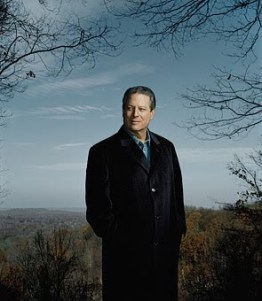
Tim Lambert at Deltoid tracked down the facts in the really odd story about a court in Britain ruling that the film Inconvenient Truth contains errors — a case I noted in a post about Al Gore’s winning a Nobel Prize for his work on climate change. Deltoid said:
A UK High Court judge has rejected a lawsuit by political activist Stuart Dimmock to ban the showing of Al Gore’s An Inconvenient Truth in British schools. Justice Burton agreed that
“Al Gore’s presentation of the causes and likely effects of climate change in the film was broadly accurate.”
There were nine points where Burton decided that AIT differed from the IPCC and that this should be addressed in the Guidance Notes for teachers to be sent out with the movie.
Unfortunately a gaggle of useless journalists have misreported this decision as one that AIT contained nine scientific errors.
Got that? The British Court said Gore is right.
I’ll bet I’ve seen that case cited a half dozen times today, with claims that Gore’s film is generally wrong.
Tim’s detail on the case, and the nine allegations of “error” (scare quotes from the judge in the original opinion) should be read by anyone following the climate change debates. I doubt that any Gore critics will read, nor, just to be nasty, that many of them can.
This is another political hoax in the making. Bad reporting, caused largely because the news of the case hit as the announcement of Gore’s Nobel Prize win crossed the news wires, makes Gore a target for the denialist and right-wing spin machines. Though their charges are inaccurate, they will make the charges, and repeat them endlessly. Buckle up — it’s going to be a bumpy night.
Spread the word; friends don't allow friends to repeat history.
3 Comments | Accuracy, Climate change, Jurisprudence, Law, Natural history, Natural resources, Science, Technology in the classroom, Video and film, War on Science | Tagged: Al Gore, Climate change, denialists, video in the classroom | Permalink
Posted by Ed Darrell
October 12, 2007
2007’s Nobel Prize for Peace sailed out to Al Gore and the UN’s Intergovernmental Panel on Climate Change (IPCC), “for their efforts to build up and disseminate greater knowledge about man-made climate change, and to lay the foundations for the measures that are needed to counteract such change.”
Observations:
First, this is a big win for science. The IPCC has been victim of political knee-capping as virulent as any we’ve seen in the last 25 years. Science wins out with the Nobel.
Second, if, in October 2000, we had been able to see a headline, “Al Gore wins Nobel Peace Prize,” what would we have thought that meant about the results of the 2000 election? It’s an indictment of the inaction of the Bush regime that in 6 years Al Gore has done enough to win a Nobel for his efforts, while the Bush administration has not.
Third, while Gore is U.S. citizen, he’s a graduate of St. Alban’s School in Washington, D.C., a good private school. I’m 0-4 on public school grads winning Nobels this year. So much for my predictions. Of course, P. Z. Myers argues Nobels are at best a lagging indicator (how’s that for zipping in an economic term, social studies teachers?). But he’s talking about science, not education in general. P. Z. says the real disaster for U.S. awards is ahead, when our failure to support science in research and graduate study starts to “pay off.”
Al Gore is a good guy, in my experience. He’s knowledgeable about a lot of things, he has foresight (we’d not have this internet but for Gore’s work to save it in its infancy), and he’s a mensch. Ah, for the things that could have been.
Sources:
Read the rest of this entry »
Spread the word; friends don't allow friends to repeat history.
4 Comments | Accuracy, Climate change, Education success, Science | Tagged: Al Gore, Climate change, Nobel Peace Prize, U.S. education | Permalink
Posted by Ed Darrell
October 12, 2007
P. Z. Myers at Pharyngula notes buzz about the science Nobels all going to Europeans (even the two U.S. residents are European). Nobels are a lagging indicator of things, at best, P. Z. says. The real damage done to U.S. research shows up other places.
Thanks for the reassurances, P. Z.
(He’s right, you know. He’s using Nobels as an indicator of the robustness of U.S. science; I use them as an indicator of the robustness of U.S. education. Much of the same stuff applies. More on science, later.)
Spread the word; friends don't allow friends to repeat history.
3 Comments | Education, Science, War on Science | Tagged: Education, Nobel Prizes, War on Science | Permalink
Posted by Ed Darrell
October 10, 2007
The Nobel Prize in Chemistry, awarded this morning, went to Gerhard Ertl of the Fritz-Haber-Institut der Max-Planck-Gesellschaft (Max Planck Institute, in English), Berlin, Germany, “for his studies of chemical processes on solid surfaces.”
One more win for Europeans this year — another guy not the product of U.S. public schools. So much for my predictions, so far.
These awards for 2007 seem to be very practically oriented. The press release puts the Chemistry award in focus quickly:
Modern surface chemistry – fuel cells, artificial fertilizers and clean exhaust
The Nobel Prize in Chemistry for 2007 is awarded for groundbreaking studies in surface chemistry. This science is important for the chemical industry and can help us to understand such varied processes as why iron rusts, how fuel cells function and how the catalysts in our cars work. Chemical reactions on catalytic surfaces play a vital role in many industrial operations, such as the production of artificial fertilizers. Surface chemistry can even explain the destruction of the ozone layer, as vital steps in the reaction actually take place on the surfaces of small crystals of ice in the stratosphere. The semiconductor industry is yet another area that depends on knowledge of surface chemistry.
Even the technical, scientific explanation seems easy to follow:
The Nobel Prize in chemistry for 2007 is awarded to Gerhard Ertl for his thorough studies of fundamental molecular processes at the gas-solid interface. When a small molecule hits a solid surface from a gas phase there are a number of possible outcomes. The molecule may simply either bounce back or be adsorbed. It is the latter case that carries the most interesting possibilities. The interaction with the atoms of the surface can be so strong that the molecule dissociates into constituent groups or atoms. The molecule can also react directly with surface groups and change the chemical properties of the surface. A third possibility is that the adsorbed molecule encounters another previously adsorbed one and there is a binary chemical reaction on the surface.
There are very important practical situations where these scenarios are the key chemical events. Heterogeneous catalysis has been a central process in the chemical industry for a century. The agriculture of the world has been supplied with fertilizers rich in nitrogen since 1913 due to the Haber-Bosch process, where the nitrogen of the air is converted to ammonia using an iron-based catalyst. Today every car produced has a catalyst system that converts carbon monoxide and hydrocarbons to carbon dioxide in the exhaust gases. Also the content of nitrous gases is reduced through the action of the catalyst. Thin semiconductor layers are produced by chemical vapor deposition (CVD) in large quantities in the microelectronics industry. Currently large resources are devoted to the development of efficient fuel cells that would enable the use of hydrogen as a standard vehicle fuel. Corrosion, which is caused by chemical reactions at surfaces, is a major problem both in everyday life and in more sophisticated industrial contexts such as in nuclear power plants and airplanes. Damage by corrosion may be reduced by adjusting the composition of the surface so that it is protected by an oxide layer formed in air. It is clear that chemical processes at surfaces play a central role in wide span of economically highly significant applications of chemical knowledge to the solution of practical problems.
Has globalization already hit so hard, and has U.S. education fallen so far, that the U.S. dominance of Nobels is already at an end? One year does not make a trend. We can hope.
More:
Spread the word; friends don't allow friends to repeat history.
Leave a Comment » | Education success, Globalization, Science | Tagged: , chemistry, Nobel Prizes | Permalink
Posted by Ed Darrell
October 9, 2007
The Nobel Committees are working overtime to frustrate my predictions this year.
Two Europeans won the Nobel Prize in Physics. Albert Fert, Unité Mixte de Physique CNRS/THALES, Université Paris-Sud, Orsay, France, and Peter Grünberg, Forschungszentrum Jülich, Germany, won for the discovery of “giant magnetoresistance.”
It’s called one of the first real applications of nanotechnology. Here’s an explanation from IBM’s website, of how the discovery affects new hard drive technologies. This is the basic technology for the working of your hard drive.
Go see the press release from the Nobel Foundation. Video of the announcement ceremony should be available here, later today.
Score so far this year: Five awards, one person schooled in the U.S, by Quaker schools, not public schools. My predictions that the awards go to U.S. citizens schooled in the public schools are not doing well, so far this year. Is the trend over already?
Spread the word; friends don't allow friends to repeat history.
1 Comment | Education success, Heroes, Physics, Science, Technology | Tagged: nanotechnology, Nobel Prizes, Physics | Permalink
Posted by Ed Darrell
October 9, 2007

Having a brand new canyon is sort of a once in a lifetime experience. It might even be more rare than that.
Texas’s Canyon Lake Gorge opened to the public last week — a gorge, a canyon, that was carved out over a couple of days in 2002 when flood waters charging over an overtaxed dam cut through soft soils and soft rock to expose millions of years of sediments. Dinosaur footprints were exposed by the flood, too.
A torrent of water from an overflowing lake sliced open the earth in 2002, exposing rock formations, fossils and even dinosaur footprints in just three days. Since then, the canyon has been accessible only to researchers to protect it from vandals, but on Saturday it opens to its first public tour.
“It exposed these rocks so quickly and it dug so deeply, there wasn’t a blade of grass or a layer of algae,” said Bill Ward, a retired geology professor from the University of New Orleans who started cataloging the gorge almost immediately after the flood.
The mile-and-a-half-long gorge, up to 80 feet deep, was dug out from what had been a nondescript valley covered in mesquite and oak trees. It sits behind a spillway built as a safety valve for Canyon Lake, a popular recreation spot in the Texas Hill Country between San Antonio and Austin.
The reservoir was built in the 1960s to prevent flash flooding along the Guadalupe River and to assure the water supply for central Texas. The spillway had never been overrun until July 4, 2002, when 70,000 cubic feet of water gushed downhill toward the Guadalupe River for three days, scraping off vegetation and topsoil and leaving only limestone walls.
Canyon Lake is southwest of Austin, almost due west from San Marcos about 20 miles. The lake backed up from a 1960 flood control project dam built by the U.S. Army Corps of Engineers — the new Canyon Lake Gorge is managed jointly by the Corps and the Guadalupe-Blanco River Authority.
Watch carefully, dear reader: Creationists will soon start to claim that the rapid cutting of this canyon verifies a young age for all canyons, and shows that the Earth’s geology can indeed be very young. But that claim will gloss over the fact that while the gorge was cut quickly, it was cut through sediments that took millions or billions of years to lay down. The Associated Press reports problems with such a hypothesis:
The sudden exposure of such canyons is rare but not unprecedented. Flooding in Iowa in 1993 opened a limestone gorge behind a spillway at Corvalville Lake north of Iowa City, but that chasm, Devonian Fossil Gorge, is narrower and shallower than Canyon Lake Gorge.
Neither compares to the world’s most famous canyon. It took water around 5 million to 6 million years to carve the Grand Canyon, which plunges 6,000 feet at its deepest point and stretches 15 miles at its widest.
The more modest Canyon Lake Gorge still displays a fault line and rock formations carved by water that seeped down and bubbled up for millions of years before the flooding.
Some of the canyon’s rocks are punched with holes like Swiss cheese, and the fossils of worms and other ancient wildlife are everywhere. The rocks, typical of the limestone buried throughout central Texas, date back “111 million years, plus or minus a few hundred thousand years,” Ward said.
Six three-toed dinosaur footprints offer evidence of a two-legged carnivore strolling along the water. The footprints were temporarily covered with sand to protect them as workers reinforced the spillway, but they’ll be uncovered again eventually, Rhoad said.
Tours for the new gorge are booked for the next six months. Details on how to reserve space can be found at the website of the Gorge Preservation Society (GPS).
Spread the word; friends don't allow friends to repeat history.
5 Comments | Geography - Physical, geology, History, Natural history, Science, Texas, Travel | Tagged: Canyon Lake Gorge, Floods, geography, geology, History, Natural history, Science, Texas, Travel | Permalink
Posted by Ed Darrell
October 8, 2007
One of my elementary teachers used to make a big deal of the Nobel Prizes every year. We’d get the newspaper clips on the prizes, calculate how much they were worth, and discuss what the people did to win them.

Several years ago I started offering grade boosts to economics students who could predict the winner of the Nobel Memorial Prize in Economics. One year I actually had to pay up, after another teacher discovered a Nobel handicapping site, and one student got very, very lucky. What other uses can you find?
I especially remember the prize to Penzias and Wilson in Physics in 1978, because it meant we didn’t have to study Steady State any longer (and I’d always found that description confusing). Steady State was still in some books, more than a decade after their discovery of Big Bang.
Here’s the schedule for Nobel announcements, over the next week or so:
Announcements of the 2007 Nobel Prizes and The Sveriges Riksbank Prize in Economic Sciences in Memory of Alfred Nobel will be held on the following dates:
Physiology or Medicine – Monday, October 8, 11:30 a.m. CET (at the earliest)
Physics – Tuesday, October 9, 11:45 a.m. CET (at the earliest)
Chemistry – Wednesday, October 10, 11:45 a.m. CET (at the earliest)
Literature – Thursday, October 11, 1:00 p.m. CET (at the earliest)
Peace – Friday, October 12, 11:00 a.m. CET
Economics – Monday, October 15, 1:00 p.m. CET (at the earliest)
While working in education policy years back I noticed that Nobel winners come disproportionately from the U.S., and disproportionately from the public schools. Watching such trends tends to be a practice of journals outside the U.S., however, such as the Times of India:
Americans tend to dominate the science prizes and last year they made a clean sweep, taking the medicine, physics, chemistry and economics awards. Read the rest of this entry »
Spread the word; friends don't allow friends to repeat history.
2 Comments | Books, Economics, Literature, Physics, Science | Tagged: Nobel Prizes | Permalink
Posted by Ed Darrell
October 8, 2007
My general predictions about Nobel Prizes are way off after the first announcement today.
The London Telegraph announced it:
The Nobel prize for medicine is shared today by Mario Capecchi, Martin Evans and Oliver Smithies for their work on stem cells and genetic manipulation that has had a profound impact, from basic medical research to the development of new treatments.
Although stem cells are one of the hottest fields in science today for their potential for growing replacement cells and tissue for a wide range of diseases, the prestigious 10 million Swedish crown (£750,000) prize recognised the international team’s work for genetically manipulating stem cells to find out what genes do in the body and to provide animal versions of human disease to help hone understanding and test new treatments.
Capecchi was born in Italy and is a US citizen. Both Evans and Smithies are British-born. Sir Martin is known for his pioneering work on stem cells in mice, while Capecci and Smithies showed how genes could be modified.
The Nobel Committee press release gives their formal identification and affiliations:
Mario R. Capecchi, born 1937 in Italy, US citizen, PhD in Biophysics 1967, Harvard University, Cambridge, MA, USA. Howard Hughes Medical Institute Investigator and Distinguished Professor of Human Genetics and Biology at the University of Utah, Salt Lake City, UT, USA.
Sir Martin J. Evans, born 1941 in Great Britain, British citizen, PhD in Anatomy and Embryology 1969, University College, London, UK. Director of the School of Biosciences and Professor of Mammalian Genetics, Cardiff University, UK.
Oliver Smithies, born 1925 in Great Britain, US citizen, PhD in Biochemistry 1951, Oxford University, UK. Excellence Professor of Pathology and Laboratory Medicine, University of North Carolina at Chapel Hill, NC, USA.
My usual (and still standing) prediction is that most Nobel winners will be Americans, and educated in America’s public schools. Of the three announced today, one is Italian born (but a U.S. citizen now), and the other two are British.
Update: Turns out that Dr. Capecchi moved to the U.S. from Italy at the age of 9. Does anyone know where he went to elementary, junior high and high school?
Capecchi’s success belies his very difficult upbringing in war-torn Italy during World War II. At the age of four, he was separated from his mother, who was taken by the Gestapo to the Dachau concentration camp. For the next four-and-a half years, he lived on the streets, fending for himself by begging and stealing. The two reunited when Capecchi was nine, and they soon moved to the United States, where he began elementary school without knowing how to read or write or how to speak English.
More prizes to come.
Sources:
Spread the word; friends don't allow friends to repeat history.
1 Comment | Biology, Education, Education success, Science | Tagged: medicine, Nobel Prizes, Public education, stem cells | Permalink
Posted by Ed Darrell
October 8, 2007
We still had movie newsreels in 1957. ASAP Retro, a part of Associated Press, I think, features the classic Ed Herlihy-announced 30 second explanation of Sputnik that was seen in movie theatres across America in late 1957 and early 1958.
You’ll need a live internet link to use it in class.
I do wish that more of these newsreels were available for easy use by teachers in classrooms, say on DVD, in short segments.
Spread the word; friends don't allow friends to repeat history.
1 Comment | 1957, Cold War, History, History images, Science, Space exploration, Space Race, Video and film | Tagged: 1957, Space Race, Sputnik | Permalink
Posted by Ed Darrell
October 7, 2007
News reports say Craig Venter will announce the creation of the first artificial life form sometime this week.
Interesting to me that the post that alerted me to the issue is in the Religion Blog part of the Dallas Morning News blog stable. But then, the religion section was just downgraded. The paper killed its award-winning science section completely.
But it does seem the religious people are more worried about the impact of this sort of science on believers and reasons to believe, than scientists are interested at all.
DMN religion reporter Jeffrey Weiss points to an article in the Guardian:
Craig Venter, the controversial DNA researcher involved in the race to decipher the human genetic code, has built a synthetic chromosome out of laboratory chemicals and is poised to announce the creation of the first new artificial life form on Earth.
The announcement, which is expected within weeks and could come as early as Monday at the annual meeting of his scientific institute in San Diego, California, will herald a giant leap forward in the development of designer genomes. It is certain to provoke heated debate about the ethics of creating new species and could unlock the door to new energy sources and techniques to combat global warming.
Mr Venter told the Guardian he thought this landmark would be “a very important philosophical step in the history of our species. We are going from reading our genetic code to the ability to write it. That gives us the hypothetical ability to do things never contemplated before”.
Expect more comment from religion pages of newspapers than other sections. Evolution and other science deniers will be greatly stressed by such an announcement — if the Guardian story is accurate, as early as this next week.
See also this longer piece in the New York Times about the methods used — from last month’s editions.
Spread the word; friends don't allow friends to repeat history.
Leave a Comment » | Biology, Creationism, History, Religion, Science, Science and faith | Tagged: artificial life, Craig Venter, Evolution, life in a test tube, research ethics | Permalink
Posted by Ed Darrell




