2016’s Dakota statehood days – fly your flags

November 2, 2016

North Dakota's commemorative quarter depicts the American bison, perhaps the quintessential prairie symbol.

North Dakota’s commemorative quarter depicts the American bison, perhaps the quintessential prairie symbol.

South Dakota's commemorative quarter interestingly focuses on human alterations to the area -- the carved presidential busts on Mt. Rushmore, wheat introduced by immigrant farmers, and the Chinese pheasant, an exotic species introduced for hunting.

South Dakota’s commemorative quarter interestingly focuses on human alterations to the area — the carved presidential busts on Mt. Rushmore, wheat introduced by immigrant farmers, and the Chinese pheasant, an exotic species introduced for hunting.

Residents of North Dakota and South Dakota should fly their U.S. flags today in honor of your states’ being admitted to the union, on November 2, 1889.

Most sites note simply that both states were admitted on the same day; some sites, especially those that lean toward North Dakota, claim that state is Number 39, because President Harrison signed their papers first, after shuffling to avoid playing favorites.

Does anyone really care?

How much do you really know about the Dakotas?

More:

Save


August 21, 2016: Fly your flag for Hawaii Statehood in 1959

August 21, 2016

It’s been 57 years since the youngest state entered the union — the longest stretch in which the U.S. has not added another state.

"On June 14, 1959, Boy Scout Milton Motooka helped get the word out for Hawaii’s statehood plebiscite to be held 13 days later. A new documentary will focus on Hawaii’s statehood." Hawaiians voted yes in the plebiscite, and statehood was declared two months later. (Whatever became of Scout Motooka?)

“On June 14, 1959, Boy Scout Milton Motooka helped get the word out for Hawaii’s statehood plebiscite to be held 13 days later. A new documentary will focus on Hawaii’s statehood.” Hawaiians voted yes in the plebiscite, and statehood was declared two months later. (Whatever became of Scout Motooka? See comments on last year’s post.)

“On June 14, 1959, Boy Scout Milton Motooka helped get the word out for Hawaii’s statehood plebiscite to be held 13 days later. A new documentary will focus on Hawaii’s statehood.” Hawaiians voted yes in the plebiscite, and statehood was declared two months later. (Whatever became of Scout Motooka?)

June’s plebiscite smoothed the path for statehood, declared two months later.

A newsboy happily hawks the Honolulu Star-Bulletin with the headline showing the state had achieved statehood, August 21, 1959. Star-Bulletin photo

13-year-old paperboy Chester Kahapea happily hawks a commemorative edition of the Honolulu Star-Bulletin with the headline showing the state had achieved statehood after the U.S. House of Representatives passed the law authorizing Hawaii as a state. Star-Bulletin photo by Murray Befeler.

Hawaii’s official statehood day is August 21, commemorating the day in 1959 when Hawaii was recognized as a member of the union of the United States of America.  Hawaiians should fly their flags to day in honor of the date (you may, too).

Hawaii formally celebrates the day on the third Friday in August, this year on the 19th.  I hope you joined in the festivities (it’s a holiday in Hawaii) — but under the U.S. Flag Code, you may certainly fly your flags on August 21, regardless which day of the week that is.

Specimen copy of the ballot used by Hawaiians in a June 27, 1959, plebiscite to approve conditions of statehood. Image from Hawaii Magazine, 2009

Specimen copy of the ballot used by Hawaiians in a June 27, 1959, plebiscite to approve conditions of statehood. Image from Hawaii Magazine, 2009

After the U.S. annexed Hawaii in 1898 (in action separate from the Spanish-American War) attempts at getting Hawaii admitted as a state got rolling.  After World War II, with the strategic importance of the islands firmly implanted in Americans’ minds, the project picked up some steam.  Still, it was 14 years after the end of the war that agreements were worked out between the people of Hawaii, the Hawaiian royal family, Congress and the executive branch.  The deal passed into law had to be ratified by a plebiscite among Hawaiian citizens.  The proposition won approval with 94% of votes in favor.

Some native Hawaiian opposition to statehood arose later, and deference to those complaints has muted statehood celebrations in the 21st century.

Other than the tiny handful of loudmouth birthers, most Americans today are happy to have Hawaii as a state, the fifth richest in the U.S. by personal income.  The nation has a lot of good and great beaches, but the idea of catching sun and surf in Hawaii on vacation might be considered an idealized part of the American dream.

“Loudmouth birthers?” Yeah, Barack Obama, our 45th President, was born in Hawaii in 1961. Some whiners think that, but for statehood, Obama would not have been a citizen eligible to be president. Hawaii is not good ground for growing sour grapes, though. Birth in a territory would probably be enough to make him eligible. Water under the bridge: Hawaii was a state in 1961. President Obama remains president.

U.S. and Hawaii flags flying together.

U.S. and Hawaii flags flying together.

More:

U.S. postage stamp issued in 2009 commemorating the 50th anniversary of Hawaii's admission to the union.

U.S. postage stamp issued in 2009 commemorating the 50th anniversary of Hawaii’s admission to the union.

Contrast the first class postage price above with the airmail postage price of this stamp issued in 1959 — August 21, 1959 7¢ Rose Hawaii Statehood C55 26432. Wikipedia image

Contrast the first class postage price above with the airmail postage price of this stamp issued in 1959 — August 21, 1959 7¢ Rose Hawaii Statehood stamp. Wikipedia image

This is an encore post.

This is an encore post.

Save

Save


Colorado Statehood Day 2016 – Fly your flags

August 1, 2016

Colorado won proclamation as a state on August 1, 1876, the 38th state in the United States.

August 1 is Colorado Statehood day. U.S. Flag Code urges residents to fly the U.S. flag on the day their state entered the union — today, for Colorado. They call it Colorado Day now.

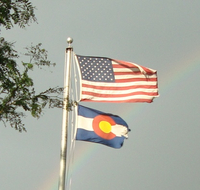
U.S. and Colorado flags flutter from the same flagpole. Denver Library image

U.S. and Colorado flags flutter from the same flagpole. Denver Library image

According to Colorado newspaperman and politician Jerry Koppel, Colorado’s path to statehood started in 1864, in an attempt to get another Republican state to boost Abraham Lincoln’s re-election chances.  Coloradans rejected the proposed constitution in a plebiscite, however, which pushed the effort into the next Lincoln administration — which, sadly, a month into Lincoln’s new term, became the Andrew Johnson administration.

High politics:  Colorado took a tortuous path to statehood.  While Colorado was not frustrated so often nor so long as it’s nextdoor neighbor, Utah, laws proposed to bring the state into the union were vetoed twice by President Andrew Johnson.  History from the Andrew Johnson National Historical Site in Greenville, Tennessee:

Colorado Statehood

First Veto:

1. There was such a small population in the area, Johnson felt Colorado would fare better as a territory without the added taxation of statehood.

2. Also due to the small population, Colorado would have only one representative to speak for the people in Congress. (New York, on the other hand, had thirty-one).

3. Johnson felt the citizens of Colorado were not prepared for, and not all wanted, statehood. Johnson wanted to hold a census or an election there first. This would ascertain the number of people in the area, as well as find out what their strongest desire was.

Second veto:

1. Johnson didn’t agree with the Edmunds Amendment which said that Nebraska and Colorado had to give equal suffrage to blacks and whites as a statehood condition. Johnson felt this was unconstitutional because Congress couldn’t regulate a state’s franchise, and the people had not been allowed to vote on it.

2. After holding a census, Johnson felt the population was still too small for statehood.

NOTE: In addition, Johnson did not feel right about adding new states to the Union when the Confederate States had not yet been readmitted to the Union and were still unrepresented.

Congress sustained the veto.

Jerome B. Chaffee. Library of Congress descrip...

Jerome B. Chaffee, one of Colorado’s first U.S. Senators, and the man who earlier pushed through Congress the law admitting Colorado into the Union. Library of Congress description: “Chaffee, Hon. J.B. of Colorado” (Photo credit: Wikipedia)

Colorado Republican and millionaire Jerome Chaffee, serving as the Colorado Territory delegate to Congress, managed to get a statehood bill passed in 1875, in the second term of President Ulysses S Grant; Grant signed the law.   Colorado drafted a state constitution that passed muster, Coloradans approved it, and President Grant declared Colorado the 38th state on August 1, 1876.  Chaffee was elected one of the first U.S. Senators from Colorado by the new state legislature.  In an odd footnote, President Grant’s son, Ulysses S Grant, Jr., married Chaffee’s daughter Fannie in 1881.

In 1875, Chaffee claimed 150,000 people lived in the state, but most historians think that figure was inflated; the 1880 census counted 194,000 people. Some historians doubt that count was accurate.

No doubt there are at least that many people in Colorado today.  Several counties in the northeast corner of the state got together in 2013 to explore the possibility of separating from Colorado to form their own state.  Does the political cauldron in Colorado ever cool? (Did those secessionists ever cool?)

Happy statehood day, to the Centennial State.

More:

An American flag hangs in front of a burning structure in the Black Forest, a thickly wooded rural region north of Colorado Springs, Colo. Authorities reported early Saturday that 473 houses had been incinerated. Air Force photo

One of the more dramatic images from Colorado in recent years, courtesy the U.S. Air Force. Captioned in the Las Vegas Review-Journal, June 15, 2013: “An American flag hangs in front of a burning structure in the Black Forest, a thickly wooded rural region north of Colorado Springs, Colo. Authorities reported early Saturday that 473 houses had been incinerated.” Wildfires plagued Colorado 2012-2015, a function of effects of a warming climate.

DoD photo by Master Sgt. Christopher DeWitt, U.S. Air Force

PRCA Rodeo in Steamboat Springs, Colorado; photo from SeaSweetie's Pages

PRCA Rodeo in Steamboat Springs, Colorado; photo from SeaSweetie’s Pages


Save

Save

Yes, this is mostly an encore post. Fighting ignorance requires patience.

July 3: Fly your flag for Idaho statehood

July 3, 2016

Especially if you have a 43-star flag, fly it today for Idaho statehood.

Idaho joined the union on July 3, 1890, the 43rd state. It was a time of a flurry of new states, however, and very few 43-star flags were made. Is there one in Idaho?

Regardless the number of stars, Idahoans fly their U.S. flags today in honor of Idaho statehood, July 3, 1890.

I found this history of 43-star flags at a site selling antiques and memorabilia — an interesting history which I crib completely here from Jeff R. Bridgman American Antiques.

Alas, this flag has sold.

43 Star, Idaho Statehood, American Flag

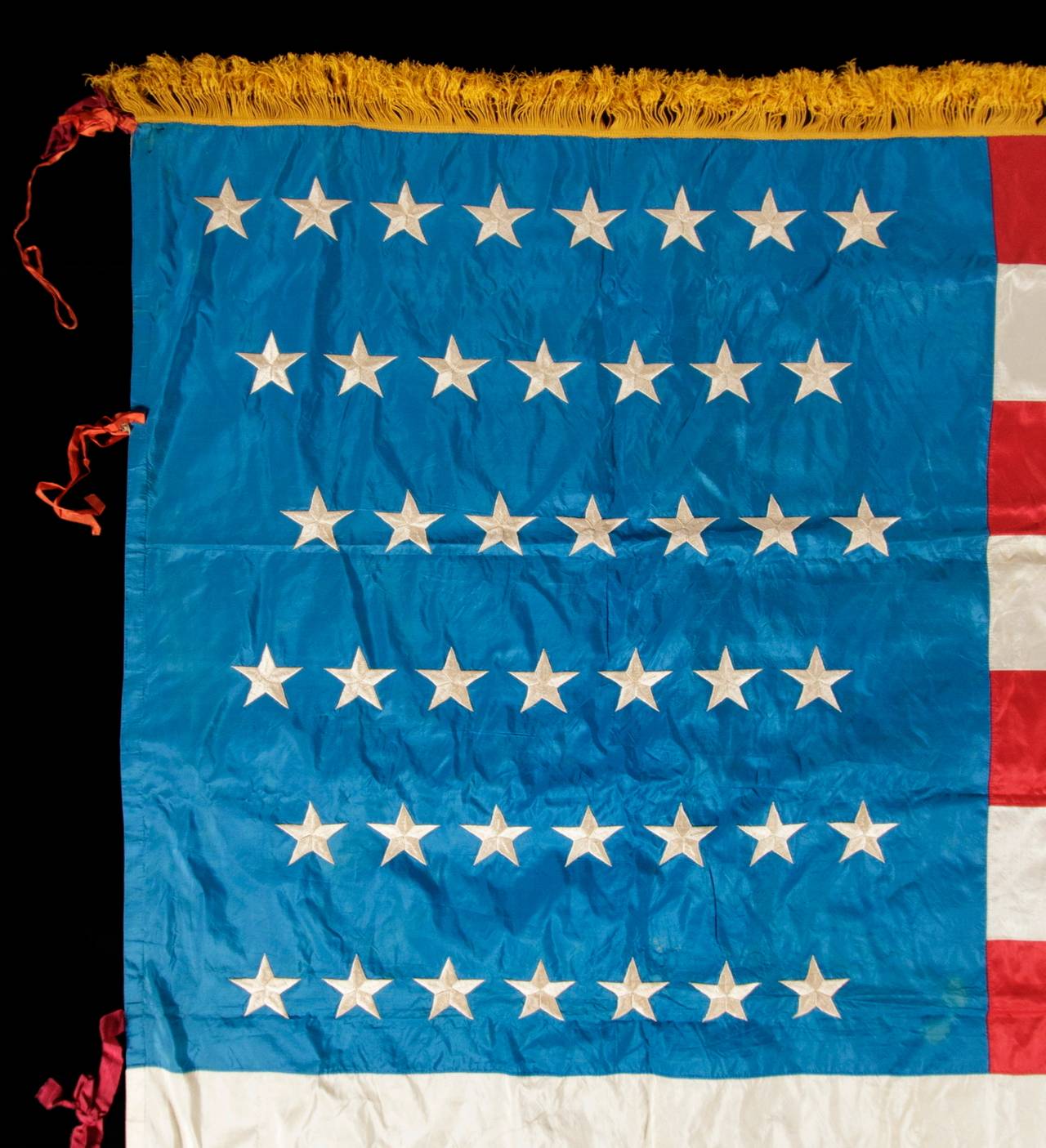
43 stars, Idaho statehood, one of the rarest star counts among surviving American flags of the 19th century; an exceptionally rare U.S. infantry battle flag, entirely hand-sewn, made for an African-American unit of civil war origin, circa 1889:

Numerous flags were produced with unofficial star counts during the second half of the 19th century, made by flag-maker’s anticipating the addition of more states. Interestingly enough, some flags were officially adopted by the United States Congress, but for all practical purposes never produced. Among these is the 43 star flag, which reflects the addition of Idaho. A tiny handful of flags with this star count are known, but they are among the most rare of all examples throughout American history. To understand why, one may turn back the clock to the 1876 and examine flag production from that year until the addition of the 44th state.

After the Flag Act of 1818, the official “flag year” began every July 4th. So on Independence Day, all states having been added to the Union over the previous year were officially given a star. Makers of flags, however, did not wait for July 4th and official star counts. Flag-making was a competitive industry and many manufacturers added stars before new states were actually added, wishing to create a reason for consumers to buy new flags and one-up each other in sales.

In 1876 the 37 star flag was official, but on August 1st we received our 38th state. Many flag-makers abandoned the 37 star flag when production began for the Centennial International Exposition, a six-month long World’s Fair held in Philadelphia as the first of its kind in America, which served as the nucleus for celebrations of our 100-year anniversary of independence from Britain. In that year 38 stars was a common choice, but other flag-makers actually skipped past 38 all-together, choosing to instead produce 39 star flags, anticipating the addition of the Dakota Territory as one state.

Seeing that Dakota wasn’t coming, production after 1876 seems to have reverted to the 38 star count. Then in 1889, thirteen years later, 39 star flags were once again manufactured with the anticipation of Dakota’s statehood. On November 2nd of that year, a surprise was lay in store for the makers of 39 star flags, when the Dakotas arrived as two different states, which forever rendered 39 star flags both inaccurate and unofficial. Just a few days later, on November 8th, Montana entered the Union as the 41st state, followed by Washington State as number 42 just three days hence on November 11th.

40 star flags were made in limited quantity, reflecting the Dakotas entry. This count is extremely scarce, but not exceptionally rare. Perhaps this is because some flag-makers anticipated the number correctly, and so some of the 40’s are anticipatory flags.

41 star flags, by contrast, are among the rarest that exist in 19th century America. This was a three-day flag and an increase ending in a count of 41 seems to not have been guessed.

In stark contrast, 42 star flags are common. These reflect the four new states that arrived in that week-and-a-half period between November 2nd and the 11th. For the next seven-eight months flag-makers seem to have favored this star count, producing many of them, probably with great enthusiasm for a reason to make new flags.

Just one day before the 42 star flag would have become official, on July 3rd, 1990, Idaho snuck in as the 43rd state, which rendered all of the 42 star flags forever unofficial. The 43 star flag became official on July 4th, but flag-makers basically skipped over the 43 star count entirely. This is because on July 10th, just seven days after Idaho gained statehood, Wyoming was admitted. Practically all flag-makers seem to have predicted this and 43 star flags, while official for one year, were overlooked in favor of those with a count of 44 to add Wyoming as well. For all practical purposes, 43 star flags were not made. Only a tiny handful survive, perhaps ten or so at the most. Of these, three are printed parade flags (a.k.a., “hand-wavers”), while the remainder are larger, pieced-and-sewn examples. I have been privileged to own approximately half of these. Among them, this is the most unusual.

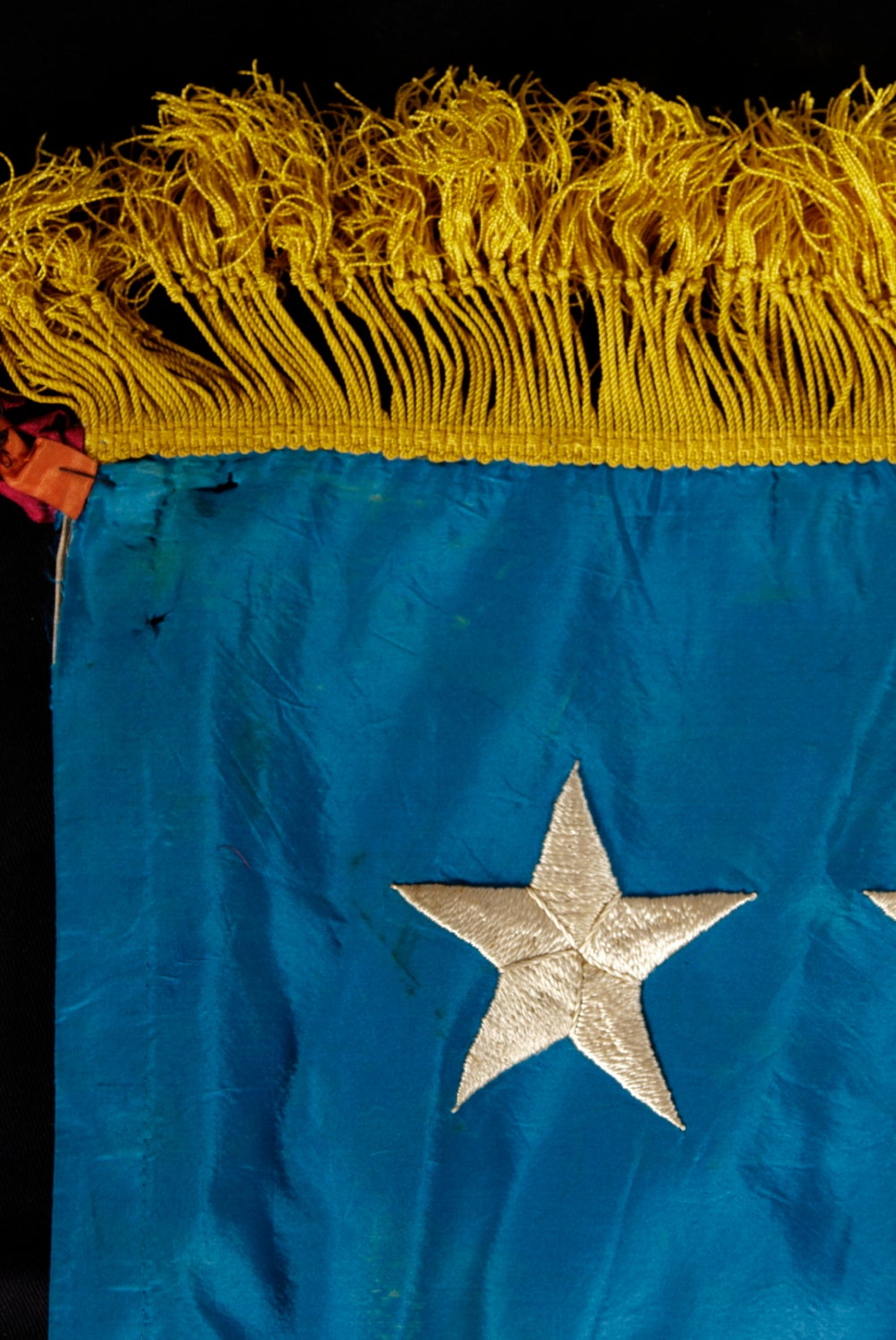
In terms of form and function, this example is constructed as a U.S. Infantry battle flag. It is pieced and seamed entirely with hand-stitching, which is very unusual for the period. The sewing is especially fine and indicative of the very highest quality, as are the materials. The canton and stripes are made of silk. The hoist end was rolled over and bound and there are six silk ties sewn along the leading edge (more were formerly present). There is a knotted silk fringe, gold in color, along three sides, which is typical of infantry battle flags. The stars are embroidered in white silk floss, either by hand or machine, having been executed so well that the method is difficult to ascertain. Embroidered along the 5th red stripe, in the same white floss, are the words “Forest City Light Infantry.” followed by the date “1872”.

A company of African American soldiers by this name, with Civil War roots, existed in Savannah, Georgia. The earliest date I can presently reference for their existence is 1873 (one year before the date on the flag), when an officer of a black G.A.R. unit by this name deposited funds in Freeman’s Bank, which was established in 1866 to assist freed slaves in the unhealthy circumstances of the financially depressed South. Probably the men of this regiment were freed by Union Forces as Sherman’s March (Nov. – Dec. 1864) pressed through the state. Part of the general’s orders read: ” VII. Negroes who are able-bodied and can be of service to the several columns may be taken along, but each army commander will bear in mind that the question of supplies is a very important one and that his first duty is to see to them who bear arms….” Records concerning African American soldiers in this sort of circumstance are very hard to acquire, as few were kept. Names seldom appear on muster rolls. Whatever the case may be, however, Civil War-related material that concerns black soldiers is rare and interesting and flags are seldom ever encountered in the marketplace, whether war-period or post-war, like this example.

In summary, this is one of the rarest star counts that there is among antique American flags, on a rare and stunning U.S. infantry battle flag, with great colors and exquisite construction, accompanied by its original tassels, and with rare African American association.

Mounting: The flag has not yet been mounted. We employ professional staff with masters degrees in textile conservation and can attend to all of your mounting and framing needs.

Flag size (H x L): 78″ x 81.25″ (incl. fringe).


Flying the flag for West Virginia Statehood, and remembering Muhammad Ali

June 20, 2016

On June 20, 1863, West Virginia joined the fractured union as the 35th state.

Yes, that was during the Civil War.  Yes, West Virginia had been the northwestern counties of Virginia.  No, I’m not sure of the history of how Congress decided Virginia had consented to be divided.

In any case, per the guidelines in the U.S. Flag Code, West Virginians should fly the U.S. flag today in honor of their statehood, 153 years ago.  West Virginia no doubt has lots of celebrations, reenactments, and general festive events planned.

West Virginia's State Capitol in Charleston, West Virginia, on December 11, 2011

West Virginia’s State Capitol in Charleston, West Virginia, on December 11, 2011 — built in 1931. From O Palsson’s Flickr collection: “As I was traveling through Charleston, the capital of West Virgina, during blue hour (my favorite time of day) a couple of days after Thanksgiving, I happened upon this beautiful sight of the State Capitol Building reflected in the Kanawha River flowing by in total stillness, so I just had to stop and capture the scene. I didn’t have a tripod handy, so this is not a long-exposure nightshot, just a regular hand-held shot accomplished by bumping up the ISO as much as I dared to get correct exposure at acceptable shutter speed (ended up being 1/40 sec) and doing my best to keep the camera steady.”

Kathryn and I have a few fond memories of Charleston.  Then-West Virginia Attorney General Charlie Brown was one of the few with enough wisdom to offer me a job, when I graduated from the National Law Center at George Washington University as an older student.  Brown promised to clean up West Virginia politics, and he had a lively, very young crew of attorneys fighting coal companies, oil companies, loggers, shady real estate people, and corrupt city, county and state officials.  One fellow in the office complained that he’d “had to argue eight cases” at the State Supreme Court that year, in his first year out of law school.

But the corrupt officials knew what they were doing.  Brown could only offer $25,000 a year, and in Charleston it was unlikely we’d be able to find any work for Kathryn.  Tough to attract crime fighters at less-than crime-fighting rates. It would have been a more than 75% cut in income.  We made a trip there to mull it over, baby on the way (pre-digital photographs buried in the archives).  Brown got a special dispensation to offer me $5,000 more.

Great tour of the Capitol, great interviews with the office lawyers.  Kathryn and I sat for a long while in the deserted West Virginia Supreme Court (sort of tucked into an attic of the Capitol) discussing how in the world we could afford to move the Charleston and take on the work.  We drove around the city, looking at houses for sale and rent; we gazed at the Kanawha River and discussed the future for the city.

We went to dinner in a tiny restaurant touted as Charleston’s finest, which was a long way from good eateries in D.C.  We discussed with our host the cultural pickings in Charleston.  We could give up the symphony but get back to fishing and practice fly fishing . . .

A few tables over, the maitre ‘d brought in a few extra chairs, and then seated Muhammad Ali and his party.  Our waiter asked that we not make a scene.

I don’t remember for what charitable purpose Ali was in Charleston, but the event was over and his hosts took him out to the good restaurant in Charleston, too.

Ali was a slower, sedate and gentle version of the fiery fighter he’d been.  Parkinson’s disease already had him in its grip.  His voice, soft as it could be at times, was still strong enough to carry across a table.  There was a young boy with the group, under five years old.  Ali had lost steps, but not spirit.  He produced a couple of balls from a pocket and proceeded to dazzle the kid with sleight-of-hand magic tricks.  He picked one of the balls from behind the kid’s ear, and the kid giggled wonderfully.  Balls appeared here, disappeared there — I remember thinking how much easier those tricks could be with hands that big; but Ali also had difficulty dealing with a knife and fork.  Working magic tricks pulled years away from Ali, and he seemed much younger, much more deft than he really was.  The little boy laughed and giggled through the meal.  It was a happy affair.

Our dinners finished about the same time.  As we got up, Ali looked over at us and said, “You wonder why I spend so much time with children?  They are the future.”

I turned down the offer from West Virginia.  A job I’d hoped for at American Airlines fell through, but a position opened up at the Office of Educational Research and Improvement (OERI) at Bill Bennett’s Department of Education.  A year or so later I saw small item in the Washington Post that Charlie Brown had been indicted on some charge.  Coal companies still have a lot of clout in West Virginia.

This is an anniversary day for Ali, too:  June 20, 1967, Muhammed Ali was convicted in Houston, Texas, of evading the draft.  That conviction was overturned by the U.S. Supreme Court.

Fly those flags in West Virginia.

More:

Save


June 1, 2016: Fly your flags today in Kentucky and Tennessee for Statehood Day

June 1, 2016

Our laws on respecting and flying Old Glory encourage citizens to fly U.S. flags on specific dates, and on the date of statehood of the state in which a citizen lives.

Kentucky joined the union on June 1, 1792, the 15th state.  Tennessee joined four years later, on June 1, 1796, becoming the 16th state.

Fly your flags today in Kentucky and Tennessee — or wherever Kentuckians or Tennesseeans may be — in honor of statehood.

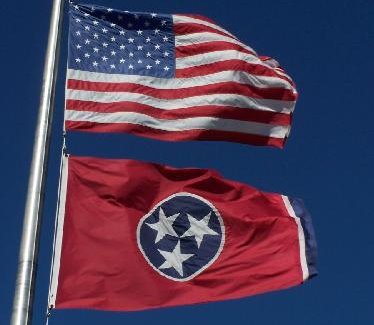
U.S. and Tennessee flags flying together on one staff. Photo by J. Stephen Conn

U.S. and Tennessee flags flying together on one staff. Photo by J. Stephen Conn

Kentucky's state flag, by Gage Skidmore

Kentucky’s state flag features a Native American and European colonist standing together, and the state motto, “United We Stand, Divided We Fall.” Photo by Gage Skidmore

Kentucky’s admission to the union pushed the U.S. flag to 15 stars and 15 stripes.   President George Washington signed the law that authorized the U.S. flag be expanded to 15 stripes in early 1794.  I’ve not pinned down the history of what happened next.  So far as I know there was no law expanding the flag to 16 stripes, and in 1818, Congress said the flag would be 13 stripes, with stars equal to the number of states (the law specified no specific pattern for the stars).

A 15-striped Star-spangled Banner that flew over Fort McHenry in Baltimore Harbor in 1814 and inspired Francis Scott Key to write the poem that is now the lyric to our national anthem.  President James Monroe signed the 13-stripe law four years later, in 1818.

What happened in between?  I suspect there are a lot of 15-stripe flags, but it wouldn’t surprise me to find a 16-stripe flag somewhere.  A variety of stars-and-stripes flags cropped up, which the 1818 law was intended to squelch.

Residents of the Bluegrass State and the Volunteer State should fly their flags today, in honor of their state’s having joined the union on June 1.

More:

https://twitter.com/gordonbelt/status/738001021708992512


http://twitter.com/hoyosplacido3/status/604008354571259904


Yes, this is mostly an encore post. Fighting ignorance requires patience.

Yes, this is mostly an encore post. Fighting ignorance requires patience. And repetition.


February 6, Massachusetts Statehood Day

February 6, 2016

Flag etiquette guides and the U.S. Flag Code urge residents of Massachusetts to fly U.S. flags today, to honor Massachusetts’s joining the Union.

U.S. flag flies at Quincy Market in Boston (a 4th of July celebration is pictured) - WHDH Channel 7 image

U.S. flag flies at Quincy Market in Boston (a 4th of July celebration is pictured) – WHDH Channel 7 image

Massachusetts’s statehood is figured as the date the colony ratified the U.S. Constitution. A convention ratified the document on February 6, 1788. Massachusetts was the 6th colony to ratify.

The next flag-flying date is February 12, in honor of Lincoln’s birthday.


Fly flags on January 29, Kansans! Happy Statehood Day 2016!

January 28, 2016

Kansas celebrates 155 years of statehood, though still mired in the worst budget situation of any state in quite a while.

Fitting, perhaps, for a state whose admission brought the nation to the brink of civil war — which the nation subsequently plunged into.

Regardless the circumstances of its statehood, the U.S. Flag Code urges Americans to fly the U.S. flag on the date their state was admitted into the Union. Kansans, unfurl those colors!


U.S. and Kansas flags flying together in Ashland, Kansas. Photo by courthouselover, flickr, via Pinterest

U.S. and Kansas flags flying together in Ashland, Kansas. Photo by courthouselover, flickr, via Pinterest

Teachers, take note: Historical records from the National Archives and Records Administration, on Kansas statehood.  Good DBQ material for AP history classes, maybe good material for projects:

Kansas Statehood, January 29, 1861

Located in the historical records of the U.S. House of Representatives and the U.S. Senate at the Center for Legislative Archives are many documents that illustrate the important role Congress plays in the statehood process. On January 29, 1861 Kansas became the 34th state; 2011 marks its 150th anniversary. Here is a small sampling of the many congressional records that tell the story of Kansas’s tumultuous path to statehood.


More:

Four-cent U.S. Postal Service stamp issued in 1961, honoring the centennial of Kansas's statehood with the state flower, the sunflower.

Four-cent U.S. Postal Service stamp issued in 1961, honoring the centennial of Kansas’s statehood with the state flower, the sunflower. Wikimedia image


Connecticut flies U.S. flags for statehood, January 9

January 9, 2016

Technically, states didn’t exist at all, yet.

But on January 9, 1788, Connecticut became the fifth of the 13 colonies to ratify the proposed Constitution for the United States of America, and by that action set the date we count as Connecticut’s entery into the union.

Within 12 months, four more colonies ratified the document, totaling nine ratifications required to put the Constitution into effect.  When the government of the new nation started functioning in 1789, Connecticut was counted as the fifth state.

Connecticut capitol building, Hartford

Capitol building for Connecticut in Hartford; this photo is from the rear of the building, so the U.S. flag is flying correctly on its own right. The building was completed in 1878. The dome is covered in gold. Image from Wikimedia Commons

To avoid political scheming by anti-federalist colony governors, especially Patrick Henry in Virginia, in September 1787 James Madison proposed that the draft constitution be ratified not by legislatures in the colonies, but instead by a specially-called convention of the people of the colony.  Connecticut’s convention met first on January 3, 1788. With six days of discussion and debate, the convention passed a resolution of ratification on January 9.

So by tradition, January 9 is Connecticut’s statehood anniversary.  According to U.S. law, the Flag Code and tradition, citizens and residents of a state fly their flags on statehood anniversaries.

Happy birthday Connecticut, 228 years old.

Next date to fly the U.S. flag is January 18, 2016, to honor the birth of the Rev. Dr. Martin Luther King, Jr. January 18 is the official holiday; January 19 is the actual birthday. You may fly your colors on both dates.

More:

Carol Highsmith photo of Connecticut's Hall of Flags

Hall of Flags in the Connecticut State Capitol Building; photo by the great photo-historian Carol Highsmith, from the Library of Congress collection; the statue is Connecticut’s Civil War Governor, William A. Buckingham (1804-1875), honored for his personal contributions to the equipping of Connecticut’s men fighting in the Civil War;.


New Mexico flies U.S. flags January 6 for Statehood Day

January 6, 2016

President William Howard Taft signing the bill that made New Mexico a state, in 1912. (Other people in the photo, I have not yet identified). Image from OldPicture.com

President William Howard Taft signing the bill that made New Mexico a state, in 1912. (Other people in the photo, I have not yet identified). Image from OldPicture.com

New Mexico became the 47th member of the Union on January 6, 1912.  New Mexicans should fly their U.S. flags today in honor of statehood, the U.S. Flag Code urges.

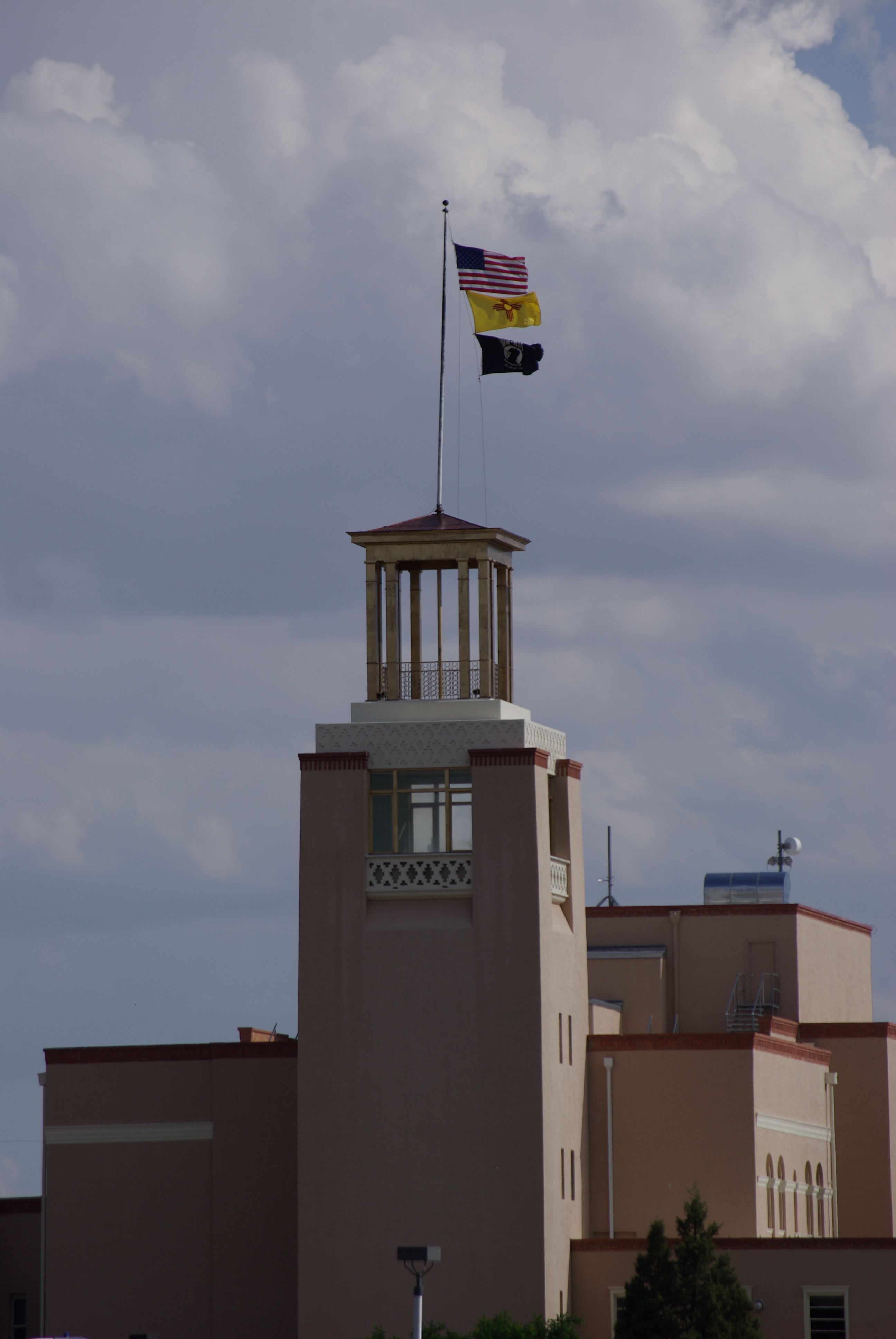
U.S. and New Mexico flags fly from the state education administration building in Santa Fe, 2014

U.S. and New Mexico flags fly from the state education administration building in Santa Fe, 2014. The third flag is the U.S. POW/MIA flag.

I don’t think Statehood Day is a big deal in New Mexico.  New Mexicans love art, though, and statehood and history of the land and the peoples who live there are celebrated throughout Santa Fe and New Mexico.  The New Mexico Art Museum features a lot about history.

The New Mexico State Capitol is one of the more unique in the U.S. There is no grand dome. Instead, the building is a large, circular structure, a giant kiva, honoring New Mexico’s ancient residents and ancestors.

We toured the Capitol in July 2014. It features a massive collection of art by and about New Mexico, and is worth a stop as one would intend to visit any great art museum.

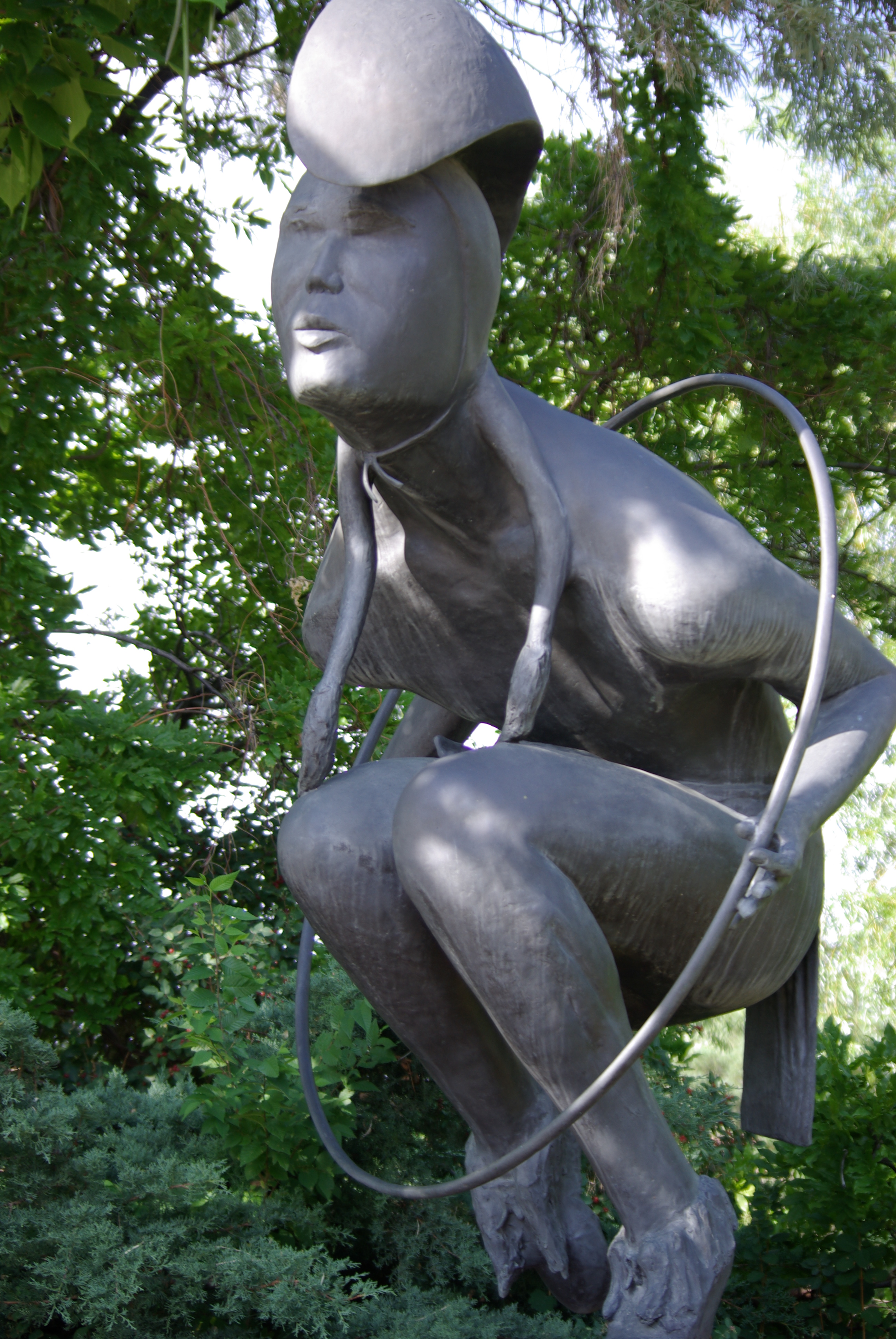
"Emergence," a representation of the creation of the present Earth and people, by Michael A. Naranjo, 2000. Part of the massive collection of New Mexico Art at the State Capitol -- this one outside the building itself.

“Emergence,” a representation of the creation of the present Earth and people, by Michael A. Naranjo, 2000. Part of the massive collection of New Mexico Art at the State Capitol — this one outside the building itself.

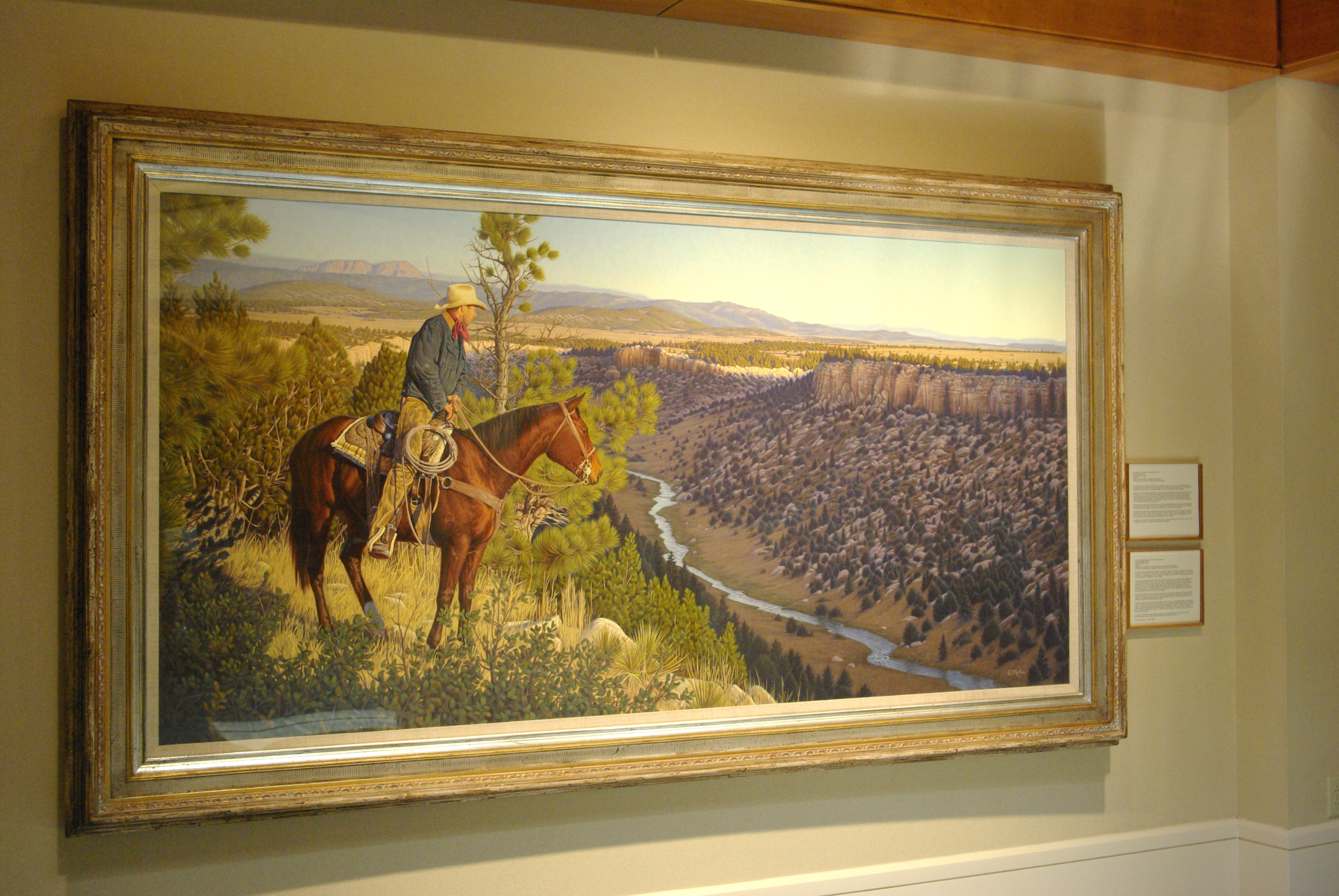
Simple Pleasures of New Mexico, acrylic by Gary Morton, 1992

Simple Pleasures of New Mexico,  stunning painting in acrylic by Gary Morton, 1992

If you’re in Santa Fe, plan to spend a half of a day, at least, looking at the Capitol and its art collections.  There are more than 400 pieces on display, sculpture, paintings, mixed media, and more.  It’s a world class gallery, free for the browsing.  Much of the art packs a powerful emotional punch, too, such as the sculpture outside the building honoring the vanished native tribes of North America.

Happy statehood, New Mexico.

More: 

USPS stamp honoring the centennial of New Mexico's statehood, in 2012. The stamp features a representation of the beauty of the state found in its desert hills and mountains. VirtualStampClub.com

USPS stamp honoring the centennial of New Mexico’s statehood, in 2012. The stamp features a representation of the beauty of the state found in its desert hills and mountains. VirtualStampClub.com


Remember the day they flew the U.S. flag backwards from the Mormon Temple in Salt Lake City?

January 4, 2016

Holly Munson at the Constitution Center wrote up a piece about Utah’s perhaps odd path to statehood, certainly complementary to my reminder that you could fly your flags on January 4, to honor Utah’s statehood, under the U.S. Flag Code.  Munson’s piece was distributed on Yahoo! News.

Her report is very solid, even though brief.  Utah history is nothing if not a convoluted path to statehood through what amounted to a civil war, the Mexican War, the discovery of gold in California, the transcontinental railroads, mining and immigration, Indian wars, old west shootouts, rampant environmental destruction with sheep grazing and mineral extraction and smelting, union strife, astonishing agricultural applications, and a lot of books written from tens of thousands of Mormon pioneer journals — Mormonism appears to be impossible without ink and paper and time to write.

Go read her story.

What caught my eye was the George W. Reed photograph of the Salt Lake City Temple of the Church of Jesus Christ of Latter-day Saints — the LDS, or Mormon church.  The Temple and the Tabernacle, also in the photo, both have their own unique architectural histories, and quirks that make them noteworthy purely from architecture.  (This George W. Reed should not be confused with the Civil War Medal of Honor winner, George W. Reed)

Reed was an early photographer for newspapers in Salt Lake City, and he took some wonderful photos for posterity.  He was also a founder of the leading non-Mormon paper in the state, The Salt Lake Tribune.  At points in its history, it’s been known as an anti-Mormon paper.  The University of Utah’s library holds about five dozen of his photos in their collection, indexed electronically if not quite available yet; there Reed is described:

A pioneer in the development of Utah newspapers, George Reed was originally employed by the Deseret News and in 1871 helped in establishing the Salt Lake Tribune. His photographs include nineteenth century views of Salt Lake City, individuals at Reed’s Avenue home, Wasatch Resort in Little Cottonwood Canyon, and a photograph of the American flag hung on the Salt Lake Temple in 1896 to commemorate Utah’s statehood.

In the collection of Utah State University, in Logan, Reed has yet more papers.  There we get a bit more of his history:

A pioneer in Utah journalism, George W. Reed was born in London, England, on April 7, 1833. He emigrated to Utah in 1862 and became manager of the Deseret News, a position he held until 1871 when he founded the Salt Lake Tribune. In 1882, after a decade at the Tribune, Reed sold his interest in the paper to P. H. Lannan. He married Elizabeth Tuddenham in 1866 and passed away December 1, 1909.

U.S. flag on the Mormon Temple, at Utah statehood in 1896

The Mormon Temple in Salt Lake City, Utah, draped with a U.S. flag in 1896, commemorating the completion of Utah’s statehood campaign when President Grover Cleveland declared Utah a member of the Union. Photo by George W. Reed; Reed worked for the Deseret News, and helped found the Salt Lake Tribune. I do not know whether this photo was published in either paper.  From the George W. Reed Collection, University of Utah Libraries.

Yes, you’re right!  That flag is backwards.  Well, it’s backwards according to the modern U.S. Flag Code, which specifies that when hung from a building, the flag’s union should always be in the viewer’s upper left corner (“northwest” corner were it a standard map).  In the photograph, the union is in the opposite corner.  No, we know the photo is not reversed, because it accurately portrays the location of the Tabernacle, to the west and slightly south of the Temple.

But we hear the protests:  The U.S. Flag Code did not exist in 1896!  How can that be a violation of a code that did not exist?

That’s right, too.

That is an indication that the traditions of flag display that some people get riled up about, that many people think we should amend the Constitution to protect, are new inventions more than old traditions.  Flag code violations are legion by well-meaning citizens celebrating the flag and patriotism, and rare by anyone with any malignant motives.

After a 49-year fight for statehood, through wars with the U.S., fighting with the U.S. forces in Mexico, the administrations of several presidents and 25 different U.S. Congresses, and pledges to change the rules of the church to ban polygamy and put that ban in the state constitution,  the people of Utah, especially the Mormon officials, were not trying to insult America by displaying the flag incorrectly.  Somebody said ‘fly the flag from the Temple,’ and some engineer or custodian got it done.  By 1896, most of the First Amendment litigation done in the U.S. had involved whether Mormons could keep their marriage policies (Mormons lost).  There was no intent to violate any rule of separation of church and state — nor would that be considered a violation today.  Churches may fly the nation’s flag with all the approval that suggests; it’s the government which may not fly a church’s flag.

Finally, there is no grand story in the flag’s being flown backwards.  It’s just one of those historical footnotes that mark the changing mores of the times, in this case, for standards of how to fly the U.S. flag.

Perhaps Utah history textbooks should make note of the day the U.S. flag was flown, backwards, to honor statehood.

More, and related resources:

Yes, this is mostly an encore post. Fighting ignorance requires patience.

Of course this is an encore post. Fighting ignorance requires patience. No one has changed the Utah history textbooks yet.


Utah at 120: Fly colors for Utah statehood, January 4, 1896

January 4, 2016

Utah Capitol, with flags

South entrance (main) to the Utah State Capitol, with U.S. and Utah flags flying on the single flag poll, and the snow-dusted Wasatch Mountains in the background. Utah State Law Library photo.

Utah joined the Union on January 4, 1896.  It had been a 49-year slog to statehood for Deseret, the Mormon settlement in the Desert.  The size had been pared down, so it would not be the biggest state, incorporating parts of what is now Nevada, Arizona, Oregon, Idaho, Colorado and New Mexico.  New capitals had been tried and cast aside (Fillmore, Utah).  Democratic Party rule was broken when LDS church authorities went door-to-door, calling every other family to the Republican Party, and party parity.  The Mormon Church abandoned polygamy, and adopted a state constitution that gave the vote to women.

Finally, Utah became the 45th state.

You may fly your U.S. flag today for Utah statehood, especially if you’re in Utah.

Happy birthday, Utah!  120 years old today.

Next federal flag-flying date: January 6, in honor of New Mexico’s statehood.

More:

U.S. flag in Capitol Reef NP

U.S. flag flying at Capitol Reef National Park, in Utah. Photo by longyang0369, via Flickr

Much of this material appeared here before; this is an annual event, after all.


Georgians fly flags on January 2, celebrating statehood

January 2, 2016

Or not.

I haven’t found any commemoration in Georgia of Georgia Statehood Day.

Which rather moots Luther McKinnon’s question about which Georgia flag to fly on the date. (Head over there anyway, just to see the photos.)

In any case, January 2 is Georgia Statehood day. U.S. law urges residents of states to fly the U.S. flag on the anniversary of statehood.  Georgia was the fourth state to ratify the U.S. Constitution, in a unanimous vote in a convention called solely to consider the document, on January 2, 1788.  Georgia is considered the fourth state.

U.S. and Georgia flags fly at the Georgia Capitol. (Flags pictured flew half-staff on December 8, 2012.)

U.S. and Georgia flags fly at the Georgia Capitol. (Flags pictured flew half-staff on December 8, 2012.)

While patriots urge flying the flag often, and “with gusto,” one should be careful to avoid errors in etiquette, or other oopsies, like this one in April 2014:

Via Buzzfeed: Braves Spokesperson Beth Marshall told 11Alive News it happened because of new pyrotechnics. For the first time, they put pyrotechnics on Braves Vision (that’s the large HD screen). One of the pyrotechnics flew at the flag and lit it on fire. Marshall said the material of the flag is flame retardant, so it went out on its own.

Via Buzzfeed: Braves Spokesperson Beth Marshall told 11Alive News it happened because of new pyrotechnics. For the first time, they put pyrotechnics on Braves Vision (that’s the large HD screen). One of the pyrotechnics flew at the flag and lit it on fire. Marshall said the material of the flag is flame retardant, so it went out on its own.

Happy birthday, Georgia!  Fly your flags today.


Happy birthday as a state, Texas! – 170 years old

December 29, 2015

It’s Texas Statehood day, the 170th anniversary of Texas joining the Union — or as some Texans prefer, the anniversary of Texas’s making America great.

According to the U.S. flag code, people should fly their U.S. flags on their state’s statehood day.

Not many Texans are, if any. Can you find someone honoring statehood day?

texas our texas

U.S. and Texas flags at the Texas Capitol – photo: jmtimages

170 years ago today: Rub your pet armadillo’s belly, slaughter the fatted longhorn, crank up the barbecue pit with the mesquite wood, put Willie Nelson and Bob Wills on the mp3 player, put the “Giant” DVD on the television, and raise your glass of Big Red, Dr. Pepper, or Lone Star Beer (or Pearl, or Shiner Bock, Sir Williams English Brown Ale, or Llano Wine).

U.S. Flag Code rules urge flying the U.S. flag on the anniversary of a state’s joining the Union — even as much as that will frost the tiny band of desperate Texas secessionists.  (Will the secessionists fly the Texas flag at half-staff?)

Texas was admitted to the union of the United States of America on December 29, 1845.

President Polk's authorization to affix Great Seal of the U.S. to Texas Statehood documents

President Polk’s Authorization to affix the Great Seal to Texas Statehood documents – Texas Memorial Museum, University of Texas at Austin

The text of Polk’s message:

I hereby authorize and direct the Secretary of State to affix the Seal of the United States to an authenticated copy of “an act to extend the laws of the United States over the State of Texas and for other purposes” approved Dec. 29, 1845 dated this day, and signed by me and for so doing this shall be his warrant.

James K. Polk
Washington, Dec. 29, 1845

Seal of the U.S. affixed to Texas Statehood Proclamation

Great Seal of the United States of America, affixed to the Texas Statehood Proclamation – image from State Archives Division, Texas State Library

Resources:

More:

The Texas Ranger Museum took note of the day (no, not the baseball Rangers):

Yes, this is mostly an encore post. Fighting ignorance requires patience.

Yes, this is mostly an encore post. It is an annual event, after all. And, fighting ignorance requires patience and persistence.


December 7, 2015: Fly your flags for Pearl Harbor Remembrance, for Delaware statehood — and at half staff

December 7, 2015

Flag flies at half-staff over the USS Utah, in Pearl Harbor (2004 photo – Pearl Harbor, Hawaii (May 31, 2004) – Sailors assigned to ships based at Pearl Harbor bring the flag to half-mast over the USS Utah Memorial on Ford Island in honor of Memorial Day May 31, 2004. U.S. Navy photo)

Flag flies at half-staff over the USS Utah, in Pearl Harbor (2004 photo – Pearl Harbor, Hawaii (May 31, 2004) – Sailors assigned to ships based at Pearl Harbor bring the flag to half-mast over the USS Utah Memorial on Ford Island in honor of Memorial Day May 31, 2004. U.S. Navy photo)

December 7 is a two-fer flag-flying day.

By public law, December 7 is Pearl Harbor Remembrance Day, and Americans fly the U.S. flag in memory of those who lost their lives at Pearl Harbor on December 7, 1941. U.S. flags should be flown at half-staff.

Under the U.S. Flag Code, residents of the relevant state should fly their U.S. flag on the date the state joined the union.

And in 2015, flags at all public buildings fly half-staff through December 7 in respect to the victims of the shootings at San Bernardino, California, on December 2. If you can fly your flag at half-staff, you should; if you cannot, fly the flag anyway.

In 1787 Delaware quickly and promptly elected delegates to the former colony’s convention to ratify the Constitution proposed at the Philadelphia convention just over three months earlier. The ratification of the Constitution won opposition from strong factions in almost every state. Pols anticipated tough fights in New York, Virginia, and other states with large populations. They also expected other states would wait to see what the bigger states did.

Delaware didn’t wait.  On December 7 Delaware became the first of the former British colonies to ratify the Constitution. Perhaps by doing so, it guaranteed other states would act more favorably on ratification.

Because Delaware was first, it is traditionally granted first position in certain ceremonies, such as the parades honoring newly-inaugurated presidents. Delaware’s nickname is “The First State.”

In Delaware and the rest of the nation, fly your flags on December 7, 2015.

The most famous portrayal of a U.S. flag flying in Delaware is in the painting by Emanuel Leutze (American, 1816–1868).

The most famous portrayal of a U.S. flag flying in Delaware is in the painting by Emanuel Leutze (American, 1816–1868). “Washington Crossing the Delaware,” 1851. The Metropolitan Museum of Art, New York, Gift of John Stewart Kennedy, 1897 (97.34) Among other problems with this portrayal: The flag depicted had not been designated on the date of the crossing, Christmas 1776.