This is just the 39th anniversary of RFK’s death. Next year, 2008, will be the 40th, and will again feature an election in which the war-crippled lame duck president must be succeeded, and the early fields in both parties do not excite the incumbent party’s masses much.
But 1968 was a uniquely terrible year — we hope it was unique. One serious question is just how depressing will it be to hear the “40-years out” stories on the Pueblo crisis, Martin Luther King, Jr.’s death, the riots, RFK’s death, the convention riots, the money-and-morale-and-morality sapping war (Vietnam, not Iraq — we hope), etc., etc.
And so Mr. Booth’s close is a potent challenge: To rededicate ourselves to the hopes we felt in the first half of 1968, to see the implementation of those hopes now, two generations later — despite the cynicism that wells up whenever we see anyone touted as a great hope of needed change in the country’s direction, or whenever great hopes are dashed to pieces, as they have been in Iraq.
And every June 5th I stop for a few moments and remember how I believed in what America could be once – try to get some of that belief back – and, to use an old Boomer chestnut, “keep on keeping on.”
And I ask Bobby to forgive me – and my generation – for failing to pick up his torch….
“There is many a boy here today who looks on war as all glory, but, boys, it is all hell.” – Gen. William Tecumseh Sherman,
from an address to the graduating class of the Michigan Military Academy, June 19, 1879, known as his“War is hell”speech (Wikipedia entry on Sherman). (Query: Does anyone have an electronic link to the full text of Sherman’s address that day? Or, do you know where it might be found, even in hard copy?)
Memorial Day, traditionally observed on May 30, now observed the last Monday in May, is a day to honor fallen veterans of wars. Traditionally, family members visit the cemetery where loved ones are interred and leave flowers on the grave.
On Memorial Day itself, flags on poles or masts should be flown at half-staff from sunrise to noon. At noon, flags should be raised to full-staff position.
When posting a flag at half-staff, the flag should be raised to the full-staff position first, with vigor, then slowly lowered to half-staff; when retiring a flag posted at half-staff, it should be raised to the full staff position first, with vigor, and then be slowly lowered.
Citations get lost on the internet. Not only do people send copies of e-mails to everyone on their list, not only is there spam beyond all measure, but good stuff gets stripped of attribution. Someone sends you a good poem, or a genuinely funny story — and if you want more of the same, you’re completely at sea about where to look. Author? That information got stripped away several forwardings earlier.
“Must be Lincoln, Einstein, or Jefferson,” some wag says, and the piece is misattributed ever after.
A fellow posted this interesting film on YouTube — The Civil War in Four Minutes. One second of the film equals one week of the war. It’s a fascinating pictorial map presentation, with a lot of information packed into 240 seconds.
Who did it? Are there others like it? How do we get the rights for classroom use?
YouTube can be likened to grave robbers who invade Egyptian royal tombs — they bring important material to light, but the context is lost, and perhaps the meaning.
Update, June 15, 2007: Every YouTube version of the video has been pulled — probably a copyright thing. In the interim, I’ve checked with the Abraham Lincoln Presidential Library and Museum to see if it is available. One person said there is discussion for making it available in the next two years. Ain’t that the way? Why not strike while the iron is hot and sell it now? Somebody, please wake me if it’s ever released.
74 journalists have died trying to get the news in Iraq since the U.S. invasion four years ago. Has any other war produced so many dead journalists, so fast? That number is about 16 per year.
The Newseum has a memorial to journalists who died trying to get the story. It contains just over 1,500 names, for wars from the War of 1812 to the present.
Each year, the Freedom Forum commemorates World Press Freedom Day by rededicating the Journalists Memorial, which pays tribute to reporters, editors, photographers and broadcasters who gave their lives reporting the news. On May 3, 2006, the names of 59 journalists who died or were killed while on assignment in 2005 were added to the glass panels of the memorial. The rededication ceremony featured remarks by David Westin, president of ABC News. The Journalists Memorial now honors 1,665 journalists who died covering the news from 1812 through 2005.
What is it about this war that makes it so much more deadly than other wars, for journalists? What does that say about the state of our world today, and the respect traditionally show to people who simply report what happens?
Spread the word; friends don't allow friends to repeat history.
This typewriter, a Corona (before the merger made Smith-Corona), belonged to Ernie Pyle, the columnist famous for traveling with the the foot soldiers of all services in World War II. Pyle won a Pulitzer Prize in 1944 for his columns in 1943, published collectively in the books Here is Your War and Brave Men. Pyle was killed covering the end of World War II in the Pacific, on an island named Ie Shima, on April 18, 1945.
The typewriter rests in the Albuquerque Museum. It comes with a story.
[Quote] Ernie Pyle interviewed Sergeant Don Bell, a rodeo rider, in June or July 1944 outside of St. Lo, France. Bell recalled that the foxhole they shared caved in during German shelling. Pyle said, “I have my notes, but my little portable typewriter is buried in that hole.” They hurriedly abandoned the foxhole, leaving the typewriter behind.
Bell recalled the interview as comforting. He wrote, “…Ernie had taken my ma’s wisdom and turned it into a soldier’s lesson: to find strength in battle you take hold of strength you’ve known at home…and of the faith that underlies it.” [End quote]
Spread the word; friends don't allow friends to repeat history.
Fading memories of World War II — In December it was the Pearl Harbor Veterans who held their last planned reunion — too many of the vets wer too old to think many could comfortably travel to another reunion. This week, it’s the PT boat veterans who held their last planned gathering, for the same reasons. Those who have the most vivid memories of the war dwindle in number to a precious few.
The 16 elderly survivors — down from 21 last year — of Peter Tare, Inc., an organization for former officers of PT boats, lined up next to the boat Friday, taking one last sail down memory lane.
For them, World War II is really almost over now.
“It’s sort of pitiful the way the crowd has dwindled,” said William Paynter, 90, who commanded both a PT boat and a squadron in the South Pacific.
“The executive secretary is just getting over a stroke and it seemed like the best time to do it,” he said of this past week’s reunion.
The group, which began meeting in 1947, has better than $25,000 in assets, Paynter said. Originally the plan was to turn the assets over to the sole survivor, but as the years passed, that seemed impractical.
He survived the Holocaust, arrested by the Nazis and sent to a concentration camp to die — he survived, instead. He survived the Communists, refusing to bow to demands he join the Communist party in post-war Romania; though a good engineer, his career was short-circuited by his stand on principle. He finally escaped Romania in 1978, emigrated to Israel, and then took a sabbatical to teach engineering at Virginia Tech in Blacksburg, Virginia. And he stayed on.
Yesterday, on Holocaust Remembrance Day, Liviu Librescu used his own body to jam the doors into his classroom, yelled at his students to leave through the windows, and gave up his life to a depressed kid bent on murder. Prof. Librescu was 76 years old. He was the oldest victim, and a hero.
Survived the Nazis, survived the communists. Died to the excesses of the Second Amendment and a culture that seems to create enough disturbed people to make mass murder a serious problem, not a rare event. Librescu was already a hero. It’s embarrassing he had to rise to heroic actions to protect his students. It’s embarrassing to us that he died the victim of an act of senseless violence.
It’s a national embarrassment. Survived the Nazis. Survived the communists. Killed by an out-of-control student with a gun in the U.S.
It’s a national embarrassment. What are we going to do about it?
Spread the word; friends don't allow friends to repeat history.
Other finalists for U.S. History were: Middle Passages: African American Journeys to Africa, 1787-2005 by James T. Campbell (The Penguin Press), and Mayflower: A Story of Courage, Community, and War by Nathaniel Philbrick (Viking).
Finalists for the biography prize included two other great books: John Wilkes: The Scandalous Father of Civil Liberty by Arthur H. Cash (Yale University Press), and Andrew Carnegie by David Nasaw (The Penguin Press).
In the category of general non-fiction, where evolution has triumphed over anti-science bigotry in recent years, history is rampant in 2007, also. The prize for general non-fiction was snagged by The Looming Tower: Al-Qaeda and the Road to 9/11″ by Lawrence Wright (Alfred A. Knopf). Other finalists for the general non-fiction prize were Crazy: A Father’s Search Through America’s Mental Health Madness by Pete Earley (G.P. Putnam’s Sons), and Fiasco: The American Military Adventure in Iraq by Thomas E. Ricks (The Penguin Press).
High school history and other social studies teachers would do well to read each of these winners and the finalists. They will be significant additions to any serious history curriculum, or government, and perhaps economics.
Spread the word; friends don't allow friends to repeat history.
Be careful not to unnecessarily scare students — but do point out that the world is full of danger, and natural and man-made disasters continue to plague mankind the world over.
Spread the word; friends don't allow friends to repeat history.
How teachers should address World War II in high school history classes continues to vex me, and others, too, I suppose. First is the problem that we have more than six decades of history after the war to cover in history classes, a problem my teachers didn’t have, or ignored.
More difficult is the connecting of the war to later events. Tom Brokaw’s book, The Greatest Generation, argues a strong case that America is better because of the of work of the people who survived the war, especially the veterans. But often I’ve thought that a simple recounting of history cannot adequately cover the struggle with existence and its meaning that so changed the world after the war, especially for veterans who saw combat. Kids ask why we didn’t just negotiate with the communists to end the Cold War, and why the Marshall Plan could even exist. Why build tract homes, and get an education?
Kurt Vonnegut’s Slaughterhouse Five provided some of the best answers to those questions, which is to say that the answers themselves lack clarity, and confuse. I wish students could read it just before we cover the Battle of the Bulge in a couple of classroom sessions, both to understand and empathize with the soldiers in the battle, and to understand how much that battle and the end of the war shaped events of the 1950s and Cold War.
Billy Pilgrim came unstuck in time, but was stuck forever with history, by history, remembering history in some cases even before it happened. Billy Pilgrim knew Santayana and Santayana’s ghost at the same time. Pilgrim, and Vonnegut, appeared to understand how hopeless life can be, but found reason to plod on anyway. There is hope at the bottom of Vonnegut’s work, or the hope that hope might be found just around the corner.
1. Praise to the Bush administration for making necessary arrangements on financing.
2. Can we send Richardson to Iraq, Iran, Syria and Palestine? Soon?
More seriously, this is a key bit of history in process. High school teachers woud do well to watch newspapers over the next few days to gather stories which will reveal background from the Korean War, foreign policy history going back at least 30 years, and stories about nuclear proliferation which may come in handy for several years before textbooks can catch up.
Or, until that account is unsuspended by the forces supporting Donald Trump: Follow @FillmoreWhite, the account of the Millard Fillmore White House Library
We've been soaking in the Bathtub for several months, long enough that some of the links we've used have gone to the Great Internet in the Sky.
If you find a dead link, please leave a comment to that post, and tell us what link has expired.
Thanks!
Retired teacher of law, economics, history, AP government, psychology and science. Former speechwriter, press guy and legislative aide in U.S. Senate. Former Department of Education. Former airline real estate, telecom towers, Big 6 (that old!) consultant. Lab and field research in air pollution control.
My blog, Millard Fillmore's Bathtub, is a continuing experiment to test how to use blogs to improve and speed up learning processes for students, perhaps by making some of the courses actually interesting. It is a blog for teachers, to see if we can use blogs. It is for people interested in social studies and social studies education, to see if we can learn to get it right. It's a blog for science fans, to promote good science and good science policy. It's a blog for people interested in good government and how to achieve it.
BS in Mass Communication, University of Utah
Graduate study in Rhetoric and Speech Communication, University of Arizona
JD from the National Law Center, George Washington University


 Posted by Ed Darrell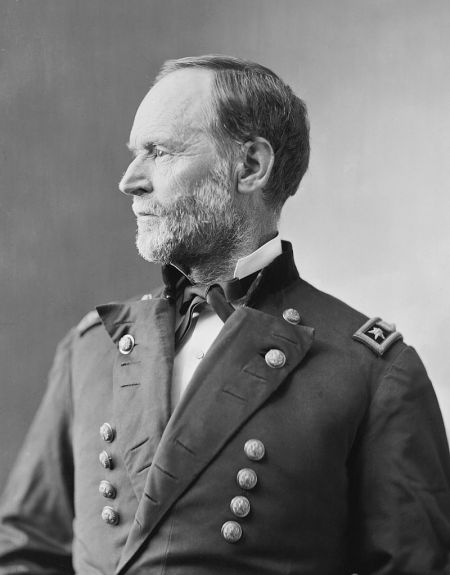





 Millard Fillmore's Bathtub
