What Lucy will see, leaving Houston . . .

June 22, 2008

What Lucy saw will see, leaving Houston . . .

[The exhibit on Lucy, our Australopithecus afarensis ancestor, has been extended at the Houston Museum of Natural Science, through September 1, 2008. Go. Go see the exhibit. Don’t put it off.]

Coming out of the display on Lucy at the Houston Museum of Natural Science, coming back down the staircase, this is the painting on the wall. In my imagination, this is what Lucy saw will see as they carried carry her, crated up, out of the building. In reality they probably took will carry her down a freight elevator.

This one’s for you, P.Z. — drop into the Houston museum next time you’re down there:

Whale and Squid mural at Houston MNH


Scout Centennial video

June 22, 2008

Here’s a video on the 100th anniversary of the Boy Scouts of America, coming in 2010.

Vodpod videos no longer available.

more about “Scout Centennial video“, posted with vodpod

Scouts, Scouters, friends and media should probably bookmark this site, and use it to coordinate events planned for the centennial year.

Among other fun things, there was a contest to pick a logo for the year-long festivities. The logo is below, left.

The winning design came from an Eagle in California


Name: Philip Goolkasian
Hometown: Fresno, Calif.
Scout Rank: Eagle Scout
Council: Troop 223, Sequoia Counci


Is Ken Ham a Wackaloon?

June 21, 2008

Ken Ham appears to be unhappy that P. Z. Myers called him a wackaloon, but clueless as to why.

Ken, partly it’s because you don’t allow comments at your blog. Open your blog up for discussion, you might learn something.

It ain’t that the majority is silent, it’s that the wackaloons are deaf. Ham seems confused. He thinks Myers is worried that God exists. Myers is worried that Ham is a wackaloon. Those two statements are quite different, and mutually exclusive independent. God’s existence doesn’t change the fact that Ham is a wackaloon, and God’s existence is not conditional on Ham’s being a wackaloon.

Ham is a creationist who spends millions of dollars annually lying to children. Ham, it would appear to a rational person, does not believe God exists, and so thinks there is no penalty to be paid for doing this. “Wackaloon” might be a gentle term.

But, should creationists be allowed into the Pentagon without a full body search? People who don’t think radiation works in predictable ways should be kept far, far away from nuclear weapons and those who play a role in triggering them, I think. What if they required a sanity test before allowing people into the Pentagon?


Louisiana creationists gear up campaign to deceive students

June 20, 2008

My earlier post urging readers to contact Louisiana Gov. Bobby Jindal to urge him to veto the latest creationist eruption the Louisiana Lege gave him, produced an interesting comment. A fellow named Wayne provided links to a presentation by some guy named Perry Marshall, in which Marshall flails vainly against evolution theory.  The video is billed as one the Louisiana Coalition for Science “fears.”  Wayne wants to know, should we keep children from seeing it?

Marshall apparently isn’t even an engineer, but instead designs ads for internet placement — at least one step removed from the usual joke about engineers as creationists. Of course, that doesn’t help any of his arguments.

Wayne linked to three YouTube presentations, about half of the presentation Marshall made at an unidentified church (there are five segments total, I gather). What you see is bad PowerPoint slides, with audio. Marshall suggests that evolution couldn’t get from the American pronghorn antelope to the African giraffe, but in classic creationist form, he doesn’t address the unique signs of evolution we find in giraffes (neck, vagus nerve, for example) nor in pronghorns (bred for speed to beat the American cheetah, which is now extinct, and thereby hangs a great tale of sleuthing by evolution).

Marshall’s presentation is insulting. To me as a historian, it’s astounding how he can’t accurately list sequences of events well known to history. The science errors he makes are errors any 7th-grade student might make — but he’s passing them off as valid criticism of evolution theory.

Here’s the first YouTube presentation, and below the fold, my response to Wayne.

These presentations are an omen. They are sent to us as a warning for what the Discovery Institute will try to sneak into classrooms if Jindal signs that bill into law — heck, they’ll try anyway, but we don’t have to drill holes in our kids’ heads to make it easier for con men and snake oil salesmen to get their fingers in there.

My response below the fold.

Read the rest of this entry »


Handbook of Texas on-line

June 20, 2008

Question: Where do you find good Texas history in a hurry?

Answer: The Handbook of Texas.

Question: What about Texas history on-line?

Answer: Same thing, different format:

Tip of the old scrub brush to Will’s Texas Parlor. Crossposted at the Wayback Machine.


Driving with a banjo

June 20, 2008

There can be only three or four legitimate banjo jokes possible, right? There’s the one about the banjo player’s Porsche, there’s the one about perfect pitch . . .

Somebody was really ticketed for driving while strumming a banjo and singing into a cell phone? Read the story at The Bluegrass Blog, and be sure to catch the definition of “reckless.”

Tip of the old scrub brush to a perplexed NYC Educator.


Campaign underwater? (and classroom DVD offer)

June 19, 2008

Who are these guys?

Who are these guys in the pool? Can you identify them?

Can they swim?

(Answers below the fold.)

Read the rest of this entry »


Open thread, open comments

June 19, 2008

Several readers have dropped notes saying they couldn’t find a place to comment on something here, and they didn’t want to mess up a thread.  So, here’s a thread to put those comments in.  (Now watch:  Cat will get the typing fingers of everybody . . .)

And for those of you from the Christian blogs where comments are censored, other than editing out profanity and links to pornography, we generally don’t censor here.

Comments are open – discuss away!


Juneteenth

June 19, 2008

The Texas State Archives offers a succinct history:

Juneteenth, celebrated on June 19, is the name given to emancipation day by African-Americans in Texas. On that day in 1865 Union Major General Gordon Granger read General Order #3 to the people of Galveston. General Order #3 stated “The people of Texas are informed that, in accordance with a proclamation from the Executive of the United States, all slaves are free. This involves an absolute equality of personal rights and rights of property between former masters and slaves, and the connection heretofore existing between them becomes that between employer and hired labor. The freedmen are advised to remain quietly at their present homes and work for wages. They are informed that they will not be allowed to collect at military posts and that they will not be supported in idleness either there or elsewhere.”

Large celebrations on June 19 began in 1866 and continued regularly into the early 20th century. The African-Americans treated this day like the Fourth of July and the celebrations contained similar events. In the early days, the celebration included a prayer service, speakers with inspirational messages, reading of the emancipation proclamation, stories from former slaves, food, red soda water, games, rodeos and dances.

The celebration of June 19 as emancipation day spread from Texas to the neighboring states of Louisiana, Arkansas and Oklahoma. It has also appeared in Alabama, Florida, and California as African-American Texans migrated.

In many parts of Texas, ex-slaves purchased land, or “emancipation grounds,” for the Juneteenth gathering. Examples include: Emancipation Park in Houston, purchased in 1872; what is now Booker T. Washington Park in Mexia; and Emancipation park in East Austin.

Celebration of Juneteenth declined during World War II but revived in 1950 at the Texas State Fair Grounds in Dallas. Interest and participation fell away during the late 1950’s and 1960’s as attention focused on expansion of freedom for African-Americans. In the 1970’s Juneteenth revived in some communities. For example, in Austin the Juneteenth celebration returned in 1976 after a 25 year hiatus. House Bill no.1016 passed in the 66th legislature, regular session, declared June 19, “Emancipation Day in Texas,” a legal state holiday effective January 1, 1980. Since that time, the celebration of Juneteenth continues across the state of Texas with parades, picnics and dancing.

Texas State Library Reference Services 3/95

Celebrations across Texas started last Saturday, and will continue for another three or four days, I gather. Thought it’s an official State of Texas holiday, few people take it off. So celebrations are scheduled when they can be.

The great mystery to me is why the holiday seems to have spread so far outside Texas. Juneteenth is based on a uniquely Texas event — it involved notifying only the slaves in Texas that they had been freed. Celebrations go much farther today, even to places the Civil War didn’t touch.

Resources:


Louisiana lashes out at science

June 19, 2008

“Stop the World! I Want to Get Off!” won a Tony Award on Broadway in 1963. It was a musical play about a fellow who overreached. With book and lyrics by Leslie Bricuse and Anthony Newly, it spawned a string of hit popular songs: “What Kind of Fool Am I?” “Gonna Climb a Mountain,” “Once in a Lifetime,” and “Mumbo Jumbo” among them.

Oh, why not: Update, here’s Sammy Davis, Jr., singing “What Kind of Fool Am I?”:

How can one know that history and not think of it, when looking at the current Louisiana legislature? What kind of fools are they, indeed? Louisiana would like the world to stop, so they can get off.

Progress and science so much offend the Louisiana legislature that they have carved out what they hope is an exception so teachers can avoid hard science on issues like reproduction (cloning), evolution, and that pesky weather stuff that ransacked New Orleans, global warming. Sitting on Gov. Bobby Jindal’s desk right now is the enrolled version of S. B. 733, the misnamed “Science Education Act,” which gives teachers and local school districts the right to deviate from state curriculum and science texts in those three areas.

Why not the Big Bang and other cosmology? Why not gravity? Why not algebra? It may be that Louisiana’s preachers don’t know about those areas of science. Shhhhh! Don’t tell them!

A few observations.

First, having been slapped down by federal courts repeatedly when they’ve tried to introduce religion into science classes before, the legislature seems to have learned not to say much, in hopes that federal courts will have difficulty determining the religious intentions behind the bill. In 1987, in the case of Edwards v. Aguillard, federal courts didn’t even get to trial. They simply took the statements of the legislators as to their religious intentions.

This time around, the bill is being passed without debate at all. Legislators obviously hope that if they say nothing, they can’t be held responsible for anything. Better to keep your mouth closed and be thought a fool than to open it and remove all doubts — and obviously, there is hope among Louisiana creationists that federal courts won’t be able to use their closed-mouthedness as to evidence their foolishness. Well, they may want to consider that intelligent design has been ruled religious dogma by a federal court, already.

Second, the legislature’s learnings seem limited to bellicose speeches. The courts have repeatedly struck down Louisiana’s yearnings to teach creationism, both statewide, and repeatedly in the Tangipahoa Parish schools, which tried warning labels on textbooks and a variety of other methods, losing in court each time. It’s not just the ravings of the legislators that get up the dander of the courts. When the laws that come out of the ravings offend the Constitution, especially the First Amendment, the courts have struck them down. It’s not enough to just play at being non-offensive: The actions of the legislature must also not violate the Constitution. They appear not to have figured that one out. (More remedial con law courses coming up? Perhaps.)

The state should just let science be taught. Sneaking religion in does no good for the students, and it’s no secret that’s what they’re doing.

Third, the bill wasn’t drafted by people with much experience drafting legislation, running schools, or defending the Constitution. The bill could be used in some districts to teach nothing but evolution. It opens the door for anything a local school board decides might be science in three specific areas, cloning, evolution and global warming. Fruitcake groups like Ken Ham’s “Answers in Genesis” will rush to produce materials noting the accuracy of Hanna-Barbera’s “Flintstones.” Kids could be allowed to watch cartoons and call it science. In contrast, teachers who don’t understand the science in the first place will probably have few sources to turn to for good science information. Maybe one way to kill the law would be to point out that this thing opens the door wide for the theology of the Flying Spaghetti Monster (may his noodly appendage . . . well, you know).

What you should do: The Louisiana Coalition for Science urges Gov. Jindal to veto the bill; you should call Jindal’s office and urge a veto, too.

You can send e-mail here.

You can mail, or telephone, here:

Mailing Address:

Governor Bobby Jindal
PO Box 94004
Baton Rouge, LA 70804-9004

Phone: 225-342-7015 or 866-366-1121 (Toll Free)
Fax: 225-342-7099

Other sources:

Text of the bill below the fold.

Read the rest of this entry »


Historic images: Quanah Parker, Last Chief of the Comanches

June 19, 2008

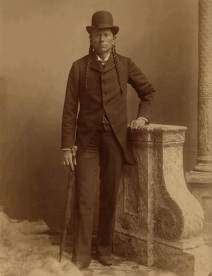
Quanah Parker, photo by Lanney

Quanah Parker, a Kwahadi Comanche chief; full-length, standing in front of tent.
Photographed by Lanney. Public Domain photo.
National Archives, “Pictures of Indians in the United States”

Photographs of Native Americans reside among the publicly and internet available materials of the National Archives. Images can be ordered in sets of slides, or as individual prints, though many are available in quality high enough for PowerPoint works and use on classroom materials. Many of the photos are 19th century.

Quanah Parker stands as one of the larger Native Americans in Texas history. This photo puts a face to a reputation in Texas history textbooks. Texas teachers may want to be certain to get a copy of the photo. His life story includes so many episodes that seem to come out of a Native American version of Idylls of the King that a fiction writer could not include them all, were they not real.

  • Quanah’s mother was part of the famous Parker family that helped settle West Texas in the 1830s. Cynthia Ann Parker was captured in 1836 when Comanches attacked Fort Parker, near present-day Groesbeck, Texas, in Limestone County. (See Fort Parker State Park.) Given a new name, Nadua (found one), she assimilated completely with the Nocona band of Comanches, and eventually married the Comanche warrior Noconie (also known as Peta Nocona). Quanah was their first child, born in 1852.
  • Nadua was captured by a Texas party led by Lawrence Sullivan “Sul” Ross in 1860, in the Battle of Pease River. Noconie, Quanah, and most of the Nocona men were off hunting at the time, and the fact of Nadua’s capture was not realized for some time. Nadua asked to return to the Comanches and her husband, but she was not allowed to do so. When her youngest daughter, who had been captured with her, died of an infection, Nadua stopped eating, and died a few weeks later.
  • Sul Ross was a character in his own right. At the time he participated in the raid that recaptured Cynthia Parker, he was a student at Baylor University (“What do I do on summer breaks? I fight Indians.”) At the outbreak of the Civil War, Ross enlisted in the Confederate Army as a private. Over 135 battles and skirmishes he rose to the rank of Brigadier General, the ninth youngest in the Confederate Army. A successful rancher and businessman back in Texas after the war, he won election as governor in 1887, served two very successful terms (he resolved the Jaybird-Woodpecker War in Fort Bend County, and had to call a special session of the legislature to deal with a budget surplus), refused to run for a third term, and was named president of Texas Agricultural and Mechanical College (Texas A&M) within a few days of stepping down as governor. Ross’s leadership of the college is legendary — students put pennies near a statue of Ross in a traditional plea to pass final exams, among many other traditions. After his death, Texas created Sul Ross State University, in Alpine, Texas, in his honor.
  • Quanah Parker’s father, Noconie, died a short time after his mother’s capture. He left the Nocona band, joined the Destanyuka band under Chief Wild Horse, but eventually founded his own band with warriors from other groups, the Quahadi (“antelope eaters”) (also known as Kwahadi). The Quahadi band grew to be one of the largest and most notorious, always with Quanah leading them. The Quahadis refused to sign the 1867 Medicine Lodge Treaties, and so avoided immediate internment to a reservation. However, dwindling food supplies and increasing opposition forced Quanah to retire to a reservation in 1875, in what is now southwestern Oklahoma. This was the last Comanche band to come to the reservation.
  • Quanah was appointed Chief of all the Comanches.
  • Through investments, Quanah became rich — probably the richest Native American of his time.
  • Quanah hunted with President Theodore Roosevelt.

    Quanah Parker in later life, as a successful businessman. Wikipedia image, public domain

    Quanah Parker in later life, as a successful businessman. Wikipedia image, public domain

  • Rejecting monogamy and Christianity, Quanah founded the Native American Church movement, which regards the use of peyote as a sacrament. Quanah had been given peyote by a Ute medicine man while recovering from wounds he’d suffered in battle with U.S. troops. Among his famous teachings: The White Man goes into his church and talks about Jesus. The Indian goes into his Tipi and talks with Jesus.
  • Photo at right: Quanah Parker in his later life, in his business attire. Photo thought to be in public domain.
  • Bill Neeley wrote of Quanah Parker: “Not only did Quanah pass within the span of a single lifetime from a Stone Age warrior to a statesman in the age of the Industrial Revolution, but he never lost a battle to the white man and he also accepted the challenge and responsibility of leading the whole Comanche tribe on the difficult road toward their new existence.”
  • Quanah Parker died on February 23, 1911. He is buried at Fort Sill Cemetery, Oklahoma, next to his mother and sister.

Quanah Parker’s epitaph reads:

Resting Here Until Day Breaks
And Shadows Fall and Darkness Disappears is
Quanah Parker Last Chief of the Comanches
Born 1852
Died Feb. 23, 1911

Other Resources:

Spread Quanah’s story:

Add to FacebookAdd to NewsvineAdd to DiggAdd to Del.icio.usAdd to StumbleuponAdd to RedditAdd to BlinklistAdd to TwitterAdd to TechnoratiAdd to Furl


Teach evolution in Christian schools

June 18, 2008

Here’s a viewpoint you don’t see often: An engineer urges Christian schools to be sure they teach evolution, and he makes a pretty good case.

It’s a twist on the usual position, where religious fanatics argue that science should be watered down in public schools, or that some form of creationism should be taught to cast doubt on the science.

The essay was published at a blog called An Evangelical Dialogue on Evolution. An engineer named Gordon Glover argues that evolution should be taught, first, because it’s good science. Second, he says teaching evolution “enhances” critical thinking — a point I agree with; in my experience, students get more creative when they study and understand the real creative work of real scientists, and students become much more discerning about what is good science and a good argument.

Third, for private Christian schools, Glover argues that teaching evolution opens another opportunity to discuss Biblical inspiration.

The first reason is the most powerful. Sticking to good science also presents an opportunity to stand up for good ethics.

Take a look at Glover’s arguments. Is he right? What do you think? Should scientists argue for including evolution in religious schools where it is avoided now? As always, comments are open.


Mosquitoes eat DDT, and here’s how

June 18, 2008

University of Illinois researchers found the protein that allows mosquitoes to metabolize DDT.

It’s good news in mosquito research, and may someday provide some insight into how to kill mosquitoes that seem to be resistant to DDT.

But, for all those DDT advocates out there, isn’t this rather embarrassing? Here these researchers have discovered the molecular level mechanisms for a process that the DDT apologists claim doesn’t happen. Oops. Rachel Carson proven right, once again.

There they are, caught red- and bumpy-handed.

Press release text from the University of Illinois below the fold.

Read the rest of this entry »


Geography hidden in plain sight

June 18, 2008

Strange Maps features federally-owned lands. Those of us who grew up in the west tramping those federal lands, and those of us who worked policy for those lands rarely think they should be listed as “strange” maps. Beautiful land maps, perhaps. God’s Country. It’s funny others regard it as so strange.

But we get clues. In comments at Strange Maps I noted a corporate meeting where I was chastised and ostracized for making a simple statement of fact about the ownership of lands in the west. Other than we veterans of the Sagebrush Rebellion (on all sides), ranchers, miners, and members of the Sierra Club, Wilderness Society, National Recreation and Parks Association (NRPA) [Barry Tindall? Are you still out there?], National Parks Conservation Association (NPCA), and enrolled tribal members, who pays attention to that stuff?

Too few in government pay enough attention. Fewer people outside government pay attention, especially if they don’t live in states in which the federal lands reside.

Public lands are all around us, yet we don’t see them as anything much different from any other land. Too often we don’t even see them for the resources they are. It’s as if we had a treasure of diamonds, rubies and gold, and we put it on display, and no one could see it.

For example, there was a major decision in federal district court on an issue of federalism last Friday — did you hear of it in your local newspaper, or on your local television or radio news? Nor are most people familiar with the move to amend the 1872 Mining Act, nor could most Americans describe for you what the 1872 Mining Act is or why it’s worth billions of dollars annually to the federal government, state governments, and mining corporations.

Strange Maps showed only the amount of land in federal hands in each state. Below is a map that shows where are the actual federal holdings, from the online National Atlas (nationalatlas.gov) — a map of federal lands and Indian Reservations. (A .gif preview is below; below that is a link to a .pdf file you can download.) The light green is National Forest land; the yellow is Bureau of Land Management land. The red plots are Indian reservations. Click on the map for the enlargement, you can see that Nevada, for example, has just thin threads of private lands (in white), mostly along U.S. Highway 50, and around Las Vegas.

All Federal Lands and Indian Reservations; NationalAtlas.gov, now archived at USGS

All Federal Lands and Indian Reservations; NationalAtlas.gov, now archived at USGS


Flip the pages of most geography texts, however, and you’ll find little clue of the role federal lands play in modern America, let alone the historical roles played.

History?

Sure. Notice that most of the public lands held today are in 13 western states, generally the last states allowed into the union (not exactly; Oklahoma is a 20th century admission — but it has Indian reservations; read on). Outside the 13 original colonies, which became the 13 original states, and Vermont (#14), all the land in the U.S. was held by the federal government at one time. Much of the territory between the 13 original states and the Mississippi was ceded to the U.S. by Britain in the Treaty of Paris, which ended the American Revolution. Americans thought the land useful for farming, chiefly, so the intention was to devise the lands to private holders. To that end the various Northwest Ordinances (e.g., 1785, 1786, 1787 and later) established systems to sell off the lands into private hands.

Disposal of the lands required the creation of a bureau to do the job. The General Land Office was created in 1812, and remained part of the federal government until it was folded into the new Bureau of Land Management in 1946.

That some of the lands might have national value, and should be held in federal title, did not surface as a complete idea until the Progressive Era, with the emphasis on land stewardship, under Teddy Roosevelt, Taft, and their successors. Even then, the general idea was to get most of the lands into private ownership. Roosevelt worked to preserve the most scenic and most unique lands.

Beginning with the Northwest Ordinances, the federal government set aside two sections in every township for the benefit of education. Local governments sold the tracts and put the money to school construction, or put the schools on those sections. Some of the tracts in the far western states are still there, unsold and providing no benefits to the schools. In some cases this is because the tracts are stuck inside federally-held tracts, in National Forests, in National Parks. Texas dedicated some of its state lands to provide funding for the University of Texas. Fortunately, these tracts happened to be on a pool of oil. When oil development took off, Texas’s university systems benefited (the Texas A&M System got a third of the rights along the way).

Poster advertising lands in Nebraska and Iowa

Development of the Transcontinental Railroad was financed by massive grants of land to the railroad companies. Even today the fortunes of the old Burlington Northern Railroad (now BNSF) are swelled by coal on land granted to the original companies building the rails, land the company has held for all these years. The thin line of private land across northern Nevada originally was the route of the Central Pacific Railroad — now it is approximately the route of U.S. Highway 50, “America’s Loneliest Highway.”

President Abraham Lincoln signed the Homestead Act on May 20, 1862. Under the Act, any American could lay claim to public lands for a small fee, and if he could live on the land for five years, title was vested in that citizen. This explanation comes from a lesson plan at the National Archives:

The new law established a three-fold homestead acquisition process: filing an application, improving the land, and filing for deed of title. Any U.S. citizen, or intended citizen, who had never borne arms against the U.S. Government could file an application and lay claim to 160 acres of surveyed Government land. For the next 5 years, the homesteader had to live on the land and improve it by building a 12-by-14 dwelling and growing crops. After 5 years, the homesteader could file for his patent (or deed of title) by submitting proof of residency and the required improvements to a local land office.

When I was a child in southern Idaho, customers at my parents’ furniture store included many people who were still trying to make a go of things on homesteads north of Burley, Idaho, on “the North Side.” Much of the land granted this way could not support a family, and the failure rate of these homesteads in the 1950s and 1960s was probably more than 50 percent (I’m swagging the figure — if you have better statistics, send them along).

Overall, the Homestead Act shaped America’s character as a home for entrepreneurs:

By 1934, over 1.6 million homestead applications were processed and more than 270 million acres—10 percent of all U.S. lands—passed into the hands of individuals. The passage of the Federal Land Policy and Management Act of 1976 repealed the Homestead Act in the 48 contiguous states, but it did grant a ten-year extension on claims in Alaska.

Much of the land that open for homesteading was desert, unsuitable for farming. It was available for grazing cows and sheep, though, and much of it was overgrazed. (Grazing alone wouldn’t meet the homestead requirements.) It was not until the 1970s that people outnumbered sheep in Utah, for example. In the first three decades of the 20th century enormous flocks of sheep grazed much of what is now considered Utah’s western desert territory, flocks of thousands of sheep, or tens of thousands.

These lands, too arid for farming, too hilly for much of anything else, too far away from settlements for other commerce, eventually formed the core of lands held by the Bureau of Land Management (BLM) in the Department of Interior. BLM manages 264 million acres of land, far and away the biggest land management agency in the federal government. Much of the land was severely overgrazed by 1930, and after the harsh lessons of the Dustbowl, Congress tried to rope in grazing and set it up in a rational scheme in the Taylor Grazing Act of 1934, one of the lesser noted chunks of the New Deal era.

The major federal land management agencies today include the Department of Interior’s BLM, National Park Service, Fish and Wildlife Service, Bureau of Reclamation, and to a lesser and more complicated degree, the Bureau of Indian Affairs; the Department of Agriculture’s National Forest Service; and the Department of Defense, especially in the western public lands states (think Nevada gunnery range, Skull Valley and Dugway Proving Grounds, Utah, and Area 51).

Each area of land management policy is controversial to some degree, but even these controversies rarely rise to the level of public acknowledgment. The latest starlet’s sexcapades will grab headlines away from the major effort to overhaul mining law, for example. In the 1980s, Alaska voted on a proposal to secede from the union, but the issue barely got three paragraphs in the Washington Post or New York Times, two of the newspapers that are generally very good in covering such issues. This post barely scratches the surface of these issues.

(Digression: I first encountered Molly Ivins when she reported for the NY Times out of the Denver bureau; as a Scout I had hiked and traveled much of Utah and the west; as a Senate staffer to a western senator, I was intimately familiar with most of the land in Utah especially. Ivins wrote a story on a protection issue on a chunk of land and a formation I’d not been familiar with, and in sparring with her about the article, it became very clear that she had pulled out sources we didn’t know about, and that she knew the stuff about as well as we did. Anyone who bothers to give a damn about western lands can earn my respect with such careful research.)

As a side note, Strange Maps suggested that the District of Columbia was all federal lands, but most of the District has been devised into private property, and commenters noted that. Here is a map of the District showing its federally-maintained lands.

District of Columbia and Federal Lands; NationalAtlas.gov (now at USGS)

District of Columbia and Federal Lands; NationalAtlas.gov (now at USGS)

Other resources:

Other related posts at the Bathtub:


Chess games of the rich and famous: IBM 360, circa 1974

June 17, 2008

IBM 360 playing chess in 1974; five men unidentified; Chilton.org

IBM 360/195 playing chess, November 1974, probably in the world computer chess championships. MASTER Team, from left: Alex Bell, Peter Kent, John Birmingham, John Waldron (a British chess player)

Annual Report, C & A Division, Rutherford Laboratories, United Kingdom, 1974.

No details are offered in the 1974 report; it appears that the machine is playing someone at a remote location, linked by telephone. According to the report, “The only major hardware change made to the IBM System 195 Central Computer during 1974 was the addition in March of a third megabyte of main core. The system has now given consistently high performance for a period of three years and from this experience it is now possible to predict its maximum capability when fully loaded.”

At another section of the Rutherford Lab’s online materials you can view a short history of computer chess playing.