September 25, 1789, Congress had approved and enrolled the proposals, and sent twelve proposed amendments to the Constitution to the states for ratification. Ten of the twelve amendments were approved, rather quickly, and by 1791 the were attached to the Constitution. These ten we now call the Bill of Rights.
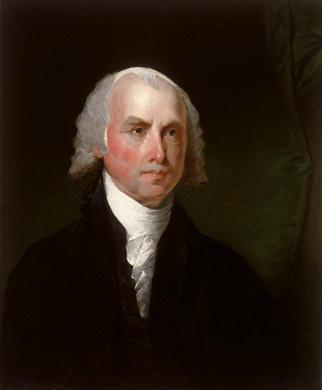
James Madison proposed the first 10 Amendments to the Constitution, and the 27th Amendment; the 203 years it took to ratify the 27th Amendment is the longest legislative process in the history of the U.S., and probably the world.
The two proposals that failed to earn the required approval of three-fourths of the 13 states fell into a special limbo for Constitutional amendments that became clear only in the late 1970s when Congress discussed how long to wait for states to approve the Equal Rights Amendment (this is a much-simplified explanation, I know). Congress put deadlines on the ratification process in the late 20th century, but the first twelve proposals had no deadlines, nor did any other proposal before the Equal Rights Amendment proposal. In the 1980s, Congress passed a law that said any amendments floating around, unapproved, would be considered dead after a date certain. There were six amendments in that category.
Before that date certain passed, more states took a look at one of James Madison’s 1789 proposals. They liked it, and they ratified it — 34 states total.
No law, varying the compensation for the services of the Senators and Representatives, shall take effect, until an election of Representatives shall have intervened.
This is the longest legislative procedure in U.S. history, perhaps the longest ever — it lasted much longer than many nations. By that ratification in 1992, James Madison became the person who proposed both the first, and last amendments to the Constitution.
Madison’s reaching out from the grave 156 years after his death — he died on June 28, 1836 — is one of the greatest legislative coups in history, too.
Spread the word; friends don't allow friends to repeat history.
Presidents and the Constitution, Bill of Rights Institute
This Presidents and the Constitution focuses on Abraham Lincoln and the Emancipation Proclamation. Though he had always hated slavery, President Lincoln did not believe the Constitution gave him the authority to bring it to an end—until it became necessary to free the slaves in order to save the Union. With the Emancipation Proclamation, which he viewed as an essential wartime measure to cripple the Confederacy’s ability to fight, Lincoln took the first step toward abolition of slavery in the United States.
If you teach social studies, you probably know about the Bill of Rights Institute already — subscribe for lesson plans, news updates, and news about seminars. They do good work, and the provide great resources.
Spread the word; friends don't allow friends to repeat history.
Today is the 51st anniversary of the Greensboro sit-in. Be sure to read Howell Raines’ criticism of news media coverage of civil rights issues in last year’s New York Times: “What I am suggesting is that the one thing the South should have learned in the past 50 years is that if we are going to hell in a handbasket, we should at least be together in a basket of common purpose.”
Four young men turned a page of history on February 1, 1960, at a lunch counter in a Woolworth’s store in Greensboro, North Carolina.
Ezell A. Blair, Jr. (now Jibreel Khazan), Franklin E. McCain, Joseph A. McNeil, and David L. Richmond, sat down at the counter to order lunch. Because they were African Americans, they were refused service. Patiently, they stayed in their seats, awaiting justice.
On July 25, nearly six months later, Woolworth’s agreed to desegregate the lunch counter. One more victory for non-violent protest.
Ezell A. Blair, Jr. (now Jibreel Khazan), Franklin E. McCain, Joseph A. McNeil, and David L. Richmond leave the Woolworth store after the first sit-in on February 1, 1960. (Courtesy of Greensboro News and Record) (Smithsonian Institution)
News of the “sit-in” demonstration spread. Others joined in the non-violent protests from time to time, 28 students the second day, 300 the third day, and some days up to 1,000. The protests spread geographically, too, to 15 cities in 9 states.
Smithsonian caption: "On the second day of the Greensboro sit-in, Joseph A. McNeil and Franklin E. McCain are joined by William Smith and Clarence Henderson at the Woolworth lunch counter in Greensboro, North Carolina. (Courtesy of Greensboro News and Record)"
Part of the old lunch counter was salvaged, and today is on display at the Smithsonian Institution’s Museum of American History. The museum display was the site of celebratory parties during the week of the inauguration as president of Barack Obama.
Part of the lunchcounter from the Woolworth's store in Greensboro, North Carolina, is now displayed at the Smithsonian's Museum of American History, in Washington, D.C.
September 25, 1789, Congress had approved and enrolled the proposals, and sent twelve proposed amendments to the Constitution to the states for ratification. Ten of the twelve amendments were approved, rather quickly, and by 1791 the were attached to the Constitution, known as the Bill of Rights.
The two proposals that failed to earn the required approval of three-fourths of the 13 states fell into a special limbo for Constitutional amendments that became clear only in the late 1970s when Congress discussed how long to wait for states to approve the Equal Rights Amendment (this is a much-simplified explanation, I know). Congress put deadlines on the ratification process in the late 20th century, but the first twelve proposals had no deadlines. In the 1980s, Congress passed a law that said any amendments floating around, unapproved, would be considered dead after a date certain.
Before that date passed, more states took a look at one of James Madison’s 1789 proposals, liked it, and passed it.
No law, varying the compensation for the services of the Senators and Representatives, shall take effect, until an election of Representatives shall have intervened.
Spread the word; friends don't allow friends to repeat history.
It’s an awkward scene. John Goodman has a lousy role (and I’m not fond of the direction for him or Melanie Griffith here). I’ve never seen the movie, “Born Yesterday,” and I don’t know the context.
But ten important amendments to the Constitution, to the tune of “The Twelve Days of Christmas,” a potentially useful mnemonic device for your U.S. history, and government students; it’s mostly accurate:
There is some skipping around — the song covers the First, Second, Fourth, Fifth, and Sixth Amendments, then skips to the Thirteenth, Fifteenth, Sixteenth, Eighteenth, and Nineteenth Amendments. The First Amendment’s five freedoms are covered completely, other amendments not so much.
The actor in the scene, playing the senator who sings the Fifteenth Amendment, is former Tennessee U.S. Sen. Fred Thompson. Thompson staffed the Watergate Committee chaired by Sen. Sam Ervin of North Carolina, earlier — wouldn’t it be interesting to hear his views on this scene, and song, and what other tricks he may have encountered in the Senate, from Sen. Ervin, or the late Sen. Robert C. Byrd?
It’s not Schoolhouse Rock, but it’s really very good. Everything covered in the song is in Texas TEKS, but some things skipped, like the Fourteenth Amendment, are also required. Can you use it in your classes?
And by the way, does anyone know a rap for the Bill of Rights?
David Edwin (1776–1841). James Madison, President of the United States. Engraving after painting by Thomas Sully. Philadelphia: W.H. Morgan, ca.1809–1817. Prints and Photographs Division, Library of Congress (107.01.00)
James Madison’s Orange County home offers free admission all day Tuesday in honor of the fourth president’s 259th birthday.
Born 1751 at Port Conway in King George while on a visit to his grandmother, Madison was raised at Montpelier, the oldest of 12 children. He is buried on the grounds of his lifelong home in the family cemetery, site of a special ceremony in honor of his birthday March 16 at 1:30 p.m.
Former Deputy Secretary of Education Eugene Hickock will deliver remarks at the cemetery along with Quantico Marine Corps Base Chief of Staff Col. Thompson Gerke, who will lay a wreath on the fourth president’s grave on behalf of President Barack Obama. Numerous other groups will also honor Madison by placing wreaths on his grave Tuesday.
The U.S. Marine Corps has a long-standing tradition of attending the annual birthday ceremony because of Madison’s connection to the naval force’s founding. As Secretary of State under Thomas Jefferson, Madison recommended sending a squadron of naval ships to fight pirates off the coast of Africa, ultimately leading to their demise by 1805.
As president, Madison again called on the Marines to lead the nation during the War of 1812.
Nice of the Marines to show. Nice of President Obama to send a wreath. Maybe we can understand why Republicans wish to avoid any celebration of Madison.
Information about the celebration from the State of Virginia travel office; “Montpelier is the lifelong home of James Madison, Father of the Constitution, architect of the Bill of Rights, and president of the United States. Now that the home’s recent $25 million architectural restoration is complete, visitors can see the progress of “A Presidential Detective Story: Rediscovering the Furnishings and Décor of James and Dolley Madison” through daily guided tours. They can also participate in hands-on activities, and archaeology; stroll the grounds; and take in the many galleries and other attractions on the 2,650-acre estate. To learn more, visit http://www.montpelier.org. Date/Hours: Tuesday, March 16, 2010 (9:00 AM-4:00 PM”
Our Bill of Rights is good; have you ever really read the UDHR and compared? Go look, see what you agree with, or whether you have any disputes.
sbh explains:
10 December is Human Rights Day, commemorating the adoption of the Universal Declaration of Human Rights by the UN General Assembly on this day in 1948. And how appropriate it is to the season. Consider Article 1:
All human beings are born free and equal in dignity and rights. They are endowed with reason and conscience and should act towards one another in a spirit of brotherhood.
Damn right. In a way it’s sad that the remaining twenty-nine articles have to exist at all, spelling out that people should not be tortured (Article 4) or enslaved (Article 5), or deprived of employment (Article 23) or leisure (Article 24) or education (Article 26). Shouldn’t this all go without saying? Apparently not; when the nation that prides itself on being the city on the hill and the beacon of hope for the world descends to torture and degradation of human beings for political ends all bets are off.
Comparison of the BoR and UDHR makes a good discussion assignment, and could probably be turned into a DBQ.
Spread the word; friends don't allow friends to repeat history.
David and Shannon Croft, as parents and next friends of their three minor children (collectively, the “Crofts”), bring suit against the governor of the state of Texas, Rick Perry (“Perry”), arguing that Texas Education Code § 25.082(d) is an unconstitutional establishment of religion. The district court granted summary judgment in favor of Perry, holding that § 25.082(d) had a secular legislative purpose and was not an establishment of religion. For the following reasons, we affirm.
* * * * * *
Conclusion
The Crofts have standing to challenge the 2003 Amendments. But the Amendments are constitutional and satisfy all three prongs of the Lemon analysis. There is no excessive entanglement, and the primary effect of the Amendments is not to advance religion. The most difficult prong—for this and for moment of silence statutes generally—is legislative purpose. But our review of legislative history is deferential, and such deference leads to an adequate secular purpose in this case. While we cannot allow a “sham” legislative purpose, we should generally defer to the stated legislative intent. Here, that intent was to promote patriotism and allow for a moment of quiet contemplation. These are valid secular purposes, and are not outweighed by limited legislative history showing that some legislators may have been motivated by religion. Because the 2003 Amendments survive the Lemon test, they are not an unconstitutional establishment of religion, and the judgment of the district court is AFFIRMED
Col. James Madison of the Virginia Militia, Citizen Soldier – National Guard image
James Madison was born on March 16, 1751 — date depending on which calendar you use.
Madison was one of our nation’s top two legislating presidents, on a par with Lyndon Johnson. The essential ally for the creation of America, he is known as the Father of the Constitution for his work to shepherd that compact into existence. A great ally of George Mason, Thomas Jefferson, George Washington, Alexander Hamilton, James Monroe, and sometimes nemesis of some of these men, Madison campaigned for freedom of religion, freedom of speech and freedom of the press his entire life.
Madison was delegate to the Virginia assembly, and wrote freedom of religion into the Virginia Bill of Rights. He wrote the Memorial and Remonstrance defending religious freedom and opposing re-establishment of religion in Virgina, led the assembly to pass instead Thomas Jefferson’s Virginia Statute for Religious Freedom, helped settle the dispute over fishing and navigation in the Chesapeake, between Virginia and Maryland. In league with George Washington, he convinced the Continental Congress to try to fix the Articles of Confederation with a convention in Philadelphia in 1787, then he hijacked the convention to write a new charter instead. He wrote most of the Federalist Papers, with Alexander Hamilton, after John Jay was attacked and beaten by a mob. He campaigned and won a seat in the First Congress, defeating the popular James Monroe who then became his fast friend. Madison proposed and was chief sponsor of the 12 amendments to the Constitution that we now know as the Bill of Rights — two of the amendments did not win approval in 1791, but one of those did win approval in 1992 — so Madison wrote the first ten and the twenty-seventh amendments to the Constitution.
The issue in Baze v. Rees is whether lethal injection is cruel and unusual punishment, and therefore prohibited under the 8th Amendment to the Constitution. Plaintiffs Thomas Baze and Thomas K. Bowling argue that there is an impermissible chance of pain from the execution process.
Two lower courts ruled against the plaintiffs. In a rather surprise move, the Supreme Court granted a writ of certiorari on September 25 to hear the case, which some interpret as the Court’s willingness to review the cruel and unusual argument in the light of a majority of the states now refusing to use the death penalty, while others think it means the more conservative Roberts Court is willing to quash death penalty appeals with a ruling that injection is not cruel and unusual.
This highlights the 8th Amendment. Discussion of this topic may help students cement their knowledge of the amendment and Bill of Rights. News on this case generally highlights court procedures, procedures, legal and constitutional principles that students in government classes need to understand.
News on the arguments in this case should go into teacher scrapbooks for later classroom exercises. Teachers may want to note that the decision will come down before the Court adjourns in June, but it may come down before the end of the school year. Teachers may want to have students review information about the case and make predictions, which predictions can be checked with the decision issues.
LII operates off of contributions. I usually give $10 or so when I think of it — these resources are provided free. You should be using at least $10 worth of stuff in your classrooms — look for the donation link, and feel free to use it in the support of excellent legal library materials provided free of cost to teachers and students.
The Bill of Rights was ratified December 15, 1791.
__
Congress adopted twelve amendments, of which only ten were ratified by the states by 1791.
__
Over 200 years later, one more of the original twelve, concerning compensation for Congress was ratified on May 7, 1992, becoming the Twenty-Seventh Amendment.
__
James Madison wrote the Bill of Rights and was inspired, in part, by the Virginia Declaration of Rights, written by George Mason.
__
The Bill of Rights initially applied only to the federal government; however, the Supreme Court, through the Fourteenth Amendment, has incorporated some portions to apply to the states.
__
Only 17 amendments have been ratified since the adoption of the Bill of Rights.
Spread the word; friends don't allow friends to repeat history.
Our friends and benefactors at the Bill of Rights Institute put up a great branch of their site, Founders Online. A grant from the Shelby Cullom Davis Foundation made the project possible.
This page should be a first stop for your students doing biographies on any of these people, and it should be a test review feature for your classes that they can do on the internet at home, or in class if you’re lucky enough to have access in your classroom.
Good on-line sources are still too rare. This is stuff you can trust to be accurate and appropriate for your students. Send a note of thanks to the Bill of Rights Institute, and send your students to the site.
Or, until that account is unsuspended by the forces supporting Donald Trump: Follow @FillmoreWhite, the account of the Millard Fillmore White House Library
We've been soaking in the Bathtub for several months, long enough that some of the links we've used have gone to the Great Internet in the Sky.
If you find a dead link, please leave a comment to that post, and tell us what link has expired.
Thanks!
Retired teacher of law, economics, history, AP government, psychology and science. Former speechwriter, press guy and legislative aide in U.S. Senate. Former Department of Education. Former airline real estate, telecom towers, Big 6 (that old!) consultant. Lab and field research in air pollution control.
My blog, Millard Fillmore's Bathtub, is a continuing experiment to test how to use blogs to improve and speed up learning processes for students, perhaps by making some of the courses actually interesting. It is a blog for teachers, to see if we can use blogs. It is for people interested in social studies and social studies education, to see if we can learn to get it right. It's a blog for science fans, to promote good science and good science policy. It's a blog for people interested in good government and how to achieve it.
BS in Mass Communication, University of Utah
Graduate study in Rhetoric and Speech Communication, University of Arizona
JD from the National Law Center, George Washington University


 Posted by Ed Darrell





 Millard Fillmore's Bathtub