December 31, 2013: Bright Idea Day, anniversary of Edison’s light bulb

December 30, 2013

Between Christmas and New Year’s Day, here at Millard Fillmore’s Bathtub we celebrate a variety of historically holy days.  December 31, by tradition, is Bright Idea Day, the anniversary of the day Thomas Edison demonstrated for the public a working light bulb in 1879.

100,000 people gather in Times Square, New York City, tonight, and millions more around the world, in festivities for the new year made possible by the work of Thomas Alva Edison.

Here it is, the invention that stole sleep from our grasp, made clubbing possible, and launched 50,000 cartoons about ideas:

The light bulb Thomas Edison demonstrated on December 31, 1879, at Menlo Park, New Jersey - Wikimedia image

The light bulb Thomas Edison demonstrated on December 31, 1879, at Menlo Park, New Jersey – Wikimedia image (GFDL)

The light bulb. It’s an incandescent bulb.

It wasn’t the first bulb. Edison a few months earlier devised a bulb that worked with a platinum filament. Platinum was too expensive for mass production, though — and Edison wanted mass production. So, with the cadre of great assistants at his Menlo Park laboratories, he struggled to find a good, inexpensive filament that would provide adequate life for the bulb. By late December 1879 they had settled on carbon filament.

Edison invited investors and the public to see the bulb demonstrated, on December 31, 1879.

Thomas Edison in 1878, the year before he demonstrated a workable electric light bulb.  Library of Congress image

Thomas Edison in 1878, the year before he demonstrated a workable electric light bulb. CREDIT: Thomas Edison, head-and-shoulders portrait, facing left, 1880. Prints and Photographs Division, Library of Congress. Reproduction number LC-USZ62-98067

Edison’s successful bulb indicated changes in science, technology, invention, intellectual property and finance well beyond its use of electricity. For example:

  • Edison’s Menlo Park, New Jersey, offices and laboratory were financed with earlier successful inventions. It was a hive of inventive activity aimed to make practical inventions from advances in science. Edison was all about selling inventions and rights to manufacture devices. He always had an eye on the profit potential. His improvements on the telegraph would found his laboratory he thought, and he expected to sell the device to Western Union for $5,000 to $7,000. Instead of offering it to them at a price, however, he asked Western Union to bid on it. They bid $10,000, which Edison gratefully accepted, along with the lesson that he might do better letting the marketplace establish the price for his inventions. Other inventive labs followed Edison’s example, such as the famous Bell Labs, but few equalled his success, or had as much fun doing it.  (Economics teachers:  Need an example of the marketplace in action?)
  • While Edison had some financial weight to invest in the quest for a workable electric light, he also got financial support, $30,000 worth, from some of the finance giants of the day, including J. P. Morgan and the Vanderbilts who established the Edison Light Company.
  • Edison didn’t invent the light bulb — but his improvements on it made it commercial. “In addressing the question ‘Who invented the incandescent lamp?’ historians Robert Friedel and Paul Israel list 22 inventors of incandescent lamps prior to Joseph Wilson Swan and Thomas Edison. They conclude that Edison’s version was able to outstrip the others because of a combination of three factors: an effective incandescent material, a higher vacuum than others were able to achieve (by use of the Sprengel pump) and a high resistance lamp that made power distribution from a centralized source economically viable.”
  • Edison’s financial and business leadership acumen is partly attested to by the continuance of his organizations, today — General Electric, one of the world’s most successful companies over the past 40 years, traces its origins to Edison.

Look around yourself this evening, and you can find a score of ways that Edison’s invention and its descendants affect your life. One of the more musing effects is in cartooning, however. Today a glowing lightbulb is universally accepted as a nonverbal symbol for ideas and inventions. (See Mark Parisi’s series of lightbulb cartoons, “Off the Mark.”)

Even with modern, electricity-saving bulbs, the cartoon shorthand hangs on, as in this Mitra Farmand cartoon.

Or see this wonderful animation, a video advertisement for United Airlines, by Joanna Quinn for Fallon — almost every frame has the symbolic lightbulb in it.

Other resources:

Patent drawing for Thomas Edison's successful electric lamp.  Library of Congress

Thomas Edison’s electric lamp patent drawing and claim for the incandescent light bulb CREDIT: “New Jersey–The Wizard of Electricity–Thomas A. Edison’s System of Electric Illumination,” 1880. Prints and Photographs Division, Library of Congress. Reproduction Number LC-USZ62-97960.

Yeah, this is mostly an encore post.

Even More, in 2012 and 2013:


Insta-Millard Pundit, economics edition: Adam Smith was a bleeding heart liberal

December 21, 2013

In a new book, author Jack Russell Weinstein argues that we should pay more attention to Adam Smith’s first book, The Theory of Moral Sentiments,  and not allow Smith’s humanitarian pleas for good community be hijacked by libertarians, conservatives or liberals.

Adam Smith’s Pluralism, Jack Russell Weinstein, Yale University Press, 360 pages

Adam Smith, updated. Illustration by Michal Hogue.

Adam Smith, updated. Illustration by Michal Hogue.

A review of the book explains further, at American Conservative, “Adam Smith, Communitarian:

Weinstein builds upon Smithian harmony, explaining that while life is not always commercial, it is always communal. Community, in turn, derives its lifeblood from “imagination,” because imagination creates the capacity for sympathy. Unlike Kant and other Enlightenment thinkers, Smith “presumes human difference” as a necessary and inherent aspect of civilization, rejecting the Kantian ideal of “noncontextual normativity.” Smith recognized that cultural, temporal, and social differences shaped norms and values, making it impossible to create a single, all-inclusive norm of human behavior. This is why sympathy is so important. It offers a means that is natural to the human condition—our desire to commiserate with our fellow man—to bridge the gap between our differences.

Smith believed that “political society is not derived from a social contract,” according to Weinstein. Instead, society is a natural expression of what it means to be human. The state of nature for Smith is one of community, and the ultimate questions related to human society are questions of morality and virtue, not economics and politics. Thus, a broad, morally robust education rooted in a particular community is essential to forming sympathetic individuals. While Smith did not idealize the role of education—it could not completely eliminate human selfishness and vanity—he believed it had the power to “direct vanity to proper objects” and to “convert competing passions into a harmonious character.”

[The blog post’s headline should be read with more than a hint of sarcasm; hate to have to explain that.]

More:


Milton Friedman really said higher wages make a nation prosperous?

December 18, 2013

Chicago University and Nobel-winning economist Milton Friedman, inspecting fruits of free markets.

Chicago University and Nobel-winning economist Milton Friedman, inspecting fruits of free markets. (Photo found at Crooks and Liars, with quote of Friedman’s explaining the benefits of things like that Earned Income Tax Credit)

In Free to Choose, Milton Friedman wrote:

But when workers get higher wages and better working conditions through the free market, when they get raises by firm competing with one another for the best workers, by workers competing with one another for the best jobs, those higher wages are at nobody’s expense. They can only come from higher productivity, greater capital investment, more widely diffused skills. The whole pie is bigger – there’s more for the worker, but there’s also more for the employer, the investor, the consumer, and even the tax collector.

That’s the way the free market system distributes the fruits of economic progress among all people. That’s the secret of the enormous improvements in the conditions of the working person over the past two centuries.

What would Friedman say about higher productivity and greater capital investment, an increasing pie, when the increases are denied to the worker, and the employer, and the consumer, and the tax collector?  Somehow, I think even Mr. No-government-regulation would cry, “Foul!”

Heck, that’s a good argument for raising the minimum wage, and for fixing income inequality.

More:


Big health care news story you probably missed (because your local media didn’t cover it)

December 10, 2013

Just sayin’, you know?

This is news economists and budget watchers and policy makers have been hoping to hear for 60 years.

Here it is — did you see it in your local paper? On TV? On Facebook?

Chart showing news coverage of record low health care cost rises.  From ThinkProgress

Chart showing news coverage of record low health care cost rises. From ThinkProgress

One criticism aimed at the Affordable Care Act that had some legs was that it did not go far enough to control actual costs. Cost controls would have been impossible to add to the bill, politically. So the hope was that this first step would have some impact.

In 2009, health care cost inflation ran about 20% per year, despite the recession. For the previous two decades, health care costs inflated at a greater-than 10% clip every year.

By 2012, with a push from the reforms in the ACA, Bill Clinton reported that health care cost inflation had dropped to 4% per year.

Now?  1.3%.  This is huge news.

Who covered it?  Not many, according to ThinkProgress.

Bad news gets 24-hour coverage and bulletins during the ads.  Good news is an orphan.  How wrong is that?

Bookmark the chart and ThinkProgress; you’ll need facts in your discussions.

More:


Dead economists you ought to know: John Maynard Keynes

December 9, 2013

“Portrait of John Maynard Keynes 1883-1946” oil on Canvas. Roger Eliot Fry, via Wikigallery – image for non-commercial use only

NPR’s Morning Edition ran a three part series on the some of the people most influential in modern economics. Well, three people — Ayn Rand, Friedrich von Hayek, and John Maynard Keynes.

The series is a good one, and each piece is pretty good at explaining what the economists and Rand were about and why you should know them and their work.

There’s not much that survives of Keynes’ own spoken words, but he can be heard in an old British newsreel, in which he delivered a stern admonition.

“We must free ourselves from the bondage of old ideas,” he said.

One of the “old ideas” Keynes sought most to debunk was the notion that economies in trouble would naturally fix themselves, thanks to the magic of the marketplace. Princeton economist Alan Blinder says Keynes put his finger on a key economic problem — namely, that insufficient demand leads to growing unemployment.

“It’s very simple, that if there aren’t enough buyers, the sellers won’t produce,” Blinder says. “And if they don’t produce, they don’t hire workers. And if they don’t hire workers, the workers don’t have income — and if the workers don’t have income, they can’t buy stuff.”

Keynes was, after all, an economist of crises. The economic stimulus he prescribed for an ailing economy, he made clear, was merely a short-term remedy. In the long term, he wrote, we’re all dead.

In Keynes’ seminal 1936 book, The General Theory of Employment, Interest and Money, he argued that markets do indeed fail, and that if individuals or private enterprise cannot or will not spend in the short term, then the government must, to boost employment.

Here’s the Keynes v. Hayek rap mentioned in the story:

I gave economics students extra credit for reading chapters of Keynes’s book, The General Theory of Employment, Interest and Money, or otherwise studying this material. It’s something far too few people do.

[Much of this post appeared earlier at Mr. Darrell’s Pin Factory; used here with express permission.]

More:


Texas Education Agency looking for social studies books reviewers (and math and fine arts)

December 2, 2013

Last time the SBOE approved social studies books in 2010, the process was contentious.  This photo, from The Christian Science Monitor, shows protests on the books; photo by Larry Kolvoord/Austin American-Statesman

Last time the SBOE approved social studies books in 2010, the process was contentious. This photo, from The Christian Science Monitor, shows protests on the books; photo by Larry Kolvoord, Austin American-Statesman

Good news a few days ago was that the Texas State Board of Education approved science books that teach real science, for use in Texas schools.

But the Road Goes On Forever, and the Tea Party Never Ends:  Social studies books are up for review, now.

TEA is looking for nominations for reviewers for books in social studies, math and fine arts.  Here’s the notice I got in e-mail:

The Texas Education Agency is now accepting nominations to the state review panels that will evaluate instructional materials submitted for adoption under Proclamation 2015.

To nominate yourself or someone else to serve on a state review panel, please complete the form posted at http://www.tea.state.tx.us/WorkArea/linkit.aspx?LinkIdentifier=id&ItemID=25769808256&libID=25769808258 and submit it to the TEA on or before Friday, January 24, 2014.

Proclamation 2015 calls for instructional materials in the following areas:

♦   Social Studies, grades K-12

♦   Social Studies (Spanish), grades K-5

♦   Mathematics, grades 9-12

♦   Fine Arts, grades K-12

State review panels are scheduled to convene in Austin for one week during the summer of 2014 to review materials submitted under Proclamation 2015. The TEA will reserve hotel lodging and reimburse panel members for all travel expenses, as allowable by law.

  • Panel members should plan to remain on-site for five days to conduct the evaluation.
  • Panel members will be asked to complete an initial review of instructional materials prior to the in-person review.
  • Panel members will receive orientation and training both prior to the initial review and at the beginning of the in-person review.
  • Panel members might be asked to review additional content following the in-person review.
  • Because many of the samples will be delivered electronically, panel members should be comfortable reviewing materials on-screen rather than in print.
  • Panel members should also have a working knowledge of Microsoft Excel.

Upon initial contact by a representative of the TEA, state review panel nominees begin a “no-contact” period in which they may not have either direct or indirect contact with any publisher or other person having an interest in the content of instructional materials under evaluation by the panel. The “no contact” period begins with the initial communication from the Texas Education Agency and ends after the State Board of Education (SBOE) adopts the instructional materials. The SBOE is scheduled to adopt Proclamation 2015 materials at its November 2014 meeting.

Nominations are due on or before Friday, January 24, 2014.  The nomination form is posted on the TEA website at http://www.tea.state.tx.us/WorkArea/linkit.aspx?LinkIdentifier=id&ItemID=25769808256&libID=25769808258.

If you have any questions, please contact review.adoption@tea.state.tx.us.

***********************************************************

Thank you for your commitment to serving Texas students.

Social Studies Staff, Division of Curriculum, (512) 463-9581

Social Studies in Texas include history, geography, economics, government (civics), and (oddly) psychology and sociology, and “special topics.”

Please pass word along to the teachers you know in social studies, fine arts and math.

We recall that old Bette Davis line, playing Margot Channing in “All About Eve”:  “Fasten your seatbelts.  It’s going to be a bumpy night.”

More:


Quote of the moment, encore: President asks the Senate Majority Leader for help on the debt ceiling issue, November 16, 1983

November 16, 2013

Ronald Reagan preparing for a video address from the Oval Office. (Photo is from 1989; this post is about a 1983 address.)  Wikipedia image

Ronald Reagan preparing for a video address from the Oval Office. (Photo is from 1989; this post is about a 1983 event.) Wikipedia image

In a letter to the Majority Leader of the U.S. Senate, the President wrote:

This letter is to ask for your help and support, and that of your colleagues, in the passage of an increase in the limit on the public debt.

As [the Treasury Secretary] has told you, the Treasury’s cash balances have reached a dangerously low point.  Henceforth the Treasury Department cannot guarantee that the Federal Government will have sufficient cash on any one day to meet all of its mandated expenses, and thus the United States could be forced to default on its obligations for the first time in history.

This country now possesses the strongest credit in the world.  The full consequences of a default — or even the serious prospect of default — by the United States are impossible to predict and awesome to contemplate.  Denigration of the full faith and credit of the United States would have substantial effects on the domestic financial markets and on the value of the dollar in exchange markets.  The Nation can ill afford to allow such a result.  The risks, the costs, the disruptions, and the incalculable damage lead me to but one conclusion:  the Senate must pass this legislation before the Congress adjourns.

I want to thank you for your immediate attention to this urgent problem, and for your assistance in passing an extension of the debt ceiling.

Sincerely,

         Ronald Reagan

True then.  Still true now.

Letter from President Ronald Reagan to Senate Majority Leader Sen. Howard Baker, R-Tennessee, November 16, 1983.  The Treasury Secretary at the time was Donald Regan.

Tip of the old scrub brush to mainstream media pillar, The Washington Post, where a .pdf of the letter is available.

More:

.


Jonathan Gruber explaining ObamaCare a year ago: The Comic Book

November 1, 2013

THERE MUST BE A BETTER WAY: Some 2,700 people lined up in July for free medical treatment at the Virginia-Kentucky Fairgrouds, in 2009. Inc. Magazine photo

THERE MUST BE A BETTER WAY: Some 2,700 people lined up in July for free medical treatment at the Virginia-Kentucky Fairgrouds, in 2009. Inc. Magazine photo

Description from PBS NewsHour:

Published on Jun 8, 2012

Health correspondent Betty Ann Bowser talks with Jonathan Gruber, the author of “Health Care Reform,” the comic book. The MIT economist and professor of economics hopes the graphic layout of his book will help more Americans understand the complex law and its implications.

Read more about Gruber’s book and the health care reform law on the NewsHour’s Health Page: http://www.pbs.org/newshour/topic/hea….

Be sure to see what’s going on more than a year later, in the immediately previous post, “Winners and losers.”


Winners and losers in ObamaCare

November 1, 2013

Chart based on Jonathan Gruber’s calculations here, in The New Yorker.  Gruber was on PBS’s NewsHour a few days ago, opposite a cranky old man from the Heritage Foundation who seems to be offended that he gets a fat paycheck.  Transcript and much more information, here.  Video of entire segment (including report on House hearings on the “glitches”), below.

Jonathan Gruber, a professor in MIT's Department of Economics Photo: M. Scott Brauer

Jonathan Gruber, a professor in MIT’s Department of Economics Photo: M. Scott Brauer

Gruber was interviewed by economics reporter Paul Solman earlier, and that appeared on NewsHour’s blog, on October 1; that transcript is here.

More:


Ronald Reagan’s message to the Tea Party on the debt ceiling: Fail to raise it “an outrage”

October 11, 2013

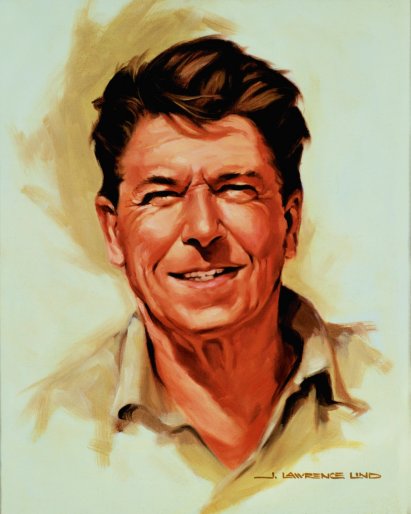
Ronald Reagan, by Lawrence Lind

Ronald Reagan, by Lawrence Lind

Sen. Claire McCaskill (D-Missouri) summoned Ronald Reagan’s ghost to visit the Tea Party:

McCaskill said:

Published on Sep 27, 2013

Former President Ronald Reagan explaining the importance to American jobs and businesses of Congress living up to its financial obligations and paying the country’s bills.

(Hey, are Congress people getting the hang of internet video, finally?  Could teachers be far behind?)

More:


Obama already negotiated; GOP taking hallucinogens? (Again?)

October 8, 2013

Oh, Speaker Boehner forgot to mention that.


http://bit.ly/GE9nzF 

pic.twitter.com/8N4bG4GFHY


Reminder: How wealth inequality crowds out America’s success

October 7, 2013

Upworthy reposted this little movie today, which reminded me that nothing good has changed since last March. Looks like there’s not much chance of saving America soon, either, with the way things are going in the Capitol.

Is it time to really write the obituaries for America?  I hope not.

Watch it again:

What happens when a lot of money — I mean, a lot of money — is concentrated in a few hands?

The nation runs the risk of economic failure.

This short video says that more money is concentrated in fewer hands than we think.

Description from the maker, Politizane:

Infographics on the distribution of wealth in America, highlighting both the inequality and the difference between our perception of inequality and the actual numbers. The reality is often not what we think it is.

This is just one facet of the figures necessary for having rational discussions about tax reform, federal budget and deficit cutting, tax policy, and economic and monetary policy.

But it’s an ugly portrait, isn’t it?  How much does it differ from the France of Louis XVI and Marie Antoinette?  How much does it differ from the going-to-hell-in-an-accelerating-handbasket U.S. of 1929?  Wealth’s concentration in the hands of a tiny few literally crowds out hundreds of millions of Americans from the ability to successfully accumulate modest nest eggs.

What do you think?

I wish the film’s creator had provided citations.

Have things improved since 2007?  Look at this chart based on Institute for Policy Studies figures:

Maldistribution of U.S. wealth, 2007; Inst for Policy Studies

Source: Institute for Policy Studies, via BusinessInsider

More:

More, since the original posting:

Update March 9, 2013:  This is funny, to me:  Some people think just talking about this stuff is “class warfare.”  How are they so familiar with class warfare, you wonder?  That’s a self-answering question, isn’t it?


Selling wind energy leases off the coast of Virginia: Is this a good idea?

September 16, 2013

Contrary to the claims of President Obama’s critics, his administration is proceeding to develop energy resources in new areas.

Just a couple of weeks ago experimental wind energy sites off the coast of Virginia were auctioned off.

Wind power farm at sea; Clemson University image, of unidentified ocean-based wind farm.

Wind power farm at sea; Clemson University image, of unidentified ocean-based wind farm.

Can these tracts be developed responsibly?  I have not followed the issue, and I have not read the Environmental Impact Statement on this sale (surely there was one, since this is a “significant federal act” with great impact on these waters and the coast of Virginia).  Surely this is safer and cleaner than oil leases; enough cleaner?  Far enough away to avoid destructive effects on wildlife and other resources?

What do you think?

Here’s the press release from the Department of Interior:

Interior Holds Second Competitive Lease Sale for Renewable Energy in Federal Waters


Historic Sale for Wind Energy Development Offshore Virginia Advances President’s Climate Action Plan

09/04/2013

WASHINGTON, D.C. – As part of President Obama’s Climate Action Plan to create American jobs, develop domestic clean energy sources and cut carbon pollution, the Interior Department today completed the nation’s second competitive lease sale for renewable energy in federal waters, garnering $1,600,000 in high bids for 112,799 acres on the Outer Continental Shelf offshore Virginia.

Virginia Electric and Power Company is the provisional winner of the sale, which auctioned a Wind Energy Area approximately 23.5 nautical miles off Virginia Beach that has the potential to support 2,000 megawatts of wind generation – enough energy to power more than 700,000 homes.

The sale follows a July 31 auction of 164,750 acres offshore Rhode Island and Massachusetts for wind energy development that was provisionally won by Deepwater Wind New England, LLC, generating $3.8 million in high bids.

“This year’s second offshore wind lease sale is another major milestone in the President’s all-of-the-above energy strategy and demonstrates continued momentum behind a robust renewable energy portfolio that will help to keep our nation competitive and expand domestic energy production while cutting carbon pollution,” said Secretary of the Interior Sally Jewell. “Today’s sale is the result of a great deal of collaboration and planning with the Commonwealth of Virginia, which has been a leader in advancing offshore renewable energy for the Atlantic coast and an enthusiastic partner in this effort.”

“Today’s renewable energy lease sale offshore Virginia is another significant step forward in the President’s call for action to address climate change and the Administration’s all-of-the-above energy strategy,” said Bureau of Ocean Energy Management (BOEM) Director Tommy Beaudreau. “I congratulate Virginia Electric and Power Company and we look forward to overseeing their development of the Virginia wind energy area, which will create jobs, increase our energy security and provide abundant sources of clean renewable power.”

Efforts to spur responsible development of offshore wind energy are part of a series of Obama Administration actions to increase renewable energy both offshore and onshore by improving coordination with state, local and federal partners. The Virginia Renewable Energy Task Force has been a leading agent in intergovernmental collaboration for wind energy development offshore Virginia.

Since 2009, Interior has approved 47 wind, solar and geothermal utility-scale projects on public lands, including associated transmission corridors and infrastructure to connect to established power grids. When built, these projects could provide more than 13,300 megawatts – enough energy to power more than 4.6 million homes and support more than 19,000 construction and operations jobs.

As part of the President’s comprehensive Climate Action Plan, he has challenged Interior to re-double efforts on its renewable energy program by approving an additional 10,000 megawatts of renewable energy production on public lands and waters by 2020.

At the same time, under the Administration’s all-of-the-above energy strategy, domestic oil and gas production has grown each year President Obama has been in office, with domestic oil production currently higher than at any time in two decades; natural gas production at its highest level ever; and renewable electricity generation from wind, solar, and geothermal sources having doubled. Combined with recent declines in oil consumption, net oil imports in 2012 fell to the lowest level in 20 years.”

BOEM auctioned the Wind Energy Area offshore Virginia as a single lease, containing 19 whole Outer Continental Shelf blocks and 13 sub-blocks. For a map of the Wind Energy Area, click here.

The auction lasted 1 day, consisting of 6 rounds before determining the provisional winner. In addition to Virginia Electric and Power Company the following company participated in the auction: Apex Virginia Offshore Wind, LLC. Following the auction, the Attorney General, in consultation with the Federal Trade Commission, will have 30 days in which to complete an antitrust review of the auction.

The lease will have a preliminary term of six months in which to submit a Site Assessment Plan to BOEM for approval. A Site Assessment Plan describes the activities (e.g., installation of meteorological towers and buoys) the lessee plans to perform for the assessment of the wind resources and ocean conditions of its commercial lease.

After a Site Assessment Plan is approved, the lessee will have up to four and a half years in which to submit a Construction and Operations Plan (COP) for approval, which provides a detailed outline for the construction and operation of a wind energy project on the lease. If the COP is approved, the lessee will have an operations term of 33 years.

BOEM is expected to announce additional auctions for Wind Energy Areas offshore Maryland, New Jersey, and Massachusetts later this year and in 2014.

For more information on what’s going on offshore Virginia, visit BOEM’s website.

23 miles puts it far enough out that it’s generally out of sight from shore.  Out of sight, out of mind?  Out of danger?  Out of disaster potential?

Does a coal-power company’s winning these leases suggest a scheme to keep wind power from being developed, to improve the case for coal?

More:


Still, it’s what we know — that ain’t so — that gets us into trouble

September 10, 2013

Yes, yes, it’s the Dunning Kruger Effect.

It’s being gullible to hoaxes.

Gullible’s travels, etc. (illustration 1)

Gullible’s travels, etc. (illustration 1) (Photo credit: UIC Digital Collections)

And it’s not really understanding politics, or economics, but assuming that we do, that gets us moving in the wrong direction.

Is it dangerous?  The entire Tea Party is misled by their own wrong assumptions.  Mistaken belief in what intelligence sources found in Iraq helped get us into the second longest war in U.S. history (and perhaps the costliest ever). Erroneous beliefs about the economy contributed to the great Crash of 2008.  False beliefs about the economy short-circuited our recovery, after Obama got action to prevent our bottoming out.

They’re still at it.

Today I had a guy tell me that Paul Krugman, the Nobel winning economist from Princeton and the New York Times, was wrong when he advocated creating a housing bubble, back in 2002.

Krugman did that?  Really?

Maybe in the land of Gullible’s Travels.

https://twitter.com/Obomination1/status/377500188710944768

Turns out the claim is based on a carefully edited-out-of-context quote from a 2002 column Krugman wrote.  It’s a hoax quote, as it appears, and as it appears to make Krugman call for a housing bubble — which he didn’t do.

This guy afraid to put his name to his claims, “Obomination1” hadn’t bothered to check the source.  Any journalist worth the newspaper ink on his hands would have had a clattering Hemingway Brand® Sh** Detector at that point. Krugman advocating a housing bubble?

Not tough to find that quote, and track it back to an opposite-editorial page piece Krugman wrote for the New York Times on August 2, 2002, “Dubya’s Double Dip?”  In it, the usual-critic of Greenspan, Krugman, worried about the failure of the economy to recover except by excessive consumer spending — which both had a finite amount of capability, Krugman argued, and did not mend the organic problems of production that caused the recession whose pain was eased by the NASDAQ bubble but not cured in any way.  Put Krugman’s quote from the photo poster into real context (I’ve highlighted the quoted part below):

A few months ago the vast majority of business economists mocked concerns about a ”double dip,” a second leg to the downturn. But there were a few dogged iconoclasts out there, most notably Stephen Roach at Morgan Stanley. As I’ve repeatedly said in this column, the arguments of the double-dippers made a lot of sense. And their story now looks more plausible than ever.

The basic point is that the recession of 2001 wasn’t a typical postwar slump, brought on when an inflation-fighting Fed raises interest rates and easily ended by a snapback in housing and consumer spending when the Fed brings rates back down again. This was a prewar-style recession, a morning after brought on by irrational exuberance. To fight this recession the Fed needs more than a snapback; it needs soaring household spending to offset moribund business investment. And to do that, as Paul McCulley of Pimco put it, Alan Greenspan needs to create a housing bubble to replace the Nasdaq bubble.

Judging by Mr. Greenspan’s remarkably cheerful recent testimony, he still thinks he can pull that off. But the Fed chairman’s crystal ball has been cloudy lately; remember how he urged Congress to cut taxes to head off the risk of excessive budget surpluses? And a sober look at recent data is not encouraging.

Krugman wasn’t calling for the creation of a housing bubble at all.  He was warning there were other problems that needed to be solved then.  They weren’t solved, the housing bubble collapsed and took down a great deal of the world’s financial markets with it.

So, was Krugman “a loser” as my correspondent claims?  Or is my correspondent looking the wrong way through the telescope, and being suckered by a hoaxed-context quote?

Krugman continued:

On the surface, the sharp drop in the economy’s growth, from 5 percent in the first quarter to 1 percent in the second, is disheartening. Under the surface, it’s quite a lot worse. Even in the first quarter, investment and consumer spending were sluggish; most of the growth came as businesses stopped running down their inventories. In the second quarter, inventories were the whole story: final demand actually fell. And lately straws in the wind that often give advance warning of changes in official statistics, like mall traffic, have been blowing the wrong way.

Despite the bad news, most commentators, like Mr. Greenspan, remain optimistic. Should you be reassured?

Bear in mind that business forecasters are under enormous pressure to be cheerleaders: ”I must confess to being amazed at the venom my double dip call still elicits,” Mr. Roach wrote yesterday at cbsmarketwatch.com. We should never forget that Wall Street basically represents the sell side.

Bear in mind also that government officials have a stake in accentuating the positive. The administration needs a recovery because, with deficits exploding, the only way it can justify that tax cut is by pretending that it was just what the economy needed. Mr. Greenspan needs one to avoid awkward questions about his own role in creating the stock market bubble.

But wishful thinking aside, I just don’t understand the grounds for optimism. Who, exactly, is about to start spending a lot more? At this point it’s a lot easier to tell a story about how the recovery will stall than about how it will speed up. And while I like movies with happy endings as much as the next guy, a movie isn’t realistic unless the story line makes sense.

Had only Greenspan, Bush, and a few million more people only listened to Krugman, then, we might have been spared two decades of lousy economy growth.

But they didn’t.  It wasn’t Krugman who was “the loser,” on this — though he certainly is pained by America’s failure to follow his advice.

Bertrand Russell warned us of the Obomination1/Thiessens and others.  So did Will Rogers, and Kin Hubbard, and Daniel Boorstin, as well as Drs. Dunning and Kruger.

Those who don’t listen to Russell, Rogers, Hubbard, Boorstin, the repentant Mencken, and Krugman, are the losers, and they drag the rest of us with them.

By the way, Krugman’s Nobel was awarded in 2008, after the great shock of the housing bubble’s bursting, but before all the predictions he had made were played out.  He was right.

Santayana’s Ghost dines with von Hayek’s Ghost tonight, and they both smile pityingly at those who ignore Krugman and claim to ridicule him while failing to even check out the accuracy of what they thought Krugman said.

More:


2-minute history of labor video

September 2, 2013

From the Pennsylvania AFL-CIO, a two-minute history of labor.

Yes, it’s a pro-labor film — but unbiased, and it covers national standards for social studies.

More:

Union leader Albert Shanker marching with teachers.  Undated photo via PBS NewsHour

Union leader Albert Shanker marching with teachers. Undated photo via PBS NewsHour