Quote of the moment: Hillary Clinton, on being a Cubs fan

October 26, 2011

Today is the birthday of Hillary Rodham Clinton, born October 26, 1948.

Secretary of State Hillary Rodham Clinton

Secretary of State Hillary Rodham Clinton - Topnews image

Happy birthday, Hillary!

Without citation, Robert A. Nowlan’s Born This Day lists this as something Clinton said:

Being a Cubs fan prepares you for life — and Washington.


Quote of the moment: John Kenneth Galbraith pokes fun at conservative politics

October 25, 2011

John Kenneth Galbraith, BusinessWeek image

Economist John Kenneth Galbraith, Economist image

The modern conservative is engaged in one of man’s oldest exercises in moral philosophy; that is, the search for a superior moral justification for selfishness.

John Kenneth Galbraith
“Stop the Madness,” Interview with Rupert Cornwell, Toronto Globe and Mail (6 Jul 2002)

(I find this attributed to Galbraith at several places — where and when did he say that?)

John Kenneth Galbraith, in paper mache, by Frank Lerner, for Time Magazine cover February 16, 1968

John Kenneth Galbraith, in papier-mache by Gerald Scarfe, photo by Frank Lerner, for Time Magazine cover February 16, 1968


Quote of the moment: Walter M. Miller, Leibowitz’s shopping list

October 22, 2011

Cover of Miller's Canticle for Liebowitz

Cover of Miller's Canticle for Liebowitz

“Pound pastrami, can kraut, six bagels—bring home for Emma.”

– Walter M. Miller, A Canticle for Leibowitz


Quote of the moment: Trouble? It comes from “what we know that ain’t so.”

October 15, 2011

Kin Hubbard and Will Rogers

Kin Hubbard and Will Rogers, image from Lilly Library, Indiana University, Bloomington, Indiana

It was a warning from a prophet of the past, and it applies to almost every controversy you can think of in 2011:

It isn’t what we don’t know that gives us trouble, it’s what we know that ain’t so.

The only problem is, to whom do we attribute it?  Was it Will Rogers who said, or Frank McKinney “Kin” Hubbard, or Artemus Ward?

Virtue may be its own reward, but ignorance costs everybody, especially when it is elected or promoted to power.

More:


Quote of the moment: Mike Mansfield

September 20, 2011

Senate Majority Leader Mike Mansfield, D-Montana

Senate Majority Leader Mike Mansfield, D-Montana; oil on canvas by Aaron Shikler, 1978 - Wikimedia image

Mike Mansfield was born on March 16, 1903.  Best boss I ever had.

Robert A. Nowlan’s Born This Day attributed this quote to Mansfield:

After all, even a politician is human.

Laconic as he was, Mansfield didn’t say anything more meaty than that?

Read about Mansfield at the Bathtub, here.  Mansfield died on October 5, 2001.


Still quote of the moment: Martin Niemöller, “. . . I did not speak out . . .”

August 16, 2011

First they came for the communists, and I did not speak out—because I was not a communist;
Then they came for the trade unionists, and I did not speak out—because I was not a trade unionist;
Then they came for the Jews, and I did not speak out—because I was not a Jew;
Then they came for me—and there was no one left to speak out for me.

— Pastor Martin Niemöller

German theologian and Lutheran Pastor Martin Niemöller on a postage stamp, painted by Gerd Aretz in 1992 – Wikipedia

Some time this year school curricula turn to the Holocaust, in English, in world history, and in U.S. history.

Martin Niemöller’s poem registers powerfully for most people — often people do not remember exactly who said it. I have seen it attributed to Deitrich Bonhoeffer (who worked with Niemöller in opposing some Nazi programs), Albert Einstein, Reinhold Niebuhr, Albert Schweitzer, Elie Wiesel, and an “anonymous inmate in a concentration camp.”

Niemöller and his actions generate controversy — did he ever act forcefully enough? Did his actions atone for his earlier inactions? Could anything ever atone for not having seen through Hitler and opposing Naziism from the start? For those discussion reasons, I think it’s important to keep the poem attributed to Niemöller. The facts of his life, his times, and his creation of this poem, go beyond anything anyone could make up. The real story sheds light.

Resources:

Noted here last February.

Save

Save

Save


Encore quote of the moment: Wolfgang Pauli, “not even wrong”

August 5, 2011

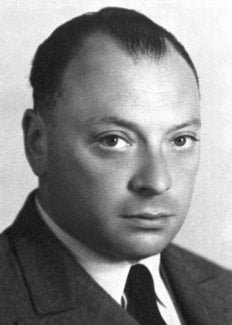
Talking about Tea Party and Republican economics in the next few months?  You’ll need to have Wolfgang Pauli’s wisdom at your fingertips:

Wolfgang Pauli, circa 1945 - Nobel Foundation photo

Wolfgang Pauli, circa 1945 – Nobel Foundation photo

That’s not right. It’s not even wrong.

Wolfgang Pauli (1900-1958), as quoted by R. Peierls

From Wikipedia:

Peierls (1960) writes of Pauli, “… a friend showed him the paper of a young physicist which he suspected was not of great value but on which he wanted Pauli’s views. Pauli remarked sadly ‘That’s not right. It’s not even wrong'”. (Peierls R (1960). “Wolfgang Ernst Pauli, 1900-1958”. Biographical memoirs of fellows of the Royal Society 5: 174-92. Royal Society (Great Britain))

Pauli won the Nobel Prize in Physics in 1945: ” At this stage of the development of atomic theory, Wolfgang Pauli made a decisive contribution through his discovery in 1925 of a new law of Nature, the exclusion principle or Pauli principle. The 1945 Nobel Prize in Physics has been awarded to Pauli for this discovery.”

A mostly encore post.


Quote of the moment: August 3, 1914, “Lamps are going out all over Europe”

August 3, 2011

According to Time Magazine’s edition of August 30, 1943:

Portrait of Sir Edward Grey at Balliol College; 1928 portrait by Sir James Guthrie

Portrait of Sir Edward Grey, 1st Viscount Grey of Fallodon, KG FRS (1862-1933), at Balliol College; 1928 portrait by Sir James Guthrie

On Aug. 3, 1914, Sir Edward Grey of the British Foreign Office, watched London’s street lamps being lit. Mused Sir Edward: “The lamps are going out all over Europe; we shall not see them lit again in our lifetime.”

On the same day, Germany declared war on France, Britain’s ally, as “entangling alliances” increasingly drew European powers into the conflict started by Austria’s declaration of war on Serbia a few days earlier.

Time explained further in that 1943 issue:

Sir Edward lived to see the lights come up; died when they flickered in 1933. Others saw the lights blow out again. Europe’s darkness this time spread to Africa, Asia, Australia, America; in the universal war, even neutrals had to accept the night. Among the world’s blacked-out cities: London, Berlin, Rome, Paris, Bern, Budapest, Helsinki, Honolulu. Dimmed-out cities: Moscow, New York, Rio de Janeiro, Cape Town, Bombay.

Portent. From Egypt last week came a hopeful ray for another dawn: Cairo turned on its lights, first of the war-benighted cities to do so. From Shepherds Hotel, caravansary for restless polyglots, lights blazed out again on the Mid-East mosaic: tanned cosmopolites sipping gin & limes on Shepheard’s terrace; rattletrap taxis twisting up dust from the swarming streets; soft-voiced dragomans swishing at flies and barefooted fellahin ignoring them. Dawn’s early ray found Cairo unchanged, unchallenging; but the city was free from fear.

More:


Quote of the moment: President asks the Senate Majority Leader for help on the debt ceiling issue, in 1983

July 7, 2011

In a letter to the Majority Leader of the U.S. Senate, the President wrote:

This letter is to ask for your help and support, and that of your colleagues, in the passage of an increase in the limit on the public debt.

As [the Treasury Secretary] has told you, the Treasury’s cash balances have reached a dangerously low point.  Henceforth the Treasury Department cannot guarantee that the Federal Government will have sufficient cash on any one day to meet all of its mandated expenses, and thus the United States could be forced to default on its obligations for the first time in history.

This country now possesses the strongest credit in the world.  The full consequences of a default — or even the serious prospect of default — by the United States are impossible to predict and awesome to contemplate.  Denigration of the full faith and credit of the United States would have substantial effects on the domestic financial markets and on the value of the dollar in exchange markets.  The Nation can ill afford to allow such a result.  The risks, the costs, the disruptions, and the incalculable damage lead me to but one conclusion:  the Senate must pass this legislation before the Congress adjourns.

I want to thank you for your immediate attention to this urgent problem, and for your assistance in passing an extenstion of the debt ceiling.

Sincerely,

         Ronald Reagan

True then.  Still true now.

Letter from President Ronald Reagan to Senate Majority Leader Sen. Howard Baker, R-Tennessee, November 16, 1983.  The Treasury Secretary at the time was Donald Regan.

Tip of the old scrub brush to mainstream media pillar, The Washington Post, where a .pdf of the letter is available.


Quote of the moment: John Adams, celebrating the 2nd of July

July 1, 2011

“The Second Day of July 1776 will be the most memorable Epocha, in the History of America. . . . It ought to be solemnized with Pomp and Parade, with Shews, Games, Sports, Guns, Bells, Bonfires, and Illuminations from one End of this Continent to the other from this Time forward forever more.”
John Adams to Abigail Adams, July 3, 1776

1776 filled the calendar with dates deserving of remembrance and even celebration.  John Adams, delegate from Massachusetts to the Second Continental Congress, wrote home to his wife Abigail that future generations would celebrate July 2, the date the Congress voted to approve Richard Henry Lee’s resolution declaring independence from Britain for 13 of the British colonies in America.

Two days later, that same Congress approved the wording of the document Thomas Jefferson had drafted to announce Lee’s resolution to the world.

Today, we celebrate the date of the document Jefferson wrote, and Richard Henry Lee is often a reduced to a footnote, if not erased from history altogether.

Who can predict the future?

(You know, of course, that Adams and Jefferson both died 50 years to the day after the Declaration of Independence, on July 4, 1826.  In the 50 intervening years, Adams and Jefferson were comrades in arms and diplomacy in Europe, officers of the new government in America, opposing candidates for the presidency, President and Vice President, ex-President and President, bitter enemies, then long-distance friends writing almost daily about how to make a great new nation.  Read David McCullough‘s version of the story, if you can find it.)

Update, July 4, 2013: You may want to check the updated version of this post, with more links, and even more history.

2015 edition, with more links for teachers and historians, here.


Kennedy said, in the struggle for freedom, we are all citizens of Berlin (Quote of the moment)

June 26, 2011

49 years ago, on June 26, 1962, in Berlin:

President Kennedy addresses Berlin citizens, 6-26-1962 (photographer unidentified)

President John F. Kennedy addressing a crowd in Berlin, Germany, June 26, 1962 - image from NARA and/or Kennedy Library

From the Smithsonian Magazine site:

June 26, 1963: “Ich bin ein Berliner”

In West Berlin, President John F. Kennedy delivers the famous speech in which he declares, “Ich bin ein Berliner.” Meaning literally “I am a citizen of Berlin,” the statement shows U.S. solidarity with democratic West Berlin, surrounded by communist territory.

View a video of President Kennedy’s speech at American Rhetoric, Top 100 Speeches.

Audio of the famous line, from the National Archives:

Photos and complete audio, at The Sounds of History.com:

Text and transcript, and other materials, from the Kennedy Library and Museum:

Kennedy’s entire speech was good. It was well drafted and well delivered, taking advantage of the dramatic setting and the dramatic moment. John Kennedy well understood how to give a speech, too.

Below is most of the speech, nearly five minutes’ worth, from a YouTube file — another indication that schools need to open up their filters to allow at least some of the best YouTube material through:

Transcript, from the JFK Library:

I am proud to come to this city as the guest of your distinguished Mayor, who has symbolized throughout the world the fighting spirit of West Berlin. And I am proud to visit the Federal Republic with your distinguished Chancellor who for so many years has committed Germany to democracy and freedom and progress, and to come here in the company of my fellow American, General Clay, who has been in this city during its great moments of crisis and will come again if ever needed.

Two thousand years ago the proudest boast was “civis Romanus sum.” Today, in the world of freedom, the proudest boast is “Ich bin ein Berliner.”

I appreciate my interpreter translating my German!

There are many people in the world who really don’t understand, or say they don’t, what is the great issue between the free world and the Communist world. Let them come to Berlin. There are some who say that communism is the wave of the future. Let them come to Berlin. And there are some who say in Europe and elsewhere we can work with the Communists. Let them come to Berlin. And there are even a few who say that it is true that communism is an evil system, but it permits us to make economic progress. Lass’ sie nach Berlin kommen. Let them come to Berlin.

Freedom has many difficulties and democracy is not perfect, but we have never had to put a wall up to keep our people in, to prevent them from leaving us. I want to say, on behalf of my countrymen, who live many miles away on the other side of the Atlantic, who are far distant from you, that they take the greatest pride that they have been able to share with you, even from a distance, the story of the last 18 years. I know of no town, no city, that has been besieged for 18 years that still lives with the vitality and the force, and the hope and the determination of the city of West Berlin. While the wall is the most obvious and vivid demonstration of the failures of the Communist system, for all the world to see, we take no satisfaction in it, for it is, as your Mayor has said, an offense not only against history but an offense against humanity, separating families, dividing husbands and wives and brothers and sisters, and dividing a people who wish to be joined together.

What is true of this city is true of Germany–real, lasting peace in Europe can never be assured as long as one German out of four is denied the elementary right of free men, and that is to make a free choice. In 18 years of peace and good faith, this generation of Germans has earned the right to be free, including the right to unite their families and their nation in lasting peace, with good will to all people. You live in a defended island of freedom, but your life is part of the main. So let me ask you as I close, to lift your eyes beyond the dangers of today, to the hopes of tomorrow, beyond the freedom merely of this city of Berlin, or your country of Germany, to the advance of freedom everywhere, beyond the wall to the day of peace with justice, beyond yourselves and ourselves to all mankind.

Freedom is indivisible, and when one man is enslaved, all are not free. When all are free, then we can look forward to that day when this city will be joined as one and this country and this great Continent of Europe in a peaceful and hopeful globe. When that day finally comes, as it will, the people of West Berlin can take sober satisfaction in the fact that they were in the front lines for almost two decades.

All free men, wherever they may live, are citizens of Berlin, and, therefore, as a free man, I take pride in the words “Ich bin ein Berliner.”

You may also want to note these posts:


Quote of the moment: John Kennedy, “What do our opponents mean . . . ‘Liberal?'”

June 24, 2011

From the website of PBS’s American Experience:

Acceptance of the New York Liberal Party Nomination

John Fitzgerald Kennedy
September 14, 1960

What do our opponents mean when they apply to us the label “Liberal?” If by “Liberal” they mean, as they want people to believe, someone who is soft in his policies abroad, who is against local government, and who is unconcerned with the taxpayer’s dollar, then the record of this party and its members demonstrate that we are not that kind of “Liberal.” But if by a “Liberal” they mean someone who looks ahead and not behind, someone who welcomes new ideas without rigid reactions, someone who cares about the welfare of the people — their health, their housing, their schools, their jobs, their civil rights, and their civil liberties — someone who believes we can break through the stalemate and suspicions that grip us in our policies abroad, if that is what they mean by a “Liberal,” then I’m proud to say I’m a “Liberal.”

But first, I would like to say what I understand the word “Liberal” to mean and explain in the process why I consider myself to be a “Liberal,” and what it means in the presidential election of 1960.

John F. Kennedy during the 1960 campaign

John F. Kennedy during the 1960 campaign - Kennedy accepted the nomination of the New York Liberal Party on September 14, 1960; this photo may be from that event

In short, having set forth my view — I hope for all time — two nights ago in Houston, on the proper relationship between church and state, I want to take the opportunity to set forth my views on the proper relationship between the state and the citizen. This is my political credo:

I believe in human dignity as the source of national purpose, in human liberty as the source of national action, in the human heart as the source of national compassion, and in the human mind as the source of our invention and our ideas. It is, I believe, the faith in our fellow citizens as individuals and as people that lies at the heart of the liberal faith. For liberalism is not so much a party creed or set of fixed platform promises as it is an attitude of mind and heart, a faith in man’s ability through the experiences of his reason and judgment to increase for himself and his fellow men the amount of justice and freedom and brotherhood which all human life deserves.

I believe also in the United States of America, in the promise that it contains and has contained throughout our history of producing a society so abundant and creative and so free and responsible that it cannot only fulfill the aspirations of its citizens, but serve equally well as a beacon for all mankind. I do not believe in a superstate. I see no magic in tax dollars which are sent to Washington and then returned. I abhor the waste and incompetence of large-scale federal bureaucracies in this administration as well as in others. I do not favor state compulsion when voluntary individual effort can do the job and do it well. But I believe in a government which acts, which exercises its full powers and full responsibilities. Government is an art and a precious obligation; and when it has a job to do, I believe it should do it. And this requires not only great ends but that we propose concrete means of achieving them.

Our responsibility is not discharged by announcement of virtuous ends. Our responsibility is to achieve these objectives with social invention, with political skill, and executive vigor. I believe for these reasons that liberalism is our best and only hope in the world today. For the liberal society is a free society, and it is at the same time and for that reason a strong society. Its strength is drawn from the will of free people committed to great ends and peacefully striving to meet them. Only liberalism, in short, can repair our national power, restore our national purpose, and liberate our national energies. And the only basic issue in the 1960 campaign is whether our government will fall in a conservative rut and die there, or whether we will move ahead in the liberal spirit of daring, of breaking new ground, of doing in our generation what Woodrow Wilson and Franklin Roosevelt and Harry Truman and Adlai Stevenson did in their time of influence and responsibility.

Our liberalism has its roots in our diverse origins. Most of us are descended from that segment of the American population which was once called an immigrant minority. Today, along with our children and grandchildren, we do not feel minor. We feel proud of our origins and we are not second to any group in our sense of national purpose. For many years New York represented the new frontier to all those who came from the ends of the earth to find new opportunity and new freedom, generations of men and women who fled from the despotism of the czars, the horrors of the Nazis, the tyranny of hunger, who came here to the new frontier in the State of New York. These men and women, a living cross section of American history, indeed, a cross section of the entire world’s history of pain and hope, made of this city not only a new world of opportunity, but a new world of the spirit as well.

Tonight we salute Governor and Senator Herbert Lehman as a symbol of that spirit, and as a reminder that the fight for full constitutional rights for all Americans is a fight that must be carried on in 1961.

Many of these same immigrant families produced the pioneers and builders of the American labor movement. They are the men who sweated in our shops, who struggled to create a union, and who were driven by longing for education for their children and for the children’s development. They went to night schools; they built their own future, their union’s future, and their country’s future, brick by brick, block by block, neighborhood by neighborhood, and now in their children’s time, suburb by suburb.

Tonight we salute George Meany as a symbol of that struggle and as a reminder that the fight to eliminate poverty and human exploitation is a fight that goes on in our day. But in 1960 the cause of liberalism cannot content itself with carrying on the fight for human justice and economic liberalism here at home. For here and around the world the fear of war hangs over us every morning and every night. It lies, expressed or silent, in the minds of every American. We cannot banish it by repeating that we are economically first or that we are militarily first, for saying so doesn’t make it so. More will be needed than goodwill missions or talking back to Soviet politicians or increasing the tempo of the arms race. More will be needed than good intentions, for we know where that paving leads.

In Winston Churchill’s words, “We cannot escape our dangers by recoiling from them. We dare not pretend such dangers do not exist.”

And tonight we salute Adlai Stevenson as an eloquent spokesman for the effort to achieve an intelligent foreign policy. Our opponents would like the people to believe that in a time of danger it would be hazardous to change the administration that has brought us to this time of danger. I think it would be hazardous not to change. I think it would be hazardous to continue four more years of stagnation and indifference here at home and abroad, of starving the underpinnings of our national power, including not only our defense but our image abroad as a friend.

This is an important election — in many ways as important as any this century — and I think that the Democratic Party and the Liberal Party here in New York, and those who believe in progress all over the United States, should be associated with us in this great effort. The reason that Woodrow Wilson and Franklin Roosevelt and Harry Truman and Adlai Stevenson had influence abroad, and the United States in their time had it, was because they moved this country here at home, because they stood for something here in the United States, for expanding the benefits of our society to our own people, and the people around the world looked to us as a symbol of hope.

I think it is our task to re-create the same atmosphere in our own time. Our national elections have often proved to be the turning point in the course of our country. I am proposing that 1960 be another turning point in the history of the great Republic.

Some pundits are saying it’s 1928 all over again. I say it’s 1932 all over again. I say this is the great opportunity that we will have in our time to move our people and this country and the people of the free world beyond the new frontiers of the 1960s.


Quote of the moment: Eisenhower’s D-Day leadership – “Blame . . . is mine alone”

June 6, 2011

Eisenhower's unused statement on the failure of D-Day

Eisenhower's contingency statement, in case D-Day failed - image from the National Archives

This quote actually isn’t a quote. It was never said by the man who wrote it down to say it. It carries a powerful lesson because of what it is.

Yesterday I posted Gen. Dwight Eisenhower’s “order of the day” to the troops about to conduct the Allied invasion of Normandy — D-Day — to establish the toehold in Europe the Allies needed to march to Berlin, and to end World War II in Europe. As a charge to the troops, it was okay — Eisenhower-style words, not Churchill-style, but effective enough. One measure of its effectiveness was the success of the invasion, which established the toe-hold from which the assaults on the Third Reich were made.

When Eisenhower wrote his words of encouragement to the troops, and especially after he visited with some of the troops, he worried about the success of the operation. It was a great gamble. Many of the things the Allies needed to go right — like weather — had gone wrong. Victory was not assured. Defeat strode the beaches of Normandy waiting to drive the Allies back into the water, to die. [Photo shows Eisenhower meeting with troops of the 101st Airborne Division, 502nd Parachute Infantry Regiment, on the eve of the invasion. It was these men whose courage he lauded. Update: Someone “took hostage” the photo I linked to — a thumbnail version is appended; I leave the original link in hopes it might be liberated] eisenhower-with-paratrooper-eve-of-d-day.jpg

Eisenhower wrote a second statement, a shorter one. This one was directed to the world. It assumed the assault had failed. In a few short sentences, Eisenhower commended the courage and commitment of the troops who, he wrote, had done all they could. The invasion was a chance, a good chance based on the best intelligence the Allies had, Eisenhower wrote. But it had failed.

The failure, Eisenhower wrote, was not the fault of the troops, but was entirely Eisenhower’s.

He didn’t blame the weather, though he could have. He didn’t blame fatigue of the troops, though they were tired, some simply from drilling, many from war. He didn’t blame the superior field position of the Germans, though the Germans clearly had the upper hand. He didn’t blame the almost-bizarre attempts to use technology that look almost clownish in retrospect — the gliders that carried troops behind the lines, sometimes too far, sometimes killing the pilots when the gliders’ cargo shifted on landing;  the flotation devices that were supposed to float tanks to the beaches to provide cover for the troops (but which failed, drowning the tank crews and leaving the foot soldiers on their own); the bombing of the forts and pillboxes on the beaches, which failed because the bombers could not see their targets through the clouds.

There may have been a plan B, but in the event of failure, Eisenhower was prepared to establish who was accountable, whose head should roll if anyone’s should.

Eisenhower took full responsibility.

Our landings in the Cherbourg-Havre area have failed to gain a satisfactory foothold and I have withdrawn the troops. My decision to attack at this time and place was based upon the best information available. The troop, the air [force] and the navy did all that bravery and devotion to duty could do. If any blame or fault attaches to the attempt, it is mine alone.

Who in the U.S. command would write such a thing today?

  • The message may also be viewed here. Yes, it’s incorrectly dated July 5 — should have been June 5.

This is an encore post.


Quote of the moment: D-Day Eve, Gen. Eisenhower’s Order of the Day for June 6

June 5, 2011

Eisenhower talks to troops of invasion force, June 5 -- before D-Day

Gen. Dwight D. Eisenhower talks with paratroopers of the U.S. 101st Airborne Division, June 5, 1944; photo credit unclear; from Ohio State University

Soldiers, Sailors, and Airmen of the Allied Expeditionary Force: You are about to embark upon the Great Crusade, toward which we have striven these many months. The eyes of the world are upon you.

– Order of the Day, 6 June, 1944 (some sources list this as issued 2 June)

(This is an encore post.)


Quote of the moment: Charles Dickens, on Tea Party and Republican Party budget cuts

May 12, 2011

This is mostly an encore post, unfortunately made more urgent recently.

What is the driving motivation of Republican budget cuts in Texas, Wisconsin, and the rest of the nation?

Quote of the moment:

Darkness is cheap, and Scrooge liked it.

— Charles Dickens, A Christmas Carol, Stave 1

I thought of that line of Dickens’s when I read of this celebration of darkness, ignorance and calumny. Although, with the recent renewing of Limbaugh’s contract, it may no longer be true that his particular brand of darkness is cheap.

Still, it remains dark.

Scrooge meets Ignorance and Want, the products of his stinginess (drawing by John Leech, 1809-1870)

Scrooge meets Ignorance and Want, the products of his stinginess (drawing by John Leech, 1809-1870)

I was reminded of this post from three years ago by a discussion at What’s Wrong With the World (commented on earlier at the Bathtub, here), in which the principal protagonists appear to me to be wholly ignorant of the New Deal, the progressive movement and progressive ideals, and much more of U.S. history, law, and events.  In effect, I thought, that discussion was fueled by that ugly, mean little boy, Ignorance.  The angel warned Scrooge, “but most of all beware this boy [Ignorance], for on his brow I see that written which is Doom.”

(More about the drawing below the fold)

Read the rest of this entry »