Obama on health care: With an eye and an ear to history; with heart to those who hurt

August 16, 2009

Did you catch Obama’s op-ed in the New York Times yesterday?

OUR nation is now engaged in a great debate about the future of health care in America.

Of what famous speech does that line remind you?

Obama is looking to past presidents’ efforts to push legislation, too — learning from the failures and hoping not to repeat (think Wilson and the campaign to ratify the Treaty of Versailles), learning from successes and hoping to expand (think of Lyndon Johnson and the creation of grants to college students).

Mostly, Obama’s hoping to give a boost to health care reform efforts slowed by the vicious, false rumor campaign against it.

See what Obama himself wrote, below the fold.

Read the rest of this entry »


Straight talk: Berenbaum on DDT and malaria

August 12, 2009

Plus, she’ll answer your questions.

But hurry.

One of the world’s great authorities on mosquitoes, May Berenbaum at the University of Illinois Urbana-Champaign, spends this week talking about mosquitoes and malaria, and answering your questions.

Public Radio International runs a feature this week with Dr. Berenbaum answering questions.

(Hey, Beck!  Are you decent this week?)

(Steven Milloy?  Got the guts to ask a real scientist a question?)

You should see these first:

Life Cycle of Malaria, WHO and Campaign to Roll Back Malaria

Life Cycle of Malaria, WHO and Campaign to Roll Back Malaria

You like straight talk – why not share it with others?

Add to FacebookAdd to NewsvineAdd to DiggAdd to Del.icio.usAdd to StumbleuponAdd to RedditAdd to BlinklistAdd to TwitterAdd to TechnoratiAdd to Furl


Think you have health insurance? Wrong

August 7, 2009

Baseline Scenario lays out the facts: People fear government reform of health care because they think it will interfere with their own health insurance.  Such people need to understand that they don’t have health insurance, and a broader government plan is the only saftey net they have to protect them from going naked against major health expenses.

Right now, it appears that the biggest barrier to health care reform is people who think that it will hurt them. According to a New York Times poll, “69 percent of respondents in the poll said they were concerned that the quality of their own care would decline if the government created a program that covers everyone.” Since most Americans currently have health insurance, they see reform as a poverty program – something that helps poor people and hurts them. If that’s what you think, then this post is for you.

You do not have health insurance. Let me repeat that. You do not have health insurance.

Just one more point in a series of misconceptions, misperceptions, and unwarranted listening to false claims about health care and legislation designed to save our tails.  James Kwak and others at The Baseline Scenario do a good job explaining economics in the U.S. today.  In this piece he makes the point that in terms of health care, we are all among “the poor” (save for those few of you who make more than $1 million a year and have done for the past decade).

Ask not for whom the health insurance reform bill tolls; it tolls for you.


Geographical lottery: Gambling with health care

August 4, 2009

Is it true that kids can’t get insured in Texas if their parents have two vehicles?  I mean, this is Texas, the anti-mass transit state — how can you get a kid to the emergency room for the high-cost health care if you don’t have two cars, one for work, one for the family?

Children’s Defense Fund will help you contact your legislators to recommend improving health care for children.

How is the insurance weather where you are? Share the news:

Add to FacebookAdd to NewsvineAdd to DiggAdd to Del.icio.usAdd to StumbleuponAdd to RedditAdd to BlinklistAdd to TwitterAdd to TechnoratiAdd to Furl


Warning: Universal coverage will save lives, money and pain

July 22, 2009

Utah Savage tells the story:

My friend Z is doing amazingly well, considering. She is complying with her oncologists. But now that the radiation is burning her throat, and the chemo is making her queazy, the doctors are prescribing drugs that will alleaviate these problems. But Z doesn’t believe in Western medicine and when it came time to sign up for Medicare she assumed that she would never get sick enough to ever need the part A, B and D of Medicare coverage. Now she needs them all and the enrollment period won’t come around again until November. It is part D that would have paid for her drugs. It is part D that would make a drug that costs $150 at most $3.50. I audibly gasped when she told me that she didn’t have part D. I couldn’t help myself. I said, “But you need part D.” She was furious and shouted, “Don’t tell me what I should have done. That doesn’t help me now.” And of course she’s right. Now that it’s too late, it doesn’t help to tell her what she should have done.

If you’re healthy, you never think you’re going to need insurance and prescription drug coverage. And if you’re young you never think your going to get ill. But everyone needs insurance. That is why the healthcare debate is so terribly important. We need a public option. Please call your Congressional Representative and lobby for a public option for healthcare. We need you healthy. We need you paying attention to the issues that will make a difference in all our lives.

We are not allowed to drive a car without insurance and we don’t think twice about that. But we are so careless when it comes to insurance for our own health. It should be mandatory that everyone is covered with health insurance.

Does your mileage differ?  Tell us in comments.


Probably not the way to get a good reputation among scientists

July 19, 2009

Tensions between science and religion, and science and business, continue to drag down Texas’s hopes to be known as a major research location.

A hard look shows it’s not just the Deliverance-style local politics at the State Board of Education on science standards.  Texas has trouble in a lot of areas.

For example, imagine a hurricane wiped out the town where one of the state’s major medical schools resides, and in the aftermath, rather than working to preserve the jobs of professors who agree to come back to the damaged buildings and storm-wracked town, the university uses the troubles as an excuse to get rid of faculty — not bad faculty, necessarily, just faculty the administration doesn’t like, or doesn’t know, or just for the heck of it.

This ain’t no way to run a medical school.

The rolling disaster that hit the Universityof Texas Medical Branch in Galveston, starting with Hurricane Ike, continued through unexpected layoffs of faculty on top of the 3,000 people laid off due to storm damage.  The layoffs were unjustified, too, many thought, and so they appealed.  The appeals process seems to have offered only a semblance of justice, to many of those involved, according to an article in The Scientist (free subscription required).

The story hasn’t got much traction in Texas media.


Bated breath, bated brains, bated sense and DDT

July 11, 2009

At the root of all the false tales about Rachel Carson and DDT there are a handful of sources, all of them with an axe to grind.  In any discussion where someone tries to make a claim that DDT is good but misunderstood, or that Rachel Carson was evil tantamount to Pol Pot, Mao ze Dong and Lex Luther combined, the sources will turn out to be Gordon Edwards, Steven Milloy parroting Gordon Edwards, Elizabeth Whelan, Roger Bate, or Richard Tren.

Oh, there’s that Driessen guy, but he just quotes these other guys, appearing not to bother to check the accuracy of their statements.

Roger Bate in his high-salaried position as a propagandist for AEI.

Roger Bate in his well-paid position as a propagandist for AEI.

Not one of these sources is an expert on DDT or its class of chemicals.  None of them is an entomologist, other than Gordon Edwards, whose productive work in entomology ended well before he fell in with Lyndon LaRouche and other America-hating groups.

It’s a tight-knit bunch, largely out of the sight of reporters and fact-checkers — and definitely out of the sight of scientists who work in either malaria reduction, wildlife management, or toxics control

If you care about science, about the War on Science (you out there, Mooney?), if you care about health care in Africa, Africa, Asia or generally about fighting malaria and saving kids’ lives; if you have any dog in the wise management of natural resources and especially wildlife; if you care about environmental protection, and wise government policies that will protect your children’s and grandchildren’s health and heritage, you need to read this article on Roger Bate. [Article archived here, now; or here.]

Now operating out of the conservative American Enterprise Institute (AEI), Bate’s signature coup to date has been to spread the myth that environmentalists, by preventing the use of the pesticide DDT (Dichloro-Diphenyl-Trichloroethane) to kill mosquitoes in developing countries, have heartlessly caused millions of malaria deaths worldwide. It needs to be said at the outset that this argument is untrue. While some groups have pressed hard to find alternatives, there is little evidence that a concerted effort to abolish anti-malaria DDT spraying ever occurred. Of the few environmental organizations that even pay attention to pesticide use overseas, the ones with any clout all support a clause in the Stockholm Convention that allows DDT use for public health reasons.

The fact that this knowledge has not stopped Roger Bate is not surprising. The wider the untrue story spreads, the worse environmentalists look, and that’s always been his bottom line. For all his personal likeability, he is a man on a mission, and because he doesn’t let anything slow down the pace and scope of his argument, he is very good at what he does.

The story is titled “Bate and Switch: How a free-market magician manipulated two decades of environmental science.”

Adam Sarvana wrote the story for the Public Education Center (PEC), a non-profit center with an investigative journalism experiment based in Washington, D.C.  (Note to newspapers:  You can probably get rights to print this story.)

Quick!  Warn the others:

Add to FacebookAdd to NewsvineAdd to DiggAdd to Del.icio.usAdd to StumbleuponAdd to RedditAdd to BlinklistAdd to TwitterAdd to TechnoratiAdd to Furl

Read the rest of this entry »


Republican strategy on health care exposed

June 26, 2009

Found the explanation at Whiskey, Tango, Foxtrot – Over (also at Talking Points Memo):


Treatments for multiple myeloma? Take it easy with green tea

June 23, 2009

Contrary to Tinfoil Hat Philosophy, researchers are rather intensely studying green tea and potential good health effects it may have.

The bad news is that an early study shows green tea inhibits the effects of one of the common treatments for multiple myeloma, Bortezomib.  Bortezomib (BZM) causes tumor cells to die, but some elements in green tea inhibit that effect.  Does the tea keep the cancer cells alive, or interfere with the cancer-killing drug?  Not sure.

It’s clear that cancer patients undergoing treatment that includes drug or chemo therapy need to inform their physicians if they are using green tea or other alternative treatments in addition.

Is this such a surprise?  We’ve known for years that grapefruit juice multiplies the effects of some blood pressure medicines, which means that grapefruit is one fruit blood pressure and cardiac patients probably need to avoid.  Foods that have medicinal effects may also have effects that counteract the medicines physicians provide.

The paper shows up in the current issue of Blood (free subscription may be needed for access to the full text):

“Green Tea Polyphenols Block the Anticancer Effects of Bortezomib and Other Boronic Acid–Based Proteasome Inhibitors”

Blood. 2009 Jun 4;113(23):5927-5937, EB Golden, PY Lam, A Kardosh, KJ Gaffney, E Cadenas, SG Louie, NA Petasis, TC Chen, AH Schönthal

Here’s the abstract:

The anticancer potency of green tea and its individual components is being intensely investigated, and some cancer patients already self-medicate with this “miracle herb” in hopes of augmenting the anticancer outcome of their chemotherapy. Bortezomib (BZM) is a proteasome inhibitor in clinical use for multiple myeloma. Here, we investigated whether the combination of these compounds would yield increased antitumor efficacy in multiple myeloma and glioblastoma cell lines in vitro and in vivo. Unexpectedly, we discovered that various green tea constituents, in particular (-)-epigallocatechin gallate (EGCG) and other polyphenols with 1,2-benzenediol moieties, effectively prevented tumor cell death induced by BZM in vitro and in vivo. This pronounced antagonistic function of EGCG was evident only with boronic acid–based proteasome inhibitors (BZM, MG-262, PS-IX), but not with several non–boronic acid proteasome inhibitors (MG-132, PS-I, nelfinavir). EGCG directly reacted with BZM and blocked its proteasome inhibitory function; as a consequence, BZM could not trigger endoplasmic reticulum stress or caspase-7 activation, and did not induce tumor cell death. Taken together, our results indicate that green tea polyphenols may have the potential to negate the therapeutic efficacy of BZM and suggest that consumption of green tea products may be contraindicated during cancer therapy with BZM.

Watch. The crank science sites will pick up on this study and argue that it’s just one more demonstration that scientists can’t get the story right. Reading just the abstract, however, you can see that the paper talks about a specific chemical action of specific components of green tea against a specific type of cancer treatment. This paper could just as easily be read to say that green tea helps prevent senescence in cells, and it does the same thing it tumor cells, which isn’t at all what we want.

It will be very, very interesting to see how this research gets covered in the popular, mass and internet press.


Domestic terrorism in the U.S.

June 4, 2009

This is terrorism, isn’t it?  What definition of terrorism would leave this out?


Bed nets save lives, fighting malaria without DDT

May 25, 2009

Infant in Nigeria sleeps beneath an insecticide-treated bednet that prevents the transmission of malaria, a disease that kills thousands of children in Africa annually.  Nothing But Nets press release

Infant in Nigeria sleeps beneath an insecticide-treated bednet that prevents the transmission of malaria, a disease that kills thousands of children in Africa annually. Nothing But Nets press release

According to Nothing But Nets:

Studies show that use of insecticide-treated bed nets can reduce transmission as much as 90% in areas with high coverage rates. Bed nets prevent malaria transmission by creating a protective barrier against mosquitoes at night, when the vast majority of transmissions occur. The African malaria mosquitoes generally bite late at night or early morning, between 10:00 p.m. and 4:00 a.m. A bed net is usually hung above the center of a bed or sleeping space so that it completely covers the sleeping person. A net treated with insecticide offers about twice the protection of an untreated net and can reduce the number of mosquitoes that enter the house and the overall number of mosquitoes in the area.


Eradicate malaria – here’s how

May 24, 2009

Explanation from the Bill & Melinda Gates Foundation:

See the Gates Foundation site, “Can we really eradicate malaria?”

How many times do they call for a return to DDT?

What do you think?


War on malaria: Wall Street Journal and bloggers side with malaria

May 24, 2009

It’s spring.  Each of the past four years, spring has been the time that the anti-Rachel Carson, anti-environmental protection, anti-environmentalist, pro-DDT groups throttle up their campaigns to impugn Carson and environmentalists, and argue that all we need to do is poison Africa to make the world safe from malaria.

Here’s where Col. Renault joins us from Casablanca to say “Round up the usual suspects.”  It’s spring 2009.  Henry I. Miller of the Hoover Institution could be along any moment to say we need DDT to fight West Nile Virus, though DDT is not the pesticide of choice even among pesticide professionals.

The Wall Street Journal has become a favorite venue for these poison-the-Earthers as it has left rational policy decisions behind, at least in the editorial and op-ed pages. Steven Milloy’s got a book out slandering environmentalists, Green Hell, and a new blog to promote the book.  No doubt someone will trot out Gordon Edwards’ Lyndon-Larouche-tainted claims against Rachel Carson, though none of them check out.

Right on cue:  “Malaria, Politics and DDT – The U.N. bows to the anti-insecticide lobby” from the Wall Street Journal! It appeared in the Saturday edition, May 23.

Sure enough, Green Hell blog picks it up repeating the old canard about how a day without DDT is like a day of genocide. You can’t teach a stupid dog new tricks, you know.  In a post title that drips with calumny, Milloy says “Greens re-boot African genocide.”  They have no case; smears must do the work.

Let’s dissect the WSJ piece, eh?

In 2006, after 25 years and 50 million preventable deaths, the World Health Organization reversed course and endorsed widespread use of the insecticide DDT to combat malaria. So much for that. Earlier this month, the U.N. agency quietly reverted to promoting less effective methods for attacking the disease. The result is a victory for politics over public health, and millions of the world’s poor will suffer as a result.

So much error in so little space!  The error-to-word ratio may be a new land speed record.

Were there 2 million deaths per year from malaria, we could say malaria killed 50 million people in the last 25 years.  But for many, or most of the past 35 years, the death rate has hovered around 1 million, sometimes lower.  That’s still too high for those of us who think malaria should be beaten, but it’s not 2 million a year.  WSJ exaggerates the death figures — what else do they exaggerate?  If they have a case, why do they need to exaggerate?

WHO never abandoned DDT for specific usesThere was no policy for WHO to reverse in 2006.  WHO made it clear that they would continue to use DDT where appropriate, and where local governments would allow.  WSJ, new to the business of caring about Africans afflicted by malaria, doesn’t know the history.

DDT’s effectiveness against malaria-carrying mosquitoes began to wane by 1950.  By the mid-1960s, many populations of mosquitoes had developed resistance and even immunity to DDT.  That was why the World Health Organization (WHO) abandoned its campaign to eradicate malaria.  Overuse of DDT, especially in agriculture, led to rapid evolution of resistance among mosquitoes.  Without a weapon that worked as DDT had worked before resistance, the campaign could not succeed.

The Journal is simply wrong when it says only less-effective methods are left. DDT’s greatly reduced effectiveness is part of the reason; but research over the past five years, in tests run broadly in several African nations, shows that bednets reduce malaria infections by between 50% and 85%.  That is much more effective than DDT in broadcast spraying.

One of the things WSJ fails to mention — maybe they don’t know, there is much demonstration of ignorance in the editorial — is that DDT is not used in broadcast spraying to fight malaria.  Such campaigns proved disastrous because they killed off the predators of mosquitoes more effectively than they killed the mosquitoes, and because they often produced harmful results in other ways.  Along some African rivers, the spraying campaigns killed off a lot of fish local people used for food.  The dangers of DDT have been demonstrated in Africa.

WHO had championed a campaign in the late 1950s and 1960s to eradicate malaria.  The strategy was to use DDT to knock down local mosquito populations for six months or a year, and in that time treat humans infected with the malaria parasites so that, when the mosquitoes came back, there would be no pool of malaria infection among humans from which to draw malaria to spread.

Alas, the overuse of DDT caused mosquitoes to develop resistance before the malaria-fighters could get into the field in some places and get the health care components of the campaign to work.

Because of the worldwide resistance to DDT among insects, DDT cannot be counted on as a panacea against malaria in any case.  While it was never the panacea, never the sole tool to beat the disease, its role has been dramatically reduced by the rise of resistance to the chemical.

The U.N. now plans to advocate for drastic reductions in the use of DDT, which kills or repels the mosquitoes that spread malaria. The aim “is to achieve a 30% cut in the application of DDT worldwide by 2014 and its total phase-out by the early 2020s, if not sooner,” said WHO and the U.N. Environment Program in a statement on May 6.

Citing a five-year pilot program that reduced malaria cases in Mexico and South America by distributing antimalaria chloroquine pills to uninfected people, U.N. officials are ready to push for a “zero DDT world.” Sounds nice, except for the facts. It’s true that chloroquine has proven effective when used therapeutically, as in Brazil. But it’s also true that scientists have questioned the safety of the drug as an oral prophylactic because it is toxic and has been shown to cause heart problems.

Where was the Wall Street Journal when these studies were proposed, when they were run, and when they were reported?  WHO and health care agencies in affected countries carefully worked to find non-DDT solutions to malaria.  All programs to fight malaria require good health care systems, to diagnose malaria in victims, accurately as to the form of parasite affecting the victim, and to treat the disease to restore health to the victim and remove that person from the pool of people from whom mosquitoes can draw new malaria to infect others.  The results are in.  The treatment works.  Now comes WSJ to pose questions that have already been answered?  They are too late, and wrong.

Most malarial deaths occur in sub-Saharan Africa, where chloroquine once worked but started failing in the 1970s as the parasite developed resistance.

Fascinating.  In discussions with the pro-DDTers, resistance of mosquitoes to DDT is generally denied.  But here the WSJ cites similar resistance by the parasite.  Remember, dear reader, that the DDTers are selective in their use of evidence.

Even if the drugs were still effective in Africa, they’re expensive and thus impractical for one of the world’s poorest regions. That’s not an argument against chloroquine, bed nets or other interventions. But it is an argument for continuing to make DDT spraying a key part of any effort to eradicate malaria, which kills about a million people — mainly children — every year. Nearly all of this spraying is done indoors, by the way, to block mosquito nesting at night. It is not sprayed willy-nilly in jungle habitat.

DDT is more expensive than bednets.  DDT is used now only for indoor residual spraying (IRS).  Hut walls are treated with DDT to kill or repel mosquitoes after they have already bitten a victim; this prevents the spread of some parasites, at least in the bodies of the mosquitoes killed.  IRS requires some expensive work, however.  First, analysis of the mosquitoes must be done to be sure DDT is effective; annd second, a professional or highly-trained person must apply the stuff.  DDT applications have to be repeated about every six months.  They cost about $12.00 each time.  IRS may decrease malaria infection by as much as 35% (I’m being liberal).

In contrast, bednets decrease malaria infection by 50% to 85%.  They cost about $10.00 for the expensive ones, and they last five years.  In tests and in practice in Africa over the past five years, bednets have proven to be a necessary and very effective method to fight malaria.  Bednets work without DDT (there are alternative chemicals available for IRS); DDT can’t work without bednets.

There is strong opposition to use of DDT even for IRS, in Uganda, for example, where cotton and tobacco farmers have sued to stop the use.  In other areas, local people still fear fish kills.  DDT is controversial because of local opposition to it, not because of any environmental group’s action.

And the net result is that DDT is not the cheapest nor most effective method to fight malaria.  It is an increasingly expensive, controversial, and decreasingly effective tool.

But here is the bottom line:  Unless malaria is wiped out in human hosts, there will always be mosquitoes ready to spread the disease from one infected human to a dozen uninfected humans.  The key to eliminating malaria is not killing every mosquito on Earth, as quixotic a goal as that may be; the key is to develop methods of curing humans quickly and well and interrupting the life cycle of the parasite.  Drugs are expensive?  DDT cannot substitute for drugs, regardless how cheap it is.

WHO is not saying that DDT shouldn’t be used. But by revoking its stamp of approval, it sends a clear message to donors and afflicted countries that it prefers more politically correct interventions, even if they don’t work as well. In recent years, countries like Uganda, Tanzania and Zambia have started or expanded DDT spraying, often with the help of outside aid groups. But these governments are also eager to remain in the U.N.’s good graces, and donors typically are less interested in funding interventions that WHO discourages.

These campaigns have provided little success against malaria — nothing on the scale of success of bednets.

Oddly, one of the greatest roadblocks to the use of DDT in Africa since 2000 was the Bush administration, which refused to allow any U.S. dollars for the purchase of DDT or treatment.  There are foggy signs the Bush policies eased in 2008.  But again, it may simply be that the opportunity to use DDT is gone.  It’s time to move on to fight malaria, and quit tilting at the DDT windmill.

“Sadly, WHO’s about-face has nothing to do with science or health and everything to do with bending to the will of well-placed environmentalists,” says Roger Bate of Africa Fighting Malaria. “Bed net manufacturers and sellers of less-effective insecticides also don’t benefit when DDT is employed and therefore oppose it, often behind the scenes.”

Roger Bate acts as a shill for malaria over recent years.  Despite the name of his organization, he stands opposed to any effective means of fighting malaria, and he always stands for poisoning Africa.  His claims here are directly contradicted by the results of campaigns run by the Bill and Melinda Gates Foundation, a group which has dedicated its time and an astounding amount of money to beating malaria.  Bill Gates has no axe to grind on the issue — the foundation encourages bednets and medical care, and is relatively silent about DDT.  The Foundation’s work has saved more lives in the past three years than Roger Bate has in more than a decade of promoting DDT.  The Gates Foundation clearly is more credible.

All other serious experts tend to agree with the Gates Foundation path as well.

It’s no coincidence that WHO officials were joined by the head of the U.N. Environment Program to announce the new policy. There’s no evidence that spraying DDT in the amounts necessary to kill dangerous mosquitoes imperils crops, animals or human health. But that didn’t stop green groups like the Pesticide Action Network from urging the public to celebrate World Malaria Day last month by telling “the U.S. to protect children and families from malaria without spraying pesticides like DDT inside people’s homes.”

Pesticide Action Network is probably the only so-called green organization as crazy against DDT as Roger Bate is crazy for DDT.   Ignore what they say.  Pay attention to what’s really going on. (See comments on PAN.)  DDT is dangerous — PAN, for any inaccuracies they may have, are more accurate than the pro-p0ison side.

The National Academy of Sciences did a serious study of DDT in the late 1970s, and in a publication on the future of such chemicals in 1980, NAS said that while DDT was at one time a near-miracle working chemical, it is more dangerous than its benefits justify, and it needs to be eliminated from use.  The entire world has been working to protect people from dangerous man-made chemicals.  The Persistent Organic Pesticides Treaty of 2001 (POPs) calls for an end to use of dangerous chemicals, and singles out a dozen of the most dangerous. DDT is among the dozen most dangerous.  POPs includes a waiver to allow DDT use for fighting disease, so even it does not ban the stuff.  History shows that DDT decreases in effectiveness, and we discover new dangers from the stuff almost every year.  Since we have effective alternatives, and since DDT use has been hamstrung by litigation in Africa and ineffectiveness in the field, now is a great opportunity to end DDT use with very little harmful effect.

“We must take a position based on the science and the data,” said WHO’s malaria chief, Arata Kochi, in 2006. “One of the best tools we have against malaria is indoor residual spraying. Of the dozen or so insecticides WHO has approved as safe for house spraying, the most effective is DDT.” Mr. Kochi was right then, even if other WHO officials are now bowing to pressure to pretend otherwise.

Kochi was right to call for IRS then — and since we now have effective alternatives to DDT to use in IRS, WHO is right again to call for a reduction in DDT use in 2009.  We must take a position based on the science and the data, after all.

DDT is less effective than alternatives, and more expensive.  DDT is a killer once released in the wild.  DDT is unnecessarily controversial where it might do the most good, and therefore even less effective than it might be.  How can the Wall Street Journal come to any different conclusion, if they’re looking at the economics and science?  Who would have suspected political string-pulling at WSJ?

Rachel Carson was right.  47 years after Silent Spring is not too soon to eliminate DDT use.

___________

Here’s one indicator of the silly and bizarre exaggerations pro-DDT people tend to use:  This guy claims DDT had eliminated polio. In an otherwise over-the-top claim that Rachel Carson is a mass murderer — a claim that is false in all respects — the author goes even farther, claiming DDT effectiveness as a pharmaceutical against a disease like polio where there is no record for DDT’s ever having been used.

____________

Even more flight from reality: Climate Change Fraud blog, a site that appears to be a haven for anti-science, reprinted the WSJ editorial and added a bogus history introduction.  And another addition to the Wall of Shame:  Black and Right.


Alma conference on DDT and human health calls for DDT phase out (Pine River statement)

May 5, 2009

Wheels of science grind carefully, accurately, and consequently, slowly.

The report from last year’s Alma College conference on DDT and human health has been published in .pdf form at Environmental Health Perspectives:  “The Pine River Statement:  Human Health Consequences of DDT Use.”

Carefully?  Check out the pages of references to contemporary studies of human health effects.  Each one of the studies cited is denied by the more wild advocates of DDT use, and each of those studies refutes major parts of the case against DDT restrictions.

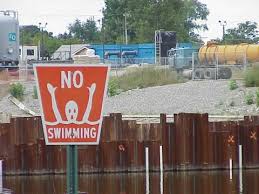
Warning sign near the old Velsicol plant where DDT was produced, on the Pine River, Michigan. The 1972 ban on DDT use in the U.S. was prompted by damage to wildlife and domestic animals; a 2009 conference noted that human health effects of DDT are also still of great concern, and perhaps cause alone for continuing the ban on DDT.

Warning sign near the old Velsicol plant where DDT was produced, on the Pine River, Michigan. The 1972 ban on DDT use in the U.S. was prompted by damage to wildlife and domestic animals; a 2009 conference noted that human health effects of DDT are also still of great concern, and perhaps cause alone for continuing the ban on DDT.

Accurately?  Notice how the conference marks those areas where we do not have good research, such as in the long-term health effects to people who live in the houses that are sprayed with DDT for indoor residual spraying (IRS).  While the conference report cites studies showing elevated DDT levels in the milk of women who live in those homes, they draw no unwarranted conclusions.  Alas, that leaves the field free for Paul Driessen to rush in and claim there are no ill effects — but read the paper for yourself, and you’ll see that’s far from what the research shows.  The paper exposes Steven Milloy’s claims to be almost pure, unadulterated junk science.

Slowly?  Well, it’s been more than a year.

The paper makes one powerful statement that is only implicit:  The claims that DDT is safe, and that use of the stuff should be increased, are wildly inflated.

The paper’s abstract:

Objectives: Dichlorodiphenyl trichloroethane (DDT) was used worldwide until the 1970s, when concerns about its toxic effects, its environmental persistence, and its concentration in the food supply led to usage restrictions and prohibitions. In 2001, more than 100 countries signed the Stockholm Convention on Persistent Organic Pollutants (POPs), committing to eliminate the use of 12 POPs of greatest concern. DDT use was however allowed for disease vector control. In 2006, the World Health Organization and the U.S. Agency for International Development endorsed indoor DDT spraying to control malaria. To better inform current policy, we reviewed epidemiologic studies published in the last five years which investigated the human health consequences of DDT and/or DDE exposure.

Data Sources and Extraction: We conducted a PubMed search in October 2008 and retrieved 494 studies.

Data Synthesis: Use restrictions have been successful in lowering human exposure to DDT, however, blood concentration of DDT and DDE are high in countries where DDT is currently being used or was more recently restricted. The recent literature shows a growing body of evidence that exposure to DDT and its breakdown product DDE may be associated with adverse health outcomes such as breast cancer, diabetes, decreased semen quality, spontaneous abortion, and impaired neurodevelopment in children.

Conclusions: Although we provide evidence to suggest that DDT and DDE may pose a risk to human health, we also highlight the lack of knowledge about human exposure and health effects in communities where DDT is currently being sprayed for malaria control. We recommend research to address this gap and to develop safe and effective alternatives to DDT.

Rachel Carson was right.

Tell other people about this conference report.  This is real science, and it deserves to be spread far and wide.

Tip of the old scrub brush to Ed Lorenz at Alma College, both for providing the news, and for his work to organize the original conference.

Other information:


Swine flu shuts down prisons: Let the prisoners out?

May 3, 2009

This headline from the Sacramento Bee sure caught my eye:

Swine flu case shuts down visits at all 33 state prisons

Of course, I read it too fast, and skipped over the word “visits.”  I had to click on the story to see whether they were going to tell the prisoners to stay at home for a week, like the Fort Worth, Texas, school district did.   I suppose, after a fashion, that was exactly the message.

At the Officer of the Receiver for California Prison Health Care Services, spokesman Luis Patino said Sunday that an inmate in Centinela State Prison in Imperial County was diagnosed as probable for the H1N1 virus, or swine flu.

“The inmate and his cellmate have been isolated, Patino said. “They remain at the prison.”

Whew!

Ticket sales for movies are way up in those areas where the schools are shut down — good news for the opening weekend of X-Men Origins:  Wolverine.

Maybe we’d be better off if the kids remained in school, as well as keeping the convicts in the prisons.

Is the panic over swine flu too much? If we go back to the week ending March 21, 2009, we find that there were already more than 22,000 cases of influenza in the U.S., with 35 pediatric deaths.  Has the swine flu added to either the rates of infection or the rates of death?  If the dramatic steps, the event cancellations and school closings, are appropriate for the swine flu, shouldn’t they have been appropriate for the other flu viruses, too?

Do we really need to close schools?  What do you think — tell us in comments.

See the CDC’s report on swine flu at their site:    H1N1 (Swine Flu)

Other resources: