Reason makes progress in malaria/DDT discussions

October 28, 2007

It’s one ray of sunshine in a sky of darkened clouds, but here’s evidence that reason occasionally overcomes bias in discussions about malaria and DDT: “More on Malaria – And Good Karma For Bill Gates,” by Scott Kirwan, at Dean’s World.

That’s good, because the nattering nabobs of negativism still pull out their long knives for Rachel Carson unjustly, unwisely, and invoking all the old junk science and hoaxes in other venues, like Collecting My Thoughts, and “DDT: Behind the Scare Stories,” at the noble-intentioned but temporarily-off-the-tracks Hawaii Reporter.

DDT is still a deadly poison, and still not a panacea against malaria. It’s nice to see reason having sway, probably due to the efforts of the Gates Foundation and its allies.


Fighting malaria in Cameroon

October 23, 2007

Interesting on-line news publication, The Entrepreneur, carries on-the-ground report of Cameroon’s new anti-malaria program:  Integrated pest management with a touch of DDT.

While the treatment of complicated malaria now requires a cocktail of sulphate drugs, Cameroon has reinstituted Dichlorodiphenyltrichloroethane, DDT for the prevention of malaria transmission. The organic chemical, DDT, to which the malaria vector was formally thought to be resistant, has been recommended as an effective insecticide against mosquitoes. According the principal officer, “that DDT was kept out for a long time could have given room for mosquito’s resistibility to be naturally eradicated, hence, making it again a good insecticide.” The treatment and proper use of mosquito nets is being recommended as a preventive measure.

[Update, 2018: No one noticed I’d spelled “Cameroon” incorrectly?]


Carnival of DDT

October 3, 2007

Information on DDT is scattered clouds of information, lately.  Some of these really should get more comment — but time is quite short for me right now.

Here’s the news:

One more study on DDT and breast cancer.  Stop the presses on this one.  It’s a good study, and it shows a link.  Effect Measure at the Seed Stables has a good post on it.   One of the key differences here is that this study looked for childhood exposure.  Exposure of children to DDT seems to be more damaging than exposure to adults.  This should be especially worrying considering DDT’s daughter products and their ability to mimic estrogen in the wild.

Bill Moyers’ program on PBS looked at the recent campaign against Rachel Carson, and found the campaign ethically challenged.  Moyers takes a more in-depth and gentle view of Carson, from a perspective from the arts.  Solid information, interesting view.

All Africa.com had a news report on the current anti-malaria campaign in Malawi:  “Rescuing children from malaria.”  Real news — it doesn’t call for broadcast spraying of DDT.  (Surprised?)  In fact, it attacks the colleagues of the Rachel Carson critics, the tobacco companies.

A blogger named Aaron Swartz takes on the Rachel Carson critics rather directly:  “Rachel Carson:  Mass Murderer?” 

A recent think piece out of the always-informative Christian Science Monitor:  “Bring back DDT?  Think again.”

Perhaps a minor blip:  Plaintiffs ask damages against chemical companies and others because the DDT dumped next door has decreased the value of their properties.  An Alabama appeals court ruled that plaintiffs may call in experts to testify that DDT dumping decreases property value.  (Maybe Roger Bate would like to buy the property at market value?  All that DDT would mean no mosquitoes forever, right?)

And from the lost-but-now-found archives, a story that demonstrates subtly the bias that Rachel Carson critics have — Roger Bate defending tobacco companies in a 1996 Wall Street Journal opinion piece.  Perhaps one should not be surprised that people who defend tobacco against health regulators and health care education could turn around and argue for DDT and against Rachel Carson.


Instapundit supports pollution, but with a smile

August 23, 2007

DDT follows the same path as PCBs in the environment, both persistent organic pollutants. From World Ocean Review:  Bioaccumulation of toxins in the marine food chain has long been recognized as a problem. The process illustrated here relates to polychlorinated biphenyls (PCBs), a typical environ-mental toxin.

DDT follows the same path as PCBs in the environment, both persistent organic pollutants. This illustration from World Ocean Review: Bioaccumulation of toxins in the marine food chain has long been recognized as a problem. The process illustrated here relates to polychlorinated biphenyls (PCBs), a typical environmental toxin.

Instapundit is happy to promote the use of poison:

SOME KIND WORDS FOR DDT — in the New York Times, no less. “Today, indoor DDT spraying to control malaria in Africa is supported by the World Health Organization; the Global Fund to Fight AIDS, Tuberculosis and Malaria; and the United States Agency for International Development. . . . Even those mosquitoes already resistant to poisoning by DDT are repelled by it.”

The debate over DDT is over. There’s scientific consensus. Anyone who disagrees is a DDT denialist and a mouthpiece for Big Mosquito.

posted at 10:18 AM by Glenn Reynolds

No, Glenn, the debate is not over so long as people continue to deny the harmful effects of DDT and act as mouthpieces for Big Poison, Big Garbage, Big Cancer, Big Pollution, voodoo science and Big Stupid.

There is a scientific consensus, but Reynolds misstates it. Scientists agree that DDT kills birds, bats, reptiles and beneficial insects that prey on malaria-bearing mosquitoes, making control of malaria more difficult (among many other harms). Consequently, DDT use under the rules laid down by the U.S. EPA in 1972 make a lot of sense. Those rules are the same as agreed to in the Persistent Organic Pollutants Treaty (POPs) — no DDT use in broadcast spraying, especially on crops; DDT use is allowed when necessary to fight disease; alternatives to DDT must be researched and created. The POPs Treaty lists DDT as one of the “Dirty Dozen” persistent pollutants.

POPs are a set of chemicals that are toxic, persist in the environment for long periods of time, and biomagnify as they move up through the food chain. POPs have been linked to adverse effects on human health and animals, such as cancer, damage to the nervous system, reproductive disorders, and disruption of the immune system. Because they circulate globally via the atmosphere, oceans, and other pathways, POPs released in one part of the world can travel to regions far from their source of origin.

Reynolds appears not to have read the treaty, nor even the article he cites, by Donald Roberts, from the odd, industry-funded Africa Fighting Malaria; even the most optimistic DDT fanatics generally nod in the direction of the dangers. Roberts wrote:

It would be a mistake to think we could rely on DDT alone to fight mosquitoes in Africa. Fortunately, research aimed at developing new and better insecticides continues — thanks especially to the work of the international Innovative Vector Control Consortium. Until a suitable alternative is found, however, DDT remains the cheapest and most effective long-term malaria fighter we have.

Africa Fighting Malaria is apoplectically happy to have one study that shows some repellent effects of DDT. As Bug Girl and Deltoid note, AFM urged unreasonable responses from many of us (I got their request, too). The study is encouraging, but it fails to make DDT the panacea Roberts paints it, and the study completely ignores the dangers of DDT, which have not changed a whit.

The best solutions to fighting malaria do not require DDT. Other new studies show that simple mosquito netting is amazingly effective — in Kenya, a switch in policy to give the nets out for free reduced malaria incidence by 44%. Under policies urged by U.S. conservatives, Kenyans had been required to pay for the nets previously. Reducing the cost of the nets left them beyond the means of many poor Kenyans.

Where is Glenn Reynolds’ promotion of non-poisonous and non-polluting, effective means to fight malaria. Why does he only go for the damaging solutions?

Perhaps Glenn Reynolds and Donald Roberts could make a showing of good faith in this case. Since this one study did tend to break their way, perhaps they could show their gratitude by calling on Sen. Tom Coburn to stop acting like a brat throwing a tantrum and remove his holds on the bill that would name a post office in Pennsylvania for Rachel Carson, honoring her work against pollution.  (Coburn cites junk science and voodoo science as his justification — and he’s an M.D.!)
Or, would making a statement against pollution be contrary to their politics?

To the chronically science challenged, DDT is an answer to more ills than you can imagine. We face new infestations of bed bugs — how long before AFM’s editorial ghosts have people urging DDT spraying wholesale to fight bed bugs? West Nile virus continues to plague the U.S., and already articles have appeared calling for broadcast spraying of towns and marshes to fight it, though that would probably be exactly the wrong thing to do.

The fight against ignorance goes on, but some wear ignorance like a badge of honor.


How to fight malaria – Kenya’s example

August 17, 2007

Kenya has cut malaria by nearly half. Without further comment from me, here’s the news story from Gulf Times, Doha, Qatar, and below that, from a few other sources:

Kenya nearly halves child deaths from malaria

Published: Friday, 17 August, 2007, 01:27 AM Doha Time

NAIROBI: Kenya announced yesterday that it almost halved malaria deaths among small children by using insecticidal nets (INTs), spurring the World Health Organisation (WHO) to advocate free nets for all as it tackles Africa’s deadliest disease.

Health Minister Charity Ngilu said distribution of 13.4mn INTs over the past five years among children and pregnant women had helped curtail infections, a key success against a disease threatening 40% of the world’s population.

“Childhood deaths have been reduced by 44% in high-risk districts, in-patient malaria cases and deaths are falling (and) there are reduced cases at the community level,” she said in a statement.

“For every 1,000 treated nets used, seven children who might have died of malaria are saved.”

Malaria kills 34,000 children under the age of five each year in Kenya, and threatens the lives of more than 25mn of its population of 34mn people, the ministry said.

Children sleeping under INTs in malaria risk areas are 44% less likely to die than those who are not, according to a survey carried out in four districts representing the country’s epidemiological pattern.

The government has distributed 12mn doses of artemisinin-based therapy (ACT), the latest surefire anti-malaria drug cocktail to replace the mono-therapies that had developed resistance.

In addition, some 824,600 houses in 16 epidemic-prone districts underwent indoor spraying this year.
The government and donors spent 4.7bn shillings ($70.2mn) for the campaign, yet the funds were not enough.

Ngilu said the government would freely provide 2mn treated nets annually to ward off mosquitoes at night when they are active, calling on donors to boost the blanket distribution.

“The impact we have seen and the lessons we have learnt through massively distributing INTs, rather than selectively marketing and selling them, will not only benefit Kenya’s children but all Africa’s children,” she said.

In a statement, the WHO said it had abandoned its earlier guideline of targeting only vulnerable groups – under fives and pregnant women – in favour of “making their protection immediate while achieving full coverage”.

“Recent studies have shown that by expanding the use of these nets to all people in targeted areas, increased coverage and enhanced protection can be achieved while protecting all community members.”

WHO chief Margaret Chan said that Kenya’s success “serves as a model that should be replicated throughout ‘malarious’ countries in Africa.”

“This data from Kenya ends the debate about how to deliver the long-lasting nets. No longer should the safety or well-being of your family be based upon whether you are rich or poor,” said WHO’s Global Malaria Programme director Arata Kochi.

Chan and Kochi were deriding the “social marketing” model widely backed by donors of distributing INTs by selling them at subsidised rates, even to vulnerable groups, and raising awareness of their importance.

Although supporting anti-malaria campaigns, public health watchers have chided British and US foreign development agencies for pushing for social marketing in the world’s poorest continent.

The WHO launched a global programme in 1955 to eradicate the disease that has frustrated attempts to create a vaccine owing to its constant mutations.

Using dichloro-diphenyl-trichloroethane (DDT), a powerful insecticide, and the drug chroloquine, the organisation managed to eradicated the disease in the West by the 1960s.

But the programme never got off the ground in the humid and low-lying tropics in sub-Saharan Africa where the disease persisted.

By 1969, the programme collapsed as financing withered in the face of rising poverty, political upheavals and surging opposition to DDT for misuse, not by anti-malaria campaigners, but farmers.

But Kochi said the Stockholm Convention on Persistent Organic Pollutants allowed the use of DDT in endemic countries for “public health only” and Uganda and Malawi were the only African nations keen on the chemical.

Malaria affects more than 1bn people worldwide and kills 1mn – mainly under age five – every year, the vast majority in sub-Saharan Africa. – AFP (Agence France Press) Read the rest of this entry »


DDT poisoning at the Wall Street Journal

August 17, 2007

The Wall Street Journals editorial page continues to exhibit signs of hysteria that can only be described as DDT poisoning. DDT has poisoned their view of what to do about malaria. (The article is now available by paid subscription.)

Malaria is a nasty disease that kills more than a million people every year. It is particularly brutal in attacking infants and pregnant women.

Malaria continues to rage because western nations with the resources to fight the disease spent their money on other things in the past 40 years, because the nations most affected lack the governmental adequacy or financial resources and willpower to mount effective campaigns against the disease, but mostly because malaria is a tough disease to fight.

Malaria is spread by several different species of mosquito, some of which have habits or constitutions which make mosquito eradication programs much less effective. Human malaria is really four different parasites, some of which have acquired resistance to the drugs used to fight it. The HIV/AIDS epidemics in tropical nations have not helped matters: What used to be minor cases of malaria now kill thousands who have compromised immune systems because of HIV/AIDS.

Hospitals in far too many nations are overwhelmed with malaria patients, and unable to provide care for many who could be saved. Most of those who die every year could live, with better distribution of health care, and with better prevention.

A few people have been afflicted with what can only be described as a different problem: DDT poisoning. Their views of malaria and what we need to do to fight the disease are poisoned by their anti-science political views. For at least five years there has been a nasty, persistent campaign to impugn “environmentalists” and Rachel Carson, claiming that DDT is the answer to all the world’s malaria woes. Though DDT has been available to fight malaria since 1946, these people complain that bans on spraying crops have discouraged the use of DDT against malaria, fatally.

Below the fold I’ll fisk the short piece from yesterday’s WSJ. It’s difficult to keep ahead of hoaxers, though — today they’ve got another call for DDT use, this time to fight West Nile Virus. Ironically, West Nile is most deadly against several species of bird, some of which are acutely subject to death by DDT.

Read the rest of this entry »


Fisking “Junk Science’s” campaign for DDT: Point #6

August 9, 2007

Another in a continuing series, showing the errors in JunkScience.com’s list of “100 things you should know about DDT.” (No, these are not in order.)

Steven Milloy and the ghost of entomologist J. Gordon Edwards listed this as point six in their list of “100 things you should know about DDT “[did Edwards really have anything to do with the list before he died?]:

6. “To only a few chemicals does man owe as great a debt as to DDT… In little more than two decades, DDT has prevented 500 million human deaths, due to malaria, that otherwise would have been inevitable.”

[National Academy of Sciences, Committee on Research in the Life Sciences of the Committee on Science and Public Policy. 1970. The Life Sciences; Recent Progress and Application to Human Affairs; The World of Biological Research; Requirements for the Future.]

In contrast to their citation for the Sweeney hearing record, which leads one away from the actual hearing record, for this citation, the publication actually exists, though it is no longer available in print. It’s available on-line, in an easily searchable format. [I urge you to check these sources out for yourself; I won’t jive you, but you should see for yourself how the critics of Rachel Carson and WHO distort the data — I think you’ll be concerned, if not outraged.] The quote, though troubled by the tell-tale ellipses of the science liar, is accurately stated so far as it goes.

The problems? It’s only part of the story as told in that publication.  The National Academy of Science calls for DDT to be replaced in that book; NAS is NOT calling for a rollback of any ban, nor is NAS defending DDT against the claims of harm.  The book documents and agrees with the harms Rachel Carson wrote about eight years earlier.

Cover of the electronic version of Life Sciences, the 1970 book looking to future needs in biology and agriculture.

Cover of the electronic version of Life Sciences, the 1970 book looking to future needs in biology and agriculture.

Milloy (and Edwards, he claims), are trying to make a case that the National Academy of Sciences, one of the more reputable and authoritative groups of distinguished scientists in the world, thinks that DDT is just dandy, in contrast to the views of Rachel Carson and environmentalists (who are always cast as stupid and venal in Milloy’s accounts) who asked that DDT use be reduced to save eagles, robins and other songbirds, fish, and other wildlife, and to keep DDT useful against malaria.

First, there is no way that a ban on DDT could have been responsible for 500 million deaths due to malaria.  Calculate it yourself, the mathematics are simply impossible: At about 1 million deaths per year, if we assume DDT could have prevented all of the deaths (which is not so), and had we assumed usage started in 1939 instead of 1946 (a spot of 7 years and 7 million deaths), we would have 69 million deaths prevented by 2008. As best I can determine, the 500 million death figure is a misreading from an early WHO report that noted about 500 million people are annually exposed to malaria, I’m guessing a bit at that conclusion — that’s the nicest way to attribute it to simple error and not malicious lie. It was 500 million exposures to malaria, not 500 million deaths. It’s unfortunate that this erroneous figure found its way into a publication of the NAS — I suppose it’s the proof that anyone can err.

Read the rest of this entry »


Accuracy: A good bias (DDT again)

August 4, 2007

Jay Ambrose retired from editing newspapers, and now writes commentary for the Scripps News chain of papers. Because of his experience in editing, I was suprised to see his commentary from last week which takes broad, inaccurate swipes at environmental groups (here from the Evansville, Indiana, Courier & Press).

Ambrose is victim of the “DDT and Rachel Carson bad” hoax.

His column addresses bias in reporting, bias against Christians, which he claims he sees in reporting on issues of stem cell research, and bias “in favor” of environmentalists, which has resulted in a foolish reduction in the use of DDT. I don’t comment here on the stem cell controversy, though Ambrose’s cartoonish presentation of how federally-funded research works invites someone to correct its errors.

Relevant excerpts of Ambrose’s column appear below the fold, with my reply (which I have posted to the Scripps News editorial section, and in an earlier version, to the on-line version of the Evansville paper).

Read the rest of this entry »


Spreading miasma on malaria

July 23, 2007

The Straight Dope has a motto: “Fighting ignorance since 1973. (It’s taking longer than we thought.)”

Alas, the motto could work as well for people who understand science, who understand chemistry and biology, and who urge sanity in discussions about DDT, malaria prevention and control, and Rachel Carson.

Photo from a 1950s science text, showing DDT spraying on crowded beach

DDT sprayed on a crowded beach -- photo from an unidentified 1950s publication. Caption in the photo: "This machine is spreading a kind of fog of DDT spray to see if it will kill the mosquitoes and other insects on the beach. Outdoors, the spray soon spreads and does not harm people."

The meme that “Rachel Carson caused millions of deaths” and prompted the disappearance of DDT is factually in error, but popular, and still spreading. It doesn’t help that there are well-funded groups that work hard to spread the disinformation.

As Ben Franklin noted, in a fair fight, truth wins. The difficulty is that the fight for truth about DDT and Rachel Carson has never been fair, and the anti-sense forces have a 25-year head start on wise people like Bug Girl, Deltoid, Rep. Jason Altmire of Pennsylvania, and even dunderheads like me.

How widespread is the damage? Well, how many editorial pieces were there slamming Rachel Carson, falsely, on the event of the 100th anniversary of her birth? Has Sen. Tom Coburn, R-Okla., lifted his holds on naming a post office for her?

The damage continues to spread.

For example, these blogs have fallen victim to the malaria/DDT/Rachel Carson hoax:

a. London Fog, ostensibly about government in London, Ontario, goes off half-cocked on DDT

b. Irrational Optimism, about a Georgian transplanted to Utah, picks up the misunderstandings of DDT

c. The Squamata Report, a general diatribe, accepts at face value all the falsehoods about DDT, especially those that cast scientists and environmentally-concerned politicians in a light where they can be ridiculed

d. PoliPundit.com — not the most bizarre view there, so of course it also accepts the false myths as good data

e. Boots and Sabers, sort of a frat party for young military guys, makes the gung-ho gonzo claim that it would have been worth it to sacrifice bald eagles because DDT could have saved African kids

d. Even Forbes Magazine’s blogs put out the faulty version of the story

e. Red State includes an artless and caustic piece here (repeated during what appears to be a brain power failure at PowerLine)

f. The famous column at the Wall Street Journal, marking a premature end of fact checking at that newspaper’s opinion columns

g. “Rachel Carson’s Genocide,” hysteria at a Ron Paul site misnamed Rational Review

h. Even Nobel Prize winning economists and distinguished federal judges get sucked into the vortex of specious information if they are not scrupulously careful — as Becker and Posner did here, and again here. (See final installment,too.)

And even while fighting ignorance and generally rebutting the wild claims about Rachel Carson, even Cecil Adams at Straight Dope gets suckered in by some of the myths. (In “moderate amounts,” DDT concentrates up to 10 million times in the wild, poisoning birds of prey and predator fishes, especially; DDT is deadly to mosquito-eating birds and bats, and pest-eating lizards; EPA’s hearings on DDT were overwhelmingly in favor of banning the substance — a court suit cited EPA for not moving fast enough to ban such a dangerous substance, and evidence in such trials is not made up; the cause of egg-shell thinning in birds is pretty solidly established to be DDT and its breakdown substances, only the exact process is not well understood; the international treaty against POPs has a specific out-clause for DDT to be used to prevent malaria; and so on).

So, there’s a lot of work to be done, and little time. Stay tuned.

Update: The Capital Times in Madison, Wisconsin, had a wonderful feature on the 1970 hearings in that state to ban DDT,[alternate URL here] and the subsequent success with the spectacular return of the bald eagle to local waterways. In comments, early in the process, the junk science about DDT and malaria appear. It’s everywhere.

P.S. — Here’s a reading for a lecture at Purdue University that neatly summarizes Carson’s life and work, accurately. (In fact, the entire lecture series, by Jules Janick, should prove interesting to people interested in horticulture.)


Fisking “Junk Science’s” campaign FOR the poison DDT, against Rachel Carson: Point #8, mosquito resistance to DDT

June 29, 2007

This is the second in a series of Fisks of “100 things you should know about DDT,” a grotesquely misleading list of factoids about DDT put up a site called JunkScience.com. While one would assume that such a site would be opposed, this particular site promotes junk science. I’m not taking the points in order.The “100 things” list is attributed to Steven Milloy, a guy who used to argue that tobacco use isn’t harmful, and who has engaged in other hoaxes such as the bizarre and false claim that Compact Fluorescent Lightbulbs (CFLs) can pose serious toxic hazards in your home (and therefore, you should continue to waste energy with less efficient bulbs); and to J. Gordon Edwards, a San Jose State University entomologist who, despite being a great entomologist, was a bit of a nut on some political things; Edwards assisted Lyndon Larouche’s group in their campaign against Rachel Carson before his death in 2004. (Did Edwards actually have a role in the development of this list?)

100 things you should know about DDT

Claim #8. Some mosquitoes became “resistant” to DDT. “There is persuasive evidence that antimalarial operations did not produce mosquito resistance to DDT. That crime, and in a very real sense it was a crime, can be laid to the intemperate and inappropriate use of DDT by farmers, especially cotton growers. They used the insecticide at levels that would accelerate, if not actually induce, the selection of a resistant population of mosquitoes.”

[Desowitz, RS. 1992. Malaria Capers, W.W. Norton & Company]

Cover of The Malaria Capers, by Robert S. Desowitz

Cover of The Malaria Capers, by Robert S. Desowitz

This was what Rachel Carson warned about. Indiscriminate use of DDT, such as broadcast application on crops to kill all insect, arthropod or other pests, would lead to mosquitoes and other dangerous insects developing resistance to the chemical. Of course, resistance developed as a result of overspraying of crops has exactly the same result, in the fight against malaria, as overuse in the fight against malaria.  Cover of The Malaria Capers, by Robert S. Desowitz

Worse, such overuse also killed predators of mosquitoes, especially birds. In an integrated pest management program, or in a well-balanced ecosystem, birds and other insect predators would eliminate a large number of mosquitoes, holding the population in check and preventing the spread of malaria. Unfortunately, when the predators are killed off, the mosquitoes have a population explosion, spreading their range, and spreading the diseases they carry.

Assuming Milloy quoted the book accurately, and assuming the book actually exists, this point says nothing in particular in favor of DDT; but it reaffirms the case Rachel Carson made in her 1962 book, Silent Spring. Contrary to suggestions from the campaign against Rachel Carson, she urged that we limit use of DDT to tasks like preventing malaria, around humans, to preserve the effectiveness of DDT and prevent overspraying.

And then, there is this: Milloy doesn’t bother to quote the first part of the paragraph he quotes, on page 214 of Malaria Capers. Here is what the paragraph actually says:

There were a number of reasons for the failure, not least that the anophaline vector mosquitoes were becoming resistant to the action of DDT both physiologically — they developed the enzymes to detoxify the insecticide — and behaviorally — instead of feeding and wall-resting, they changed in character to feed and then quickly bugger off to the great outdoors. [from this point, Milloy quotes correctly]

In other words, the DDT-based campaign against malaria failed because DDT failed; mosquitoes became resistant to it.  DDT’s declining ability to kill mosquitoes is one of the major reasons DDT use plunged after 1963, and continues to decline to no use at all.

To combat the dastardly campaign of calumny against Rachel Carson and science, you should also read: Deltoid, here, here and here, and the rest of his posts on the topic; Bug Girl, here, at least, and here, and the rest of her posts; denialism, here; and Rabett Run, here.

Save

Save


Setting the record straight on Rachel Carson, malaria and DDT

June 19, 2007

The contemptible campaign of hoax and calumny against the work and memory of Rachel Carson continues. You should read more at the sites I cite near the end of this post.

The key false claim of the Carson critics is that, but for the ban on DDT, millions of lives would have been saved over the past 30 years. Chief problem with the claim is that national bans on DDT all preserve DDT use for essential mosquito eradication, especially if there are no other tools to fight the disease. But other problems with the claim include the fact that DDT had stopped being highly effective by the late 1960s; eradication was a pipe dream, and mosquitoes developed resistance to DDT.

That doesn’t stop the critics. So, Dear Reader, when you read criticisms of Rachel Carson and hear the pseudo-science whine that Carson alone has condemned millions to death by malaria, I want you to keep in mind this question: If DDT were such an effective tool against malaria, why didn’t the World Health Organization fight to keep it? Why didn’t the manufacturers fight to keep it? Why would more than 150 nations, tens of thousands of scientists, tens of thousands of health workers, and conservative “I-told-you-so” skeptics who hate environmentalists, all simultaneously fall asleep?

The answer is, Dear Reader, they didn’t all fall asleep. DDT stopped being effective, and malaria fighters realized there were other problems — the parasites that the mosquitoes spread also became resistant to anti-malaria drugs, a bigger problem than DDT resistance. People and organizations who fight malaria did ask that use of DDT be preserved for spraying to fight malaria; but they didn’t defend it against bans on other use because those bans help the malaria fighters.

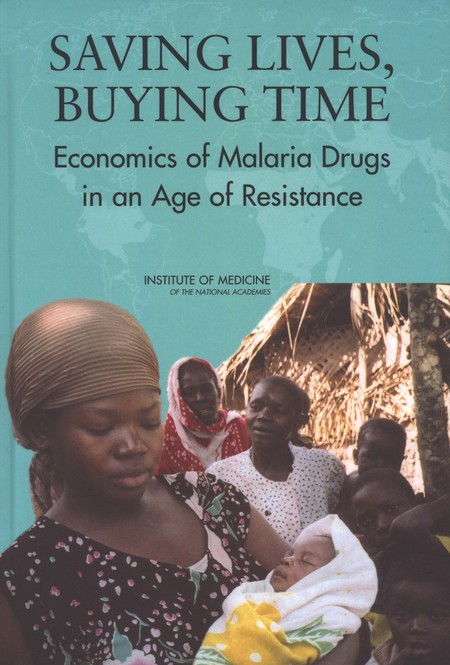
Cover of  Saving Lives, Buying Time: Economics of Malaria Drugs in an Age of Resistance (2004), from the National Academies Press

Cover of Saving Lives, Buying Time: Economics of Malaria Drugs in an Age of Resistance (2004), from the National Academies Press

Below the fold, I offer two quotes from Saving Lives, Buying Time: Economics of Malaria Drugs in an Age of Resistance (2004) Board on Global Health (BGH) (available from the National Academy of Sciences). You can see that DDT is not the golden-egg-laying goose, and that consequently Rachel Carson is not the mindless ogre she is made out to be in recent invectives.

Check out these sites:

Read the rest of this entry »


GOP war on science victim: Rachel Carson

May 14, 2007

Some people do things that are so stupid that one wonders how they manage to shave or put make-up on the next morning, having to look at their own face.

Mugshot of Utah Rep. Rob Bishop

Mugshot of Utah Rep. Rob Bishop

53 Republican representatives voted against naming the post office in Springdale, Pennsylvania, after Rachel Carson, the scientist who wrote Silent Spring, generally considered one of the most important or most influential scientists of the 20th century. No kidding. Springdale is Carson’s hometown.

2007 is the centennial of Carson’s birth — her birthday was May 27. (The bill, H.R. 1434, passed, 334-53.)

Why did the Wacky 53 vote against the honor for Carson, who got the Presidential Medal of Freedom in 1980? In an earnest ritual of voodoo science, they claim that bans on DDT kill millions, and that DDT is harmless. No, I’m not making this uphere’s the story from the Salt Lake Tribune, which covers territory represented by Rep. Rob Bishop and Rep. Chris Cannon, both R-Utah:

They contend that Carson’s actions – which led to a ban on the chemical DDT used to kill pests – actually has caused more deaths because of malaria and other diseases spread by insects. DDT, Carson wrote, was detrimental to the environment and to humans. Some scientists say DDT led to the California condor’s near-extinction.

Read the rest of this entry »