Milky Way in Navajoland: YIKÁÍSDÁHÁ

May 13, 2014

Milky Way over Monument Valley Navajo Park. Photo by Gavin Heffernan and Harun Mehmedinović, from the video

Milky Way over Monument Valley Navajo Tribal Park. Photo by Gavin Heffernan and Harun Mehmedinović, from the video (which also features Grand Canyon National Park)

Phil Plait’s column/blog at Slate, Bad Astronomy, put me on to this one.  Wow.

You can see it at Vimeo, and read a lot more about the making of the film.

YIKÁÍSDÁHÁ (Navajo for Milky Way or “That Which Awaits the Dawn”)

Phil wrote:

And that they do. The Milky Way is the star of the show; the galactic bulge, disk, and dark fingers of vast dust lanes as clear as if this were taken from space. Well, sort of; I was impressed by the mix of clouds and sky, to be honest. The contrast was interesting, and it’s rather amazing the Milky Way could stand out so clearly above the cloud line.

One thing I want to point out specifically: At 2:10 in, a meteor flashes and leaves behind a curling wisp of what looks like smoke. This is called a persistent train, the vaporized remains of the meteoroid itself, and can glow for several minutes. The upper level winds from 60–100 km above Earth’s surface are what blow it into those curlicues.

More details, for more films from these guys:

Shot and Produced by: Gavin Heffernan and Harun Mehmedinović
Music: A Seated Night (Ambient) by Moby. Courtesy MobyGratis.com / Unknown Native Chant
Thanks: Northern Arizona University, Grand Canyon National Park, Monument Valley Tribal Park.

See other Sunchaser Timelapses on Vimeo here: vimeo.com/album/189653
LIKE Sunchaser Pictures on Facebook! facebook.com/SunchaserPicturesPage
LIKE Bloodhoney on Facebook! facebook.com/blood.honey.by.harun.mehmedinovic

For more from the artists:

BloodHoney.com
SunchaserPictures.com


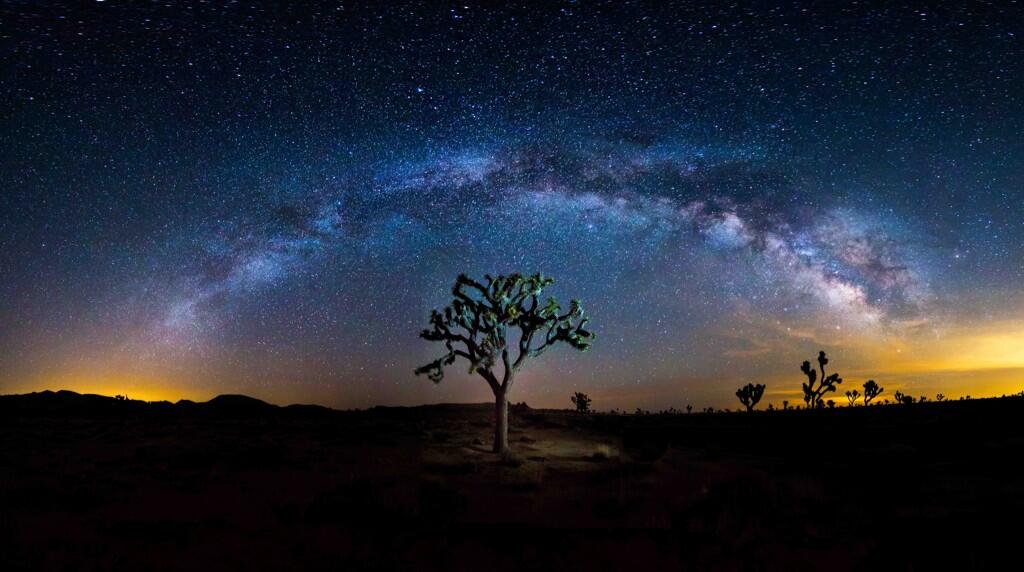
Milky Way from Joshua Tree N.P..

May 5, 2014

From the U.S Department of Interior Twitter feed:  To celebrate being named to the @TIME #Twitter140, here is an amazing photo from @JoshuaTreeNP. pic.twitter.com/F4DS5Xv9vq

From the U.S Department of Interior Twitter feed: To celebrate being named to the @TIME #Twitter140, here is an amazing photo from @JoshuaTreeNP. pic.twitter.com/F4DS5Xv9vq

Milky Way in a long exposure with a light-painted tree in Joshua Tree National Park, California.

More:


Milky Way in perspective, Northern to the Southern Cross

March 29, 2014

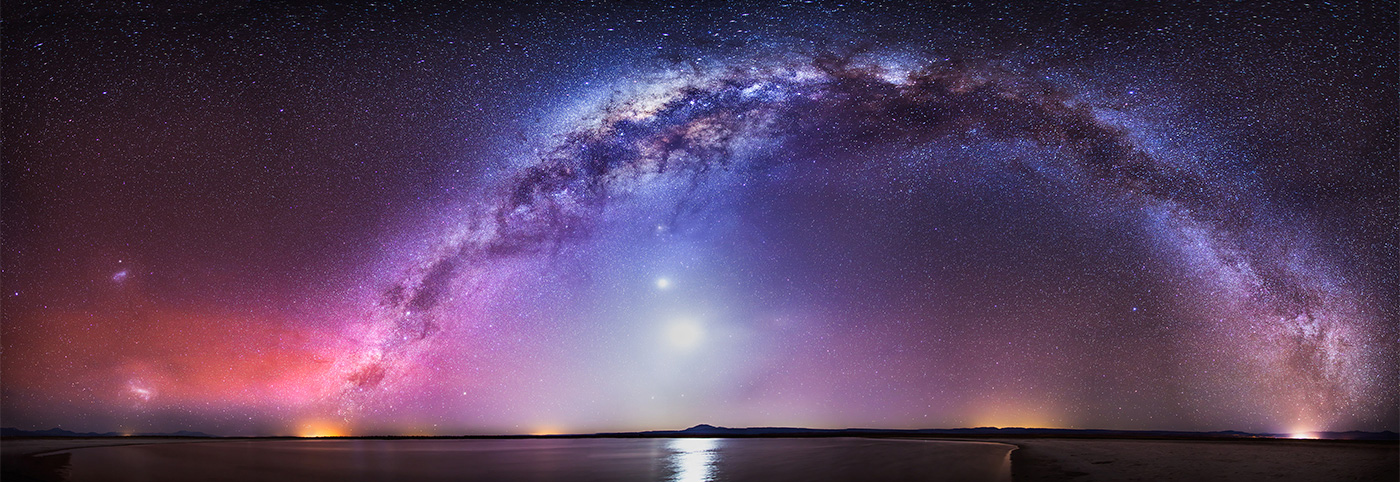
Found on Twitter, via @SciencePorn - One of the most beautiful pictures I've ever seen. Star photography by Nicholas Buer pic.twitter.com/RlwvSQNBAy

Found on Twitter, via @SciencePorn – One of the most beautiful pictures I’ve ever seen. Star photography by Nicholas Buer pic.twitter.com/RlwvSQNBAy. Much larger view here.

Nicholas Buer works hard to get these shots — a bit of a master, no?

This one was the Astronomy Picture of the Day (APOD) for January 27, 2014 (click that link for a much larger and more glorious view).  Much more detail there, revealing that this is much more of the Milky Way than you’d usually see.

From the Northern to the Southern Cross
Image Credit & Copyright: Nicholas Buer Explanation: There is a road that connects the Northern to the Southern Cross but you have to be at the right place and time to see it. The road, as pictured above, is actually the central band of our Milky Way Galaxy; the right place, in this case, is dark Laguna Cejar in Salar de Atacama of Northern Chile; and the right time was in early October, just after sunset. Many sky wonders were captured then, including the bright Moon, inside the Milky Way arch; Venus, just above the Moon; Saturn and Mercury, just below the Moon; the Large and Small Magellanic Clouds satellite galaxies, on the far left; red airglow near the horizon on the image left; and the lights of small towns at several locations across the horizon. One might guess that composing this 30-image panorama would have been a serene experience, but for that one would have required earplugs to ignore the continued brays of wild donkeys.


Save


There’s a Milky Way in Australia?

November 26, 2013

Yes, but it’s upside down, right?

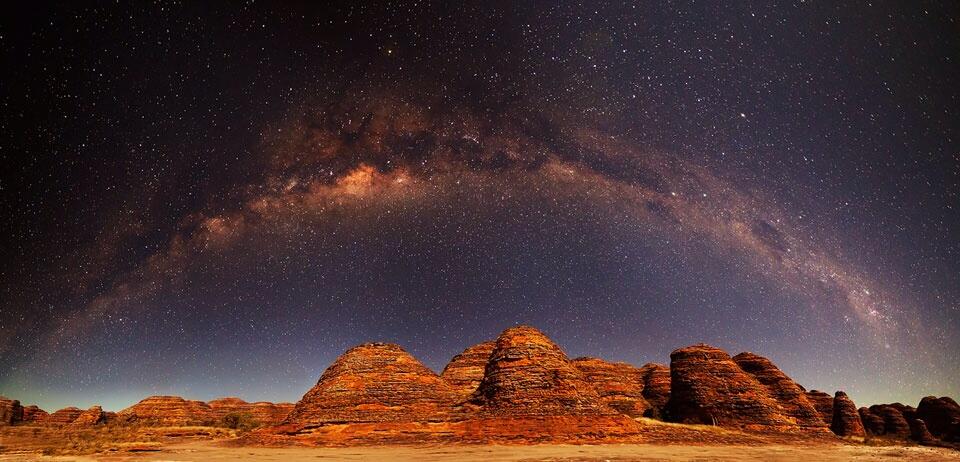
Meredith Frost Tweeted: Great shot of the Milky Way over Western Australia (Photo/Mike Salway) An Astronomy Picture of the DayMeredith Frost Tweeted: Great shot of the Milky Way over Western Australia (Photo/Mike Salway) An Astronomy Picture of the Day

Meredith Frost Tweeted: Great shot of the Milky Way over Western Australia (Photo/Mike Salway) An Astronomy Picture of the Day

Turns out this was the Astronomy Picture of the Day back in September 2012.  NASA said:

Milky Way Over the Bungle Bungles
Image Credit & Copyright: Mike Salway Explanation: Which part of this picture do you find more interesting — the land or the sky? Advocates for the land might cite the beauty of the ancient domes of the Bungle Bungle Range in Western Australia. These picturesque domes appear as huge layered beehives and are made of sandstones and conglomerates deposited over 350 million years ago. Advocates for the sky might laud the beauty of the Milky Way’s central band shown arching from horizon to horizon. The photogenic Milky Way band formed over 10 billion years ago and now includes many well-known nebulae and bright stars. Fortunately, you don’t have to decide and can enjoy both together in this beautiful 8-frame panorama taken from the dark skies of Purnululu National Park about two months ago.

Decide Anyway: Land or Sky

I’d make some remarks about silly names for land formations in Australia — but here we sit with The Grand Tetons, The Gros Ventre, and several dozen “Molly’s Nipples” in our nation.

But really:  Bungle-Bungles?

Ain’t geography grand? Ain’t nature grand? Ain’t NASA doing something right?

More:


Beauty happens without warning

June 3, 2013

Brad Goldpaint (Goldpaint Photography) planned to shoot pictures of the Milky Way, something I’ve tried to do without much success, at Crater Lake National Park, one of the more spectacular backdrops for such a photograph.

Those plans were interrupted — without warning.  Thank goodness.

More information:

I drove to Crater Lake National Park on the night of May 31, 2013 to photograph the Milky Way rising above the rim. I’ve waited months for the roads to open and spring storms to pass, so I could spend a solitude night with the stars. Near 11pm, I was staring upward towards a clear night sky when suddenly, without warning, an unmistakable faint glow of the aurora borealis began erupting in front of me. I quickly packed up my gear, hiked down to my truck, and sped to a north facing location. With adrenaline pumping, I raced to the edge of the caldera, set up a time-lapse sequence, and watched the northern lights dance until sunrise. The moon rose around 2am and blanketed the surrounding landscape with a faint glow, adding depth and texture to the shot. The last image in the sequence above shows the route of the International Space Station (ISS) which flew over at 2:35am.

Please feel free to share #withoutwarning

See more images at goldpaintphotography.com/2013/06/02/without-warning/

Music composed by Ben Beiny entitled, “The Right Moment”

Limited edition, fine-art prints are available at goldpaintphotography.com/purchase

Follow me:
Facebook: facebook.com/goldpaintphotography
Twitter: twitter.com/goldpaintphoto
Google+: plus.google.com/117178975214870026107/
Newsletter: goo.gl/XLPgV

No motion control systems were used during the production of this time-lapse. We are actively seeking various marketing partnerships to strategically promote and develop, specialized photography equipment used in the field. If you are interested in soliciting your product with Goldpaint Photography, please contact us at info@goldpaintphotography.com.

Poetic understatement:  ” . . . without warning, an unmistakable faint glow of the aurora borealis began erupting in front of me.”

More:

Still from Brad Goldpaint's

Still from Brad Goldpaint’s “Without Warning,” image from Goldpaint via MSNBC


Long’s Peak in the Milky Way

May 17, 2013

I admire those who are able to capture a good image of the Milky Way in a photograph.

Here’s another one, with Long’s Peak in Rocky Mountain National Park as a foil.

Milky Way and Long's Peak, Rocky Mountain NP - Pat Gaines photo

The Milky Way rises over Long’s Peak (14,259 feet) as seen from 9,600 feet up Trail Bridge Road in Rocky Mountain National Park. Photo: Pat Gaines

Is it easier to get good photos at that altitude?

More: