The blog appears to be rather an afterthought, an add-on. But consider: What if your class were able to follow this guy to Antarctica, and keep up regular communication with him through the blog?
Not necessarily. The page designers chose Pierce, our 14th President, as the most obscure and trivial of the presidents. They claim Pierce as even more trivial and obscure than Millard Fillmore!
How close did we come to having “the Millard Fillmore Pages?” You’ll shudder to find out.
The wonders of the intertubes: We can afford to have a set of pages dedicated to our 14th President, Franklin Pierce! Let’s see you do that on broadcast or cable television, or on radio.
Photo by Susana Raab for The New York Times; caption: “The writer Flannery O’Connor’s desk and typewriter in her bedroom at Andalusia, her farm near Milledgeville, Ga. She was a master of the Southern Gothic.”
I was met at the door by Craig R. Amason, the executive director of the Flannery O’Connor-Andalusia Foundation, the nonprofit organization set up to sustain her memory and preserve her home. When the affable Mr. Amason, the foundation’s sole employee, is not showing pilgrims around, he is raising money to fix up the place, a project that is a few million dollars short of its goal. The foundation urgently wants to restore the house and outbuildings to postcard-perfection, to insure its survival. Last year the Georgia Trust for Historic Preservation placed Andalusia on its list of most endangered places in the state.
For now, the 21-acre property is in a captivating state of decay.
There is no slow buildup on this tour; the final destination is the first doorway on your left: O’Connor’s bedroom and study, converted from a sitting room because she couldn’t climb the stairs. Mr. Amason stood back, politely granting me silence as I gathered my thoughts and drank in every detail.
This is where O’Connor wrote, for three hours every day. Her bed had a faded blue-and-white coverlet. The blue drapes, in a 1950’s pattern, were dingy, and the paint was flaking off the walls. There was a portable typewriter, a hi-fi with classical LPs, a few bookcases. Leaning against an armoire were the aluminum crutches that O’Connor used, with her rashy swollen legs and crumbling bones, to get from bedroom to kitchen to porch.
There are few opportunities for so intimate and unguarded a glimpse into the private life of a great American writer. Mr. Amason told me that visitors sometimes wept on the bedroom threshold.
Spread the word; friends don't allow friends to repeat history.
Which rather reminds me that I’ve added to my list of things I want in a technological adapted classroom: Movie lighting. I’ve lost count of the number of times I’ve been in a different classroom, and discovered that when the projector goes on, the lights must come down in order to see the image — and then discovered that when the lights go down, there’s not enough light to see to take notes, or to see for anything else.
I was filling in for a teacher who uses a lot of video (“Great!” I thought). Students picked up on the problem right away. “Another sleep lab today?” they asked.
But I digress.
I have fought in four districts to get filters off on sites that discuss evolution for biology students. In one district, it was easier to put filters on the creationism sites, IT told me, than get the filters off the sites that discussed the material the students needed. I discovered my own district now blocks this blog, which makes it difficult to refer students to specific material, at least from school. (Time to change districts?) So the discussion on who filters, and why, caught my eye. I’m not sure there is a good result.
So as you ponder why your school doesn’t give you lighting to view your projected material, why you don’t have adequate audio reproduction, where are you going to get a projector to show the PowerPoint presentation during 4th block, why can’t anyone make a non-boring, really dynamic PowerPoint, and whether your computer lab kids are downloading racy music videos to spike your bandwidth clogging problems, think that on your lunch hour you can take a look at blog carnival that at least empathizes — if it’s not blocked in your school.
Spread the word; friends don't allow friends to repeat history.
I bought my Royal Standard typewriter in 1965. It was secondhand. I have written everything I’ve ever had published on it, and there is nothing wrong with it.
Pulitzer-winner David McCullough, defending his refusal to write on a computer during a Dallas book-signing.
(Found in Dallas Morning News, Alan Peppard, “Salutations, Year in Review, Local Celebrities,” December 17, 2007, page 1E, in graphic on page 4E)
Ten feet in altitude, 120 feet traveled, 12 seconds long. That was the first flight in a heavier-than-air machine achieved by Orville and Wilbur Wright of Dayton, Ohio, at Kittyhawk, North Carolina, on December 17, 1903.
On the morning of December 17, 1903, Wilbur and Orville Wright took turns piloting and monitoring their flying machine in Kill Devil Hills, North Carolina. Orville piloted the first flight that lasted just twelve seconds. On the fourth and final flight of the day, Wilbur traveled 852 feet, remaining airborne for 57 seconds. That morning the brothers became the first people to demonstrate sustained flight of a heavier-than-air machine under the complete control of the pilot.
No lost luggage, no coffee, no tea, no meal in a basket, either.
The site offers a lot. E-mail updates on issues, cheap DVDs of the movie ($10.00 each for the first 10, $9.00 each for the next 10 . . . you may want to get a copy for each social studies classroom), background stories to the movie, story of Annie Leonard, background sheets, lists of organizations working on the issues and reading lists and more. I found no lesson plans, but you can surely cobble one together for an hour class, with 20 minutes taken up by the film. Plus you can download the movie, for free.
Go noodle around the site: There are lots of possibilities for student projects, student discussions, in-class exercises, homework, and fun.
This movie details, quickly and with good humor, the economics of recycling, the economics of waste disposal, and the economics of production. This provides a great gateway to talk about civics and government, and how to make things happen like garbage collection and recycling; a gateway to talk about economics, especially the various flows of money and goods; a gateway to talk about geography and how we have used our land and rivers to bury and carry waste; and how we use natural resources generally.
This would also be a good video for Boy Scout merit badge classes for the Citizenship in the Community and Citizenship in the Nation badges.
Contrasted with most of the industrial grade video I’ve seen for economics classes, this is fantastic. It’s better than any of the sometimes ambitious, but ultimately dull productions from the Federal Reserve Banks (are you listening, Richard Fisher? Hire Will Brehm’s group). (No offense, Osgood — yours is the best of that lot.)
Sen. Tom Coburn, R-Okla., probably has political objections to the movie, claiming it leans left, which indicates it’s in the mainstream. If you’re using any other supplemental material in your classes, this just balances it out.
Screen capture from the film, “Story of Stuff”
Spread the word; friends don't allow friends to repeat history.
Surely you’ve seen some of these photos; if you’re a photographer, you’ve marveled over the ability of the photographer to get all those people to their proper positions, and you’ve wondered at the sheer creative genius required to set the photos up.
The outbreak of World War I and its inherent violence engendered a new commitment by the world’s photographers to document every aspect of the fighting, ending an era of In A Patriotic Mole, A Living Photograph, Louis Kaplan, of Southern Illinois University, writes, “The so-called living photographs and living insignia of Arthur Mole [and John Thomas] are photo-literal attempts to recover the old image of national identity at the very moment when the United States entered the Great War in 1917.
Mole’s [and Thomas’s] photos assert, bolster, and recover the image of American national identity via photographic imaging. Moreover, these military formations serve as rallying points to support U.S. involvement in the war and to ward off any isolationist tendencies. In life during wartime, [their] patriotic images function as “nationalist propaganda” and instantiate photo cultural formations of citizenship for both the participants and the consumers of these group photographs.”
The monumentality of this project somewhat overshadows the philanthropic magnanimity of the artists themselves.Instead of prospering from the sale of the images produced, the artists donated the entire income derived to the families of the returning soldiers and to this country’s efforts to re-build their lives as a part of the re-entry process.
Eventually, other photographers, appeared on the scene, a bit later in time than the activity conducted by Mole and Thomas, but all were very clearly inspired by the creativity and monumentality of the duo’s production of the “Living” photograph.
One of the most notable of those artists was Eugene Omar Goldbeck. Hespecialized in the large scale group portrait and photographed important people (Albert Einstein), events, and scenes (Babe Ruth’s New York Yankees in his home town, San Antonio) both locally and around the world (Mt. McKinley). Among his military photographs, the Living Insignia projects are of particular significance as to how he is remembered.
Most of these pictures were taken prior to 1930. Veterans who posed as part of these photos would be between 80 and 100 years old now. Are there veterans in your town who posed for one of these photos?
Good photographic copies of some of these pictures are available from galleries. They are discussion starters, that’s for sure.
Some questions for discussion:
Considering the years of the photos, do you think many of these men saw duty overseas in World War I.
Look at the camps, and do an internet search for influenza outbreaks in that era. Were any of these camps focal points for influenza?
Considering the toll influenza took on these men, about how many out of each photo would have survived the influenza, on average?
Considering the time, assume these men were between the ages of 18 and 25. What was their fate after the Stock Market Crash of 1929? Where were they during World War II?
Do a search: Do these camps still exist? Can you find their locations on a map, whether they exist or not?
Why do the critics say these photos might have been used to build national unity, and to cement national identity and will in time of war?
What is it about making these photos that would build patriotism? Are these photos patriotic now?
These quirky photos are true snapshots in time. They can be used for warm-ups/bell ringers, or to construct lesson plans around.
Tip of the old scrub brush to Gil Brassard, a native, patriotic and corporate historian hiding in Baton Rouge, Louisiana.
Spread the word; friends don't allow friends to repeat history.
[This was written by our 18-year old. She generally putters around the kitchen and avoids the laptop when it’s there; occasionally she takes a few stabs at the keyboard of the desktop. But never before has she shown any interest in actually writing anything. Last night she said she was hungry, and she was plainly irritated that I was doing nothing to get her dinner to her. When I answered the telephone, she took the opportunity to write her own little headline and a short line for the body of the post. I’m posting it as revenge.
Did I say she is 18? You expect more?
Did I mention Meow is a cat?]
Spread the word; friends don't allow friends to repeat history.
Yeah, they exist — and it’s a booming area. Teachers miss these boats big time, I think, by not getting these professionals into the classroom to show what they do.
Think about it: Geography is a major concern for cellular telephone towers, which are still being constructed by the thousands across the nation. One of the best parts about work at PrimeCo PCS (which became part of Verizon Wireless) was the great sets of maps to work from. Visual data are much more powerful than print on a page; a great secret of PrimeCo’s success was massive use of maps, for the engineers to plan coverage, but also for site acquisition, sales, marketing, and everything else in between.
Consider the use of chips to track shipping palettes; consider the rise in GPS use. Geography is a key player in all transportation and development industries.
So, do your kids know that? Do they know they will be required to be geographically literate — and it can increase their income — when they get a job delivering pizza?
I digress. Here’s a guy, Scott McEachron, with a blog almost-offensively titled 3D – Paving the Way, which he aims to be a resource for users of Autocad 3D. (Oh, so we’re paving the way to using technology, and not laying down concrete and asphalt? Like I said, almost offensive).
These are pro resources. They don’t come neatly packaged with suggested lesson plans. You’re going to have to noodle around to see what’s usable in your class, and what is not.
(Dallas teachers? He’s a Dallas guy. Do I sense a guest speaker?)
Spread the word; friends don't allow friends to repeat history.
Larry Lessig, speaking at TED, makes the case for kids who use stuff borrowed from others in their classroom presentations.
First, this speech should open your eyes to the danger of our only preaching against plagiarism to kids who borrow copyrighted stuff off the internet (see especially the last two minutes of his almost-19 minute presentation). What’s the alternative, you ask? See what Prof. Lessig says. What are the alternatives?
Second, Lessig shows how to use slides in a live presentation, to significantly increase the content delivered and the effectiveness of the delivery.
Our house had two or three of the things around from my three older brothers — you know, the old Gilbert or Chemcraft chemistry sets, complete with potentially dangerous chemicals, test tubes, an alcohol lamp, a couple of beakers and stands, and instructions for how to make cool reactions with warnings about not making things explode.
We all made things explode, of course. That’s the fun stuff. Making jellied alcohol was fun, too — older brother Wes did that at Halloween, as I recall, the better to make a flaming hand (once was enough, thanks). We didn’t worry so much about the poisonous qualities of hydrogen sulfide, as we did worry about how to claim somebody else was suffering from flatulence when we made it. The kits and their metal boxes were in poor repair by the time I got around to them, but other kids in the neighborhood had new ones, and we always had the labs at the junior high and high school, which were stocked with enough dangerous stuff to keep us on the edge of blowing up the school, we thought (probably incorrectly).
One sign of laboratory experience: The acid holes in the Levi jeans. Older son Kenny recently discovered these things still happen in a lab at college. It had never occurred to him to worry about it before — one of his favorite t-shirts, too. (Holes in clothes appear not to be the fashion statement they were for his parents . . .)
This is a great post-World War II, Cold War story of technology that should pique interest in the time and the events for many students. For a 90 minute class, a solid lesson plan could be developed around the science and technology of the flight (yes, even in history — this is key stuff in the development of economics, too). The physics of sound, a brief history of flight and aircraft, the reasons for post-war development of such technologies, the political situation: There are a dozen hooks to get into the topic. Fair use would cover showing a clip from “The Right Stuff” about the flight, and there are some dramatic clips there. (The movie is 3 hours and 13 minutes; great stuff in a format too long for classroom use. Is there any possibility your kids would read the Tom Wolfe book?)
When will someone – the Air Force? NASA? an aircraft company? — put together a DVD with authorized film clips from the newsreels and the movie, and suggested warm ups and quiz questions?
Back in the bad old days one of my elementary school teachers did an entire morning on the speed of sound, aircraft engineering, and the history of faster-than-sound flight. I learned the accurate way to measure the distance to lightning by counting seconds to the thunder (it’s about a mile for every 5 seconds, not a mile for every second, as our school-yard lore had it).
Image at right: Brig. Gen. Charles E. Yeager today, with image of Bell X-1; U.S. Air Force image
This program, to fly at the speed of sound, at what is now Edwards Air Force Base changed the way science of flight is done in the U.S. Yeager led the group of Air Force pilots who proved that military pilots could do the testing of aircraft; the project proved the value of conducting research with experimental aircraft on military time. The methods developed for testing, evaluating, redesigning and retesting are still used today. The drive for safety for the pilots also grew out of these early efforts at supersonic flight.
Yeager’s flight came when technology was cool, not just for the virtual reality role playing games (RPGs), which were still decades in the future, but because it was new, interesting, and it opened a world of possibilities. We all wanted to fly airplanes, especially small, fast airplanes. Read the rest of this entry »
Spread the word; friends don't allow friends to repeat history.
Technology is replacing scarcity by abundance in other aspects of life: why not in education?It is not for lack of prophets. Ever since the invention of the blackboard each new communications medium has been hailed as an educational revolution. Rosy forecasts about the impact of radio, film, television, programmed learning, computers and the Internet succeeded each other through the 20th century although, revealingly, each prophet compared the revolutionary potential of the newest medium to the printing press, not to the previous technological white hope!Why hasn’t it worked? Why has the continuing introduction of new technologies and new media added little to the quality of most education? What can we learn from those few applications of communications media that are acknowledged successes?Technology is the application of scientific and other organized knowledge to practical tasks by organizations consisting of people and machines. In The Wealth of Nations Adam Smith described how applying knowledge to the practical task of making pins led to a factory that produced them with consistent quality in higher volume and at lower cost than artisans making each pin by hand. The technological bases of Adam Smith’s pin factory were the principles of specialisation, division of labour and economies of scale.Most applications of technology in education disappoint because they ignore these principles and so fail to use technology’s intrinsic strengths to tackle real problems.
As a group, these studies looked at several types of educational technology applications (such as tutorials, simulations, and word processors), in a variety of subjects (such as mathematics, natural science, social science, reading and writing), and a range of grade levels (from vary young to high school). His findings across studies can be summarized as follows:
• Students who used computer tutorials in mathematics, natural science, or social science scored significantly higher in these subjects compared to traditional approaches, equivalent to an increase from 50th to 72nd percentile in test scores. Students who used simulation software in science also scored higher, equivalent to a jump from 50th to 66th percentile.
• Very young students who used computers to write their own stories scored significantly higher on measures of reading skill, equivalent to a boost from 50th to 80th percentile for kindergarteners and from 50th to 66th percentile for first graders. However, the use of tutorials in reading did not make a difference.
• Students who used word processors or otherwise used the computer for writing scored higher on measures of writing skill, equivalent to a rise from 50th to 62nd percentile.
What do you think, Dear Reader? Technology working or not? Meander over to the Economist site and weigh in with your opinions.
Spread the word; friends don't allow friends to repeat history.
Or, until that account is unsuspended by the forces supporting Donald Trump: Follow @FillmoreWhite, the account of the Millard Fillmore White House Library
We've been soaking in the Bathtub for several months, long enough that some of the links we've used have gone to the Great Internet in the Sky.
If you find a dead link, please leave a comment to that post, and tell us what link has expired.
Thanks!
Retired teacher of law, economics, history, AP government, psychology and science. Former speechwriter, press guy and legislative aide in U.S. Senate. Former Department of Education. Former airline real estate, telecom towers, Big 6 (that old!) consultant. Lab and field research in air pollution control.
My blog, Millard Fillmore's Bathtub, is a continuing experiment to test how to use blogs to improve and speed up learning processes for students, perhaps by making some of the courses actually interesting. It is a blog for teachers, to see if we can use blogs. It is for people interested in social studies and social studies education, to see if we can learn to get it right. It's a blog for science fans, to promote good science and good science policy. It's a blog for people interested in good government and how to achieve it.
BS in Mass Communication, University of Utah
Graduate study in Rhetoric and Speech Communication, University of Arizona
JD from the National Law Center, George Washington University


 Posted by Ed Darrell


 The Carl Hammer Gallery in Chicago featured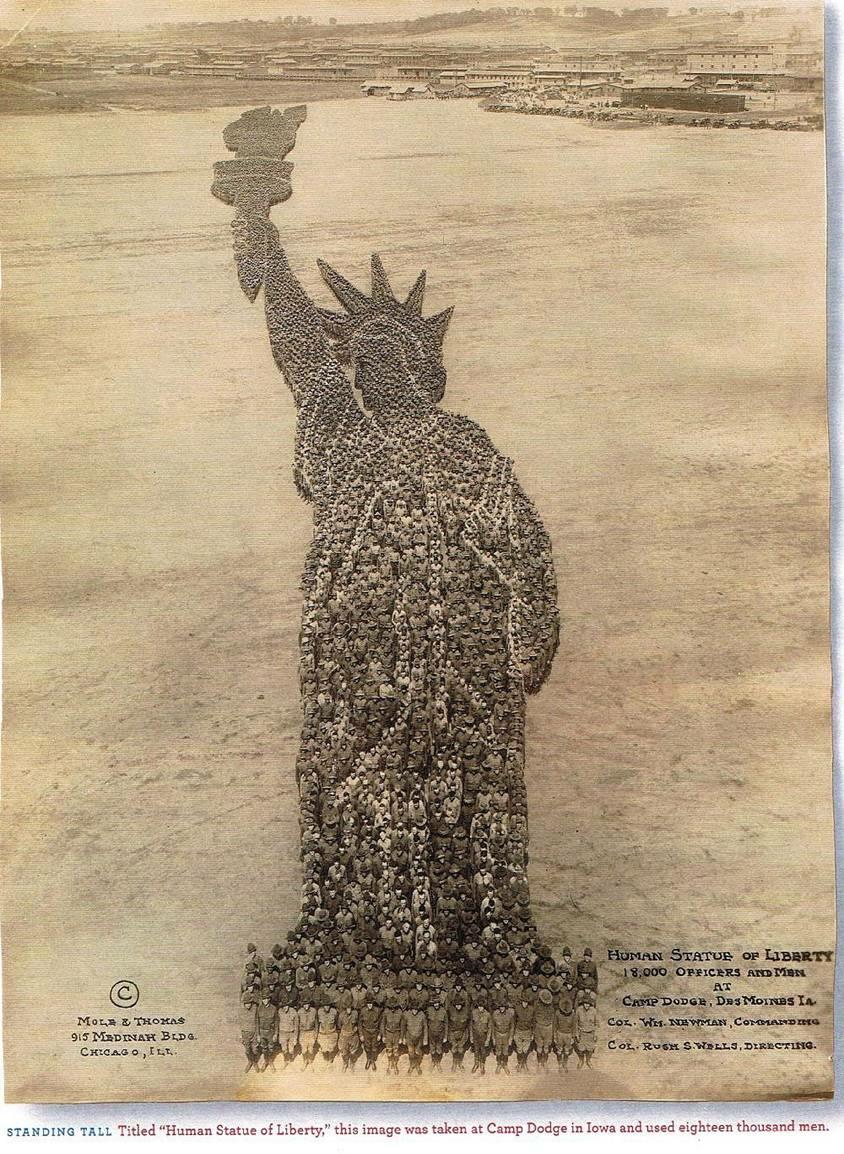





 Millard Fillmore's Bathtub