Amendments 11 through 27 — notice that, although not ratified until 1991, the 27th Amendment was in the package of amendments proposed by James Madison in 1789, a package of twelve proposed amendments, of which ten were ratified within a few months to become the Bill of Rights
Rotunda for the charters of Freedom at National Archives (NARA) building in Washington, D.C. Here displayed are the Declaration of Independence, the Bill of Rights, and the U.S. Constitution. (Photo credit: Wikipedia)
Spread the word; friends don't allow friends to repeat history.
In a discussion about teaching evolution in biology classes a few years ago, I had carefully explained how and why the First Amendment does not require creationism to be taught in biology classes, and in fact is the reason that creationism isn’t taught, in the Establishment Clause. My explanation irritated the tarnation out of a creationist woman who exclaimed, “Well, it’s not like the First Amendment is engraved in stone!”
Second – Registration for our spring one-day seminars is underway! Locations include Albuquerque, Phoenix, Newark, New York, Boston, and more; visit our website for a complete schedule with our dates and locations this spring, and to register. Space is limited so register today!
Part 1 runs tonight at 7:00 p.m. and the repeats at about 8:30 p.m. (if I’m reading this schedule correctly, and KERA has done this before with programs they expect to be very popular).
Part 2 is scheduled for Monday at 7:00, and Part 3 for Tuesday at 7:00 — with repeats to follow both nights.
Spread the word; friends don't allow friends to repeat history.
George Washington signed the law authorizing the first U.S. census on March 1, 1790. [True]
[Satire, below?]
I presume, then, that the post-Boston, Tea Party dates from the protests of the census beginning on March 2, 1790. “Nothing but what the founders intended in the Constitution,” was the muddled battle cry of the early Tea Partiers.
Editorials pointed out that Washington himself had presided at the Constitutional Convention, but Tea Partiers would have none of it. “If the King James Version was good enough for Jesus, it’s good enough for the ‘new King George,’ they yelled in New York City, outside Washington’s home. “Patrick Henry didn’t throw tea in Baltimore Harbor so some tyrant could ask us how many are in our family!”
Washington denied that the capital’s move to Philadelphia later that year had anything to do with the protests.
Spread the word; friends don't allow friends to repeat history.
Presidents and the Constitution, Bill of Rights Institute
This Presidents and the Constitution focuses on Abraham Lincoln and the Emancipation Proclamation. Though he had always hated slavery, President Lincoln did not believe the Constitution gave him the authority to bring it to an end—until it became necessary to free the slaves in order to save the Union. With the Emancipation Proclamation, which he viewed as an essential wartime measure to cripple the Confederacy’s ability to fight, Lincoln took the first step toward abolition of slavery in the United States.
If you teach social studies, you probably know about the Bill of Rights Institute already — subscribe for lesson plans, news updates, and news about seminars. They do good work, and the provide great resources.
Spread the word; friends don't allow friends to repeat history.
What event critical to western history and the development of the democratic republic in the U.S. happened here in 1215?
A teacher might use some of these photos explaining the steps to the Constitution, in English law and the heritage of U.S. laws. Other than the Magna Carta, all the events of Runnymede get overlooked in American studies of history. Antony McCallum, working under the name Wyrdlight, took these stunning shots of this historic meadow. (He photographs stuff for studies of history, it appears.)
Maybe it’s a geography story.
View of Runnymede Meadow from Engham Village -- Wyrdlight photo through Wikimedia
Several monuments to different events of the past millennium populate the site. The American Bar Association dedicated a memorial to the Magna Carta there — a small thing open to the air, but with a beautiful ceiling that is probably worth the trip to see it once you get to England.
Wikipedia explains briefly, with a note that the ABA plans to meet there again in 2015, the 800th anniversary of the Great Charter:
Magna Carta Memorial
The Magna Carta Memorial & view towards the ‘medes’
Engraved stone recalling the 1985 ABA visit
Situated in a grassed enclosure on the lower slopes of Cooper’s Hill, this memorial is of a domed classical style, containing a pillar of English granite on which is inscribed “To commemorate Magna Carta, symbol of Freedom Under Law”. The memorial was created by the American Bar Association to a design by Sir Edward Maufe R.A., and was unveiled on 18 July 1957 at a ceremony attended by American and English lawyers.[5]
Since 1957 representatives of the ABA have visited and rededicated the Memorial renewing pledges to the Great Charter. In 1971 and 1985 commemorative stones were placed on the Memorial plinth. In July 2000 the ABA came:
to celebrate Magna Carta, foundation of the rule of law for ages past and for the new millennium.
In 2007 on its 50th anniversary the ABA again visited Runnymede and during the convention installed as President Charles Rhyne who devised Law Day which seeks in the USA an annual reaffirmation of faith in the forces of law for peace.
The ABA will be meeting at Runnymede in 2015 on the 800th anniversary of the sealing of the original charter.
The Magna Carta Memorial is administered by the Magna Carta Trust, which is chaired by the Master of the Rolls.[10]
In 2008, flood lights were installed to light the memorial at night, but due to vandalism they now lie smashed.
I’ll wager the lights get fixed before 2015.
Detail of ceiling of the Magna Carta Memorial detailing play of light, and star pattern, Runnymede - Wikimedia image
They claim to be constitutionalists, and they claim to want to uphold the U.S. Constitution. But here’s an excerpt from Federalist #30, in which Alexander Hamilton explains why it is necessary for a federal government to tax, and sometimes to tax heavily.
Alexander Hamilton: "Money is, with propriety, considered as the vital principle of the body politic; as that which sustains its life and motion, and enables it to perform its most essential functions."
This is the U.S. Constitution and the “Founding Fathers” the Tea Partiers hope you will never see, and this is the Constitution and Founders they work hard to hide (some highlights added):
IT HAS been already observed that the federal government ought to possess the power of providing for the support of the national forces; in which proposition was intended to be included the expense of raising troops, of building and equipping fleets, and all other expenses in any wise connected with military arrangements and operations. But these are not the only objects to which the jurisdiction of the Union, in respect to revenue, must necessarily be empowered to extend. It must embrace a provision for the support of the national civil list; for the payment of the national debts contracted, or that may be contracted; and, in general, for all those matters which will call for disbursements out of the national treasury. The conclusion is, that there must be interwoven, in the frame of the government, a general power of taxation, in one shape or another.
Money is, with propriety, considered as the vital principle of the body politic; as that which sustains its life and motion, and enables it to perform its most essential functions. A complete power, therefore, to procure a regular and adequate supply of it, as far as the resources of the community will permit, may be regarded as an indispensable ingredient in every constitution. From a deficiency in this particular, one of two evils must ensue; either the people must be subjected to continual plunder, as a substitute for a more eligible mode of supplying the public wants, or the government must sink into a fatal atrophy, and, in a short course of time, perish.
In the Ottoman or Turkish empire, the sovereign, though in other respects absolute master of the lives and fortunes of his subjects, has no right to impose a new tax. The consequence is that he permits the bashaws or governors of provinces to pillage the people without mercy; and, in turn, squeezes out of them the sums of which he stands in need, to satisfy his own exigencies and those of the state. In America, from a like cause, the government of the Union has gradually dwindled into a state of decay, approaching nearly to annihilation. Who can doubt, that the happiness of the people in both countries would be promoted by competent authorities in the proper hands, to provide the revenues which the necessities of the public might require?
The present Confederation, feeble as it is intended to repose in the United States, an unlimited power of providing for the pecuniary wants of the Union. But proceeding upon an erroneous principle, it has been done in such a manner as entirely to have frustrated the intention. Congress, by the articles which compose that compact (as has already been stated), are authorized to ascertain and call for any sums of money necessary, in their judgment, to the service of the United States; and their requisitions, if conformable to the rule of apportionment, are in every constitutional sense obligatory upon the States. These have no right to question the propriety of the demand; no discretion beyond that of devising the ways and means of furnishing the sums demanded. But though this be strictly and truly the case; though the assumption of such a right would be an infringement of the articles of Union; though it may seldom or never have been avowedly claimed, yet in practice it has been constantly exercised, and would continue to be so, as long as the revenues of the Confederacy should remain dependent on the intermediate agency of its members. What the consequences of this system have been, is within the knowledge of every man the least conversant in our public affairs, and has been amply unfolded in different parts of these inquiries. It is this which has chiefly contributed to reduce us to a situation, which affords ample cause both of mortification to ourselves, and of triumph to our enemies.
What remedy can there be for this situation, but in a change of the system which has produced it in a change of the fallacious and delusive system of quotas and requisitions? What substitute can there be imagined for this ignis fatuus in finance, but that of permitting the national government to raise its own revenues by the ordinary methods of taxation authorized in every well-ordered constitution of civil government? Ingenious men may declaim with plausibility on any subject; but no human ingenuity can point out any other expedient to rescue us from the inconveniences and embarrassments naturally resulting from defective supplies of the public treasury.
Cup o’ Joel got there earlier (worth a read): “And get this: Hamilton was arguing that the power to tax was a central reason — maybe the central reason — the Constitution needed to be passed. And not just any power to tax: Unlimited power to tax.”
IT HAS been already observed that the federal government ought to possess the power of providing for the support of the national forces; in which proposition was intended to be included the expense of raising troops, of building and equipping fleets, and all other expenses in any wise connected with military arrangements and operations. But these are not the only objects to which the jurisdiction of the Union, in respect to revenue, must necessarily be empowered to extend. It must embrace a provision for the support of the national civil list; for the payment of the national debts contracted, or that may be contracted; and, in general, for all those matters which will call for disbursements out of the national treasury. The conclusion is, that there must be interwoven, in the frame of the government, a general power of taxation, in one shape or another.Money is, with propriety, considered as the vital principle of the body politic; as that which sustains its life and motion, and enables it to perform its most essential functions. A complete power, therefore, to procure a regular and adequate supply of it, as far as the resources of the community will permit, may be regarded as an indispensable ingredient in every constitution. From a deficiency in this particular, one of two evils must ensue; either the people must be subjected to continual plunder, as a substitute for a more eligible mode of supplying the public wants, or the government must sink into a fatal atrophy, and, in a short course of time, perish.
In the Ottoman or Turkish empire, the sovereign, though in other respects absolute master of the lives and fortunes of his subjects, has no right to impose a new tax. The consequence is that he permits the bashaws or governors of provinces to pillage the people without mercy; and, in turn, squeezes out of them the sums of which he stands in need, to satisfy his own exigencies and those of the state. In America, from a like cause, the government of the Union has gradually dwindled into a state of decay, approaching nearly to annihilation. Who can doubt, that the happiness of the people in both countries would be promoted by competent authorities in the proper hands, to provide the revenues which the necessities of the public might require?
The present Confederation, feeble as it is intended to repose in the United States, an unlimited power of providing for the pecuniary wants of the Union. But proceeding upon an erroneous principle, it has been done in such a manner as entirely to have frustrated the intention. Congress, by the articles which compose that compact (as has already been stated), are authorized to ascertain and call for any sums of money necessary, in their judgment, to the service of the United States; and their requisitions, if conformable to the rule of apportionment, are in every constitutional sense obligatory upon the States. These have no right to question the propriety of the demand; no discretion beyond that of devising the ways and means of furnishing the sums demanded. But though this be strictly and truly the case; though the assumption of such a right would be an infringement of the articles of Union; though it may seldom or never have been avowedly claimed, yet in practice it has been constantly exercised, and would continue to be so, as long as the revenues of the Confederacy should remain dependent on the intermediate agency of its members. What the consequences of this system have been, is within the knowledge of every man the least conversant in our public affairs, and has been amply unfolded in different parts of these inquiries. It is this which has chiefly contributed to reduce us to a situation, which affords ample cause both of mortification to ourselves, and of triumph to our enemies.
What remedy can there be for this situation, but in a change of the system which has produced it in a change of the fallacious and delusive system of quotas and requisitions? What substitute can there be imagined for this ignis fatuus in finance, but that of permitting the national government to raise its own revenues by the ordinary methods of taxation authorized in every well-ordered constitution of civil government? Ingenious men may declaim with plausibility on any subject; but no human ingenuity can point out any other expedient to rescue us from the inconveniences and embarrassments naturally resulting from defective supplies of the public treasury.
Spread the word; friends don't allow friends to repeat history.
Turley’s motion for dismissal goes to the heart of what kinds of conduct may be impeachable, and when the jurisdiction of the impeachment clauses apply — maybe subtle, maybe somewhat obscure, but still delicious constitutional issues. I can imagine a government class reading the motion as a group and discussing it, in a more perfect world.
Is your government class watching this trial at all?
Not sure if you heard about the first army chaplain to have been killed since the 70s, but he was killed on Aug. 30th in Afghanistan. Several pastors I know knew him as a personal dear friend – a true American hero who loved God, loved the troops he served, and gave his life going above and beyond to be with them.
Guess who will be there protesting his funeral? Westboro Baptist Church – protesting the funeral of a Baptist chaplain! The only way it ties in to this discussion is the “should factor”, but I’m sorry – I just had to voice that this sort of stuff is so disgraceful and makes me so upset – especially when our soldiers are dying to give them the freedom to protest at their funerals! :-( For shame!
Here’s the news article:
kktv.com/military/headlines/102406419.html
At KKTV’s site the story is very short; here it is the complete article:
A controversial Baptist Church group from Kansas says they’ll be in Southern Colorado to protest at a funeral for an army chaplain who was killed in Afghanistan.
Captain Dale Goetz died August 30 in Afghanistan. He’s the first army chaplain to die in combat since 1970.
A funeral has been set for Thursday at Fort Carson, and that’s where the Westboro Baptist Church says they’ll be as well to protest.
Members of the church have repeatedly protested the acceptance of homosexuals by picketing at the funerals of fallen soldiers.
It’s very controversial move.
11 News is asking what do you think about the planned demonstration? We’d like to hear from you. Just comment on this story on the 11 news Facebook page or here on kktv.com.
He [Goetz] acknowledged that Muslim concerns over what they perceive as a degenerate Western culture can drive some Muslims toward terror. “As Americans we repudiate the practice of the terrorist,” he said. “Though I disagree with their practice, I do understand their complaints against western society.” Goetz wondered if Americans are devoted to something so much that they would willingly die for it. “Our love for freedom is worth dying for,” he concluded, “and many have gone before us to preserve this freedom.”
Early in the U.S. involvement in World War II Americans had to put up with those factions who had argued that the U.S. should intervene on Germany’s side in Europe. But I don’t recall that the pro-Germany groups kept up their protests much after Germany declared war on the U.S. In the long arc of the history of our wars in Afghanistan and Iraq, America’s longest-ever wars, does a sense of history and honor smack the crazies in Christian pulpits in the head to make them think?
Our Constitution’s strength proves itself over and over, as courts have ruled that Westboro Baptist has the right to make these protests. Their continued exercise of that right is a testament against the lack of a national education system and against the virtue of religion in the failure of common decency of the tiny band of protesters. Al Queada draws strength from the protests of the Westboro crew, and al Quaeda draws recruits from the actions of the Florida band who plans to burn scriptures.
Walt Kelly’s Pogo observed, “We has met the enemy, and he is us.”
I’m a great lover of political cartoons and political cartooning, of all stripes. Great truths sneak out of the pens that produce stunned laughter in a reader (viewer), I think, especially when they stun me into a new realization.
Political cartooning stumbles along through hard times. Where once upon a time a major U.S. city, like St. Louis, would have three or more daily newspapers, each of which would employ more than one cartoonist, the newspapers themselves disappear (more slowly this year, but no new ones have been birthed, either), and those few surviving newspapers try to get along with one or fewer political cartoonists, and they even reduce the number of syndicated cartoons.
Where U.S. history teachers revel in the glorious images and humor of Thomas Nast (even though he was a Republican sympathizer), Thomas Keppler, Berryman, Ding Darling, Herblock, Bill Mauldin, and other bright cartoonists of the 19th and 20th centuries, Daryl Cagle has gallantly tried to preserve the profession and the art, with a group that spreads cartoons of a lot of cartoonists employed by papers or free-lancing.
I subscribe to the electronic newsletter of Cagle Cartoons. I’ve found their processes for getting approval not to work well for me (or work at all — I have yet to get any response on any cartoon I’ve asked them about). But I hope cartoonists like the brilliant Sherffius, or Calvin Grondahl from my almost-native Utah, get enough additional exposure to make them comfortable and keep the cartooning.
Lately I’ve been despairing. Cagle added columns by cartoonists and others. Most of that material tends toward hard conservatism, I find, and lack of reportorial and intellectual rigor.
Brennan argues that birthers should give up on their challenges to Obama’s eligibility, because of the chaos that would be caused were Obama to be replaced by John McCain so far into an administration. (Yeah — just hold on. I know.) All the laws Obama signed would be nullified, Brennan wrote, all his appointments nullifed, and the slate wiped clean for McCain and Palin to occupy the White House. Obama’s defended his birth in a U.S. territory successfully so far, so birthers should give up trying for change.
Just for a moment, imagine that the Court does its job and it turns out that Obama can’t come up with a legitimate birth certificate showing that he was indeed born on U.S. soil in what was then the territory of Hawaii, and the Court declares that he is therefore ineligible to serve as the nation’s chief executive.
Should that be the case nothing that he has done, no appointments that he has made nor executive orders he issued would be valid. And under the provisions of the Constitution, John McCain would be declared the legitimate President of the United States and Sarah Palin the Vice President starting with Inauguration Day, 2009.
It might cause a civil war, Brennan says.
Mr. Brennan: I know the U.S. Constitution. I’ve read the U.S. Constitution. The U.S. Constitution is a friend of mine. What you describe is not in the Constitution, and doesn’t bear any resemblance to reality.
3. There is no provision to nullify laws and directives of a federal officer later found ineligible for the office. Under pretty well-established law, all of those actions stand unless repealed later. Congressional actions, especially, would not be rolled back. All appointments stand.
4. Obama has already provided unassailable proof of his birth. Under the full faith and credit clause of the Constitution, all states and the federal government must honor official actions of the states. Hawaii issued, under seal, a document verifying that Barack Obama was born in Honolulu in 1961. “Under seal” is the highest authority we can give a document under statutory and common law — it’s got more than 800 years of precedent behind it. The only possible way to get at a document under seal is to provide clear and convincing evidence of fraud on the state. There is no showing of any fraud that stands up in court, under Hawaii or federal rules of evidence.
In short, almost everything stated as fact for the premises of that piece, is fiction.
Bad enough that joints like the Discovery Institute, NewsMax, the Washington Times and others have fired all their fact checkers — but shouldn’t a high school-educated person know better? Is there no editing at Cagle Cartoons at all?
Spread the word; friends don't allow friends to repeat history.
Last spring, as the local Tea Party gatherings were shouting hosannahs to the Constitution, they also advocated not answering the decennial census. I pointed out that the census is required by the Constitution, and got disinvited.
Unbridled and unquestioning support of what the “founders” did, instead of the laws they wrote, can lead one astray, as this cartoon shows:
Tea Party philosophy: 'If the founders did it, it's good.'
It’s an awkward scene. John Goodman has a lousy role (and I’m not fond of the direction for him or Melanie Griffith here). I’ve never seen the movie, “Born Yesterday,” and I don’t know the context.
But ten important amendments to the Constitution, to the tune of “The Twelve Days of Christmas,” a potentially useful mnemonic device for your U.S. history, and government students; it’s mostly accurate:
There is some skipping around — the song covers the First, Second, Fourth, Fifth, and Sixth Amendments, then skips to the Thirteenth, Fifteenth, Sixteenth, Eighteenth, and Nineteenth Amendments. The First Amendment’s five freedoms are covered completely, other amendments not so much.
The actor in the scene, playing the senator who sings the Fifteenth Amendment, is former Tennessee U.S. Sen. Fred Thompson. Thompson staffed the Watergate Committee chaired by Sen. Sam Ervin of North Carolina, earlier — wouldn’t it be interesting to hear his views on this scene, and song, and what other tricks he may have encountered in the Senate, from Sen. Ervin, or the late Sen. Robert C. Byrd?
It’s not Schoolhouse Rock, but it’s really very good. Everything covered in the song is in Texas TEKS, but some things skipped, like the Fourteenth Amendment, are also required. Can you use it in your classes?
And by the way, does anyone know a rap for the Bill of Rights?
Historic irony: On Flag Day in 1943, the U.S. Supreme Court issued its decision in the case of West Virginia vs. Barnette.
Image 1 - Billy Gobitas explained why he would not salute the U.S. flag, November 5, 1935 - Library of Congress collection
The case started earlier, in 1935, when a 10-year-old student in West Virginia, sticking to his Jehovah’s Witness principles, refused to salute the U.S. flag in a state-required pledge of allegiance. From the Library of Congress:
“I do not salute the flag because I have promised to do the will of God,” wrote ten-year-old Billy Gobitas (1925-1989) to the Minersville, Pennsylvania, school board in 1935. His refusal, and that of his sister Lillian (age twelve), touched off one of several constitutional legal cases delineating the tension between the state’s authority to require respect for national symbols and an individual’s right to freedom of speech and religion.
The Gobitas children attended a public school which, as did most public schools at that time, required all students to salute and pledge allegiance to the flag of the United States. The Gobitas children were members of the Jehovah’s Witnesses, a church that in 1935 believed that the ceremonial saluting of a national flag was a form of idolatry, a violation of the commandment in Exodus 20:4-6 that “thou shalt not make unto thee any graven image, nor bow down to them. . . .” and forbidden as well by John 5:21 and Matthew 22:21. On 22 October 1935, Billy Gobitas acted on this belief and refused to participate in the daily flag and pledge ceremony. The next day Lillian Gobitas did the same. In this letter Billy Gobitas in his own hand explained his reasons to the school board, but on 6 November 1935, the directors of the Minersville School District voted to expel the two children for insubordination.
The Watch Tower Society of the Jehovah’s Witnesses sued on behalf of the children. The decisions of both the United States district court and court of appeals was in favor of the right of the children to refuse to salute. But in 1940 the United States Supreme Court by an eight-to-one vote reversed these lower court decisions and ruled that the government had the authority to compel respect for the flag as a key symbol of national unity. Minersville v. Gobitis[a printer’s error has enshrined a misspelling of the Gobitas name in legal records] was not, however, the last legal word on the subject. In 1943 the Supreme Court by a six-to-three vote in West Virginia State Board of Education v. Barnette, another case involving the Jehovah’s Witnesses, reconsidered its decision in Gobitis and held that the right of free speech guaranteed in the First Amendment to the Constitution denies the government the authority to compel the saluting of the American flag or the recitation of the pledge of allegiance.
There had been strong public reaction against the Gobitis decision, which had been written by Justice Felix Frankfurter (1882-1965). In the court term immediately following the decision, Frankfurter noted in his scrapbook that Justice William O. Douglas (1898-1980) told him that Justice Hugo LaFayette Black (1886-1971) had changed his mind about the Gobitis case. Frankfurter asked, “Has Hugo been re-reading the Constitution during the summer?” Douglas replied, “No–he has been reading the papers.”1 The Library’s William Gobitas Papers showcase the perspective of a litigant, whereas the abstract legal considerations raised by Gobitis and other cases are represented in the papers of numerous Supreme Court justices held by the Manuscript Division.
1. Quoted in H. N. Hirsch, The Enigma of Felix Frankfurter (New York: Basic Books, 1981), 152.
John E. Haynes and David Wigdor, Manuscript Division
Second page, Billy Gobitas's explanation of why he will not salute the U.S. flag: "I do not salute the flag not because I do not love my country but I love my country and I love God more and I must obey His commandments." - Library of Congress
Supreme Court justices do not often get a chance to reconsider their decisions. For example, overturning Plessy vs. Ferguson from 1896 took until 1954 in Brown v. Topeka Board of Education. In the flag salute/pledge of allegiance cases Justice Hugo Black had a change of mind, and when a similar case from West Virginia fell on the Court’s doorstep in 1943, the earlier Gobitis decision was reversed.
If there is any fixed star in our constitutional constellation, it is that no official, high or petty, can prescribe what shall be orthodox in politics, nationalism, religion, or other matters of opinion, or force citizens to confess by word or act their faith therein. If there are any circumstances which permit an exception, they do not now occur to us.
Jehovah’s Witnesses, and all other Americans, thereby have the right to refuse to say what they and their faith consider to be a vain oath.
And that, boys and girls, is what the First Amendment means.
Or, until that account is unsuspended by the forces supporting Donald Trump: Follow @FillmoreWhite, the account of the Millard Fillmore White House Library
We've been soaking in the Bathtub for several months, long enough that some of the links we've used have gone to the Great Internet in the Sky.
If you find a dead link, please leave a comment to that post, and tell us what link has expired.
Thanks!
Retired teacher of law, economics, history, AP government, psychology and science. Former speechwriter, press guy and legislative aide in U.S. Senate. Former Department of Education. Former airline real estate, telecom towers, Big 6 (that old!) consultant. Lab and field research in air pollution control.
My blog, Millard Fillmore's Bathtub, is a continuing experiment to test how to use blogs to improve and speed up learning processes for students, perhaps by making some of the courses actually interesting. It is a blog for teachers, to see if we can use blogs. It is for people interested in social studies and social studies education, to see if we can learn to get it right. It's a blog for science fans, to promote good science and good science policy. It's a blog for people interested in good government and how to achieve it.
BS in Mass Communication, University of Utah
Graduate study in Rhetoric and Speech Communication, University of Arizona
JD from the National Law Center, George Washington University


 Posted by Ed Darrell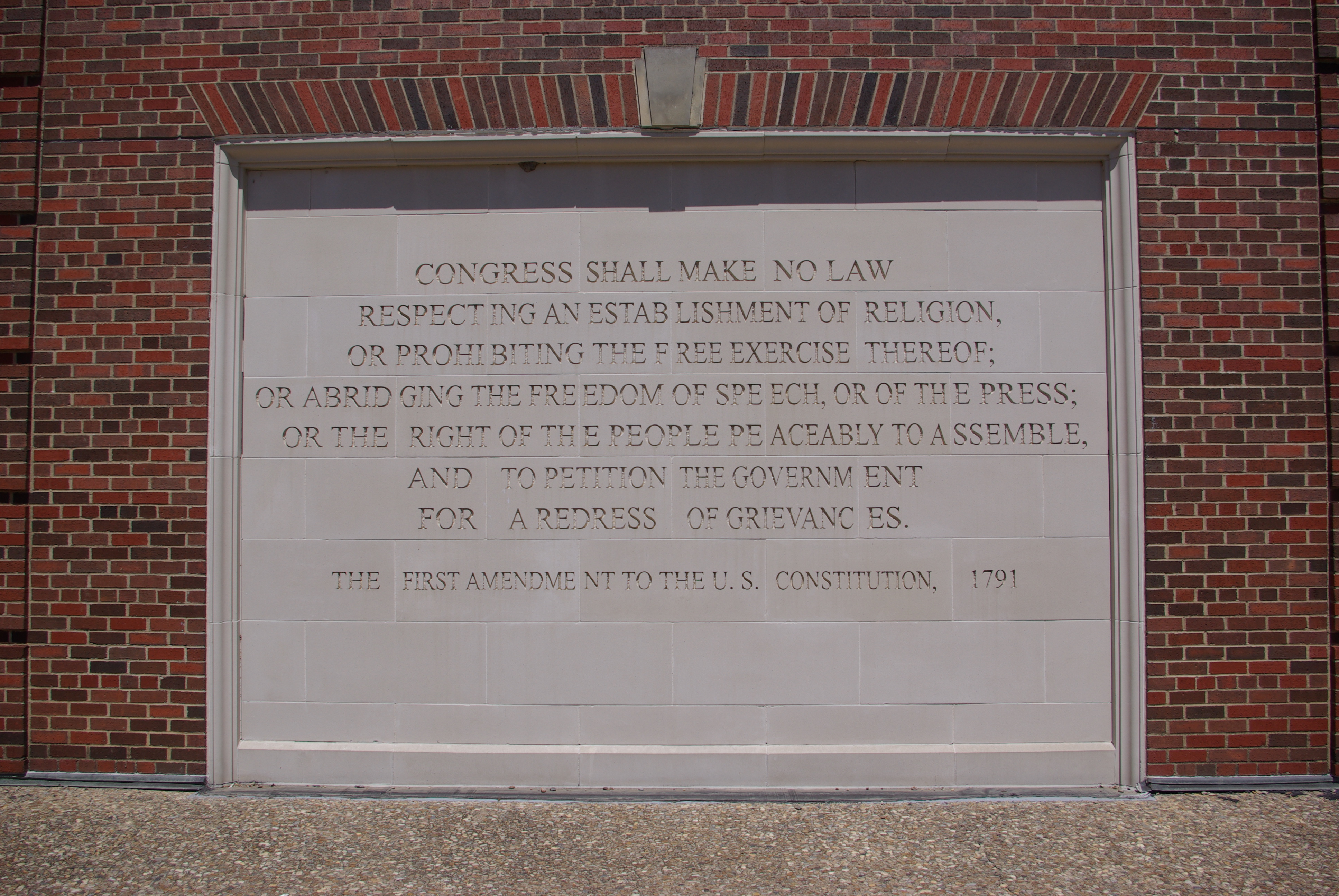





 Millard Fillmore's Bathtub