Before we move past remembrances of D-Day, let’s take a moment to think about and memorialize the soldiers who fought there, so many of whom died there.
From the National Guard's feature, This Day in National Guard History: "Circular written by General Dwight D. Eisenhower explaining the importance of the Normandy invasion on winning the war. These were distributed to every member of the attacking force the night prior to the D-Day landings. Sergeant J. Robert "Bob" Slaughter, a Guard member of Virginia's Company D, 116th Infantry, passed his copy around among the members of Company D to get their signatures (front and back) as they waited to load aboard the landing craft that would take them to Omaha Beach. By nightfall of June 6, about half of these men were dead or wounded. Courtesy John R. Slaughter"
Normandy, France — The Allied invasion of France, commonly known as “D-Day” begins as Guardsmen from the 29th Infantry Division (DC, MD, VA) storm onto what will forever after be known as “bloody Omaha” Beach. The lead element, Virginia’s 116th Infantry, suffers nearly 80% casualties but gains the foothold needed for the invasion to succeed. The 116’s artillery support, the 111th Field Artillery Battalion, also from Virginia, loses all 12 of its guns in high surf trying to get on the beach. Its men take up arms from the dead and fight as infantrymen. Engineer support came from the District of Columbia’s 121st Engineer Battalion. Despite high loses too, its men succeed in blowing holes in several obstacles clearing paths for the men to get inland off the beach. In the early afternoon, Maryland’s 115th Infantry lands behind the 116th and moves through its shattered remnants to start the movement in off the beach. Supporting the invasion was the largest air fleet known to history. Among the units flying missions were the Guards’ 107th (MI) and 109th (MN) Tactical Reconnaissance Squadrons The Normandy campaign lasted until the end of July with four Guard infantry divisions; the 28th (PA), 29th, 30th (NC, SC, TN) and the 35th (KS, MO, NE) taking part along with dozens of non-divisional units all earning the “Normandy” streamer.
First U.S. flag on Utah Beach, Normandy, D-Day, June 6, 1944; Pima Air Museum, Tucson, Arizona
This mostly an encore post. A reader sent an e-mail with a question: Does U.S. law suggest the flying of the U.S. flag on the anniversary of D-Day?
Today is the 65th anniversary of the Invasion of Normandy in World War II, a date generally called D-Day. No, you don’t have to fly your flag. This is not one of the days designated by Congress for flag-flying.
But you may, and probably, you should fly your flag. If you have any D-Day veterans in your town, they will be grateful, as will their spouses, children, widows and survivors. A 22-year-old soldier on the beach in 1944 would be 87 today, if alive. These men and their memories of history fade increasingly fast. Put your flag up. You may be surprised at the reaction.
If you do run into a D-Day veteran, ask him about it. Keep a record of what he says.
"First Wave at Omaha: The Ordeal of the Blue and the Gray" by Ken Riley: Behind them was a great invasion armada and the powerful sinews of war. But in the first wave of assault troops of the 29th (Blue and Gray) Infantry Division, it was four rifle companies landing on a hostile shore at H-hour, D-Day -- 6:30 a.m., on June 6, 1944. The long-awaited liberation of France was underway. After long months in England, National Guardsmen from Virginia, Maryland and the District of Columbia found themselves in the vanguard of the Allied attack. In those early hours on the fire-swept beach the 116th Infantry Combat Team, the old Stonewall Brigade of Virginia, clawed its way through Les Moulins draw toward its objective, Vierville-sur-Mer. It was during the movement from Les Moulins that the battered but gallant 2d Battalion broke loose from the beach, clambered over the embankment, and a small party, led by the battalion commander, fought its way to a farmhouse which became its first Command post in France. The 116th suffered more than 800 casualties this day -- a day which will long be remembered as the beginning of the Allies' "Great Crusade" to rekindle the lamp of liberty and freedom on the continent of Europe. Image from National Guard Heritage series, from which the caption was borrowed.
Spread the word; friends don't allow friends to repeat history.
[Google Video version is not showing or playing for reasons I don’t know; fortunately the National Archives (NARA) has uploaded a version to YouTube]
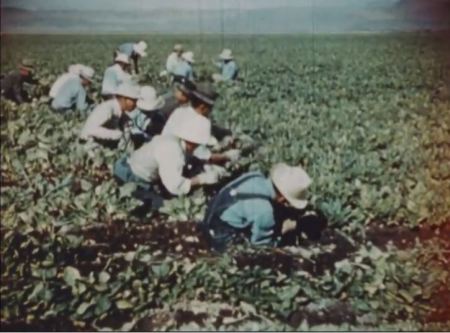
“A Challenge to Democracy,” by the War Relocation Board. This film defends the relocation of 100,000 Japanese Americans during World War II.
Japanese-descended American citizens harvesting crops they grew during internment during World War II. Screen capture from “Challege to Democracy.”
“These people are not under suspicion,” the narrator says. “They are not prisoners, they are not internees. They are merely dislocated people, the unwounded casualties of war.”
Neither of them can hold a candle to the exploits of Thomas A. Baker.
This is one of the rewards of the study of history: Fiction cannot hold a candle to reality.
Older son Kenny and I were discussing fantastic things, and he mentioned the story of a “real life Rambo” he had heard about, a guy named Tom Baker. Baker’s heroism on Saipan, in the Marianas Islands, in the last months of World War II could not pass as fiction — no one would believe it true. Of course, it is true.
That’s what marks a winner of the Medal of Honor from other heroes in uniform, often. The things they do, under fire, with their lives on the line, so far exceed what we think humanly possible, that all we can do is marvel.
Rank and organization: Sergeant, U.S. Army, Company A, 105th Infantry, 27th Infantry Division. Place and date: Saipan, Mariana Islands, 19 June to 7 July 1944. Entered service at: Troy, N.Y. Birth: Troy, N.Y. G.O. No.: 35, 9 May 1945. Citation: For conspicuous gallantry and intrepidity at the risk of his life above and beyond the call of duty at Saipan, Mariana Islands, 19 June to 7 July 1944. When his entire company was held up by fire from automatic weapons and small-arms fire from strongly fortified enemy positions that commanded the view of the company, Sgt. (then Pvt.) Baker voluntarily took a bazooka and dashed alone to within 100 yards of the enemy. Through heavy rifle and machinegun fire that was directed at him by the enemy, he knocked out the strong point, enabling his company to assault the ridge. Some days later while his company advanced across the open field flanked with obstructions and places of concealment for the enemy, Sgt. Baker again voluntarily took up a position in the rear to protect the company against surprise attack and came upon 2 heavily fortified enemy pockets manned by 2 officers and 10 enlisted men which had been bypassed. Without regard for such superior numbers, he unhesitatingly attacked and killed all of them. Five hundred yards farther, he discovered 6 men of the enemy who had concealed themselves behind our lines and destroyed all of them. On 7 July 1944, the perimeter of which Sgt. Baker was a part was attacked from 3 sides by from 3,000 to 5,000 Japanese. During the early stages of this attack, Sgt. Baker was seriously wounded but he insisted on remaining in the line and fired at the enemy at ranges sometimes as close as 5 yards until his ammunition ran out. Without ammunition and with his own weapon battered to uselessness from hand-to-hand combat, he was carried about 50 yards to the rear by a comrade, who was then himself wounded. At this point Sgt. Baker refused to be moved any farther stating that he preferred to be left to die rather than risk the lives of any more of his friends. A short time later, at his request, he was placed in a sitting position against a small tree . Another comrade, withdrawing, offered assistance. Sgt. Baker refused, insisting that he be left alone and be given a soldier’s pistol with its remaining 8 rounds of ammunition. When last seen alive, Sgt. Baker was propped against a tree, pistol in hand, calmly facing the foe. Later Sgt. Baker’s body was found in the same position, gun empty, with 8 Japanese lying dead before him. His deeds were in keeping with the highest traditions of the U.S. Army.
January 24 marks the anniversary of the granting of the patent for the microwave oven, “Method of treating foodstuffs.” Do your texts even refer to this by-product of World War II? What benefits of microwave ovens can your students come up with? Will they offer the apocryphal question about how Native Americans could possibly have invented popcorn with their wood-fired microwave ovens?
Dr. Percy L. Spencer noted that a chocolate bar in his shirt pocket had melted when he was working around an operating radar tube, at Raytheon Corp., during World War II (the patent application for microwave cooking was filed on October 8, 1945). With a little experimentation, he determined the microwaves from the radar tube were rapidly cooking things — think exploding egg, think popping corn.
Drawing from the patent of the microwave oven, granted to Percy L. Spencer on January 24, 1950; courtesy the Southwest Museum of Engineering, Communications and Computation
One of the problems Spencer had to overcome was that radar tubes cooked foods way too fast. He had to tune the magnetron tubes to produce wavelengths with less energy, to heat food more slowly so the cooking could be controlled. Spencer explained this process of invention in the first page of text on the patent itself.
Perhaps one could create an interesting DBQ with only patents, tracing radio and radar through the microwave oven.
This is one device you probably can demonstrate safely in any history classroom.
BBC H2G2 backgrounder on patents (remember that regulation of the patent process is one of the express powers of Congress from Article I of the Constitution)
Associated Press 1941 file photo of a small boat assisting in rescue of Pearl Harbor attack victims, near the U.S.S. West Virginia, as the ship burns.
Today is the 65th [67th] anniversary of Japan’s attack on the U.S.’s Pacific Fleet at Pearl Harbor, Hawaii.
Our local newspaper, The Dallas Morning News, has a front-page story on survivors of the attack, who have met every five years in reunion at Pearl Harbor. Today [2006] will be their last official reunion. The 18-year-olds who suffered the attack, many on their first trips away from home, are in their 80s now. Age makes future reunions impractical.
From the article:
“We’re like the dodo bird. We’re almost extinct,” said Middlesworth, now an 83-year-old retiree from Upland, Calif., but then – on Dec. 7, 1941 – an 18-year-old Marine on the USS San Francisco.
Nearly 500 survivors from across the nation were expected to make the trip to Hawaii, bringing with them 1,300 family members, numerous wheelchairs and too many haunting memories.
Memories of a shocking, two-hour aerial raid that destroyed or heavily damaged 21 ships and 320 aircraft, that killed 2,390 people and wounded 1,178 others, that plunged the United States into World War II and set in motion the events that led to atomic bombings of Hiroshima and Nagasaki.
“I suspect not many people have thought about this, but we’re witnessing history,” said Daniel Martinez, chief historian at the USS Arizona Memorial. “We are seeing the passing of a generation.”
Another article notes the work of retired history professor Ron Marcello from the University of North Texas, in Denton, in creating oral histories from more than 350 of the survivors. This is the sort of project that high school history students could do well, and from which they would learn, and from which the nation would benefit. If you have World War II veterans in your town, encourage the high school history classes to go interview the people. This opportunity will not be available forever.
There is much to be learned, Dr. Marcello said:
Dr. Marcello said that in doing the World War II history project, he learned several common themes among soldiers.
“When they get into battle, they don’t do it because of patriotism, love of country or any of that. It’s about survival, doing your job and not letting down your comrades,” he said. “I heard that over and over.”
Another theme among soldiers is the progression of their fear.
“When they first got into combat, their first thought is ‘It’s not going to happen to me.’ The next thought is ‘It might happen to me,’ and the last thought is ‘I’m living on borrowed time. I hope this is over soon,’ ” Dr. Marcello said.
Dr. Marcello said the collection started in the early 1960s. He took charge of it in 1968. Since Dr. Marcello has retired, Todd Moye has taken over as the director.
Twain had a comment on recent actions at the Texas Education Agency:
In the first place God made idiots. This was for practice. Then He made School Boards.
– Following the Equator; Pudd’nhead Wilson’s New Calendar
The Nobel literature committees were slow; Twain did not win a Nobel in Literature; he died in 1910. Churchill did win a Nobel Prize in Literature, in 1953.
Both men were aficionados of good whiskey and good cigars. Both men suffered from depression in old age.
Both men made a living writing, early in their careers as newspaper correspondents. One waged wars of a kind the other campaigned against. Both were sustained by their hope for the human race, against overwhelming evidence that such hope was sadly misplaced.
Both endured fantastic failures that would have killed other people, and both rebounded.
Both men are worth study.
Twain, on prisons versus education: “Every time you stop a school, you will have to build a jail. What you gain at one end you lose at the other. It’s like feeding a dog on his own tail. It won’t fatten the dog.” – Speech, November 23, 1900
Churchill on the evil men and nations do:
“No One Would Do Such Things”
“So now the Admiralty wireless whispers through the ether to the tall masts of ships, and captains pace their decks absorbed in thought. It is nothing. It is less than nothing. It is too foolish, too fantastic to be thought of in the twentieth century. Or is it fire and murder leaping out of the darkness at our throats, torpedoes ripping the bellies of half-awakened ships, a sunrise on a vanished naval supremacy, and an island well-guarded hitherto, at last defenceless? No, it is nothing. No one would do such things. Civilization has climbed above such perils. The interdependence of nations in trade and traffic, the sense of public law, the Hague Convention, Liberal principles, the Labour Party, high finance, Christian charity, common sense have rendered such nightmares impossible. Are you quite sure? It would be a pity to be wrong. Such a mistake could only be made once—once for all.”
—1923, recalling the possibility of war between France and Germany after the Agadir Crisis of 1911, in The World Crisis,vol. 1, 1911-1914, pp. 48-49.
October 31 hosts several famous anniversaries. It is the anniversary of Nevada’s statehood (an October surprise by Lincoln for the 1864 campaign?). It is the anniversary of the cleaving of western, catholic Christianity, as the anniversary of Martin Luther’s tacking his 95 theses to the door of the church in Wittenburg, Germany in 1517, the formal start of the Reformation. Maybe the original Christian trick or treat.
U.S.S. Reuben James sinking, October 31, 1941 - National Archives photo
October 31 is also the anniversary of the sinking of the World War I era Clemson-class, four-stack destroyer, U.S.S. Reuben James, by a German U-boat. Woody Guthrie memorialized the sad event in the song, Reuben James, recorded by the Almanac Singers with PeteSeeger (see also here, and here), and later a hit for the Kingston Trio. The Reuben James was sunk on October 31, 1941 — over a month before the Japanese attack on Pearl Harbor. Details via Wikipedia (just to make you school librarians nervous):
This history figures into the current presidential campaign in a small way: One of the internet hoax letters complaining about Barack Obama claims that the U.S. entered World War II against Germany although the Germans had not fired a single round against the U.S. The 115 dead from the crew of 160 aboard the James testify to the inaccuracy of that claim, wholly apart from the treaty of mutual defense Germany and Japan were parties to, which required encouraged Germany to declare war upon any nation that went to war with Japan (see comments from Rocky, below). After the U.S. declaration of war on Japan, Germany declared war on the U.S., creating a state of war with Germany.
This history also reminds us that many Americans were loathe to enter World War II at all. By October 1941, Japan had been occupying parts of China for ten years, and the Rape of Nanking was four years old. The Battle of the Atlantic was in full swing, and the Battle of Britain was a year in the past, after a year of almost-nightly bombardment of England by Germany. Despite these assaults on friends and allies of the U.S., and the losses of U.S. ships and merchant marines, the U.S. had remained officially neutral.
Many Americans on the left thought the sinking of the Reuben James to be the sort of wake-up call that would push Germany-favoring Americans to reconsider, and people undecided to side with Britain. The political use of the incident didn’t have much time to work. Five weeks later Japan attacked Pearl Harbor, and by the end of 1941, the U.S. was at war with the Axis Powers.
Letter to the U.S. Navy asking the fate of friends aboard the U.S.S. Reuben James, November, 1941
Telegram informing his family of the death of Gene Guy Evans, of Norfolk, Virginia, lost in the torpedoing of the U.S.S. Reuben James
The Kingston Trio sings, as the names of the dead scroll:
Spread the word; friends don't allow friends to repeat history.
Here’s a story you won’t read in your U.S. history text: Sore from losing the White House, conservatives try to use an economic “crisis” as an excuse to seize the White House and oust the sitting president.
It might make a good movie — but it hasn’t yet. It actually happened.
Maj. Gen. Smedley D. Butler, "The Fighting Quaker" - twice winner of the Congressional Medal of Honor
The American Liberty League tried to persuade double-Medal of Honor winner Major Gen. Smedley Darlington Butler to do one more military campaign to save the nation — from Franklin Delano Roosevelt, in 1933. The story was told in a book that quoted extensively from hearings before the U.S. House of Representatives’ Un-American Activities Committee, the group that would become infamous for harassing leftists before the House finally choked it to death. Of course, since no one would believe such a plot, the book is out of print. The American Liberty League was quite the opposite of leftist – they favored the fascists.
Today is the 63rd anniversary of “Victory Japan” Day, or VJ Day. On that day Japan announced it would surrender unconditionally.
President Harry Truman warned Japan to surrender, unconditionally, from the Potsdam Conference, in July. Truman warned that the U.S. had a new, horrible weapon. Japan did not accept the invitation to surrender. The announced surrender came nine days after the U.S. dropped an atomic bomb on Hiroshima, and six days after a second bomb was dropped on Nagasaki. The actual surrender occurred on September 2, 1945, aboard the battleship U.S.S. Missouri, anchored in Tokyo Harbor.
Celebrations broke out around the world, wherever U.S. military people were, and especially across the U.S., which had been hunkered down in fighting mode for the previous four years, since the attack on Pearl Harbor by the Japanese on December 7, 1941.
63 years ago, U.S. military action brought a quick close to hostilities without an invasion of Japan, with the detonation of two atomic bombs, one over Hiroshima on August 6, 1945, and one over Nagasaki on August 9.
Daily Yomiuri Online carried a description of memorial events in Hiroshima today, from Yomiuri Shimbun:
NAGASAKI–The Nagasaki municipal government held a ceremony Saturday marking the 63rd anniversary of the atomic bombing of the city, at which participants called for the abolition of all nuclear weapons.
A total of 5,650 A-bomb survivors, representatives of victims’ families from around the nation and Nagasaki citizens participated in the ceremony. Prime Minister Yasuo Fukuda also attended the ceremony, which was held in Nagasaki Peace Park near ground zero.
Nagasaki Mayor Tomihisa Taue read out the Nagasaki Peace Declaration, which urges the worldwide abolition of nuclear weapons.
“Human beings have no future unless nuclear weapons are eliminated. We shall clearly say no to nuclear weapons,” Taue said.
The ceremony started at 10:40 a.m. Three books listing the names of 3,058 people confirmed to have died as a result of the bombing in the past year were placed inside a memorial box in front of the Peace Statue.
The total number of books listing the names of the deceased is 147, and the number of names is 145,984.
Representatives of surviving victims, bereaved families, the prime minister and Hiroshima Mayor Tadatoshi Akiba placed flowers at the site.
At 11:02 a.m., the time the atomic bomb struck, ceremony participants offered a silent prayer. At the same time, local high school students rang the Bells of Nagasaki.
In the peace declaration, Taue read from an academic paper written by four people, including a former U.S. secretary of state, which promoted a new policy for developing nuclear weapons. The proposal encouraged countries to ratify the Comprehensive Test Ban Treaty. The mayor said world nuclear powers “should sincerely fulfill their responsibility of nuclear disarmament,” and urged the government to pass the three nonnuclear principles into law.
This year also marks the 100th anniversary of the birth of Takashi Nagai, a medical doctor who helped rescue of victims after the bombing.
The mayor referenced one of the doctor’s remarks, saying: “There are no winners or losers in a war. There is only destruction.”
Shigeko Mori, 72, representing survivors of the bombing, read out an oath for peace that said Japan should promote its Constitution and the three nonnuclear principles to the rest of the world to prevent nuclear proliferation.
Fukuda gave a speech, saying, “Japan should play a responsible role in the international community as a nation cooperating for peace.”
Calgary Herald, Canadian former POW remembers Nagasaki bomb and aftermath;
Still, Ford said, if Nagasaki had not not been bombed, he likely would not have survived much longer. His citation called him a “man who recognizes the incongruity of having welcomed the Nagasaki bomb while condemning nuclear warfare.”
It said that “paradox reflects our collective failure to understand warfare, which has, like Job’s torment, an illogic that is purposefully inexplicable.”
One of the great mysteries of history is how an entire nation of people can follow a leader into tragedy — a stupid war, economic morass, cultural suicide, genocide, or other tragedy — without appearing to notice they were going against their national values, against reason, against morality.
I wonder if part of the answer can be found by studying the way our brains perceive things, in particular, the way our brains force us to see things that are not so.
Some things are just so unbelievable, our brains tell us we’re seeing something different, something more believable. Here are two examples, the Charlie Chaplin mask illusion, and the Einstein mask illusion.
Chaplin — you know it’s concave, but the nose sticks out every time:
Einstein — is Big Brother really watching you? What do your eyes say?
Here’s a nasty little kicker: Even when most people know that it’s an illusion, they can’t perceive the illusion-in-action; as Paul Simon wrote, “Still a man sees what he wants to see and he disregards the rest.” See Stephen Fry’s discussion about the illusion from BBC2:
Historical applications
CIA chief William Colby was involved in Operation Phoenix during the Vietnam War. When investigations revealed that the operation involved torture, many people refused to believe the U.S. would be involved in torture (good!). And even after he admitted to Congressional committees that he had personally authorized the torture, people had difficulty believing it. David Wise wrote an article about Operation Phoenix for the New York Times Magazine, July 1, 1973: “Not one of Colby’s friends or neighbors, or even his critics on the Hill, would, in their wildest imagination, conceive of Bill Colby attaching electric wires to a man’s genitals and personally turning the crank. “Not Bill Colby… He’s a Princeton man.'”
“[T]he Russians are finished. They have nothing left to throw against us,” a confident Adolf Hitler told Gen. Franz Halder in July 1941. Russia mired down the German army, making the phrase “the Eastern Front” a dreaded death sentence in German commands. In the end, it was the Soviet Army that first got to Berlin, and captured Hitler’s command bunker where der Führer had committed suicide a short time before. Adding to the historic irony, twice over: First, Stalin refused to believe his intelligence service reports that the Nazis were massing on the border of Russia, just two years after the Molotov-Ribbentrop Pact, which pledged neither nation would invade the other. Second, Hitler’s generals had studied Napoleon’s invasion of Russia in 1812, working to avoid all the mistakes Napoleon made. So sure were the Nazis of their superiority to Napoleon in every way, they invaded Russia on the anniversary of Napoleon’s invasion, June 22, 1941. Great shades of Santayana’s Ghost!
Richard Feynman discussed at length how scientists know their experimental results are accurate, and how to keep science honest. He pointed out that most of the time, errors creep in at the start, and some people just refuse to believe they exist. It is easiest to fool ourselves, Feynman said — and so a good scientist understands that, and protects against self-deception. If only other disciplines could adopt that philosophy, strategy and tactics!
Faith can get us through troubled times, but often gets us into troubled times in the first place.
Do you have other examples of self-delusion by illusionary means?
Truly the lazy days of summer — I missed the anniversary of the Trinity Project, the first atomic bomb ever exploded, at White Sands, New Mexico, early on the morning of July 16, 1945. That was 63 years ago.
The Trinity atomic bomb test, culmination of the Manhattan Project, July 16, 1945
The Potsdam Conference, July 1945 – Churchill, Stalin, and Truman at the table – Photo from the Truman
Truman hoped to avoid a land invasion of Japan, which experts said would leave at least a million dead U.S. soldiers and five million dead Japanese. Truman was a soldier in World War I, who saw the trenches close up. He hoped to avoid anything similar for soldiers, and civilians. From Potsdam, Truman, Churchill and Stalin issued the Potsdam Declaration, ending with an ultimatum to Japan to surrender unconditionally or face terrible consequences.
Japan did not surrender. On August 6, 1945, the U.S. detonated the first atomic bomb used in warfare over Hiroshima, Japan, a city with large military support facilities. Within a few minutes, nearly 100,000 people were dead. When Japan failed to offer unconditional surrender even then, a second atomic device was detonated over Nagasaki, Japan, on August 9. (Had Japan not surrendered then a scramble would have been on — the U.S. had materials for about four more bombs, but they were not ready to go.)
1945 launched the world into the Atomic Age, by many accounts. The existence of atomic weaponry added to tensions on the planet played out during the Cold War. The creation of thermonuclear weapons, many times as powerful as a simple atomic bomb, only added to the tension. Perhaps we should call it the Atomic Angst Age.
Does that explain the fascination with photos of atomic blasts in recent days?
Then this post, from a blog named Picdit — “8 Insane Nuclear Explosions” rode the top of the popularity index of WordPress for the past couple of days. I’m not sure why these photos or the events they portray deserve to be called “insane.” I’m perplexed about why they are so popular.
These events around the creation, testing and use of nuclear arsenals resonate deeply with those of us who lived through any of these times. High school students have tested poorly on these issues during the past five years, however. Many of my history students do not know the significance of the classic mushroom cloud that marks an atomic blast.
I hope the curiosity is genuine curiosity for the historic events, that this curiosity leads to understanding of the destructive power of nuclear weapons, and that those tens of thousands who clicked on those images achieved an iota of understanding. I hope.
The First Bomb at Bikini, Charles Bittinger, 1946 – “Captured at the peak of formation, this painting illustrates the classic mushroom cloud shape. The pink color of the cloud is due to the oxidation of nitrogen caused by high heat and radiation from the explosion. The rapidly cooling fireball is the cause of the red glow seen deep within the cloud. The blast wave created the massive waves and steam that engulfed the target fleet at the bottom.” From the Naval Historical Center Art Collection.
Check out:
U.S. Naval Historical Center’s paintings of test events at Bikini Atoll, including the sinking of the U.S.S. Saratoga. One might get the idea from this series of paintings that military did not fully appreciate the power and potential dangers of the weapons it was testing — and that would be correct. These images may be used for classroom presentations as best I can figure the rights — give attribution, give the artists a plug.
Or, until that account is unsuspended by the forces supporting Donald Trump: Follow @FillmoreWhite, the account of the Millard Fillmore White House Library
We've been soaking in the Bathtub for several months, long enough that some of the links we've used have gone to the Great Internet in the Sky.
If you find a dead link, please leave a comment to that post, and tell us what link has expired.
Thanks!
Retired teacher of law, economics, history, AP government, psychology and science. Former speechwriter, press guy and legislative aide in U.S. Senate. Former Department of Education. Former airline real estate, telecom towers, Big 6 (that old!) consultant. Lab and field research in air pollution control.
My blog, Millard Fillmore's Bathtub, is a continuing experiment to test how to use blogs to improve and speed up learning processes for students, perhaps by making some of the courses actually interesting. It is a blog for teachers, to see if we can use blogs. It is for people interested in social studies and social studies education, to see if we can learn to get it right. It's a blog for science fans, to promote good science and good science policy. It's a blog for people interested in good government and how to achieve it.
BS in Mass Communication, University of Utah
Graduate study in Rhetoric and Speech Communication, University of Arizona
JD from the National Law Center, George Washington University


 Posted by Ed Darrell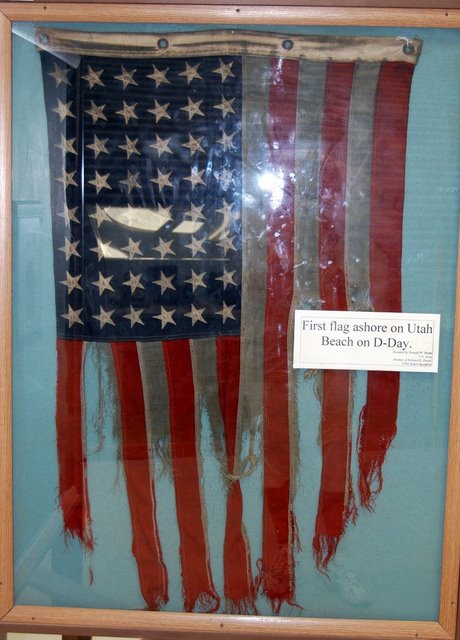






 Millard Fillmore's Bathtub