Brits struggle to save Sherwood Forest

November 21, 2007

Worldwide fans of Robin Hood should be concerned: Sherwood Forest is not even a ghost of what it once was.

The Associated Press carried a story detailing efforts to preserve and revive the forest made famous by the stories of Robin Hood. 900-year-old oaks, encroaching development, a sense of history, and a need to save green space — it’s a good story for warm-up on conservation, development, historical myths, or England’s geography.


Quote of the moment: Bohr on predictions, creationists on the death of evolution theory

November 21, 2007

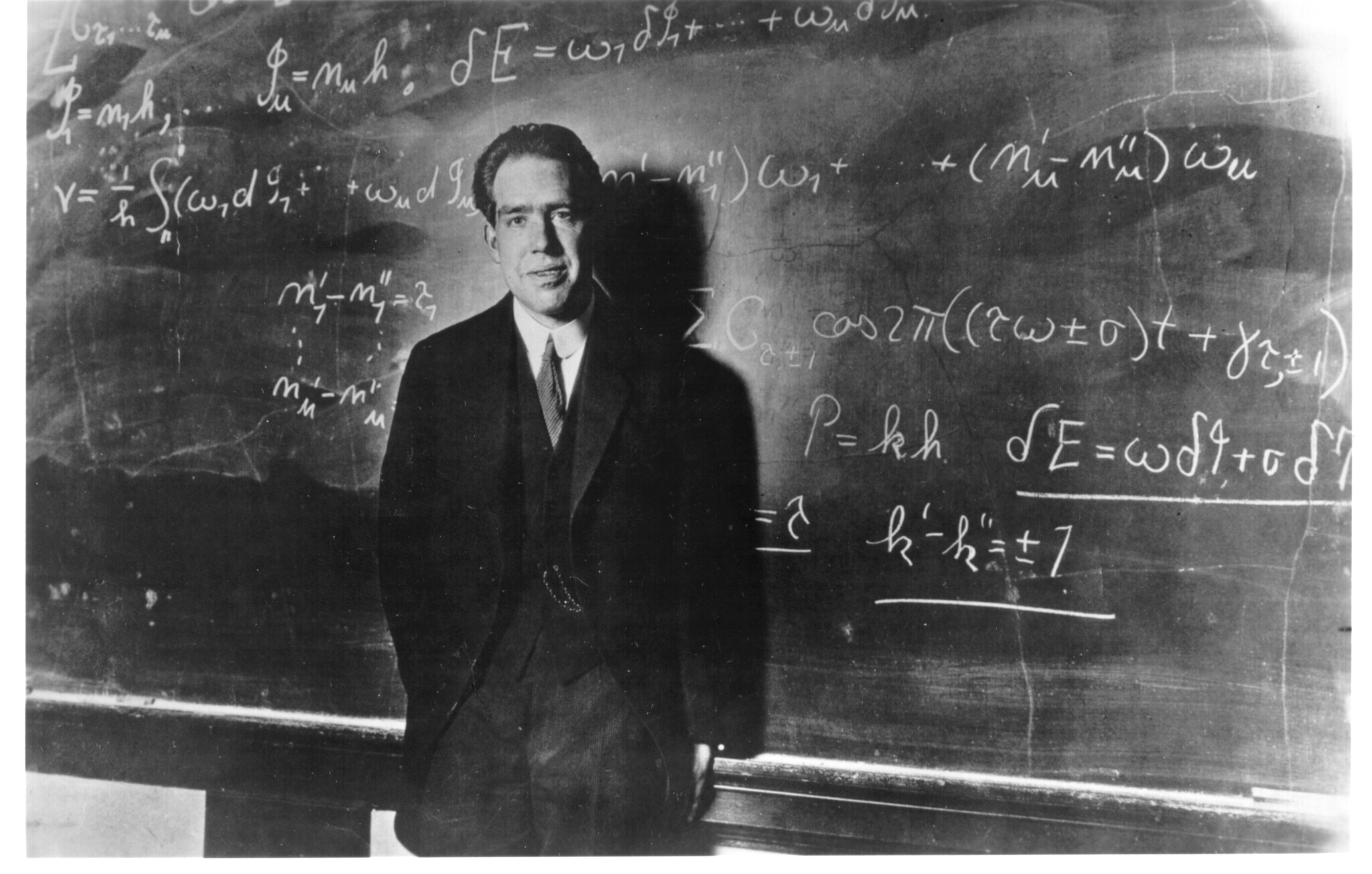
Niels Bohr as a younger man, at a chalkboard.

Niels Bohr, as a younger man, at the chalkboard. Atomic Archives

It is difficult to predict, especially the future.

  • Niehls Bohr, Danish physicist, 1885-1962 – attributed by Mark Kac, Statistics, 1975. Other sources say it is a Danish pun (anybody here speak Danish?) famous in the Danish parliament in the 1930s.

And as if in tribute to Bohr, Ed Brayton at Dispatches from the Culture Wars has a collection of creationist predictions that evolution theory will soon be dead — a series of predictions starting in 1904. Santayana’s Ghost urges you to read them, to avoid repeating history.


Intelligent designers plagiarize Harvard film

November 20, 2007

Ms. Smith at ERV caught Bill Dembski of the Discovery Institute looking for all the world as if he’s plagiarizing a video produced at Harvard showing the inner workings of a cell in animation.  She’s got the videos to prove it.

Uncomprehensible. Do these guys really represent Christians?


A blog hole in our galaxy!

November 20, 2007

NASA artist's conception of black hole at center of Milky Way GalaxyJust as a huge black hole can stifle star formation, so can a blog hole stifle post formation.

Woes at work and in volunteer positions — I’ve got a huge backlog of things that should be noted here, but are not noted yet — and may have to fall by the wayside.

Things change at work soon, I hope, and that should give me more time in more timely packets to think and find the stuff that needs to be here.

Thank you, Dear Reader, for bearing with me.

Image: NASA artist’s conception of the black hole at the center of the Milky Way Galaxy.


DDT works! (When used carefully, in IVM, and sparingly)

November 20, 2007

Discover Magazine’s site has a solid story on DDT and malaria, “Can a maligned pesticide save lives.” Among other things, the article notes that Rachel Carson was scientifically accurate in her cited concerns that DDT was killing birds, and in fact later research of more than 1,000 peer-reviewed papers has born out her worries, and provided even greater evidence of damage.

Cover of November 2007 Discover Magazine, featuring an article on DDT's continuing use in the fight against malaria, and vindicating Rachel Carson's research citations with regard to injuries to birds.

Cover of November 2007 Discover Magazine, featuring an article on DDT’s continuing use in the fight against malaria, and vindicating Rachel Carson’s research citations with regard to injuries to birds.

The article details how DDT is used in integrated vector management (IVM), where pesticides are sparingly and carefully used to prevent their target pests from evolving resistance and immunity.  DDT’s abuse had bred widespread resistance in mosquito populations in Africa and other malaria-endemic locations, forcing the World Health Organization to abandon its ambitious program to eradicate malaria in a program dependent on DDT working for at least a year.

Steven Milloy and the Usual Suspects and Comrades in Junk Science, in the War on Science at AEI and CEI will start their distortions of the Discover article any moment now . . . three, two, one . . .


Let Xerox help you thank a soldier

November 20, 2007

One of the lessons of Vietnam was that we need to honor and thank our soldiers especially when they get sent to execute bad foreign policy. So, regardless your views on current conflicts, you could perform a service, with the help of Xerox, by sending a card, from here.

No cost. Try it.

Card drawn by a kid, for Let's Say Thanks at Xerox

Tip of the old scrub brush to Brother Dwight.


Constitution survives Chuck Norris roundhouse kick

November 20, 2007

Chuck Norris’s brain waves could be picked up on a transistor radio — nobody knows because he doesn’t think.This must be a television advertising spot, but I hope it’s not rated as a public service spot, since it encourages stupidity and illegal school board actions.

(Is it my imagination, or is Norris using the same bottle of orange hair dye that Sen. Strom Thurmond, R-Mars, used in the last 65 years of his life?)

Norris is promoting the suspect curriculum of the National Council on Bible Curriculum in Public Schools (NCBCPS), a group of fundamentalist right-wingers who originally promoted “Thou Shalt Not Steal” with plagiarized material. Do not trust that curriculum.

Analysis of this curriculum for the Texas Freedom Network by a distinguished Bible scholar from Southern Methodist University, Dr. Mark Chancey, showed that the curriculum as revised still presents enormous legal problems — it promotes fundamentalist Christian theology — as well as being academically flaccid. Despite an update in late 2005/early 2006 designed to alleviate some of the more egregious errors of fact, Bible fact, and plagiarism, NCBCPS refuses to release their curriculum for analysis; copies obtained from schools in Texas show many of the old problems remain (see page 61 of this document).

Errors in Norris’s claims:

  1. The U.S. was not “founded on Biblical principles.” For Texas, teaching this would lead students astray of the state’s Texas Essential Knowledge and Skills (TEKS).
  2. The Supreme Court has never ruled that it’s legal to teach with the Bible as a textbook. In obiter dicta in religion in the schools cases, the Court has noted that a non-sectarian, fair teaching of the Bible as literature, or as it relates to history, should be part of a full and complete education. Specifically, the Court has never ruled that a course such as the one Norris proposes would be legal; instead, the Court has held consistently that course content that appears to be religious indoctrination as this course, is illegal, a violation of students’ religious rights and and over-reach by government. School boards may not endorse one faith over another.
  3. The count of schools using the NCBCPS curriculum is inflated. The group refuses to identify any school using their materials, but their claims in Texas were found to be inflated when compared with the materials school districts actually used.

Religion has played a big role in U.S. history. No student needs to be converted to Christianity in order to study that role. Nor does the role of Christianity need to be exaggerated.

Good Bible curricula exist, open to inspection, passed by religious scholars, approved by First Amendment and education lawyers. See the materials from the Bible Literacy Project, for a good example. NCBCPS’s curriculum, the one Norris promotes, is not that approved, educationally valuable curriculum.

Tip of the old scrub brush to “Why, That’s Delightful,” in the post “Chuck Norris Fact #277,090 : He’s an idiot”

Below the fold: Texas Faith Network’s guidelines for using the Bible in public schools

Read the rest of this entry »


Practice, even with failure, more important than talent

November 20, 2007

Every teacher needs to get familiar with the work of Carol Dweck. She’s a Stanford psychologist who is advising the Blackburn Rovers from England’s Premier League, on how to win, and how to develop winning ways.

Your students need you to have this stuff.

A 60-year-old academic psychologist might seem an unlikely sports motivation guru. But Dweck’s expertise—and her recent book, Mindset: The New Psychology of Success—bear directly on the sort of problem facing the Rovers. Through more than three decades of systematic research, she has been figuring out answers to why some people achieve their potential while equally talented others don’t—why some become Muhammad Ali and others Mike Tyson. The key, she found, isn’t ability; it’s whether you look at ability as something inherent that needs to be demonstrated or as something that can be developed.

What’s more, Dweck has shown that people can learn to adopt the latter belief and make dramatic strides in performance. These days, she’s sought out wherever motivation and achievement matter, from education and parenting to business management and personal development. [emphasis added]

I can’t do justice to Dweck’s work. See this story in Stanford Magazine.

See a significant update on this article, in October 2012, here.


Oceans white with foam, mate!

November 19, 2007

This is cool. Natural phenomena, the stuff that makes geography really interesting — where and what is this? (Pictures from August 2007)

Surfer emerges from foam in New South Wales

It was as if someone had poured tons of coffee and milk into the ocean, then switched on a giant blender.

Suddenly the shoreline north of Sydney were transformed into the Cappuccino Coast.

Foam swallowed an entire beach and half the nearby buildings, including the local lifeguards’ centre, in a freak display of nature at Yamba in New South Wales.

One minute a group of teenage surfers were waiting to catch a wave, the next they were swallowed up in a giant bubble bath. The foam was so light that they could puff it out of their hands and watch it float away.

Perhaps a good geography warm-up: Where are these pictures from? What is the phenomenon shown in the photos? Why might it be unusual for these people to be swimming in the ocean in August?

Read the rest of this entry »


Gettysburg Address, November 19, 1863

November 19, 2007


144 years ago today, Abraham Lincoln redefined the Declaration of Independence and the goals of the American Civil War, in a less-than-two-minute speech dedicating part of the battlefield at Gettysburg, Pennsylvania, as a cemetery and final resting place for soldiers who died in the fierce battle fought there the previous July 1 through 3.

Interesting news for 2007: More photos from the Library of Congress collection may contain images of Lincoln. The photo above, detail from a much larger photo, had been thought for years to be the only image of Lincoln from that day. The lore is that photographers, taking a break from former Massachusetts Sen. Edward Everett’ s more than two-hour oration, had expected Lincoln to go on for at least an hour. His short speech caught them totally off-guard, focusing their cameras or taking a break. Lincoln finished before any photographer got a lens open to capture images.

Images of people in these photos are very small, and difficult to identify. Lincoln was not identified at all until 1952:

The plate lay unidentified in the Archives for some fifty-five years until in 1952, Josephine Cobb, Chief of the Still Pictures Branch, recognized Lincoln in the center of the detail, head bared and probably seated. To the immediate left (Lincoln’s right) is Lincoln’s bodyguard, Ward Hill Lamon, and to the far right (beyond the limits of the detail) is Governor Andrew G. Curtin of Pennsylvania. Cobb estimated that the photograph was taken about noontime, just after Lincoln arrived at the site and before Edward Everett’s arrival, and some three hours before Lincoln gave his now famous address.

On-line, the Abraham Lincoln Blog covered the discovery that two more photographic plates from the 1863 speech at Gettysburg may contain images of Lincoln in his trademark stove-pipe hat. Wander over to the story at the USA Today site, and you can see just how tiny are these detail images in relation to the photographs themselves. These images are tiny parts of photos of the crowd at Gettysburg. (The story ran in USA Today last Thursday or Friday — you may be able to find a copy of that paper buried in the returns pile at your local Kwikee Mart.) Digital technologies, and these suspected finds of Lincoln, should prompt a review of every image from Gettysburg that day.

To the complaints of students, I have required my junior U.S. history students to memorize the Gettysburg Address. In Irving I found a couple of students who had memorized it for a an elementary teacher years earlier, and who still could recite it. Others protested, until they learned the speech. This little act of memorization appears to me to instill confidence in the students that they can master history, once they get it done.

To that end, I discovered a good, ten-minute piece on the address in Ken Burns’ “Civil War” (in Episode 5). On DVD, it’s a good piece for classroom use, short enough for a bell ringer or warm-up, detailed enough for a deeper study, and well done, including the full text of the address itself performed by Sam Waterson.

Edward Everett, the former Massachusetts senator and secretary of state, was regarded as the greatest orator of the time. A man of infinite grace, and a historian with some sense of events and what the nation was going through, Everett wrote to Lincoln the next day after their speeches:

“I should be glad, if I could flatter myself that I came as near the central idea of the occasion in two hours, as you did in two minutes.”

Interesting note: P. Z. Myers at Pharyngula notes that the Gettysburg Address was delivered “seven score and four years ago.” Of course, that will never happen again. I’ll wager he was the first to notice that odd juxtaposition on the opening line.

Resources for students and teachers:


School district sues parent over blog posts

November 18, 2007

You know, the obnoxious parent who stands up at every school board meeting, making the same boring point week after week, month after month, finally slipping into accusations about the ethical behavior of the board members and administrators who do not jump to the parent’s wishes — yeah, that one.

She’s a thorn in the side of any district governing board, but often enough correct about new policies, and sometimes in exposing wrongdoing, that most boards tolerate the barbs and try to fix the problems legitimately pointed out.

But what if the parent “thorn” has a blog?

The drama unfolded in Galveston; as of right now, it looks as though the district will back down from its threat after the blogger held fast; surely this will not be the last of such stories we see.

The school district in Galveston, Texas, threatened to sue a parent for views expressed on her blog. It alleged libel. Slashdot had one of the earliest rundowns, including the fatal flaw in the district’s complaint and how it tried to deal with it:

“A Texas School District is threatening to sue a parent over what it terms ‘libelous material’ or other ‘legally offensive’ postings on her web site and are demanding their removal. Web site owner Sandra Tetley says they’re just opinions. The legal firm sending the demand cited 16 items, half posted by Tetley, the rest by anonymous commentators to her blog. The alleged libelous postings ‘accuse Superintendent Lynne Cleveland, trustees and administrators of lying, manipulation, falsifying budget numbers, using their positions for “personal gain,” violating the Open Meetings Act and spying on employees, among other things.’ The problem for the district is that previous courts have ruled that governments can’t sue for libel. So now, in a follow-up story, the lawyers say the firm ‘would file a suit on behalf of administrators in their official capacities and individual board members. The suit, however, would be funded from the district’s budget.’ So far, Tetley hasn’t backed down, although she said she’ll ‘consult with her attorneys before deciding what, if anything, to delete.'”

The site is dedicated to watching the Galveston Independent School District, GISD Watch, by concerned parent Sandra Tetley.

According to the Galveston Daily News:

[David]Feldman [of the district’s law firm, Feldman and Rogers,] said Tetley’s Web site — www.gisdwatch.com — contained the most “personal, libelous invective directed toward a school administrator” he’s seen in his 31-year career.

“It is not the desire of the School District, the Board, or this Firm to stifle free expression or inhibit robust debate regarding matters pertaining to the operation of the public schools,” Feldman wrote in the demand letter. “This is solely about the publication of materials that clearly go beyond that which is legally and constitutionally encouraged and permitted, and into the realm of what is legally offensive and actionable.”

Feldman cited 16 examples of what he says are libelous postings. Half were posted by Tetley; the other half were posted by anonymous users.

The postings accuse Superintendent Lynne Cleveland, trustees and administrators of lying, manipulation, falsifying budget numbers, using their positions for “personal gain,” violating the Open Meetings Act and spying on employees, among other things.

Tetley said the postings were opinions only.

“Everyone deserves to have their opinion,” she said. “I don’t think they have a right to make me, or anyone else, take down criticisms of them off the Web site. They’re not going to force us to take off our opinions because we have no other place to go.”

The Drudge Report posted a story about the case, attracting 64,000 viewers. Tetley hired Galveston attorney Tony Buzbee, who has had great success suing institutions in Galveseton. Buzzee warned the district that his client would strongly fight against any suit filed against her.

As of November 10, district Superintendent Lynn Cleveland said the district would probably drop legal action, to focus on delivering education to students.

Quite a drama in two or three weeks. Press freedom won out.

On the one hand, no one likes to be sued for libel. On the other hand, Ms. Tetley knows the school district’s leaders are paying attention to what she says.

What’s the moral of this story?

Tip of the old scrub brush to Pamela Bumsted, who alerted me to this by e-mail.


Another carnival of DDT

November 18, 2007

One of the clues that someone is financing a public relations campaign for DDT and against care for the environment is the way “news” keeps popping out about the benefits of DDT, though there is no natural process for making such news in back of the stories.

We old PR flacks recognize that without the push from an agent, these stories wouldn’t get written.

Just over a month ago there was a flurry of stories about how DDT was “effective” even after mosquitoes developed immunity to it, because it repels mosquitoes, too — even though that wasn’t what the researchers concluded, and that wasn’t the major thrust of the research article.

We also saw a Hoover Institute fellow call for DDT to be used to fight the spread of West Nile virus, though no public health official called for such action, though there is no particular need for such a drastic change in policy, and despite the fact that DDT spraying for the mosquitoes that carry West Nile is one of the least effective means of killing them (DDT is not a larvacide, and larvacides are called for to combat West Nile).

This month? No real news, but the American Enterprise Institute, which nominally is pitched at promoting business interests, issued a new report recycling all the old canards, calling for increased use of DDT in Africa to fight malaria, despite already expanded use, and despite a lack of call from health officials to spray more DDT.

Here’s how it looks on the internet:

November 5, 2007 – Wall Street Journal opinion piece by AEI’s Roger Bate, over the years one of the most ardent salesmen of DDT as the solution to nearly every problem, so long as it bashed environmentalists. WSJ notes the piece is a shorter version of the AEI report.

November 1, 2007 – TCS piece by AEI’s Roger Bate, complaining generally about environmentalists.

Random DDT stuff, some of which may turn into separate posts:


“Judgment Day” censored in Memphis?

November 18, 2007

PBS’s ombudsman takes note of worries that Memphis did not get the NOVA program on the Dover, Pennsylvania trial of intelligent design. “Judgment Day” was not aired in the normal NOVA timeslot.

Station management pleads that they made no decision to censor, just a decision to run supporting program for Ken Burns’ massive film project, “The War,” instead. (HD viewers could see the NOVA program).

Let’s hope that’s accurate.

In the meantime, the letters to the ombudsman give a clear probe into the minds of viewers; favorable reactions were many; more numerous, unfavorable reactions seemed to come mostly from the reason-challenged side of humanity. It’s worth a read.

Sample of the unfavorable:

After tonight’s program on Intelligent Design it proves that PBS has a “design” of its own — it’s one that is driving the country to destruction — your bias is completely counter to history, to the very foundation of our nation and history of nations. Every part from beginning to end had its own objective; completely counter to the Truth which is proven in the rise and fall of nations.

Daryle Getting, Winter Park, FL
It doesn’t take a “Rocket Scientist” to figure out that if we, as humans, evolved from monkeys . . . THEN WHY? . . . Are there STILL Monkeys??? We were “Created” by God!!! Pull up AOL now and you’ll notice the Gov. of Georgia praying for rain, (No Doubt to GOD). When 9/11 happened what did every good neighbor do? PRAY. Not to monkeys . . . To our “Creator”!!! It shouldn’t take tragic and desperate circumstances for people to realize this fact!!! GOD BLESS AMERICA!!! In GOD We Trust!!!

Sonya L. Johnson, North Port, FL

Sample of the favorable:

I just watched your program “Judgment Day: Intelligent Design on Trial.” Fantastic! I don’t remember recently watching such an informative and well put together program. PBS deserves to be awarded for this stellar program. Thank you so much for actually airing a program that was intelligent, well put together, and fun to watch. Superb. Atlanta, GA

Am I unfair in labeling some “reason-challenged?” Certainly fact challenged. Read the rest of this entry »


Why not treat kindergarteners like college students?

November 18, 2007

Vouchers in Utah have the wooden stake right in the heart. That’s one proposal in one state. More voucher proposals are promised, and the debate continues.

Voucher advocates generally make a plea that colleges have something akin to school vouchers with Pell Grants (Basic Education Opportunity Grants), Stafford Grants, the GI Bill and other federal programs, plus many state programs, which give money to a student to use at a college of the student’s choice.

Why won’t this work for kindergartners, 8th graders and 10th graders? the voucher advocates ask.

The short answer is that we regard college students as adults. Beyond that are several other differences between elementary schools and colleges that we should, perhaps, explore.

Texas Ed: Comments on Education from Texas has a couple of posts that provide some insights to the issues. In the first one, “We Have Vouchers for Higher Education,” the question is raised about why not let elementary students operate like veterans, and take their government money where they choose to.

In the second, “Vouchers Are About Choice, Not Quality,” we get a glimpse of real life — parents fighting to keep open their neighborhood school, despite there being better performing schools available to take their kids.

We might want to compare systems, at least briefly.

Read the rest of this entry »


It was religion all along

November 17, 2007

The Discovery Institute implicitly admitted that their concern about evolution is religious today. They named Michael Medved a fellow.

No, Bill Dembski cited the press release, Medved was not invited because of his acumen in urban planning, or even his experience fighting traffic in California. No, no one even thought Medved has any science chops.

It’s the religion, stupid!

“Michael Medved is an intellectual entrepreneur, a political and cultural polymath with great insights, judgment and wit. We are delighted to have this new relationship with him,” said Discovery Institute president Bruce Chapman.

“Intellectual entrepreneur?”

The Seattle prayer tank suffered serious blows in 2005, 2006 and 2007, when their fellows abruptly dropped defense of intelligent design as presented by the Dover, Pennsylvania school board, a federal court ruled that ID is not science but is religion-based, and the respected science production NOVA produced a two-hour program highlighting and explaining that court decision.

So, the DI poobahs figured, what better to do than hire a nationally-syndicated culture-lamenting talk radio guy to front for the band? One wonders if Rush Limbaugh turned them down.

The research agenda for the intelligent design movement could have used the money, and appointing a research fellow would have helped establish that science remains a focus of Discovery Institute work.

Science won’t fill the pews, though. So they hired Medved.

See more comments at Panda’s Thumb. (Did I mention Bigfoot?) And a tip of the old scrub brush to P. Z. Myers, who will probably not much like my post on Ken Miller coming up, who pointed me to Amused Muse.