Over the past year three or four people have complained about Snap Shots. No one said they like them.
They finally got to me. I turned ’em off.
If you have an opinion about that, put it in comments.
Don’t know what Snap Shots are? Ignore this post.
Over the past year three or four people have complained about Snap Shots. No one said they like them.
They finally got to me. I turned ’em off.
If you have an opinion about that, put it in comments.
Don’t know what Snap Shots are? Ignore this post.
 3 Comments |
  Administrivia | Tagged: Administrivia |
  Permalink
 Posted by Ed Darrell
4. UNCOOL: LOT OF HEAT FROM GLOBAL-WARMING DENIERS.
Suppose, I asked myself, that the deniers are right and the CO2 thing is a mistake? What will happen if the world takes the CO2 thing seriously, adopting common sense measures to counter anthropogenic warming and there never was any warming in the first place? 1) there will more non-renewable resources to leave to our progeny; 2) we will breath cleaner air and see the stars again, the way we saw them half a century ago; 3) we could stop paving over the planet, and 4) cut down on the number of billionaires. If we’re wrong we could have a party. We could have a party either way.
Robert L. Park, What’s New, July 25, 2008
At Millard Fillmore’s Bathtub, see also: “Starbucks controversy: The Way I See It #289 (global warming)”
Leave a Comment » | Accuracy, Climate change, Environmental justice, Global warming, Junk science, Politics, Science | Tagged: Accuracy, air pollution, Climate change, denialism, Environmental protection, Global warming, Junk science, Politics, Science | Permalink
Posted by Ed Darrell
Still working on a simple list of economics blogs for the blogroll.
Of course, you’re probably aware of the trying-to-be-comprehensive listings of blogs at Acadamicblogs.org. Here’s the list of economics blogs. Tell us, Dear Reader, which of these blogs do you regularly read, which do you recommend, and which are missing from the list?
(I’ve already noticed that the high-faluting Becker-Posner Blog, and the always-interesting Michael Perelman’s Unsettling Economics are not on the list. The list strives to be comprehensive. There is a whole lotta blogs out there.)
1 Comment | Economics, Weblogs | Tagged: blogging, Economics, Weblogs | Permalink
Posted by Ed Darrell
Freedom of expression is the key to all other rights in our American system of government, I am convinced. Defending the First Amendment becomes the way to defend all other rights. Telling the King he has no clothes, without fear of retribution, makes it possible to keep the King clothed.
I support most groups and efforts to defend and protect the First Amendment. I’ve been a member of the Society of Professional Journalists for most years since 1974, I’ve been a member of the National Freedom of Information coordinating committee, and I’ve worked in three states and the federal legislature to expand freedom of information, reporters’ access to information, and especially the people’s right to know.
In the press, there are few hard-core idiots. A few exist, but they are outweighed by the many who make sincere efforts to get the story right. That’s a long way of saying, it’s easy to support rights of people who aren’t always yapping at you. Their existence puts me in a little quandary, and I need to resolve it.
Last night I found one more deluded, on-line writer working against the First Amendment and, IMHO, hammering away at the foundations of the Constitution in other ways. (Incredibly, this guy asked Jonathan Rowe to abandon commenting at his blog, suggesting Rowe’s carefully crafted, court-tested, generally take-’em-to-the-bank correct ideas about history are “lies.” Yeah, he has a right to hold foolish opinions.)
Does he have a right to do that, on-line?
Yes he does have that right. As I’ve often said before, I put a lot of stock into the old Ben Franklin maxim that truth wins in a fair fight. So we need to keep the fight fair.
We also need to defend the rights of bloggers whose work helps expose the truth, even at the expense of defending the deluded writers who get it wrong.
What are blogger’s rights and protections? The Electronic Frontier Foundation (EFF) put together a concise and nearly complete legal guide for bloggers — you can find it here.
EFF campaigns to protect and defend bloggers’ rights. Bloggers, and other supporters of freedom, should join that campaign. Millard Fillmore’s Bathtub will display a badge of the campaign to encourage others to join it.

Do you like freedom? Do you read a lot? Do you read on-line? Do you express your opinions? Then you have a vested interest in supporting these groups. Since you’re reading this on-line, you have a vested interest in supporting the Electronic Freedom Foundation’s work to defend bloggers’ rights. Click over to EFF, get informed, lend some support, and get involved.
This blog is banned in Turkey, prohibited from viewing in China, non-grata in much of Singapore and Iran, and blocked from the Duncanville, Texas, Independent School District. I appreciate the freedom to blog, and I hope we can keep blogging free everywhere else, and make blogging free in those areas darkened by bans on expression.
(Okay, I like the cat in the one badge from the EFF — would it kill them to put a dog in one?)
13 Comments | Accuracy, Bill of Rights, First Amendment, Freedom of Information, Freedom of the Press, Politics, U.S. Constitution, Weblogs | Tagged: blogging, Constitutional Rights, First Amendment, Freedom of Information, Politics | Permalink
Posted by Ed Darrell
Subtitle this one, “DBQs in prehistory, paleontology, and anthropology.”
Younger son James complained yesterday about . . . well, about stuff he wasn’t taught. His questions to me were about what was available in the history textbooks on the great advances in science in the 20th century.
Very little is available, really. What had set him off was his summer reading where he’s been introduced, for the first time, to particle physics of the past 30 years. History texts may mention Einstein’s letter to FDR which started the Manhattan project. An outstanding history and science student in a U.S. high school can pass through the experience without ever learning what Einstein’s equation, E=mc², actually means, or how it pertains to his letter to Roosevelt, or when and how Einstein came up with it, how Einstein’s papers changed physics, how Einstein’s ideas were tested, how Einstein’s pacifism and Jewish heritage drove him to the U.S., and so on. Great advances in particle physics, or even in practical applications like CAT scans and PET scans, have fallen out of the books and out of the curriculum. 21st century medicine, but 20th century science texts and 19th century history texts. It’s the David-Bartonization of American education.
The stuff wasn’t covered in his AP physics or AP chemistry classes (what’s up with that?!), nor were most of the great discoveries even mentioned in any of the AP history courses.
No wonder the head of the Texas State Board of Education knows so little about science. Cue the country/western version of the story, “Been dumb as a stump so long it looks like genius to me.”** Plus, this makes it clear why the versions of curricula the SBOE head favors must be resisted.
Texas standards and national standards in history ask that students be familiar with American inventions and innovation. In reality that translates to Eli Whitney and the cotton engine, because it’s a key factor in the rise of plantation economics in the South prior to the Civil War; maybe some mention of water-powered looms; Edison and the light bulb; Ford and the assembly line; and maybe a mention of radio or television, usually with regard to the effects on culture. I know a teacher who has a great unit for Texas history on barbed wire and the Colt .45. World history mentions James Watt and the steam engine.* The Wright brothers and the airplane get a couple of sentences. Humans going to the Moon gets a few sentences, but not as much as Sputnik, because, well because Sputnik scared the bejeebers out of some of the people who yelled loudest at Texas and Florida textbook meetings, I imagine.
I’m not going to fix all of that, not right now. It’s a subject that deserves more time in the cooker, I think.
But I’m also working on plans for this next year. Pre-history human migrations, geological development of the planet — and last night I discovered a group hitting the Bathtub for information about humans and evolution. Sheesh! Another place where the history and science texts short the glorious science, where a student is more likely to be struck by lightning waiting for the bus than to get decent coverage of human evolution in the classroom. (Hey. Do you know a teacher who covers human evolution well in any subject? Put it in comments, below — I want to congratulate her, or him. I also want to steal the lesson plans.)
Here’s a quick fix, using some seminal documents that are perfectly classroom usable: Go to the Nature magazine website, and specifically look for the section, “focus on human origins.” If your administrators aren’t fully versed on No Child Left Behind, you can claim these as “research-based” (they are purely research-based; the law asks that our pedagogical methods be research-based, though, not the content, and that’s impossible; most of what we do in the classroom is tradition-based unsupported by any significant research, and federal laws and state regulations generally require the opposite of what the research says . . . don’t get me started). But I digress.
Nature is one of the premier science journals, a peer-reviewed or juried journal that is the prime place for key research findings to be published (along with Science, the other science journal giant). Most of their material is hidden away on the internet, held in proprietary sites available to scientists whose research institutions spring for expensive subscriptions (no, these journals are generally NOT available through the databases most high schools and non-research colleges purchase). Much of the best research of the last century is unavailable to high school teachers or students. This is true of chemistry, physics, biology and geology. The textbooks tend to obfuscate and cover the stuff up — or in the case of particle physics, ignore the field.
Several years ago Nature pulled about a dozen of the seminal papers in human evolution studies out of their vaults, making them available for free. These papers include some of the real classics:
Frankly, I wouldn’t expect to see these in a real DBQ in anything except, perhaps, human geography — but I can dream, can’t I? You can certainly create outstanding DBQ exercises with exerpts from these and a few other sources. Or you can simply use these complete papers in your classes. Except for a select few debate students at the upper echelons of competitiveness, real research papers fall out of the curriculum, and it’s a shame.
There is drama in these papers. Some of them shake the Earth, but in coolly scientific words. Ironically, the papers are not written so technically that they are beyond the ken of most high school readers. These papers are real history, real science, and our students deserve to read them.
Nature deserves our thanks for making these papers available. I wish other seminal papers were available, from Nature, and from other science and history research journals. Students would benefit from reading real history about the fall of the Berlin Wall, or the development of public health to fight tuberculosis. Students could mightily use to read about physics, biology, meteorology, geology, and other sciences upon which we rely to save the human race.
_____________________
* James Rowland of Woodlands High School in the Conroe Independent School District led a group of us teachers in an exercise last week at Texas Christian University in Fort Worth, asking the question about who invented the steam engine and when. With six different AP or advanced world history texts, we came up with eight different answers, including two different years given for Watt’s work.
** Yes, from Richard Fariña’s 1966 novel, Been Down So Long It Looks Like Up to Me (finished two days before his fatal motorcycle accident), and the song (pay no attention to the Lee Hazelwood-Nancy Sinatra song, but remember the Doors’s version is probably unsuitable for classroom use).
Resources:
3 Comments | DBQ sources, Education, Evolution, Historic documents, History, Invention, Lesson plans, Paleontology, Science, Teaching | Tagged: DBQ, Education, History, human evolution, Inventions, Lesson plans, Paleontology, Science | Permalink
Posted by Ed Darrell
Truly the lazy days of summer — I missed the anniversary of the Trinity Project, the first atomic bomb ever exploded, at White Sands, New Mexico, early on the morning of July 16, 1945. That was 63 years ago.

The Trinity atomic bomb test, culmination of the Manhattan Project, July 16, 1945
The New Mexico blast demonstrated that atomic bombs work. President Harry S Truman got the word of the successful test while attending the Potsdam Conference with Winston Churchill of England and Joseph Stalin of the Soviet Union.

The Potsdam Conference, July 1945 – Churchill, Stalin, and Truman at the table – Photo from the Truman
Truman hoped to avoid a land invasion of Japan, which experts said would leave at least a million dead U.S. soldiers and five million dead Japanese. Truman was a soldier in World War I, who saw the trenches close up. He hoped to avoid anything similar for soldiers, and civilians. From Potsdam, Truman, Churchill and Stalin issued the Potsdam Declaration, ending with an ultimatum to Japan to surrender unconditionally or face terrible consequences.
Japan did not surrender. On August 6, 1945, the U.S. detonated the first atomic bomb used in warfare over Hiroshima, Japan, a city with large military support facilities. Within a few minutes, nearly 100,000 people were dead. When Japan failed to offer unconditional surrender even then, a second atomic device was detonated over Nagasaki, Japan, on August 9. (Had Japan not surrendered then a scramble would have been on — the U.S. had materials for about four more bombs, but they were not ready to go.)
1945 launched the world into the Atomic Age, by many accounts. The existence of atomic weaponry added to tensions on the planet played out during the Cold War. The creation of thermonuclear weapons, many times as powerful as a simple atomic bomb, only added to the tension. Perhaps we should call it the Atomic Angst Age.
Does that explain the fascination with photos of atomic blasts in recent days?
Wired’s online version noted the anniversary and included a slide show of atomic milestones, featuring a few blasts.
Then this post, from a blog named Picdit — “8 Insane Nuclear Explosions” rode the top of the popularity index of WordPress for the past couple of days. I’m not sure why these photos or the events they portray deserve to be called “insane.” I’m perplexed about why they are so popular.
These events around the creation, testing and use of nuclear arsenals resonate deeply with those of us who lived through any of these times. High school students have tested poorly on these issues during the past five years, however. Many of my history students do not know the significance of the classic mushroom cloud that marks an atomic blast.
I hope the curiosity is genuine curiosity for the historic events, that this curiosity leads to understanding of the destructive power of nuclear weapons, and that those tens of thousands who clicked on those images achieved an iota of understanding. I hope.

The First Bomb at Bikini, Charles Bittinger, 1946 – “Captured at the peak of formation, this painting illustrates the classic mushroom cloud shape. The pink color of the cloud is due to the oxidation of nitrogen caused by high heat and radiation from the explosion. The rapidly cooling fireball is the cause of the red glow seen deep within the cloud. The blast wave created the massive waves and steam that engulfed the target fleet at the bottom.” From the Naval Historical Center Art Collection.
Check out:
16 Comments | 1941-1945, Atomic Bomb, Cold War, DBQ sources, Education, History, Nuclear power, Nuclear weapons, Politics, Science, World War II | Tagged: Atomic Bomb, Cold War, DBQ, History, Nuclear weapons, World War II | Permalink
Posted by Ed Darrell
In the U.S. we still have people throwing themselves in front of Zambonis to protest doing anything about global warming. In Russia, warming is taken as a fact.
And so Russians get a leg up on U.S. companies, in this case working to open an Arctic “bridge” for shipping goods from Russia to Canada and back.
Bookmark this site, Arctic Economics, you economics and geography teachers.
3 Comments | Business, Climate change, Economics, Free market economics, Geography - Economic, Geography - Physical, Global warming, Globalization, Natural resources, oceans, Science, Transportation, Travel | Tagged: Business, Climate change, Economics, geography, Global warming, Globalization, Russia, Trade Routes, Travel | Permalink
Posted by Ed Darrell
One of the philosophers of Rising Sun (CRS – LA Jonas Foundation) observed that it is impossible to be both young and brave, and old and wise. Age of our leaders often equates to experience. Age becomes an issue in election campaigns — Ronald Reagan, the previous record holder of the oldest person ever to run for a first term as president of the United States before John McCain, headed off arguments that he was “too old” with a zinger in a debate with Walter Mondale in Reagan’s campaign for reelection in 1984.
It was the second debate in 1984, from Kansas City’s Municipal Auditorium (To confuse our foreign readers, we should note that this is in Kansas City, Missouri; Kansas City, Kansas, is on the western side of the river, and is a city of less consequence than Kansas City, Missouri, in population, and in most discussions. We confuse our foreign readers in revenge for English politics, which pertains to the Quote of the Moment, but cannot be explained by or to a person who is not intoxicated). The debate focused on foreign policy and the future of the world. Among the panel of journalists doing the questioning in this deformed type of debate, was the late Henry Trewhitt, then diplomatic correspondent for The Baltimore Sun, one of America’s historically great newspapers, and still great.
About 20 minutes into the debate, Trewhitt asked this question:
REPORTER: Mr. President, I want to raise an issue that I think has been lurking out there for two or three weeks, and cast it specifically in national security terms. You already are the oldest President in history, and some of your staff say you were tired after your most recent encounter with Mr. Mondale. I recall, yes, that President Kennedy, who had to go for days on end with very little sleep during the Cuba missile crisis. Is there any doubt in your mind that you would be able to function in such circumstances?
Reagan sealed his reputation for wit, and probably sealed the election, with this previously-scripted (we know now) zinger:
REAGAN: Not at all, Mr. Trewhitt and I want you to know that also I will not make age an issue of this campaign. I am not going to exploit for political purposes my opponent’s youth and inexperience. If I still have time, I might add, Mr. Trewhitt, I might add that it was Seneca or it was Cicero, I don’t know which, that said if it was not for the elders correcting the mistakes of the young, there would be no state.
Former Vice President Walter Mondale, a great statesman in his own right, and no youth at the time, had a solid response, but not an election-winning response: It won no laughter. (It’s interesting, in 2008, to remember that Mondale was criticizing Reagan for his failure to act to prevent a terrorist attack on U.S. forces in Lebanon, that killed more than 200 Marines.):
REPORTER [Henry Trewhitt]: Mr. Mondale, I’m going to hang in there. Should the President’s age and stamina be an issue in the political campaign?
MONDALE: No. And I have not made it an issue nor should it be. What’s at issue here is the President’s application of his authority to understand what a President must know to lead this nation, secure our defense and make the decisions and judgments that are necessary. A minute ago, the President quoted Cicero, I believe. I want to quote somebody a little closer home, Harry Truman. He said the buck stops here. We just heard the President’s answer for the problems at the barracks in Lebanon where 241 Marines were killed. What happened? First, the Joint Chiefs of Staff, with the President, said don’t put those troops there. They did it. And then five days before the troops were killed, they went back to the President, through the Secretary of Defense, and said please, Mr. President, take those troops out of there because we can’t defend them. They didn’t do it. And we know what’s – what happened. After that, once again our embassy was exploded. This is the fourth time this has happened – an identical attack in the same region, despite warnings even public warnings from the terrorists. Who’s in charge? Who’s handling this matter. That’s my main point.
Which brings us to William Pitt’s remarks.
William Pitt, later Earl of Chatham, was 32 years old, and already a powerful member of the Whig opposition to England’s de facto first, and longest-serving Prime Minister, Robert Walpole, (who also was a Whig — see what I mean about English politics?). Though leading the opposition to Walpole, Pitt and a few of his colleagues were known as the Patriot Boys (Kansas City residing mostly in Missouri pales in comparison to these complexities of British politics).
Walpole, 32 years older than Pitt, leader of the House of Commons, complained at some point about Pitt’s youth. Walpole played dirty against Pitt, getting Pitt’s commission in the military cancelled. The two would dispute for a few years yet — finally, Pitt’s side prevailed, and Walpole lost a vote of confidence.
But on March 6, 1741, Pitt rose in the House of Commons and responded to Walpole’s charges:
“The atrocious crime of being a young man, which the honorable gentleman [Walpole] has with such spirit and decency charged upon me, I shall neither attempt to palliate nor deny; but content myself with wishing that I may be one of those whose follies may cease with their youth, and not of that number who are ignorant in spite of experience.”*
Walpole, Massachusetts, founded in 1724, is named after Robert Walpole. Pittsburgh, Pennsylvania, is named after William Pitt (the elder), as are Pittsfield County, Virginia, Chatham County, North Carolina (remember, Pitt was later Earl of Chatham), Pittsburg, New Hampshire, Chatham, New Jersey, and Chatham University, in Pittsburgh, Pennsylvania.
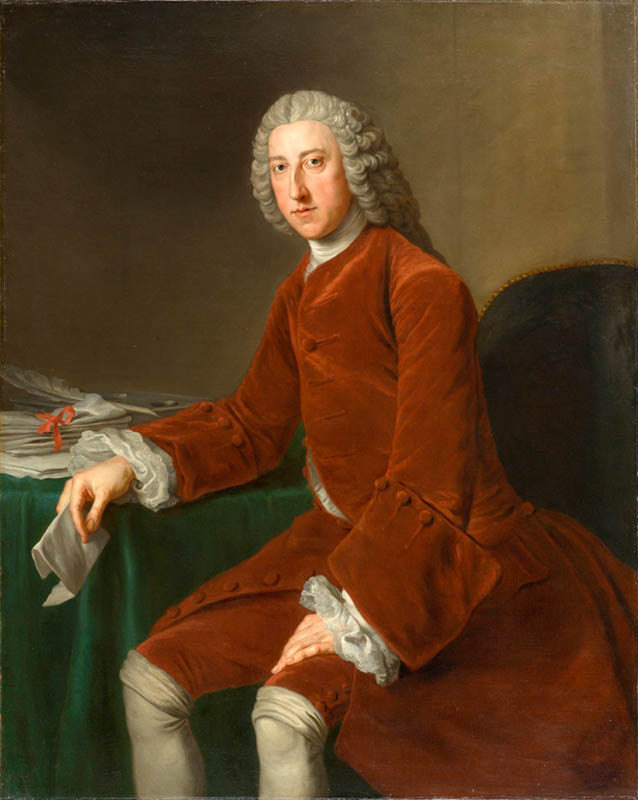
William Pitt, later Earl of Chatham
* Did Pitt ever actually utter these words? There was no official reporting service for debates in the House of Commons in 1741. Some speeches were written out before hand, some were carefully noted. This speech, alas, comes to us reported by the essayist and literature critic Samuel Johnson, who was famous for writing great speeches for members of the House of Commons, after the fact. Of this particular speech, Bartlett’s Familiar Quotations, 17th ed. carries this footnote: “This was the composition of Johnson, founded on some note or statement of the actual speech. Johnson said, ‘That speech I wrote in a garret, in Exeter Street'” – Boswell, Life of Johnson [1791]. If only Walter Mondale had Samuel Johnson whispering in his ear. Barack Obama may need the whisperings of Johnson in the current campaign.
2 Comments | Elections, Famous quotes, History, Politics, Quotes | Tagged: Age, Elections, English History, Experience, Famous quotes, Politics, Quotes, U.S. history, Youth | Permalink
Posted by Ed Darrell
No updates in several months — the only thing I can conclude is that the blog, Adam Smith Lives!, is dead.
Gone from the blogroll.
I’m interested in finding good blogs on economics, world history, and government — Dear Reader, which ones have I overlooked?
7 Comments | Administrivia, Economics, Weblogs | Tagged: blogging, blogs, Economics, Weblogs | Permalink
Posted by Ed Darrell
Goodnight Moon by Margaret Wise Brown and Clement Hurd is one of my favorite books of all time. I first read it when I was in college, but it was a toddler favorite of both of our sons, and it rapidly became one of mine, too. Reading it to them at bedtime helped calm them down and put them to sleep. There is from the book a feeling of safety, of warmth, coziness, and love. I may have liked reading it to them more than they liked being read to.
With our youngest off to college this fall, I wish there were some book to give them that would reproduce those good feelings of nearly 20 years ago.
::sigh::
Here’s what we have instead. Goodnight Bush.
This image is scary enough (see the bugging microphone? the burning ballot box? the tilted scales of justice? the polluting smokestacks?).

Cover of Goodnight Bush
This is the one that makes the more serious statement:

Goodnight human rights, everywhere
A story on this book at NPR was the “most e-mailed” last week.
Images by Gan Golen and Erich Origen, Goodnight Bush, copyright © 2008, Little, Brown and Co.
4 Comments | Books, Elections, History, Human Rights, Political cartoons, Politics, Presidents | Tagged: Books, Cartoons, Elections, Human Rights, Political cartoons, Politics, President Bush | Permalink
Posted by Ed Darrell
How do you apply this information in your lesson plans?
Even babies chunk data for memorization. That is, even babies find it easier to remember things if the new items include chunks of already familiar information.
Not Exactly Rocket Science discusses new research that shows infants as young as 14 months use this memorization trick.
Which of these strings of letters is easier to remember: QKJITJGPI or BBCITVCNN?
Chances are, you chose the latter string, where the nine letters are the combined names of three television networks. This neatly illustrates a fundamental property of human memory – that we remember long strings of information more easily if we can break them down into bite-sized chunks. In this case, a nine-letter string can be divided into three lots of three letters. You probably use similar strategies for remembering telephone numbers, credit card details, or post codes.
Now, Lisa Feigenson and Justin Halberda from Johns Hopkins University have found that infants just 14 months old can use the same technique, delightfully known as “chunking” to increase the limited scope of their memories. Their work suggests that this technique isn’t something we learn through education or experience – it’s more likely to be a basic part of the way our minds process information.
Much more, here.
Leave a Comment » | Brain development, Brain learning, Education, Learning, Learning styles, psychology, Research, Teaching | Tagged: Brains, Education, Learning, Learning styles, Lesson plans, psychology | Permalink
Posted by Ed Darrell
Thus spake Gaius Sallustius Crispus, the Roman historian known as Sallust (86-34 B.C.):
From The War with Catiline, 1

Statue of Sallust near the Austrian Parliament, photo by Haslinger Willibald
This file is licensed under the Creative Commons Attribution ShareAlike 2.5 License. In short: you are free to share and make derivative works of the file under the conditions that you appropriately attribute it, and that you distribute it only under a license identical to this one. Official license
Leave a Comment » | Education, Famous quotes, History, Quotes | Tagged: Education, Famous quotes, History, Quotes, Roman History | Permalink
Posted by Ed Darrell
So, the second-oldest light bulb, the famous Ft. Worth, Texas, Palace Theater light bulb, first lighted up in 1908. For some odd reason the last post that mentioned the bulb keeps having difficulties. It took me four or five times before I realized that this year is the 100th anniversary year. As Robert Frost wondered more poetically, how many times did the apple have to hit Newton before he took the hint?

100 years old in September, 2008 -- the Palace Theater Light Bulb, Stokyards Museum, Fort Worth, Texas
The Stockyards Museum is on the ball, however.
Our famous old light bulb began burning in 1908 as a backstage light at the old Byers/Greenwald Opera House south of the Tarrant County Courthouse. It was never turned off. As the city grew and changed the old Opera House was rebuilt in 1919 into the more modern Palace Theater. All the work was done with the bulb illuminated. In 1977 the Palace Theater was replaced as Fort Worth continued to grow and eventually the Stockyards Museum was selected as its permanent home in retirement.
With any luck, we will be able to hold a super birthday celebration on September 21, 2008.
Mark your calendars: September 21, 2008. How many other lightbulbs do you know that have been burning for a century?
9 Comments | History, Humor, Technology, Texas, Texas history, Travel | Tagged: History, Humor, Technology, Texas history, Travel | Permalink
Posted by Ed Darrell
Kate at the Radula gifted Millard Fillmore’s Bathtub with a Golden Primate Award. It’s a blog award for blogs that “appeal to the rationalists among us, and those of us who aren’t ashamed to be related to monkeys.”
Who was it said “the more I know of men, the more I love my dog?” (Some sources say Pascal; I doubt that attribution.)
Substitute “monkey” for dog — who wouldn’t be proud to be related to such noble creatures?
The symbol for the award will be displayed on the blog’s front page.

Leave a Comment » | Administrivia, Point of personal privilege, Weblogs | Tagged: Administrivia, Awards, blogging | Permalink
Posted by Ed Darrell
Thought provoking post at beauty and depravity, taking note of education achievements in South Korea in the past 50 years or so, and then looking at education world wide:
The education system is what made United States the most influential nation and may be the very thing that will lead to its demise. Unequal access to education – even at the most elementary levels – and the rising costs of college education is a debilitating concern.
If you have the time and the energy, UNESCO’s Global Education Digest [190+ pages] is a great read about the trends and voids in education throughout the world. The UIS Global Education Digest monitors the flows of students moving from the primary to secondary level of education across the world. In Africa, only 62% of pupils complete primary education and are therefore ready to pursue their studies, compared to an average completion rate of 94% in North America and 88% in Asia. According to the latest figures in the Digest:
- Africa has the lowest primary completion ratios in the world (see Figure 1). In Europe, almost all countries have ratios exceeding 90%. Out of 45 African countries, only eight reach this level: Algeria, Botswana, Cape Verde, Egypt, Mauritius, Seychelles, South Africa and Tunisia.
- In 19 African countries, the ratios are 50% or lower, meaning that at least every second child does not complete primary school.
- Only about one in three children will complete primary education in six countries: Niger (21%), Guinea-Bissau (27%), Burkina Faso (27%), Chad (32%), Burundi (32%) and Mali (33%).
- 69% adults of tertiary age are enrolled in tertiary education programmes in North America and Europe, but only 5% in sub-Saharan Africa and 10% in South and West Asia. [Tertiary age = post secondary].
This is why EDUCATION is so important in the battle against global poverty. Another reason is I can’t think of anything more sustainable that empowering, equipping, and enabling children through education.
I’m inclined to agree with much of what this fellow, Eugene Cho says about education (he’s a preacher; his politics, especially what appears to be his association with Republicanism, is troubling, but adds piquance to his education views).
How about you? Go read what he says; comment there, come back here and comment here, too. Is he on the right track?
1 Comment | Africa, Economics, Education, Globalization, History, Korea, Public education | Tagged: Africa, Economics, Education, Globalization, Korea, Poverty | Permalink
Posted by Ed Darrell
You are currently browsing the Millard Fillmore's Bathtub blog archives for July, 2008.


Ed Darrell on Texas's Colorado River


Come on in, the water's fine. Come often: Cleanliness is next to godliness.


 Millard Fillmore's Bathtub
