The fifth and, so far, most thorough major investigation into the published mails from the University of East Angia’s Climatic Research Unit (CRU) has given the CRU a relatively clean bill of health. (See the full report.) The independent inquiry into so-called “Climategate”, instigated by UEA and headed by former civil servant Muir Russell, examined the conduct of the CRU scientists following allegations sparked by the so-called “Climategate” e-mails. It looked at selective use of data, subverting of peer review, and failure to respond fully to requests under the Freedom of Information Act (FOIA).
The report was unequivocal in its backing of the scientists in terms of research integrity, though it did criticize their openness. “Their rigour and honesty as scientists are not in doubt,” it said. In response to the assertion that CRU had withheld data, the report found that it was mostly not theirs to withhold but was easily accessible in public databases. One of the report’s authors, physicist Peter Clarke of the University of Edinburgh in the United Kingdom, told a press briefing today that they were able to download the relevant data “in a few minutes” and then process it in the same way as CRU had done, producing similar final results. “It took a couple of days of code writing,” he said. The authors found no evidence of bias by CRU in its selection of data. Allegations of misuse of tree ring data were also put aside.
Some of the 1000 e-mails that appeared on the Internet suggested that CRU Director Phil Jones had tried to influence peer review of papers he disagreed with and prevented them from being cited by reviews of the Intergovernmental Panel on Climate Change (IPCC).
On the subject of peer review, Russell said that expressing “robust opinions [about papers] was typical during peer review.” And after consulting with editors of the IPCC report, the panel concluded that the CRU scientists were “parts of teams and not individuals responsible for the wording of the reports,” Russell says.
Where the CRU scientists did fall down was in their openness to requests for data. “There was a consistent pattern of failing to display the proper degree of openness,” Russell says. And the report criticizes UEA for failing to recognize its statutory requirements under the FOIA and also the risk to the reputation of the university and to the credibility of U.K. climate science. Panel member James Norton said that “now more than ever scientists need to be open. Scientists don’t own their own data and at most have a temporary lease.”
* They’ve complained about being called denialists — maybe we should start calling them “gullibles,” especially since they seized on the thin reed of these stolen e-mails to claim that the victimized scientists were the ones who had done something wrong, since they fell for the fourth-grade science project hoax, and since they fell for the Spanish bomb-in-the-mail hoax.
Spread the word; friends don't allow friends to repeat history.
Joseph Cannon playing chess with straw man labelled “Congress,” using toy men on chessboard with squares labelled “important committee” and “freak committee.”
Legendary House Speaker Joe Cannon — after whom the Cannon House Office Building is named — is remembered for the almost absolute power he held over the House of Representatives. Here’s the generic description at Wikipedia:
House Speaker Joseph G. Cannon - Wikimedia image, photo from October 1915
Cannon wielded the office of Speaker with unprecedented power. At the time of Cannon’s election the Speaker of the House concurrently held the chair of the Rules Committee, which determined under what rules and restrictions bills could be debated, amended, and voted on, and in some cases whether they would be allowed on the floor at all. As such, Cannon effectively controlled every aspect of the House’s agenda: Bills reached the floor of the house only if Cannon approved of it, and then in whatever form he determined—with he himself deciding whether and to what extent the measures could be debated and amended.
Cannon also reserved to himself the right to appoint not only the chairs of the various House committees, but also all of committees’ members, and (despite the seniority system that had begun to develop) used that power to appoint his allies and proteges to leadership positions while punishing those who opposed his legislation. Crucially, Cannon exercised these powers to maintain discipline within the ranks of his own party: the Republicans were divided into the conservative “Old Guard,” led by Cannon, and the progressives, led by President Theodore Roosevelt. His committee assignment privileges ensured that the party’s Progressive element was essentially powerless in the House, and his control over the legislative process obstructed progressive legislation.
Progressives wished to break Cannon’s ability to control so completely the flow of legislation. By early 1910, progressives in the Republican Party especially chafed under Cannon’s rule. Anxious for revolt, they struck on March 17, just a few weeks after this cartoon appeared.
On March 17, 1910, after two failed attempts to curb Cannon’s absolute power in the House, Nebraska Representative George Norris [of Nebraska] led a coalition of 42 progressive Republicans and the entire delegation of 149 Democrats in a revolt. With many of Cannon’s most powerful allies absent from the Chamber, but enough Members on hand for a quorum, Norris introduced a resolution that would remove the Speaker from the Rules Committee and strip him of his power to assign committees.
While his lieutenants and the House sergeant-at-arms left the chamber to collect absent members in attempt to rally enough votes for Cannon, the Speaker’s allies initiated a filibuster in the form of a point of order debate. When Cannon supporters proved difficult to find (many of the staunchest were Irish and spent the day at various St. Patrick’s Day celebrations), the filibuster continued for 26 hours, with Cannon’s present friends making repeated motions for recess and adjournment. When Cannon finally ruled the resolution out of order at noon on March 19, Norris appealed the resolution to the full House, which voted to overrule Cannon, and then to adopt the Norris resolution.
Cannon managed to save some face by promptly requesting a vote to remove him as Speaker, which he won handily since the Republican majority would not risk a Democratic speaker replacing him. However, his iron rule of the House was broken, and Cannon lost the Speakership when the Democrats won a majority later that same year.
Instead of the Speaker’s wishes, committee assignments and chairs were selected by a seniority system.
Cannon lost his seat representing Illinois in the progressive tide of 1912, but regained it in 1914, and served another four terms in the House, to 1922.
I have found no information on whether Cannon actually played chess.
Norris’s star was on the rise at the same time. Though he supported Theodore Roosevelt in the election of 1912, when Roosevelt bolted the Republican Party and ran as a Progressive or “Bullmoose Party” nominee for president, Norris stayed with the Republican Party and won election to the U.S. Senate in 1912.
Norris became an isolationist, and was one of six senators to vote against the declaration of war in 1917 that pushed the U.S. into World War I. Norris also opposed the Versailles Treaty, and played an important role in keeping the treaty from U.S. ratification. He supported Franklin Roosevelt’s New Deal Reforms a decade-and-a-half later, and one of the early dams of the Tennessee Valley Authority is named for him. Norris’s role in the New Deal, and in pushing progressive reforms well into the 20th century, is not fully appreciated, for example:
In 1932, along with Rep. Fiorello H. La Guardia, Norris secured passage of the Norris-La Guardia Act, which outlawed the practice of requiring prospective employees not to join a labor union as a condition of employment (the so-called yellow-dog contract) and greatly limited the use of court injunctions against strikes.
Switching to the Democratic Party in 1936 when the Republicans fell into the minority, Norris generally supported New Deal efforts but did not fear to oppose ideas he found unworthy, regardless their source or party connection. His opposition to President Franklin Roosevelt’s “court packing” plan helped smother the idea. Norris finally lost election in 1942. Norris is one of eight U.S. senators profiled in John F. Kennedy’s book, Profiles in Courage.
Spread the word; friends don't allow friends to repeat history.
I don’t have a full copy of the report yet. Here is what is publicly available for free:
Individuals who are exposed early in life to organophosphatesor organochlorine compounds, widely used as pesticides or forindustrial applications, are at greater risk of developing attention-deficit/hyperactivitydisorder (ADHD), according to recent studies.Previous studies had linked ADHD with very high levels of childhoodexposure to organophosphate pesticides, such as levels experiencedby children living in farming communities that used these chemicals.But a recent study using data from the National Health and NutritionExamination Survey (NHANES) found that even children who experiencemore typical levels of pesticide exposure, such as from eatingpesticide-treated fruits and vegetables, have a higher riskof developing the disorder.
Many of the chief junk science promoters will ignore this study, as they ignore almost all others — Steven Milloy, Roger Bate, Richard Tren, CEI, etc., etc. How often does the junk science apple have to hit people before they figure out these people are malificent actors, when they claim DDT is harmless and we need more?
It became really apparent during the rains last week.
Snails crawl up the walls and plants around our patio, and appear to wait to die there. We’ve moved them back down to the soil, and they climb up again.
Kathryn remarked at the army of snails on the garage wall, beneath a bird feeder . . . that was the clue.
I don’t think ours do that eye-stalk thing. Worse for the parasites, most of the birds ignore the snails.
MacDowell’s book kept me out of church for at least a decade.
In the later pages he talks about how many copies of the Bible there are, and he says that’s an indication of how accurate it is, and that it’s the truth. That’s like saying any document I create becomes more truthful the higher the number of Xerox copies I make.
I figured that was one of the stupidest claims ever made. Maybe it was the crowd I was in with, but the more devout Christians (except for the Mormons, but that’s a different tale) swooned over the claim. I thought that any belief system that was so devoid of logic, and which required adherents to abandon all reason, was foolish.
About five years ago I picked it up again when one of our youth ministers asked me about it, and I skimmed through it again looking for any cogent, careful and compelling argument. Of course, this was long after law school and due diligence work in the law . . . I thought it more foolish than I had found it years before.
I summed it up this way for the youth minister: If there were evidence, we wouldn’t need faith. We call it a faith proudly, and we discuss the mysteries. It’s a tragedy that MacDowell has been divorced from that sweet part of Christian discovery and leap of faith. Were there evidence enough for a verdict, we’d not need faith, and it would be impossible to be anything other than an agnostic who has found the evidence.
Your mileage may differ, but if so, you need a tune-up.
Ed Darrell
Dallas
Spread the word; friends don't allow friends to repeat history.
Marcel Duchamp (1887-1968), the painter and mixed media artist, was associated with Cubism, Dadaism and Surrealism, though he avoided any alliances. Duchamp’s work is characterized by its humor, the variety and unconventionality of its media, and its incessant probing of the boundaries of art. His legacy includes the insight that art can be about ideas instead of worldly things, a revolutionary notion that would resonate with later generations of artists.
Also, he liked to play chess.
Marcel Duchamp with chess set designed by his friend, Max Ernst
. . . Marcel Duchamp, enjoying a chess set designed and presented to him by fellow artist, Max Ernst.
To say that Duchamp was an avid chess player would be an understatement. He played at approximately expert to master strength, and it is well known that he had — during the later part of his formidable career as a visual artist — given up the pursuit of art in favor of chess.
Here is an interesting quote about art and chess that is attributed to Marcel Duchamp:
“I am still a victim of chess. It has all the beauty of art — and much more. It cannot be commercialized. Chess is much purer than art in its social position.”
You will also want to see:
“Half-naked Thursday: Eve Babitz with Marcel Duchamp,” at You Can Hire An Artist. Is it safe for work or school? The photo shows Duchamp in a gallery filled with his works at in 1963, playing chess with Eve Babitz, who is nude. (The museum is identified as the “Pasadena Art Museum,” which would be the Pasadena Museum of Art of California See the explanation from Kathleen Benton in comments; I think it more likely that the museum is the Norton Simon Museum, also in Pasadena, but showing much more modern art and European art. (The Pasadena Art Museum is wonderful, by the way — an outstanding place to spend an afternoon; the Norton Simon is one you must see in your lifetime.)
Tren is unlikely to respond here; I gather he does not want to answer questions.
I will comment more completely later — I’m still not sure just what AFM does to fight malaria. It’s humorous that he calls my question an “ad hominem” attack; I ask the questions because Tren has led the fight in the unholy smear campaign against Rachel Carson, against the U.S. Fish and Wildlife Service, against dozens of other scientists and science itself, against saving the bald eagle, against wise use of pesticides, against bed nets, against fighting malaria other than poisoning Africa. Most recently, as Tren mentions, he published a book that repeats much of the inaccurate claims and hoaxes he has relied on before. But he’s concerned about attacks on him personally, and not the substance.
Why am I concerned at all? The AFM-led assault on the World Health Organization, Rachel Carson, malaria fighters in public health, scientists and environmentalists has come at an extremely high cost in human life. It is impossible to know how many people have died needlessly from malaria, yellow fever, leishmaniasis, dengue fever and other insect-borne diseases in the absence of medical care or prevention programs in lieu of DDT, but it must be millions — many of them could have been saved but for policy-makers’ beliefs that an increase in DDT could poison these people to health quickly and cheaply. The campaign in favor of DDT has hampered serious efforts to fight malaria especially, such as Nothing But Nets and USAID’s support for prophylactic measures to beat the disease.
Does Tren answer the question well, what does AFM actually do to fight malaria?
Help me find some substance here in Tren’s letter (unedited by me in any way):
Paul,
It’s hard to know whether or not to respond to this. To say that we are ‘under fire’ because of the sniping and ad-hominem attacks from a blogger who has, for some or other reason, decided to take issue with my organization is an exaggeration to say the least. However even though your post has so far received zero comments I’d like to make a few things clear for the record.
AFM was founded in South Africa in 2000 and we opened an office in the United States in 2003. We maintain an office and a presence in South Africa as well as an office in the Washington DC. You say that we have focused most of our attention on one issue – the desirability of using DDT in mosquito control programs. Actually we focus on malaria control programs, not mosquito control programs; but to an extent you are correct. We have focused on this issue because DDT continues to play an important role in malaria control in many southern African programs (and in some other countries) and over the years other countries, such as Uganda have attempted to use DDT but have been harshly criticized and domestic and international groups forcing DDT spraying programs to close down. AFM defends DDT because of its outstanding record in saving lives and because it is under attack. The scare stories and smear campaigns against this insecticide are so pervasive and the misunderstanding about it so widespread that it is vital for some group or individual to provide a counterbalance, based on sound science.
AFM was a critical voice in securing an exemption for the use of DDT in the Stockholm Convention, and our research and advocacy work helped to usher in far-reaching reforms to US support for malaria control. We recently published a major book on DDT and its role in malaria control – The Excellent Powder – see http://www.excellentpowder.org. Additionally, we have responded to several recent publications that seek to limit the use of DDT (and interestingly other insecticides such as pyrethroids), with letters in Environmental Health Perspectives, British Journal of Urology International and working papers published on our own website. We have publicly exposed and criticized the way in which anti-insecticide advocacy groups, like Pesticide Action Network, have lobbied against indoor residual spraying programs that are funded and maintained by the President’s Malaria Initiative (PMI). All of these letters and papers can be accessed from our website – if any of your readers have any difficulty in accessing them, I’d be happy to forward them.
A word on our critical review of a paper published in British Journal of Urology International. Several researchers from the University of Pretoria published a paper in late 2009 claiming that DDT use in IRS would increase the chance that a boy would be born with a urogenital birth defect by around 33%. This paper was widely covered in the media and caused considerable problems for the malaria control programs in southern Africa. One scientist in particular even claimed on a public TV program that DDT was linked to the case of intersex South African athlete, Caster Semenya; this was further promoted in the print media causing great concern among people living in malaria areas. As we documented in our review, the research paper was very deeply flawed and the conclusions of the authors were premature to say the least. Although it required a considerable investment of time and effort, we respond with a formal review of both the paper and the outrageous claims made in the media for which there was no scientific evidence. Our letter to the journal, which was co-authored by some senior malaria scientists from South Africa, was published in the journal. Although the authors of the paper were given ample opportunity to respond to our criticisms, they declined – which is telling.
You make the point that we have focused on DDT – true, we have done so because there is a need for someone to respond to the never-ending claims of harm. Someone has to stand up and defend the malaria control programs that are using DDT and implementing effective malaria control measures – perhaps if some of the other advocacy groups or individuals stepped up and helped to defend IRS and the use of public health insecticides, we wouldn’t have to spend so much of our time and energy doing it.
In addition to defending the use of public health insecticides, we strongly advocate for investments in new insecticides and against regulations and policies that may hamper access to insecticides or investment in new insecticides. For instance in 2008/9 we coordinated a response to proposed EU regulation of insecticides that could limit access to insecticides. (The various documents that I describe are available on our website) As an example of our work in this regard, we recently held a successful policy briefing on Capitol Hill (in Washington, D.C.) involving stakeholders from advocacy groups, donor agencies and the private sector. Again details of this are available on our website.
Aside from our advocacy and defense of public health insecticides, we have been successful in exposing the ongoing use of sub-standard malaria medicines as well as fake medicines in Africa. Our research studies have been published in Malaria Journal, PLoS One, and other journals. In order to maintain this project and to get safe and effective malaria medicines out to communities we have raised funds for malaria treatments and have focused on increasing access in Uganda. Again, details are available on our website.
Lastly AFM is involved in a research and advocacy program to remove import tariffs and non-tariff barriers from malaria commodities. As malaria programs are scaled up, it is increasingly important to ensure that barriers to access are removed – import tariffs and non-tariff barriers can be significant and AFM is very excited to be involved in this important area of research and advocacy. See http://www.m-tap.org for more details.
So, I hope that this helps to answer the questions about what we do. We are a policy and research group, we have never pretended to be anything else and our track record stands for itself.
Paul, if you want to have a discussion about our work, I’d be happy to correspond with you and your colleagues on a basis of cordiality and respect. I would be delighted to debate our work on DDT, public health insecticides, drug quality and import tariffs and non-tariff barriers, but let’s leave the sniping bloggers and their misleading and biased comments out of this.
Richard Tren
Spread the word; friends don't allow friends to repeat history.
No, literally. Well, okay, 36,000 people isn’t a tiny hamlet. Still, Duncanville, Texas, is a small town in many ways.
Nice fireworks show, nothing super spectacular. But enough for me to experiment with the digital SLR on capturing images. Lessons learned: Yes, the tripod is a must; a “cable release” is essential, too; to get good color, smaller aperture settings work best; exposures over a second work best.
Duncanville, Texas, Fireworks, July 4, 2010 - Big blue blossom
Duncanville fireworks - black hole at the center of a galaxy
Duncanville fireworks - a colored crown
Duncanville fireworks - a blue aster
Duncanville fireworks - four blossoms
Duncanville fireworks - were they trying to portray Cthulu?
Duncanville fireworks - multicolor burst
These are a few of the many shots I took — more successful than in past years (why didn’t I think of the tripod before?). Generally these are the most successful fireworks shots I’ve taken since that old Kodak Hawkeye FlashFun — was it that long ago? — at the Idaho Centennial.
I wonder where those pictures are now?
The idea is to get this down to where I can set up the camera and take shots while smiling at Kathryn, whose birthday is July 4, and who thinks fireworks are for watching, forget about the hassle of photography. She’s probably right.
Spread the word; friends don't allow friends to repeat history.
Evidence of mosquito resistance to the drug has been recently reported.
Shah is skeptical of a surge of private charity that emphasizes the use of mosquito nets following the decline of government-led anti-malaria programs in the 1990s. Acknowledging the contributions of Bill Gates and former Presidents George W. Bush and Bill Clinton, she lists Veto the ‘Squito, a youth-led charity; Nothing but Nets, an anti-malarial basketball charity; and World Swim Against Malaria. She quotes The New York Times as decrying “hip ways to show you care.”
Her own comment: “Just because something is simple doesn’t necessarily mean that people will do it.”
“(T)he schools, roads, clinics, secure housing and good governance that enable regular prevention and prompt treatment must be built,” she concludes. “Otherwise the cycle of depression and resurgence will begin anew; malaria will win, as it always has.”
Anti-environmentalists, anti-scientists, and other conservatives won’t like the book: It says we can’t beat malaria cheaply by just spreading a lot of poison on Africa and Africans.
Especially if you’re doing the noble thing and vacationing in the Gulf of Mexico in Alabama, or Mississippi, or Louisiana, you may want to read this. If you’re vacationing in the Hamptons, Martha’s Vinyard, or Cannes, buy several copies to pass out at dinner with your friends.
A bit on the right, but generally pointing to useful current stuff for economics teachers, the EconLib Newsletter for July 2010 is out — download it to your e-book for beach or desert reading:
Dear Readers,
Around the world in the last three decades, governments have made dramatic moves toward more economic freedom. While retaining most of the welfare state, governments have cut marginal tax rates from the Olympian heights they had reached in the 1960s and 1970s, deregulated whole industries, and privatized major swaths of the economy. Scott Sumner details the “neoliberal” movement and shows that countries that moved closest to economic freedom also made major gains in per capita income. Read it here:
Other recent podcasts include Caplan on Richter and Hayek, Sumner on growth and economic policy, and Blakley on fashion and intellectual property. Check them out at http://www.econtalk.org.
On EconLog, David Henderson discusses the EPA, Bryan Caplan reviews whether students like school, and Arnold Kling talks about green jobs. Read all the latest on EconLog at:
This month in the Concise Encyclopedia of Economics we feature “Fiscal Sustainability,” by Laurence J. Kotlikoff , and the biography of Milton Friedman, whose birthday is later this month. See
Sometimes people grow into a role they had not intended.
During the recent, sad flap about Helen Thomas’s offensive remarks and forced retirement, some media outlets carried a photo of Thomas that looked almost posed to me. In our creativity consulting years ago, we used the old, famous optical illusion of the “old woman/young woman.”
Make up your own commentary. What do you see? How do you know you’re not looking at an illusion?
Famous optical illusion, Old woman/Young woman, color version – borrowed from Mighty Optical Illusions after Gryphons Aerie crapped out.
Veteran White House reporter Helen Thomas, sometime prior to 2009
Spread the word; friends don't allow friends to repeat history.
Bob Dylan at the chessboard, Woodstock, New York, 1964 – low resolution version of the original photo, copyright by Daniel Kramer – Barbara Archer Galleries
A good decade before I got to Woodstock.
Daniel Kramer began photographing Bob Dylan early in Dylan’s career, making many of the best shots available.
Daniel Kramer is a New York-based photographer and film director who is long recognized for his portraits and picture stories in national and international magazines and books. Shortly after opening his first studio in New York City, Daniel Kramer saw Bob Dylan perform The Lonesome Death of Hattie Carroll on television in 1964. Even after the show ended, Kramer couldn’t shake the image of Dylan from his mind. “I was completely taken by what this man had done and how he had done it. His performance was perfect. With simple, basic tools – his voice, a guitar, and a harmonica, he drove his message deep into my mind. I was aware that I was seeing a very important talent.”
In August 1964, after months of phone calls and letters to Dylan’s manager, Albert Grossman, Kramer was given the opportunity to arrange a portrait sitting in Woodstock, New York with the twenty-three-year old performer who was by then in the process of becoming an international star. The two men quickly developed a warm and trusting professional relationship that allowed for many extraordinary photographic sessions. “Photography has brought me into contact with many notable people, including Presidents of the United States, and I have happily had the opportunity to meet and talk with prominent people in all walks of life,” comments Kramer. “Although many of these encounters were memorable, my association with Dylan has a special meaning.”
Many of these photographs were first published in Kramer’s 1967 book bob dylan, the first major work about the performer-songwriter (reprinted as Bob Dylan: A Portrait of the Artist’s Early Years, 2001). They were also used on the album covers for Highway 61 Revisited (1965), Biograph (1985) and Bringing It All Back Home (1965), which was nominated for a Grammy and selected by Rolling Stone as one of the “100 Greatest Album Covers of All Time.” A number of rare and previously unpublished pictures by Kramer also appear in the 52-page booklet and packaging that accompanies Bob Dylan’s two-CD set, Live 1964: Concert at Philharmonic Hall – The Bootleg Series, Volume 6 (2004) and on the cover of a three-CD boxed set BOB DYLAN the collection (2004).
Daniel Kramer’s photographs have also been exhibited or collected by such museums as the Whitney Museum of American Art, The International Center of Photography in New York, The Smithsonian’s National Portrait Gallery in Washington, D.C., The Experience Music Project in Seattle, The Rock and Roll Hall of Fame and Museum in Cleveland, and in numerous national and international galleries.
An interesting three-way marriage of the young Bob Dylan, a great photographer in Daniel Kramer, and one of the world’s oldest and most respected games of skill, chess. Go see all the photos.
Jeffrey Robbins, a human character in the animated cartoon series, “The Gargoyles”
The written word is all that stands between memory and oblivion. Without books as our anchors, we are cast adrift, neither teaching nor learning. They are windows on the past, mirrors on the present, and prisms reflecting all possible futures. Books are lighthouses, erected in the dark sea of time.
Senate Majority Leader Mike Mansfield, oil on canvas painting by Aaron Shikler, 1978 - Wikimedia image
For Memorial Day, author James Grady (Six Days of the Condor) wrote a tribute to Mansfield for Politics Daily. Grady makes the history sing nicely, I think — and he included a key photo taken by his son. You should go read the piece, and maybe save it, if you have any tributes to veterans coming up in your future.
But, particularly, it’s interesting to read about the Majority Leader under whom the late Sen. Robert C. Byrd, D-West Virginia, rose to power. Both men were great in their own right. Mansfield opened the doors and knocked down a few barriers so that Byrd could succeed. Without Mansfield’s gentle handling of Byrd, especially through the crush of civil rights legislation in the 1960s, could Byrd have so masterfully crafted his life?
This flag needs to be retired. Will some patriot step up to the job?
Leaving Corpus Christi can be a trial. It’s at least a 15 mile drive from the American Banking Center to Interstate 37, if you go by the Starbucks on Staples to get coffee for the drive back to Dallas. (It’s a 100-yard drive otherwise.)
Tourist that I am I drove Staples all the way back, to see the nitty-gritty of the town.
Must it be this gritty?
The flag above, if it can still be considered a flag, struggles to honor our nation at the corner of Staples and Craig Streets. Clearly this is not a flag that is retired at sundown, as the U.S. flag code urges. It looks as though it has been flying there for at least a year. Perhaps it has flown since September 11, 2001. Perhaps it has flown since the War of 1812.
The flag, when it is in such condition that it is no longer a fitting emblem for display, should be destroyed in a dignified way, preferably by burning.* The act is silent on procedures for burning a flag. It would seem that any procedure which is in good taste and shows no disrespect to the flag would be appropriate. The Flag Protection Act of 1989,38 struck down albeit on grounds unrelated to this specific point,39 prohibited inter alia “knowingly” burning of a flag of the United States, but excepted from prohibition “any conduct consisting of disposal of a flag when it has become worn or soiled.”
Do we have any readers in Corpus Christi? Could you drop by the shop where this flag is flown sometime through the week, and ask them to retire the flag, as an act of honor for our nation?
Thank you.
Spread the word; friends don't allow friends to repeat history.
Or, until that account is unsuspended by the forces supporting Donald Trump: Follow @FillmoreWhite, the account of the Millard Fillmore White House Library
We've been soaking in the Bathtub for several months, long enough that some of the links we've used have gone to the Great Internet in the Sky.
If you find a dead link, please leave a comment to that post, and tell us what link has expired.
Thanks!
Retired teacher of law, economics, history, AP government, psychology and science. Former speechwriter, press guy and legislative aide in U.S. Senate. Former Department of Education. Former airline real estate, telecom towers, Big 6 (that old!) consultant. Lab and field research in air pollution control.
My blog, Millard Fillmore's Bathtub, is a continuing experiment to test how to use blogs to improve and speed up learning processes for students, perhaps by making some of the courses actually interesting. It is a blog for teachers, to see if we can use blogs. It is for people interested in social studies and social studies education, to see if we can learn to get it right. It's a blog for science fans, to promote good science and good science policy. It's a blog for people interested in good government and how to achieve it.
BS in Mass Communication, University of Utah
Graduate study in Rhetoric and Speech Communication, University of Arizona
JD from the National Law Center, George Washington University


 Posted by Ed Darrell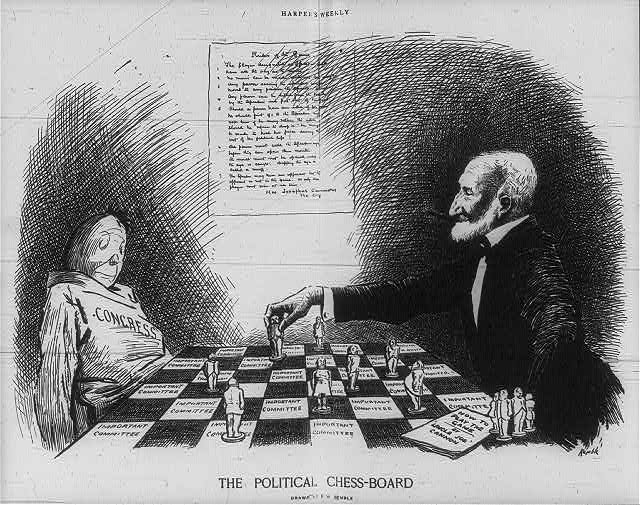









 Millard Fillmore's Bathtub