Epitaph for humanity

January 9, 2012

Doug H in comments at RealClimate:

Mel Blanc's epitaph, Steve of Upland image

Mel Blanc's epitaph (and epithet - click through to see why), Steve of Upland image; some epitaphs fit better than others

Humanity’s epitaph:

  1. Not Dead. Resting. (with apologies to Monty Python)
  2. I told you we should have evolved faster.
  3. We’ve all gone to Hell – it’s cooler there.
  4. The meek inherited the Earth they deserved.
  5. I hear Venus is pleasant at this time of year.
  6. So long, and thanks for all the fossils.
  7. So much plant food, so few plants . . .
  8. Look on our works, Ye mighty, and despair.

Why we worry about global warming: It ain’t the climate, it’s the people

January 9, 2012

Alun Salt gave great advice about not bothering to engage idiots, pigs, denialists or trolls (here, among other places).  He said I should avoid lengthy answers to blogs that have little audience.

This is probably one of those occasions.

But in a running attempt to stimulate serious thought at a denialist blog, I got a question that has been rather common, and a question which indicates the deep serious misunderstanding denialists and even some well-meaning, overly-skeptical sensible people have:

Why worry about  climate change, since the climate is changing all the time?  Especially, why are people like Al Gore urging that we stop climate change, when CO2 has no great direct effect on human health?  Shouldn’t environmentalists be cheering climate change on, since it’s a “natural process?”

The answer is lost on the other blog, as Mr. Salt predicted it would be.  But since I’ve gotten some version of the question repeatedly in the last month, I may as well repeat the answer here, for the record.

The short answer to why we worry about climate change is that, as with almost all environmental protection, we are worried first about the quality of life of humans, and ultimately about the ability of human life to survive at all.

Here’s the question put to me there:

Ed I’m a little confused. I thought we were talking about the effect of co2 on the climate not the effect of co2 on human health. Co2 is not a toxic gas and would have no effect on human health. The fact that humans weren’t around when co2 was 10-20 times higher has absolutely nothing to do with its effect on climate.
Ed there was no runaway greenhouse effect or climate catastrophe. The planet was fine during the phanerazoic. There is actually a lack of co2 in the atmopshere comapred to that time.

Here’s my answer, with a few more links than their format would allow:

No, you’re not a little confused.  You’re a lot confused, greatly misinformed, and not thinking hard.

We worry about CO2’s effects on climate only because we worry about the future of humanity.  Many of us who have children and wish them the same blessings of having children and grandchildren, have thought through the truth of the matter that we don’t possess and rule the Earth for ourselves, but instead act only as stewards for future generations.

No Earth, no humans; but at the same time, no habitable Earth, no humans.  In the long run, Earth doesn’t care.  It’ll do fine — without humans.

We can’t damage the planet.  We can only damage its habitability for humans.

I don’t know what sort of dystopian Randian future you and other Do Nothings hope for, but it’s a future contrary to human life, American values, and all known religions.

We’re talking about the future of humans.  I tell “skeptics,” “If you don’t care, butt out.  You’ll be dead in the short run anyway, but that’s no reason to stand in the way of action not to ensure a livable planet for our grandchildren.”

You also fail to understand chemistry, pollution, and how the world works.  CO2 is indeed a toxic gas.  For about a century now we’ve had indoor air standards that require air circulation to keep CO2 down below concentrations of about 500 ppm, because at that level it starts to have dramatic effects on humans working.  It clouds their thinking and causes drowsiness.  CO2 is a conundrum, in that it is also necessary to trigger mammalian breathing.  If CO2 drops too low, we don’t take in enough oxygen and may pass out.  Too much oxygen in place of CO2 is a problem in that regard.  A substance can be both essential and a  pollutant, at the same time. (This has vexed food safety experts for years, especially after the 1958 Delaney Clause; substances we know to be essential nutrients can be carcinogenic, in the same concentrations, or in the same concentrations with a slight twist in chemical formula — how do we regulate that stuff?)

CO2 is toxic in much greater proportions — it was a CO2 cloud that killed thousands in Cameroon 30 years ago or so, if you know history.

Clearly you did not know that we’ve regulated indoor CO2 for decades.  Clearly you haven’t looked at the medical journals‘ discussion on CO2 — and I’ll wager you’d forgotten the Cameroon incident, if you ever knew about it.

CO2 is a toxic gas (the dose is the poison); CO2 has dramatic effects on human health — too little and we die, too much and we die.

The fact that humans were not around when CO2 was much higher is exactly the point.  That was presented here, as it is in most venues, as support for a claim that we don’t need to worry about CO2 pollution.  Well, that’s right — if we don’t care about a habitable Earth.  But when CO2 was higher, life for humans was impossible.

I think it’s reckless to run an experiment on what would happen with higher CO2 levels, using the entire planet as a testing place, and testing the hypotheses on just how much CO2 will kill us all off, and how.

How about a control group, at least?

In the past, massive CO2 created massive greenhouse effects that would devastate us today — not as a toxic gas, but as a result of the warming that greenhouse gases do.

Let us understand the physical conundrum of CO2 here:  Without the greenhouse effect from the human-historic levels of CO2, this would be an ice planet.  Our lives today depend on the greenhouse effects of CO2.

Consequently, anyone who claims there is no greenhouse effect fails to understand physics, chemistry, biology and history.  (Heck, throw in geology, too.)  Life would be impossible but for the greenhouse effect.  Life is impossible without water, too, but you can’t live totally surrounded by water.

Can it be true that there can never be too much of a good effect, with regard to greenhouse gases?  Ancient Greek ideas of “all things in moderation” applies here.  We need a Goldilocks amount of CO2 in our atmosphere — not to much, not too little; not too hot, not too cold.

To the extent that higher CO2 levels didn’t produce a total runaway greenhouse effect, as some hypothesize exists on Venus, we know that was due to other feedbacks.  Early on, for example, CO2 began to be reduced by photosynthesizing life.  Animal life today would be impossible but for that occurrence.  Few if any modern chordates could breathe the very-low oxygen atmosphere of the early Earth, and live.  Those feedbacks and limiting situations do not exist today.

So now we face a double or triple whammy.  The reduction in CO2 in the air was accomplished through a couple billion years of carbon sequestration through plants.  In fact, a lot of carbon was sequestered in carbon-rich fossils, stuff we now call coal and oil.  Oxygen replenishment was accomplished with massive forests, and healthy oceans, with a great deal of photosynthesis.  This created a rough CO2 equilibrium (with fluctuations, sure) that existed we know for at least the last 50,000 years, we’re pretty sure for the last 100,000 years (we know that from carbon-dating calibration exercises).

Today we have removed fully 30% of the forests that used to replenish oxygen and lock up a lot of CO2 (some estimates say 50% of the forests are gone); modern plant communities cannot pluck CO2 out fast enough.  Plus, we’re releasing a lot of that old, sequestered carbon in coal and oil — at rates unprecedented in human history.

Will more CO2 warm the planet?  We know from the fact that the planet is warm enough for life, that more CO2 will warm the planet more.  Anyone who says differently does not know physics and chemistry, nor history.

Is there anything that can stop that effect?  Sure — healthy, massive forests, and healthy oceans.  Reducing carbon emissions could help a lot, too.  But we’re committed for about a century.  CO2 in the atmosphere doesn’t fall to the ground like particulate pollution.  it drifts until it is incorporated into something else, either through photosynthesis or other chemical reactions.  It takes a mole of CO2 a couple of centuries to come out of the air.  We’re stuck with elevated and elevating CO2 regardless our actions, for a century or two, even if we are wildly successful in reining in emissions and creating sequestration paths.

What happens when CO2 levels get higher than 350 ppm?  History, physics and chemistry tells us glaciers will melt, rainfall patterns will alter dramatically, sea levels will rise, carbon will be absorbed by the seas in increasing amounts (causing acidification — simple chemistry).

It’s a very exciting experiment.  The entire human race is at stake. How much CO2 will it take to produce the effects that kill us all?  It’s likely that changing rainfall patterns and rising sea levels will produce wars over resources, long before CO2 itself starts being physically toxic.  That’s what the Pentagon’s big thinkers say.  That’s what the Chinese big thinkers say, which is why they are working to reduce emissions even without an enforceable treaty.

As experiments go, I think it’s immoral to use humans in experimentation without getting their consent, and without passing the entire experiment through the Institutional Review Board to make sure the experiment is useful, necessary, and done ethically.

Do you have those consent statements?  All seven billion of them?  Have you got approval from the research overseers of the institution?

If you don’t have permission to proceed with this progeny-killing experiment, why do you propose to proceed?  Many people believe that, if the courts on Earth don’t get us, a higher court will.

How will you plead wherever the call to justice is delivered?


Millard Fillmore at 212 – boiling mad?

January 7, 2012

Millard Fillmore was born January 7, 1800. Had he lived, Millard Fillmore would be 212 years old today, very cranky, and looking for a good book to read.  Had each year been a degree Fahrenheit, he’d be boiling!

Millard Fillmore clipart from University of South Florida

Millard Fillmore clipart from University of South Florida - Free! Click image to go to USF site.

Would you blame him for being cranky? He opened Japan to trade. He got from Mexico the land necessary to make Los Angeles a great world city and the Southern Pacific a great railroad, without firing a shot. Fillmore promoted economic development of the Mississippi River. He managed to keep a fractious nation together despite itself for another three years. Fillmore let end the practice of presidents using slaves to staff the White House, then called “the President’s Mansion,” eight years before the election of Abraham Lincoln.

Then in 1852 his own party refused to nominate him for a full term, making him the last Whig to be president. And to add insult to ignominy, H. L. Mencken falsely accused him of being known only for adding a bathtub to the White House, something he didn’t do.

As Antony said of Caesar, the good was interred with his bones — but Millard Fillmore doesn’t even get credit for whatever evil he might have done: Fillmore is remembered most for being the butt of a hoax gone awry, committed years after his death. Or worse, he’s misremembered for what the hoax alleged he did.

Even beneficiaries of his help promoting the Mississippi River have taken his name off their annual celebration of the event. Fillmore has been eclipsed, even in mediocrity (is there still a Millard Fillmore Society in Washington?).

Happy birthday, Millard Fillmore.

Millard Fillmore, free clipart from University of South Florida

Millard Fillmore, free clipart from University of South Florida

Millard Fillmore was a man of great civic spirit, a man who answered the call to serve even when most others couldn’t hear it at all. He was a successful lawyer, despite having had only six months of formal education (a tribute to non-high school graduates and lifelong learning). Unable to save the Union, he established the University of Buffalo and the Buffalo and Erie County Historical Society. During the Civil War, he led the local militia in support of the war effort, many rungs down from his role of Commander-in-Chief. And, it is said of him that Queen Victoria said he was the most handsome man she had ever met.

A guy like that deserves a toast, don’t you think?

Resources:


Einstein probably didn’t say that

January 7, 2012

Aphorisms that sound great, but to whom we have forgotten proper attribution, often get pinned on great people who did not say them.

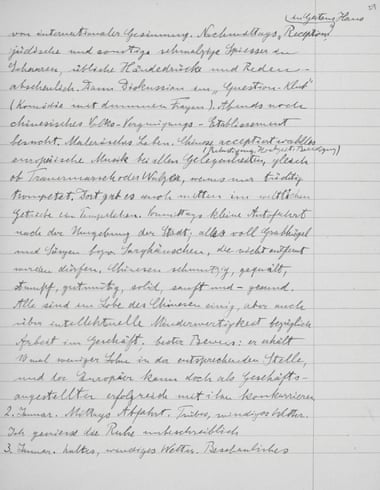
Einstein's journals featuring comments on his first tour of Japan, in 1922 - Morgan Library via The New Yorker

Einstein’s journals featuring comments on his first tour of Japan, in 1922 – Morgan Library via The New Yorker

It’s a common problem. But I think everyone should strive to accurately cite quotations.

Occasionally the misattribution takes on added significance because of the reputation of the person to whom it is misattributed. This becomes a larger problem, because it often dragoons the reputation of some great person into a service they would not intend.

In the masthead of Climate Change Dispatch (“because the debate is not over”) we find this quotation, design to puncture the bubble arrogance surrounding all those climate scientists, I suppose:

“The only thing more dangerous than ignorance is arrogance.”
—Albert Einstein

You know where I’m going with this. Einstein didn’t say it, so far as I can find.

I can’t find any source older than about 2000 that even has the quote. Most attribute it to Einstein. It does not appear in any halfway scholarly collection of Einstein quotes, however. It’s not at the WikiQuotes site. It’s not in any of my three editions of Bartlett’s Familiar Quotations.

Just to check such claims, I ordered The Ultimate Quotable Einstein (collected and edited by Alice Calaprice) from Princeton University Press.  Alas, they had exhausted their stock.  When my favorite Border’s Books was closing out, I found the book in the reference section.

The quote does not appear in any form in The Ultimate Quotable Einstein, that I have found.

Keepers of the Climate Change Dispatch site said the quote came from a book about Einstein read years ago, but now forgotten. (Yes, I asked.)

I suppose it’s possible there is another, much over-looked source for the quote out there. If you can find it, please let me know.

But for the immediate future, I would advise you to put the quote attributed to Einstien on your “no-he-didn’t-say-it” list.

One more example of how people attribute aphorisms to famous people, and as used to poke at climate scientists, another example of our getting into trouble, not because of what we don’t know, but because of what we know that just is not true.

Ironic, too.  It’s not that the current purveyors don’t know about the quote or about Einstein, but that they are arrogantly insisting on the veracity of a false quote.

I wonder if the masthead there will ever change.

Update: Climate Change Dispatch is every bit as reprobate on science and policy, but they’ve dropped the quote falsely attributed to Einstein, at least as of August 2021.


Christy World War I poster to fetch more than $400 at auction

January 6, 2012

That’s a safe bet — the bid at the moment at Heritage Auctions is at $450.  How much is it worth?

Howard Chandler Christy World War I poster, 1918 - Third Liberty Loan - Heritage Auctions image

Howard Chandler Christy poster from 1918, for the Third Liberty Loan to finance World War I - Heritage Auctions image

Heritage Auctions describes the poster:

World War I Propaganda Poster by Howard Chandler Christy (Forbes, 1918). Third Liberty Loan Poster (20″ X 30″) “Fight or Buy Bonds.” War.
Howard Chandler Christy was so good at illustrating iconic beautiful women in uniquely styled poster art, that they soon became known as “Christy Girls.” He used some of these images to sell war bonds during WW I. His lovely art was instrumental in raising countless millions for the war effort. An unrestored poster with good color and an overall very presentable appearance. It may have tears, pinholes, edge wear, wrinkling, slight paper loss, and minor stains. Please see full-color, enlargeable image below for more details. Rolled, Fine+.

Posters from the wars are great teaching tools.  I tell my students to watch to see if their parents or grandparents have any of these old posters lying around.  $450 would buy books for a semester at college.

Heritage Auctions plans to sell this poster, and many others, this coming Sunday, January 8.


Missing the point: Finland’s education success built on no tests, no teacher floggings, no school choice

January 6, 2012

Our local newspaper, The Dallas Morning News, climbed on the Finland-does-it-right bandwagon a couple of years ago, with several long dispatches from reporter Jim Landers on the education system in Finland, and how well it works (sadly, all those articles are behind paywalls with terrible search engines now).

In meetings and discussions with educators around Dallas, I have found almost no one who remember seeing the series, and none who can remember any lessons from it.

Government officials flock to Finland today.  OECD ratings put Finland near the top of education achievement, on a near-equal footing with Singapore and Shanghai.  That this is done with public schools causes brief flurries of hope.

But I gather the policymakers look at Finland, conclude that the lessons cannot be repeated in the U.S., and then move on to find new and better cats-o-nine tails to flog teachers with.  Nothing ever seems to come from looking at Finland.

In the current Atlantic Monthly, an article looks at this phenomenon, “What Americans keep ignoring about Finland’s school success,” by Anu Partanen:

So there was considerable interest in a recent visit to the U.S. by one of the leading Finnish authorities on education reform, Pasi Sahlberg, director of the Finnish Ministry of Education’s Center for International Mobility and author of the new book Finnish Lessons: What Can the World Learn from Educational Change in Finland? Earlier this month, Sahlberg stopped by the Dwight School in New York City to speak with educators and students, and his visit received national media attention and generated much discussion.

We even have the book, now!  How can we miss the lessons?

Sadly, we do.

From his [Sahlberg’s] point of view, Americans are consistently obsessed with certain questions: How can you keep track of students’ performance if you don’t test them constantly? How can you improve teaching if you have no accountability for bad teachers or merit pay for good teachers? How do you foster competition and engage the private sector? How do you provide school choice?

The answers Finland provides seem to run counter to just about everything America’s school reformers are trying to do.

For starters, Finland has no standardized tests. The only exception is what’s called the National Matriculation Exam, which everyone takes at the end of a voluntary upper-secondary school, roughly the equivalent of American high school.

Instead, the public school system’s teachers are trained to assess children in classrooms using independent tests they create themselves. All children receive a report card at the end of each semester, but these reports are based on individualized grading by each teacher. Periodically, the Ministry of Education tracks national progress by testing a few sample groups across a range of different schools.

As for accountability of teachers and administrators, Sahlberg shrugs. “There’s no word for accountability in Finnish,” he later told an audience at the Teachers College of Columbia University. “Accountability is something that is left when responsibility has been subtracted.”

For Sahlberg what matters is that in Finland all teachers and administrators are given prestige, decent pay, and a lot of responsibility. A master’s degree is required to enter the profession, and teacher training programs are among the most selective professional schools in the country. If a teacher is bad, it is the principal’s responsibility to notice and deal with it.

And while Americans love to talk about competition, Sahlberg points out that nothing makes Finns more uncomfortable. In his book Sahlberg quotes a line from Finnish writer named Samuli Puronen: “Real winners do not compete.” It’s hard to think of a more un-American idea, but when it comes to education, Finland’s success shows that the Finnish attitude might have merits. There are no lists of best schools or teachers in Finland. The main driver of education policy is not competition between teachers and between schools, but cooperation.

Finally, in Finland, school choice is noticeably not a priority, nor is engaging the private sector at all. Which brings us back to the silence after Sahlberg’s comment at the Dwight School that schools like Dwight don’t exist in Finland.

“Here in America,” Sahlberg said at the Teachers College, “parents can choose to take their kids to private schools. It’s the same idea of a marketplace that applies to, say, shops. Schools are a shop and parents can buy what ever they want. In Finland parents can also choose. But the options are all the same.”

Herein lay the real shocker. As Sahlberg continued, his core message emerged, whether or not anyone in his American audience heard it.

Decades ago, when the Finnish school system was badly in need of reform, the goal of the program that Finland instituted, resulting in so much success today, was never excellence. It was equity.

School reform?  We’re not even asking the right questions, let alone getting the right answers. “How can we learn to flog teachers better from Finland, when they don’t flog teachers at all?”  the policy makers may ask.

Read the story in The Atlantic.

Do you agree?  Why or why not?

Maybe we should change to daily flogging of state legislators and administrators, from the daily flogging of teachers.  Maybe the morale problem is up, not down.

Tip of the old scrub brush to inkbluesky.

More: 

Another clip from “The Finland Phenomenon”:


Republicans Unfit to Govern Dept: All laws must quote from the Magna Carta

January 5, 2012

For a biologist, P. Z. Myers is really good at finding historical and legal error, you know?  He’s got this post up at his FreeThoughts blog — I copy here in the entirety because I’m laughing too hard to rewrite it.  And P. Z. writes well, and he won’t mind:

New Hampshire has some world-class lunatics

Too bad they’re in the legislature. The latest wacky idea from a trio of Republicans is to require that all new bills reference the Magna Carta.

House Bill 1580 is the product of such a brainstorming session this summer between three freshman House Republicans: Bob Kingsbury of Laconia, Tim Twombly of Nashua and Lucien Vita of Middleton. The eyebrow-raiser, set to be introduced when the Legislature reconvenes next month, requires legislation to find its origin in an English document crafted in 1215.

“All members of the general court proposing bills and resolutions addressing individual rights or liberties shall include a direct quote from the Magna Carta which sets forth the article from which the individual right or liberty is derived,” is the bill’s one sentence.

You might be wondering why the Magna Carta . . . I think the three stooges should be wondering that, too.

Vita admitted he needs to “bone up” on the content of the charter

In other words, he has no idea what’s in the Magna Carta. I’m guessing he’s also a Christian of the the type that has a similar reverence for the contents of a document they’ve never read.

Yeah, I’ll have a little more to say about it later — especially about how this cuts just the opposite of what Republicans have been screaming about for much of the last four years.


National Radon Action Month: Test to see whether your home is safe

January 5, 2012

Press release from EPA today:

January 4, 2012

EPA Recognizes National Radon Action Month: Test for Radon Gas to Protect Health

21,000 Americans die from radon related lung cancer each year

WASHINGTON
– The U.S. Environmental Protection Agency (EPA) is encouraging Americans this January, as part of National Radon Action Month, to take simple and affordable steps to test their homes for harmful levels of radon gas. Radon, a colorless odorless gas, is the leading cause of lung cancer among non-smokers. Radon can seep into a home from underground and if left to accumulate, high levels of radon can cause lung cancer. Improving indoor air quality by increasing awareness of environmental health risks, such as radon gas, supports healthier homes and communities.

“Testing for radon is an easy and important step in protecting the health of your family,” said Gina McCarthy, EPA Assistant Administrator for the Office of Air and Radiation. “Radon can be found in every single state. Nationally, elevated radon levels are in as many as one in 15 homes – a statistic that is even higher in some communities.”

Approximately 21,000 people die from radon related lung cancer each year in the United States, yet elevated levels of this health hazard can be prevented through these simple steps:

  • Test: EPA and the U.S. Surgeon General recommend that all homes, both with and without basements, be tested for radon. Affordable Do-It-Yourself radon test kits are available at home improvement and hardware stores and online or a qualified radon tester can be hired.
  • Fix: EPA recommends taking action to fix radon levels above 4 Picocuries per Liter (pCi/L). Addressing high radon levels often costs the same as other minor home repairs.
  • Save a Life: By testing and fixing for elevated levels of radon in your home, you can help prevent lung cancer while creating a healthier home and community.

Radon is a natural, radioactive gas that comes from the breakdown of uranium in soil, rock and water. It can enter homes through cracks in the foundation or other openings such as holes or pipes. In addition to testing for radon, there now are safer and healthier radon-resistant construction techniques that home buyers can discuss with builders to prevent this health hazard.

In 2011, EPA announced the Federal Radon Action Plan, along with General Services Administration and the Departments of Agriculture; Defense; Energy; Health and Human Services; Housing and Urban Development; Interior; and Veterans Affairs. This action plan will demonstrate the importance of radon risk reduction, address finance and incentive issues to drive testing and mitigation, and build demand for services from industry professionals.

More information on how to Test, Fix, Save a Life, obtain a text kit, or contact your state radon office: http://www.epa.gov/radon or call 1-800-SOS-RADON

More information on the Federal Radon Action Plan: http://www.epa.gov/radon/action_plan.html

R001


January 3, 1959: Welcome, Alaska, and the 49-star flag

January 3, 2012

Alaska Territorial Gov. Bob Bartlett in center, with the 49-star flag (Bartlett was one of Alaska's first U.S. senators).

Alaska Territorial Gov. Bob Bartlett in center, with the 49-star flag (Bartlett was one of Alaska’s first U.S. senators).

The great service at the New York Times site, the Learning Network, notes the 1959 Dwight Eisenhower proclamation of Alaska as the 49th state, and the unveiling of the 49-star flag:

On Jan. 3, 1959, President Dwight Eisenhower signed a proclamation admitting Alaska to the Union as the 49th state. The New York Times noted that the signing included the unveiling of the new 49-star American flag.

The land that became Alaska came into U.S. possession in 1867, when William Seward, secretary of state under President Andrew Johnson, negotiated a deal to buy the 586,000-square-mile area from Russia for $7.2 million, less than 2 cents per acre. Seward’s decision was ridiculed in the American press, who saw no potential in the vast, inhospitable and sparsely populated area.

For decades after its purchase, Alaska was derided as “Seward’s folly” or “Seward’s icebox.” This opinion changed in 1896 with the discovery of gold in the neighboring Yukon Territory, which spurred tens of thousands of people to head to Alaska in search of gold. The gold rush also brought about a boom in mining, fishing and trapping.

Though the first statehood bill had been presented to Congress in 1916, there was little desire in either Alaska or Washington for Alaskan statehood until after World War II. During the war, the U.S. established multiple military bases to resist Japan’s attacks on Alaska’s Aleutian Islands and prevent a potential invasion of the mainland. The military activity, along with the completion of a major highway from Montana, led to a large population growth.

In 1946, Alaskans voted in favor of statehood in a referendum and Alaskan delegates began to lobby Congress for statehood. After years of debate, Congress voted in June 1958 to admit Alaska.

Eight months after Alaska’s admission, on Aug. 21, 1957 [should be 1959, no?], Hawaii became the 50th state. The 49-star remained in place until the following July 4, when it was replaced by the now-familiar 50-star flag.

49-star flags were produced only until August 1959, so there are few of them around.  I love this photo of the unveiling of the flag with President Eisenhower:

President Eisenhower and Quartermaster General MG Andrew T. McNamara, with 49-star flag - image from QM foundation

“Quartermaster General MG Andrew T. McNamara and President Eisenhower examine new 49 star flag” – image and caption from the Quartermaster Foundation. (Who are the other two people?  The guy on the right looks to me a bit like is Pennsylvania’s Sen. Hugh Scott.)

It had been about 47 years since the previous state admission (Arizona); people became aware that no law set what the flag should look like.  President Eisenhower issued a directive.

How did the nation survive for 170 years without firm, decisive and conclusive orders on what the flag should look like?  Isn’t it a great story that we went so long without law setting the requirements?

Benny Benson's award-winning flag design for the State of Alaska

Alaska’s flag was designed by 13-year-old Benny Benson

Alaska’s state flag came from the imagination of a 13-year-old Aleut, Benny Benson, winning a contest to design the state’s flag.  Alaska’s flag stands out in any display of U.S. state flags.


Promise keepers

January 3, 2012

Sometimes Santayana’s Ghost weeps a bit with joy, with those who know history.


Geographic literacy and logic become victims in Republican presidential campaign in Iowa

January 3, 2012

Rick Perry shooting at the coyote in the sky - Mad Mike's America

Rick Perry shooting at the coyote in the sky - Mad Mike's America

Sidney Crosby, Toronto Maple Leafs  - Business Insider

Sidney Crosby, Toronto Maple Leafs - Business Insider

_____________

I have it on good authority that Rick Perry will not be taking the Texas Assessment of Knowledge and Skills (TAKS) Exit Level test for juniors this spring.  He’s probably not ready for it, according to this report in the New York Times.  It may be that no Republican in Iowa is ready for it, either.

Energy: The audiences at Mr. Perry’s events seemed somewhat unmoved by parts of his speech that talked about job creation. But when it came to energy and oil, they perked up.

“Every barrel of oil that comes out of those sands in Canada is a barrel of oil that we don’t have to buy from a foreign source,” Mr. Perry said in Clarinda, earning a loud round of enthusiastic applause.

Later, the audience reacted again to Mr. Perry’s assertion that buying so much energy from foreign countries is “not good policy, it’s not good politics and frankly it’s un-American.”

I wonder if it’s un-Canadian.

See also: