Capitalization, spelling punctuation, insertions and grammar, as in the original; highlighting added:
John Adams’ residence at Grosvenor Square, in London; presumably, his letter to John Jebb took form in this house. Long in use by U.S. Ambassadors to England, it is in 2015 the office complex of former British Prime Minister Tony Blair, envoy for The Quartet. Image from London Cyberpunk Tourist Guide
the social science will never be much improved untill the People unanimously know and Consider themselvs as the fountain of Power and untill they shall know how to manage it Wisely and honestly. reformation must begin with the \Body of the/ People which can be done only, to affect, in their Educations. the Whole People must take \upon/ themselvs the Education of the Whole People and must be willing to bear the expences of it. there should not be a district of one Mile square without a school in it, not founded by a Charitable individual but maintained at the expence of the People themselv[s] they must be taught to reverence themselvs instead of adoreing their servants their Generals Admirals Bishops and Statesmen — Instead of Admiring so extravegantly a Prince of Orange, we Should admire the Botavian Nation which produced him. Instead of Adoring a Washington, Mankind should applaud the Nation which Educated him. If Thebes owes its Liberty and Glory to Epaminandas, She will loose both when he dies, and it would have been as well if she had never enjoyed a taste for either: but if the Knowledge the Principles the Virtues and Capacities of the Theban Nation produced an Epaminandas, her Liberties and Glory will remain when he is no more: and if an analogous system of Education is Established and Enjoyed by the Whole Nation, it will produce a succession of Epaminandas’s, the Human Mind naturally exerts itself to form its Character according to the Ideas of those about it.
♦ Letter from John Adams to John Jebb, September 10, 1785, from Grosvenor Square, London
Dr. Bumsted found this in her searches, on MySpace of all places, and passed it along for its use of typewriters . . .
Heck, it’s a nice little piece of art all on its own. It’s fun to watch Jim Henson without any muppets. It’s eerie, too — Henson argues in film that time is rather precious, and life often too short. His time was precious, and his life was cut way too short, especially for fans of Kermit and The Muppet Show.
This description comes from the MySpace site of “Charlie,” where Dr. Bumsted found it.
Dislocation in time, time signatures, time as a philosophical concept, and slavery to time are some of the themes touched upon in this nine-minute, experimental film, which was written, directed, and produced by Jim Henson-and starred Jim Henson! Screened for the first time at the Museum of Modern Art in May of 1965, Time Piece enjoyed an eighteen-month run at one Manhattan movie theater and was nominated for an Academy Award for outstanding short subject.
The full film can be obtained from iTunes, now — in better fidelity, I’d imagine.
From Jim Henson’s 1966 Academy Award nominated short film. Henson, as the writer/producer/director/star, created the experimental short about the effect of time keeping on us all. The full video is available on iTunes here: http://itunes.apple.com/us/movie/time-piece/id283450519?ign-mpt=uo%3D4
Disney artists Joe Lanzisero and Tim Kirk drew this tribute of Mickey Mouse consoling Kermit the Frog, which appeared in the Summer 1990 issue of WD Eye, Walt Disney Imagineering’s employee magazine. (Photo credit: Wikipedia)
Spread the word; friends don't allow friends to repeat history.
Registered voter in Texas? Remember to vote today in the Texas primary. Twice delayed due to the shenanigans on biased redistricting by the Republican Lege, we finally get going on voting — after the precinct and Senate district political conventions have already occurred (just two weeks from the Texas Democratic State Convention).
Flags fly at the Texas Capitol; fly your flags today for election day (Photo credit: jmtimages)
Happy to see the Texas Democratic Party sending out notices that voters won’t be turned away from the polls for identification issues. Texas’s Jim Crow Voter Identification Hurdle Law has been stayed in litigation separate from the redistricting law suit. It’s a clear effort to deflate the voting discouragement campaign of State Attorney General Greg Abbott, Gov. Rick Perry, and the Republicans of the Texas Lege.
On Monday, the polls will open [TODAY] for early voting for the May 29th Democratic Primary Election. We’ll be selecting the Democratic nominees who will lead the charge towards taking back our state in 2012.
Use the same documents that you’ve used in the past to vote.No photo ID is required! The photo voter id legislation is not in effect for this election. All you need is:
Did the Republicans inform their voters of the ID requirements, or do they want to discourage even Republican voters? They keep booting me off their lists. Anybody got a similar letter from them, especially one showing how the Texas Voter Identification law does not apply to this primary election?
_____________
* The elections were delayed by federal court orders. Texas is a place that historically discriminated against minority voters, and so under the 1965 Voting Rights Act, reapportionments by the legislature must be approved by the Justice Department or a federal court as complying with the nondiscrimination laws. AG Abbott tried to do an end run around Justice, suing for approval as a first step. As part of its War on Democracy, the Texas Lege wrote a spectacularly Gerrymandered reapportionment plan, depriving Texas Hispanics from new representation despite the dramatic increase in their populations. Consequently the federal courts balked at quick approval. Instead, they asked for more information.
In the delay, the Washington courts ordered the federal court in San Antonio to draw up a more fair plan, giving at least three new seats to districts where historically minority voters hold broad sway.
Litigation against the Texas Jim Crow Voter Identification law is separate.
U.S. flags wave at DFW National Cemetery, May 30, 2010. Photo by Ed Darrell
Our local Rotary Club provides a U.S. flag planted in your yard for flag-flying events from Memorial Day through Labor Day, for an annual subscription of about $15.00. Local groups, including especially Boy Scouts, Cub Scouts and Girl Scouts, take a route and plant the flags.
As a consequence, our town is loaded with flags on a weekend like this one.
Memorial Day honors people who died in defense of the nation. Armed Forces Day honors those who serve currently, celebrated the third Saturday in May. Veterans Day honors the veterans who returned.
On Memorial Day itself, flags on poles or masts should be flown at half-staff from sunrise to noon. At noon, flags should be raised to full-staff position.
When posting a flag at half-staff, the flag should be raised to the full-staff position first, with vigor, then slowly lowered to half-staff; when retiring a flag posted at half-staff, it should be raised to the full staff position first, with vigor, and then be slowly lowered. Some people attach black streamers to stationary flags, though this is not officially recognized by the U.S. Flag Code.
May 27 is the anniversary of the birth of Rachel Carson. Carson’s birth was May 17 1907 — 105 years ago.
1981 U.S. postage stamp honoring Rachel Carson
Good writers and good scientists deserve to be celebrated. Carson was both a good scientist and great writer. We have two reasons to celebrate her birth.
One way you might appropriately celebrate: Check with your local public library this week, to see whether they have both Carson’s book Silent Spring, and the best biography of Carson, by Linda Lear, Rachel Carson: Witness for Nature. If either one is missing, offer to donate the amount of money the library needs to purchase the book.
Spread the good words, spread the good news.
Gordo, Sunday comic strip honoring Rachel Carson, by Gus Arriola; for this strip (from the 1960s?) Arriola signed as “Frenda Mann.”
“Anybody who can’t keep his enemies in his head has too many enemies.”
Richard Nixon, had he acknowledged the sentiment, probably could have devised a way to pare his list not exactly in keeping with Gerald Ford’s good-guy intentions. More than one way to pare a list, if you know what I mean.
My mind wandered off to enemies lists when I discovered this week that one of our former administrators had actually kept lists of teachers — and probably other support people — and threatened more than one with “placement on the list.”
What school of school leadership taught that? The Monty Python School of How KnNot to Do It?
1919 D’Oyly Carte Opera Company publicity poster for The Mikado, featuring the character of the Lord High Executioner. Illustration by J. Hassal.
The only appropriate response when learning of such a list is to ask, “Who appointed you Lord High Executioner?”
Do you disagree? Lists of enemies do not denote the great leader. They denote someone who either saw “The Mikado” and missed all the jokes, or didn’t bother to see the thing at all. Who can follow someone who doesn’t know the jokes from “Mikado,” and consequently, falling victim to the trap warned of by Santayana’s Ghost, falls right into the trap?
It’s silly. It’s lampooned well enough in Gilbert and Sullivan‘s masterpiece of bureaucracy farce that any leader, even a Modern Major General, would know better than to do it.
Notice I did NOT say, “know better than to let it be known that the list existed.” I said “know better than to do it.
What’s that? You are unfamiliar with the song of which I speak? Here, watch Opera Australia show how it’s done (at least, how it’s done Down Under where there are, unbelievable as it may be, climate denialists and people who are obnoxious about Facebook and Twitter):
Mitchell Butel of Avenue Q fame sings “I’ve Got a Little List” from Gilbert and Sullivan’s The Mikado. This excerpt is from the cinema/DVD recording of Opera Australia’s 2011 production at the Arts Centre, Melbourne.
Lyrics:
As someday it may happen that a victim must be found,
I’ve got a little list. I’ve got a little list
Of society offenders who might well be underground
And who never would be missed, who never would be missed.
There’s the idiot denouncing with enthusiastic tone
All football teams but his and every suburb but his own.
The man who sits beside you on the plane and wants to talk,
Whose jabbering inspires you to jab him with your fork.
Your aunty with the moustache who insists on being kissed.
They’d none of them be missed, they’d none of them be missed.
(He’s got them on the list! He’s got them on the list!
And they’d none of them be missed! They’d none of them be missed!)
Those whinging letter writers and those pundits in the press.
That opinion columnist, that bore would not be missed.
That trendy thing in opera if the plot seems like a mess,
That nice surtitlist!
(Surtitles: ‘This song is not on my list. Normal transmission will resume shortly’)
The politician prancing round in speedos tightly packed,
He thought it cool but really it just showed us what he lacked.
And Canberra’s leading red-head who’s afraid of stickybeaks,
Who’d like to keep her fumbles and mistakes off Wikileaks.
Australian Idol singers who pathetically persiiiiiiiiiist.
They’d none of them be missed. They’d none of them be missed.
(He’s got them on the list! He’s got them on the list!
And they’d none of them be missed! They’d none of them be missed!)
And the purists who insist piano music stops at Brahms,
I’ll put them on the list, and make them sit through Liszt.
On Saturday night the mob at Flinder’s Street all singing psalms,
I wish they would desist, and their happy claps resist.
That music theatre sequel that they promised would be good,
“Love never dies” they say, but I confess I wish it would.
That Frenchman and the other one who judge My Kitchen Rules,
Who give new definition to the label ‘Kitchen Tools’.
That morning television host who’s funny as a cyst,
Gold Logies he has kissed, but it’s time to kiss my fist.
(He’s got them on the list! He’s got them on the list!
And they’d none of them be missed! They’d none of them be missed!)
Then the merchant banker wankers and the bonuses they flout,
And the subprimortgagist, I’ve got him on the list!
The governments like lapdogs rushing in to bail them out,
To their mills it’s simply grist, so I’ve got them on the list.
Retirees who migrate to the country to make wine,
And Britney Spears for accidentally showing her ‘vagine’.
Those climate change deniers who don’t like the carbon tax,
Who haven’t read the science and don’t really know the facts.
The women on the tram who at Spring Carnaval got pi– really drunk!
Narelle! Where are my shoes?!
They’d none of them be missed. They’d none of them be missed.
(You may put them on the list. You may put them on the list.
And they’d none of them be missed! They’d none of them be missed!)
There’s the ticket holder next to you who cannot work their phone,
And cannot get the gist. I’ve got her on the list!
Who leaves it on or switches to that dreadful silent drone… Vrrrrrr Vrrrrr Vrrrrr
Facebook fiends and Twitterists are also on the list.
And people who inflict on us full cycles of the Ring,
I’d rather ride a valkyrie than hear Brunhilde sing.
And all commercial managements who want to cast a star,
They couldn’t get one this time, they got me, so there you are.
Or worst of all the actor who’s an extra lyricist,
I don’t think he’d be missed, so I’ve got him on the list.
(You may put them on the list! You may put them on the list!
And they’d none of them be missed! They’d none of them be missed!)
Your shock at Gilbert and Sullivan’s sounding so astonishingly contemporary comes through even the internet. How could they know?
I’m not sure what the original script said, having never done that particular operetta. Somewhere, the practice arose to have someone spice up the lyric to this tune, to the times, to the city in which the operetta is performed, and to thezeitgeist of the audience. Fans of G&S wait to see what and whom the “supplemental lyricist,” or “extra lyricist” poked at.
Even composers of silly operetta tunes understand that what is said, and what is done, needs to be molded to the local circumstances — and that in no case should a bureaucrat keep a list of enemies.
Compare Opera Australia’s version with that of the venerable G&S troupe, D’Oyly Carte Opera Company, about 20 years earlier, 1990 or 1992, on BBC2, in London:
Of course, you may think by my lampooning of list makers that I, myself, should be on some list. Aye, there’s the rub.
Take a look and listen to Eric Idle’s version of the song from th 1987 English National Opera production, with which Opera Australia may wish to take some exception.
In the English speaking world, wherever the works of Gilbert and Sullivan exist in book, on the stage, in oratorio, on record, tape, CD, DVD or Blu-Ray, people know leaders become comic fops instead when they make “a little list” of the names of the people they wish to be rid of.
Educated people know that. Education people should know that, too.
More (not necessarily endorsed by Millard Fillmore’s Bathtub):
Dallas ISD superintendent-designee Mike Miles held a press conference and sat down for an interview with the in-house television production group this week.
Miles starts the job in Dallas at the first of July, but he is working at Dallas ISD headquarters under a consulting contract until then.
Should the interview, below, be regarded as anything other than a warning to Dallas teachers and administrators?
Is this any way to rally the troops one depends on?
This interview with Dallas ISD Superintendent-designate Mike Miles occurred on May 22, 2012.
Why does time-lapse photography fascinate me so? It reveals changes over time we too often miss, or don’t stop to appreciate.
Here’s an excerpt from a 1975 film, set to music recently released. Watch closely, you’ll see the shadows of the World Trade Center passing over New York City.
Described at Youtube:
A music video for the gorgeous track “Exercise #3 (Building) by CFCF (Mike Silver). Song is from his upcoming EP titled “Exercises,” which arrives on April 24th via Paper Bag Records.
Footage is from the 1975 short film “Organism,” by Hilary Harris.
Short Wikipedia listing for Hilary Harris; geography and AP human geography teachers may especially appreciate some of Harris’s work, including Highway from 1958, and the 1962 Academy Award Winner Seaward the Great Ships
Just days ago, I completed my 28th year as a teacher — 18 as a high school teacher of English followed by 10 years as a professor of education.
And I am excited about the coming semesters because, as I have felt every year of my teaching life, I know I failed in some ways this past academic year and I am confident I will be better in my next opportunities to teach.
As a teacher, I am far from finished — and I never will be.
I want to make a statement to the many and powerful leaders in education reform, all of whom have either no experience or expertise, or very little, as teachers:
I don’t need standards to teach. I need students.
If You Have Never Taught, You Simply Don’t Understand
Secretary Arne Duncan, I have no interest in racing to the top, when that means the top of the pile of my fellow teachers trampled by the policies you have created and promoted.
Bill Gates, I don’t want a dime of your billions; in fact, I am not even interested in what you do (I have always used Apple products) as long as you drop education as your hobby.
Michelle Rhee, I have no interest in my students having mouths forcibly shut by me. I am here to hear their open minds and mouths.
Pearson, Macmillan/McGraw-Hill, and every company seeking to sell me anything to support my implementing CCSS or preparing my students for the National Assessment of Educational Progress, state high-stakes tests, or the SAT, I am not interested in buying anything. No software, no hardware, no textbooks, no worksheets. Nothing.
Professional organizations and unions, I need you to stop racing for a place at the table with the reformers and corporations noted above, and instead, seek ways to support my autonomy and agency as a professional so that the autonomy and agency of the children in our schools can become the primary focus of universal public education for free people.
And, finally, to anyone who thinks you know what I should teach and how, please seek a place at the front of a classroom filled with other people’s children, teach for a few years, and then let’s get together and talk. I am eager to be collegial in the pursuit of community as a key part of teaching and learning.
Then What?
Becoming and being a teacher is a constant state of becoming. A teacher must be always a student and scholar of her/his field(s), her/his pedagogy, and her/his students.
What the people and groups identified above seem not to understand is that for my eighteen years of teaching high school English, I probably taught about 2,000 students; thus, I taught about 2,000 different classes. And not a single measurable outcome of any of those students predicts much of anything about my effectiveness or if I’ll succeed with any future student. Some of the students who appear successful did so in spite of my failures. Some of the students who appear to have failed were provided my very best as a teacher. Almost all of the good and bad I have created as a teacher are not measurable or apparent in manageable ways.
I wasn’t concerned about meeting anyone’s standards or preparing any student for a test or making sure any student was prepared for the next grade, college, or the workforce.
And I never will be.
Instead of standards, testing, competition, labeling, ranking, and sorting (all the cancerous elements of traditional schooling and the current accountability era), as a teacher, I need to offer my students authentic learning opportunities in which they produce artifacts of their understanding and expertise. My students need from me my authoritative feedback to those authentic artifacts.
I have no interest in competing with my fellow teachers for whose students score highest on tests so I can earn more money than my colleagues. I don’t, either, want to join forces with my in-school colleagues to outperform other schools in order to compete for their customers. I couldn’t care less how my state’s schools compare with other states or how U.S. schools compare on international tests.
Absolutely none of that matters.
While not unique to Howard Gardner, we have a very clear idea of what it is teachers should do in the pursuit of learning. Gardner’s “The Disciplined Mind” examines a conception of education not distracted by accountability.
Teaching and learning must be primarily collaborative, a community of learners.
The goals of learning must be the broad and clear — although always evolving — defining qualities of the fields of knowledge we honor in academia.
Every history course, for example, would pursue, What does it mean to be a historian? Every science class, What does it mean to be a scientist? Every writing class, What does it mean to be a writer?
Teaching and learning are the collaborative pursuit of questions. Anything else is indoctrination, dehumanizing, and antithetical to democratic ideals and human agency.
Humans never will—and never should—learn the same box of knowledge. Humans never will—and never should—learn in linear, sequential ways.
And there is no need for any of that anyway as long as we seek to be a community instead of barbaric individuals committed to the conquest of goods at the expense of others.
I don’t need standards to teach. I need students.
(My becoming a teacher can be traced directly to the wonderful and rich influence of my mother, and that influence is inextricable from the powerful and enduring influence of my father.)
-0-
I don’t expect anyone to agree 100% with Prof. Thomas’s views — but anyone concerned about education, about job training, about their children, or about our nation, will listen.
Spread the word; friends don't allow friends to repeat history.
Consider the curious case of Carolyn Abbott in New York City (links added):
Carolyn Abbott was, in one respect, a victim of her own success. After a year in her classroom, her seventh-grade students scored at the 98th percentile of New York City students on the 2009 state test. As eighth-graders, they were predicted to score at the 97th percentile on the 2010 state test. However, their actual performance was at the 89th percentile of students across the city. That shortfall—the difference between the 97th percentile and the 89th percentile—placed Abbott near the very bottom of the 1,300 eighth-grade mathematics teachers in New York City.
How could this happen? Anderson is an unusual school, as the students are often several years ahead of their nominal grade level. The material covered on the state eighth-grade math exam is taught in the fifth or sixth grade at Anderson. “I don’t teach the curriculum they’re being tested on,” Abbott explained. “It feels like I’m being graded on somebody else’s work.”
The math that she teaches is more advanced, culminating in high-school level algebra and a different and more challenging test, New York State’s Regents exam in Integrated Algebra. To receive a high school diploma in the state of New York, students must demonstrate mastery of the New York State learning standards in mathematics by receiving a score of 65 or higher on the Regents exam. In 2010-11, nearly 300,000 students across the state of New York took the Integrated Algebra Regents exam; most of the 73 percent who passed the exam with a score of 65 or higher were tenth-graders.
Because student performance on the state ELA and math tests is used to calculate scores on the Teacher Data Reports, the tests are high-stakes for teachers; and because New York City uses a similar statistical strategy to rank schools, they are high-stakes for schools as well. But the tests are not high-stakes for the eighth-graders at Anderson.
By the time they take the eighth-grade tests in the spring of the year, they already know which high school they will be attending, and their scores on the test have no consequences. “The eighth-graders don’t care; they rush through the exam, and they don’t check their work,” Abbott said. “The test has no effect on them. I can’t make an argument that it counts for kids. The seventh-graders, they care a bit more.”
The state tests, she believes, are poorly equipped to assess real mathematical knowledge, especially for high-performing students. “They’re so basic; they ask you to explain things that are obvious if you’re three years ahead,” she says. The Anderson students “understand it at a different level. They want to explain with equations, not words.” But the scoring of the free-response items on the tests emphasizes a formulaic response, with the scoring instructions often looking for a single keyword in a response to garner credit.
“They’re not accepting answers that are mathematically correct,” Abbott notes, “and accepting answers that aren’t mathematically correct.” And the multiple-choice questions? “Multiple-choice questions don’t test thinking,” she declares. Knowing how to answer them is “just an art.”
Ms. Abbott? Oh, yes. She is ranked the worst math teacher in New York City.
Or, until that account is unsuspended by the forces supporting Donald Trump: Follow @FillmoreWhite, the account of the Millard Fillmore White House Library
We've been soaking in the Bathtub for several months, long enough that some of the links we've used have gone to the Great Internet in the Sky.
If you find a dead link, please leave a comment to that post, and tell us what link has expired.
Thanks!
Retired teacher of law, economics, history, AP government, psychology and science. Former speechwriter, press guy and legislative aide in U.S. Senate. Former Department of Education. Former airline real estate, telecom towers, Big 6 (that old!) consultant. Lab and field research in air pollution control.
My blog, Millard Fillmore's Bathtub, is a continuing experiment to test how to use blogs to improve and speed up learning processes for students, perhaps by making some of the courses actually interesting. It is a blog for teachers, to see if we can use blogs. It is for people interested in social studies and social studies education, to see if we can learn to get it right. It's a blog for science fans, to promote good science and good science policy. It's a blog for people interested in good government and how to achieve it.
BS in Mass Communication, University of Utah
Graduate study in Rhetoric and Speech Communication, University of Arizona
JD from the National Law Center, George Washington University


 Posted by Ed Darrell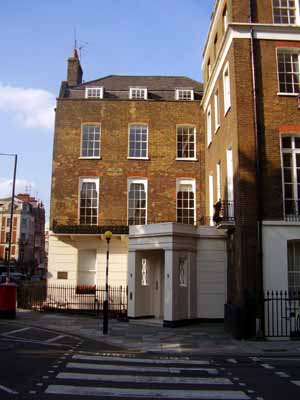







 Millard Fillmore's Bathtub