Quote of the moment: Adams, July 2 “the most memorable Epocha in the History of America”

July 2, 2012

“The Second Day of July 1776 will be the most memorable Epocha, in the History of America. . . . It ought to be solemnized with Pomp and Parade, with Shews, Games, Sports, Guns, Bells, Bonfires, and Illuminations from one End of this Continent to the other from this Time forward forever more.”
John Adams to Abigail Adams, July 3, 1776

1776 filled the calendar with dates deserving of remembrance and even celebration. John Adams, delegate from Massachusetts to the Second Continental Congress, wrote home to his wife Abigail that future generations would celebrate July 2, the date the Congress voted to approve Richard Henry Lee’s resolution declaring independence from Britain for 13 of the British colonies in America.

Continental congress DSC_0607

Scene of the crime — Independence Hall in Philadelphia, where the Second Continental congress approved the resolution to declare the colonies independent from Britain – (Photo credit: diablodale)

Two days later, that same Congress approved the wording of the document Thomas Jefferson had drafted to announce Lee’s resolution to the world.

Today, we celebrate the date of the document Jefferson wrote, and Richard Henry Lee is often a reduced to a footnote, if not erased from history altogether.

Who can predict the future?

(You know, of course, that Adams and Jefferson both died 50 years to the day after the Declaration of Independence, on July 4, 1826. In the 50 intervening years, Adams and Jefferson were comrades in arms and diplomacy in Europe, officers of the new government in America, opposing candidates for the presidency, President and Vice President, ex-President and President, bitter enemies, then long-distance friends writing almost daily about how to make a great new nation. Read David McCullough‘s version of the story, if you can find it.)

More, and Related articles:


Odd conjunction of history: January 21, Louis XVI and Vladimir I. Lenin

January 21, 2012

The Dallas Morning News and the Associated Press inform us that France’s King Louis XVI died on January 21, 1793.  In 1924, Russian revolutionary Vladimir I. Lenin died on January 21.

Portrait of Louis XVI

France's King Louis XVI died on January 21, 1793. He is seen here in his most famous portrait, in happier times. Image via Wikipedia

Both died of strokes, but of different kinds of strokes.  Lenin’s was a cerebral stroke; Louis’s was the stroke of the blade of a guillotine.

Painting of Lenin in front of the Smolny Institute, circa 1925,  by Isaak Brodsky - Wikipedia

Lenin died on January 21, 1924. Painting of Lenin in front of the Smolny Institute, circa 1925, by Isaak Brodsky

Ruminations on the date, and the men:  How much of current history can be understood by studying those two events, and those two men?  How much if we add in George Washington, and Napoleon, other men affected by revolution?

A few years ago I had a sophomore student spell out the importance of people in history.  Israel Pena observed that  Americans got rid of their king through revolution, and ended up with George Washington as leader, and then president.  Washington’s modeling of his life after the Roman patriot Cincinattus led Washington to resign as commander of the Continental Army when the warring was done, instead of declaring himself king, and then later to step down from the presidency after two terms, to promote peaceful retirement of presidents.  The French got rid of their king through revolution in 1789, but in the chaos that followed, got Napoleon who took over the government after battlefield victories against France’s enemies.  Then Napoleon declared himself emperor, and took off on a reign of conquest and war across Europe.

Mr. Pena’s commentary compared only those two nations.  What if we add in a third, Russia?  Russia got rid of its king (czar) through revolution in 1917.  In the chaos that followed it got a government led by Lenin, and upon Lenin’s early death, taken over by Joseph Stalin.

George Washington, by Gilbert Stuart - Wikipedia

George Washington, by Gilbert Stuart - Wikipedia

Is the future written by the character of the men who run the government?  One might make a good case of that in the deaths paint most of the picture we really need to have, that of Louis XVI, at the age of 39, on the guillotine; of Vladimir I. Lenin, at the age of 53, of stroke, both still working to cling to the strings of power; and compare the death in 1799 of George Washington, at the age of 67, of complications from a strep throat, in retirement and in his bed at Mount Vernon, Virginia; and of Napoleon Bonaparte, 52, probably from stomach cancer, while he suffered in humiliating exile on the far distant South Atlantic isle of St. Helena, in 1821.

The Emperor Napoleon in His Study at the Tuileries, by Jacques-Louis David, 1812 - Wikipedia

The Emperor Napoleon in His Study at the Tuileries, by Jacques-Louis David, 1812 - Wikipedia

Revolution marked these men, three of whom led them, and the fourth of whom was put out of power by one.  Whose life would you have preferred to follow?  Which of these lives is most meritorious of modeling?


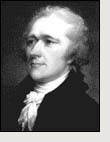
Happy 254th birthday, Alexander Hamilton!

January 11, 2012

Today, January 11,  is Alexander Hamilton’s birthday — had he lived so long, he’d be 254 years old today!

Alexander Hamilton on the U.S. ten dollar note - Guardian image

Alexander Hamilton on the U.S. ten dollar note - Guardian image

But of course, the bullet from Aaron Burr’s gun cut Hamilton’s life short, after the duel in Weehawken, New Jersey. Hamilton died of the wound on July 12, 1804. He was 47 years old.

Had Hamilton survived the duel, would he have been elected president? Some people think so. In any case, Hamilton’s wise management of the new nation’s finances, and his establishment of the idea that government should have a working bank, and that good government is a key to economic success of a nation, leave a great legacy for the nation, and the world.

Hamilton’s portrait adorns the U.S. $10 bill.

Read Hamilton’s biography from the U.S. National Archives’ feature on “America’s Founding Fathers/Charters of Freedom” exhibit:

Alexander Hamilton

Alexander Hamilton

Hamilton was born in 1757 on the island of Nevis, in the Leeward group, British West Indies. He was the illegitimate son of a common-law marriage between a poor itinerant Scottish merchant of aristocratic descent and an English-French Huguenot mother who was a planter’s daughter. In 1766, after the father had moved his family elsewhere in the Leewards to St. Croix in the Danish (now United States) Virgin Islands, he returned to St. Kitts while his wife and two sons remained on St. Croix.

The mother, who opened a small store to make ends meet, and a Presbyterian clergyman provided Hamilton with a basic education, and he learned to speak fluent French. About the time of his mother’s death in 1768, he became an apprentice clerk at Christiansted in a mercantile establishment, whose proprietor became one of his benefactors. Recognizing his ambition and superior intelligence, they raised a fund for his education.

In 1772, bearing letters of introduction, Hamilton traveled to New York City. Patrons he met there arranged for him to attend Barber’s Academy at Elizabethtown (present Elizabeth), NJ. During this time, he met and stayed for a while at the home of William Livingston, who would one day be a fellow signer of the Constitution. Late the next year, 1773, Hamilton entered King’s College (later Columbia College and University) in New York City, but the Revolution interrupted his studies.

Although not yet 20 years of age, in 1774-75 Hamilton wrote several widely read pro-Whig pamphlets. Right after the war broke out, he accepted an artillery captaincy and fought in the principal campaigns of 1776-77. In the latter year, winning the rank of lieutenant colonel, he joined the staff of General Washington as secretary and aide-de-camp and soon became his close confidant as well.

In 1780 Hamilton wed New Yorker Elizabeth Schuyler, whose family was rich and politically powerful; they were to have eight children. In 1781, after some disagreements with Washington, he took a command position under Lafayette in the Yorktown, VA, campaign (1781). He resigned his commission that November.

Hamilton then read law at Albany and quickly entered practice, but public service soon attracted him. He was elected to the Continental Congress in 1782-83. In the latter year, he established a law office in New York City. Because of his interest in strengthening the central government, he represented his state at the Annapolis Convention in 1786, where he urged the calling of the Constitutional Convention.

In 1787 Hamilton served in the legislature, which appointed him as a delegate to the convention. He played a surprisingly small part in the debates, apparently because he was frequently absent on legal business, his extreme nationalism put him at odds with most of the delegates, and he was frustrated by the conservative views of his two fellow delegates from New York. He did, however, sit on the Committee of Style, and he was the only one of the three delegates from his state who signed the finished document. Hamilton’s part in New York’s ratification the next year was substantial, though he felt the Constitution was deficient in many respects. Against determined opposition, he waged a strenuous and successful campaign, including collaboration with John Jay and James Madison in writing The Federalist. In 1787 Hamilton was again elected to the Continental Congress.

When the new government got under way in 1789, Hamilton won the position of Secretary of the Treasury. He began at once to place the nation’s disorganized finances on a sound footing. In a series of reports (1790-91), he presented a program not only to stabilize national finances but also to shape the future of the country as a powerful, industrial nation. He proposed establishment of a national bank, funding of the national debt, assumption of state war debts, and the encouragement of manufacturing.

Hamilton’s policies soon brought him into conflict with Jefferson and Madison. Their disputes with him over his pro-business economic program, sympathies for Great Britain, disdain for the common man, and opposition to the principles and excesses of the French revolution contributed to the formation of the first U.S. party system. It pitted Hamilton and the Federalists against Jefferson and Madison and the Democratic-Republicans.

During most of the Washington administration, Hamilton’s views usually prevailed with the President, especially after 1793 when Jefferson left the government. In 1795 family and financial needs forced Hamilton to resign from the Treasury Department and resume his law practice in New York City. Except for a stint as inspector-general of the Army (1798-1800) during the undeclared war with France, he never again held public office.

While gaining stature in the law, Hamilton continued to exert a powerful impact on New York and national politics. Always an opponent of fellow-Federalist John Adams, he sought to prevent his election to the presidency in 1796. When that failed, he continued to use his influence secretly within Adams’ cabinet. The bitterness between the two men became public knowledge in 1800 when Hamilton denounced Adams in a letter that was published through the efforts of the Democratic-Republicans.

In 1802 Hamilton and his family moved into The Grange, a country home he had built in a rural part of Manhattan not far north of New York City. But the expenses involved and investments in northern land speculations seriously strained his finances.

Meanwhile, when Jefferson and Aaron Burr tied in Presidential electoral votes in 1800, Hamilton threw valuable support to Jefferson. In 1804, when Burr sought the governorship of New York, Hamilton again managed to defeat him. That same year, Burr, taking offense at remarks he believed to have originated with Hamilton, challenged him to a duel, which took place at present Weehawken, NJ, on July 11. Mortally wounded, Hamilton died the next day. He was in his late forties at death. He was buried in Trinity Churchyard in New York City.

Image: Courtesy of The National Portrait Gallery, Smithsonian Institution

Post mostly borrowed, with express permission, from Mr. Darrell’s Wayback Machine.

Remember to watch for progress on “The Alexander Hamilton Mixtape,” a hip-hop version of Alexander Hamilton’s life by Lin-Manuel Miranda, seen here performing Aaron Burr’s soliloquey, at the White House.


Washington crossing the Delaware – a slightly different view

December 26, 2011

Past in the Present has this wonderful, terse post up:

It’s the most wonderful time of the year

Unless you’re a Hessian.

Passage of the Delaware, by Thomas Sully (1819). Now in the Boston Museum of Fine Arts.

Passage of the Delaware, by Thomas Sully (1819). Now in the Boston Museum of Fine Arts.

  1. Hessian?  Do my students know what he’s talking about?
  2. What is the other famous painting of this event?
  3. Considering how famous that other painting is, isn’t it almost tragic this one isn’t more famous?
  4. Considering #3, how many other great paintings of U.S. history sit in museums, or in government buildings, waiting to be discovered?  Maybe bloggers could help, by finding those paintings, photographing them, and posting the photographs.

More:


Boston Tea Party: An anti-corporation protest?

April 3, 2011

Thom Hartmann said so.  In Hartmann’s reading, the 1773 Boston Tea Party was as much a protest against corporate oligarchy as a protest against government — quite the opposite of the way most Neo Tea Partiers see things.   Is he right?  Historians, what say you?

Hartmann relies on his copy of George R. T. Hewes’ book, A retrospect of the Boston tea-party, with a memoir of George R. T. Hewes, a survivor of the little band of patriots who drowned the tea in Boston harbour in 1773 (1834). Are you familiar with the book?

George R. T. Hewes in 1835, a veteran of the 1773 Boston Tea Party - CUNY image

George Robert Twelves Hewes in 1835 at age 93, a veteran of the 1773 Boston Tea Party. Painting by Joseph G. Cole. CUNY image

More, and resources:


Something to think about as you get your flag ready to fly for July 4

July 2, 2010

This is mostly an encore post, from last year.

July 4th is the 234th anniversary of the announcement of the Declaration of Independence.  I hope you’re thinking about how you’ll fly the flag this weekend in honor of the Declaration of Independence.

The resolution proposed by Richard Henry Lee calling for independence of the 13 colonies passed the Continental Congress on July 2, 1776.  The Declaration would be Thomas Jefferson’s crowning achievement, outshining even his presidency and the Louisiana Purchase.   John Adams wrote to his wife, Abigail, that July 2 would forever be marked by patriotic displays.

But the Declaration itself, which gave teeth to the resolution, was adopted two days later on July 4 — and that has come to be the day we celebrate.

Detail, John Trumbull's Signing of the Declaration of Independence - Theodor Horydczak photo, Library of Congress

Detail, John Trumbull's Signing of the Declaration of Independence - The committee of five presents the Declaration of Independence to John Hancock, the President of the Second Continental Congress; from left, the committee is John Adams, Robert Livingston, Roger Sherman, Thomas Jefferson, and Ben Franklin. Theodor Horydczak photo, Library of Congress

Adams didn’t miss a beat.  Who quibbles about a couple of days when the celebrating is so good?

Adams and Jefferson were two of the five-member committee the Congress had tasked to write a declaration.  Adams and Ben Franklin quickly determined to leave it up to Jefferson, who had a grand flair with words, and who had just written a couple of stirring documents for Virginia.  Roger Sherman and Robert Livingston, the other two members, went along.  And so it was that the Declaration of  Independence is almost completely the work of Thomas Jefferson.

Adams and Jefferson became friends only later, when they both served the nation at war as ambassadors to France, and then for Adams, to England.  A widower, Jefferson was taken in by Abigail Adams who worried about him.  After the war, Jefferson was in England when Adams was to meet King George III in a grand ceremony in which the king would accept the credentials of all the ambassadors of foreign nations to England.  As the king strode down the line, each ambassador or delegation would bow, the king would acknowledge them, the papers would be passed, and the king would move on.  Adams and Jefferson bowed.  King George moved on, ignoring them completely.

In such a case of such a snub, the snubbed foreigners usually made a quick exit.  Adams and Jefferson did not.  They stood at attention as if the king had treated them like all the rest, reversing the snub.  From the beginning, Americans and the United States pushed for more practical, reasonable, and compassionate government and relations.

Back in America in peacetime, and both members of the administration of George Washington, Adams and Jefferson fell out.  Secretary of State Jefferson favored a more limited federal government; Vice President Adams favored a more powerful one.  By the end of Washington’s second term, party politics had been well developed.  Adams defeated Jefferson in the election of 1796.  As was the law then, Jefferson was vice president as the runner-up vote getter in the electoral college; but Adams kept Jefferson out of all government affairs.  Perhaps because he didn’t have Jefferson to help, Adams’s presidency did not go well.  In the rematch election in 1800, one of  the bitterest fights ever, Jefferson’s party defeated Adams.  The gleeful Democratic-Republican electors all voted one ballot for Jefferson, the presidential candidate, and one ballot for Aaron Burr, the party’s vice presidential candidate.

Alas, that produced a tie vote in the electoral college.  Adams’s party, the Federalists, still held the House of Representatives before the new Congress came in.  A tie vote goes to the House for decision.  They could not bring themselves to vote for Jefferson, and the deadlock continued for 37 ballots.  Finally Jefferson’s former friend but now arch enemy Alexander Hamilton intervened, explaining that Burr was clearly the greater scoundrel, and the House elected Jefferson.  Adams slunk out of town, avoiding the inauguration.

It wasn’t until after 1809 when Benjamin Rush hoodwinked Jefferson into writing to Adams, and Adams to Jefferson, that the two became friendly again.  For the next 17 years Jefferson and Adams carried on perhaps the greatest series of correspondence in history between two great minds.  Letters went out almost daily, from Monticello, Virginia,  to Braintree, Massachusetts, and from Braintree to Monticello.  They discussed the weather, their families, old times, farming — but especially the republic they had been most instrumental in creating, and how it might be preserved, and prosper.  Eventually the letters became harder to read, both because their eyesight was failing, and because their penmanship deteriorated, too.

The ideas, however, flowed like a great river of freedom.

Letter from Thomas Jefferson to John Adams, August 15th, 1820 - Library of Congress image

Letter from Thomas Jefferson to John Adams, August 15th, 1820. From The Thomas Jefferson Papers at the Library of Congress, Thomas Jefferson Papers Series 1. General Correspondence. 1651-1827. Library of Congress image

Both men took ill early in 1826.  This was a landmark year, 50 years since the Declaration of Independence.  In Massachusetts, a grand display of fireworks was to cap off a day of feasting and celebration.  Adams hoped he might attend.  In Virginia, a week before, it became clear Jefferson was too ill to venture even as close as Charlottesville for the celebration.  Jefferson slept through most of July 3, but awoke about 9:00 p.m., and asked, “This is the fourth?”  It was not.  These are the last significant, recorded words of Jefferson.  He awoke at about 4:00 a.m. on the Fourth of July, 1826, but could not make a rally.  He died at 12:50 in the afternoon.

Adams, too, was too ill to attend the celebrations.  In the late afternoon or early evening of the Fourth, he awoke, and heard the celebration in the town.  Almost as if he had worked just to live to see that particular day, he checked the date.  Realizing he was near the end, happy that he’d seen 50 years after the Declaration, and unaware of the events earlier that day in Virginia, Adams said, “Thomas Jefferson still survives.”  Adams, too, died on July 4, 1826.

Fly your flag July 4th. Remember John Adams and Thomas Jefferson.  Remember their great work in creating the nation that protects our freedoms today.  Remember their great friendship.  Write a letter to a good friend you’ve not written to lately.

It is Independence Day this Sunday.  Their spirit survives in us, as we celebrate, and if we remember why we celebrate.


Concord Hymn, read by Bill Clinton

April 19, 2010

What came after Paul Revere’s ride?  The Battle of Lexington, and the Battle of Concord.

Longfellow’s poem, “Paul Revere’s Ride,” was written in 1860, 23 years after Emerson wrote “The Concord Hymn” for the dedication of the monument to the Minutemen at Concord Bridge.


Paul Revere’s Ride, read by Longfellow

April 19, 2010

Almost.

Least creepy of the animated YouTube versions I could find, and not a bad reading (though I wish some readers would pay more attention to the text and less attention to meter and rhyme).

What do you think?

So, early on the morning of April 19, Paul Revere finished his ride.  John Hancock and Samuel Adams had been alerted, and so had the Minutemen who had pledged and practiced to defend the arsenals laid in to defend colonists against British tyranny  . . .


Veterans Day 2009 – Here’s the poster

November 1, 2009

Veterans Day Poster, 2009, U.S. Department of Veterans Affairs

Veterans Day Poster, 2009, U.S. Department of Veterans Affairs - Click on poster for link to high-quality version

Get ready to fly your flag on Veterans Day, November 11.

Information


Declaration and Constitution – sources

February 26, 2009

Cross posted from Mr. Darrell’s Wayback Machine, with permission, with minor edits.

Everybody needs to have a copy of the Declaration of Independence and  U.S. Constitution close at hand.

Original rought draft of the Declaration of Independence written out in longhand by Thomas Jefferson, featuring emendations by Benjamin Franklin and John Adams - Library of Congress Manuscripts Division

Original rough draft of the Declaration of Independence written out in longhand by Thomas Jefferson, featuring “emendations” by Benjamin Franklin and John Adams – Library of Congress Manuscripts Division

Too often I’ve been in classes where textbooks didn’t have them, though in some cases the course clearly required it (especially irritating in high school texts, but not unheard of in college texts).  The two documents are covered in depth in the requirements for Texas 10th grade social studies (world history), but not in the texts.

Both documents provide a foundation for analysis of events following, through the 19th and 20th centuries.

Where is the student of world history to find them?

Here:

Declaration of Independence

Constitution of the United States of America

Rotunda of the National Archives in Washington, D.C., where the Declaration and Constitution are kept on display - National Archives photo

Rotunda of the National Archives in Washington, D.C., where the Declaration and Constitution are kept on display – National Archives photo


Independence Day quiz

June 30, 2008

An ISP called Toast.net has an interactive Independence Day Quiz — feeling patriotic? Go see how your knowledge of U.S. history and lore stacks up against others. The questions are very good, really.

Remember to fly your flag on the 4th of July!


“Why should I read Shakespeare? Why should I study history?”

November 2, 2007

David McCullough might answer that question this way:

In conclusion I want to share a scene that took place on the last day of the year of 1776, Dec. 31. All the enlistments for the entire army were up. Every soldier, because of the system at the time, was free to go home as of the first day of January 1777. Washington called a large part of the troops out into formation. He appeared in front of these ragged men on his horse, and he urged them to reenlist. He said that if they would sign up for another six months, he’d give them a bonus of 10 dollars. It was an enormous amount then because that’s about what they were being paid for a month—if and when they could get paid. These were men who were desperate for pay of any kind. Their families were starving.

The drums rolled, and he asked those who would stay on to step forward. The drums kept rolling, and nobody stepped forward. Washington turned and rode away from them. Then he stopped, and he turned back and rode up to them again. This is what we know he said:

My brave fellows, you have done all I asked you to do, and more than could be reasonably expected, but your country is at stake, your wives, your houses, and all that you hold dear. You have worn yourselves out with fatigues and hardships, but we know not how to spare you. If you will consent to stay one month longer, you will render that service to the cause of liberty, and to your country, which you can probably never do under any other circumstance.3

Again the drums rolled. This time the men began stepping forward. “God Almighty,” wrote Nathanael Greene, “inclined their hearts to listen to the proposal and they engaged anew.”4

Now that is an amazing scene, to say the least, and it’s real. This wasn’t some contrivance of a screenwriter. However, I believe there is something very familiar about what Washington said to those troops. It was as if he was saying, “You are fortunate. You have a chance to serve your country in a way that nobody else is going to be able to, and everybody else is going to be jealous of you, and you will count this the most important decision and the most valuable service of your lives.” Now doesn’t that have a familiar ring? Isn’t it very like the speech of Henry V in Shakespeare’s play Henry V: “We few, we happy few, we band of brothers . . . And gentlemen in England now a-bed / Shall think themselves accursed they were not here”?5 Washington loved the theater; Washington loved Shakespeare. I can’t help but feel that he was greatly influenced.

He was also greatly influenced, as they all were, by the classical ideals of the Romans and the Greeks. The history they read was the history of Greece and Rome. And while Washington and Knox and Greene, not being educated men, didn’t read Greek and Latin as Adams and Jefferson did, they knew the play Cato, and they knew about Cincinnatus. They knew that Cincinnatus had stepped forward to save his country in its hour of peril and then, after the war was over, returned to the farm. Washington, the political general, had never forgotten that Congress was boss. When the war was at last over, Washington, in one of the most important events in our entire history, turned back his command to Congress—a scene portrayed in a magnificent painting by John Trumbull that hangs in the rotunda of our national Capitol. When George III heard that George Washington might do this, he said that “if he does, he will be the greatest man in the world.”

So what does this tell us? That the original decision of the Continental Congress was the wise one. They knew the man, they knew his character, and he lived up to his reputation.

I hope very much that those of you who are studying history here will pursue it avidly, with diligence, with attention. I hope you do this not just because it will make you a better citizen, and it will; not just because you will learn a great deal about human nature and about cause and effect in your own lives, as well as the life of the nation, which you will; but as a source of strength, as an example of how to conduct yourself in difficult times—and we live in very difficult times, very uncertain times. But I hope you also find history to be a source of pleasure. Read history for pleasure as you would read a great novel or poetry or go to see a great play.

And I hope when you read about the American Revolution and the reality of those people that you will never think of them again as just figures in a costume pageant or as gods. They were not perfect; they were imperfect—that’s what’s so miraculous. They rose to the occasion as very few generations ever have.

David McCullough, from a speech delivered at Brigham Young University in Provo, Utah, on September 27, 2005, “The Glorious Cause of America.”

Do your students know that speech from Henry V? Do your students know the story of Cincinnatus?

Tip of the old scrub brush to Collecting My Thoughts.

Didn’t fool anybody: Liberty Bell

August 23, 2007

Yes, it’s the Liberty Bell, photographed from underneath, with the lights shining through the crack.

I guess it was a lot more obvious than I thought. No one guessed wrong.

This is the bell that resided in the bell tower of the Pennsylvania Statehouse, what we now call Independence Hall. It is the bell that was rung to proclaim the Declaration of Independence in 1776. The bell was cast with several flaws in 1752. It had to be recast shortly after it was delivered, and then cast a third time. It cracked in the early 19th century (legend has it cracking while pealing during the funeral of Chief Justice John Marshall — I won’t vouch for that story). It was last rung in 1846, on the anniversary of George Washington’s birth.

Enshrined in art and legend, the bell appeared on the reverse of the Franklin half-dollars (when was the last time you saw any 50-cent piece in circulation?). Reverse of Franklin half-dollar, showing Liberty Bell - Ask.comIt was put on tour after the Civil War in an effort to get the nation reunited around old symbols (but, considering it was first called “the Liberty Bell” by early abolitionist groups, one might wonder how effective was the tour). When I visited it in the 1990s, the bell rested in its own pavilion about a half-block away from Independence Hall. Renovations of the historic site included construction of a new museum, which required the bell to be moved again.

Preservation and restoration experts wondered whether the bell would well survive the move. So the National Science Foundation (NSF) was called in to study the bell and determine whether it could take the stress of the move. NSF’s press release said the bell passed its “stress test.” The story of the measurement is well told, and may be interesting to students. The writer at NSF put in a lot of the history.

The photo is from the NSF team that did the study; it shows the inside of the bell and part of the “spider” support system that helps hold the bell together and support display.

My probably faulty recollection is that we studied the story of the Liberty Bell each year in grades 1 through 5, which in my case includes schools in the states of Idaho and Utah. My baseline U.S. history tests over the past four years show that about half the students I had, in grades 7, 10, 11 and 12, could not identify the bell or tell why it is revered in U.S. history.

Every reader here gets an “A.”

World War II postal cover featuring Liberty Bell

Other Liberty Bell information:


Leo Rosten on Adam Smith

July 29, 2007

Leo Rosten writes clearly, concisely, and often with great humor. Consequently, his essays make good fodder for classroom use.

British bank note featuring Adam Smith

Rosten is probably most famous for the introduction he once gave to the comedian W. C. Fields, a spur-of-the-moment bon mots that so exactly described Fields comedian persona that it is often listed as a line Fields himself wrote: “Any man who hates dogs and children can’t be all bad.”

That story also tells us that Rosten looks at Adam Smith coolly, through no rose-colored glass.

The Adam Smith Institute carries Rosten’s essay on Smith in its entirety. Go read it:

It is a clumsy, sprawling, elephantine book. The facts are suffocating, the digressions interminable, the pace as maddening as the title is uninviting: An Inquiry into the Nature and Causes of the Wealth of Nations. But it is one of the towering achievements of the human mind: a masterwork of observation and analysis, of ingenious correlations, inspired theorizings, and the most persistent and powerful cerebration. Delightful ironies break through its stodgy surface:

“The late resolution of the Quakers [to free] their Negro slaves may satisfy us that their number cannot be very great …”

“The chief enjoyment of riches consists in the parade of riches.”

“To found a great empire for the sole purpose of raising customers [is] unfit for a nation of shopkeepers, but extremely fit for a nation whose government is influenced by shopkeepers.”

So comprehensive is its range, so perceptive its probings, that it can dance, within one conceptual scheme, from the diamond mines of Golconda to the price of Chinese silver in Peru; from the fisheries of Holland to the plight of Irish prostitutes in London. It links a thousand apparently unrelated oddities into unexpected chains of consequence. And the brilliance of its intelligence “lights up the mosaic of detail,” says Schumpeter, “heating the facts until they glow.” Sometimes.

Adam Smith published The Wealth of Nations in 1776 – not as a textbook, but as a polemical cannon aimed at governments that were subsidizing and protecting their merchants, their farmers, their manufacturers, against “unfair” competition, at home or from imports. Smith set out to demolish the mercantilist theory from which those politics flowed. He challenged the powerful interests who were profiting from unfree markets, collusive prices, tariffs and subsidies, and obsolete ways of producing things.

[More at the site of the Adam Smith Institute, including the continuation of this essay.]

Leo Rosten, publicity shot

Leo Rosten


The story is the thing; tell the story in history

July 15, 2007

Son James and I spent July 4 in Taos, New Mexico, where we were working with Habitat for Humanity building homes (a project of the youth group at the church we attend, First Christian Church (Disciples of Christ) of Duncanville, Texas). We took that day off, saw Transformers, looked at the sights in Taos, and drove to Eagle Nest Lake to see fireworks.

Lincoln reading to son, Tad; LOC photo

At some point through the week I was discussing with others the stories that make history memorable, in my view, and we discovered that few others on the trip knew the story of the deaths of both John Adams and Thomas Jefferson on July 4, 1826, the 50th anniversary of the signing of the Declaration of Independence. It’s a story that is generally glossed over in U.S. history texts, but one that I make room for in U.S. history courses. My experience is that once kids get the story, that these two great men from such radically different backgrounds became great friends, then in presidential politics, great enemies, and then were reconciled, and then died on the exactly the same day which commemorated the event that both made them famous and that they made famous, kids don’t forget the story.

The story of their friendship is powerful and can be accompanied by readings from their letters in their later life (DBQ opportunity, teachers!). Generally, the story gets told in response to a question from a student. If I do it well, there will be sniffles from the class when we get to the part about Jefferson’s near-coma, awakening to ask whether it is the 4th of July, and then dying, and Adams’ death a few hours later, saying in error that “Jefferson still survives” (which is good that some students choke up, because it always gets me).

The story offers several mnemonic opportunities: 1826, the 50th year after the Declaration (1776); the presidencies of Adams and Jefferson, following one another; the fact that Adams and Jefferson were on the committee to write the Declaration, and that Adams nominated Jefferson as the better writer; the order of the terms of the presidency; the bitter politics at the end of Washington’s presidency (kids get interested in conflict, and the founding seems more vital to them when the controversies rear up); the reverence for law; Adams’ and Jefferson’s service as foreign ambassadors; and so on.

Once I’d told the story, others got the point. The story illustrates Mark Twain’s point about how much more difficult it is to write fiction. Fiction must stick with possibilities, Twain noted, while reality isn’t so constrained. If you wrote a screenplay with two heroes like Adams and Jefferson, and then had them die on the same day within a few hours of each other, hundreds of miles apart, you’d be criticized for being unrealistic. But it happened in history. It’s a true story, better than any lipsticked version Parson Weems could ever invent.

Study of history should never be a drudging trudge to memorize dates. The stories are what count, they are the things people remember. The stories tell people why history is important, and what mistakes to avoid, to satisfy Santayana’s ghost.

Such stories, especially about the founding of America, make history come alive and, often, grab students by the throat and make it memorable for them.  History is Elementary carries a nice story with the same message, though using Washington’s surprise attack on the Hessians from Trenton.  Teachers in need of such stories might do well to pick up a copy of David McCullough’s 1776, or Joseph Ellis’s Founding Brothers.

What other stories are there?  Well, the story about the scar on James Madison’s nose, and how it led to the cementing of the American Revolution (James Monroe, by the way, also died on July 4 — but in 1831).  The story of Lincoln’s trip to New Orleans; the story of Teddy Roosevelt’s capture of Mike Finnegan and two other outlaws, in the Dakotas; the story of Calvin Coolidge’s son’s death; the story of Robert Lincoln’s brushes with presidential assassinations; the story of the Civil War beginning in one man’s back-40 acres, and ending in his parlor; the story as Stephen Ambrose tells it of three men pinned down on a beach in Normandy on D-Day, and deciding the best course of action was to move forward to win the war; American history is rife with bizarre coincidences and seemingly minor events that go on to have great consequences.

I love to hear the story, especially told well.  Well told stories help students learn and retain history, and, I’ll wager, they boost the scores on standardized tests.