U.N. General Assembly notes progress against malaria

September 16, 2014

In Ghana:  Community members perform a scene to educate others on how and why to use bednets. (USAID/Kasia McCormick) 2012. USAID Africa Bureau

In Ghana: Community members perform a scene to educate others on how and why to use bednets. (USAID/Kasia McCormick) 2012. USAID Africa Bureau, via Wikimedia

In stark contrast to the usual hoax stories we get in the U.S. about malaria and DDT, the United Nations General Assembly this past week passed a resolution noting progress made in fighting the parasitic disease.

Quoting wholesale from Ghana Web:

The United Nations General Assembly at its 68th Session, adopted Resolution A/68/L.60, “Consolidating Gains and Accelerating Efforts to Control and Eliminate Malaria in Developing Countries, Particularly in Africa, by 2015” by consensus.

Recognising progress made through political leadership and a broad range of national and international actions to scale-up malaria control interventions, this annual resolution urges governments, United Nations agencies, and all stakeholders to work together to meet the targets set out in the Roll Back Malaria Partnership’s Global Malaria Action Plan (GMAP) and the UN’s Millennium Development Goals (MDGs).

An official statement issued in Accra and copied the Ghana News Agency said with just less than 500 days until the 2015 deadline of the MDGs, the adoption of this resolution by the General Assembly reiterates the commitment of UN Member States to keep malaria high on the international development agenda.

“We have seen tremendous progress against this killer disease in recent years, but continued success will require increased political and financial commitment from donor and endemic governments alike. Together we can scale-up efforts and continue saving lives,” it said.

The statement said since 2001, the World Health Organisation (WHO) estimated that malaria death rates have decreased by nearly 50 per cent in Africa alone, where 90 per cent of all malaria-related deaths still occur – contributing to a 20 per cent reduction in global child mortality and helping drive progress towards UN MDG 4.

“Between 2001 and 2012, collective efforts helped avert an estimated 3.3 million deaths (69 per cent) of which were in the 10 countries with the highest malaria burden in 2000 and more than half of the 103 countries that had ongoing malaria transmission in 2000 are meeting the MDG of reversing malaria incidence by 2015.

“Despite these advances, almost half of the world’s population remains at risk from malaria, with an estimated 207 million cases of infection around the world each year and 627,000 deaths. Around the world, a child still dies from malaria every minute.

“The resolution calls for donor and endemic governments alike to support global malaria control efforts, including the secretariat of the Roll Back Malaria Partnership, and to intensify efforts to secure the political commitment, partnerships and funds needed to continue saving lives.

“Increased financing will be critical to further advancements, as current international and domestic financing for malaria of US 2.5 billion dollars in 2012 amounts to less than half of the US 5.1 billion dollars estimates to be needed annually through 2020 to achieve universal coverage of malaria control interventions,” the statement said.

In 2012, United Nations Secretary-General Ban Ki-moon named malaria as a top priority of his second mandate. Malaria control has consistently proven to be a strong global health investment, generating high return on low investments.

Impacting all eight of the United Nations MDGs, malaria prevention and treatment serves as an entry point to help advance progress against other health and development targets across the board by reducing school absenteeism, fighting poverty, and improving maternal and child health.

Did you see that report in your local newspapers, or on radio or television?

More:


No air conditioning in your classroom? Maasai school in Tanzania

August 20, 2014

Maasai school in Tanzania. Photo by Noel Feans,

Maasai school in Tanzania. Photo by Noel Feans, “We rule the school.” September 2009; Creative Commons copyright, Wikimedia image; also on Flickr

Another photo illustrating classroom technology in different cultures.


World malaria report 2013 shows major progress in fight against malaria, calls for sustained financing (but not DDT)

March 21, 2014

News release from the World Health Organization:

World malaria report 2013 shows major progress in fight against malaria, calls for sustained financing

News release

Cover of World Malaria Report 2013

Cover of World Malaria Report 2013

11 December 2013 | Geneva/Washington DC – Global efforts to control and eliminate malaria have saved an estimated 3.3 million lives since 2000, reducing malaria mortality rates by 45% globally and by 49% in Africa, according to the “World malaria report 2013” published by WHO.

An expansion of prevention and control measures has been mirrored by a consistent decline in malaria deaths and illness, despite an increase in the global population at risk of malaria between 2000 and 2012. Increased political commitment and expanded funding have helped to reduce incidence of malaria by 29% globally, and by 31% in Africa.

The large majority of the 3.3 million lives saved between 2000 and 2012 were in the 10 countries with the highest malaria burden, and among children aged less than 5 years – the group most affected by the disease. Over the same period, malaria mortality rates in children in Africa were reduced by an estimated 54%.

But more needs to be done.

“This remarkable progress is no cause for complacency: absolute numbers of malaria cases and deaths are not going down as fast as they could,” says Dr Margaret Chan, WHO Director-General. “The fact that so many people are infected and dying from mosquito bites is one of the greatest tragedies of the 21st century.”

In 2012, there were an estimated 207 million cases of malaria (uncertainty interval: 135 – 287 million), which caused approximately 627 000 malaria deaths (uncertainty interval 473 000 – 789 000). An estimated 3.4 billion people continue to be at risk of malaria, mostly in Africa and south-east Asia. Around 80% of malaria cases occur in Africa.

Long way from universal access to prevention and treatment

Malaria prevention suffered a setback after its strong build-up between 2005 and 2010. The new WHO report notes a slowdown in the expansion of interventions to control mosquitoes for the second successive year, particularly in providing access to insecticide-treated bed nets. This has been primarily due to lack of funds to procure bed nets in countries that have ongoing malaria transmission.

In sub-Saharan Africa, the proportion of the population with access to an insecticide-treated bed net remained well under 50% in 2013. Only 70 million new bed nets were delivered to malaria-endemic countries in 2012, below the 150 million minimum needed every year to ensure everyone at risk is protected. However, in 2013, about 136 million nets were delivered, and the pipeline for 2014 looks even stronger (approximately 200 million), suggesting that there is real chance for a turnaround.

There was no such setback for malaria diagnostic testing, which has continued to expand in recent years. Between 2010 and 2012, the proportion of people with suspected malaria who received a diagnostic test in the public sector increased from 44% to 64% globally.

Access to WHO-recommended artemisinin-based combination therapies (ACTs) has also increased, with the number of treatment courses delivered to countries rising from 76 million in 2006 to 331 million in 2012.

Despite this progress, millions of people continue to lack access to diagnosis and quality-assured treatment, particularly in countries with weak health systems. The roll-out of preventive therapies – recommended for infants, children under 5 and pregnant women – has also been slow in recent years.

“To win the fight against malaria we must get the means to prevent and treat the disease to every family who needs it,” says Raymond G Chambers, the United Nations Secretary General’s Special Envoy for Financing the Health MDGs and for Malaria. “Our collective efforts are not only ending the needless suffering of millions, but are helping families thrive and adding billions of dollars to economies that nations can use in other ways.”

Global funding gap

International funding for malaria control increased from less than US$ 100 million in 2000 to almost US$ 2 billion in 2012. Domestic funding stood at around US$ 0.5 billion in the same year, bringing the total international and domestic funding committed to malaria control to US$ 2.5 billion in 2012 – less than half the US$ 5.1 billion needed each year to achieve universal access to interventions.

Without adequate and predictable funding, the progress against malaria is also threatened by emerging parasite resistance to artemisinin, the core component of ACTs, and mosquito resistance to insecticides. Artemisinin resistance has been detected in four countries in south-east Asia, and insecticide resistance has been found in at least 64 countries.

“The remarkable gains against malaria are still fragile,” says Dr Robert Newman, Director of the WHO Global Malaria Programme. “In the next 10-15 years, the world will need innovative tools and technologies, as well as new strategic approaches to sustain and accelerate progress.”

WHO is currently developing a global technical strategy for malaria control and elimination for the 2016-2025 period, as well as a global plan to control and eliminate Plasmodium vivax malaria. Prevalent primarily in Asia and South America, P. vivax malaria is less likely than P. falciparum to result in severe malaria or death, but it generally responds more slowly to control efforts. Globally, about 9% of the estimated malaria cases are due to P. vivax, although the proportion outside the African continent is 50%.

“The vote of confidence shown by donors last week at the replenishment conference for the Global Fund to Fight AIDS, Tuberculosis and Malaria is testimony to the success of global partnership. But we must fill the annual gap of US$ 2.6 billion to achieve universal coverage and prevent malaria deaths,” said Fatoumata Nafo-Traoré, Executive Director of the Roll Back Malaria Partnership. “This is our historic opportunity to defeat malaria.”

Notes for editors:

The “World malaria report 2013” summarizes information received from 102 countries that had on-going malaria transmission during the 2000-2012 period, and other sources, and updates the analyses presented in 2012.

The report contains revised estimates of the number of malaria cases and deaths, which integrate new and updated under-5 mortality estimates produced by the United Nations Inter-agency Group for Child Mortality Estimation, as well as new data from the Child Health Epidemiology Reference Group.


Ugandan court turned back challenge to DDT use

March 19, 2014

One more news story that demonstrates, first, there is no worldwide ban on DDT (not even with the POPs Treaty); and second, environmentalists probably couldn’t stop DDT use if they tried, in nations where malaria still poses a problem.

Uganda's location in Africa; WorldAtlas.com map

Uganda’s location in Africa; WorldAtlas.com map

Not that the DDT-crazy anti-environmentalist critics of Rachel Carson and WHO will notice, but here’s the news, anyway.

From All Africa, from The Observer in Kampala:

Uganda: DDT Petition Dismissed

By Derrick Kiyonga, 18 March 2014

A petition against the use of DDT to control malaria has been dismissed by the Constitutional court.

Judges said the 2009 petition by the Uganda Network on Toxic-Free Malaria Control (UNETMAC) did not raise any matter for interpretation under article 137 of the Constitution. UNETMAC had argued that indoor residual spraying (IRS) and the continued use of the insecticide was hazardous to Uganda’s agricultural exports.

The ministry of Health had earlier approved IRS in Apac and Oyam districts. The judgment by the five-judge panel was delivered by Justice Kenneth Kakuru.

Uganda’s lack of anti-malaria campaigns due to political unrest through much of the last 40 years appears to have contributed to rather severe problems in some provinces today.  At various points over the past decade, Indoor Residual Spraying (IRS) won court fights from business groups, trade groups, farmers, affected citizens and odd environmental organizations.  In each case, courts ruled in favor of DDT use.

IRS involves spraying the walls of a home where mosquitoes rest after biting a victim.  Hypothetically, the mosquito then gets a fatal does of insecticide, and will not live long enough to develop the next cycle of malaria parasites to pass back to human victims (the life cycle of the malaria parasite takes about 14 days in a mosquito’s gut before the bug becomes infectious).  DDT is not approved for outdoor use, but only for fighting disease, and only inside dwellings.

DDT and about a dozen other insecticides are used for IRS, in rotation, to avoid pushing the mosquitoes to evolve resistance to any one poison.  Even so, DDT grows less effective, and health workers increasingly avoid using it at all, in favor of other insecticides.

Despite a few hotspots of malaria in Africa, across the continent malaria infections and deaths continue to decline, a decline steady since the early 1970s, accelerated since 2000.

More:

Uganda. AfricaDiscovery.com

Uganda. AfricaDiscovery.com


Best flying of a U.S. flag in a while

September 6, 2013

You’d forgotten there’s another war going on in South Sudan?

Location of South Sudan in Africa.

Location of South Sudan in Africa (darkened area). Wikipedia image

More:

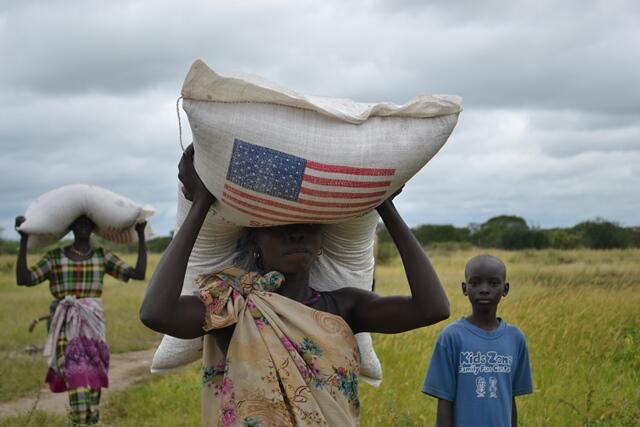
Best flying of a U.S. flag: A woman carries a bag of food in Gumuruk where @WFP is assisting IDPs uprooted by violence.

Best flying of a U.S. flag: A woman carries a bag of food in Gumuruk where @WFP is assisting IDPs uprooted by violence.


World Malaria Report 2012: Malaria still declining, but more resources needed fast

January 4, 2013

Significant gains against malaria could be lost because funding for insecticide-treated bednets has dropped, and malaria parasites appear to be developing resistance to the pharmaceuticals used to clear the disease from humans, while insects that transmit the parasites develop resistance to insecticides used to hold their populations down.

Malaria room

African bedroom equipped with LLINs (insecticidal bednets) Photo: YoHandy/Flickr

UN’s World Health Organization (WHO) published its annual report on the fight against malaria last month, December 2012.  Accompanying the many page World Malaria Report 2012  were a press release and a FAQ; the fact-sheet appears unedited below.

Insecticidal bednets have proven to be a major, effective tool in reducing malaria infections.  Careful studies of several different projects produced a consensus that distributing the nets for free works best; people in malaria-infected areas simply cannot afford to pay even for life-saving devices, but they use the devices wisely when they get them.  Nets often get abbreviated in official documents to “LLINs,” an acronym for “long-lasting insecticidal nets.”

Generally, the report is good news.

Dramatic facts emerge from the report:  The “million-a-year” death toll from malaria has been whacked to fewer than 700,000, the lowest level in recorded human history.  More people may die, and soon, if aid does not come to replace worn bednets, distribute new ones, and if the drugs that cure the disease in humans, lose effectiveness.  Many nations where the disease is endemic cannot afford to wage the fight on their own.

Links in the Fact Sheet were added here, and do not come from the original report — except for the link to the WHO site itself.

Logo for World Health Organization

17 December 2012

World Malaria Report 2012

FACT SHEET

Malaria is a preventable and treatable mosquito-borne disease, whose main victims are children under five years of age in Africa.

The World Malaria Report 2012 summarizes data received from 104 malaria-endemic countries and territories for 2011. Ninety-nine of these countries had on-going malaria transmission.

According to the latest WHO estimates, there were about 219 million cases of malaria in 2010 and an estimated 660,000 deaths. Africa is the most affected continent: about 90% of all malaria deaths occur there.

Between 2000 and 2010, malaria mortality rates fell by 26% around the world. In the WHO African Region the decrease was 33%. During this period, an estimated 1.1 million malaria deaths were averted globally, primarily as a result of a scale-up of interventions.

Funding situation

International disbursements for malaria control rose steeply during the past eight years and were estimated to be US$ 1.66 billion in 2011 and US$ 1.84 billion in 2012. National government funding for malaria programmes has also been increasing in recent years, and stood at an estimated US$ 625 million in 2011.

However, the currently available funding for malaria prevention and control is far below the resources required to reach global malaria targets. An estimated US$ 5.1 billion is needed every year between 2011 and 2020 to achieve universal access to malaria interventions. In 2011, only US$ 2.3 billion was available, less than half of what is needed.

Disease burden

Malaria remains inextricably linked with poverty. The highest malaria mortality rates are being seen in countries that have the highest rates of extreme poverty (proportion of population living on less than US$1.25 per day).

International targets for reducing malaria cases and deaths will not be attained unless considerable progress can be made in the 17 most affected countries, which account for an estimated 80% of malaria cases.

  • The six highest burden countries in the WHO African region (in order of estimated number of cases) are: Nigeria, Democratic Republic of the Congo, United Republic of Tanzania, Uganda, Mozambique and Cote d’Ivoire. These six countries account for an estimated 103 million (or 47%) of malaria cases.
  • In South East Asia, the second most affected region in the world, India has the highest malaria burden (with an estimated 24 million cases per year), followed by Indonesia and Myanmar.  50 countries are on track to reduce their malaria case incidence rates by 75%, in line with World Health Assembly and Roll Back Malaria targets for 2015. These 50 countries only account for 3% (7 million) of the total estimated malaria cases.

At present, malaria surveillance systems detect only around 10% of the estimated global number of cases.  In 41 countries around the world, it is not possible to make a reliable assessment of malaria trends due to incompleteness or inconsistency of reporting over time.

This year, the World Malaria Report 2012 publishes country-based malaria case and mortality estimates (see Annex 6A). The next update on global and regional burden estimates will be issued in December 2013.

Malaria interventions

To achieve universal access to long-lasting insecticidal nets (LLINs), 780 million people at risk would need to have access to LLINs in sub-Saharan Africa, and approximately 150 million bed nets would need to be delivered each year.

The number of LLINs delivered to endemic countries in sub-Saharan Africa dropped from a peak of 145 million in 2010 to an estimated 66 million in 2012. This will not be enough to fully replace the LLINs delivered 3 years earlier, indicating that total bed net coverage will decrease unless there is a massive scale-up in 2013. A decrease in LLIN coverage is likely to lead to major resurgences in the disease.

In 2011, 153 million people were protected by indoor residual spraying (IRS) around the world, or 5% of the total global population at risk. In the WHO African Region, 77 million people, or 11% of the population at risk were protected through IRS in 2011.

The number of rapid diagnostic tests delivered to endemic countries increased dramatically from 88 million in 2010 to 155 million in 2011. This was complemented by a significant improvement in the quality of tests over time.

In 2011, 278 million courses of artemisinin-based combination therapies (ACTs) were procured by the public and private sectors in endemic countries – up from 182 million in 2010, and just 11 million in 2005. ACTs are recommended as the first-line treatment for malaria caused by Plasmodium falciparum, the most deadly Plasmodium species that infects humans. This increase was largely driven by the scale-up of subsidized ACTs in the private sector through the AMFm initiative, managed by the Global Fund to Fight AIDS, Tuberculosis and Malaria.

Drug and insecticide resistance

Antimalarial drug resistance is a major concern for the global effort to control malaria. P. falciparum resistance to artemisinins has been detected in four countries in South East Asia: in Cambodia, Myanmar, Thailand and Viet Nam. There is an urgent need to expand containment efforts in affected countries. For now, ACTs remain highly effective in almost all settings, so long as the partner drug in the combination is locally effective.

Mosquito resistance to at least one insecticide used for malaria control has been identified in 64 countries around the world. In May 2012, WHO and the Roll Back Malaria Partnership released the Global Plan for Insecticide Resistance Management in malaria vectors, a five-pillar strategy for managing the threat of insecticide resistance.

www.who.int/malaria

You were perceptive.  You noted there is no call from malaria fighters for more DDT, nor for any change in DDT policy.  This is a report from medical personnel, from public health experts, the real malaria fighters.  It’s not a political screed.

More, and related articles:


When the decision NOT to use a gun changed the world

December 24, 2012

Sometimes it doesn’t take a gun at all.

Nelson Mandela in 1962

Nelson Mandela outside of Westminster Abbey in 1962 — this trip, without permission from the South Africa government, led to his indictment and arrest.

Impressive story about the mystery of Nelson Mandela’s arrest in 1962, at The Wall Street Journal — a story by Peter Wonacott, on December 22, 2012, page C3.  After all these years, how the South African government was tipped off that Mr. Mandela would be where he was, posing as who he posed as, remains a mystery.  Mandela was arrested, tried and convicted of several crimes, ultimately spending 27 years in jail, refusing to give up his cause to gain his freedom.  When the system bent to his wishes, he was released from jail and elected president of his nation.

The key paragraph in the story, the point where the long arc of history was forcefully bent to justice and peace:

Mr. Mandela has described how he had hidden a loaded revolver in the car that day in 1962 but decided not to use it. Choosing not to fight his way out began a journey that would take him through prison to the presidency on a platform of peace, forgiveness and reconciliation among the nation’s races.

Increasing the number of people with an increasing number of guns, however, does not offer more opportunities to change history like that.


Still no ban on DDT: Treaty monitors allow DDT use to continue

December 16, 2012

Real news on a topic like DDT takes a while to filter into the public sphere, especially with interest groups, lobbyists and Astro-Turf groups working hard to fuzz up the messages.

News from the DDT Expert Group of the Conference of the Parties to the Stockholm Convention was posted recently at the Stockholm Convention website — the meeting was held in early December in Geneva, Switzerland.

Stockholm Convention on Persistent Organic Pol...

Logo of the Stockholm Convention on Persistent Organic Pollutants (POPs Treaty) Wikipedia image

In the stuffy talk of international relations, the Stockholm Convention in this case refers to a treaty put into effect in 2001, sometimes known as the Persistent Organic Pollutants Treaty (POPs).  Now with more than 152 signatory nations and 178 entities offering some sort of ratification (not the U.S., sadly), the treaty urges control of chemicals that do not quickly break down once released into the environment, and which often end up as pollutants.  In setting up the agreement, there was a list of a dozen particularly nasty chemicals branded the “Dirty Dozen” particularly targeted for control due to their perniciousness — DDT was one of that group.

DDT can still play a role in fighting some insect-carried diseases, like malaria.  Since the treaty was worked out through the UN’s health arm, the World Health Organization (WHO), it holds a special reservation for DDT, keeping DDT available for use to fight disease.   Six years ago WHO developed a group to monitor DDT specifically, looking at whether it is still needed or whether its special provisions should be dropped.  The DDT Expert Group meets every two years.

Here’s the press release on the most recent meeting:

Stockholm Convention continues to allow DDT use for disease vector control

Fourth meeting of the DDT Expert Group assesses continued need for DDT, 3–5 December 2012, Geneva

Mosqutio larvae, image from WHO

Mosqutio larvae, WHO image

The Conference of the Parties to the Stockholm Convention, under the guidance of the World Health Organization (WHO), allows the use of the insecticide DDT in disease vector control to protect public health.

Mosquito larvae

The Stockholm Convention lists dichlorodiphenyltrichloroethane, better known at DDT, in its Annex B to restrict its production and use except for Parties that have notified the Secretariat of their intention to produce and /or use it for disease vector control. With the goal of reducing and ultimately eliminating the use of DDT, the Convention requires that the Conference of the Parties shall encourage each Party using DDT to develop and implement an action plan as part of the implementation plan of its obligation of the Convention.

At its fifth meeting held in April 2011, the Conference of the Parties to the Convention concluded that “countries that are relying on DDT for disease vector control may need to continue such use until locally appropriate and cost-effective alternatives are available for a sustainable transition away from DDT.” It also decided to evaluate the continued need for DDT for disease vector control at the sixth meeting of the Conference of the Parties “with the objective of accelerating the identification and development of locally appropriate cost-effective and safe alternatives.”

The DDT Expert Group was established in 2006 by the Conference of the Parties. The Group is mandated to assess, every two years, in consultation with the World Health Organization, the available scientific, technical, environmental and economic information related to production and use of DDT for consideration by the Conference of the Parties to the Stockholm Convention in its evaluation of continued need for DDT for disease vector control.

The fourth meeting of the DDT Expert Group reviewed as part of this ongoing assessment:

  1. Insecticide resistance (DDT and alternatives)
  2. New alternative products, including the work of the Persistent Organic Pollutants Review Committee
  3. Transition from DDT in disease vector control
  4. Decision support tool for vector control.

The DDT expert group recognized that there is a continued need for DDT in specific settings for disease vector control where effective or safer alternatives are still lacking. It recommended that the use of DDT in Indoor Residual Spray should be limited only to the most appropriate situations based on operational feasibility, epidemiological impact of disease transmission, entomological data and insecticide resistance management. It also recommended that countries should undertake further research and implementation of non-chemical methods and strategies for disease vector control to supplement reduced reliance on DDT.

The findings of the DDT Expert Group’s will be presented at the sixth meeting of the Conference of the Parties, being held back-to-back with the meetings of the conferences of the parties to the Rotterdam and Basel conventions, from 28 April to 11 May 2013, in Geneva.

Nothing too exciting.  Environmentalists should note DDT is still available for use, where need is great.  Use should be carefully controlled.  Pro-DDT propagandists should note, but won’t, that there is no ban on DDT yet, and that DDT is still available to fight malaria, wherever health workers make a determination it can work.  If anyone is really paying attention, this is one more complete and total refutation of the DDT Ban Hoax.

Rachel Carson’s ghost expresses concern that there is not yet a safe substitute for DDT to fight malaria, but is gratified that disease fighters and serious scientists now follow the concepts of safe chemical use she urged in 1962.

More:


DDT news: Ethio Sun reports, “Ethiopia and Botswana in banned DDT pesticide deal”

January 12, 2012

How many hoax claims of Steven Milloy, Roger Bate and other DDT advocates are exposed in this one news story?

Somebody count.  The story reveals

  1. African nations still use DDT.
  2. There’s a lot of DDT in Africa to be used.
  3. Some nations don’t use DDT due to fear of health effects on people; they appear to have weighed the alternatives, and found better ways to fight malaria without DDT.
  4. DDT is cheap in Africa (US$4.50/kilogram).
  5. Despite the U.S. ban on DDT use on U.S. crops, some nations in Africa kept using DDT (the article misstates the case for a worldwide ban — there has never been a worldwide ban).
  6. DDT use is not assumed in Africa to be a great way to fight malaria.

I don’t mean to suggest EthioSun as a sterling source of information; but it’s not difficult to find stories like this with frequency, out of Africa.  Each of them refutes the case for more DDT, so that there really is no good case to be made for more DDT, anywhere.

Ethiopia and Botswana in banned DDT pesticide deal

Posted By On Thursday, January 12, 2012 06:32 AM.

Ethiopia is set to export about 15 tonnes of the banned pesticide, DDT, to Botswana, it has been revealed.

This follows a recent suspension on the use of the pesticide by the Horn of Africa nation, which cited adverse effects of human health and the environment as reasons for the decision.

Adami Tulu Pesticide, a state owned company has huge stocks of DDT, which it will reportedly sell to Botswana at US$4.50 per kilogramme.

It is estimated the company has 450 tonnes of DDT in stock.

The US led a worldwide ban on the use of DDT as a pesticide in 1972 following reports of adverse side effects on humans.

However, Ethiopia along with a few other countries continued the use of DDT in the fight against malaria.

Activists have demanded that the ban be lifted, in order to allow the use DDT in the elimination of malaria, especially in developing countries.

More than half of the estimated 80 million people in Ethiopia are said to be at risk of contracting malaria.

According to the World Health Organisation some countries still use DDT to fight malaria.

The disease killed over half a million people worldwide last year, most of them in Africa.

There was no immediate confirmation from Botswana about the planned export.

Steve Milloy, Roger Bate, Richard Tren, Henry I. Miller and others hoax us when they say DDT can save mankind, or even help save mankind.  See also Tim Lambert’s takedown of Goklany’s post.


A turn of the page of history: “When will Arabs awaken?”

October 22, 2011

I just stumbled across this photograph, taken in October 2010, in Sirte, Libya, at the opening of the “Second Arab-African Summit.”

2nd Arab-African Summit, Sirte, Libya, October 2010

2nd Arab-African Summit, Sirte, Libya, October 2010

One source identifies this as an Associated Press photo (can I claim fair use here for the purposes of history discussion?).

I cannot identify all the leaders of nations in this picture, but there, on the front row we see what are the ghosts of history — at least, they are ghosts from our vantage point in October 2011, just one year later.

On the far left of the first row in the photo smiles Tunisian President Zine el-Abidine Ben Ali, now resigned and fled the nation in the first big event of the sweeping broom of freedom we now call Arab Spring; next to him, Yemeni President Ali Abdullah Saleh, who today barely clings to power trying to negotiate his own departure after eight months of protests in his nation.  Dominating the center, in his flamboyant robes, Libyan leader Muammar Gaddafi, killed yesterday in the civil war that brought down his 42-years of despotic government a few weeks earlier.  Gaddafi’s leaning post is now-ousted-and-on-trial Egyptian President Hosni Mubarak.

Syria’s Bashar al Assad is happy he was not in the center of this group, and hopes that’s a good omen for him — though Assad did attend this event.

Syria President Bashar Al Assad at Sirte, Libya, African Arab Summit, October 10, 2010

Syria President Bashar Al Assad at Sirte, Libya, African Arab Summit, October 10, 2010 – photo by Kaled Desouki, via PRI

This historic photo above appeared as an illustration to an article by an Arab sociologist bemoaning the dwindling hopes of change in the Arab world, and asking the question:  “When will Arabs awaken?”  Dr. Mohammad Abdullah Al Mutawa’s article sounds prophetic, now.

When will the pages of history turn?  Soon, perhaps, and when we least expect it and when some have lost hope they will turn at all.

Can you help identify others in the photo?  Surely there are other photos from this meeting in Sirte, Libya.  What do they show?

More:


Because Obama opposes them, Limbaugh endorses terrorists and murderers

October 18, 2011

There may be no better demonstration of how the blind, unthinking and unfounded hatred of Barack Obama has skewed the rationality of conservatives than Rush Limbaugh’s endorsement of the war criminals, murdering “Lord’s Resistance Army”  (LRA) in Central Africa.

Watch this short excerpt from a PBS documentary, “The Lord’s Children”:

Original PBS airdate: Tuesday, July 29, 2008. The region of Northern Uganda was ravaged by one of Africa’s longest civil wars until 2006. For over 20 years, more than 65,000 children, some as young as five years old, have been kidnapped by Uganda’s anti-government rebel group, the Lord’s Resistance Army (LRA), and forced to serve as child soldiers and sex slaves.

Under the command of LRA leader Joseph Kony, these children have been terrorized into committing the worst atrocities, even killing their own families. Lord’s Children follows three former LRA soldiers who escaped from the bush and have since taken refuge in a rehabilitation center. WIDE ANGLE is with the center’s counselors as they help the physically and emotionally scarred children put their lives back together.

For more information, visit http://www.pbs.org/wnet/wideangle/episodes/lords-children/introduction/1769/

Oh, one may have second and third thoughts about President Obama’s dispatching of “advisers” to help Uganda’s government fight the LRA.  Anyone who remembers Vietnam would think twice about such a deployment, though Rush appears not to remember Vietnam at all (!), and ignores the dramatic success of Obama’s policies toward Libya over the past year.

Worse, Limbaugh appears to believe the LRA is a simple group of Christians fighting for freedom.

So that’s a new war, a hundred troops to wipe out Christians in Sudan, Uganda, and — (interruption) no, I’m not kidding.

You should read Matt Yglesias’s comments on Limbaugh’s despicable claims:

Victim of Lord's Resistance Army - image from Human Rights Watch via Matt Yglesias

(Image of a victim of a machete attack by the Lord's Resistance Army (LRA) - Human Rights Watch via Matt Yglesias))

I don’t have a really strong view on whether or not it’s advisable to dispatch a small number of US combat troops to help fight the Lord’s Resistance Army. My instinct is to be skeptical. I want to see less military intervention, not more. But Rush Limbaugh’s instinct is to embrace brutal murderers:

Now, up until today, most Americans have never heard of the combat Lord’s Resistance Army. And here we are at war with them. Have you ever heard of Lord’s Resistance Army, Dawn? How about you, Brian? Snerdley, have you? You never heard of Lord’s Resistance Army? Well, proves my contention, most Americans have never heard of it, and here we are at war with them. Lord’s Resistance Army are Christians. It means God. I was only kidding. Lord’s Resistance Army are Christians. They are fighting the Muslims in Sudan. And Obama has sent troops, United States troops to remove them from the battlefield, which means kill them. That’s what the lingo means, “to help regional forces remove from the battlefield,” meaning capture or kill. […]

Lord’s Resistance Army objectives. I have them here. “To remove dictatorship and stop the oppression of our people.” Now, again Lord’s Resistance Army is who Obama sent troops to help nations wipe out. The objectives of the Lord’s Resistance Army, what they’re trying to accomplish with their military action in these countries is the following: “To remove dictatorship and stop the oppression of our people; to fight for the immediate restoration of the competitive multiparty democracy in Uganda; to see an end to gross violation of human rights and dignity of Ugandans; to ensure the restoration of peace and security in Uganda, to ensure unity, sovereignty, and economic prosperity beneficial to all Ugandans, and to bring to an end the repressive policy of deliberate marginalization of groups of people who may not agree with the LRA ideology.” Those are the objectives of the group that we are fighting, or who are being fought and we are joining in the effort to remove them from the battlefield.

This post is illustrated with a photo of a man who survived a Lord’s Resistance Army machete attack and has the gashes on his head to prove it. You can read more about it courtesy of Human Rights Watch:

LRA forces attacked at least 10 villages, capturing, killing, and abducting hundreds of civilians, including women and children. The vast majority of those killed were adult men, whom LRA combatants first tied up and then hacked to death with machetes or crushed their skulls with axes and heavy wooden sticks. The dead include at least 13 women and 23 children, the youngest a 3-year-old girl who was burned to death. LRA combatants tied some of the victims to trees before crushing their skulls with axes.

The LRA also killed those they abducted who walked too slowly or tried to escape. Family members and local authorities later found bodies all along the LRA’s 105-kilometer journey through the Makombo area and the small town of Tapili. Witnesses interviewed by Human Rights Watch said that for days and weeks after the attack, this vast area was filled with the “stench of death.”

I think reasonable people can disagree as to whether or not chasing a relatively small band of depraved mass murderers around central africa is a reasonable thing for American military personel to be doing. But let’s make no mistake—these are depraved mass murderers. And yet Rush Limbaugh is pleased to welcome them as fellow Christian allies.

Oy.

If Limbaugh has a human brain cell and human heart cell left, surely he will retract this bizarre endorsement of terrorists.

You don’t know about the LRA?  I suppose it’s possible people have slept through the past two decades or forgotten the news reports.  The group has been terrorizing Sudan and Uganda since 1987.  The facts from Wikipedia:

“The International Criminal Court issued arrest warrants on 8 July and 27 September 2005 against Joseph Kony, his deputy Vincent Otti, and LRA commanders Raska Lukwiya, Okot Odhiambo and Dominic Ongwen. The five LRA leaders were charged with crimes against humanity and war crimes, including murder, rape, sexual slavery, and enlisting of children as combatants. The warrants were filed under seal; public redacted versions were released on 13 October 2005.”

  • You may wish to start with the Lord’s Resistance Army Disarmament and Uganda Recovery Act of 2010:
    The Lord’s Resistance Army Disarmament and Northern Uganda Recovery Act was a 2010 act of Congress promoted by the Obama administration that makes it American policy to kill or capture Joseph Kony and to crush his rebellion once and for all. According to the President, “The legislation crystallizes the commitment of the United States to help bring an end to the brutality and destruction that have been a hallmark of the LRA across several countries for two decades, and to pursue a future of greater security and hope for the people of central Africa.”[1][2]

Limbaugh’s actions are really beyond the pale. Clearly he is undergoing some kind of mental disturbance.  Is there any organization over him to see he gets the treatment he needs,  and get him off the air before he does more damage?  Responsible radio stations should pull his program until there is a retraction and some sort of indication that the man is not himself a threat to the country — assuming he thought he knew what he was doing.

Call your local Limbaugh outlet, ask if they endorse terrorism, too.  If they don’t endorse terrorism, ask what they intend to say and do about Limbaugh.


Fighting malaria with indoor use of insecticides, with USAID money

September 18, 2011

Short video demonstrating the Indoor Residual Spraying program in Mali, financed by funding from the U.S. Agency for International Development (USAID).  Note there is no ban on DDT, note that fighting malaria, even with poisons for mosquitoes, requires more than just spraying poison.

The video is in French.

539 views, September 18, 2011

Sideshow of DDT and malaria

August 23, 2011

Not exactly a DDT/Malaria carnival.  Just enough for a sideshow.

First, the controversy over use of DDT in Uganda continues, even as DDT is applied daily there.  This demonstrates that DDT remains freely available for use in Africa.  It also demonstrates that Africans are not clamoring for more DDT.

Uganda offers a key proving ground for the propaganda campaign against environmentalists, against scientist, against medical care officials, and for DDT.  Though malaria plagues Uganda today and has done so for the past 200 years at least, it was not a target of the World Health Organization’s (WHO) campaign to eradicate malaria in the 1950s and 1960s, because the nation lacked the governmental structures to mount an effective campaign.  DDT was used to temporarily knock down mosquito populations, so that medical care could be improved quickly and malaria cured among humans.  Then, when the mosquitoes came roaring back as they always do with DDT, there would be no pool of the disease in humans from which the mosquitoes could get infected.  End of malaria problem.

Plus, for a too-long period of time, Uganda was ruled by the brutal dictator Idi Amin.  No serious anti-malaria campaigns could be conducted there, then.

Uganda today exports cotton and tobacco.  Cotton and tobacco interests claim they cannot allow any DDT use, because, they claim, European Union rules would then require that the tobacco and cotton imports be banned from Europe.  I can’t find any rules that require such a ban, and there are precious few incidents that suggest trace DDT residues would be a problem, but this idea contributes to the political turmoil in Uganda.  Businessmen there sued to stop the use of even the small amounts of DDT used for indoor residual spraying (IRS) in modern campaigns.  They lost.  DDT use continues in Uganda, with no evidence that more DDT would help a whit.

Malaria campaign posters from World War II, South Pacific - Mother Jones compilation

Much of the anti-malaria campaign aimed at soldiers, to convince them to use Atabrine, a preventive drug, or to use nets, or just to stay covered up at night, to prevent mosquito bites. Mother Jones compilation of posters and photos.

Second, the website for Mother Jones magazine includes a wonderful 12-slide presentation on DDT in history.  Malaria took out U.S. troops more effectively than the Japanese in some assaults in World War II.  DDT appeared to be a truly great miracle when it was used on some South Pacific islands.  Particularly interesting are the posters trying to get soldiers to help prevent the disease, some done by the World War II-ubiquitous Dr. Seuss.  Good history, there.  Warning:  Portrayals of Japanese are racist by post-War standards.

Third, a new book takes a look at the modern campaigns against malaria, those that use tactics other than DDT.  These campaigns have produced good results, leading some to hope for control of malaria, and leading Bill Gates, one of the biggest investors in anti-malaria campaigns, to kindle hopes of malaria eradication again.  Here is the New York Times  review of  Alex Perry’s Lifeblood: How to Change the World One Dead Mosquito at a Time (PublicAffairs, $25.99).   Perry is chief Africa correspondent for Time Magazine.

This little gem of a book heartens the reader by showing how eagerly an array of American billionaires, including Bill Gates and the New Jersey investor Ray Chambers (the book’s protagonist), are using concepts of efficient management to improve the rest of the world. “Lifeblood” nominally chronicles the global effort to eradicate malaria, but it is really about changes that Mr. Chambers, Mr. Gates and others are bringing to the chronically mismanaged system of foreign aid, especially in Africa.

These three snippets of reporting, snapshots of the worldwide war on malaria, all diverge dramatically from the usual false claims we see that, but for ‘environmentalist’s unholy and unjust war on DDT,’ millions or billions of African children could have been saved from death by malaria.

The real stories are more complex, less strident, and ultimately more hopeful.


Somalia crisis partly caused by global warming?

July 30, 2011

Is the Somalia drought caused by global warming, even partly? Voice of America reports, with Rebecca Ward (can’t find the “non-autoplay” button in the HTML; see the thing below the fold):

Read the rest of this entry »


Poisoning the children: Study shows mothers give DDT to their children from breastmilk

July 29, 2011

Too many in the U.S. bury their heads in the sands about the issues, but researchers in Spain and Mozambique wondered whether indoor residual spraying (IRS) with DDT, to fight malaria-carrying mosquitoes, might produce harms to children in those homes.  They studied the issue in homes sprayed with DDT in Mozambique.

It turns out that young mothers ingest DDT and pass a significant amount of it to their children when the children breast feed.

The study itself is behind Elsevier’s mighty paywall, but the abstract from Chemosphere is available at no cost:

Concentration of DDT compounds in breast milk from African women (Manhiça, Mozambique) at the early stages of domestic indoor spraying with this insecticide

Maria N. Manacaa, b, c, Joan O. Grimaltb, Corresponding Author Contact Information, E-mail The Corresponding Author, Jordi Sunyerd, e, Inacio Mandomandoa, f, Raquel Gonzaleza, c, e, Jahit Sacarlala, Carlota Dobañoa, c, e, Pedro L. Alonsoa, c, e and Clara Menendeza, c, e

a Centro de Investigação em Saúde da Manhiça (CISM), Maputo, Mozambique

b Institute of Environmental Assessment and Water Research (IDÆA-CSIC), Jordi Girona 18, 08034 Barcelona, Catalonia, Spain

c Barcelona Centre for International Health Research (CRESIB), Hospital Clínic, Universitat de Barcelona, Rosselló 132, 4a, 08036 Barcelona, Catalonia, Spain

d Centre for Research in Environmental Epidemiology (CREAL), Doctor Aiguader 88, 08003 Barcelona, Catalonia, Spain

e Ciber Epidemiología y Salud Pública, Spain

f Instituto Nacional de Saúde, Ministerio de Saúde, Maputo, Mozambique

Received 6 November 2010;

revised 19 March 2011;

accepted 1 June 2011.

Available online 20 July 2011.

Abstract

Breast milk concentrations of 4,4′-DDT and its related compounds were studied in samples collected in 2002 and 2006 from two populations of mothers in Manhiça, Mozambique. The 2006 samples were obtained several months after implementation of indoor residual spraying (IRS) with DDT for malaria vector control in dwellings and those from 2002 were taken as reference prior to DDT use. A significant increase in 4,4′-DDT and its main metabolite, 4,4′-DDE, was observed between the 2002 (median values 2.4 and 0.9 ng/ml, respectively) and the 2006 samples (7.3 and 2.6 ng/ml, respectively, p < 0.001 and 0.019, respectively). This observation identifies higher body burden intakes of these compounds in pregnant women already in these initial stages of the IRS program. The increase in both 4,4′-DDT and 4,4′-DDE suggest a rapid transformation of DDT into DDE after incorporation of the insecticide residues. The median baseline concentrations in breast milk in 2002 were low, and the median concentrations in 2006 (280 ng/g lipid) were still lower than in other world populations. However, the observed increases were not uniform and in some individuals high values (5100 ng/g lipid) were determined. Significant differences were found between the concentrations of DDT and related compounds in breast milk according to parity, with higher concentrations in primiparae than multiparae women. These differences overcome the age effect in DDT accumulation between the two groups and evidence that women transfer a significant proportion of their body burden of DDT and its metabolites to their infants.

Highlights

► DDT increases in pregnant women at the start of indoor spraying with this compound. ► Rapid transformation of DDT into DDE occurs in women after intake of this insecticide. ► The DDT increases in breast milk of women due to indoor spraying are not uniform. ► Breast milk DDT content in primiparae women is higher than in multiparae women. ► Women transfer a high proportion of their DDT and DDE body burden to their infants.

“Primiparae” women are those with one child, their first; “multiparae” women are those who have delivered more than one child.

Without having read the study, I suggest there are a few key points this research makes:

  1. Claims that DDT has been “banned” from Africa and is not in use, are patently false.
  2. Spraying poisons in homes cannot be considered to have no consequences; poisons in in very small concentrations get into the bodies of the people who live in those homes.
  3. We should not cavalierly dismiss fears of harms to humans from DDT, because it appears that use of even tiny amounts of the stuff exposes our youngest and most vulnerable children.
  4. Beating malaria has no easy, simple formula.

Women, even poor women in malaria-endemic areas, should not have to worry about passing poisonous DDT or its breakdown products to their children, through breastfeeding.  The national Academy of Sciences was right in 1970:  DDT use should be stopped, and work should be hurried to find alternatives to DDT.

Resources: