The Ranan Lurie competition highlights cartooning on political and economic issues from around the world. Here in the U.S. we get some great cartoons — Oliphant, Sherffius, Grondahl, Telnaes, Toles, Sargent and dozens of others — but we miss out on great cartooning in Asia, South America, the Mediterranean, Europe and Africa.
I find nothing about the awards anywhere — does somebody have, or has somebody found, a list of the 2007 winners, preferably with a gallery of the cartoons?
(C’mon, New York Times, Washington Post, International Herald Tribune, CNN, NBC, CBS and ABC — where is the news on this? Cagle?)
Spread the word; friends don't allow friends to repeat history.
Okay, not George Santayana himself. Not even Santayana’s Ghost™. It’s really Wiley, with “Non Sequitur.”
This is close to the perfect cartoon. It would have been timely during the American Revolutionary War, at times in England, at times in America. It would have been timely during periods of the Texas fight for independence. It would have been timely in the early part of the War Between the States, for the Union into 1862, for the Confederacy later. It’s perfect for the Phillipines uprising during the Teddy Roosevelt and Woodrow Wilson administrations. It fits Korea. It fits Vietnam. Some argue it fits Iraq.
Is this guy really a political cartoonist hiding on the funny pages?
Probably not — I could use this cartoon in a corporate presentation with good effect, and to the point. It’s a universal problem of human organizations.
Do you have a favorite cartoonist, especially one from a smaller newspaper who has not yet received the kudos she or he is due? Tell us about it in comments — and give links, if you can.
And share the word with others:
Spread the word; friends don't allow friends to repeat history.
Yes, it’s nice animation. As art, it functions rather as the opposite of Picasso’s Guernica, though, doesn’t it? Instead of revealing a truth, even a horrific truth, it is art aiding a campaign of deception.
What do you think?
Does biology need to recruit the ghosts of Tex Avery and Chuck Jones to keep pace? Or is this just one more demonstration of the scientific and moral vacuity of creationism?
Update: Soyeon Kim, the animator/designer for the commercial, notes in comments that the creators of the ad did not realize it was a creationism museum, since they’d never heard of anything other than legitimate natural history museums. Think of the moral dilemmas: A paying client, versus accurate information. The poorly-paid biology teachers in Dover, Pennsylvania defied their employers and refused to teach creationism. At what point should one simply refuse to go along, even for pay?
Spread the word; friends don't allow friends to repeat history.
One source I have said Stanton took the oath of office on his deathbed, and died within hours. (Wikipedia agrees, but on such an issue, without reference, one should not trust it unconditionally.) The list from the Supreme Court specifically mentions the need to take the oath of office to be a Member, and leaves Stanton off the list, suggesting that he did not take the oath. What’s the truth in this matter? I do not know.
Who served the shortest term as a justice on the U.S. Supreme Court?
There is a clue in this famous cartoon by Thomas Nast (okay — the cartoon really gives it away, doesn’t it?):
Cartoon depicting Democrats Thomas Nast, Live Jackass kicking a Dead Lion. Edwin Stanton was fired as Secretary of War by President Andrew Johnson, contrary to the Tenure of Office Act, and that action brought on the impeachment and trial of Johnson (who was acquitted by one vote). Later, President U. S. Grant appointed the financially and health ailing Stanton to the Supreme Court. Stanton was confirmed, but went home and died that night, December 24. Stanton’s opponents continued to try to smear him. Nast’s cartoon was the result. Harper’s Bazaar, January 15, 1870
Faithful readers here may note some long, substantive comments from another “Ed,” who is connected with the Open History Project, it turns out. I’ve linked to the OHP before, but not often enough. It really is a treasure trove.
Watch the British animation of Dickens’ life, then go back and take it scene by scene. A pocket watch allows you to see what else was happening in history at that moment. Careful linking allows you to get much more detail — in the scene where his siblings are shown dying (as they did, in fact), the feature gives the details of each of Charles’ brothers and sisters, opening a door of new understanding for the inspiration of the characters in Dickens’ work (It was originally Tiny Fred? Really? After Dickens’ younger brother Frederick?).
Imagine such an animation for the life of George Washington, or for the life of Abraham Lincoln, or Henry Ford, Queen Victoria, Sam Houston, Mark Twain, Theodore Roosevelt, or Albert Einstein.
What in the world can we do to encourage BBC to do more like this? Who else can get in on the act?
What other treasures await you at the Open History Project?
Spread the word; friends don't allow friends to repeat history.
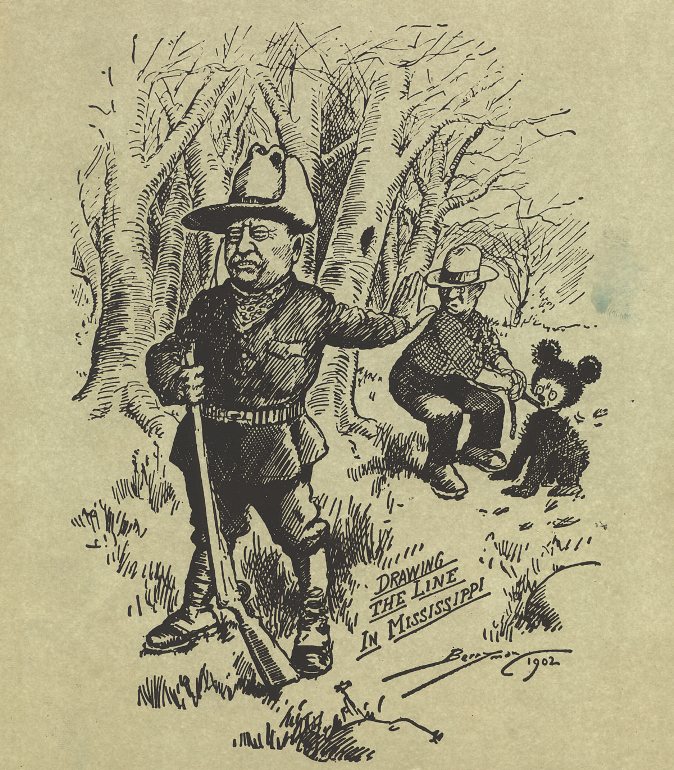
In 1902 Teddy Roosevelt hunted bear near Smedes, Mississippi. He didn’t get a bear, as he had hoped. Trip guides tracked a bear with dogs, clubbed it, and tied it up. The bear was offered to TR to shoot.
Teddy refused to shoot it, of course. It was tied up. It was not sporting, not fair, not a match — not the vigorous hunting Roosevelt wanted.
Clifford K. Berryman, a cartoonist for the WashingtonPostnewspaper (he moved to the Washington Starin 1907), captured the moment in a drawing published November 16, 1902. This 1902 cartoon is among the most famous political cartoons ever done.
The good sportsmanship Roosevelt demonstrated echoed long and hard among Americans. His reputation for fair dealing and good sportsmanship increased his popularity immensely.
John Sherffius draws for the Daily Camera in Boulder, Colorado. It might be something about the mountains — Pat Oliphant started out with the Denver Post. Sherfius often cartoons in color. His drawings pack a real punch, sometimes a gut punch.
The Pulitzer Prize judges have not yet voted Sherffius as even a finalist, but with his cartoons over the past few months, such recognition should come.
In addition to the gallery at the Daily Camera website, you can look at Sherffius’ portfolio at Cagle’s Political Cartoon site, an excellent source of current political cartoons.
Section 3. He shall from time to time give to the Congress information of the state of the union, and recommend to their consideration such measures as he shall judge necessary and expedient; he may, on extraordinary occasions, convene both Houses, or either of them, and in case of disagreement between them, with respect to the time of adjournment, he may adjourn them to such time as he shall think proper; he shall receive ambassadors and other public ministers; he shall take care that the laws be faithfully executed, and shall commission all the officers of the United States.
In our history as a republic, presidents have done everything from just sending the details in a letter to Congress to the current pageant. My recollection is that Richard Nixon gave the first prime-time speech — before that the speeches were given during the business day, and not broadcast live — and that Ronald Reagan was the first president to give all of his SOTUs in the evening. (I’m very willing to correct that information if you have better details.)
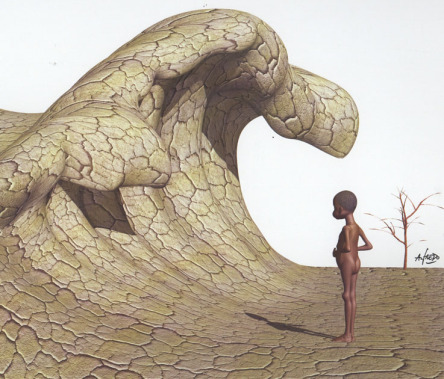
The cartoonist is Alberto Sabat, the cartoon was published in La Nacion in Argentina. The award is named after the outstanding cartoonist Ranan Lurie, who himself was once nominated for a Nobel Peace Prize for his cartoons that promoted peace and understanding.
Political cartoons make classrooms interesting, and often provoke students to think hard and talk a lot about things they should be thinking and talking about. These links provide more sources of classroom material — please remember to note copyright information.
“There is many a boy here today who looks on war as all glory, but, boys, it is all hell.” – Gen. William Tecumseh Sherman, from an address to the graduating class of the Michigan Military Academy, June 19, 1879, known as his“War is hell”speech (Wikipedia entry on Sherman).
(Query: Does anyone have an electronic link to the full text of Sherman’s address that day? Or, do you know where it might be found, even in hard copy?)
Jeff Danziger’s cartoons in The Christian Science Monitor kept me buying that paper for a while. I don’t know who carries his work now, but it’s still good, vital cartooning. I saw the caption to one of his cartoons as a signature line in an e-mail post, and just the caption caused me to pause and pray for an end to war. The whole cartoon is below the fold. Read the rest of this entry »
Spread the word; friends don't allow friends to repeat history.
Or, until that account is unsuspended by the forces supporting Donald Trump: Follow @FillmoreWhite, the account of the Millard Fillmore White House Library
We've been soaking in the Bathtub for several months, long enough that some of the links we've used have gone to the Great Internet in the Sky.
If you find a dead link, please leave a comment to that post, and tell us what link has expired.
Thanks!
Retired teacher of law, economics, history, AP government, psychology and science. Former speechwriter, press guy and legislative aide in U.S. Senate. Former Department of Education. Former airline real estate, telecom towers, Big 6 (that old!) consultant. Lab and field research in air pollution control.
My blog, Millard Fillmore's Bathtub, is a continuing experiment to test how to use blogs to improve and speed up learning processes for students, perhaps by making some of the courses actually interesting. It is a blog for teachers, to see if we can use blogs. It is for people interested in social studies and social studies education, to see if we can learn to get it right. It's a blog for science fans, to promote good science and good science policy. It's a blog for people interested in good government and how to achieve it.
BS in Mass Communication, University of Utah
Graduate study in Rhetoric and Speech Communication, University of Arizona
JD from the National Law Center, George Washington University


 Posted by Ed Darrell


 Or was he?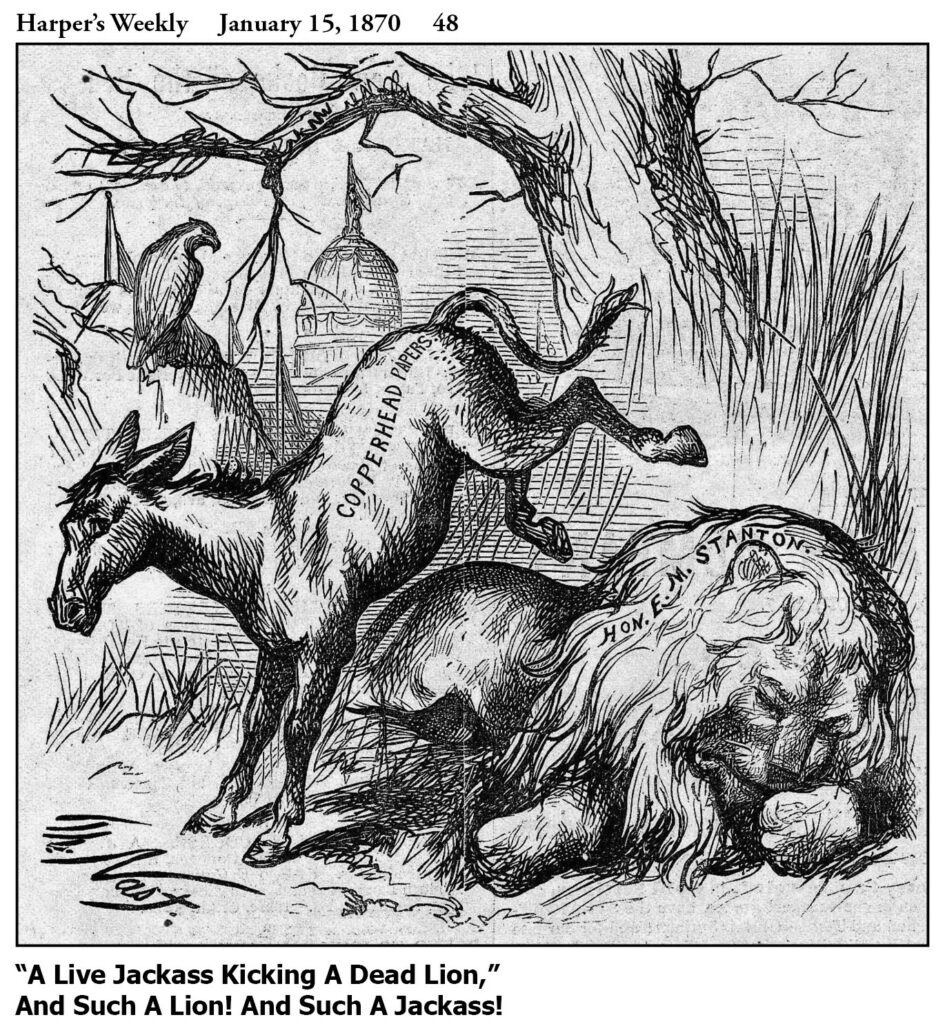







 Millard Fillmore's Bathtub
