Justice Potter Stewart, official portrait in the U.S. Supreme Court. Artist: Ruth A. Nestor Hamilton. Oyez image.
Several decisions of this Court make clear that freedom of personal choice in matters of marriage and family life is one of the liberties protected by the Due Process Clause of the Fourteenth Amendment. […] As recently as last Term, in Eisenstadt v. Baird, 405 U. S. 438, 405 U. S. 453, we recognized “the right of the individual, married or single, to be free from unwarranted governmental intrusion into matters so fundamentally affecting a person as the decision whether to bear or beget a child.” That right necessarily includes the right of a woman to decide whether or not to terminate her pregnancy.
Potter Stewart (1915-1985) US Supreme Court Justice (1959-81) Roe v. Wade, 410 U.S. 113, 169-170 (1973) [Concurring]
(Source)
Painting of Abraham Lincoln, bust of Rev. Dr. Martin Luther King, Jr., together in the Oval Office, White House. (Pete Souza photo?) Photo published on August 28, 2013, the 50th anniversary of the March on Washington.
Oval office, Martin Luther King, March on Washington, Abraham Lincoln
Could one get such a meeting on an issue today? Probably — and wouldn’t it be nice to see more of them?
President John F. Kennedy invited top business leaders of the nation to the White House on June 4, 1963, to talk about civil rights. This photo captures the early moments of the late afternoon meeting in the East Room of the White House, with Vice President Lyndon Johnson addressing the group, and President Kennedy waiting to speak.
According to the Kennedy Library, these are people in in the photo:
Vice President Lyndon B. Johnson (at podium, with back to camera) speaks to a group of business executives with establishments in southern cities, at a civil rights meeting conducted by President John F. Kennedy (seated at far right), Vice President Johnson, and Attorney General Robert F. Kennedy (not pictured). Those pictured include: Milton L. Elsberg, President of Drug Fair Inc.; Carling L. Dinkler, Jr., President of Dinkler Hotel Corporation; Lucien E. Oliver, Vice President of Sears, Roebuck & Company; Louis C. Lustenberger, President of W. T. Grant Company; William B. Thalhimer, Jr., President of Thalhimer Brothers, Inc.; G. Stockton Strawbridge, President of Strawbridge & Clothier; Bruce A. Gimbel, President of Gimbel Brothers, Inc.; and E. D. Martin, President of Martin Theatres of Georgia, Inc. East Room, White House, Washington, D.C.
Few of those companies exist today; those that do are in much changed form. Just fifty years ago.
The Kennedy Presidential Library in Massachusetts makes this photo available with hundreds of others at its on-line site.
Spread the word; friends don't allow friends to repeat history.
Gulf of Tonkin Resolution, passed by Congress on August 7, 1964, as presented to President Lyndon Johnson, and signed by him on August 10. This is the document that authorized U.S. involvement in Vietnam. Image from the National Archives, Our Documents display.
The resolution passed Congress after what appeared to be attacks on two U.S. Navy ships in the Gulf of Tonkin. At the time, and now, evidence is weak that such attacks took place.
Quick summary from the National Archives:
On August 4, 1964, President Lyndon Johnson announced that two days earlier, U.S. ships in the Gulf of Tonkin had been attacked by the North Vietnamese. Johnson dispatched U.S. planes against the attackers and asked Congress to pass a resolution to support his actions. The joint resolution “to promote the maintenance of international peace and security in southeast Asia” passed on August 7, with only two Senators (Wayne Morse and Ernest Gruening) dissenting, and became the subject of great political controversy in the course of the undeclared war that followed.
The Tonkin Gulf Resolution stated that “Congress approves and supports the determination of the President, as Commander in Chief, to take all necessary measures to repeal any armed attack against the forces of the United States and to prevent any further aggression.” As a result, President Johnson, and later President Nixon, relied on the resolution as the legal basis for their military policies in Vietnam.
As public resistance to the war heightened, the resolution was repealed by Congress in January 1971.
Santayana’s ghost looks on in wonder.
Map of divided Vietnam, during the Vietnam War. History Place map via Mr. Roache’s Place
Considering its powerful effect on American history, the document is very, very brief. Here’s the text [links added]:
Eighty-eighth Congress of the United States of America
AT THE SECOND SESSION
Begun and held at the City of Washington on Tuesday, the seventh day of January, one thousand nine hundred and sixty-four
Joint Resolution
To promote the maintenance of international peace and security in southeast Asia.
Whereas naval units of the Communist regime in Vietnam, in violation of the principles of the Charter of the United Nations and of international law, have deliberately and repeatedly attacked United Stated naval vessels lawfully present in international waters, and have thereby created a serious threat to international peace; and
Whereas these attackers are part of deliberate and systematic campaign of aggression that the Communist regime in North Vietnam has been waging against its neighbors and the nations joined with them in the collective defense of their freedom; and
Whereas the United States is assisting the peoples of southeast Asia to protest their freedom and has no territorial, military or political ambitions in that area, but desires only that these people should be left in peace to work out their destinies in their own way: Now, therefore be it
Resolved by the Senate and House of Representatives of the United States of America in Congress assembled, That the Congress approves and supports the determination of the President, as Commander in Chief, to take all necessary measures to repel any armed attack against the forces of the United States and to prevent further aggression.
Map showing ship movements reported during the Gulf of Tonkin Incident, on August 4, 1964; reports that North Vietnamese gunboats attacked and engaged two patrolling U.S. Navy ships pushed Congress to authorize President Johnson to take extensive defensive actions. (image from Echo Two Seven Tooter, replaced with Wikipedia map 8/2017)
Section 2. The United States regards as vital to its national interest and to world peace the maintenance of international peace and security in southeast Asia. Consonant with the Constitution of the United States and the Charter of the United Nations and in accordance with its obligations under the Southeast Asia Collective Defense Treaty, the United States is, therefore, prepared, as the President determines, to take all necessary steps, including the use of armed force, to assist any member or protocol state of the Southeast Asia Collective Defense Treaty requesting assistance in defense of its freedom.
Section 3. This resolution shall expire when the President shall determine that the peace and security of the area is reasonably assured by international conditions created by action of the United Nations or otherwise, except that it may be terminated earlier by concurrent resolution of the Congress.
[endorsements]
And on that authority, “Congress approves and supports the determination of the President, as Commander in Chief, to take all necessary measures to repel any armed attack against the forces of the United States and to prevent further aggression,” the U.S. spent the next 11 years in all-out warfare in Vietnam, with up to 500,000 military troops in the conflict, and losing the lives of more than 58,000 men and women.
U.S. engagement in Vietnam continued well after the repeal of the Tonkin Gulf Resolution in 1971. In 1973 a peace treaty was signed between the U.S., North Vietnam and South Vietnam. The provisions of the treaty did not hold; a final North Vietnamese military push in April 1975 crumpled the South Vietnamese government and army. The few remaining U.S. forces made an emergency withdrawal as Viet Cong and North Vietnamese troops entered Saigon. Vietnam was reunited by force, under a communist government.
Attacks on the USS Maddox and USS Turner Joy — if they occurred — took place early on August 4. President Johnson might be excused for having done nothing on the issue at the time. That was the same day that the bodies of three civil rights workers were discovered by the FBI, murdered by a pro-segregation mob with clear ties to the local Ku Klux Klan. Either event, the Gulf of Tonkin, or the Mississippi civil rights murders, could be a major event in any presidency, testing to the utmost the leadership and peace-making abilities of a president. Johnson dealt with both events at the same time.
On a commission from the Dallas Symphony, composer Stephen Stucky composed a piece during the Lyndon Johnson Centennial in 2008; Kathryn and I heard the world premiere of August 4, 1964, on September 18, 2008. Stucky’s piece (with libretto by Gene Scheer) is the only place I know where anyone has seriously considered the nexus between these two, opposite-side-of-the-world tragedies, and how they set the stage for the rest of the 1960s decade. The piece has been recorded by the Dallas Symphony. I highly recommend it.
Here’s a video from the Dallas Symphony on the piece:
Nick Hanauer, one of the nation’s most successful businessmen, proposed yesterday that the minimum wage be raised to $15 an hour. But wouldn’t that cause employers not to hire workers who were “worth” less, and thereby lead to higher unemployment? No, says Hanauer. By putting more money into the hands of more people, it would stimulate more buying — which would generate more jobs than any jobs that might be lost. Hanauer understands that the basic reason the economy is still limping along is workers are consumers, and workers continue to get shafted, which means consumers lack the purchasing power to get the economy off the ground. A minimum wage of $15 an hour, combined with basic worker standards such as paid sick leave and a minimum of 3 weeks paid vacation per year, should all be in a national campaign for better jobs and a better economy in the 2014 election.
In 2015 we’ll celebrate the 800th anniversary of the signing of the Magna Carta. I predict that, beginning in late 2014, pseudo-historians will begin an assault on the history of the document, attempting to convince us that the document banned income taxes, banished the poor from hospitals and job finding agencies, and said children should have to work for their meals and never get food stamps.
I hope I’m wrong.
Today, June 15, 2013, is the 798th anniversary of the signing of the Magna Carta. The document laid a foundation for freedom, almost 800 years ago, upon which we stand today.
What event critical to western history and the development of the democratic republic in the U.S. happened here in 1215?
A teacher might use some of these photos explaining the steps to the Constitution, in English law and the heritage of U.S. laws. Other than the Magna Carta, all the events of Runnymede get overlooked in American studies of history. Antony McCallum, working under the name Wyrdlight, took these stunning shots of this historic meadow. (He photographs stuff for studies of history, it appears.)
Maybe it’s a geography story.
View of Runnymede Meadow from Engham Village — Wyrdlight photo through Wikimedia
Several monuments to different events of the past millennium populate the site. The American Bar Association dedicated a memorial to the Magna Carta there — a small thing open to the air, but with a beautiful ceiling that is probably worth the trip to see it once you get to England.
Wikipedia explains briefly, with a note that the ABA plans to meet there again in 2015, the 800th anniversary of the Great Charter:
The Magna Carta Memorial & view towards the ‘medes’
Engraved stone recalling the 1985 ABA visit
Situated in a grassed enclosure on the lower slopes of Cooper’s Hill, this memorial is of a domed classical style, containing a pillar of English granite on which is inscribed “To commemorate Magna Carta, symbol of Freedom Under Law”. The memorial was created by the American Bar Association to a design by Sir Edward Maufe R.A., and was unveiled on 18 July 1957 at a ceremony attended by American and English lawyers.[5]
Since 1957 representatives of the ABA have visited and rededicated the Memorial renewing pledges to the Great Charter. In 1971 and 1985 commemorative stones were placed on the Memorial plinth. In July 2000 the ABA came:
to celebrate Magna Carta, foundation of the rule of law for ages past and for the new millennium.
In 2007 on its 50th anniversary the ABA again visited Runnymede and during the convention installed as President Charles Rhyne who devised Law Day which seeks in the USA an annual reaffirmation of faith in the forces of law for peace.
The ABA will be meeting at Runnymede in 2015 on the 800th anniversary of the sealing of the original charter.
The Magna Carta Memorial is administered by the Magna Carta Trust, which is chaired by the Master of the Rolls.[10]
In 2008, flood lights were installed to light the memorial at night, but due to vandalism they now lie smashed.
I’ll wager the lights get fixed before 2015.
Detail of the Magna Carta monument at Runnymede. I took this photo some time in the early Eighties. (Photo credit: Wikipedia)
Late last month the national board, the governing body of the Boy Scouts of America, voted to open Scouting again to Scouts who have determined they are homosexual.
Scout leaders voted to change a 22-year-old membership policy that effectively banned Boy Scouts from being homosexual, or acknowledging they are gay. The policy was a haphazard outgrowth of a 1991 policy change, still in effect, that bans homosexuals from leadership positions. Over the past decade the issue heated up, with a few boys having completed their work to earn Scouting’s highest rank, Eagle, and then being denied the rank when officials discovered they were homosexual.
No brief description does full justice to the issue, to the change in policy, nor to the difficulty of discussions surrounding the change. Several national groups assailed BSA for even considering the change, including the Family Research Council and members of the Southern Baptist Convention.
Discussions in some quarters were as ugly as any I’ve seen on any issue anywhere — worse than union votes in non-union corporations, worse than votes to cut teacher pay in state legislatures, worse than civil rights votes, worse than abortion issues.
Bryan Wendall’s blog, Bryan on Scouting, is a semi-official mouthpiece for Scouting — he is the editor of Scouting magazine, the monthly publication to leaders of Boy Scouting. At the blog, where serious discussions of the new policy unfolded since February, Bryan posted a video of immediate past President of Boy Scouting National Council, Rex Tillerson, talking about the next steps. I’ve reproduced Bryan’s introduction, and the video. Discussions at that blog have been rather intense (but not nearly so ugly as those at Family Research Council venues, and at WorldNet Daily).
One more piece of background: In Scout leader training, two mantras rising over the past 15 years involve reminding leaders to stick to the main purposes of Scouting in any controversy, to help get through difficulties or crises in unit management or local organization issues: “Remember, we do it for the boys, they are the main thing.” And, “The main thing to remember is to keep the main thing, the main thing.” Tillerson knows Scouting, and knows Scouters, when he makes his appeal.
Exxon-Mobil CEO Rex Tillerson exhorted Scouters to get on with ‘the main thing,’ making Scouting work for boys. Tillerson is a Distinguished Eagle Scout, and past national president of the organization; he remains active in his local Scouting organizations, in Circle 10 Council in Dallas, Texas, and surrounding counties. Photo by Michael Roytek/BSA
Rex Tillerson speaks out about change and ‘The Main Thing’
“So we’ve made the decision. We’re going to change,” says Rex Tillerson. ”Now what?”
Less than 24 hours after the volunteer delegates voted to change the BSA’s membership policy for youth, Tillerson addressed a large room full of Scouting volunteers and professionals at the closing general session of the BSA’s National Annual Meeting.
In a powerful, heartfelt speech, Tillerson made his message clear: Change is inevitable, but “The Main Thing,” which is to serve more youth in Scouting, hasn’t changed. With that in mind, he reasoned, it’s time for all of us unite toward this common goal.
Tillerson, immediate past president of the Boy Scouts of America and a 2010 Silver Buffalo recipient, knows something about making big decisions and dealing with change. When he’s not serving as a Scouting volunteer, he’s the chairman, president, and CEO of Exxon Mobil Corp., one of the world’s largest companies.
In 1999, Tillerson worked for Exxon when it merged with Mobil—definitely a big change for both companies.
Take 10 minutes to watch the video below and listen to Tillerson’s message. Then, share it with the members of your Scouting family.
Are you volunteering in any way in Scouting now? You should.
Maurice Williamson (Photo credit: nznationalparty)
My faith in humanity’s ability to invent rhetoric to cause us to rise to an occasion is in danger of being restored.
Here’s New Zealand Member of ParliamentMaurice Williamson, National-Pakuranga, making a case for a national law recognizing gay marriage (on April 17, 2013, I think):
The bill to recognize marriage between homosexual partners passed, 77-44.
New Zealand’s National Party is described as “center-right,” or like a U.S. Republican. Can you imagine any member of the GOP in the U.S. House or the U.S. Senate having both the guts and the wit to make this speech?
Pakuranga is also leading the polls as the most humorous name for a political district, potentially displacing Cleveland for the first time. It’s a Maori word, actually, with a beautiful definition, from Maori lore: “Battle of the Sunlight.”
Tip of the old scrub brush to correspondent Devona Wyant, for finding the thing and sending a link.
Politically, he’s rarely right, and he’s definitely afflicted with that virus that strikes conservatives and makes them feel that if they can cover a topic with enough words, and if there is enough snark in those words, they must be right, and everyone else is a fool for not seeing that and making them king. Or at least a local lord. You can see this on display at his blog, The House of Eratosthenes.
Morgan waded into the discussion on some of our less thoughtful U.S. Senators, who think a good reason to filibuster a bill is they can’t find their own ass with both hands a copy of the bill they just know they will oppose, before they know what’s in the bill (no bias here).
Specifically, Morgan’s defending Sen. Marc Rubio’s right not to know what’s in the compromise reached by Sen. Pat Toomey of Pennsylvania and Sen. Joe Manchin of West Virginia, because Morgan just knows that those two libruls from those two gun-hating states have put in language on ammunition magazines that will deprive crazy shooters of their sport in shooting babies somehow might “infringe” on the actual ownership of the gun.
I answered in a previous thread — but this really should get more discussion, and perhaps if I make a post out of it, someone will discuss.
This is the post — I won’t put all of it in quotes, to make it a bit easier to read (and I may add a link here and there):
Alright. First, if you’re trying to make this look like “reasonable” or “common sense” gun “safety” legislation as they call it, it’s a good idea to stay away from this capacity-limitation stuff. To swap out a magazine — not clip — I don’t need eleven seconds, I don’t need half that. I’m not anywhere close to James Bond, or Barney in The Expendables…I merely maintain familiarity and confidence/competence with my sidearm. If I can do it in two seconds, a lot of other people can as well. So you’re counting on a payoff there that you’re not getting. The whole magazine-capacity thing is not only a distraction, it actually highlights for the benefit of the knowledgeable public which loudmouth legislators ought not to have anything to do with gun legislation, or guns either.
Helluva distraction. There’s no such proposal, but you’re so bugged about it you can’t argue straight.
Pennsylvania U.S. Senate Candidate Pat Toomey addresses protestors at the Philadelphia Tea Party on April 18, 2009. (He won) Wikipedia image
Maybe we’re being sneaky. Maybe we’re getting you all worked up over something not in the bill so you’ll have a heart attack and be unable to lobby your senators to go easy on baby killers.
Or maybe you guys can’t read. Can’t, won’t, doesn’t make much difference — you’re so sure of your position you not only damn the facts, you damn the existence of the facts and the non-existence of the hoodoos you fear.
It comes down to this: A gun has a certain number of bullets with which it can be loaded, before it becomes an instrument of death — that number is one. Whoever isn’t familiar with that, should be escorted off the range.
Think of all the gun ranges put out of business if we did that!
Of course, that is a comment on the mechanics; as far as process goes, the number is zero, since one of the basic rules of guns safety is “the gun is always loaded.”
I don’t think a crazy guy should be allowed to pump out 150 soldier-killer bullets in 5 minutes, with most of them going into the heads and faces of more than a score of 6-year-old kids. You seem to think that is such a sacred right that we . . . well, I don’t know what you propose.
You seem to think that forcing crazy men to reload is unfair. I think you’re not being fair to those six-year-old kids.
The evidence in Newtown is that the one reload he did took 11 seconds, and a teacher got 11 kids out of the school, to safety, in that time.
It took him five shots to blast through the safety lock on the door — had he been limited to five-round clips, he’d have been out of ammo in one gun just getting through the door.
I cannot imagine why you think we can’t be fair to six year old kids, but we must give crazy men more than a sporting chance to murder 20 unarmed people. I think my rights would be safer if I didn’t go with your defense of the crazy man’s rights.
Now, is it technically impossible to limit the rounds and reduce the carnage? Not according to the record.
Facts are stubborn things. That old John Adams sure got that right.
If I were Sen. Rubio, considering for the moment supporting this gun “safety” bill, and decided to read it all the way through, I’d change my mind and oppose it the first time I saw something about magazine capacity limits, because that would tell me someone wrote it without knowing anything about how guns are supposed to be treated around a public that we don’t want to be hurt by them. Which is the subject of the bill.
We know you’re not going to read the bill, just like Rubio hasn’t. He has a sort of duty to read it — but you’re so cock sure that you’re smarter than every other guy in the country and that you can see the future before God, you can’t be bothered to read even the quick summary of the bill.
It pains me when you reinforce all the stereotypes of the right-wing, can’t-tell-me-nuthin’ nuts, Morgan. If you’re going to pretend to be thoughtful, at least read the stuff, will you?
Gustave Doré drawing: Don Quijote de La Mancha and Sancho Panza, 1863 Wikipedia image
You’re so cock-sure that there would be a crazy proposal of the type you fear that you can’t be bothered to read the bill and see that there’s nothing at all like it. Worse than Don Quixote tilting at windmills, you’re shooting at windmills that are not dragons, but behind which children were playing a few minutes ago. See, Quixote was harmless with his lance. Facts again: Guns are not lances.
Second. The Constitution guarantees me certain God-given rights, which supposedly nobody can take away from me, and I wouldn’t be able to discard even if I wanted to. Conservatives and liberals would agree — with different examples in mind — that We The People have lately encountered considerable difficulty electing representatives who will truly protect these rights.
Quite to the contrary, we’ve succeeded in electing nuts who are so dedicated to protecting those rights, they’ll go overboard to be sure that anything even close to resembling a right of a white male with a gun cannot be regulated rationally. Rex Tillerson‘s right to pour oil in every backyard in Arkansas is defended, Rep. Joe Barton apologizes to the white guys who run BP for all those Cajuns’ having put their Gulf of Mexico where BP could pollute the hell out of it. A white guy wants sex, well, some women “rape easy,” “they’re just good-time-lovin’ football players and football is an American game,” and if he’s an Army or Air Force officer, his superior will dismiss the rape charges. Jeremy Dimon gets to keep his freedom, and all the money banks stole from black families put out of their homes in New Orleans, Detroit, Chicago and Los Angeles because his bank and his cronies’ banks screwed up the mortgages.
And if you want to shoot up a theater, or a school, and kill a bunch of unarmed people — well, you know, that’s a right, right?
I cannot imagine what rights you think are not defended, for white males.
Right to life, liberty and pursuit of happiness? Right to quiet enjoyment? Right to be free from assault and battery? Right not get life-saving and cheap medical care for your kid? Right not to have to bury your kid as child? Not all rights are enumerated rights. You seem to miss some of the more important ones, when we get right down to it.
Now, if one worries about rights for anyone of color, or rights of children to health care or education, or rights of women to fair pay — well, none of those people are mentioned in the Constitution, are they? They all look like Dred Scott, to a Congress of white males.
In view of that, I like the idea of a Senator who made up his mind to oppose a gun bill before reading all of it (your headline would imply that he hasn’t read any of it, which is not substantiated by your story).
I see no evidence Rubio wasn’t telling the truth — and Cruz is probably too stupid to understand it, so I believe him when he says he can’t even find the bill that was placed in the middle of his desk on March 22. I swear that guy puts an icepick over his left eyeball every night he can.
This would be in keeping with his oath to uphold the Constitution: If the bill has something that cannot be reconciled with the Constitution, out it goes.
There is nothing in the Constitution which says anyone has to be an inadequate anal orifice. You’re reading it wrong.
Or have you even read it? You haven’t read the gun control bill. Why should you read the Constitution?
In reality, there is nothing in the Constitution that says any Member of Congress must be a roadblock, or should be a roadblock, nor that there should be any roadblocks at all. Filibustering is not a Constitutional right — not mentioned in any way.
After all, there is a period-end-of-sentence after the word “infringed.” It doesn’t say “shall not be infringed, unless something really spiffy is written that makes the infringing seem like a swell idea.”
But, you don’t read. I forgot. As with most conservatives, you think you know what is in a text without reading it, predudging it from . . . well, prejudging it, anyway.
“Prejudge” isn’t related to “prejudice” in the conservative dictionary, anyway.
This is the way I want ALL guarantees to me, or to anybody else, to be enforced. I want my renter’s insurance to be enforced this way. I want my employment contracts to be enforced this way. It’s only fair.
Can you do what no other gun rights advocate has done, Morgan?
Tell us what infringement there would be if you had to limit your automatics, semi-automatics, or single shots, to a five-bullet magazine. How would that, in any way, infringe on your right to keep arms, or bear them?
After you stumble over that one, tell us how it affects your right at all to fill out a form that lets a gun seller figure out whether you’re being straight about not being a felon, and not being a crazy shooter, and not fronting for a crazy shooter or felon.
How does filling out a form to make sure you’re legal, infringe on your right to keep and bear arms? There’s nothing in that amendment that says you can keep your gun ownership or bearing secret — in fact, in many states, keeping a gun concealed is a crime (without a permit).
Tell us how anyone’s rights are infringed by those common sense proposals, one of which isn’t even being proposed.
If I submit a form to the Social Security Administration, or to the IRS, or to some state agency like the DMV, and the form has 88 blocks in it and I botched something somewhere around the 8th or 9th block, it would be patently absurd for me to stand there and berate the DMV clerk who rejected it with “Why didn’t you read blocks ten through eighty-eight?? What am I paying you to do with your time??”
So you won’t do that anymore? That’s good news. I hope it’s a movement, and it catches on.
Aggravating as the situation would be, such a reaction would be very silly…because once the 8th or 9th block is screwed up, it’s an invalid form, and even though blocks 10 through 88 may be loaded with wonderfully accurate information, in context it’s still a bunch of nonsense until they’re copied on to another form that has been filled out PROPERLY. So reading them would actually be an inappropriate use of that time that I bought through my tax money by paying the clerk’s salary. Well, if that’s true of clerks, it’s certainly true of Senators, who swear an oath to uphold the Constitution.
I don’t think that’s a good analogy. Your paying your taxes is not similar in any way your elected representatives’ lying to you about whether they read bills or not, and using the pretense that they’ve not seen what they know is in the bill, to block the majority from even debating what is the best thing for the nation.
In their constitutional duty to represent you, they don’t have the right to boldly lie about what they’re doing for demagogue points.
It’s not illegal, but it’s dishonest, disgusting, and unpatriotic. It doesn’t represent you well — at least, I don’t think that you’re so corrupt that you can only get by by lying through your teeth and making phony excuses.
Sorta like enforcement of a lease — lying through your teeth about the rent isn’t a good idea, regardless you’re the tenant or the landlord.
Why am I having to explain the above?
Because you’re trying to defend ugly skullduggery on a bill you don’t know much about?
Because you sank all of your retirement funds into a gun manufacturer, and you just realized that rational gun laws might take that gold mine away? Because you’re a conservative, and these days that means “so congenitally unable to tell the truth that, when a conservative shoots a hole-in-one on the golf course, he writes ‘0’ on the score card?”
I don’t know.
You’re doing a great job of supporting one of my pet theories, that liberals are people who haven’t actually had to deal with the bureaucracies their ideas create.
And you’re providing ample support for a couple of hypotheses I’ve wished didn’t need to be tested: One, that conservatives really DON’T know what a theory is, especially contrasted to hypotheses; two, that conservatives can’t be bothered to read the book, or the law, or the proposal, or anything else that might inform their arguments, probably out of fear they’ll realize their prejudices are wrong; three, that conservatives really like rules, out of their defense of “traditional” life and “order” — but they think the rules never apply to themselves or their supporters; and four, that the fact that the conservative position is correct should be so self-evident, no matter how half-wit or knuckleheaded the idea, that conservatives will never stoop to actually arguing the issues — keep John Walsh and Candy Lightner far away from conservatives, because they have no real defense for why we treat automobiles as more valuable than children or why we never stick to our guns about criminalizing drunk drivers who kill, especially repeatedly — and so, keep the parents of the Newtown victims far away from Washington, and demonize them as soft-on-crime, anti-patriotic, anti-Constitution liberal fuzzy heads, so we don’t have to look them in the eye and explain why we’re voting to defend the right of the idiot to shoot their children without cause, justification, warning, remorse or chance for retribution.
What’s more important, overarming people (the better to reduce the population), or keeping kids alive? (“We secretly hate children, which is why everyone of our policies is designed to make childhood difficult, cripple children educationally, mentally or physically, or kill them.”)
I do have to say though, I can see an upside to having it work the way you want…it would give me great pleasure, when I fill out a form wrong, to throw a hissy fit about “why didn’t you read the rest of my form?” But realistically, of course there’s no way it can work like that.
I thought you just had a mental burp — but now I see you’re on some tear about filling in forms incorrectly.
What difference could that possibly make?
Apparently there’s another trait of conservatives: The tendency to dissolve into irrelevant rants, instead of facing up to real problems, and making hard decisions about real solutions.
After people in Oakland’s [California] wealthy enclaves like Oakmore or Piedmont Pines head to work, security companies take over, cruising the quiet streets to ward off burglars looking to take advantage of unattended homes.
* * * * * *
Long known for patrolling shopping malls and gated communities, private security firms are beginning to spread into city streets. While private security has long been contracted by homeowners associations and commercial districts, the trend of groups of neighbors pooling money to contract private security for their streets is something new.
Besides Oakland, neighborhoods in Atlanta and Detroit – both cities with high rates of crime – have hired firms to patrol their neighborhoods, says Steve Amitay, executive director of the National Association of Security Contractor.
“It’s happening everywhere,” Mr. Amitay says. “Municipal governments and cities are really getting strapped in terms of their resources, and when a police department cuts 100 officers obviously they are going to respond to less crimes.”
Potential issues:
Is the cost less than the modest increase in taxes required to keep the cops on?
What happens when a rent-a-cop finds criminals in action? Private security firms are not bound to stop criminal action, nor put their lives on the line to catch criminals.
Would it be as effective if those people who fire private security simply donated that money to local law enforcement agencies?
File this under the so-called conservative rich cutting off their fingers to spite their hands: Does it ever occur to them that they would have more bankable cash if they didn’t have to hire a security service to guard their homes, but instead paid modest taxes to educate would-be criminals to do non-criminal work, and to provide police protection instead of private spies?
Jimmy Lee Hales had news for his family, friends, mission companions, and a few others:
He seems to be handling things rather well, considering. Surprisingly, so are others around him handling it well.
Jimmy Hales’s self portrait, as he noted, “Taken at location 40°28’44.16″N 111°35’2.45″W.” Gay Mormons may find it helpful to be extroverted.
Credits and more information from Hales:
Published on Feb 19, 2013
Studying at BYU as a closet gay Mormon has been quite an experience. I finally decided to come out and stop living a lie. I’m still, and will forever be, a faithful Mormon. While some gay Mormons still marry someone of the opposite sex, I do not see myself doing this. I will remain celibate and do not plan to marry.
Featuring
Jimmy Hales ————- Myself (Gay Mormon)
Ian Collins —————- Roommate #1
Buddy Lindsey ———- Life Long Best Friend
Christy Buhr ————- Sister
Chloe Ith ——————- BFF
Khanh Le —————— Roommate #2
Tracy Cope ————— My Mom
Kei Ikeda —————— College Best Bud
Janelle Jiang ————– College Friend
Richard McDonald ——- High School Bro
Jonny Liu —————— Mission Companion
Dallin Hales ————— Brother
Lucy Lu ——————– College Friend
–Tech Info–
Shot with a Canon T2i 550D
Audio captured with a Zoom H4n
Visual effects done in Adobe After Effects
Edited in Adobe Premiere
Audio edited in Avid Pro Tools
Green screen & lights purchased at ePhotoInc
Music done by Jimmy Hales
All editing done by Jimmy Hales
————-
I like to use these materials around the anniversary of Parks’s arrest on December 1, which is out of sequence for the civil rights movement and a couple of months before Black History Month. I find it useful to talk about events on the anniversary of the events, especially to give students more than one pass at the material in class, and also to link whatever is being studied in sequence at that moment (often the Civil War in Texas classrooms) with later events, and current events, as a view in to the web of interlinked occurrences that really make up history. (Yes, I’m an advocate of dropping the name “Black History Month” and teaching it throughout the year; though a Black Heritage Appreciation Month is a help.)
Modern students seem to me to be particularly ill-informed on current events. Far too many of them do not read newspapers, not even the comics. This makes more important the classroom linking of past events with current events that students don’t know about, or fail to recognize the significance.
Highlander Research and Education Center, the civil rights and nonviolence training center; Parks was well schooled and well trained to lead out in civil rights. Her arrest was not a purely spontaneous spark, nor were the fires of the civil rights movement combusted from material that had not been organized. This is where organization for change often begins.
Summer 1955: Desegregation workshop at Highlander Research and Education Center. Highlander Center caption: Rosa Parks is at the end of the table. Six months later, her actions sparked the Montgomery Bus Boycott. [Who are the other people pictured?]
Spread the word; friends don't allow friends to repeat history.
Photo by Ammar Awad, Reuters; caption from L’Express: De l’audace! – 17/03/2010 Afin de se rendre à l’école, une enfant traverse les lieux des affrontements entre les troupes israéliennes et les Palestiniens, dans le camp de réfugiés de Shuafat, près de Jérusalem.
L’Express caption in English:
The audacity! – 17/03/2010
To go to school, a child crosses the scene of clashes between Israeli troops and Palestinians in the refugee camp Shuafat, near Jerusalem.
Rather puts into a different perspective the whines of students about “having to go to school,” not bringing pencils or paper, and not making it to class on time, doesn’t it? What value does this girl and her family place on education?
To those who think the U.S. should in no case offer aid to Palestinians to build or operate schools, I ask: Who do you want to pay for this child’s schooling, and direct the curriculum?
Teachers, is this photo useful for studying human rights? Education? Middle Eastern human geography (AP), geography, or other issues? Contrast this girl’s path to school with that of Linda Brown in Topeka, Kansas, in 1951 (Brown vs. Topeka Board of Education).
Is education a civil right? Is education a basic human right?
Or, until that account is unsuspended by the forces supporting Donald Trump: Follow @FillmoreWhite, the account of the Millard Fillmore White House Library
We've been soaking in the Bathtub for several months, long enough that some of the links we've used have gone to the Great Internet in the Sky.
If you find a dead link, please leave a comment to that post, and tell us what link has expired.
Thanks!
Retired teacher of law, economics, history, AP government, psychology and science. Former speechwriter, press guy and legislative aide in U.S. Senate. Former Department of Education. Former airline real estate, telecom towers, Big 6 (that old!) consultant. Lab and field research in air pollution control.
My blog, Millard Fillmore's Bathtub, is a continuing experiment to test how to use blogs to improve and speed up learning processes for students, perhaps by making some of the courses actually interesting. It is a blog for teachers, to see if we can use blogs. It is for people interested in social studies and social studies education, to see if we can learn to get it right. It's a blog for science fans, to promote good science and good science policy. It's a blog for people interested in good government and how to achieve it.
BS in Mass Communication, University of Utah
Graduate study in Rhetoric and Speech Communication, University of Arizona
JD from the National Law Center, George Washington University


 Posted by Ed Darrell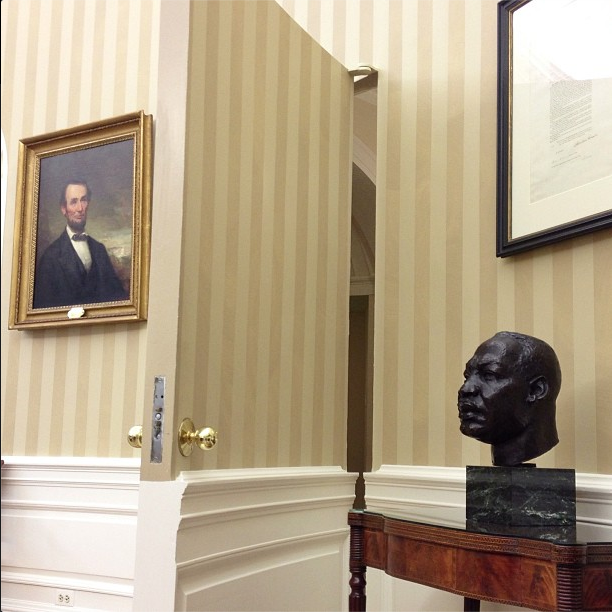







 Millard Fillmore's Bathtub