48 years ago today, in Berlin

August 13, 2009

Soviet-bloc communism disabused us of a lot of ideas, including pointing out that when the amplification was turned up a lot, even Robert Frost could be wrong in the voice of his farmer and neighbor character, because high, concrete and concertina wire fences don’t make good neighbors.

A rock wall in Vermont, like the one Robert Frost wrote about -Wikimedia image

A rock wall in Vermont, like the one Robert Frost wrote about -Wikimedia image

Of course, even in demonstrating Frost in error, the communists made the opening clause of “Mending Fences” more poignant:  “Something there is that doesn’t love a wall . . .”

Residents of Berlin awoke on August 13, 1961, to discover that the Soviet-dominated East Germany had begun constructing a wall across Berlin, to keep East Berlin residents from escaping the clutches of communism and walking to freedom in West Berlin.

Go see other Bathtub posts on the topic:

And remember the poet’s telling, “Something there is that doesn’t love a wall.”

A wall Robert Frost would not love - Berlin Wall at Potsdamer Platz, November 1975, from West Berlin - Wikimedia photo

A wall Robert Frost would not love - Berlin Wall at Potsdamer Platz, November 1975, from West Berlin - Wikimedia photo


Bad guys of Baltimore

August 12, 2009

Or, “How a little study of history can make your visit to a city so much more entertaining and fun.”  At Clio Bluestocking Tales.

Why do visitors leave pennies at this gravesite?  Read the story at Clio Bluestocking Tales

Why do visitors leave pennies at this gravesite? Read the story at Clio Bluestocking Tales

For five weeks, I walked around the streets of Baltimore, or at least the distance between a certain major university known for its doctors, the Inner Harbor, and Fells Point — especially Fells Point — with some diversions elsewhere. As I walked, I began to notice landmarks of some very bad guys who have graced the streets of this interesting city.

Fans of “The Wire” will especially want to read it.  Did you catch the reason Clio is in Baltimore, for the full effect?

It’s not that history tells you how to live your life, or save it; it can make your life worth the living and saving.


Geographical lottery: Gambling with health care

August 4, 2009

Is it true that kids can’t get insured in Texas if their parents have two vehicles?  I mean, this is Texas, the anti-mass transit state — how can you get a kid to the emergency room for the high-cost health care if you don’t have two cars, one for work, one for the family?

Children’s Defense Fund will help you contact your legislators to recommend improving health care for children.

How is the insurance weather where you are? Share the news:

Add to FacebookAdd to NewsvineAdd to DiggAdd to Del.icio.usAdd to StumbleuponAdd to RedditAdd to BlinklistAdd to TwitterAdd to TechnoratiAdd to Furl


India today, in photos

August 3, 2009

Geography teachers, get out your PowerPoints and Keynotes.

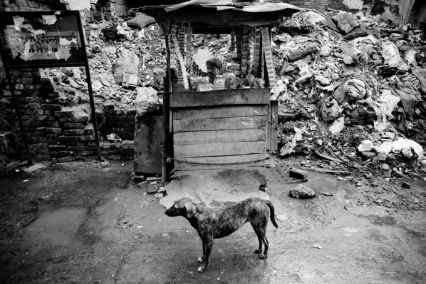
Photo of life in Delhi, India.  From a collection by Belgian photographer Frederik Buyckx, 2009

Photo of life in Delhi, India. From a collection by Belgian photographer Frederik Buyckx, 2009

Thought provoking, occasionally breath-taking photos from a 6:00 a.m. walkaround in Delhi, India; Belgian photographer Frederick Buyckx promises more photos from his recent trip to India and Pakistan, at his blog.

Please share:

Add to FacebookAdd to NewsvineAdd to DiggAdd to Del.icio.usAdd to StumbleuponAdd to RedditAdd to BlinklistAdd to TwitterAdd to TechnoratiAdd to Furl


Trouble at the Texas State Board of Education: Social studies curriculum

July 15, 2009

I’m posting on the run from an AP Summer Institute at Texas Christian University, so just the facts.

Today’s Fort Worth Start Telegram featured a story on the social studies curriculum battles in the Texas State Board of Education.  It’s one of those stories that does well in presenting the facts, but for the sake of “objectivity” treats the yahoos of the review committee — David Barton and Peter Marshall in particular — as respected academics.

Of particular note, a very brief summary of the credientials and comments of the “expert” reviewing panel.

Should Texas be worried?

See immediately previous post with the address to listen to live webcasts of the Board’s meetings this week.


Insanity at Texas state school board – economics, geography and history

May 27, 2009

Tim Ritz cartoon, for Americans United

Tim Ritz cartoon, for Americans United

Texas Freedom Network’s Insider blog reports that embattled chairman Don McLeroy is working to create a panel of experts to review studies curricula.  The experts he has proposed so far are all well-known cranks in academia, people who bring their axes to grind on the minds of innocent children.

This panel is a bold insult to Texas’s community of economists, historians, and other practitioners of fields of social studies, not to mention educators.  A more qualified panel of experts could be assembled in the coffee break rooms of the history departments at most of Texas’s lesser known state colleges and universities.

Why does Don McLeroy hate Texas so?

I’ve been buried in teaching, grading, planning and the other affairs of the life of a teacher, and had not paid much attention to the movement on this issue (“movement” because I cannot call it “progress”).  My students passed the state tests by comfortable margins, more than 90% of them; this news from SBOE makes me despair even  in the face of the news that our achievements are substantial in all categories.

The panel lacks knowledge and experience in economics, geography and history.  The panel is grotesquely unbalanced — at least two of the panel members remind me of Ezra Taft Benson, who was Secretary of Agriculture for Dwight Eisenhower.  When he resigned from that post, he complained that Eisenhower was too cozy with communism.  Barton and Quist lean well to the right  of Ezra Taft Benson.  Quist has complained of socialist and Marxist leanings of Reagan administration education policy and policy makers.

Samuel Morse sent the first telegraphic message on May 24, 1844:  “What hath God wrought?”

Sitting here on the morning of May 27, 2009, I wonder what rot hath Don.


What if we changed the climate and no one paid attention?

May 10, 2009

Rush Limbaugh, Pete DuPont, Michael Savage, the Discovery Institute and other great exponents of reality denial (generally, but not always, without drugs) will continue to rail at James Hansen’s science chops, but the universe goes on in the Real World™Global warming, climate change, takes a severe toll on inhabitants of this planet.

It’s a tribute to the propaganda value of Anthony Watts that this milestone earned so little note:  Residents of Carteret Island, Papua New Guinea, began their move to higher ground last week. The rising ocean is reclaiming their land; seasonal high tides make agriculture impossible.

Who noticed?

You can read about the refugees in The Solomon Times.  You can read about it in the Papua New Guinea Post -Courier. You can’t read it about it much of anywhere else.  The revolution is not televised, it’s not even in print.

Meanwhile, in Alaska, without serious action by the world to enact some sort of program out of the Kyoto meetings to combat climate change by nations united, indigenous peoples are meeting to figure out what they can do without government help.  The place of their meeting carries a message:

The summit is taking place about 500 miles from the Alaskan village of Newtok, where intensifying river flow and melting permafrost are forcing 320 residents to resettle on a higher site some 9 miles away in a new consequence of climate change, known as climigration.

Newtok is the first official Arctic casualty of climate change. A U.S. Army Corps of Engineers study indicates 26 other Alaskan villages are in immediate danger, with an additional 60 considered under threat in the next decade, Cochran said.

Here’s how the warming denialists’ diary entries should run:

“Climate change chased the Carteret Islanders out of their homes, but I wasn’t concerned because I am not a Carteret Islander, and probably couldn’t find the place on a map.”

Further reading:

http://alphainventions.com/rss


Missed anniversary: Naming of Americas

April 29, 2009

Waldseemuellers 1507 map that named the Americas.  Library of Congress image.  Click on the map for access to a very high resolution image.

Waldseemueller's 1507 map that named the America's. Library of Congress image. Click on the map for access to a very high resolution image.

According to the Associated Press, Marin Waldseemueller is the cartographer who decided to name the New World continents after Amerigo Vespucci, an Italian navigator who had made a voyage to the Americas and then wrote a book about what he saw.  The book sold well in Europe, but became a runaway when an unscrupulous printer spiced up Vespucci’s story with tales of sex.

Martin Waldseemueller, German cartographer who named the New World after Amerigo Vespucci on his 1507 map -- from a painting by Gaston Save, circa 1900

Martin Waldseemueller, German cartographer who named the New World after Amerigo Vespucci on his 1507 map -- from a painting by Gaston Save, circa 1900

Waldseemueller’s map was published in 1507, on April 25.

The one surviving copy of the map was purchased by the Library of Congress for $10 million, in 2001.

Vespucci’s account described land and peoples that clearly were not from East Asia, to canny and alert readers.  Waldseemueller was widely read, and on the basis of Vespucci’s account and other accounts from China, concluded the lands Columbus discovered were separate from Asia.

Waldseemueller accurately protrayed the width of South America to within 70 miles in some places, and appears to have been the first to predict the presence of a wide ocean between the Americas and Asia — the Pacific not being “discovered” by Europeans until 1513, six years after this map.

Resources:

Big thanks to Jessica Palmer at Bioephemera for those last two resources; her report on the display of the map at the Library of Congress is really, really useful.


Texas Citizens for Science supports stripping powers from state board

April 14, 2009

Another press release, FYI.  I’ve added some links in for your convenience.  Remember, teachers of social studies, social studies is next on the SBOE chopping block — with rumors that SBOE is disbanding the expert panels rather than simply ignore the recommendations.  Will they expunge slavery and Native Americans from the history books?  Will they rewrite the Vietnam War?  Consider Senate Bill 2275, and call your legislator:

PRESS RELEASE

For Immediate Release

Texas Citizens for Science
2009 April 13

Contact:
Steven D. Schafersman, Ph.D.
432.352.2265
tcs@texscience. org

Texas Citizens for Science strongly supports Senate Bill 2275 which transfers authority for curriculum standards and textbook adoption from the State Board of Education (SBOE) to the Texas Commissioner of Education.

For decades, members of the SBOE have censored, qualified, distorted, damaged, manipulated, and rejected curriculum standards and textbooks. All of this was done for political, ideological, and religious reasons, never for educational or pedagogical reasons. In the past, this activity was done secretly, behind closed doors, but now it is being done publicly in full view of the public and press. Recently, inaccurate, censored, and pedagogically- inferior English Language Arts and Science curriculum standards have been written by the SBOE using their power of amendment. This year, the Social Studies standards will be attacked by some SBOE members for non-educational reasons that support their political and ideological agendas.

For textbooks, in the past the SBOE chair would secretly “negotiate” with publishers to make them change the content of their textbooks under the implied threat of being rejected; publishers readily submitted to save multimillion dollar textbook contracts with the state. In numerous instances, textbook content was replaced by watered-down, inferior, and often misleading, inaccurate, and incomplete information. This activity continues today, albeit more openly with both press and public attention. Science textbooks censorship by the SBOE has occurred sinc the 1960s, as has censorship of social studies and other textbooks.

Dr. Steven Schafersman, President of Texas Citizens for Science, says this:

“The Texas State Board of Education has been an embarrassment and a disgrace to Texas for many decades. This Board’s activities that censor and corrupt the accuracy and reliability of specific topics in mainstream Science, Social Studies, and Health Education are well-known to educators throughout the United States as well as in Texas. All educators are aware of the negative and damaging influence the Texas State Board of Education has on textbooks used in Texas and other states.”

“Texas Citizens for Science has opposed the State Board of Education since 1980 in our effort to defend the accuracy and reliability of science education in Texas. We have repeatedly had to defend Biology and Earth Science textbooks from the Board’s predatory efforts to damage their content about such subjects as evolution, the origin of life, the age of the Earth and Universe, the true nature of the fossil record, and several other scientific topics.”

“Although largely successful in the past, only this past month TCS was unable to prevent the State Board of Education from amending the excellent science standards produced by science teachers, professors, and scientists. The State Board’s subsequent amendments created several flawed standards that, while not overtly unscientific, were confusing, unnecessary, poorly-written, and opened the door to insertion of pseudoscientific information, including bogus arguments supporting Intelligent Design Creationism. Among others things the Board accomplished during this exercise in pseudoscience was to remove the e-word and the ancient age of the universe from the standards. These accomplishments were petty, disgraceful, and clear proof of their anti-scientific and pro-Fundamentalist bias. A modern, technologically- advanced state such as Texas does not need such anti-science activity from a state board.”

Texas Citizens for Science urges the Senate Education Committee to approve SB 2275 and send it to the full Senate, the House, and then hopefully signed into law.

Resources:


Social studies on the ‘net

April 13, 2009

A note from one of our school’s librarians:

Here are some web sites for Social Studies teachers:

Center for History and New Media – http://chnm.gmu.edu

Cyberschoolbus: United Nations – http://www.cyberschoolbus.un.org – international issues and the United Nations

Digital History – http://www.digitalhistory.uh.edu – US History

Famous Trials – http://www.law.umkc.edu/faculty/projects/ftrials/ftrials.htm

History/Social Studies for K-12 Teachers – http://home.comcast.net/~dboals1/boals.html – links to SS issues

Humanities-Interactive – http://www.humanities-interactive.org/a_base_UD.html

HyperHistory Online – http://www.hyperhistory.com/online_n2/History_n2/a.html – world history

iEARN – http://www.iearn.org – online projects

Internet History Sourcebooks Project – http://www.fordham.edu/halsall – ancient, medieval history, modern history

The Learning Page…Especially for Teachers – http://lcweb2.loc.gov/learn

National Geographic Education Guide – http://www.nationalgeographic.com/education

Newsweek Education Program – http://www.newsweekeducation.com

SCORE: History/Social Science – http://score.rims.k12.ca.us

Special Projects: Understanding World Events – http://www.esrnational.org/sp/we/world.htm

Gee, didn’t I note most of those sites?  If I did, it wasn’t recently enough.  A good reminder (my AP government students used the UMKC site for their projects on the Scopes Trial last month).  Check out each of those sites and let us know which ones you find particularly valuable.


Fidel, on Sen. Lugar’s Cuba proposal

April 7, 2009

Heck, while we’re looking at Cuba, take a read of Fidel Castro’s comments on Sen. Richard Lugar’s proposal to talk to Cuba.


Cuba treats Chernobyl victims

April 7, 2009

Here’s a very odd news item.  It’s odd because, first, the disaster at Chernobyl is widely dismissed, and certainly out of the news, so it’s unusual to see any news item that suggests it remains a big problem, or that hints at what a big problem it was (especially from a nominally communist view); and second, who would have predicted Cuba would play a role at all?

I found this at a blog dedicated to news from and about Cuba, Nacho’s Blog/El Blog de Nacho.  I’m guessing “acn” is a Cuban news agency:

(acn) – Havana – Over 20,000 children suffering from different diseases have been seen in Cuba as part of the Cuban Medical Program for Children of Chernobyl, marking last Wednesday the 19th anniversary of its creation. The plan began in 1990, when children and their relatives began to arrive en masse from Russia, the Ukraine, Byelorussia, Moldavia and Armenia to the former Pioneer Children’s Camp in Tarará, east of this city. Dr. Julio Medina, coordinator of the Program, explained that from 700 to 800 children arrive in Cuba annually to be treated by multidisciplinary teams of Cuban specialists. So far, patients with blood diseases have been treated, especially with different variants of leukemia; bone marrow and kidney transplants have been done, as well as cardiovascular surgery due to congenital malformations.

Ukrainian Dr. Nadiezhda Guerazimenko, coordinator of the Program in that country, highlighted the professionalism of Cuban doctors. She added that the best example of this statement lies in the high figure of patients who have returned to their respective countries cured of their ailments. The Program has a significant impact in the health and recovery of children and their families. In its almost two decades of existence, it has treated more than 16,000 Ukrainians, almost 3,000 Russians, and 671 Byelorussians. Some 40,000 people died immediately and millions were contaminated as a result of the nuclear disaster on April 26, 1986, which at first hit the Ukraine, and then extended to Russia, Belarus and different parts of Europe and Asia. The event caused several types of diseases, like leukemia, tumors, heart malformations, kidney problems, psoriasis, vitiligo and alopecia. Many of the children and youngsters seen today in Cuba weren’t even born when the disaster occurred. However, their parents were affected by the radiation.

______________

Yes, it turns out “acn” is the Cuban News Agency.


Alaska volcano blows smoke on Bobby Jindal

March 24, 2009

Joni Mitchell sang it, she’d seen “some hot, hot blazes come down to smoke and ash.”  Certainly Bobby Jindal’s criticism of President Barack Obama’s budget message to Congress was no love affair, but as the Toronto, Canada Globe and Mail noted, the eruption of Redoubt Volcano in Alaska made Bobby Jindal’s objection to volcano monitoring look particularly reckless.  Redoubt sent smoke and ash all over Jindal’s complaint.

This is the Globe and Mail story, really:

Alaska volcano blows smoke on Bobby Jindal

The eruption of Mount Redoubt deflates the Republican Party’s rising star

Globe and Mail Update

A month after Louisiana Governor Bobby Jindal chided the Democrats for funding “something called volcano monitoring,” the eruption of a volcano in Alaska is spewing ash 15 kilometres into the air.

Alaska’s Mount Redoubt, which has erupted five times since Sunday, is likely among the sites to benefit from the U.S. stimulus package, with the money going toward monitoring volcanoes, repairing facilities and mapping.

In his official Republican response to President Barack Obama’s speech to the nation last month, Mr. Jindal called volcano monitoring an unnecessary frill in the government’s stimulus package.

“While some of the projects in the bill make sense, their legislation is larded with wasteful spending and includes $300-million to buy new cars for the government, $8-billion for high speed rail projects, such as a magnetic levitation line from Las Vegas to Disneyland, and $140-million for something called volcano monitoring,” Governor Jindal said. “Instead of monitoring volcanoes, what Congress should be monitoring is the eruption of spending in Washington, D.C.”

But judging by the events of the past couple of days, perhaps it’s prudent for the government to spend money monitoring volcanoes.

Mount Redoubt’s first eruption occurred at 10:38 p.m. Sunday and the fifth ended at 5 a.m. yesterday, according to the Alaska Volcano Observatory. The volcano, roughly 160 kilometres southwest of Anchorage, sent an ash plume more than 15 kilometres into the air as it erupted for the first time in nearly 20 years. Residents of Anchorage were spared from falling ash, but fine grey dust was falling yesterday morning on small communities north of the city.

The observatory was warned in late January that an eruption could occur. Increased activity prompted scientists to raise the alert level on Sunday. Flights in the vicinity of the volcano were cancelled because of the ash.

Asked in a conference call yesterday whether stimulus money is necessary for volcano monitoring, John Power, a geophysicist with the U.S. Geological Survey, declined comment.

Governor Jindal’s office did not return calls and e-mails seeking comment.

The issue could prove a wedge in two years, when Republicans are deciding on their nominee. Governor Jindal has been tabbed by some as a young academic from a diverse background who could be the party’s answer to Mr. Obama, while Alaska Governor Sarah Palin, who failed in a vice-presidential bid last year, has refused to rule out a shot at the top of the 2012 ticket.

Governor Jindal’s attack on volcano monitoring was met with criticism from politicians, bloggers and some scientists. Democratic Senator Mark Begich of Alaska wrote in an open letter: “Volcano monitoring is a matter of life and death in Alaska. The science of volcano monitoring and the money needed to fund it is incredibly important in our state.”

The senator’s spokeswoman, Julie Hasquet, said Monday that the eruption of Mount Redoubt over the past few days and its potential to cause damage in the state illustrate that this is “very serious for Alaskans, and we don’t appreciate it when folks use it as a laugh line or a sound bite.”

With a report from Associated Press

Alaskas Redoubt  Volcano erupted in 1990 - National Geographic photo

Alaska's Redoubt Volcano erupted in 1990 - National Geographic photo

Tip of the old scrub brush to Sara Ann.


California unemployment map, for economics classrooms

March 20, 2009

The Sacramento Bee, one of America’s great newspapers which we hope can stay in business through these tough times, today put up a map of California unemployment, county by county.  The map shows unemployment changes over the past year with an interactive slide that makes it great for classroom use in economics, but makes it impossible for me to embed here (it’s in Adobe Flash).

California’s unemployment is at about 11% statewide.  Colusa County’s unemployment is 26.6%.  Two counties away, in Marin County, it’s only 6.8%

California economics classes can use their knowledge of agriculture and industry in the state to make educated guesses about what is going on in each county.  Surely there are uses the rest of us can find.  Colusa and Imperial Counties are two of the hardest hit — with the internet, can your students tell what that is going to mean for prices on fresh produce and processed foods?

This is where computers and the internet step out ahead in the education tilts, with tools like this interactive map.  Thank you, SacBee.  Can you give teachers a download?

Another unemployment map, national, for December 2008, The Swordpress

Another unemployment map, national, for December 2008, The Swordpress


Encore post: Feynman and the inconceivable nature of nature

March 14, 2009

[This is an Encore Post, from August 2007 — just as it appeared then.  See especially the links on textbook selection processes, and “cargo cult” science, at the bottom.]

NOVA had a couple of good programs on Richard Feynman that I wish I had — it had never occurred to me to look at YouTube to see what people might have uploaded.

I ran into this one:

Richard Feynman struck my consciousness with the publication of his quite humorous autobiography, Surely You’re Joking, Mr. Feynman. I thought it was a wonderful book, full of good character portraits of scientists as I saw them in my undergraduate days, only more famous ones. He followed that with What Do You Care What Other People Think?

By then, of course, Feynman was one of my heroes. His stories are useful in dozens of situations — his story of joining the samba bands in Rio testify to the joy of living, and the need for doing new things. Brazil was also the place he confronted the dangers of rote learning, when students could work equations perfectly for examples in the book — which they had memorized — but they couldn’t understand real world applications, such as describing how the sunlight coming off the ocean at Ipanema was so beautiful.

Feynman wrote about creationism, and about the dangers of voodoo science, in his now-famous essay on “Cargo cult science” — it’s so famous one has difficulty tracking down the facts to confirm the story.

Feynman’s stories of his wife, and her illness, and his love for her, were also great inspirations. Romance always gets me.

I failed to track him closely enough. During the run of the President’s Commission on Americans Outdoors, we had the misfortune of having scheduled a hearing in Orlando on January 30 (or maybe 29), 1986. We had hoped that the coincidental launch of the Space Shuttle Challenger on January 28 might boost our press response. Of course, the Challenger exploded. Our hearing went on as planned (we had a tough schedule to meet). The disaster affected our staff a lot, those who were in Florida, and the rest of us in Washington where many of us had been on the phone to Florida when the disaster occurred.

Feynman’s appointment to the commission studying the disaster was a brilliant move, I thought. Our schedule, unfortunately, kept me tied up on almost every day the Challenger commission met. So I never did walk the three blocks down the street to meet Feynman, thinking there would be other opportunities. He was already fatally ill. He died on February 15, 1988. I missed a chance of a lifetime.

We still have Feynman’s writings. We read the book aloud to our kids when they were younger. James, our youngest and a senior this year, read Surely You’re Joking again this summer, sort of a warmup to AP physics and his search for a college.  [2009 Update:  James is studying physics in the wilds of Wisconsin, finals week at Lawrence University next week — study hard, and good luck, James!]

And we still have audio and video. Remembering Feynman makes even the most avidly atheist hope for an afterlife, just to get a chance to hear Feynman explain what life was really all about, and how the universe really works.

Other notes:

Tip of the old scrub brush to Charismatic Megafauna.