We have questions in 2025: Who invented Santa Claus? Who really wrote “The Night Before Christmas?”

December 19, 2025

An encore post and Millard Fillmore’s Bathtub tradition from 2007, with modifications.

“Today in History from the Associated Press notes, for December 23:

In 1823, the poem “Account of a Visit from St. Nicholas” was published anonymously in the Troy (N.Y.) Sentinel; the verse, more popularly known as “‘Twas the Night Before Christmas,” was later attributed to Clement C. Moore.

Regardless who wrote the poem first published 199 years ago, how did the poem influence America’s view of St. Nicholas, or Santa Claus?  And how much of the Santa Claus story really was invented in America?

Thomas Nast invented Santa Claus? Clement C. Moore didn’t write the famous poem that starts out, “‘Twas the night before Christmas, and all through the house . . . ?”

The murky waters of history from Millard Fillmore’s Bathtub soak even our most cherished ideas and traditions.

Isn’t that part of the fun of history?

Santa Claus delivers to Union soldiers, "Santa Claus in Camp" - Thomas Nast, Harper's Weekly, Jan 3, 1863

In January 1863, Thomas Nast portrayed Santa Claus as he delivered gifts to Union troops a few days earlier in Washington, D.C., wearing a blue, star-spangled coat.

Yes, Virginia (and California, too)! Thomas Nast created the image of Santa Claus most of us in the U.S. know today. Perhaps even more significant than his campaign against the graft of Boss Tweed, Nast’s popularization of a fat, jolly elf who delivers good things to people for Christmas makes one of the great stories in commercial illustration. Nast’s cartoons, mostly for the popular news publication Harper’s Weekly, created many of the conventions of modern political cartooning and modeled the way in which an illustrator could campaign for good, with his campaign against the graft of Tammany Hall and Tweed. But Nast’s popular vision of Santa Claus can be said to be the foundation for the modern mercantile flurry around Christmas.

Nast is probably ensconced in a cartoonists’ hall of fame. Perhaps he should be in a business or sales hall of fame, too.  [See also the Delaware Art Museum, “Thomas Nast and the Making of the American Santa Claus.”]

Nast’s drawings probably drew some inspiration from the poem, “Account of a Visit from St. Nicholas,” traditionally attributed to Clement C. Moore, a New York City lawyer, published in 1823. The poem is among the earliest to describe the elf dressed in fur, and magically coming down a chimney to leave toys for children; the poem invented the reindeer-pulled sleigh.

Modern analysis suggests the poem was not the work of Moore, and many critics and historians now attribute it to Major Henry Livingston, Jr. (1748-1828) following sleuthing by Vassar College Prof. Don Foster in 2000. Fortunately for us, we do not need to be partisans in such a query to enjoy the poem (a complete copy of which is below the fold).

The Library of Congress still gives Moore the credit. When disputes arise over who wrote about the night before Christmas, is it any wonder more controversial topics produce bigger and louder disputes among historians?

Moore was not known for being a poet. The popular story is that he wrote it on the spur of the moment:

Moore is thought to have composed the tale, now popularly known as “The Night Before Christmas,” on December 24, 1822, while traveling home from Greenwich Village, where he had bought a turkey for his family’s Christmas dinner.

Inspired by the plump, bearded Dutchman who took him by sleigh on his errand through the snow-covered streets of New York City, Moore penned A Visit from St. Nicholas for the amusement of his six children, with whom he shared the poem that evening. His vision of St. Nicholas draws upon Dutch-American and Norwegian traditions of a magical, gift-giving figure who appears at Christmas time, as well as the German legend of a visitor who enters homes through chimneys.

Again from the Library of Congress, we get information that suggests that Moore was a minor celebrity from a well-known family with historical ties that would make a good “connections” exercise in a high school history class, perhaps (”the link from Aaron Burr’s treason to Santa Claus?”): (read more, below the fold)

Clement Moore was born in 1779 into a prominent New York family. His father, Benjamin Moore, president of Columbia University, in his role as Episcopal Bishop of New York participated in the inauguration of George Washington as the nation’s first president. The elder Moore also administered last rites to Alexander Hamilton after he was mortally wounded in a tragic duel with Aaron Burr.

A graduate of Columbia, Clement Moore was a scholar of Hebrew and a professor of Oriental and Greek literature at the General Theological Seminary in Manhattan. [See comment from Pam Bumsted below for more on Moore.] He is said to have been embarrassed by the light-hearted verse, which was made public without his knowledge in December 1823. Moore did not publish it under his name until 1844.

Tonight, American children will be tucked in under their blankets and quilts and read this beloved poem as a last “sugarplum” before slipping into dreamland. Before they drift off, treat them to a message from Santa, recorded by the Thomas Edison Company in 1922.

Santa Claus Hides in Your Phonograph
By Arthur A. Penn, Performed by Harry E. Humphrey.
Edison, 1922.
Coupling date: 6/20/1922. Cutout date: 10/31/1929.
Inventing Entertainment: The Motion Pictures and Sound Recordings of the Edison Companies

Listen to this recording (RealAudio Format)

Listen to this recording (wav Format, 8,471 Kb)

But Henry Livingston was no less noble or historic. He hailed from the Livingstons of the Hudson Valley (one of whose farms is now occupied by Camp Rising Sun of the Louis August Jonas Foundation, a place where I spent four amazing summers teaching swimming and lifesaving). Livingston’s biography at the University of Toronto site offers another path for a connections exercise (”What connects the Declaration of Independence, the American invasion of Canada, the famous poem about a visit from St. Nick, and George W. Bush?”):

Henry Livingston Jr. was born in Poughkeepsie, New York, on Oct. 13, 1748. The Livingston family was one of the important colonial and revolutionary families of New York. The Poughkeepsie branch, descended from Gilbert, the youngest son of Robert Livingston, 1st Lord of Livingston Manor, was not as well off as the more well-known branches, descended from sons Robert and Philip. Two other descendants of Gilbert Livingston, President George Walker Herbert Bush and his son, President-Elect George W. Bush, though, have done their share to bring attention to this line. Henry’s brother, Rev. John Henry Livingston, entered Yale at the age of 12, and was able to unite the Dutch and American branches of the Dutch Reformed Church. At the time of his death, Rev. Livingston was president of Rutgers University. Henry’s father and brother Gilbert were involved in New York politics, and Henry’s granduncle was New York’s first Lt. Governor. But the law was the natural home for many of Henry’s family. His brother-in-law, Judge Jonas Platt, was an unsuccessful candidate for governor, as was his daughter Elizabeth’s husband, U.S. Supreme Court Justice Smith Thompson. Henry’s grandson, Sidney Breese, was Chief Justice of the Illinois Supreme Court.

Known for his encyclopedic knowledge and his love of literature, Henry Livingston was a farmer, surveyor and Justice of the Peace, a judicial position dealing with financially limited criminal and civil cases. One of the first New Yorkers to enlist in the Revolutionary Army in 1775, Major Henry Livingston accompanied his cousin’s husband, General Montgomery, in his campaign up the Hudson River to invade Canada, leaving behind his new wife, Sarah Welles, and their week-old baby, on his Poughkeepsie property, Locust Grove. Baby Catherine was the subject of the first poem currently known by Major Livingston. Following this campaign, Livingston was involved in the War as a Commissioner of Sequestration, appropriating lands owned by British loyalists and selling them for the revolutionary cause. It was in the period following Sarah’s early death in 1783, that Major Livingston published most of his poems and prose, anonymously or under the pseudonym of R. Ten years after the death of Sarah, Henry married Jane Patterson, the daughter of a Dutchess County politician and sister of his next-door neighbor. Between both wives, Henry fathered twelve children. He published his good-natured, often occasional verse from 1787 in many journals, including Political Barometer, Poughkeepsie Journal, and New-York Magazine. His most famous poem, “Account of a Visit from St. Nicholas,” was until 2000 thought to have been the work of Clement Clarke Moore (1779-1863), who published it with his collected poems in 1844. Livingston died Feb. 29, 1828.

More on Henry Livingston and his authorship of the Christmas poem here.

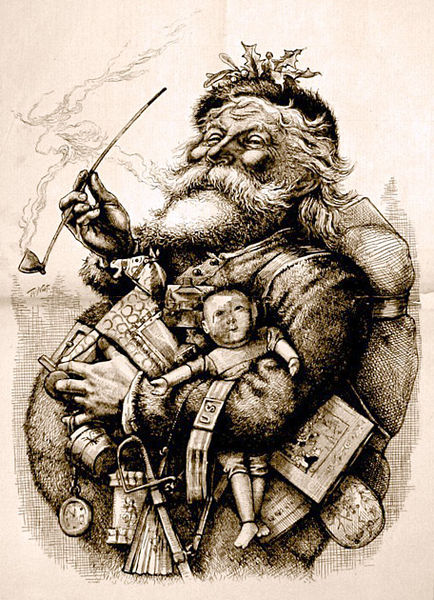
Thomas Nast’s full realization of Santa Claus, “Merry Old Santa Claus,” January 1, 1881. Harper’s Weekly, from the Ohio State University Billy Ireland Cartoon Library and Museum, via Bill Cassellman's site

Thomas Nast’s full realization of Santa Claus, “Merry Old Santa Claus,” January 1, 1881. Harper’s Weekly, from Wikimedia.

Our views of Santa Claus owe a great deal also to Coca-Cola advertising campaigns. Coca-Cola first noted Santa’s use of the drink in a 1922 campaign to suggest Coke was a year-round drink (100 years after the publication of Livingston’s poem). The company’s on-line archives gives details:

In 1930, artist Fred Mizen painted a department store Santa in a crowd drinking a bottle of Coke. The ad featured the world’s largest soda fountain, which was located in the department store of Famous Barr Co. in St. Louis, Mo. Mizen’s painting was used in print ads that Christmas season, appearing in The Saturday Evening Post in December 1930.

1936 Coca-Cola Santa cardboard store display

1936 Coca-Cola Santa cardboard store display


1942 original oil painting - 'They Remembered Me'

1942 original oil painting – ‘They Remembered Me’

Archie Lee, the D’Arcy Advertising Agency executive working with The Coca-Cola Company, wanted the next campaign to show a wholesome Santa as both realistic and symbolic. In 1931, The Coca-Cola Company commissioned Michigan-born illustrator Haddon Sundblom to develop advertising images using Santa Claus — showing Santa himself, not a man dressed as Santa, as Mizen’s work had portrayed him.

For inspiration, Sundblom turned to Clement Clark Moore’s 1822 poem “A Visit From St. Nicholas” (commonly called “‘Twas the Night Before Christmas”). Moore’s description of St. Nick led to an image of Santa that was warm, friendly, pleasantly plump and human. For the next 33 years, Sundblom painted portraits of Santa that helped to create the modern image of Santa — an interpretation that today lives on in the minds of people of all ages, all over the world.

Santa Claus is a controversial figure. Debates still rage among parents about the wisdom of allowing the elf into the family’s home, and under what conditions. Theologians worry that the celebration of Christmas is diluted by the imagery. Other faiths worry that the secular, cultural impact of Santa Claus damages their own faiths (few other faiths have such a popular figure, and even atheists generally give gifts and participate in Christmas rituals such as putting up a decorated tree).

For over 100 years, Santa Claus has been a popular part of commercial, cultural and religious life in America. Has any other icon endured so long, or so well?

Coca-Cola’s film, “The Legend of Coca-Cola and Santa Claus”:

________________________
Below:
From the University of Toronto Library’s Representative Poetry Online

Major Henry Livingston, Jr. (1748-1828)

Account of a Visit from St. Nicholas

1 ‘Twas the night before Christmas, when all thro’ the house,

2 Not a creature was stirring, not even a mouse;

3 The stockings were hung by the chimney with care,

4 In hopes that St. Nicholas soon would be there;

5 The children were nestled all snug in their beds,

6 While visions of sugar plums danc’d in their heads,

7 And Mama in her ‘kerchief, and I in my cap,

8 Had just settled our brains for a long winter’s nap –

9 When out on the lawn there arose such a clatter,

10 I sprang from the bed to see what was the matter.

11 Away to the window I flew like a flash,

12 Tore open the shutters, and threw up the sash.

13 The moon on the breast of the new fallen snow,

14 Gave the lustre of mid-day to objects below;

15 When, what to my wondering eyes should appear,

16 But a miniature sleigh, and eight tiny rein-deer,

17 With a little old driver, so lively and quick,

18 I knew in a moment it must be St. Nick.

19 More rapid than eagles his coursers they came,

20 And he whistled, and shouted, and call’d them by name:

21 “Now! Dasher, now! Dancer, now! Prancer, and Vixen,

22 “On! Comet, on! Cupid, on! Dunder and Blixem;

23 “To the top of the porch! to the top of the wall!

24 “Now dash away! dash away! dash away all!”

25 As dry leaves before the wild hurricane fly,

26 When they meet with an obstacle, mount to the sky;

27 So up to the house-top the coursers they flew,

28 With the sleigh full of Toys — and St. Nicholas too:

29 And then in a twinkling, I heard on the roof

30 The prancing and pawing of each little hoof.

31 As I drew in my head, and was turning around,

32 Down the chimney St. Nicholas came with a bound:

33 He was dress’d all in fur, from his head to his foot,

34 And his clothes were all tarnish’d with ashes and soot;

35 A bundle of toys was flung on his back,

36 And he look’d like a peddler just opening his pack:

37 His eyes — how they twinkled! his dimples how merry,

38 His cheeks were like roses, his nose like a cherry;

39 His droll little mouth was drawn up like a bow.

40 And the beard of his chin was as white as the snow;

41 The stump of a pipe he held tight in his teeth,

42 And the smoke it encircled his head like a wreath.

43 He had a broad face, and a little round belly

44 That shook when he laugh’d, like a bowl full of jelly:

45 He was chubby and plump, a right jolly old elf,

46 And I laugh’d when I saw him in spite of myself;

47 A wink of his eye and a twist of his head

48 Soon gave me to know I had nothing to dread.

49 He spoke not a word, but went straight to his work,

50 And fill’d all the stockings; then turn’d with a jerk,

51 And laying his finger aside of his nose

52 And giving a nod, up the chimney he rose.

53 He sprung to his sleigh, to his team gave a whistle,

54 And away they all flew, like the down of a thistle:

55 But I heard him exclaim, ere he drove out of sight –

56 Happy Christmas to all, and to all a good night.

Online text copyright © 2005, Ian Lancashire for the Department of English, University of Toronto. Published by the Web Development Group, Information Technology Services, University of Toronto Libraries. Be sure to visit this site for more information on this poem, on Maj. Livingston, and on poetry in general.

More:


Honoring James Madison in 2025, the go-to guy, for his birthday, March 16

March 17, 2025

James Madison, the fourth President of the United States, and the Father of the Constitution, was born March 16, 1751, in the Tidewater area of Virginia.

Is it sinful that we do not celebrate his birthday with a federal holiday, fireworks, picnics and speeches and concerts?

Maybe you could fly your flag.  If neighbors ask why, tell them you’re flying it for freedom on James Madison’s birthday.  They’ll say, “Oh,” and run off to Google Madison.  You will have struck a blow for the education that undergirds democracy.

Journalists honor Madison on his birthday, and through the week in which his birthday occurs, with tributes to the First Amendment which he wrote, and celebrations of Freedom of Information Laws and press freedoms, two issues dear to Madison’s heart.

There is much, much to celebrate about him.

A few years ago I was asked to talk about freedom to a group of freedom lovers in North Texas.  I chose to speak about James Madison’s remarkable, and too-often unremarked-upon life. Later, when I started this blog, I posted it here, with an introduction.  All of that is below, in honor of the birth of James Madison.

Did you know that Madison is the shortest man ever to have been president?  His stature is measured in freedom, not in feet and inches.

(Originally a post on July 31, 2006)

James Madison, 1783, by Charles Wilson Peale. Library of Congress collection

James Madison, 1783, miniature by Charles Wilson Peale. Madison would have been 32. Library of Congress collection

I don’t blame students when they tell me they “hate history.”  Heaven knows, they probably have been boringly taught boring stuff.

For example, history classes study the founding of the United States. Especially under the topical restrictions imposed by standardized testing, many kids will get a short-form version of history that leaves out some of the most interesting stuff.

Who could like that?

Worse, that sort of stuff does damage to the history and the people who made it, too.

James Madison gets short shrift in the current canon, in my opinion. Madison was the fourth president, sure, and many textbooks note his role in the convention at Philadelphia that wrote the Constitution in 1787. But I think Madison’s larger career, especially his advocacy for freedom from 1776 to his death, is overlooked.

Madison was the “essential man” in the founding of the nation, in many ways. He was able to collaborate with people as few others could, in order to get things done, including his work with George Mason on the Virginia Bill of Rights, with George Washington on the Constitution and national government structure, Thomas Jefferson on the structure and preservation of freedom, Alexander Hamilton on the Constitution and national bank, and James Monroe on continuing the American Revolution.

We need to look harder at the methods and philosophy, and life, of James Madison. This is an opinion I’ve held for a long time. Here I reproduce a “sermon” I delivered to the North Texas Church of Freethought in November 2001.

James Madison White House portrait, John Vanderlyn, 1816

James Madison’s official White House portrait, by John Vanderlyn in 1816; in the White House collection

I have left this exactly as it was delivered, though I would change a few things today, especially emphasizing more the key role George Washington played in pushing Madison to get the Constitution — a view I came to courtesy of the Bill of Rights Insitute and their outstanding, week-long seminar, Shaping the Constitution: A View from Mount Vernon 1783-1789. The Bill of Rights Institute provides outstanding training for teachers, and this particular session, at Washington’s home at Mount Vernon, Virginia, is well worth the time (check with the Institute to see whether it will be offered next year — and apply!). I am especially grateful to have had the opportunity to discuss these times and issues with outstanding scholars like Dr. Gordon Lloyd of Pepperdine University, Dr. Adam Tate of Morrow College, and Dr. Stuart Leibiger of LaSalle University, during my stay at Mount Vernon.

My presentation to the skeptics of North Texas centered around the theme of what a skeptic might give thanks for at Thanksgiving. (It is available on the web — a misspelling of my name in the program carried over to the web, which has provided me a source of amusement for several years.)

Here is the presentation:

Being Thankful For Religious Liberty

As Presented at the November, 2001 Sunday Service of The North Texas Church of Freethought

Historians rethink the past at least every generation, mining history for new insights or, at least, a new book. About the founders of this nation there has been a good deal of rethinking lately. David McCullough reminds us that John Adams really was a good guy, and that we shouldn’t think of him simply as the Federalist foil to Thomas Jefferson’s more democratic view of the world. Jefferson himself is greatly scrutinized, and perhaps out of favor — “American Sphinx,” Joseph Ellis calls him. The science of DNA testing shows that perhaps Jefferson had more to be quiet about than even he confessed in his journals. While Jefferson himself questioned his own weakness in his not freeing his slaves in his lifetime, historians and fans of Jefferson’s great writings wrestle with the likelihood of his relationship with one of his own slaves (the old Sally Hemings stories came back, and DNA indicates her children were fathered by a member of the Jefferson clan; some critics argue that Jefferson was a hypocrite, but that was Jefferson’s own criticism of himself; defenders point out that the affair most likely was consensual, but could not be openly acknowledged in Virginia at that time). Hamilton’s gift to America was a financial system capable of carrying a noble nation to great achievement, we are told – don’t think of him simply as the fellow Aaron Burr killed in a duel. Washington is recast as one of the earliest guerrilla fighters, and in one book as a typical gentleman who couldn’t control his expenses. Franklin becomes in recent books the “First American,” the model after which we are all made, somehow.

Of the major figures of these founding eras, James Madison is left out of the rethinking, at least for now. There has been no major biography of Madison for a decade or more, not since Ralph Ketcham’s book for the University of Virginia press. Madison has a role in Joseph Ellis’s Founding Brothers, but he shares his spotlight with Hamilton and Jefferson. I think this is an oversight. As we enter into the first Thanksgiving season of the 21st century, we would do well to take a look back at Madison’s life. Madison gives us a model of reason, and more important, a model of action coupled to reason. America’s founding is often depicted as a time of great thunder — if not the thunder of the lightning Ben Franklin experimented with, an experiment he parlayed into worldwide respect for Americans, it is the thunder of the pronouncements of Thomas Jefferson in the Declaration of Independence, or of George Washington, just generally thundering through history.

The use of a bolt of lightning as a symbol for this group is inspired, I think. I’m a great fan of Mark Twain, and when I see that bolt of electricity depicted I think of Twain’s observation:

“Thunder is good; thunder is impressive. But it is lightning that does the work.”

Thunder at the founding is impressive; where was the lightning?

I’d like to point out two themes that run through Madison’s life, or rather, two activities that we find him in time and again. Madison’s life was marked by periods of reflection, followed by action as a result of that reflection.

We don’t know a lot about Madison’s youth. He was the oldest son of a wealthy Virginia planter, growing up in the Orange County area of Tidewater Virginia. We know he was boarded out for schooling with good teachers – usually clergymen, but occasionally to someone with expertise in a particular subject – and we know that he won admission to Princeton to study under the Rev. John Witherspoon, a recent Presbyterian transplant from across the Atlantic. Madison broke with tradition a bit in attending an American rather than an English school. And after completing his course of study he remained at Princeton for another year to study theology directly under Witherspoon, with an eye toward becoming a preacher.

Witherspoon is often held up as an example of how religion influenced the founders, but he was much more of a rationalist than some would have us believe. He persuaded the young Madison that a career in law and politics would be a great service to the people of Virginia and America, and might be a higher calling. After a year of this reflection, Madison returned to Virginia and won election to local government.

In his role as a county official Madison traveled the area. He inspected the works of government, including the jails. He was surprised to find in jail in Virginia people accused of — gasp! — practicing adult baptism. In fact Baptists and Presbyterians were jailed on occasion, because the Anglican church was the state church of Virginia, and their practicing their faith was against the common law. This troubled Madison greatly, and it directed an important part of his work for the rest of his life. In January of 1774, Madison wrote about it to another prominent Virginian, William Bradford:

“Poverty and Luxury prevail among all sorts: Pride ignorance and Knavery among the Priesthood and Vice and Wickedness among the Laity. This is bad enough. But it is not the worst I have to tell you. That diabolical Hell conceived principle of persecution rages among some and to their eternal infamy the Clergy can furnish their Quota of Imps for such business. This vexes me the most of any thing whatever. There are at this time in the adjacent County not less than 5 or 6 well meaning men in close Gaol for publishing their religious Sentiments which in the main are very orthodox. I have neither patience to hear talk or think of any thing relative to this matter, for I have squabbled and scolded abused and ridiculed so long about it, to so little purpose that I am without common patience. So I leave you to pity me and pray for Liberty of Conscience to revive among us.”

By April, Madison’s views on the matter had been boiled down to the essences, and he wrote Bradford again more bluntly:

“Religious bondage shackles and debilitates the mind and unfits it for every noble enterprise.”

Madison must have done a fine job at his county duties, whatever they were, because in 1776 when Virginia was organizing its government to survive hostilities with England, Madison was elected to the legislative body.

Madison was 25, and still raw in Virginia politics. He was appointed to the committee headed by George Mason to review the laws and charter of the colony. Another who would serve on this committee when he was back from Philadelphia was Thomas Jefferson. George Mason was already a giant in Virginia politics, and by the time Madison got to Williamsburg, Mason had already completed much of the work on a bill of rights to undergird the new Virginia government. Madison noted that freedom of religion was not among the rights enumerated in Mason’s version — but it was too late, Mason said. The work was done.

Madison quietly went to work on Mason, in committee, over dinner, during social occasions — noting the great injustice of jailing people solely because of their beliefs, and urging to Mason that it did Virginia no good to keep these fathers from providing for their families.

Mason ultimately agreed to accept the amendment.

The pattern was set.

Perhaps a better example of this reflection and action cycle occurred nearly a decade later. By 1785 the war was over, independence was won, but the business of government continued. While serving as governor of Virginia, Thomas Jefferson had drafted about 150 proposals for laws, really a blueprint for a free government. About half of these proposals had been passed into law. By 1785, Jefferson was away from Virginia, representing the Confederation of colonies in Paris. Jefferson had provided several laws to disestablish religion in Virginia, and to separate out the functions of church and state. With Jefferson gone, however, his old nemesis Patrick Henry sought to roll back some of that work. Henry proposed to bring back state support for the clergy, for the stated purpose of promoting education. (Yes, this is the same battle we fight today for church and state separation.) After Jefferson’s troubled term as governor, Virginia turned again to Henry – Henry ultimately served six terms as governor. His proposal was set for a quick approval in the Virginia assembly. It was late in the term, and everyone wanted to get home.

Henry was, of course, a thundering orator of great note. Madison was a small man with a nervous speaking style, but a man who knew the issues better than anyone else in almost any room he could be in. Madison came up with an interesting proposal. Picking the religion for the state was serious stuff, he said. A state doesn’t want to pick the wrong religion, and get stuck with the wrong god, surely — and such weighty matters deserve widespread support and discussion, Madison said. His motion to delay Henry’s bill until the next session, in order to let the public know and approve, was agreed to handily.

You probably know the rest of this story. With a year for the state to reflect on the idea, Madison wrote up a petition on the issue, which he called a “Memorial and Remonstrance.” In the petition he laid out 15 reasons why separation of church and state was a superior form of government, concluding that in the previous 1,500 years, every marriage of church and state produced a lazy and corrupt church, and despotic government. Madison’s petition circulated everywhere, and away from Patrick Henry’s thundering orations, the people of Virginia chose Madison’s cool reason.

When the legislature reconvened in 1786, it rejected Henry’s proposal. But Madison’s petition had been so persuasive, the legislature also brought up a proposal Thomas Jefferson had made six years earlier, and passed into law the Virginia Statue for Religious Freedom.

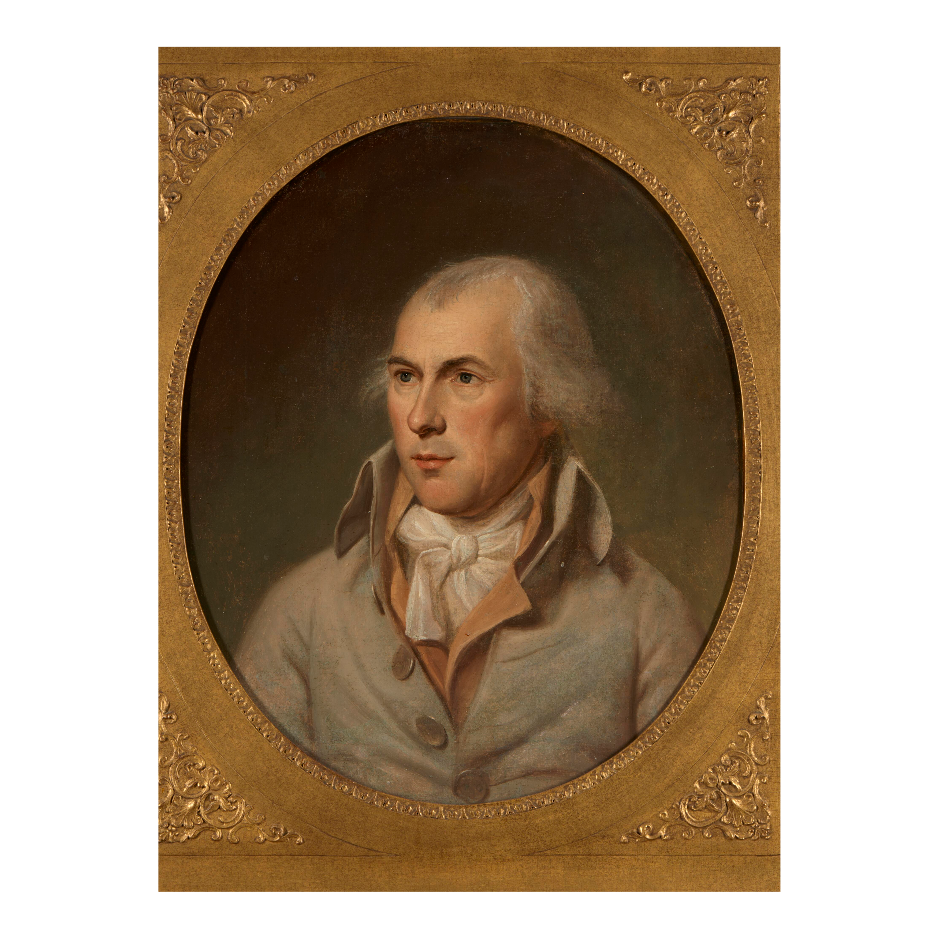
This was a great victory for Madison, and for Virginia. He celebrated by convening a convention to settle disputes between Virginia and Maryland about navigation on the Chesapeake Bay. Having reflected on the nature of this issue — a dispute between colonies — Madison had sought advice from others having the same problems, such as New York and New Jersey. In that effort he got the support of a New Yorker working on the same problems, Alexander Hamilton. In the course of these discussions Madison thought it clear that the difficulty lay with the form of government that bound the colonies together under the Articles of Confederation. Hamilton agreed, and they got their respective states and conferences to agree to meet in Philadelphia in 1787 to try to fix those problems. [Since I first wrote this, I’ve learned that it was George Washington’s desire to get a federal government, to facilitate the settling of the Ohio River Valley where Washington had several thousands of acres to sell, that prompted him to push Madison into the Annapolis Convention, and who made the introduction between Madison and Washington’s old aide and friend, Alexander Hamilton; Madison’s work with Washington runs much deeper than I orignally saw.] James Madison, by Charles Wilson Peale, 1792; Gilcrease Museum
Amending the Articles of Confederation was a doomed effort, many thought. The colonies would go their separate ways, no longer bound by the need to hang together against the Parliament of England. Perhaps George Washington could have got a council together to propose a new system, but Washington had stayed out of these debates. Washington’s model for action was the Roman general Cincinnatus, who went from his plow to lead the Romans to victory, then returned to his farm, and finding his plow where he had left it, took it up again.

Madison invited Washington, and persuaded Washington to attend. Washington was elected president of the convention, and in retrospect that election guaranteed that whatever the convention produced, the colonies would pay attention to it.

You know that history, too. The convention quickly decided the Articles of Confederation were beyond repair. Instead, they wrote a new charter for a new form of government. The charter was based in part on Jefferson’s Virginia Plan, with lots of modifications. Because the Constitution resembles so much the blueprint that Jefferson had written, and because Jefferson was a great founder, many Americans believe Jefferson was a guiding light at that Philadelphia convention. It’s often good to reflect that Jefferson was in Paris the entire time. While America remembers the thunder of Washington’s presiding, Franklin’s timely contributions and Jefferson’s ideas, it was Madison who did the heavy lifting, who got Washington and Franklin to attend the meeting Madison had set up, and got Jefferson’s ideas presented and explained.

It was Madison who decided, in late August of 1787, that the convention could not hang together long enough to create a bill of rights, and instead got approval for the basic framework of the U.S. government. In Virginia a few months later, while Patrick Henry thundered against what he described as a power grab by a new government, it was Madison who assembled the coalitions that got the Constitution ratified by the Virginia ratifying convention. And when even Jefferson complained that a constitution was dangerous without a bill of rights, it was Madison who first calmed Jefferson, then promised that one of the first actions of the new government would be a bill of rights. He delivered on that promise as a Member of the House of Representatives in 1789.

It is difficult to appreciate just how deeply insinuated into the creation of America was James Madison. In big ways and small, he made America work. He took the lofty ideas of Jefferson, and made them into laws that are still on the books, unamended and unedited, more than 200 years later.

When the ratification battle was won, when Madison had won election to the House over Patrick Henry’s strong objection, partly by befriending the man Henry had picked to defeat Madison, James Monroe, Madison could have savored the moment and been assured a place in history.

James Madison in 1804, by Gilbert Stuart

James Madison in 1804, by Gilbert Stuart. Colonial Williamsburg Foundation, Williamsburg, Virginia. Gift of Mrs. George S. Robbins

That’s not what a lightning bolt does. Journeying to New York for the opening of the First Congress and the inauguration of Washington as president, Madison stopped off at Mount Vernon to visit with Washington, apparently at Washington’s request. In what was a few hours, really, Madison wrote Washington’s inaugural address. While there at Mount Vernon, Madison stumbled into a discussion by several others on their way to New York, wondering what high honorific to apply to the new president. “Excellency” was winning out over “Your highness,” until Washington turned to Madison for an opinion. Madison said the president should be called, simply, “Mr. President.” We still do.

Once in New York, Madison saw to the organizing of the Congress, then to the organizing of the inauguration. And upon hearing Washington’s inauguration address — which Madison had ghosted, remember — Congress appointed Madison to write the official Congressional response.

Years later, in Washington, Madison engineered the candidacy of Thomas Jefferson for president, and after Jefferson was elected, Madison had the dubious honor as Secretary of State of lending his name to the Supreme Court case that established the Supreme Court as the arbiter of what is Constitutional under our scheme of government, in Marbury v. Madison.

Wherever there was action needed to make this government work, it seemed, there was James Madison providing the spark.

James Madison was the lightning behind the thunder of the founding of America. We should be grateful that he lived when he did, where he did, for we all share the fruits of the freedoms he worked to obtain. And in this Thanksgiving season, let us look for appropriate ways to honor his work.

James Madison circa 1829-1839, portrait by Chester Harding. Montpelier House, image by Builly Hathorn

James Madison, 1829, portrait by Chester Harding. Montpelier House, Billy Hathorn. “In 1829, Madison came out of retirement to attend a convention for revising Virginia’s constitution. While there, he posed for this portrait by the Massachusetts painter Chester Harding.”

The Madisonian model of thoughtful reflection leading to action is one that is solidly established in psychological research. It is the model for leadership taught in business schools and military academies.

I would compare religious liberty to a mighty oak tree, under which we might seek shade on a hot summer day, from which we might draw wood for our fires to warm us in winter, or lumber to build great and strong buildings. That big oak we enjoy began its life long before ours. We enjoy its shade because someone earlier planted the seed. We enjoy our freedoms today because of men like James Madison.

How do we give thanks? As we pass around the turkey to our family, our friends, we would do well to reflect on the freedoms we enjoy, and how we got them.

Finally, remembering that someone had to plant those seeds, we need to ask: What seeds must we plant now for those who will come after us? We can demonstrate our being grateful for the actions of those who came before us by giving to those who come after us, something more to be grateful for. A life like Madison’s is a rarity. Improving on the freedoms he gave us might be difficult. Preserving those freedoms seems to me a solemn duty, however. Speaking out to defend those freedoms is an almost-tangible way to thank James Madison, and as fate would have it, there is plenty of material to speak out about. A postcard to your senators and representative giving your reasoned views on the re- introduction of the Istook Amendment might be timely now – with America’s attention turned overseas for a moment, people have adopted Patrick Henry’s tactic of trying to undo religious freedom during the distraction. I have had a lot of fun, and done some good I hope, in our local school system by asking our sons’ science and biology teachers what they plan to teach about evolution. Whatever they nervously answer — and they always nervously answer that question — I tell them that I want them to cover the topic fully and completely, and if they have any opposition to that I would be pleased to lend my name to a suit demanding it be done. We might take a moment of reflection to ponder our views about a proposed Texas “moment of silence” bill to be introduced, and then let our state representatives have our thoughts on the issue.

Do you need inspiration? Turn to James Madison’s writings. In laying out his 15-point defense of religious freedom in 1785, Madison wrote that separation of church and state is essential to our form of government:

“The preservation of a free Government requires not merely, that the metes and bounds which separate each department of power be invariably maintained; but more especially that neither of them be suffered to overleap the great Barrier which defends the rights of the people.”

How can we express our gratitude for such a foundation for religious liberty? Let loose a few lightning bolts, in remembrance of Madison.

Copyright © 2001 and 2006 by Ed Darrell. You may reproduce with attribution. Links added in May 2013. Edited in 2025..

More:


Honoring Millard Fillmore (press release)

January 13, 2025

[This is a press release from the New York Air National Guard.]

NEWS | Jan. 8, 2025

New York Air Guard Wing Marks Ex-President Fillmore’s Birthday

By Capt. Jason Carr, 107th Attack Wing

BUFFALO, N.Y.- The New York Air Guard’s 107th Attack Wing honored Millard Fillmore, the nation’s 13th president, as the wing’s mission support group commander laid a wreath at his grave Jan. 7.

Lt. Col. William Gourlay placed a wreath from President Joe Biden at Fillmore’s grave in Forest Lawn Cemetery.

Since 1967, when Lyndon B. Johnson was president, military officers have maintained the tradition of placing a wreath sent by the current occupant of the White House at the graves of former presidents on their birthdays.

“I love Buffalo history, and it was my honor to make the wreath presentation on behalf of the White House and our nation,” Gourlay said.

The 107th Attack Wing is based at Niagara Falls Air Reserve Station.

Descendants of Fillmore, who served from 1850 to 1853, members of the Buffalo Presidential Center, and local American Legion members looked on as Gourlay presented the wreath.

Fillmore had a profound, positive impact on the Buffalo community, and Forest Lawn continues to help commemorate his legacy, according to Julie Snyder, chief executive officer of Forest Lawn Cemetery.

“We are honored to receive the wreath every year and keep it here for the community to pay their respects and honor him this time every year,” Snyder said. “We’re very honored to be one of the 40 cemeteries across the country to have a home for a past president.”

New York National Guard officers also present wreaths at the graves of presidents Martin Van Buren, buried in the Hudson Valley village of Kinderhook, and Chester Arthur, buried in the Albany suburb of Menands.

Buffalo’s Forest Lawn Cemetery was established in 1849 and has over 175,000 burials.

Fillmore was born in Summerhill, New York, in 1800. He became a lawyer in 1823 and served as a member of Congress and then the comptroller of New York State. He was elected vice president in 1848 when Zachary Taylor ran for president. 

When Taylor died in 1850, Fillmore assumed the presidency. He was the last member of the Whig party to serve as president, and while many Whigs joined the new anti-slavery Republican Party, he refused to do so and ran for president in 1856 as the candidate of the Know Nothing Party.

As president, he backed the compromise of 1850 that admitted California to the union as a free state and banned the sale of enslaved people in the District of Columbia but also required federal officials to assist in catching runaway slaves.

The Fugitive Slave Act was deeply unpopular in the North and hurt Fillmore politically in his home state. He died of a stroke in 1874.


Happy 225th birthday, Millard Fillmore!

January 7, 2025

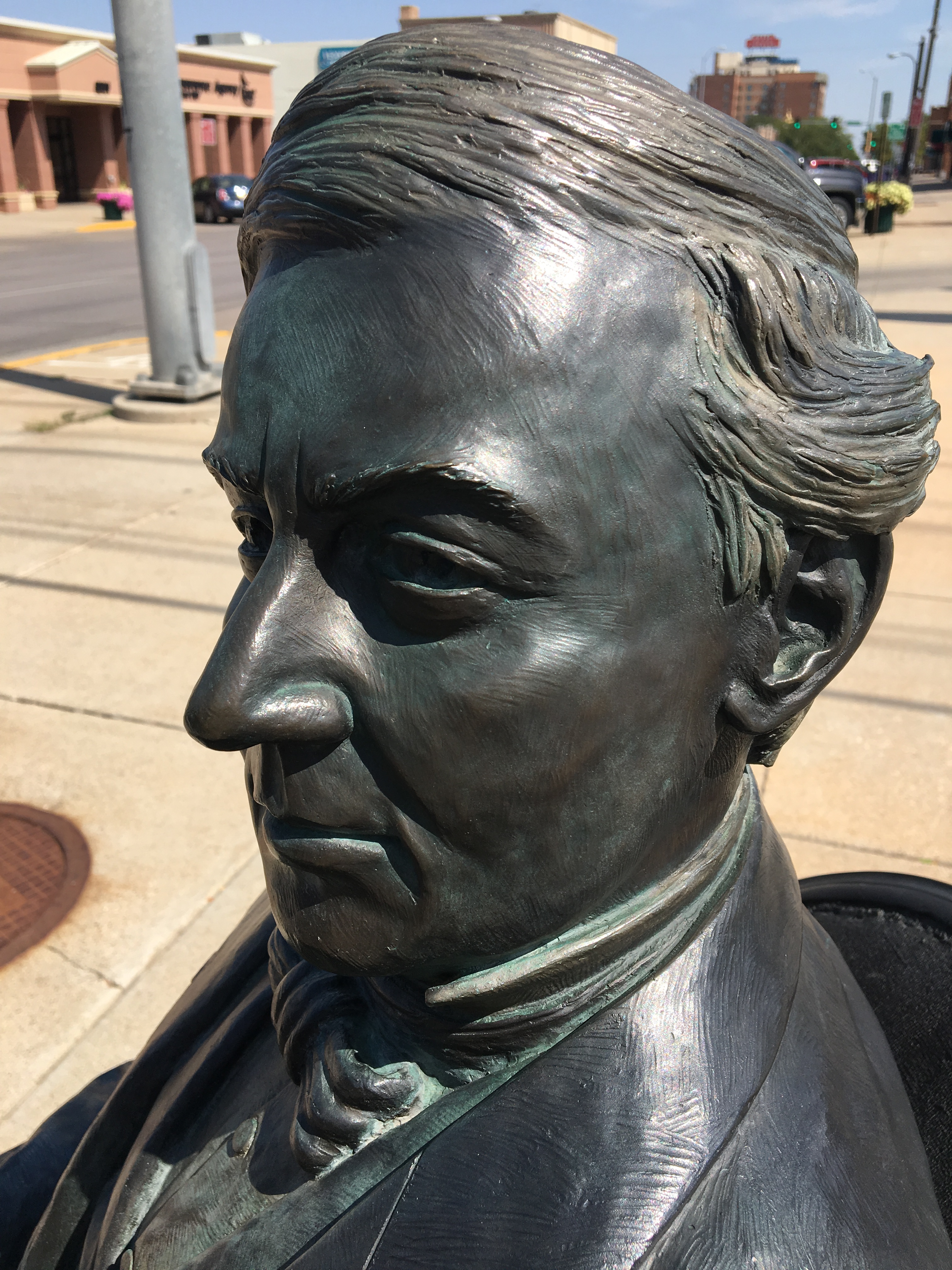
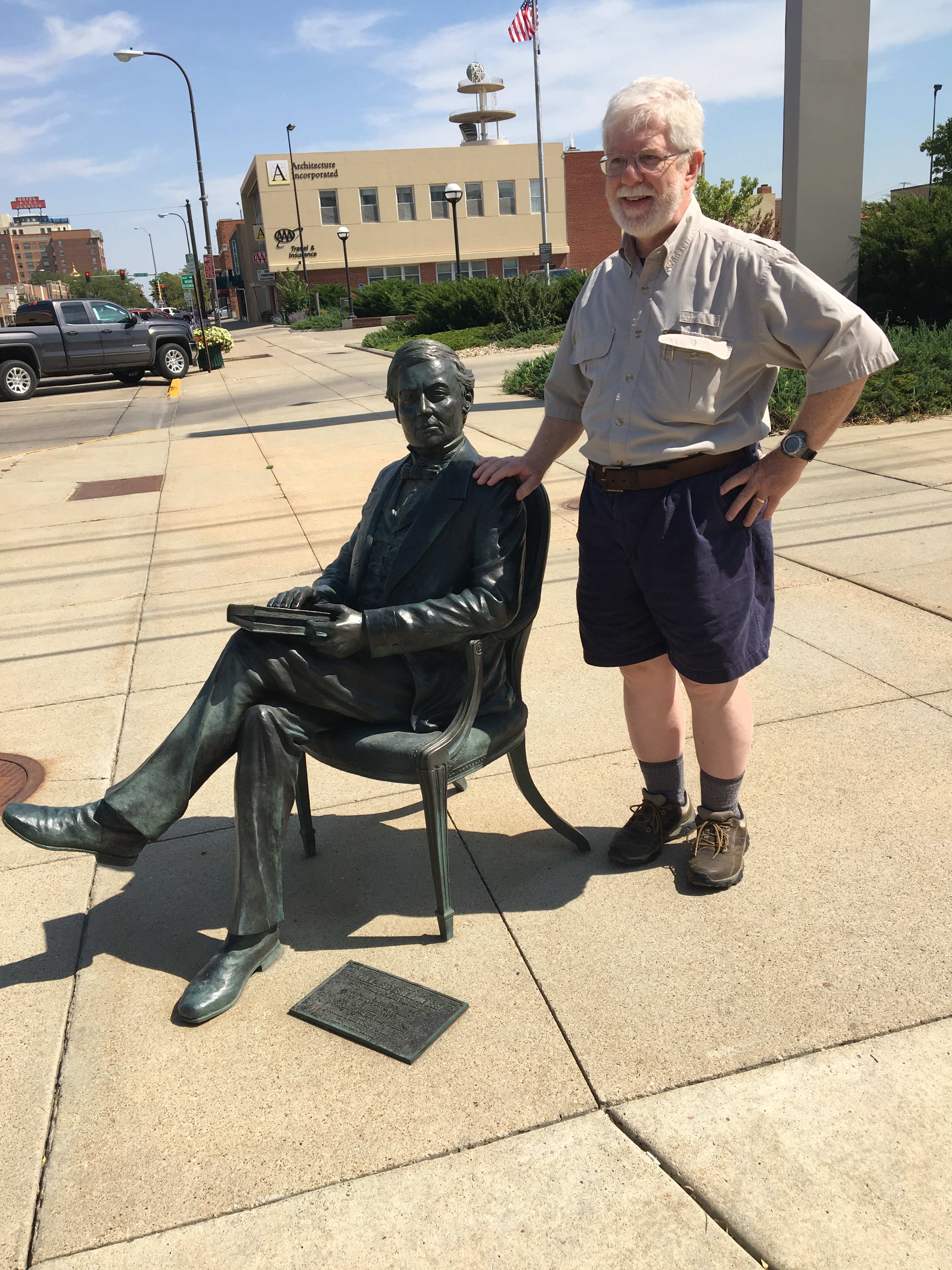
Millard Fillmore, bronzed, sitting at the corner of 9th and St. Joseph Streets in Rapid City, South Dakota. He still gets around. Photo by Ed Darrell. Please use.

Millard Fillmore, bronzed, sitting at the corner of 9th and St. Joseph Streets in Rapid City, South Dakota. He still gets around. Photo by Ed Darrell. Please use. Creative Commons copyright.

Millard Fillmore, our 13th President, was born on January 7, 1800.

That was 24 days after the death of our first President, George Washington.

Fillmore’s birthday isn’t such a big deal anymore, since fun organizers discontinued the bathtub races once word got out that the story of Millard Fillmore putting the first bathtub in the White House, is a hoax.

Historians from the University of Buffalo — an institution founded by Fillmore after his presidency — usually hold a graveside ceremony with speeches. In 2025, the celebration has been postponed to Sunday, January 12, due to weather.

It’s a shame, really. Fillmore is the victim of fake news, a hoax perpetrated by H. L. Mencken 108 years ago, in 1917. Mencken claimed, falsely, that Fillmore’s sole good, memorable deed was putting that fictitious bathtub in the White House. That story crowds out the real history, and any good Fillmore should be remembered for.

Fillmore did a few notable things as president.

  • Fillmore secured a steady supply of bird guano for the United States. Funny as that may be, the guano was essential for making gun powder, which in turn helped fuel the military might of the United States for years (including through the Civil War).
  • Millard Fillmore and his first wife, Abigail, read books all the time. Deprived of the opportunity of going to school much in his youth, Fillmore became an ardent reader, read for the law, became a lawyer, got into politics and was selected Vice President for President Zachary Taylor. When Taylor died (probably of typhoid) in 1850, Fillmore succeeded to the presidency. In the White House, the Fillmores found few books to read, and so established the White House Library. Say prayers that library survives the current president.
  • Fillmore thought globally, and he could see world trade as a huge opportunity for a young nation with a strong navy and army, and a lot of resources including intellectual capacity to manufacture things. Trade in the Pacific was problematic, and a large number of problems stemmed from Japan’s closing itself off from the world. Japan had coal, which could refuel steamships. Japan instead closed its ports. An occasional U.S. sailor would be executed if he washed up on Japanese shores. Fillmore sent a small fleet of “black ships” under Commodore Matthew Perry, to tell Japan it was time to open up to trade and assume its place among nations. Perry was successful, after a second visit and a small round of cannon fire. Japan became a strong economic power in the West Pacific, and in its march to glory decided to take over resources of several other Asian nations. We might say Fillmore started the slide to World War II in the Pacific.

History should be kept to accuracy. Mencken upset the ship of accuracy with his essay, and America has not recovered, nor has Millard Fillmore’s reputation. There’s a moral there: Don’t spread hoaxes; seek the truth, and glorify it. (Mencken apologized for the hoax, but too late.)

Rapid City, South Dakota, is a booming town. Mineral wealth and oil in the state combine with a nearby Air Force Base, great housing prices and good weather to benefit the town. One of its civic watchdogs got the idea of putting statues of all U.S. presidents on downtown corners. That is how Millard Fillmore comes to be seated with a book to read, at the corner of 9th Street and St. Joseph Street, where I met him in August 2017. Altogether a fun little history enterprise for Rapid City, very well executed, and worthy of a stop there if you’re passing by.

Perhaps someday Rapid City will take to decorating the statues on the birthdays of the men (so far!) represented. I hope they won’t be frozen out like Buffalo, New York, is, if they commemorate Millard Fillmore’s birthday.

We can reflect on happier times, when even our disrespected and forgotten presidents were good people who did great things.

Millard Fillmore and Ed Darrell meet, in Rapid City, South Dakota, August 2017

Millard Fillmore and Ed Darrell meet, in Rapid City, South Dakota, August 2017; photo by Kathryn Knowles

More:


January 3, Alaska’s statehood day 2025

January 3, 2025

Late for me to remind you, if you didn’t, but January 3 is Alaska’s Statehood Day. Alaskans should have flown their U.S. flags today in commemoration.

Of course, some people would like to fly their state flags, too — makes more sense, some say. I don’t argue, but I note that very rarely do I come across some household that has a state flag. Most homes have a U.S. flag.

Alaska’s flag is a work of art, though, and many Alaskans have one. Did you fly it today, if you have one?

More:

U.S. flag flying at the Eielson Visitor Center, Denali National Park, Alaska. National Park Service image

U.S. flag flying at the Eielson Visitor Center, Denali National Park, Alaska. National Park Service image, photo by Jacob W. Frank.

This is an encore post.

Yes, this is an encore post. Defeating ignorance takes patience and perseverance.


Flying U.S. flags in January 2025

January 3, 2025

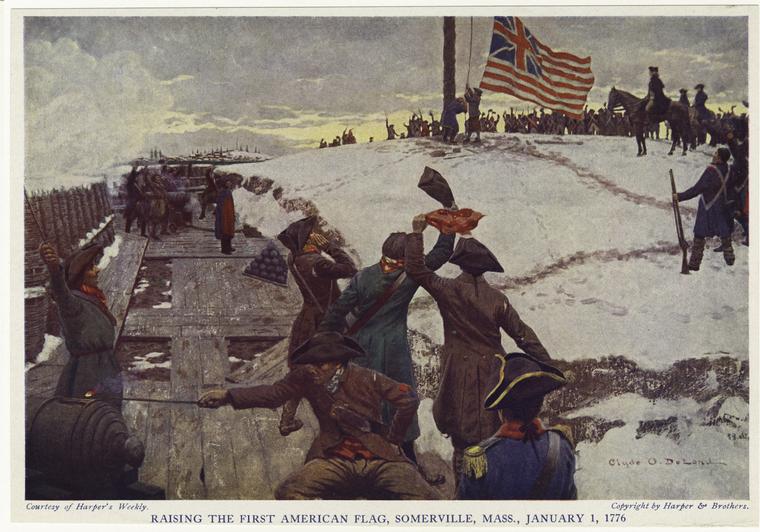
“Raising the first American flag, Somerville, Mass., January 1, 1776.” Harper’s Weekly painting by Clyde Osmer DeLand, 1897. From the digital collections of the New York Public Library; yes, MFB has used this painting before. I like it.

One problem with January’s flag flying dates is that if I snooze a little, you miss a lot. There are four flag-flying dates in the first five days of January: New Year’s Day and statehood days for Georgia, Alaska and Utah. You, Dear Reader, are alert and didn’t let any of those dates pass unmarked if you’re in those states, right?

There are more dates to go in January, including New Mexico’s statehood. We’re not halfway done, yet.

President Joe Biden declared flags should fly at half-staff in honor of the late President Jimmy Carter, for 30 days, until January 28. That covers all the dates in the usual flag-flying calendar. When flying flags at half staff, the flag should be hoisted quickly to full staff, then lowered soberly (slowly) to half staff.

In January 2025, the U.S. Flag Code urges citizens to fly flags on these dates, listed chronologically:

  • New Year’s Day, January 1, a federal holiday
  • January 2, Georgia Statehood Day
  • January 3, Alaska Statehood Day
  • January 4, Utah Statehood Day
  • January 6, New Mexico Statehood Day
  • January 9, Connecticut Statehood Day
  • Martin Luther King’s Birthday, a federal holiday on the third Monday of January; that date is January 19, in 2025; King’s actual birthday is January 15, and you may fly your flag then, too
  • Inauguration Day, January 20, the year after election years; 2025 will see an inauguration
  • January 26, Michigan Statehood Day
  • January 29, Kansas Statehood Day

You may fly your flag any other day you wish, too; flags should not be flown after sundown unless they are specially lighted, or at one of the few places designated by Congress or Presidential Proclamation for 24-hour flag flying.  According to Wikipedia’s listing, those sites include:

  • Fort McHenry, Baltimore, Maryland (Presidential Proclamation No. 2795, July 2, 1948).
  • Flag House Square, Albemarle and Pratt Streets, Baltimore, Maryland (Public Law 83-319, approved March 26, 1954).
  • Marine Corps War Memorial (Iwo Jima Memorial), Arlington, Virginia (Presidential Proclamation No. 3418, June 12, 1961).
  • Lexington Battle Green, Lexington, Massachusetts (Public Law 89-335, approved November 8, 1965).
  • White House, Washington, D.C. (Presidential Proclamation No. 4000, September 4, 1970).
  • Washington Monument, Washington, D.C. (Presidential Proclamation No. 4064, July 6, 1971, effective July 4, 1971).
  • Any port of entry to the United States which is continuously open (Presidential Proclamation No. 413 1, May 5, 1972).
  • Grounds of the National Memorial Arch in Valley Forge State Park, Valley Forge, Pennsylvania (Public Law 94-53, approved July 4, 1975).
Flag House in 1936, 844 East Pratt & Albemarle Streets (Baltimore, Independent City, Maryland) (cropped). Image courtesy of the federal HABS—Historic American Buildings Survey of Maryland.

Flag House in 1936, where Mary Pickersgill sewed the garrison-sized, 15-star flag that flew over Fort McHenry at the Battle of Baltimore in 1814; one of the sites where the U.S. flag may be flown 24 hours. The house is at 844 East Pratt & Albemarle Streets (Baltimore, Independent City, Maryland). Cropped image courtesy of the federal HABS—Historic American Buildings Survey of Maryland.

Save

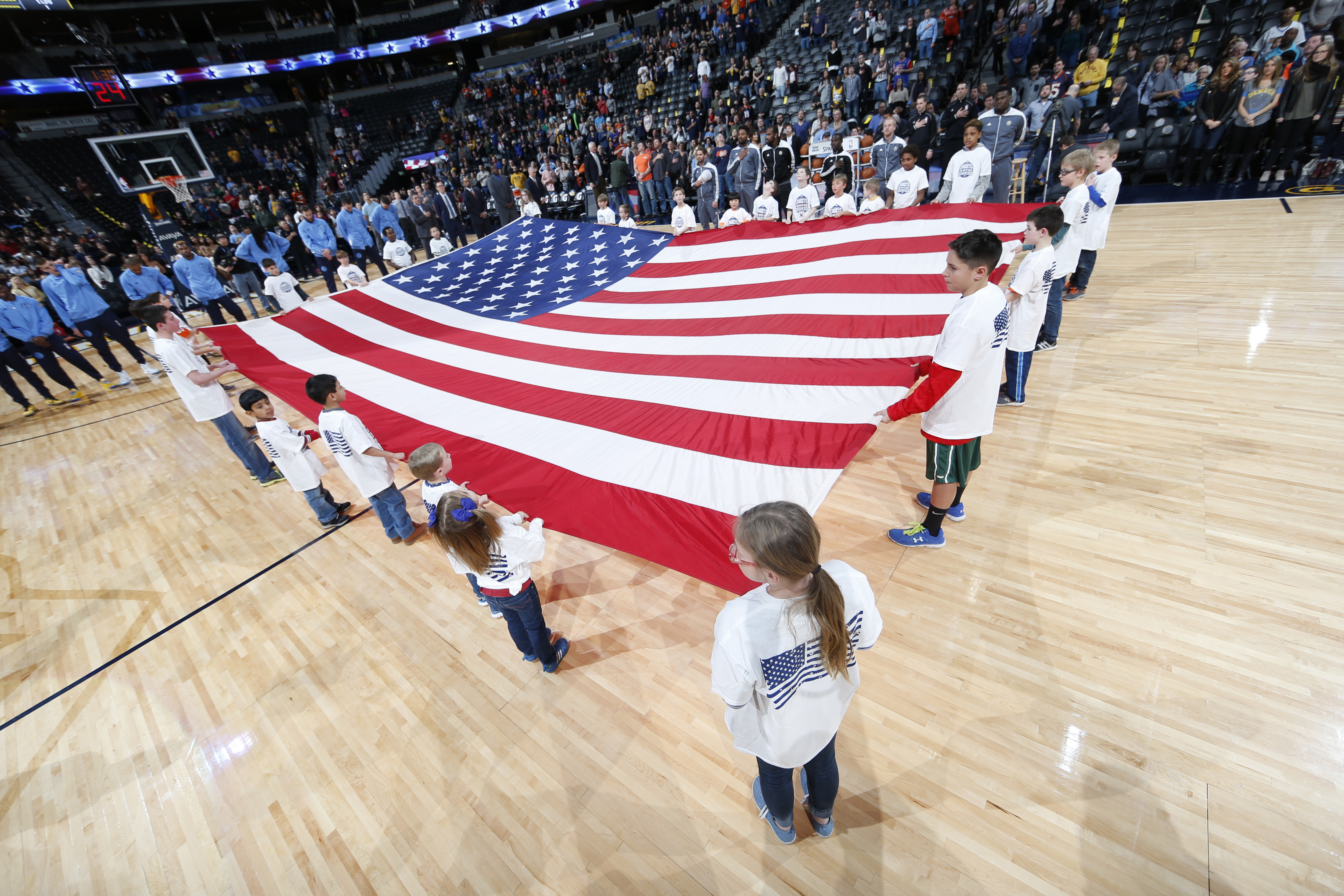
Children unfurl a large flag at a Denver Nuggets/Indiana Pacers NBA basketball game in Denver, January 2016. Colorado Public Radio image.
This is an encore post.
Yes, this is an encore post. Defeating ignorance takes patience and perseverance.

Typewriters of the rich and famous: Neil Simon

September 27, 2024

Courtesy of David Hume Kennerly, I was alerted of a display in Washington, D.C., featuring the typewriter of playwright Neil Simon.

Difficult to identify in that photo; “typewriter used by Neil Simon from the 1970s to 2010s. Simon used the IBM Personal Wheel Writer Electronic 6781 typewriter in his New York City apartment, writing plays, scripts, and books including Brighton Beach Memoirs, Biloxi Blues, and Lost in Yonkers.” Image from the Smithsonian’s National Museum of American History.


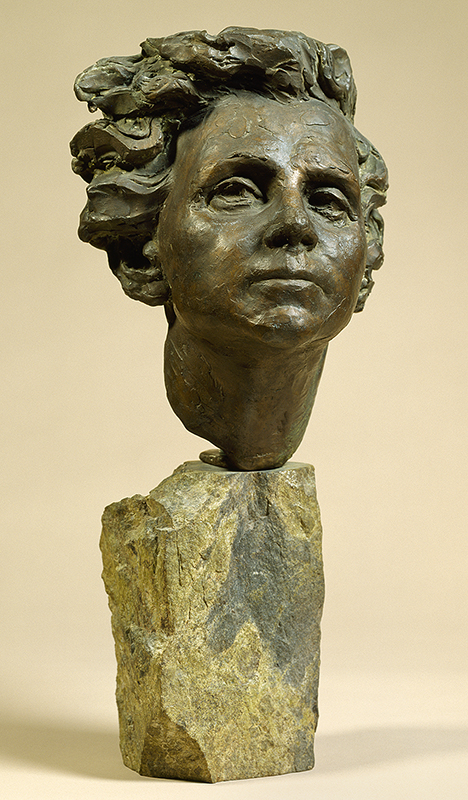
Hanbury’s bust of Rachel Carson, at the National Portrait Gallery

September 24, 2024

Rachel Carson died in 1964, and although she attained some celebrity, there are not a lot of good images of Carson in circulation. I like to highlight images that come to light.

One image that is lesser known is Una Hanbury’s bust from 1965, in the collection of the U.S. National Portrait Gallery.

Description from the National Portrait Gallery:

As a government scientist, Rachel Carson became concerned about the ecological impact of pesticides, especially DDT, and in 1962, she published the groundbreaking book, Silent Spring. Finely written and passionately reasoned, Silent Spring exploded into national consciousness and can be said to have started the modern environmental movement. Although some of its conclusions are still controversial today, the book was a warning that an active citizenry had to be skeptical of large institutions, an attitude that became a dominant theme of the 1960s and 1970s.

Una Hanbury and Carson met for the first and only time at an event in 1964. Following an impromptu speech by Carson, Hanbury approached Carson and asked if she could make her portrait. Carson willingly agreed to pose. Hanbury was impressed by Carson’s “tremendous vitality,” but when she called to arrange a sitting only four months later, Carson was nearing death. She passed away one week later, leaving Hanbury no option but to work from photographs and memories of their single meeting for the portrait bust. Life magazine provided her with pictures taken at Carson’s Maine tidal pools, and a number of Carson’s close friends advised the artist while she worked on the portrait. 


US pullout from Afghanistan — Trump did it

September 2, 2024

Veteran Vic Meyers takes Republicans to task for misreporting the U.S. pullout from Afghanistan, which Trump set up before Trump released 5,000 Taliban from Afghanistan prisons — one of whom conducted the fatal attack on 13 U.S. soldiers and hundreds of Afghan citizens during evacuations.


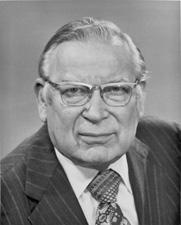
Quote of the moment: Need for mediocre leaders, Roman Hruska

August 8, 2024

If it hadn’t been said, someone would have to make it up.

President Richard Nixon nominated G. Harrold Carswell to be Associate Justice of the Supreme Court. Carswell had an undistinguished career, one that might be described as “mediocre,” which engendered opposition to the nomination.

Nebraska Republican, Sen. Roman Hruska, spoke in defense of the nomination.

Even if he were mediocre, there are a lot of mediocre judges and people and lawyers. They are entitled to a little representation, aren’t they, and a little chance? We can’t have all Brandeises, Frankfurters and Cardozos.[11]

The nomination failed.

Nebraska U.S. Sen. Roman Hruska, about 1969. Photo from U.S. Senate Historical Office.


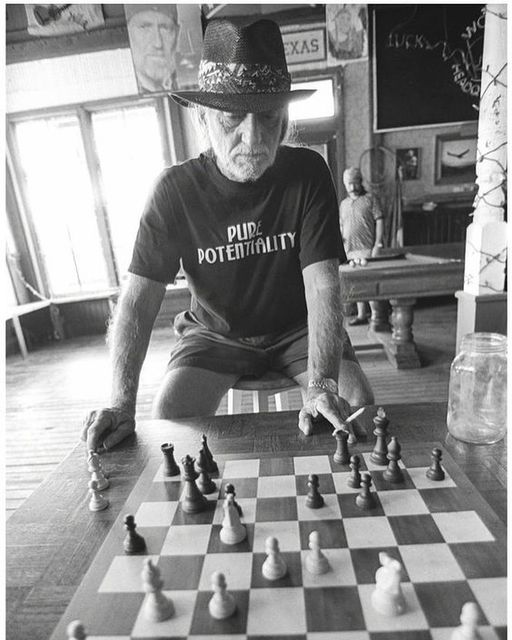
Chess games of the rich and famous: Willie Nelson, again, in 2001

August 1, 2024

Willie Nelson is well-known as a dynamite chess player and real fan of the game.

Here’s another photo of Willie at the board, in Austin, Texas, in 2001. Great photo by Scott Newton, the photographer for “Austin City Limits.”

On Facebook, Turk Pipkin said in comments:

Awesome Scott Newton photo of the awesome man himself. I was sitting across the board from Willie. Lost $100 on that game, haha. Scott has been the official photographer for Austin City Limits TV for 50 years. Check out his work – it’s always great.

Tip of the old scrub brush to Willie Nelson’s feed on Facebook.


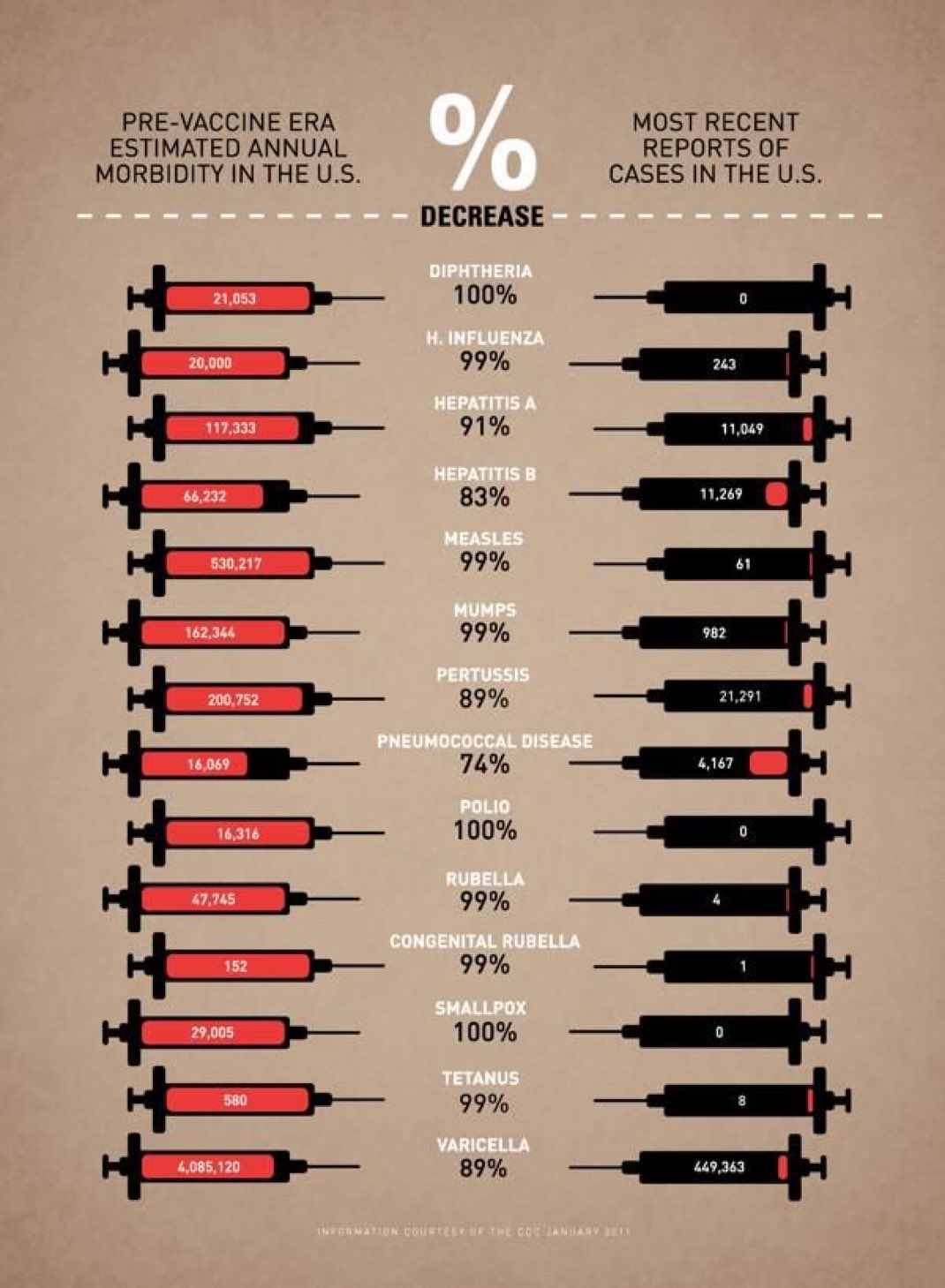
Vaccine success in a handy chart

July 25, 2024

History tells us vaccines are wonderful things. Vaccines cut horrible, disifiguring, crippling and fatal diseases, and extended the life span of entire populations across the entire world.


https://x.com/Rainmaker1973/status/1815677850357268512


The Economic Case for Democrats over Republicans

July 25, 2024

A woman going by the handle Kashoggi’s Ghost (@UROCKLive1) on Twitter (X, if you must), lays out in necessary detail the economic case for Democrats over Republicans, in the race for President, and in all races for Congress.

It’s long. Here’s the text from all 24 Tweets in the thread (more may be added later). Bottom line, Democrats in the White House will make America greater and better, while Republican policies will again crash the economy.


Listen up, you guys, we’ve got a democracy to save! And neither the courts nor the media is going to help us. Buckle up for a long thread.🧵

1) Right now we’ve got a third of the country who believe Trump’s lies, a third who see what’s happening and will vote for Biden, even if they’re not fond of him, and a third who are completely clueless. The third group are the people we need to reach.

Sadly, I can’t go out in the world and be around people, so I won’t have the opportunity to talk to folks and tell them what they don’t know, but I’ve got talking points for y’all.

2) First, the economy seems to be what folks are fixated on, but they have their facts wrong, so let’s start there.

To sell this economy, you need to start in 2020. People prefer not to remember that time. Remind them. Besides refrigerated morgues, empty shelves, overrun hospitals and people dying, businesses and schools were closed, unemployment went way up, and we had GLOBAL inflation from the GLOBAL pandemic. Please make sure people understand this. Inflation started all over the world before the president took office, in large part due to messed up supply chains caused by the pandemic. (Not to mention corporate greed, but that’s another story.)

3) Biden came into an economic mess, and all the financial pundits were predicting a recession for at least the first two years he was in office. So the president focused on getting the country up and running again, first by making vaccines available to everyone, then by passing the Inflation Reduction Act, which was also the most substantial climate change initiative in history. But that took almost two years to get passed and then signed into law, and then it takes time for it to be implemented and then more time for the effects to be felt. We are only just barely beginning to feel the real results of that.

4) Now we have an economy that’s the envy of the world. Our inflation is more under control than that of our allies. Unemployment is at 50 year lows, the stock market is at all time highs. The president pulled off an freaking economic miracle and doesn’t get nearly enough credit for it.

But the average person has amnesia about the pandemic and is still mad because groceries cost more, something the president has no control over. The fact is, prices are never going to go back to 2019 levels, no matter who is president, because that’s not how anything works. Over time prices go up, sometimes faster than others. These prices are the new normal.

So we need to explain to literally anyone who will listen that the pandemic caused global economic upset, and that the US has handled it better than any other country. And Trump is now threatening to undo everything Biden did if he’s reelected, and the business community is practically yelling that Trump’s proposed new agenda will be an economic disaster, and cause major inflation.

5) If we were to reelect Trump, (we won’t) but if we did the economy would keep humming for a couple of years because it would take him time to wreck it, and you can bet that he’d be taking credit for everything Biden accomplished.

But, again, we’re only just barely beginning to feel the effects of Biden’s policies, and we’re still the envy of the world. It’s only going to get better from here. WHY ON EARTH WOULD WE WANT TO REVERSE COURSE NOW?!

6) For people to fully appreciate the economic miracle that is the US they need to remember what was happening when Biden came into office, and stop comparing today to 2019. We’re never going back there. And I think to a certain extent the general sense of malaise and depression many experienced after the pandemic (which is still going on, btw) is affecting their attitudes about how good things are now.

So please go out and remind people where we really were four years ago and how historically amazing our current economy is.

7) Once you’ve got folks appreciating what Biden has done, please start dispelling the myth that GOP policies are better for the eonomy. That hasn’t been true in my lifetime. But I have a theory on why it persists, and that’s because people associate the current economy with whoever is in the White House, without taking into consideration that it takes time for policies to be enacted, and then more time for them to take effect.

So look at the pattern over the last 40 years. Reagan did what every Republican administration has done ever since: gave huge tax cuts to billionaires and big corporations, gutting federal revenues, and creating a ripple effect that starts slow and gains momentum over a period of years. A smart country would prioritize education, FOR EVERYONE, but instead we keep cutting funding to make up for those juicy corporate tax cuts.

8) Triple down economics has never worked. Not once. Not even a little, but every single Republican administration tries it again.

9) So look at the pattern. The economy was already in trouble when Bush 41 took over in 1989. What he did was too little too late, and he lost his job for it. Clinton took over an economic mess, and by the time he left the economy was humming. Dubya came in in 2001, and they did the whole tax cuts for billionaires thing again and before the end of his second term we were in a recession. BECAUSE TRICKLE DOWN ECONOMICS DOESN’T WORK.

So then Obama came into power when things were really bad, unemployment was high, businesses were failing. But after 8 years of Dem policies the economy was cooking again.

Trump came in and took credit for Obama’s economy, and then went right back to tax cuts for billionaires and corporations. He claimed he created the greatest economy, but he created nothing. He just took credit for it. There were already signs that there was going to be another recession in Trump’s second term before the pandemic hit.

And no, the pandemic wasn’t his fault, but the absolutely atrocious way he handled it was. But things would not have turned out that rosy even minus the pandemic effects. We were headed in the wrong direction.

10) But Biden won, and instead of the Trump recession we got the Biden rebound. And now we have the best economy in the world, and we’re only just beginning to feel the effects from it. It would be insane and destructive to reverse course now. But that’s exactly what Trump would do. He would cancel everything Biden has done, and take credit for the results of what he couldn’t cancel. It would be a huge mistake.

11) Another myth about Republicans being better for the economy is that they want to bring down spending and cut the deficit, but in fact, when they’re in power they do the exact opposite. It’s been this way for years. Whenever Dems are in power the GOP screams about the deficit, but whenever they’re in power they make it so much worse. They cut spending just a little by hurting the poor and middle class, and they give massive tax cuts to billionaires and corporation which kills our revenue.

Biden’s record is much better on this than Trump’s. Also tell people that they want to defund the IRS so it doesn’t go after rich tax cheats, (to please their rich donors) and that this will actually cost us billions. The money we save by not fully funding the IRS is miniscule compared to the money we lose. And they know this, but they act like they’re doing it to be fiscally responsible.

Tell people this.

12) If we really want a spectacular economy, we need to keep Dems in office for more than 8 years. And to do that we need people to start understanding that to know where to place blame or give credit to for the economy, you need to look back four to six years. The economy doesn’t change because an election happened. The economy changes because of the policies enacted. If people could understand that, anyone voting based on the economy would keep voting for Dems.

13) Once you’ve dispelled the myth that Republicans are better for the economy, start reminding people of all the other reasons to vote. The court is HUGE. People ignored the importance of SCOTUS in 2016, and look where that got us. It’s not only women’s right to control their own bodies, this court is doing major damage in other ways. They’re dismantling the administrative state, and taking away the government’s right to protect us. This is another whole thread, and I should probably wait until we see the rest of their rulings.

BUT PLEASE MAKE SURE THAT PEOPLE KNOW THAT WOMEN LOSING THEIR RIGHTS IS BECAUSE OF DONALD TRUMP AND HIS COURT. Getting rid of Roe is one of the only promises he ever kept. But apparently there are people with so little understanding of how government works they think this must be Biden’s fault because he was president when it happens.

And some blame Dems for not codifying Roe without understanding that unless we have 60 votes in the senate, THIS CANNOT HAPPEN. Unless Dems control the senate with at least 60 votes, or eliminate the filibuster, (which I support, but it does have a downside) there is no way to codify Roe. This means women in red states are going to suffer.

14) Another GOP scam has been convincing people deregulation is a good thing. In actuality, deregulation means polluted air and water, no safety protections for workers, (or passengers in the case of the airlines) no financial protection for consumers, and no ability to slow down climate change. Deregulation is not our friend, but corporations love it. It saves them money, which they immediately use to benefit shareholders while the rest of us get screwed over. This court wants to eliminate the protections from regulations.

15) This Extreme Court and the Republicans also want to make abortion illegal nationwide, (listen up, blue-staters!) and eliminate access to birth control. THEY HAVE EVERY INTENTION OF DOING THIS. If we elect another Republican, ANY REPUBLICAN, they’re going to appoint justices who will take away protections for birth control, and LBGTQ people will no longer be protected either. Not only could they lose the right to marry, (which is more important for legal reasons than a lot of younger people realize) they could even criminalize gay sex, just like the good old days.

All of this along with this court’s support for gutting voting rights, allowing gerrymandering, etc. will make it a lot harder to fix any of this. Even if you don’t like Biden, whoever gets to appoint the next justices will have an enormous effect on this country for at least a generation. We really REALLY need a Democrat in the White House AND a Democratic controlled senate, or we will suffer for a long time. Probably the rest of my lifetime.

16) We need to elect Dems in the House, the Senate, and the presidency, both for the economy, and because if Republicans take control again, the whole country is going to end up like the red states. Women will lose their rights, and the whole country will suffer from red state folly. You’ll notice that the red states have the worst economies, too, and the worst education systems, and the worst healthcare. Why anyone would want Republicans to control the whole country is beyond me, because their record is terrible.

17) So please try to explain all of this to everyone around you, and everyone you meet. Find out about the Dems running in your districts, (statewide offices, too) find out good things about them, and sing their praises to people around you. Get folks to understand the consequences of electing Republicans.

Ask people questions that start with, “Did you know …”

“Did you know that Joe Biden and the Democrats passed the largest and most historic climate change legislation in history?”

“Did you know that Republican controlled states have the worst education, the worst economy, and the worst healthcare in the US?”

“Did you know that we always have a recession toward the end of every eight year Republican term?”

18) Help people compare the results from which party is in power.

The recent congresses give you plenty of examples. Obama gave us healthcare, and the GOP (including Trump) have been trying to take it away ever since. In Trump’s first two years he had a Republican Congress and Senate, and really the only thing they accomplished was the usual tax cuts for billionaires thing. He built a couple of miles of wall (which is a stupid idea anyway and this wall is already falling down,) and he came within one vote of taking away healthcare WITH NOTHING TO REPLACE IT WITH. (Thank you, John McCain.) Other than that, they did nothing for the American people. Then we had divided government which means very little gets done.

19) In Biden’s first two years with a Dem Congress they passed the Inflation Reduction Act into law, the most comprehensive climate legislation the U.S. has even seen. The law invests hundreds of billions of dollars in clean energy, electric vehicles, environmental justice and more.

The Inflation Reduction Act represents the largest attempt in U.S. history to combat climate change. It includes clean-energy funding covering cars and homes and businesses, while curbing methane emissions, and it sets aside money for communities heavily affected by air pollution, flooding, and other climate-related issues.

This legislation also includes new measures to lower prescription drug costs, including a provision empowering Medicare to negotiate prices with the pharmaceutical industry, a new $2,000 yearly cap on out-of-pocket costs for prescriptions through Medicare, and a $35 monthly insulin cap for Medicare beneficiaries.

They also strengthened our supply chains and set up new programs to support minority businesses, and expanded STEM education opportunities so that more women and minorities can get the skills needed to succeed in a high-tech economy. Plus they gave additional funding to the IRS which raises our revenue.

And passing the Inflation Reduction Act was just the beginning. In the year and a half since its enactment, the administration has focused on developing tax credit guidance and launching programs to implement its many clean energy provisions

The Dem Congress also passed The Electoral Count Reform Act, to try to prevent someone like Trump from trying to steal an election again.

For the two years of a Dem Congress under President Biden, they worked hard to do things that would actually help the American people.

20) And what has this Republican Congress done? Mostly a whole lot of nothing. They spent weeks trying to elect a Speaker, and then did that again a few months later. They impeached the Homeland Security Director, investigated Hunter Biden, tried as hard as they could to find a crime they could impeach the president for in spite of having no evidence for it, and they passed a bunch of performative nonsense bills that would accomplish nothing and that they knew had literally zero chance of becoming law, like protecting gas stoves, and naming airports and waterways after the disgraced, twice-impeached, convicted felon they all worship.

They were only barely able to pass a budget, and then the majority of Republicans voted against it. But not once, during this whole time have they even attempted to do anything that actually improves the lives of Americans.

Do we want more of this? Or do we want another congress working for us? If Dems control the House and senate, they will work to make our lives better. And contrary to what the silly owner of this website says, having a divided government doesn’t benefit anybody. It just stops all progress.

21) Then there’s Project 2025, which fortunately people are starting to hear about. It’s the blueprint for a fascist takeover. Please tell people about what they intend to do, and explain the damage that would cause. Do you really want a whole country being run by people who put loyalty to Trump over loyalty to the country? Especially knowing Trump will do everything in his power to remain in office to keep himself legally protected. Project 2025’s goals include eliminating access to birth control, eliminating women’s access to a divorce even if they’re suffering from abuse, gutting public education and giving the money to private Christian schools, and giving the president unlimited power. Encourage people to find out about it, because it’s hella scary.

22) If you meet anyone who still believes climate change is a hoax, they may very well be too stupid to reach, but most people know better. Ask people, “Did you know that Joe Biden and the Democrats passed the largest, most historic climate change initiative ever? They’re getting us ready for a clean energy future, and doing it in a way that benefits the economy too. 300,000 new jobs have already been created by this plan, and more to come. Trump and the GOP want to reverse all of it, and give more subsidies to the oil industry.” If you care about climate change at all, you need to vote for Dems, up and down the ticket, because nthe GOP only cares about Big Oil and big donors. They’re even trying to pass laws in some states making it illegal to try to slow down climate change. Republicans are a huge threat to the environment, the planet and our future.

23) Then ask folks if they care about the US’s role in the world. We’re still considered the leader of the free world, even though we’ve done plenty to damage that, but we will lose that if Trump is reelected. Our allies will forgive us for the mistake of electing him once, but if we do it a second time, they will never trust us again. They’re already getting hesitant to share intelligence with us, because they know it isn’t safe if Trump comes back. They will stop altogether if he does, and our whole country will be less safe.

Make sure to dispel the myth that the world doesn’t respect Biden and wants Trump back. The only country leaders who prefer Trump are our enemies, the evil dictators who rule Russia and North Korea. (Also Netanyahu, because although Israel is our ally, Bibi is not, for his own selfish reasons.) But do we really want to elect a president our allies dread and don’t trust and the evil dictators who want to destroy America would rejoice at? The Europeans don’t agree with every detail of how Biden has handled foreign policy, (neither do I) but we all know Trump would be infinitely worse.

I have another whole thread I need to write about NATO, which I’ll add here later, but please make sure folks understand how important NATO is to US and world security. Trump’s threat to pull is out is INSANE, and will make us very much less safe. America First means America alone. NATO is the greatest peacekeeping alliance in recorded history, and leaving them would be extremely dangerous to our national security, not to mention idiotic.

And as far as how the world sees us, how do you think they’ll feel if we elect a convicted felon to be the leader of our country? A criminal whose business organization owes more than a half a billion dollars for fraud convictions? Someone who can’t be trusted with intelligence, and who will sell our foreign policy off to the highest bidder in order to enrich himself. Seriously, it’s downright embarrassing.

24) Make sure the low info people you talk to realize that the vast majority of people in Trump’s cabinet (you know, the ones who saw how he actually ran the country) and his Vice President are now refusing to support him, and are saying he’s unfit for the job. This is unheard of in modern history. The people who agreed with Trump’s policies, but saw how he handled being the president are WARNING US NOT TO PUT HIM IN POWER AGAIN. How insane would it be not to listen to them?

I heard today that people actually trust Trump more than Biden to protect democracy. This is nuts. The only reason I can think of for this is that they believe the lies that the president is prosecuting his political rival, something Trump really wanted to do but was held back by the DOJ insisting that there had to be evidence of crimes for them to do this. (Barr tried to find such evidence, but wouldn’t prosecute without it.) Trump won’t be held back by this if he gets another chance.

So if you meet people who believe Biden is unfairly going after Trump for political reasons, tell them this: Merrick Garland stated under oath that he only took the job of Attorney General under the condition that it would be free from political pressure, and that since taking office the White House has never contacted or pressured him about any case. Not about Trump. Not about Hunter. He’s following the facts and the law, and none of this has anything to do with the president. Seriously, if he were directing DOJ, would he allow them to criminally prosecute his own son? Especially for a ridiculous offense that no one is ever prosecuted for.

So I’m not done, but I’m going to stop for now because I have things to do and my keyboard has lost its charge. I’ll keep adding to this thread. In the meanwhile, PLEASE, go out and proselytize to every one you meet. Tell all the people not paying attention what the stakes are, and fill them in on all the things they don’t know.

We need to share two stories: 1) the one about the overlooked miracle of Biden’s economic recovery, and all the good policies he managed to enact even with the very slimmest of majorities, and 2) the absolute disaster another Trump term would be. What Trump will do to our country if given the chance, will not be easy to fix if it’s even possible. And fixing it will take decades. For the climate, decades is too late, and for the social and economic policies, those decades will be miserable. Putting Republicans in power will take us backwards.

Really try to get folks to grasp the concept that the economy doesn’t magically and immediately change depending on who is president. It changes due to policies that are enacted, and those take time. They take time to pass, and they take time to implement, and then they take time before we feel their effects. We are only beginning to feel the benefits of what Biden and the Dems have done.

If you want to know who to blame or give credit to for the economy, look back four to six years and see who was doing what. This is why we have a recession at the end of every eight year Republican presidential term. They inherit a great economy from Dems, wreck it, and then Dems have to fix it. Please help people understand the timing thing, because the first four years of a Democratic president’s term the economy always sucks because that’s what they inherited. Then by the end of the second term after Dem policies have had a chance to work, the economy is doing great. Then Republicans win and reap the benefits and people think, “oh yeah, these are good times and a Republican is in the White House, so they must be better for the economy. This isn’t that hard to understand if you can get people to stop and think about it.

• • •


Millard Fillmore’s bathtub, still grist for the almanacs.

July 9, 2024

Richard Daybell gets the details right — more carefully than most.


Trump’s debate lies

July 2, 2024

Biden/Trump debate was notable for the astounding slew of misstatements and outright lies told by Donald Trump.

Now CNN’s champion fact checker Daniel Dale follows Trump’s accuracy, and has done since 2016. Even he was amazed at the avalanche of balderdash from Trump.

We are left to wonder how to disqualify Trump on the basis of his failed performance. Is Trump genuinely unaware of the lies he tells? Then he is not well enough informed to hold high office. Is he aware of the lies, but tells them anyway? Then he is too corrupt and malicious to hold office.

Or has Trump’s already-evident cognitive difficulties advanced so far in 363 months that he is unable to tell fact from fiction? In that case he lacks the cognitive chops to replace Biden, who has done a good job as president fixing the problems Trump created and leading America to genuine greatness?

Trump cannot be a serious candidate, can he? If he believes his own falsehoods, he’s not capable of making good policy. If he knows he’s lying, he’s too corrupt.

Thanks and a tip of the old scrub brush to @RandyResist.