Uganda and malaria, from the inside

July 30, 2008

This is probably as close to we can come to know what’s going on inside Uganda, especially with regard to malaria and efforts to fight it there.  Go see Mars and Aesculapius, “World Malaria Day.

As you can see, simply pumping DDT into the countryside is unlikely to solve the problems.


Happy conception, NASA! 50 years

July 29, 2008

Happy 50th birthday, NASA!

President Eisenhower signing the National Aeronautics and Space Act - U.S. Naval Photographic Center

President Eisenhower signing the National Aeronautics and Space Act – U.S. Naval Photographic Center

The National Aeronautics and Space Administration was created by legislation signed into law by President Dwight D. Eisenhower on July 29, 1958, the National Aeronautics and Space Act. The agency was formally inaugurated on October 1, 1958 — NASA dates its birth from that day.

But, what the heck! There’s enough cool history for two celebrations every year!

Teachers might take this opportunity to stock up on photos and information for bell-ringer quizzes and other presentations on October 1, 2008, when NASA celebrates the 50th anniversary of NASA’s opening its doors, and school is actually in session.

Photos from NASA on the 47th birthday, in 2005

Photos from NASA on the 47th birthday, in 2005 Image Details:
First row, from left:
A 1931 photo shows the original hangar at NASA’s predecessor, the National Advisory Committee for Aeronautics (NACA). The first American satellite in orbit, Explorer 1, launches in January 1958. The “Original Seven” Mercury astronauts were selected in 1959. The experimental Echo project used large metallic balloons to bounce signals from one point on Earth to another.Second row, from left:
The X-15 hypersonic research aircraft flew for nearly 10 years, from June 1959 to October 1968. Apollo 11 astronauts left the first bootprints on the moon in July 1969. Jupiter’s Great Red Spot, seen from one of the twin Voyager spacecraft that launched in 1977. NASA satellites helped create the “blue marble,” a detailed image of Earth.

Third row, from left:
Columbia launches on the first shuttle mission in April 1981. Image of the Eagle Nebula from the Hubble Space Telescope. The Mars rover Opportunity looks back at its tracks on the red planet. The international space station is humanity’s first permanent orbital outpost.

Fourth row, from left:
The Cassini spacecraft has been sending back images of Saturn, it’s rings and moons since July 2004. Discovery returns the space shuttle fleet to flight in July 2005. NASA satellites help scientists and forecasters watch powerful hurricanes. Artist’s concept of NASA’s next spaceship, the crew exploration vehicle, docked with a lander in lunar orbit.

Photo credit: NASA

Congress created a civilian agency to honcho space exploration as part of the body of reform actions after the Soviet Union beat the U.S. with orbiting an artificial satellite, in 1957.

Google has another of its arty Google Logos in honor of the day:

NASA has its own logo for the 50th anniversary:

NASA’s 50th anniversary logo


Exciting times dept.: New inflation control – no paper to print money

July 29, 2008

This year is an exciting time to be teaching history, government or civics, or economics. So many events in national politics and in the world expose the workings of government, politics and history, that teachers should have smoking scissors by the time they finish the morning newspaper.

From Agence France Presse - A Zimbabwean $50 million note in April, not enough to buy a banana

Image from The Guardian/EPA - A Zimbabwean $50 million note in April, not enough to buy a banana; worth less than $0.01 US now

Zimbabwe’s unbelievable inflation rates are textbook cases for economics and government teachers, aren’t they? Inflation has been running more than 1 million percent for some time. Reports I saw a few days ago said inflation is now at something like 2 million percent — in a story about a new currency being printed there, the Zimbabwean $100 billion note.

Authorities last week released a new $100 billion bank note. By Sunday it was not enough even to buy a scarce loaf of bread in what has become one of the world’s most expensive — and impoverished — countries.

Is that a cruel enough example to get the attention of high school economics students?

But the story has gotten even more bizarre. Even with a government making absolutely no effort to control inflation, supply and demand can put a crunch on affairs.

Zimbabwe has run out of paper upon which to print the money to pay government workers.

So the elaborate work by the despotic Robert Mugabe to keep his hold on the reins of power, the carefully planned murders of opposition political workers, the threats of violence if the vote didn’t go his way — all of that may come crashing down. Mugabe can’t print money to pay the thugs to terrorize the people. The thugs may turn on Mugabe.

The government is reported to have run out of paper to print money and is believed to be panicking over how to pay salaries for civil servants, especially soldiers and police who are the backbone of the Mugabe dictatorship. From AllAfrica.com, a report from SW Radio Africa:

Giesecke & Devrient, the European company that was providing the paper, was last month pressured to cut supplies by the German government, after protests were threatened. In addition, a company that provides the software licences for the design and printing of the banknotes, is reported to be considering withdrawing their contract.

The military has helped run the country for some years now and the Mugabe regime needs to sustain military and police operations in order to maintain political control. There is much consensus among observers that Mugabe’s recent decision to sign the Memorandum of Agreement with the two MDC formations was clearly based on increased economic pressure. One English pound this week is trading at Z$1.3 trillion.

Earlier in the week, Mugabe was out of the country trying to negotiate a power-sharing agreement with his opposition, Morgan Tsvangarai. What power will be left to share?

The software for the notes, which is supplied by a Hungarian-Austrian company called Jura JSP, is reportedly very technical. The UK Guardian newspaper quoted a ‘knowledgeable source’ at the Zimbabwe government’s Fidelity Printers, who said the software issue was a major problem and had created an air of panic. “They are in a panic because without the software they can’t print anything,” the source added.

Helmoed-Romer Heitman, the South Africa correspondent for Jane’s Defence Weekly (a global military security publication) said the situation faced by the regime is quite typical of many African countries that are falling apart. He said the result tends to be at least violent demonstrations, if not a mutiny by the military.

“Given the current situation in Zimbabwe, I am inclined to think that a lot of the military, certainly middle ranking officers and some seniors, are not all that enamoured of the party that is running the show”, said Heitman.

Oh, and that 2 million percent inflation?

With experts estimating that the inflation rate is currently at 15 million per cent, and pressure on those doing business with the Mugabe regime increasing, the economy has proved to be the straw that finally broke the camel’s back.

Today comes word that the government plans to revalue Zimbabwean money, lopping a few zeroes off, to make it sound more rational.

Observations: First, these are great examples to use in classes, stark contrasts of inflation out of control. Second, Mugabe is riding a tiger, finally, after holding power for several decades. He should study the words of Winston Churchill. Churchill wrote, in While England Slept:

“Dictators ride to and fro upon tigers which they dare not dismount. And the tigers are getting hungry.”

If you read this blog regularly, you may wonder with me, is there a malaria problem in Zimbabwe? If so, how will the wackoes blame all of this on Rachel Carson?

Resources:


Rape: A weapon of war

July 28, 2008

With very little fanfare U.S. Secretary of State Condoleeza Rice used her time at the UN recently to get a resolution through the Security Council that recognizes rape as an instrument of war (report from Global Sociology Blog).

UN Security Council (UN photo)

UN Security Council (UN photo)

Unfortunately the act got very little coverage in the U.S. press, so far as I can tell. (Please feel free to post links to articles you know about in comments.)

Mark this carefully, you’ll not read it often here: Kudos and thank you to Rice and the Bush Administration.

The UN News Centre reported:

In a resolution adopted unanimously after a day-long debate on women, peace and security, Council members said women and girls are consistently targeted during conflicts “as a tactic of war to humiliate, dominate, instil fear in, disperse and/or forcibly relocate civilian members of a community or ethnic group.”

The effect is to also prolong or deepen conflicts and to exacerbate already dire security and humanitarian conditions, particularly when the perpetrators of violent crimes against women go unpunished for their actions.

The resolution demands that all parties immediate stop sexual violence against civilians and begin taking measures, from the training of troops and upholding of military discipline procedures, to protect women and girls.

Sexual violence crimes should be excluded from amnesties reached at the end of conflicts, the 15-member Council added, calling on States to also strengthen their judicial and health-care systems to provide better assistance to victims of violence.

The resolution was adopted after dozens of speakers told the Council about the appalling effects of sexual violence during armed conflicts, with Secretary-General Ban Ki-moon saying the problem had reached “unspeakable and pandemic proportions” in some countries.

Mr. Ban announced he will soon appoint a UN envoy tasked entirely with advocating for an end to violence against women.

Opening today’s meeting, United States Secretary of State Condoleezza Rice said the truest test of the will of the international community was the protection it gave to the most vulnerable.

“When women and girls are raped, we cannot be silent… we must be their advocates,” Ms. Rice said.

See a second report here. Security Council report and resolution text here. The text of Resolution 1820 (2008) is listed below the fold.

International law develops quickly, but often out of sight of most people. This action is another in a long string of international agreements that build on the laws of war, and the laws of human rights. As part of the string of treaties including the Geneva Conventions on war, this offers a 21st century turn on the laws that gave rise to the International Red Cross, the rules of war, the war crimes trials following World War II, the drive for NATO and the UN to intervene in Bosnia, and it provides commentary on events and genocides in Turkey, World War II China and Europe, Cambodia, Guatemala, San Salvador, Rwanda, Congo and Darfur — and other places we don’t even know about yet. Each class will differ; these materials suggest topics for in-class debates about current issues seen through a lens of the experience of history.

The resolution and debates offer opportunities for Document Based Questions for AP and pre-AP course practice.

A look at some of the events in a reverse chronology of the issue, from the archives of the New York Times, reveals both the difficulty of getting this simple acknowledgement made, and the horrors of rape as a tactic or weapon.

Other Resources:

Read the rest of this entry »


400 years of river history: NY celebrates Hudson, Champlain and Fulton in 2009

July 26, 2008

Okay, it’s the 202nd anniversary of Robert Fulton’s historic, 32-hour steamboat trip from New York City to Albany, demonstrating the viability of steamboat travel for commerce on the Hudson.  But for such a historic river, why not delay that fete for a couple of years and roll it into the 400th anniversary of Champlain’s exploration of the lake that now bears his name, and Henry Hudson’s discover of the mouth of the river to the south, the Hudson, whose mouth is home to New York City.

400 years of Hudson River history in 2009 - Hudson, Champlain, Fulton

400 years of Hudson River history in 2009 - Hudson, Champlain, Fulton

And so 2009 marks the Quadricentennial Celebration on the Hudson, honoring Hudson, Fulton and Champlain.

Alas, the committee to coordinate the celebration along the length of the river was not put in place until February, so there is a scramble.  Local celebrations will proceed, but the overall effort may fall short of the 1909 tricentennial, with replicas of Hudson’s ship, Half Moon, and Champlain’s boats, and Fulton’s steamer, and parades, and festivals, and . . .

Still, the history is notable, and the stories worth telling.

Most of my students in U.S. and world history over the past five years have been almost completely unaware of any of these stories.  One kid was familiar with the Sons of Champlin, the rock band of Bill Champlin, because his father played the old vinyl records.  Most students know nothing of the lore of Hudson, the mutiny and the old Dutch stories that have thunder caused by Hudson and his loyal crewman bowling in the clouds over the Catskills.  They don’t even know the story of Rip van Winkle, since it’s not in the Texas Essential Knowledge and Skills (TEKS) list and so gets left out of even elementary school curricula.  Is this an essential piece of culture that American children should know?  American adults won’t know it, if we don’t teach it.

Henry Hudson, from a woodcut

Henry Hudson, from a woodcut

Explorations and settlement of Quebec by Samuel de Champlain get overlooked in post-NCLB texts.  Texts tend to make mention of the French settlement of Canada, but placing these explorations in the larger frame of the drive to find a route through or around North America to get to China, or the often-bitter contests between French, English, Spanish, Dutch and other European explorers and settlers gets lost.  French-speaking Cajuns just show up in histories of Texas and the Southwest, with little acknowledgment given to the once-great French holdings in North America, nor the incredible migration of French from Acadia to Louisiana that gives the State of Louisiana such a distinctive culture today.

French explorer and settler Samuel de Champlain

French explorer and settler Samuel de Champlain

Champlain’s explorations and settlement set up the conflict between England and France that would result in the French and Indian War in the U.S., and would not play out completely until after the Louisiana Purchase and War of 1812.

Fulton’s steamboat success ushered in the age of the modern, non-sail powered navies, and also highlights the role geography plays in the development of technology. The Hudson River is ideally suited for navigation from its mouth, north to present-day Albany.  This is such a distance over essentially calm waters that sail would have been preferred, except that the winds on the Hudson were not so reliable as ocean winds.  Steam solved the problem.  Few other rivers in America would have offered such an opportunity for commercial development — so the Hudson River helped drive the age of steam.

New York City remains an economic powerhouse.  New York Harbor remains one of the most active trading areas in the world.  Robert Fulton helped propel New York ahead of Charleston, Baltimore and Boston — a role in New York history that earned him a place in for New York in the U.S. Capitol’s Statuary Hall.  The steamboat monopoly Fulton helped establish was a key player in Gibbons v. Ogden, the landmark Supreme Court case in which the Court held that Congress has the power to regulate commerce between states — an upholding of the Commerce Clause against the old structures created under colonial rule and the Articles of Confederation.

Robert Fultons statute in the U.S. Capitol - photo by Robert Lienhard

Robert Fulton's statute in the U.S. Capitol - photo by Robert Lienhard

400 years of history along the Hudson, a river of great prominence in world history.  History teachers should watch those festivities for new sources of information, new ideas for classroom exercises.

Resources:


Typewriter of the moment: Douglas Adams

July 26, 2008

Here’s a typewriter you can buy. NV Books in Great Wolford, Warwickshire, offers a first edition copy of Douglas Adams’ masterpiece, The Hitch Hiker’s Guide to the Galaxy, together with the autographed typewriter upon which he wrote it:

Douglas Adams's typewriter, a Hermes Standard 8, used to write the novel, The Hitch Hiker's Guide to the Galaxy

Douglas Adams’s typewriter, a Hermes Standard 8, used to write the novel, The Hitch Hiker’s Guide to the Galaxy

It’s yours, for just $25,112.92 (Today. Exchange rates may make the price wobble a bit). Abe Books in Denver lists the advertisement in the U.S.

THE HITCH HIKER’S GUIDE TO THE GALAXY, First Edition in FINE Condition. Sold together with DOUGLAS ADAMS’ TYPEWRITER owned by Adams (whilst writing ‘Hitch Hikers’) and SIGNED IN THICK FELT PEN BY THE AUTHOR across the original casing

Description: First Edition Hardback. A mouthwatering copy of this modern classic, the dustwrapper retains all of the notoriously fugitive blue and is wholly unfaded. The front image and lettering are bright and sharp and the book overall is in exceptional condition. Sold together with A UNIQUE ARTEFACT owned by Douglas Adams in the late 1970s, his Hermes Standard 8 typewriter. This is a thrilling object to possess with a fascinating history. It is as certain as can be that Adams wrote his most famous work ‘The Hitch Hikers Guide To The Galaxy’ on this Hermes Standard 8. Aside from the supporting provenance, it still contains much evidence of his ownership and regular use. It bears an anti-apartheid sticker on one side of the object and is boldly signed across the front casing by Adams in his unmistakeable hand. It comes housed in its cardboard box which Adams used to transport it, namely packaging from Simon and Schuster, originally containing copies of Adams and Terry Jones’ collaboration ‘Starship Titanic’. An address label to Adams’ office at the Digital Village, London, remains stuck on the box too. The typewriter itself is in attractive condition to display, but is entirely unrestored and as precisely as it was when it was owned by Adams. It is frequently mentioned by all who knew him that writing was often a torment for him and as such his lateness was legendary. He once said ‘I love deadlines. I love the whoosing sound they make as they fly by’, and such was his difficulty in producing work on time that in a well-documented act of desperation his publishers once locked him in a hotel room until he typed enough pages to be let out! The keys of his typewriter all still bear the marks of Adams’ tortured labour. Significantly, the ‘x’ key is particularly discoloured. A unique piece of literary history then and a fabulous talking point, and simply the ultimate possession for a Douglas Adams fan. It is almost superfluous to mention that it is also a very secure investment for the future. A little bit about its subsequent history: Adams signed and donated the typewriter to a wildlife charity auction in 1998, and it was then kept in private hands for several years before being sold on. Adams was passionate about wildlife and in keeping with his memory (and his original intention for this item), a donation will be made to Rhino Recovery with this sale. ABOUT US: It is our philosophy at N V to provide the astute collector with high quality books for pleasure and investment, whilst offering a service that is always friendly and helpful. EVERY listing has a sharp digital image of the EXACT item(s) that you are perusing – with more photographs available on request. The accompanying description is meticulous and we guarantee that all items are authentic. Nevertheless, you are welcome to call us FREE on (0800) 083 0281 with any queries, or on +44 (1608) 674181 from overseas. In the meantime we wish you every success with your collecting. Bookseller Inventory # 000002

I can’t improve on Boing Boing’s commentary. Steampunk beat me to the story, too. (The typewriter was sold as a benefit for RHINO by Christie’s on November 30, 2005, for £2,400, about $4,100.)

Your students may not know who Douglas Adams was — Adams died prematurely in 2001, at 49, of a sudden and unexpected heart attack. He was working on the movie adaptation for Hitch Hiker’s Guide.

Douglas Adams, photo by Chris Ogle; DouglasAdams.com

Douglas Adams, photo by Chris Ogle; DouglasAdams.com

Hitch Hiker’s Guide started out as a BBC4 radio series, airing in 1978. The book version appeared shortly after that — I think I first read it in 1979, an interim year when I really lit up small corners of Utah. The book was immensely funny, very witty, and self-conscious in a way that most pure humor writing isn’t. Adams appeared to be familiar with science deeply. The jokes work on several levels. The book was popular with friends in public broadcasting who had heard the BBC4 series, and with scientists in laboratories.

One of the NPR stations in Washington, D.C., ran the series shortly after I moved there (WAMU? WETA? I forget which). Use of an Eagles instrumental for the theme caught my ear. Eagles? This series seemed blessed with the best wit, best writing, and best music.

Not so with special effects in the television series. The script was inspired, the narrative effects were fine, but special effects were of the cheesy, early-Dr. Who variety — which was okay, because it put the focus on the script and the story. And the story was the thing.

Through much of that time I was deeply involved in land management issues. We worked on wilderness, the old RARE II wilderness designation process, and segued into the Sagebrush Rebellion, where I found myself deep into rebel territory when the fighting broke out (think of Jackie Vernon’s story of being in Japan when World War II broke out; saying he didn’t really know what to do, he “became a kamikaze copilot”). Hitch Hiker’s Guide opens with Arthur Dent protesting the demolition of his house to make a path for a new thruway, with the authorities telling Dent that he had plenty of time to protest since the notice of demolition was posted in a town only a few miles away, and since he missed the protest period, he shouldn’t complain. He is “rescued” from this situation by a friend named Ford Prefect — like the little European Ford auto — who tells Arthur not to worry about the house; Ford turns out to be an alien, and he knows the Earth is about to be destroyed to make way for an inter-galactic thruway. The destruction crew notes with no irony to the Earthlings that the notice of destruction was posted on a nearby planet, and Earth simply missed the protest period. Ah. A good summary of many land management decisions.

We found comradeship with people who understood that, once a decision had been made, often the best thing to do was remember not to panic, pick up one’s towel and hitch a ride to the next venue. I would not have been much surprised to turn to the appendices of an official BLM report and see that BLM had determined the answer to be “42,” and that a study group had been appointed for further study.

42. 42 is the answer.

The Answer to Life, the Universe, and Everything is numeric in Douglas Adams‘ series The Hitchhiker’s Guide to the Galaxy. In the story, a “simple answer” to The Ultimate Question is requested from the computer Deep Thought, specially built for this purpose. It takes Deep Thought 7½ million years to compute and check the answer, which turns out to be 42. Unfortunately, The Ultimate Question itself is unknown, suggesting on an allegorical level that it is more important to ask the right questions than to seek definite answers.

Others have wondered about the number.

In the original series, Arthur Dent has a Scrabble™ game with him. At some point it mystically spells out, “What do you get if you multiply six by nine? Forty-two.”

6 times 9 is 42 — except in base-13. But as Adams himself said, he did not write jokes in base-13

I have not seen the movie.

Douglas Adams, perhaps pondering the meaning of life, and everything

Douglas Adams, perhaps pondering the meaning of life, and everything

“So long, and thanks for the fish.”

Big tip of the old scrub brush to Dr. Pamela Bumsted, who pointed this out to me.


Real dope on human evolution

July 24, 2008

Subtitle this one, “DBQs in prehistory, paleontology, and anthropology.”

Younger son James complained yesterday about . . . well, about stuff he wasn’t taught. His questions to me were about what was available in the history textbooks on the great advances in science in the 20th century.

Very little is available, really. What had set him off was his summer reading where he’s been introduced, for the first time, to particle physics of the past 30 years. History texts may mention Einstein’s letter to FDR which started the Manhattan project. An outstanding history and science student in a U.S. high school can pass through the experience without ever learning what Einstein’s equation, E=mc², actually means, or how it pertains to his letter to Roosevelt, or when and how Einstein came up with it, how Einstein’s papers changed physics, how Einstein’s ideas were tested, how Einstein’s pacifism and Jewish heritage drove him to the U.S., and so on. Great advances in particle physics, or even in practical applications like CAT scans and PET scans, have fallen out of the books and out of the curriculum. 21st century medicine, but 20th century science texts and 19th century history texts. It’s the David-Bartonization of American education.

The stuff wasn’t covered in his AP physics or AP chemistry classes (what’s up with that?!), nor were most of the great discoveries even mentioned in any of the AP history courses.

No wonder the head of the Texas State Board of Education knows so little about science. Cue the country/western version of the story, “Been dumb as a stump so long it looks like genius to me.”** Plus, this makes it clear why the versions of curricula the SBOE head favors must be resisted.

Texas standards and national standards in history ask that students be familiar with American inventions and innovation. In reality that translates to Eli Whitney and the cotton engine, because it’s a key factor in the rise of plantation economics in the South prior to the Civil War; maybe some mention of water-powered looms; Edison and the light bulb; Ford and the assembly line; and maybe a mention of radio or television, usually with regard to the effects on culture. I know a teacher who has a great unit for Texas history on barbed wire and the Colt .45. World history mentions James Watt and the steam engine.* The Wright brothers and the airplane get a couple of sentences. Humans going to the Moon gets a few sentences, but not as much as Sputnik, because, well because Sputnik scared the bejeebers out of some of the people who yelled loudest at Texas and Florida textbook meetings, I imagine.

I’m not going to fix all of that, not right now. It’s a subject that deserves more time in the cooker, I think.

But I’m also working on plans for this next year. Pre-history human migrations, geological development of the planet — and last night I discovered a group hitting the Bathtub for information about humans and evolution. Sheesh! Another place where the history and science texts short the glorious science, where a student is more likely to be struck by lightning waiting for the bus than to get decent coverage of human evolution in the classroom. (Hey. Do you know a teacher who covers human evolution well in any subject? Put it in comments, below — I want to congratulate her, or him. I also want to steal the lesson plans.)

Here’s a quick fix, using some seminal documents that are perfectly classroom usable: Go to the Nature magazine website, and specifically look for the section, “focus on human origins.” If your administrators aren’t fully versed on No Child Left Behind, you can claim these as “research-based” (they are purely research-based; the law asks that our pedagogical methods be research-based, though, not the content, and that’s impossible; most of what we do in the classroom is tradition-based unsupported by any significant research, and federal laws and state regulations generally require the opposite of what the research says . . . don’t get me started). But I digress.

Nature is one of the premier science journals, a peer-reviewed or juried journal that is the prime place for key research findings to be published (along with Science, the other science journal giant). Most of their material is hidden away on the internet, held in proprietary sites available to scientists whose research institutions spring for expensive subscriptions (no, these journals are generally NOT available through the databases most high schools and non-research colleges purchase). Much of the best research of the last century is unavailable to high school teachers or students. This is true of chemistry, physics, biology and geology. The textbooks tend to obfuscate and cover the stuff up — or in the case of particle physics, ignore the field.

Several years ago Nature pulled about a dozen of the seminal papers in human evolution studies out of their vaults, making them available for free. These papers include some of the real classics:

Frankly, I wouldn’t expect to see these in a real DBQ in anything except, perhaps, human geography — but I can dream, can’t I? You can certainly create outstanding DBQ exercises with exerpts from these and a few other sources. Or you can simply use these complete papers in your classes. Except for a select few debate students at the upper echelons of competitiveness, real research papers fall out of the curriculum, and it’s a shame.

There is drama in these papers. Some of them shake the Earth, but in coolly scientific words. Ironically, the papers are not written so technically that they are beyond the ken of most high school readers. These papers are real history, real science, and our students deserve to read them.

Nature deserves our thanks for making these papers available. I wish other seminal papers were available, from Nature, and from other science and history research journals. Students would benefit from reading real history about the fall of the Berlin Wall, or the development of public health to fight tuberculosis. Students could mightily use to read about physics, biology, meteorology, geology, and other sciences upon which we rely to save the human race.

_____________________

* James Rowland of Woodlands High School in the Conroe Independent School District led a group of us teachers in an exercise last week at Texas Christian University in Fort Worth, asking the question about who invented the steam engine and when. With six different AP or advanced world history texts, we came up with eight different answers, including two different years given for Watt’s work.

** Yes, from Richard Fariña’s 1966 novel, Been Down So Long It Looks Like Up to Me (finished two days before his fatal motorcycle accident), and the song (pay no attention to the Lee Hazelwood-Nancy Sinatra song, but remember the Doors’s version is probably unsuitable for classroom use).

Resources:


Atomic bomb madness: A real blast

July 23, 2008

Truly the lazy days of summer — I missed the anniversary of the Trinity Project, the first atomic bomb ever exploded, at White Sands, New Mexico, early on the morning of July 16, 1945. That was 63 years ago.

The Trinity atomic bomb test, culmination of the Manhattan Project, July 16, 1945

The Trinity atomic bomb test, culmination of the Manhattan Project, July 16, 1945

The New Mexico blast demonstrated that atomic bombs work. President Harry S Truman got the word of the successful test while attending the Potsdam Conference with Winston Churchill of England and Joseph Stalin of the Soviet Union.

The Potsdam Conference, July 1945 - Churchill, Stalin, and Truman at the table - Photo from the Truman

The Potsdam Conference, July 1945 – Churchill, Stalin, and Truman at the table – Photo from the Truman

Truman hoped to avoid a land invasion of Japan, which experts said would leave at least a million dead U.S. soldiers and five million dead Japanese. Truman was a soldier in World War I, who saw the trenches close up. He hoped to avoid anything similar for soldiers, and civilians. From Potsdam, Truman, Churchill and Stalin issued the Potsdam Declaration, ending with an ultimatum to Japan to surrender unconditionally or face terrible consequences.

Japan did not surrender. On August 6, 1945, the U.S. detonated the first atomic bomb used in warfare over Hiroshima, Japan, a city with large military support facilities. Within a few minutes, nearly 100,000 people were dead. When Japan failed to offer unconditional surrender even then, a second atomic device was detonated over Nagasaki, Japan, on August 9. (Had Japan not surrendered then a scramble would have been on — the U.S. had materials for about four more bombs, but they were not ready to go.)

1945 launched the world into the Atomic Age, by many accounts. The existence of atomic weaponry added to tensions on the planet played out during the Cold War. The creation of thermonuclear weapons, many times as powerful as a simple atomic bomb, only added to the tension. Perhaps we should call it the Atomic Angst Age.

Does that explain the fascination with photos of atomic blasts in recent days?

Wired’s online version noted the anniversary and included a slide show of atomic milestones, featuring a few blasts.

Then this post, from a blog named Picdit — “8 Insane Nuclear Explosions” rode the top of the popularity index of WordPress for the past couple of days. I’m not sure why these photos or the events they portray deserve to be called “insane.” I’m perplexed about why they are so popular.

These events around the creation, testing and use of nuclear arsenals resonate deeply with those of us who lived through any of these times. High school students have tested poorly on these issues during the past five years, however. Many of my history students do not know the significance of the classic mushroom cloud that marks an atomic blast.

I hope the curiosity is genuine curiosity for the historic events, that this curiosity leads to understanding of the destructive power of nuclear weapons, and that those tens of thousands who clicked on those images achieved an iota of understanding. I hope.

The First Bomb at Bikini, Charles Bittinger, 1946 - Captured at the peak of formation, this painting illustrates the classic mushroom cloud shape. The pink color of the cloud is due to the oxidation of nitrogen caused by high heat and radiation from the explosion. The rapidly cooling fireball is the cause of the red glow seen deep within the cloud. The blast wave created the massive waves and steam that engulfed the target fleet at the bottom.

The First Bomb at Bikini, Charles Bittinger, 1946 – “Captured at the peak of formation, this painting illustrates the classic mushroom cloud shape. The pink color of the cloud is due to the oxidation of nitrogen caused by high heat and radiation from the explosion. The rapidly cooling fireball is the cause of the red glow seen deep within the cloud. The blast wave created the massive waves and steam that engulfed the target fleet at the bottom.” From the Naval Historical Center Art Collection.

Check out:


Quote of the moment: William Pitt, on the crime of being young

July 22, 2008

One of the philosophers of Rising Sun (CRS – LA Jonas Foundation) observed that it is impossible to be both young and brave, and old and wise. Age of our leaders often equates to experience. Age becomes an issue in election campaigns — Ronald Reagan, the previous record holder of the oldest person ever to run for a first term as president of the United States before John McCain, headed off arguments that he was “too old” with a zinger in a debate with Walter Mondale in Reagan’s campaign for reelection in 1984.

It was the second debate in 1984, from Kansas City’s Municipal Auditorium (To confuse our foreign readers, we should note that this is in Kansas City, Missouri; Kansas City, Kansas, is on the western side of the river, and is a city of less consequence than Kansas City, Missouri, in population, and in most discussions. We confuse our foreign readers in revenge for English politics, which pertains to the Quote of the Moment, but cannot be explained by or to a person who is not intoxicated). The debate focused on foreign policy and the future of the world. Among the panel of journalists doing the questioning in this deformed type of debate, was the late Henry Trewhitt, then diplomatic correspondent for The Baltimore Sun, one of America’s historically great newspapers, and still great.

About 20 minutes into the debate, Trewhitt asked this question:

REPORTER: Mr. President, I want to raise an issue that I think has been lurking out there for two or three weeks, and cast it specifically in national security terms. You already are the oldest President in history, and some of your staff say you were tired after your most recent encounter with Mr. Mondale. I recall, yes, that President Kennedy, who had to go for days on end with very little sleep during the Cuba missile crisis. Is there any doubt in your mind that you would be able to function in such circumstances?

Reagan sealed his reputation for wit, and probably sealed the election, with this previously-scripted (we know now) zinger:

REAGAN: Not at all, Mr. Trewhitt and I want you to know that also I will not make age an issue of this campaign. I am not going to exploit for political purposes my opponent’s youth and inexperience. If I still have time, I might add, Mr. Trewhitt, I might add that it was Seneca or it was Cicero, I don’t know which, that said if it was not for the elders correcting the mistakes of the young, there would be no state.

Former Vice President Walter Mondale, a great statesman in his own right, and no youth at the time, had a solid response, but not an election-winning response: It won no laughter. (It’s interesting, in 2008, to remember that Mondale was criticizing Reagan for his failure to act to prevent a terrorist attack on U.S. forces in Lebanon, that killed more than 200 Marines.):

REPORTER [Henry Trewhitt]: Mr. Mondale, I’m going to hang in there. Should the President’s age and stamina be an issue in the political campaign?

MONDALE: No. And I have not made it an issue nor should it be. What’s at issue here is the President’s application of his authority to understand what a President must know to lead this nation, secure our defense and make the decisions and judgments that are necessary. A minute ago, the President quoted Cicero, I believe. I want to quote somebody a little closer home, Harry Truman. He said the buck stops here. We just heard the President’s answer for the problems at the barracks in Lebanon where 241 Marines were killed. What happened? First, the Joint Chiefs of Staff, with the President, said don’t put those troops there. They did it. And then five days before the troops were killed, they went back to the President, through the Secretary of Defense, and said please, Mr. President, take those troops out of there because we can’t defend them. They didn’t do it. And we know what’s – what happened. After that, once again our embassy was exploded. This is the fourth time this has happened – an identical attack in the same region, despite warnings even public warnings from the terrorists. Who’s in charge? Who’s handling this matter. That’s my main point.

Which brings us to William Pitt’s remarks.

William Pitt, later Earl of Chatham, was 32 years old, and already a powerful member of the Whig opposition to England’s de facto first, and longest-serving Prime Minister, Robert Walpole, (who also was a Whig — see what I mean about English politics?). Though leading the opposition to Walpole, Pitt and a few of his colleagues were known as the Patriot Boys (Kansas City residing mostly in Missouri pales in comparison to these complexities of British politics).

Walpole, 32 years older than Pitt, leader of the House of Commons, complained at some point about Pitt’s youth. Walpole played dirty against Pitt, getting Pitt’s commission in the military cancelled. The two would dispute for a few years yet — finally, Pitt’s side prevailed, and Walpole lost a vote of confidence.

But on March 6, 1741, Pitt rose in the House of Commons and responded to Walpole’s charges:

“The atrocious crime of being a young man, which the honorable gentleman [Walpole] has with such spirit and decency charged upon me, I shall neither attempt to palliate nor deny; but content myself with wishing that I may be one of those whose follies may cease with their youth, and not of that number who are ignorant in spite of experience.”*

Walpole, Massachusetts, founded in 1724, is named after Robert Walpole. Pittsburgh, Pennsylvania, is named after William Pitt (the elder), as are Pittsfield County, Virginia, Chatham County, North Carolina (remember, Pitt was later Earl of Chatham), Pittsburg, New Hampshire, Chatham, New Jersey, and Chatham University, in Pittsburgh, Pennsylvania.

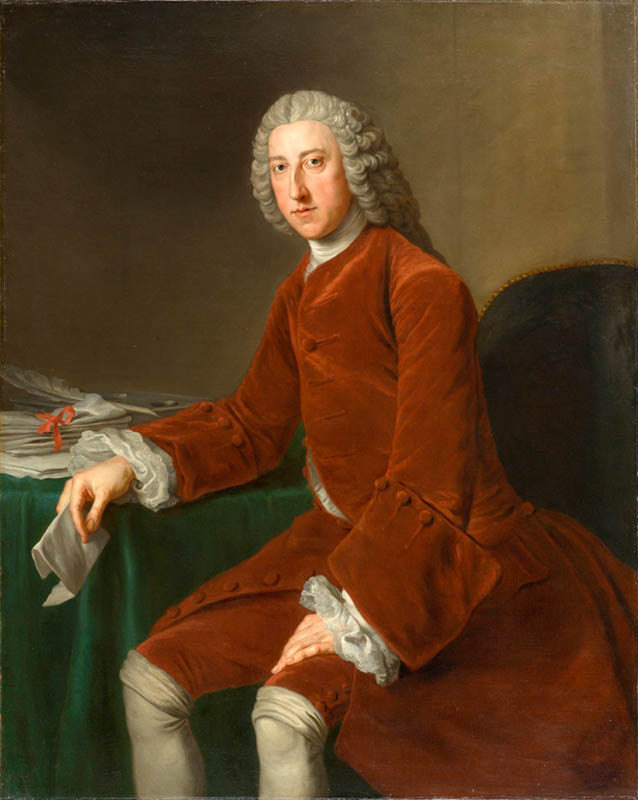
William Pitt, later Earl of Chatham

William Pitt, later Earl of Chatham

* Did Pitt ever actually utter these words? There was no official reporting service for debates in the House of Commons in 1741. Some speeches were written out before hand, some were carefully noted. This speech, alas, comes to us reported by the essayist and literature critic Samuel Johnson, who was famous for writing great speeches for members of the House of Commons, after the fact. Of this particular speech, Bartlett’s Familiar Quotations, 17th ed. carries this footnote: “This was the composition of Johnson, founded on some note or statement of the actual speech. Johnson said, ‘That speech I wrote in a garret, in Exeter Street'” – Boswell, Life of Johnson [1791]. If only Walter Mondale had Samuel Johnson whispering in his ear. Barack Obama may need the whisperings of Johnson in the current campaign.


Not for children, not for sleeping: Goodnight Bush

July 21, 2008

Goodnight Moon by Margaret Wise Brown and Clement Hurd is one of my favorite books of all time. I first read it when I was in college, but it was a toddler favorite of both of our sons, and it rapidly became one of mine, too. Reading it to them at bedtime helped calm them down and put them to sleep. There is from the book a feeling of safety, of warmth, coziness, and love. I may have liked reading it to them more than they liked being read to.

With our youngest off to college this fall, I wish there were some book to give them that would reproduce those good feelings of nearly 20 years ago.

::sigh::

Here’s what we have instead. Goodnight Bush.

This image is scary enough (see the bugging microphone? the burning ballot box? the tilted scales of justice? the polluting smokestacks?).

Cover of Goodnight Bush

Cover of Goodnight Bush

This is the one that makes the more serious statement:

Goodnight human rights, everywhere

Goodnight human rights, everywhere

A story on this book at NPR was the “most e-mailed” last week.

Images by Gan Golen and Erich Origen, Goodnight Bush, copyright © 2008, Little, Brown and Co.


Quote of the moment: Sallust, on “mental excellence”

July 21, 2008

Thus spake Gaius Sallustius Crispus, the Roman historian known as Sallust (86-34 B.C.):

The renown which riches or beauty confer is fleeting and frail; mental excellence is a splendid and lasting possession.

From The War with Catiline, 1

Statue of Sallust near the Austrian Parliament, by Haslinger Willibald

Statue of Sallust near the Austrian Parliament, photo by Haslinger Willibald

Photo rights: Creative Commons License
Creative Commons Attribution iconCreative Commons Share Alike icon

This file is licensed under the Creative Commons Attribution ShareAlike 2.5 License. In short: you are free to share and make derivative works of the file under the conditions that you appropriately attribute it, and that you distribute it only under a license identical to this one. Official license


Ft. Worth light bulb’s 100th anniversary!

July 20, 2008

So, the second-oldest light bulb, the famous Ft. Worth, Texas, Palace Theater light bulb, first lighted up in 1908. For some odd reason the last post that mentioned the bulb keeps having difficulties. It took me four or five times before I realized that this year is the 100th anniversary year. As Robert Frost wondered more poetically, how many times did the apple have to hit Newton before he took the hint?

100 years old in September, 2008 -- the Palace Theatre Lightbulb, Stokyards Museum, Fort Worth, Texas

100 years old in September, 2008 -- the Palace Theater Light Bulb, Stokyards Museum, Fort Worth, Texas

The Stockyards Museum is on the ball, however.

Our famous old light bulb began burning in 1908 as a backstage light at the old Byers/Greenwald Opera House south of the Tarrant County Courthouse. It was never turned off. As the city grew and changed the old Opera House was rebuilt in 1919 into the more modern Palace Theater. All the work was done with the bulb illuminated. In 1977 the Palace Theater was replaced as Fort Worth continued to grow and eventually the Stockyards Museum was selected as its permanent home in retirement.

With any luck, we will be able to hold a super birthday celebration on September 21, 2008.

Mark your calendars:  September 21, 2008. How many other lightbulbs do you know that have been burning for a century?

Photo from the Stockyards Museum.


Power of education

July 20, 2008

Thought provoking post at beauty and depravity, taking note of education achievements in South Korea in the past 50 years or so, and then looking at education world wide:

The education system is what made United States the most influential nation and may be the very thing that will lead to its demise. Unequal access to education – even at the most elementary levels – and the rising costs of college education is a debilitating concern.

If you have the time and the energy, UNESCO’s Global Education Digest [190+ pages] is a great read about the trends and voids in education throughout the world. The UIS Global Education Digest monitors the flows of students moving from the primary to secondary level of education across the world. In Africa, only 62% of pupils complete primary education and are therefore ready to pursue their studies, compared to an average completion rate of 94% in North America and 88% in Asia. According to the latest figures in the Digest:

  • Africa has the lowest primary completion ratios in the world (see Figure 1). In Europe, almost all countries have ratios exceeding 90%. Out of 45 African countries, only eight reach this level: Algeria, Botswana, Cape Verde, Egypt, Mauritius, Seychelles, South Africa and Tunisia.
  • In 19 African countries, the ratios are 50% or lower, meaning that at least every second child does not complete primary school.
  • Only about one in three children will complete primary education in six countries: Niger (21%), Guinea-Bissau (27%), Burkina Faso (27%), Chad (32%), Burundi (32%) and Mali (33%).
  • 69% adults of tertiary age are enrolled in tertiary education programmes in North America and Europe, but only 5% in sub-Saharan Africa and 10% in South and West Asia. [Tertiary age = post secondary].

This is why EDUCATION is so important in the battle against global poverty. Another reason is I can’t think of anything more sustainable that empowering, equipping, and enabling children through education.

I’m inclined to agree with much of what this fellow, Eugene Cho says about education (he’s a preacher; his politics, especially what appears to be his association with Republicanism, is troubling, but adds piquance to his education views).

How about you? Go read what he says; comment there, come back here and comment here, too.  Is he on the right track?


Harrison Ford as Indiana Jones, for real

July 19, 2008

Don’t know how I missed this story earlier: Actor Harrison Ford won election to the Board of Directors of the Archaeological Institute of America (AIA).

In 1992, this hollow rock-crystal skull was sent to the Smithsonian anonymously. A letter accompanying the 30-pound, 10-inch-high artifact suggested it was of Aztec origin. (James Di Loreto & Donald Hurlburt/Courtesy Smithsonian Institution)

Caption from AIA's Archaeology: "In 1992, this hollow rock-crystal skull was sent to the Smithsonian anonymously. A letter accompanying the 30-pound, 10-inch-high artifact suggested it was of Aztec origin. (James Di Loreto & Donald Hurlburt/Courtesy Smithsonian Institution)"

He doesn’t just play one on the silver screen — he is one. Or at least, he’s part of the professional association. The press report from AIA stressed Ford’s support for archaeology and knowledge.

The Archaeological Institute of America is North America’s oldest and largest non-profit organization devoted to archaeology. With more nearly a quarter of a million members and subscribers and 105 local chapters, it promotes archaeological excavation, research, education, and preservation on a global basis. At the core of its mission is the belief that an understanding of the past enhances our shared sense of humanity and enriches our existence. As archaeological finds are a non-renewable resource, the AIA’s work benefits not only the current generation, but also those yet to come in the future.

“Harrison Ford has played a significant role in stimulating the public’s interest in archaeological exploration,” said Brian Rose, President of the AIA. “We are all delighted that he has agreed to join the AIA’s Governing Board.”

AIA was chartered by Congress in 1906 — a full decade before the Boy Scouts of America, for comparison — with a charge to help enforce the Antiquities Act (16 U.S.C. § 431).

More interesting, and more useful in the classroom, are the story and sidebar in the online magazine of the Institute, which notes that the crystal skull stories involve faked artifacts — and even that the idol in the opening scene of the very first Indy movie involves a faked artifact.

“Legend of the Crystal Skulls: The truth behind Indianapolis Jones’s latest quest” tells a great story by Jane MacLaren Walsh, a true story, the best kind for history buffs.

Sixteen years ago, a heavy package addressed to the nonexistent “Smithsonian Inst. Curator, MezoAmerican Museum, Washington, D.C.” was delivered to the National Museum of American History. It was accompanied by an unsigned letter stating: “This Aztec crystal skull, purported to be part of the Porfirio Díaz collection, was purchased in Mexico in 1960…. I am offering it to the Smithsonian without consideration.” Richard Ahlborn, then curator of the Hispanic-American collections, knew of my expertise in Mexican archaeology and called me to ask whether I knew anything about the object–an eerie, milky-white crystal skull considerably larger than a human head.

I told him I knew of a life-sized crystal skull on display at the British Museum, and had seen a smaller version the Smithsonian had once exhibited as a fake. After we spent a few minutes puzzling over the meaning and significance of this unusual artifact, he asked whether the department of anthropology would be interested in accepting it for the national collections. I said yes without hesitation. If the skull turned out to be a genuine pre-Columbian Mesoamerican artifact, such a rare object should definitely become part of the national collections.

I couldn’t have imagined then that this unsolicited donation would open an entirely new avenue of research for me.

Great story. In the classroom, it shows the methods of archaeologists and historians. Walsh reveals how archaeologists work, and along the way she details a lot of the history that prompts adventure stories like the Indiana Jones series.

Archaeology, the real stuff, never nukes the fridge.

File these links and this article away. The new movie in the “Mummy” series with Brendan Fraser in the starring role, is due out August 1, “The Mummy: Tomb of the Dragon Emperor.” The new movie is set on a dig in China, presenting more opportunities to use popular entertainment as an entré to real history, and real science (and probably all sorts of historical errors to correct).

But while the latest Indiana Jones epic reunites Jones with Marian Ravenwood played by Karen Allen, Rachel Weisz doesn’t appear in the pending Mummy installment. Weisz was replaced by another actress playing Evelyn O’Connell.


Powerline jumps on the chance to screw up

July 19, 2008

As long as there’s a dogpile of screw-ups, Powerline thought they’d jump on, regarding the hoaxes about a change in position on global warming at the American Physical Society.

If a lot of people screw up, where’s the shame? Right?

Powerline said, contrary to the facts:

Most people do not realize that the U.N.’s IPCC report was a political document, not a scientific one. As such, it explicitly refused to consider any of the recent scientific work on carbon dioxide and the earth’s climate. That work seems to show rather definitively that human activity has little to do with climate change, which has occurred constantly for millions of years.

Anyone who still had illusions that Powerline thinks about anything before they post it, or that they have any controls on accuracy or care for the facts, has had that illusion shattered. Of course, Powerline is a political organ, with not a whiff of science about it.

Give a fool enough rope . . .

Other resources: